Category: Non-Video

  • Opportunities for US Pecans in Taiwan Snacking Industry

    Opportunities for US Pecans in Taiwan Snacking Industry

    Taiwan pecan imports rose by 74 percent (by volume) in 2019, making Taiwan the second largest Asian market for U.S. shelled pecan exports. Though the number is still small, the Taipei ATO believes there is strong room for pecans to expand in the market, particularly led by the snacking sector.

    Taiwan imports of U.S. tree nuts reached a record high in 2019, amounting to 10,908 metric tons (MT) valued at US$79 million. Across all types of tree nuts, almonds and walnuts consistently account for the majority, holding 47 percent and 35 percent, respectively. Trailing these categories are pistachios (14 percent) and pecans (4 percent), both of which show robust growth from a relatively small base.

    Worthy of attention is the pecan growth, rising by 74 percent to 403 tons, making Taiwan the second largest Asian market for U.S. shelled pecan exports. Though the number is still small, the Taipei ATO believes there is strong room for pecans to expand in the market.

    Taiwan Imports of U.S. Pecans (Unit: ton, US$) 

    According to the trade, the sharp growth in pecan exports is credited to its more competitive pricing in 2019 and the strong demand from the snack manufacturers, coupled with diverted shipments caused by Chinese’s sudden tariff increase. Note that 80 percent of tree nuts in Taiwan are used in food processing, such as roasted tree nut snacks or tree nut powder drinks for breakfast meals. Pecans is no exception to this rule of thumb. Unlike other market’s versatile uses of pecans in the bakery sector, Taiwan bakers tend to use pecans for decoration purposes only. The high pricing pushes bakers away from using pecans, while walnuts are instead substituted. In terms of product specifications, either food processing or bakery sector demand for “halves,” as they consider “whole kernel” appearance is a way to differentiate pecans from walnuts. The most commonly imported pecan format are shelled fancy mammoth and shelled junior mammoth.

    The future demand growth for pecans relies on a long-term coherent education program targeting users and consumers. Although more and more consumers consider pecans as a health food full of good fats and fiber, they are not familiar with its distinctive flavors and uses in cooking. Even in Chinese, the different translations between walnuts and pecans are often unclear or inconsistent. Consistent widespread sampling and education can convey product uniqueness and bridge the pricing barrier.  By Katherine Lee, USDA Foreign Agricultural Service

  • US Tree Nuts Dominate EU Market, Consumer Demand Surges

    US Tree Nuts Dominate EU Market, Consumer Demand Surges

    In 2019, U.S. shipments of tree nuts to the EU-28 (EU-27+UK) reached $3.1 billion. The United States continues to be the largest supplier of tree nuts to Europe. While EU investment and production of tree nuts continue to increase, production is still far from meeting domestic demand. Confinement measures during the height of the COVID-19 pandemic changed EU consumer habits. As consumers spent more time at home, demand for tree nuts, as a healthy snack option and as a home baking ingredient, grew compared to previous years. The evolution of consumer demand in the fall, the annual peak for tree nut consumption, will determine the extent to which this new consumption level will remain in the long term. 

    Executive Summary

    The EU Market: A Key Trading Partner for U.S. Tree Nuts

    The European Union-28 (EU-27+UK) is the largest export market for U.S. tree nuts absorbing 34 percent of total U.S. tree nuts exports in 2019. East Asia followed importing 23 percent while the Middle East imported 13 percent.

    In 2019, U.S. shipments of tree nuts to the EU-28 reached $3.1 billion. Sales of U.S. almonds (both in- shell and shelled) totaled close to $1.8 billion, followed by pistachios with $609 million and walnuts with almost $328 million. Within the EU, the most significant importers of U.S. tree nuts (in order of importance) are Spain, Germany, and the Netherlands, accounting for 64 percent of total imports.

    The United States continues to be the largest supplier of tree nuts to Europe, with 41 percent of the market share (in value) in 2019. Turkey ranks second with a market share of 20 percent, followed by Vietnam, Chile, and China. Almonds continue to be the main imported tree nut with almost 24 percent of the total EU tree nuts imports. These numbers prove the importance of the United States as an agricultural trading partner to the EU.

    The Food Processing and the Snack Industry Remain the Most Significant Buyers

    The growing popularity of healthier snacking and eating habits among European consumers continues to encourage consumption of nuts, both tree nuts and ground nuts. The fight against cardiovascular diseases, the desire for general health and wellbeing, along with the publication of scientific studies highlighting the benefits of nut consumption, are likely to continue fueling demand for these products.

    In addition, the European food processing and snack industry are the largest users of tree nuts both as an ingredient (for traditional sweets and pastries), and for re-processing and re-export to third countries. Almonds are mainly used as an ingredient for the manufacturing of marzipan, nougat, turron (a Spanish traditional Christmas confection), and many other pastries and sweets. European food manufacturers also use walnuts and pistachio nuts as an ingredient for manufacturing ice cream and confectionaryproducts.

    The snacking industry is channeling its efforts to offer consumers new products and new ways to consume nuts. Thus, due to the mature nature of the European market, EU manufacturers are focusing their strategies on launching new value-added innovative products rather than focusing on volume sales. They continue to emphasize the health benefits of tree nuts, both through advertising campaigns and in packaging.

    Confinement measures in response to the COVID-19 pandemic slightly changed EU consumer habits. As consumers spent more time at home, traditional consumers increased their demand for tree nuts, as a healthy snack option but also as a home baking ingredient. In addition, a wave of new consumers also fueled the growth in household tree nut demand. With the end of confinement measures, it is reasonable to assume that some of these new consumers will continue purchasing tree nuts. The evolution of demand in the fall, the traditional annual peak for tree nut consumption, will also determine the extent to which this new consumption level will remain in the long term.

    Expanding business in the EU market

    Since the EU remains a key export market for U.S. tree nuts, exporters continue to explore ways to expand their overseas business. Trade shows are an excellent opportunity to get to know the market and to meet potential importers. Some of Europe’s leading trade shows are:

    USDA-Endorsed Trade Shows

    Anuga October 9-13, 2021 Cologne, Germany
    Trade fair for the international food industry. In 2019, 7,500 exhibitors from 167 countries and 170,000 visitors determined the success of this show.

    SIAL October 15-19, 2022 Paris, France
    One of the largest and most important international marketplace for foodservice professionals, with 7,200 exhibitors and 160,000 visitors.

    Fruit Logistica February 3-5, 2021 Berlin, Germany
    Europe’s main international fresh produce trade show with more than 3,000 exhibitors and 78,000 visitors.

    Biofach February 17-20, 2021 Nuremberg, Germany
    World’s leading trade fair for organic food covering food, drinks and non-food products, with 3,218 exhibitors and 50,000 trade visitors from 134 countries participating in the previous edition.

    Other Relevant (Non-Endorsed) Trade Shows

    Food Ingredients Health Ingredients PLMA
    Alimentaria Snackex

    December 1-3, 2020 December 1-3, 2020 December 2-3, 2020 May 17-20, 2021 June 16-17, 2021

    Frankfurt, Germany Frankfurt, Germany Amsterdam, Netherlands Barcelona, Spain Hamburg, Germany

    New-to-market exporters interested in getting a better understanding of EU food regulations and market opportunities are encouraged to reference the EU-28 Food and Agricultural Import Regulations and Standards (FAIRS) reports and Exporter Guides produced by various EU FAS Offices.

    U.S. Cooperators Active in the EU Market

    Trade associations like the Almond Board of California, American Pistachio Growers and the California Walnut Commission continue to develop strategies for the EU market. These trade associations, in cooperation with FAS offices, work actively to further develop the market for U.S. tree nuts. 

    Almonds, Shelled Basis

    Production

    The European Union is one of the world’s leading producers and consumers of almonds. Furthermore, the EU is the single largest export market for California almonds with Spain as the leading European importer. Every year, California almond production is exported to more than 100 countries worldwide, and the EU-28 represents almons 40 percent of all California’s almond exports.

    Spanish almond production continues its upward trend. Currently, high almond prices are increasing the number of hectares dedicated to almond planting as an alternative to less profitable crops. In recent seasons, new almond varieties, more modern irrigation techniques, and good prices have made the almond crop more profitable for investors and improved industry expectations.

    For MY 2020/21, the latest official forecast published by the Ministry of Agriculture, Fisheries and Food (MAPA) estimates a production of 108,303 MT (shelled basis). This preliminary figure denotes an increase close to 8 percent compared to previous year’s crop due to favorable weather conditions during the flowering, lack of significant frosts and above average levels of rain in the winter and the beginning of the spring, in addition to the new production areas with integrated irrigation systems.

    Italy is the second largest EU-28 almond producer after Spain. Sicily and Puglia are the main almond- producing areas, collectively accounting for approximately 88 percent of total supply. Tuono, Pizzuta d’Avola, Fascionello, Filippo Ceo, Fragiulio Grande, Genco, Falsa Barese, Ferragnés are the leading varieties grown in the country. Italy’s marketing year (MY) 2020/21 almond production is forecast to significantly drop from the previous season as reduced volumes in Puglia (due to heavy frosts occurred at the end of March) were not compensated by increased quantities in Sicily. Quality is expected to be excellent in Puglia and good in Sicily.

    Table 1. Major EU Almond Producers by Volume in MT (Shelled Basis)

    Consumption

    Nuts consumption continue to grow, since they are considered a great alternative to healthy snacking. Due to the increasing awareness of healthy lifestyles, nuts are becoming increasingly popular all- around Europe. Nutritionists have included nuts in diets for weight control or the recommended consumption for pregnant women are just examples of benefits, supported scientific studies, which continue to encourage the consumption of nuts, both as snack and as ingredient.

    In addition, almonds represent an important component of the Mediterranean diet. In-shell almonds are mainly sold for fresh consumption. Shelled almonds are milled and generally used as a raw material for confectionary and bakery food companies. New eating habits are also affecting the demand for nuts. The increasing number of plant-based diets is also helping to drive demand for nuts, as consumers look for alternative forms of protein to meat and fish.

    Tree nuts imports are indispensable for EU consumers. Traditionally, consumers prefer locally grown products mainly due to consumer loyalty and habits, but in the EU, consumption of nuts is higher than production; this has caused an increase in both domestic production and in imports of nuts.

    Trade

    Imports

    In MY 2018/19, the United States was the main almond supplier for European importers. U.S. almonds face competition from Australia and locally grown almonds, mainly from Spain.

    By volume, the main EU destinations for U.S. almonds were Spain, Germany, and the Netherlands. Many countries import large quantities of almonds destined both for domestic consumption and re- export markets, as well as for the food and snack industry.

    Table 2. EU-28 Imports of Almonds by Origin in MT (Shelled Basis) 

    Exports

    The top destinations for EU-28 almonds in MY 2018/19 were the United States, the autonomous city of Ceuta and Switzerland. The largest EU almond exporter is Spain with Spanish exports destined mainly for other EU Member States.

    Table 3. EU-28 Exports of Almonds by Destination in MT (Shelled Basis)

    Walnuts, In-shell Basis

    Production

    The two main producing areas in France are:

    -Aquitaine in the South West (including “noix du Perigord” AOC)

    -Rhone-Alpes in the East (including “noix de Grenoble” AOC)

    In 2019, French walnut production decreased especially in the Grenoble area (with a drop of 35 percent). The sharp drop was the combined result of drought conditions in the summer, strong winds that caused fruits to fall prior to harvest, and heavy snow falls that broke many nut-bearing trees right before harvest. In the South West, the crop was slightly better than average. In 2020, total French production is expected to increase compared to last year. In South Eastern France (Rhone-Alpes), 2020 production is expected to increase slightly after the losses in 2019. In the South West, production is expected to be below average because of the drought and hot temperatures during the summer.

    Meanwhile, Romania’s estimated production for 2020 is lower that the last two years due to unfavorable rainfall.

    In Spain, the main walnut growing regions are Andalucia, Extremadura, Castilla-La Mancha, and the Valencia region. As of the date of this report, the Spanish Ministry of Agriculture, Fisheries and Food (MAPA) has not yet published the official walnut production data for MY2020/21. If weather conditions remain favorable, Post expects a slightly higher production of 15,500 MT for the current MY. Read the rest of the USDA Foreign Agricultural Service Report HERE.

  • Growers who Contact PG&E Before Planting can Prevent Loss of Trees – and Lives

    Growers who Contact PG&E Before Planting can Prevent Loss of Trees – and Lives

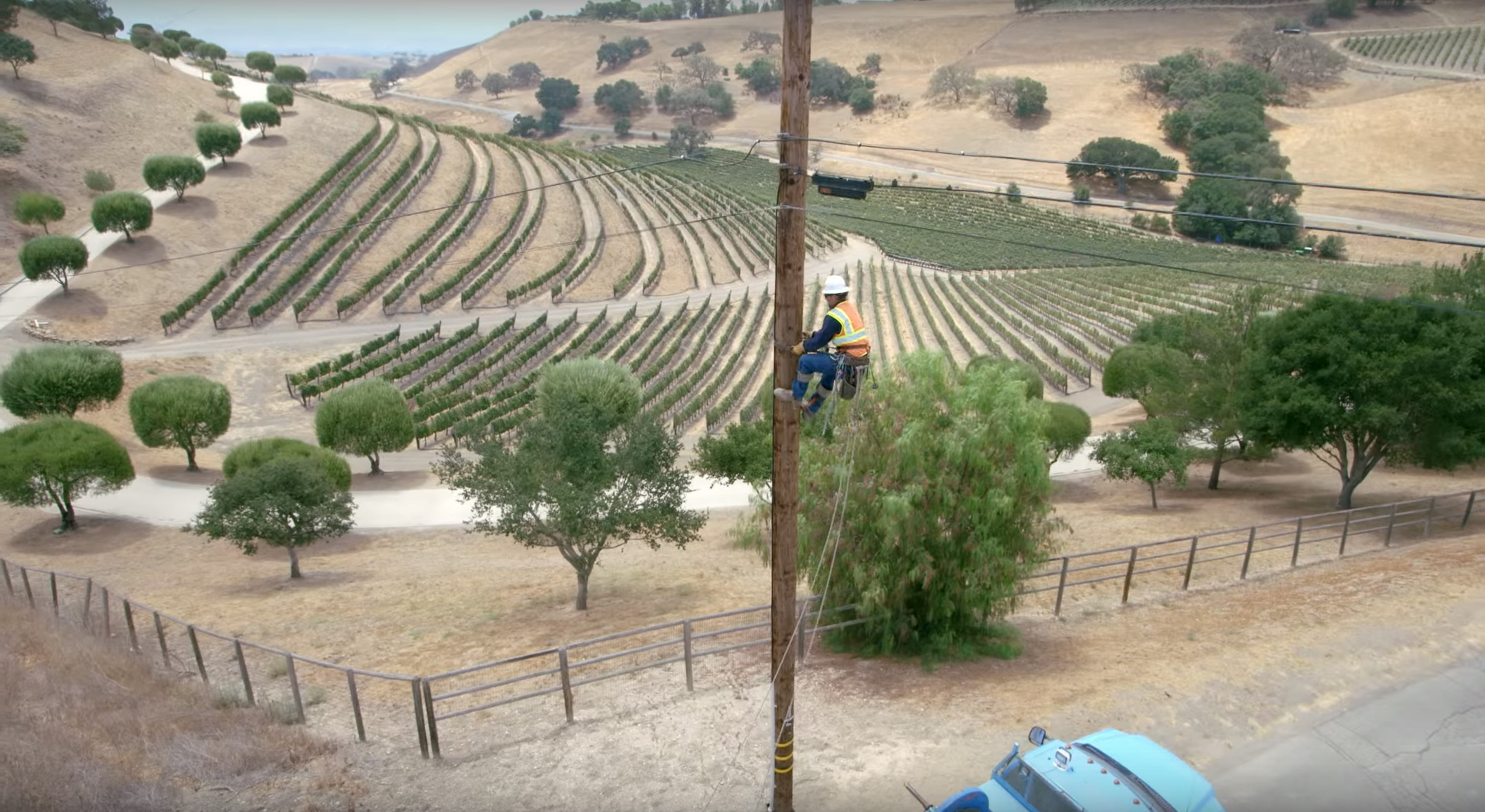
    When orchard trees meet power lines, disaster can result. Whether it’s a power outage affecting millions or the accidental death of a line worker, such scenarios can have devastating and far-reaching consequences:

    Ø  In 2003, sagging power lines contacted untrimmed walnut trees in Ohio and caused a massive cascading outage – costing millions and leaving entire cities without power throughout parts of the Northeastern and Midwestern United States, and the Canadian province of Ontario. The incident left millions without power – and came at a great cost to state coffers.

    Ø  In Fresno several years ago, a grower used a boom lift to prune his orchard. When wires from the power line became entangled in the lift, he was electrocuted.

    Ø  In another California orchard, a fast-growing nut tree grounded to a high-voltage power line, causing widespread chaos and power loss throughout the region.

    Unfortunately, these events are far too common. The good news? When Pacific Gas and Electric Company (PG&E) and growers work together, we can prevent these losses and tragedies.

    Growers need only contact PG&E at 1-800743-5000 or at planbeforeplanting@pge.com early in their planning phase – before they plant new trees. One call or email is all it takes to eliminate the risk of tree removal and gain some valuable peace of mind.

    PG&E also offers a Mature Orchard Incentive Program for Transmission Lines, which encourages orchard growers to remove nut-bearing trees under transmission lines. Growers can use the incentive to replant crops that are compatible with electric transmission lines or reinvest the funds according to their needs. 

    Public Safety, our Priority

    As a utility provider, our most important responsibility is to ensure public safety and provide a reliable supply of electricity. To meet those obligations and state and federal regulations, we must maintain safety clearances between trees and other vegetation and our high-voltage power lines.

    The electrical charge carried by high-voltage lines is many times more powerful than the current that flows through standard power lines. Naturally, the potential for life-threatening injuries is commensurate with that power.

    For those reasons, we take great care to regularly inspect our transmission lines for potential hazards, using ground patrols as well as aerial remote sensing.

    Each year, PG&E is required to inspect all electric transmission and distribution lines across our 70,000-square mile service area. Our inspections are audited, and we will be fined if we fail to comply with required standards for vegetation clearance.

    Multiple Risks at Play
    Electricity from power lines finds its way to the ground using nearby objects. Like lightning, it can jump to a building, a person or a tall tree. Electrical storms and lightning strikes can also lead to a voltage surge, which may create an electrical arc that travels to nearby objects like trees, vegetation and people.

    When trees or vegetation are located near high-voltage power lines, they pose serious fire and electrical hazards. Anyone on the ground is at risk – whether they are in contact with the power line or just standing near the tree.

    And when a tree trimmer or a child climbs or shakes that tree – or when the tree contacts a power line – the risk to lives and property is multiplied, often with tragic consequences.

    Reasons for Generous Clearance
    We understand that growers need to plant every possible acre, and that some consider our clearance requirements excessive. But our requirements are based on many decades of field experience – and the fact that a variety of conditions can create dramatic material changes in towers and power lines.

    High-voltage power lines also require more clearance than other power lines because of their current strength and potential hazards. In addition, clearance requirements must account for the real possibility of line sag, which depends on weather, line design and electrical load.

    Metal transmission conductors can expand in hot conditions, sometimes causing wires to sag. Wind and ice storms can also wreak havoc, loosening normally taut wires and causing branches or trees to fall into electrical lines.

    During hot weather, power lines carrying heavy electrical loads can become heated, causing them to stretch out. These elongated lines can sag near the ground or near trees and other objects.

    As a result, what appears to be generous clearance in winter months may not be enough in the heat of summer.

    Tree Growth Exceeds Expectations
    Our mantra – “plan before you plant” – is not a new message. Yet it isn’t accepted by some growers, despite its potential to benefit their operation and their community.

    Some growers question whether their young trees could ever interfere with power lines that soar 40 or 50 feet – especially when tree purveyors provide assurance that their stock will top out at 20 or 25 feet.

    But plantings routinely exceed their expected growth rate and height. We’ve experienced trees that have grown 12 feet in a single growing season.

    Other growers fail to notify PG&E because they misunderstand the nature of our easement on their property. They may believe the electric easement right-of-way for vegetation applies only to our wires in the air, when it actually extends across a grower’s physical property.

    It’s also human nature to hope for the best – or to think “it can’t happen to me.” In fact, one of the state’s largest nut producers learned through trial and error that power lines and orchard trees don’t mix. Today, he contacts us regularly before planting.

    Every orchard is vital to the economic health of our state. By working together, we can prevent injuries and power outages, and preserve more trees.

    Contact PG&E at 1-800-743-5000 or at planbeforeplanting@pge.com so we can identify power-line friendly planting locations that avoid transmission lines. We’ll be out to your orchard within days, at no cost to you. — By John Bolling, Orchard Vegetation Program Manager, PG&E

  • Coronavirus Food Assistance Program Round II Begins Sept. 21 (What’s Included)

    Coronavirus Food Assistance Program Round II Begins Sept. 21 (What’s Included)

    President Donald J. Trump and U.S. Secretary of Agriculture Sonny Perdue today announced up to an additional $14 billion for agricultural producers who continue to face market disruptions and associated costs because of COVID-19. Signup for the Coronavirus Food Assistance Program (CFAP 2) will begin September 21 and run through December 11, 2020.

    “America’s agriculture communities are resilient, but still face many challenges due to the COVID-19 pandemic. President Trump is once again demonstrating his commitment to ensure America’s farmers and ranchers remain in business to produce the food, fuel, and fiber America needs to thrive,” said Secretary Perdue. “We listened to feedback received from farmers, ranchers and agricultural organizations about the impact of the pandemic on our nations’ farms and ranches, and we developed a program to better meet the needs of those impacted.”

    Background:

    The U.S. Department of Agriculture (USDA) will use funds being made available from the Commodity Credit Corporation (CCC) Charter Act and CARES Act to support row crops, livestock, specialty crops, dairy, aquaculture and many additional commodities. USDA has incorporated improvements in CFAP 2 based from stakeholder engagement and public feedback to better meet the needs of impacted farmers and ranchers.

    Producers can apply for CFAP 2 at USDA’s Farm Service Agency (FSA) county offices. This program provides financial assistance that gives producers the ability to absorb increased marketing costs associated with the COVID-19 pandemic. Producers will be compensated for ongoing market disruptions and assisted with the associated marketing costs.

    CFAP 2 payments will be made for three categories of commodities – Price Trigger Commodities, Flat-rate Crops and Sales Commodities.

    Price Trigger Commodities

    Price trigger commodities are major commodities that meet a minimum 5-percent price decline over a specified period of time. Eligible price trigger crops include barley, corn, sorghum, soybeans, sunflowers, upland cotton, and all classes of wheat. Payments will be based on 2020 planted acres of the crop, excluding prevented planting and experimental acres. Payments for price trigger crops will be the greater of: 1) the eligible acres multiplied by a payment rate of $15 per acre; or 2) the eligible acres multiplied by a nationwide crop marketing percentage, multiplied by a crop-specific payment rate, and then by the producer’s weighted 2020 Actual Production History (APH) approved yield. If the APH is not available, 85 percent of the 2019 Agriculture Risk Coverage-County Option (ARC-CO) benchmark yield for that crop will be used.

    For broilers and eggs, payments will be based on 75 percent of the producers’ 2019 production.

    Dairy (cow’s milk) payments will be based on actual milk production from April 1 to Aug. 31, 2020. The milk production for Sept. 1, 2020, to Dec. 31, 2020, will be estimated by FSA.

    Eligible beef cattle, hogs and pigs, and lambs and sheep payments will be based on the maximum owned inventory of eligible livestock, excluding breeding stock, on a date selected by the producer, between Apr. 16, 2020, and Aug. 31, 2020.

    Flat-rate Crops

    Crops that either do not meet the 5-percent price decline trigger or do not have data available to calculate a price change will have payments calculated based on eligible 2020 acres multiplied by $15 per acre. These crops include alfalfa, extra long staple (ELS) cotton, oats, peanuts, rice, hemp, millet, mustard, safflower, sesame, triticale, rapeseed, and several others.

    Sales Commodities

    Sales commodities include specialty crops; aquaculture; nursery crops and floriculture; other commodities not included in the price trigger and flat-rate categories, including tobacco; goat milk; mink (including pelts); mohair; wool; and other livestock (excluding breeding stock) not included under the price trigger category that were grown for food, fiber, fur, or feathers. Payment calculations will use a sales-based approach, where producers are paid based on five payment gradations associated with their 2019 sales.

    Additional commodities are eligible in CFAP 2 that weren’t eligible in the first iteration of the program. If your agricultural operation has been impacted by the pandemic since April 2020, we encourage you to apply for CFAP 2. A complete list of eligible commodities, payment rates and calculations can be found on farmers.gov/cfap.

    Eligibility

    There is a payment limitation of $250,000 per person or entity for all commodities combined. Applicants who are corporations, limited liability companies, limited partnerships may qualify for additional payment limits when members actively provide personal labor or personal management for the farming operation. In addition, this special payment limitation provision has been expanded to include trusts and estates for both CFAP 1 and 2.

    Producers will also have to certify they meet the Adjusted Gross Income limitation of $900,000 unless at least 75 percent or more of their income is derived from farming, ranching or forestry-related activities. Producers must also be in compliance with Highly Erodible Land and Wetland Conservation provisions.

    Applying for Assistance

    Producers can apply for assistance beginning Sept. 21, 2020. Applications will be accepted through Dec. 11, 2020.

    Additional information and application forms can be found at farmers.gov/cfap. Documentation to support the producer’s application and certification may be requested. All other eligibility forms, such as those related to adjusted gross income and payment information, can be downloaded from farmers.gov/cfap/apply. For existing FSA customers, including those who participated in CFAP 1, many documents are likely already on file. Producers should check with FSA county office to see if any of the forms need to be updated.

    Customers seeking one-on-one support with the CFAP 2 application process can call 877-508-8364 to speak directly with a USDA employee ready to offer assistance. This is a recommended first step before a producer engages with the team at the FSA county office.

    All USDA Service Centers are open for business, including some that are open to visitors to conduct business in person by appointment only. All Service Center visitors wishing to conduct business with FSA, Natural Resources Conservation Service or any other Service Center agency should call ahead and schedule an appointment. Service Centers that are open for appointments will pre-screen visitors based on health concerns or recent travel, and visitors must adhere to social distancing guidelines. Visitors are also required to wear a face covering during their appointment. Our program delivery staff will be in the office, and they will be working with our producers in the office, by phone and using online tools. More information can be found at farmers.gov/coronavirus.  

  • American Pistachio Growers Employs Robust Campaign to Meet Record Harvest

    American Pistachio Growers Employs Robust Campaign to Meet Record Harvest

    With the high likelihood that U.S. pistachio growers will shake a record crop from their trees this fall, American Pistachio Growers (APG) is pulling out all of the stops to keep its wave of marketing success rolling in 2021 and well beyond.  APG’s marketing team has just put the final touches on a new advertising campaign that combines extensive television advertising in major markets across the U.S. as well as additional print and digital media advertising in all key export markets.

    APG’s strategy is to keep consumer demand running strong ahead of what appears to be a large 2020 crop. According to APG President Richard Matoian the U.S. pistachio crop that growers are currently harvesting could hit the 1-billion pound mark — setting a new production record.

    “We are investing in our biggest advertising and marketing campaign ever to capitalize on this expansion in U.S. pistachio production,” said Judy Hirigoyen, APG Vice President, Global Marketing. “We have great synergy from all of the work we have done in recent years collaborating with great partners in professional sports, the research community, and with some of the world’s leading nutritionists and researchers.”

    For the first time ever APG is employing an advertising and marketing push that combines television, print and digital advertising in major export countries as well as in major television markets in the U.S. Beginning in mid-November and continuing through next summer, ads extolling the virtues of U.S. pistachios will appear in 44 U.S. television markets — from Honolulu to Washington, D.C.  Included in the U.S. advertising effort is APG’s sponsorship of New Year’s Eve countdown celebrations in Las Vegas, Nevada and Dallas, Texas — covering 26 key television markets.

    “Consumers here in the U.S. as well as abroad are embracing the powerful stories of pistachios — that they are packed with important nutrients and have been recognized as being a “complete” protein source, putting pistachios in the company of other plant-based complete proteins, such as quinoa and soy,” Hirigoyen said. “We think these stories will really resonate with TV viewers across the nation.”

    As a California commodity, pistachios have been on a tear in recent years and now occupy sixth place on the state’s list of more than 350 commodities with a value of $1.94 billion, according to California Department of Food and Agriculture 2019 data. Pistachios rank as the state’s second leading export with a value of $1.1 billion. As interest in pistachios has grown in California as well as in Arizona and New Mexico, so has the need to market larger crops.

    “On top of the expected record harvest this year, with the expansion of new acreage comes into bearing, we know that will present greater marketing challenges in the years ahead,” said Alison Nagatani, Chair of the APG Marketing Committee and a pistachio grower from Earlimart. “The Rabobank report projects bearing acreage could reach 372,000 acres by 2024/25 — about 30 percent greater than in 2019/20. Clearly, we have our marching orders to keep blazing the marketing trail, both here at home and in our key international markets.”

    U.S. growers are keenly aware that their success depends on keeping export channels open in major countries around the world. Prior to the COVID-19 pandemic, pistachio exports were running strong. In the 2018/19 marketing year, U.S. pistachio shipments set a record in spite of stiff retaliatory tariffs imposed by China, according to the Rabobank report.

    Even with the effects of the pandemic and ongoing trade tensions with China, Rabobank analysts state that market demand for pistachios remains strong in both domestic and international markets.  Although total demand could be affected by a global economic downturn due to the COVID-19 pandemic, they state that the demand outlook is still “favorable” and is set to keep pace with the anticipated expansion in U.S. pistachio production in the years ahead, citing the nutrition research and promotional efforts as contributing factors to their prediction.

    There is also heartening news contained in the pages of APG’s April 2020 consumption/share of market report. The report’s data found that total consumption and market share from 2016-2019 are on an upward trajectory in several key markets. In China, for example, total consumption is up 573 percent and market share has surged to 57.5 percent. In Germany the report found total consumption had risen 288.5 percent and market share was 65.7 percent. In India, total consumption and market share were up 74.3 percent and 58.6 percent respectively.

    “Marketing ahead of production and capitalizing on the contributions of our industry partners and the incredible array of research that touts the unique and powerful health attributes of pistachios will all play a role in continuing our marketing success,” Nagatani said.

    For more information, read the September issue of Pacific Nut Producer Magazine featuring the current state of the pistachio industry and the continued efforts of APG to promote pistachios globally.

    APG is a non-profit trade association representing more than 800 growers and member processors in California, Arizona, and New Mexico.

  • Almond Alliance of California Strongly Opposes Proposition 15 – “Split Roll” Proposal

    Almond Alliance of California Strongly Opposes Proposition 15 – “Split Roll” Proposal

    The Almond Alliance of California strongly opposes the Proposition 15 “split roll” proposal on the November 3, 2020 ballot. California Proposition 15 is the Tax on Commercial and Industrial Properties for Education and Local Government Funding Initiative. We believe a split roll proposal will hurt the business community as well as employees and consumers, thereby having a negative impact on our entire economy.

    • A “yes” vote supports this constitutional amendment to require commercial and industrial properties to be taxed based on their market value, rather than their purchase price.
    • A “no” vote opposes this constitutional amendment, thus continuing to tax commercial and industrial properties based on a property’s purchase price, with annual increases equal to the rate of inflation or 2 percent, whichever is lower.

    “Split Roll” Will Hurt California’s Economy

    An almost $11 billion split roll tax increase will prevent businesses from hiring new employees and, potentially, from keeping existing ones. The stability and predictability brought by Proposition 13 has allowed California businesses to compete nationally despite the high cost of doing business in this state.

    What Is “Split Roll”?

    A tax roll is the official list of all the properties to be taxed. “Split roll” means applying a different tax formula, either tax rate, reassessment frequency, or vote requirement, to commercial and industrial properties than that applied to residential properties. Proponents of a split roll would remove some of the protections of Proposition 13 (from 1978) from nonresidential properties in order to raise taxes.

    How Will This Impact California Agriculture?

    Although the revised initiative includes a small business and agricultural land exemption, the “split roll” still would be crippling to a significant portion of businesses. The agricultural exemption language only applies to the “land.”  The current tax law defines “real property” as land, improvements, and fixtures, which for farmers means that real agricultural property is defined as not only the land, but also fixtures such as irrigation systems, and improvements — barns, processing facilities, nut and fruit trees and vineyards once they reach maturity.

    Under the California Constitution, vineyards are only exempt for the first three years after the season in which they are planted, and orchards are only exempt for the first four years after the season they are planted.  Other improvements would be subject to reassessment and would also require all food and agricultural processing facilities to be reassessed at their highest and best use.

    The initiative would not require row crops, such vegetables and cotton, to be reassessed, as those are exempt under the California Constitution, but they will face higher property taxes when the crops go to packing facilities and processing areas.

    Call To Action

    Proposition 15 would expose California’s farmers and ranchers to steep property tax hikes on “all fixtures and improvements.” You would face tax increases on a wide range of farm and ranch property.

    We ask you to:

    1. Vote No on Proposition 15;
    2. Please consider supporting our efforts financially with a donation to the fund to fight back against this initiative.

    For more information on how you can help, please contact the Almond Alliance at (209) 300-7140 or email staff@almondalliance.org.

  • USDA Assists Farmers, Ranchers & Communities Affected by Western Wildfires

    USDA Assists Farmers, Ranchers & Communities Affected by Western Wildfires

    The U.S. Department of Agriculture (USDA) today announced the availability of assistance for residents and agricultural producers affected by recent wildfires.

    As of today, wildfires have burned nearly 6.9 million acres across 11 states. More than 31,000 personnel from the local, state and federal levels are working to contain 61 large fires. The USDA Forest Service has more than 7,800 personnel committed to firefighting efforts along with airtankers, helicopters, and other air and ground firefighting resources.

    Food waivers and flexibilities

    On August 27, 2020, USDA’s Food and Nutrition Service (FNS) approved California’s waiver request to allow for the purchase of hot foods with Supplemental Nutrition Assistance Program (SNAP) benefits in select counties. As many California residents are not able to store food or access cooking facilities, households in those counties can purchase hot foods with SNAP benefits through September 23, 2020.

    On September 3, 2020, FNS also approved California’s request to issue automatic mass replacements of SNAP benefits to impacted households. This waiver allows households in certain counties and zip codes to receive replacement of 50% of their August SNAP benefits as a result of wildfires and power outages that began on August 17, 2020. For more information on either of these actions, contact the California Department of Social Services.

    Helping producers weather financial impacts of disasters

    When major disasters strike, USDA has an emergency loan program that provides eligible farmers low-interest loans to help them recover from production and physical losses. This program is triggered when a natural disaster is designated by the Secretary of Agriculture or a natural disaster or emergency is declared by the President under the Stafford Act. USDA also offers additional programs tailored to the needs of specific agricultural sectors to help producers weather the financial impacts of major disasters and rebuild their operations.

    Livestock owners and contract growers who experience above normal livestock deaths due to specific weather events, as well as to disease or animal attacks, may qualify for assistance under USDA’s Livestock Indemnity Program.

    Livestock producers who have suffered grazing losses due to a qualifying drought condition or fire on federally-managed land during the normal grazing period for a county may qualify for help through USDA’s Livestock Forage Disaster Program. Producers of non-insurable crops who suffer crop losses, lower yields or are prevented from planting agricultural commodities may be eligible for assistance under USDA’s Noninsured Crop Disaster Assistance Program.

    Helping operations recover after disasters

    USDA can also provide financial resources through its Environmental Quality Incentives Program to help with immediate needs and long-term support to help recover from natural disasters and conserve water resources. Assistance may also be available for emergency animal mortality disposal from natural disasters and other causes.

    Farmers and ranchers needing to rehabilitate farmland damaged by natural disasters can apply for assistance through USDA’s Emergency Conservation Program. USDA also has assistance available for eligible private forest landowners who need to restore forestland damaged by natural disasters through the Emergency Forest Restoration Program. USDA’s Emergency Watershed Protection Program can also help relieve imminent threats to life and property caused by fires and other natural disasters that impair a watershed. Orchardists and nursery tree growers may be eligible for assistance through USDA’s Tree Assistance Program to help replant or rehabilitate eligible trees, bushes and vines damaged by natural disasters.

    Producers with coverage through the Risk Management Agency (RMA) administered federal crop insurance program should contact their crop insurance agent for issues in filing claims. Those who purchased crop insurance will be paid for covered losses. Producers should report crop damage within 72 hours of discovering damage and follow up in writing within 15 days. The Approved Insurance Providers (AIP), loss adjusters and agents are experienced and well trained in handling these types of events. As part of its commitment to delivering excellent customer service, RMA is working closely with AIPs that sell and service crop insurance policies to ensure enough loss adjusters will be available to process claims in the affected areas as quickly as possible. Visit the RMA website for more details.

    Helping with the long-term recovery of rural communities

    USDA Rural Development has more than 50 programs available to rural and tribal communities for the rebuild, repair or modernization of rural infrastructure including drinking and waste water systems, solid waste management, electric infrastructure, and essential community facilities such as public safety stations, health care centers and hospitals, and educational facilities. Visit theUSDA Rural Development website for more information on specific programs.

    Visit USDA’s disaster resources website to learn more about USDA disaster preparedness and response. For more information on USDA disaster assistance programs, contact your local USDA Service Center.

  • CA Almonds: Global Shipments & Trends

    CA Almonds: Global Shipments & Trends

    Almond Board of the California — As California almond growers consistently produce yields at record or near-record levels year after year, it is important that those nuts find a home. Increasingly, that means expanding existing export markets and continuing to grow demand in those regions, while always keeping an eye on new opportunities globally.

    In the past year, the COVID-19 pandemic has presented a temporary challenge in moving nuts from California ports to export markets, a challenge coupled by situations like China’s continued tariffs. Still, the Almond Board of California (ABC) continues to strongly support the California almond industry through key marketing initiatives, education and negotiation with foreign trade officials, and frequent discussions with regulators in the U.S. and abroad.

    Take a deeper dive into how last year’s crop performed in terms of global shipments and hear from ABC program leads on market and trade trends, as well as ways that Almond Board staff are continuing to grow demand and support trade worldwide.

    Production: 2.55 Billion Pounds

    The U.S. Department of Agriculture (USDA) National Agricultural Statistics Service (NASS) has a challenging task in forecasting California almond production. Each July, USDA-NASS releases the Objective Measurement Report, which is based on samples of orchards gathered from throughout the state and measuring/weighing of kernels in order to estimate that year’s production. The production forecast reflects a range, which USDA-NASS has been within nine points of in the last 13 years. However, the 2018 report was narrowly outside the range and the 2019 report missed the mark by quite a bit.

    To address this issue, in the fall of 2019 ABC convened an Almond Forecasting Task Force made up of industry members, USDA-NASS officials and ABC staff to review almond forecasting procedures and identify potential changes to sampling methodologies to improve future crop estimates. To help USDA-NASS refine its production estimates, the task force recommended leveraging almond acreage information from Land IQ, a Sacramento-based agricultural and environmental scientific research and consulting firm that developed and maintains a comprehensive living map of California almonds. Implementing that and other changes, USDA-NASS has improved its data collection process, and hopes remain high that future Objective Reports will be closer to actual crop yields.

    Total Shipments: Domestic and Export

    This past year, the industry saw nearly parallel growth between domestic shipments (which grew 4.5%) and exports (which grew 5.0%). This growth comes despite the current challenging trade environment. The California almond industry’s investment in nutrition research and global market development has helped lay a strong foundation for demand around the world that has helped the almond community navigate through tougher times.

    And the work continues. In the past year, the Almond Board expanded its areas of nutrition research with its first study in the area of beauty. To ensure consumers are keeping almonds top of mind, the Almond Board is also continuing its efforts to build demand through consumer marketing programs in 11 countries, from India and Japan to the U.S. and Mexico. The past year’s programs included launching new advertising campaigns in multiple markets, including in the United Kingdom and India to continue building demand globally for California almonds.

    “One of the things that I first noticed when I joined the Almond Board four years ago was the passion and pride staff have in helping grow this industry,” said Vice President of Global Market Development Emily Fleischmann, “and that fire continues. It’s what has helped our teams launch innovative new campaigns like ‘Do You Almond’ in the UK this past year and what helps almonds remain the number one nut in new product introductions for 10 years running.”

    Fleischmann said ABC’s marketing staff will continue to create additional ways to spread the nutritional and health message associated with almonds.

    “Our teams keep pushing harder to make our programs stronger year over year,” she said. “In the year ahead, stay tuned for more on our U.S. partnership with Olympian Kerri Walsh Jennings as she works toward the Tokyo Olympics, as well as a brand new campaign in France and our first digital program in India.”

    Export Shipments: Top 10 Destinations

    Global trade tensions with China have changed the landscape of priority markets.

    “Five years ago, China was our second-largest export destination. It stayed as the third-largest market for several years, surpassed only by the strong growth of the Indian market,” said Julie Adams, vice president of Global Technical and Regulatory Affairs for the Almond Board.

    With an increasing middle class and economic growth, China was on track to expand, and ABC’s marketing investments helped spur that growth. But retaliatory tariffs implemented two years ago changed that momentum.

    “Starting in April 2018, we saw the impact of the trade war, which took almonds from a 10% tariff to the current 55% tariff,” Adams said. “Over the last two years, shipments to China/Hong Kong dropped 25% in crop year 2018-19 and another 23% in crop year 2019-20, with Australia benefiting.”

    The situation has resulted in China dropping to fourth in the line of U.S. export destinations. Taking a long-term view, however, China still is key to building demand for expanded crop production.

    “Many of the trade issues we face in our markets – from import controls to food safety standards or pesticide MRLs – take a long time to resolve,” Adams explained. “It is essential that we build good relationships with trade and regulatory authorities in these markets so we can engage quickly to find a solution that will allow almonds to continue to flow freely into consumer channels.”

    ABC is widely respected by authorities worldwide for being proactive in understanding market needs and its ability to provide technical, fact-based information across a wide range of issues. 

    Export Shipments: Regional Breakdown

    Global appeal among customers and consumers worldwide is clearly reflected in the almond industry’s regional shipments. Being well diversified helps counteract trade disruptions that can unexpectedly come up in one market or another.

    “There are so many growth opportunities around the globe,” Adams said. “For years, the Middle East and Africa were a small share of exports, but now they represent almost 20%.”

    While acknowledging the many challenges facing California almonds, Adams also believes “the opportunities are limitless.”

    Export Shipments: Product Type

    India remains the number one export market for U.S. almonds and the largest importer of in-shell almonds. Historically, India and China have been the primary destination for in-shell markets, but given the recent trade situation with China, India has absorbed much of those shipments.

    U.S. Agricultural Exports by Value

    Value Breakdown:

    • European Union (EU-27 + UK): Almonds are the number two export, at $1.8 billion, behind soybeans at $1.95 billion.
    • India: Almonds are the number one ag export at $732 million, accounting for 40% of all U.S. ag exports to India.
    • China and Hong Kong: Almonds are the second-largest tree nut export at $374 million and the seventh-largest ag product, overall. 
    • Japan: Almonds are the ninth-largest ag export.
    • United Arab Emirates: Almonds are the number one ag export and account for around 23% of total U.S. ag exports. 
    • South Korea: Almonds are the ninth-largest ag export. 
    • Mexico: Tree nuts are a small-sector category for exports to Mexico at $342 million total and $99 million for almonds. 

    Do you want to learn more about ABC’s global marketing and trade and regulatory work in countries across the world? Mark your calendar for Dec. 8-10 to attend The Almond Conference 2020. Held virtually for the first time this year, this ABC-hosted event will allow maximum global participation while offering the same quality information and engagement as past conferences. Learn more at almondconference.com.
  • Selecting the ‘Right’ Walnut Rootstock

    Selecting the ‘Right’ Walnut Rootstock

    Walnut rootstock options were historically seedlings, either Northern California Black (Juglans nigra), or Paradox (a cross between English Walnut, Juglans regia, and Northern California Black). Those two options still exist, but as research and technology advances in walnut cloning, clonal rootstocks are becoming more available. With this new advancement, growers have questions. Hopefully, I can  provide some answers.

    What is the difference?

    There is a large difference between clonal rootstocks and Paradox seedlings. This is due in part to the genetic variability, or genetic differences, in Paradox seeds. UC/UCCE/USDA Walnut researchers, specialists, and farm advisors studied the genetic background of Paradox seedlings and found high variability from one seed to the next. This means that each seed is different from the next one. One seed might be more vigorous, one seed might be  more susceptible to phytophthora , one seed might encourage more seed production, while another encourages more leaf and branch growth. This leads to a highly variable stand of trees in an orchard. Clonal rootstocks, on the other hand, are cuttings of the same plant. Walnut varieties are a good example of this process, as every Chandler tree in California came from one single mother tree which was originally produced by a seed. Much like how every Chandler tree tends to produce the same nut (some differences do develop depending on the growing conditions), every RX1 clonal rootstock will develop similar characteristics in the tree. Therefore, a Chandler orchard on a clonal rootstock tends to be more uniform in growth than an orchard on Paradox seedlings.

    What is the RIGHT choice?

    I honestly cannot think of a single “right choice” in agriculture, there’s just options. Options are nice, but they can also be confusing. Here is some background information that might help the decision in the future. RX1 and VX211 are both UC selections,  chosen from acres of single seedling crosses based on their potential benefits. These were developed as a part of the Paradox diversity study done by UC/UCCE/USDA researchers, specialists and farm advisors. RX1 appears to show some tolerance to Phytophtora, a root infecting fungus like organism, but if disease pressure is high, the rootstock may still succumb to Phytophthora. VX211 was selected based on its potential tolerance to some nematode populations, but again, much like RX1 and Phytophthora, if nematode pressure is high, VX211 may still succumb. Both RX1 and VX211 were field tested against a handful of other selections as well as Paradox and Vlach. Vlach was developed by a private party which originated from a Paradox seedling tree in our very own county of Stanislaus. The tree was selected based on its high level of vigor.

    Are any commercially available walnut rootstocks resistant to crown gall?

    Short answer: no. Long answer: Paradox seedlings, RX1, VX211, and Vlach can all be infected with the causal agent of crown gall (Agrobacterium tumefaciens) and develop galls. YET the production of clonal  material AVOIDS many opportunities for infection. Paradox seedlings are collected from the field as walnut seeds. Previous UC/UCCE/USDA research (funded in large part by nurseries) demonstrated that Agrobacterium  tumefaciens is picked up from the ground in seed orchards. Nurseries funded this research to find ways to make their production better and have since developed ways to reduce crown gall in new Paradox  seedling  rootstocks  by  incorporating the use of tarps or catch frames. That said, Paradox seedlings are highly susceptible to Agrobacterium tumefaciens and clonal material skips this field collection step. Please be advised that orchards on RX1, VX211, and Vlach still require proper sanitation, ie,  cleaning pruners/loppers with 10% bleach solution or 70% ethanol and avoid wounding  the crown, trunk, and roots during planting and other practices.

    Are these our only options?

    When excluding Blackline (please see my summer 2019 issue for further information http://cestanislaus.ucanr.edu/newsletters/ Walnut_News_-_Fruit_For_Thought80737.pdf), for now, yes, but not forever. The California Walnut Board in combination with the US Specialty Crop Research Initiative is currently funding ongoing research in the breeding and development of future rootstocks. We are looking at three to four selections for various reasons, one of  which being resistance to crown gall. These rootstocks are being field tested now and will  be made available in the future provided they prove themselves worthy, in other words capable of producing a good crop.— By Kari Arnold Ph.D. UCCE Area Orchard and Vineyard Systems Advisor, Stanislaus County

  • Request for Research Proposals to Support and Enhance Honey Bee Health

    Request for Research Proposals to Support and Enhance Honey Bee Health

    Scientific research provides us with the foundation of knowledge we rely on in order to understand honey bee health threats and address them.

    Project Apis m. and the National Honey Board are requesting research proposals to support and enhance honey bee health. Proposals will be accepted between September 1, 2020 and September 30, 2020. Please visit www.ProjectApism.org/rfps to view the full RFP. PAm and NHB supported research projects can be explored in detail at the Bee Health Collective.

    In June, 2016 Project Apis m. (PAm) and the National Honey Board (NHB) announced that PAm would begin administering the NHB Production Research funds. This collaboration has streamlined efforts to support the beekeeping industry, by connecting the NHB research funding opportunities with several other efforts coordinated by PAm. This collaboration allows opportunities to consider a broader spectrum of efforts linked to supporting the industry, to support collaborations and synergy, and harmonize and access deeper resources when necessary for projects that need larger time or money commitments. Merging efforts has also resulted in one less round of work for all of our hardworking bee researchers who write proposals, the scientific reviewers who read them, and selection committees and administrators who see these processes through.

    The National Honey Board (NHB) is an industry-funded agriculture promotion group that educates consumers about the benefits and uses of honey and honey products. NHB research, marketing and promotional programs are funded by an assessment on domestic and imported honey and are designed to increase awareness and usage of honey by consumers, the foodservice industry and food manufacturers. For more information please visit www.honey.com.

    Project Apis m. (PAm) is the go-to organization at the interface of honey bees and pollinated crops. Since 2006, we’ve infused over $8.5 million into honey bee research and $2.9 million into forage programs, resulting in better pollination and increased crop yields for growers, and lower losses and better honey production for beekeepers. We work closely with commercial beekeepers, growers, and top bee scientists in the USA and Canada to fund projects and direct strategic efforts focused on practical solutions. PAm funds studies, offers graduate scholarships to encourage careers in pursuit of science-based solutions to honey bee challenges, and has expanding efforts to put forage on the landscape where bees need it most. We are a 501(c)5 nonprofit organization governed by an eleven-member board of stakeholders representing major national and state industry organizations, and an additional seven-member Science Advisory Board. Learn more at www.ProjectApism.org