Category: Non-Video

  • American Farmland Trust Shares Tool Kit to Quantify Soil Health Benefits

    American Farmland Trust Shares Tool Kit to Quantify Soil Health Benefits

    Today, American Farmland Trust, the organization that for 40 years has been saving the land that sustains us and advancing the principles of regenerative agriculture has launched online access to the methods, tools, and training resources it used in developing case studies featuring soil health successful farmers in its Quantifying the Economic and Environmental Benefits of Soil Health project funded by a USDA Natural Resource Conservation Service Conservation Innovation Grant.

    Becoming all the more evident this year, farmers face enormous challenges. Extreme weather, a trade war and pandemic-related market disruptions have made it difficult for many to make a living. In a normal season, farmers work just to maintain yield, keep costs under control and try to improve the profitability of their operations. And, now we are asking farmers to respond to society’s call to improve environmental outcomes like water quality and help to mitigate climate change.  Soil health practices like cover crops, no-till and nutrient management can help address these challenges.  However, despite farmers’ belief in the science underpinning the practices, they are often reluctant to change management techniques without knowing how much the practices will cost and what the financial benefits will be.

    “AFT encourages our fellow conservationists to use this suite of tools and training resources to produce their own case studies demonstrating the economic and environmental benefits of soil health,” said Michelle Perez, AFT water director. “Our hope is that farmers, who have been considering adopting soil health practices, will find the economic evidence quantified for a farmer in their area, sufficiently compelling, to get them to “say yes” to trying the soil health practices.

    Specifically, partners will be able to use  AFT’s Retrospective Soil Health Economic Calculator (R-SHEC) Tool, an 11-tab Excel-spreadsheet tool, to evaluate the costs and benefits of soil health conservation practices including no-till or reduced tillage, cover cropping, nutrient management and conservation crop rotation on row crop farms that have adopted any combination of the practices, ideally for more than four years and within the last 10 years. The tool presents the net economic benefits in a partial budget analysis table and an estimate of the Return on Investment, or ROI, in the soil health practices. The R-SHEC Tool and the case studies that AFT published underwent a review by five NRCS Economists, five NRCS Soil Health Specialists, three university economists, among other experts.

    Materials explain how to use the R-SHEC and how to identify and interview a soil health successful farmer to obtain the data needed to run the tool.  Additional resources are provided to instruct conservationists how to estimate the water quality and climate benefits associated with the already adopted soil health practices using USDA’s Nutrient Tracking Tool and USDA’s COMET-Farm Tool, and then how to assemble all the findings and present them in a compelling two-page case study. A six-part series of training videos provides instructions on each aspect of the process. To access the methods, tools and videos, go to link.

    In spring and summer 2021, AFT will release several new tools:

    • An almond version of the R-SHEC tool that aids estimation of the economic effects of almond-specific soil health practices such as conservation cover, nutrient management, mulching, and compost application.
    • A Predictive Soil Health Economic Calculator (P-SHEC) Tool that will enable conservationists to partner with farmers who are “on the fence” about soil health practices to estimate the potential short-term and long-term economic effects of an investment in practices which will hopefully give the farmers the information they need to overcome their apprehension.
    • An online, user-friendly, web-based version of the R-SHEC Tool.American Farmland Trust is the only national organization that takes a holistic approach to agriculture, focusing on the land itself, the agricultural practices used on that land, and the farmers and ranchers who do the work. AFT launched the conservation agriculture movement and continues to raise public awareness through our No Farms, No Food message. Since our founding in 1980, AFT has helped permanently protect over 6.5 million acres of agricultural lands, advanced environmentally-sound farming practices on millions of additional acres and supported thousands of farm families.


  • Five Steps for Ag Processors to Adapt their COVID-19 Incident Response Approach

    Five Steps for Ag Processors to Adapt their COVID-19 Incident Response Approach

    COVID-19 is a health crisis in the United States but major industries, like agriculture, chemical manufacturing, oil and gas exploration and production, all need to keep functioning as essential businesses in the midst of the crisis.  The response to COVID-19 has core parallels to major industrial accident response, which involves deploying the right resources for the task.  Every incident, be it a fire, explosion, or a government inspection and citation for regulatory compliance failures involves four key elements of response:  (1) the immediate response; (2) the extended response; (3) compliance and prevention; and (4) preparedness/lessons learned to improve.  This lifecycle of an incident applies equally to a COVID-19 contact among your employees or customers.  Make no mistake.  The stakes are high.  Recently, Cal/OSHA issued COVID-19 related citations to two companies of over $200,000 each, one to a frozen food manufacturer and the other to a temporary employment agency.  New legislation that becomes effective next year gives Cal/OSHA expanded authority to issue Orders Prohibiting Use for workplaces that pose risk of an “imminent hazard” relating to COVID-19.  In other words, they can shut your plant down if you don’t have the right procedures in place to respond to a COVID-19 incident.

    Processing plant managers are accustomed to incidents, such as injuries, agency inspections, or citations (hopefully not too frequently with respect to citations); applying the process in the context of COVID-19 can work extremely well, even where handling these situations requires adjustment for the particular crisis at hand.  In every crisis, the approach needs to be tailored, and COVID-19 incidents are no different.

    Examples of how a COVID-19 response needs to be tailored include determining work-relatedness to a positive test to COVID-19, identifying close contacts, identifying the agencies to whom notifications must be provided, and contact tracing for potentially exposed employees, testing, and implementing isolation protocols.  In the context of COVID-19, agriculture companies need to be keenly aware of increased Cal/OSHA oversight, as the agency has identified agricultural processing as a priority for enforcement because agricultural processing facility workers have been disproportionately impacted.

    When confronting a COVID-19 incident, follow these useful tips to help minimize liability and potential for citation by the government.

    1. Familiarize yourself with the Extensive Government Guidance Issued, Especially that Tailored to Your Industry

    There’s a saying in incident response:  your greatest exposure is not the incident itself but whether you follow the regulations for reporting and responding to the incident.  That’s true for a major chemical release from your operations and a COVID-19 incident, alike.  When the crisis emerged, several federal and state agencies provided guidance documents to companies on how to address potential cases of COVID-19.  Like the crisis, the guidance is evolving.  The government continues to update its approach and has even offered tailored to specific industries.  Following the agency guidance will put a facility in a much stronger compliance position when faced with a compliance inspection or determination of work-relatedness.

    Some key recent government guidance specific to the agricultural processing industry is listed below:

    • September 18, 2020, California Department of Public Health (CDPH) updated Guidelines intended for use by employers experiencing an outbreak of COVID-19 in their workplace.  It emphasizes that employers should be proactive and keep in mind that identification of even a single positive case among employees may quickly develop into an outbreak.
    • July 29, 2020, California COVID-19 Guidance for the agriculture and livestock industry to support a safe, clean environment for workers.  Recommendations include that an employer investigate any COVID-19 illness and determine if any work-related factors could have contributed to risk of infection;    identify close contacts (within six feet for fifteen minutes or more) of an infected worker and take steps to isolate COVID-19 positive worker(s) and close contacts; implement the necessary processes and protocols when a workplace has an outbreak, in accordance with the CDPH guidelines.
    • July 21, 2020, Cal/OSHA updated Guidance for the agriculture industry.  This provides:
    • COVID-19 Daily Checklist for Agricultural Employers
    • COVID-19 General Checklist for Agricultural Employers
    • Infection Prevention for Agricultural Employees and Employers
    1. Make Required Government Notifications

    Understand requirements for reporting employee cases to Cal/OSHA.  Any serious injury, illness, or death occurring in any place of employment or in connection with any employment must be reported by the employer to the local Cal/OSHA district office immediately.  For COVID-19, this includes inpatient hospitalizations and deaths among employees.

    On September 17, 2020, Governor Newsom also signed into law AB 685 which enhances reporting requirements to local health authorities in the event of a COVID-19 outbreak in the worksite.  The law takes effect on January 1, 2021.

    Employers should also check local guidance to determine if there are other investigation, reporting, or recording obligations triggered by a positive COVID-19 case.

    Finally, recognize that if an employee is out with COVID-19 or quarantined, other government obligations, like environmental reporting may fall by the wayside in their absence.  Develop a plan to ensure your ongoing government reporting obligations are being met, even those not COVID-19-related.  Having an employee out due to COVID-19 is likely not going to serve as an acceptable excuse for environmental noncompliance.

    1. Do the Investigation

    To comply with Cal/OSHA requirements, plant managers should ensure their companies are investigating positive COVID-19 determinations in a timely manner to identify any work-related factors and to identify close contacts.  This will protect employees, comply with Cal/OSHA requirements, and provide information that may be needed to in regards to the “disputable presumption” that exists in California for an employee who suffers illness or death resulting from COVID-19 on or after July 6, 2020 through January 1, 2023.

    COVID-19 related citations recently issued by Cal/OSHA included a failure to investigate about 20 COVID-19 illnesses and one death for a food manufacturer. Cal/OSHA’s news release highlighted that Cal/OSHA created guidance for many industries in multiple languages including videos, daily checklists and detailed guidelines on how to protect workers from the virus. This guidance is meant to provide a roadmap for employers on their existing obligations to protect workers from COVID-19.  If you don’t conduct required investigations, you will be placing your company at risk of being shut down through Cal/OSHA’s expanded authority to issue Orders Prohibiting Use for workplaces that pose a risks of an “imminent hazard” relating to COVID-19.

    1. Meet Requirements for Identifying and Notifying Potentially Affected Employees

    As part of the investigation, additional employee cases and close contacts (within six feet for fifteen minutes or more) should be identified in accordance with the regulations and guidance.  The facility will then need to conduct testing or alternative methods (e.g., contact tracing or quarantining) in consultation with the local health department to control the outbreak.

    All potentially exposed employees must be notified and employers must meet obligations regarding confidentiality of employees with suspected or confirmed COVID-19 infection as required by the Americans with Disabilities Act (“ADA”) and Health Insurance Portability and Accountability Act (“HIPAA”).

    1. Review and Update the Facility COVID-19 Plan to Apply Lessons Learned and Improve

    In the July 29, 2020 COVID-19 Guidance for agriculture and livestock, the state of California  recommended that each facility establish a written, workplace-specific COVID-19 prevention plan, perform a comprehensive risk assessment of all work areas and work tasks, and designate a person at each facility to implement the plan. The plan should include sanitation practices, physical distancing, individual control measures, screening, and other incidental practices to prevent the spread amongst workers. Upon completion of the incident investigation, the facility should update the plan as needed to prevent further cases.

    Conclusion

    COVID-19 presents unique challenges to processing plant managers responding to incidents because of the difficulty in determining the source of infection, agency notification and attention, contact tracing, employee notification, testing, control measures, and return to work. Like any incident, COVID-19 incident response should focus on:  (1) the immediate response by making required agency notifications and dealing with the immediate employee concerns including contact tracing; (2) the extended response by conducting an incident investigation; (3) compliance and prevention by conducting testing or implement isolation protocols; and (4) preparedness/lessons learned to improve by reviewing and updating the facility COVID-19 plan. Processing plant managers who work quickly and diligently to respond to a COVID-19 incident will reap the benefit of minimizing regulatory scrutiny protecting employees and comply with legal reporting and notification requirements. They should also regularly check local, state, and federal guidance to determine if there are new or revised investigation, reporting, or recording obligations triggered by a positive COVID-19.   By Daniel J. Grucza & Shannon S. Broome

    Dan Grucza is Counsel with Hunton Andrews Kurth LLP. He regularly advises companies on health and safety issues and has been a speaker and author on COVID-19 response issues and is a lead member of the firm’s incident response practice.

    Shannon S. Broome is the Managing Partner of Hunton Andrews Kurth’s San Francisco office and leads its environmental practice in California.  She routinely advises clients on Cal/OSHA compliance issues and on major accident and other incident response for industrial facilities.
  • The Value of Honey Bees in Self-Pollinating Almonds

    The Value of Honey Bees in Self-Pollinating Almonds

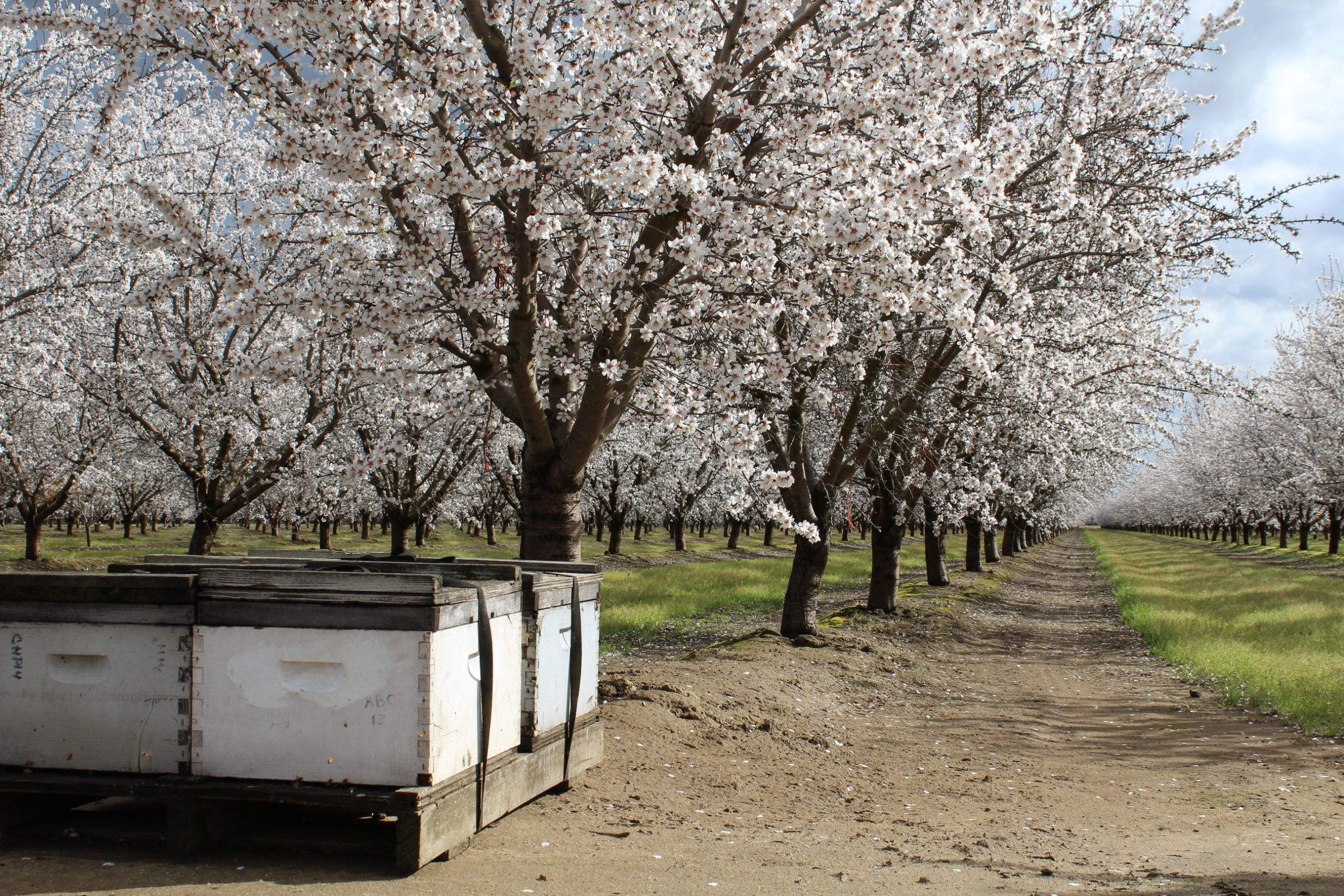
    A foraging honey bee approaches an almond blossom.

    Almond growers have a lot of inputs to consider to produce their crop. They must balance the cost of labor, pest management, water, and bees for pollination.  Those costs are not fixed year-after-year, especially renting the bees. The fact is the cost of colony rentals for pollination has steadily increased, and remained, at a premium. And almond acreage is projected to outpace the number of available colonies sometime in the next decade. Growers take these factors very seriously and it is not surprising that self-pollinating almond varieties have been a hot topic lately.

    “Bearing acres of almonds (trees old enough to produce fruit) are typically stocked with 2 colonies per acre of trees. If the trends of the last five years continue (a ~20% increase in acreage and a ~1% increase in honey bee colonies), pollination demand in almonds could exceed the supply of honey bees in the next five years.” Chart and caption are excerpted from The Bee Health Collective.

    Data shows that interest in self-pollinating varieties of almonds has translated into acres planted. ‘Independence’ almonds, in particular, are a proprietary varietal that now represents a noticeable chunk of new orchards over the last decade. Growers reported planting 3,155 acres of Independence almonds in 2019, which is about 15% of the total of new acres planted across all varieties. 

    This chart was created using data reported in the NASS 2019 Almond Acreage Report and shows the acres Independence almonds planted compared to the total new acres of all varieties planted (conventional and otherwise).

    Adapted from the Tuono variety Spain, self-pollinating trees have been modified for use in the U.S. where pollinator reliant almonds are most common. Pollinator reliant almonds are “self-incompatible” meaning that at least two varieties must be present to provide pollen for each other. Typically, the honey bee is brought in to transfer pollen from one row of trees to another, pollinating the trees and increasing nut set. 
     
    Even though Independence almonds do not require honey bees, research published in the journal Nature earlier this year demonstrated that honey bees are beneficial in those orchards, increasing fruit sets by 60% and kernel yield by 20%. This is an interesting finding as growers and beekeepers continue to work together towards a successful crop year after year. 
     
    All stakeholders are concerned that honey bee health challenges, and more recently declines in native pollinators,  will impact the availability of insects to pollinate almonds in the future. To continually meet this demand beekeepers have made adjustments to their yearly routines, adapting new technology to improve colony survival over the winter, and provide the high-quality colonies most useful for pollination in Almonds in February. One example of this is the increasing practice of indoor storage during the winter.
     
    Growers are stepping up to support pollinators as well. By planting forage in the form of cover crops, habitat plots, or hedgerows which provide food for bees, has been shown to increase colony size. A larger, healthier, colony will be able to supply more foragers to pollinate the trees more efficiently (foragers raised in a pollen abundant setting communicate better). Forage plantings can also improve soil quality and volume, prevent erosion, and break up compacted soil.  

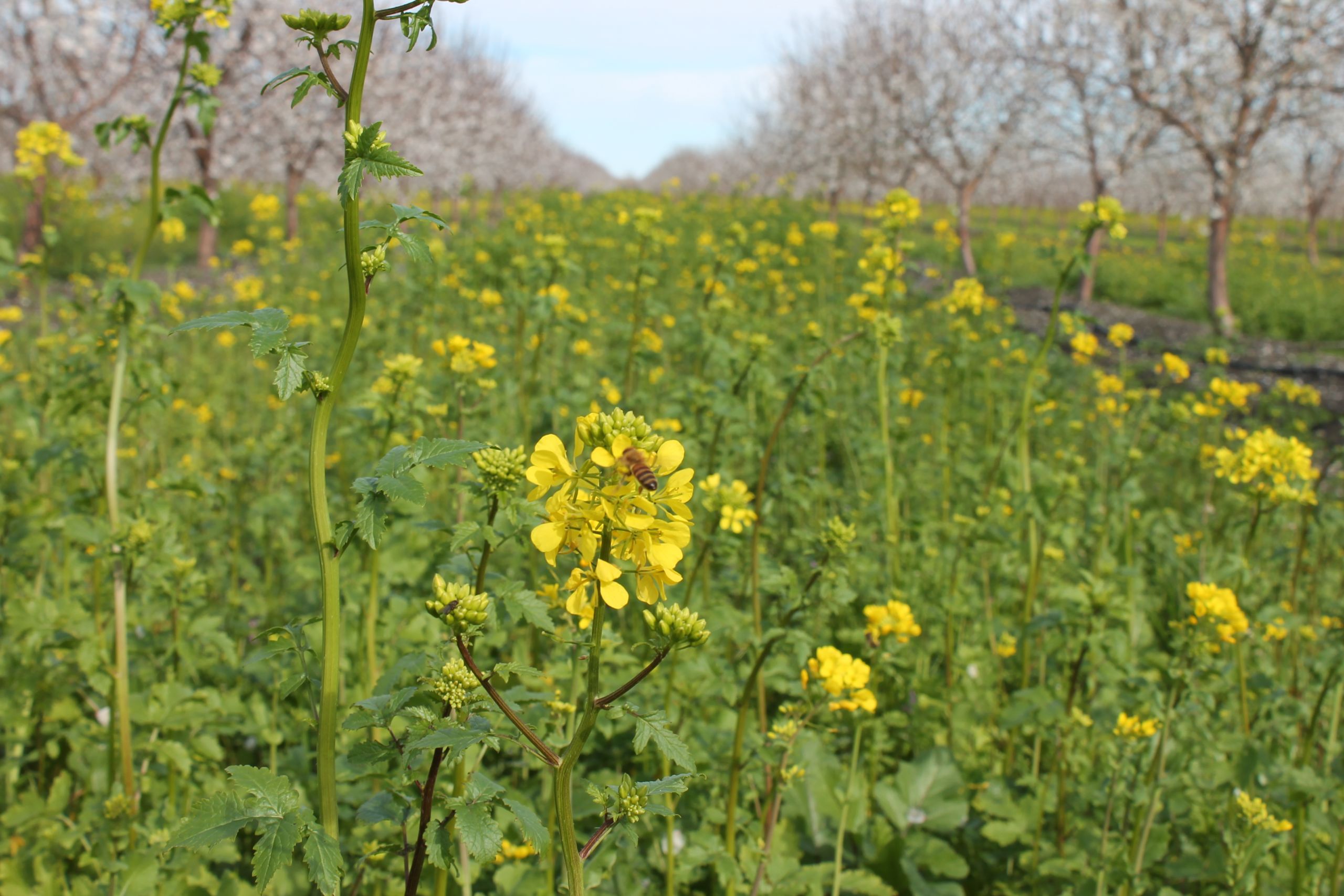
    The Seeds for Bees® program mustard mix is growing between rows of almond trees. The mustard mix is planted in the fall and begins to bloom in plenty of time to feed the honey bees that are beginning to arrive in the area for the almond bloom. In addition to mustard varieties, this mix also contains canola (a honey bee favorite) and daikon radish which grows down and breaks tough soils.

    The takeaway is this: healthy and abundant pollinators, native or managed, can increase production for all types of almonds. Beekeepers and growers continue to work together to plan for the coming years. Increasing forage is an especially effective tool that can be put into place now. PAm has made forage an integral part of our organization, through acres planted and research, to support beekeepers and growers at the crucial interface of almond pollination. — By Grace Kunkel, Project Apis m.

  • American Pistachio Growers’ 2021 Conference Cancelled

    American Pistachio Growers’ 2021 Conference Cancelled

    American Pistachio Growers — After thoughtful deliberations, the American Pistachio Growers (APG) Board of Directors has made the difficult decision to cancel the 2021 Annual Conference that was set to take place March 1 – 3, 2021 in Monterey, California. While we will miss seeing everyone in 2021, the health and safety of our members, attendees, speakers, staff and partners are our top priorities. The Board of Directors wants our members to have an annual conference that will match the same level of excitement, education and community that we’ve enjoyed in years past.

    The APG staff and Membership Services Committee are currently planning for an outstanding conference in March 2022 at the Omni La Costa Resort in Carlsbad, California. From the attendees to the presenters, exhibitors and sponsors who share their time, expertise, collaboration and leadership, we deeply appreciate your contributions to the pistachio industry.

  • Orchard Sanitation is key to a Quality Almond Crop

    Orchard Sanitation is key to a Quality Almond Crop

    Navel orangeworm (NOW) is the key pest of almonds, causing more income loss due to reject nuts than any other pest. Pesticide sprays, alone, cannot control this pest. A combination of several specific practices has been proven to reduce NOW damage and limit loss of grower income. These practices are winter sanitation, timely harvest and pesticide sprays (where needed). Mating disruption is an additional option that is seeing increasing adoption. The first of these practices on the orchard calendar is sanitation.

    Navel orangeworm find food and shelter in unharvested (“mummy”) nuts through the winter and spring, making those mummies a bridge of trouble from one year to the next in your orchard. Multiple research studies show that NOW damage increases with increasing mummy counts the previous winter. Destroying mummy nuts is the first step towards a cleaner crop and improved grower returns through quality incentives from processors. The goal of orchard sanitation is to turn that “NOW bridge” from a four-lane highway (no sanitation at all) into a narrow footbridge.

    Orchard sanitation is practiced by removing mummy nuts from the trees by February 1 and destroying (flail mow or disc) all nuts on the orchard floor no later than March 1st. In light of the expected reduced nut price for the 2020 crop, some growers may consider eliminating this key step in NOW management to “save money”. This is a risky move. The Sacramento Valley 2021 crop has a good chance to be lighter than the record 2020 crop resulting in 1) fewer nuts/tree and so higher % damage even if NOW populations stay the same and 2) larger nuts, on average, with the potential for poor shell seal and greater risk of NOW damage. Don’t play Navel Orangeworm Russian Roulette with your next crop. Sanitize.

    The following steps are needed for effective orchard sanitation:

      Before January 15, scout an orchard and count mummy nuts in 20 trees per acre. Include all varieties in this count.

      If average number of mummy nuts/tree exceeds 2, sanitation is recommended. The <2 mummies per tree target was developed in the early 1980’s, when industry average NOW damage was around 3.5%, much higher than today’s range of 1.3%. In the high pressure area of the southern San Joaquin Valley, the recommendation is to limit mummies to 1 per 5 trees (0.2 nuts/tree) and 8 or fewer mummies on the ground per Nonpareil tree, based on research from in 2003-2006 in Kern County. However, in 2019, northern California had higher % rejects level than the “high pressure” south San Joaquin Valley. Simply put, the fewer mummy nuts in an orchard, the lower NOW pressure at the start of the season.

      To sanitize, shake trees to remove nuts by January 31. Shaking can remove flower buds as they begin to swell and gain weight in late January/early February. Unless it is an early bloom season and buds begin to swell ahead of normal timing, shaking can be done into early February without reducing yield. Some buds are removed by shaking in early February, but since only 25% flower set = good commercial crop, some bud loss does not mean less crop at harvest. Some growers hand poll after shaking if too many nuts remain.

      Sweep downed nuts into windrows and mow or disc by March 1. Mow slowly (2 MPH) and check for intact nuts after mowing. If some nuts remain intact, mow again. NOW can survive if the nut is intact.

    Final thought. NOW overwinter in almond, walnut and pistachio mummies. NOW are also strong flyers, traveling at least a quarter of a mile to lay eggs. If you sanitize, but your neighbor(s) don’t, your orchard is at risk from NOW damage due to mated female moths, ready to lay eggs, flying over from the neighbors. Talk with your neighbors about sanitizing all orchards in the area and removing seedling “wild” almonds along fence lines as these can harbor NOW, too. — By Franz Niederholzer, UCCE Farm Advisor, Colusa & Sutter/Yuba Counties

  • After a Hard-Working Harvest, Trees Need Water to Remain Healthy

    After a Hard-Working Harvest, Trees Need Water to Remain Healthy

    Almond Board of California — Growers have a lot to think about leading up to and during harvest – prepping the orchard floor, timing the first shake in relation to hull split and achieving optimum moisture content during drying are just a few of the many important factors growers will consider from July to October.

    Even as this season’s bounty is being harvested, the foundation for next year’s crop is already being developed through fruiting-bud differentiation. The period from July to October, in normal years, is when floral buds develop and the next year’s crop yield potential is set. The principle is simple: more buds = likely more flowers = likely more almonds. 

    Many factors can affect crop yield, such as pollination, weather, and nutrient management decisions. But this year, especially, with a record projected crop on the way, one key practice growers should implement to maximize yield potential is optimized post-harvest irrigation. Because growers typically stop irrigating in the weeks leading up to harvest, their trees can be rather dried out come late September and early October.

    “The sooner you can get water back on your trees, the more you’ll be able to support tree health,” said Sebastian Saa, Ph.D., associate director for Agricultural Research at the Almond Board of California (ABC). “We know next year’s buds already are on the tree – water reduces the stress on the tree and therefore allows those buds to further develop.”

    One way for growers to think of post-harvest and late-season irrigation is that they are “paying it forward” for next year’s crop. During this critical time, trees’ water needs are significant and severe water stress can drastically affect bloom, fruit set and yield.

    Saa said growers who have self-compatible varieties may have more flexibility when it comes to post-harvest irrigation. Because there will only be one harvest per block in self-compatible orchard configurations, growers will not necessarily need to wait for the harvest of the pollinizer to irrigate again. Similarly, Saa also said that off-ground harvest (catching the nuts and drying them outside of the orchard) or semi-off ground harvest (catching them and re-allocating them to the middle of the row) also may provide flexibility when it comes to post-harvest irrigation.

    One key resource available to help growers better understand irrigation management – both post-harvest and year-round – is ABC’s 
    Almond Irrigation Improvement Continuum. This resource, developed by the Almond Board in partnership with many trusted and respected technical experts, provides a wide-ranging look at a grower’s site-specific irrigation system with the goal of improved efficiency and effectiveness. In the Continuum, growers and irrigation experts will find a step-by-step explanation of irrigation management and scheduling practices related to the following concepts:

    • measuring irrigation system performance and efficiency,
    • estimating orchard water requirements based on evapotranspiration,
    • determining applied water,
    • evaluating soil moisture, and
    • evaluating plant water status.

    Tom Devol, ABC’s senior manager of Field Outreach and Education, is available to help almond growers reach their goals of increased water efficiency. Devol and his team can meet growers in-person for in-orchard consultations to discuss irrigation systems, address challenges, and share ABC’s print and online irrigation tools. To schedule your own irrigation consultation, email Devol at tdevol@almondboard.com or call (530) 570-5558.

    More post-harvest irrigation information
    More information about the impacts of water stress on fruit bud development in relation to growing regions and varieties is available in the University of California Agricultural and Natural Resources publication 8515, “Drought Tips: Drought Management for California Almonds,” found at Almonds.com.

  • Soil Compacted Post-Harvest? Look to Cover Crops

    Soil Compacted Post-Harvest? Look to Cover Crops

    Almond Board of California — For the third year in a row, Chris Rishwain is preparing to plant cover crops in the windrows of his 150-acre almond orchard near Manteca. Although his original intent was to provide forage for honey bees during pollination, Rishwain has discovered multiple additional benefits to cover crops, one of the most impactful being the positive effect they have on compacted soil.

    “Soil compaction has been a problem for us,” Rishwain explained. “My goal to reduce soil compaction is aimed at helping improve the orchard’s water retention, allowing the roots of our trees to penetrate deeper in the soil to obtain water and minerals, and also to allow for better soil aeration, which supports the microbes in the soil.”

    Like many other almond growers, Rishwain just completed harvest, a time when shakers, sweepers, tractors and other heavy equipment can contribute to pre-existing issues of soil compaction in orchards up and down the Central Valley. Compaction also can be a greater problem in soils that have more silt.

    Soil compaction – coupled with other contributing factors – can negatively affect tree development and subsequent tree productivity. While there is work that can be done to prevent or decrease the severity of soil compaction before trees are planted in an orchard, once an orchard is established those options become more limited. That’s where cover crops can help.

    The Almond Board of California (ABC) continues to fund research into the impacts of cover crops. Much of that scientific work has been conducted by a team led by Amélie Gaudin, Ph.D., an associate professor of agroecology in the UC Davis Department of Plant Sciences, as well as researchers from UC Riverside.

    Seed money available to growers

    One of the most enthusiastic promoters of cover crops in California is Project Apis m., which has managed the popular Seeds for Bees program for many years. Seeds for Bees encourages the use of cover crops to increase the density, diversity and duration of pollinator forage in California agriculture, while also improving soil health.

    “The seed mixes available through Seeds for Bees are designed to bloom at critical times of the year when natural forage is scarce but managed and native bees are active,” said Billy Synk, the organization’s director of pollination programs.

    Through the Almond Board’s Bee+ Scholarship Program, 100 almond growers can receive up to $2,000 each in FREE cover crop seed through the Seeds for Bees program. Funding provided by ABC’s Bee+ Scholarship will allow growers to plant an estimated 3,500 acres of quality pollinator forage statewide – that’s in addition to the cover crop seed Project Apis m. typically distributes directly to almond growers through their Seeds for Bees program each year. Applications are being accepted now, so growers are encouraged to visit Almonds.com/Pollinationto learn more.

    Rishwain started participating in the Seeds for Bees program two years ago. He planted Project Apis m.’s Soil Builder mix, which includes brassicas, legumes and grains. In addition to the cover crops’ positive impact on honey bees, he also likes this mix because of its combination of shallow hair-like roots that help prevent erosion in addition to strong tap roots that grow deep into the soil, breaking up compacted areas.

    “I will use this mix again this coming year. I liked how it has a diversity of species that can improve soil health in our orchard in many different ways,” said Rishwain, adding that the experts from Seeds for Bees make choosing the right seed mix easy for any orchard situation.

    Synk said the most popular Seeds for Bees seeds mix that growers typically use to deal with compacted soils is the Mustard mix, which includes canola, white mustard, two kinds of yellow mustard and Diakon radish.  He also said 75% of Seeds for Bees participants list breaking up compacted soils as one of their primary reasons to plant cover crops.

    Similarly, Gaudin’s research shows that a mixture higher in legumes (such as clover and vetch) can boost nitrogen levels in the soil; conversely, grasses can help reduce nitrogen losses, decrease compaction and improve water infiltration.

    Typically, cover crops are planted in the fall – after harvest – and sprout naturally following the first rain of the new crop year. Their flowers provide additional forage for honey bees when almond trees are in bloom and their roots add organic material to the soil. The cover crops are then typically mowed down in late spring so orchard floors can be readied for harvest later in the year. Rishwain also uses a conditioner before harvest to filter out organic debris.

    Josette Lewis, Ph.D. , the Chief Scientific Officer for the Almond Board, said the organization expects to publish a practical guide on best management practices for cover crops at the start of 2021. In the meantime, growers are encouraged to participate in the Almond Board’s Bee+ Scholarship and visit the Seeds for Bees website to learn more about the benefits of planting cover crops in or near their orchards.

  • China Ramps Up Walnut, Macadamia & Pecan Production (Struggles with Almonds & Pistachios)

    China Ramps Up Walnut, Macadamia & Pecan Production (Struggles with Almonds & Pistachios)

    China’s in-shell walnut production is forecast at 1.02 MMT in 2020/21, an increase of 2 percent from the previous year, supported by a good harvest in the country’s top two producing provinces. Walnut imports will continue to decline as a result of increased local production. Almond and pistachio imports from the United States are expected to rebound due to improved supplies and the implementation of a tariff exclusion process.

    Production

    Walnuts

    China’s walnut production (in-shell basis) is forecast at 1.02 million metric tons (MMT) in marketing year (MY) 2020/21 (September-August), an increase of 2 percent from the previous year. This is driven by a bumper harvest in Xinjiang and Yunnan, the country’s two leading walnut-producing provinces due to favorable growing conditions. Walnut quality is also expected to improve, according to walnut dealers in Yunnan. Although northern walnut-producing areas, including Shanxi, Shaanxi, Hebei, and Gansu provinces, encountered severe frost damage during the blossom period, FAS China forecasts the crop losses are offset by production gains in Xinjiang and Yunnan. Furthermore, weather anomalies have led to smaller walnut sizes in these northern provinces. With more plantings entering the bearing stage, the country’s walnut production is forecast to continue increasing for years to come.

    In recent years, walnut planting area expanded driven by high walnut prices and government support programs in mountainous and hilly areas. In MY 2019/20 planting area declined as walnut prices declined. In MY 2020/21 industry sources indicated certain areas with walnut production will not be harvested due to low walnut prices and a lack of consumer demand for particular varieties. In Yunnan province, where most harvesting is done by hand, the walnut industry faces ongoing challenges due to increasing labor costs and aging farmers.

    In Xinjiang, however, walnut orchards sit on plains that make the management and harvest much easier. With the rapid expansion of acreage as well as the development of a specialized market and processing facilities, Xinjiang has quickly become the symbol of China’s future walnut industry. Currently, Xinjiang not only produces more than half of the country’s walnuts, but its walnuts are known for their large size and high conversion ratio. Industry sources indicate that Xinjiang walnut varieties have a much higher kernel content than their counterparts in other walnut-producing countries. However, very few local walnut varieties compete with popular global varieties such as Chandler from the United States and Chile that feature lighter kennel color and less bitter taste.

    Chinese walnut production was not affected much by the COVID-19 outbreak that interrupted farming activities and road transportation for other agricultural products. Specifically, the MY2020/21 walnut harvest began in early September after C-19 restrictions had been lifted and those walnuts grown in mountainous regions do not require ongoing care prior to harvest

    Almonds

    According to industry sources, China’s shelled almond production is forecast at 45,000 MT in MY2020/21 (August-July), unchanged from the previous year due to normal growing conditions. Shache county in southern Xinjiang produces more than 95 percent of the country’s almonds.

    Almond acreage has stabilized at around 63,000 hectares from the rapid expansion over the past few years, which was encouraged by the local government. However, almond yield has been low in the absence of proper crop management and agricultural inputs. In addition, Xinjiang almonds cannot compete with popular varieties such as Nonpareil. Therefore, almonds produced in Shache are exclusively sold within Xinjiang.

    Pistachios

    According to an industry report, China’s pistachio production (in-shell basis) is forecast at around 500 MT in MY2020/21 (September-August). According to industry sources, not many pistachio plantings are bearing fruit and yield remains low due to a lack of proper farming technology. Most pistachios are planted in southern Xinjiang for experimental purposes by private companies. It will take some time before suitable locations and varieties are identified for the Chinese pistachio industry.

    Other nuts – Macadamia, Hazelnut, and Pecan

    According to data released by the International Nut and Dried Fruit Council (INC), China’s Macadamia nut production (in-shell basis) is forecast at 30,400 MT in MY 2020/21 (September-August). INC forecasts the country’s shelled macadamia nut production at 5,000 MT in MY 2020/21. China’s macadamia nut industry is developing quickly. Industry reports indicate that planted area, currently estimated at 240,000 hectares, is projected to reach 300,000 hectares by 2030. Macadamia nuts are planted primarily in mountainous areas of Yunnan province and on the plains of Guangxi. Guangdong is reportedly increasing the size of their macadamia nut plantations.

    Hazelnut production (in-shell basis) is forecast at 40,000 MT in MY 2020/21 (September-August), including 10,000 MT of hybrid varieties (similar to European varieties) and 30,000 MT of wild varieties (much smaller in size), according to an industry report. The planted area of commercially cultivated hazelnuts (hybrid varieties) is estimated at 80,000 hectares, mainly located in Liaoning, Heilongjiang, Jilin, and Shandong provinces. The area of wild hazelnut species is estimated at 75,000 hectares, spreading in mountainous and hilly areas across northeast China (Heilongjiang, Jilin and Liaoning) and north China (Shandong, Inner Mongolia, Hebei, and Shanxi).

    Pecan production (in-shell basis) is forecast at 1,000 MT in MY 2020/21 (September-August), doubled from the previous year on increased bearing, according to an academic report. The country’s pecan acreage, which is currently estimated at nearly 67,000 hectares, has expanded quickly in the past few years in Yunnan, Anhui, and Jiangsu provinces. Pecan plantations are also spreading into other provinces including Shandong, Zhejiang, Jiangxi, Hunan, and Guangxi, according to the report. Most pecan orchards have not entered the stage of bearing. It is too early to predict whether China will become a major pecan producer. 

    Prices

    As the new marketing year has just begun, farm gate prices for in-shell walnuts are quoted at RMB 13.5 ($1.98) per kilo in Yunnan, the second largest walnut producing province, down more than 20 percent from the same period of last year, according to Yunnan walnut traders. China’s walnut prices have gone down in recent years as production keeps increasing. The outbreak of Covid-19 in early 2020 has put additional downward pressure on walnut prices due to slow movement of stocks following the closure of wholesale/wet markets and processing facilities.

    Consumption

    Tree nut consumption has continued increasing in tandem with rising incomes and a growing health consciousness among Chinese consumers. Per capita disposable income increased by 8.9 percent in 2019, according to the National Bureau of Statistics. Tree nuts, known for their nutritional benefits, are consumed on more occasions such as during travel, at tea breaks, and as meal replacements. However, the outbreak of Covid-19 in January 2020 seriously affected offline tree nut sales following suspension of processing facility operations, closure of retail outlets, and missing of social activities, including travel, gatherings, and gifting giving.

    As the pandemic situation has improved in China, tree nut consumption is expected to recover. A national health survey reports that the pandemic has enhanced the importance of a healthy diet in people’s lifestyle. Consumer research indicates that young professionals, a target audience for the product, view tree nuts as healthy and nutritious. Meanwhile, many nut manufacturers have stepped up their marketing efforts. New products such as cereals, probiotics, and cookies have emerged on the market and manufacturers have developed nut products with new flavors such as herb and green tea. As a result of these marketing efforts, tree nut consumption will likely expand.

    Trade

    Import

    China’s tree nut imports declined in the first half of 2020 due to the Covid-19 outbreak across the country that led to reduced buying interests and a disruption in logistics. The tree nut prices on the world market also fell significantly due to weak demand. Tree nut imports are expected to pick up in MY 2020/21 as economic and social activities resume in China.

    China’s pistachio imports are likely to increase in MY 2020/21 (September-August) on anticipation of greater available supplies from the United States and the tariff exclusion process put in place since March 2020 (see Policy). If so, the United States could regain the seat of being China’s largest pistachio supplier as sources expect the crop from Iran to drop by 15 percent this year.

    Similar to the pistachio situation, China’s almond imports from the United States are expected to rebound in MY 2020/21 (August-July) in anticipation of a bumper harvest, record low U.S. almond prices, the implementation of a tariff exclusion process and an improved pandemic situation in China.

    Walnut imports will continue to decline in MY 2020/21 (September-August) on increased local production. The United States remains the largest walnut supplier to China even though the volume has been declining since 2012 when local production started to boom. The retaliatory tariffs effective since April 2018 have made U.S. walnuts even less competitive. The market share of Chilean walnuts is quickly catching up, taking advantage of a bilateral Free Trade Agreement.

    Export

    China’s walnut exports are forecast to continue increasing moderately in MY 2020/21 (September- August) given much lower local prices. Although some buyers have reportedly postponed their purchase orders in the wake of the Covid-19 outbreaks, demand is expected to gradually recover, according to Chinese walnut processors. China has quickly become a major walnut supplier on the world market since its production jumped sharply in MY 2017/18. China exported more than 122,000 MT of walnuts (in-shell basis) in 2019, an increase of more than 240 percent on a yearly basis, according to China Customs data. The country exports mainly in-shell walnuts to Kyrgyzstan, Turkey, and Pakistan. Shelled walnuts are shipped to Kyrgyzstan, Russia, and Japan.

    The export volume of Chinese macadamia nuts is on the rise. China’s exports of macadamia nuts have shown a consistent upward trend with MY 2020/21 forecast to reach 4,000 MT (in-shell basis). Australia remains the single largest buyer of Chinese shelled macadamia nuts, while the United States has outpaced Japan typically the second largest buyer, of in-shell macadamia purchases.

    Policy

    China’s State Council Tariff Commission (SCTC) announced a reduction in the retaliatory Section 301 tariffs on U.S. agricultural products as of February 14, 2020 (see GAIN report CH2020-0016). As a result, the import tariff collected on U.S. tree nuts would be lower (see table below for details). In addition, the SCTC launched a tariff exclusion process on March 2, 2020 where importers could apply for tariff exclusions on specific consignments from the United States. If an exclusion application is successfully approved, the Section 301 tariffs imposed on U.S. products, including certain tree nuts, would be exempted for a year from the date of approval (refer to GAIN report CH2020-0017).

    Marketing

    Tree nuts defy the economic downturn in 2020

    The China Native Foodstuffs Association in its 2019 China Tree Nut Industry Report estimated that the consumption of snack foods will reach RMB 1.2 trillion (U.S. $177 billion) by the end of 2020. Tree nut consumption accounts for 15 percent of the snack food category. Tree nuts are the fastest growing snack in China compared to traditional snack foods. Tree nuts are regarded as a heathy option as more customers seek to reduce their starch and sugar intake. Sources indicate that tree nuts are likely to gain market share from snacking alternatives including puffed or extruded foods, confectionary items, and preserved snack foods.

    The Covid-19 outbreaks effected retail sales of tree nut products, however e-commerce platforms showed strong demand for tree nut purchases. For example, one of China’s largest tree nut processors and retailers, which operates a large online presence reported 16.4 percent year over year revenue growth during this period.

     Competition

    In the past 30 years, the tree nut marketing industry in China has transformed from regional brands and regional trade, to fierce national competition in online and offline formats. South China remains an important distribution point for primarily imported tree nuts, while large snack food companies have developed in East China. The five largest national tree nut snack brands include: Be & Cheery (Zhejiang Province), Three Squirrels and QiaQia Foods (Anhui Province), Bestore (Hubei Province), and Wolons (Shandong Province).

    National tree nut snack brands in China compete in their product mix and distribution channels. E- commerce accounts for an overwhelming percentage of sales for the top Chinese tree nut companies. Tree nuts are either sold as sole product lines or incorporated in dried fruit or candy packaged product lines.

    Consumers

    According to industry research, 26 – 35-year-olds make up around 56 percent of tree nut consumers. This group has high disposable income, interest in diverse foods, and a high repurchase rate.

    While most popular in first and second tier cities, tree nut sales have grown in third and fourth tier cities as consumers increasingly adopted, and companies expanded, e-commerce sales platforms amid the Covid-19 outbreak. The use of e-commerce platforms in these third and fourth tier city markets increased about 21 percent since 2018. The same demographic of tree nut consumers is also most likely to use e-commerce, and, those in third and fourth tier cities tend to spend more than the average Chinese consumer, providing expanded opportunities for tree nuts.

    Innovation

    Food offerings in China thrive on variety. Research and development in the tree nut industry follows two major trends: variety of flavorings on the same tree nut and optimizing nutrition and storage. Nut companies are increasingly identifying market segments and producing products tailored to that segment. For instance, nuts or nut mixes specially packaged or mixed nuts for breakfast, the gym, or the office and to fulfill consumer needs for pregnant women, people on diets, and office workers.

    Bakery consumption booms

    Imported tree nuts are also used in the Chinese baking industry which has grown by double digits in recent years. The bakery sector in China commonly uses U.S. almonds, walnuts, pecans and pistachios as ingredients in bakery chain breads, cookies, cakes and pastries. The mid-Autumn Festival (October 1-8 in 2020) is peak season for sales of moon cakes; in 2019 moon cake sales reached 19.6 billion RMB (U.S. $2.8 billion). These dense, filled pastries have seen filling innovations in recent years, and tree nuts are a trendy alternative. U.S. tree nut producers could consider research and development cooperation with moon cake producers to expand this seasonal trend in China. — By Alexandra Baych, USDA Foreign Agricultural Service

  • Report Provides Data on New Almond Varieties

    Report Provides Data on New Almond Varieties

    Almond Board of California—Innovation always has been part of the almond industry. That includes exciting research about new almond varieties intended to meet the changing needs of consumers, end buyers and fast-growing export markets.

    There are about 70 different varieties of almonds grown around the world. California orchards produce about 30 varieties, though 13 of them – with Nonpareil dominating – account for 98% of what is regularly grown. While other countries may grow multiple other varieties, when it comes to total production California remains on top, producing more than 80% of the world’s almonds and supplying millions of pounds annually to more than 90 export markets.

    Still, California growers and handlers must continue to adapt to provide almonds that satisfy shifting consumer appetites, end-buyer demands and other market forces. What a confectionery business or chocolatier wants in an almond can vary greatly from what someone snacking in India or China wants, which can differ largely from what a company producing almond milk in the U.S. wants.

    The diverse uses for almonds and ever-changing preferences continue to influence demand for specific kernel characteristics such as flavor, appearance, shape, texture and color. Similarly, to continue improving not only what we grow but how we grow, the industry is looking into almond varieties that check horticultural boxes, including the ability to produce more pounds per light intercepted and self-compatibility.

    Recognizing the need to constantly innovate and maintain high demand for California almonds, the Almond Board of California (ABC) began funding almond variety development research in the early 1970s and expanded that effort in the late 1980s to include rootstock breeding. Over the past 20 years, this research has delivered five new University of California (UC) varieties – Padre, Sonora, Kester, Winters and Sweetheart – and supported testing of most commercial varieties and rootstocks for overall performance, resistance to pests, diseases and abiotic stresses. The research has kept California on the cutting edge of almond production globally.

    Now, for the first time, decades of data and results from ABC’s first-ever Crack Out Day (an event held last November at which industry members tasted and compared more than 60 almond varieties from around the globe) have been pulled together in a comprehensive breeding report. For growers looking to replant their orchards as well as nurseries and private breeders, the report offers critical information about the performance and potential promise of different almond varieties.

    “The California almond industry is always looking for better and more sustainable almond varieties,” said Sebastian Saa, ABC’s associate director of Agricultural Research. “We’re convinced that through research and innovation, we’ll find varieties that produce not only more pounds of almonds, but also higher quality with reduced management costs and horticultural inputs in terms of water use, pest management and more. As technology and experience advance, it will allow us to discover better, more efficient varieties.”

    Saa listed the following as some of the key takeaways and learnings provided by the report:

    • The growing number of self-compatible varieties being developed globally.
    • Spanish varieties are mostly hard shell, but some new selections are soft shell and should be evaluated in California.
    •  Spanish breeding programs have mastered late-bloom varieties and self-compatibility traits.
    • The Australian breeding program has some varieties that scored very high during Crack-Out Day and should be evaluated in California.
    • Several varieties created by the U.S. Department of Agriculture and UC breeding programs are performing quite well in ongoing trials in California.

    ‘Diversification is key’

    Breeding is an art of balancing improvements while accepting some trade-offs. To define this balance, experts must consider the various segments of the almond industry, starting with the growers, moving to the hullers and shellers, handlers, food companies and then, ultimately, the consumer. As Saa said, “Diversification is key.”

    “Different uses and different needs demand different varieties,” he explained. “When you think about an almond variety for snacking, for example, you think about crunch and strong flavor. But when you think about a variety for almond milk, you’re probably thinking about milder flavors. And if you’re looking for a variety to cover in chocolate, you’re looking for a short but round kernel shape.”

    Nonpareil and other soft-shell varieties dominate the snack segment because of their shape, smooth surface and light blonde color. Mission varieties like Marcona, Butte, Padre and Fritz typically are used for natural roasted and bulk purposes, as well as in candy and chocolate applications. And California varieties like Carmel, Monterey and Wood Colony often are roasted, salted and flavored. They also are good for slicing and slivering.

    Key varietal differences covered in the report include a summary of how many popular almonds grown in California are auto-incompatible, meaning they require cross-pollination between different varieties, and yet how some of the new varieties are self-compatible, requiring no cross-pollination. Another horticultural distinction covered in the report is crack-out percentage and double percentage. California varieties and some Australian varieties have a high crack-out percentage (kernel-to-shell ratio). In addition, the report discusses different varieties’ tendency to produce kernel “doubles,” and finally, maturity rate and its impact on harvest timing is also mentioned. Armed with this knowledge, said Saa, growers can be more flexible and have more operational diversification.

    “If you have only one variety that you need to harvest within a narrow window, you put a lot of demand on your resources at one critical point in time. However, when you have multiple varieties that you can harvest sequentially, you can leverage your equipment and maximize your resources,” Saa said. 


    Looking ahead to the future of breeding

    Creating new almond varieties is a slow and complex process. It can take as long as 15 years to develop a new breed and then another 10 to 15 years to truly test it.

    “Once you develop a variety, you need to see how it performs under differing weather and environmental conditions — and there’s only one harvest per year,” Saa said. “So in order to be confident in a new variety, we need to test during multiple harvests across the valley. Today, we’re trying to do that more efficiently than ever before.”

    To provide a mechanism to evaluate new varieties across the diverse almond-growing regions in the state, the Almond Board began funding long-term and multi-locational Regional Varietal Trials (RVTs) almost 50 years ago. The first trial ran from 1974-1981 and the second from 1993-2006.

    The current RVT – involving orchards in Butte, Stanislaus and Madera counties, all planted with 30 identical varieties – began in 2014. Saa expects the study to last until 2025. ABC coordinates with the UC’s research system on the RVT, and the UC provides important contributions from the leading plant nurseries and private breeders in the state.

    Saa said some important characteristics that researchers will evaluate in RVTs moving forward include:

    • a bloom period that begins no earlier than Nonpareil,
    • self-compatibility,
    • crack-out percentage equal to or more than 40%,
    • percentage of kernel “doubles” equal to or less than 10%, and 
    • increased yield potential.

    Growers interested in ABC’s RVT are encouraged to check out UC Davis’ Fruit & Nut Research & Information Center, as updated information from the ongoing RVT is expected to be published on the center’s website in early 2021.

  • Pistachio Market Research Report & Global Forecast to 2025

    Pistachio Market Research Report & Global Forecast to 2025

    The Global Pistachio Market is expected to grow from USD 3,776.49 Million in 2019 to USD 4,568.00 Million by the end of 2025 at a Compound Annual Growth Rate (CAGR) of 3.22%.  A new pistachio market research report is available for order, with insights from companies such as Meridian Growers LLC, Setton Pistachio of Terra Bella Inc., and Wonderful Pistachios and Almond Company LLC.

    Market Segmentation & Coverage:

    This research report categorizes the Pistachio to forecast the revenues and analyze the trends in each of the following sub-markets:

    On the basis of Product, the Pistachio Market is examined across In-shelled and Shelled.

    On the basis of Ditsribution, the Pistachio Market is examined across Convenience Stores, Modern Trade, and Online Sales.

    On the basis of End User, the Pistachio Market is examined across Bakery & Confectionery, Breakfast Cereals, Dairy Products, Flavored Drink, and Snacks.

    On the basis of Geography, the Pistachio Market is examined across Americas, Asia-Pacific, and Europe, Middle East & Africa. The Americas region is examined across Argentina, Brazil, Canada, Mexico, and United States. The Asia-Pacific region is examined across Australia, China, India, Indonesia, Japan, Malaysia, Philippines, South Korea, and Thailand. The Europe, Middle East & Africa region is examined across France, Germany, Italy, Netherlands, Qatar, Russia, Saudi Arabia, South Africa, Spain, United Arab Emirates, and United Kingdom.

    Company Usability Profiles:

    The report deeply explores the recent significant developments by the leading vendors and innovation profiles in the Global Pistachio Market including Bates Nut Farm, Germack Pistachio Company, Houston Pecan Company, Meridian Growers LLC, Rasha Pistachio Co., Setton Pistachio of Terra Bella, Inc., Sierra Nut House, The Pistachio Co Food Trading LLC, Whistler Foods, and Wonderful Pistachios & Almond Company LLC.

    FPNV Positioning Matrix:

    The FPNV Positioning Matrix evaluates and categorizes the vendors in the Pistachio Market on the basis of Business Strategy (Business Growth, Industry Coverage, Financial Viability, and Channel Support) and Product Satisfaction (Value for Money, Ease of Use, Product Features, and Customer Support) that aids businesses in better decision making and understanding the competitive landscape.

    Competitive Strategic Window:

    The Competitive Strategic Window analyses the competitive landscape in terms of markets, applications, and geographies. The Competitive Strategic Window helps the vendor define an alignment or fit between their capabilities and opportunities for future growth prospects. During a forecast period, it defines the optimal or favorable fit for the vendors to adopt successive merger and acquisition strategies, geography expansion, research & development, and new product introduction strategies to execute further business expansion and growth.

    Cumulative Impact of COVID-19:

    COVID-19 is an incomparable global public health emergency that has affected almost every industry, so for and, the long-term effects projected to impact the industry growth during the forecast period. Our ongoing research amplifies our research framework to ensure the inclusion of underlaying COVID-19 issues and potential paths forward. The report is delivering insights on COVID-19 considering the changes in consumer behavior and demand, purchasing patterns, re-routing of the supply chain, dynamics of current market forces, and the significant interventions of governments. The updated study provides insights, analysis, estimations, and forecast, considering the COVID-19 impact on the market.

    The report provides insights on the following pointers:

    1. Market Penetration: Provides comprehensive information offered by the key players
    2. Market Development: Provides in-depth information about lucrative emerging markets and analyzes the markets
    3. Market Diversification: Provides detailed information about new product launches, untapped geographies, recent developments, and investments
    4. Competitive Assessment & Intelligence: Provides an exhaustive assessment of market shares, strategies, products, and manufacturing capabilities of the leading players
    5. Product Development & Innovation: Provides intelligent insights on future technologies, R&D activities, and new product developments

    The report answers questions such as:

    1. What is the market size and forecast of the Global Pistachio Market?
    2. What are the inhibiting factors and impact of COVID-19 shaping the Global Pistachio Market during the forecast period?
    3. Which are the products/segments/applications/areas to invest in over the forecast period in the Global Pistachio Market?
    4. What is the competitive strategic window for opportunities in the Global Pistachio Market?
    5. What are the technology trends and regulatory frameworks in the Global Pistachio Market?
    6. What are the modes and strategic moves considered suitable for entering the Global Pistachio Market?

     
    Order the detailed report HERE.