Category: Non-Video

  • Nominations Being Accepted for Almond Achievement Awards

    Nominations Being Accepted for Almond Achievement Awards

    The Almond Board of California honors two industry or allied industry members annually at their annual Almond Conference in Sacramento, CA. The nomination deadline for the 2024 awards is October 29, 2024.

    Almond Achievement Award

    Beginning in 2011, the goal of the Almond Achievement Award is to recognize an industry member who has added value through long-term service for the betterment of the California almond industry. ​Award recipients are individuals with long-standing and direct involvement, who ​demonstrate lasting impact on, and commitment to, the California almond industry.​

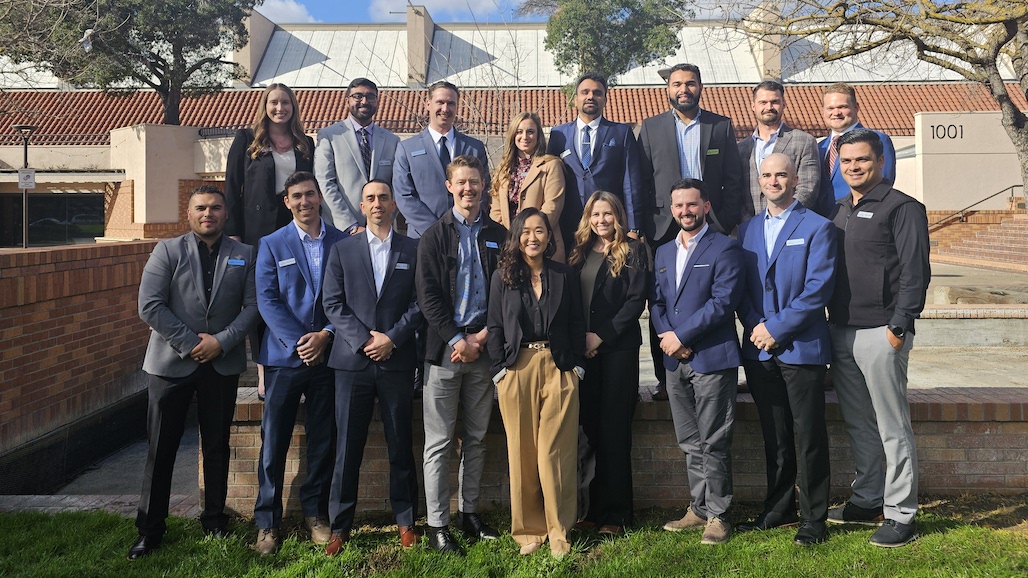
    Dick Cunningham received the 2023 Almond Achievement Award at The Almond Conference in December.

    Left to right – Bertie Areias, Dick Cunningham, Sarah Cunningham, Alexi Rodriguez (image courtesy of the Almond Board of California)

    Nominate someone for the 2024 AAA award.

    Almond Technical Achievement Award

    Beginning in 2021, the goal of the Almond Technical Achievement Award is to recognize an industry or allied industry member who has contributed a significant technical advancement for the betterment of the California almond industry through research, innovation or facilitated adoption of practices. Award recipients have contributed significant research, facilitated an innovative practice, or assisted in the adoption of a practice for the betterment of the industry.

    Wes Asai was awarded the 2023 Almond Technical Achievement Award at The Almond Conference in December.

    Left to right – Wes Asai, Gina Asai, Carrie Asai, Alicia Rockwell (image courtesy of the Almond Board of California)

    Nominate someone for the 2024 ATAA award.

    Past Winners

    Almond Achievement Award Winners

    2023 – Dick Cunningham

    2022 – Brian Ezell

    2021 – George Goshgarian, Sr.

    2020 – Jim Paiva

    2019 – Rob Kiss

    2018 – John Thoming

    2017 – Tony Campos

    2016 – Dave Phippen

    2015 – Jim Jasper

    2014 – Dave Baker

    2013 – Martin Pohl

    2012 – Joe Macllvaine

    2011 – Ned Ryan

    Almond Technical Achievement Award Winners

    2023 – Wes Asai

    2022 – Paul Lum

    2021 – Ken Stevenson

  • Applications Open for Almond Board Leadership Program 2025

    Applications Open for Almond Board Leadership Program 2025

    In 2009, Almond Board of California (ABC) set out to encourage a new group of individuals with diverse backgrounds to become leaders in the almond community. The result was the creation of the Almond Leadership Program. The yearlong program is designed to provide a mentored experience for the next generation of leaders, and includes leadership training seminars, hands-on educational opportunities, field experience and a firsthand look at the inner workings of ABC. Through the Almond Leadership Program, participants will learn how to effectively lead, manage and inspire others in the almond community; enhance business relationships; understand current social, political, scientific and economic issues facing almonds; and master communication and leadership techniques relevant to managing or retaining a leadership role in almond organizations and their local community.

    Seeking to cultivate and inspire passionate leaders for years to come, applications are now open for the 2025 Almond Leadership Program and must be received by November 22nd at 11:59 p.m.  Interviews are scheduled to take place November 25-26th AND December 3-5th.

    The program consists of approximately 110 hours of seminars and events, and 70 hours of interactive learning to complete assignments (time estimates do not include travel time). Attendance at all seminars and events is mandatory. All applicants must have reliable transportation and be available to travel to seminars and events as scheduled. Full consideration will be provided to all applicants regardless of age, gender, race or other distinguishing characteristics.

    Evaluation and Review of Applications

    A panel will evaluate completed applications. Consideration will be given to applicants who show the greatest potential to further the interests of the California almond community. Applicants will be notified to schedule a personal interview with ABC staff and other stakeholders in the Almond Leadership Program. Successful applicants will be notified by email.

    Participant Costs

    The Almond Leadership Program does not charge for participation in the program. Any costs incurred with mileage will be reimbursed at the government rate. Educational materials, meals and occasional lodging accommodations are paid for courtesy of Almond Board. Please note that participants in ALP may incur small incidental expenses associated with scheduled seminars, industry events, and special projects. These costs are the responsibility of the participant and should be paid for at the time of the event.

    Click HERE for more details and to apply for the program. For questions about the program, email Rebecca Bailey.

  • Roller Crimping – A Cover Crop Termination Option

    Roller Crimping – A Cover Crop Termination Option

    With the end of harvest comes the beginning of winter prep work. One practice that provides a bevy of positive impacts for orchards is planting a winter cover crop. Adding organic matter to the soil via cover crops can improve water infiltration and water holding capacity of the soil. Fixing nitrogen and breaking up compacted soil can also be achieved by selecting appropriate species for your cover crop mix.

    While the benefits of winter cover cropping in orchards are well-known, the particulars of when and how to terminate the cover crop can be overwhelming. Using herbicides to terminate a crop can be expensive, and achieving good coverage can be difficult with large amounts of biomass. Mowing or tilling can disrupt the soil, losing some of the accumulated carbon. Annie Edwards and Margaret Smither-Kopperl with the USDA recently released a report on termination using a roller crimper in orchard systems. Their findings show that, while this can be a great tool to maximize the benefits of cover cropping, roller crimping works best with certain cover crop species and growth stages.

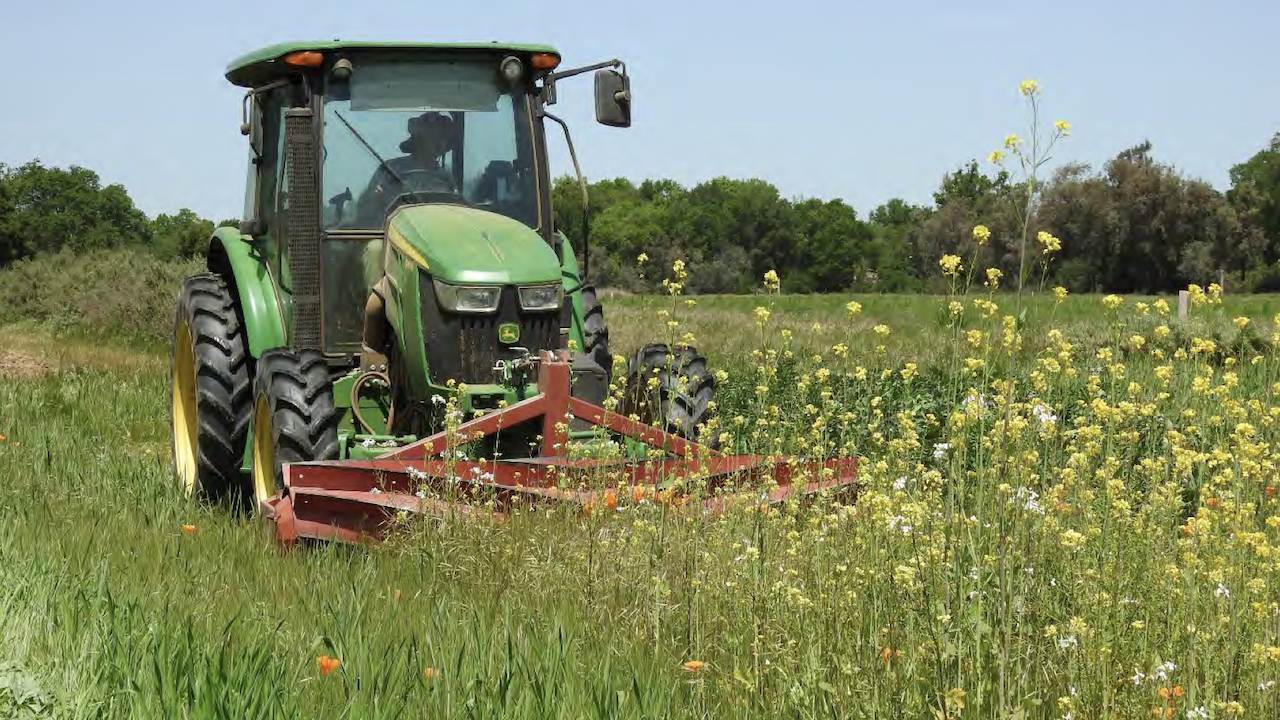
    Figure 1. Roller crimper implement. Photo credit: Tracy Robillard, USDA NRCS.

    Roller crimping is a common practice in other parts of the country but had not yet been studied in California orchard systems. A roller crimper is a drum-shaped implement with blunt curved blades (Figure 1.) that rolls over and crushes down the vegetation without disturbing the roots. This creates a mat of biomass over the soil’s surface, similar to mulch. This has been shown to reduce soil temperatures, conserve soil moisture, decrease erosion, and reduce herbicide use. The timing of roller crimping is critical; too early and you won’t have enough biomass produced to adequately cover the soil and provide the desired benefits. Too late and the cover crop may have produced seed that can germinate in the current season, depending on irrigation practices and precipitation.

    Research completed at the USDA’s Lockeford Plant Materials Center compared four different cover crop seed mixes to determine how well the roller crimper terminated each. Additionally, each of the four mixes was crimped at 6 different times to evaluate which growth stage was most successful for termination. Data on “bounce back” (when plants stood back up and continued to grow) as well as regrowth, biomass, vegetative stage, and cover crop canopy height were collected.

    • Results showed that the brassica mix “bounced back” and regrew when roller crimped too early. Termination with the roller crimper was most effective when these species were at least a week into flowering, with termination remaining effective through “seed maturing” stage.This termination timing allowed for good biomass accumulation,  and the study notes that the brassica mix formed a vegetative mat when crimped, which is the ultimate goal of this termination technique.
    • The fava beans alone remained crimped after the plants had visible early pods reaching about 3/16”. The fava beans and the brassica mix were the only treatments that were completely successfully terminated with the crimper.
    • The “annual plow down” mix, consisting of oats, vetch, peas and fava beans, showed best results when crimped at early visible pods in the fava. This mix also had the largest biomass accumulation over the season. However, the oats in the mix had a high rate of “bounce back”. Crimping was not an ideal method of termination for this mix.
    • The triticale crop continued to regrow when crimped too early. Crimping was most successful for this species after the plants started to flower. However, even then, the triticale “bounced back” and was never fully successfully crimped.

    Ultimately, roller crimping is most effective for termination of cover crop mixes without grass species. Crimping brassica mixes and fava beans produces a vegetative mat that can protect soil and maximize the benefits of cover cropping. It is key to use this technique at the appropriate vegetative growth stage for the species in your mix, as crimping too early can necessitate repeating the practice.

    The entire USDA report, including seeding densities, seed sources, and photos can be found here. — By Becky Wheeler-Dykes, UCCE Farm Advisor, Glenn, Tehama and Colusa Counties

  • Prepare to Prevent an Autumn Freeze from Damaging Walnut Trees

    Prepare to Prevent an Autumn Freeze from Damaging Walnut Trees

    Autumn freeze damage in walnuts can occur when trees experience freezing temperatures prior to going into dormancy. In recent history, Sacramento Valley growers experienced this most severely in 2018, and since then, many have implemented management practices to prevent widespread damage.

    Symptoms of freeze damage can include:

    • Late leaf-out in affected limbs
    • Weak or dead terminal budwood and smaller upper limbs (mild/moderate damage)
    • Major limb death, mainly in the upper and exposed portions of the tree, and/or apparent whole tree death (severe damage)
    • Darkened or orange-tinted wood, with gray/black streaking in the cambium underneath
    • Sunburn on damaged limbs, usually on south- and west-facing sides

    This past spring (2024), growers in Sutter, Yuba, Yolo, and Tehama counties reported symptoms of freeze damage, likely from an early autumn freeze that occurred near Halloween. If you noticed any of these symptoms in your orchards this past spring or are aware of cold pockets in certain areas/fields, consider the following steps to prevent another year of freeze damage.

    Preventative management:

    Increase soil heat storage:

    1. For young trees, it’s best to cut off N applications by mid-August to prevent tender new growth that is most vulnerable to freeze damage. Also, withhold irrigation starting in early to mid-September to set a terminal bud on the trunk (Figure 2). After the terminal bud has set, resume irrigation to avoid tree stress and defoliation, without the fear of pushing tender new growth.

    2. For mature trees, cut off nitrogen (N) applications by the beginning of September. Terminal buds may set as a positive side effect of the water cutoff done ahead of harvest to avoid shaker injury.

    Increase soil heat storage:

    3. Maintain short groundcover during autumn frost season, beginning mid-October. Keeping groundcovers cut to 2 inches or less during frost season allows sunlight to reach the soil surface, increasing soil heat storage for a warmer orchard through the night. Recently cultivated soil has many air spaces, low heat storage capacity, and low heat conductivity resulting in colder minimum temperatures. The ground surface must be moist for bare ground to be the warmest (see steps 4 and 5).

    4. Trees that remain water-stressed after the heat of summer are the most vulnerable to autumn and winter freeze damage. If there has not been adequate rainfall by mid-October for young orchards, or immediately after harvest for mature orchards, begin irrigating to refill the soil profile.

    5. Water-filled spaces in the soil conduct and store more heat than empty air spaces. Once the soil profile has been refilled, the top several inches of soil are the most important for freeze mitigation and should be kept at field capacity (not saturated/ponding) if possible. Either a dry surface crust on one extreme or a frozen sheet of ponded water on the other extreme will both hinder the re-radiation of stored daytime heat during the night.

    6. Continue to actively monitor soil moisture and freeze predictions in November and December (until trees are acclimated to frost – see note below). Since freeze events are variable depending on location, monitoring each block remotely with a freeze alarm makes good sense. If a freeze is predicted and the soil is dry, irrigate to wet the soil 2 to 3 days before a freeze event to fill the air spaces so the soil will store more heat. Light irrigation to moisten a dry soil surface the morning before a freeze will help obtain the greatest heat storage for re-radiation at night (as long as there is no standing water during the freeze event).

    Active irrigation during freeze event:

    7. Some growers with the ability to actively irrigate during sudden autumn freeze events have reported success in preventing damage. With active irrigation, heat is given off as water converts from liquid to ice. This occurs during the coldest hours of the early morning of the freeze event and is the reason higher flow rates are needed to more successfully manage frost events.

      • We know from work in almonds that active frost protection with solid set irrigation can achieve as much as 4 degrees protection if your system can run 40 gpm/ac.
      • With micro-sprinkler irrigation, 1-2 degrees of warming can be achieved with at least 30 gpm/ac. 25 gpm/ac has been shown to be enough to keep sprinkler heads from freezing.

    Painting:

    8. In addition to water management, painting young trunks and shoots white can minimize damage if applied as soon as possible after a freeze. Research by UC Walnut Specialist Bruce Lampinen has shown painting after leaf fall with white interior latex paint diluted 50% with water minimizes damage to shoots and buds, especially on the south-west side of the tree. The paint moderates large day-to-night temperature fluctuations after sunny winter days.

    Treatment:

    If you suspect freeze damage occurred, cut into the branches shortly after a freeze event and check the tissue for drying or browning. Swift action in the week after a freeze event can significantly decrease damage. If you don’t paint early, painting trees after a freeze can still help decrease severe damage. Wilbur Reil, Farm Advisor Emeritus, found that when trees were painted a week after a freeze event 18% showed damage, compared with 46% damaged in the unpainted trees. Painting any parts that may be damaged should improve recovery and protect against winter sunburn of affected tissue.

    New growth typically occurs below the damaged/dead locations. Dead wood should be pruned out later in the season (mid-summer), after the tree has fully leafed out, to reduce potential colonization sites by Bot or Phomopsis. In young trees with significant freeze damage, remaining limbs or new limbs may have to be trained as new scaffolds.

    Potential causes:

    In “normal” years, the combination of short days, gradually dropping fall temperatures, and rainfall pattern allows trees to go into dormancy in a stepwise pattern (2021 and 2022 in Figure 3 below). In years where we’ve received more reports of autumn freeze damage, there have been large differences in daily high and low temperature (2020), and sudden drops to freezing temperatures prior to trees reaching full dormancy (2020 and 2023).

    As temperatures drop into the low 30s °F and days shorten, carbohydrates move from leaves to wood and starch converts to soluble sugars. Slow cooling is needed to promote starch degradation into sugars, which act as “antifreeze” to protect cells from freezing, as does adequate soil moisture, which keeps cells hydrated. When temperatures suddenly and prematurely drop below 32°F before the acclimation process is completed, carbohydrate movement is likely disrupted and trees are susceptible to freeze damage.

    Unfortunately, we do not know how many frost/mild freeze events are required to sufficiently acclimate trees in autumn. So far, growers that were previously hit hard by fall freeze events have reported success in avoiding subsequent freeze damage by having frost alarms ready and turned on by October 15, completely rehydrating trees after harvest, and actively irrigating during freeze events. Eventually, once mature healthy trees are fully dormant, they can tolerate temperatures to the low 20s °F or below. — By Clarissa Reyes, Orchards Advisor, Sutter-Yuba, Butte & Placer Counties, and Luke Milliron, UCCE Farm Advisor Butte, Glenn & Tehama Counties

  • New Project Aims to Use Farm Waste to Fuel Bioeconomy

    New Project Aims to Use Farm Waste to Fuel Bioeconomy

    In California’s Northern San Joaquin Valley, crop leftovers such as almond shells, fruit peels and orchard trimmings can potentially be converted into sustainable bioproducts and biofuels – with the right technology. The philanthropy Schmidt Sciences’ Virtual Institute on Feedstocks of the Future, which supports replacing fossil feedstocks with renewable biomass sources, has awarded new funding to a group investigating how to make better use of the diverse agricultural waste in the region.

    “This is an important project for California as it quantifies the diverse ‘ingredients’ in the North San Joaquin Valley available to fuel the emerging biomanufacturing industry in the state,” said Gabe Youtsey, chief innovation officer for the University of California Agriculture and Natural Resources. “This foundational work will kickstart a completely new innovation bioeconomy in the Central Valley that will create new high-paying jobs for our communities and support a resilient food and agriculture industry through circular biomanufacturing.”

    Circular biomanufacturing is a process that uses waste streams as raw materials to create new products.

    “Circular means taking waste streams from agriculture such as almond shells or grape pomace, forest waste or food processing waste and using that material as the ‘feedstock’ in a fermentation tank to create new bioproducts,” Youtsey explained.

    The group, “Building the Circular Bioeconomy in the North San Joaquin Valley” or BioCircular Valley, is co-led by the Department of Energy’s Lawrence Berkeley National Laboratory (Berkeley Lab), UC Berkeley, and BEAM Circular, with partners at UC Merced, UC Agriculture and Natural Resources, the Almond Board of California and USDA Agricultural Research Station in Albany.

    “California has this incredible diversity of materials, but they aren’t well understood – and this makes it difficult to know how to extract the most value out of them,” said Corinne Scown, a senior scientist at Berkeley Lab and UC Berkeley and one of the project leads. “We want to characterize them and make that information available so companies can more easily figure out which feedstock is a good match for them, and then use that agricultural residue to make everything from bio-based polymers and chemicals to sustainable materials and aviation fuels.”

    One of the group’s goals is to build a publicly accessible database and user-friendly map full of information about different feedstocks, the raw plant materials and biomass that can be broken down and used to make bioproducts. That includes where feedstocks are located, when they are available, how they are currently disposed of, how they perform in different bioreactors, how much sugar or lignin they contain, whether they can be processed with other feedstocks, their greenhouse gas footprint, the potential cost, and much more.

    UC ANR’s role is to collect data on available feedstocks from forest, agricultural and food processing byproducts, as well as municipal waste streams through sampling and observation.

    “We will do this through the extensive knowledge and relationships we have with the California agriculture industry in the North San Joaquin Valley,” Youtsey said. “UC ANR will also support industry outreach as new ‘conversion’ technologies are developed, to pilot them with California growers and processors.”

    The project will also test ways to improve the flexibility of the conversion process, which breaks down feedstocks to prepare them to make bioproducts. Researchers will apply artificial intelligence to their lab-generated data to improve predictions of how feedstocks can be processed most efficiently or blended together. Being able to use the same technique on different (or mixed) kinds of plant matter would open up ways for companies to make bioproducts more easily.

    “Our region has a fantastic combination of diverse and large-scale agricultural activities alongside manufacturing expertise, making this a great place to scale up bioeconomy innovation,” said Karen Warner, CEO of BEAM Circular. “This project will allow us to reduce barriers to using our region’s abundant waste streams in more sustainable and valuable ways, so that we can create the products that people need with renewable inputs that are better for the planet.”

    The project builds on ongoing efforts to establish biomanufacturing capabilities in the northern San Joaquin Valley, which includes San Joaquin, Stanislaus and Merced counties. Providing better data on how to convert the valley’s millions of tons of agricultural waste into valuable products may spur biomanufacturing companies to build facilities nearby, minimizing how far the raw materials have to be moved and generating new jobs.

    “This project is designed to benefit a region that has massive potential, but so far has been economically left behind, and to develop a new industry that can provide improvements in air quality, water quality and greenhouse gas emissions as well as significant opportunities in economic equity and the creation of new jobs,” said Blake Simmons, director of Berkeley Lab’s Biological Systems and Engineering Division and the BioCircular Valley project lead.

    “This kind of research started as basic science, and now we’re bringing information and solutions to people who can use them. And the knowledge generated through this project will advance not only the ability of the NSJV to make use of its own regionally available future feedstocks, but will also accelerate the understanding of feedstocks relevant across California and across the U.S.”

    The new funds for the project come from the Virtual Institute on Feedstocks of the Future, a partnership between Schmidt Sciences and the Foundation for Food & Agriculture that supports collaboration on research to transform biomass into alternative feedstocks for biomanufacturing. The award is one of five, which total $47.3 million over five years. It is expected that the five teams will collaborate to share best practices and knowledge to boost the bioeconomy at the national level.

    “We are grateful for Schmidt’s generous support that will help deploy advanced technologies on the ground,” said Alicia Chang, interim president of Berkeley Lab Foundation. “The foundational research and expertise developed through work for the Department of Energy sets the stage for this team to apply their capabilities to bring jobs and lift the community and the economy in the Northern San Joaquin Valley.” — By Lauren Biron & Pam Kan-Rice, UCANR

  • Visual ID Guide to Help Manage New Almond Pest

    Visual ID Guide to Help Manage New Almond Pest

    Since the first reports of a new almond pest – the carpophilus beetle (Carpophilus truncatus) – came in during fall 2023, it has become clear that the beetle is widely dispersed across the San Joaquin Valley.

    “My lab has identified infestations from every county in the San Joaquin Valley; we have found infestations in both almonds and pistachios, and we will likely find infestations in walnuts this fall,” said Houston Wilson, a University of California Cooperative Extension entomology specialist at UC Riverside. The California Department of Food and Agriculture has confirmed the beetle’s presence in Stanislaus, Merced, Madera and Kings counties.

    Historically a major threat to almond production in Australia, the beetle – as larvae and adults – feeds directly on the nut kernel. In California, some almond growers have lost 10 to 15% of their yield – a “significant economic loss,” according to Jhalendra Rijal, University of California integrated pest management (IPM) advisor for the region. Given the prominence of almonds as a commodity, even a 1% overall reduction statewide represents an approximately $70 million loss.

    “This year there has been a lot more reports from PCAs [pest control advisers]; they’re sending me the pictures of the damage and beetles,” said Rijal, noting that the increase is likely due to greater awareness of the pest.

    To help almond growers identify the carpophilus beetle and develop management plans, Rijal, Wilson and their IPM colleagues have put together a visual ID guide for the beetle and the damage it causes, as well as telltale signs of navel orangeworm (Amyelois transitella) and ant damage. In particular, the experts would like PCAs and growers to differentiate between the carpophilus beetle and navel orangeworm, another key pest in almonds.

    “Even though their way of causing damage looks more or less similar, we’re dealing with two different types of insects,” Rijal explained. “One is a Lepidoptera moth [navel orangeworm], and the other one is a beetle – many of the management practices and biological controls would be different for these two different things.”

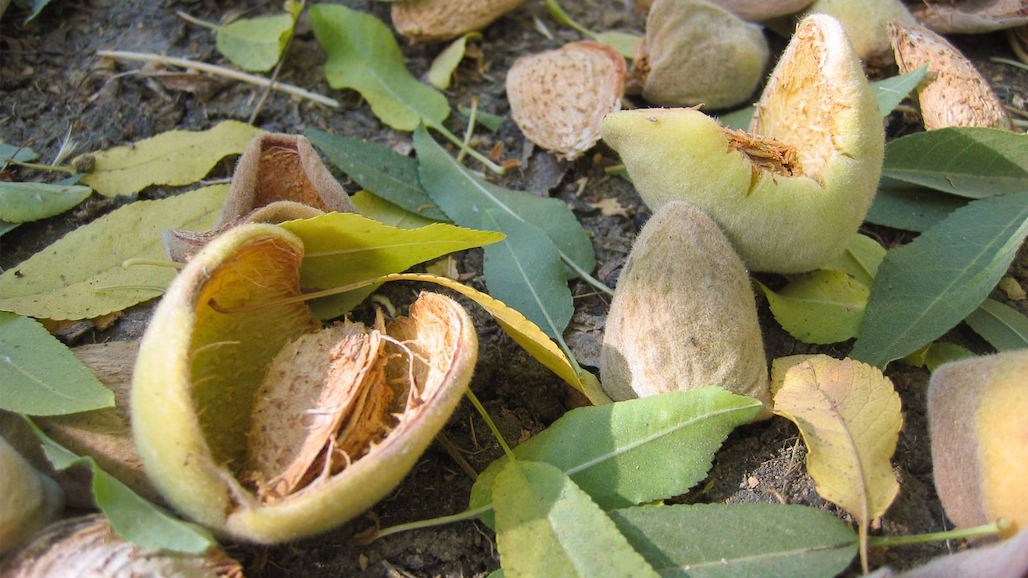
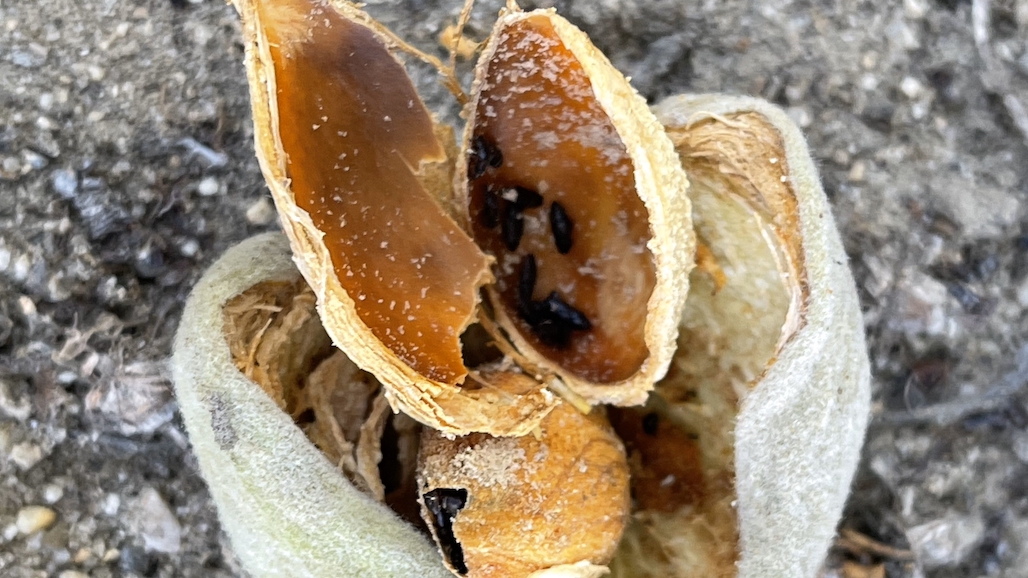
    TOP: Both carpophilus beetle adults and larvae feed on the kernel and cause damage characterized by fine powdery frass and nutmeat, a white-creamy color with some webbing. Often, large numbers (more than 10) of adult and larvae are found per nut. BOTTOM: Navel orangeworm larvae cause damage characterized by thicker frass and silky webbing entangled with a darker, brownish appearance. Only larvae are present at harvest, usually 1 to 3 larvae per nut. Photos by UCCE Stanislaus IPM team

    To control carpophilus beetle, ‘sanitize, sanitize, sanitize’

    One crucial cultural practice for managing both pests, however, is destroying the remnant “mummy” nuts – the nuts that remain in the orchard postharvest. They serve as overwintering habitat for the carpophilus beetle, as well as its sustenance for the next generation of beetles in spring.

    “The best way to manage this pest is to do the orchard hygiene – continuing the winter sanitation, destroying the nuts that are on the ground and on the tree and on the berms,” Rijal said.

    Based on observations in Australia and locally, carpophilus beetles tend to rely more on mummies on the ground, whereas navel orangeworm generally favors mummies in the tree canopy. Correctly identifying the pest – with help from the new ID guide – enables growers to better target and prioritize their management efforts, Rijal said.

    “What we are strongly emphasizing is that growers need to sanitize, sanitize, sanitize to control both pests,” Wilson added.

    Correct identification of the pest would also prevent unnecessary application of insecticides, as those used for controlling Lepidoptera such as navel orangeworm would be largely ineffective on the beetle.

    Indeed, another insight shared by Australian experts is that the carpophilus beetle cannot be controlled just by insecticide.

    “Insecticides are not very efficient, given the cryptic nature of these beetles; exposing these beetles to the insecticide is very hard,” said Rijal, noting that the beetle spends most of its life cycle protected inside the nut.

    Reporting carpophilus beetle infestation helps researchers

    Mature larva of navel orangeworm (NOW) is 3 to 4 times larger than carpophilus beetle (CB) mature larva. Photo by Jhalendra Rijal

    This harvest season, Rijal advises almond growers to harvest as efficiently as possible, to minimize the number of mummies that need to be cleaned up. And because signs of damage (like damaged hulls and frass) are most obvious during harvest time, Rijal said growers should review the new guide, using the photos and other resources to help identify potential pests.

    If the grower or PCA suspects a carpophilus beetle infestation, they should contact the UCCE farm advisor in their area.

    Scientists are looking to expand their knowledge about this relatively new pest to California. In the coming weeks, for example, researchers are planning to survey for the carpophilus beetle in the Sacramento Valley.

    “Technically it has not been found there, but we suspect that we’ll find it this fall when we go looking for it,” Wilson said.

    Researchers are also collecting samples from infested orchards to better understand the biology of the species, as well as how it progresses through and responds to seasonal and climactic changes. In addition, they are analyzing data from a trial study of an insecticide that might be used as a supplemental control measure.

    “This is our first full season dealing with this insect, and there are still many things we need to understand,” Rijal said. “We are continuing our research efforts on all fronts.” — By Michael Hsu, UCANR

  • Ag Community Mourns Loss of Tim Gerdts

    Ag Community Mourns Loss of Tim Gerdts

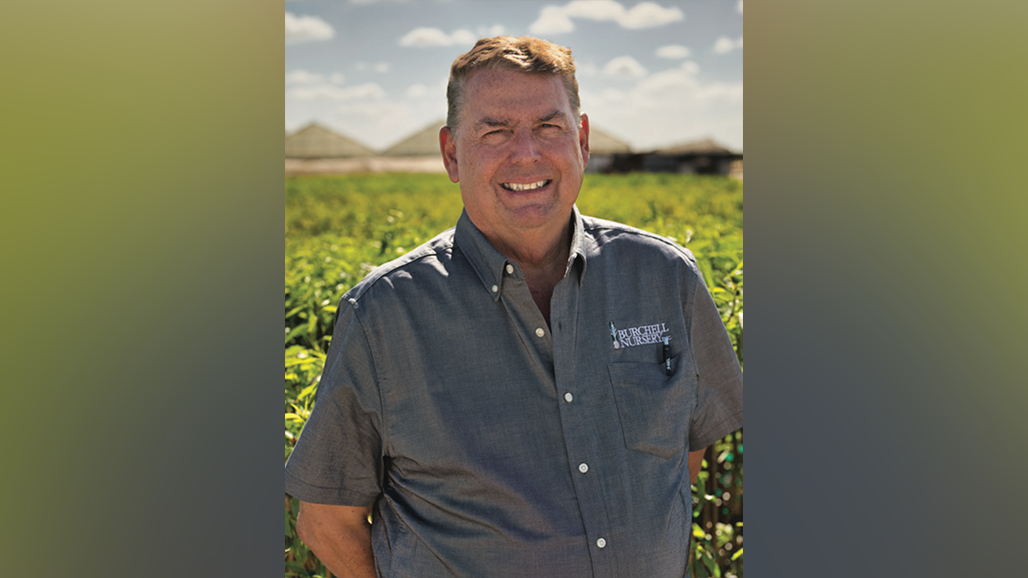
    The sudden passing of Tim Gerdts on August 26, 2024, marked a day of mourning for both the company he dedicated 38 years to and the fruit and nut community he supported.  Tim began his tenure at Burchell Nursery as a sales representative in 1986, after serving as a field supervisor and lead at Gerawan Farming. At the time, Burchell Nursery was expanding with a new branch in Fowler, CA, and required a sales representative for the Fresno area.  Residing in Kingsburg, a Fresno State alumnus, Tim was well-acquainted with the local growers and fruit packers.

    Raised in an agricultural environment, with his father serving as a UC Cooperative Extension Farm Advisor, Tim learned orchard management firsthand.  At Burchell Nursery, he leveraged this knowledge to offer growers guidance on pruning, planting, rootstock selection, and varietal recommendations.  Tim was often seen in peach or almond orchards, demonstrating proper pruning techniques to growers.

    Tim played a pivotal role in the Burchell Nursery Breeding Program, contributing to the introduction of over 70 peach and nectarine varieties, many of which, like the Autumn Flame peach, have become industry benchmarks.  He also collaborated with Bradford Farms to launch numerous new stone fruit varieties from their breeding program.  Tim’s relentless search for the ideal variety, whether new of established, always aimed to advance the grower’s success.

    Beyond his exemplary sales representation, Tim was a cornerstone during the winter delivery season, assisting in the distribution of trees.  He managed the Burchell Nursery Fowler sales yard, overseeing the coordination of tree shipments and deliveries to clients.  Working in tandem with truck drivers and office staff, he ensured seamless deliveries to meet customer readiness.  Tim’s commitment extended to operating a forklift for loading trucks or being present at a customer’s orchard early in the morning.

    His untimely passing is a loss that will resonate throughout the agricultural industry, as we have lost one of the most knowledgeable tree experts.  His presence will be profoundly missed by everyone that knew him.

    In lieu of flowers, the Gerdts family has asked that donations be made to the Fresno Rescue Mission.

  • War in Ukraine Leads to Lackluster Investment in Future of Walnut Industry

    War in Ukraine Leads to Lackluster Investment in Future of Walnut Industry

    The USDA Foreign Ag Service forecasts Ukraine’s walnut production at 101,300 metric tons (MT) for marketing year (MY) 2024/25, a 4 percent decrease against MY2023/24. Household production continues to slide as old, non- productive trees are being chopped down. Post forecasts production areas for industrial growers to remain flat, as there is currently little appetite for long-term investments due to Russia’s full-scale invasion. Post forecasts MY2024/25 exports will decrease by 9 percent as large ending stocks, which were predominantly amassed during MY2021/22, have been slowly depreciating for two consecutive MYs. At the same time, rebounding imports of tree nuts in line with economic recovery and adjustment to the “new normal” are putting downward pressure on volumes of domestically consumed walnuts.

    SSSU published official production numbers for CY2023. The total walnut reported area is 16,400 ha, a 4.1 percent decrease compared to the previous CY. Walnut production is reported at 106,120 MT, similar to the previous CY. Post accepts these as MY2023/24 estimates. Note that a MY for Ukraine starts in September and ends in August; therefore, MY2023/24 refers to the period between September 2023 and August 2024.

    The main reason for sliding production area is a constant area decrease by households (Figure 1). The majority of walnuts harvested in Ukraine are produced by individuals or small private family farms harvesting trees on their land or in the vicinity of their farms. This category of producers is not typically concerned with the application of fertilizers and agrochemicals and uses manual labor to harvest and shell walnuts. Harvested walnuts are typically sold to intermediaries, who assemble batches for export or store them in-house in times of low demand or unfavorable prices.

    In CY2015, over 95 percent of Ukrainian walnut production area was on small, private family farms. In CY2023, these farms represented around 74 percent of total area. Post predicts this downward trend in walnut production on family farms will continue in the medium to long term as aging trees lose their productivity and are chopped down. However, family farms still enjoy a dominant position in production volumes, as they hold an absolute majority of the bearing tree area compared to industrial growers – 81 percent for CY2023.

    The main reason for decreasing production area among households is Ukrainian farmers began developing walnut orchards for commercial purposes in 2009. The average size of these commercial orchards ranges from 20 to 50 ha. The establishment of commercial farms can be attributed to pre-2022 GOU financial support for orchard and berry producers and the establishment of the agricultural land market in Ukraine. Industry notes that farmers were investing in high-yield commercial orchards with multiple walnut varieties, installing irrigation systems, and applying fertilizers. Some regions, especially in central and southern Ukraine, require irrigation to secure expected yields, while orchards in the northern part of Ukraine may experience lower yields because of the cooler climate. In southern Ukraine, seedlings can be planted in autumn, while in northern Ukraine, it is still advisable to plant in spring to avoid winter frost damage for newly planted trees. Walnuts are normally harvested from the end of September through the end of October.

    According to SSSU data, commercial growers scaled down their total walnut areas to 4,300 ha for MY2023/24 from a peak area of 5,600 ha in MY2019/20. This might be an indication that some growers went out of business due to uncertainties caused by Russia’s full-scale invasion of Ukraine and are subsequently cutting down or leaving behind the newly established orchards.

    Professional growers are currently reluctant to make long-term investments due to the ongoing Russian aggression against Ukraine. Fruit tree import dynamics confirm this (Figure 2). The initial investment required to establish an orchard ranges from $1,200 to $1,800 per ha. Read the full report from the USDA Foreign Ag Service HERE.

  • Coach Prime Turns to Almond Research to Help with Exercise Recovery

    Coach Prime Turns to Almond Research to Help with Exercise Recovery

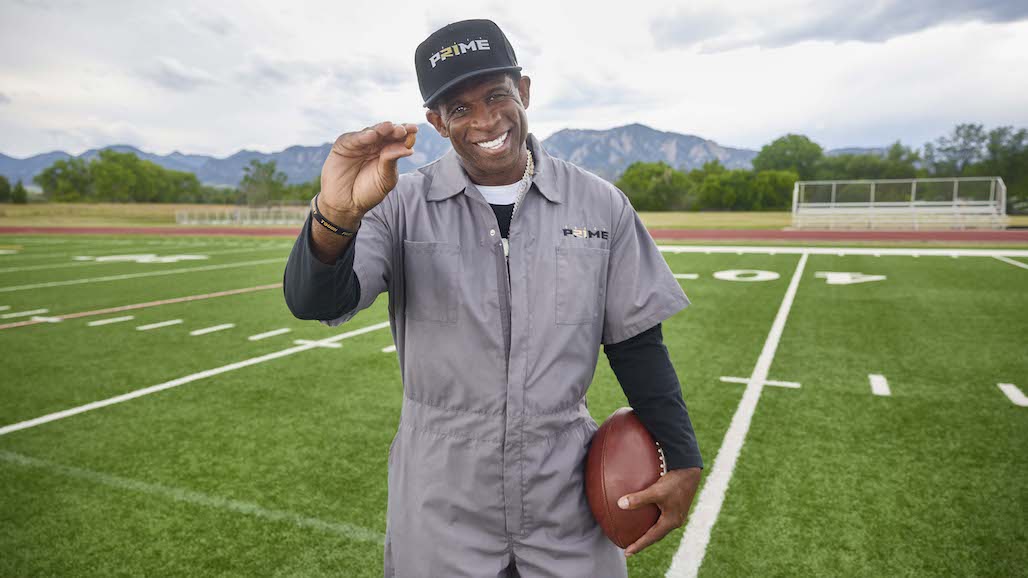
    Almond Board of California — Deion “Coach Prime” Sanders is using all his coaching tools to prepare for the college football season ahead. Those include his Prime Time swagger, electric motivational style, and his unique partnership with California Almonds, which opened his eyes to research showing almonds can help with recovery from workouts.

    One of the most singular motivators in college sports, Coach Prime works to prepare his players mentally and physically, both before and after practice and games. Sanders says recovering from workouts doesn’t have to be complicated — it can be as simple as fueling up on two servings of almonds (about 46) daily.

    “You gotta WANT it, then you gotta WORK it, which then places you in a position to WIN IT. And to WIN IT, you gotta take care of YOU and make sure your recovery is right,” says Coach Prime. “We are working day in and day out to DOMINATE both on the field and off, which is why I make sure almonds are a part of my life each day. You already know we WANT it, and almonds help us WORK IT, and then WIN IT. IT DON’T STOP, BABY!”

    Groundbreaking research shows that most study participants who ate two servings of almonds, (vs. a calorie matched cereal bar,) four weeks prior, reported reduced fatigue and tension, increased leg and lower back strength during recovery after completing 90-minutes of exercise, and decreased muscle damage during the first day of recovery after completing the exercise.

    This research, funded by the Almond Board of California, was conducted over four weeks among 64 U.S. adults ages 30 – 65 who are occasional exercisers.

    Coach Prime’s partnership with California Almonds became one of the most high-profile sponsorships in college sports in 2023 and is kicking off a second year. He says often that he learned how snacking on almonds can help with exercise and exercise recovery.

    Fans can catch Coach Prime and California Almonds at the start of the college football season with ads airing on national and cable TV networks like ABC, NBC, Fox, ESPN, and on social media. For more tips on how to own your prime from Coach Prime himself, visit almonds.com and follow California Almonds on FacebookInstagram, and Twitter.

  • Survey Projects Another Record Crop for U.S. Hazelnuts

    Survey Projects Another Record Crop for U.S. Hazelnuts

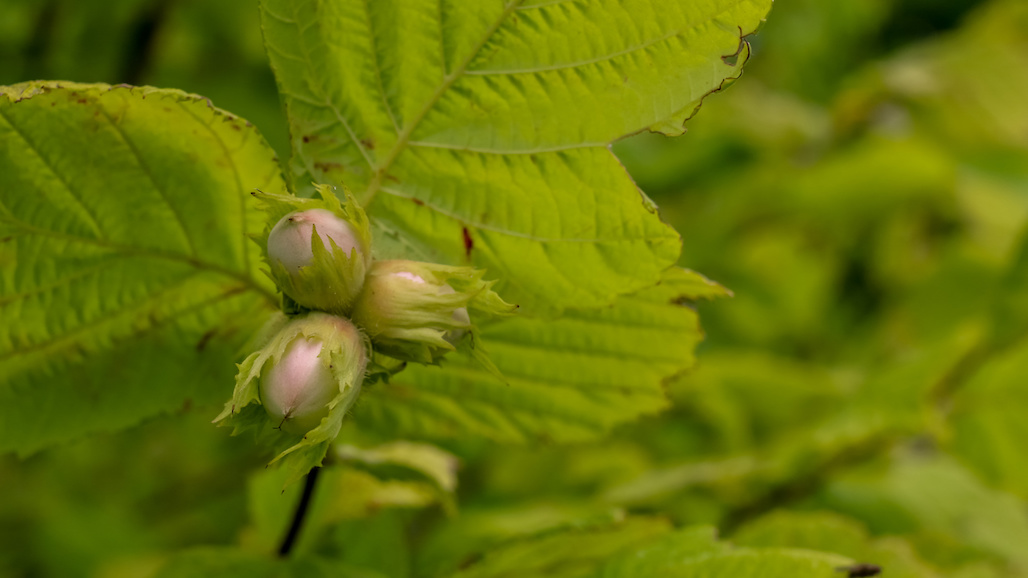
    The Hazelnut Marketing Board (HMB) concluded its annual Subjective Yield Survey (SYS), and with approximately 20 percent of acres accounted for, the harvest is anticipated to be 97,460.39 tons.

    This would represent a slight increase from the 2023 harvest of 93,300 tons, and a moderate boost over informal industry estimates that have placed the 2024 harvest closer to 90,000 tons. All totaled, 20,505.95 acres were submitted for in the Subjective Yield Survey. Extrapolated over the total industry acreage, per the Pacific Agricultural Survey aerial field mapping data from July 2024, the total merchantable weight would be 194,920,782.18 pounds, or 97,460.39 tons.

    The Subjective Yield Survey is conducted by sending postcards to all hazelnut growers in early July and asking them to project what they think their yield will be. Cards were accepted through the Nut Growers Society Summer Tour on August 7 to allow growers more time to complete the survey and more accurately predict their harvests.

    The Subjective Yield Survey is the only industrywide predictor for the U.S. hazelnut harvest this year. Questions regarding the Subjective Yield Survey may be directed to the Hazelnut Industry Office at 503-582-8420 or Hazelnut@OregonHazelnuts.org.