Category: Non-Video

  • Almond Orchards Prevail in Battle with Phytophthora

    Almond Orchards Prevail in Battle with Phytophthora

    SPONSORED CONTENT

    Losing crops is a reality of farming, especially when you’re battling weather, new pests and emerging diseases. Seeing a few acres of your life’s work perish is tough, but the threat of losing your entire operation is a different type of sting. One California almond grower shares how soil health improvements made his orchards vulnerable to disease and how he was able to bring them back from the brink of total devastation.

    Trees Lost to Unusually Wet Weather Worsened by Soil Prep

    Whole orchard recycling is a process to reincorporate an outgoing orchard in preparation for planting a new one. Mature trees are felled and ground into woodchips, which are then spread and incorporated into the soil. The University of California found that this process can help improve water retention. The issue for John Fassler, a California pest advisor who went through whole orchard recycling, was that the moist soil and greater-than-normal rainfall turned his orchards into the perfect breeding ground for oomycete pathogens like Phytophthora.

    Fassler has consulted at Braden Farms where they used whole orchard recycling as a way to prepare for planting a new orchard. “This is a fairly new process, which means we’re learning as we go,” he says. “Some issues we’ve seen have been a rise in fungal diseases, such as Phytophthora and other replant diseases.”

    Mother Nature hasn’t helped the fungal disease risk, especially at the beginning of the 2023 growing season. California experienced greater than average annual precipitation in 2023, breaking numerous records and ending three years of persistent drought, according to the California Nevada River Forecast Center.

    “We’ve had significant rainfall in California the last two years, so this has really intensified the battle with Phytophthora in some spots,” says Ashley Bandoni, Syngenta sales representative and California almond grower.

    Fassler experienced devastation due to those heavy rains. One of his orchards was completely submerged, worsening the orchard’s Phytophthora issues.

    “We lost about 500 trees on this block due to Phytophthora and replant disease,” says Fassler. “Phytophthora is becoming more and more of an issue in these wetter years.”

    Watch Video

    Phytophthora Overtakes Young Almond Trees

    Many California growers and crop consultants have been battling fungal disease challenges.

    Ethan Nicol, an independent pest control advisor and crop consultant for Balanced Agronomics, helped one of his customers manage extreme Phytophthora in a young almond orchard.

    Planted in the fall of 2021, Nicol began seeing early symptoms of Phytophthora infections the following spring. Young trees like the ones in the orchard Nicol manages tend to be more susceptible to disease because their root systems and crown areas are smaller compared to those of mature trees, according to the University of California Department of Agriculture.

    “In that first 2022 season, we observed maybe 30 percent of the orchard was infected,” says Nicol. “By mid-August, we had really grown to realize the significance of the issue.”

    Watch Video

    Coming Back from Orchard Devastation

    For both Nicol and Fassler, almond yield potential was on the line and devastation was just over the horizon. They both had a tough decision to make.

    “As far as doing our research going into it, usually we have the Syngenta reps come in to help us decide if the product will be a good fit for us,” says Fassler. “We also ask about how the product differentiates itself from what we’ve already been doing.”

    After discussions with their local Syngenta experts, Fassler and Nicol decided to apply Orondis® fungicide to help save their orchards. Fassler says his flooded orchard plot turned around.

    “My experience with Orondis changed up our program,” says Fassler. “We’ve been able to work it into our program really well and we didn’t lose one tree this year.”

    Nicol’s experience with Orondis was also nothing short of extraordinary. Before application, Nicol was working with the grower to continuously remove and replant dead trees. They lost roughly 600 almond trees — six ranches — to Phytophthora. Once Orondis was applied in 2023, Nicol observed a noticeable decline in newly infected trees.

    “We were confident in the success that we were seeing by the replants taking and growing strongly, and the existing trees continuing to grow and not develop signs of Phytophthora,” says Nicol. “Going into 2024, just as a precaution and to help protect this investment, we made an additional Orondis application. There’s been almost no sign of infected trees this season.”

    Growers Also Need Care

    If Fassler and Nicol didn’t have the guidance and support of their Syngenta representatives, their almond orchards might have been lost.

    “I’ve worked with Syngenta for probably about the last 20 years, and through the years we’ve had many different experiences,” says Fassler. “Syngenta has always been there to help us through and guide us through what needed to be done.”

    Learn more HERE.

  • Alicia Rockwell Elected New Almond Board of California Chair

    Alicia Rockwell Elected New Almond Board of California Chair

    The Almond Board of California (ABC) Board of Directors elected Alicia Rockwell to be the new chair of the Board. Rockwell will take over the role on Jan. 1 from Alexi Rodriguez, who will begin a new role of her own on Jan. 1 as CEO of the Almond Alliance.

    Rockwell is the Chief Government and Public Affairs Officer for Blue Diamond Growers. Brandon Rebiero, a co-founder of Gold Leaf Farming, was elected the Board’s vice chair.

    “I’m honored to have the trust of my fellow board members,” said Rockwell. “The board is a strong group of experienced and impressive individuals who care deeply about our industry. Together, we will continue to address industry challenges and build a prosperous future for the California almond industry.”

    The ABC Board sets policy and approves budgets in major areas, including global market development, production research, public relations and advertising, nutrition research, statistical reporting, quality control and food safety.

    ABC is a Federal Marketing Order dedicated to promoting California almonds to domestic and international audiences through marketing efforts and by funding, ensuring food safety and promoting studies about almonds’ health benefits and state of the art agricultural practices to aid growers and to further the industry’s efforts in environmental stewardship.

  • CA Walnut Commission Awarded $7 Million in 2nd Round of USDA’s Regional Ag Promotion Program

    CA Walnut Commission Awarded $7 Million in 2nd Round of USDA’s Regional Ag Promotion Program

    The California Walnut Commission, representing more than 4,600 California walnut growers, mostly multi-generational family farms, and approximately 70 handlers, is pleased to announce it has been awarded $7 million in funding as part of the Regional Agricultural Program’s (RAPP) second round of grants to expand distribution and sales of California Walnuts in international markets.

    The CWC thanks Agriculture Secretary Tom Vilsack, the U.S. Department of Agriculture, and the Foreign Agricultural Service for enacting the Regional Agricultural Promotion Program and awarding a second round of funding to help support the expansion of California Walnuts and other US commodity exports into emerging markets. This additional funding will allow the industry to expand programs into new markets, as well as boost activities in existing strategic export markets currently funded through the Market Access Program (MAP), with the goal of increasing distribution and driving sales of high-quality California walnuts globally.

    “Funding from the Market Access Program has been essential to our success over the years, and the additional funding from the RAPP program will provide more resources to drive new distribution and grow sales for California walnuts in even more new and exciting ways” said Robert Verloop, CEO for California Walnut Commission. “We’re eager for the opportunity of RAPP to further expand sales of and market access for California walnuts.”

    About the California Walnut Commission

    The California Walnut Commission (CWC) represents more than 4,600 California walnut growers and approximately 70 handlers, grown in multi-generational farmers’ family orchards. California walnuts, known for their excellent nutritional value and quality, are shipped around the world all year long, with more than 99% of the walnuts grown in the United States being from California. The CWC, established in 1987, promotes usage of walnuts through domestic and export market development activities as well as supports health research with consuming walnuts.

    To explore recipes and learn more about California walnut growers, industry information and health research, visit walnuts.org.

  • American Pistachio Growers Receives Federal Funding to Fuel Global Market Growth

    American Pistachio Growers Receives Federal Funding to Fuel Global Market Growth

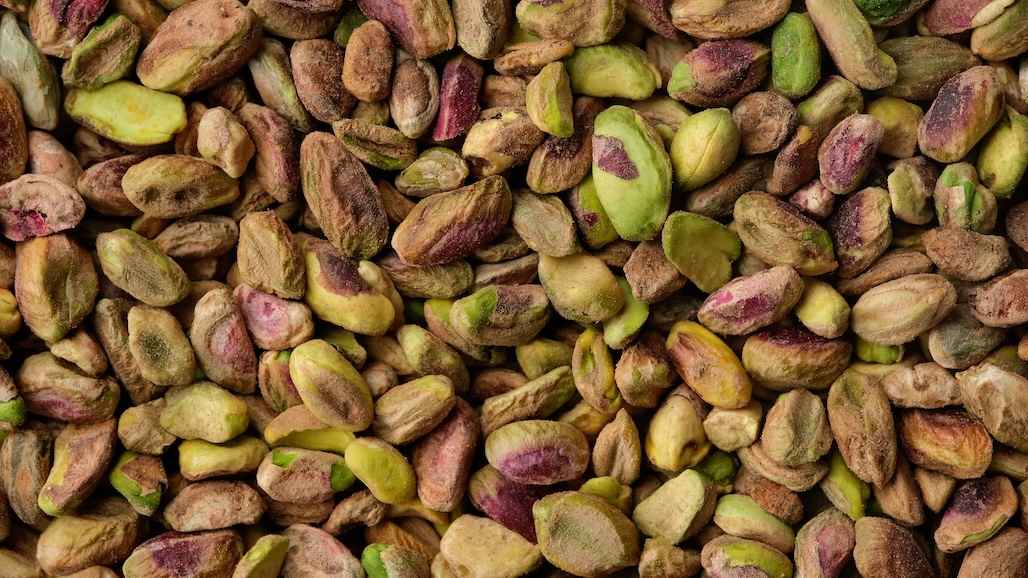
    The U.S. Department of Agriculture’s Foreign Agricultural Service announced recently that funds were available via the Regional Agricultural Promotions Program (RAPP) to drive exports of U.S. commodities.  American Pistachio Growers is the recipient of $3.25 million dollars of federal grant funds to drive demand of pistachios worldwide.

    “American Pistachio Growers is very grateful for these funds, “said Scott Fryer, Vice President of Global Marketing. “This will go a long way in our efforts to drive demand in key countries, and drive growth for the pistachio industry. We are also thankful to our growers. Because of their contributions to our organization, we can seek and apply for these grants, turning their investment into more efforts to drive demand.”

    These funds, along with other federal marketing grant funds, now mark over $8 million dollars in marketing grants over the past year.  Funds for the Regional Agricultural Promotion Program can be spent over a multi-year period, at the discretion of the recipient.

    American Pistachio Growers is the non-profit trade association representing more than 865 growers and member processors in California, Arizona, New Mexico and Texas.

  • Walnuts Deemed “Healthy” By the U.S. Food & Drug Administration

    Walnuts Deemed “Healthy” By the U.S. Food & Drug Administration

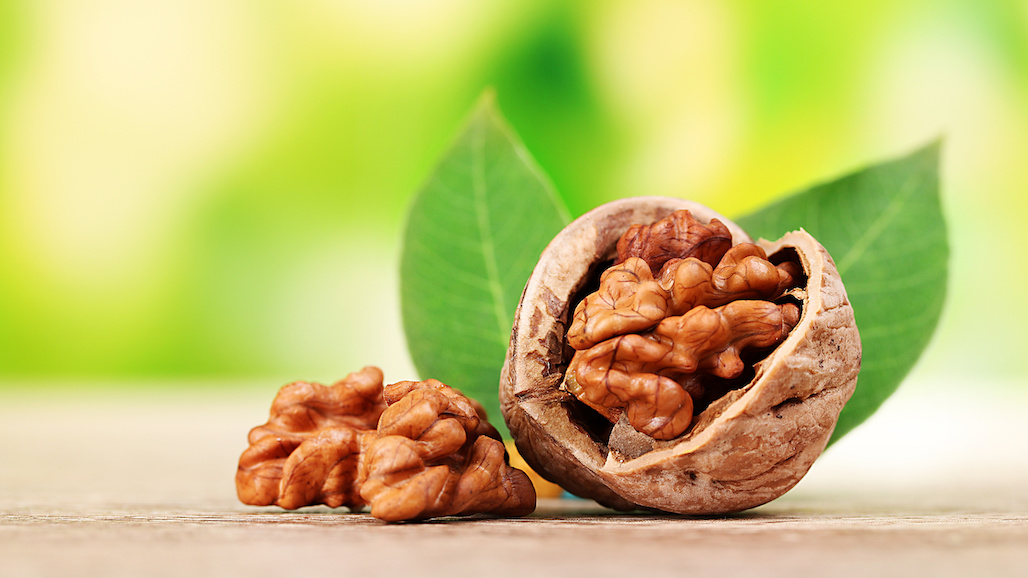
    Walnuts meet the updated definition for a “healthy” food based on the important role they play in recommended dietary patterns, according to the much-anticipated announcement from the U.S. Food and Drug Administration (FDA) detailing a new definition for foods that can be identified or labeled as “healthy.”1

    This announcement, originally previewed in 2022 on the heels of the historic White House Conference on Hunger, Nutrition and Health, is a significant step toward ensuring food labeling is consistent with the most up-to-date nutrition scientific evidence and Dietary Guidelines for Americans (DGA) recommendations to support individuals and families in building healthy eating patterns.

    “The inclusion of walnuts in the new “healthy” definition affirms consumers’ belief that walnuts are a healthy food.* It also aligns with decades of nutrition research reinforcing the important contributions walnuts can make in a healthy lifestyle,” shared Robert Verloop, chief executive officer for the California Walnut Commission.

    “It’s simple. Just adding walnuts to Americans’ daily diet can potentially have wide-ranging positive impacts.”

    The 2020-2025 DGA encourage consumers to choose foods that are nutrient-dense, such as nuts, including walnuts. However, close to two-thirds of Americans do not meet the recommended intake for nuts and seeds.2,3

    Encouraging walnuts as a substitution for food choices higher in saturated fat can help support recommendations to replace intake of saturated with unsaturated fats, as strongly advised by the recently-released 2025 Dietary Guidelines Advisory Committee Scientific Report.4 The total fat in walnuts (18g) is mostly comprised of polyunsaturated fats (13g/oz), including omega-3 ALA (2.5g/oz), an essential fatty acid with potential to support heart health and cognition.5-7 Walnuts are the only tree nut to provide an excellent source of omega-3 ALA.8 

    “In my 20 plus years of practicing nutrition at a major medical institution, I have seen trends go in and out for what the public considers healthy. But what has always been foundational is the role plant-based foods like walnuts play in supporting health. Walnuts are one nut I find consistently meets the variable needs of patients in my practice,” states Kristin Kirkpatrick, MS, RDN and author. “In practice, I focus on evidence-based approaches to reducing chronic disease risk, weight management, and improvements in metabolic health.”

    Walnuts qualifying as a “healthy” food is just one major milestone in a series of similar recognitions. A recent ruling, earlier in 2024, by the USDA’s Food and Nutrition Service (FNS), ‘Child Nutrition Programs: Meal Patterns Consistent With the 2020-2025 Dietary Guidelines for Americans,’ will make it easier for schools to serve plant-protein rich meals and snacks that include walnuts. Using ingredients like walnuts can help reformulate meal favorites to be healthier, while also supporting vegetarian diets and other food preferences.  Additionally, for the first time, states are now allowed to include walnut butter as part of the latest WIC program (Special Supplemental Nutrition Program for Women, Infants, and Children)package updates. 

    These new inclusions and acknowledgements of the role of walnuts in healthy dietary patterns are due, in part, to the more than 30 years of evidence-based global health and nutrition research funded by the California Walnut Commission. This growing body of research has uncovered many potential benefits of consuming walnuts within healthy dietary patterns across various ages and life stages to maximize health and well-being, including promising research into heart health, cognition, cancer, gut health, body weight, and reproductive health.

    Walnuts are extremely versatile and convenient, adding nutrition to dishes at every meal, as well as simple snacks. For more information about the nutritional benefits of California walnuts, along with delicious recipe inspiration, please visit walnuts.org.

    About the California Walnut Commission 

    The California Walnut Commission (CWC) represents more than 4,600 California walnut growers and approximately 70 handlers, grown in multi-generational farmers’ family orchards. California walnuts, known for their excellent nutritional value and quality, are shipped around the world all year long, with more than 99% of the walnuts grown in the United States being from California. The CWC, established in 1987, promotes usage of walnuts through domestic and export market development activities as well as supports health research with consuming walnuts.

    To explore recipes and learn more about California walnut growers, industry information and health research, visitwalnuts.org.

    * California Walnut Board 2021 Consumer A&U

    References

    1. Public Inspection: Food Labeling: Nutrient Content Claims; Definition of Term ‘Healthy.’” Federal Register, 2024, www.federalregister.gov/public-inspection/2024-29957/food-labeling-nutrient-content-claims-definition-of-term-healthy. Accessed 20 Dec. 2024.
    2. U.S. Department of Agriculture and U.S. Department of Health and Human Services. Dietary Guidelines for Americans, 2020-2025. 9th Edition. December 2020. Available at DietaryGuidelines.gov.
    3. Analysis of What We Eat in America, NHANES 2013-2016, ages 1 and older, 2 days dietary intake data, weighted. Recommended Intake Ranges: Healthy U.S.-Style Dietary Patterns.
    4. 2025 Dietary Guidelines Advisory Committee. 2024. Scientific Report of the 2025 Dietary Guidelines Advisory Committee: Advisory Report to the Secretary of Health and Human Services and Secretary of Agriculture. U.S. Department of Health and Human Services.
    5. Sala-Vila A, Fleming J, Kris-Etherton P, Ros E. Impact of alpha-linolenic acid, the vegetable omega-3 fatty acid, on cardiovascular disease and cognition [published ahead of print February 16, 2022]. Advances in Nutrition. doi.org/10.1093/advances/nmac016.
    6. Naghshi S, Aune D, Beyene J, et al. Dietary intake and biomarkers of alpha linolenic acid and risk of all cause, cardiovascular, and cancer mortality: Systematic review and dose-response meta-analysis of cohort studies. BMJ. 2021;375:n2213. doi:10.1136/bmj.n2213.
    7. Barceló-Coblijn G, Murphy EJ. Alpha-linolenic acid and its conversion to longer chain n3 fatty acids: Benefits for human health and a role in maintaining tissue n-3 fatty acid levels. Prog Lipid Res. 2009;48(6):355-74. Doi.org/10.1016/j.plipres.2009.07.002.
    8. U.S. Department of Agriculture, Agricultural Research Service. FoodData Central, 2019. Fdc.nal.usda.gov.
  • Can Whole Orchard Recycling Suppress Weed Establishment in New Orchards?

    Can Whole Orchard Recycling Suppress Weed Establishment in New Orchards?

    Recent research has shown many potential benefits of utilizing whole orchard recycling (WOR) when removing an orchard. Instead of burning the wood produced in orchard removal, WOR involves chipping the wood from pulled trees and redistributing it back into the field using a chip or amendment spreader. This management technique has been mostly used in walnut orchards being followed by new walnut orchards. The conservation of the carbon in the wood benefits the soil by increasing nutrients available for the next crop, improving the soil’s water holding capacity and and enhancing microbial activity. After a recent evaluation of weed populations in a WOR trial in Yuba County, it appears that weed suppression in the first few years after orchard establishment at a WOR site may be yet another benefit to this practice.

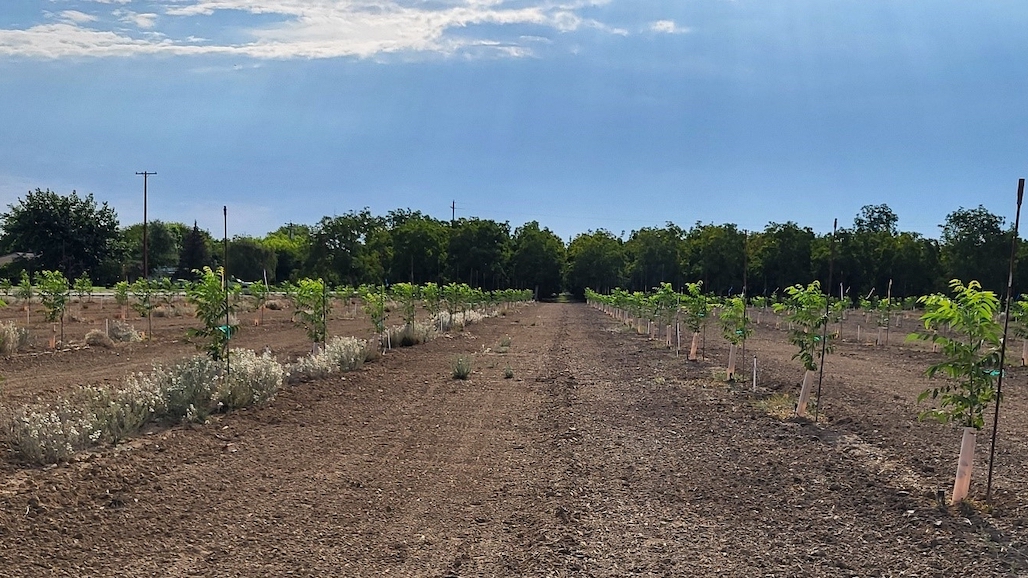
    A WOR trial in Yuba County, led by UCCE Yuba-Sutter Farm Advisor Clarissa Reyes, was initiated by removing and chipping a mature walnut orchard at removal in late fall of 2023. The chips were spread at 60 tons/acre in winter 2023 in a grid design to allow comparison of orchard performance between areas with chips and areas without chips (control). RX1 rootstock trees were planted in April of 2024 and budded to Wolfskill walnuts in September 2024. In the first three months after orchard establishment, weed suppression was observed in the plots that had been covered in wood chips. Weed populations were surveyed in each plot in the orchard in August 2024.

    A representative three foot by twenty foot strip within the rows between two trees was evaluated for each plot within the trial. The percent of soil covered by weeds was estimated, and the dominant weed species were recorded. The plots treated with wood chips averaged 14% weed cover, while the control plots with no wood chips averaged 58% weed cover. This difference was significant and very visually apparent.

    In addition to difference in coverage of weeds, different species were observed in the chipped versus control plots. Almost all plots, regardless of treatment, had common knotweed (Polygonum arenastrum) and littleseed canarygrass (Phalaris minor). Control plots also had established populations of crabgrasses (Digitaria spp.), hairy fleabane (Conyza bonariensis) and fringed willowherb (Epilobium ciliatum). It is interesting that hairy fleabane, a particularly difficult weed to manage with known herbicide resistance, was suppressed in plots with chips. The possible mechanism of suppression for this particular weed could be physical, in that the seeds cannot germinate or seedlings are unable to break through the thick layer of mulched wood chips. Hairy fleabane has also been shown to be susceptible to allelopathy from juglone, produced by walnuts. There is no specific evidence indicating that the juglone in the soil from the wood chips is the control mechanism, but it may be worth evaluating in future trials.

    We expect that over time, the weed suppression will decrease and eventually there will be no difference between the chipped plots and the controls. However, reduced weed pressure in the critical first few years after orchard establishment may prove to be a valuable benefit to WOR. Annual weed surveys will continue in coming years of the Yuba County WOR trial. — By Becky Wheeler-Dykes, UCCE Glenn Orchard Systems & Weed Ecology Farm Advisor

  • Almond Alliance Responds to Proposed Endangered Species Protection for Monarch Butterfly

    Almond Alliance Responds to Proposed Endangered Species Protection for Monarch Butterfly

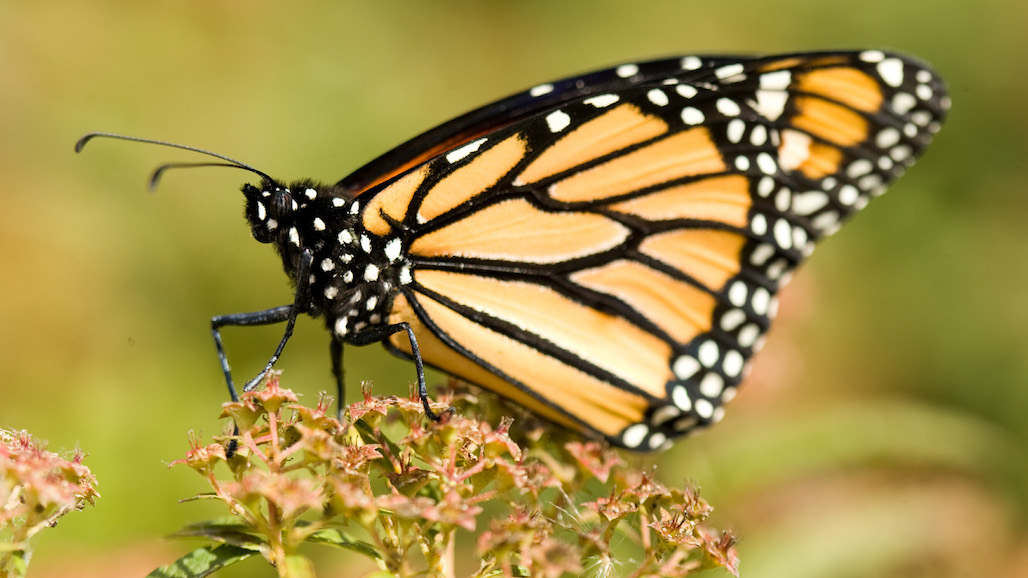
    Today, the U.S. Fish and Wildlife Service (USFWS) proposed listing the monarch butterfly as a threatened species under the Endangered Species Act (ESA). According to the proposed listing rule, its purpose is to reverse the population decline of this pollinator species.

    While we have concerns about the potential impacts of this listing on growers and their operations, we are committed to working with the USFWS to develop solutions that protect the monarch while supporting our growers.

    As a leader in pollinator conservation, almond growers have made significant contributions, including:

    • Leading the nation in Bee Friendly Farming certification, ensuring sustainable and supportive environments for pollinators. In fact, 86% of all U.S. bee-friendly certified farms are almond farms.

    • Providing more than 35,000 acres of permanent pollinator habitat managed by family-owned farms.
    • Additionally, 20% of California almond orchards plant blooming cover crops between tree rows to provide more than 130,000 acres of seasonal pollinator nectar resources.

    California’s working lands will be essential to the monarch butterfly’s recovery. Almond growers have shown that proactive pollinator conservation and sustainable farming can coexist. We welcome the opportunity to collaborate with USFWS to accelerate the monarch’s recovery while continuing to provide benefits to ecosystems, farming communities, and sustainable food production.

    Almond Alliance is the leading authority in state and national policy, championing American almond farmers, industry, and community for the continued global growth, innovation, and success of American almonds and agriculture.

    Established in 1980, the Almond Alliance is a non-profit trade association with a local and international network of almond processors, hullers/shellers, growers, and allied businesses. The Alliance is dedicated to providing resources and solutions for our members, ensuring industry success and growth opportunities. Learn more at almondalliance.org.

  • Electrical Weed Control (EWC) in Organic Almonds and Blueberries

    Electrical Weed Control (EWC) in Organic Almonds and Blueberries

    Two years ago, I shared my first blog about the Zasso electrical weed control (EWC) unit—a tractor-mounted device powered by the tractor’s PTO. (My first blog about the basic of EWC and unit specifications)

    In spring 2023, we established two organic blocks, one with almonds and one with blueberries, to further evaluate the weed control efficacy and crop safety of the Zasso unit in newly established tree and berry systems. In these trials, we tested different combinations of speed and power to control the total current/energy flowing into the ground. This approach is similar to herbicide trials where we often test at different rates to evaluate crop injury (e.g., 2X, 4X rates). Both experiments included comparisons with standard organic weed control practices such as organic herbicide (Suppress EC), mowing, and hand weeding.

    In the blueberry experiment, we also applied two mulching types (sawdust and plastic), and each plot with different mulching types was treated with all the EWC treatments to evaluate the interactions between these two practices. Since blueberries are planted on berms, we only treated the berm shoulders with EWC (Figure 2).

    Figure 1. Organic blueberry field with three different mulching types as treatments
    Figure 2. EWC treating the shoulder of the sawdust mulching blueberry plot

    2023 Findings

    During the 2023 growing season, all EWC treatments showed promising weed control results. In the almond block, the highest-energy EWC treatment kept the floor weed-free for 35-40 days. In the blueberry block, where we used one drip line (versus two in the almond block), the shoulders stayed dry for most of the summer. After our first EWC application in late May (almond) and early June (blueberry), weed pressure in all EWC-treated blueberry plots remained low throughout the season, with some plots staying weed-free even longer than the same treatment in the almond block. We measured tree height, trunk diameter, and blueberry plant canopy volume, finding no significant differences in plant growth across treatments for either crop.

    Figure 3. EWC in organic almond block

    2024 Focus

    In 2024, we continued measuring growth data and collected soil samples for soil health analysis in both blocks. One of my research goals is to address a key grower concern about this technique by assessing the impact of EWC on soil microbes. While soil physical properties should remain unchanged (due to no soil disturbance), soil microbes—which play a crucial role in nutrient cycling—could be sensitive to electric shocks and surface temperature spikes. Then, we will look at how two years of more than 10 EWC applications will impact weed species distribution.

    Figure 4. EWC untreated (top) and treated (bottom) almond plots in April 2024

    2025 Plans 

    Coming into 2025, we plan to continue the blueberry and almond work on campus and also conduct additional research in growers’ fields and test it out in additional tree crops. We will continue to collect weed control efficacy data on an array of common orchard weeds in California. Lastly, we plan to start an experiment to examine how soil moisture at the time of EWC treatment affects the weed control efficacy and whether there are any effects from different irrigation regimes.

    Figure 6. Equipment testing in non crop area before EWC treatment in organic almond and blueberry at UC Davis.

    Frequently Asked Questions about EWC Technology

    Q: Are there any safety concerns with EWC?

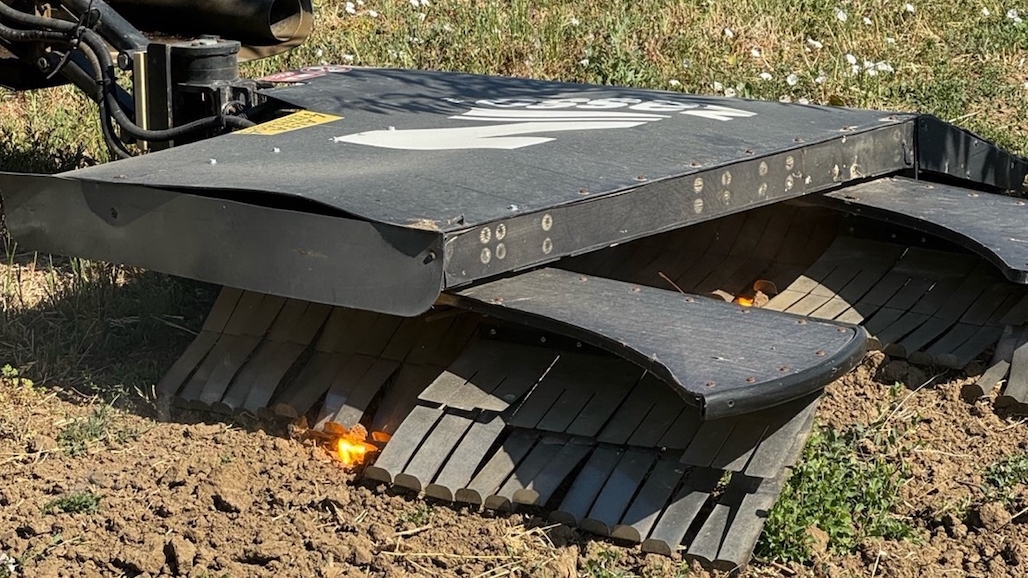
    A: Yes, since this is a high-voltage application targeting above-ground vegetation, the circuit can create arcing and potentially cause fires. The manufacturer requires scouting behind the tractor during applications. Multiple EWC applications and mowing operations over a season leave dead vegetation on the ground, which can easily ignite, especially at higher power settings. We have noticed a seasonal pattern, with more fires occurring in fall than summer, and we are still investigating the causes.

    Q: How does soil moisture affect EWC operation?

    A: Soil moisture is an important factor. Soil that is too wet can cause generator overload by drawing too much energy. In contrast, overly dry soil has high electrical resistance, reducing current flow through plants. Our unit includes a setting to adjust power based on soil moisture, so selecting the right setting is essential for effective application. This is an area of ongoing research in California and with our collaborators in Oregon and New York.

    Q: How do different weed species respond to EWC?

    A: The weed growth stage matters more than species. EWC is effective on most weeds at the seedling stage but start losing efficacy with mature or flowering weeds that are woody or have less tissue moisture because electrical conductance is lower. Grasses can be challenging if they are matured and developed multiple tillers, as central tillers may avoid direct contact with the EWC applicator electrodes.

    Q: How effective is EWC on perennial weeds?

    A: EWC can manage bindweed and yellow nutsedge with multiple applications throughout the season. Regrowth and reemergence can occur if the vegetation does not directly contact with the electrode due to obstacles like soil clumps or overlapping plants. We are running an experiment to quantify perennial weed regrowth and reemergence.

    Q: Is this unit available on the market?

    A: Zasso has partnered with New Holland to bring this technology to the US. Please check out their website https://yellowblueandyou.newholland.com/en-gb/pf-global-2024/xpower-xps to look at the unit for the vineyard (XPower XPS). We will have a vineyard trial in 2025 in partnership with the farm operation and equipment distributor to evaluate the cost-efficiency of EWC in a large scale site.

    Since I have been working and studying this unit for two years, I truly believe it is a valuable option for organic berry and tree fruit and nut production. It can also become an alternative to some of the post-emergent herbicides used in integrated pest management (IPM) programs in sustainable agriculture.

    Our EWC project is funded by USDA NIFA Organic Research and Education Initiative. Please check out our website: https://eorganic.info/node/35946 for interviews and research updates from our collaborators: Moretti Lab at Oregon State University and Sosnoskie Lab at Cornell University. We are testing the same unit but on different crops. We also want to thank New Holland for the tractor support. — By Tong Zhen & Brad Hansen, UC Davis

  • Blue Diamond Growers Honors Bill Brush, Releases Annual Report

    Blue Diamond Growers Honors Bill Brush, Releases Annual Report

    Blue Diamond Growers held their 114th Annual Meeting on Nov. 20 in Modesto, CA. President and CEO, Kai Bockmann, highlighted the farmer-owned cooperative’s successes over the last year and the progress made against its strategic growth plan. Blue Diamond Grower, Bill Brush of Modesto, received the Chairman’s Grower Ambassador of the Year Award, presented by Blue Diamond Chairman Steve Van Duyn – also of Modesto.

    Kai Bockman, President and CEO, Blue Diamond Growers

    With nearly 1,000 farmer-owners in attendance, Bockmann and Van Duyn reflected on the year noting that despite continued challenges facing the industry, Blue Diamond achieved great successes against its strategic plan to deliver a competitive return to its growers.

    “This year, amidst the challenges, Blue Diamond has fought for its members by tapping into every opportunity to strengthen our portfolio and increase demand for our almonds,” said Van Duyn. “I am confident that through the excellent leadership of our Board of Directors and the Blue Diamond team good times are ahead.”

    Alongside several company executives – Carmen Bourgaize, Chief Commercial Officer, Tony LaurenzanaSenior Vice President, Ingredients and Branded International Sales, Steve Schult, Vice President, Supply Chain, and Mel Machado, Vice President, Member Relations – Bockmann shared how the Cooperative is strengthening its core business while creating new opportunities for growth by expanding its international footprint and product portfolio.

    “What drives us every day is to deliver the highest return for your almonds,” said Bockmann. “Our ability to adapt swiftly to changing market conditions, paired with our strategic planning and forward-thinking approach, enabled us to navigate through difficult circumstances and see positive returns from our strategic plan.”

    Over the last year, Blue Diamond drove strategic investments in key international markets including CanadaMexicoJapanEurope and the Middle East. A new partnership with Japanese company, Kagome®, is set to position Japan to be a top international market for Blue Diamond’s Almond Breeze® almondmilk. The Cooperative successfully launched their large format for club stores in Mexico and established a new distributor in the Middle East, catering to markets across the region. In Europe, new flavored almonds are being introduced, offering customers additional flavors and forms.

    Domestically, Blue Diamond’s focus on innovative offerings continues to make an impact in the market, captivating consumers with their unique flavors and textures. Broadening its presence in the grocery store, Blue Diamond released two new product lines – a tasty array of almond and almond fruit blends for retail produce departments and Almonds and More mixed nut products. A new snack nut, Ranch flavor, launched and was picked up by major retails across hundreds of stores, while consumer favorites Chile n’ Lime and Snickerdoodle launched nationwide.

    “Blue Diamond’s products have tremendous value to offer consumers – innovation, flavor, nutrition, and convenience,” said Carmen Bourgaize, Chief Commercial Officer. “We are leveraging these strengths to entice consumers and drive consumption.”

    In addition to outlining progress made on the strategic plan, the executive panel noted the company’s focus on maximizing efficiencies across the business. Investing in state-of-the-art equipment has optimized operations across all facilities, while energy conservation initiatives improved air compression inefficiencies to achieve energy savings.

    Bockmann concluded the business meeting expressing optimism for Blue Diamond’s future and the company’s key differentiator – its people. Supporting more than 4,400 families between its farmers and team members, Blue Diamond is steadfast in its commitment to continued growth and progress for the Cooperative.

    “It all comes down to one thing: build a bigger, better stronger Blue Diamond that provides the best return for our growers’ almonds. This is only the beginning of us Growing Together,” said Bockmann.

    Blue Diamond Chairman’s Award

    At this year’s annual meeting, Blue Diamond’s Board Chairman Steve Van Duyn presented the 2024 Chairman Award to Bill Brush. Brush, a Blue Diamond grower for more than 40 years, is an agronomist, water expert and plant nutritionist. Through his consulting business B&B Ag Consulting, Brush has assisted farmers throughout the world with soil fertility and water treatments. More recently, he has continued his work of educating the agricultural community through his podcast, “Agriculture in a Nutshell.” Brush is a steadfast advocate for agriculture and the almond industry serving more than 18 years on the Almond Board of California.

    Blue Diamond Annual Report Now Available

    In conjunction with the Annual Meeting, the Blue Diamond Growers 2024 “Growing Together” Annual Report is now available on the Blue Diamond website at www.bluediamond.com.

    About Blue Diamond Growers®

    Blue Diamond Growers, a grower-owned cooperative representing nearly 3,000 of California’s almond growers, is the world’s leading almond marketer and processor. Established in 1910, it created the California almond industry and opened world markets for almonds. Blue Diamond is dedicated to delivering the benefits of almonds around the world and does so by providing high-quality almonds, almond ingredients, and branded products. Headquartered in Sacramento, the company employs approximately 1,400 people throughout its processing plants, receiving stations and gift shops. To learn more about Blue Diamond Growers, visit www.BlueDiamond.com and follow the company on FacebookInstagram, and LinkedIn.

  • California Almond Acreage Drops Again in 2024

    California Almond Acreage Drops Again in 2024

    California’s total almond acreage dropped again in 2024, making three years in a row that acreage has decreased, something that has not happened since at least 1995, according to a new report from Land IQ to the Almond Board of California (ABC).

    Total acreage dropped by about 40,000 acres from 1.56 million acres in the last crop year to just over 1.52 million in 2024. Bearing acres – orchards producing almonds and planted in 2021 or earlier – increased by the smallest amount in more than two decades, just 9,000 acres. The total of bearing acres during the 2024 growing season was 1.383 million acres compared with 1.374 million acres at this time last year.

    But the amount of non-bearing acreage – new orchards planted in 2022, 2023 or 2024 – sank about 47,000 acres from 189,000 acres in 2023 to 142,000 in 2024, according to the Land IQ 2024 Standing Acreage Final Estimate.

    “Three straight years of decreased acreage and sizeable orchard removals reflect a trend toward lower overall California almond acreage,” said Clarice Turner, ABC president and CEO. “At the same time, we continue to see strong shipments – in the past crop year, for the first time ever, we shipped more than 200 million pounds in 11 consecutive months, plus for the year, we shipped 300 million pounds more than we produced. We know global demand for California almonds continues to grow and that almonds will continue to have a very significant role in California and global agriculture and food industries for the foreseeable future.”

    There were significant orchard removals again in 2024 totaling almost 67,000 acres. Those add to the 83,000 acres removed in 2023 and 60,400 acres removed in 2022, according to the accompanying Land IQ 2023 Removal Update. Those removals and the decreasing amount of non-bearing acres, or new plantings, contribute to the probability of fewer acres over the next few years, Turner said.

    In addition, slightly more than 30,000 acres are classified as either stressed or abandoned. They were included in the standing acreage total because the orchards “may have the ability to recover,” Land IQ said.

    The estimates come from multiple lines of evidence, including agronomic and remote sensing knowledge, robust on-the-ground verification, customized image analysis, artificial intelligence and more. Land IQ said the 2024 standing acreage estimate is 98.8 percent accurate.

    The report also said the slight change in the amount of bearing acreage from the April initial estimate – which was labeled as exactly that, the initial accounting – was the result of Land IQ crews in the orchards identifying additional bearing acres, and because removals were overestimated in April by about 4,000 acres.

    Land IQ’s acreage estimates are commissioned by ABC to provide statistical transparency and a robust picture of California almonds to industry stakeholders around the world. In 2018, ABC first commissioned Land IQ, a Sacramento-based agricultural and environmental scientific research and consulting firm, to develop a comprehensive, living map of California almonds. The map is the result of more than a decade of research.  By the Almond Board of California