Category: Industry News

  • Protecting Workers from Unhealthy Air Due to Wildfire Smoke

    Protecting Workers from Unhealthy Air Due to Wildfire Smoke

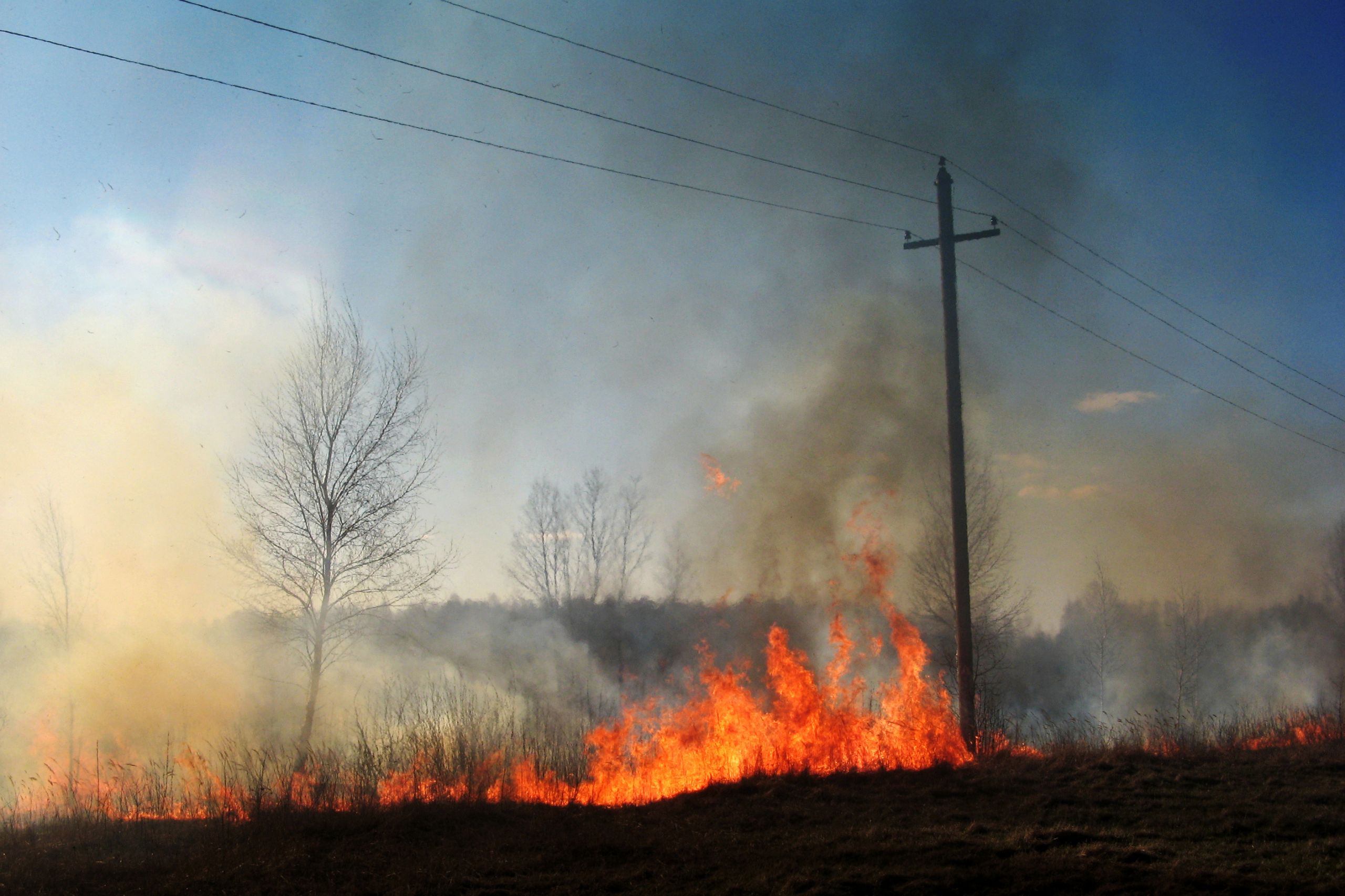
    Cal/OSHA is reminding employers that California’s protection from wildfire smoke standard is still in effect, and they must take steps to protect their workers from harmful exposure to unhealthy air due to wildfire smoke.

    “Employers are obligated to protect their outdoor workers and must evaluate the health hazards posed by wildfire smoke,” said Cal/OSHA Chief Doug Parker. “If employers cannot move operations indoors where air is adequately filtered and they do not have access to respiratory protection, they may need to halt operations until the outdoor air quality improves.”

    Smoke from wildfires contains chemicals, gases and fine particles that can harm health. The greatest hazard comes from breathing fine particles in the air (called PM2.5), which can reduce lung function, worsen asthma or other existing heart and lung conditions, and cause coughing, wheezing and difficulty breathing. These types of respiratory conditions also make the effects of COVID-19 more severe.

    If employers move operations indoors or into enclosed spaces, they should be sure to follow guidelines for prevention of COVID-19 transmission in the workplace.

    When wildfire smoke affects a worksite, employers must monitor the air quality index (AQI) for PM2.5. Employers can monitor the AQI using the following websites:

    If the AQI for PM2.5 is 151 or greater, employers must take the following steps to protect employees:

    • Communication – Inform employees of the AQI for PM2.5 and the protective measures available to them.
    • Training and Instruction – Provide effective training and instruction to all employees on the information contained in section 5141.1 Appendix B.
    • Modifications – Implement modifications to the workplace, if feasible, to reduce exposure. Examples include providing enclosed structures or vehicles for employees to work in, where the air is filtered.
    • Changes – Implement practicable changes to work procedures or schedules. Examples include changing the location where employees work or reducing the amount of time they work outdoors or exposed to unfiltered outdoor air.
    • Respiratory protection – Provide proper respiratory protection equipment, such as disposable respirators, for voluntary use.
      • To filter out fine particles, respirators must be labeled N-95, N-99, N-100, R-95, P-95, P-99, or P-100, and must be labeled as approved by the US National Institute for Occupational Safety and Health (NIOSH).

    “Cal/OSHA is working diligently to identify viable available temporary alternatives that would provide workers with an acceptable alternative to a compliant respirator such as an N-95 mask,” added Chief Parker.

    CalOES and the California Department of Food and Agriculture are working in partnership to provide approximately one million N-95 masks to help protect farmworkers from wildfire smoke. County Agricultural Commissioners in affected counties will distribute the masks.

    If the AQI for PM2.5 exceeds 500, respirator use is required. Employers must ensure employees uses respirators and implement a respiratory protection program as required in California’s respiratory standard. For information or help on developing a respiratory protection program, see Cal/OSHA’s Respiratory Protection Fact Sheet.

    Guidance for employers and workers on working safely in conditions with smoke caused by the wildfires is available on Cal/OSHA’s web page, including information for protecting outdoor workers, details on how to protect indoor workers from outdoor air pollution, and frequently asked questions about N95 masks.

    Information on current wildfires is available from CalFire and the Incident Information System website.

    Cal/OSHA helps protect workers from health and safety hazards on the job in almost every workplace in California. Employers and workers who have questions or need assistance with workplace health and safety programs can call Cal/OSHA’s Consultation Services Branch at 800-963-9424.

    Complaints about workplace safety and health hazards can be filed confidentially with Cal/OSHA district offices. Employees with work-related questions or complaints may contact DIR’s Call Center in English or Spanish at 844-LABOR-DIR (844-522-6734).
  • California Farmland Trust Elects & Appoints New Leadership

    California Farmland Trust Elects & Appoints New Leadership

    With a passion for preserving California’s farmland, California Farmland Trust (CFT) is proud to share the results of those elected to serve our Board of Directors as well as new board member appointments.

    “We’re honored to have such well-known and well-respected individuals serve on the CFT board” shared Charlotte Mitchell, CFT Executive Director. “Our board members each bring professional skills and a passion for agriculture that serve in furthering our mission and protecting farmland.”

    Newly Elected Officers

    Jon Harvey, President

    Jon Harvey retired from Cisco as a Hardware Engineer Manager and is now a ski patroller at Sugar Bowl. A former board member of Brentwood Ag Land Trust (BALT), Harvey joined the CFT board in 2018, following the BALT and Central Valley Farmland Trust merger that formed California Farmland Trust. Harvey became immersed in land conservation at a young age, when he recognized the connections between his appreciation for wildlife, a family history of farming, and his love for fresh food.

    Patrick Johnston, Vice President

    Patrick Johnston lives in Brentwood where his family has farmed since 1923. He is currently a partner in Dwelley Family Farms, growing both conventional and organic fruits and vegetables. He was a board member of the Brentwood Agricultural Land Trust, until its merger with Central Valley Farmland Trust to form CFT.

    Maxwell Norton, Secretary

    Maxwell Norton is a retired Farm Advisor with the UC Cooperative Extension, and a founding member of the Merced County Farmland and Open Space Trust, which later formed the Central Valley Farmland Trust.  He is the Past President of the Merced County Chamber of Commerce, Past President of the California Association of Farm Advisors and Specialists, and Past Chairman of Merced County Economic Development Task Force.

    Ken Oneto, Treasurer

    Ken Oneto resides in Elk Grove where he grows cherries, walnuts, dry beans, tomatoes and wine grapes on the family farm.  He is a graduate of the California Ag Resources Training Program and the Ag Leadership Program.  He was a founding member of the Sacramento Valley Ag Land Conservancy which helped to form the Central Valley Farmland Trust, and currently serves as the President of the Sacramento County Farm Bureau.

    Newly Appointed Board Members

    Ryan Jacobsen

    Ryan Jacobsen resides in Fresno, where he currently serves as the CEO of the Fresno County Farm Bureau. He is the first board member to serve the organization from Fresno County.  Jacobsen currently serves as president of the Fresno Irrigation District Board of Directors, secretary/treasurer of the Kings River Water Association and president-elect of the Rotary Club of Fresno. He is also the host of the television show, Valley’s Gold.

    Theresa Kiehn

    Theresa Kiehn is the Acting President and Chief Executive Officer of AgSafe. Her career also included a tenure with the Great Valley Center, where she supported the formation of the Central Valley Farmland Trust. In addition to her current role, she serves on the Turlock Farmers Market Board of Directors, the Salas Family Foundation, is a member of Modesto Downtown Rotary and is engaged in a variety of capacities with her faith-based community.

    The California Farmland Trust is a California Non-Profit 501(c)(3). Our mission is to help farmers protect the best farmland in the world. To date, we have protected 16,708 acres of farmland on 77 family farms. To learn more visit us: www.cafarmtrust.org

  • EU Regulatory Levels for Aflatoxin in Tree Nuts

    EU Regulatory Levels for Aflatoxin in Tree Nuts

    Tree nut and peanut shipments imported into the European Union have to comply with European Union maximum levels for aflatoxin. This report provides an overview of regulatory aflatoxin levels in the United States and in the European Union, and of the corresponding Codex levels.

    Aflatoxin Levels in a Trade Context

    Samples of U.S. product tested for aflatoxin in EU countries must comply with maximum EU levels which are than the United States levels. Since the 2010 adoption of Commission Regulation (EU) No 165/2010, the EU maximum levels for aflatoxin total in ready-to-eat almonds and pistachios are aligned with the Codex levels. This regulation was based on the 2007 EFSA Scientific Opinion. The EU and the Codex sampling plans for these tree nuts and for peanuts are also aligned per Commission Regulation 178/2010.

    Unlike the United States and Codex, the EU has also established maximum levels for aflatoxin B1 in all nuts in addition to the levels for total aflatoxin. Furthermore, the EU continues to apply very strict maximum levels for aflatoxin in peanuts.

    Earlier this year, the 2020 EFSA Scientific Opinion on the risks for public health related to the presence of aflatoxins in food updated the 2007 EFSA Scientific Opinion, leading to ongoing EU discussions on the potential need for revision of EU aflatoxin levels. Importantly, the 2020 EFSA opinion also gives the European Union a basis for defining their position in the ongoing Codex discussions on aflatoxin in peanuts.

    Regulatory Levels at Different Stages of Processing

    Regulatory levels exist for product intended for direct human consumption, also referred as ready to eat (RTE) product, as well as for product intended for further processing. These limits are higher for product for further processing, recognizing that aflatoxin levels can be brought down by sorting and physical treatment.

    When goods are released on the EU market they must comply with regulatory levels for direct human consumption/ready to eat (RTE) product. Shipments of U.S. product to the EU are commonly declared at the borders for direct release on the European market, and thus the regulatory levels for RTE product have to be met.

    The EU will only enforce the higher limits for product for further processing if the U.S. goods are appropriately labeled. The product label as well as the documents have to explicitly state that “product shall be subjected to sorting or other physical treatment to reduce aflatoxin contamination before human consumption or use as an ingredient in foodstuffs”. This label clearly distinguishes these goods from RTE products upon arrival in the EU. Foods imported under the for further processing provisions will likely be subject to aflatoxin testing or other verification by Member State import authorities after processing to ensure they comply with EU requirements.

    Regulatory Levels for Feed

    Peanuts and peanuts products are also often exported as bird feed. In addition to the regulatory levels for food, the EU also has a maximum levels of 20 ppb B1 in place for most feed materials with some exception for which stricter levels apply (Directive 2002/32/EC). FDA has action levels in place for aflatoxin in peanuts and peanut products (Guidance for Industry: Action Levels for Poisonous or Deleterious Substances in Human Food and Animal Feed) ranging from 20 to 300 ppb depending on its use in different animal categories. 

  • Getting More Consistent Yields in Pistachios

    Getting More Consistent Yields in Pistachios

    Pistachios are alternate bearing by nature, getting higher yields one year and then following with a short harvest.  The trees may enjoy the break every other year, but more consistent yields would be much more preferable to the grower and an expanding pistachio industry.  Watch this brief interview with UCCE Emeritus Farm Advisor Bob Beede as he shares about some trials that have been conducted to effectively reduce the volatility in pistachio yields from year to year and the effects of tree age and rootstock selection on its alternate bearing nature.  Read Bob’s monthly Pistachio Orchard Tasks column in Pacific Nut Producer Magazine.
    Please thank this video’s sponsor Suterra by taking this brief Survey.
  • Hazelnut Marketing Board Projects Record Crop in Oregon

    Hazelnut Marketing Board Projects Record Crop in Oregon

    The Hazelnut Marketing Board has concluded its annual Subjective Yield Survey, and the numbers look promising for the 2020 harvest. According to the survey, the harvest projects to be approximately 59,000 tons, which would be a record yield for Oregon’s hazelnut growers.

    The Hazelnut Marketing Board stresses that the Subjective Yield Survey is only a guesstimate and not an exact science. The results of the annual survey should be viewed as an approximation, not a guarantee.

    The Subjective Yield Survey was distributed in mid-July to hazelnut farmers. The survey called on growers to provide a projection on what the expected yield will be based on how hazelnut trees were faring at the time of the survey. Approximately 800 survey cards were sent to nut growers, and 204 were returned and qualified for the survey.

    The following were the cumulative results for the 2020 projections:

    • 0-4 Year Old Trees: 5,339 acres, 1,363,398 pounds, 255 lbs/acre
    • 5-10 Year Old Trees: 7,773 acres, 12,389,315 pounds, 1,593 lbs/acre
    • 11+ Year Old Trees: 6,319 acres, 16,552,518 pounds, 2,619 lbs/acre

    The collected data was then cross-referenced with field mapping statistics from Pacific Ag Survey, per their December 2018 report. When extrapolated out, the projected crop size is 118,081,170 pounds or 59,040.585 tons. The following table details these calculations:

    Any questions regarding the Subjective Yield Survey may be directed to the Hazelnut Industry Office at 503-582-8420.

  • Turning Almond Shells into Plastics & Tires

    Turning Almond Shells into Plastics & Tires


    Here is a throwback video from a previous annual convention of the Almond Alliance of California as many were disappointed by the cancellation of the annual convention this year due to COVID-19 restrictions; however, very interesting research performed by USDA exploring alternative uses for almond hulls and shells — including plastics and vehicle tires through a process of torrefaction. Watch this brief interview Bill Orts Bioproducts Research Leader at USDA and read more in Pacific Nut Producer Magazine.
    Please thank this video’s sponsor Suterra by taking this brief Survey.
  • Pistachios Now Included in CFAP Direct Grower Payments

    Pistachios Now Included in CFAP Direct Grower Payments

    American Pistachio Growers (APG) today announced to its members that the United States Department of Agriculture (USDA) has now included pistachios in the Coronavirus Food Assistance Program (CFAP). The official notice, which is expected to be published in the Federal Register on or about August 14, 2020, states that pistachios are among 20 additional agricultural crops in the U.S. that will receive direct payments under CFAP Category 1 due to commodities experiencing a 5 percent or greater price decline between January 15, 2020 and April 15, 2020 as a result of the COVID-19 pandemic.

    In addition to making pistachios eligible for direct payments under Category 1, USDA has also increased the payment rate under CFAP Category 2, which is for sales losses for pistachios due to product that spoiled in the marketing channel, or due to the loss of the marketing channel. Increased payments under Category 2 apply to product that was actually shipped from the point of origin.

    “As a grower, we know and feel the effects directly when prices decline. This program provides the support needed by farmers during this difficult time we are all currently experiencing,” said Brian Watte, Chair of APG’s Board of Directors. “

    American Pistachio Growers Chairman Brian Watte with his son Matthew Watte in their pistachio orchard

    Pistachios were not initially included in the CFAP direct grower payment program, but through the concerted efforts of APG’s Washington, D.C. lobbying firm and numerous conference calls placed by APG representatives to officials within USDA to provide them with accurate sales data, pistachios are now included in the Category 1 list.

    “We’re pleased that USDA took the effort to review all sales data on pistachios, particularly exports which have seen declines as a result of the Coronavirus pandemic experienced on a global basis,” said APG President Richard Matoian. 

    Pistachio growers can access the necessary forms at www.farmers.gov/CFAP. Matoian explained that growers will be working through their local Farm Service Agency office to submit the forms for direct payment. Growers are advised to call (877) 508-8364 to begin the application process. For growers who applied for and were paid for CFAP prior to Category 1 eligibility being granted should not submit a new application, but rather should contact their FSA office to amend the application. Importantly, USDA has announced that the application deadline has been extended to September 11, 2020

  • Hazelnuts to Receive USDA Coronavirus Aid, Added Coverage for Pistachios & Walnuts

    Hazelnuts to Receive USDA Coronavirus Aid, Added Coverage for Pistachios & Walnuts

    U.S. Secretary of Agriculture Sonny Perdue announced today that additional commodities are covered by the Coronavirus Food Assistance Program (CFAP) in response to public comments and data. Additionally, the U.S. Department of Agriculture (USDA) is extending the deadline to apply for the program to September 11th, and producers with approved applications will receive their final payment. After reviewing over 1,700 responses, even more farmers and ranchers will have the opportunity for assistance to help keep operations afloat during these tough times

    “President Trump is standing with America’s farmers and ranchers to ensure they get through this pandemic and continue to produce enough food and fiber to feed America and the world. That is why he authorized this $16 billion of direct support in the CFAP program and today we are pleased to add additional commodities eligible to receive much needed assistance,” said Secretary Perdue. “CFAP is just one of the many ways USDA is helping producers weather the impacts of the pandemic. From deferring payments on loans to adding flexibilities to crop insurance and reporting deadlines, USDA has been leveraging many tools to help producers.”

    Background:

    USDA collected comments and supporting data for consideration of additional commodities through June 22, 2020. The following additional commodities are now eligible for CFAP:

    • Specialty Crops – aloe leaves, bananas, batatas, bok choy, carambola (star fruit), cherimoya, chervil (french parsley), citron, curry leaves, daikon, dates, dill, donqua (winter melon), dragon fruit (red pitaya), endive, escarole, filberts, frisee, horseradish, kohlrabi, kumquats, leeks, mamey sapote, maple sap (for maple syrup), mesculin mix, microgreens, nectarines, parsley, persimmons, plantains, pomegranates, pummelos, pumpkins, rutabagas, shallots, tangelos, turnips/celeriac, turmeric, upland/winter cress, water cress, yautia/malanga, and yuca/cassava.
    • Non-Specialty Crops and Livestock – liquid eggs, frozen eggs and all sheep. Only lambs and yearlings (sheep less than two years old) were previously eligible.
    • Aquaculture – catfish, crawfish, largemouth bass and carp sold live as foodfish, hybrid striped bass, red drum, salmon, sturgeon, tilapia, trout, ornamental/tropical fish, and recreational sportfish.
    • Nursery Crops and Flowers – nursery crops and cut flowers.

    Other changes to CFAP include:

    • Seven commodities – onions (green), pistachios, peppermint, spearmint, walnuts and watermelons – are now eligible for Coronavirus Aid, Relief, and Economic Stability (CARES) Act funding for sales losses. Originally, these commodities were only eligible for payments on marketing adjustments.
    • Correcting payment rates for onions (green), pistachios, peppermint, spearmint, walnuts, and watermelons.

    Additional details can be found in the Federal Register in the Notice of Funding Availability and Final Rule Correction and at www.farmers.gov/cfap.

    Producers Who Have Applied:

    To ensure availability of funding, producers with approved applications initially received 80 percent of their payments. The Farm Service Agency (FSA) will automatically issue the remaining 20 percent of the calculated payment to eligible producers. Going forward, producers who apply for CFAP will receive 100 percent of their total payment, not to exceed the payment limit, when their applications are approved.

    Applying for CFAP:

    Producers, especially those who have not worked with FSA previously, are recommended to call 877-508-8364 to begin the application process. An FSA staff member can help producers start their application during the phone call.

    On farmers.gov/cfap, producers can:

    • Download the AD-3114 application form and manually complete the form to submit to their local USDA Service Center by mail, electronically or by hand delivery to their local office or office drop box.
    • Complete the application form using the CFAP Application Generator and Payment Calculator. This Excel workbook allows customers to input information specific to their operation to determine estimated payments and populate the application form, which can be printed, then signed and submitted to their local USDA Service Center.
    • If producers have login credentials known as eAuthentication, they can use the online CFAP Application Portal to certify eligible commodities online, digitally sign applications and submit directly to the local USDA Service Center.

    All other eligibility forms, such as those related to adjusted gross income and payment information, can be downloaded from farmers.gov/cfap. For existing FSA customers, these documents are likely already on file.

    All USDA Service Centers are open for business, including some that are open to visitors to conduct business in person by appointment only. All Service Center visitors wishing to conduct business with FSA, Natural Resources Conservation Service or any other Service Center agency should call ahead and schedule an appointment. Service Centers that are open for appointments will pre-screen visitors based on health concerns or recent travel, and visitors must adhere to social distancing guidelines. Visitors are also required to wear a face covering during their appointment. Our program delivery staff will be in the office, and they will be working with our producers in the office, by phone and using online tools. More information can be found at farmers.gov/coronavirus.

  • Pollinator Partnership Announces Three New Designations for Bee Friendly Farming

    Pollinator Partnership Announces Three New Designations for Bee Friendly Farming

    Pollinator Partnership (P2) is proud to announce enhancements and improvements to its Bee Friendly Farming (BFF) program to better recognize engage and support BFF participants and pollinators everywhere. The new BFF program will have three categories that allow them to engage with all participants at a finer scale while addressing their goals: Bee Friendly Farming Certified, Bee Friendly Farming Partner and Bee Friendly Farming Garden.

    Bee Friendly Farming Certified designation will apply to large-scale commercial farms, ranches, wineries and other land-use businesses that grow food and other resources. This certification will require compliance at registration and every third year to be validated in the seven specific criteria required to qualify. “From habitat to cover crops to best management practices, the Bee Friendly Farming Certified mark will identify farms engaged in science-based Bee Friendly Farming practices,” said BFF Coordinator Miles Dakin. “This enables us to enhance grower and pollinator benefits through greater engagement in nutrition, habitat, biodiversity and other guidelines.”

    Bee Friendly Farming Partner includes sponsorship from individuals and companies, as well as apiarists, who do not actively manage their own landscapes but wish to support the BFF program. Multiple tiers of sponsorships are available to provide the resources necessary to build and maintain the BFF program.

    The third category of recognition, Bee Friendly Farming Garden, includes smaller landscapes, community gardens and homeowners who voluntarily adhere to the seven criteria of Bee Friendly Farming actions. By separating and reorganizing these distinct members, BFF can better recognize the different contributions by farmers, apiarists, home gardeners, community members and commercial sponsors to support vital pollinators.

    Photos courtesy of Geoffrey Thurner, California State University Fresno

    “After conversations with long-standing participants, environmental groups, grower associations and sponsors, we saw a clear need to further refine the BFF experience and to add a level of scrutiny and permanence to the certification aspects of Bee Friendly Farming,” said Laurie Davies Adams, President of Pollinator Partnership, parent organization of Bee Friendly Farming. “This new tri-level approach will still recognize existing affiliates as BFF Partners, while taking a great step forward for the dedicated agricultural community that seeks rigorous and validated certification of its adherence to best practices for pollinators. In all instances, BFF will provide excellent guidelines for all levels of BFF practitioners.”

    The three categories have slightly different criteria and benefits. Some currently certified historic BFF participants may fall into a different category and will be contacted about the changes.

    Visit www.beefriendlyfarming.org for more information on Bee Friendly Farming and to learn how you can participate.

    ABOUT POLLINATOR PARTNERSHIP (P2) Established in 1997, the Pollinator Partnership is the largest 501(c) 3 non-profit organization dedicated exclusively to the health, protection, and conservation of all pollinating animals. P2’s actions for pollinators include education, conservation, restoration, policy, and research. P2’s financial support comes through grants, gifts, memberships and donations from any interested party. P2’s policies are science-based, set by its board of directors, and never influenced by any donor. To make a donation or for information on events during Pollinator Week visit www.pollinator.org.

  • PhD Grower Pushes the Limits on Salinity in Pistachios

    PhD Grower Pushes the Limits on Salinity in Pistachios

    The pistachio market remains strong despite the COVID-19 impact on the global economy; however California pistachio growers are still limited on availability of quality water and soil to meet the growing demand for this valuable commodity.  There is hope though for growers on marginal land as this PhD grower has found a way to meet the needs of his crop amidst less than ideal soil/water conditions. Watch this brief interview with Muhammad Siddiqui and read more about it in Pacific Nut Producer Magazine.
    Please thank this video’s sponsor Suterra by taking this brief Survey.