Category: Industry News

  • Effort Secures Federal Procurement Program for Almonds

    Effort Secures Federal Procurement Program for Almonds

    More school children and others benefitting from food nutrition programs all across the country will enjoy California almonds this year, thanks to their inclusion in federal ag marketing efforts.

    A USDA program known as Section 32 allows the U.S. Department of Agriculture to buy surplus ag commodities to distribute through various federally subsidized food programs.

    The almond industry doesn’t always have surplus inventory, but a couple of big crop years combined with pandemic-related shipping issues that delayed nuts being sent to overseas markets created the perfect conditions this year for almonds to participate in the federal program.

    “In recent history, it happened once (in 2020) because of some pandemic pressures, but other than that, it’s been quite a while since there was an almond purchase,” explained Brock Densel, who works as part of the Almond Board of California’s Global Technical and Regulatory Affairs team.

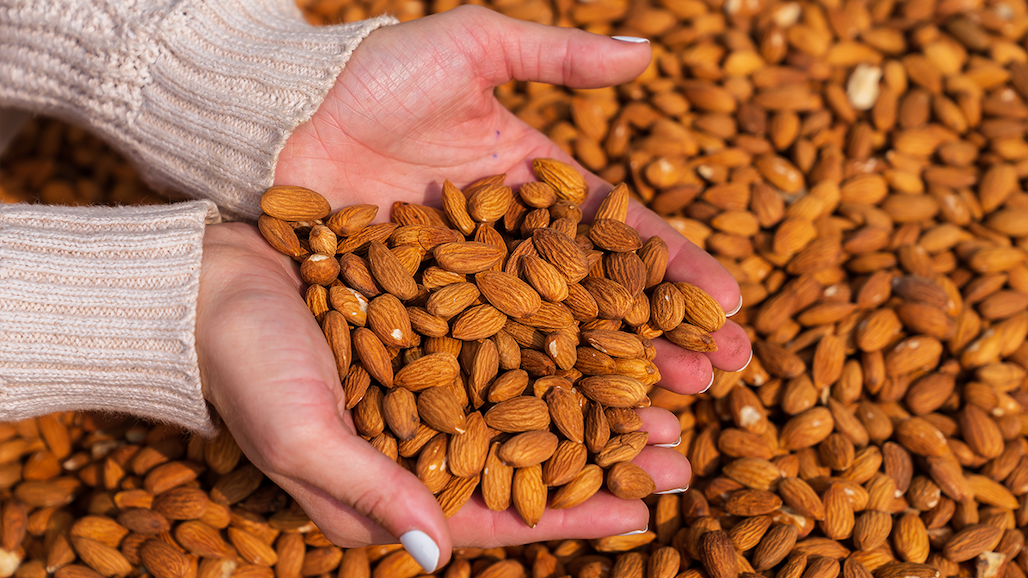
    As many as 26.2 million pounds of almonds could find their way into this year’s federal food programs. That means millions of American K-12 students who benefit from free or subsidized meals at their schools, as well as people of all ages who depend upon food banks or assistance programs, will be able to get a taste of California almonds.

    The federal program is run through the USDA’s Agricultural Marketing Service, which administers a number of feeding programs. Qualifying for the Section 32 purchase program can be complex, but once approved, commodities brokers – or in the case of almonds, handlers – are able to bid on specific orders. Handlers can establish their own appropriate price point and low bid wins.

    The deadline for handlers to submit bids was Aug. 31.

    “Section 32 often relies on lower priced commodities,” Densel explained. “Typically, almonds haven’t had the market conditions to justify a USDA purchase.”

    The Almond Board worked with its partners at the Almond Alliance to convince the USDA to include almonds in this year’s Section 32 program, and to revisit the specifications to allow broader participation. The Almond Alliance is allowed to lobby government agencies and elected officials on behalf of the industry, something the ABC cannot do as part of the marketing order.

    Once almonds received the go-ahead, the Almond Board held a virtual training in June for interested almond handlers to explain the Section 32 rules and how the process works.

    “Because this is such an infrequent opportunity for almonds – as opposed to other commodities or other tree nuts like walnuts – there’s not really the institutional knowledge of how to go through this whole process,” Densel said. “Here at the Almond Board, that’s certainly one of the things that we felt we could do, to help our industry members understand the requirements.”

    Though inclusion in the Section 32 program is not something handlers can expect in most years, it can be a sensible alternative when almond inventories are up and USDA puts out a bid.

    “At a time we’re seeing the challenges the almond industry is facing to market larger crops, Section 32 certainly provides an alternative destination and one that is logistically easier under shipping current conditions,” Densel said. — By the Almond Board of California
  • Exploring Different Options for On-Farm Groundwater Recharge

    Exploring Different Options for On-Farm Groundwater Recharge

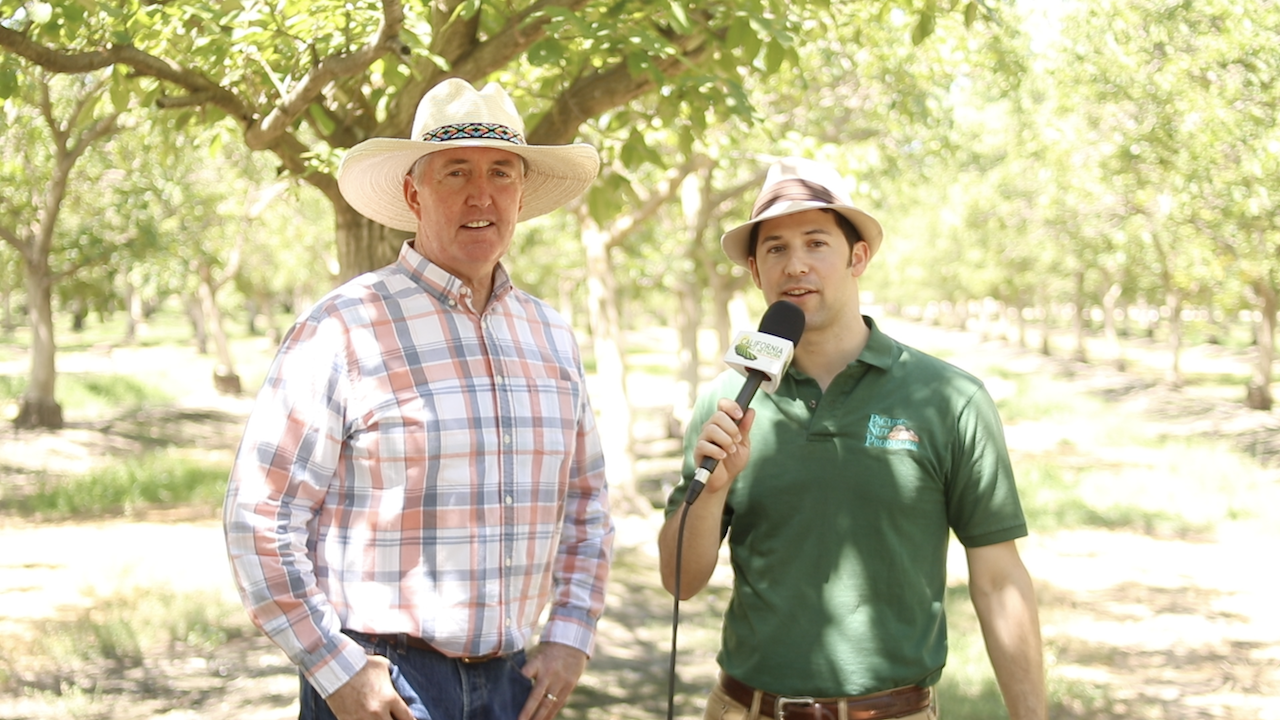
    While they can’t make it rain, California water districts and farmers are finding creative ways to be a part of the solution to severe drought conditions and subsiding groundwater levels by sinking water back into the earth during the “wet season”.  Watch this brief interview with Chase Hurley from Triangle T Water District as he shares some success stories and different ways growers and water districts can approach groundwater recharge.

    Please thank this video’s sponsor Suterra for their industry support.

  • Land IQ Evaluates CA Pistachio Acreage & Water Supply Reliability

    Land IQ Evaluates CA Pistachio Acreage & Water Supply Reliability

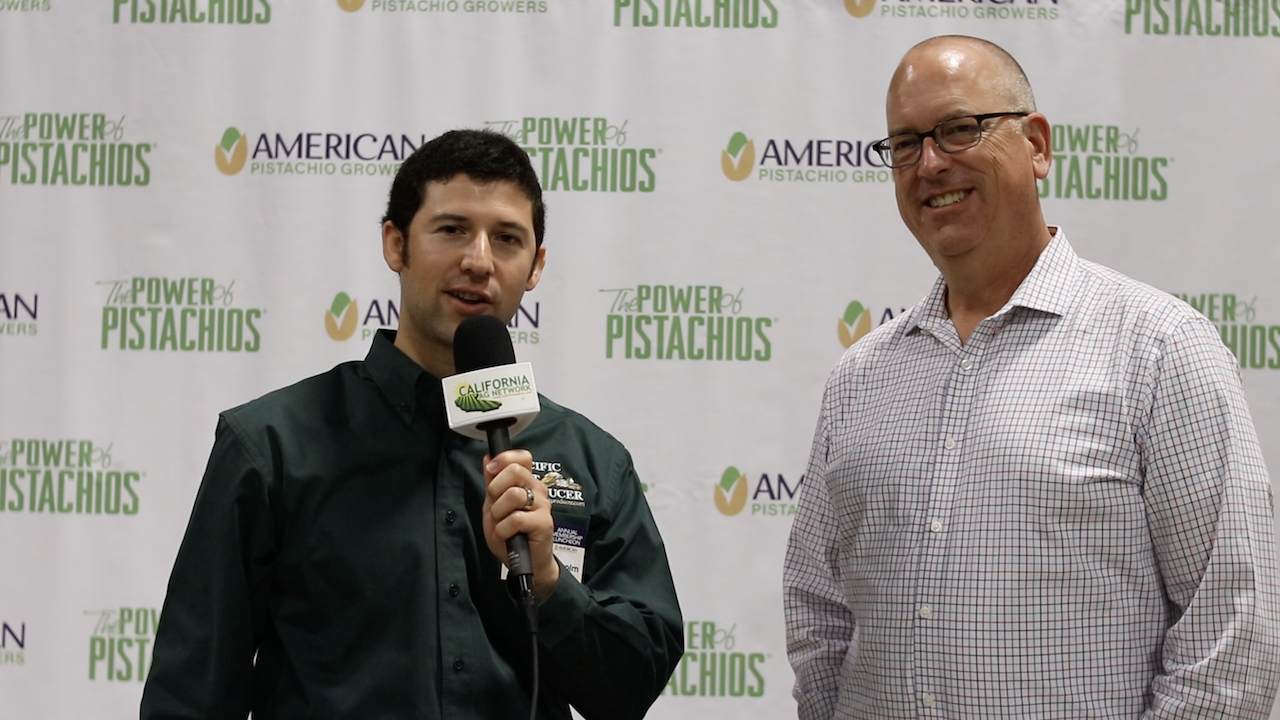
    As pistachio acreage continues to increase throughout the state, American Pistachio Growers has commissioned Land IQ to get an aerial perspective of where the industry currently stands with regard to both crop yield and water supply reliability amidst a persisting drought. Watch this brief interview with Joel Kimmelshue from Land IQ as he explains and read more about it in Pacific Nut Producer Magazine.

    Please thank this video’s sponsor Suterra for their industry support.

  • Cutting Back on Irrigation in Pistachio without Harming Crop Yield

    Cutting Back on Irrigation in Pistachio without Harming Crop Yield

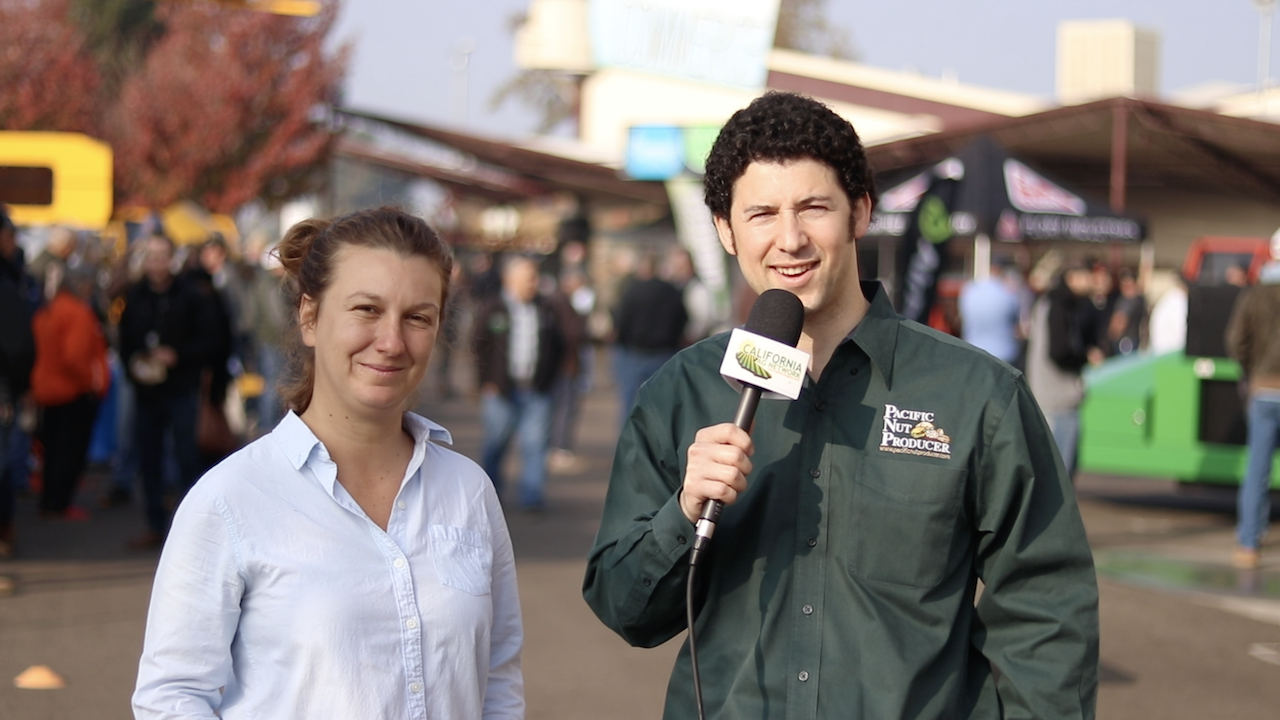
    While pistachios are a relatively drought tolerant crop, growers are naturally concerned about cutting back on irrigation amidst the ongoing drought. Watch this brief interview with UC Cooperative Extension Specialist Giulia Marino as she shares how to appropriately cut back on irrigation without negatively impacting crop yield. Read more in Pacific Nut Producer Magazine.

    Please thank this video’s sponsor Suterra for their industry support.

  • Is Overwinter Orchard Flooding a Good Option for Groundwater Recharge?

    Is Overwinter Orchard Flooding a Good Option for Groundwater Recharge?

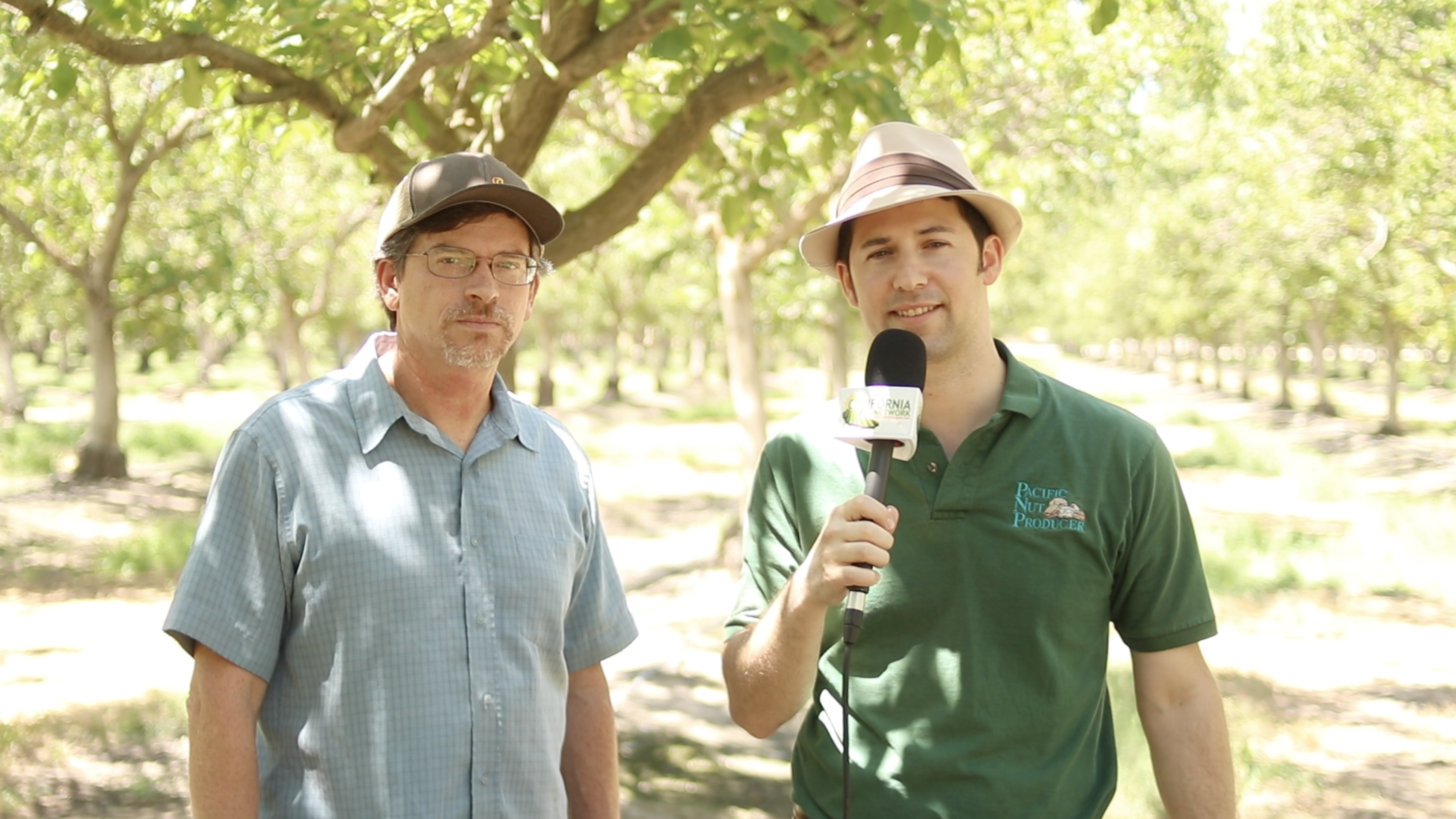
    While California farmers are taking more interest in opportunities for on-farm groundwater recharge to mitigate the effects of the drought, some tree nut growers may be hesitant to the idea of flooding their orchards over the winter months, concerned it may have a negative impact on the health of their trees and practices, such as cover cropping. The Almond Board recently released a groundwater recharge guide to address some of these concerns. Watch this brief interview with Jesse Roseman from the Almond Board as he shares some insights from the guide and positive results from recent studies on the topic. Read more about it in Pacific Nut Producer Magazine.

    Please thank this video’s sponsor Suterra for their industry support.

  • Pacific Nut Producer September Issue

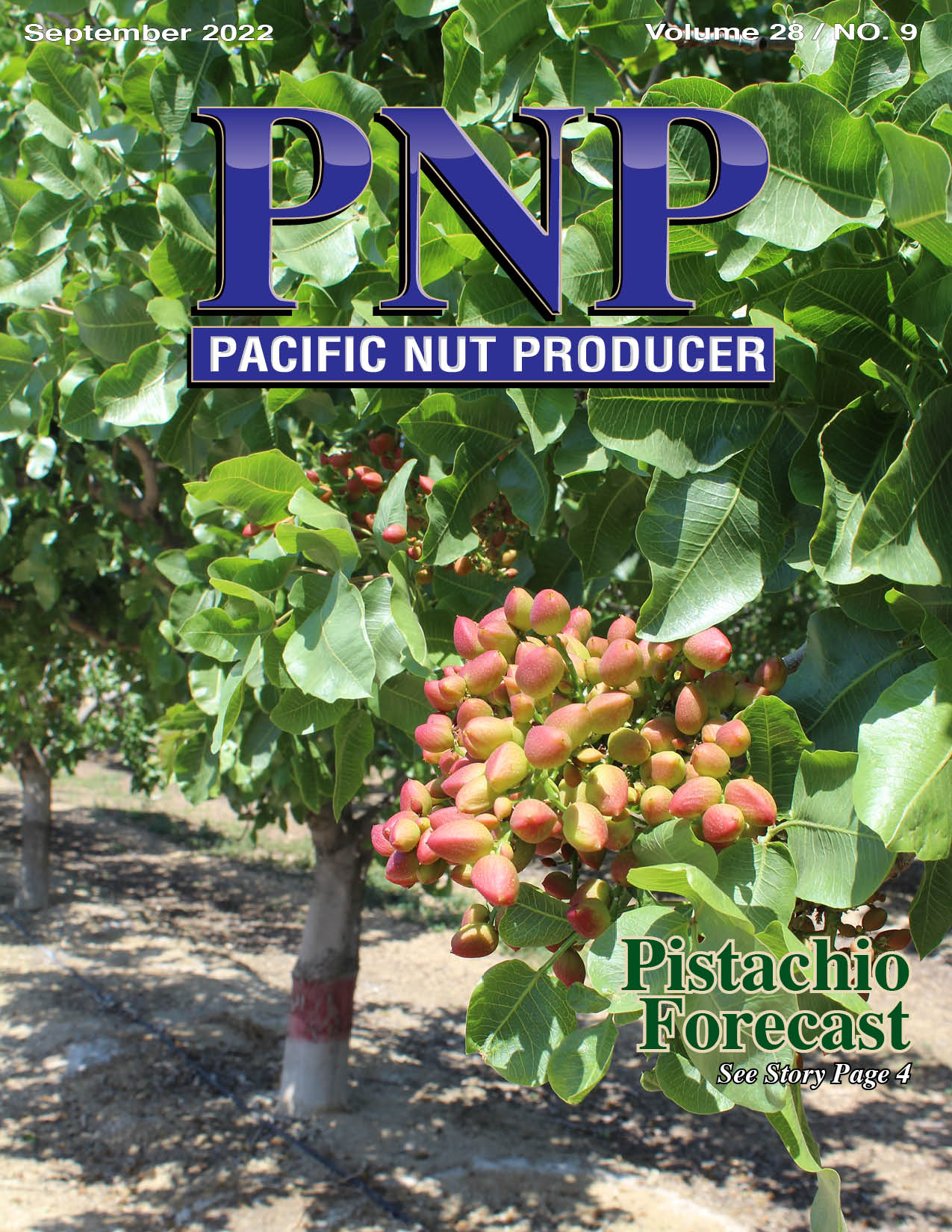
    Pacific Nut Producer September Issue

    PNP922
    Pacific Nut Producer September Issue

    [btn btnlink=”https://malcolmmedia.com/order-a-back-issue/back-issue-pacific-nut-producer-magazine/” btnsize=”full” txtcolor=”#ffffff” color=”#FFF” bgcolor=”#492500″ btnnewt=”1″ nofollow=”1″]Order A Back Issue[/btn]

    [btn btnlink=”http://malcolmmedia.com/pacific-nut-producer-magazine-subscriptions/” btnsize=”full” txtcolor=”#ffffff” bgcolor=”#492500″ btnnewt=”1″ nofollow=”1″]Subscribe Free[/btn]
    [three_fifth_last]

    Contents of the September Issue:

    Pistachio Luncheon Offers Great Insights
    APG Plans & Markets Ahead of Increasing Pistachio Production

    The Irrigation Corner
    Understanding Soil Salinity Accumulation in the Orchard

    The Curious Case of Macadamia Quick Decline
    Uncovering the Culprit Decimating Hawaii’s Nut Trees

    September Orchard Tasks
    Almonds, Hazelnuts, Pecans, Pistachios, Walnuts

    [/three_fifth_last]

  • USDA California Walnut Nursery Sales Report Reveals Steady Decline

    USDA California Walnut Nursery Sales Report Reveals Steady Decline

    Combined sales of walnut trees to California growers were 6,444 acres for the 2021 crop year and 10,650 acres for the 2020 crop year. The majority of tree sales in 2021 were Seedlings, at 62% of new plantings. The Chandler variety came in second at 30%. For 2020, Seedlings were the largest percentage of new plantings at 58%, with the Chandler variety coming in second at 35%. The remaining percentages by variety can be seen in the pie charts.  Based on reported nursery sales data, planted walnut acreage for year 2021 was down by 12,471 acres from just five years prior. The table below reveals a steady downward trend in walnut nursery sales in the last several years, likely correlated with increased global competition, softening prices and drought conditions in the state.

    OBJECTIVE

    The primary objective of the California Walnut Nursery Sales Report survey is to estimate planted acres by variety for the 2020 and 2021 crop years based on the number of walnut trees sold for new plantings. This report summarizes data supplied by California nurseries throughout the State who sold to walnut growers for commercial plantings. Results from this survey will be used in conjunction with the Walnut Acreage Survey to estimate the walnut acres in California.

    PROCEDURES

    Questionnaires were mailed to all known walnut nurseries in California, and responses were received from most operations. Nurseries that did not report data were estimated. The nurseries were asked to report the number of trees sold by variety for commercial plantings, and to estimate the percentage of trees sold for new plantings. Acres planted by variety were then estimated based on the data reported. Acre estimates were calculated using the reported number of trees sold, along with the trees per acre by variety from the Walnut Acreage Survey.

    ACKNOWLEDGMENTS

    The USDA, NASS Pacific Regional Office sincerely appreciates the nurseries for providing the information. A special thanks goes to the California Walnut Board for providing funding and support for this special Walnut Nursery Sales Report survey.

  • GroPro Hires US National Sales Director

    GroPro Hires US National Sales Director

    – SPONSORED CONTENT –

    GroPro Corp. is an international Biotech bio-fertilizers, bio-stimulants, and bio-pesticides manufacturer that compete head to head in cost and efficacy with the industry’s most effective synthetic chemicals. Headquartered in Burnsville, Minnesota, USA has hired Warren Hragyil as national sales director. Warren is a result-oriented leader with decades of experience in US Agriculture markets, primarily focused on areas of Crop Protection sales, marketing, and operations. He has worked in senior sales and management roles at Simplot, Adama, Aligned Ag Distributors, United Suppliers Inc., etc.

    “We are thrilled to hire a well-connected and experienced professional like Warren to our team here at GroPro,” said James Lamoreaux, CEO of GroPro Corp. “His impressive industry background and strong leadership abilities will help to fulfill our expanding strategy in the US market, working closely with our major distributors & retailers to develop win-win offerings.” In his new role, Warren’s primary responsibilities will be to drive sales for Gro Pro’s products, manage senior client relationships, lead the sales team and successfully implement effective commercial strategies.

    Hiring a National Sales Director was a part of GroPro’s active team expansion plan with two primary objectives, raise brand awareness and increase market penetration with strategic partners – earlier this month GroPro Corp. announced that veteran agriculture industry executive Benito Varela joined the team as the new Chief Operating Officer focusing on US and International expansion and operations. Also, this week GroPro Corp. has named Jeff Runnels as the US National Environmental\DTC Sales Manager.

    GroPro Corp. is a USA-headquartered producer and supplier of bio-pesticide protection products and bio-stimulants. GoPro has a proven track record of delivering proven, high-efficacy, natural materials while allowing growers to augment agrochemical products in the integrated pest management (IPM) approach. For the last 3 years, GroPro has been performing in-depth field trials comparing GroPro materials against conventional and Bio-Based materials in the USA and internationally with outstanding results. Sustainability is firmly rooted in our entire company’s decision process, from early research to product development.

    www.groproag.com

    Innovations Grow Here

  • New Directors at Almond Board of California Begin Terms

    New Directors at Almond Board of California Begin Terms

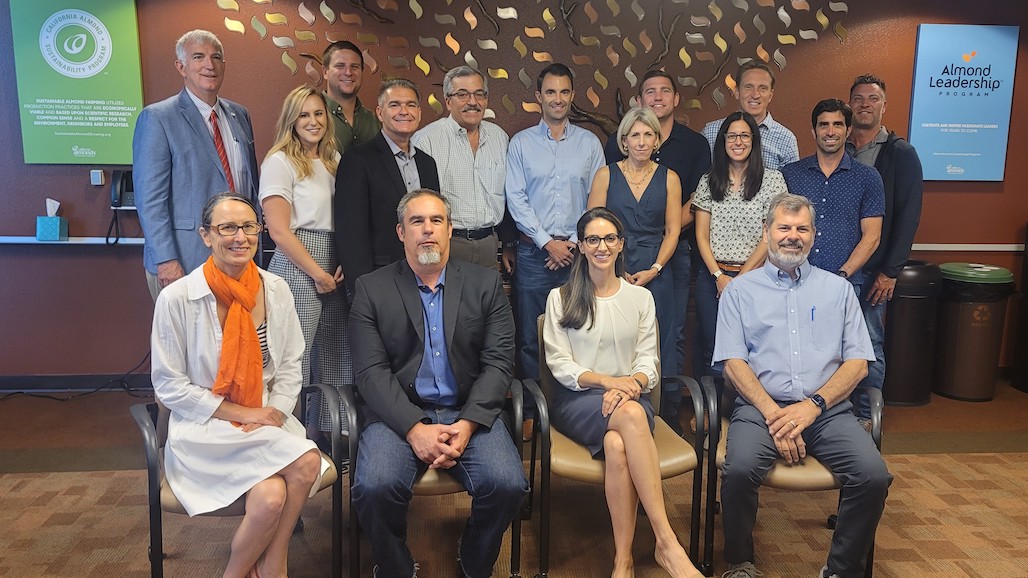
    The new Board of Directors of the Almond Board of California (ABC) took their seats this week with four voting members beginning new terms to help guide ABC’s support of one of California’s most important crops.

    Board members, whose terms officially began Aug. 1, also elected Alexi Rodriguez as chair and re-elected George Goshgarian Jr. as vice chair.

    “Our industry is facing many challenges right now,” said Rodriguez. “I’m looking forward to working with this talented and dedicated board and organization. I believe we have the resources and experience to navigate these complicated times.”

    The 10-member ABC board has five grower members – three representing independent growers and two representing cooperative growers – and five handler members, also with three independent and two co-op representatives. Some members sit in three-year seats, others in one-year positions.

    The grower representatives elected or re-elected in this year’s elections are:

    • Paul Ewing, an independent from RPAC, LLC in Los Banos. He was re-elected to a one-year term.
    • Brandon Rebiero, an independent grower from Gold Leaf Farming in Modesto who previously served as an alternate and was elected to a three-year term.

    The handler representatives were re-elected in both positions this year. They are:

    • Darren Rigg, an independent handler from Minturn Nut Co. in Le Grand. He was re-elected to a one-year term.
    • Mel Machado, a co-op handler with Blue Diamond Growers from Modesto re-elected to a three-year term.

    In addition, the board has three alternates elected or re-elected this year:

    • Katie Staack-Dorsett, an independent grower with Grizzly Nut, LLC from Waterford This is her first term as an alternate.
    • Chad DeRose, an independent handler with Famoso Nut Co., LLC in McFarland, who was re-elected.
    • Mark Jansen, a co-op handler with Blue Diamond Growers from Sacramento who was also re-elected.

    This is the full board:

    VOTING MEMBERS                                                                                      TERM

    Grower #1:            Paul Ewing, RPAC, LLC                                                 1 year

    Grower #2:            Brandon Rebiero, Gold Leaf Farming                            3 years

    Grower #3:            Joe Gardiner, Treehouse California Almonds, LLC       3 years

    Handler #1:           Alexi Rodriguez, Campos Brothers                                3 years

    Handler #2:           Bob Silveira, Vann Family Orchards                              3 years

    Handler #3:           Darren Rigg, Minturn Nut Co. Inc.                                  1 year

    Co-op Grower #1: George Goshgarian Jr., Goshgarian Farming Co.        3 years

    Co-op Grower #2: Christine Gemperle, Gemperle Orchards                      3 years

    Co-op Handler #1: Mel Machado, Blue Diamond Growers                          3 years

    Co-op Handler #2: Alicia Rockwell, Blue Diamond Growers                       3 years

    ALTERNATES

    Grower #1:             Katie Staack-Dorsett, Grizzly Nut, LLC

    Grower #2:             Vacant

    Grower #3:             Chris Bettencourt, Suvik Farms

    Handler #1:            Ron Fisher, Fisher Nut Company

    Handler #2:            Dexter Long, Hilltop Ranch, Inc.

    Handler #3:            Chad DeRose, Famoso Nut Company, LLC

    Co-op Grower #1:  Kelli Evans, Evans Farming

    Co-op Grower #2:  Kent Stenderup, Stenderup Ag Partners

    Co-op Handler #1: Mark Jansen, Blue Diamond Growers

    Co-op Handler #2: Dean LaVallee, Blue Diamond Growers

    The ABC board sets policy and approves budgets in major areas, including production research, public relations and advertising, nutrition research, statistical reporting, quality control and food safety.

    ABC is a Federal Marketing Order dedicated to promoting California almonds to domestic and international audiences through marketing efforts and by funding and promoting studies about almonds’ health benefits, as well as ensuring sustainable agricultural practices and food safety.

    About California Almonds

    California almonds make life better by what we grow and how we grow. The Almond Board of California promotes natural, wholesome and quality almonds through leadership in strategic market development, innovative research, and accelerated adoption of industry best practices on behalf of the more than 7,600 almond farmers and processors in California, most of whom are multi-generational family operations. Established in 1950 and based in Modesto, California, ABC is a non-profit organization that administers a grower-enacted Federal Marketing Order under the supervision of the U.S. Department of Agriculture. For more information on the Almond Board of California or almonds, visit Almonds.com or check out California Almonds on Facebook, Twitter, Pinterest, Instagram and the California Almonds blog.

  • NRCS Incentive Funding for On-farm Groundwater Recharge Projects

    NRCS Incentive Funding for On-farm Groundwater Recharge Projects

    As drought conditions persist in California, farmers are making the most of every drop of water they use. However, there may be more they can do during the rainy season to put water back into the ground with assistance of the USDA-NRCS.  Watch this brief interview with California Water Quality Specialist Wendy Rash to find out.

    Please thank this video’s sponsor Suterra for their industry support.