Category: Industry News

  • Walnut Bargaining Association Recommends Minimum Grower Price

    Walnut Bargaining Association Recommends Minimum Grower Price

    In an effort to keep walnut prices from tumbling further downward, the Walnut Bargaining Association (WBA) is recommending a minimum price recommendation that will return at least 65 cents per pound back to growers. This price is based on in-shell Chandlers, Jumbo/Large, average quality.

    “Our organization is concerned that walnut prices will continue to fall without some minimum price being suggested,” said Jonathan Field, Executive Director of the Walnut Bargaining Association (WBA), a grower cooperative that exists to ensure walnut farmers receive fair prices. “The WBA realizes there is ample carryover from 2021 which needs to be moved out prior to marketing new crop, but this should not be done at the expense of the current crop and production. We believe buyers are willing to pay more for walnuts and we’re urging handlers to move prices up from current levels.”

    According to Field, current prices being offered by handlers will result in only 45 or 50 cents per pound going back to growers, which is substantially below break-even. The 65 cents per pound minimum grower return recommended by the WBA, means handler trade prices need to immediately increase from current levels to cover handling costs and margins.

    Historically, handlers have published a minimum price for walnut exports in August. This didn’t happen in 2022 due to several unknowns surrounding the new crop and global supplies. The WBA will publish its official price recommendation for the 2022 crop after more is known about crop size and quality, worldwide production and the effect of the economy worldwide on prices, movement and utilization.

    “The WBA Board feels strongly the current California crop will come in lighter than expected,” said Todd Ramos, a walnut grower from Winters who is chairman of the WBA. “As walnut harvest continues throughout the state, growers are reporting less volume and more damage from the excessive heat than what was expected before the announcement of the 2022 crop estimate. These factors will reduce overall tonnage.”

    “California walnut farmers are struggling with record inflation of production costs and severely depressed prices which make it impossible to be profitable,” continued Ramos.  “The industry needs every handler to adhere to the minimum price point recommended by the WBA.”

    The WBA is urging growers and handlers to work together to stabilize the market as much as possible. They suggest that payment schedules, advances, timing of payments and all mutually beneficial discussions take place as soon as possible.

    The WBA recently launched a campaign to raise awareness about the benefits it provides to walnut growers by sharing information on prices walnut farmers receive from their handlers.

    “The WBA collects only verifiable information on grower price,” said Field, “That’s why the pricing information collected by the WBA is considered the most accurate data available. It’s definitely more reliable than what growers hear at the coffee shop.”

    The WBA hopes to gain new members so that they can collect even more accurate data.

    “When additional walnut growers join the WBA, our grower pricing data becomes increasingly comprehensive and the better the WBA can help us get the highest price for our walnuts,” said Ramos.  “The WBA understands by uniting together cooperatively with our handlers and marketers, we all stand the best chance for success.”

    More information about the WBA can be found on their website.  Growers interested in receiving sample reports and information from the WBA can sign up here.
  • Blue Diamond Growers President and CEO Announces Plans to Step Down

    Blue Diamond Growers President and CEO Announces Plans to Step Down

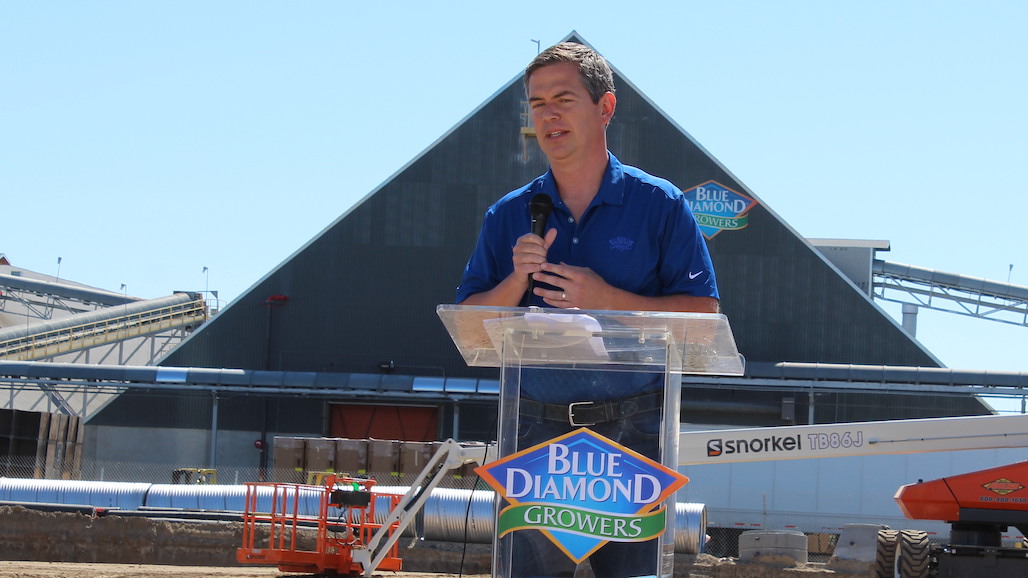
    Blue Diamond Growers President and CEO, Mark Jansen, today announced that he intends to step down from the role he has held with the agricultural cooperative and global consumer packaged goods leader since September 2010. Jansen has decided to step away after a successful 12-year tenure as CEO because he believes the organization is well-positioned for future growth and the timing is right for him to make the change.

    “Together, we have been fortunate to accomplish what we committed to do – and more,” said Jansen. “Helping the great people of Blue Diamond thrive has been an honor and privilege.”

    Specific Blue Diamond Grower achievements under Jansen’s leadership include:

    • Opening a new 200-million-pound manufacturing facility in Turlock, Calif.
    • Expanding into five innovative new almond product categories
    • Creating a global network of licensee partners for Almond Breeze® that enabled it to grow into the largest almond milk brand in the world
    • Driving dynamic growth of the flavored snack nuts category that has earned 50% market share in the United States and global distribution in more than 60 countries
    • Achieving double-digit compounded annual growth of Blue Diamond’s branded business

    “Mark promised us 10 years and gave us 12, and we greatly appreciate his significant contributions to all the stakeholders of Blue Diamond,” said Dan Cummings, Chairman of the Board, Blue Diamond Growers. “Under Mark’s leadership, Blue Diamond has transformed into a leading $1.6 billion global branded business and one of the most consistent and fastest-growing food and beverage companies in the world. He has built an incredibly strong and experienced executive team that has delivered healthy year-over-year revenue growth resulting in increasingly superior returns to our grower-owners.”

    According to Cummings, the co-op’s Board of Directors has established a CEO Succession Committee and is working with executive search and leadership advisory firm, Egon Zehnder, on a nationwide search, open to both internal and external candidates.

    “Blue Diamond is a growth company by choice, driven in large part by a complete dedication to a single ‘good for you’ product, vertical integration, extensive partnerships, and a continual investment in marketing and innovation,” Cummings said. “This is a phenomenal leadership opportunity for the right executive who shares our strong values and commitment to our loyal growers, employees, and customers.”

    Jansen affirmed he is committed to supporting the search for a successor and plans to stay on until a new CEO has been selected and begins working to help ensure business continuity and a smooth leadership transition.

    “The Blue Diamond Growers co-op knows how to get almonds from growers’ farms to families worldwide better than anyone,” said Jansen. “We’re growing with an accelerated focus on sustainability and a continued commitment to giving back to the stakeholders we serve.  As it was for me, this will be a great opportunity for the next CEO, and I look forward to supporting our Board, growers, and work family throughout this transition.”

    About Blue Diamond

    Blue Diamond Growers, a grower-owned cooperative representing approximately 3,000 of California’s almond growers, is the world’s leading almond marketer and processor. Established in 1910, it created the California almond industry and opened world markets for almonds. Blue Diamond is dedicated to delivering the benefits of almonds around the world and does so by providing high-quality almonds, almond ingredients, and branded products. Headquartered in Sacramento, the company employs more than 1,800 people throughout its processing plants, receiving stations and gift shops. To learn more about Blue Diamond Growers, visit www.bluediamond.com and follow the company on Facebook, Instagram, LinkedIn and Twitter.

  • Walnut Bargaining Association Asks Handlers to Hold Off on Setting Prices

    Walnut Bargaining Association Asks Handlers to Hold Off on Setting Prices

    The Board of the Walnut Bargaining Association (WBA) met last month in Sacramento to discuss the outlook for this year’s walnut crop.  Traditionally, this is the time of year when the industry begins to hear estimates from handlers about prices growers can expect to receive for their walnuts. But this year, the WBA is hoping to delay these decisions.

    “So much is still uncertain at this time,” said Pete Jelavich, WBA member from Yuba City. “The California Ag Statistics Service (CASS) has set the pre-season crop estimate at 720,000 tons, but many growers believe recent weather events since the estimate was released will reduce yields. We’re also waiting to learn more about global supply conditions and about the volume and quality of last year’s crop is still available for sale. Both of these factors will play a major role in the price we’ll receive for our walnuts for the new season.”

    In general, grower prices for walnuts have been at record lows for the past few years. And while the WBA doesn’t expect things to change dramatically this year, they are cautiously optimistic that things will improve a bit over last year.

    According to WBA statistics, last year’s CASS estimate was way off its pre-season estimate of a 670,000-ton crop. The actual crop was significantly larger and eventually came in at 730,000 tons. As a result, actual prices for walnuts were dramatically lower than what was predicted in early fall.

    “This year, we could very likely have the opposite scenario,” said Jonathan Field, Executive Director of the WBA.  “The CASS crop estimate is just slightly below last year’s actual crop, but the report indicated far fewer nuts per tree and kernel weights that are much lighter than normal. As a result, the crop may come in lighter than predictions, which would hopefully drive prices up.”

    “The WBA has sent a letter to handlers asking them not to jump the gun on setting walnut prices until we know more about the crop size and for some of the unstable market conditions to settle a bit,” said Jelavich. “Growers need to receive higher prices for our walnuts than we have for the past few years. So, we’re asking handlers to work with us and wait until we know more.”

    According to Jelavich, the whole reason for the existence of the WBA is to improve grower pricing. But many walnut farmers don’t even know the WBA exists. To combat that, the WBA has recently launched a new website and is funding a series of ads in walnut growing trade publications such as Pacific Nut Producer Magazine to help raise awareness about the WBA and what it’s all about.

    In short, the WBA is a grower-owned cooperative whose only goal is to help farmers get a fair price for walnuts. They do this by providing walnut farmers with accurate data, global market intelligence and information about actual prices walnut farmers receive from handlers.

    “Each year, the WBA collects information about the prices our members have received for their walnuts,” says the WBA’s Field. “This information doesn’t come from coffee shop talk. We get it by collecting pay stubs that growers receive from their handlers.”

    Grower pricing information submitted to the WBA is confidential. Name, address and ranch information on pay stubs is redacted to ensure anonymity. Specific information on handler names is also not made public. But the pricing information gathered by the WBA is the most accurate available anywhere. It gives WBA members a really good idea if the price they received was in line with the industry average or below it.

    “In many cases, the WBA pricing report has empowered our members to go back to their handler and secure an enhanced payment,” said Field.  “Our goal is to help make grower prices more transparent and to hold handlers accountable for paying farmers the right price.”

    The WBA is embarking on a membership drive in an effort to help all walnut growers receive better prices.

    “The more walnut farmers we have in our membership, the more accurate our pricing information will be and the greater unity we’ll have as a walnut farming community,” he said. “Joining the WBA might be the most important thing a walnut farmer can do to improve prices for walnuts.”

    The cost to join the WBA is $2 per ton. In addition to information on prices received from handlers, the WBA provides a host of additional economic and market intelligence that is very difficult to get elsewhere. This includes information on sales, supply-demand issues, trade market pricing, quality, and other global economic trends. 

    To learn more about the information provided by WBA, growers can register here to receive a sample of WBA reports. The new WBA website includes much more information about the WBA and its benefits of members. Growers can also hear testimonials from fellow walnut growers here and here.

  • Wonderful® Pistachios Partners with Panda Global as an Official Snack of the First-ever Licensed North American Super Smash Bros.™ Circuit

    Wonderful® Pistachios Partners with Panda Global as an Official Snack of the First-ever Licensed North American Super Smash Bros.™ Circuit

    Wonderful® Pistachios, America’s number one snack nut, announced a new partnership with gaming organization Panda Global as an Official Snack of the Panda Cup, the first North American Super Smash Bros.™ circuit to be officially licensed by Nintendo. Wonderful Pistachios will also be the title sponsor of the “Wonderful Pistachios Last Chance Qualifier” on December 15 at the Los Angeles Convention Center.

    The “Wonderful Pistachios Last Chance Qualifier” is a day-long event that is free and open to the public. Participants and attendees can enjoy a Wonderful Pistachios activation booth while sampling No Shells pistachios, available in Roasted & Salted, Honey Roasted, Chili Roasted, Smoky Barbecue and Sea Salt & Vinegar flavors – the perfect guilt-free, great-tasting, one-handed gaming snack with six grams of protein in every one ounce serving.

    “The Super Smash Bros. franchise and family-centric nature of Nintendo make the opportunity to be a part of this historic Panda Cup a natural fit,” said Diana Salsa, associate vice president of marketing, Wonderful Pistachios. “The team at Panda Global is providing us with an amazing opportunity in competitive gaming to share our flavorful, protein-forward snack nuts with new audiences on multiple touchpoints throughout the circuit.”

    As part of the partnership, Wonderful Pistachios will serve as the Analyst Desk sponsor for its Last Chance Qualifier and the Panda Cup Finale, which takes place from December 16-18 and offers a $100,000 prize pool for the winners. In addition to the in-person events, the qualifying rounds and finale will be broadcast on Twitch, where viewers will see Wonderful Pistachios ad spots featuring the disgruntled No Shells mascot, Sheldon the tortoise. Sheldon is upset with the brand managers of Wonderful Pistachios No Shells for their “anti-shell” advertising; however, No Shells is the perfect snack for gaming as it is healthy, delicious, and can be poured straight from the bag – no shell cracking required!

    The Panda Cup follows Panda Global’s partnership with video game company Nintendo, enabling it to host licensed tournament circuits for Super Smash Bros.

    “I’ve always made sure to have a bag of Wonderful Pistachios in my pantry long before we found out they’re big fans of Super Smash Bros.,” said Alan Bunney, CEO of Panda Global. “We’re very excited that Wonderful Pistachios is joining the Panda Cup to celebrate our community and help us take things to the next level. And I’m looking forward to all the pistachio flavors they’re bringing with them!”

    According to a report by MRI Simmons, 47 million U.S. adults are esports fans with more than 80% of fans reporting that they eat or drink while watching competitive gaming. The convenience of Wonderful Pistachios No Shells, combined with the great variety of flavors, makes marathon gaming (and snacking) easy for fans.

    Wonderful Pistachios are one of the only snack nuts that are a complete and good source of protein. Pistachios also offer fiber and unsaturated fats for a trio of nutrients that may help keep snackers feeling fuller for longer, a beneficial combination for competitive gaming and longer gaming sessions.

    For more information about Wonderful Pistachios visit WonderfulPistachios.com, YouTube at @WonderfulPistachios, Facebook at /WonderfulPistachios, and Instagram at @WonderfulPistachios.

    About Wonderful Pistachios

    Wonderful Pistachios is the world’s largest vertically integrated pistachio processor and marketer. Located in California’s Central Valley, our nuts are Non-GMO Project Verified, providing a smart, healthy choice for consumers around the world. Our nuts can be found in stores nationwide and online under the flagship brand, Wonderful® Pistachios.

    Wonderful Pistachios is part of The Wonderful Company, a privately held $5 billion company that also has iconic brands such as Wonderful® Halos®, FIJI® Water, POM Wonderful®, JUSTIN® Wine, and Teleflora®.

    About The Panda Cup

    The Panda Cup is a licensed North American Super Smash Bros. Ultimate and Super Smash Bros. Melee Competitive circuit featuring qualifying events across the USA, Canada and Mexico. The circuit strives to create and foster a fun and welcoming space for players to compete while simultaneously boosting support for Super Smash Bros. tournaments and competitors.

  • Pacific Nut Producer October Issue

    Pacific Nut Producer October Issue

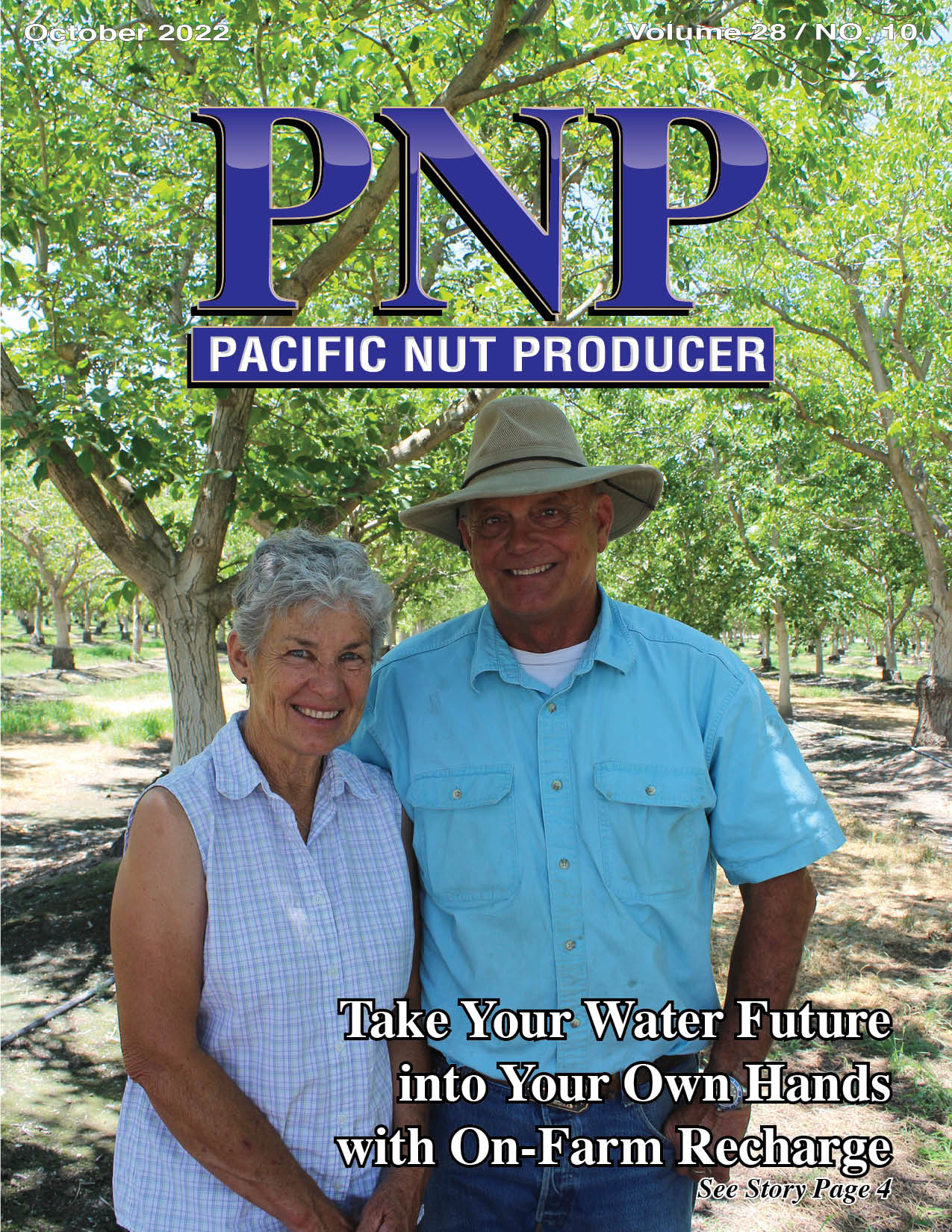
    PNP1022
    Pacific Nut Producer October Issue

    [btn btnlink=”https://malcolmmedia.com/order-a-back-issue/back-issue-pacific-nut-producer-magazine/” btnsize=”full” txtcolor=”#ffffff” color=”#FFF” bgcolor=”#492500″ btnnewt=”1″ nofollow=”1″]Order A Back Issue[/btn]

    [btn btnlink=”http://malcolmmedia.com/pacific-nut-producer-magazine-subscriptions/” btnsize=”full” txtcolor=”#ffffff” bgcolor=”#492500″ btnnewt=”1″ nofollow=”1″]Subscribe Free[/btn]
    [three_fifth_last]

    Contents of the October Issue:

    Mark Hutson Farms a Canvas of Possibilities
    Takes Water Future into his Own Hands with On-Farm Recharge

    The Irrigation Corner
    Salt Removal from Drip/Micro Irrigated Orchard Soils

    A New Era of UCCE Farm Advisors
    UC Ramping Up California Tree Nut Extension Efforts

    October Orchard Tasks
    Almonds, Hazelnuts, Pecans, Pistachios, Walnuts

    [/three_fifth_last]

  • How Oregon Hazelnuts Fit into Current Global Market Dynamics

    How Oregon Hazelnuts Fit into Current Global Market Dynamics

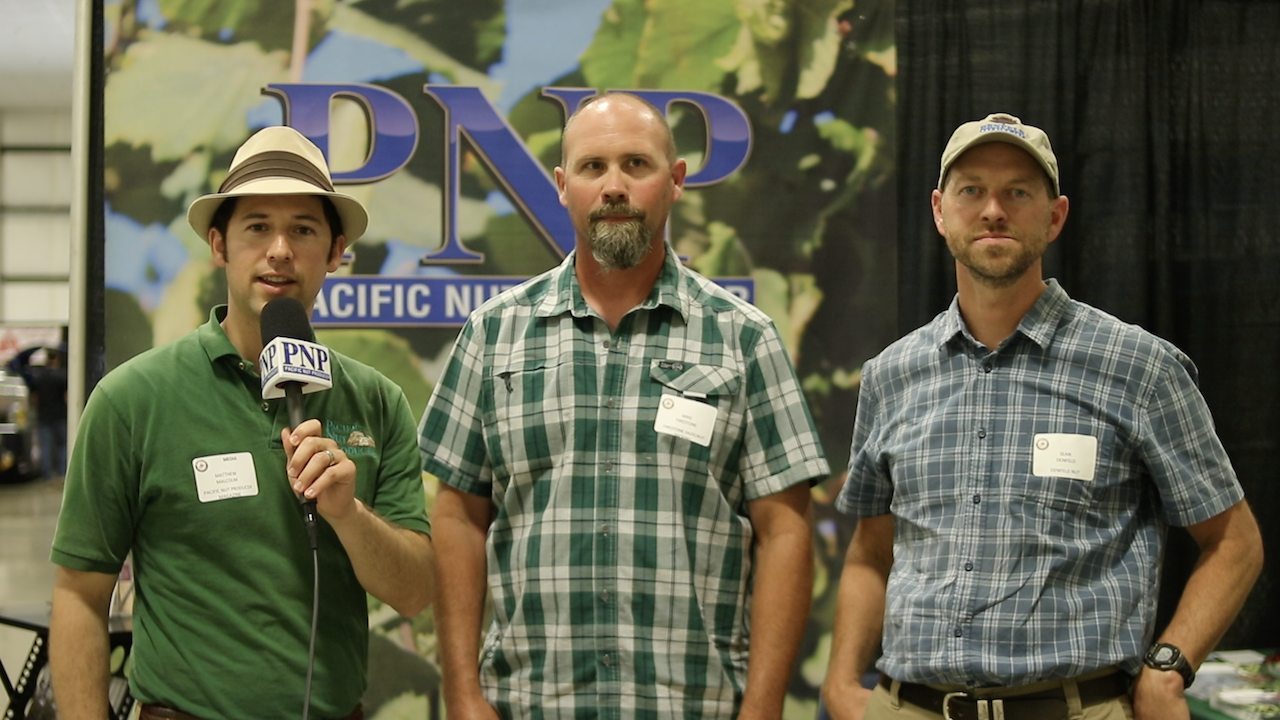
    While the 2022 hazelnut crop forecast is down from last year’s yields in the Pacific Northwest, there appears to be no shortage of hazelnuts on the global scale currently. Watch this brief interview with hazelnut packers Mike Firestone and Sean Denfeld as they share their perspectives on the global hazelnut market and how Oregon hazelnuts fit into the mix.  Read more about it in Pacific Nut Producer Magazine. Don’t currently receive this monthly publication? Subscribe for free at: https://malcolmmedia.com/subscribe/

    Please thank this video’s sponsor Suterra for their industry support.

  • What Growers & Handlers Should Know about Preventing Tree Nut Theft

    What Growers & Handlers Should Know about Preventing Tree Nut Theft

    There are a lot of risks involved in farming, such as weather, insect/disease pressure and a tightening labor force; and a crop finally getting harvested is generally accompanied by a sigh of relief.  However, the risks aren’t completely over yet, especially with the threat of postharvest crop theft in California. Watch this brief interview with Tulare County Sheriff Mike Boudreaux who addresses this issue and read more about in Pacific Nut Producer Magazine.

    Please thank this video’s sponsor Suterra for their industry support.

  • Iditarod Champion Shares Why Pistachios are His Protein of Choice

    Iditarod Champion Shares Why Pistachios are His Protein of Choice

    Not only do pistachios contain all the essential amino acids that make up a complete protein, but they also have other nutritional benefits that help the body through extreme cold weather conditions. That is why pistachios are the trail food of choice for five-time Iditarod champion dog musher Dallas Seavey.  Watch this brief interview with one of American Pistachio Growers latest ambassadors as he explains and read more about it in the latest issue of Pacific Nut Producer Magazine.

    Please thank this video’s sponsor Suterra for their industry support.

  • New Tool to Fight Phytophthora Crown & Root Rot in Almond

    New Tool to Fight Phytophthora Crown & Root Rot in Almond

    Watch this brief interview with UCCE Farm Advisor Brent Holtz as he talks about a new tool to fight the tree-killing phytophthora crown and root rot in almond, and be sure to read his monthly Almond Tasks column in Pacific Nut Producer Magazine.

    Please thank this video’s sponsor Suterra for their industry support.

  • Almond Case Study Tests New ROI Calculator

    Almond Case Study Tests New ROI Calculator

    Many almond growers have heard their peers, as well as others with interest in improving pollinator habitat and soil health, endorse the planting of cover crops to accomplish those goals.

    Those same growers may have wondered if money spent on seeds and labor as well as the cost of time to manage cover crops truly pay off. Can the economic benefit of cover crops accurately be measured and, if so, what is the return on that investment (ROI)?

    The Almond Board of California (ABC) – in an effort to directly address questions about the ROI of cover crops – recently completed a case study of one orchard in Stanislaus County where cover crops have been planted for a decade. The case study relied on a calculator system developed by the American Farmland Trust.

    Michael Roots, ABC’s specialist for field outreach and education, worked with grower Christine Gemperle to evaluate the ROI of cover crops on 20 acres of her 40-acre orchard near Ceres. The result was an easy-to-read two-page document now available for other growers to review.

    A combination of published machinery and material cost estimates and data supplied by Gemperle was used to estimate the cost of operations, on average, before and after cover crops were planted. The analysis was limited to only those income and cost variables affected by cover crop adoption.

    The bottom line? Gemperle’s net income per acre grew by $499 annually, for a total of $9,976 for the 20 acres. That works out to an ROI of 459% based on the $1,516 average cost of seeds plus the value of her time ($655) each year to fine tune the process.

    Gemperle’s trees were 9 years old when she first planted cover crops in 2012. Thanks to meticulously kept records, she credits cover crops for increasing yield by about 8% while, at the same time, reducing her pesticide and herbicide costs.

    Her strategy – which has evolved through the years – is relatively simple. She plants cover crops in every other row, usually by early October. She waters those seeds during her last post-harvest irrigation of the fall. She uses the “clean” rows – those without cover crop seeds – to remove mummy nuts and prune. Once those tasks are finished, she plants her other cover crop seeds down those rows as well, usually by early December.

    In addition to creating an inviting habitat for honeybees and other natural pollinators, Roots said Gemperle has reduced weed populations, improved soil moisture retention and reduced pesticide applications. She’s also saved money on labor.

    “The diversity of weeds she’s seen has decreased so a lot of the hard-to-kill weeds have disappeared as the cover crop has taken over. She doesn’t have to spray as often and she doesn’t have to use as much material,” Roots explained. “She also doesn’t spray in May for mites because of all the beneficial insects that her cover crops host.”

    Gemperle also has observed that her trees are more resilient, less prone to leaf drop and less prone to wilting during harvest.

    “She’s found a good way to be cost-effective and get the job done in an economic manner. Especially since she’s doing all the work herself,” Roots said.

    Roots added reaching out to the Almond Board or American Farmland Trust to participate in a case study can be a good way for a grower interested in determining the ROI of their existing, or potential future, cover crops. It can be used to determine the ROI of their own orchards as each situation is likely to be unique.

    “Everybody implements cover crops a little differently,” he said.

    Growers interested in the American Farmland Trust’s soil health calculator can learn more at the organization’s website. — By the Almond Board of California