Category: Industry News

  • Christine Roth Welcomed as New Oregon Hazelnut Industry Executive

    Christine Roth Welcomed as New Oregon Hazelnut Industry Executive

    Oregon Hazelnut Industry Office — The Oregon hazelnut industry is pleased to announce the appointment of Christine Roth as its new Executive Director. In this role, Roth will provide leadership for the Oregon Hazelnut Commission, Hazelnut Marketing Board, Associated Oregon Hazelnut Industries, and the Nut Growers Society.

    Roth brings an accomplished record of leadership across the public and private sectors, with particular focus on agriculture, agribusiness, and higher education. Throughout her career, she has demonstrated a strong respect for the growers and producers who form the foundation of Oregon’s agricultural success.

    Her connection to farming runs deep. Raised in agriculture, Roth developed an early appreciation for the commitment and creativity required of producers. Those formative experiences gave her both empathy for the challenges farmers face and insight into the opportunities that shape agricultural markets.

    Professionally, Roth has built bridges between research, business, and government to strengthen industries and open new opportunities. While at Oregon State University, she advanced corporate and academic partnerships that connected programming and research with industry operations and business organizations. Her work forged collaborations among diverse stakeholders, demonstrating her ability to bring together different perspectives in support of shared goals.

    Additionally, Roth has firsthand experience managing a commodity commission and trade association. She successfully guided one of Oregon’s leading agricultural organizations – Oregon Wine Board and Oregon Wine Growers Association – through a period of growth and heightened visibility. Under her direction, the organization expanded marketing efforts, strengthened government relations, and advanced research programs essential to producers. This experience underscores her ability to manage commissions with discipline while enhancing their market position both domestically and internationally.

    Roth has also built a strong record in business development. She has secured significant funding, created lasting partnerships, and designed strategies that help businesses remain competitive in an evolving marketplace. Her combination of operational skill and strategic vision will be essential as Oregon hazelnuts continue to grow in global recognition while preserving the premium quality that has become their hallmark.

    “Oregon hazelnuts hold a special place in the state’s agricultural landscape,” Roth said. “This industry has grown tremendously while earning a reputation for exceptional quality. The unified office will focus on serving growers and producers by strengthening governance, advancing research and marketing initiatives, and sustaining the momentum that has made Oregon hazelnuts such a success story.”

    Her appointment also signals a continued commitment to collaboration with research and educational institutions, including Oregon State University, which has long been a critical partner in developing innovative solutions for growers. Drawing on her experience in higher education and public service, Roth is well positioned to build stronger partnerships with universities, business leaders, sponsors, and policymakers who support the industry’s future growth.

    As Executive Director, Roth will oversee the combined activities of the four organizations that make up the Oregon Hazelnut Industry. Through her leadership, the office will serve as a reliable hub for growers, producers, processors, and stakeholders, emphasizing clarity, responsiveness, and collaboration as the Oregon hazelnut industry is poised to strengthen its reputation for quality, expand its global markets, and secure long-term success for growers and producers across the state.

  • Blue Diamond Growers Details Actions to Maximize Grower Returns, Honors George Goshgarian Jr

    Blue Diamond Growers Details Actions to Maximize Grower Returns, Honors George Goshgarian Jr

    Blue Diamond Growers, the world’s leading almond cooperative, held its 115th annual meeting on Nov. 19 in Modesto, highlighting a year defined by bold operational decisions and strategic transformation.

    Kai Bockmann, president and CEO, Blue Diamond Growers, shared with growers in attendance that the cooperative navigated a challenging year by responding with urgency and clarity to strengthen long-term competitiveness and grower returns.

    “Our industry is facing real headwinds, from rising input costs and pest-related crop damage to persistent market volatility,” Bockmann said. “But we

    must stay focused on what matters most: maximizing returns for our growers while building a cooperative that will thrive for generations to come. The actions we are taking position us to do exactly that.”

    At the meeting, Blue Diamond’s leadership outlined concrete steps taken to enhance operational efficiency and strengthen the cooperative’s market position across three strategic pillars.

    Transforming Operations to Drive Efficiency

    Earlier this year the cooperative announced plans to close its Sacramento manufacturing plant and consolidate operations to the existing Turlock and Salida facilities. The move will maximize efficiencies while moving the manufacturing facilities even closer to the almond-growing regions that are at the heart of the cooperative. The transition strengthens both efficiency and sustainability while honoring Blue Diamond’s commitment to growers.

    “It comes down to one fundamental thing: build a stronger and more profitable Blue Diamond that provides the best return for our growers’ almonds,” Bockmann said. “We’ve made the tough calls this year with decisions that position us for long-term success.”

    Driving Brand Performance and Innovations

    Despite category softness, Blue Diamond maintained the No. 1 position in both Almondmilk and Snack Almonds. The cooperative executed its first brand refresh in more than two decades, laying critical groundwork for renewed consumer engagement. The year saw the successful launch of new product lines including Almonds and More mixed nuts and almond-fruit produce blends in partnership with Oppy® to help establish a presence and ignite growth in the produce section. Additionally, limited-time flavors – including Cherry Slurpee® and Mike’s Hot Honey® – drove consumer excitement and helped the brand remain top-of-mind in a competitive marketplace.

    Expanding within International Markets

    Blue Diamond continues to expand its international footprint across multiple regions and segments. In Canada, the cooperative grew distribution with major retailers at a pace faster than both category and private-label growth. Strategic beverage partnerships and pipeline opportunities took shape in Japan, while new flavor tests launched across Europe for broader retailer expansion. The cooperative also strengthened its core almond segment leadership with in-shell almonds showing impressive growth in key markets including India, Turkey, and the United Arab Emirates.

    Announcing the 2025 Chairman’s Grower Ambassador of the Year Award

    At the annual meeting, Blue Diamond’s Board Chairman Steve Van Duyn presented the 2025 Chairman’s Grower Ambassador Award to George Goshgarian Jr., a Blue Diamond grower whose family has farmed with the cooperative for nearly 50 years. Goshgarian Jr. is from Fresno and is completing his MBA at Fresno Pacific University School of Business.

    For more than 13 years, Goshgarian Jr. has served in various capacities at the Almond Board of California, including the Environmental Committee, Almond Quality and Food Safety Services Committee, and Strategic Ag Innovation Committee. He also served on the Board of Directors for eight years, including two terms as vice chair. He values being part of a team that creates solutions to challenging industry issues and serves as a voice for farmers.

    “Serving at the Almond Board gives even the smallest farming operation a seat at the table,” Goshgarian Jr. said. “I’ve been very proud to represent Blue Diamond at the Almond Board of California for more than a decade.”

    Bockmann concluded the annual meeting with remarks reflecting the cooperative’s readiness for the years ahead.

    “Our balance sheet is strong, our strategy is clear, and our team is energized to execute,” he said. “The coming year – and beyond – is about translating strategy into results. We do this in service to our growers, and we’re confident in the direction and path forward.”

    About Blue Diamond

    Blue Diamond Growers, a grower-owned cooperative representing approximately 3,000 of California’s almond growers, is the world’s leading almond marketer and processor. Established in 1910, it created the California almond industry and opened world markets for almonds. Blue Diamond is dedicated to delivering the benefits of almonds around the world and does so by providing high-quality almonds, almond ingredients, and branded products. Headquartered in Sacramento, the company employs more than 1,800 people throughout its processing plants, receiving stations and gift shops. To learn more about Blue Diamond Growers, visit www.bluediamond.com and follow the company on Facebook, Instagram, LinkedIn and Twitter.

  • Pecan Harvest Underway, Tight Supply May Bring Higher Prices

    Pecan Harvest Underway, Tight Supply May Bring Higher Prices

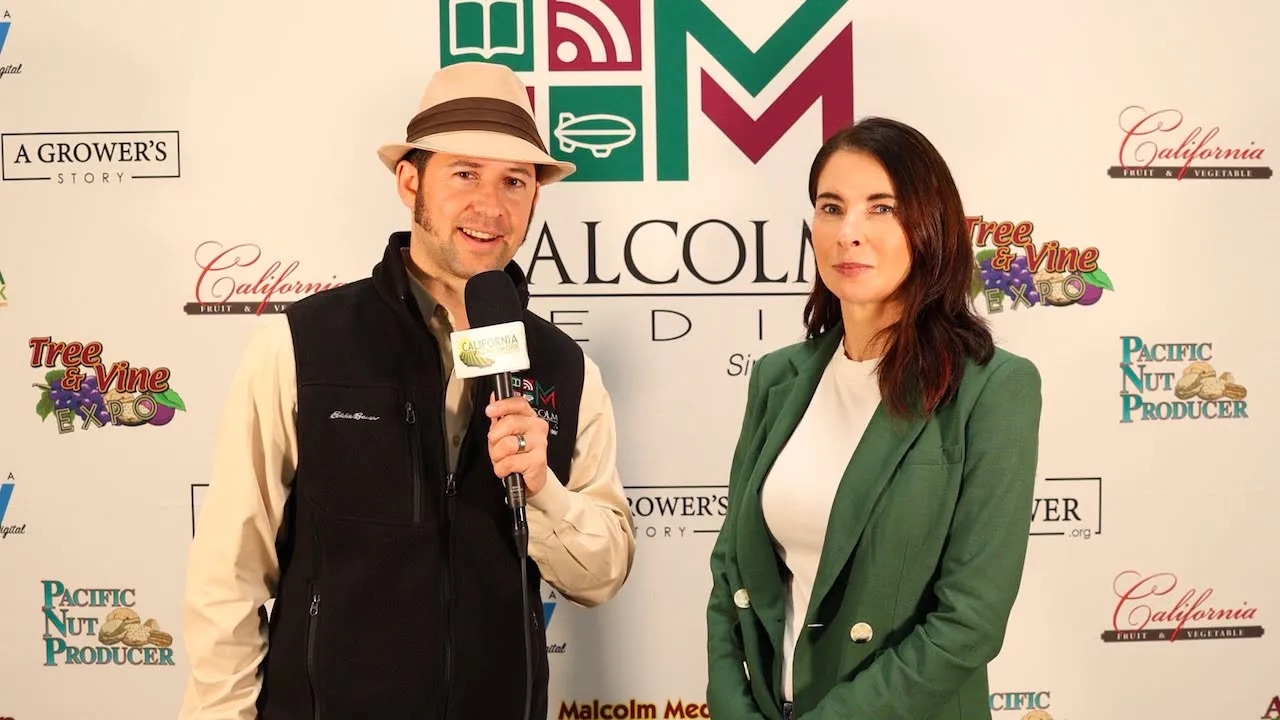
    Pecan harvest is underway, just in time for that Thanksgiving pecan pie; however American pecans are breaking out of their shell and being utilized by consumers around the world in more creative ways than ever before. During the State of the Tree Nut Industry presentations at Malcolm Media Ag Expos, Anne Warden, CEO of the American Pecan Council and American Pecan Promotion Board shared insights on the growth potential of American Pecans. After her address, she met with Matthew Malcolm on California Ag Network to elaborate and provide an update on pecan harvest and the market this year. Watch this brief interview and read more about it in the coming issue of Pacific Nut Producer Magazine.

  • California FFA Partners with Blue Diamond Growers to “Give the Gift of Blue” on Giving Tuesday

    California FFA Partners with Blue Diamond Growers to “Give the Gift of Blue” on Giving Tuesday

    This Giving Tuesday, the California FFA Foundation and Blue Diamond Growers are teaming up to make twice the impact through the “Give the Gift of Blue” campaign. On December 2, 2025, Blue Diamond Growers will match every donation, dollar for dollar, up to $25,000, providing FFA jackets to deserving members statewide.

    “For the last nine years, our partnership with Blue Diamond Growers has created a lasting tradition of giving back through the ‘Gift of Blue’ campaign,” said Emily Rooney, chair of the California FFA Foundation and president of the Agricultural Council of California. “With their support, we have collectively raised over $525,285, providing 5,717 FFA jackets to members throughout California—a remarkable effort and true testament to the generosity within the agriculture community.”

    With California’s record-breaking membership of more than 108,000 middle and high school students, the demand for blue jacketshas never been greater. The iconic blue jacket stands as more than just a part of the official FFA uniform; it also embodies the values of leadership and rich agricultural tradition instilled in FFA members for nearly 100 years.

    “Blue Diamond is, once again, pleased to match funds dollar for dollar up to $25,000 to support FFA students in receiving their iconic, blue jackets,” said Mel Machado, Blue Diamond Growers chief agricultural officer and California FFA Foundation board member. “As a century-old farmer-owned cooperative, our legacy depends on supporting the next generation of farmers. FFA students are bright, dedicated, hardworking, and learn valuable skills to ensure the future of farming. Blue Diamond Growers is honored to support the FFA mission.”

    Beyond Giving Tuesday, Blue Diamond Growers has been a steadfast ally to FFA and agricultural education, extending support through sponsorships of various proficiencies and awards. Last year, Blue Diamond Growers was awarded the Distinguished Service Citation from the National FFA Organization. This esteemed honor is given to a select group of organizations, agencies, businesses, or other groups that have made outstanding contributions to FFA.

    With 115 years of agricultural history in Northern California and the participation of approximately 3,000 family growers responsible for producing almonds for the world, Blue Diamond Growers is a premier example of a legacy of excellence.

    To discover more about the California FFA Foundation’s Giving Tuesday initiative or to contribute, please visit www.calaged.org/givingtuesday. Follow California FFA on Instagram, Facebook, or LinkedIn.

    About the California FFA Foundation

    California FFA Foundation serves more than 108,000 California students and strives to make a difference in their lives by developing their potential for premier leadership, personal growth, and career success through educational education. To learn more about the California FFA, visit calaged.org.

    Facebook: @CaliforniaFFA | LinkedIn: @California-FFA-Association | Instagram: @californiaffa | TikTok: @officialcaliforniaffa

    About Blue Diamond Growers®

    Blue Diamond Growers, a grower-owned cooperative representing approximately 3,000 of California’s almond growers, is the world’s leading almond marketer and processor. Established in 1910, it created the California almond industry and opened world markets for almonds. Blue Diamond is dedicated to delivering the benefits of almonds around the world and does so by providing high-quality almonds, almond ingredients, and branded products. Headquartered in Sacramento, the company employs about 1,300 people throughout its processing plants, receiving stations and gift shops. To learn more about Blue Diamond Growers, visit www.bluediamond.com and follow the company on Facebook, Instagram, and LinkedIn.

  • Healthy Soil, Stronger Crops: How Live, Native Microalgae is Transforming California Farming

    Healthy Soil, Stronger Crops: How Live, Native Microalgae is Transforming California Farming

    —SPONSORED CONTENT—

    Across California, growers are seeing measurable gains in yield, water efficiency, and soil health, all thanks to live, native microalgae.

    California growers know that every drop of water, every inch of root zone, and every dollar spent matters. With drought, salinity, and floods happening nearly every year, the margin between surviving and thriving often lies beneath the surface, in the soil.

    Healthy soil is alive with organisms that each play a role in supporting crop growth. Some, like earthworms, are easy to see, while others work on the microscopic level. Among these tiny contributors are microalgae, which naturally occur in most soils and help drive key biological processes like root development, soil structure, and water and nutrient availability. When microalgae are thriving, the whole soil system becomes stronger and more productive.

    That’s where MyLand’s Soil as a Service™ comes in. MyLand, a soil health company based in Phoenix, is returning live, native microalgae to the soil through growers’ existing irrigation systems, helping farms rebuild biological activity and unlock the full potential of their land.

    The results, verified by independent third-party data, speak for themselves. In 2024, California farms using MyLand saw:

    • 168% increase in harvested pistachios during an off-bearing year
    • 23% more marketable citrus fruit per acre
    • 4% less soil sodium
    • 32% higher organic carbon
    • 50% drop in tree water stress

    For California nut growers like Justin Wylie and Joe Coelho, MyLand’s Service is helping rewrite what’s possible for long-term soil health and profitability.

    Building resilience in pistachio orchards: Justin Wylie’s story

    At Wylie Farms, a fifth-generation pistachio operation in California’s Central Valley, Justin Wylie has spent years watching extreme weather push his soil to its limits. Heavy rains once meant phytophthora, runoff, and erosion, while drought cycles left the ground compacted and trees under stress.

    That trajectory began to change when he adopted regenerative practices, including the integration of live, native microalgae through the MyLand Service. His orchards began to thrive even during intense rain, with stronger ground cover and native grasses helping stabilize sloped terrain and minimize erosion.

    The addition of microalgae quickly became central to his soil health strategy. Supporting the soil with live biology helped jumpstart broader microbial activity, which in turn supported nutrient cycling and improved water dynamics.

    With soil function improving year-over-year, Justin was able to scale back chemical inputs without sacrificing yield or crop quality, thereby sidestepping the typical ‘J curve’ many growers experience when transitioning to regenerative systems.

    Healthier soil has also meant less tree stress and more efficient water use. This change has helped Justin create a foundation of resilience that now carries his orchards through both wet and dry years. His message to fellow growers is practical and encouraging: “Take the smallest amount of acreage that you can stand to lose the crop on, which is, of course, a worst-case scenario. My goal has been to not experience any sort of drop-off in production and quality. And I think we’ve been successful.”

    Now, Justin’s trees are more resilient, his soil is more balanced, and his operation is better positioned for the next generation.

    From skeptic to advocate: Joe Coelho’s journey at Terra Linda Farms

    A few hours south, in Riverdale, California, Joe Coelho was facing familiar challenges at Terra Linda Farms. Saline soils, uneven infiltration, and the constant pressure of water scarcity were daily stressors. After nearly four decades of farming pistachios and almonds, Joe had seen countless improvement options come and go.

    “I’ve seen a lot of solutions over the years,” he said. “But some of the changes I’ve seen with MyLand are very shocking and in a good way. It’s the first time in my career I’ve seen something move this fast.”

    Skeptical at first, Joe decided to try MyLand’s Service on 600 acres. Within two years, the data told a clear story. He cut nitrogen use by 30%, replaced $450 per acre of inputs, and maintained the same yields.

    MyLand’s soil analysis confirmed rapid improvements:

    • +359% organic phosphorus reserves
    • +428% total phosphorus
    • +98% iron availability

    “Part of my problem is just having enough time in the day to do everything,” he said. “Just having MyLand as a one-stop shop for a lot of different solutions is fantastic and saves a lot of headaches at the end of the day.” As a fully managed service provider, MyLand requires no extra effort from growers.

    As Director of Sustainability and Member Outreach for the American Pistachio Growers, Joe now shares his experience with peers facing the same challenges. “It’s not just about yields,” he said. “It’s about reducing complexity, farming more efficiently, and solving multiple problems with one solution.”

    A future rooted in healthy soil

    From Wylie’s pistachio orchards to Coelho’s mixed nut farms, a clear theme is emerging across California agriculture: live, native microalgae do the job. By restoring the living foundation of soil, MyLand’s Service is helping growers achieve measurable results faster than conventional methods alone.

    For California farmers navigating water limits, soil salinity, and rising costs, the path forward is simple: let biology do the work.

    Visit MyLand.ag to learn more.

  • New Pilot Program for Walnut Inspections Could be a Game-Changer for Entire Tree Nut Industry

    New Pilot Program for Walnut Inspections Could be a Game-Changer for Entire Tree Nut Industry

    California walnut growers have been wanting to see more consistency on incoming inspections, and DFA of California has been leading the charge to deliver on that. Brendan O’Donnell, President of DFA of California met with Matthew Malcolm on California Ag Network to share details on a new pilot program in walnuts that has been implemented this season that could be a game changer for the entire tree nut industry. Watch the interview and read more about it in Pacific Nut Producer Magazine.

  • Whole Lotta Shakin’ Going on at Fresno State, Thanks to Pistachio Harvester Partnership with OXBO

    Whole Lotta Shakin’ Going on at Fresno State, Thanks to Pistachio Harvester Partnership with OXBO

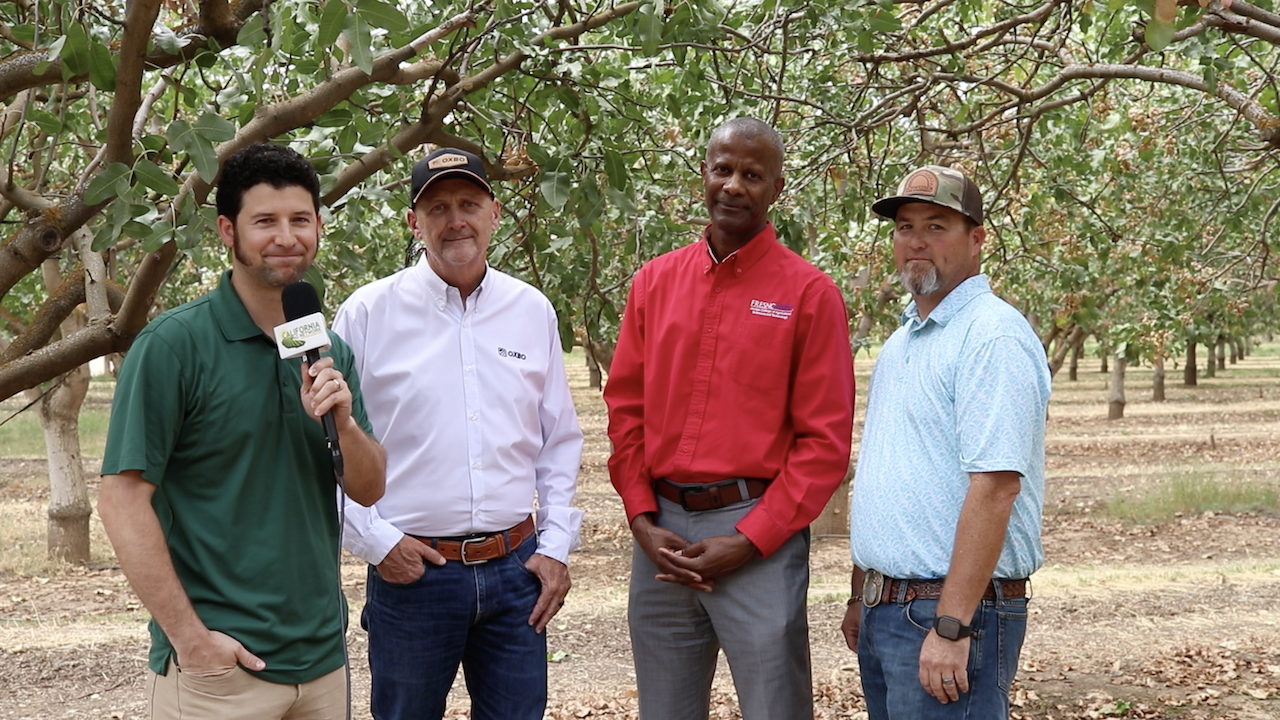
    Thanks to a collaborative partnership with OXBO, Fresno State ag students have hands-on access to state-of-the-art pistachio harvesting equipment. During the thick of pistachio harvest, Pacific Nut Producer Editor Matthew Malcolm met with Ag instructor John Williams, Jordan College of Agriculture Dean Rolston St. Hilaire, and OXBO Fruit Division President Robert Huckaby out in the Fresno State pistachio orchard to explain the collaborative nature of this partnership and how it stands to benefit the future of the pistachio industry. Watch this brief interview and learn more in Pacific Nut Producer Magazine.

  • CAPCA on the Rise & Role of Biologicals in Crop Protection

    CAPCA on the Rise & Role of Biologicals in Crop Protection

    Crop protection tools are becoming more and more regulated and limited in California. Biostimulants, biopesticides and biofertilizers offer more options for growers. How they fit into conventional and organic farming systems is still being investigated and how the California Department of Pesticide Regulation should treat and classify them is still in debate. The California Association of Pest Control Advisers (CAPCA) has been actively involved in the conversation though, advocating for tools for sustainable pest management. At their annual Conference, Malcolm Media Editor-in-Chief Matthew Malcolm sat down with CAPCA State Board Vice President Adam Tavares from AMVAC Chemical as he shared his perspective on where their at and priorities for the future.

    Please thank this video’s sponsor Simplot Grower Solutions for their industry support.

  • What is California Grown? New Board Chair Shares Perspective

    What is California Grown? New Board Chair Shares Perspective

    What is California Grown, its Mission, and what it means to the hundreds of agricultural commodities it represents? Malcolm Media Editor-in-Chief Matthew Malcolm met with the new Chair of the organization, Kiaran Locy from the California Prune Board to find out. Watch this video if you love agriculture and want to learn more.

    Please thank this video’s sponsor Simplot Grower Solutions for their industry support.

  • 2025 Results of Pre-Emergent Herbicide Demonstration Trial for Walnut

    2025 Results of Pre-Emergent Herbicide Demonstration Trial for Walnut

    The 2025 UCCE walnut pre-emergent herbicide demonstration trial is completed, and the results show strengths and weaknesses of 19 different herbicide treatments, applied either in February or March.

    Takeaways:

    1. All treatments were applied with a strong post-emergent mix, but hairy fleabane and white clover were not adequately controlled with post-emergent treatments alone. Control was dependent on the addition of an ALS inhibitor herbicide (products like Craze, Matrix, or Mission).

    2. Summer annual weeds were best controlled by products with long residuals (products like Alion, Chateau, Brake On! (not registered in CA), and Prowl.

    3. Yellow nutsedge was controlled by treatments with Zeus or Craze.

    4. Conclusion: Pre-emergent treatments in late winter must account for winter annual weeds that have already emerged and perennial weeds while also maintaining good residual control further into the summer.

    Introduction

    Winter pre-emergent herbicide applications are critical to get right if yearly weed management operations are going to be successful in walnut orchards. Poor selection of herbicides or missed timing could make the difference between good control and battling an overwhelming infestation of weeds. In walnut orchards I have regularly heard two comments concerning pre-emergent herbicide applications in walnut orchards:

    1. Those who apply pre-emergent herbicides in the fall, just after harvest, tend to have the cleanest orchards.

    2. February or March are the most common times to apply pre-emergent herbicides in walnut orchards.

    Maybe my perception is incorrect, but these weed control strategies seem to be at odds. When it comes to winter annual weeds, it is likely safest to apply pre-emergent herbicides before germination due to several common weed species with herbicide resistance issues (hairy fleabane, Italian ryegrass, annual bluegrass). Applications later in the winter will have to deal with emerged weeds, potentially resulting in more escapes and misses.

    However, herbicide treatments in February or March are common, and many growers have been successful with these treatments. Why is this, and what is the key to achieving good control later in the winter? Success at later timings depends on how much post-emergent activity you are getting out of your tank mix. Some pre-emergent herbicides can contribute to your post-emergent activity. Common pre-emergent herbicides like Goal, Chateau, Matrix, Pindar, and others add some extra post-emergent activity to tank mixes when used in winter months. Dr. Brad Hanson (UCCE Weed Specialist at UC Davis) discussed this topic when he addressed tank mixes of Alion and Matrix in his UC Weed Science Blog article (linked here). My recent work with rimsulfuron on established johnsongrass also explored this subject (linked here). These prior discussions focused on rimsulfuron products as tank mix partners for pre-emergent applications, but I wanted test a broader range of products applied in February and March. This year’s walnut preemergent herbicide demonstration made some progress toward that goal.

    I will discuss my findings next, and at the end of this article I have included results tables. All products except one are currently labeled for use in walnut orchards, though with some restrictions on orchard age. The one unlabeled product in this study was Brake On!, manufactured by SePRO, currently pending registration in CA. This is not an exhaustive list, and the data provided here does not constitute a recommendation of any product.

    Trial design

    In 2025, I arranged my pre-emergent demonstration trial to evaluate individual products and tank mixes for weed control efficacy when applied in February and March. This trial was installed in the Loybas Hill region of Tehama County, in a 4-year-old walnut orchard with Tehama silt loam soil. A post-emergent mix of 2 qt/A Roundup Powermax 3 and 2 qt/A Rely 280 was added to every plot in February, and pre-emergent herbicides were applied either in the mix, or one month later in March. The tables at the end of this article show the full list of treatments and when they were applied. The first table represents weeds that were present at application, hairy fleabane and white clover. The second represents weeds that grew to be prominent in May and June, so their control depended on residual activity from my herbicide treatments lasting long into the summer.

    Results overview

    White Clover and Hairy Fleabane (Table 1): Both weeds were controlled by all three group 2 herbicides tested: Craze, Revolt, and Mission. Revolt was weaker on fleabane while Craze was weaker on clover and these differences also showed up in the tank mix treatments with both products applied with Prowl. February and March treatments with these three herbicides produced very similar results. The 12 fl oz/A rate of Chateau also effectively suppressed both species.

    Summer annual weeds (Table 2): The primary weeds in the categories recorded here were grass weeds (jungle rice and large crabgrass) and broadleaf weeds (prostrate knotweed, spurge, and pigweed). Many herbicides provided good control until June (3-4 months after treatment) but only Alion, Brake on! (not currently labeled for CA), and March-applied Mission maintained “good” control of broadleaves through July. Only Alion and Prowl maintained “good” control of grasses through July.

    Yellow Nutsedge (YNS; Table 2): Zeus was the best tested product for nutsedge control, but Craze also showed some effects in July by keeping nutsedge coverage low. Rimsulfuron products like Matrix and Revolt are also labeled for YNS control, but labels suggest sequential applications, and the application timings used in this trial may not have been ideal to target YNS with this product.

    Summary and cautions:

    This is a single trial only representing one weed population and one soil type, so results may vary by location. However, hopefully this demonstrates the importance of tank mixing to control emerged weeds as well as future emergence. Group 2 herbicides like Revolt, Mission, and Craze can provide good post-emergent control in addition to their pre-emergent activity. But be cautious, this herbicide group is notorious for herbicide resistance. Do not overuse this class of herbicides or you will likely start seeing weeds escaping your treatments.

    Look through the following tables if you are interested in seeing more information on efficacy in these trials. To see weed coverage data, view the report on the UCCE Tehama website here. Thanks to the California Walnut Commission for supporting this work. For any questions or additional information, contact Ryan Hill at 530-527-3101 or rjahill@ucanr.edu. — By Ryan Hill, UCCE Agronomy and Weed Science Advisor, Tehama County

    Weed control tables:

    Control was determined by calculating % reduction in weed coverage, relative to the plot with the worst infestation. Control is summarized by four categories. These categories may not represent each grower’s threshold of tolerance for weed control, but they can still provide relative comparisons between the products tested.

    Poor control is indicated by a “p”, representing control between 0 and 50%.

    Moderate control is indicted by an “m”, representing control between 50 and 70%.

    Good control is indicated by a “g” and highlighted light green, representing control between 70 and 90%.

    Excellent control is indicated by an “e” and highlighted dark green, representing control between 90 and 100%.

    Table 1: The effect of different pre-emergent herbicides on two weeds that were present at application, hairy fleabane and white clover.

    Table 2: The effect of different pre-emergent herbicides on weeds that germinated or sprouted in summer. Summer annual broadleaves included prostrate spurge, knotweed, and pigweed and summer annual grasses were primarily crabgrass and jungle rice.