Category: Industry News

  • AI Tool to Help Farmers Measure Real-Time Crop Health from the Field

    AI Tool to Help Farmers Measure Real-Time Crop Health from the Field

    Leaf Monitor, a new mobile tool backed by artificial intelligence and predictive modeling, could revolutionize how farmers monitor crops and make decisions by providing real-time nutrition and leaf trait information in the field.

    “Having this information is very valuable for the farmers,” said Alireza Pourreza, associate professor of Cooperative Extension and director of the Digital Agriculture Laboratory in the Department of Biological and Agricultural Engineering at the University of California, Davis. “In five seconds, they can have a sense of how much nutrition they have in a leaf.”

    Development of the AI model was funded by the U.S. Department of Agriculture’s National Institute of Food and Agriculture’s HiRes Vineyard Nutrition multistate project and its Animal and Plant Health Inspection Service, as well as the California Table Grape Commission.

    Maha Afifi, director of viticulture research at the California Table Grape Commission, said the tool could be a game changer for the table grape industry if it leads to faster decision-making about fertilizer use. The right amount typically leads to healthier vines that produce more grapes with optimal size, weight and color.

    “The evaluation of vine nutrient status is one of our top priorities,” Afifi said. “At the same time, exploring new technology tools like this project is a high priority for us because they will be important to the future of the table grape industry.”

    Field testing

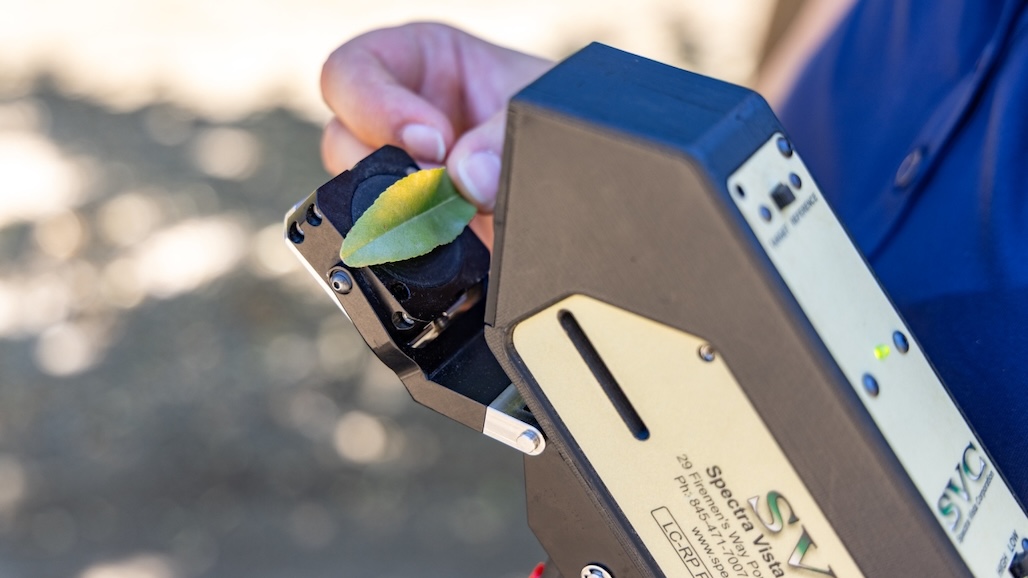
    The Leaf Monitor tool uses a handheld spectrometer to measure leaf reflectance beyond the range of light visible to the human eye.

    Once a leaf is scanned, its spectral data is uploaded to a cloud-based machine learning system designed to predict leaf traits and nutrient content. This algorithm was developed and trained by the Digital Agriculture Laboratory over five years using a dataset of thousands of leaf samples collected from California’s specialty crops, primarily grapevines and almonds. The samples were chemically analyzed to determine nutrient levels and structural leaf traits, providing the data needed to build an accurate prediction model.

    “Nutrient deficiencies in plants often go unnoticed until late in the season, by which point the damage is already irreversible,” said graduate student Parastoo Farajpoor, who is running the project. “This is why early detection is essential. Spectrometry provides a rapid and reliable way to identify these deficiencies before visible symptoms appear.”

    After a recent demonstration, Bulleseye Farms Irrigation Manager Geoff Klein said the tool could help save money and improve yields. Bullseye grows walnuts, pistachios, tomatoes, corn, wheat, rice and sunflowers in Yolo and Solano counties.

    Tailored crop management

    Currently, farmers typically take leaf samples, dry them, grind them up and send the samples off to a lab for testing, which can take up to two weeks to return results. Bullseye samples leaf tissues about three times a year.

    “Right now, it doesn’t really make sense to go out and take tissues in every single corner just because it’s expensive,” Klein said. “It’d be really cool if I could just walk out there and test a couple of different places.”

    The Leaf Monitor tool helps farmers tailor management decisions to specific areas rather than an entire field. Calibrating fertilizer use to real-time data can prevent overuse and nitrogen runoff, a financial and environmental challenge that many growers face.

    “I feel like there’s a lot of times we do need to put less [fertilizer] on, where we end up putting more, because that’s what the nitrogen removal formula says,” Klein said. “But with this app we can use less because we know the actual conditions at the time. I think it opens a lot of doors in terms of getting data back in real time and also utilizing the level of control we have with the data.”

    The app can also aggregate the scans and map out spatial patterns over a large area.

    “What we know is every field has variability that is not necessarily visible to the farmer’s eye,” Pourreza said.

    The prototype Leaf Monitor tool is free and included in a set of tools that can be downloaded on the Digital Agriculture Laboratory website. A web-based version of the tool will follow while the team continues to feed new data into the algorithm to refine the predictions. On average, it achieves about 65% accuracy across all traits, with predictions for certain nutrients, such as nitrogen and phosphorus, performing better than the overall average. Users will need to pair it with a spectrometer.

    “We need to produce more food while using less resources so we need to have some kind of monitoring system to give us precise and accurate feedback on our management practice,” Pourreza said. “This technology is growing very fast.” — By Emily Dooley, UC Davis
  • Turning Food Scraps into Opportunities

    Turning Food Scraps into Opportunities

    For every juicy tomato or crunchy almond California grows, there’s a pile of pulp, hulls or scraps that often goes to waste. A new online tool, created by University of California, Davis researchers, tracks those agricultural byproducts aiming to find innovative ways to put them to use.

    The Byproduct Database, maintained by the AI Institute for Next Generation Food Systems, is an ongoing research project that includes a catalog of byproducts like fruit skins and nut shells, and potential ways to reuse them across different industries.

    Edward “Ned” Spang, principal investigator and associate professor with the Department of Food Science and Technology, said about one third of the food produced worldwide, doesn’t get eaten. The database consolidates information about food waste in one place, detailing what the various leftovers are made of and where they’re available in the state. Spang believes it could help guide decisions on reducing waste by potentially turning these materials into new products for food, cosmetics or pharmaceutical industries.

    “In the food production space, there’s a lot of edible material, or potentially valuable material, that’s been overlooked for a long time as waste,” Spang said. “So, the questions we are trying to understand include: ‘How much of this material is out there? What is it composed of? Where is it? When is it available?’”

    Tomatoes, almonds, pistachios and pomegranates

    The pilot phase of the database currently features four major crops: tomatoes, almonds, pistachios and pomegranates. As the research team continues to gather data, they will update the site to include other crops and byproducts, including wine grapes, stone fruits and citrus. In collaboration with Ilias Tagkopoulos with the Department of Computer Science, Spang is looking into developing and applying AI tools to expand the site faster and with less manual work.

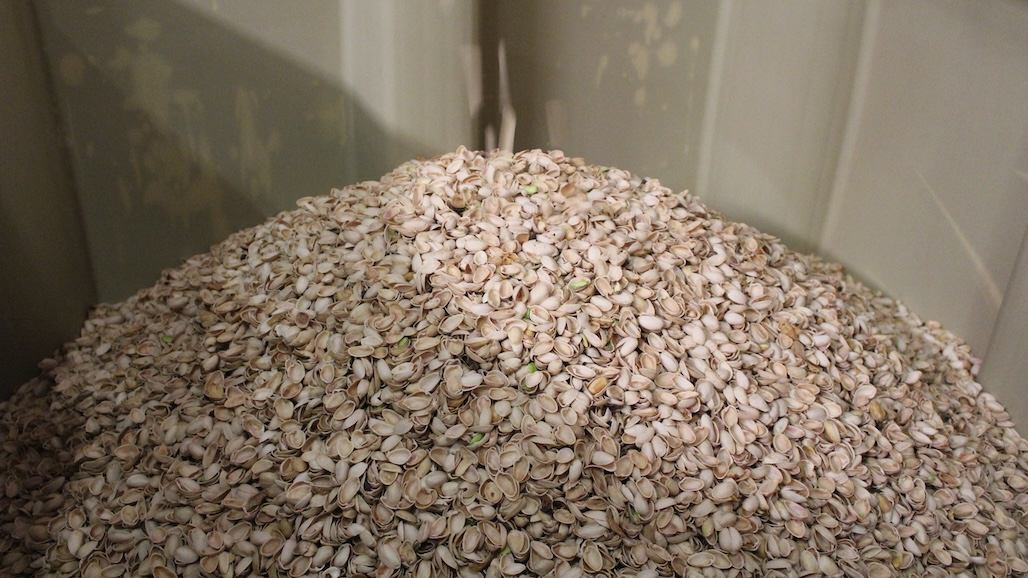
    For pistachios, the website illustrates that the largest byproduct is the hull, which is often discarded, and that undersized pistachios could be a valuable resource if there was a market for it. The website helps outline the various byproducts for potential upcycling, where leftovers are transformed into new ingredients. Local companies are already developing new products using materials such as brewers’ spent grain (a byproduct of beer production), okara (a fibrous byproduct from soymilk production) and grape pomace (leftovers from winemaking).

    Researchers are looking at where food gets lost in the field and at the processing plant. With tomatoes, some get damaged on the vine, others get tossed out for not meeting quality standards. Spang said those leftovers, or side streams, are opportunities for upcycling.

    “It’s a material that’s already been cultivated, harvested and processed, so anything you do that’s economically productive means that all the resources embedded in that material, like fertilizer, water and energy, were not wasted in vain,” said Spang, who also directs the Robert Mondavi Institute of Wine and Food Science. “It is a real win-win opportunity.”

    Finding new uses

    The skin and pulp of a tomato contain lycopene, an antioxidant known for its health benefits. Users of the website can visualize where these leftover tomato parts, and its valuable lycopene, are found, helping to imagine new ways to make use of this healthy compound.

    “We expect our primary user to be entrepreneurs who are looking for new business models in upcycling, or who might have an advanced extraction technology to derive value from some of these overlooked materials,” Spang explained. “But producers and growers would also benefit as new revenue streams deliver value up and down the food supply chain.”

    The database will soon include cost estimates and economic variables to help users make more informed decisions. This will allow them to assess factors like how much lycopene is in a byproduct, its value per milligram and the costs associated with extracting it.

    New space for agricultural innovation on campus

    The research project is funded by a grant from the Resnick Agricultural Innovation Research Fund, created by a $50 million gift by Lynda and Stewart Resnick, co-owners of The Wonderful Company. Part of that donation also establishes the Resnick Center for Agricultural Innovation, currently under construction on campus, that will include a large space for biomass staging and extraction, a process to pull valuable compounds from fruits, vegetables and grain residues.

    Food waste happens, but this work is helping build a food system that wastes less and supports sustainability, which Spang hopes will excite everyone.

    “We have to be a little more creative with our food system,” he said. “We can make our current food system more productive by investigating novel upcycling ideas and processing systems that create more revenue for producers and hopefully deliver more value to consumers as well.” — By Tiffany Dobbyn, College of Agricultural and Environmental Sciences, UC Davis, tadobbyn@ucdavis.edu

  • Assemblywoman Alexandra Macedo Awarded Almond Champion of the Year

    Assemblywoman Alexandra Macedo Awarded Almond Champion of the Year

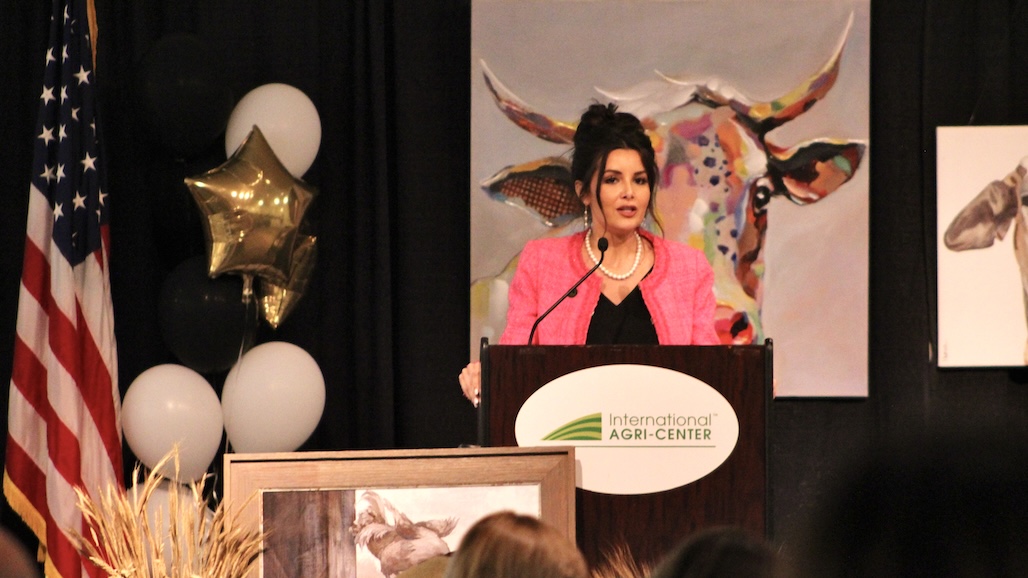
    The Almond Alliance is pleased to announce Assemblywoman Alexandra Macedo as the recipient of the 2025 Almond Champion of the Year Award. Assemblywoman Macedo is being recognized for her leadership on key issues affecting California agriculture and the almond industry. She has advanced efforts to address abandoned agricultural properties and invasive species, supported improvements to water infrastructure and wildfire prevention, and worked to reduce fuel costs for Californians. Her practical approach and engagement on agricultural policy reflect a strong commitment to the state’s farming communities.

    “Assemblywoman Macedo has taken a thoughtful, solutions-oriented approach to some of the biggest challenges facing California agriculture,” said Alexi Rodriguez, CEO of the Almond Alliance. “Her focus on abandoned land, water infrastructure, and wildfire prevention demonstrates an understanding of the pressures facing the almond industry today.”

    The Almond Champion of the Year Award is presented annually to individuals who demonstrate leadership in education, coalition building, partnerships, and the advancement of policies that support California agriculture, including the almond industry. Assemblywoman Macedo’s efforts reflect the purpose and spirit of this recognition.

    Past recipients of this prestigious award include Assemblymember Juan Alanis, Department of Water Resources, Assemblymember Adam Gray, Assemblymember Heath Flora, former USDA State Executive Director of Farm Service Agency Connie Conway, Assemblymember Carlos Villapudua, and CDFA Undersecretary Christie Birdsong.

    The award will be formally presented to Assemblywoman Macedo at the California Almond Political Action Committee’s Annual Modesto Fundraiser, taking place at Del Rio Country Club on November 5, 2025, at 5:30 p.m. This event brings together members of the almond community, FFA students, elected officials, and special guests.

    For RSVPs or more information, please contact Annie Romero at 209-300-7140 or aromero@almondalliance.org.

    About the Almond Alliance

    Almond Alliance is the leading authority in state and national policy, championing American almond farmers, industry, and community for the continued global growth, innovation, and success of American almonds and agriculture.

    Established in 1980, the Almond Alliance is a non-profit trade association with a local and international network of almond processors, hullers/shellers, growers, and allied businesses. The Alliance is dedicated to providing resources and solutions for our members, ensuring industry success and growth opportunities. Learn more at almondalliance.org.

  • Inaugural $100,000 Grant Program to Advance Honey Bee Health and Beekeeping Innovation

    Inaugural $100,000 Grant Program to Advance Honey Bee Health and Beekeeping Innovation

    Sweet Harvest Foods, the largest producer of raw, unfiltered honey and parent company of Nate’s Honey and Nate’s Hives, today announced the launch of Nate’s Hives Research Grant Program, reinforcing its commitment to advance the long-term success and sustainability of honey bees and the honey industry through science, innovation and collaboration.
    The program will provide up to $100,000 in annual funding for research projects that strengthen honey bee health, improve sustainable beekeeping practices, and drive innovation in pollination practices and across the honey supply chain. Proposals may be submitted by academic institutions, nonprofit organizations and industry researchers, with funding available for projects up to three years in duration.

    “As the industry leader in honey and a top apiary, we believe scale brings both responsibility and opportunity, and the honey industry’s future depends on science and collaboration,” said Michael Carle, Chief Executive Officer of Sweet Harvest Foods. “Through the Nate’s Hives Research Grant Program, we’re investing in the kind of research that will strengthen honey bee health, advance sustainable beekeeping practices and support pollination, a more resilient food ecosystem and the honey industry. Innovation has always been central to how we operate and it’s more important now than ever to fuel continued progress.”

    Proposals may address one or more of the following areas of focus: honey bee health, sustainable beekeeping practices, environmental impacts, supply chain innovation, consumer demand and nutritional impacts, or trade policy and production economics. Each submission will be evaluated by a volunteer review board composed of Sweet Harvest Foods employees and external experts from academia and the beekeeping industry.

    “At Nate’s Hives, we believe science can and should shape the future of beekeeping,” said Matt Halbgewachs, president of Nate’s Hives. “This grant program puts that belief into action and empowers researchers to uncover solutions that help honey bees and beekeepers everywhere. By linking researched insights with on-the-ground experience, we accelerate progress for honey bees, beekeepers, farmers and consumers alike.”

    Applications are due March 1, 2026, with awards announced on April 15, 2026. For full eligibility details, proposal requirements and submission instructions, visit nateshives.com/research-grant-program.

    About Sweet Harvest Foods

    We believe in making life a little sweeter. As the leading procurer of honey in the U.S., Sweet Harvest Foods provides the highest-quality ingredients for some of the most iconic brands and beloved products. That’s a serious responsibility, which is why we keep innovating and setting higher standards in quality, taste and reliability. Sweet Harvest Foods is bolstered by its ownership of Nate’s Honey, the number-one branded honey, and Nate’s Hives, a top U.S. apiary. Join us on our mission to lead the honey industry by innovating from the hive to beyond the kitchen. For more information, visit www.sweetharvestfoods.com.

  • How to Effectively Control Rats on California Farms in a State of Emergency

    How to Effectively Control Rats on California Farms in a State of Emergency

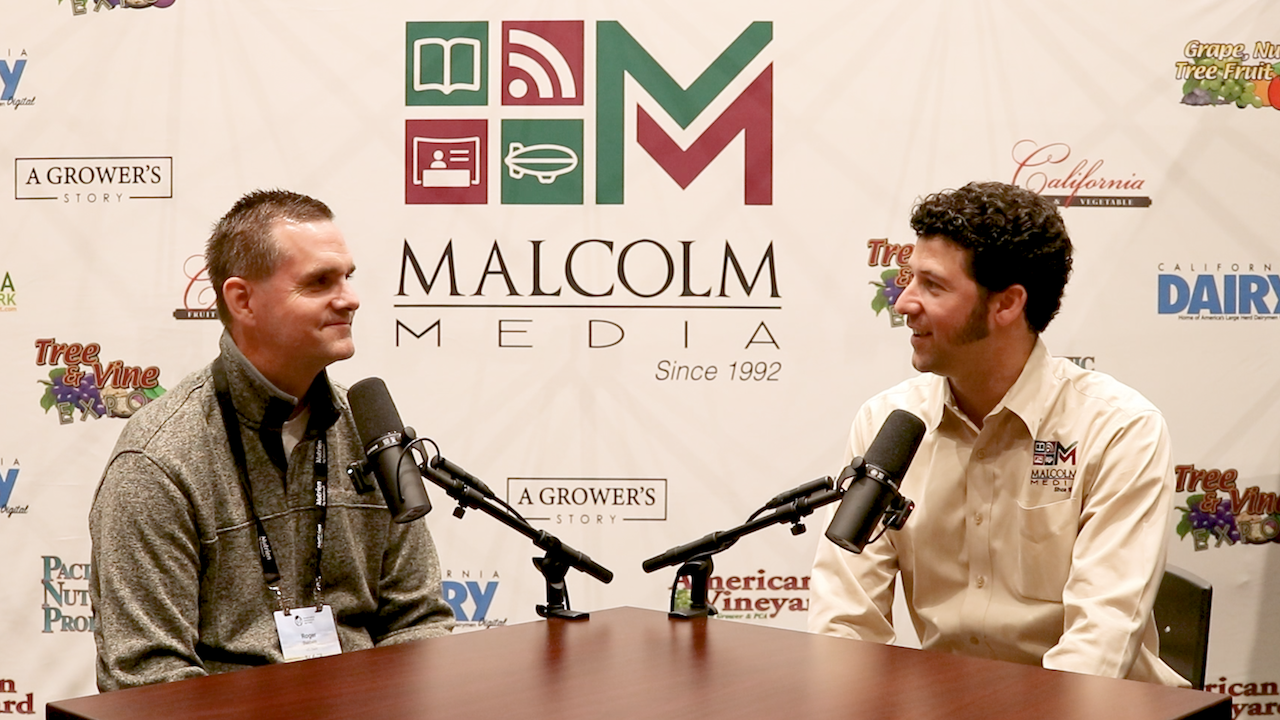
    Rats have taken an unusual interest in the specialty crop capital of the nation. Many attribute the cause to the pest multiplying unchecked in orchards and vineyards in the Central Valley that have been abandoned due to water restrictions and economic challenges. This becomes a real problem when the rats move into neighboring farms in active production, tearing up driplines, feeding on crops and damaging trees. Growers are in a state of emergency and have limited tools for managing this pest.  Malcolm Media Editor-in-Chief Matthew Malcolm met with UCCE Wildlife Specialist Roger Baldwin at the California Association of Pest Control Adviser’s annual conference to gain answers on how to knock down populations effectively and keep the pest at bay.  Watch this brief interview and learn more by attending Baldwin’s presentation on rat control at the Grape, Nut & Tree Fruit Expo at the Fresno Fairgrounds on Nov. 14 (register to attend at agexpo.biz).

    Please thank this video’s sponsor Simplot Grower Solutions for their industry support.

  • How to Manage Voles on the Farm & New Research Underway at Oregon State University

    How to Manage Voles on the Farm & New Research Underway at Oregon State University

    Got voles on the farm and don’t know how to get rid of them? Oregon State University researchers are coming to the rescue. Watch this brief interview as Malcolm Media Editor-in-Chief Matthew Malcolm meets with Oregon State University representatives Dana Sanchez and Joshua Twining share advice on how to manage them, as well as new research developments on how to better understand their behavior and how they respond to modern mitigation techniques.

    Please thank this video’s sponsor George Packing Company for their industry support.

  • Oregon Organic Hazelnut Collective Ramps Up Marketing Efforts with Grant Funding Boost

    Oregon Organic Hazelnut Collective Ramps Up Marketing Efforts with Grant Funding Boost

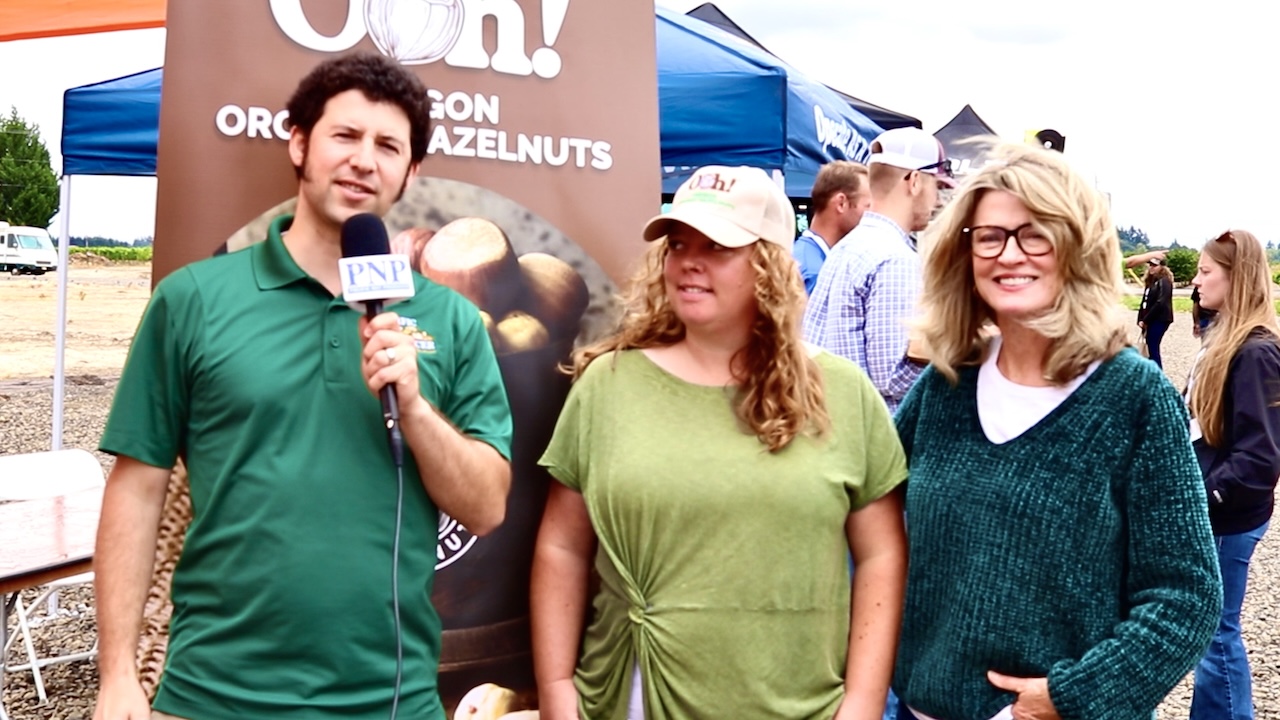
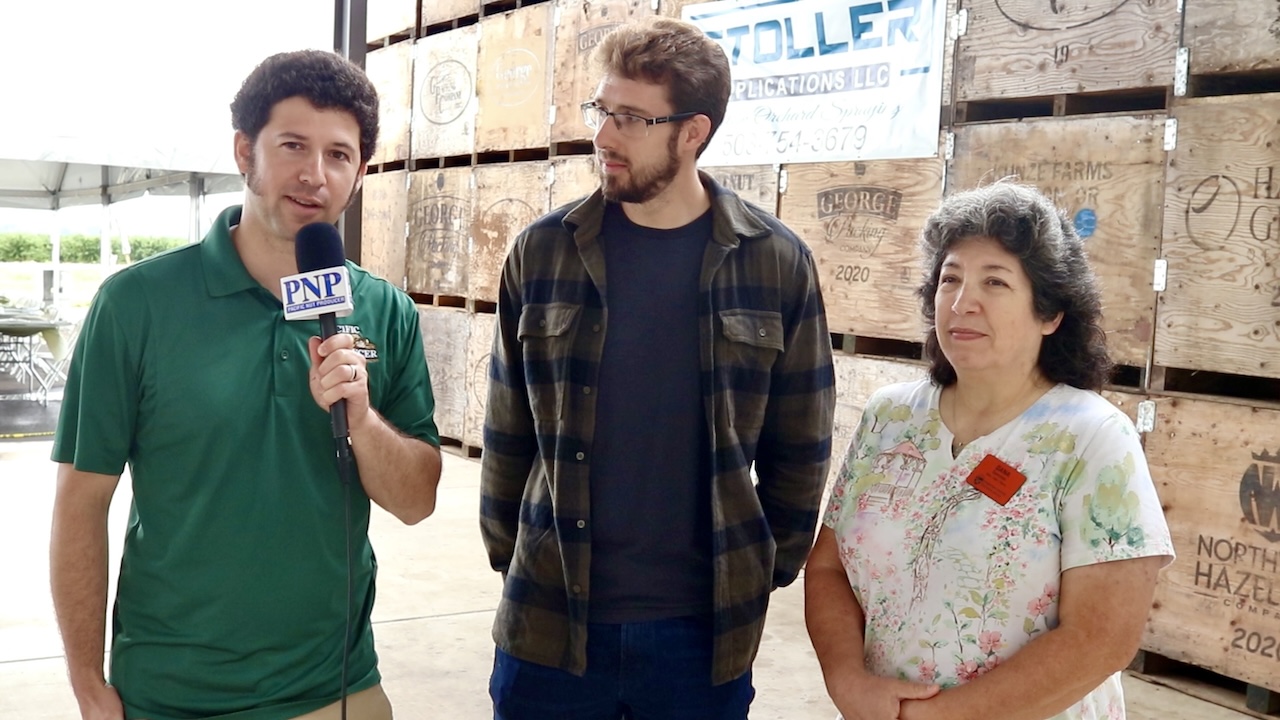
    Thinking about transitioning to organic hazelnut farming? The Oregon Organic Hazelnut Collective is community of organic growers ready to assist others in the process. The Collective is growing as consumers are taking more interest in how their food is grown, and thanks to some recent grant funding, the organization is ramping up their marketing efforts to reach even more consumers. Watch this brief interview as Pacific Nut Producer Editor Matthew Malcolm meets with Cassedea Ashley and Judy Hirigoyen representing the Collective to learn more.

    Please thank this video’s sponsor George Packing Company for their industry support.

  • American Pistachio Growers Awarded $1 Million for Regional Pest Management Collaboration

    American Pistachio Growers Awarded $1 Million for Regional Pest Management Collaboration

    American Pistachio Growers (APG), in collaboration with Washington State University, University of California – Riverside, UC Cooperative Extension, the USDA Agricultural Research Service and regional nut industry partners, has been awarded a $1 million grant through the California Department of Food and Agriculture’s Biologically Integrated Farming Systems (BIFS) Program to develop a Regional Integrated Pest Management (IPM) network for Navel Orangeworm (NOW) — the most damaging pest in California’s tree nut industry.

    The project, led by Dr. Houston Wilson (UC Riverside), Dr. David Crowder (WSU), Dr. Jhalendra Rijal (UC IPM), and Dr. Charles Burks (USDA ARS) will pilot a groundbreaking Decision Aid System (DAS) that integrates real-time trap data, weather models, and crop phenology into a single communication platform. The goal is to improve the timing and precision of pest control decisions while fostering regional cooperation among almond, pistachio, and walnut growers.

    “This project moves us beyond the farm gate,” said Joe Coelho, APG’s Director of Sustainability and Member Outreach, who serves as Technical Agronomist and PCA on the project. “For the first time, growers across commodities will have access to shared regional data and communication tools that allow them to anticipate pest pressure before it hits their fields and ultimately make precise, timely treatment decisions. The outcome is fewer sprays, lower costs, and higher quality nuts.”

    Through field-level data acquisition, the system’s meta-analytics will identify regional flight trends coupled with crop-specific phenological development and enhance forecasting of NOW flights — critical steps in breaking the pest’s lifecycle across neighboring farms. Ultimately, the program is expected to help reduce pesticide use, improve nut quality, and lower aflatoxin risk associated with pest damage.

    APG will serve as the grower administration partner, coordinating grower participation and outreach. Carlee Branco, APG Grant Programs Administrator, will conduct on-farm grower coordination, engagement and data collection. “This is a major milestone for sustainable pest management,” said Coelho, “and it demonstrates APG’s leadership in advancing research that directly benefits growers.”

    The Regional IPM for Navel Orangeworm Project represents a pivotal step toward the state’s Sustainable Pest Management (SPM) Roadmap by providing a scalable, data-driven framework that can be expanded statewide.

    “This is exactly the kind of innovation California agriculture needs,” said Dr. Wilson. “Regional coordination is essential to long-term pest reduction, especially for highly mobile insects like the navel orangeworm, and this project will now put those ideas into practice at scale.”

    The program launches in early 2026, with pilot regions in West Fresno County and Modesto, serving as the foundation for a future statewide expansion. Growers within these territories who are interested should contact Carlee Branco for more information at cbranco@americanpistachios.org.

    American Pistachio Growers (APG) is a non-profit trade association representing more than 800 growers and processors across California, Arizona, and New Mexico. APG’s mission is to enhance grower profitability through global marketing, industry research, and sustainability initiatives that promote economically viable and environmentally responsible pistachio production.

  • Commercializing Almond Hulls as Food Ingredients

    Commercializing Almond Hulls as Food Ingredients

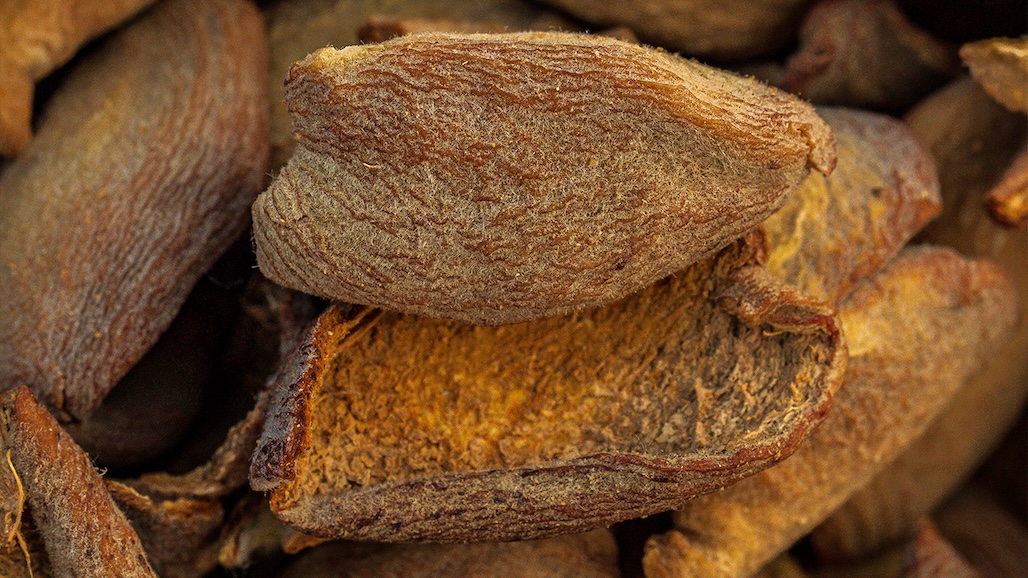
    Almond Board of California — Historically used for dairy cattle feed, almond hulls have had a consistent place in the animal nutrition space. However, a declining dairy herd, in combination with hulls being traded below their production cost, has propelled the industry and the Almond Board of California (ABC) to think about alternative revenue-generating opportunities.

    Helping lead this charge is ABC’s Biomass Working Group, formed in 2017 to explore new applications for almond co-products.

    “This biomass working group is where business meets science,” said Michael Kelley, chairman of the committee and president of Central California Almond Growers Association (CCAGA). “We have become exceedingly appreciative of the ideas and the potential for the commercialization of products using almond hulls.”

    Nutrition Potential

    One area almond hulls have shown strong potential for is human food products. Because of their high fiber content, natural sugars, phytochemicals, minerals, and processing versatility, they offer multiple benefits in the value-added ingredients food space.

    Being that they make up 50% of the almond fruit, they are also abundant in California, creating a reliable and readily available supply for large-scale product development.

    While some may question their safety for human consumption, there are positive indicators that prove almond hulls can meet food-grade quality standards. ABC Associate Director of Food Research and Technology, Guangwei Huang, noted that almond hulls have long been used safely in livestock feed, with no negative effects on animal health or performance. Studies have also shown that pesticide residue and toxicity exposure are not a concern.

    To explore these possibilities further, ABC partnered with Mattson, a product innovation firm, to develop samples of what could be done with hulls.

    These included a high-fiber bar made with 15% almond hulls, delivering five grams of fiber per serving, and a coffee beverage crafted from coarse-ground, roasted hulls. When added to coffee, almond hull powder helped reduce bitterness and enhanced sweetness. In baked goods like bread, it boosted both fiber and phytochemical content.

    Opportunity in “Upcycled” Markets

    Another advantage almond hulls offer is that by adding just 10% or more of almond hull powder to a product, it can qualify for a new third-party “upcycled” certification. While “upcycling” is a relatively new term, it’s become increasingly important to consumers concerned about food waste, noted Daniel Kurzrock, founder and CEO of Upcycled Foods.

    After working with upcycled ingredients across various commodities, Kurzrock said he’s seen firsthand the wide-ranging benefits. These include improved sustainability and circularity, the creation of new revenue streams, reduced disposal costs and stronger alignment with shifting consumer values.

    “The almond industry is not alone in seeing this potential,” he said. “There’s profit potential for every aspect of the stakeholder chain if we’re able to create uses that are solving problems for companies that buy ingredients.”

    Because the end-market for almond hulls is still being widely explored, he also suggested that at this stage in development, it’s important to initiate customer conversations before deciding what to invest in.

    “An approach that we find to be working with other materials is doing a pilot to produce some quantity of viable hulls that can go to a miller or a secondary processor to start those customer conversations,” he said.

    Steps for Commercialization

    While it’s not realistic to expect the hulls to be process-ready when leaving the huller/sheller, Huang said efforts to clean and improve their quality can still make a significant impact.

    “When the time comes, the industry needs to set minimal specifications or quality requirements for almond hulls for food uses,” Huang said. “We are trying to minimize foreign material, and most importantly, we need the involvement and attention of stakeholders. We’re not expecting the huller/seller to get hulls to the ready-to-process stage, but they can minimize those foreign materials down to less than 5%.”

    The industry must also complete a GRAS (Generally Recognized As Safe) assessment for human consumption, a requirement mandated by the Food and Drug Administration since hulls haven’t previously been used as a food ingredient. This assessment  is expected to be completed by late 2025, Huang said.

    Innovations in Processing

    Several companies in the almond industry are already investing in hull-cleaning systems to ensure they are ready for when almond hulls receive food-safe approval. One of those pioneer companies is Cortez Growers Association.

    Recognizing almond hulls as a potential revenue stream, Cortez implemented a cleaning system to remove unwanted materials – sticks, shells, and almond meats – that typically end up in the hull pile. By separating these components, they could sell the almond meats as hash, a “refreshing benefit” to add value to what was once considered waste, said general manager, Dave Thiel.

    Other processors are also refining their methods. Corbin Sturdivan of Wilkey Industries explained that current hull cleaning systems include an aspirator to remove the shell from the hull and a detwigger deck to remove sticks from the hulls.

    “While this has worked for many years to reduce the fiber content for dairy feed, there is more refinement that we can do with this system by introducing additional screening and additional aspiration,” Sturdivan said.

    Through their trials with ABC, Sturdivan and his team discovered that by adding a screen to sift through the hulls, they could be better classified and ranked.

    “We would de-twig the product; it would be screened, and the screen would sift out all of the fines from the hulls,” he said. “What is left over is what we would call scalped hulls, and this is your larger, good material created from the early stages of hulling.”

    From their observation, Wilkey Industries also found that 1 to 1.3% of total hull weight can actually be recoverable kernel.

    “That translates to roughly 3% of your kernel production that is actually sitting in the hull pile,” he said. “So, by integrating a screen and some additional aspiration, not only can we clean the hulls, but we can also reclaim those kernels and hash that have much higher value to be sold instead of letting them go to dairy feed uses.”

    Additional Sorting Techniques

    As cleaning technologies continue to advance, innovations in color sorting are emerging as a key tool for preparing almond hulls for food-grade applications. The team at Chandler Automation has spent time working on this, and the initial models have been successful at “creating pure hull piles in one pass,” said CEO, Sean Chandler.

    More research is needed to determine where this best fits in the manufacturing process – be it at the huller, processor, or a separate site and how it will be financially feasible.

    “We have to do more research on our side to see the best way to mechanically clean hulls, mechanically feed it, and mechanically pass it through our systems because the technology is there to create that pure, premium hull,” he said.

    Looking Ahead

    As ABC continues to refine its strategy for marketing almond hulls as a food ingredient, the industry is taking proactive measures to position itself for success, and that starts with collaboration among all players involved.

    “We are about to begin a new journey to generate more revenue from almond hulls,” Huang concluded. “It will take a while and more effort to develop the market and demand, but if you are interested in creating more value out of almond hulls, many of us can work together to shorten the process.”

  • Oakville Bluegrass Cooperative Opens Enrollment for Reimbursable Cover Crop Seed

    Oakville Bluegrass Cooperative Opens Enrollment for Reimbursable Cover Crop Seed

    Oakville Bluegrass Cooperative is pleased to announce open enrollment for the USDA’s newly expanded Advancing Markets for Producers (AMP) program—building on last year’s successful Partnerships for Climate-Smart Commodities initiative. This year, the program is expanding direct funding to producers, and the new incentive will reimburse producers for the purchase of up to ten acres worth of seed for any perennial conservation cover.

    One choice for the incentive, Oakville bluegrass, is dormant from April through September and doesn’t compete with cash crops for water or nutrients making it ideal for California permanent crops. This low growing, drought tolerant cover crop will last over ten years when well managed, significantly reducing labor and input costs for growers.

    As part of the USDA’s AMP initiative, producers can now access:

    • Full seed cost coverage for up to 10 acres of Oakville bluegrass
    • An additional $100/acre incentive for up to 100 acres.
    • Support in the form of a grower’s guide, educational field days, and guidance on carbon removal credits.

    “We’re thrilled to put more money in producers’ hands under the Advancing Markets for Producers program, ” said Jeff Thiel, Director at Oakville Bluegrass Cooeprative. Perennial cover like Oakville bluegrass can reduce operating costs over time while also building soil health and conserving water. We’re especially excited to help producers tap into the growing carbon credit market while establishing a proven, cost-effective cover crop.”

    Interested growers can attend an online informational session on October 21 at 11 am by registering at https://bit.ly/ampobc25 or visit https://www.obc.ag/advancing-markets-for-producersfor more information.

    The Oakville Bluegrass Cooperative collaboratively creates solutions to the most pressing challenges facing growers. Members work together to uncover best practices in sustainable agriculture tailored to the needs of specialty crop growers. Learnings are shared so all members can benefit from adopting practices that will ensure the long-term sustainability of profits from their farms.