Category: Industry News

  • Secretary Rollins Announces $40M in Section 32 Purchases of Almonds & Pistachios

    Secretary Rollins Announces $40M in Section 32 Purchases of Almonds & Pistachios

    This week at the 107th American Farm Bureau Federation Convention in Anaheim, CA, U.S. Secretary of Agriculture Brooke L. Rollins announced expanded enrollment for 2026 Dairy Margin Coverage (DMC) program and new Section 32 commodity purchases that will result in more healthy, U.S. grown food in the hands of Americans. Following the convention, Secretary Rollins also met with specialty crop producers at a local strawberry farm to discuss workforce needs and the Trump Administration’s recent wins related to significantly cutting the cost of H-2A labor for California farmers.

    Secretary Rollins and former California Ag Secretary A.G. Kawamura at his strawberry farm in Irving, California.

    “President Trump is making historic investments in the farm safety net and today’s announcement is one more action that supports our dairy producers by managing risk and strengthening markets so they can continue to provide wholesome nutrition for Americans,” said Secretary Brooke Rollins. “The Trump Administration will continue to stand with America’s farmers as the farm economy recovers from years of neglect under the last administration. Our mission to Make America Healthy Again continues after the recent release of the Dietary Guidelines for Americans 2025-2030 announcement, with the upcoming purchase of U.S. grown food that will reach those in need, all while benefitting American farmers facing unfair actions from foreign competitors.”

    OBBBA Improves DMC Coverage and Premium Fees

    Secretary Rollins announced the enrollment period for the Dairy Margin Coverage (DMC) program for the 2026 coverage year, an important safety net program that provides producers with price support to help offset milk and feed price differences. Starting January 12, 2026, dairy producers can enroll in DMC. The enrollment period ends February 26, 2026. The One Big Beautiful Bill Act (OBBBA), signed by President Donald J. Trump on July 4, 2025, reauthorized DMC for calendar years 2026 through 2031 and provided substantial program improvements, including establishing new production history and increasing Tier 1 coverage.

    The OBBBA increased DMC’s Tier 1 coverage level increased from five million pounds to six million pounds. All dairy operations that elect to enroll in DMC for 2026 will establish a new production history. Existing dairy operations that started marketing milk on or before January 1, 2023, will use the higher of milk marketings for the years of 2021, 2022, or 2023. New dairy operations starting after January 1, 2023, will use their first year of monthly milk marketings, even for a partial year. Milk marketing statements or production evidence are required to establish a production history.

    Dairy operations also have the option to lock-in coverage levels for six years (2026-2031) with premium fees discounted by 25%.

    DMC offers different levels of coverage, including an option that is free to producers, minus a $100 administrative fee. To determine the appropriate level of DMC coverage for a specific dairy operation, producers can use the online dairy decision tool.

    For more information visit the DMC webpage or contact your local USDA Service Center.

    Agricultural Marketing Service Section 32 Purchases

    Secretary Rollins also announced USDA’s intent to purchase up to $80 million in specialty crops from American farmers and producers to distribute to food banks and nutrition assistance programs across the country. These purchases are being made through USDA’s authority under Section 32 of the Agriculture Act of 1935 and will assist producers and communities in need. With this action, the Trump Administration is bolstering American prosperity by supporting American agriculture, rural communities, and those in need of nutrition assistance.

    The Agricultural Marketing Service (AMS) continuously purchases a variety of domestically produced and processed agricultural products. These “USDA Foods” are provided to USDA’s Food and Nutrition Service (FNS) nutrition assistance programs, including food banks that operate The Emergency Food Assistance Program (TEFAP), and are a vital component of the nation’s food safety net.

    USDA AMS will purchase up to $80 million of the following commodities:

    •Almonds: $20M

    •Grape juice: $20M

    •Pistachios: $20M

    •Raisins: $20M
  • Almond Board Guides Industry Recovery with 3rd Largest Shipping Year

    Almond Board Guides Industry Recovery with 3rd Largest Shipping Year

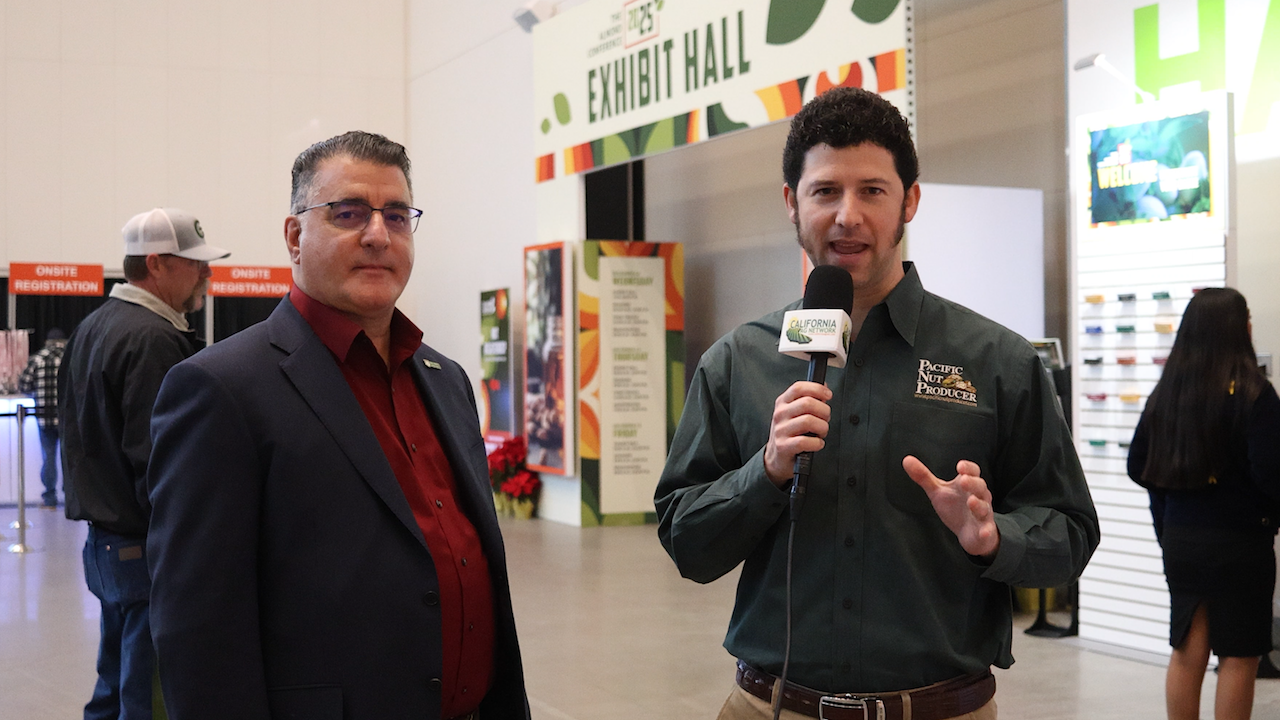
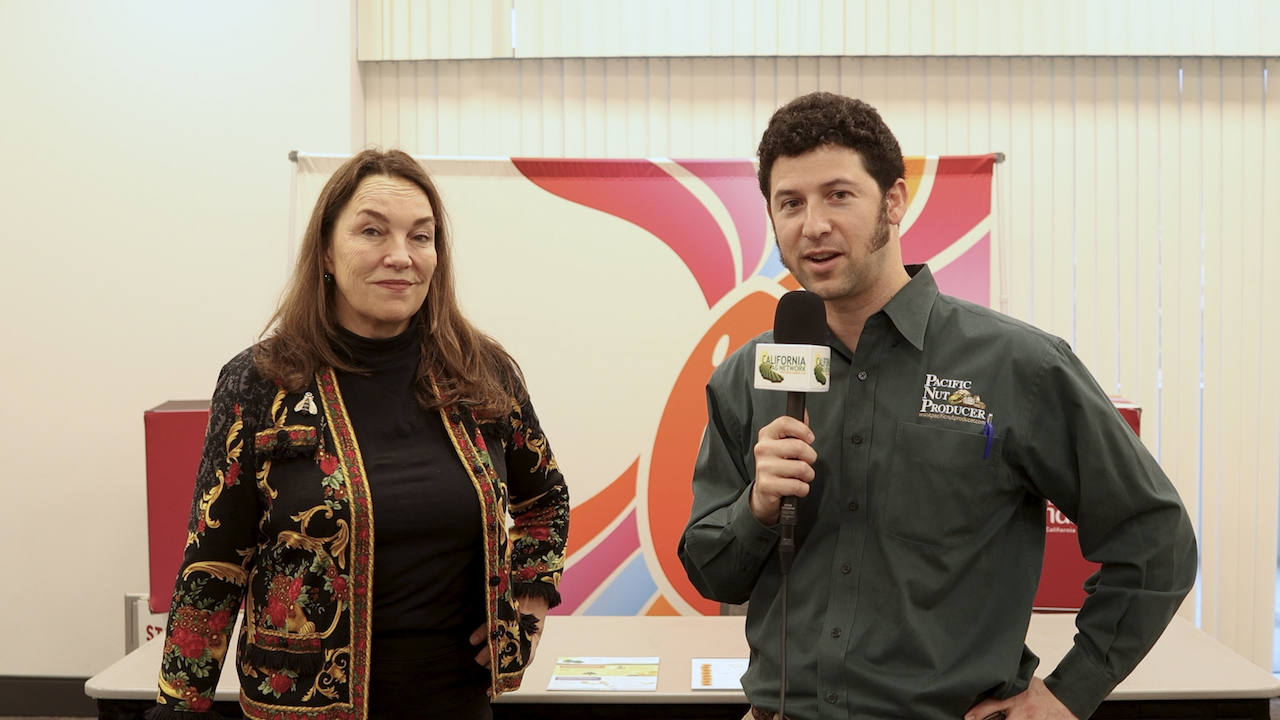
    The California almond industry experienced its 3rd highest shipping year ever in conjunction with the Almond Board of California’s 75th anniversary as a Federal Marketing Order. At the Almond Conference in Sacramento, President/CEO Clarice Turner spoke with Matthew Malcolm on California Ag Network to discuss current almond supply and demand dynamics and the Board’s role in creating a healthier future in the California almond industry. Watch this brief video and read more in Pacific Nut Producer Magazine.

  • Five-Year Almond Forecast Bright with Stronger Prices

    Five-Year Almond Forecast Bright with Stronger Prices

    The future looks bright for the California almond industry with the release of a special five-year almond economic forecast. In an interview with Matthew Malcolm on California Ag Network during the Almond Conference in Sacramento, Roland Fumasi from RaboResearch at Rabobank discussed their five-year almond outlook and what growers can expect in the coming seasons. Watch this brief interview and read more about it in Pacific Nut Producer Magazine.

  • California Walnut Commission Applauds Emphasis on Nuts in New Dietary Guidelines for Americans

    California Walnut Commission Applauds Emphasis on Nuts in New Dietary Guidelines for Americans

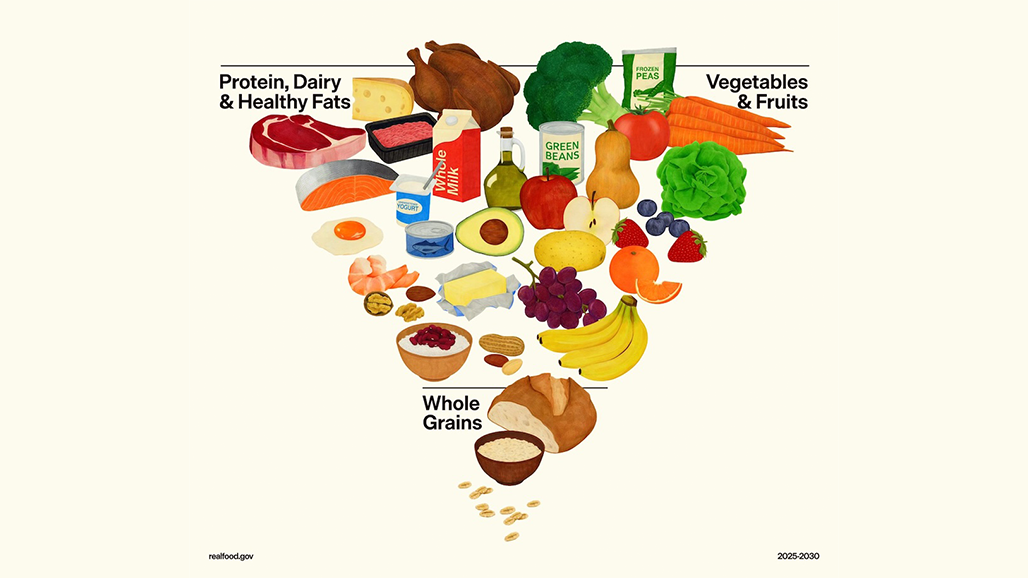
    There is good news for walnuts in the newly released 2025-2030 Dietary Guidelines for Americans (DGAs), which emphasize “real”, nutrient-dense foods — including nuts — as the foundation of a healthy diet.

    The DGAs recognize nuts as a source of plant-based protein and emphasize consumption of healthy fats found in whole foods across multiple age groups and life-stages, and the accompanying report features walnuts on their list of “rich sources of [omega-3] ALA[1].” In addition, for the first time, walnuts are clearly represented in the new food pyramid.

    Further, within a 2,000-calorie diet, the DGAs recommend one ounce of nuts or seeds and two tablespoons of nut or seed butter as part of the three to four daily servings of protein foods. The DGAs also recommend introducing potentially allergenic foods —including nut butters—with other complementary foods to infants at about 6 months.

    “This marks an important step in gaining broader recognition that walnuts, as a healthy and real food, should be part of our daily lifestyle,” said Robert Verloop, CEO of the California Walnut Commission (CWC). “It also is a testament to the 30 years of investment in sound, scientific health and nutrition research by the California walnut industry.”

    While the new DGAs were under development, the CWC leveraged the over 240 published research studies to submit comments and provide evidence showcasing how walnuts can be included in healthy dietary patterns. The CWC continues to support new research in areas such as gut health, sleep and cognitive function, alongside continued investment in heart and metabolic health.

    “Through CWC’s Global Health Research Program, we’re fueling science that speaks to health and wellness, and supporting researchers exploring the topics that truly matter to consumers,” said Rachel Blaine, CWC scientific advisor. “By advancing evidence in these areas, we’re showcasing how walnuts can power overall well-being and inspire people everywhere to make walnuts a delicious part of their daily routine.”

    The DGAs also highlight a broader commitment to American agriculture. “We are realigning our food system to support American farmers, ranchers and companies who grow and produce real food,” according to the DGAs.

    For more information on the 2025-2030 DGAs, visit realfood.gov. For more information about the California Walnut  Commission and its programs, visit walnuts.org.

    About the California Walnut Commission

    The California Walnut Commission (CWC) represents more than 3,700 California walnut growers and approximately 70 handlers, grown in multi-generational farmers’ family orchards. California walnuts, known for their excellent nutritional value and quality, are shipped around the world all year long, with more than 99% of the walnuts grown in the United States being from California. The CWC, established in 1987, promotes usage of walnuts through domestic and export market development activities as well as supports health research with consuming walnuts.

    To explore recipes and learn more about California walnut growers, industry information and health research, visit walnuts.org.

    [1] One ounce of walnuts provides 18g of total fat, 2.5g of monounsaturated fat, 13g of polyunsaturated fat, including 2.5g of alpha-linolenic acid (ALA), the plant-based omega-3.

  • Alternative Uses for Processed Hazelnut Shells that can Benefit Growers

    Alternative Uses for Processed Hazelnut Shells that can Benefit Growers

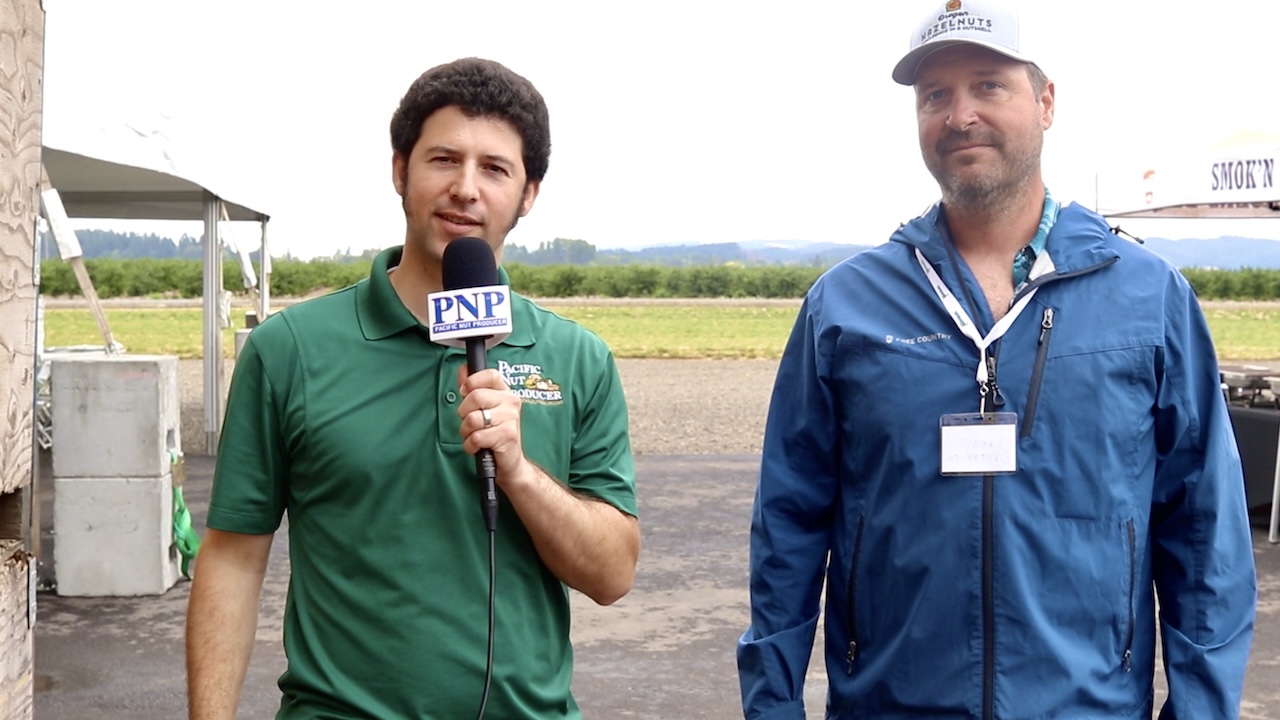
    Oregon hazelnut growers just wrapped up their largest harvest ever. With good weather and decent returns, growers are pretty happy and finally enjoying some much needed rest. Hazelnut processors, on the other hand, are hard at work processing and marketing the product. They are committed to the challenge of handling a record-sized crop, but unfortunately have to figure out what to do with the massive amount of shells/biomass that accompanies it. Processors can pay to have it composted… or, could this bi-product be utilized more profitably? Watch Matthew Malcolm’s brief interview with hazelnut grower and nurseryman Loren Birkemeier to find out.

    Please thank this video’s sponsor George Packing Company for their industry support.

  • California Walnut Industry Leader Passes, Legacy Continues

    California Walnut Industry Leader Passes, Legacy Continues

    Dennis Balint died on November 19, 2025. He dedicated nearly three decades to the California Walnut Board and the California Walnut Commission, leading both organizations as executive director and CEO from 1995 to 2016.

    “Dennis’ leadership helped guide a period of significant industry growth and set the foundation for many of the programs we rely on today.

    One of his most lasting contributions was his commitment to building a strong, science-based health and nutrition research program. His vision helped establish California walnuts as a trusted leader in this space and supported the industry in securing the first USDA-qualified health claim for a whole food related to heart health.

    Dennis cared deeply about California walnut growers and consistently focused on what would strengthen the industry for the long term. We are grateful for his service and the legacy he leaves behind.

    Our thoughts are with the Balint family during this difficult time.”

    — Robert Verloop, Executive Director and CEO, California Walnut Board and Commission

  • DPR Seeks Penalties Against Central Valley Aerial Pesticide Applicator for Drift into Almond Orchard

    DPR Seeks Penalties Against Central Valley Aerial Pesticide Applicator for Drift into Almond Orchard

    Today, the California Department of Pesticide Regulation (DPR) announced it is seeking monetary and licensing penalties against a Kingsburg-based aerial pesticide applicator, marking the first use of new administrative pesticide use enforcement authority granted by the Legislature in 2023.

    The accusation, filed by the California Attorney General’s Office on DPR’s behalf, alleges Trinkle Ag Flying, Inc. caused drift damage to a non-target almond orchard and committed multiple worker safety violations.

    “Trinkle Ag Flying has repeatedly violated rules designed to protect people, the environment, and private property,” said DPR Deputy Director of Enforcement Ken Everett. “These are serious violations, and the department will seek serious penalties for unsafe pesticide use to protect all Californians.”

    In the accusation, DPR seeks to revoke or suspend the pest control business license of Trinkle Ag Flying, Inc., as well as the qualified applicator and journeyman pilot licenses of owner Mark R. Trinkle, Jr. With a suspended or revoked license, the company would be unable to apply pesticides for hire. The department is also seeking a $30,000 fine.

    The accusation alleges a pair of violations occurred in 2024. On January 16, DPR alleges Trinkle Ag Flying, Inc. and Mark R. Trinkle, Jr. violated numerous worker-protection requirements during an application at a Hanford farm. According to the accusation, Mark R. Trinkle, Jr. refused to cooperate with an inspector from the Kings County Agricultural Commissioner’s Office and continued the application despite visible worker health and safety violations involving insufficient protective equipment for employees mixing and handling chemicals.

    A month later, on February 13, DPR further alleges that Mark R. Trinkle, Jr., on behalf of Trinkle Ag Flying, Inc., was applying herbicides to a corn field in Visalia when they illegally drifted onto a neighboring almond orchard, causing damages estimated to be over $32,000. The Tulare County Agricultural Commissioner’s Office investigated the incident.

    “DPR is committed to protecting the health and safety of our communities by stopping the unsafe, illegal use of pesticides,” said Everett. “When violations are identified, we take action to prevent harm and ensure accountability.”

    Read the full accusation here.

  • Almond Board of Directors Vote to Discontinue USDA Objective Measurement Report

    Almond Board of Directors Vote to Discontinue USDA Objective Measurement Report

    The Almond Board of California (ABC) Board of Directors has voted to cease funding for the USDA National Agricultural Statistics Service (NASS) Objective Measurement Report, marking a change in California almond crop estimates going forward.

    This decision follows extensive consultation with growers, handlers, and other industry stakeholders, as well as a thorough review by the Almond Forecast Task Force, comprised of industry members, who compiled recommendations for the Almond Quality and Food Safety Services (AQFSS) Committee. After further review and discussion, AQFSS provided their recommendation to the Board of Directors. The Board’s goal is to ensure crop estimates remain factual, unbiased, and responsive to the evolving needs of the industry.

    Since the 1960’s, ABC has contracted with USDA NASS to produce the Objective Measurement Report in July. However, industry feedback has highlighted ongoing challenges in accurately capturing variables such as larger crop sizes, diverse grower practices, and weather events across California’s production regions.

    While funding for the Objective Measurement Report will end, the California Almond Subjective Forecast, published annually in May by NASS, will continue. ABC remains committed to providing accurate and timely information to support the California almond industry and will continue collaborating with USDA and industry partners to refine crop estimation methods.

    For further information, please contact the Almond Board of California.

  • Late Fruit & Tree Nut Nursery Icon Commemorated

    Late Fruit & Tree Nut Nursery Icon Commemorated

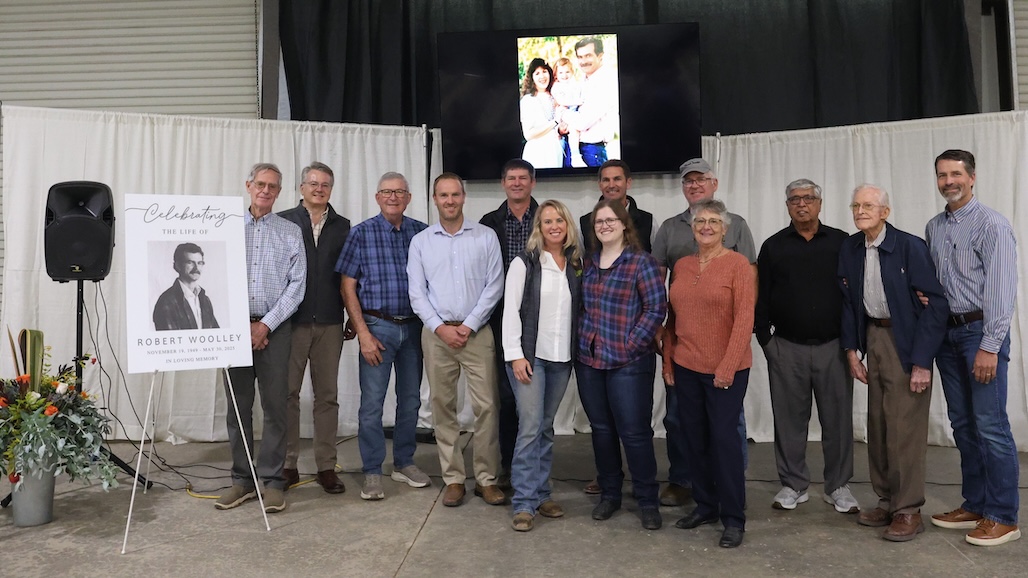
    On November 6, 2025, Dave Wilson Nursery (DWN) hosted about 200 people – from family to friends, co-workers, and people throughout the nursery and farming industry – to celebrate the life of family member and long-time DWN owner, Robert Woolley.  Woolley passed away in May after a long illness.

    Woolley was born in Stockton, CA in 1949.  After graduating from high school in Modesto in 1967, Woolley attended San Francisco State University, where he studied traditional and artistic woodworking.  He later became an expert cabinet maker and award-winning furniture designer.

    Woolley later applied the same diligence and creation of exceptional quality to developing and commercializing nut, fruit and ornamental tree cultivars.  After moving to the Central Valley with his wife, Jane Wynne Woolley, and their daughter Erica in 1980, he joined his father-in-law, John Wynne, in managing DWN in Hickman.  The Nursery had been founded in 1938 by Dave Wilson, Jane’s grandfather.  In 1989, Robert and Jane acquired the company, preserving its identity as a family‑owned enterprise while professionalizing and expanding its operations.  Under their 30+ year leadership, the nursery added the 640‑acre Red Rock Ranch in 1996, incorporated in 1999, and grew to farm more than 1,000 acres and produce over four million trees annually for both commercial orchards and the home‑garden trade.  Robert’s leadership positioned DWN as the nation’s largest producer of fruit, nut, and shade trees.

    Robert’s ownership coincided with some of the most important varietal and rootstock innovations in modern orchard crops.  Continuing John Wynne’s close relationship with Zaiger Genetics, Robert positioned DWN as the private propagator and exclusive U.S. licensor for many of their introductions, including key rootstock advances and the Independence® self‑fertile almond.  He called Independence® “huge” for growers, as it reduced reliance on pollinizer rows and beehives.

    Robert Woolley, prior owner of Dave Wilson Nursery, advanced the tree nursery industry. Most notably, during his tenure he released Independence almond, the first self-fruitful almond cultivar, developed by Zaiger Genetics.

    For decades, Woolley and other team members gathered at Zaiger Genetics every Wednesday during fruit season to taste-test and discuss prospective new varieties.  In cherries, Woolley promoted the use of inter-stem rootstocks to widen the range of “cherry ground,” enabling production on soils previously considered unsuitable.  He often shared this practical knowledge with growers in California and beyond.  Beyond commercial varieties, he supported the preservation and propagation of non‑commercial heirloom apple cultivars.

    Off the farm, Woolley played a central role in advancing clean‑plant and nursery certification programs.  A respected industry statesman, he chaired the California Fruit Tree, Nut Tree and Grapevine Improvement Advisory Board, which advises the California Department of Food & Agriculture on registration and certification of nursery stock and funds research to improve plant health. At UC Davis, he served as one of the co‑chairs of the UCD – Industry Task Force that reshaped the Foundation Plant Materials Service (now Foundation Plant Services).  Nationally, he testified before both the US House Agriculture Subcommittee on Livestock and Horticulture and the US Senate Committee on Agriculture, Nutrition and Forestry, speaking on behalf of the nursery and greenhouse sector about labor, specialty crop competitiveness, and the critical need for a robust National Clean Plant Network. He also worked closely with regulators and researchers on issues such as nematode certification and fumigation alternatives, emphasizing “zero tolerance” standards for nursery stock destined for commercial orchards.

    Colleagues remember Woolley as combining a designer’s eye with a plantsman’s pragmatism—someone equally at home discussing joinery, color and form as he was talking about rootstocks, fumigants, or clean‑plant protocols.  His work took him across California, the Pacific Northwest, Canada, and internationally to Mexico, Spain, Australia, and elsewhere, sharing expertise on tree selection, propagation, and orchard establishment.  His collaborative spirit was evidenced at his Celebration of Life event, where almost every major California tree nursery was represented.

    Through his intelligence and passion, creativity and competence, Woolley advanced the fruit and nut tree industry in California and beyond, enriching the lives of those around him along the way.

    Woolley has reunited with his wife, Jane, who passed away in 2007. Woolley is survived by his daughter Erica, the current owner of DWN.

  • Five Ways to Avoid Expensive Irrigation Repairs & DU Losses

    Five Ways to Avoid Expensive Irrigation Repairs & DU Losses

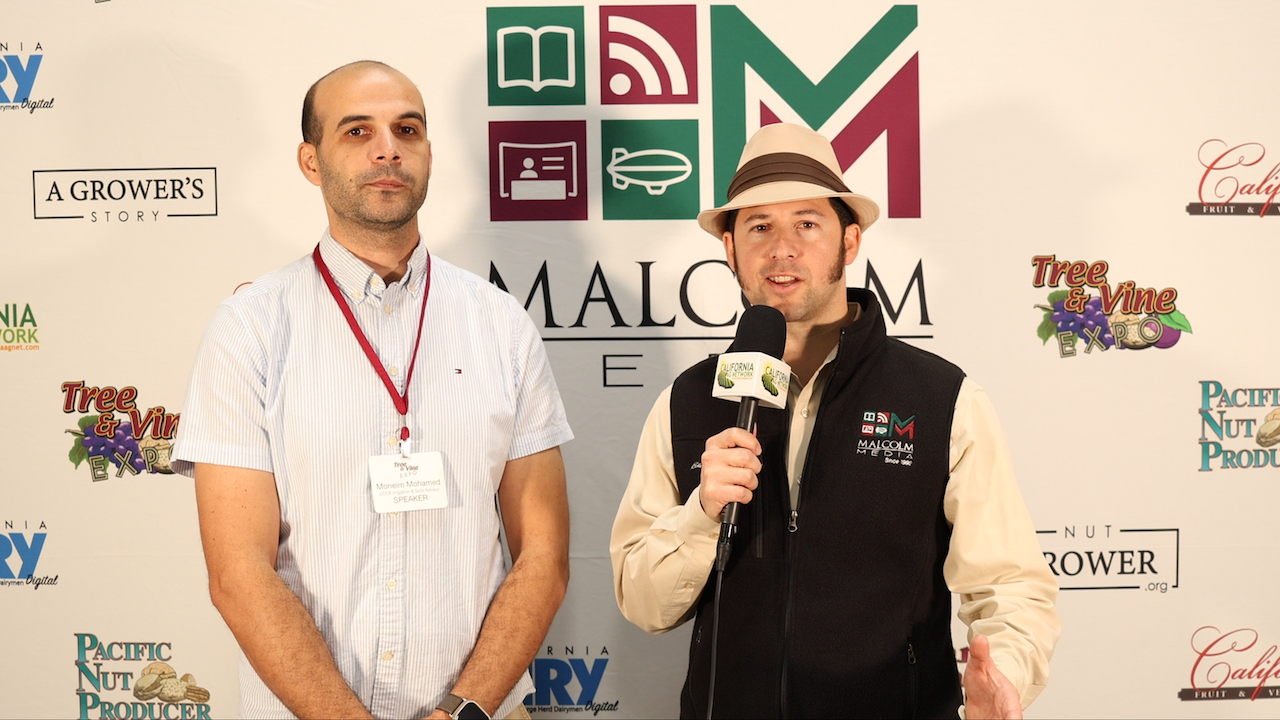
    Irrigation systems today are amazing at getting just the right amount of water where it needs to be to meet a crop’s needs; however, if these systems are not well-maintained, things can go south pretty fast, resulting in distribution uniformity-related losses and expensive repairs. During his presentation at Malcolm Media’s recent Tree & Vine Expo, UC Cooperative Extension Irrigation & Soils Advisor Moneim Mohamed noted that regular and proper irrigation system maintenance can prevent expensive repairs.  Watch his video interview with Matthew Malcolm on California Ag Network for five key tasks for preventative maintenance.

    Please thank this video’s sponsor Simplot Grower Solutions for their industry support.