Category: Economics

  • Modifying Marketing Orders to Face New Challenges

    Modifying Marketing Orders to Face New Challenges

    Growers’ strategies to enhance the economic sustainability of their farms are constantly evolving to address changing markets and production conditions. State or federal marketing orders enable farmers, farmer-organizations, and, in some cases, handlers to act collectively to further their mutual economic interests without violating anti-trust law. In order for marketing orders to be relevant with changing agricultural conditions, they must periodically have modifications made to their rules and regulations. Changing the scope of a marketing order’s regulations involves undertaking a thorough rule-making process, which generally takes significant lead time before approval and implementation of changes. In this article, we examine recent efforts by the California Walnut Board to update its order in three key dimensions.

    A marketing order is formed when a majority (usually two-thirds) of growers accounting for a majority of production vote in favor of it, although specific rules vary. Once formed, participation is mandatory for all producers and first handlers of the given crop in the relevant geographic area. (A first handler takes the commodity from the farmgate and introduces it into the marketing chain.) A per-unit assessment on sales funds the marketing order’s activities. Federal marketing orders can engage in activities in the following categories: promotion and advertising, research and development, quality regulation, pack and container requirements, marketing information, quantity regulation, and import regulation. They cannot use funds for political lobbying.

    While activities in all of these categories can be included in a marketing order, the specific activities permitted for a specific marketing order are defined in federal or state regulation when it is formed. Changing these activities requires completing a federal rule-making process. One federal marketing order,the California Walnut Board (CWB), has recently initiated processes for three changes in its activities, each within a different category. We examine these proposed changes and distill lessons for other orders that may consider updating their regulations.

    The CWB is proposing to implement a “credit-back” program within the portion of its order dealing with advertising and promotion. It requires review through a formal rule-making process and a grower referendum. The other two proposed changes require review through a relatively streamlined informal rule-making process. One proposes suspending an existing volume control authority, which has not been exercised in decades (quantity regulation).

    The other proposes expanding the information collected from handlers (marketing information). The proposed credit-back program is intended to incentivize handlers to engage in advertising and promotion activities by refunding them a portion of the money they spend, which effectively lowers the marginal cost of these activities. If handlers perceive a marginal benefit to additional expenditures and set marginal benefit equal to the marginal cost as predicted by economic theory, then they will increase spending. The program would refund handlers up to 70% of their spending on eligible advertising and promotion expenditures, subject to a handler-specific maximum.

    The maximum amount available to a handler is the same share of the credit- back program budget as its share of total walnut acquisitions in the previous year. Thus, a handler who had 10% of total acquisitions would be eligible to be reimbursed for eligible expenditures totaling up to 10% of the total funds budgeted for the credit- back program. If the program budget were $1 million, the handler would be eligible for $100,000 in reimbursement. At the proposed maximum 70% reimbursement rate, the handler would need to spend $142,857 in eligible expenditures to receive the entire reimbursement.

    The proposed credit-back program would require handlers to include ‘California Walnuts’ on the primary face label and include the handler’s name or brand on the package. This requirement could aid in differentiating California walnuts from walnuts produced elsewhere, potentially leading to higher prices for California producers. Handlers participating in the credit-back program will have a decrease in net assessment costs because a portion of their marketing expenses will be credited back. Costs will be unchanged for handlers who do not participate. Handlers can choose whether to participate, and will only do so if they perceive a positive net benefit from the program.

    The credit-back program intends to expand total advertising and promotion expenditures for California walnuts, thereby enhancing demand and market price. Its effectiveness will depend on the extent to which handlers increase their expenditures beyond those they already make.

    Advertising & Promotion: Credit-back Program
    Advertising is predicted by economic theory to increase demand for the advertised product by “shifting” it outward, increasing the price for any quantity sold, and increasing the quantity sold at any given price. Empirical analyses of commodity advertising and promotion for specific marketing order programs, including many in California, have found these programs to be highly effective in expanding demand. If the credit-back program prompts an increase in total advertising and other demand-enhancing expenditures, including those by handlers and by the Board, economic theory predicts that gross revenues accruing jointly to growers and handlers will increase.

    There are multiple ways in which additional advertising and promotion expenditures could increase demand. First, current walnut consumers could purchase more walnuts. Second, new consumers could choose to purchase walnuts. Finally, handlers could create or expand additional sales channels due to the development and sale of value-added products, potentially increasing net returns above those obtained by commodity sales.

    Figure 1 illustrates the effects of an increase in demand on price when supply (S1) is fixed at quantity Q1. The fixed supply approximates the situation within a single marketing year when the crop has limited or no storability across years. Demand curve D1 represents the quantity buyers will purchase as a function of price, where Q1 is sold at the price P1. D2 represents an increase in the demand curve due to advertising, which increases the price for Q1 to P2. Thus, an increase in demand due to increased total advertising and promotion expenditures from a credit-back program would increase the observed market price when the quantity supplied is fixed.

    Figure 1 holds the supply curve constant. However, the production of most crops tends to increase over time due to technological innovations, and growers may respond to changes in the relative profitability of different crops by changing their acreage allocations. All else equal, an increase in supply, regardless of its nature, will reduce price. This behavior is represented in Figure 2 by the annual quantity harvested increasing year-on- year from Q1 to Q2. As in the previous figure, the initial market price P1 is where the initial demand curve D1 intersects with the initial supply.

    The second demand curve D2 again represents the effect of advertising on price. The new market price P3 is at the intersection of the increased demand curve (D2) and the increased supply curve (S2). In this example, due to the increase in quantity, price declines to P3; the negative effect of the increase in supply on price outweighed the positive effect of advertising.

    Depending on the nature of the shifts in supply and demand, the observed price may decline, increase, or stay the same. However, the observed price will always be higher than the price would have been if demand did not increase. In other words, observing a price increase is not a requirement for demonstrating that advertising is effective.

    Figure 2 illustrates this point. The price determined by the interaction of the initial demand curve and the second supply curve is lower than the price when advertising shifts out demand as well. All else equal, an increase in demand due to advertising and promotion would increase the market price. However, the substantial increase in production can more than offset any such effect, so that a net price decrease is observed. In that case, while the price is lower (P3) than the initial price (P1) due to the increase in supply, it would have been even lower (P4) had there not been an advertising-induced demand increase.

    Table 1 quantifies potential benefits of a credit-back program for the specific case of the California walnut industry. Earlier work by one of the authors estimated that each dollar invested in advertising and promotion of California walnuts generated $19.75 in total revenue and $15.67 in net returns on average. Assuming a $0.04 assessment rate per hundredweight and total production of 625 million cwt., the CWB’s total annual budget is approximately $25 million. If the credit-back program budget is assigned 10% of assessments, then it would have $2.5 million to allocate each year.

    The success of the credit-back program will depend on the extent to which it increases total expenditures on advertising, promotion, and other demand-enhancing expenditures, including those by handlers and the CWB, all else equal. If handlers do not increase their expenditures, then there will be no positive impact on price, although handlers’ net returns would increase due to the partial reimbursement of their current costs.

    At the other end of the spectrum, if all handlers requested their maximum amount of credit-back and used all of the funds to match new expenditures rather than substituting for any existing ones, then they would invest an additional $3.25 million in advertising and promotion: 70% of these expenditures would be credited back, totaling the $2.5 million in the program budget. The remaining 30% would be a $1.07 million increase in total advertising and promotion expenditures, paid by handlers. Multiplying the estimated returns per dollar by the additional expenditures by handlers, the program would generate roughly $21.2 million in additional total revenues and roughly $16.8 million in additional net returns.

    Volume Control: Suspending the Reserve Authority
    One of the CWB’s authorized activities is the annual creation of a reserve based on market conditions that assigns “free” (eligible for sale domestically), export, and reserve percentages to production volumes. It has not exercised this authority in over thirty years, due to a strategic decision in the 1980s to focus on enhancing demand rather than regulating supply.

    The CWB is seeking to suspend this authority through the USDA’s informal rule-making process. Suspending the authority would eliminate the need for a committee to evaluate the desirability of establishing a reserve when market conditions have made the concept of a reserve effectively obsolete.

    Marketing Information: Expanding the Scope of Reporting
    Currently, the CWB is authorized to collect information regarding walnut shipments from handlers. While assessment income is based on shipments, shipment data does not provide a complete picture of walnut volume availability. The CWB is currently seeking the authority to expand permitted reporting to include volumes that have purchase commitments but have not been shipped. This proposed change enables the information collected by the CWB to better reflect the conditions of modern agricultural markets in which an increasing share of purchases are committed to prior to shipment. Knowing the volume that already has a purchase commitment in addition to knowing the volume that has been shipped will provide handlers with a more complete picture of market conditions when negotiating sales.

    Modernizing Marketing Orders for Other Commodities
    As markets continue to evolve, marketing orders will continue to adapt to meet market conditions. Adaptations will include modifying traditional functions—as the CWB is proposing for information collection— and introducing and expanding new ones. The California Rice Commission, for example, has increased its focus on environmental quality and regulatory compliance and reduced its direct marketing-related activities since it was founded in 1999 as a replacement for earlier industry organizations. (It remains involved in marketing through its membership in the U.S. Rice Producers Association.) Increasing regulation of agriculture may make moving in the same direction more attractive for other marketing orders as well.

    While production research has long been a traditional marketing order function, over time, funding health research has emerged as a priority for many commodities. As consumers’ interest in designing a diet to meet their individual health needs continues to increase, health research is likely to continue to be a growth area for enhancing consumer demand for individual commodities. However, funding health research must be included as one of a marketing order’s approved activities. If it is not, the marketing order must be amended to include it. These types of successful adaptations by marketing orders will enable them to continue to meet the original objective of enhancing the economic sustainability and stability of U.S. agriculture. — By Rachael E. Goodhue & Harry M. Kaiser, Giannini Foundation of Agricultural Economics, University of California

    Authors’ Bios
    Rachael Goodhue is Professor and Chair in the Department of Agricultural and Resource Economics at UC Davis. She is the Public Member and Chair of the California Walnut Board. Harry Kaiser is Gellert Family Professor and Associate Dean for Academic Affairs in the Charles H. Dyson School of Applied Economics and Management at Cornell University.

    The opinions expressed in this article are the authors’ own and not those of the California Walnut Board or
    the United States Department of Agriculture.

  • Almond Alliance of California Applauds Defeat of Prop. 15

    Almond Alliance of California Applauds Defeat of Prop. 15

    The Almond Alliance of California today hailed the defeat of Prop. 15 which, if passed, would have been the largest property tax increase in California’s history.  The latest results from the Secretary of State’s office shows Prop. 15 losing by a margin of 52-48 %.
    The Almond Alliance mobilized a grassroots campaign focused on educational materials, letters and provided support to a broader coalition of industry partners. Almond Alliance Chairman Mike Curry said, “This is a tremendous victory for California agriculture and the California almond community. This measure would have devastated family-owned farms and businesses and jeopardized our locally grown food supply.”
    The victory demonstrated the power of agricultural groups partnering with like-minded organizations to achieve success at the ballot box, said Curry. “We worked closely with a coalition of agricultural organizations to inform our members about this issue and provide the resources needed to educate voters about the danger of Prop. 15 to the agricultural community,” he explained.

    The statewide No on Prop 15 campaign included organizations, such as: Agricultural Council of California, Western Growers, California Farm Bureau Federation, California Business Roundtable, California Chamber of Commerce, California State Conference of the NAACP, California Black Chamber of Commerce, California Asian Pacific Chamber of Commerce, Latin American and Caribbean Business Chamber of Commerce, California Business Properties Association, California Taxpayers Association and hundreds of other entities.
    “Our members deserve credit for stepping up to the plate quickly when we put out a call for help,” said Curry. “Their efforts were key to building this coalition and defeating this measure which would have unfairly burdened our community.”

    About the Almond Alliance of California
    The Almond Alliance of California (AAC) is a trusted non-profit organization dedicated to advocating on behalf of the California almond community. California almonds generate more than $21 billion in economic revenue and directly contribute more than $11 billion to the state’s total economy. California’s top agricultural export, almonds create approximately 104,000 jobs statewide, over 97,000 in the Central Valley, which suffers from chronic unemployment. The AAC is dedicated to educating state legislators, policy makers and regulatory officials about the California almond community. As a membership-based organization, our members include almond processors, hullers/shellers, growers and allied businesses. Through workshops, newsletters, conferences, social media and personal meetings, AAC works to raise awareness, knowledge and provide a better understanding about the scope, size, value and sustainability of the California almond community. 

    For more information on the Almond Alliance, visit https://almondalliance.org/ or check out the Almond Alliance on Facebook, Twitter and Instagram.
  • Reaching Stressed Consumers with Almonds, Message of Mindfulness

    Reaching Stressed Consumers with Almonds, Message of Mindfulness

    The Almond Board of California (ABC) U.S. marketing team continues to find ways to appeal to consumers through relevant and timely social media that keeps almonds top of mind.

    Although the coronavirus pandemic and 2020 election have made it more difficult to cut through a congested media environment, social media remains an escape for people looking to get away from those two factors. Leveraging the insight that consumers nationwide are facing higher stress levels, which may only be intensified by the upcoming holiday season, the U.S. marketing team decided to focus its social media strategy on mindfulness and wellness. In its social media posts, the team featured motivational phrases promoting almonds, including “a self-care snack that keeps you feeling you #almonds” and “feel good breaks pair well with feel good snacks #almonds.” This campaign seeks to capitalize on how almonds can still be part of consumers’ everyday lives, even though their days may not be as routine as usual.

    This effort also takes into consideration the fact that it can be hard to focus and stay energized when working from home, as many consumers are now forced to multi-task around the clock, jumping from their role of parent to teacher to employee. The ongoing demands of working from home allows ABC to highlight the benefits of sustaining one’s energy with a healthy snack of almonds. Social posts with captions such as “Week full of meetings? Week full of snacking on focus fueling #almonds” and “Al-monds all day. Your stay-on-task snack #almonds” are accompanied by an image of a handful of almonds over calendars and planners, connecting the nutritous snack of almonds to the realities of consumers’ busy lives.

    The Almond Board has also infused its social media strategy with humor as it continues to run its light-hearted “Garage Sale” advertisements that showcase the power of eating a handful of almonds and gaining six grams of energy-packed protein to power through the day. This “Garage Sale” paid social placement will be featured on Facebook, Instagram and Twitter through the end of November.

    Beyond those tactics, ABC has also partnered with holistic health coach Koya Webb for the last quarter of 2020 to bring even greater attention to how a simple daily almond snack can bring mindfulness back into day. Webb is publishing a series of posts featuring almonds on her Instagram page through the end of December – check out her first post here! ABC also arranged 19 television media interviews for Webb that took place at the end of October, and is looking to secure more earned media opportunities in the coming weeks.

    Taking a three-prong social media approach, from ABC’s own consumer-facing social media accounts as well as advertisements and third-party endorsement, has served up a recipe for success in, generating positive almond awareness through social media. Be sure to follow us on Facebook or Instagram at @California Almonds or on Twitter at @almonds to see the latest posts from your ABC team. — Article Courtesy of the Almond Board of California

  • Port of Oakland Update on Container Availability and Shipping Line Disruption

    Port of Oakland Update on Container Availability and Shipping Line Disruption

    The Almond Alliance hosted a zoom call with the Port of Oakland this morning to discuss issues with shipping lines and container availability at the Port of Oakland.  Through October 2020, Oakland sent out 18% fewer empty containers compared to the same time period in 2019.  Empty container exports dropped 30% between September 2020 and October 2020 (41,440 TEU vs 29,000 TEU respectively).  As you know most container shipping lines are foreign owned and are urging importers to return empty containers as quickly as possible, since it is having impacts throughout the supply chain. Ships are coming in late and berthing late and are cancelling many bookings. A significant number of chassis are being used to store full import containers, resulting in increased dwell times. The return of empty containers to free up chassis and improve operational velocity in terminals and storage yards is needed to help improve the situation.

    While efforts of many trade  associations (including Agriculture Transportation Coalition) are reaching out to the Administration and congressional representatives to request assistance, the goal of the Almond Alliance is to contact all of the carriers and get their message on what is happening with their containers and let them know the position and concerns of the almond industry.

    We requested that the Port of Oakland provide and recommendations to our membership to help them get through this situation. Below are some recommendations for consideration.  The Almond Alliance continues to work on this issue and will keep you updated.

    Recommendations to address this issue temporarily until the larger situation is handled:

    • Talk to your carriers and ask them if their book of business has changed.
    • Talk to your carriers and request that they take more export cargo. 
    • Based on your carriers’ book of business, you may need to spread the risk and consider working with other carriers. If your carrier does not have imports coming in, that is something you should consider in your decision in the next 3 months. 
    • Look at the terms of the conditions of your contract with your carrier. Certain contracts you can change your terms of conditions and temporarily give them up so carriers have incentive to work you.  We need to find ways to put pressure on carriers. 
    • Be flexible with equipment – better off shipping something than nothing and lose the sale. 

    Important note:

    Hapag Lloyd informed the Port of Oakland that in addition to the current delays of vessels employed in the AL5 service and the various recovery measures such as port omissions, speed-up, and rotation changes we unfortunately did not succeed to bring the service back on schedule since new delays have jeopardized those efforts.

    Ongoing adverse weather on the Atlantic is preventing us to do the necessary speed-up and even forces us to reduce the speed for safety reasons. In addition, port congestions caused by weather related port closures and labor shortages have caused additional delays.

    In order to recover the AL5 schedule and bring vessels back into the proforma long term schedule position, H/L has proactively decided to let all vessels slide by one week as per week 48 MV “NYK Rumina” 053W. All vessels sailing until then will remain in their delayed position with some slight schedule adjustments.

    For any questions, please email Elaine Trevino at etrevino@almondalliance.org.

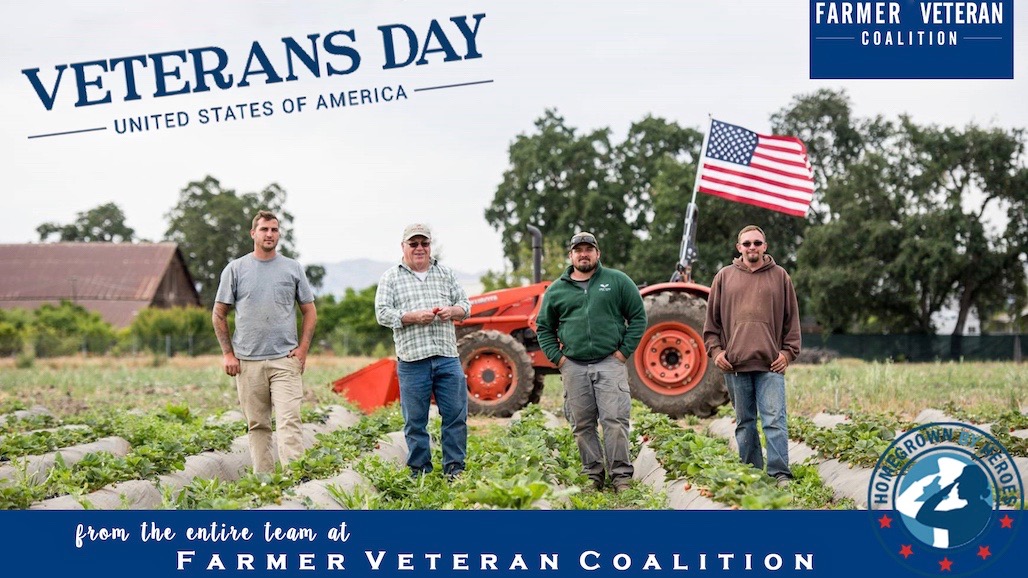
  • Honoring Veterans Every Day at Farmer Veteran Coalition

    Honoring Veterans Every Day at Farmer Veteran Coalition

    Many veterans return home feeling lost, without purpose. They seek that “new mission” they grew so accustomed to during their time in the military. An agricultural non-profit is helping with just that.


    When Michael O’Gorman founded Farmer Veteran Coalition (FVC) in the back of his pick-up truck in 2008, he thought he could help our soldiers have meaningful careers and find healing on our nation’s farms.

    At that time no one was connecting veterans with the farming community. Today there are more than 250 organizations supporting this military-to-agriculture movement.

    Simply put, FVC helps veterans pursue careers in agriculture. For these men and women, farming has become their new mission. FVC recognizes that agriculture additionally offers purpose, opportunity, and physical and psychological benefits.

    This is the difference maker for many veterans in their civilian re-integration.

    With Veterans Day upon us, the team of Farmer Veteran Coalition is reflecting on the thousands of farmer veterans they have supported in pursuit of new agricultural endeavors, including those highlighted here.

    This year, after a decade of leading the charge, O’Gorman passed the pitchfork to newly appointed executive director Jeanette Lombardo. Raised by an Air Force veteran father, Lombardo grew up in Erie, Pennsylvania, on a family dairy farm. She spent decades in agricultural banking and now is eager to carry forward the single best way that FVC assists veterans – through their Fellowship Fund.

    A small grant program, the Fellowship Fund purchases farm equipment the member has identified as crucial to their operation. The program has funded $3 million in equipment to over 600 veterans.

    Alex Jauregui – Fury Bees (Photo by Susanna Frohman)

    Veterans like Alex Jauregui. A double-amputee, Alex lost both legs when he stepped on an IED in Afghanistan during his fourth deployment. Now he finds new purpose in his Fury Bees operation in Northern California. “Farming makes me feel enabled,” shares the former Staff Sergeant. “I never would have imagined beekeeping but it’s been very therapeutic.” FVC teamed up with Work Vessels for Veterans and Semper Fi Fund to purchase a Hummerbee forklift, which significantly reduces the physical impact on Alex’s body.

    Twin Sister Veterans Ladonna Avakian & Heather Paterson, now Oregon cherry and hazelnut growers

    Veterans like Ladonna Avakian & Heather Paterson. Twin sisters, both women served in the Air Force. Both returned home to Oregon with service-related disabilities. They were awarded a grant to fund an air sprayer for their Hollyaire orchard where they primarily farm sour cherries, hazelnuts, and holly under the Homegrown By Heroes label. “It’s small grants like this one that make us feel valued and supported,” Heather reflects. “Farming is all about community, and FVC really is its own community. To be physically active, outside, working with my twin, and having our family out there – it’s really an American dream.”

    Ben Misko, a Marine who suffered a brain injury during combat, has found healing in his Restless Roots farm. He grows vegetables and cut flowers in Central Pennsylvania. “Having a brain injury can be very frustrating at times, but animals provide a reprieve for me. Farming keeps me sound in my mind, and the animal and plant care keeps me on schedule,” shares the former Motor Vehicle Operator. “I asked for this equipment so I can provide for more animals without additional financial burden.”

    Michael Trost, who served a decades-long Army career, suffered gunshot wounds that resulted in the amputation of his right leg and the reconstruction of his hand using his toes. After 30 surgeries and two years of hospitalization, he turned to hop growing in Tennessee. “Starting this farm has given me a new mission, purpose and direction in my life. I feel more alive than I have been,” expressed Michael, explaining that the farm is a major part of his post-service recovery. “FVC believed in me and awarded me funds to install fencing around my hopyard. Now we are using the farm to help other wounded veterans. We were made to become farmers. We love to be a part of something bigger than ourselves.”

    Lovay Wallace-Singleton, the president of FVC’s North Carolina chapter, served 20 years in the Navy before founding Veterans Employment Base Camp and Organic Garden. VEBCOG provides temporary employment for post-war veterans transitioning back to civilian life, teaching urban farming skills. A Fellowship Fund grant helped Lovay repair her farm’s hoophouse after hurricane Florence struck and flooded her property.

    And 
    James Webb, whose career as an Army Ranger ended when he was hit by a drunk driver while riding his motorcycle near Fort Benning. “After my accident and getting medically retired, I lost the career I wanted and worked hard for, and lost the brotherhood unlike anything I had ever known,” lamented the veteran who comes from a long line of military service. “Once I realized I could use horses to work cattle – my whole world changed.” He now operates Conway Cattle Company in the Blue Ridge Mountains of Virginia, and last year spoke at FVC’s national conference in Austin on the panel ‘Rangers on the Range’, featuring five former Army rangers all now ranching cattle.

    When FVC was first established, the plan was simple: find a way to help these veterans, and then tell their story. For Michael O’Gorman, getting to work with the men and women of FVC on their own individual journeys to becoming farmers has made it the most rewarding thing he has done. “I’m really proud of the organization that I started and watched grow,” shared the founder. “But we’re still a fairly young organization and are dedicated to helping the farmer veterans out there.”


    For as many veterans as FVC has helped, there are still more in need of support.

    And the stakes are high, as Marvin Frink – who started Briarwood Cattle Farm in North Carolina to cope with post-service PTSD – shows us. “I am just so thankful for [Michael O’Gorman] and the hard work he’s done for us. I can openly say it – [Michael] saved my life and I’m very thankful for him. He came to me when I was in a very bad, very dark place, and he pulled me out of it.”

    More About Farmer Veteran Coalition (FVC)

    Farmer Veteran Coalition (FVC) is the nation’s largest nonprofit organization assisting veterans and active duty members of the U.S. Armed Forces to embark on careers in agriculture. With the mission of mobilizing veterans to feed America, it provides education, resources and small grants to help veterans launch their own farming operation or find employment in related agricultural professions. Established in 2008, Farmer Veteran Coalition serves more than 20,000 veteran members from all 50 states and U.S. territories while developing a new generation of farmers and food leaders.  Its in-house programs include the Farmer Veteran Fellowship Fund small grant program, the nationally recognized Homegrown By Heroes label for veteran-grown products, and the national Stakeholders Conference. It leverages its network of nearly 15 state chapters to facilitate peer collaboration and mentorship. FVC has been successful in getting millions of dollars of USDA funds appropriated for farmer veteran and the groups that support them.  They have built an extended community of organizations that look to them for leadership and guidance as the pioneer in this military-to-agriculture movement.

    Learn more at: 
    www.farmvetco.org or follow along on Facebook at @FarmerVeteranCoalition, on Instagram at @FarmerVeteranCoalition and on Twitter at @FarmVetCo.  For more details on the Nov. 18-19 virtual conference or to register visit: http://conference.farmvetco.org

  • California Walnut Credit-Back Referendum

    California Walnut Credit-Back Referendum

    The California Walnut Board (CWB) is pursuing credit-back authority. The USDA recently published the Secretary’s decision in this regard and has ordered a referendum vote of the growers. This authority will allow for handlers to receive a credit-back for eligible marketing expenditures of 70 cents for every dollar in spend. This important authority is one of the ways the CWB is modernizing the Order to make it work harder for industry, using every possible tool available to spur new investment in new product development/marketing initiatives to continue growing walnut consumption.

    What is Credit-Back Authority?

    • Credit-back is an authority that several agricultural commodities (almonds, prunes, etc.) use to allow handlers to conduct eligible marketing activities in return for a partial credit/rebate on assessments.
    • The CWB does not currently have this authority in the marketing order; therefore, formal rule making has been undertaken to add the authority to the order.

    Objective/Purpose of the Program

    • Objective of the program – effectively promote the sale, use and consumption of California walnuts
    • Purpose – to encourage handler market promotion in addition to the CWB’s generic marketing efforts

    Structure/Mechanics

    • The credit-back authority, once approved, will be in the Order, whether industry chooses to use or not.
    • Program authorization to spend will be determined on an annualized basis in conjunction with fiscal budgeting.
    • Determining available dollars for the crop year will be based on percent of budgeted assessment revenue.
    • Each handler’s share of available dollars to be based on prior year crop acquisitions.
    • Credit-back will be .70 cents per $1 of spend on eligible marketing & promotional activities.

    What are the rules & requirements?

    • Credit-back requires California Walnuts wording and/or handler name with the word “walnut(s)” to be eligible.
    • Credit-back is not intended for use with private label/third-party products. Activities containing other nuts and/or fruits, etc., would receive credit-back based on the proportionate share of walnuts included.
    • Walnuts used as an ingredient in manufactured food products would receive credit-back based on the proportionate share of walnuts included.
    • Complete rules, regulations and eligible/ineligible activities are defined in the Credit-back Guide.

    What are the impacts to the Board?

    • To be funded from prevailing assessments, likely reduction in domestic program, given this is the largest area of CWB spend.
    • Available dollars for the crop year to be based on percent of budgeted assessment revenue; CWB Executive Committee to make a recommendation to the Board annually.
    • Similar programs have credit-back in the range of 10%-15% of assessments.
    • Staffing implications to be determined based on the breadth and depth of the program.

    More information regarding this referendum can be found on the Federal register.

    Voting

    The voting period is November 30 – December 11, 2020. The CWB encourages grower participation in this process. Please be on the lookout for a ballot from USDA. If you do not receive a ballot, please contact Terry Vawter at (559) 487-5905 or Jeffery Rymer at (559) 987-2293.

  • Walnut Replanting Considerations in a Lean Price Year

    Walnut Replanting Considerations in a Lean Price Year

    When prices are lean walnut farming is tough business. Farm advisors are not economists or financial advisors. However, farm advisors can be useful in providing best practices for economically sustainable production. Two key economic decisions growers face are when to replant individual trees and when to remove and replant entire orchards.

    Learn from Dying Trees to Improve Management of the Whole Orchard:

    Former Advisor Carolyn DeBuse, and Emeritus Advisor Bill Krueger wrote about the need to pause before replanting, by asking why the tree died in the first place. Saturated soils and soil borne pathogens are common culprits for tree loss. It is important to carefully evaluate recently declining trees, particularly evaluating their root systems for a possible cause. Your pest control advisor or local farm advisor can help with this diagnosis. Can changes be made to reduce the chance of additional trees declining and increase the chance of success for replanted trees? For Phytophthora and nematodes, these changes are often genetic (i.e. replant rootstock selection) but may also include a chemical approach. However, the needed action is just as often cultural, whether it is adjusting irrigation set time to prevent ponding or installing stream-splitters to keep water off trunks.

    Water logging is a common cause of walnut tree decline: sacvalleyorchards.com/blog/walnuts- blog/yellowing-collapsing-walnut-trees-pt-1-water-logging. The Howard variety appears particularly sensitive to saturated soils: sacvalleyorchards.com/blog/walnuts-blog/yellowing-collapsing-walnut-trees- pt-2-yellowing-howard-problem. In addition to tracking saturated conditions with soil moisture monitoring, a key practice to not over-watering is irrigating only when demanded by the trees, as indicated through regular pressure chamber use. Learn more at: sacvalleyorchards.com/manuals/stem-water- potential.

    Tree Replanting Decisions:

    When a tree dies and is removed, there is always a question of whether to replant in that spot. The decision of whether to replant an individual tree is a gamble that the replant will become established and produce enough to offset its associated costs by the end of the orchard’s life. A decision that is an automatic “yes” early in the orchard’s life becomes more complicated as the orchard ages.

    The shading from surrounding trees, and the ensuing low probability of successful vigorous growth weighs against the desire to replant and establish lost production. DeBuse and Krueger noted that if the orchard floor has over 75% shade at midday, the chance of a successful replant is slim. However, UC Davis Walnut Specialist Bruce Lampinen believes that a successful replant is dubious in orchards with over 60% shading. If the decision to replant has been automatic for you, pause to consider the cost of an unsuccessful replant and first evaluate how much light is available to the new tree.

    After weighing the success of the replant and evaluating why the original tree died, if you do replant, follow the best practices to help nurture this investment. Root removal, possible spot fumigation, nursery product selection, and correct planting are the key steps. Of these, nursery product selection is a particularly critical step, if possible, tailor the choice of rootstock to the main source of tree loss (see rootstock table below). As part of nursery selection, choosing a bareroot over a potted tree is typically ideal because you are starting with a tree that is larger and easier to manage. Once the replant is in place, the tree stands little success without paying extra attention to the need to modify irrigation and fertilization. You can learn more in the excellent guide by DeBuse and Krueger at: sacvalleyorchards.com/walnuts/orchard-development/replanting-individual-trees.

    Orchard Replanting Decisions:

    In addition to a lack of available light, general orchard decline is a second major reason to rethink replanting individual trees. General orchard decline in old age, frequently the result of weak trees facing an onslaught of multiple pests and diseases (figure 1), means replants make little sense because of the short window remaining in the orchard’s life. Instead, the orchard should continue to be farmed without replants until it is no longer economically feasible to do so.

    Figure 1. An orchard facing general decline, with a high rate of tree loss. Extensive crown gall, trunk cankers, and high nematode counts all present in this orchard.

    Amidst lean prices, if this is the year that you slate an orchard for removal, there are several steps you should consider before removal. A critical initial step, just as with replanting individual missing trees, is to ask why the orchard is in decline, and if those problems may follow you into the next planting. In addition to assessing the risk of the replant problem, and the persistence of crown gall, a nematode sample taken while the current trees are still in the ground is a great start. You can learn more about nematode sampling at: growingthevalleypodcast.com/podcastfeed/2019/10/22/nem-sampling and result interpretation and the next steps for replanting amidst high lesion nematode counts at: sacvalleyorchards.com/walnuts/orchard- development/replanting-into-nematode-infested-soils.

    Building upon this initial diagnosis step, consider the following steps:

    1. Assess potential carry-over problems before harvest.

    2. Kill the roots of the old orchard. The established best practice for this is cutting down trees above ground during October and within 5 minutes painting the stump with Garlon3A, or a mixture of 1:3 mixture of Garlon3A and MorAct.

    3. Wait a full growing season before replanting walnuts. This is the step where there are a range of management choices, such as the decision to fumigate, the use of a spring-summer crop to dry down deep soil moisture, or even exploration of a new technique like anaerobic soil disinfestation.

      This is also the step, where you could consider whole orchard recycling (WOR), whereby the previous trees are chipped and incorporated back into the soil. In almonds, this has been successful both for the performance of the subsequent planting and for soil health. Problems and success with WOR in walnut have yet to be demonstrated, with only a single pilot demonstration of young second generation WOR trees to- date. Until we have data on the persistence of crown gall and lesion nematode in roots of a recycled orchard, this practice is not advised for orchards with heavy cases of these afflictions. You can learn more about WOR at orchardrecycling.ucdavis.edu. WOR is an expensive practice, however the practice is now recognized for potential financial support through the CDFA’s Healthy Soils Program: cdfa.ca.gov/oefi/healthysoils.

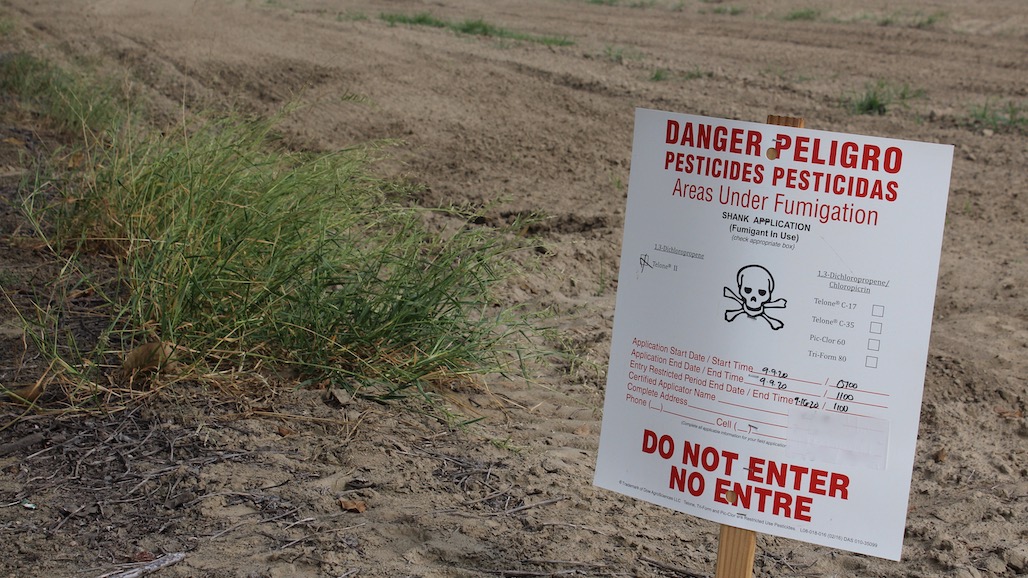
      1. Fumigate, if necessary. The choice of whether to fumigate is centered around the concerns of root lesion nematodes, the replant problem, and to a lesser extent crown gall when replanting walnut orchards. Specifically, if lesion nematode is present in the old orchard, nematicide (e.g. Telone) fumigation, in addition to all the other steps may be necessary to have a successful replant to walnut. Fumigation is expensive, however the carryover problems from the previous orchard can prove far more costly. Cost savings with fumigation can be achieved by opting for strip fumigation specifically mapped for the tree rows, instead of broadcast fumigation. Adequate fumigant distribution can be problematic especially on clay-type soils. To ensure a successful fumigation, it is critical to dry down the soil to 12% moisture for optimal fumigant efficacy.

      2. Replant on an appropriate rootstock. Consider the potential benefits of clonal Paradox rootstocks, particularly against nematodes (VX211) and Phytophthora (RX1). See detailed rootstock traits in the table below.

      Find more about orchard removal and replant steps at: sacvalleyorchards.com/walnuts/diseases/considerations-for- replanting-walnut-orchards. Finally, if you are removing and planting a new walnut orchard, a key document to have on hand when financially planning is the Sacramento Valley UC Walnut Cost Study, which can be found at: coststudies.ucdavis.edu/en/current/commodity/walnuts.

      Article By:

      -Luke Milliron, UCCE Orchards Advisor Butte, Glenn & Tehama Counties

      -Katherine Jarvis-Shean, Orchards Advisor Yolo, Solano & Sacramento Counties

  • Help Needed: Identifying Telone Application Sites this Fall/Late Winter

    Help Needed: Identifying Telone Application Sites this Fall/Late Winter

    The Almond Alliance has been meeting with Department of Pesticide Regulation (DPR) on their initiated 1,3-D pilot programs in three areas of the state:  Shafter, Kern County; Parlier, Fresno County; Delhi, Merced County. The objective of the pilot programs is to evaluate growers and applicators with alternative methods of achieving emission reductions of 1,3-D comparable to tarping. DPR put forth 13 proposed mitigation measures including buffer zones, TIF tarping, soil moisture depth, water seals, amended injection depths and more.

    The Almond Alliance has been engaged in numerous discussions with DPR on this issue and has mobilized our membership to provide feedback and have detailed discussions on why several of the proposed options are not procedurally and economically feasible. We have been clear that our industry needs this fumigant for treatment of nematodes during the replanting of almond trees.

    In August of this year, the Almond Alliance submitted a detailed letter to DPR summarizing the almond industry’s concern about the proposed pilot options and why several should not be considered at all.  To review letter, CLICK HERE.

    DPR has asked that we identify 2 to 3 orchards to evaluate during replanting this fall/spring and will be applying Telone as a soil fumigant. Would you be willing to have your site be a part of an assessment of some fumigant off-gassing reduction measures that DPR would like to assess? If yes, or even if you think your site might not meet the DPR criteria, you should speak with the Almond Alliance and DPR. An ideal orchard is one with no other surrounding orchards, specifically upwind/downwind as DPR needs to have space for the equipment to measure what is emitted into the air.

    While some wanted DPR to move to additional regulation of Telone right away based on the air monitoring data, DPR decided to do some “pilot studies”, partially buying a bit of time. In the process, DPR realized that they needed additional field monitoring data on the off gassing of Telone under different conditions to improve their models, as well to assess the off-gassing if some new mitigation measures were employed. Thus, the hunt for appropriate sites with good grower cooperators.  However, if additional sites with growers willing to cooperate cannot be found, DPR will move forward regulating based on the limited data they already have. That will lead to a significant increase in locations where Telone cannot be used and/or only with the use expensive TIF tarps.

    The proposed emissions mitigation measures include:

    • Getting soil moisture in the top 6-9 inches to 70% water holding capacity as a water seal.
    • Injection the fumigant at 24-28 inches rather than at 18 inches.
    • Mixture of one of the above and strip TIF tarps.

    ​​​​​​​If your site meets the desired conditions – particularly no orchard immediately adjacent to the location and you are willing, we are asking that you discuss the possibility with your soil fumigant applicator company and contact Elaine Trevino at 209-300-7140.

  • How to Design a New Pistachio Orchard

    How to Design a New Pistachio Orchard

    Considering planting a new pistachio orchard? What is the ideal row/tree spacing? How many male pollenizer trees will you need? Should you plant on berms or not? These are just a few of the questions addressed by UC Cooperative Extension Farm Advisor Craig Kallsen in this video.  Watch his brief interview and read more about growing pistachios in Pacific Nut Producer Magazine.  Don’t currently receive it?  Subscribe for FREE today at PacificNutProducer.com.
    Please thank this video’s sponsor Suterra for their industry support.
  • Driving Market Demand for Walnuts During COVID-19

    Driving Market Demand for Walnuts During COVID-19

    California Walnut Board — As we enter the seventh month of lockdowns and shelter-in-place, many people wonder what the impact of this pandemic will be on the walnut industry and consumer spending. Together, as your partners, we have been monitoring and evaluating the COVID-19 media landscape and consumer sentiment and have adapted plans and messaging as necessary across all of our audiences and platforms, ensuring our messaging continues to resonate with our consumers and drive market demand for walnuts.

    During COVID-19, the California Walnut Board (CWB)/California Walnut Commission (CWC) have been working collectively to promote the health benefits of walnuts to U.S. consumers and around the world. One example includes tapping into the pandemic trend of “at-home baking” and showcasing the many benefits of walnuts. Another example includes expanding our retail efforts with an e-commerce campaign as well as a targeted snacking campaign in the U.S., which will drive awareness and encourage purchase. There remains incredible growth opportunity in the U.S. market, particularly in retail, to drive demand. We will continue to find new ways to reach our consumer in the U.S. and around the world.

    Capitalizing on Current Trends

    It is the CWB/CWC’s goal to ultimately make walnuts the desired and preferred choice for consumers and the ingredient of choice for food manufacturers and food service operators – used in cooking, baking and snacking. Having a steady drumbeat of media coverage on walnuts is key to keeping walnuts top of mind with the consumer, which drives them to purchase at retail food outlets.

    Cooking and baking at home is trending and has been for months, as many people worldwide continue to shelter in place. In the U.S., we pivoted our media outreach to focus on baking, especially banana bread and cookie recipes. Total U.S. media coverage was up 85% year-over-year for the March through May timeframe and was viewed by consumers 3.1 billion times, leading them to in-store/online purchase. Interest in baking and cooking drove recipe coverage for April/May to exceed holiday coverage, demonstrating record interest in using walnuts.

    In India, a large percentage of the middle class has hired help to cook their meals, and during COVID, many left the major cities to return to their villages. For some, this was the first time that they have had to prepare meals for themselves, and recipes and instructional videos from celebrities, chefs and prominent influencers have become a lifeline. With our versatility across all parts of Indian cuisine, as well as international recipes, we reached out to the media, promoting walnuts as a healthy staple to have in every home. Each month, these efforts have reached hundreds of millions. For example, during just the month of May, our recipes alone reached over 237 million consumers.

    Health and wellness are top of mind now more than ever with consumers who are looking for foods that will contribute to a healthy lifestyle. Our ongoing messaging around the scientific health research continues to solidify walnuts as a key food to have at home year-round. In Spain, during the height of lockdown, we shared with consumers how to keep a healthy lifestyle with walnut recipes and nutritional and exercise tips through videos, influencers and press activities reaching 26% of the Spanish population.

    These are just a few examples of how we capitalized on timely and media-worthy opportunities to drive media coverage and encourage purchase.

    You may be wondering how media coverage impacts you as a grower/handler. The more visibility we have with press and consumers, the more likely they are to purchase, driving retail and industry demand.

    Snacking Drives Consumption

    To drive meaningful ways for the media to cover California walnuts, the CWB commissioned a consumer survey to assess changes in snacking habits in light of COVID-19. The survey revealed that, not surprisingly, consumers are snacking now during COVID more than ever. They are also nearly split on preference for sweet versus savory snacks. Providing these types of timely and relevant hooks is key when pitching media outlets to grab their attention and make sure they write about walnuts.

    Typically, consumers are more likely to try products recommended by a celebrity or influencer than by the brand. One example of using a key influencer (with celebrity status) is with Ali Fedotowsky-Manno, of The Bachelorette and E! television fame. We partnered with Ali to promote her favorite walnut snack ideas, encourage trial and drive market demand.

    Online Shopping

    As the pandemic continues, consumers’ cooking and shopping habits have changed. Consumers are looking for simple recipes using ingredients they already have in their refrigerator/pantry. As part of their changing habits they are also more open to learning new ways to do things, which include shopping online. To piggyback on this trend of online shopping, the CWB/CWC created shoppable engagements. A shoppable engagement allows a customer to add recipe ingredients directly to their online shopping cart – leading to purchase. In the U.S., sponsored recipes with walnuts as an ingredient increased 38%, while California Walnuts recipes and blog articles promoted through digital media resulted in a 200% increase in clicks versus the same period a year ago, showing that our marketing efforts are leading to purchase.

    In the U.S. we also conducted a retail e-commerce test program that launched in July on Kroger, Amazon, Instacart, Albertsons Safeway and Ahold banners. The online program drove mass awareness and ensured California walnuts stayed top of mind while consumers were actively grocery shopping online. A dedicated California Walnuts product page created an easy way to encourage purchase, and at the end of August, this program had delivered $490,687 in attributed sales with over 67,000 units sold. Instacart has had the strongest performance with 13.8x return on advertising spend; 2-4x is the typical benchmark for the platform.

    In Korea, we ran an online promotion for one week at the end of April with an e-commerce site called “we make price” that is popular for its daily delivery service. We created a landing page with over 40 different sizes and packaging of California walnut products and promoted the landing page through the we-make-price mobile app. Our ad reached 3.6 million consumers, and with this promotion, we saw a 2,340% sales increase year-over-year. With e-commerce promotions, not only do we have the opportunity to drive sales, but we can also create awareness with consumers who are actively in the purchase mode.

    As COVID-19 continues to unfold in the coming months, the CWB/CWC continue working to protect, develop and grow the California walnut industry. There remains an incredible growth opportunity in the U.S. and around the world to drive market demand.

    For the latest news and developments, please visit walnuts.org.