Category: Economics

  • New Gov’t Relations Director at American Pistachio Growers

    New Gov’t Relations Director at American Pistachio Growers

    American Pistachio Growers (APG) is pleased to announce the hiring of Cadee Condit as their new Director of Government Relations. Cadee has two decades of experience in governmental public affairs, an extensive vision in achieving strategic objectives in complex political landscapes, and broad collaboration across a spectrum of business, trade associations and community organizations.

    APG President Richard Matoian noted, “Cadee comes to APG with a wealth of knowledge at both the Federal and State levels. Her expertise in the legislative and regulatory process will serve the needs of APG’s membership well.”  Cadee will coordinate her efforts on behalf of APG’s membership with our existing outstanding State and Federal lobbyists and their staff.

    APG’s Government Policies and Partnership’s Committee Chair, Jamie Bledsoe, who was involved in the interview process added, “Cadee was far and away the right person and best fit for our ongoing, excellent government relations program.” Cadee officially began her duties on February 1.

    “The American Pistachio Growers is a dynamic and exciting organization,” Cadee shared.  “The San Joaquin Valley is the most productive and diverse agricultural region in the world, and I couldn’t be more excited to be working with APG to protect the future of agriculture.”

    Some of the top priorities and issues Cadee will be working on will include: water, tariffs, international market access and additional COVID relief programs.  Seeking out more federal funding to keep the Navel Orangeworm Sterile Insect Technology program going will also be a priority.  Cadee can be reached at ccondit@americanpistachios.org.


  • USDA Announces Results of Walnut Marketing Order Referendum

    USDA Announces Results of Walnut Marketing Order Referendum

    The U.S. Department of Agriculture (USDA) recently announced amendments to the federal marketing order regulating the handling of walnuts grown in California. These amendments authorize the California Walnut Board to provide credit for market promotion expenses paid by handlers against their annual assessments due under the program.

    The amendments were approved in a referendum conducted Nov. 30 through Dec. 11, 2020. They were favored by 80.57% of the growers voting, representing 82.81% of the total volume of walnuts. To gain approval, the amendments needed support of at least two-thirds of the growers voting in the referendum or at least two-thirds of the volume of walnuts grown by those voting in the referendum. A final rule amending the marketing order will be published in the Federal Register.

    USDA’s process for considering this change included an administrative hearing conducted April 20-21, 2020.

    The board locally administers the marketing order that maintains minimum grade and size regulations for walnuts grown in California. The marketing order also authorizes promotion, and research and development projects. More information about the marketing order is available on the Agricultural Marketing Service (AMS) 984 California Walnut webpage, the AMS Marketing Orders and Agreements webpage, or by contacting the Marketing Order and Agreement Division at (202) 720-2491.

    Authorized by the Agricultural Marketing Agreement Act of 1937, marketing orders are industry-driven programs that help producers and handlers achieve marketing success by leveraging their own funds to design and execute programs that they would not be able to do individually. AMS provides oversight to 29 fruit, vegetable, and specialty crop marketing orders and agreements, which helps ensure fiscal accountability and program integrity.

  • How US Pistachio Shipments are Keeping Up After Record Crop

    How US Pistachio Shipments are Keeping Up After Record Crop

    After bringing in a record billion pound pistachio crop amidst a global pandemic and a continued international trade dispute, growers may be concerned about the global market for pistachios and whether shipments are keeping up with the increased supply.  Watch this brief interview with Richard Matoian, President of American Pistachio Growers, as he shares some optimism in that regard, and read more about it in Pacific Nut Producer Magazine.
    Please thank this video’s sponsor Trece for their industry support.
  • California Walnut Board Seeking Grower Candidates

    California Walnut Board Seeking Grower Candidates

    The California Walnut Board (CWB) will be conducting its biennial election of walnut growers and handlers statewide to serve as members and alternates for the next two-year term beginning on September 1, 2021 and ending on August 31, 2023. Walnut growers are eligible to petition the California Walnut Board to have the name of their candidate included on the 2021 nomination ballot.

    The California Walnut Board is the official body that administers the Federal Marketing Order for walnuts. The CWB encourages eligible candidates to consider serving as Board members or alternates. “The diversity of our growing and evolving membership brings valuable perspective to industry.  The CWB in partnership with the United States Department of Agriculture (USDA) welcomes participation of women, minorities and people with disabilities,” said Michelle McNeil Connelly, Executive Director of the California Walnut Board.

    Petitions are open for two members and alternates from each of the two districts in California, divided along the southern boundaries of San Mateo, Alameda, San Joaquin, Calaveras and Alpine counties and one member and alternate at-large to represent the entire state of California.

    It takes 10 or more walnut growers who marketed an aggregate of 500 tons or more of walnuts in the 2019/20 marketing year to petition for a grower’s name to be placed on the nomination ballot. Separate petitions are required for member and alternate positions. Petition forms will be mailed to all walnut growers in late February and are to be filed and received by the California Walnut Board no later than April 1, 2021.

    In mid-April, ballots will be mailed to all growers. Growers will nominate two members and alternates to represent their district as well as one member and alternate for the statewide position. The Secretary of Agriculture will select the nominees receiving the most votes in each district and at-large for representatives on the California Walnut Board.
    Petition forms are available at the California Walnut Board office at 101 Parkshore Drive, Suite 250, Folsom, CA  95630, telephone (916) 932-7070.

  • USDA Seeks Nominees for American  Pecan Promotion Board

    USDA Seeks Nominees for American Pecan Promotion Board

    The U.S. Department of Agriculture (USDA) Agricultural Marketing Service (AMS) is seeking nominations for the American Pecan Promotion Board under the newly established Pecan Promotion, Research, and Information Order. Nominations are due by March 26, 2021.

    The 17-member board will consist of 10 producers and seven importers. The 10 producer members will be allocated between three regions within the United States as follows: three from the Eastern Region; three from the Central Region; and four from the Western Region.  Seven members will be importers. Initial board members’ terms of office of two, three and four years will be assigned by USDA to stagger future terms of office. Each member’s term will begin when USDA approves the nominations.

    To serve on the board, producers and importers must have produced or imported more than 50,000 pounds of inshell pecans (25,000 pounds of shelled pecans) on average for four fiscal periods. Producers who produce pecans in more than one region may seek nomination only in the region in which they produce the majority of their pecans.

    The order specifies that nominations for producer member seats will be submitted to the Secretary of Agriculture by the American Pecan Council, the 17-member federal marketing order governing body. If you are interested in serving as a producer member please submit your nominations to info@americanpecan.com. You may also contact Jeff Smutny at (817) 916-0020.

    USDA is conducting nominations for importer members. Please submit nominations to Patricia Petrella at Patricia.Petrella@usda.gov.

    For more information about the program, visit the AMS American Pecan Promotion Boardwebpage or contact USDA Promotion and Economics Division Deputy Director, Patricia Petrella, at (301) 337-5295 or Patricia.Petrella@usda.gov.

    AMS policy is that the diversity of the board should reflect the diversity of their industries in experience of members, methods of production and distribution, marketing strategies, and other distinguishing factors that will bring different perspectives and ideas to the table. When submitting nominations, the industry must consider the diversity of the population served and the knowledge, skills, and abilities of the members to serve a diverse population.

    Since 1966, Congress has authorized industry-funded research and promotion boards to provide a framework for agricultural industries to pool resources and combine efforts to develop new markets, strengthen existing markets and conduct important research and promotion activities. AMS provides oversight to 22 boards. The oversight ensures fiscal accountability and program integrity and is paid for by industry assessments.

  • Almond Board of CA Announces 2021 Election

    Almond Board of CA Announces 2021 Election

    The Almond Board of California (ABC) Board of Directors election for the 2021-2022 crop year has begun.

    There are two independent grower member positions and two independent grower alternate positions available on the ABC Board of Directors. To be considered for these positions, each candidate must be a grower and must submit a petition signed by at least 15 independent almond growers (verified by ABC). The petition should state the position for which the candidate is being nominated and be filed with Almond Board of California at 1150 9thStreet, Suite 1500, Modesto, California 95354. The filing deadline is April 1, 2021.

    Additionally, two independent handler member positions and two independent handler alternate positions are available. Handlers must declare their candidacy, in writing, to ABC no later than April 1, 2021 to be considered for these positions.  

    A cooperative grower member and alternate nominee will be selected through their cooperative association.                   

    The Almond Board was established in 1950 to administer the Federal Marketing Order for almonds. ABC assures industry compliance with marketing order regulations and is responsible for administering all aspects of the marketing order. It also serves the almond industry in other major areas, including production research, global advertising and public relations, and accumulation, compilation and dissemination of statistical information.  

    The ABC encourages eligible women, minorities, and people with disabilities to consider running for a position on the Board of Directors as it believes this committee should reflect the diversity of the industry it serves. 

    For further information, call Bunnie Ibrahim, senior analyst in Government Affairs, at (209) 343-3228.

  • Celebrating Bee Friendly Farming® Certified Almond Orchards on National Almond Day

    Celebrating Bee Friendly Farming® Certified Almond Orchards on National Almond Day

    Pollinator Partnership (P2) announced today that it has certified over 55,000 acres of almonds in 2020 as pollinator friendly and environmentally sustainable through its Bee Friendly Farming (BFF) Certified program. The Almond Board of California’s Bee+ Scholarship program has been instrumental in leading this movement by offsetting the cost of BFF certification, allowing land managers to apply those funds that would be used on certification fees to pollinator habitat. Coupled with significant Integrated Pest Management, the floral resources now available for local and migratory pollinators will increase biodiversity and add a variety of benefits to almond operations across California.

    Bee Friendly Farming® Certified provides guidelines for farmers, growers, and land managers to promote pollinator health on their lands. BFF sets standards for sustainable farming on important concepts like planting pollinator food sources, providing nesting habitat, and incorporating an Integrated Pest Management (IPM) strategy to help growers prevent pest infestations and find solutions that solve pest problems while providing safe harbor for pollinating species.

    BFF Certified growers report substantial benefits to their operations. In addition to increased pollination services, they see improved soil health and water retention as well as an increase in the presence of natural enemies to combat common pests. BFF’s rigorous and stringent compliance protocol helps ensure that these almond orchards play an essential part in keeping pollinators healthy and the food supply abundant. Look for the BFF logo in your local supermarket on almond products – it is the mark of forward-thinking growers who value quality production and represent exemplary stewardship.

    “Bee Friendly Farming seeks practical solutions for farmers with the goal of seeing real environmental change. It is thrilling to see how the almond industry is turning this superfood into a driver for pollinator and environmental health as well,” stated Laurie Davies Adams, President of Pollinator Partnership, parent organization of Bee Friendly Farming.

    “We congratulate our Bee Friendly Farming Certified growers on National Almond Day for their leadership and vision in building a sustainable future for one of California’s most important crops and one of the world’s favorite foods,” added Miles Dakin, Bee Friendly Farming Coordinator from Pollinator Partnership’s California headquarters.

    Visit www.BeeFriendlyFarming.org for more information on Bee Friendly Farming and to learn how you can participate as a farmer, gardener, or partner.

    ABOUT POLLINATOR PARTNERSHIP (P2) Established in 1997, Pollinator Partnership (P2) is the largest 501(c) 3 non-profit organization dedicated exclusively to the health, protection, and conservation of all pollinating animals. Pollinator Partnership’s actions for pollinators include education, conservation, restoration, policy, and research. P2’s financial support comes through grants, gifts, memberships and donations from any interested party. Its policies are
    science-based, set by its board of directors, and never influenced by any donor. To make a donation in
    support of our mission, or for information, visit www.pollinator.org.

    ABOUT BEE FRIENDLY FARMING (BFF)Bee Friendly Farming is a certification program from Pollinator Partnership that provides guidelines for farmers and growers interested in promoting pollinator health on their lands.
    https://www.pollinator.org/bff.
  • Hive Strength and Bee Health/Safety for Successful Almond Crop

    Hive Strength and Bee Health/Safety for Successful Almond Crop

    For a successful harvest, start the season strong. A large crop at harvest requires good bee activity at bloom in the orchard. The current UC general recommendation for bee hive stocking rates is 1-3 strong hives per acre. A strong hive contains at least 8 frames covered with bees, an actively laying queen, and one to two frames of brood. Where cold, rainy and/or windy conditions limit bee flight (remember the 2019 bloom?), two to three strong hives may be needed to supply enough bees to set a decent crop when narrow windows of good bee weather open up. Less than two hives per acre may be sufficient to set a good crop in extended good bloom weather (2020 bloom). Good bee weather is at least 59oF, no rain and less than 10 mph wind speed. [In general, bees begin to forage when temperatures reach 55oF, winds less than 15 MPH and it’s not raining.]

    Hive strength makes a difference in pollination activity (see graph below). The more frames covered with bees in a hive means more foraging bees and more flowers pollinated. The best possible start to the season begins with strong hives in the orchard at the start of bloom

    Average pollen collected per hive for a range of hive strengths based on frames of bees per hive over a 7 or 10 day period. Data from Sheesley and Bernard, Cal Ag, 1970 

    To ensure strong hives in the orchard as bloom starts, pollination contracts should include 1) language stating hive strength and 2) an inspection clause stating that some fraction of the hives will be opened and frames inspected by a third party at or soon after delivery to confirm if the contracted hive strength was delivered. The hive strength check should happen at or close to delivery because, as almond flowers are an excellent food source for honeybees, a four-frame hive at delivery to the orchard can become stronger as the pollination season progresses. Assessing colony strength at the end or close to the end of pollination season is not an accurate measure of the pollination activity at the start of the season when strong hives are most needed.

    Growers using lower bee stocking rates (1-2 hives/acre) in an effort to save money are the most in need of contract language stating hive strength and a hive inspection. A single 8-frame hive collects 2.5x the pollen as a 4-frame hive.

    Hive health. Where hives are located and bees treated in an orchard can impact hive health and potentially pollination performance. Hive location, availability of clean water and spray programs (materials and timings) all should be considered by growers and communicated with beekeepers. Hive placement plays a role in good bee activity across the orchard. Hives should be placed in locations where early morning sun will warm the hives and in groups in or around the orchard no more than a quarter of a mile apart.

    Bees need water and will go find it (somewhere else) if not available in your orchard. Check-in with your beekeeper to decide on location and responsibility for providing watering stations for bees in your orchard. The water stations should be protected from pesticides by covering or moving the station or changing the water, or changing after spraying. Bees can’t drink while flying and can drown trying to get to water if there is no landing site at the water source. A 5 gallon bucket with clean water and an old towel or piece of burlap draped over the bucket lip and into the water works as a bee watering site. The Almond Board of California’s most recent Honey Bee Best Management Practices is available at almonds.com/sites/default/files/2020-12/BeeBPMs_12212020.pdf

    Bees can be harmed by pesticides. Certain pesticides and practices can be particularly harmful. In particular, all/any insecticides (except B.t. products such as Dipel) should not be used at bloom. Adjuvants, particularly organosilicones, can harm bees directly and/or increase the impact of pesticides on bees and should be left out of bloom sprays. Foliar nutrients may also harm bees. Protect your bee investment; put only fungicide(s) in the spray tank at bloom.

    While both bees and fungicides are needed during bloom in Sacramento Valley almond orchards in most years, the best practices for bee health and crop set require dividing the day between time for bee activity and time for spray activity; a split shift for bees and sprayers (on spray days). This approach lets bees work and then flowers can be protected. Here’s how that works.

    The key to good hive health is keeping sprays off the daily pollen load that forager bees carry back to the hive and fed to the brood. Almond flowers release some pollen every morning as humidity drops after sunrise. This occurs for several days after the flower opens. In an orchard with good bee activity, pollen released that morning is stripped from flowers by early afternoon. Fungicide spraying shouldn’t start until then; when pollen available for the day is gone (collected by bees and flown back to the hive). There are a couple of ways to check if the pollen is gone from flowers. If the pollen gathering bees (the ones with yellow lumps of pollen on their hind legs) are just doing touch-n-go landing on flowers, those flowers don’t have pollen left and it’s OK to spray. Another method is to rub the flower anthers (the spikey structures in the center of the flower) between your thumb and fingers and then check for yellow pollen on your hands. If there is little to no pollen on your fingers, the bees have been there and gone. (Wash your “pollencheck” fingers before rubbing your eyes. Don’t ask me how I know.)

    Franz Niederholzer, UCCE Farm Advisor, Colusa & Sutter/Yuba Counties

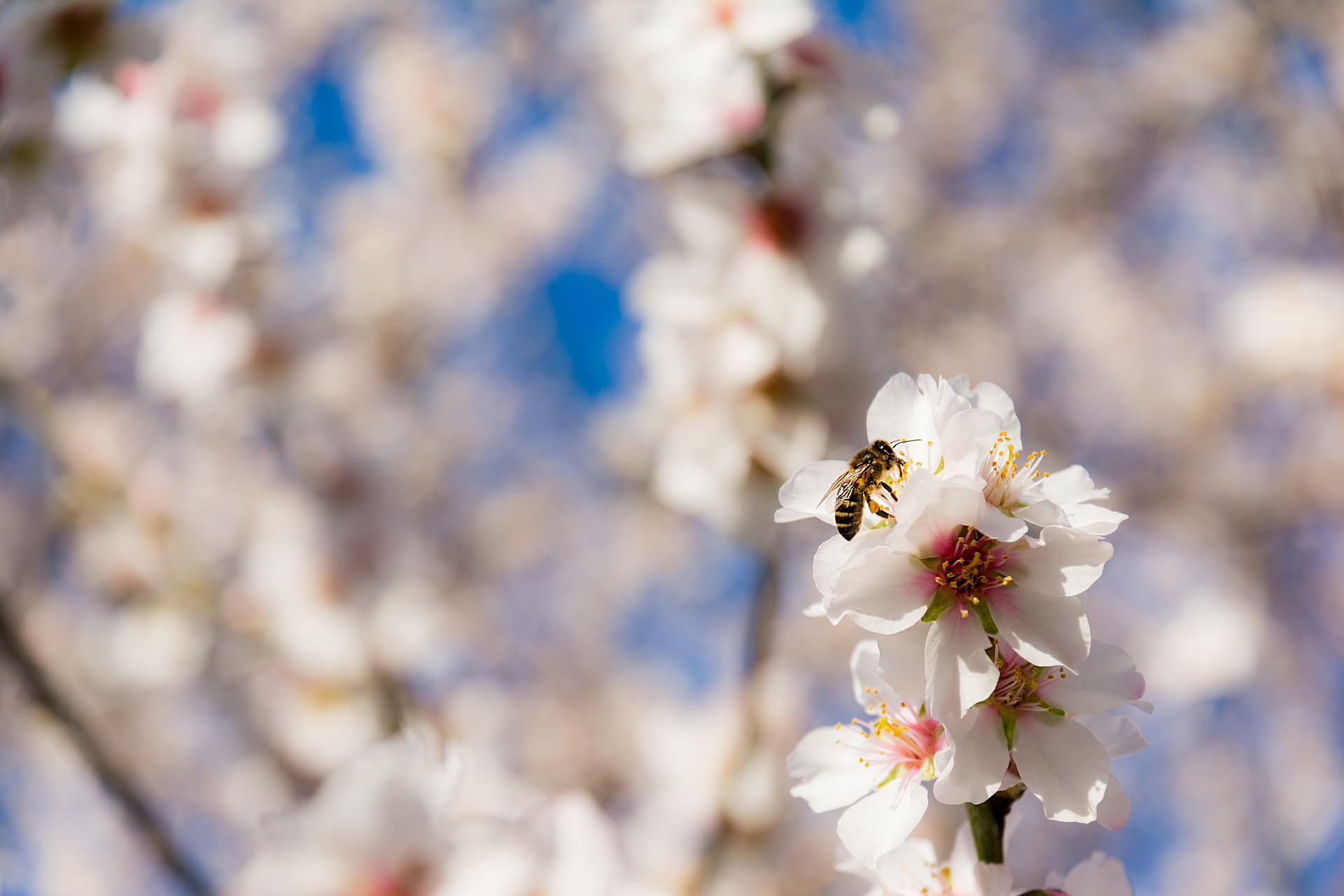
    Almond flowers provide pollen (and nectar) that build strong hives while providing pollination leading to nut set and a good harvest for growers. The continued success of this annual win/win relationship relies on consideration of the needs of both partners. Growers need strong hives at the beginning of bloom and beekeepers need strong hives at the end of bloom.


    Finally, hives should be removed once 90% of the flowers in the last pollinizer variety have shed their pollen. By this time, the colonies have done their job in the orchard and most bees working the flowers will be foraging for nectar, not pollen. The majority of the pollen gathering bees will be foraging off-site and not providing pollination services to the grower who rented the hives. — By Franz Niederholzer, UCCE Farm Advisor, Colusa & Sutter/Yuba Counties

  • How to Prevent Mold in Walnut

    How to Prevent Mold in Walnut

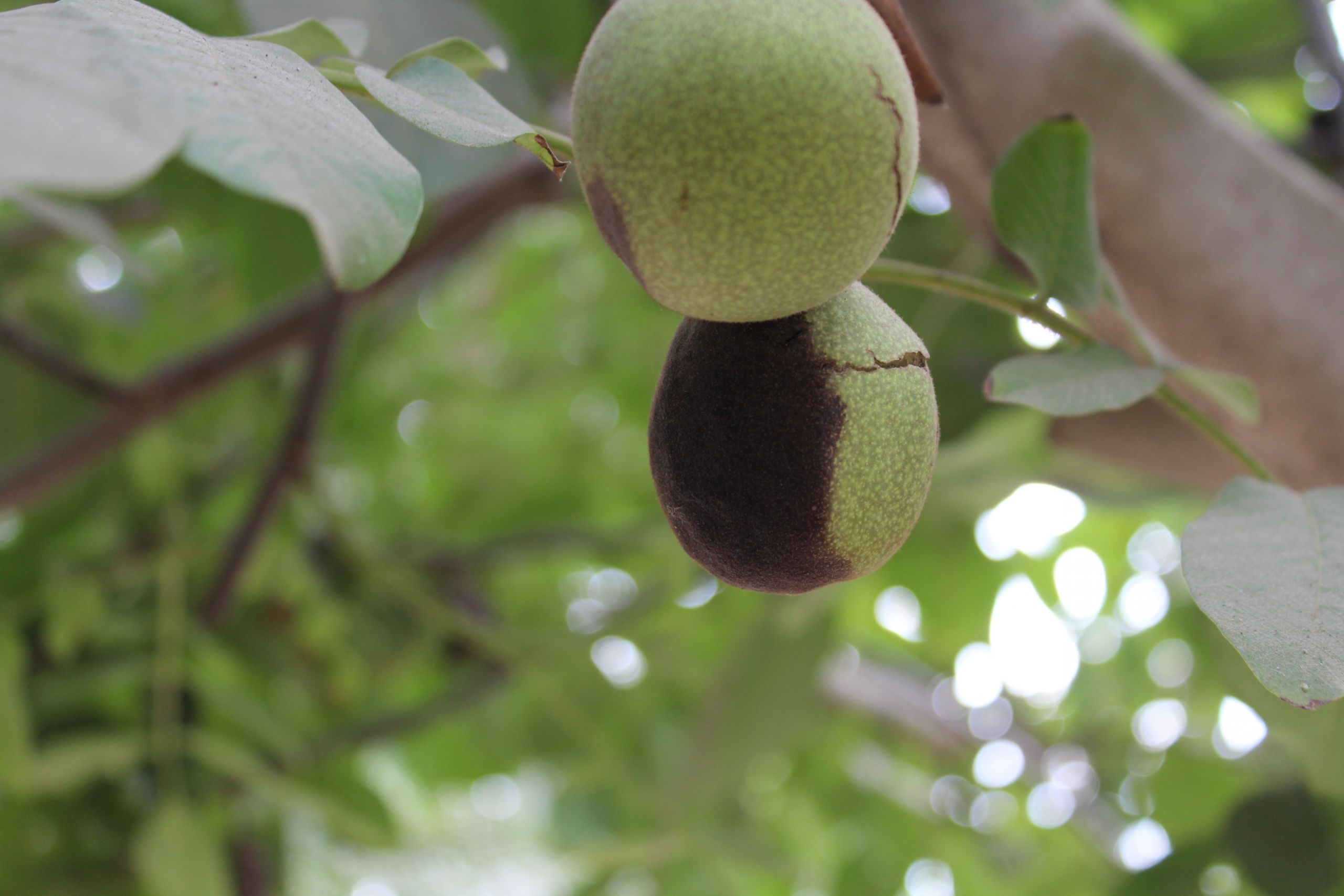
    Did you see moldy walnuts in the orchard last season? Let’s not let that spoil the crop this year.  Watch this brief interview with UC Plant Pathologist Themis Michailides as he briefly provides some key points on mold prevention and read more about it in Pacific Nut Producer Magazine…
    Please thank this video’s sponsor Trece for their industry support.


  • CA Walnut Industry Welcomes Joshua Rahm as Director, Technical & Regulatory Affairs

    CA Walnut Industry Welcomes Joshua Rahm as Director, Technical & Regulatory Affairs

    The California Walnut Board (CWB) and Commission (CWC) are pleased to welcome Joshua (Josh) Rahm as their new Director, Technical & Regulatory Affairs. Joshua comes to walnuts with a strong technical and regulatory background in domestic and international agribusiness. Prior to joining the Board and Commission, Joshua worked for Wonderful Citrus as a Director, Global Sourcing & Procurement. Previously, he worked for PepsiCo, in global procurement operations, agriculture and agronomy project management and food safety. Additionally, he spent several years with Syngenta and DuPont Pioneer (Corteva Agriscience). During his time with global leaders in agribusiness, Joshua worked closely with growers, manufacturing and supply chain, product management and marketing teams, as well as research and development and agronomics.

    With a broad crop protection and crop commodity portfolio experience combined with a family farming background, he looks forward to adding further value to the industry. Joshua holds a Bachelor’s of Science Degree in Agronomy & Agribusiness from South Dakota State University.

    “We are thrilled to welcome Joshua to the CWB/CWC team,” shared Michelle Connelly, Executive Director & CEO of the California Walnut Board and Commission. “With a broad crop protection and crop commodity portfolio across the domestic and international landscape, combined with a family farming background, Josh is an added value that will serve well to our grower and handler community.”

    This is appointment comes at such a critical time in the industry, as the regulatory environment is ever-evolving and keeping California walnut growers abreast of the latest information is key to helping them to stay ahead of the curve. Josh will specifically be working to build and maintain positive, effective, and proactive relationships with state and federal regulatory agencies, provide strategic direction of the CWB/CWC Post-Harvest Research program, projects and initiatives, and provide regulatory stewardship and compliance leadership for the walnut industry, among other items.  Pacific Nut Producer Magazine welcomes Rahm as a new friend and defender of the industry.