Category: Economics

  • High Density Planting of Hazelnuts: Considerations and Precautions

    High Density Planting of Hazelnuts: Considerations and Precautions

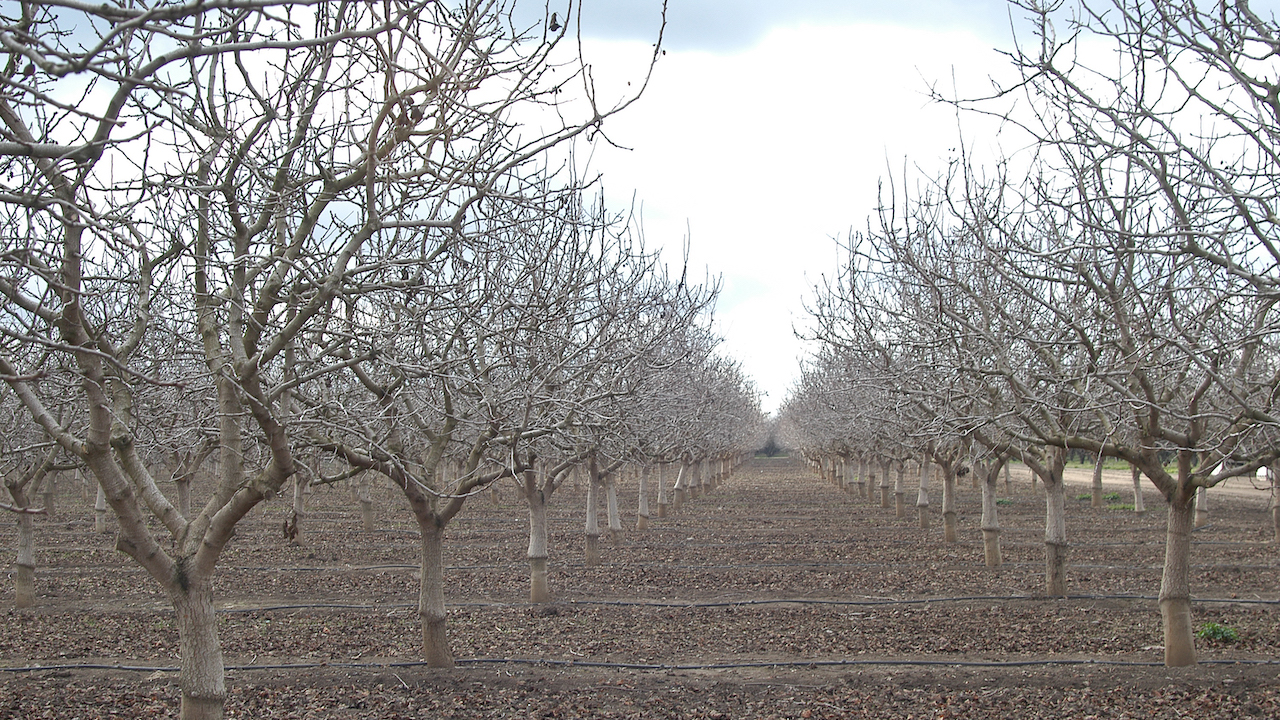
    High or double-density planting is becoming more common in the Pacific Northwest hazelnut industry, but there are some important things to know when considering this practice. Watch this brief interview with hazelnut grower and nurseryman Rich Birkemeier as he briefly provides some considerations and precautions in adopting this practice.  Read more about growing hazelnuts in Pacific Nut Producer Magazine.
    Please thank this video’s sponsor Trece for their industry support.
  • USDA Announces New & Expanded Pandemic Assistance for Farmers

    USDA Announces New & Expanded Pandemic Assistance for Farmers

    Agriculture Secretary Tom Vilsack announced today that USDA is establishing new programs and efforts to bring financial assistance to farmers, ranchers and producers who felt the impact of COVID-19 market disruptions. The new initiative—USDA Pandemic Assistance for Producers—will reach a broader set of producers than in previous COVID-19 aid programs. USDA is dedicating at least $6 billion toward the new programs. The Department will also develop rules for new programs that will put a greater emphasis on outreach to small and socially disadvantaged producers, specialty crop and organic producers, timber harvesters, as well as provide support for the food supply chain and producers of renewable fuel, among others. Existing programs like the Coronavirus Food Assistance Program (CFAP) will fall within the new initiative and, where statutory authority allows, will be refined to better address the needs of producers.

    USDA Pandemic Assistance for Producers was needed, said Vilsack, after a review of previous COVID-19 assistance programs targeting farmers identified a number of gaps and disparities in how assistance was distributed as well as inadequate outreach to underserved producers and smaller and medium operations.

    “The pandemic affected all of agriculture, but many farmers did not benefit from previous rounds of pandemic-related assistance. The Biden-Harris Administration is committed to helping as many producers as possible, as equitably as possible,” said Vilsack. “Our new USDA Pandemic Assistance for Producers initiative will help get financial assistance to a broader set of producers, including to socially disadvantaged communities, small and medium sized producers, and farmers and producers of less traditional crops.”

    USDA will reopen sign-up for CFAP 2 for at least 60 days beginning on April 5, 2021. The USDA Farm Service Agency (FSA) has committed at least $2.5 million to improve outreach for CFAP 2 and will establish partnerships with organizations with strong connections to socially disadvantaged communities to ensure they are informed and aware of the application process.

    The payments announced today (under Part 3, below) will go out under the existing CFAP rules; however, future opportunities for USDA Pandemic Assistance will be reviewed for verified need and during the rulemaking process, USDA will look to make eligibility more consistent with the Farm Bill. Moving forward, USDA Pandemic Assistance for Producers will utilize existing programs, such as the Local Agricultural Marketing Program, Farming Opportunities Training and Outreach, and Specialty Crop Block Grant Program, and others to enhance educational and market opportunities for agricultural producers.

    USDA Pandemic Assistance for Producers – 4 Parts Announced Today

    Part 1: Investing $6 Billion to Expand Help & Assistance to More Producers

    USDA will dedicate at least $6 billion to develop a number of new programs or modify existing proposals using discretionary funding from the Consolidated Appropriations Act and other coronavirus funding that went unspent by the previous administration. Where rulemaking is required, it will commence this spring. These efforts will include assistance for:

    • Dairy farmers through the Dairy Donation Program or other means:
    • Euthanized livestock and poultry;
    • Biofuels;
    • Specialty crops, beginning farmers, local, urban and organic farms;
    • Costs for organic certification or to continue or add conservation activities
    • Other possible expansion and corrections to CFAP that were not part of today’s announcement such as to support dairy or other livestock producers;
    • Timber harvesting and hauling;
    • Personal Protective Equipment (PPE) and other protective measures for food and farm workers and specialty crop and seafood producers, processors and distributors;
    • Improving the resilience of the food supply chain, including assistance to meat and poultry operations to facilitate interstate shipment;
    • Developing infrastructure to support donation and distribution of perishable commodities, including food donation and distribution through farm-to-school, restaurants or other community organizations; and
    • Reducing food waste.

    Part 2: Adding $500 Million of New Funding to Existing Programs

    USDA expects to begin investing approximately $500 million in expedited assistance through several existing programs this spring, with most by April 30. This new assistance includes:

    • $100 million in additional funding for the Specialty Crop Block Grant Program, administered by the Agricultural Marketing Service (AMS), which enhances the competitiveness of fruits, vegetables, tree nuts, dried fruits, horticulture, and nursery crops.
    • $75 million in additional funding for the Farmers Opportunities Training and Outreach program, administered by the National Institute of Food and Agriculture (NIFA) and the Office of Partnerships and Public Engagement, which encourages and assists socially disadvantaged, veteran, and beginning farmers and ranchers in the ownership and operation of farms and ranches.
    • $100 million in additional funding for the Local Agricultural Marketing Program, administered by the AMS and Rural Development, which supports the development, coordination and expansion of direct producer-to-consumer marketing, local and regional food markets and enterprises and value-added agricultural products.
    • $75 million in additional funding for the Gus Schumacher Nutrition Incentive Program, administered by the NIFA, which provides funding opportunities to conduct and evaluate projects providing incentives to increase the purchase of fruits and vegetables by low-income consumers
    • $20 million for the Animal and Plant Health Inspection Service to improve and maintain animal disease prevention and response capacity, including the National Animal Health Laboratory Network.
    • $20 million for the Agricultural Research Service to work collaboratively with Texas A&M on the critical intersection between responsive agriculture, food production, and human nutrition and health.
    • $28 million for NIFA to provide grants to state departments of agriculture to expand or sustain existing farm stress assistance programs.
    • Approximately $80 million in additional payments to domestic users of upland and extra-long staple cotton based on a formula set in the Consolidated Appropriations Act, 2021 that USDA plans to deliver through the Economic Adjustment Assistance for Textile Mills program.

    Part 3: Carrying Out Formula Payments under CFAP 1, CFAP 2, CFAP AA

    The Consolidated Appropriations Act, 2021, enacted December 2020 requires FSA to make certain payments to producers according to a mandated formula. USDA is now expediting these provisions because there is no discretion involved in interpreting such directives, they are self-enacting.

    • An increase in CFAP 1 payment rates for cattle. Cattle producers with approved CFAP 1 applications will automatically receive these payments beginning in April. Information on the additional payment rates for cattle can be found on farmers.gov/cfap. Eligible producers do not need to submit new applications, since payments are based on previously approved CFAP 1 applications. USDA estimates additional payments of more than $1.1 billion to more than 410,000 producers, according to the mandated formula.
    • Additional CFAP assistance of $20 per acre for producers of eligible crops identified as CFAP 2 flat-rate or price-trigger crops beginning in April. This includes alfalfa, corn, cotton, hemp, peanuts, rice, sorghum, soybeans, sugar beets and wheat, among other crops. FSA will automatically issue payments to eligible price trigger and flat-rate crop producers based on the eligible acres included on their CFAP 2 applications. Eligible producers do not need to submit a new CFAP 2 application. For a list of all eligible row-crops, visit farmers.gov/cfap. USDA estimates additional payments of more than $4.5 billion to more than 560,000 producers, according to the mandated formula.
    • USDA will finalize routine decisions and minor formula adjustments on applications and begin processing payments for certain applications filed as part of the CFAP Additional Assistance program in the following categories:
      • Applications filed for pullets and turfgrass sod;
      • A formula correction for row-crop producer applications to allow producers with a non-Actual Production History (APH) insurance policy to use 100% of the 2019 Agriculture Risk Coverage-County Option (ARC-CO) benchmark yield in the calculation;
      • Sales commodity applications revised to include insurance indemnities, Noninsured Crop Disaster Assistance Program payments, and Wildfire and Hurricane Indemnity Program Plus payments, as required by statute; and
      • Additional payments for swine producers and contract growers under CFAP Additional Assistance remain on hold and are likely to require modifications to the regulation as part of the broader evaluation and future assistance; however, FSA will continue to accept applications from interested producers.

    Part 4: Reopening CFAP 2 Sign-Up to Improve Access & Outreach to Underserved Producers

    As noted above, USDA will re-open sign-up for of CFAP 2 for at least 60 days beginning on April 5, 2021.

    • FSA has committed at least $2.5 million to establish partnerships and direct outreach efforts intended to improve outreach for CFAP 2 and will cooperate with grassroots organizations with strong connections to socially disadvantaged communities to ensure they are informed and aware of the application process.

    Please stay tuned for additional information and announcements under the USDA Pandemic Assistance to Producersinitiative, which will help to expand and more equitably distribute financial assistance to producers and farming operations during the COVID-19 national emergency. Please visit www.farmers.gov for more information on the details of today’s announcement.

    USDA touches the lives of all Americans each day in so many positive ways. In the Biden administration, USDA is transforming America’s food system with a greater focus on more resilient local and regional food production, ensuring access to healthy and nutritious food in all communities, building new markets and streams of income for farmers and producers using climate-smart food and forestry practices, making historic investments in infrastructure and clean-energy capabilities in rural America, and committing to equity across the Department by removing systemic barriers and building a workforce more representative of America. To learn more, visit www.usda.gov.
  • Managing Crown Gall in Walnut May Reduce Incidence of Thousand Cankers Disease

    Managing Crown Gall in Walnut May Reduce Incidence of Thousand Cankers Disease

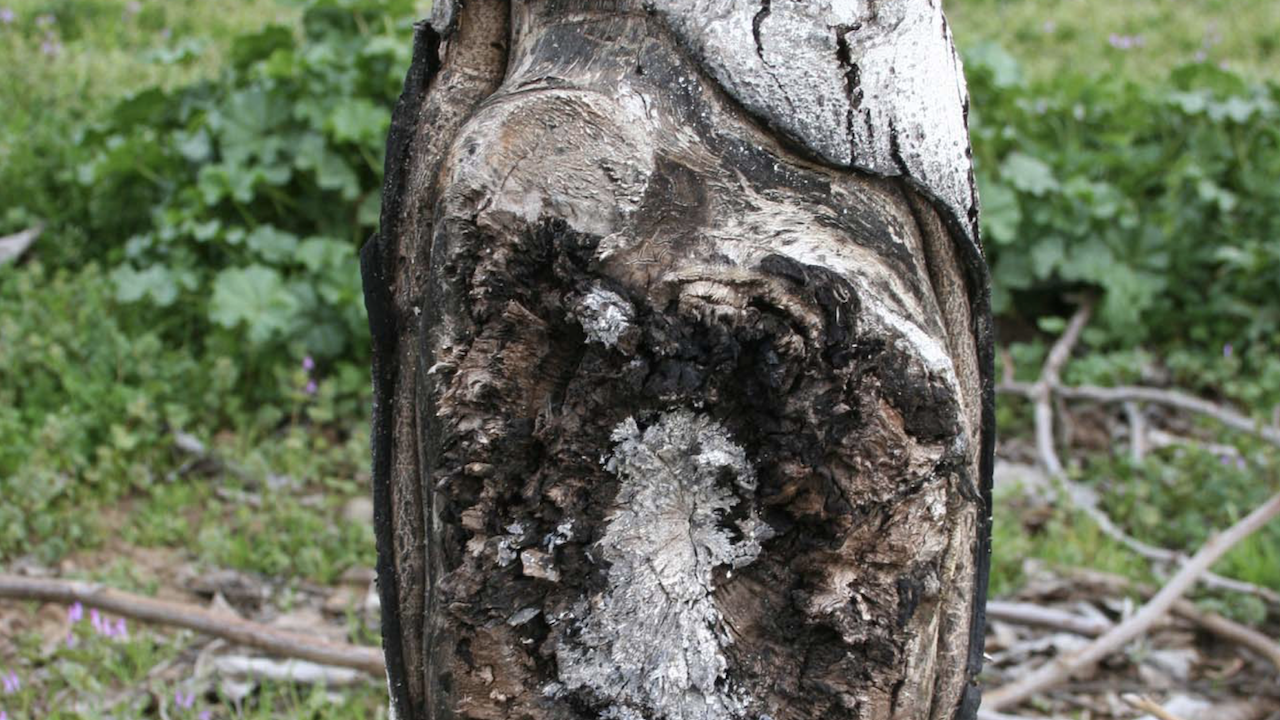
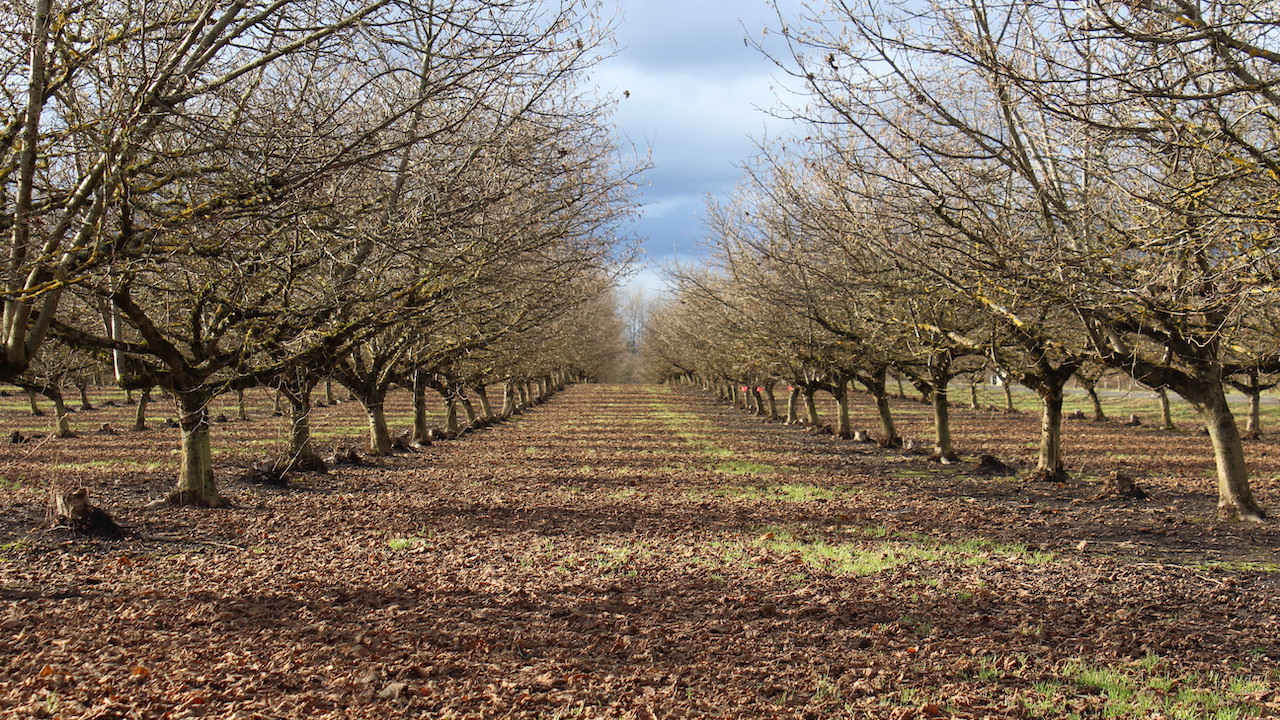
    As the pandemic precluded an in-person UC Tri-County Walnut Day this year, we’d like to share this informative video from Walnut Days past, as Thousand Cankers Disease continues to be an issue for California walnut growers.  If your walnut orchard is suffering from Thousand Cankers Disease, chances are that you may have other pathogens infecting your trees as well.  Watch this brief interview with UCCE Farm Advisor Elizabeth Fichtner and the late UC Davis Entomologist & Chemical Ecologist Steven Seybold as they share some key insights on disease management and prevention. Read more walnut IPM in Pacific Nut Producer Magazine.
    Please thank this video’s sponsor Trece for their industry support.
  • CA Walnuts to Launch Global Marketing Initiative with Coordinated “Power of 3” Events across the Globe

    CA Walnuts to Launch Global Marketing Initiative with Coordinated “Power of 3” Events across the Globe

    The California Walnut Commission recently announced the second annual “Power of 3” global marketing campaign, which builds on the successful 2020 campaign. “Power of 3” will launch on March 3rd with a first-ever global event celebrated in the USA, Germany, India, Japan, South Korea, Spain, Turkey, the United Kingdom and the Middle East to showcase how they like to get their daily handful of walnuts.

    The Power of 3:

    1. Launches March, the 3rd month of the year.
    2. Emphasizes the rich essential plant-based omega-3 ALA content of walnuts (2.5 grams/ounce).
    3. Encourages a handful a day (28-30 grams) as a simple way to improve overall nutrition.

    This campaign is a fun and engaging way to build on one of California walnuts’ core benefits as the only nut that is a rich source of plant-based omega-3 ALA (2.5 grams/ounce). ALA is an essential nutrient needed by the human body that can only be provided through the diet and has been associated with benefits for heart health, brain health and healthy aging. A one ounce serving of walnuts provides plant-based protein (4 grams), fiber (2 grams) and is good source of magnesium. Walnuts are also a good source of vitamin B6 (0.2mg/oz) and an excellent source of copper (0.45mg/oz) and manganese (0.1mg/oz) all of which contribute to the normal functioning of the immune system.

    “There was tremendous excitement around the globe for the Power of 3 campaign last year and we are thrilled to bring it back on an even bigger scale in 2021,” shares Pamela Graviet, Senior Marketing Director, International, for the California Walnut Commission. “This campaign makes it simple for consumers to remember just how easily they can improve their overall diet with a handful of walnuts.”

    The campaign will employ a variety of communications tools, including a video that is a core component of the campaign and will be used across all markets. Recipes, developed by influencers in each country, will be shared across the globe providing inspiration to consumers. Other elements will vary by market including digital and social media, blog posts, sweepstakes, influencer programs, recipe tips and tricks, easy recipes, instore promotions, advertisements and more to generate awareness that a handful of California walnuts is a powerful addition to the diet.

    The Science behind Plant-Based Omega-3 ALA

    All omega-3s provide health benefits, so it’s important to get these good fats from a variety of sources. As the only nut significantly high in omega-3 ALA (2.5g per one ounce/28g), one of the easiest ways to get more ALA into your diet is to start with walnuts.

    ALA and Heart Health

    A study from Advances in Nutrition found that ALA may help improve heart health just as we have seen in studies focused on EPA and DHA1. The literature review provided evidence showing the potentially beneficial role ALA may have in primary and secondary prevention of cardiovascular disease, including stroke and heart attack. According to a clinical trial published in The Journal of Nutrition, eating a diet rich in omega-3 ALA, from foods like walnuts, may help to lower the risk of heart disease through anti-inflammatory effects2. Given the current promising data, there is a need for well-controlled clinical trials to clarify the effects of ALA on risk for cardiovascular disease and to determine the recommended amount of ALA to consume for heart health benefits.

    ALA and Brain Health

    A review study from Progress in Lipid Research assessed the tissue levels of omega-3 DHA formed from ALA3. They reported several important findings. The first was that ALA leads to the synthesis of EPA in some cases, and in particular, may contribute to DHA levels in the brain. Evidence from a variety of studies suggests dietary ALA may be able to fulfill the human requirement for DHA in the body when higher levels of ALA (at least 1.2g) are consumed. Assessing the synthesis of EPA and DHA from ALA in humans is limited to blood level measurements. The takeaway from this study is that through its conversion process, ALA may play a role in maintaining DHA levels in important tissues such as the brain. More research is needed to fully understand the effect of this process in the body.

    ALA and Healthy Aging

    A study published in the Journal of the American College of Cardiology (2020) looked at regular consumption of foods rich in marine or plant-based omega-3s and risk of death among individuals who have suffered a heart attack4. In addition, research from one of the largest clinical trials looking at the benefits of a Mediterranean diet suggested older Spanish individuals (ages 55-80) with a high cardiac risk who supplemented a high fish diet with dietary ALA saw a reduced risk of all-cause mortality. Specifically, study participants who consumed at least 0.7% of their daily calorie intake from ALA had a 28% reduced risk of all-cause mortality.

  • $1.9 Million Hawaii Micro-Grant Program For Small-Scale Ag

    $1.9 Million Hawaii Micro-Grant Program For Small-Scale Ag

    The Hawai`i Department of Agriculture (HDOA) is now accepting applications for the Micro-Grants for Food Security Program, which provides support for small-scale gardening, herding and livestock operations to help produce food in areas that are insecure.

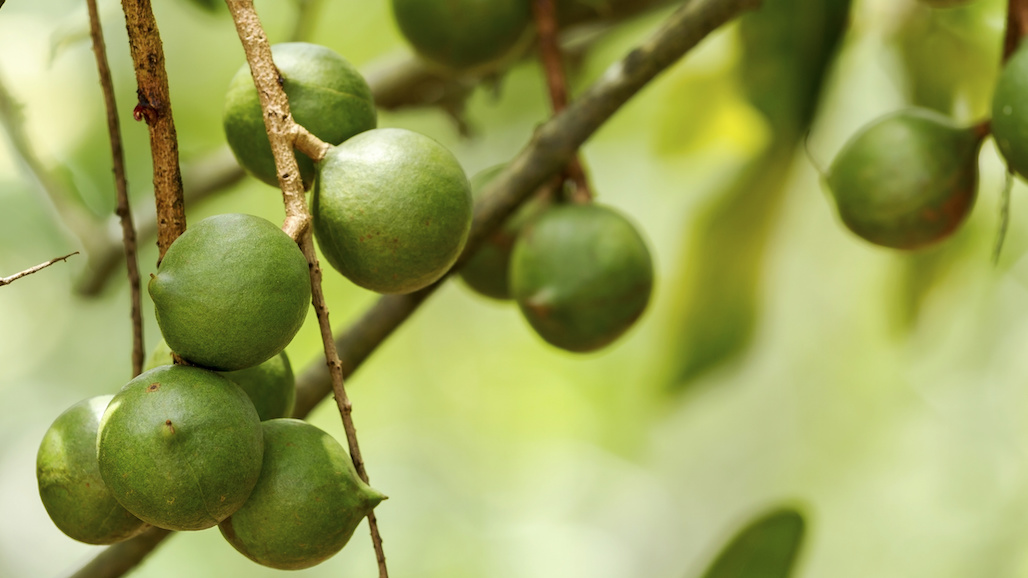
    In August 2020, the U.S. Department of Agriculture (USDA) awarded Hawai`i a total of $1,938,556.80 for this grant program which was established under the 2018 Farm Bill.  Nathan Trump, President of the Hawaii Macadamia Nut Association, commented that many macadamia growers may be able to qualify for this program, with grants of up to $5,000 for individuals and $10,000 for organizations to help purchase equipment and supplies for agricultural projects.

    Information on the Request for Proposals may be found at the Hawai‘i State Procurement website at: https://hands.ehawaii.gov/hands/opportunities/opportunity-details/20023 . The maximum award for an individual is $5,000 for a project of 12 months, $2,500 for a six-month project. Under the grant program rules, religious organization, food banks and food pantries may also apply. Applications/proposals must be emailed to hdoa.addrfp@hawaii.gov and received by noon, April 23, 2021.

    “Through the pandemic, there has been an increase in backyard and small-scale farming which has helped families to economically supplement their basic food needs,” said Gov. David
    Ige. “This grant program presents a unique opportunity to support subsistence agriculture in Hawai`i.”

    “Small-scale farmers and food gardens are often left out of federal funding programs,” said Phyllis Shimabukuro-Geiser, chairperson of the Hawai`i Board of Agriculture. “In these cases, we know that a little support can go a long way to help food security for our families and communities.”

    Examples of the types of activities that may be funded under this grant include:

    Small-Scale Gardening – purchase tools or equipment, soil, seeds, plants, canning equipment, refrigeration, composting equipment, towers, hydroponic and aeroponic farming.

    Small-Scale Herding and Livestock Operations – purchase animals, buy, erect or repair fencing for livestock, activities or supplies associated with setting up or equipping a slaughter and processing facility, including purchasing mobile slaughterhouses.

    -Expanding Access to Food and Knowledge of Food Security – create or expand avenues for the sale of food commodities – includes paying for shipping of purchased items related to growing or raising food for local consumption.

    Additional information, including Frequently Asked Questions, are available at the grant portal at: https://hands.ehawaii.gov/hands/opportunities/opportunity-details/20023

    To assist interested parties with the application requirements, a Zoom webinar has been scheduled for:

    https://zoom.us/j/98372262871?pwd=MklnZWFMTXlsbXhjLzFIYXZLMHVEQT09

    Meeting ID: 983 7226 2871

    Passcode: HDOAMDB

    Information and a recording of the webinar will also be posted at: https://hdoa.hawaii.gov/add/md/

    Eligible proposals will be reviewed by a panel in each county and awards are expected to be announced in May 2021, with first disbursement of funds expected in July 2021.

    Questions regarding the application process may addressed to HDOA’s Market Development Branch at (808) 973-9595 or email: hdoa.addrfp@hawaii.gov

  • CA Prune Board Addresses Non-Tariff Barriers for Nuts & Dried Fruit

    CA Prune Board Addresses Non-Tariff Barriers for Nuts & Dried Fruit

    As the world leader in prune exports, the California Prune Board is preemptively addressing issues that affect the trade of dried fruits and nuts with a three-year project focused on preserving the use of sulfuryl fluoride. With the support of the Foreign Agriculture Services arm of USDA, the California Prune Board (CPB) has secured funding to lead a Technical Assistance for Specialty Crops (TASC) program titled “Preserving sulfuryl fluoride for dried fruit exports to the European Union.”

    “This project hits on all the major non-tariff barriers,” says Gary Obenauf, CPB Production Research Coordinator and lead on the TASC project. “Exports of nuts and dried fruits require reliable measures that ensure consumers around the world are receiving a safe product and this project is paramount in gathering the information needed, enabling California Prunes and other commodities to retain and expand export markets.”

    While the project specifically investigates the voids in residue data associated with the use of sulfuryl fluoride for treating U.S. dried fruit and tree nuts, the research ultimately addresses the stringent criteria to limit emissions for continued and optimal sulfuryl fluoride use in all export markets for a variety of commodities. The study is being conducted by top experts in their fields from Stanford, Yale, USDA’s Agricultural Research Service (ARS), University of California, and DFA of California.

    “Global trade interest in eliminating greenhouse gas emissions is growing, and we’re getting asked about sulfuryl fluoride use in several markets,” stated Spencer Walse, a research chemist for ARS. “This project provides an opportunity to continue sulfuryl fluoride use globally and preserves the quality of products while maintaining food safety and security. If we don’t protect the use of sulfuryl fluoride, the ability to export to various countries, including the EU, diminishes.”

    With new use patterns that need to be reflected globally, efficacy data is generated for market access into new export opportunities. Many countries, including India and Australia, require residue data to accompany the efficacy data to ensure consumer safety.

    “We studied methyl bromide decades ago and found the use patterns didn’t apply, so we had to adapt for sulfuryl fluoride,” added Obenauf. “This project allows us to update regulatory use patterns which have evolved since we started this work.”

    Phytosanitary techniques are vital to the export industry. The benefits of updating regulatory information through this research and gaining data on sulfuryl fluoride scrubbing extend far past the dried fruit and nut industries and will allow continued use of the gas globally.

    California is the world’s largest producer of prunes providing approximately 40 percent of the world’s supply and over 90 percent of the U.S. supply. Today, there are more than 40,000 bearing acres of California Prune orchards concentrated in the Sacramento and San Joaquin Valleys.

  • Bloom Season Specific Sprayer Calibration Saves Money & Time

    Bloom Season Specific Sprayer Calibration Saves Money & Time

    If your sprayer can deliver good spray coverage at hull split, with a little work it can deliver good bloom spray coverage faster and cheaper. How is this possible? With no leaves in the canopy, air movement is less restricted at bloom than hull split. Also, there is less surface area to cover at bloom than hull split so volume needed to cover the susceptible tissue per acre (Gallons per acre, GPA) are less at bloom than hull split.

    How could this work? Assuming your hull split spray set up is for 100 GPA (or more) and 2 miles per hour (MPH), at bloom you can increase ground speed, GPA and reduce power to the sprayer (less tractor engine or sprayer engine RPMs). All this means less time and diesel burned per acre and more acres per tank with no change in pest control. The exact settings should be worked out on the farm, but here are some general guidelines to use before bloom starts. [I am assuming that anyone trying this has a good knowledge of sprayer calibration. For the sake of space in the newsletter, I will not go into all the calibration details. Check the Almond Production Manual for details or call me at 530.218.2359. We do need an airblast sprayer extension publication.]

    -Increase speed and reduce RPMs. Reduce engine RPMs by 15-20% from full speed and shift up a gear or two so that tractor and sprayer speed is somewhere around 3-3.5 MPH. For a PTO sprayer delivering 540 PTO RPMs with engine RPM at 2200, the target is somewhere around 1800 RPM for the tractor engine. This is quickly checked with a GPS unit or a quick pass down a row in the orchard counting trees (2 MPH=176 ft/min, etc.).

    -Check that there will be enough upward air movement at this new speed. Readjust as necessary. Put a length of PVC pipe with a 1.5-2’ long length of flagging tape tied on the end up through the tree so that the top of the pole is roughly 3-4 feet above the top of the tree. Run the sprayer down the row with the fan on, water in the tank but nozzles turned off. Check how much the flagging tape moves as the sprayer goes by the tree? (I use the video function on my phone to capture the flag movement as the sprayer goes by.) If the tape flutters out to 45-90o off the vertical, that is enough sprayer fan air movement to give good coverage. If the flagging kicks straight up, you can speed up more and try it again until the desired 45-90 o movement is reached.

    *If you spray every-other-row (EOR) at bloom, check air movement through the tree (next section) very carefully to make sure spray gets all the way through the tree or don’t use the approach described in this article. Every-other-row spraying delivers acceptable disease control at pink bud, but ineffective on the far side of the tree from the sprayer after 40% bloom. Every row spraying gives the best possible coverage. If you do spray EOR, do it carefully.

    -Figure out the flow rate you’ll use based on your new speed and the product’s recommended GPA. Use your new tractor speed and row spacing to figure out the acres per minute you’ll cover at that speed. Using the measured acres per minute and the gallons per acre you want to spray, calculate the gallons per minute (GPM) needed from the sprayer.If you are using an air shear/electrostatic sprayer (Lectroblast, Windmill, etc.) make sure the system pressure is set to that required by the manufacturer, set the flow rate on each side of the sprayer and you are ready

    -Adjust your nozzles to favor upward movement at this new speed. The general rule is that roughly 70% of the sprayer output (GPM) should come out of the top half of the open nozzles. Because of faster ground speed, larger nozzles will be needed and/or swirl plates changed (45’s used instead of 25’s). Large nozzles (D8-12) are a better choice in my opinion as the obvious nozzle exit hole difference between a D6 and a D8 make it easier to use the right nozzle for the right job if you are using rollover nozzle bodies (Rears or Nelson) or 2-3 nozzles/vane (AirOFan). In the table at the bottom of the page is an example of how a set up might go for a sprayer with two nozzle options per location on the spray boom.

    In the orchard, place the disc/cores on the nozzle bodies that point at the tree. You may need to skip a nozzle body or two along the spray boom to make sure the spray targets the tree. For example, the first (very top) nozzle body on many sprayers basically points straight up and the second body is inches away and slightly angled into the canopy. I usually skip the top one. Lower on the sprayer you may skip a nozzle site, turning off the nozzle body. The goal with fungicide spraying is to aim high; rainwater will recycle the fungicide down through the canopy if it’s placed up high.

    -Make sure your actual flow rate matches your desired flow rate. Ground truth the sprayer output by filling it to overflowing with clean water, running it for a set amount of time (a minute or two minutes) and then refilling it with a hose attached to a flowmeter or buckets marked with gallons/quarts/pints. Calculate gallons per minute sprayed to use in the following equation to check your actual sprayer output and determine how much material to put in the spray tank:

    𝐺𝑎𝑙𝑙𝑜𝑛𝑠 𝑝𝑒𝑟 𝑎𝑐𝑟𝑒 =𝑔𝑎𝑙𝑙𝑜𝑛𝑠 𝑝𝑒𝑟 𝑚𝑖𝑛𝑢𝑡𝑒/𝑎𝑐𝑟𝑒𝑠 𝑝𝑒𝑟 𝑚𝑖𝑛𝑢𝑡𝑒

    -Double-check your coverage in the canopy. A final step in the calibration process is to check coverage with water sensitive paper either placed on poles or attached to the canopy.

    If you are interested in this bloom sprayer set up concept and want some help with the setup, please give me a call 530.218.2359.  By Franz Niederholzer, UCCE Advisor, Colusa and Sutter/Yuba Counties

    Example of nozzle selection and position on a standard airblast sprayer (Rears, AirOFan, Nelson, etc)
  • Satellite Imagery Reveals Startling Difference in Pistachio Bearing Acreage

    Satellite Imagery Reveals Startling Difference in Pistachio Bearing Acreage

    Knowing how much acreage of a crop has been planted is a very important factor in preparing to bring it to market, and the pistachio industry has recently invested in satellite imagery to get a better picture of how many acres of pistachios and bearing-pistachios are actually out there.  The analysis has recently come in and revealed some interesting adjustments in the stats that growers should know about.  Watch this brief interview with Richard Matoian, President of American Pistachio Growers, as he shares some of the results, and read more about it in Pacific Nut Producer Magazine.
    Please thank this video’s sponsor Trece for their industry support.
  • Have Pistachios Chilled Enough for the 2021 Season?

    Have Pistachios Chilled Enough for the 2021 Season?

    As California pistachio growers head into another season with insufficient rainfall, they are hoping at least that winter will have provided sufficient cold weather to meet the chill requirements their trees need in order to put on a solid crop.  Watch this brief interview with Richard Matoian, President of American Pistachio Growers, as he shares where the industry is at to date, and what they can expect at this point for the 2021 crop.  Read more about it in Pacific Nut Producer Magazine.
    Please thank this video’s sponsor Trece for their industry support.
  • California Farmland Trust Announces Matching Support to Protect Fiorini Ranch

    California Farmland Trust Announces Matching Support to Protect Fiorini Ranch

    Thanks to support from the Henry Mayo Newhall Foundation, California Farmland Trust (CFT) is embarking on a conservation fundraising campaign to protect Fiorini Ranch.

    Located in Merced County, the 60-acre almond operation is owned and operated by a multi-generational farming family, the Fiorini’s. Currently operated by a third-generation family member, Randy Fiorini, the fourth and fifth generation family members are now engaged, and becoming more involved, continuing the family’s legacy. The Fiorini family reached out to the California Farmland Trust to ensure the land and their legacy will remain in agriculture, forever.

    The California Farmland Trust has partnered with farmers for over 16 years to protect farmland from being subdivided and developed into homes and shopping centers, while contributing to agriculture’s unique role in climate benefits. “Working with the Fiorini family to ensure this land will provide food, open space and climate benefits is essential,” said Charlotte Mitchell, CFT Executive Director. The Fiorini family has adopted and embraced sustainable farming practices that reduce greenhouse gas emissions, improve the biodiversity of beneficial insects, and further reduce soil erosion.

    In the coming months, CFT will be pursuing a grant that will provide some of the funding needed to purchase the development right and protect the land with an agricultural conservation easement. CFT is required to source matching funds when pursuing grant funding, which is where the Henry Mayo Newhall Foundation (Foundation) support is focused. In late 2020, the Foundation provided CFT with nearly half of the matching funds needed to meet this requirement. Funds from the Foundation will be leveraged by CFT to raise the remaining $85,000.

    “The support from the Henry Mayo Newhall Foundation really made this project achievable,” shared Mitchell. “It’s difficult to obtain the match requirement needed for a grant and the Henry Mayo Newhall Foundation provided funding that will essentially double every other donation we receive for the project, helping us achieve the match requirement.”

    The first step will be launching a campaign that leverages the Foundation’s $80,000 donation to raise the remaining $85,000 needed to obtain the match required. CFT will simultaneously pursue a grant for the remaining seventy-five percent needed to fund the easement. Once secured, the easement will ensure the farmland will never be subdivided and will no longer be subject to development pressures from nearby communities for housing or commercial development.

    “Our family has farmed this land sustainably, and productively for over 100 years. It is threatened by the potential of urban development and our family wishes to preserve the ability to continue to contribute to our nations healthy food needs,” shared Randy Fiorini.

    If you would like to learn more or become involved in this project, please visit: www.cafarmtrust.org/protect-fiorini-ranch.