Category: Economics

  • Whole Orchard Recycling Benefits and Incentives

    Whole Orchard Recycling Benefits and Incentives

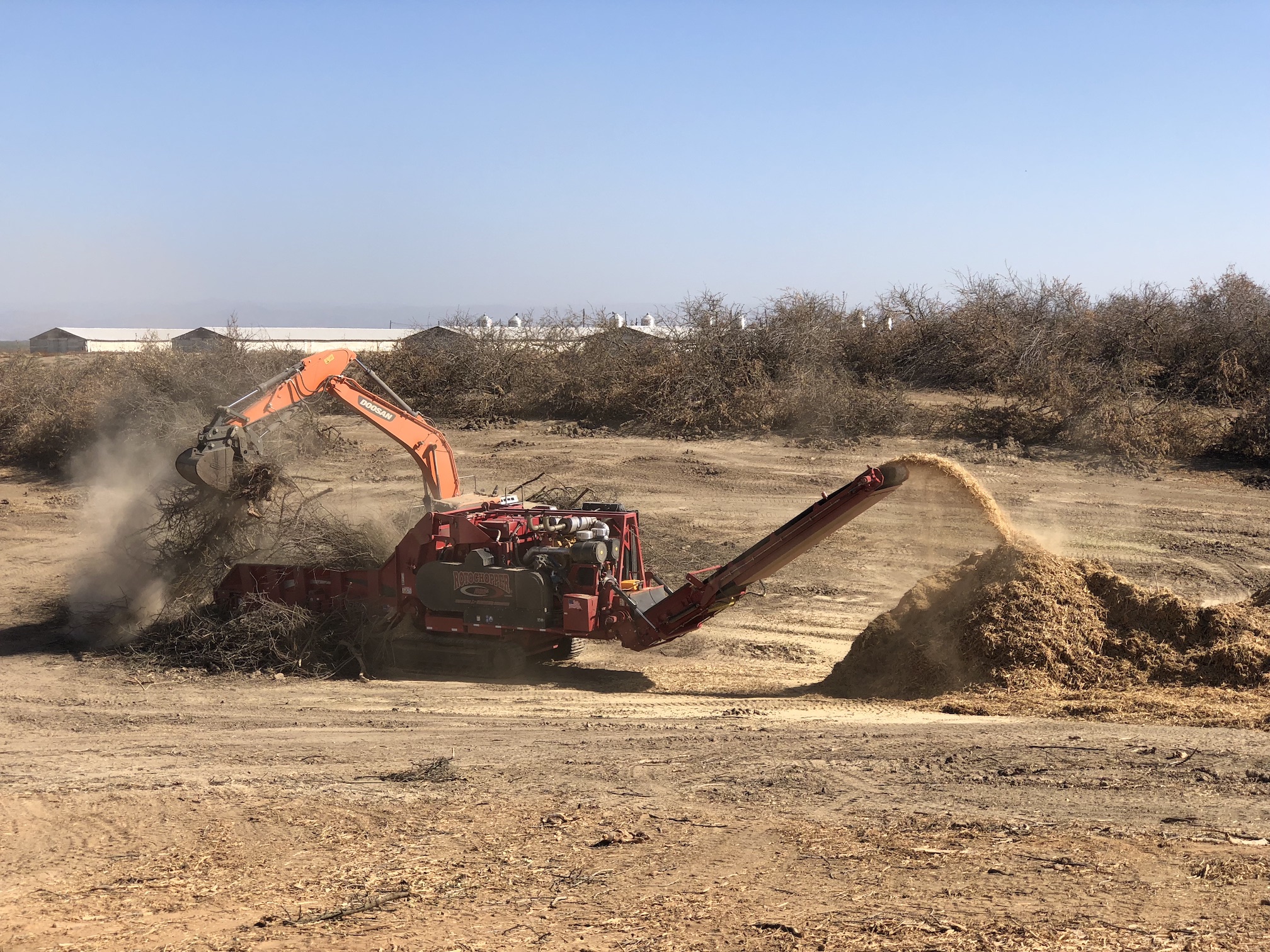
    Almond Board of California — Exciting research shows that conducting Whole Orchard Recycling (WOR) in almonds can increase crop yields in subsequent orchards, provide long-term benefits to soil health (such as improved water retention and nutrient levels) and increase carbon sequestration.

    Conducted by researchers from the University of California (UC) Davis and UC Agricultural and Natural Resources, with funding in part by the Almond Board of California (ABC), this study identifies significant advantages to practicing WOR, the breadth of which are detailed in a report published in the journal PLOS ONE.

    The study spanned over a decade and compared plots within a nine-year-old orchard where WOR took place with plots where trees had been burned and their ashes tilled into the soil. At ninth leaf, researchers also tested the impact of deficit irrigation mid-growing season by reducing the amount of water applied by 20% for some of the trees.

    When the results were placed side-by-side, the plots where WOR took place consistently bested the plots where old trees’ ashes were tilled into the soil. Among other benefits, researchers discovered a:

    • 19% increase in yields at ninth leaf and 15% increase in cumulative yield over five years, 
    •  30% increase in soil water holding capacity (water retention), and 
    • 17% increase in total soil nitrogen levels. 
      • To note: Subsequent research found that additional nitrogen is needed in the first year.

    “Almond growers have long been told that implementing practices to improve soil health will provide all these benefits, but until now there had been very little data demonstrating that a focus on feeding the soil with organic matter can make a meaningful difference in yield and crop quality,” said Gabriele Ludwig, Ph.D., director of Sustainability and Environmental Affairs for the Almond Board.

    Study shows significant yield increases
    Key among the multiple positive outcomes discovered by this WOR study is the potential for increased yields. This finding not only brings good news for a grower’s bottom line, but it also has positive implications on the industry’s effort to produce “more crop per drop,” an effort it is striving to achieve as part of its Almond Orchard 2025 Goal to reduce the amount of water used to grow a pound of almonds by an additional 20%.

    “The increased water holding soil capacity that occurs as a result of Whole Orchard Recycling means that trees are subject to fewer extremes in terms of water availability, as more water is held in the upper layer of the soil where the majority of the tree’s roots are, and where tree uptake takes place,” Ludwig explained.

    Research shows that WOR increased water retention in the soil by up to 30%. While Ludwig cautioned that this data does not lend itself to a recommendation that growers can use less water if they practice WOR, it does indicate that applied water is used more efficiently by trees in orchards where WOR has occurred.

    Amélie Gaudin, Ph.D., an associate professor of agroecology in the UC Davis Department of Plant Sciences and a co-author of the WOR research report, said that by allowing more water to penetrate and the remain in the soil, WOR also reduces potential irrigation-related losses caused by runoff or evapotranspiration.

    “In plots where WOR occurred, water was more likely to reach and be used by the trees, allowing for increased yields as trees experienced less short-term stress and therefore achieved greater water use efficiency,” Ludwig said.


    A hedge against deficit-induced tree stress
    This study also demonstrates that by increasing soil organic matter, WOR helps insulate orchards from negative impacts of deficit irrigation, which involves a delicate balance between stressing one’s trees just enough to prevent too much moisture and potential for disease in the orchards with not overstressing the trees to a point where their yields and overall health are compromised. According to the research, the deficit-irrigated trees in the WOR plots maintained higher stem water potential compared to the deficit-irrigated trees in the burn plots, indicating trees in the WOR plots were less water stressed.

    “We forget that trees can get stressed enough to shut down photosynthesis, whether that’s because they can’t keep up with water demand in the hot afternoons, for a day or two before irrigation, or during harvest,” Ludwig said. “So, when the upper layers of the soil can hold more water, the trees are better buffered from those stresses.” 

    Gaudin said that by improving water holding capacity, WOR also helps orchards retain nitrogen, one of almond trees’ most necessary nutrients. This has positive implications for groundwater quality in areas where nitrogen leeching is a concern. It also may contribute to yield increases as trees in the WOR plots were shown to have greater access to nitrogen for longer periods of time.

    Another supplementary benefit, Ludwig noted, is that over time, as microorganisms in the soil break down the woody biomass, both macro- and micronutrients contained within the wood are released for reuse by the next generation of trees. This allows growers to “recycle” those nutrients so that they may be used throughout the lifetime of their newly planted orchard.

    Next steps for researchers working on this WOR research, Gaudin said, include further study of carbon sequestration and its implication for greenhouse gases, gaining a better understanding of nitrogen retention, optimizing WOR in different soil conditions and the impacts of integrating WOR with other responsible growing practices such as cover crops or anaerobic soil disinfestation.


    Support for those seeking to conduct WOR
    Growers may be eligible to receive incentive funding to conduct WOR if they apply for funds far enough in advance of conducting the practice.

    • WOR is now a practice eligible for co-funding through CDFA’s Healthy Soil Incentives Program. Payments cover about 50% of the cost of WOR, according to CDFA Senior Environmental Scientist Geetika Joshi. The next round of funding for the program begins in July 2021.
    • USDA-NRCS offers Conservation Stewardship Program funds to growers who find alternatives to burning old trees, providing $783.29 per acre for chipping (used for animal bedding or applied as mulch on another piece of ag land) and an additional $242.09 per acre for Whole Orchard Recycling. While applications are accepted year-round, funding for 2021 has already been announced. Still, growers can submit their applications now to apply for 2022 funding.  
    • For those in the San Joaquin Valley, the San Joaquin Valley Air Pollution Control District provides cost-share funds to reduce ag burning through its Alternative to Agricultural Open Burning Incentive Program. Growers participating in this program are eligible to receive $300-$600 per acre, with a maximum of $60,000 per grower. Incentive recipients are typically paid four-to-six weeks after their completion of WOR, and after an invoice has been sent to the district.

    For general questions about incentive programs, industry members may contact ABC’s Jesse Roseman at jroseman@almondboard.com.

    Those interested to learn more about how WOR may be practiced on their operation are encouraged to download or request a physical copy of the Whole Orchard Recycling Guide for California Almond Growers, created in partnership by ABC and UC ANR. Growers are also welcome to watch the 
    Whole Orchard Recycling Overview and Whole Orchard Recycling – A Grower’s How-To videos, which are hosted on YouTube and found on ABC’s website. Finally, UC Davis provides a robust website dedicated to Whole Orchard Recycling, which offers a deep dive into the research findings, grower testimonials, and more. 

    In addition to Gaudin, co-authors of the study include Kelsey Brewer and Emad Jahanzad of UC Davis; Brent Holtz, Sean Hogan and Cameron Zuber of UC Cooperative Extension; and David Doll, a former UC Cooperative Extension farm advisor.
  • Preparing Almond Growers for Another Drought

    Preparing Almond Growers for Another Drought

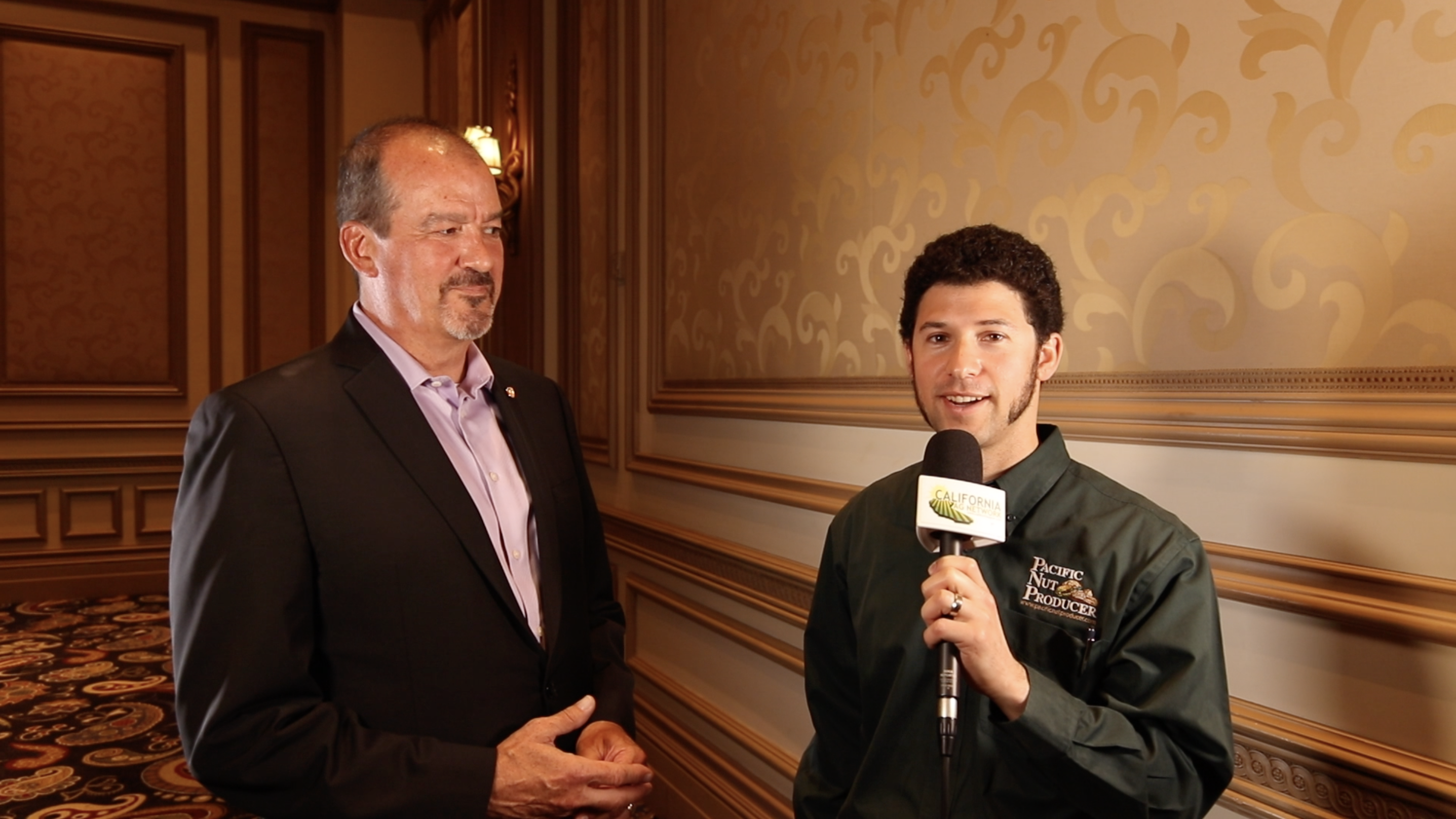
    Drought is a serious concern for farmers this year, and in this interview with Daren Williams from the Almond Board of California, he shares some complimentary resources from the Almond Board to help growers weather another dry year, as well as some other insights. Watch this brief video with Daren and read more about it in Pacific Nut Producer Magazine.
    Please thank this video’s sponsor Trece for their industry support.
  • What the Farm Workforce Modernization Act Means for Farmers

    What the Farm Workforce Modernization Act Means for Farmers

    While it has seemed impossible to get anything done at the national level regarding ag labor reform, Sara Neagu-Reed from the federal policy Division of the California Farm Bureau Federation shares in an interview with California Ag Network that hope is on the horizon with the progress of the Farm Workforce Modernization Act. Watch this brief video with Sara as she explains why, and what ag employers should know and do about it.
    Please thank this video’s sponsor Trece for their industry support.
  • Almond Market Update Highlights New Records & Opportunities

    Almond Market Update Highlights New Records & Opportunities

    Despite international tariffs, port disruptions and a global pandemic, the California almond industry continues to produce and ship record-setting crops.  Watch this brief video with Richard Waycott as he shares this year’s to-date trends on shipments and what can be expected of orchard production this year.  Read more about it in Pacific Nut Producer Magazine.
    Please thank this video’s sponsor Trece for their industry support.
  • US Japan Trade Agreement for Nuts 2021

    US Japan Trade Agreement for Nuts 2021

    The U.S.-Japan Trade Agreement (USJTA) has been in effect for 16 months, however the timing of Japan’s fiscal year meant that the agreement entered “Year 3” of implementation on April 1, 2021. This report is one in a series of product briefs highlighting the tariff benefits for specific commodities and products from Year 3 (2021) to Year 5 (2023) of the agreement. Additional information is available at www.usdajapan.org/usjta/.

    In 2020, the United States exported $411 million of nuts to Japan, making Japan the #7 overseas market for U.S. nuts. Almonds and walnuts are Japan’s top nut imports from the United States, accounting for over half of Japan’s total nut and nut product imports in 2019. The years below correspond to Japan’s fiscal year beginning April 1.

    Market Considerations: Japan relies on imports for most of its nut consumption. Almonds and walnuts are supplied almost exclusively by the United States. Salted mixed nuts remain a popular snack item in the retail sector while unsalted nuts are gaining in popularity due to perceived health benefits. The United States is the second largest supplier of peanuts to Japan, after China. Under this agreement, U.S peanuts gained an immediate tariff advantage over Chinese peanuts.

    Additional Resources: Further information is available at www.usdajapan.org. For additional questions, please contact the USDA Agricultural Trade Office at atotokyo@usda.gov, Tel: 81-3-3224-5115.  By Tomohiro Kurai and Akiko Satake, USDA Foreign Agricultural Service

  • Nut and Dried Fruit Global Online Forum

    Nut and Dried Fruit Global Online Forum

    More than 1,300 attendees from over 85 countries are expected to join the INC 3D Online Conference from May 25-27, 2021. The event will be held using a virtual platform in which participants can customize an avatar to explore all that the conference has to offer.

    The online conference will feature live nut and dried fruit working group webinars led by industry leaders from around the world, giving insights and updates on topics such as production, trade, consumption, consumer trends, and other topics relevant to each product. Moreover, the event will include on-demand sessions which participants can watch on their own time. Apart from each product working group being available on-demand, attendees can also watch Nutfruit & Immunity, which will focus on nutrition and scientific research examining the health benefits of nuts and dried fruits, Nutfruit & Sustainability, which will highlight the sustainable activities of the sector, and Industry Marketing Programs Update, where participants can hear about the latest promotional activities from nut and dried fruit associations around the world. In addition, on-demand videos will feature sponsor videos and the Innovation Award Applicants. All of the live sessions will be recorded and published in Nutflix, so participants can re-watch the conference’s sessions or view them at a time that best suits them. Nutflix will also host all of the on-demand videos, making it the one-stop spot to catch all of the conference’s sessions.

    Brand new to this event is an interactive 3D virtual exhibition area where sponsors who have a booth can expose their brand, product, and services to the entire industry. Furthermore, attendees’ customizable avatars can explore the virtual platform to network by visiting the Nutfruit Cafe Corners where they will be able to foster existing and new business relationships and enjoy all the conference has to offer.

    Additionally, the INC will give out this year’s Innovation Award, which recognizes some of the brightest and most innovative products in the nut and dried fruit industry.

    Visit the INC 3D Online Conference website to register for the event, see the preliminary program, Innovation Award information, and discover who is already attending. 

    About the INC

    The INC is the international umbrella organization for the nut and dried fruit industry. Its members include more than 850 nut and dried fruit sector companies from over 80 countries. INC membership represents over 85% of the world’s commercial “farm gate” value of trade in nuts and dried fruits. The INC’s mission is to stimulate and facilitate sustainable growth in the global nut and dried fruit industry. It is the leading international organization on health, nutrition, statistics, food safety, and international standards and regulations regarding nuts and dried fruits.

  • Pistachios Included in New $159.4 Million USDA Food Assistance Purchases

    Pistachios Included in New $159.4 Million USDA Food Assistance Purchases

    The U.S. Department of Agriculture (USDA) today announced it will purchase up to $159.4 million in domestically produced seafood, fruits, legumes, and nuts for distribution to a variety of domestic food assistance programs, including charitable institutions. These purchases are being made utilizing funds under the authority of Section 32 of the Agricultural Adjustment Act (Pub. L. 74-320), as amended (Section 32). This is one of many actions USDA is taking to address the disruptions in the food system supply chain and worsened food insecurity resulting from the COVID-19 pandemic.

    “The impacts of COVID-19 reverberated from our farms to our oceans,” said Agriculture Secretary Tom Vilsack. “U.S. fisheries and the American seafood industry were dealt a heavy blow. Today, USDA is pleased to make the largest single seafood purchase in the Department’s history. These healthy, nutritious food purchases will benefit food banks and non-profits helping those struggling with food hardship as the Biden Administration works to get the economy back on track for American families.”

    Selected commodities include: Alaska pollock, apricots (canned, dried, and frozen), chickpeas, dry peas, Gulf of Mexico and South Atlantic wild-caught shrimp, lentils, navy beans, Pacific pink shrimp, Pacific rockfish fillets, Pacific whiting fillets, pistachios, prepared peaches, and sockeye (red) salmon. The inventories of these commodities are in high oversupply due to a decrease in demand because of the COVID-19 pandemic and disruption in the supply chain, as restaurants and other outlets closed during the pandemic. This is the largest purchase of U.S. raised seafood by the USDA to date.

    Within a few days of approval, USDA’s Food and Nutrition Service will offer these commodities to their networks. Orders should be received during the first week of June with solicitations being issued mid-June and awards occurring near the end of the month. Deliveries should start to occur by mid-August.

    Solicitations will be available electronically through the Web-Based Supply Chain Management (WBSCM) system and on the Agricultural Marketing Service’s website at www.ams.usda.gov/selling-food. To be eligible to submit offers, potential contractors must meet the AMS vendor qualification requirements and be domestic operations.

    The purchase amounts are as follows:

    USDA also announced today a policy change that makes food fish and other aquatic species eligible for the Emergency Assistance for Livestock, Honey Bees and Farm-raised Fish Program (ELAP) under the USDA Farm Service Agency (FSA). Previously, only farm-raised game and bait fish were eligible for death loss ELAP benefits. Beginning June 1, eligible aquaculture producers can request ELAP assistance for 2021 losses. This policy change is for the 2021 and subsequent program years. You can learn more here.

  • Larger CA Almond Crop Forecasted This Year

    Larger CA Almond Crop Forecasted This Year

    Almond Board of California — The U.S. Department of Agriculture (USDA) National Agricultural Statistics Service (NASS) is predicting an increase in the California almond crop. The USDA-NASS 2021 California Almond Subjective Forecast estimates California almond orchards will produce 3.2 billion pounds of nuts this year, up 3 percent from last year’s 3.12 billion-pound crop. Forecasted yield is expected to reach 2,410 pounds per acre, 3 percent lower than the 2020 yield of 2,490 per acre.

    This forecast comes about three weeks after USDA-NASS released the 2020 California Almond Acreage Report, which estimated total almond acreage for 2020 at 1.6 million acres, up 5.3 percent from 2019. Bearing acres – orchards mature enough to produce a crop – were reported at 1.25 million acres, up 5.9 percent from the previous year. USDA-NASS also estimated preliminary bearing acreage for 2021 at 1.33 million acres.

    “What we’re seeing with this report is a forecasted continuance of high yields,” said Richard Waycott, president and CEO of the Almond Board of California (ABC). “Water availability will be the principal concern on growers’ minds as they continue to grow this crop. We look forward to the outcome of the Objective Report to see if it corroborates this estimate.” 

    The first of two production reports for the upcoming crop year, the Subjective Forecast is based on opinions from a phone survey of randomly selected almond growers located throughout the state. It was conducted from April 19 to May 6. USDA-NASS asks individual growers their total almond yield per acre from last year and their expected yield for the current year based on field observations. 

    The sample of growers interviewed is grouped by size of operation, and different people are surveyed each year to ensure grower representation throughout the Central Valley. USDA-NASS combines all the yield estimates and extrapolates the numbers reported in the Subjective Forecast.

    In July, USDA-NASS will release its second production estimate, the 2021 California Almond Objective Report. While the Subjective Forecast provides an initial 2021/2022 crop estimate, the Objective Report will provide an estimate based on actual almond counts using a more statistically rigorous methodology to determine yield.

    The 2021 California Almond Objective Report will be released on Monday, July 12, at 9:00 a.m. PT. USDA-NASS produces the Objective Report, the Subjective Forecast and the Acreage Report to provide the California almond industry with the data needed to make informed business decisions, and thanks all farm operators, owners and management entities for their time in providing the information necessary to create these reports.

  • Japan Lifts Aflatoxin Inspection Order on Walnuts

    Japan Lifts Aflatoxin Inspection Order on Walnuts

    On April 1, 2021, Japan’s Ministry of Health, Labour and Welfare (MHLW) suspended a mandatory aflatoxin inspection regime imposed on walnuts from the United States and other exporting countries. The suspension marks the first time Japan lifted a 100 percent inspection requirement for aflatoxin- vulnerable imports since 2004 when the current monitoring plan was implemented. In 2020, the United States exported $114 million of walnuts to Japan.

    General

    Japan’s Food Sanitation Act designates the Ministry of Health, Labour and Welfare (MHLW) as the country’s competent authority for food safety. In that role, MHLW develops and enforces aflatoxin regulations for domestic and imported food products. Since 1996, MHLW has mandated a 100 percent hold-and-test approach (called “inspection order”) for imported tree nuts, including walnuts, due to aflatoxin concerns. MHLW justified the inspection order as a response to violations of Japan’s aflatoxin action limit (i.e., 10 parts per billion for walnuts).

    According to Japan’s “Imported Foods Monitoring Plan”, MHLW may lift an aflatoxin-related inspection order for an exporting country, whether under a country-specific or global inspection order, if one of the following conditions is met:

    1. No aflatoxin violations for two years OR for one year or longer with 300 compliant shipments

    2. Bilateral discussion after exporting country

      -Completes rootcause investigation

      -Implements preventive measures based on investigation

      -Confirms effective implementation of the preventive measures through bilateral discussions, onsite inspections, and/or a series of nonviolative inspection results.

      • On April 1, 2021, MHLW lifted the global aflatoxin inspection order on walnuts because all exporting countries satisfied the first condition described above. Therefore, MHLW’s inspection schedule for U.S. walnut exports to Japan now follows Schedule 1 of the Imported Foods Monitoring Plan.

        According to MHLW, a single aflatoxin violation in walnut imports from the United States would lead to the immediate resumption of the inspection order on U.S. walnut exports. On the other hand, aflatoxin violations in shipments from other exporting countries would not impact inspection frequency for U.S. walnuts. MHLW indicated that the suspension of the aflatoxin inspection order on walnuts represents the first time since the implementation of the monitoring plan in 2004 that MHLW lifted a global inspection order imposed on imports due to aflatoxin concerns.  By Tomohiro Kurai, USDA Foreign Agricultural Service

  • Blue Diamond Growers Announces New Director of Sustainability

    Blue Diamond Growers Announces New Director of Sustainability

    Blue Diamond Growers is pleased to announce Dr. Daniel Sonke as its new Director of Sustainability. In this role, Dr. Sonke will lead global sustainability efforts across all segments of the Blue Diamond Growers business. He will be responsible for integrating company performance with the 111-year-old almond cooperative’s sustainability pillars of economic viability, environmental stewardship, and community well-being.

    With deep roots in the California almond industry, Dr. Sonke grew up on his family’s almond farm near Ripon. He holds a cutting-edge, advanced professional degree – Doctorate of Plant Medicine – from the University of Florida. Dr. Sonke most recently led corporate sustainable agriculture programs for Campbell Soup Company as Director of Sustainable Agriculture. Additionally, throughout his career, he has led numerous efforts to advance science-based sustainability efforts and certification programs for multiple agricultural commodities, including almonds, hazelnuts, pears, mushrooms, peaches, plums, nectarines, citrus, potatoes, wine grapes, and tomatoes. Dr. Sonke currently serves as a member of the Almond Board of California’s Sustainability Working Group.

    “We are thrilled to have someone of Dr. Sonke’s caliber join the Blue Diamond Growers team to lead the cooperative’s sustainability efforts,” said Brian Barczak, Senior Vice President, Global Supply for Blue Diamond Growers. “With his world-class expertise, deep scientific background, and hands-on experience with a variety of industries, he will be pivotal in further advancing our critical sustainability mission.”

    Blue Diamond Growers has a long-time commitment to sustainability and was recently recognized as Green Business Certified by the Modesto Chamber of Commerce’s California Green Business Network, Stanislaus County Program. The Green Business Certified recognition goes to companies that achieve a verified set of standards, including reducing water use, conserving energy, preventing pollution, increasing recycling, avoiding waste, encouraging alternative transportation, and partnering with other local vendors.

    “Our latest sustainability recognition as Green Business Certified is an important milestone along Blue Diamond Growers sustainability journey,” said Barczak. “It is a path of continual progress that will no doubt be enhanced with Dr. Sonke’s leadership and skill.”

    About Blue Diamond

    Blue Diamond Growers, a grower-owned cooperative representing over 3,000 of California’s almond growers, is the world’s leading almond marketer and processor. Established in 1910, it created the California almond industry and opened world markets for almonds. Blue Diamond is dedicated to delivering the benefits of almonds around the world and does so by providing high-quality almonds, almond ingredients and branded products. Headquartered in Sacramento, the company employs more than 1,800 people throughout its processing plants, receiving stations and gift shops. To learn more about Blue Diamond Growers, visit www.bluediamond.com and follow the company on FacebookInstagramLinkedIn and Twitter.