Category: Economics

  • EPA Fines SJV Almond Grower for Clean Water Act Violations, Orders Restoration of Wetlands

    EPA Fines SJV Almond Grower for Clean Water Act Violations, Orders Restoration of Wetlands

    Today, the U.S. Environmental Protection Agency (EPA) announced a settlement with Edward Lynn Brown, owner of an almond orchard near Merced, California, for violations of the federal Clean Water Act that impacted more than two acres of rare vernal pool wetlands . The settlement requires Brown to pay $212,000 in civil penalties and restore and preserve 15 acres of wetland habitat.

    On March 14, 2019, EPA inspected the site. Inspectors determined that earth-moving activities by Brown had discharged fill material into waters that flow into the San Joaquin River. This work had been undertaken without obtaining a Clean Water Act Section 404 permit from the U.S. Army Corps of Engineers.

    “Grading and filling wetlands of the San Joaquin River Valley without proper permitting impacts water resources and endangers California’s unique native plants and animals,” said EPA Pacific Southwest Regional Administrator Martha Guzman. “In a time of drought and climate change, it is essential to protect these rare and vital water resources and habitats from destruction.”

    Brown’s earth-moving activities from 2016 to 2020 involved building a retention basin and access roads and planting a new almond orchard. The impacts from these activities resulted in the degradation of over two acres of vernal pool wetlands adjacent to Parkinson Creek, a tributary of the San Joaquin River that bisects the ranch. This work violated provisions of a previous 2014 EPA Order, which had required Brown to notify the U.S. Army Corps of Engineers of any proposed activity that may impact local water systems.

    A pond on the almond orchard that provides critical wetland habitat impacted by soil and sediment disturbances. (EPA photo)

    To mitigate these negative environmental impacts, under this settlement Brown has agreed to develop a plan for removing 1.9 acres of fill material, restoring, and enhancing 2.44 acres, and preserving 12.66 acres within an 81.39-acre area within the orchard.

    For more information on enforcement of Clean Water Act Section 309 visit: https://www.epa.gov/cwa-404/clean-water-act-section-309-federal-enforcement-authority.

    To view information on the 2014 Clean Water Act enforcement action, visit: https://archive.epa.gov/epapages/newsroom_archive/newsreleases/f7437d2c778475d685257d94006344bc.html.

    To view the 2014 public notice, visit: https://19january2017snapshot.epa.gov/www3/region9/enforcement/pubnotices/pubnotice-merced-ranch.html.

    To view the proposed settlement, visit: https://www.epa.gov/publicnotices/edward-lynn-brown-merced-ca-proposed-settlement-cwa-section-309g-class-ii

    To view the Consent Agreement and Final Order, visit: https://www.epa.gov/ca/cwa-09-2022-0007-edward-lynn-brown-merced-ca-proposed-settlement-cwa-section-309g-class-ii

    Learn more about EPA’s Pacific Southwest Region. Connect with us on Facebook and on Twitter.
  • CA Walnut Board Leverages Plant-Based Eating & Taco Night Trends to Drive Consumer Demand for Walnuts

    CA Walnut Board Leverages Plant-Based Eating & Taco Night Trends to Drive Consumer Demand for Walnuts

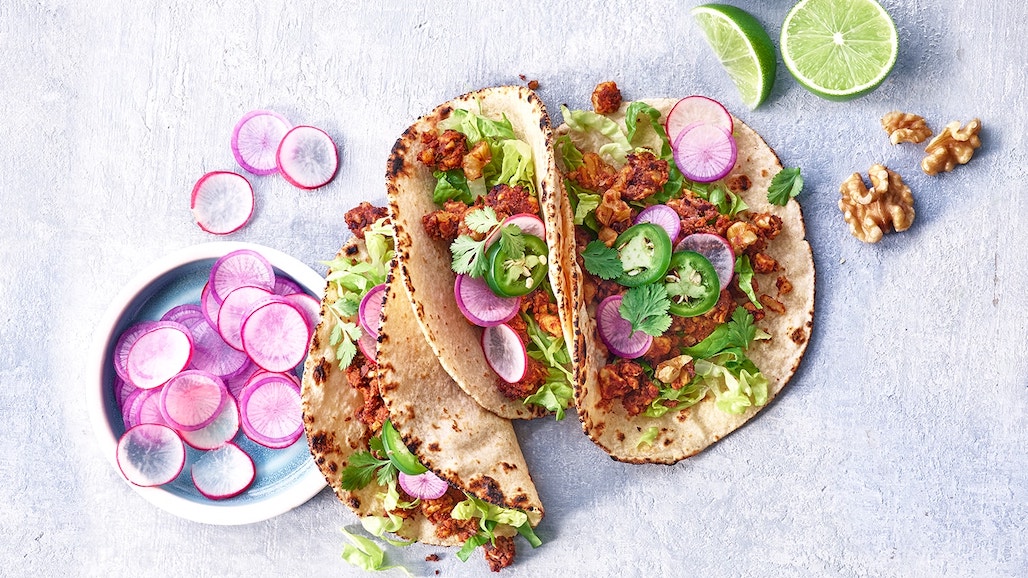
    As consumers seek more plant-based options and creative recipes for at-home cooking, the California Walnut Board encouraged consumption of walnuts by linking to the ever-popular taco. The recent campaign capitalized on a timely and trending food holiday: National Taco Day (October 4). Americans are eating 4.5 billion tacos annually, providing an opportunity to build demand for walnuts. Two appealing walnut meat taco recipes were placed in consumer magazines and newspapers, with an estimated 177 million views.
     
    Adding walnuts to a taco recipe is a simple and enticing way to help build demand, especially as many Americans (about a third of the population) are also following a flexitarian diet – primarily vegetarian, with the occasional incorporation of meat and fish. October 4 marked National Taco Day, providing the timely moment to appeal to consumers searching for new and exciting ways to celebrate the holiday at home.
     
    “To inspire and encourage consumers to do more with walnuts, the Board utilized the timeliness of National Taco Day to bring attention to the versatility of walnuts as a nutritious, plant-forward option for consumers to celebrate,” said Jennifer Olmstead, senior director of U.S. marketing and communications.
     
    In order to leverage the holiday to help drive consumption, the Board shared a recipe press release with a simple prompt and two walnut-meat taco recipes. The release was sent to hundreds of online and print media publications, inviting readers across the country to spice up their favorite taco dishes by making walnuts the star ingredient. Walnut-Stuffed Korean Street Tacos and Walnut “Chorizo” Tacos were highlighted as two tasty and nutritious meal options, loaded with all the goodness of California walnuts.
     
    In less than a month, the recipe press release earned media coverage with outlets like Yahoo!, International Business Times, the Boston Herald and Minneapolis’ Star Tribune. In California, recipes touted as a plant-forward way to rethink family taco night were placed in the Huntington Beach News, Napa Valley Register, Sonoma West Times and News, Malibu Times, The San Fernando Sun, Santa Maria Times and more.
     
    In total, in the first month of publication, more than 892 outlets shared these walnut-centric recipes and mouthwatering photos to nearly 180 million people.
     
    In addition to the earned media and in an effort to build an increased awareness of walnuts as a taco meat alternative, CA Walnuts also shared a blog post titled “3 Must-Try Plant-Forward Taco Recipes” that was shared on Facebook, Twitter, Instagram and IG Stories utilizing the hashtag #NationalTacoDay. The post reached 82,800 people, generating 26,400 video views.
  • Senate Version of Ocean Shipping Reform Act Introduced

    Senate Version of Ocean Shipping Reform Act Introduced

    The Almond Alliance is happy to see the Senate take the next steps in addressing the supply chain crisis, and thank the bill sponsors for their leadership. We continue to work with partners and members of the Senate as this bill moves to address unreasonable ocean carrier practices that are undermining U.S. export competitiveness, and having a direct effect on our farmers, food supply, and communities.

    Sens. Amy Klobuchar, D-Minn., and John Thune, R-S.D., on Thursday introduced the Ocean Shipping Reform Act (S. 3580), the Senate response to the House version (H.R. 4996) passed by a wide bipartisan vote (364–60) in December.

    Farm groups and other industries have complained bitterly that ships coming to the West Coast from Asia are going back to China and other countries empty to pick up more consumer goods to be sold in the United States, while not picking up the U.S. products that they would normally take to Asian consumers.

    A trade association executive said the Senate bill “in some instances, is stronger than the House bill; however, aspects of it remain weaker as well. If passed, it will improve the overall supply chain situation in the future and help to build greater resilience against bottlenecks.”

    Both Klobuchar and Thune are members of the Senate Commerce Committee.

    In a news release, Klobuchar said the Senate bill “would address these supply chain challenges by making it harder for ocean carriers to arbitrarily turn away goods at ports that are ready to be shipped abroad. It would also give the Federal Maritime Commission, the federal agency responsible for the regulation of oceanborne transportation, greater authority to regulate harmful practices by carriers.”

    In her summary of the bill, Klobuchar said it would:

    • Prohibit ocean carriers from unreasonably declining opportunities for U.S. exports, as determined by the FMC in a new required rulemaking;
    • Promote transparency by requiring ocean common carriers to report to the FMC each calendar quarter on total import/export tonnage and twenty-foot equivalent units (loaded/empty) per vessel that makes port in the United States;
    • Authorize the FMC to self-initiate investigations of ocean common carrier’s business practices and apply enforcement measures, as appropriate; and
    • Establish new authority for the FMC to register shipping exchanges to improve the negotiation of service contracts.
    • Allow for third parties to participate in legal cases brought by the FMC against ocean carriers for anticompetitive harm; and
    • Let successful third parties in those legal cases receive money damages, with additional financial penalties designed to deter anticompetitive conduct.

    In his summary, Thune said the bill would:


    • Require ocean carriers to certify that late fees — known in maritime parlance as “detention and demurrage” charges — comply with federal regulations or face penalties;
    • Shift burden of proof regarding the reasonableness of “detention or demurrage” charges from the invoiced party to the ocean carrier;
    • Prohibit ocean carriers from unreasonably declining shipping opportunities for U.S. exports, as determined by the FMC in new required rulemaking;
    • Require ocean common carriers to report to the FMC each calendar quarter on total import/export tonnage and 20-foot equivalent units (loaded/empty) per vessel that makes port in the United States;
    • Authorize the FMC to self-initiate investigations of ocean common carrier’s business practices and apply enforcement measures, as appropriate; and
    • Establish new authority for the FMC to register shipping exchanges.


    Also joining as original cosponsors of the bill were Sens. Tammy Baldwin, D-Wis.; John Hoeven, R-N.D.; Debbie Stabenow, D-Mich.; Roger Marshall, R-Kan.; Gary Peters, D-Mich.; Jerry Moran, R-Kan.; Richard Blumenthal, D-Conn.; Todd Young, R-Ind.; Mark Kelly, D-Ariz.; Marsha Blackburn, R-Tenn.; Cory Booker, D-N.J.; and Joni Ernst, R-Iowa.

    To View Full Press Release, Click Here.

  • Almond Board Announces Strong 2022 Almond Leadership Program

    Almond Board Announces Strong 2022 Almond Leadership Program

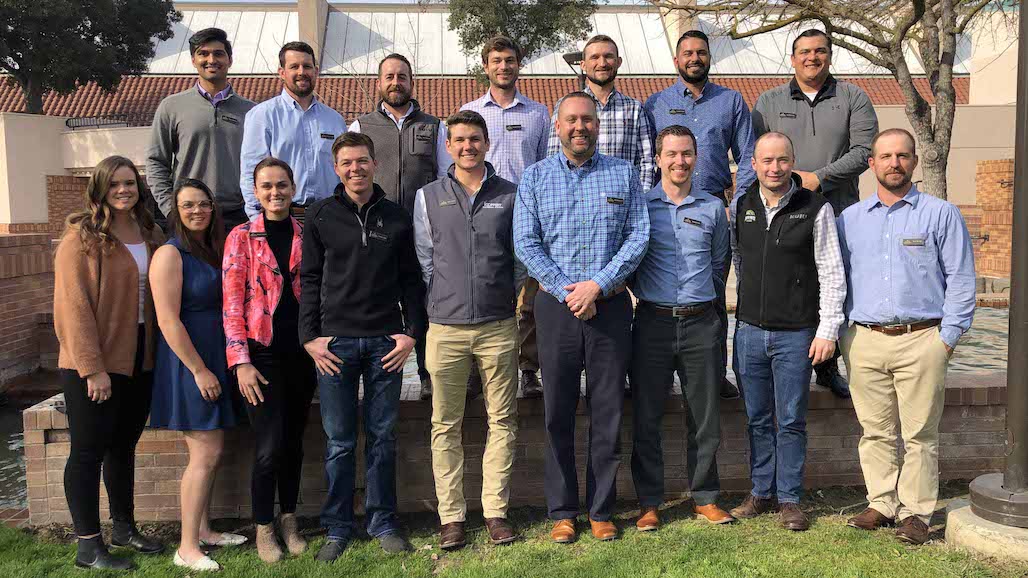
    The Almond Board of California (ABC) is proud to announce the Almond Leadership Program class of 2022, a group of 17 exceptional professionals expected to help lead the industry into the future.

    This next generation of leaders comes from diverse backgrounds across the full range of the industry, from almond growers and processors to sales representatives, consultants, operations managers, pest control advisors and more. They were chosen from a highly qualified pool of nearly 50 applicants.

    The Almond Leadership Program began in 2009 and has graduated more than 200 people, with dozens now serving on ABC workgroups, committees and even the Board of Directors. This 13th class will become immersed in every aspect of the industry, guided by volunteer mentors – many of them graduates of the program – who will help the new class further develop the skills, knowledge and perspective to improve their industry and their communities.

    This program helps mold great people into even greater leaders who continue to guide our industry forward,” said Jenny Nicolau, ABC’s senior manager of Industry Relations and Communications. “The industry is now seeing the enormous benefits from more than a decade of this program, and the 2022 class looks brighter than ever. I am certain that these talented, passionate people will continue to be great assets and advocates for our industry for years to come.”

    Leadership class members – while still working at their jobs – will complete specialized trainings on all aspects of the industry, much of it tied to ABC activities in global marketing, production and nutrition research, food safety and more. They’ll also sharpen their communication skills and build lasting relationships with each other, ABC staff and other industry leaders.

    “Nothing compares to hands-on experience and I look forward to tangibly learning more about aspects of the almond industry outside of my current reach and knowledge,” said Bethany Couchman, a manager at Eagle’s Rest Ranches in Merced County and a 2022 participant. “I’m grateful that the Almond Board is providing us the opportunity to gain specialized insight and training so we can give back to our communities as better equipped leaders.”

    The leadership program will also offer a thorough look at the ways social, economic and environmental issues, and the regulatory climate, impact the industry. In addition, participants will take on a yearlong, self-directed project – possibly diving into a topic that interests them, or introducing an innovative technology or practice to their operation, or exploring a new idea to advance the industry. All will focus on improving the California almond community, and some past projects have led to important breakthroughs for the industry.

    Leadership class members kicked off their training with a two-day orientation last week at the ABC offices in Modesto. It included a state of the industry discussion with ABC President and CEO Richard Waycott and one-on-one talks with their mentors.

    “The program offers clear insight into the almond industry as a whole and gives first-hand examples of what it means to lead an industry and to give back,” said Chris Gallo, who has been both a participant and mentor. He is now the U.S. Western Region Sales and Marketing Vice President for Yara North America and is mentoring again in 2022. “It’s clear that this program continues to evolve to build leaders who will take the almond industry into the future. It’s truly a family that grows with every class.”

    Once again, class members will raise money for California Future Farmers of America (FFA), pledging to raise more than $25,000 in scholarships for high school students interested in pursuing agriculture in college. Through the years, the leadership program has raised more than $200,000 for FFA.

    The 2022 Almond Leadership class members are Jaspaul Bains, Bains Ag LLC; John Bodden III, Bayer Crop Science; Kate Capurso, Blue Diamond Growers; Bethany Couchman, Eagle’s Rest Ranches; Michael Coe, Blue Diamond Growers; Brady Colburn, Agri Technovation, Inc.; Ian Darling, Monte Vista Farming Co.; Jarred Greene, Nickel Family Farms dba San Juan Ranching Co.;  Thomas Fantozzi, Synagro Technologies; Matt Morelli, Scientific Methods Inc.; Joe Palomino, Axiom Ag; Ken Peelman, Monte Vista Farming Co.; Carson Pettit, RPAC, LLC; Rodney Ratzlaff, Loveland Products Inc./Nutrien Ag Solutions; Arjun Samran, Bapu Farming Co.; Kaisa Spycher, Spycher Farms, Inc.; Blake Wilbur, Koppert Biological Systems.

    Bayer Crop Science is the sponsor of the 2022 class.

  • Walnut Growers Vote To Continue CA Walnut Board Marketing Order

    Walnut Growers Vote To Continue CA Walnut Board Marketing Order

    Since the 1940’s, the California Walnut Board (CWB) has helped drive industry growth and development with marketing and research programs.  California walnut growers recently voted to continue their marketing order, which means the Board will continue its efforts to advance the industry and drive demand for walnuts. The continuance referendum vote was held from December 6-31, 2021 for eligible growers and is required by its Federal Marketing Order every six years.

    “The vote represents the California walnut industry’s confidence in the Board and the many programs it implements,” said Bill Toss, CWB Executive Committee Chairman. “As a Board, our mission is to cultivate industry prosperity through walnut promotion, education, and research. While the industry has faced headwinds, we benefit from Board-funded marketing and research programs that deliver results to our growers and handlers, as well as the centralized structure it provides.”

    Programs funded by the CWB in recent years have included in-store supermarket promotions to drive sales, innovative production/post-harvest research to help growers and handlers stay competitive, and collecting and reporting data to enable a cohesive place for all industry members to get statistics.

    “We are honored that this vote will allow the Board to continue working to benefit industry,” said Michelle Connelly, Executive Director of the California Walnut Board. “The efforts by growers and handlers, in partnership with staff, to drive consumption and improve production practices are proof positive that we are stronger together to address both current and future business opportunities and challenges. We can often do more together than one operation can do on its own.”

    Tos added “on behalf of the Board, we are very grateful that growers acknowledged the important work that has been done and are committed to continuing these efforts moving forward.”

    Looking ahead, the CWB will continue to update the Federal Marketing Order rules governing inspections to increase efficiencies and address market disruptions. In September, the CWB voted to suspend the mandatory outbound inspections of walnuts to mitigate market disruptions like labor shortages or shipping constraints, while reducing redundancies. While this referendum vote confirms grower wishes to continue the CWB’s walnut promotional efforts, assessments will not be collected until the completion of the order revision process.

    Growers who want to learn more about how the CWB is doing more for the walnut industry are encouraged to sign up for newsletters to hear directly from the Board, follow its social channels on LinkedIn and GrowCAWalnuts on Facebook, and learn more at walnuts.org/walnut-industry.

    About the California Walnut Board

    The California Walnut Board (CWB) was established in 1948 to represent the walnut growers and handlers of California. The CWB is funded by mandatory assessments of the handlers. The CWB is governed by a Federal Walnut Marketing Order. The CWB promotes usage of walnuts in the United States through publicity and educational programs. The CWB also provides funding for walnut production, food safety and post-harvest research.

  • State of the American Pecan Industry

    State of the American Pecan Industry

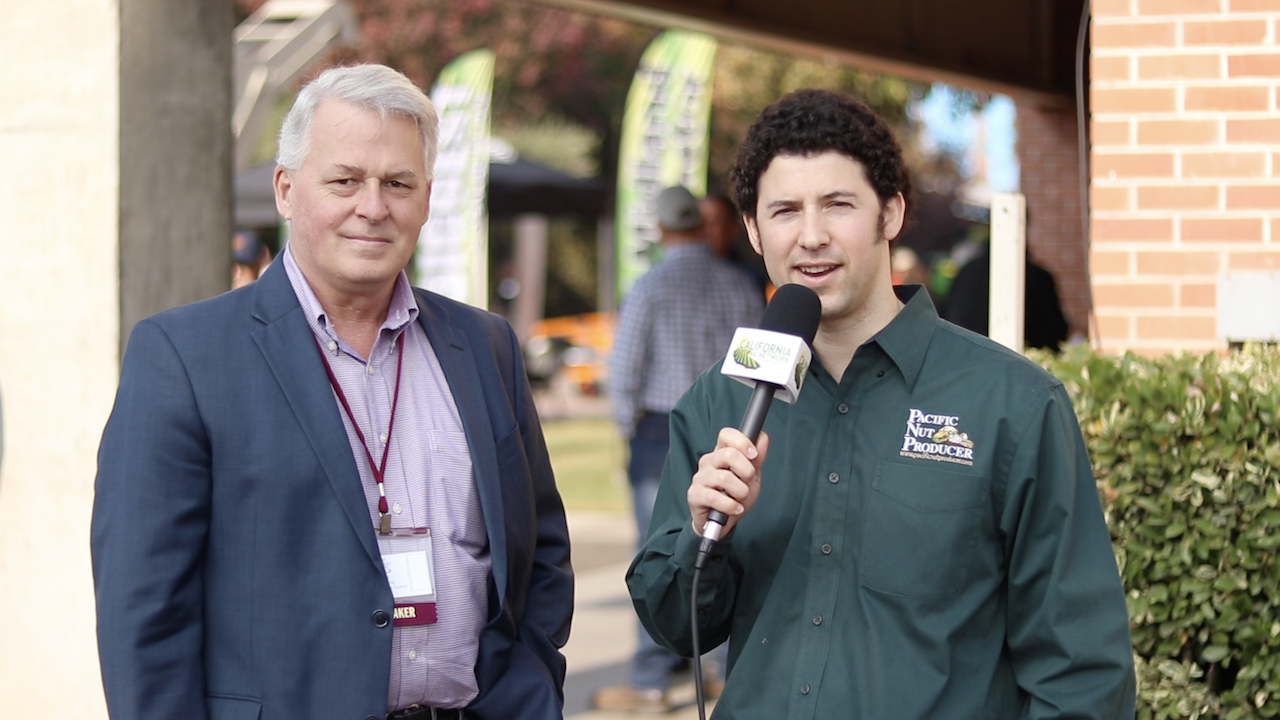
    While we hear more about almonds, walnuts and pistachios in California, pecans are still a significant crop for the Golden State, and are grown across the nation. Watch this brief interview Jeff Smutny from the American Pecan Council as he shares his production and market outlook for the pecan industry. Read the full proceedings of the annual Grape, Nut & Tree Fruit Expo where he spoke in the coming issue of Pacific Nut Producer Magazine.
    Please thank this video’s sponsor Trece for their industry support.
  • Spray Timing for Almond Bloom Diseases with Brent Holtz

    Spray Timing for Almond Bloom Diseases with Brent Holtz

    Beekeepers have begun delivering hives to almond orchards and the buds of all varieties are swelling and prepping for bloom. Watch this brief interview with UCCE Farm Advisor Brent Holtz as he shares some important advice with growers regarding bloom fungicide spray timing, and read his monthly Almond Tasks column in Pacific Nut Producer Magazine.
    Please thank this video’s sponsor Trece for their industry support.
  • California Farmland Trust Protects 253 Acres of Almonds in East Merced County

    California Farmland Trust Protects 253 Acres of Almonds in East Merced County

    California Farmland Trust (CFT) is proud to announce the recent permanent protection of 253 acres of almonds in Merced County, owned by The Myers Irrevocable Flying M Ranch Trust.

    Established in the 1950s, Flying M Ranch began farming and ranching in the area of Merced, plentiful with rich agricultural soils and riparian areas. As generations of the Myers family have taken over the operation, they have remained focused on their farming roots and ways to be leaders in facing agriculture’s most persistent challenges, including the preservation of vital natural resources.

    This 253-acre property placed in an agricultural conservation easement (ACE) with CFT is one of the many conservation easements protecting the working landscapes of Flying M Ranch. Approximately 5,900 acres of grazing land on their farm has been preserved through other conservation organizations, and the Myers are actively pursuing another ACE with CFT.

    “The idea of putting a conservation easement on the property was to keep the ranch in a perpetual state, and we like the idea of keeping it continuous,” said Wes Myers, Flying M Ranch Trust co-trustee. “CFT understands farming and ranching, which is why we chose to work with them on this project.”

    Funding for this conservation project was provided through the Agricultural Land Mitigation Program (ALMP), which is administered by Department of Conservation (DOC) on behalf of the California High-Speed Rail Authority.

    “The growth pressure from the City of Merced and even surrounding communities like Planada, in combination with the Myers desire to be stewards of the land, are all contributing factors that make this farm a quality project for permanent protection,” said Chelsea Slaton, conservation director at CFT. “Given the resources and geographical features of this farm, protecting this property will help sustain long-term production of agricultural commodities for years to come, and we commend the Myers for their stewardship.”

    CFT’s portfolio of protected farmland is most prevalent in Merced County and Flying M Ranch adds to these efforts. CFT has now protected 11,669 acres of farmland on 36 farms in Merced County.

  • DPR/EPA Approves Section 18 Emergency Registration for Kasugamycin on Almonds

    DPR/EPA Approves Section 18 Emergency Registration for Kasugamycin on Almonds

    Almond Board of California — Today, the California Department of Pesticide Regulation (DPR) issued a Section 18 SPECIFIC exemption for the use of Kasumin 2L to control bacterial blast in almonds. The exemption is effective February 1, 2022 through April 15, 2022. In the announcement, DPR advised operations to use the chemical number for kasugamycin (6197) for their “Restricted Material Permit Program.”

    The approval applies to the counties of Butte, Colusa, Fresno, Glenn, Madera, Merced, San Joaquin, Stanislaus, Sutter, Tehama, Yolo and Yuba.

    Growers interested in this application are heavily encouraged to reference the Almond Board of California’s Honey Bee Best Management Practices as well as the Quick Guide for Applicators (in English & Spanish) to ensure pollinator health is maintained. As stated in these practices, growers should only use applications when absolutely necessary and should only make applications in the late afternoon or evening, when bees and pollen are not present.

    Please contact your local County Ag Commissioner’s office for further details if interested in using this product. This emergency exemption may also be viewed on the DPR website at http://apps.cdpr.ca.gov/section18

    Visit the California Department of Food and Agriculture website for a full list of County Ag Commissioners’ offices as well as contact information for each.

  • Almond Board of Directors Election Around the Corner

    Almond Board of Directors Election Around the Corner

    The Almond Board of California is gearing up for the 2022 Board of Directors Election. While formal election announcements will be distributed next month, the Almond Board wanted to provide an update on open positions for this year’s election. This year, there are four open positions: two independent grower positions, one independent handler position and one cooperative handler position. Along with these four positions are also four corresponding alternate positions open for the election. (To note: Only independent positions are part of the general election, as the cooperative selects its own representatives.)

    The Board of Directors guide the work of the almond industry’s federal marketing order (the Almond Board) and has led the California industry in the adoption of innovative research programs, expanding demand-building initiatives ahead of increasing supply, and leading through challenges to the industry’s reputation. Representing over 7,600 growers and approximately 100 handlers across the state, the Almond Board is responsible for establishing policy, recommending budgets and programs to the Secretary of Agriculture for approval, and reviewing program results and effectiveness.

    Currently, nearly 200 active almond industry members volunteer to serve on ABC’s Board, Board-appointed committees, subcommittees and working groups. Getting involved provides an opportunity to help shape future successes, ensuring consumers and stakeholders support the industry’s vision that California almonds make life better by what we grow and how we grow.

    If you are interested in learning more about running for a position on the Board of Directors, please contact ABC’s Toni Arellano at tarellano@almondboard.com. — Almond Board of California