Category: Economics

  • CA Walnut Board Supports Industry Growth In New Ways With Retail, Research And Advocacy Programs

    CA Walnut Board Supports Industry Growth In New Ways With Retail, Research And Advocacy Programs

    During the 2020-2021 crop year, California walnut growers and handlers worked together with the California Walnut Board and California Walnut Commission to advance the industry in new ways. Growers produced a record crop of 785,000 tons, a 20 percent gain over the 2019 crop. The California Walnut Board (CWB) and Commission (CWC) promoted walnuts through marketing campaigns that increased sales, leveraged new CWC-funded health research to sustain consumer interest in walnut consumption, conducted new production and post-harvest research to help maintain competitiveness, and accessed government dollars.

    “In a year where a pandemic has altered so many aspects of the way Americans live and work, the Board’s contributions to the industry have been critical,” says Michelle Connelly, Executive Director of California Walnut Board.

    Retail Campaign Generates Double-Digit Sales Growth

    Retail programs drove sales and consumption during seasonal time periods when walnuts are not typically a priority for consumers. During American Heart Month in February, the CWB worked with retailers nationwide on a campaign to display walnuts with messaging about their heart-health benefits*. With 34 participating retailers, operating 10,400 locations, retailers saw an average sales lift of 22.5 percent. Additionally, television and radio advertising during this program reached 52% of US households.

    In May through August, a summer snacking campaign signed-on 26 retailers with 7,400 locations to execute in-store promotions and specials. The first-of-its-kind snacking-focused program encouraged retailers to think of new ways to promote walnuts by tying into the consumer trend. Retail elements were supported with consumer outreach, and the average US consumer saw the message on walnuts and snacking six times. The campaign drove year-over-year walnut sales increases, when comparing the summer months.

    Production Research Delivers Short- and Long-Term Benefits

    The CWB continued investment in research programs to maintain competitiveness in walnut production and processing, as well as invested in applied projects that directly benefit immediate grower needs. Topics including pest management, food safety, product quality, and more were prevalent in these programs. UC Davis’ CWB-funded walnut breeding program released a new varietal, UC Wolfskill, in hopes of finding more desirable traits such as a late leafing, early harvesting Chandler-like variety.

    The CWB Grades and Standards Committee approved 11 post-harvest research projects, three of which are exploring byproduct utilization for the walnut industry to add further value across the supply chain while promoting sustainability. The Committee also funded a project to develop methods and a database to help differentiate walnuts from various origins and cultivators which can help preserve the integrity and reputation of California walnuts.

    “Our research programs are key in providing growers and handlers the resources they need to succeed in an increasingly competitive space,” says Connelly.

    Steps Taken to Increase Efficiencies and Mitigate Market Disruptions

    In September, the CWB voted to suspend the mandatory outbound inspections of walnuts to mitigate market disruptions like labor shortages or shipping constraints, while reducing redundancies. The suspension brings further efficiencies to the industry, while allowing resources to be saved.

    “The Federal Marketing Order rules governing inspections are obsolete as market and customer quality demands have since surpassed USDA grade standards,” added Connelly. “The Board’s vote to suspend the inspections stands to benefit both producers and processors.”

    CWC and CWB Do More Together to Advance Industry

    In lock step with the CWB, CWC activities also contributed to and supported the industry throughout the year. As a result of the Commission’s efforts, walnut growers received over $85MM in direct payments from the Coronavirus Food Assistance Program (CFAP) 1 alone and millions more through CFAP 2. Ensuring the walnut industry’s voice was heard, the CWC, as part of a coalition, also worked with sectors of the CA government to urge lawmakers in the Department of Pesticide Regulations to not increase mill tax for at least two years.

    Furthermore, 17 scientific papers published that were funded or supported by the CWC, including findings in the areas of heart health, cognition, gut health and longevity. Sharing those health findings with health professionals and reporters resulted in 431 articles mentioning the health benefits of walnuts in mainstream media. The average US consumer saw the message 22 times.

    Connelly shared more about why a robust, ongoing health research program is important, “Health is a top reason why consumers eat walnuts and demands are always evolving. New research discovers breakthrough results and makes important health advancements.”

    Growers who want to learn more about how the CWB/CWC are doing more for the walnut industry are encouraged to sign up for newsletters to hear directly from the Board, follow our social channels on LinkedIn and @GrowCAWalnuts on Facebook, and learn more at walnuts.org/walnut-industry.

    *Supportive but not conclusive research shows that eating 1.5 ounces of walnuts per day, as part of a low saturated fat and low cholesterol diet and not resulting in increased caloric intake, may reduce the risk of coronary heart disease. (FDA) One ounce of walnuts offers 18g of total fat, 2.5g of monounsaturated fat, 13g of polyunsaturated fat including 2.5g of alpha-linolenic acid – the plant-based omega-3.

    About the California Walnut Board

    The California Walnut Board (CWB) was established in 1948 to represent the walnut growers and handlers of California. The CWB is funded by mandatory assessments of the handlers. The CWB is governed by a Federal Walnut Marketing Order. The CWB promotes usage of walnuts in the United States through publicity and educational programs. The CWB also provides funding for walnut production, food safety and post-harvest research.

    About the California Walnut Commission

    The California Walnut Commission, established in 1987, is funded by mandatory assessments of the growers. The CWC represents over 4,800 growers and approximately 90 handlers (processors) of California walnuts in export market development activities and conducts health research. The CWC is an agency of the State of California that works in concurrence with the Secretary of the California Department of Food and Agriculture (CDFA).

  • The Almond Conference in a Nutshell

    The Almond Conference in a Nutshell

    Almond Board of California — The 49th annual Almond Conference returned to Sacramento with a bang. Renovations to the newly named SAFE Credit Union Convention Center forced the conference to shift locations in 2019, and COVID-19 precautions forced the 2020 conference to a virtual format.

    The Almond Board of California (ABC), abiding by Sacramento County safety mandates, welcomed 3,308 industry members back to downtown Sacramento with the biggest trade show in Conference history. 270 exhibitors blanketed the bottom level of the convention center with the latest products and innovations available to growers.

    Day one of the conference, Tuesday, December 7, was dedicated for tradeshow time and the State of The Industry address. ABC President and CEO Richard Waycott and 2021/2022 Board Chairman Brian Wahlbrink headlined the address as co-anchors of “AlmondCenter”, a fast moving and informative ninety minutes of almond action news. ABC staff were positioned as field reporters who brought the latest information to attendees about shipping delays, water issues, marketing efforts, industry resources and more.

    At the conclusion of the “AlmondCenter” production, Waycott and Wahlbrink announced the winners of the annual industry awards. George Goshgarian Sr. was presented with this year’s Almond Achievement Award, and Ken Stevenson was the recipient of the new Almond Technical Achievement Award. ABC and the industry thanked both award winners for their dedication and service to the industry over their respective careers. The industry then adjourned back to the tradeshow for an opening reception.

    (From left to right) Brian Wahlbrink, Swati Kalgaonkar, George Goshgarian Sr., Karen Lapsley and Richard Waycott (Photo Courtesy of the Almond Board).

    The vast amount of information dispersed at The Almond Conference began on day two, Wednesday, December 8. Growers and industry members learned the latest about key topics during three blocks of four consecutive sessions at 8:40 a.m., 10:00 a.m. and 2:45 p.m. A break in the action on day two was during lunch as Mattson President and Chief Innovation Officer Barb Stuckey addressed attendees. She talked about the latest in product development such as almond milk base – a 100 percent almond powder that when water is added becomes almond milk. Stuckey also identified areas that she sees as opportunities for almonds to enter the market like almond baked goods, pizza crusts, pastas and tortilla chips.

    Mattson President and CIO Barb Stuckey addressing attendees at lunch on day two (photo courtesy of the Almond Board).

    Educational sessions continued into day three of the conference with 11 more talks on marketing tactics, production information and more. Attendees also got a chance to hear the incredible story of Dan On, global CEO of Dan-D Pak. Born in Saigon, Vietnam — now known as Ho Chi Minh City – On’s journey includes escaping the Vietnam War, surviving pirate attacks on the open sea and living in a Malaysian refugee camp. On ultimately was brought to Canada through a Hope Lutheran Church program. After being adopted by Irish Canadian parents who sold granola, On came up with the idea to sell the ingredients separately which became a lucrative business decision. The Dan-D Group is now an importer, manufacturer, and distributor of cashews and other tree nuts, nut butters, dried fruits, snack foods and spices from around the world with approximately 1,000 employees in Canada, Vietnam, Thailand, United States, Taiwan, Hong Kong and China, with headquarters in Richmond, British Columbia.

    The Almond Conference 2021 wrapped up with the annual Conference Gala Dinner, with a twist. This year, the Gala Dinner was transformed into the Nuthouse Honky Tonk Bar with a private concert from up-and-coming country music star Tyler Rich. As a California native, Rich entertained hundreds of industry members with original songs such as “The Difference” and “Leave Her Wild”.

    ABC also included a few special presentations at the Gala Dinner. The 2020/2021 Almond Leadership class was recognized for their dedication and effort over the past two years, as the Covid-19 pandemic extended the 2020 class experience. ABC also recognized the lifetime contributions of Bill Morecraft Jr. who is retiring from Blue Diamond Growers after 35 years in the industry.

    During the three-day event, ABC and the Almond Leadership Program ran a silent auction that netted over $11,000 for California Future Farmers of America. Thanks to the generosity of Emerald Sponsor Qcify, that total will be increased to over $36,000 going towards scholarships for graduating FFA students planning to pursue a degree in agriculture.

    The Almond Conference 2021 would not be possible without the support of sponsors. ABC would like to thank the 2021 Metal Sponsors for their generosity this year.

    All Conference presentations will be available soon HERE. The Almond Conference will again be in Sacramento at the SAFE Credit Union Convention Center in 2022. Industry members are encouraged to save December 6-8, 2022 as dates for the conference.

  • What US Food Exporters Need to Know about China’s New Facility Registration Requirements

    What US Food Exporters Need to Know about China’s New Facility Registration Requirements

    Port congestion and unresolved international trade disputes are tough enough, without China’s new facility registration requirements going into effect at the start of 2022 for food export destined for China.  Watch this brief interview with Keith Schneller, Trade Policy Specialist for the Almond Board of California,  as he explains the issue and how FDA is addressing it.
    Please thank this video’s sponsor Suterra for their industry support.
  • Blue Diamond Growers Host Annual Meeting, Announce Chairman’s Ambassador Award Recipient

    Blue Diamond Growers Host Annual Meeting, Announce Chairman’s Ambassador Award Recipient

    With a theme of “Rising to the Challenge,” the 111th Blue Diamond Growers Annual Meeting highlighted the remarkable people that help power California’s largest almond cooperative.

    In a virtual presentation to Blue Diamond almond growers on November 17, Mark Jansen, President and CEO, Blue Diamond Growers, and Dan Cummings, Blue Diamond Growers Board Chairman and Director, District 1, provided business updates and acknowledged key milestones for the cooperative. Three board members either new to the board or recently re-elected to continue service were also announced, including:

    • Dan Cummings, Director, District 1, Chico, CA
    • George A. te Velde, Director, District 4, Escalon, CA
    • Nick Blom, Director, District 6, Modesto, CA


    Following the meeting, Cummings was selected to continue his role as Board Chair and board member Steve Van Duyn, District 5, Modesto, CA, was named Vice Chair for the board. Additionally, in August, Kristen Daley of San Francisco, CA, was named as a new Director-At-Large, completing the 11-person board. “The exceptional leadership and dedication of our board is invaluable in guiding Blue Diamond Growers toward a continued successful future,” said Jansen. “I’m grateful for each of them and the wisdom and perspectives they bring to the co-op, along with their willingness to invest their time and talents to help address challenges and embrace opportunities.”

    Retiring board members Charles Crivelli III, District 6, Turlock, CA, and Kevin Fondse, District 4, Ripon/Escalon, CA were also recognized as part the annual meeting program.

    During his presentation, Cummings announced Christine Gemperle District 6, as the 2021 Chairman’s Grower Ambassador of the Year. A self-described “science nerd,” Gemperle, and her brother farm 135 acres of almonds in Ceres, CA. She is dedicated to sustainable almond production and focuses extensively on water savings, orchard weed control, integrated pest management, soil health and more.

    “Christine is a remarkable ambassador for Blue Diamond Growers and the California almond industry as a whole,” said Cummings. “Each day, she practices what she preaches in terms of hands-on, ‘real-world’ sustainability, and she also helps to educate countless consumers about what the almond industry is doing to produce a wholesome, sustainable crop for all to enjoy – generation after generation.”

    Further illustrating Blue Diamond Growers’ unwavering commitment to sustainability, Cummings announced that in 2021 alone, one-third of Blue Diamond almond growers achieved the gold level of the California Almond Sustainability Program (CASP) rigorous assessment initiative, while another two-thirds accomplished either the silver or bronze CASP achievement level.

    In his meeting remarks, Jansen acknowledged numerous challenges facing California agriculture and Blue Diamond almond growers, including the drought, supply chain disruptions, ongoing pandemic impacts, rising input costs, labor shortages, inflation and more.

    “Even with the remarkable headwinds that we face, we are capable of extraordinary success and rising to the challenges,” said Jansen. “We are resilient and were able to exceed targeted grower returns in 2021 – thanks to the perseverance of the growers themselves and the strength of the Blue Diamond Growers team. I truly believe the best is yet to come.”

    About Blue Diamond

    Blue Diamond Growers, a grower-owned cooperative representing over 3,000 of California’s almond growers, is the world’s leading almond marketer and processor. Established in 1910, it created the California almond industry and opened world markets for almonds. Blue Diamond is dedicated to delivering the benefits of almonds around the world and does so by providing high-quality almonds, almond ingredients, and branded products. Headquartered in Sacramento, the company employs more than 1,800 people throughout its processing plants, receiving stations and gift shops. To learn more about Blue Diamond Growers, visit www.bluediamond.com and follow the company on Facebook, Instagram, LinkedIn and Twitter.

  • How is Drought Affecting Irrigation Water for Pecans?

    How is Drought Affecting Irrigation Water for Pecans?

    The holidays are a time to bake pecan pies and make salted pecans. And for the more daring, making pralines. And it seems the pecan pie has been around for about a hundred years now, originating in Texas!

    The pecan industry is substantial, according to USDA statistics. On average, pecan orchards produced around 250 million pounds of nuts per year in the past decade. The industry is valued at about $400 million USD. (We won’t calculate the number of calories in these values!)

    Pecan pie is considered a specialty of Southern U.S. origin. Credit: Canva Pro

    New Mexico was the leading state for growing pecans in 2018, beating out Georgia. This could be due to lingering effects of Hurricane Michael on Georgia’s orchards, which broke many limbs and branches. In addition, Georgia suffered from hot, dry weather in the peak nut-ripening months of August through September 2018.

    No matter who started this delicious tradition, pecans continue to be a holiday favorite. But they are grown in the south, which has been experiencing increasing drought. This is especially true in New Mexico, where some researchers studied the effects of using brackish water to irrigate this tasty nut.

    A pecan orchard. The trees grow tall, and typically are watered for 14 to 21 days during the growing season. Flowers typically bloom in spring. Credit: Jerry A. Payne

    Water in the southwest is already in jeopardy. Winter snow and rains are not replenishing water sources. Summer heat increases its evaporation. When water comes in contact with rocks or other sources of salt, some salts dissolve in the water – a natural process. But as the water evaporates, that increases the salinity of the water, because salt does not evaporate along with the water. This salty water is called brackish, which has less salt than ocean water.

    An ancient civilization called the Hohokam found out the effects of using brackish water a long time ago. In good years, when rains could wash out some of the salt in the soils, crops did well. But over time, the soils became unproductive, and the Hohokam had to move on.

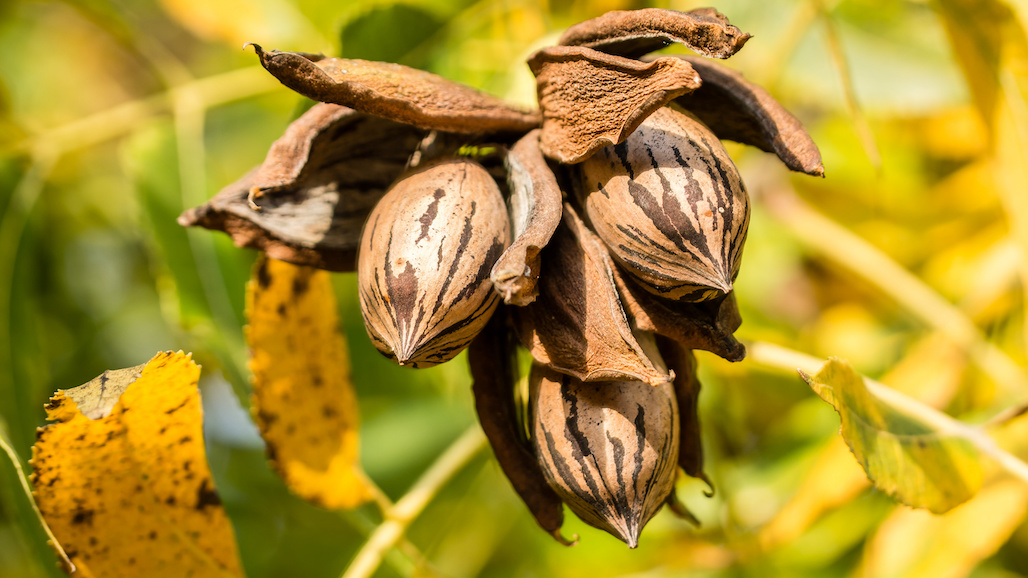
    Pecans are grown in the south, where conditions are warm for the fruits to grow. Shown: pecan nuts in shell on a tree. Credit: Brad Haire

    Some crops can tolerate higher amounts of salt than others. So, the New Mexico State University team tested pecans in the greenhouse by irrigating with various levels of salt in their irrigation water. They tested both the levels of salt in the irrigation water as well as the type of soil the pecans were grown in.

    Their results indicate that continuous irrigation with salty water can be done for up to one year. However, after that, the plants showed signs of stress: “burned” leaf edges, yellowing of leaves, and branch dieback. They also observed salt accumulation due to the water evaporation at the soil surface in their test plants.

    Current conditions in New Mexico mean that scientists and engineers need to step in and work to find ways to reduce the amount of salt in irrigation water. To be able to continue pecan production under drought conditions, the water will need to be desalinated. There are several methods to do this, but they are expensive. An alternative is to breed pecans that are more drought, and salt, tolerant.

    Pecans in their brown shell with pecan nuts woven throughout. Shelled pecans are eaten alone, or used as an ingredient in pies, pralines, and more. The 2020 value of the pecan market in the United States was about $400 million, with New Mexico being the leading state of production. Credit: Scott Bauer

    This article was written by Susan V. Fisk from research published in the Soil Science Society of America Journal: “Brackish groundwater and RO concentrate influence soil physical and thermal properties and pecan evapotranspiration,” doi:10.1002/saj2.20281.

  • Almond Alliance of CA Names Aubrey Bettencourt President/CEO

    Almond Alliance of CA Names Aubrey Bettencourt President/CEO

    The Almond Alliance of California (AAC) has named Aubrey Bettencourt as its new President and CEO.  She currently serves as Director for Sustainability for the California Cattle Council and Western United Dairies and has extensive experience dealing with a wide range of California agricultural and natural resource issues. Bettencourt succeeds Elaine Trevino, who has been nominated by President Biden to be the Chief Agricultural Negotiator for the U.S. Trade Representative. Trevino is awaiting a confirmation hearing before the U.S. Senate Finance Committee.
    Almond Alliance Chairman Mike Curry said Bettencourt’s selection came after an extensive and thorough executive search. Curry commented, “We are extremely excited to have Aubrey Bettencourt as the Almond Alliance’s new President and CEO. Aubrey comes to us with a wealth of diverse knowledge and innovative advocacy work on behalf of farmers and ranchers. As the California State Director of the USDA Farm Service Agency, she fought to keep ‘farmers farming’ through the delivery of effective and efficient agricultural programs. Serving as Deputy Assistant Secretary in the Water and Science Division of the U.S. Department of the Interior, Bettencourt developed and coordinated national water and science policy, expanding her extensive knowledge of state and national water issues and available resources, making her a unique asset to our membership and community.”

    Curry added, “Aubrey’s work as the director of the statewide non-profit, California Water Alliance, has given her the tools necessary to advocate for our members as the water crisis in California becomes even more complicated. As the Director of Sustainability for the California Cattle Council and Western United Dairies, Bettencourt has focused on water supply and water quality, forest health and fire prevention, carbon sequestration, climate resiliency and ground water sustainability. Raised in a farming family, Aubrey has firsthand knowledge of what it takes for a family farm to survive in California and beyond.”

    “I am excited to join the Almond Alliance, a dynamic leader in American agriculture,” Bettencourt said. “As a fourth generation California farmer, it is a personal honor to serve. I look forward to working with this team to keep farmers and processors providing economic opportunity to our rural communities, bringing worldwide the highest quality product from our farms to your table.”

    Bettencourt noted, “The California almond farmer is the most sophisticated in the world; leading in technique, technology, sustainability, safety, and quality. We take pride in this role and great responsibility in this legacy. The challenges we face as an industry including water, labor, energy, supply chain, and climate change, are opportunities for our continued leadership and advocacy. Rather than reacting, we will lead with our own achievable, common-sense solutions to these challenges for the continued success of our farmers, our communities, our businesses, our environment, and our consumers.”

    Curry noted that in her three years at the helm, Trevino led the almond industry through some very challenging times and wished her the best in her new position. “I am so incredibly excited for Elaine and her nomination by the President to be the next Chief Agricultural Negotiator at USTR,” Curry commented. “As the President and CEO of the Almond Alliance, Elaine has led our industry through very difficult times. From trade wars, labor issues, struggles during the pandemic, to port issues, Elaine has been a fierce leader fighting the good fight. In every step of the way she has done the good work for California. Yet Elaine has always kept the communities of our members at top of mind, knowing the economic impact the almond industry has on so many California communities. Elaine has been a true advocate for the good of all. Elaine is the type of leader with the focus to leave things better then she found them.”

    Looking ahead to her new role, Curry said, “There is no doubt in my mind that as the Chief Agricultural Negotiator, Elaine will continue to be the person who adopts real solutions to real problems. The United States agricultural community has gained a true problem solver in Elaine Trevino.

    Elaine thanked Almond Alliance members and partners for their support over the past three years. “It has been an honor to work for the Almond Alliance,” she said. “Together we took the Alliance to new heights and strengthened the voice of almonds in Sacramento and Washington DC. Thank you for the opportunity you have given me to lead one of the best agricultural associations in the country. I look forward to staying in touch and learning about the Almond Alliance’s future successes.”

    Bettencourt will assume her new role on December 1, 2021 and will work out of the Alliance’s Modesto office.

    About the Almond Alliance

    The Almond Alliance of California (AAC) is a trusted non-profit organization dedicated to representing and advocating on behalf of the California almond community. California almonds generate more than $21 billion in economic revenue and directly contribute more than $11 billion to the state’s total economy. California’s top agricultural export, almonds create approximately 104,000 jobs statewide, over 97,000 in the Central Valley, which suffers from chronic unemployment. The AAC is dedicated to educating state legislators, policy makers and regulatory officials about the California almond community. As a membership-based organization, our members include almond processors, hullers/shellers, growers and allied businesses. Through workshops, newsletters, conferences, social media and personal meetings, AAC works to raise awareness, knowledge and provide a better understanding about the scope, size, value and sustainability of the California almond community.

    For more information on the Almond Alliance, visit https://almondalliance.org/ or check out the Almond Alliance on Facebook, Twitter and Instagram.

  • Preparing Your Orchards for 2022 in the Face of Drought

    Preparing Your Orchards for 2022 in the Face of Drought

    Plan for the worst, hope for the best. That’s a tough, solid, strategy as the 2021 season winds down and almond growers and PCAs look to 2022. The following are some considerations when following this strategy. Every operation is different, and growers must decide what works best for their business. Final decisions may not need to be made until early 2022, but planning ahead, given the stakes, is recommended.

    The core issue is water, with both availability and quality of concern depending on local conditions.

    The region and state start the water year (Oct-Sept) way behind on water. As of the middle of September, major reservoirs (Shasta and Oroville) serving the region and state are at 22-25% capacity, less than half of the normal storage for this time of year. The current forecast for the rest of 2021 is for equal chances for normal precipitation in the Sacramento Valley with a 70-80% chance of La Niña winter. 2020-21 was a La Niña winter. These are all predictions, not certainties, but the current precipitation outlook for the winter ‘21-‘22 is not great.

    If the drought continues, more groundwater will be pumped to keep trees alive and, if enough water is available, productive. Using moderate to low quality water (see table) can risk decreasing yield from increasing rootzone salinity and/or toxic levels of the elements chloride, boron or sodium. For most of the Sacramento Valley, groundwater quality is good to very good. However, for parts of the Colusa and Sutter groundwater basins, water quality is not so good. Irrigation water quality levels are important to planning for next year, especially if similar quality groundwater was used in 2021.

    Thresholds for 3 important irrigation water quality components based on risk to almond growth or yield reduction.

    *For a more extensive information on water quality for almond irrigation see:

    https://www.sacvalleyorchards.com/almonds/irrigation/lower-quality-water/ 

    With a worst case scenario of low/no surface water deliveries and falling well water levels, here are some thoughts to consider in planning for 2022.

    Rank orchards by potential value (net return to grower) in 2022 and future years. Possible considerations and rankings for use in farming decisions are suggested in the following table. These groupings are just examples based on UC research and the author’s experience. Orchard rankings and farming decisions should be based on local conditions and grower experience with input from PCA/CCA and nut handler.

    Orchard conditions possibly influencing net grower returns (NGR) in a drought year.

    Fall to prebloom practices can influence production potential for 2022 and could be adjusted on a per orchard basis. For example, higher cost items such as winter irrigation/salt management, potassium fertilization, preemergent herbicide and dormant sprays could be prioritized to the orchards with higher net return potential. [Orchard sanitation is also a big cost, but lack of sanitation in one orchard can mean that increased NOW, there, can spread harm and reduced net return in adjacent orchards.] Lower yielding orchards could receive less inputs this fall and/or spring, further limiting potential net income next year, depending on what is cut out or limited. Limiting inputs to orchards considered for removal could be further savings to growers.

    Hopefully, adequate rain and snow will mean that these hard choices to remove or limit orchard yield will not need to be made. In the meantime, planning ahead will make springtime decision making simpler if the weather stays dry. — By Franz Niederholzer, UCCE Farm Advisor, Colusa and Sutter/Yuba Counties

  • Evie Smith, New UCCE Staff Research Associate in Orchard Crop Systems

    Evie Smith, New UCCE Staff Research Associate in Orchard Crop Systems

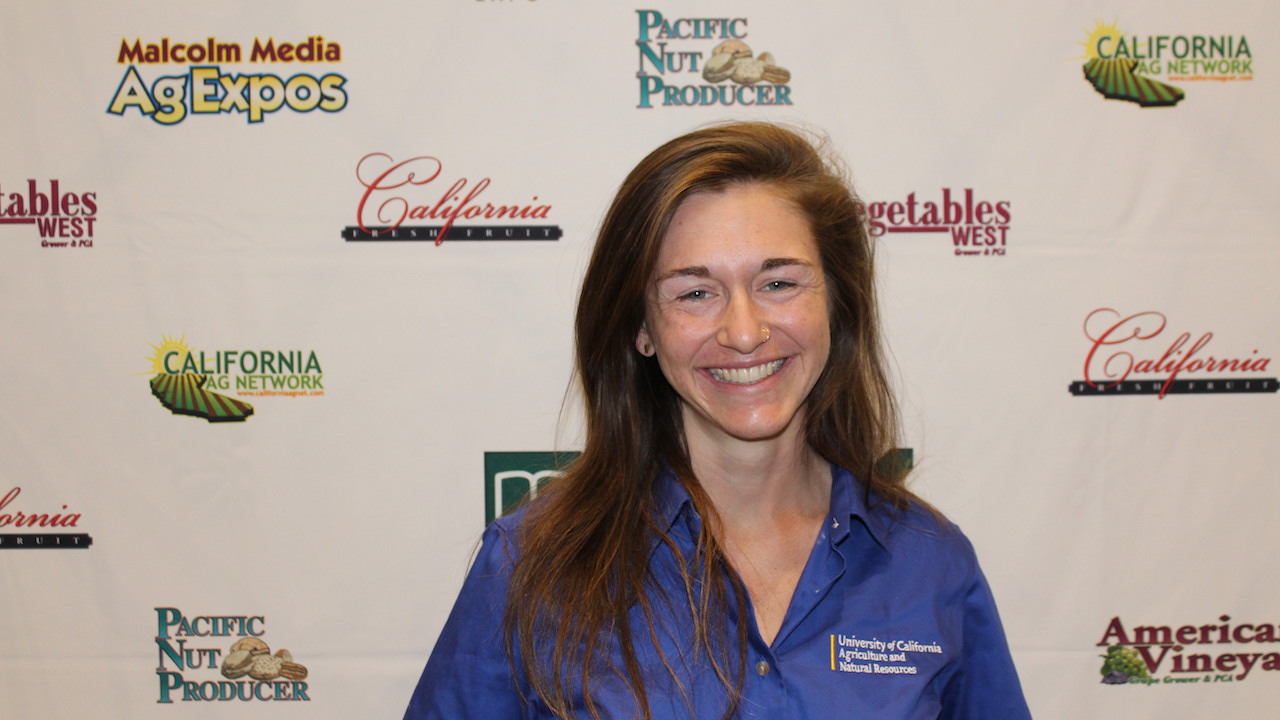
    Have you had a chance to meet Evie Smith, one of our new Staff Research Associates with the UC Cooperative Extension? Watch her brief introduction here to learn about her and the almond, walnut and prune projects she is working on with Sacramento Valley farm advisors.
    Please thank this video’s sponsor Suterra for their industry support.
  • Avoiding Issues with MRL-Based Almond Rejections

    Avoiding Issues with MRL-Based Almond Rejections

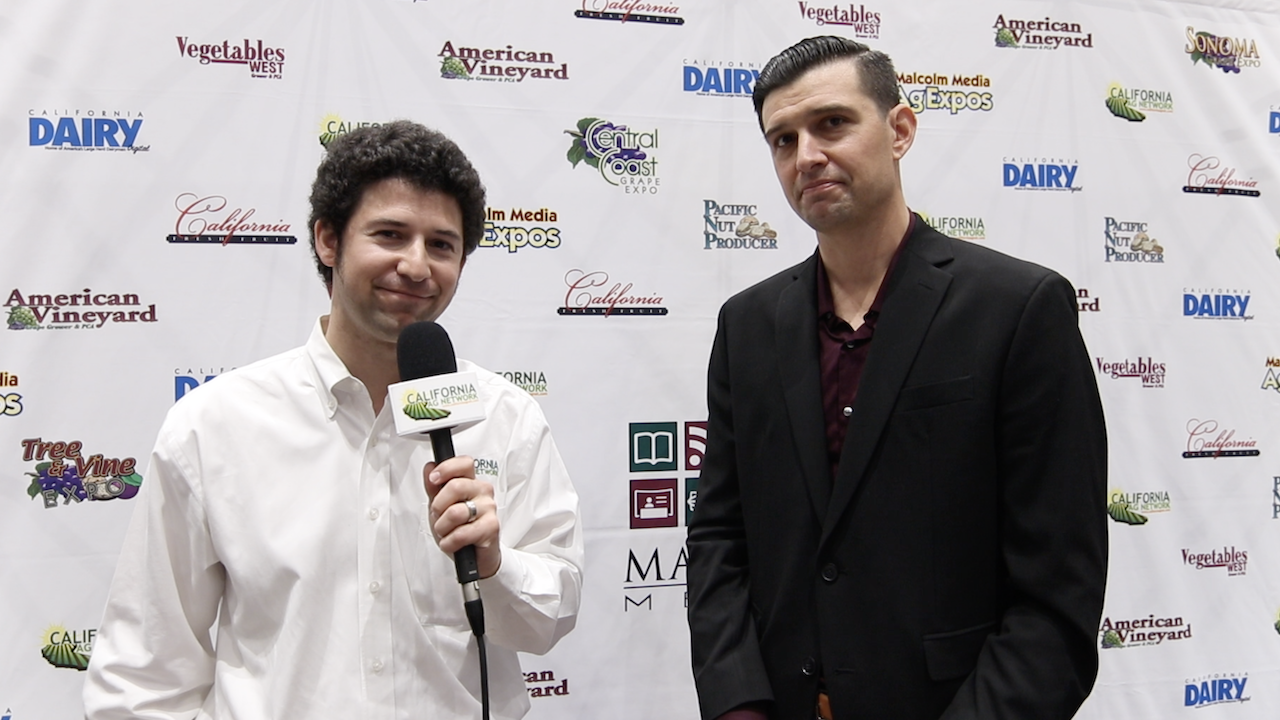
    The European Union represents the California almond industry’s top export market; however, they also maintain the strictest standards regarding maximum residue levels (MRLs) for toxins of any kind. Herbicide residues have been the source for some recent MRL rejections, but how are they getting on the nuts?  Watch this brief interview with Drew Wolter from the Almond Board of California as he addresses the issue.
    Please thank this video’s sponsor Suterra for their industry support.
  • Leaffooted Bug Pressure Increases in California Almonds

    Leaffooted Bug Pressure Increases in California Almonds

    Navel Orangeworm is not the only major pest of California almonds. Leaffooted bug damage is also leading to crop rejections, and unfortunately, growers do not have a lot of tools for managing this pest. Watch this brief interview with Drew Wolter from the Almond Board of California as he explains.
    Please thank this video’s sponsor Suterra for their industry support.