Category: Economics

  • Blue Diamond Growers Announces Latest Sustainability Achievements

    Blue Diamond Growers Announces Latest Sustainability Achievements

    Blue Diamond Growers is kicking off 2023 by sharing sustainability accomplishments from the past year. Highlights are included in the cooperative’s first-ever sustainability report, “Growing a Better Tomorrow,” that is available on the Blue Diamond Growers website at www.bluediamond.com/sustainability.

    “We are proud of where we are on our sustainability journey,” said Dr. Dan Sonke, Director of Sustainability, Blue Diamond Growers. “Because we are a cooperative, for 112 years we have enabled family farms to compete in a volatile world. Our almond expertise extends from the orchard to processing facilities and the consumer. And through our stewardship program, we lead the world with more acres of almonds in a sustainability program than any other company.”

    Sonke explains that Blue Diamond Grower sustainability efforts focus on six key pillars, including: sustainable agriculture, water stewardship, biodiversity and pollinators, climate and energy, people, and resilient communities. Key achievements in 2022 alone include:

    • $45 million in funds awarded to Blue Diamond Growers by the U.S. Department of Agriculture(USDA) as part of a climate protection partnership activation that will be used to help growers expand existing implementation of cover crops, conservation plantings and hedgerows, and whole orchard recycling.
    • More than $1.74 million paid directly to growers through the Blue Diamond Growers Orchard Stewardship Incentive Program (OSIP). The OSIP now covers 40% of all Blue Diamond member acres representing more almond acres in a sustainability program than any other company in the world.
    • 95% of Blue Diamond member orchards in the stewardship program report using efficient micro-irrigation systems. That’s nearly two times the rate found in other California crops.
    • 29% of Blue Diamond orchards reported planting cover crops for soil quality and pollinator benefits.
    • 18% reduction of materials going to landfill at the Salida facility through increased recycling.
    • A new project to reduce greenhouse gas (GHG) emissions through the replacement and modernization of a steam boiler system at the Sacramento plant. The project is expected to reduce natural gas consumption by more than 30% and water use by 20%.
    • $140,000 in community grants committed to 14 organizations, along with $25,000 donated in matching funds to contribute to 807 Future Farmers of America (FFA) jackets for high school students.
    • 190,000 lbs. of almonds and almond products – valued at more than $700,000 – provided in product and in-kind donations to food banks and other nonprofit organizations.

    “We are certainly proud of the accomplishments so far, but we know that sustainability – in all its facets – is an ongoing journey,” said Sonke. “We look forward to continual progress in the days, years and generations ahead.”

    About Blue Diamond

    Blue Diamond Growers, a grower-owned cooperative representing approximately 3,000 of California’s almond growers, is the world’s leading almond marketer and processor. Established in 1910, it created the California almond industry and opened world markets for almonds. Blue Diamond is dedicated to delivering the benefits of almonds around the world and does so by providing high-quality almonds, almond ingredients, and branded products. Headquartered in Sacramento, the company employs more than 1,800 people throughout its processing plants, receiving stations and gift shops. To learn more about Blue Diamond Growers, visit www.bluediamond.com and follow the company on FacebookInstagramLinkedIn and Twitter.

  • Reinforcing Buy American Food Act in California School Districts

    Reinforcing Buy American Food Act in California School Districts

    Finding that California school districts have not been following the Buy American Act regarding food purchases, Ag Council of California sponsored legislation to reinforce the provision with successful results.  Watch this brief interview with Emily Rooney, President of Ag Council, for more details and how this will support California agriculture and the local economy.

    Please thank this video’s sponsor Suterra for their industry support.

  • Almond Board Drives Global Demand for CA Almonds with New Focus

    Almond Board Drives Global Demand for CA Almonds with New Focus

    Meeting with the Chair of the Almond Board of California, watch this brief interview with Alexi Rodriguez as she shares what they are doing to grow the worldwide demand for California almonds. Read more about it in the December issue of Pacific Nut Producer Magazine.

    Please thank this video’s sponsor Suterra for their industry support.

  • Almond Board Progress in Overcoming Global Trade Barriers

    Almond Board Progress in Overcoming Global Trade Barriers

    The California almond industry relies heavily on the export market, and navigating logistical challenges and trade barriers has become quite complicated in recent years.  Watch this brief interview with Julie Adams from the Almond Board of California as she shares their role and progress in keeping the exports flowing. Read more about it in Pacific Nut Producer Magazine.

    Please thank this video’s sponsor Suterra for their industry support.

  • CA Almond Acreage Drops for the First Time in Decades

    CA Almond Acreage Drops for the First Time in Decades

    California’s almond acreage decreased for the first time in more than 25 years, according to a new report from Land IQ to the Almond Board of California (ABC). Total standing acreage as of Aug. 31 was estimated at 1.64 million acres, compared with 1.66 million acres at the same time in 2021. Bearing acres – orchards producing almonds and planted in 2019 or earlier – increased slightly to 1.34 million from 1.31 million last year. But non-bearing acres – new plantings going back to 2020 but not yet bearing almonds – dropped to 294,000 acres from 353,000 acres in 2021.

    In addition, the Land IQ 2022 Standing Acreage and Removed Acreage Final Estimate said approximately 30,000 acres are either classified as stressed or abandoned. They were included in the standing acreage total because the orchards “may have the ability to recover,” Land IQ said.

    Removed orchards contributed to the drop in total acreage and continued a trend from 2021. Total orchard acreage removed was about 60,400 acres as of Aug. 31 this year compared with 56,900 removed acres in 2021.

    “Land IQ’s report may indicate a possible trend towards lower California almond acreage in the year ahead,” said Richard Waycott, ABC president and CEO. “This acreage estimate was based on data collected through Aug. 31, so it does not reflect any additional removals that may have occurred as the harvest and post-harvest seasons progressed this fall. Those data will be incorporated in the next acreage estimate to be published in April 2023.”

    The estimate comes from multiple lines of evidence, including extensive examinations on the ground and advanced remote sensing analytics. Land IQ said the 2022 standing acreage estimate is 98.8 percent accurate.

    Land IQ’s Final Acreage Estimate in November, along with USDA-NASS’s April Acreage Report, May’s Subjective Estimate and the Objective Report in July are all commissioned by ABC to provide statistical transparency and a robust picture of California almonds to industry stakeholders around the world.

    In 2018, ABC first commissioned Land IQ, a Sacramento-based agricultural and environmental scientific research and consulting firm, to develop a comprehensive, living map of California almonds. The map is the result of more than a decade of research.  By the Almond Board of California

  • Blue Diamond Growers Board of Directors Selects Kai Bockmann as Next CEO

    Blue Diamond Growers Board of Directors Selects Kai Bockmann as Next CEO

    Blue Diamond Growers Chairman of the Board, Dan Cummings, announced that Kai Bockmann will join the agricultural cooperative and global consumer packaged goods (CPG) leader as President and Chief Executive Officer (CEO) on January 17, 2023. The Board selected Bockmann after working with executive search and leadership advisory firm, Egon Zehnder, to recruit and consider candidates from across the country. Bockmann will succeed Mark Jansen who announced his plans to step down after a very successful 12-year tenure as CEO.

    “The search process went well, and we couldn’t be more pleased with the outcome,” said Cummings. “Kai has more than a quarter of a century of global experience growing CPG companies, and we believe he is the leader we need to keep building our business and brand domestically and internationally, while continuing to deliver superior returns to our grower-owners.”

    Bockmann most recently served as President and Chief Operating Officer (COO) at Saputo Inc. – one of the world’s largest dairy companies – where he led operations that included 67 plants and 18,000 employees across the United States, Canada, Australia, Argentina, and the United Kingdom. From 2017 to 2021, he and his team grew revenue from $11 billion to $14 billion. From 2012 to 2021, the international business he led grew from less than $500 million to more than $4 billion. Prior to Saputo Inc., Bockmann was at McCain – the world’s largest producer of frozen potatoes – where he served as President of the International Division and accelerated international sales across 60 export markets, doubling revenues over four years.

    “I’m excited by this phenomenal opportunity to join one of the most consistent and fastest-growing food and beverage companies in the world,” said Bockmann. “I look forward to learning from growers and team members and keeping our immediate focus on maintaining business continuity and growth momentum.”

    Cummings said the Board, Bockmann, Jansen, and the entire experienced executive team at Blue Diamond will work closely together to ensure a smooth transition in leadership over the next few months.

    “We’re grateful for Mark’s support during the search and his commitment to helping set Kai and the cooperative up for continued success,” said Cummings. “We’re building from 112 years of success, and we know the future is bright for Blue Diamond because no one knows how to get almonds from growers’ farms to families worldwide better than us.”

    Cummings said Blue Diamond’s snack almond business has more than a 50% market share in the United States and that Blue Diamond’s Almond Breeze is the leading almondmilk brand in the United States, South Korea, Thailand, Brazil, and South Africa. In 2021, the company’s net sales totaled $1.6 billion.

    About Blue Diamond

    Blue Diamond Growers, a grower-owned cooperative representing approximately 3,000 of California’s almond growers, is the world’s leading almond marketer and processor. Established in 1910, it created the California almond industry and opened world markets for almonds. Blue Diamond is dedicated to delivering the benefits of almonds around the world and does so by providing high-quality almonds, almond ingredients, and branded products. Headquartered in Sacramento, the company employs more than 1,800 people throughout its processing plants, receiving stations and gift shops. To learn more about Blue Diamond Growers, visit www.bluediamond.com and follow the company on Facebook, Instagram, LinkedIn and Twitter

  • State of the Almond Industry Emphasizes Tough Times with Turnaround in Sight

    State of the Almond Industry Emphasizes Tough Times with Turnaround in Sight

    After undoubtedly one of the most difficult years almond growers have faced in decades, Almond Board of California (ABC) president and CEO, Richard Waycott, and Board of Directors chair, Alexi Rodriguez, discussed the reality of current industry challenges, while offering hope and a plan of action during the State of the Almond Industry presentation at the 50th annual Almond Conference.

    Between water scarcity, high product carry-in, logistical and supply chain issues, and rising interest rates, the almond community’s resiliency was certainly tested over the past 12 months, and “the combination has created this perfect storm that’s really had a profound impact on our industry,” Rodriguez said.

    To provide an overview of current supply and demand trends, David Magaña, senior analyst at RaboResearch Food and Agribusiness, reiterated that almonds are becoming an increasingly popular product among consumers. While this development is certainly welcomed, inflation is also the highest in four decades, pinching the pockets of consumers, driving up production costs for growers and increasing costs throughout the supply chain.

    Reassuringly, experts predict demand-driven inflation will subside within the next two years, and because container shortages have diminished, transportation logistics are improving, Magaña explained.

    Almond Acreage and Production Down

    It’s no secret that production numbers for the current harvest year are estimated to decrease and acreage numbers have decreased for the first time in more than a quarter of a century. However, Bryce Spycher, ABC senior manager of marketing order services stated that as a whole, we continue to see massive increases by the millions about every nine years.

    So, where are all these pounds going? Spycher explained that 70% of all production is exported to more than 100 different countries, while 30% is consumed domestically. In recent years, there’s been a spike in domestic consumption, he said, particularly in mechanically-altered almonds – sliced, diced, blanched or otherwise not in-shell.

    Partnering to Combat Issues

    The Almond Board is fortunate to have a unique partnership with the Almond Alliance of California, which advocates on behalf of the industry in public policy arenas. Under the leadership of president and CEO Aubrey Bettencourt, the Alliance’s commitment to supply chain issues has leveraged relationships with five major carriers in negotiating how product can move faster and more efficiently across all ports.

    Almond Alliance CEO Aubrey Bettencourt and ABC Chair Alexi Rodriguez discuss the efforts to address challenges facing the industry.

    Additionally, the Alliance has partnered with Western United Dairies and the California Department of Water Resources to roll out LandFlex, a drought relief program providing farmers with compliance resources related to the Sustainable Groundwater Management Act (SGMA).

    “We are not done as an industry, and we have a lot of room to grow,” Bettencourt said. “It’s a tough time but let me tell you, don’t confuse vision and direction to turn obstacles into opportunity and that’s what we’re going to do.”

    Strategizing to Meet Challenges

    With a changing industry comes a changing strategy, particularly in exploring untapped audiences. To be proactive, Rodriguez explained the newest cross-functional project in the works. Titled “Thea,” this tool will help predict, plan and strategize ABC’s foundation of activities over the next 10-15 years.

    Waycott also introduced how the team at ABC shifted its focus to promote almonds in unconventional outlets including March MadnessMarvel Studios, Sanremo Music Festival, Tmall – a Chinese e-commerce website – the well-known gaming platform called Twitch, and they’ve even explored efforts within the Metaverse.

    Other marketing campaigns designed to focus on the health and beauty benefits of almonds continue to be successful in India and Asia – two of ABC’s most profitable regions. The Almond Board has also made it a priority to tell all aspects of the industry’s story, with touchpoints in carbon, water and zero waste. In doing so, they’ve partnered with media outlets including the New York TimesAtlantic MagazineMen’s Health and Women’s Healthto drive these messages to new audiences.

    When it comes to developing relationships with the U.S. government and importers, it is not a “one size fits all” situation, as each importer has an individual set of technical, sustainable, and environmental expectations, explained Julie Adams, ABC vice president of technical and regulatory affairs, and Jonathan Hoff, chair of the Technical and Regulatory Affairs committee. As a result, Adams discussed the retooling of the California Almond Stewardship Platform, an integration of research, education and self-assessment resources to help growers and handlers address consumer demands.

    ABC’s Vice President of Technical and Regulatory Affairs Julie Adams, and Chair of the Technical and Regulatory Affairs Committee Jonathan Hoff discuss the regulatory work going on behind the scenes in the almond industry.

    Much of this information would not be possible without the investment ABC has made and continues to make in data collection. Funding continues to research leaf-footed bugs, navel orangeworm control, rootstock selection, groundwater recharge, pesticide application, and whole orchard recycling, said ABC chief scientific officer, Josette Lewis, and Devin Clarke, chair of the Strategic Ag Innovation committee.

    The team at ABC also concepted new ways to be smart water users and utilize all four viable products coming from the orchard: the nut, shell, hull and woody biomass. From nutritional bars to coffee made from hulls, Lewis reiterated, “it isn’t just one gallon per nut; look at all the things you get with a handful of almonds.”

    While hardships still loom over the industry, a silver lining lies in the struggle of it all – the opportunity to learn, grow and innovate from these experiences.

    “While it’s going take a little bit of time, I’m confident that the work we’re currently engaged in will help aid the industry as we move through these difficult times,” Rodriguez concluded. — By the Almond Board of California

  • Groundwater Sustainably and Protection of Vulnerable Domestic Wells

    Groundwater Sustainably and Protection of Vulnerable Domestic Wells

    The California Department of Water Resources, Western United Dairies Foundation, Almond Alliance, Self-Help Enterprises, and the Community Alliance with Family Farmers have introduced LandFlex. This solutions-based program assists vulnerable communities in solving the groundwater crisis related to the drought by protecting domestic wells through preventative fallowing, relieving supply pressures, and providing water supply certainty to critically over-drafted basins.

    “Farmers, underrepresented communities and Groundwater Sustainability Agencies share a common interest in the immediate ending of groundwater overdraft on lands near vulnerable drinking water wells,” said Anja Raudabaugh, Chief Executive Officer of Western United Dairies. “The LandFlex program is a pilot program providing farmers the flexibility to manage their land through the drought and to provide water security for rural communities.”

    The LandFlex program reduces groundwater demand by contracting with farmers to rotationally and temporarily fallow ground in areas deeply dependent on groundwater for domestic well supplies. The price paid per acre-foot of water savings is prioritized based on the enrolled lands’ proximity to domestic wells coupled with the lands’ existing subsidence levels. A crop’s evapotranspiration will be based on local average GSA data.

    “LandFlex provides during a fallowing and drought crisis to conserve and leave water in the ground to stabilize aquifers and allow our farmers to stay in operation and have operating capital on a voluntary and annual basis while supporting our communities and ensuring a secure food supply for next year,” said Aubrey Bettencourt, Chief Executive Officer of the Almond Alliance.

    Grant awards will be prioritized on lands experiencing the most severe subsidence due to groundwater depletion and on areas closest to domestic wells that have recently gone dry.

    For more information on LandFlex, and to sign up for program updates, visit: https://landflex.org

  • Changing Labor Laws & Regulations Ag Employers Need to Know

    Changing Labor Laws & Regulations Ag Employers Need to Know

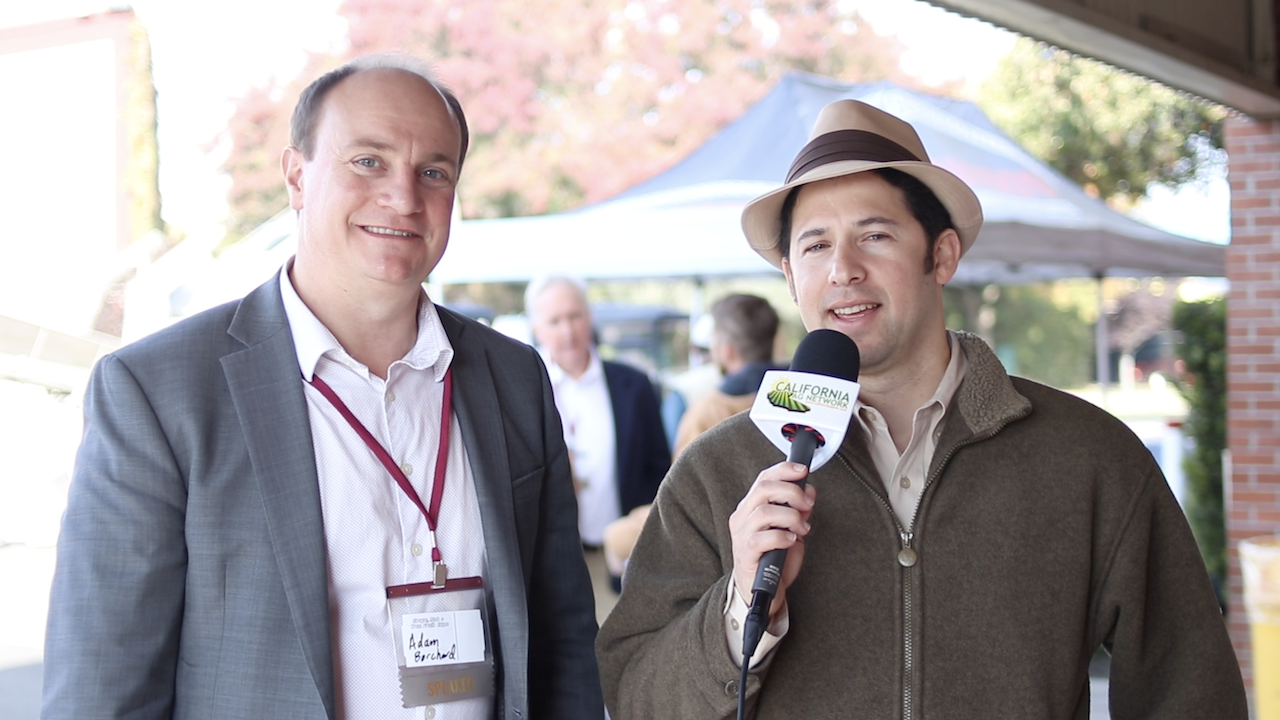
    As California farmers prepare for the New Year, there are some labor-related changes to laws and regulations that ag employers need to be aware of.  Watch this brief interview with Adam Borchard from the California Fresh Fruit Association as he explains, based on his recent presentation at the Grape, Nut & Tree Fruit Expo.

    Please thank this video’s sponsor Suterra for their industry support.

  • Blue Diamond Growers Annual Meeting Highlights Record Profitability

    Blue Diamond Growers Annual Meeting Highlights Record Profitability

    At the 112th Blue Diamond Growers Annual Meeting held mid-November in Modesto, CA, Blue Diamond Growers President and CEO, Mark Jansen, highlighted the accomplishments of the past year, while recognizing remarkable headwinds the cooperative tackled through creative solutions, strategic partnerships, and world-class innovation.

    “Although 2022 was marked by supply chain disruptions, the ongoing COVID-19 impact, and a continuing drought, we still fulfilled our mission and provided considerable competitive advantage with our grower returns,” said Jansen. “It could not have happened without the dedication of our 3,000 grower-owners or the 1,800 hard-working Blue Diamond team members.”

    Jansen further reported that despite the many challenges of the year, Blue Diamond was able to increase payments by an average of $.20 a pound and deliver a record competitive advantage in grower returns.

    In an additional highlight, he shared that to counter global transportation disruptions, the Blue Diamond Supply Chain Team worked with the Almond Alliance, California Department of Food and Agriculture, and the California Governor’s Office of Business Development to build a new multi-port export strategy. This included implementing a pop-up yard at the Port of Oakland to stage products closer to the port to reduce wait times at congested terminals. In addition, the Supply Chain Team partnered on the launch of the first inland direct-rail port from Fresno to the Port of Los Angeles. Based on these learnings, the team spearheaded the Almond Express train to carry containers from Oakland to Los AngelesLong Beach and Norfolk, Virginia. The containers were then offloaded onto terminal docks for guaranteed export to Asia, the Middle East and India.

    “Navigating the global supply chain issues and devising creative solutions – while working alongside our partners – is just one way we remained true to our vision of delivering the benefits of almonds to the world,” said Jansen.

    At the meeting, it was shared that during fiscal year 2022 Blue Diamond was able to:

    • Deliver its share of the California almond industry’s second largest crop of 2.8 billion meat pounds; closely following the record 3.1-billion-pound crop of 2020
    • Develop new value-added uses for almonds through ongoing new product development via the Almond Innovation Center (AIC). As a result, AIC delivered $90 million in innovation revenue and 18.9 million pounds of innovation volume for Blue Diamond.
    • Launch several new Blue Diamond branded consumer products including Extra Creamy Almond Breeze®, Almond & Oat Almond Breeze® (international markets) and new Snack Almonds (Chilé ‘n Lime, Probiotics, Elote, Korean BBQ, and Mash Ups)
    • Sell 83 million pounds of almonds as part of Blue Diamond’s Snack Almond line alone, while remaining the No. 1 almondmilk in the plant-based milk category
    • Achieve 17% volume growth compared to the previous year for Almond Breeze® products in more than 70 countries – via a global network of licensee partners
    • Increase Global Ingredient sales from new customer applications of almond butter, almond flour, and almond protein powder
    • Open new markets in UgandaGhanaKenyaBolivia and Argentina, while driving 33% volume growth in Asia

    “Blue Diamond has experienced substantial growth in recent years through thoughtful, smart decisions and actions,” said Dan Cummings, Chairman of the Board, Blue Diamond Growers. “With our focus on innovation, deeply established partnerships, and steadfast commitment to going above and beyond to deliver on consumer and retail demands, I expect this progress to continue well into the future.”

    Blue Diamond Announces Continuing Board Members

    In addition to sharing highlights from the past year, Blue Diamond also announced its continuing board members, including:

    • Dan Cummings, Chairman, District 1, Chico
    • John Monroe, District 2, Arbuckle
    • Dale Van Groningen, District 3, Ripon
    • George A. te Velde, District 4, Ripon/Escalon
    • Steve Van Duyn, Vice Chairman, District 5, Modesto/Ripon
    • Nick Blom, District 6, Turlock
    • Dan Mendenhall, District 7, Winton
    • Matthew Efird, District 8, Fresno
    • Kent Stenderup, District 9, Arvin
    • Joe Huston Director-at-Large, Monterey
    • Kristin Daley Director-at-Large, San Francisco
    Blue Diamond Annual and Sustainability Reports Now Available

    In conjunction with the Annual Meeting, Blue Diamond Growers is also releasing its “Partnering for a Sustainable Future” Annual Report and inaugural “Growing a Better Tomorrow” Sustainability Report. Both reports are available on the Blue Diamond website at www.bluediamond.com.

    About Blue Diamond

    Blue Diamond Growers, a grower-owned cooperative representing approximately 3,000 of California’s almond growers, is the world’s leading almond marketer and processor. Established in 1910, it created the California almond industry and opened world markets for almonds. Blue Diamond is dedicated to delivering the benefits of almonds around the world and does so by providing high-quality almonds, almond ingredients, and branded products. Headquartered in Sacramento, the company employs more than 1,800 people throughout its processing plants, receiving stations and gift shops.