Category: Almonds

  • Vaccination Update for Agriculture Workers

    Vaccination Update for Agriculture Workers

    The Almond Alliance has been in touch with County Health Officers about the number of vaccinations available in each county and to gather information on how the vaccinations are being distributed.  As you have heard and read, the process of vaccination has differed in each region and in many cases has been confusing.

    Vaccinations are being distributed categorically as defined by the California Department of Public Health with input from the Community Vaccine Advisory Committee. Given the limited supply of COVID-19 vaccines, CDPH recommends balancing the prioritization of these scarce resources to maximize the goal of achieving community immunity for all Californians.

    Vaccine Supply is Limited, But Preparations Are Underway for Phase 1B

    Preparations are underway to begin rolling out vaccines to those eligible in Phase 1B as soon as possible but that is dependent on vaccine availability.  For those eligible in Phase 1B, including educators, public safety, social services and food and agriculture workers some counties are evaluating and/or planning for worksite vaccinations, so you should expect that employees may start making inquiries.  The next phases of COVID Vaccine Distribution are as follows:

    Both federal and state distribution of vaccines has been delayed. As of January 13, a total of 971,829 vaccine doses have been administered statewide. As of January 13, a total of 2,948,350 vaccine doses, which includes the first and second dose, have been shipped to local health departments and health care systems that have facilities in multiple counties.

    Vaccination plans for each county are available at county websites. Find your county’s COVID-19 website, Click Here.

    It has also been reported that Phase 1B may be divided into two tiers. The first could include 1.4 million education and child-care workers including teachers, 1.1 million emergency services workers, 3.4 million food and agriculture workers including grocery store workers and 2.6 million people who are 75 or older.

    Recommendations from the Almond Alliance in preparation for food and agriculture vaccinations.

    1. Know your County Health Officer and Ag Commissioner (we can provide contact information and introduction). We are strengthening those relationships for our industry and are happy to share what we know. It will be critically important to familiarize yourself with your county’s vaccination plan and you should expect it to evolve as we move through initial phases of vaccine roll-out, e.g. the recent move-up in priority of those 65 and older.  It is likely there will be multiple vaccination pathways for you and your staff including worksites (mentioned above), community vaccination sites (e.g. schools, churches or fairgrounds), community clinics, pharmacies and healthcare providers

    2. Offer you site and a location to administer the vaccination if it makes sense.

    3. Provide your workforce educational materials about the vaccination.

    4. Make sure your workers understand what information they will need to receive the vaccination. No officials’ instructions have been provided, but we recommend the following:

    Staff should be prepared to show one or more of the following four pieces of identification to prove they are food and agriculture workers:

    • Employee badge with photo, OR
    • Professional license AND a photo ID, OR
    • Signed letter from employer on facility letterhead AND a photo ID, OR
    • Payment stub from employer with your name AND a photo ID.
  • Managing Phytophthora Diseases in Almond: Aerial, Root & Crown Rot

    Managing Phytophthora Diseases in Almond: Aerial, Root & Crown Rot

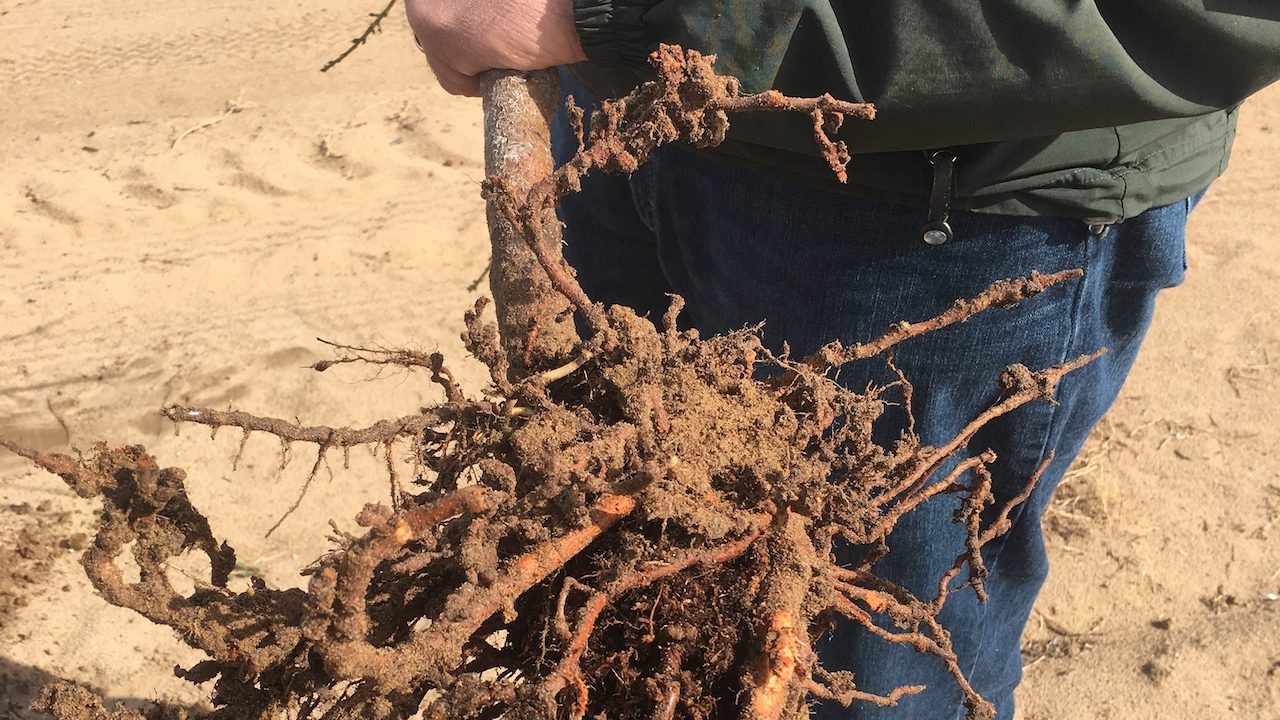
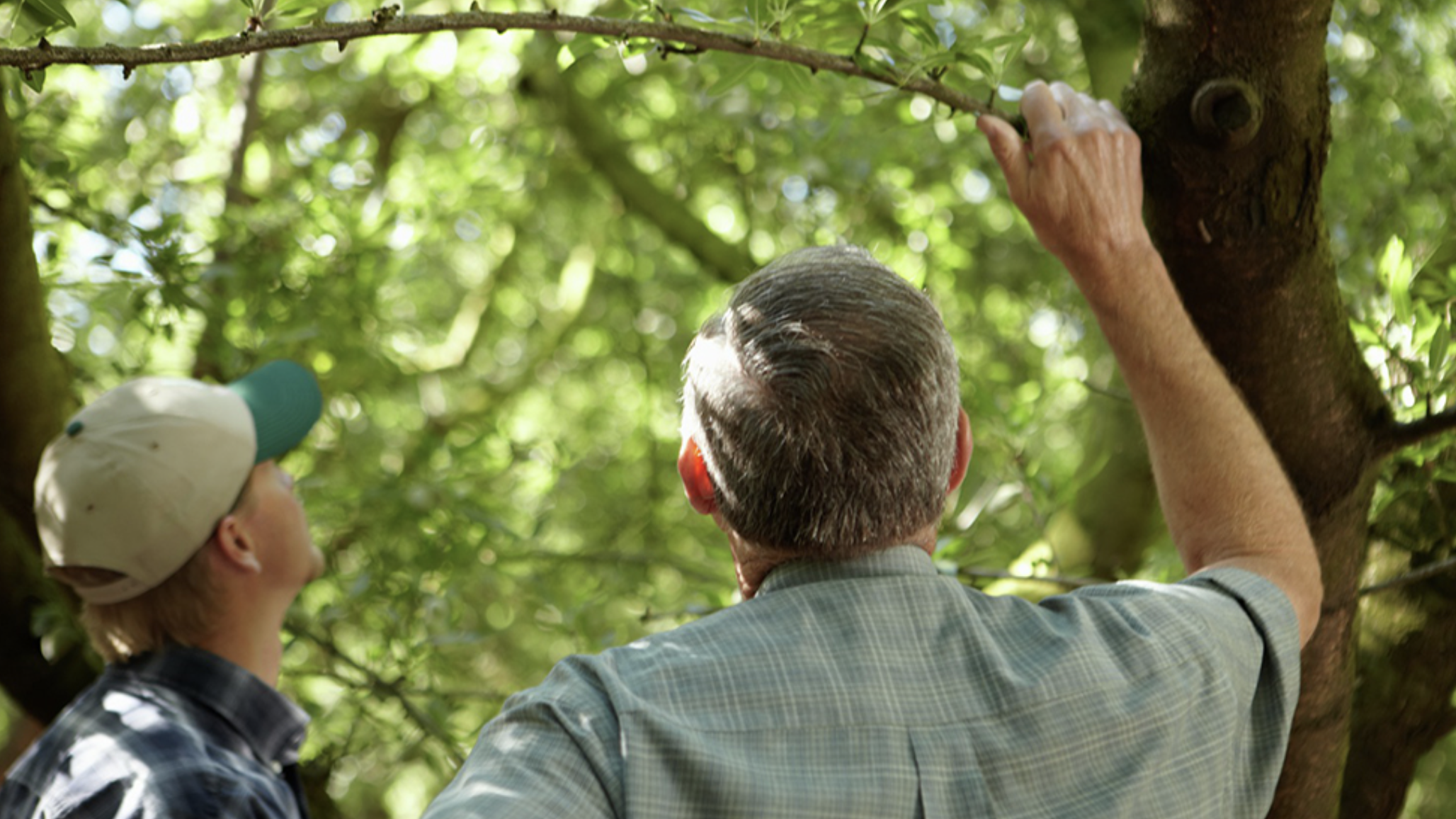
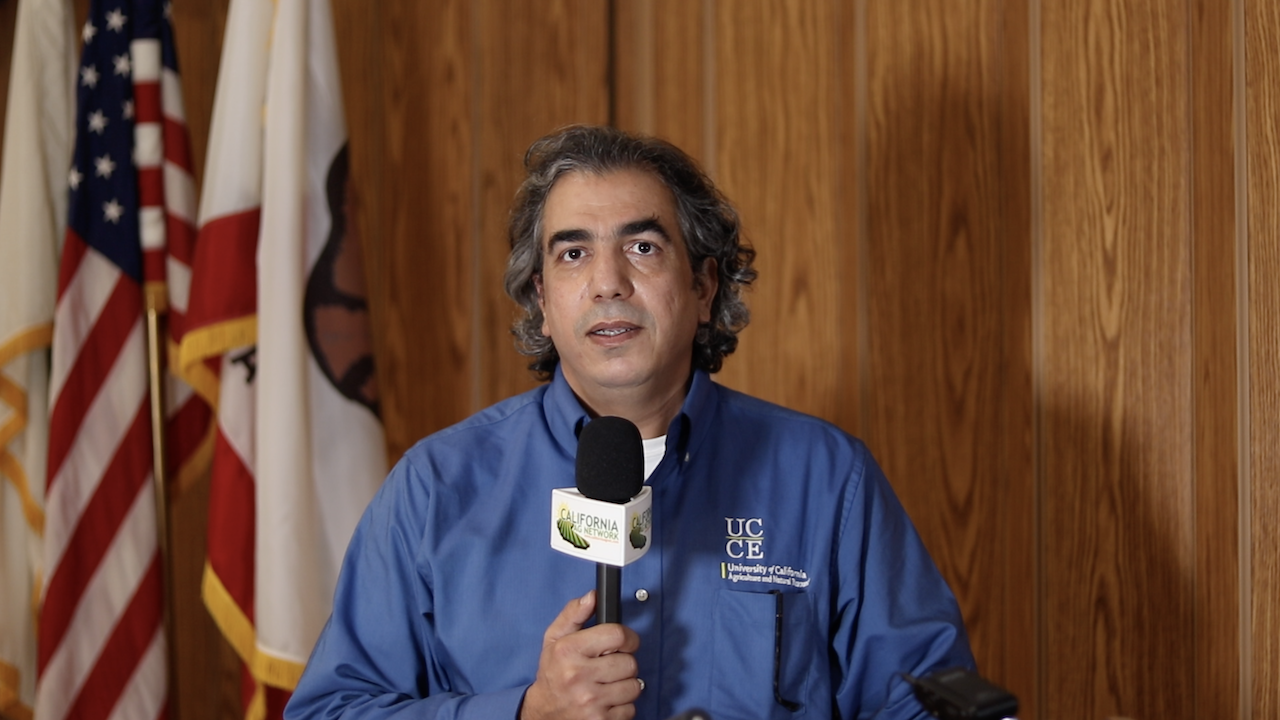
    There are three ways Phytophthora can injure an almond tree. Watch this brief interview with Kern County Area Orchard Systems Advisor Mohammad Yaghmour as he helps growers identify and manage Aerial Phytophthora, Root & Crown Rot.  Read more about it in Pacific Nut Producer Magazine.

    Please thank this video’s sponsor Trece for their industry support.

  • A New Microscopic Almond Pest of Concern

    A New Microscopic Almond Pest of Concern

    Another pest in almonds? Just what we needed, right? Only this one you can’t see.  Almond growers have been dealing with nematodes for a long time; however, the peach root knot nematode is new to California almond orchards.  Watch this brief interview with UC Riverside Nematologist Andreas Westphal as he explains and read more about it in Pacific Nut Producer Magazine.

    Please thank this video’s sponsor Trece for their industry support.

  • Ganoderma: Why Are My Almond Trees Falling Over?

    Ganoderma: Why Are My Almond Trees Falling Over?

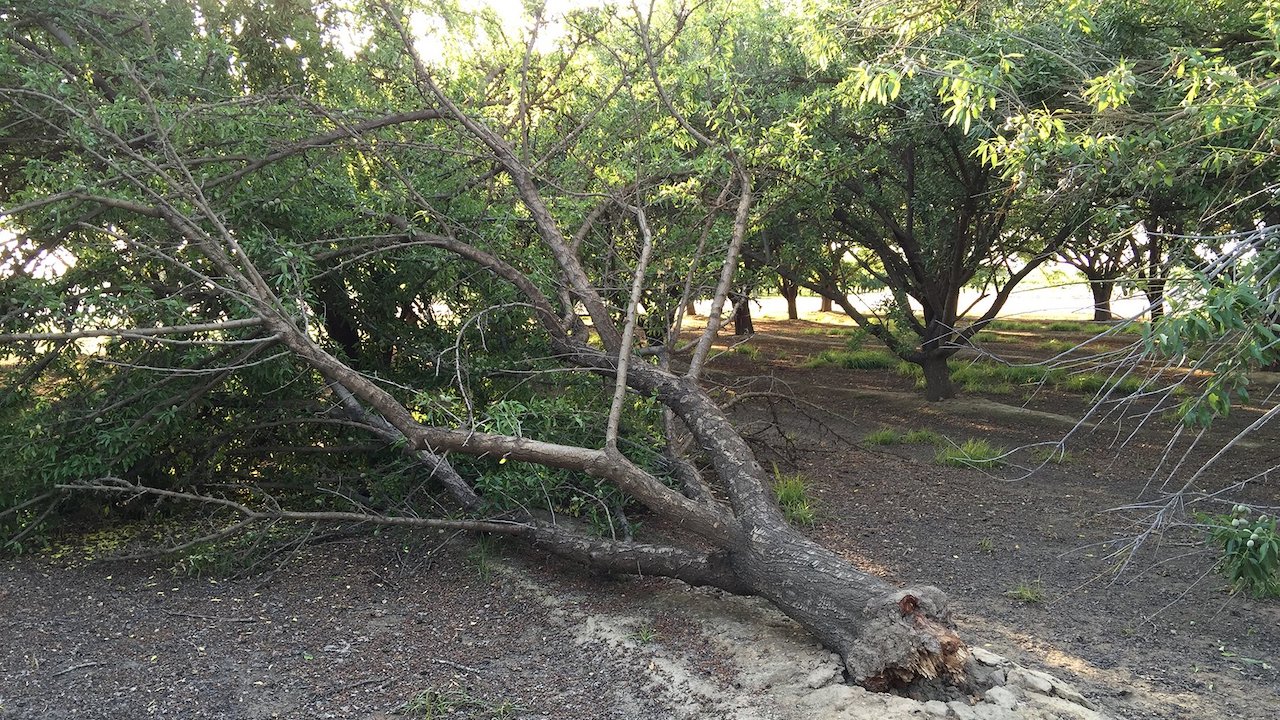
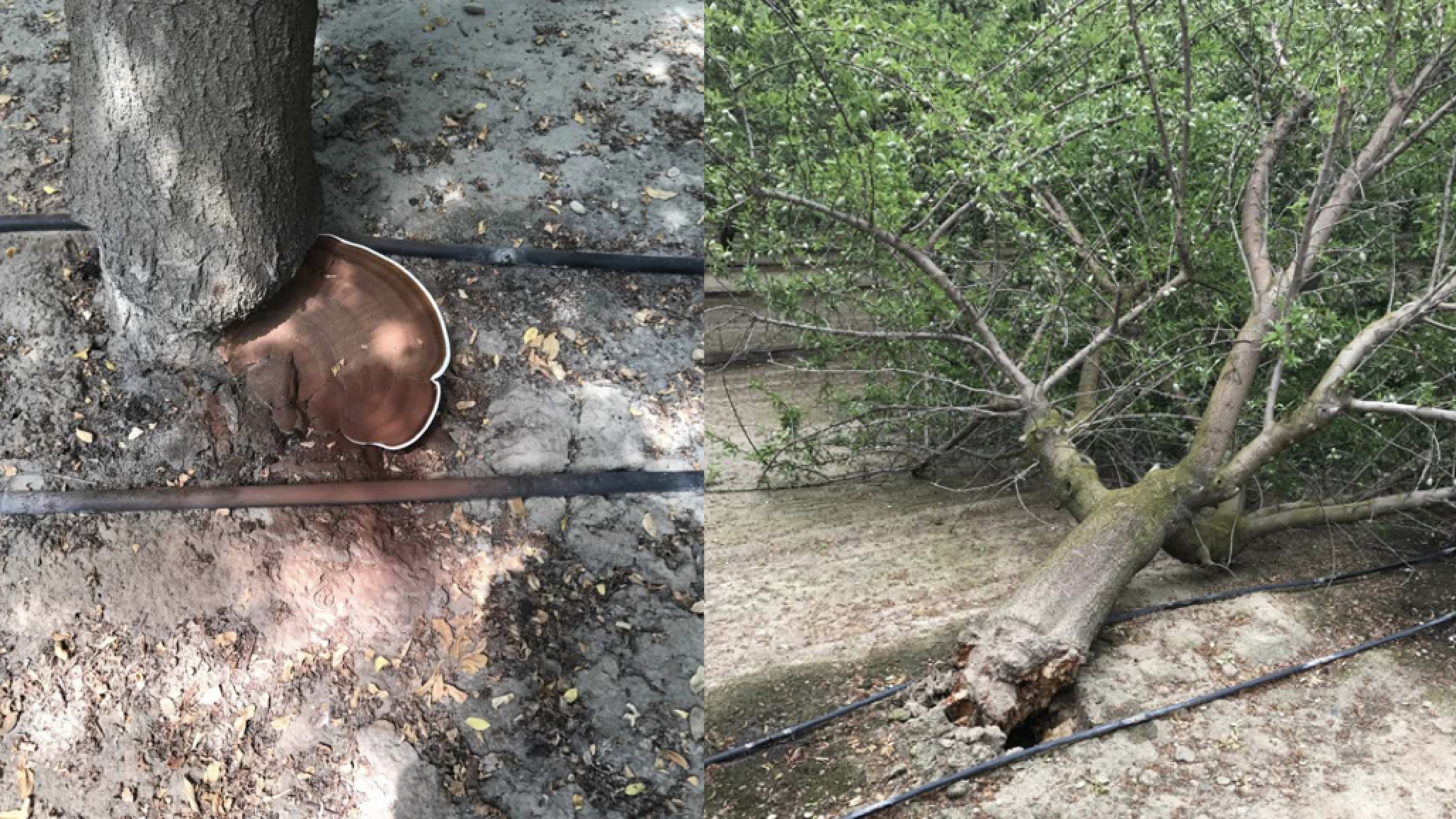
    Almond trees are collapsing all over the California, and it’s not just an old age thing anymore. If you are experiencing this in your orchard, your trees may have Ganoderma Heart Rot. Watch this brief interview with UCCE Nut Crops Advisor Mae Culumber as she explains, based on her recent presentation at the Grape, Nut & Tree Fruit Expo.

    Please thank this video’s sponsor Trece for their industry support.

  • Potassium Nutrient Management in Almonds & Pistachios

    Potassium Nutrient Management in Almonds & Pistachios


    So how much potassium does an almond or pistachio orchard need? How and when should it be applied? Watch this brief interview with UCCE Orchard Systems Advisor Phoebe Gordon as she shares some facts and considerations for growers to maintain a healthy orchard and prevent potassium deficiencies. Read more about best practices for orchard management in Pacific Nut Producer Magazine.

    Please thank this video’s sponsor Trece for their industry support.

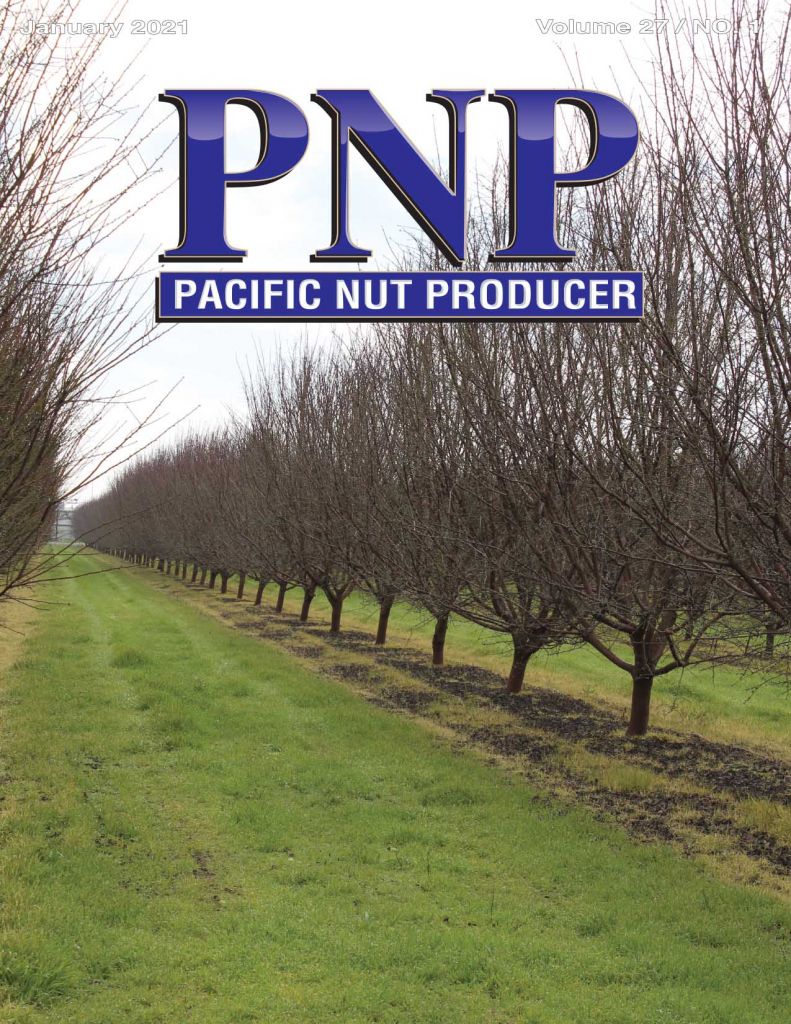
  • Pacific Nut Producer January Issue

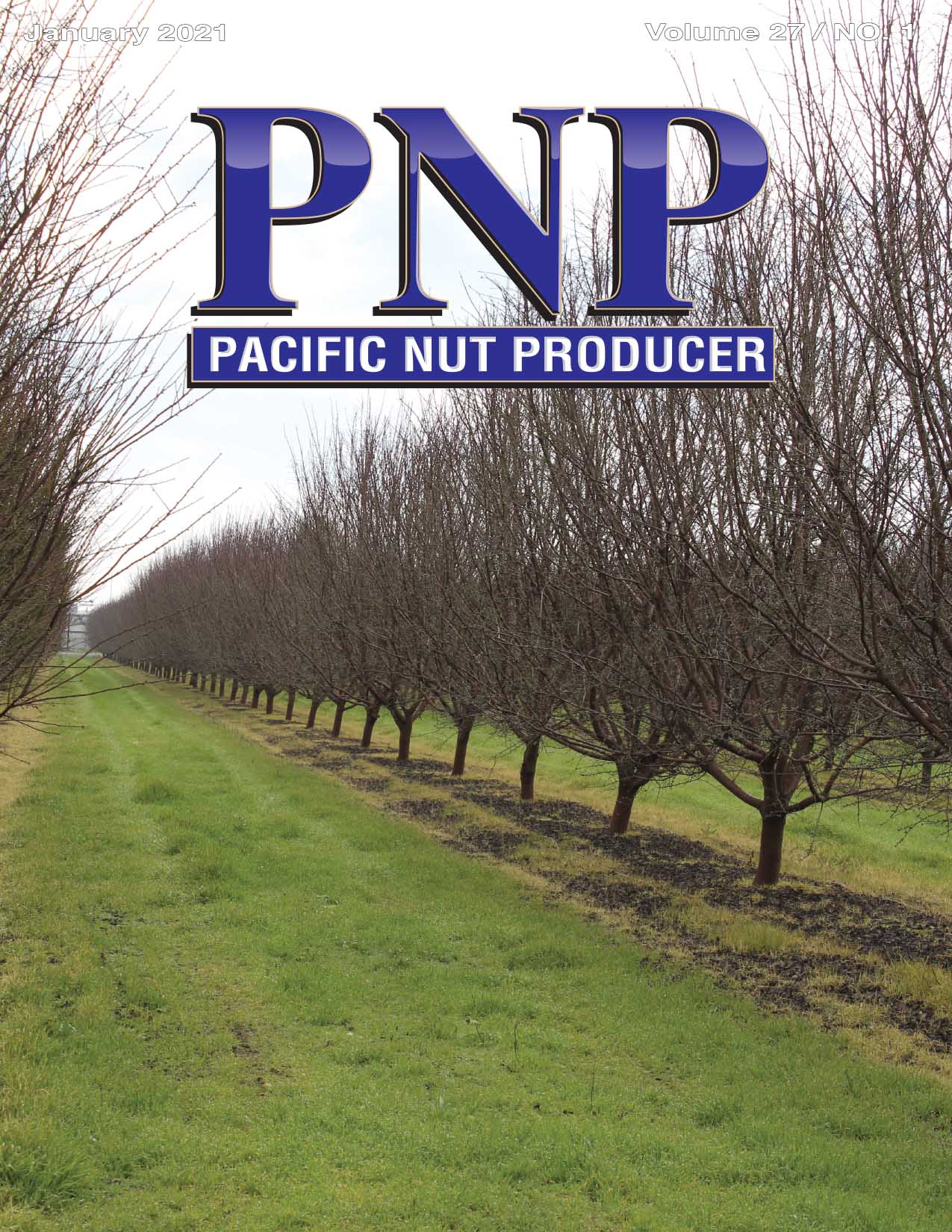
    Pacific Nut Producer January Issue

    Pacific Nut Producer January Issue
    Pacific Nut Producer January Issue

    [btn btnlink=”https://malcolmmedia.com/order-a-back-issue/back-issue-pacific-nut-producer-magazine/” btnsize=”full” txtcolor=”#ffffff” color=”#FFF” bgcolor=”#492500″ btnnewt=”1″ nofollow=”1″]Order A Back Issue[/btn]

    [btn btnlink=”http://malcolmmedia.com/pacific-nut-producer-magazine-subscriptions/” btnsize=”full” txtcolor=”#ffffff” bgcolor=”#492500″ btnnewt=”1″ nofollow=”1″]Subscribe Free[/btn]
    [three_fifth_last]

    Contents of the January Issue:

    Growers Stay In the Know at the Tree & Vine Expo
    Record Attendance in a Record Crop Year

    Continuing Ed at the Grape, Nut & Tree Fruit Expo
    Highlights Timely Orchard IPM Updates

    Virtual Almond Industry Conference
    Almond Board Outlines a Remarkable Year

    January Orchard Tasks
    Almonds, Hazelnuts, Pecans, Pistachios, Walnuts

    [/three_fifth_last]

  • New Grower Training Tuesdays with the Almond Board

    New Grower Training Tuesdays with the Almond Board

    Almond Board of California – Starting January 2021, the Almond Board of California (ABC) will provide a new opportunity for growers, PCAs and CCAs to gain timely operational insights that support in-orchard practices and help them meet seasonal challenges head on.

    ABC’s Training Tuesdays will kick off on January 5 and continue throughout the crop year. During the webinars, ABC staff and industry experts will present the latest on industry-funded research, new programs available to assist growers, tools within the California Almond Sustainability Program and more. Attendees will walk away from each webinar with tangible, practical tips they can try in the orchard, use to improve a current practice, or run past their local farm advisor for more information and site-specific recommendations. Webinar attendees will also have an opportunity to ask the experts questions specific to their operation, and all webinars will be posted to the Almond Board of California’s YouTube Channel 
    for easy reference about a week after they are hosted.

    “With the first-ever virtual Almond Conference this year in addition to COVID-19 restrictions on in-person gatherings, we are implementing Training Tuesdays to provide growers and industry professionals with timely, practical information to ultimately increase their productivity and profitability,” said ABC’s Chief Scientific Officer Josette Lewis, Ph.D.

    The webinars will be held on the first and third Tuesdays of every month and begin at 8 a.m. PT, lasting 1-1.5 hours. CEUs will also be offered for webinars eligible for CCA or DPR credits.

    The first webinar will be held on January 5 and the topic is “Best Management Practices for Pesticide Use During Almond Bloom.” Visit 
    Almonds.com/Events for more information and RSVP to receive DPR/CCA credits.

  • Almond Ganoderma Butt Rot Spore Survey

    Almond Ganoderma Butt Rot Spore Survey

    Ganoderma butt rot has been an increasing problem in the almond industry. The disease has been responsible for trees falling over all throughout the Central Valley. Ganoderma butt rot is caused by wood decay fungi that can spread via spores in the air. In order to better focus our management efforts, researchers must conduct a spore survey that will help us determine the times and locations that are at greatest risk of infection and spread by spores.
    The survey will include collecting air samples at almond orchards once a month for 2 years, so it will require long-term cooperation, but will be non-invasive and will not interfere with management practices. Any almond growers interested in volunteering their orchards (any age orchard works) for the research conducted by UC Davis plant pathologists, please contact Daisy Hernandez.

    Thank you all for your time and help.

    Contact:
    Daisy Hernandez, PhD, Student
    David Rizzo Lab,
    UC Davis
    Email: dahe@ucdavis.edu
  • New Almond Board Programs Assist Growers with Pollination

    New Almond Board Programs Assist Growers with Pollination


    As almond pollination costs have gone up in recent years, the Almond Board of California has engaged in studies to help growers reduce costs and developed strategic partnerships with other organizations to provide some new services that almond growers should take advantage of.  Watch this brief interview with Josette Lewis from the Almond Board as she explains and read more about it in Pacific Nut Producer Magazine.

    Please thank this video’s sponsor Suterra for their industry support.

  • COVID-19 Impact on the Almond Industry & Future Prospects

    COVID-19 Impact on the Almond Industry & Future Prospects

    Many have heard initial projections as to how COVID-19 might impact the California almond industry, especially at such a critical time with growers expecting their largest crop ever this year. But how has the market actually been impacted up to this point?  And are evolving consumer habits beneficial to this growing industry?  Watch this brief interview with Emily Fleischmann from the Almond Board of California to find out and read more about it in the coming issue of Pacific Nut Producer Magazine.

    Please thank this video’s sponsor Suterra for their industry support.