Category: Almonds

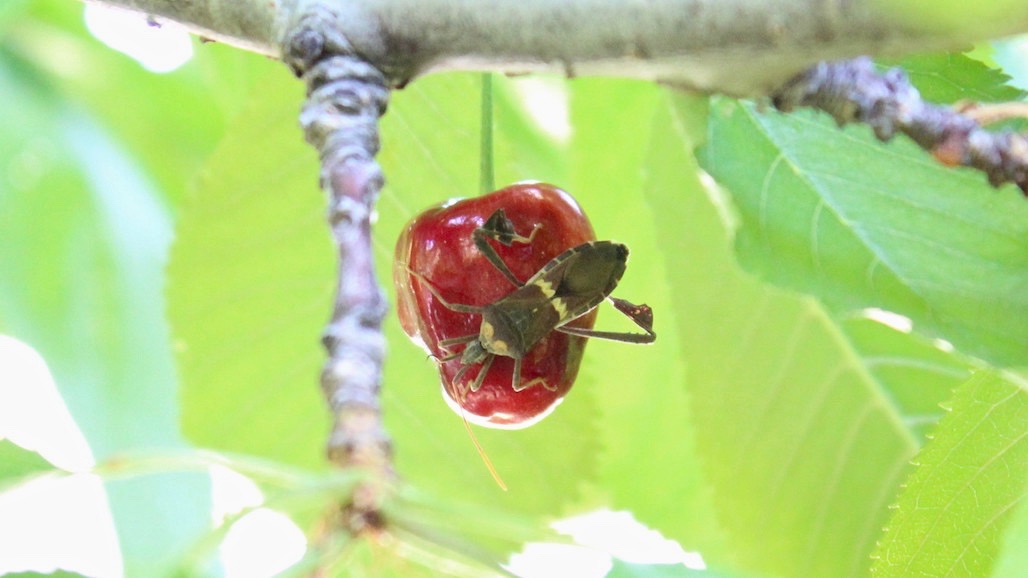
  • Leaffooted Bug Species May be Changing

    Leaffooted Bug Species May be Changing

    Almond Board of California — Insect pest management in almond and pistachio orchards largely focuses on reducing damage from navel orangeworm (NOW). Yet, after navel orangeworm, large bugs such as leaffooted bugs (LFBs) and stinkbugs are considered to be among the most damaging insects.

    Leaffooted bug species of particular concern in the past have included Leptoglossus clypealisLeptoglossus occidentalis, and Leptoglossus zonatusLeptoglossus clypealis is occasionally noted to be numerous: In 2013, L. clypealis was a particularly abundant LFB in orchards; however, since that time, L. clypealis seems to be less common than another LFB, L. zonatus.

    Recognizing and understanding the differences between these two LFB is key to effective management.
    L. clypealis is shown on the left and L. zonatus on the right. Photo courtesy of Dr. Joyce.

    L. zonatus is a larger LFB than L. clypealis and has longer mouthparts that allow it to feed on developing fruits longer into the growing season. Prior to 2013, L. zonatusdid not appear regularly in almonds in California, and it was not noted in University of California Integrated Pest Management manuals as being a pest of almonds – while this species was present in California, perhaps it was not particularly numerous. Since 2013, L. zonatus has frequently been observed in almonds during the growing season and at harvest, and now seems to occur more regularly in orchards than L. clypealis. It may be that the larger LFB L. zonatus is displacing L. clypealis.

    From 2014-2016, researchers identified LFB collections in almond and pistachio orchards from Chico to Bakersfield as consisting of two species: L. clypealis and L. zonatus. A 2017 study by Dr. Andrea Joyce, an entomologist at the University of California, Merced, investigated population genetics of these two species and found that L. clypealiscollections have high genetic diversity and many genetic types (haplotypes). This suggests that these L. clypealiscollections from the Central Valley are within this insect’s native range. However, the insect collections of the other species, L. zonatus, consisted of two genetically divergent types, or strains. One L. zonatus strain was widespread, and occurred through the Central Valley from Chico to Bakersfield, and the second genetic type occurred in the central and southern San Joaquin Valley. Work to geographically map out where the two genetic types of L. zonatus occur is ongoing.

    The presence of two strains of L. zonatus is important for insect pest management. It is highly likely that each insect strain is susceptible to different parasitoids, predators and pathogens. Two insect strains can also vary in their response to insecticides, as well as their attraction to pheromone lures.

    Currently, pheromone attractants are being developed for this LFB. It is vital to determine if the same pheromone blend will equally attract the two strains of L. zonatus. Dr. Joyce and colleagues will continue research on the two strains of L. zonatus this year, comparing their biological parameters, examining whether the two strains are cross attracted in lab bioassays, and if they cross mate in the field. The hope is that any pheromones and attractants developed for L. zonatus can be used to manage both strains of this species. A monitoring tool such as a pheromone trap for these insects would be particularly useful in a grower’s IPM toolbox.

    Growers can support researchers in determining the distribution of the two strains by collecting any LFBs they identify or notifying Dr. Joyce when large numbers of LFBs are observed. Growers may email Dr. Andrea Joyce if they sight LFBs or have questions about this pest at  
    ajoyce2@ucmerced.edu.

    Note: Additional Almond Board-funded research is being conducted by Dr. Jocelyn Millar to identify pheromones and related attractants for the two major LFB pests in California nut crops. These tools could potentially be utilized for monitoring or control of these species.
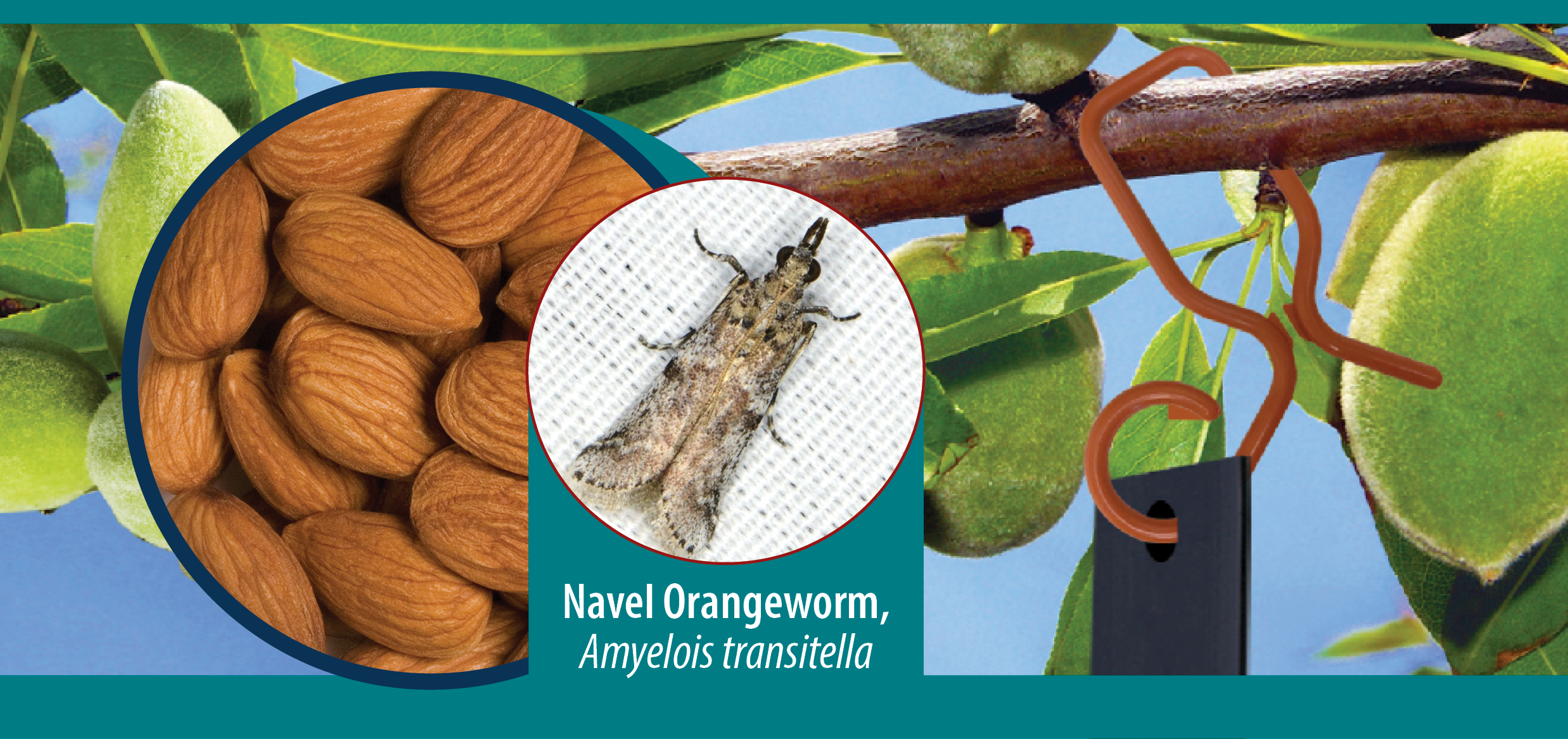
  • CIDETRAK® NOW MESO™ – Add this TOOL to your BELT

    CIDETRAK® NOW MESO™ – Add this TOOL to your BELT

    – SPONSORED CONTENT –

    “We are on year 2 with having CIDETRAK® NOW MESO™ in our orchard, and we are extremely pleased with the results. We’re treating 500 acres of Almonds and have seen a major reduction in NOW injury of up to 80%.

    What makes CIDETRAK unique for us is the application flexibility. We do not have flat square orchard blocks that other products can be used on. We have staggered rows and imperfect orchard shapes, and this is where we can use multiple MESO source points to cover

    Hanging the MESO’s was easy and even the local Trécé rep was willing to come out and show the team exactly how to apply the product.

    CIDETRAK’s non-mechanical, non-failure simplicity combined with “beyond the harvest, field life” are other important aspects that drive us to continue with MESO.

    CIDETRAK is a key tool in our toolbelt for controlling NOW. I recommend anyone thinking about their options for mating disruption products, to strongly consider CIDETRAK NOW.”

    About Kevin:

    Kevin grew up working in various aspects of Agriculture. At an early age he learned how to manage and operate a cattle ranch, as well as learned to manage large acreage of Almonds and Walnuts. After graduating from Chico State, he assumed the responsibility of managing Tehama Angus Ranch tree nut operations, and has been doing so ever since 2014. Kevin is the acting Orchard Manager for all of Tehama Angus Ranch tree nuts.

    Add this TOOL to you BELT CONTACT US

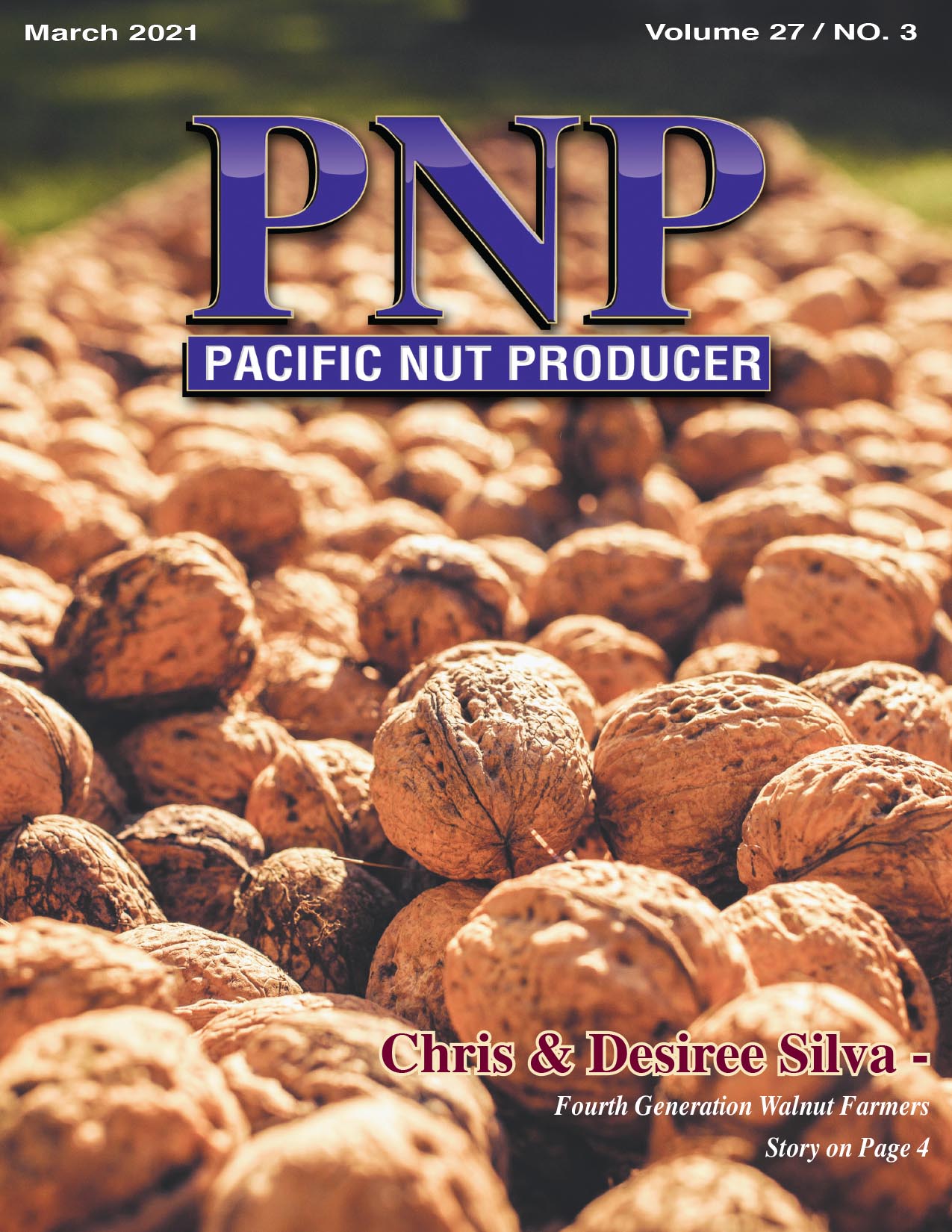
  • Pacific Nut Producer March Issue

    Pacific Nut Producer March Issue

    Pacific Nut Producer March Issue

    [btn btnlink=”https://malcolmmedia.com/order-a-back-issue/back-issue-pacific-nut-producer-magazine/” btnsize=”full” txtcolor=”#ffffff” color=”#FFF” bgcolor=”#492500″ btnnewt=”1″ nofollow=”1″]Order A Back Issue[/btn]

    [btn btnlink=”http://malcolmmedia.com/pacific-nut-producer-magazine-subscriptions/” btnsize=”full” txtcolor=”#ffffff” bgcolor=”#492500″ btnnewt=”1″ nofollow=”1″]Subscribe Free[/btn]
    [three_fifth_last]

    Contents of the March Issue:

    Bad Luck, Good Luck & a Whole Lotta Work
    Silva Family Legacy Continues Farming Walnuts

    Bumble Bees Under the Endangered Species Act
    CF&G Commission Decision on Appealing Decision

    Earl Bruck Gets Nut Grower of the Year Award
    Hazelnut Growers Gather Virtually for NGS Meeting

    March Orchard Tasks
    Almonds, Hazelnuts, Pecans, Pistachios, Walnuts

    [/three_fifth_last]

  • Whole Orchard Recycling and Its Impact on Future Plantings

    Whole Orchard Recycling and Its Impact on Future Plantings

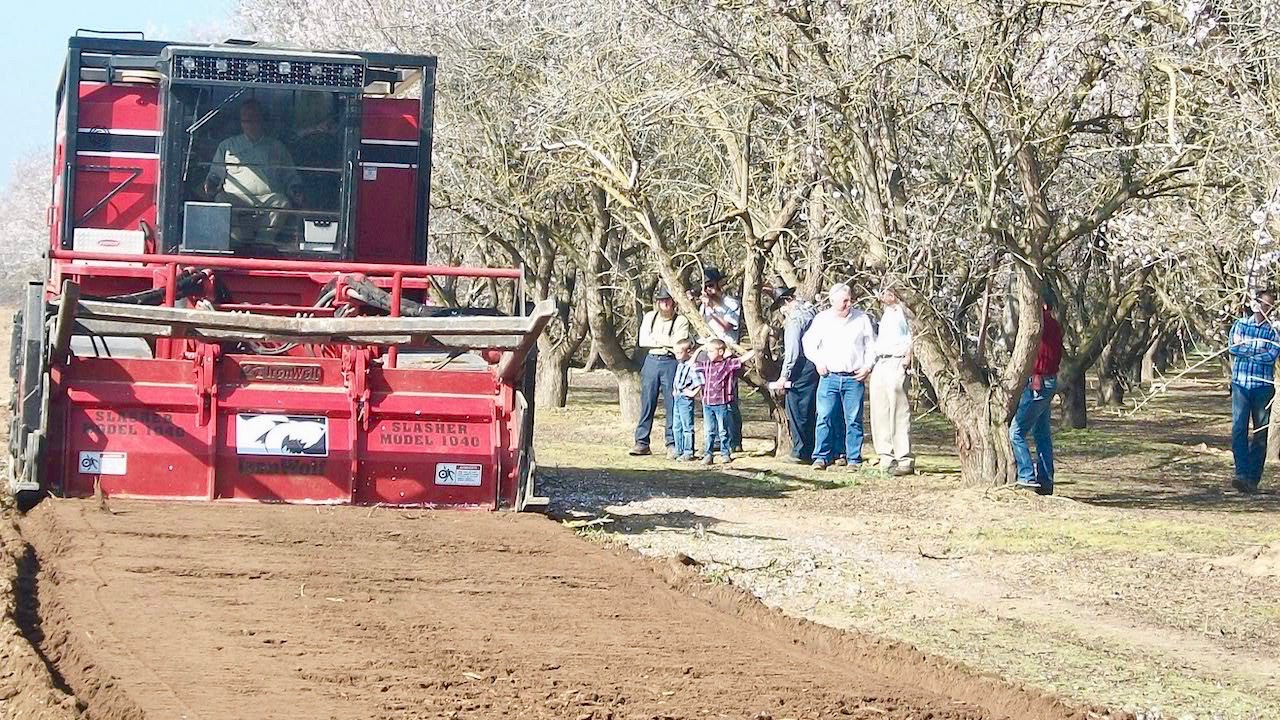
    Whole orchard recycling is really catching more interest among farmers recently, particularly in the almond industry; and leading the charge in the research/outreach of this practice is UC Cooperative Extension Farm Advisor Brent Holtz.  Watch this brief interview with Brent as he discusses benefits and considerations for implementing this practice in the orchard; and read more about it in Pacific Nut Producer Magazine.
    Please thank this video’s sponsor Trece for their industry support.
  • Almond Board of CA Announces 2021 Election

    Almond Board of CA Announces 2021 Election

    The Almond Board of California (ABC) Board of Directors election for the 2021-2022 crop year has begun.

    There are two independent grower member positions and two independent grower alternate positions available on the ABC Board of Directors. To be considered for these positions, each candidate must be a grower and must submit a petition signed by at least 15 independent almond growers (verified by ABC). The petition should state the position for which the candidate is being nominated and be filed with Almond Board of California at 1150 9thStreet, Suite 1500, Modesto, California 95354. The filing deadline is April 1, 2021.

    Additionally, two independent handler member positions and two independent handler alternate positions are available. Handlers must declare their candidacy, in writing, to ABC no later than April 1, 2021 to be considered for these positions.  

    A cooperative grower member and alternate nominee will be selected through their cooperative association.                   

    The Almond Board was established in 1950 to administer the Federal Marketing Order for almonds. ABC assures industry compliance with marketing order regulations and is responsible for administering all aspects of the marketing order. It also serves the almond industry in other major areas, including production research, global advertising and public relations, and accumulation, compilation and dissemination of statistical information.  

    The ABC encourages eligible women, minorities, and people with disabilities to consider running for a position on the Board of Directors as it believes this committee should reflect the diversity of the industry it serves. 

    For further information, call Bunnie Ibrahim, senior analyst in Government Affairs, at (209) 343-3228.

  • CA Fish & Game Commission Decision on Appealing the Court’s Decision on Enlisting Bumble Bees Under the CA Endangered Species Act

    CA Fish & Game Commission Decision on Appealing the Court’s Decision on Enlisting Bumble Bees Under the CA Endangered Species Act

    Almond Alliance of California — On January 12th the California Fish and Game Commission (Commission) met to consider rescinding the decision they made at the June 12, 2019 meeting acting on the petition to determine whether listing Crotch bumble bee (Bombus crotchii), Franklin’s bumble bee (Bombus franklini), Suckley cuckoo bumble bee (Bombus suckleyi), and western bumble bee (Bombus occidentalis) as endangered or threatened species under the California Endangered Species Act (CESA) may be warranted. The Commission’s consideration to rescind their January position was due to lawsuit filed by an agricultural industry coalition (that includes the Almond Alliance) where a Sacramento County Superior Court judge ruled that insects including bees were not eligible for protection under the CESA.

    During public comment at the Commission meeting there were several organizations that supported an appeal of the Superior Court’s decision and made it clear that they are moving forward on an appeal and encourage the California Fish and Game Commission to join them. Those appealing the decision are Xerces Society, Defenders of Wildlife and Center for Food Safety. They believe the trial court was incorrect, that bees and bumble bees should be afforded protection under the CESA and that the lower court ruling should be appealed.

    Sunshine Salvador, Counsel of California Farm Bureau and Paul Weilend of Nossaman spoke on behalf of the coalition and did a great job representing the industry’s position. They indicated that the farming community is prepared to pivot away from litigation and engage in a stakeholder process to establish a statewide pollinator management policy. We are uniquely suited to do so given our expertise in pollinator management and in light of the essential role of pollinators in farming and providing food security for our State and the nation. Establishing a statewide pollinator management policy, tailored to the challenges pollinators face is much more likely meet pollinator conservation needs versus regulation through the CESA.

    On January 27th, the Almond Alliance and members of the coalition met with Commission President Eric Sklar and Vice President Samantha Murray as well as the Commission’s legal counsel and a representative from the Attorney General’s office.  We expressed why the Commission should not appeal the Sacramento County Superior Court Judge’s decision. This meeting’s goal was to tell them about our current efforts to protect pollinators and to explain there are better ways to protect pollinators and other insects than expending further resources in court. We stated that enlisting bees under CESA may limit our ability to work together to protect pollinators and advance Secretary Crowfoot’s initiative for a statewide pollinator management policy under the Resources Agency Biodiversity Collaborative.

    On February 5th we were made aware that the Commission filed a Notice of Appeal through the California Attorney General’s Office.

    This is where we need your assistance. We need resources to continue our efforts, now at the Appellate Court level to oppose inclusion of insects under the CESA. We are asking our membership and stakeholders to contribute to a legal fund to continue our fight. Whether it is $100, $500 or $5,000 – every donation helps and ensures that we represent you in the Appellate Court. If you prefer to pay directly to the coalition’s legal counsel, we are happy to forward their contact information to make the direct payment.

    For those of you that would like more background as you consider your contribution to this effort, please see below.

    For any questions, please email etrevino@almondalliance.org.

    If you would like to see the Xerces Society media release on the appeal, Click Here.

    Background: On June 12, 2019, the California Fish and Game Commission (Commission) voted 3-1 that listing four species of bumble bees may be warranted under the California Endangered Species Act (CESA).  The decision was made after the Xerces Society, Center for Food Safety, and Defenders of Wildlife filed a petition to list the Crotch bumble bee (Bombus crotchii), Franklin’s bumble bee (Bombus franklini), Suckley cuckoo bumble bee (Bombus suckleyi), and western bumble bee (Bombus occidentalis) as endangered species under CESA.

    Presently, no insects are listed as threatened or endangered under CESA. Both the California Office of Administrative Law and the California Office of the Attorney General have previously taken the position that insects cannot be listed under CESA as the law  defines candidate, threatened, and endangered species as “native species or subspecies of a bird, mammal, fish, amphibian, reptile, or plant.”  The law does not include insects.

    Counsel for the Commission claims that because the California Fish and Game Code defines fish as “a wild fish, mollusk, crustacean, invertebrate, amphibian, or part, spawn, or ovum of any of those animals,” when the Legislature enacted CESA, rather than include insects among the families of species that could be listed, there was legislative intent to incorporate bees, butterflies, beetles, and other insects via the definition of fish.

    The Almond Alliance along with our coalition partners argued that this consideration is not justified based on the following facts:

    • Presently, no insects are listed as threatened or endangered under CESA.
    • Both the California Office of Administrative Law and the California Office of the Attorney General have previously taken the position that insects cannot be listed under CESA. 
    • CESA defines candidate, threatened, and endangered species as “native species or subspecies of a bird, mammal, fish, amphibian, reptile, or plant” which does not include insects. 

    ​​​​​​​Paul Weilend of Nossaman, LLP represented our coalition (petitioner list is found below) in the proceedings that opposed candidacy for the four bumble bee species.

    How this impacts the California almond industry: If the bumble bees are listed under the CESA, they would be the first insects protected under the Act. While the bees are “candidates” for listing, they have the same protections as species listed as threatened or endangered.  This means prohibitions on killing them which the Department of Fish and Wildlife routinely interprets to extend to harm to the bees or their habitat.  We would expect pesticide restrictions, grazing rules, and other habitat protections regarding bumble bees.  That could lead to uncertainty if bumble bees are present on fields or in other areas where agricultural practices are occurring. This type of ambiguity would guarantee disruption to normal and customary almond production practices.  For example, ripping, soil movement or almond harvest activities could be claimed to disturb potential nesting sites.  The petitioners specifically list honey bees as a threat to the bumble bees, thus a listing could regulate placement of or reduce the number of honey bee hives.  Listing bumble bees as threatened or endangered is setting the stage for how other insect pollinators will be defined, regulated, and protected.

    Let me be clear, this should not be a debate about the value of bumble bees to almonds, society, and the world, rather how we handle an insect that needs to be protected to prevent colony loss and provide the best possible long-term health.

    The Commission argued that insects are covered by CESA, on the grounds that the Fish & Game Code defines “fish” to include “invertebrates” and that bumble bees and other insects are “invertebrates.”

    In addition, the court declined to defer to the Commission’s scientific expertise and its longstanding position that is has the authority to list insects under CESA. The court noted that the Commission only attempted once before to list an insect species, under CESA’s predecessor statute, and that the Office of Administrative Law rejected the listing as unauthorized. More broadly, the court observed: “Because the Commission’s opinion of its authority under CESA is at odds with the Legislature’s, the Commission’s expertise does not command the deference sought.”

    On November 13th 2020, the Sacramento Superior Court  ruled that insects are not eligible for listing under the CESA ; Almond Alliance of California v. California Department of Fish and Wildlife, Sacramento Superior Court No. 34-2019-80003216 (Nov. 13, 2020).

    CESA defines “endangered species” as a “native species or subspecies of a bird, mammal, fish, amphibian, reptile or plant which is in serious danger of becoming instinct.” Fish & Game Code § 2062.

    The superior court agreed with the farming groups based on straightforward principles of statutory interpretation. The Commission argued that insects are covered by CESA on the grounds that the Fish & Game Code defines “fish” to include “invertebrates” and that bumble bees and other insects are “invertebrates.” The court reasoned that while the definition of “fish” included “invertebrates connected to a marine environment” (such as shellfish and crustaceans), it did not encompass terrestrial “insects such as bumble bees.” The court rejected the “counterintuitive mental leap” that would be “required to conclude that bumble bees may be protected as fish.”

    The court also pointed to a statement in the CESA legislative history indicating that— unlike the federal Endangered Species Act, which explicitly covers terrestrial invertebrates—the California statute was drafted to exclude such invertebrates from eligibility. The court further cited a 1998 California Attorney General opinion concluding that CESA did not apply to insects. While Attorney General opinions are not binding, they are entitled to “great weight,” especially in the absence of clear case law authority. The court concluded: “Combined with CESA’s legislative history, the Attorney General’s opinion makes a very strong case that the Commission was not authorized to list bumble bees.”

    Lastly, the court rejected the Commission’s claim that CESA should be interpreted broadly to effectuate CESA’s purposes. The court concluded that “the absence of authority to list insects under CESA, either as fish or otherwise, is clear. As a result, CESA’s purposes do not confer authority that the Legislature withheld.”

    Thank you for contributing to this very important effort.


    Petitioners: 
    • Almond Alliance of California 
    • California Association of Pest Control Advisors 
    • California Citrus Mutual 
    • California Cotton Ginners and Growers Association 
    • California Farm Bureau Federation 
    • Western Agricultural Processors Association 
    • Western Growers Association
  • Celebrating Bee Friendly Farming® Certified Almond Orchards on National Almond Day

    Celebrating Bee Friendly Farming® Certified Almond Orchards on National Almond Day

    Pollinator Partnership (P2) announced today that it has certified over 55,000 acres of almonds in 2020 as pollinator friendly and environmentally sustainable through its Bee Friendly Farming (BFF) Certified program. The Almond Board of California’s Bee+ Scholarship program has been instrumental in leading this movement by offsetting the cost of BFF certification, allowing land managers to apply those funds that would be used on certification fees to pollinator habitat. Coupled with significant Integrated Pest Management, the floral resources now available for local and migratory pollinators will increase biodiversity and add a variety of benefits to almond operations across California.
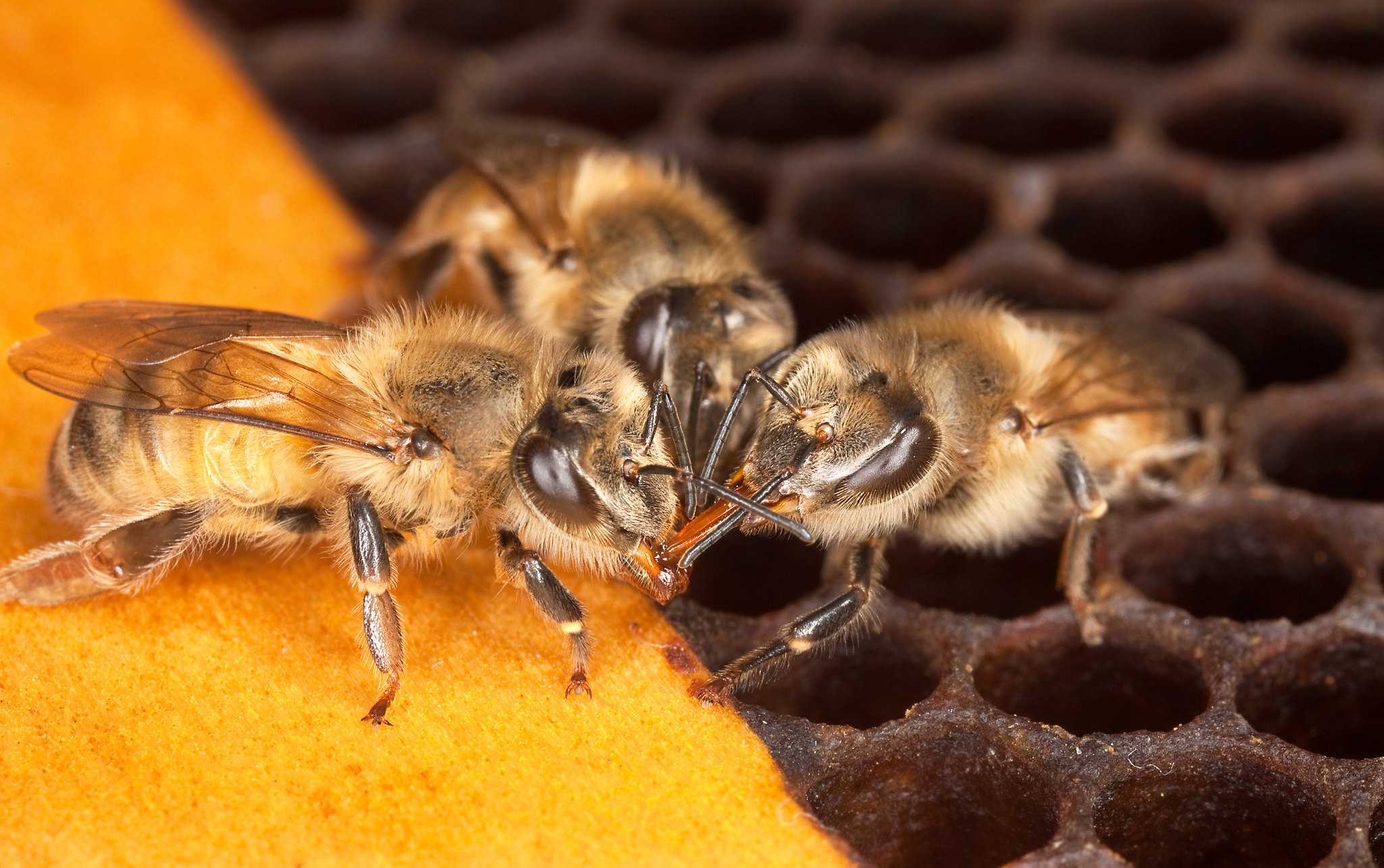
    Bee Friendly Farming® Certified provides guidelines for farmers, growers, and land managers to promote pollinator health on their lands. BFF sets standards for sustainable farming on important concepts like planting pollinator food sources, providing nesting habitat, and incorporating an Integrated Pest Management (IPM) strategy to help growers prevent pest infestations and find solutions that solve pest problems while providing safe harbor for pollinating species.

    BFF Certified growers report substantial benefits to their operations. In addition to increased pollination services, they see improved soil health and water retention as well as an increase in the presence of natural enemies to combat common pests. BFF’s rigorous and stringent compliance protocol helps ensure that these almond orchards play an essential part in keeping pollinators healthy and the food supply abundant. Look for the BFF logo in your local supermarket on almond products – it is the mark of forward-thinking growers who value quality production and represent exemplary stewardship.

    “Bee Friendly Farming seeks practical solutions for farmers with the goal of seeing real environmental change. It is thrilling to see how the almond industry is turning this superfood into a driver for pollinator and environmental health as well,” stated Laurie Davies Adams, President of Pollinator Partnership, parent organization of Bee Friendly Farming.

    “We congratulate our Bee Friendly Farming Certified growers on National Almond Day for their leadership and vision in building a sustainable future for one of California’s most important crops and one of the world’s favorite foods,” added Miles Dakin, Bee Friendly Farming Coordinator from Pollinator Partnership’s California headquarters.

    Visit www.BeeFriendlyFarming.org for more information on Bee Friendly Farming and to learn how you can participate as a farmer, gardener, or partner.

    ABOUT POLLINATOR PARTNERSHIP (P2) Established in 1997, Pollinator Partnership (P2) is the largest 501(c) 3 non-profit organization dedicated exclusively to the health, protection, and conservation of all pollinating animals. Pollinator Partnership’s actions for pollinators include education, conservation, restoration, policy, and research. P2’s financial support comes through grants, gifts, memberships and donations from any interested party. Its policies are
    science-based, set by its board of directors, and never influenced by any donor. To make a donation in
    support of our mission, or for information, visit www.pollinator.org.

    ABOUT BEE FRIENDLY FARMING (BFF)Bee Friendly Farming is a certification program from Pollinator Partnership that provides guidelines for farmers and growers interested in promoting pollinator health on their lands.
    https://www.pollinator.org/bff.

  • Hive Strength and Bee Health/Safety for Successful Almond Crop

    Hive Strength and Bee Health/Safety for Successful Almond Crop

    For a successful harvest, start the season strong. A large crop at harvest requires good bee activity at bloom in the orchard. The current UC general recommendation for bee hive stocking rates is 1-3 strong hives per acre. A strong hive contains at least 8 frames covered with bees, an actively laying queen, and one to two frames of brood. Where cold, rainy and/or windy conditions limit bee flight (remember the 2019 bloom?), two to three strong hives may be needed to supply enough bees to set a decent crop when narrow windows of good bee weather open up. Less than two hives per acre may be sufficient to set a good crop in extended good bloom weather (2020 bloom). Good bee weather is at least 59oF, no rain and less than 10 mph wind speed. [In general, bees begin to forage when temperatures reach 55oF, winds less than 15 MPH and it’s not raining.]

    Hive strength makes a difference in pollination activity (see graph below). The more frames covered with bees in a hive means more foraging bees and more flowers pollinated. The best possible start to the season begins with strong hives in the orchard at the start of bloom

    Average pollen collected per hive for a range of hive strengths based on frames of bees per hive over a 7 or 10 day period. Data from Sheesley and Bernard, Cal Ag, 1970 

    To ensure strong hives in the orchard as bloom starts, pollination contracts should include 1) language stating hive strength and 2) an inspection clause stating that some fraction of the hives will be opened and frames inspected by a third party at or soon after delivery to confirm if the contracted hive strength was delivered. The hive strength check should happen at or close to delivery because, as almond flowers are an excellent food source for honeybees, a four-frame hive at delivery to the orchard can become stronger as the pollination season progresses. Assessing colony strength at the end or close to the end of pollination season is not an accurate measure of the pollination activity at the start of the season when strong hives are most needed.

    Growers using lower bee stocking rates (1-2 hives/acre) in an effort to save money are the most in need of contract language stating hive strength and a hive inspection. A single 8-frame hive collects 2.5x the pollen as a 4-frame hive.

    Hive health. Where hives are located and bees treated in an orchard can impact hive health and potentially pollination performance. Hive location, availability of clean water and spray programs (materials and timings) all should be considered by growers and communicated with beekeepers. Hive placement plays a role in good bee activity across the orchard. Hives should be placed in locations where early morning sun will warm the hives and in groups in or around the orchard no more than a quarter of a mile apart.

    Bees need water and will go find it (somewhere else) if not available in your orchard. Check-in with your beekeeper to decide on location and responsibility for providing watering stations for bees in your orchard. The water stations should be protected from pesticides by covering or moving the station or changing the water, or changing after spraying. Bees can’t drink while flying and can drown trying to get to water if there is no landing site at the water source. A 5 gallon bucket with clean water and an old towel or piece of burlap draped over the bucket lip and into the water works as a bee watering site. The Almond Board of California’s most recent Honey Bee Best Management Practices is available at almonds.com/sites/default/files/2020-12/BeeBPMs_12212020.pdf

    Bees can be harmed by pesticides. Certain pesticides and practices can be particularly harmful. In particular, all/any insecticides (except B.t. products such as Dipel) should not be used at bloom. Adjuvants, particularly organosilicones, can harm bees directly and/or increase the impact of pesticides on bees and should be left out of bloom sprays. Foliar nutrients may also harm bees. Protect your bee investment; put only fungicide(s) in the spray tank at bloom.

    While both bees and fungicides are needed during bloom in Sacramento Valley almond orchards in most years, the best practices for bee health and crop set require dividing the day between time for bee activity and time for spray activity; a split shift for bees and sprayers (on spray days). This approach lets bees work and then flowers can be protected. Here’s how that works.

    The key to good hive health is keeping sprays off the daily pollen load that forager bees carry back to the hive and fed to the brood. Almond flowers release some pollen every morning as humidity drops after sunrise. This occurs for several days after the flower opens. In an orchard with good bee activity, pollen released that morning is stripped from flowers by early afternoon. Fungicide spraying shouldn’t start until then; when pollen available for the day is gone (collected by bees and flown back to the hive). There are a couple of ways to check if the pollen is gone from flowers. If the pollen gathering bees (the ones with yellow lumps of pollen on their hind legs) are just doing touch-n-go landing on flowers, those flowers don’t have pollen left and it’s OK to spray. Another method is to rub the flower anthers (the spikey structures in the center of the flower) between your thumb and fingers and then check for yellow pollen on your hands. If there is little to no pollen on your fingers, the bees have been there and gone. (Wash your “pollencheck” fingers before rubbing your eyes. Don’t ask me how I know.)

    Franz Niederholzer, UCCE Farm Advisor, Colusa & Sutter/Yuba Counties

    Almond flowers provide pollen (and nectar) that build strong hives while providing pollination leading to nut set and a good harvest for growers. The continued success of this annual win/win relationship relies on consideration of the needs of both partners. Growers need strong hives at the beginning of bloom and beekeepers need strong hives at the end of bloom.


    Finally, hives should be removed once 90% of the flowers in the last pollinizer variety have shed their pollen. By this time, the colonies have done their job in the orchard and most bees working the flowers will be foraging for nectar, not pollen. The majority of the pollen gathering bees will be foraging off-site and not providing pollination services to the grower who rented the hives. — By Franz Niederholzer, UCCE Farm Advisor, Colusa & Sutter/Yuba Counties

  • $12.5M Now Available for Low-Dust Nut Harvester Replacement Program

    $12.5M Now Available for Low-Dust Nut Harvester Replacement Program

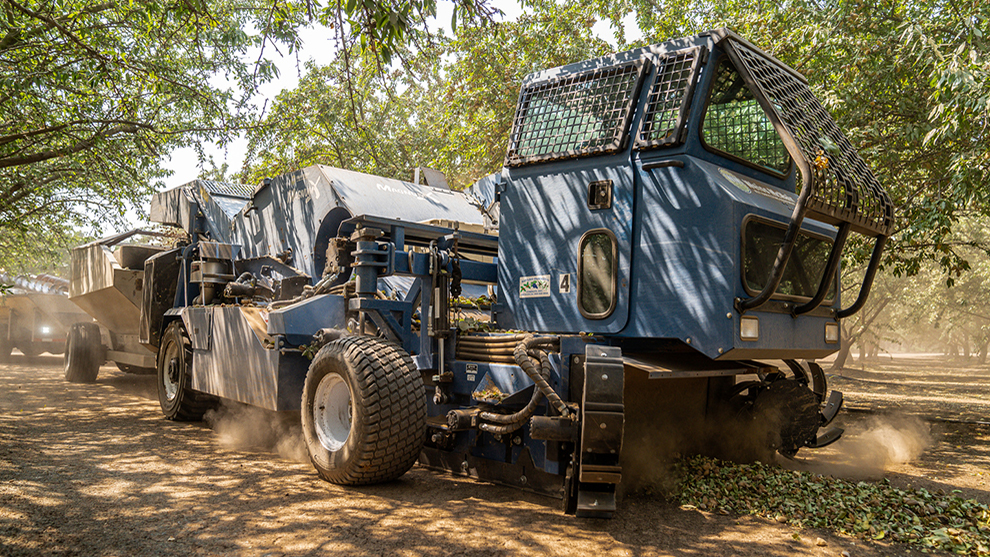
    Almond Board of California — Starting February 9, the San Joaquin Valley Air Pollution Control District (District) is offering $12.5M total in state and federal funding to Central Valley nut growers through its Low-Dust Nut Harvester Replacement Program. This program aims to improve air quality in the valley by helping growers fund the purchase of harvesting equipment that achieves at least a 40% reduction in particulate matter (PM) emissions or, simply put, harvest dust.

    This program comes roughly three years after the District allocated $2M toward a Low-Dust Nut Harvester Pilot Program, supported by the Almond Board, which allowed for the replacement of 29 older, conventional nut harvesters with new, low-dust harvesters throughout the San Joaquin Valley. Through that program, growers and custom harvesters had the opportunity to provide feedback on the performance of low-dust equipment, feedback that the District said, “has been overwhelmingly positive” and accordingly “interest in the program significantly exceeded available funding.”

    Based on feedback and growing demand for low-dust equipment, the District secured funding to launch the new Low-Dust Nut Harvester Replacement Program, which provides funding to growers via two separate categories:

    • The District received $10M from the federal Environmental Protection Agency’s Targeted Air Shed Grant. These funds may be allocated to nut growers within the entire District basin, which covers seven counties from San Joaquin to Kern.
    • Additionally, the District received $2.5M in funding through the state’s Community Emission Reduction Program for the deployment of low-dust nut harvesting equipment operating within the community of Shafter. This means there is $2.5M allocated specifically for nut growers operating within a seven-mile radius of Shafter, as defined by California Assembly Bill 617.1

    “The California almond industry is driven by family farmers, many who have a vested interest in improving air quality during harvest as they themselves live, work and raise their families in these local communities,” said Jesse Roseman, principal analyst in Environmental and Regulatory Affairs at the Almond Board of California (ABC).

    “This program allows the industry to continue moving the needle toward a future with reduced harvest dust and improved air quality, an objective outlined in the industry’s Almond Orchard 2025 Goals. These goals not only encourage innovation to improve industry practices and ensure profitability, but also to protect our communities and environment by continuing to grow almonds in better, safer, and healthier ways,” said Roseman.

    The following guidelines detail how the District will allocate program funding between the two sources of capital:

    Environmental Protection Agency (federal): $10M

    • Eligible Entities: Growers and customer harvesters in the San Joaquin Valley Air basin.
    • Eligible Equipment for Purchase:
      • Equipment, such as qualified pick-up machines, that achieve a minimum 40% PM2.5 reduction compared to standard equipment, as demonstrated by available peer-reviewed information and/or District-approved methodology
      • Funding available to replace a maximum of five machines
        • Maximum of $150,000 awarded per machine.
    • Funding Available:
      • Funds will cover up to 50% of the cost of eligible equipment.
    • Funding Allocation: Funds will be distributed on a first-come, first-serve basis, based on submittal of complete applications.
    • Old Equipment Disposition: Participants must agree to destroy or render existing old equipment permanently inoperable in accordance with established District criteria.

    Community Emission Reduction Program – Shafter: $2.5M

    Growers and custom harvesters within a seven-mile radius of Shafter are heavily encouraged to apply for equipment replacement funding as the District will cover up to 75% of the cost to purchase each new piece of equipment, and there is no limit on the number of eligible pieces of equipment for which applicants may receive funds.

    • Eligible Entities: Growers and custom harvesters operating within a seven-mile radius of Shafter, as defined by the Shafter AB 617 community boundary.
    • Eligible Equipment for Purchase:
      • Equipment, such as qualified pick-up machines, that achieve a minimum 40% PM2.5 reduction compared to standard equipment, as demonstrated by available peer-reviewed information and/or District-approved methodology.
      • There is NO LIMIT on the number of pieces of equipment for which an applicant may receive funding. In addition, there is NO maximum amount awarded for each individual piece of machinery.
    • Funding Available:
      • Funds will cover up to 75% of the cost of eligible equipment for those operating within a seven-mile radius of Shafter, as defined by the Shafter AB 617 community boundary.
    • Funding Allocation: Funds will be distributed on a first-come, first-serve basis, based on submittal of complete applications.
    • Old Equipment Disposition: Participants must agree to destroy or render existing old equipment permanently inoperable in accordance with established District criteria.

    To note: Equipment eligible for purchase through the Low-Dust Harvester Pilot Program does qualify for funding through this new program. Off-ground harvesting equipment may also be eligible.

    “This low-dust harvesting program provides a great example of research coming full circle for the California almond industry,” said Roseman. “For over 15 years, the Almond Board has explored opportunities to reduce harvest dust by funding research, producing harvest best management practices for growers and custom harvesters, and gaining a greater understanding of how the industry can contribute to the big picture of improving air quality in the Central Valley.

    “In 2018, the Almond Board supported the District’s Low-Dust Harvester Pilot Program to further help growers and custom harvesters invest in low-dust equipment. Today, with millions of dollars available to the industry, ABC is thrilled to again support the District and the industry as we work together to improve air quality in the Central Valley while simultaneously advancing the use of low-dust harvesting equipment.”

    Those interested in applying for this program should visit the District website for more information. The application will be posted to the website on February 9, so be sure to check the site frequently that day if you wish to submit your application early.

    Growers and custom harvesters should direct all questions to the District’s Supervisor of Strategies & Incentives Aaron Tarango at aaron.tarango@valleyair.org or (559) 230-5873.

    1 The community of Shafter was prioritized by the District and subsequently selected by the California Air Resources Board (CARB) as one of two communities in the San Joaquin Valley to receive clean air resources newly available under California Assembly Bill 617, which requires CARB and air districts to develop and implement measures to improve air quality in disadvantaged communities. One measure identified and prioritized by the Shafter Community Steering Committee was to provide enhanced and dedicated incentive funding for low-dust harvesters operating within the Shafter AB 617 community boundary

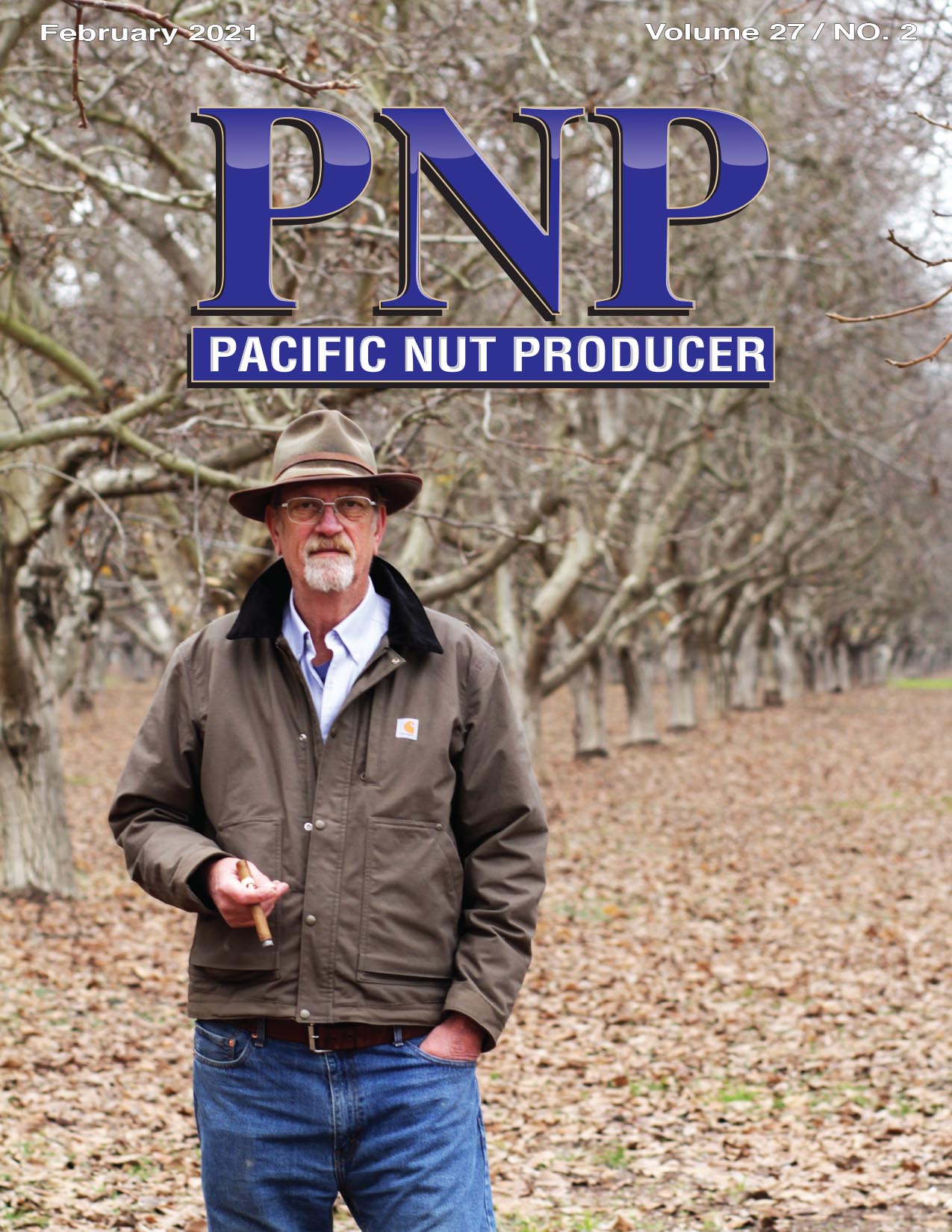
  • Pacific Nut Producer February Issue

    Pacific Nut Producer February Issue

    Pacific Nut Producer February Issue

    [btn btnlink=”https://malcolmmedia.com/order-a-back-issue/back-issue-pacific-nut-producer-magazine/” btnsize=”full” txtcolor=”#ffffff” color=”#FFF” bgcolor=”#492500″ btnnewt=”1″ nofollow=”1″]Order A Back Issue[/btn]

    [btn btnlink=”http://malcolmmedia.com/pacific-nut-producer-magazine-subscriptions/” btnsize=”full” txtcolor=”#ffffff” bgcolor=”#492500″ btnnewt=”1″ nofollow=”1″]Subscribe Free[/btn]
    [three_fifth_last]

    Contents of the February Issue:

    Farming Walnuts Since 1917
    Anderson Barngrover Ranch

    Pistachio Predictions
    Chill Hours Point to Another On-year

    Going Nuts for More Bees
    Factors Influencing California Almond Pollination Fees

    February Orchard Tasks
    Almonds, Hazelnuts, Pecans, Pistachios, Walnuts

    [/three_fifth_last]