Category: Non-Video

  • Japan Lifts Aflatoxin Inspection Order on Walnuts

    Japan Lifts Aflatoxin Inspection Order on Walnuts

    On April 1, 2021, Japan’s Ministry of Health, Labour and Welfare (MHLW) suspended a mandatory aflatoxin inspection regime imposed on walnuts from the United States and other exporting countries. The suspension marks the first time Japan lifted a 100 percent inspection requirement for aflatoxin- vulnerable imports since 2004 when the current monitoring plan was implemented. In 2020, the United States exported $114 million of walnuts to Japan.

    General

    Japan’s Food Sanitation Act designates the Ministry of Health, Labour and Welfare (MHLW) as the country’s competent authority for food safety. In that role, MHLW develops and enforces aflatoxin regulations for domestic and imported food products. Since 1996, MHLW has mandated a 100 percent hold-and-test approach (called “inspection order”) for imported tree nuts, including walnuts, due to aflatoxin concerns. MHLW justified the inspection order as a response to violations of Japan’s aflatoxin action limit (i.e., 10 parts per billion for walnuts).

    According to Japan’s “Imported Foods Monitoring Plan”, MHLW may lift an aflatoxin-related inspection order for an exporting country, whether under a country-specific or global inspection order, if one of the following conditions is met:

    1. No aflatoxin violations for two years OR for one year or longer with 300 compliant shipments

    2. Bilateral discussion after exporting country

      -Completes rootcause investigation

      -Implements preventive measures based on investigation

      -Confirms effective implementation of the preventive measures through bilateral discussions, onsite inspections, and/or a series of nonviolative inspection results.

      • On April 1, 2021, MHLW lifted the global aflatoxin inspection order on walnuts because all exporting countries satisfied the first condition described above. Therefore, MHLW’s inspection schedule for U.S. walnut exports to Japan now follows Schedule 1 of the Imported Foods Monitoring Plan.

        According to MHLW, a single aflatoxin violation in walnut imports from the United States would lead to the immediate resumption of the inspection order on U.S. walnut exports. On the other hand, aflatoxin violations in shipments from other exporting countries would not impact inspection frequency for U.S. walnuts. MHLW indicated that the suspension of the aflatoxin inspection order on walnuts represents the first time since the implementation of the monitoring plan in 2004 that MHLW lifted a global inspection order imposed on imports due to aflatoxin concerns.  By Tomohiro Kurai, USDA Foreign Agricultural Service

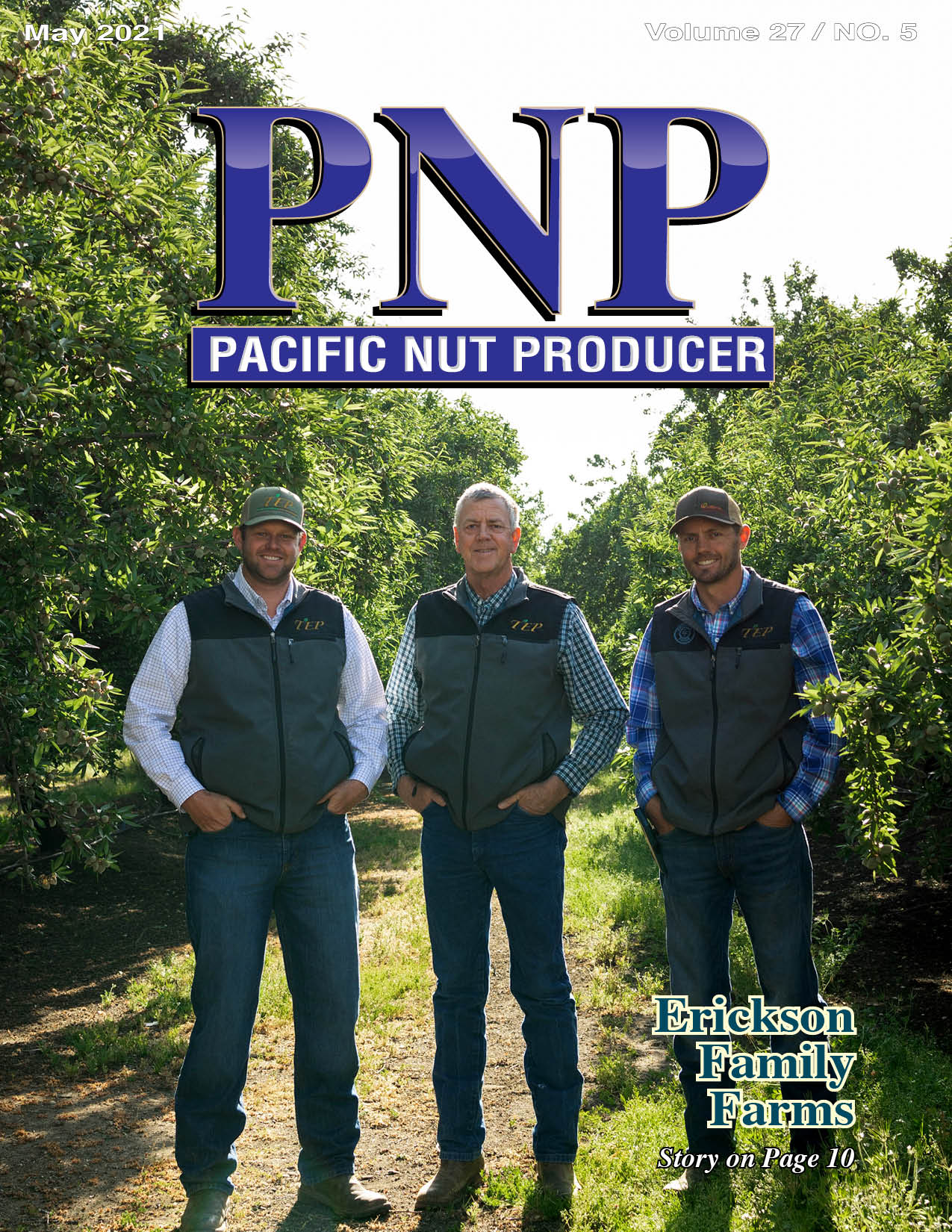
  • Pacific Nut Producer May Issue

    Pacific Nut Producer May Issue

    PNP521
    Pacific Nut Producer May issue

    [btn btnlink=”https://malcolmmedia.com/order-a-back-issue/back-issue-pacific-nut-producer-magazine/” btnsize=”full” txtcolor=”#ffffff” color=”#FFF” bgcolor=”#492500″ btnnewt=”1″ nofollow=”1″]Order A Back Issue[/btn]

    [btn btnlink=”http://malcolmmedia.com/pacific-nut-producer-magazine-subscriptions/” btnsize=”full” txtcolor=”#ffffff” bgcolor=”#492500″ btnnewt=”1″ nofollow=”1″]Subscribe Free[/btn]
    [three_fifth_last]

    Contents of the May Issue:

    Matthew Malcolm Appointed Editor
    New Duties to Benefit PNP and the Nut Industry

    Erickson Family Farms & Three Erickson Partners
    Diversified Farmers Sustain Soils, Trees & Employees

    New Farm Advisor Spotlight
    Doug Amaral & Giulia Marino to Support Tree Nut Growers

    May Orchard Tasks
    Almonds, Hazelnuts, Pecans, Pistachios, Walnuts

    [/three_fifth_last]

  • Blue Diamond Growers Announces New Director of Sustainability

    Blue Diamond Growers Announces New Director of Sustainability

    Blue Diamond Growers is pleased to announce Dr. Daniel Sonke as its new Director of Sustainability. In this role, Dr. Sonke will lead global sustainability efforts across all segments of the Blue Diamond Growers business. He will be responsible for integrating company performance with the 111-year-old almond cooperative’s sustainability pillars of economic viability, environmental stewardship, and community well-being.

    With deep roots in the California almond industry, Dr. Sonke grew up on his family’s almond farm near Ripon. He holds a cutting-edge, advanced professional degree – Doctorate of Plant Medicine – from the University of Florida. Dr. Sonke most recently led corporate sustainable agriculture programs for Campbell Soup Company as Director of Sustainable Agriculture. Additionally, throughout his career, he has led numerous efforts to advance science-based sustainability efforts and certification programs for multiple agricultural commodities, including almonds, hazelnuts, pears, mushrooms, peaches, plums, nectarines, citrus, potatoes, wine grapes, and tomatoes. Dr. Sonke currently serves as a member of the Almond Board of California’s Sustainability Working Group.

    “We are thrilled to have someone of Dr. Sonke’s caliber join the Blue Diamond Growers team to lead the cooperative’s sustainability efforts,” said Brian Barczak, Senior Vice President, Global Supply for Blue Diamond Growers. “With his world-class expertise, deep scientific background, and hands-on experience with a variety of industries, he will be pivotal in further advancing our critical sustainability mission.”

    Blue Diamond Growers has a long-time commitment to sustainability and was recently recognized as Green Business Certified by the Modesto Chamber of Commerce’s California Green Business Network, Stanislaus County Program. The Green Business Certified recognition goes to companies that achieve a verified set of standards, including reducing water use, conserving energy, preventing pollution, increasing recycling, avoiding waste, encouraging alternative transportation, and partnering with other local vendors.

    “Our latest sustainability recognition as Green Business Certified is an important milestone along Blue Diamond Growers sustainability journey,” said Barczak. “It is a path of continual progress that will no doubt be enhanced with Dr. Sonke’s leadership and skill.”

    About Blue Diamond

    Blue Diamond Growers, a grower-owned cooperative representing over 3,000 of California’s almond growers, is the world’s leading almond marketer and processor. Established in 1910, it created the California almond industry and opened world markets for almonds. Blue Diamond is dedicated to delivering the benefits of almonds around the world and does so by providing high-quality almonds, almond ingredients and branded products. Headquartered in Sacramento, the company employs more than 1,800 people throughout its processing plants, receiving stations and gift shops. To learn more about Blue Diamond Growers, visit www.bluediamond.com and follow the company on FacebookInstagramLinkedIn and Twitter.

  • Trials of New Almond Varieties Pay Dividends

    Trials of New Almond Varieties Pay Dividends

    In the 1970s, the Almond Board of California began supporting Regional Variety Trials (RVTs) to provide a mechanism to test the performance of new varieties across the diverse almond growing regions in the State of California and to extend that information to local growers. Previous and current RVTs have been designed to evaluate new varieties or selections in a semi-commercial (20 to 40 trees per variety) manner and compare them to standard varieties such as Nonpareil, Mission, and currently accepted pollinizer varieties.

    One of the main outputs of the first two generations of RVTs was to fully document the performance of the top 14 out of 15 varieties most currently adopted in California. These first two RVTs identified good pollinizers for Nonpareil, collected key horticulture and almond quality data, and discarded many undesirable pollinizers before they were widely adopted.

    The third, and current generation of RVTs started in 2014 and is already in the process of identifying top performers. For instance, the USDA breeder recently released selection Y116-161-99, as the new variety ‘Yorizane’ variety due to the consistent novelties of the variety, including self-fertility, high yields and good kernel quality recorded in the current RVT. The current RVT brings key novelties in comparison to the previous generations such as the fact that all the trees were planted in the same year (2014), in multiple locations (Butte, Stanislaus & Madera Counties) and with statistical repetitions.

    For nearly 50 years the Almond Board has partnered with the University of California (UC) to conduct Regional Variety Trails (RVTs) that provide a mechanism by which ABC, researchers and industry members can evaluate new varieties across the diverse almond-growing regions in the state.

    Due to the contribution of these RVTs, our industry has been able to adopt a wide range of varieties that offer a versatile supply of almond kernel and confer competitive advantage to growing almonds in California. Thanks to the outputs of these RVTs, our industry counts on multiple pollen compatible varieties (i.e. Fritz, Price, Aldrich, Wood Colony, Monterey, etc) that adequately cover Nonpareil bloom. The RVTs have identified varieties that are more resistant to pests and diseases such as NOW (i.e. Price and Butte) and Hull Rot (i.e. Monterey, Carmel, and Fritz), respectively. RVT outputs have expanded our harvesting and processing operations by identifying the Sonora group (harvested 7-13 days after Nonpareil), the Price group (harvested 15-21 days after Nonpareil), and the Carmel group (harvested 29-34 days after Nonpareil), among others. Also, the data collection in these RVTs have served to group varieties by their ease of nut removal (i.e. Butte, and Price fall in the easy category while Merced falls in the difficult category), hull split date, vigor, etc.

    This investment in varietal research has resulted in the commercialization of new UC varieties in the past 20 years such as: Kester, Sonora, Sweetheart and Winters. And thanks to the RVTs and the ongoing collaboration with the USDA breeder Craig Ledbetter, we can now add Yorizane – another self-compatible variety with many intriguing characteristics — to the mix. It is the latest example of ABC research and collaboration with the UC coming to fruition, with many other new varietals potentially still in the pipeline from the current RVT.


    Understanding the benefits, trade-offs

    At The Almond Conference (TAC) 2020 breakout session in December, ABC Associate Director of Agricultural Research Sebastian Saa told growers that evaluating more self-compatible varieties like Yorizane remains a priority. Self-compatible varieties potentially require fewer pollinators in the orchard because the pollen only has to move a short distance – from one blossom to another blossom of the same tree – rather than from one blossom to another blossom a tree row or more away.

    There are other advantages, Saa said: “Self-compatible trees can be grown in blocks of the same variety, allowing for more efficiency at harvest time. ‘One shake, one harvest,’” he said.

    Many of the most recent new varieties created in California and around the world are also are self-compatible. Saa said that CA new varieties typically bloom about the same time as Nonpareil but are harvested a couple of weeks later and therefore could be viable options for growers seeking to transition to off-ground harvesting.

    During the online discussion at the breakout session, a grower asked Saa if there is an increased risk of resiliency to diseases or pests with self-compatible varieties, especially if there is less genetic diversity within an orchard.

    “If we adopt one self-compatible variety, then there is a potential risk,” Saa acknowledged, “but if we adopt multiple self-compatible varieties from different genetic background, then the risk remains low, and our resilience is improved. Our goal is to enhance variety diversification for the California almond industry by adopting better almond varieties that respond to different market demands as well as provide enhanced traits such as self-compatibility.”

    In addition to learnings around self-compatible varieties, TAC attendees also had an opportunity to hear from Phoebe Gordon, a UC Cooperative Extension orchard crops farm advisor in Merced County. Gordon manages one of the RVT sites in Madera County (others are located in Butte and Stanislaus counties). Since 2017, she and her peers have tested various pollinator varieties paired with alternating rows of Nonpareil trees.

    “We test all varieties for bloom timing, bloom profusion, hullsplit timing, yields, defects and insect damage, and observe any disease issues,” Gordon explained.

    She said early results in the RVT indicate that some of the pollinator varieties may have higher yields than Nonpareil, but cautioned that “we need to look at entire lifespan of these varieties.”


    Research requires patience

    Developing a new variety can take many years, if not decades. Craig Ledbetter, a research geneticist with the Agricultural Research Service, based at the San Joaquin Valley Agricultural Sciences Center in Parlier, was directly involved with the development of Yorizane.

    He said the first seedling was planted in 1999. Its kernel attractiveness and ease of cracking – combined with self-fertilization — quickly separated it from other alternatives, Ledbetter said. Annual tests on roller crackers also showed its kernels damage less often than Nonpareil. Then, the RVT that began in 2014 revealed Yorizane’s heavy yield potential.

    “Yorizane provides a varietal option to growers to establish a more efficient single-variety orchard,” Ledbetter explained. “As a part of the RVT, it has been evaluated in blind tests by industry personnel for kernel attributes and has been found to have excellent kernel appearance and marketing potential.”

    Limited quantities of Yorizane already are available at many of California’s leading tree nurseries.


    Partners key to long-term success

    Yorizane is just one example of the ongoing value and importance of the Almond Board’s long-term investment in research, development and real-word, in-the-orchard testing of new varietals. It is a critical partnership between the industry and the U.S. Department of Agriculture’s Agricultural Research Service (USDA/ARS), the University of California system, and private breeders and nurseries in California.

    Chuck Fleck, director of horticulture research at Sierra Gold Nurseries near Yuba City, said there are many other exciting scientific advances on the horizon. Although Sierra Gold’s variety development program is relatively young, he said its team plans to eventually release almond varieties and rootstocks that provide growers with many advantageous genetic characteristics.

    Fleck pointed to the work of two researchers – Malli Aradhya of the USDA and Tom Gradziel of UC Davis – as being especially promising. Aradhya’s has focused on helping growers overcome abiotic (atmosphere, chemical elements, sunlight/temperature, wind and water) as well as biotic (soil, floom, leaves and wood) challenges in their orchards. Gradziel is working to bring new germplasm into almonds’ fairly narrow genetic base as well as exploring alternative rootstock options to more effectively deal with abiotic and biotic issues.

    “Perennial crop breeding takes years to see successes and breakthroughs,” Fleck explained. “Because it can take decades before such successes come to light, the resulting varieties — and therefore the breeding program’s true value — is not easily discerned until long after their inception.”


    Factsheets will inform growers

    It hasn’t always been easy to efficiently communicate breakthroughs in the genetic world or promising results from RVTs to growers. That’s why so many industry officials are excited about the rollout of varietal fact sheets co-created by the Almond Board, UC-ANR, and the Fruit and Nut Center (FNC) at UC Davis.. These factsheets  are housed on a new website that will launch later this year at the FNC center. The first fact sheet debuted is on Yorizane and can be viewed here.

    “The data that is being generated is important and frequently actionable, but to date there has not been a particularly convenient way to access the results from these research projects,” said Julia Stover-Blackburn, director of Fruit and Nut Center. “ABC and UC-ANR do a great job of communicating findings at The Almond Conference and other meetings throughout the year, but we anticipate that making these results findable in the same place will help extend the reach.”

    She said the website will have an overview of various almond-breeding resources but primarily will serve as a repository for the findings of the most recent Regional Variety Trial. A second site is under construction to serve as a repository for almond rootstock trial findings. The hope, Stover-Blackburn explained, is that the sites “will be a resource for both researchers and growers looking to see how various varieties and rootstocks compare in these extensive trials.”

    “These data are valuable for growers making decisions about new plantings and for researchers making decisions about what varieties to include in other projects,” she said.

    The importance of RVTs cannot be overstated. Saa said 14 of the 15 most popular almond varieties in California are the product of trials. Initiation is already under way for the next RVT, which Saa expects to plant on the ground late in 2022 or early in 2023 and continue for a decade or more. He said the next trial likely will include many novelties in comparison to the current regional trial and that ABC is already working to identify the ad hoc research team.

    “Having third-party data collection about how that variety performs in different regions of the state is very valuable to growers, nurseries and handlers,” Saa said. “We need to know the weaknesses and strengths of varieties. There is no perfect variety. Some growers are looking for different things, like harvest times or kernel characteristics. There is no doubt that we need a diverse supply of almonds varieties.”

    Gordon said RVTs allow horticultural characteristics like yield, bloom overlap and harvest timing to be compared in an unbiased setting.

    “If there are conditions that are conducive to disease development, they can also be a way to compare relative susceptibilities to diseases,” she said. “They also allow growers and PCAs to see new varieties in person before committing.”

    Industry members interested to learn more about ongoing research should stay tuned for a report that will be issued this spring summarizing the RVT data collected in the past four years.

    In addition, industry members are encouraged to check out this session from The Almond Conference 2020 during which Gordon and other experts provide information on the latest varieties and selections under evaluation, in addition to discussing ABC’s overall breeding strategy.

    Finally, in 2020, the Almond Board published a comprehensive breeding report that provides an evaluation of national and international varieties and selections currently under evaluation or available in the market. Those interested in sinking their teeth into this topic are welcome to review this report. — 
    Almond Board of California

  • California Walnut Commission Electing New Members

    California Walnut Commission Electing New Members

    This year the California Walnut Commission will be holding elections for members and alternates for the term beginning September 1, 2021 and ending August 31, 2023.

    “The diversity of our growing and evolving membership brings valuable perspective to the industry. The CWC in partnership with the United States Department of Agriculture (USDA) welcomes participation of women, minorities and people with disabilities,” said Michelle McNeil Connelly, CEO of the California Walnut Commission.

    Following are the specifications for the election:

    Every two years the Commission law provides for the nomination of 13 members and 13 alternates that will be appointed by the California Secretary of Food and Agriculture.

    The following is a list of the member and corresponding alternate positions for the Commission:

    Eight Producer Members (four from each district, see below)

    Four Handler Members

    One public member (nominated by 12 elected members)

    All producers and handlers participating in the election must complete a nomination form in order for their name to appear on the ballot. The nomination period is May 1-31. All producer candidates must return the form with at least 15 eligible grower signatures. All handler candidates must submit a petition with at least five other handler signatures.

    We anticipate that ballots will be mailed to growers and handlers in late June. The election results will most likely be announced in August.

    District 1 is comprised of counties in the state that lie north of a line drawn on the south boundaries of San Mateo, Alameda, San Joaquin, Calaveras and Alpine counties. District 2 consists of all other walnut producing counties in the state south of this boundary line.

    If you have any questions please feel free to call the CWC office at (916) 932-7070.

    About California Walnut Commission

    The California Walnut Commission, established in 1987, is funded by mandatory assessments of the growers. The CWC represents over 4,800 growers and over 90 handlers (processors) of California walnuts in export market development activities and conducts health research. The CWC is an agency of the State of California that works in concurrence with the Secretary of the California Department of Food and Agriculture (CDFA). For more industry information, health research and recipe ideas, visit www.walnuts.org.

  • Almond Board Election Underway

    Almond Board Election Underway

    Almond Board of California — Voting began April 21st to select two independent grower member and alternate positions and two independent handler member and alternate positions. These positions will serve as directors for the Almond Board of California (ABC) with the terms beginning on August 1, 2021.

    Candidates for the independent grower positions are:
    Position One, Member (One-year term): 

    Paul Ewing, Los Banos (incumbent)

    Ross Franson, Fresno (petitioner)

    Position One, Alternate:

    Michael Anderson, Vina (petitioner)

    Brandon Rebiero, Modesto (petitioner)

    Position Three, Member (Three-year term): 

    Dave DeFrank, Fresno (petitioner)

    Joe Gardiner, Earlimart (petitioner)

    Caleb Gervase, Escalon (petitioner)

    Kash Gill, Yuba City, (petitioner)

    Position One, Alternate:

    Dinesh Bajaj, Orland (petitioner)

    Chris Bettencourt, Westley (petitioner) Caleb Gervase, Escalon (petitioner)

    Candidates for the independent handler positions are:
    Position Two, Member (Three-year term): 

    Todd Meyer, Chico (incumbent)

    Bob Silveira, Williams (petitioner)

    Position Two, Alternate:

    Dexter Long, Ballico (incumbent)

    Position Three, Member (One-year term): 

    Darren Rigg, Le Grand (incumbent)

    Position Three, Alternate:

    Chad DeRose, McFarland (incumbent)

    Ballots and instructions have been mailed to all independent growers whose names are on file with ABC. The Almond Board must receive ballots by May 27, 2021 for them to be counted. If an independent grower or a handler does not receive a ballot, one may be obtained by contacting Bunnie Ibrahim at (209) 343-3228.

    As a governing body for the industry, the ABC Board of Directors is comprised of five handler and five grower representatives who set policy and recommend budgets in several major areas including: production research, public relations and advertising, nutrition research, statistical reporting, quality control and food safety.

  • CA Almond Acreage Continues on the Rise

    CA Almond Acreage Continues on the Rise

    The Almond Board of California (ABC) is releasing two California almond industry acreage reports: USDA’s National Agricultural Statistics Service (USDA-NASS) 2020 California Almond Acreage Report including the 2021 preliminary bearing acreage, and Land IQ’s 2021 Standing Acreage Initial Estimate (bearing acres, only). These reports are being issued side by side to improve industry reporting methods and provide a more robust picture of California’s almond acreage.

    USDA-NASS reports a continued increase in California’s almond acreage in 2020. Bearing acres, or orchards that have matured enough to produce a crop, are estimated at 1.25 million acres, up 5.9 percent from 2019. Total almond acreage, including non-bearing trees, is estimated at 1.6 million, up 5.3 percent from the previous year.  Nonpareil continued to be the leading variety, followed by Monterey, Butte, Carmel, and Padre.

    Land IQ’s initial estimate for total bearing acreage in 2021 – which reflects standing acreage that will be productive during the 2021/2022 harvest – is 1,323,722 acres.  This estimate takes into account both young orchards coming into production and orchards removed or estimated to be removed.

    “California almond bearing and non-bearing acreage continues to increase indicating almond production will also rise in coming years. Demand has consistently been very strong during this crop year with global shipments YTD (August 2020 – March 2021) up 17.7%, as production crossed the 3 billion pound threshold for the first time,” said Richard Waycott, president and CEO of the Almond Board.

    All export regions of the world have reported strong numbers, with shipments to China/Hong Kong up 59% year to date (YTD), South Korea up 45% YTD, India up 51% YTD, and Western Europe up 12% YTD, as compared to a year ago.

    USDA-NASS’s acreage report is the first of three annual reports, including the Subjective Estimate released in May and Objective Report in July. These reports are commissioned by the Almond Board to provide statistical transparency to industry stakeholders around the world.

    Each USDA-NASS California Almond Acreage Report includes estimates on bearing, non-bearing and total acreage, in addition to data organized by variety, year planted and county. A major source of data for this survey is almond growers’ voluntary responses to mailed questionnaires distributed by USDA-NASS, with consecutive telephone and field follow-up. To arrive at the estimated almond acreage, USDA-NASS compares its almond acreage database with the 2017 Census of Agriculture, pesticide application data maintained by County Agricultural Commissioners and the California Department of Pesticide Regulation, in addition to data collected on the 2020 Almond Nursery Sales Report, which this year USDA-NASS released in conjunction with the California Almond Acreage Report, and Land IQ assessment.

    In 2018, ABC first commissioned Land IQ, a Sacramento-based agricultural and environmental scientific research and consulting firm, to develop a comprehensive, living map of California almonds. The map is the result of nearly a decade of research, and because Land IQ’s approach does not rely on surveys or extrapolation, it has an accuracy of 98% or greater. Beginning in 2019, ABC began a mapping process with Land IQ in which two acreage estimates will be released annually: the initial estimate of bearing acreage in the spring and the final estimate, with both bearing and non-bearing acreage for the same production year, delivered in the fall. In addition to the acreage estimates, Land IQ will annually produce an estimate of removed acreage.

    This year, Land IQ’s spatial analysis shows that between September 1, 2020, and March 31, 2021, 44,303 acres were removed and estimates that an additional 3,500 acres will be removed from April 1 to August 31, 2021, for a total estimate of 47,803 acres removed.

    Starting in 2020, Land IQ annually provided its initial estimate to USDA-NASS to fine-tune the official California Almond Acreage Report and other forecasts. The USDA-NASS reports and estimates remain the official Almond Board statistics provided for the California almond industry.

    On Wednesday, May 12, 2021, USDA-NASS will release the 2021 Subjective Estimate, which provides an initial forecast of the upcoming crop. Data within the Subjective Estimate is based on opinions obtained from almond growers in a survey sent by USDA-NASS. Almond growers will soon receive the USDA-NASS survey and are encouraged to participate. On Monday, July 12, 2021, USDA-NASS will release the 2021 Objective Report. This report collects data later in the growing season, closer to harvest, and is based on an actual count of nuts on the trees. — Almond Board of California

  • CA Almond Industry Roadshow Coming Soon

    CA Almond Industry Roadshow Coming Soon

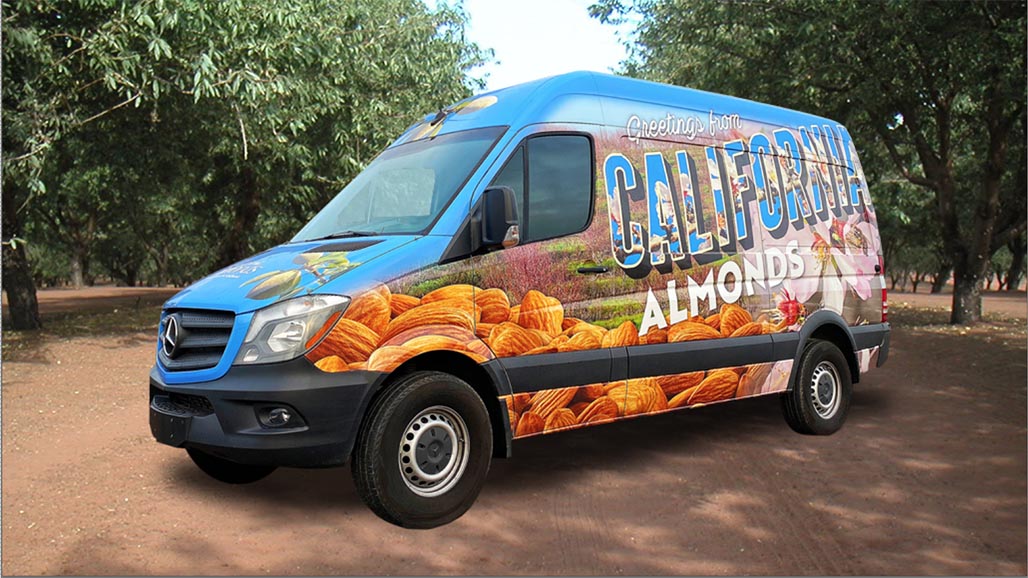
    Next month, starting May 4, the Almond Board of California’s Field Outreach and Education team will be embarking on our previously postponed, long-awaited Industry Roadshow! The team is loading up Fritz, the almond van, with 3,000 informational packets featuring the latest ABC resources and traveling to 20 locations throughout the state with the purpose of:


    • Handing out new ABC resources, as well as resources that industry members would have picked up at the ABC booth during an in-person Almond Conference
    • Offering industry members an opportunity to meet ABC staff and leadership. We have missed spending time with industry members, and as things begin to normalize we look forward to connecting with the industry, answering their questions, hearing updates from the field, etc.Roadshow Details:

      The Almond Board of California’s Field Outreach and Education team, in addition to industry and ABC leadership, will kick off the first-ever Industry Roadshow on Tuesday, May 4. The Almond Board team will visit 20 locations (details attached). Industry members are invited to drive up to the location nearest them and look for Fritz,the almond van, as well as the Field Outreach team and ABC/industry leadership. Industry members will have the opportunity to meet the Field Outreach team members who are responsible for providing them with ABC resources, hands-on assistance in the orchard, California Almond Sustainability Program (CASP) support, and more. In addition, they will have the opportunity to pick up latest ABC resources, including:

      ·         2020 Research Update
      ·         NEW: Nitrogen Best Management Practices
      NEW: Application Quick Tips – in English and Spanish
      ·         NEW: Whole Orchard Recycling Grower Guide
      ·         NEW: Almond Production Resource Cards: Pests, Water and More!
  • Millions in India See California Walnuts on TV

    Millions in India See California Walnuts on TV

    Building on their mission to promote the benefits and many ways walnuts can play a role in the overall health of consumers in the U.S. and around the world, the California Walnut Commission (CWC) published results from their recent multimedia campaign in India. The campaign focused on educating consumers on how walnuts add valuable plant-based omega-3, protein and fiber to their diet. Here are the highlights:


    • The wide-reaching awareness campaign was live from November 2020 through February 2021 and was supported by print ads placed in leading consumer and trade publications, digital ads, as well as point-of-sale displays in major retailers across India.
    • The CWC engaged top influencers, including celebrity chefs, nutritionists and fitness experts, to provide inspiration and recipe ideas through their social channels.


    • The CWC utilized advertising on broadcast television from mid-December through mid-January, reaching 1.2 billion consumers weekly.


    This campaign highlights the value of the CWC and showcases its efforts to expand California walnuts use and consumption in India. “Despite high tariffs in this market, there is still an opportunity to build consumer demand for California Walnuts,” said Pamela Graviet, Senior Marketing Director, International, for the California Walnut Commission. “California Walnuts are a versatile ingredient, known for their high-quality, consistency and mild flavor, and the CWC is focused on building trade capacity to bring awareness to these attributes.”

  • U.S. Tree Nut Exports Reach Record Levels, Easing Oversupply Burden

    U.S. Tree Nut Exports Reach Record Levels, Easing Oversupply Burden

    California tree nut growers harvested record crops of almonds, walnuts and pistachios in 2020, following a year of ideal growing conditions on expanded bearing acreage. The abundance of supply led to lower tree nut prices which, combined with a weaker U.S. dollar, have pushed exports to record high volumes. The surge in exports comes despite ongoing retaliatory tariffs in importing countries like China and India and complicated shipping logistics.

    According to a new report from CoBank’s Knowledge Exchange, as bearing acreage continues to expand in the years ahead, the sector will need to continue growing its export base and add processing capacity to handle future record crops.

    “California’s tree nut crop has tripled in the last 20 years and continued expansion is expected as more bearing acres come into production in regions where water has not been limited,” said Tanner Ehmke, lead specialty crops economist with CoBank. “Expanding the export base will be key to finding a home for increases in production, and further investments in harvesting machinery, hulling and shelling capacity, and processing will be needed to market future tree nut crops in a timely manner.”

    After experiencing an exceptional growing season last year, California growers of almonds, walnuts and pistachios harvested near-record yields on record high acreage to produce a massive crop in 2020. Harvest levels rose substantially over 2019, with almonds, walnuts and pistachios increasing by 18%, 19% and 40%, respectively.

    Local markets were challenged by a lack of storage and processing capacity to handle the record crop, noting that acreage has grown too fast to harvest in a timely manner.

    The immense supply, coupled with some minor quality issues, contributed to the notable drop in prices for almonds and walnuts. Almond prices fell by roughly 30% from the prior year and walnut prices were down 40%. Pistachio prices have been steady to moderately lower year-over-year following a smaller off-year harvest in 2019.

    Water allocations for crop irrigation in California may impact yields of the 2021 crop. Handlers anticipate prices will be relatively stable for almonds, walnuts and pistachios heading into the next crop year and that the low-price environment will build a stronger demand base that will carry over into future marketing seasons.

    While tree nut growers and handlers are expected to struggle with low prices through 2021, the payoff is coming, noted Ehmke. “Consumers around the globe are adding nuts to their diets, which will boost demand and propel export momentum,” he said.

    Shipping issues with containers and the unknown impacts from COVID-19 cloud the long-term outlook on general consumption. Container shortages constrained exports from achieving a faster pace. Tree nut traders estimate that the scarcity of shipping containers has delayed 10%-20% of shipments.

    Watch a video synopsis and read the report, California Tree Nut Outlook: Record Exports Expand

    About CoBank

    CoBank is a $159 billion cooperative bank serving vital industries across rural America. The bank provides loans, leases, export financing and other financial services to agribusinesses and rural power, water and communications providers in all 50 states. The bank also provides wholesale loans and other financial services to affiliated Farm Credit associations serving more than 75,000 farmers, ranchers and other rural borrowers in 23 states around the country.

    CoBank is a member of the Farm Credit System, a nationwide network of banks and retail lending associations chartered to support the borrowing needs of U.S. agriculture, rural infrastructure and rural communities. Headquartered outside Denver, Colorado, CoBank serves customers from regional banking centers across the U.S. and maintains an international representative office in Singapore.