Category: Non-Video

  • CA Prune Board Addresses Non-Tariff Barriers for Nuts & Dried Fruit

    CA Prune Board Addresses Non-Tariff Barriers for Nuts & Dried Fruit

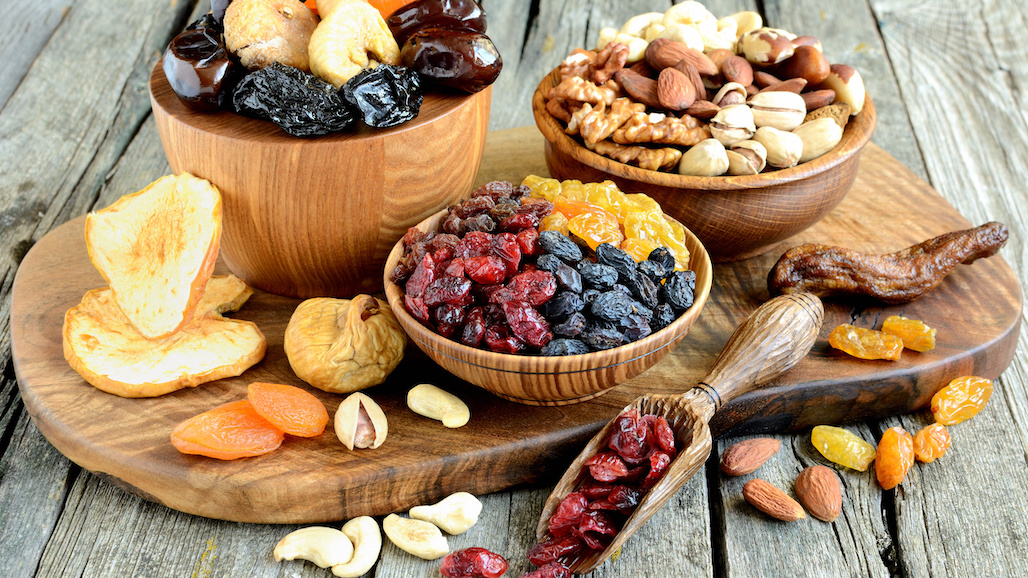
    As the world leader in prune exports, the California Prune Board is preemptively addressing issues that affect the trade of dried fruits and nuts with a three-year project focused on preserving the use of sulfuryl fluoride. With the support of the Foreign Agriculture Services arm of USDA, the California Prune Board (CPB) has secured funding to lead a Technical Assistance for Specialty Crops (TASC) program titled “Preserving sulfuryl fluoride for dried fruit exports to the European Union.”

    “This project hits on all the major non-tariff barriers,” says Gary Obenauf, CPB Production Research Coordinator and lead on the TASC project. “Exports of nuts and dried fruits require reliable measures that ensure consumers around the world are receiving a safe product and this project is paramount in gathering the information needed, enabling California Prunes and other commodities to retain and expand export markets.”

    While the project specifically investigates the voids in residue data associated with the use of sulfuryl fluoride for treating U.S. dried fruit and tree nuts, the research ultimately addresses the stringent criteria to limit emissions for continued and optimal sulfuryl fluoride use in all export markets for a variety of commodities. The study is being conducted by top experts in their fields from Stanford, Yale, USDA’s Agricultural Research Service (ARS), University of California, and DFA of California.

    “Global trade interest in eliminating greenhouse gas emissions is growing, and we’re getting asked about sulfuryl fluoride use in several markets,” stated Spencer Walse, a research chemist for ARS. “This project provides an opportunity to continue sulfuryl fluoride use globally and preserves the quality of products while maintaining food safety and security. If we don’t protect the use of sulfuryl fluoride, the ability to export to various countries, including the EU, diminishes.”

    With new use patterns that need to be reflected globally, efficacy data is generated for market access into new export opportunities. Many countries, including India and Australia, require residue data to accompany the efficacy data to ensure consumer safety.

    “We studied methyl bromide decades ago and found the use patterns didn’t apply, so we had to adapt for sulfuryl fluoride,” added Obenauf. “This project allows us to update regulatory use patterns which have evolved since we started this work.”

    Phytosanitary techniques are vital to the export industry. The benefits of updating regulatory information through this research and gaining data on sulfuryl fluoride scrubbing extend far past the dried fruit and nut industries and will allow continued use of the gas globally.

    California is the world’s largest producer of prunes providing approximately 40 percent of the world’s supply and over 90 percent of the U.S. supply. Today, there are more than 40,000 bearing acres of California Prune orchards concentrated in the Sacramento and San Joaquin Valleys.
  • Leaffooted Bug Species May be Changing

    Leaffooted Bug Species May be Changing

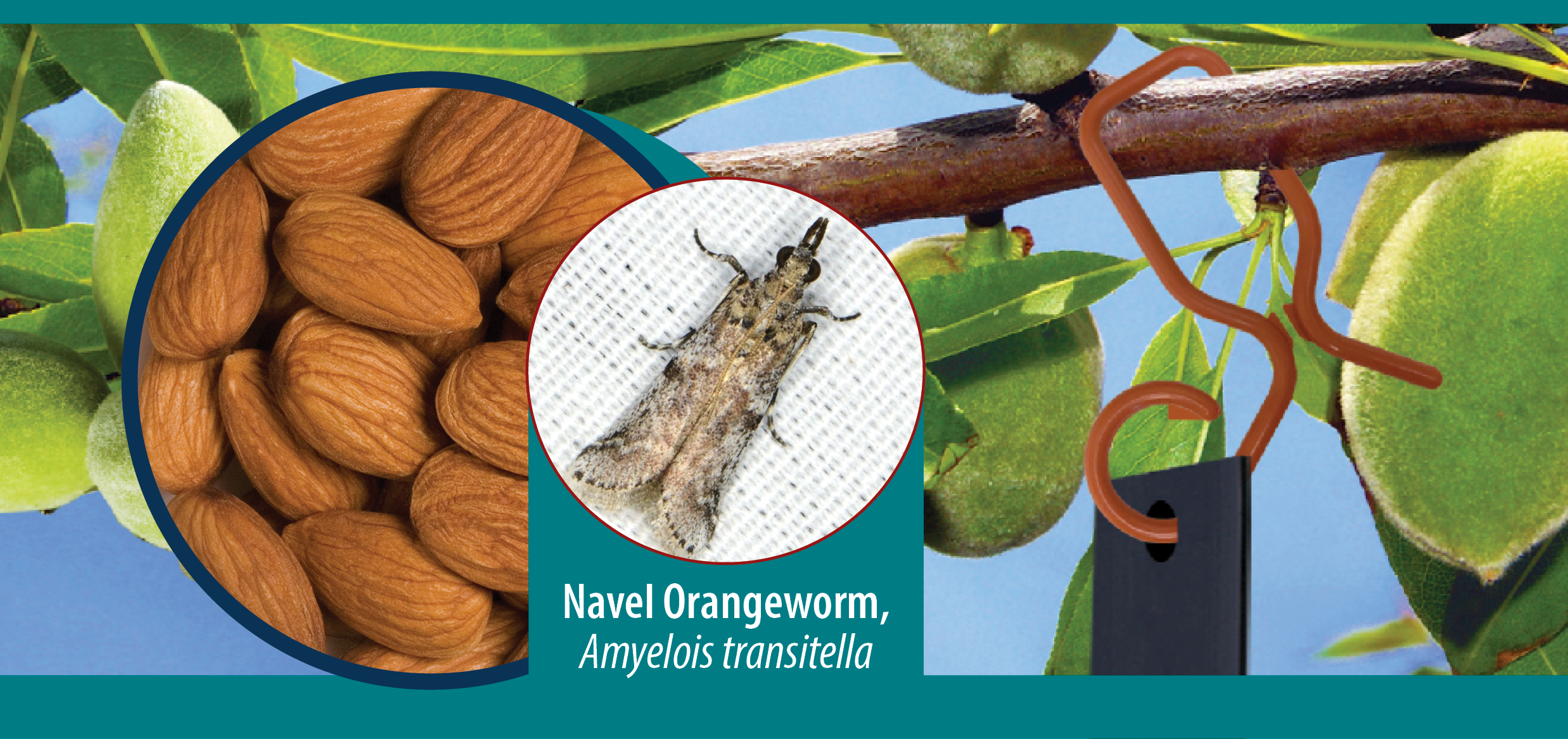
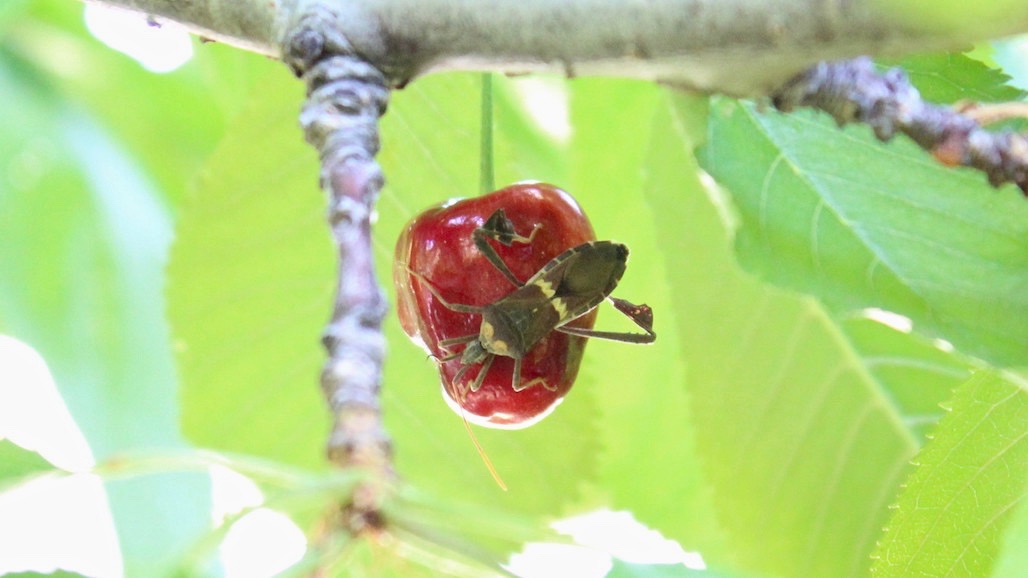
    Almond Board of California — Insect pest management in almond and pistachio orchards largely focuses on reducing damage from navel orangeworm (NOW). Yet, after navel orangeworm, large bugs such as leaffooted bugs (LFBs) and stinkbugs are considered to be among the most damaging insects.

    Leaffooted bug species of particular concern in the past have included Leptoglossus clypealisLeptoglossus occidentalis, and Leptoglossus zonatusLeptoglossus clypealis is occasionally noted to be numerous: In 2013, L. clypealis was a particularly abundant LFB in orchards; however, since that time, L. clypealis seems to be less common than another LFB, L. zonatus.

    Recognizing and understanding the differences between these two LFB is key to effective management.
    L. clypealis is shown on the left and L. zonatus on the right. Photo courtesy of Dr. Joyce.

    L. zonatus is a larger LFB than L. clypealis and has longer mouthparts that allow it to feed on developing fruits longer into the growing season. Prior to 2013, L. zonatusdid not appear regularly in almonds in California, and it was not noted in University of California Integrated Pest Management manuals as being a pest of almonds – while this species was present in California, perhaps it was not particularly numerous. Since 2013, L. zonatus has frequently been observed in almonds during the growing season and at harvest, and now seems to occur more regularly in orchards than L. clypealis. It may be that the larger LFB L. zonatus is displacing L. clypealis.

    From 2014-2016, researchers identified LFB collections in almond and pistachio orchards from Chico to Bakersfield as consisting of two species: L. clypealis and L. zonatus. A 2017 study by Dr. Andrea Joyce, an entomologist at the University of California, Merced, investigated population genetics of these two species and found that L. clypealiscollections have high genetic diversity and many genetic types (haplotypes). This suggests that these L. clypealiscollections from the Central Valley are within this insect’s native range. However, the insect collections of the other species, L. zonatus, consisted of two genetically divergent types, or strains. One L. zonatus strain was widespread, and occurred through the Central Valley from Chico to Bakersfield, and the second genetic type occurred in the central and southern San Joaquin Valley. Work to geographically map out where the two genetic types of L. zonatus occur is ongoing.

    The presence of two strains of L. zonatus is important for insect pest management. It is highly likely that each insect strain is susceptible to different parasitoids, predators and pathogens. Two insect strains can also vary in their response to insecticides, as well as their attraction to pheromone lures.

    Currently, pheromone attractants are being developed for this LFB. It is vital to determine if the same pheromone blend will equally attract the two strains of L. zonatus. Dr. Joyce and colleagues will continue research on the two strains of L. zonatus this year, comparing their biological parameters, examining whether the two strains are cross attracted in lab bioassays, and if they cross mate in the field. The hope is that any pheromones and attractants developed for L. zonatus can be used to manage both strains of this species. A monitoring tool such as a pheromone trap for these insects would be particularly useful in a grower’s IPM toolbox.

    Growers can support researchers in determining the distribution of the two strains by collecting any LFBs they identify or notifying Dr. Joyce when large numbers of LFBs are observed. Growers may email Dr. Andrea Joyce if they sight LFBs or have questions about this pest at  
    ajoyce2@ucmerced.edu.

    Note: Additional Almond Board-funded research is being conducted by Dr. Jocelyn Millar to identify pheromones and related attractants for the two major LFB pests in California nut crops. These tools could potentially be utilized for monitoring or control of these species.
  • Bloom Season Specific Sprayer Calibration Saves Money & Time

    Bloom Season Specific Sprayer Calibration Saves Money & Time

    If your sprayer can deliver good spray coverage at hull split, with a little work it can deliver good bloom spray coverage faster and cheaper. How is this possible? With no leaves in the canopy, air movement is less restricted at bloom than hull split. Also, there is less surface area to cover at bloom than hull split so volume needed to cover the susceptible tissue per acre (Gallons per acre, GPA) are less at bloom than hull split.

    How could this work? Assuming your hull split spray set up is for 100 GPA (or more) and 2 miles per hour (MPH), at bloom you can increase ground speed, GPA and reduce power to the sprayer (less tractor engine or sprayer engine RPMs). All this means less time and diesel burned per acre and more acres per tank with no change in pest control. The exact settings should be worked out on the farm, but here are some general guidelines to use before bloom starts. [I am assuming that anyone trying this has a good knowledge of sprayer calibration. For the sake of space in the newsletter, I will not go into all the calibration details. Check the Almond Production Manual for details or call me at 530.218.2359. We do need an airblast sprayer extension publication.]

    -Increase speed and reduce RPMs. Reduce engine RPMs by 15-20% from full speed and shift up a gear or two so that tractor and sprayer speed is somewhere around 3-3.5 MPH. For a PTO sprayer delivering 540 PTO RPMs with engine RPM at 2200, the target is somewhere around 1800 RPM for the tractor engine. This is quickly checked with a GPS unit or a quick pass down a row in the orchard counting trees (2 MPH=176 ft/min, etc.).

    -Check that there will be enough upward air movement at this new speed. Readjust as necessary. Put a length of PVC pipe with a 1.5-2’ long length of flagging tape tied on the end up through the tree so that the top of the pole is roughly 3-4 feet above the top of the tree. Run the sprayer down the row with the fan on, water in the tank but nozzles turned off. Check how much the flagging tape moves as the sprayer goes by the tree? (I use the video function on my phone to capture the flag movement as the sprayer goes by.) If the tape flutters out to 45-90o off the vertical, that is enough sprayer fan air movement to give good coverage. If the flagging kicks straight up, you can speed up more and try it again until the desired 45-90 o movement is reached.

    *If you spray every-other-row (EOR) at bloom, check air movement through the tree (next section) very carefully to make sure spray gets all the way through the tree or don’t use the approach described in this article. Every-other-row spraying delivers acceptable disease control at pink bud, but ineffective on the far side of the tree from the sprayer after 40% bloom. Every row spraying gives the best possible coverage. If you do spray EOR, do it carefully.

    -Figure out the flow rate you’ll use based on your new speed and the product’s recommended GPA. Use your new tractor speed and row spacing to figure out the acres per minute you’ll cover at that speed. Using the measured acres per minute and the gallons per acre you want to spray, calculate the gallons per minute (GPM) needed from the sprayer.If you are using an air shear/electrostatic sprayer (Lectroblast, Windmill, etc.) make sure the system pressure is set to that required by the manufacturer, set the flow rate on each side of the sprayer and you are ready

    -Adjust your nozzles to favor upward movement at this new speed. The general rule is that roughly 70% of the sprayer output (GPM) should come out of the top half of the open nozzles. Because of faster ground speed, larger nozzles will be needed and/or swirl plates changed (45’s used instead of 25’s). Large nozzles (D8-12) are a better choice in my opinion as the obvious nozzle exit hole difference between a D6 and a D8 make it easier to use the right nozzle for the right job if you are using rollover nozzle bodies (Rears or Nelson) or 2-3 nozzles/vane (AirOFan). In the table at the bottom of the page is an example of how a set up might go for a sprayer with two nozzle options per location on the spray boom.

    In the orchard, place the disc/cores on the nozzle bodies that point at the tree. You may need to skip a nozzle body or two along the spray boom to make sure the spray targets the tree. For example, the first (very top) nozzle body on many sprayers basically points straight up and the second body is inches away and slightly angled into the canopy. I usually skip the top one. Lower on the sprayer you may skip a nozzle site, turning off the nozzle body. The goal with fungicide spraying is to aim high; rainwater will recycle the fungicide down through the canopy if it’s placed up high.

    -Make sure your actual flow rate matches your desired flow rate. Ground truth the sprayer output by filling it to overflowing with clean water, running it for a set amount of time (a minute or two minutes) and then refilling it with a hose attached to a flowmeter or buckets marked with gallons/quarts/pints. Calculate gallons per minute sprayed to use in the following equation to check your actual sprayer output and determine how much material to put in the spray tank:

    𝐺𝑎𝑙𝑙𝑜𝑛𝑠 𝑝𝑒𝑟 𝑎𝑐𝑟𝑒 =𝑔𝑎𝑙𝑙𝑜𝑛𝑠 𝑝𝑒𝑟 𝑚𝑖𝑛𝑢𝑡𝑒/𝑎𝑐𝑟𝑒𝑠 𝑝𝑒𝑟 𝑚𝑖𝑛𝑢𝑡𝑒

    -Double-check your coverage in the canopy. A final step in the calibration process is to check coverage with water sensitive paper either placed on poles or attached to the canopy.

    If you are interested in this bloom sprayer set up concept and want some help with the setup, please give me a call 530.218.2359.  By Franz Niederholzer, UCCE Advisor, Colusa and Sutter/Yuba Counties

    Example of nozzle selection and position on a standard airblast sprayer (Rears, AirOFan, Nelson, etc)
  • CIDETRAK® NOW MESO™ – Add this TOOL to your BELT

    CIDETRAK® NOW MESO™ – Add this TOOL to your BELT

    – SPONSORED CONTENT –

    “We are on year 2 with having CIDETRAK® NOW MESO™ in our orchard, and we are extremely pleased with the results. We’re treating 500 acres of Almonds and have seen a major reduction in NOW injury of up to 80%.

    What makes CIDETRAK unique for us is the application flexibility. We do not have flat square orchard blocks that other products can be used on. We have staggered rows and imperfect orchard shapes, and this is where we can use multiple MESO source points to cover

    Hanging the MESO’s was easy and even the local Trécé rep was willing to come out and show the team exactly how to apply the product.

    CIDETRAK’s non-mechanical, non-failure simplicity combined with “beyond the harvest, field life” are other important aspects that drive us to continue with MESO.

    CIDETRAK is a key tool in our toolbelt for controlling NOW. I recommend anyone thinking about their options for mating disruption products, to strongly consider CIDETRAK NOW.”

    About Kevin:

    Kevin grew up working in various aspects of Agriculture. At an early age he learned how to manage and operate a cattle ranch, as well as learned to manage large acreage of Almonds and Walnuts. After graduating from Chico State, he assumed the responsibility of managing Tehama Angus Ranch tree nut operations, and has been doing so ever since 2014. Kevin is the acting Orchard Manager for all of Tehama Angus Ranch tree nuts.

    Add this TOOL to you BELT CONTACT US

  • California Farmland Trust Announces Matching Support to Protect Fiorini Ranch

    California Farmland Trust Announces Matching Support to Protect Fiorini Ranch

    Thanks to support from the Henry Mayo Newhall Foundation, California Farmland Trust (CFT) is embarking on a conservation fundraising campaign to protect Fiorini Ranch.

    Located in Merced County, the 60-acre almond operation is owned and operated by a multi-generational farming family, the Fiorini’s. Currently operated by a third-generation family member, Randy Fiorini, the fourth and fifth generation family members are now engaged, and becoming more involved, continuing the family’s legacy. The Fiorini family reached out to the California Farmland Trust to ensure the land and their legacy will remain in agriculture, forever.

    The California Farmland Trust has partnered with farmers for over 16 years to protect farmland from being subdivided and developed into homes and shopping centers, while contributing to agriculture’s unique role in climate benefits. “Working with the Fiorini family to ensure this land will provide food, open space and climate benefits is essential,” said Charlotte Mitchell, CFT Executive Director. The Fiorini family has adopted and embraced sustainable farming practices that reduce greenhouse gas emissions, improve the biodiversity of beneficial insects, and further reduce soil erosion.

    In the coming months, CFT will be pursuing a grant that will provide some of the funding needed to purchase the development right and protect the land with an agricultural conservation easement. CFT is required to source matching funds when pursuing grant funding, which is where the Henry Mayo Newhall Foundation (Foundation) support is focused. In late 2020, the Foundation provided CFT with nearly half of the matching funds needed to meet this requirement. Funds from the Foundation will be leveraged by CFT to raise the remaining $85,000.

    “The support from the Henry Mayo Newhall Foundation really made this project achievable,” shared Mitchell. “It’s difficult to obtain the match requirement needed for a grant and the Henry Mayo Newhall Foundation provided funding that will essentially double every other donation we receive for the project, helping us achieve the match requirement.”

    The first step will be launching a campaign that leverages the Foundation’s $80,000 donation to raise the remaining $85,000 needed to obtain the match required. CFT will simultaneously pursue a grant for the remaining seventy-five percent needed to fund the easement. Once secured, the easement will ensure the farmland will never be subdivided and will no longer be subject to development pressures from nearby communities for housing or commercial development.

    “Our family has farmed this land sustainably, and productively for over 100 years. It is threatened by the potential of urban development and our family wishes to preserve the ability to continue to contribute to our nations healthy food needs,” shared Randy Fiorini.

    If you would like to learn more or become involved in this project, please visit: www.cafarmtrust.org/protect-fiorini-ranch.

  • New Gov’t Relations Director at American Pistachio Growers

    New Gov’t Relations Director at American Pistachio Growers

    American Pistachio Growers (APG) is pleased to announce the hiring of Cadee Condit as their new Director of Government Relations. Cadee has two decades of experience in governmental public affairs, an extensive vision in achieving strategic objectives in complex political landscapes, and broad collaboration across a spectrum of business, trade associations and community organizations.

    APG President Richard Matoian noted, “Cadee comes to APG with a wealth of knowledge at both the Federal and State levels. Her expertise in the legislative and regulatory process will serve the needs of APG’s membership well.”  Cadee will coordinate her efforts on behalf of APG’s membership with our existing outstanding State and Federal lobbyists and their staff.

    APG’s Government Policies and Partnership’s Committee Chair, Jamie Bledsoe, who was involved in the interview process added, “Cadee was far and away the right person and best fit for our ongoing, excellent government relations program.” Cadee officially began her duties on February 1.

    “The American Pistachio Growers is a dynamic and exciting organization,” Cadee shared.  “The San Joaquin Valley is the most productive and diverse agricultural region in the world, and I couldn’t be more excited to be working with APG to protect the future of agriculture.”

    Some of the top priorities and issues Cadee will be working on will include: water, tariffs, international market access and additional COVID relief programs.  Seeking out more federal funding to keep the Navel Orangeworm Sterile Insect Technology program going will also be a priority.  Cadee can be reached at ccondit@americanpistachios.org.


  • USDA Announces Results of Walnut Marketing Order Referendum

    USDA Announces Results of Walnut Marketing Order Referendum

    The U.S. Department of Agriculture (USDA) recently announced amendments to the federal marketing order regulating the handling of walnuts grown in California. These amendments authorize the California Walnut Board to provide credit for market promotion expenses paid by handlers against their annual assessments due under the program.

    The amendments were approved in a referendum conducted Nov. 30 through Dec. 11, 2020. They were favored by 80.57% of the growers voting, representing 82.81% of the total volume of walnuts. To gain approval, the amendments needed support of at least two-thirds of the growers voting in the referendum or at least two-thirds of the volume of walnuts grown by those voting in the referendum. A final rule amending the marketing order will be published in the Federal Register.

    USDA’s process for considering this change included an administrative hearing conducted April 20-21, 2020.

    The board locally administers the marketing order that maintains minimum grade and size regulations for walnuts grown in California. The marketing order also authorizes promotion, and research and development projects. More information about the marketing order is available on the Agricultural Marketing Service (AMS) 984 California Walnut webpage, the AMS Marketing Orders and Agreements webpage, or by contacting the Marketing Order and Agreement Division at (202) 720-2491.

    Authorized by the Agricultural Marketing Agreement Act of 1937, marketing orders are industry-driven programs that help producers and handlers achieve marketing success by leveraging their own funds to design and execute programs that they would not be able to do individually. AMS provides oversight to 29 fruit, vegetable, and specialty crop marketing orders and agreements, which helps ensure fiscal accountability and program integrity.

  • California Walnut Board Seeking Grower Candidates

    California Walnut Board Seeking Grower Candidates

    The California Walnut Board (CWB) will be conducting its biennial election of walnut growers and handlers statewide to serve as members and alternates for the next two-year term beginning on September 1, 2021 and ending on August 31, 2023. Walnut growers are eligible to petition the California Walnut Board to have the name of their candidate included on the 2021 nomination ballot.

    The California Walnut Board is the official body that administers the Federal Marketing Order for walnuts. The CWB encourages eligible candidates to consider serving as Board members or alternates. “The diversity of our growing and evolving membership brings valuable perspective to industry.  The CWB in partnership with the United States Department of Agriculture (USDA) welcomes participation of women, minorities and people with disabilities,” said Michelle McNeil Connelly, Executive Director of the California Walnut Board.

    Petitions are open for two members and alternates from each of the two districts in California, divided along the southern boundaries of San Mateo, Alameda, San Joaquin, Calaveras and Alpine counties and one member and alternate at-large to represent the entire state of California.

    It takes 10 or more walnut growers who marketed an aggregate of 500 tons or more of walnuts in the 2019/20 marketing year to petition for a grower’s name to be placed on the nomination ballot. Separate petitions are required for member and alternate positions. Petition forms will be mailed to all walnut growers in late February and are to be filed and received by the California Walnut Board no later than April 1, 2021.

    In mid-April, ballots will be mailed to all growers. Growers will nominate two members and alternates to represent their district as well as one member and alternate for the statewide position. The Secretary of Agriculture will select the nominees receiving the most votes in each district and at-large for representatives on the California Walnut Board.
    Petition forms are available at the California Walnut Board office at 101 Parkshore Drive, Suite 250, Folsom, CA  95630, telephone (916) 932-7070.

  • USDA Seeks Nominees for American  Pecan Promotion Board

    USDA Seeks Nominees for American Pecan Promotion Board

    The U.S. Department of Agriculture (USDA) Agricultural Marketing Service (AMS) is seeking nominations for the American Pecan Promotion Board under the newly established Pecan Promotion, Research, and Information Order. Nominations are due by March 26, 2021.
    The 17-member board will consist of 10 producers and seven importers. The 10 producer members will be allocated between three regions within the United States as follows: three from the Eastern Region; three from the Central Region; and four from the Western Region.  Seven members will be importers. Initial board members’ terms of office of two, three and four years will be assigned by USDA to stagger future terms of office. Each member’s term will begin when USDA approves the nominations.

    To serve on the board, producers and importers must have produced or imported more than 50,000 pounds of inshell pecans (25,000 pounds of shelled pecans) on average for four fiscal periods. Producers who produce pecans in more than one region may seek nomination only in the region in which they produce the majority of their pecans.

    The order specifies that nominations for producer member seats will be submitted to the Secretary of Agriculture by the American Pecan Council, the 17-member federal marketing order governing body. If you are interested in serving as a producer member please submit your nominations to info@americanpecan.com. You may also contact Jeff Smutny at (817) 916-0020.

    USDA is conducting nominations for importer members. Please submit nominations to Patricia Petrella at Patricia.Petrella@usda.gov.

    For more information about the program, visit the AMS American Pecan Promotion Boardwebpage or contact USDA Promotion and Economics Division Deputy Director, Patricia Petrella, at (301) 337-5295 or Patricia.Petrella@usda.gov.

    AMS policy is that the diversity of the board should reflect the diversity of their industries in experience of members, methods of production and distribution, marketing strategies, and other distinguishing factors that will bring different perspectives and ideas to the table. When submitting nominations, the industry must consider the diversity of the population served and the knowledge, skills, and abilities of the members to serve a diverse population.

    Since 1966, Congress has authorized industry-funded research and promotion boards to provide a framework for agricultural industries to pool resources and combine efforts to develop new markets, strengthen existing markets and conduct important research and promotion activities. AMS provides oversight to 22 boards. The oversight ensures fiscal accountability and program integrity and is paid for by industry assessments.

  • Almond Board of CA Announces 2021 Election

    Almond Board of CA Announces 2021 Election

    The Almond Board of California (ABC) Board of Directors election for the 2021-2022 crop year has begun.

    There are two independent grower member positions and two independent grower alternate positions available on the ABC Board of Directors. To be considered for these positions, each candidate must be a grower and must submit a petition signed by at least 15 independent almond growers (verified by ABC). The petition should state the position for which the candidate is being nominated and be filed with Almond Board of California at 1150 9thStreet, Suite 1500, Modesto, California 95354. The filing deadline is April 1, 2021.

    Additionally, two independent handler member positions and two independent handler alternate positions are available. Handlers must declare their candidacy, in writing, to ABC no later than April 1, 2021 to be considered for these positions.  

    A cooperative grower member and alternate nominee will be selected through their cooperative association.                   

    The Almond Board was established in 1950 to administer the Federal Marketing Order for almonds. ABC assures industry compliance with marketing order regulations and is responsible for administering all aspects of the marketing order. It also serves the almond industry in other major areas, including production research, global advertising and public relations, and accumulation, compilation and dissemination of statistical information.  

    The ABC encourages eligible women, minorities, and people with disabilities to consider running for a position on the Board of Directors as it believes this committee should reflect the diversity of the industry it serves. 

    For further information, call Bunnie Ibrahim, senior analyst in Government Affairs, at (209) 343-3228.