Category: Industry News

  • CIDETRAK® NOW MESO™ – A Strong Return on Investment

    CIDETRAK® NOW MESO™ – A Strong Return on Investment

    – SPONSORED CONTENT –

    We are seeing a strong return on our investment

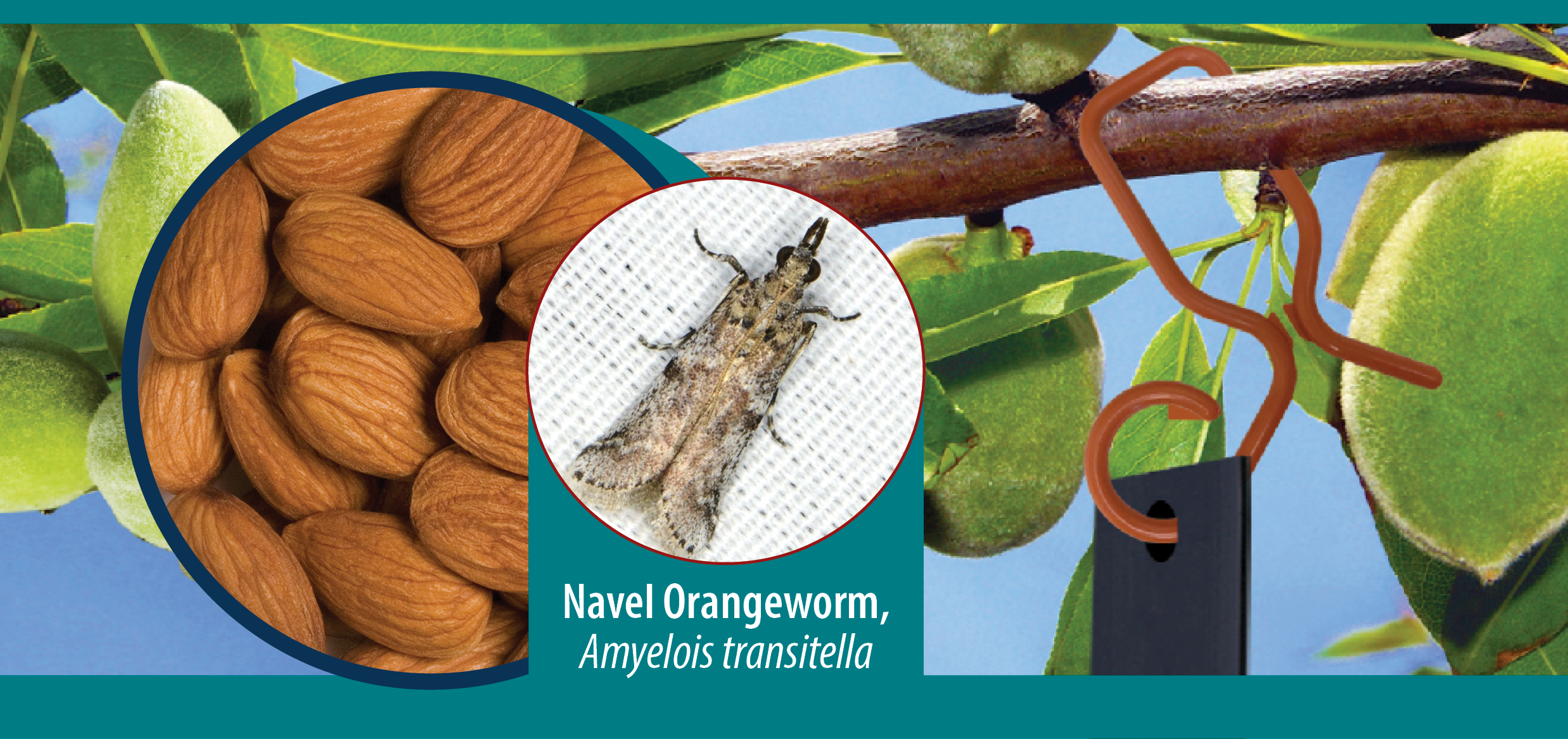
    “This is the first year we decided to use a mating disruption product for NOW. Having said that, we looked at all of our options and decided to go with Trécé’s CIDETRAK® NOW MESO™. The Almond farm I manage is roughly 2,500 acres and we made the decision to treat the entire orchard. I’m glad that I did.

    Last year, we sustained an average of 2.5% NOW injury on our Almonds. This year in 2020, NOW injury on average was reduced to just below 1%. The product performed as expected and I am very pleased with the results.

    We ran our normal spray program along with CIDETRAK. By reducing the NOW injury over 60%, the product more than paid for itself. We are seeing a strong return on our investment in CIDETRAK.

    Installing the product went very smooth for us. We pre-assembled the MESO’s on the hooks that come in the case, then sent the crew out to apply in the orchard. In the orchard, we averaged applying 5 acres per hour/per man. This method worked great for us and it’s my intention to repeat the processes next year.”

    About Allan
    Allan has been involved in agriculture his whole life, having grown up on a hay and cattle ranch in Northern California and currently as an orchard manager in the Sacramento Valley. He has put his Ag business degree from Cal Poly (SLO) to use during the past 27 years as an orchard manager in Butte and Glenn County. His experience has been in almonds, walnuts, prunes and pecans. Currently, Allan is a farm manager for Farmers International, responsible for 2,400 acres of almonds, along with an almond huller and sheller.

    Get a Strong Return on your Investment – CONTACT US


  • Larger CA Almond Crop Forecasted This Year

    Larger CA Almond Crop Forecasted This Year

    Almond Board of California — The U.S. Department of Agriculture (USDA) National Agricultural Statistics Service (NASS) is predicting an increase in the California almond crop. The USDA-NASS 2021 California Almond Subjective Forecast estimates California almond orchards will produce 3.2 billion pounds of nuts this year, up 3 percent from last year’s 3.12 billion-pound crop. Forecasted yield is expected to reach 2,410 pounds per acre, 3 percent lower than the 2020 yield of 2,490 per acre.

    This forecast comes about three weeks after USDA-NASS released the 2020 California Almond Acreage Report, which estimated total almond acreage for 2020 at 1.6 million acres, up 5.3 percent from 2019. Bearing acres – orchards mature enough to produce a crop – were reported at 1.25 million acres, up 5.9 percent from the previous year. USDA-NASS also estimated preliminary bearing acreage for 2021 at 1.33 million acres.

    “What we’re seeing with this report is a forecasted continuance of high yields,” said Richard Waycott, president and CEO of the Almond Board of California (ABC). “Water availability will be the principal concern on growers’ minds as they continue to grow this crop. We look forward to the outcome of the Objective Report to see if it corroborates this estimate.” 

    The first of two production reports for the upcoming crop year, the Subjective Forecast is based on opinions from a phone survey of randomly selected almond growers located throughout the state. It was conducted from April 19 to May 6. USDA-NASS asks individual growers their total almond yield per acre from last year and their expected yield for the current year based on field observations. 

    The sample of growers interviewed is grouped by size of operation, and different people are surveyed each year to ensure grower representation throughout the Central Valley. USDA-NASS combines all the yield estimates and extrapolates the numbers reported in the Subjective Forecast.

    In July, USDA-NASS will release its second production estimate, the 2021 California Almond Objective Report. While the Subjective Forecast provides an initial 2021/2022 crop estimate, the Objective Report will provide an estimate based on actual almond counts using a more statistically rigorous methodology to determine yield.

    The 2021 California Almond Objective Report will be released on Monday, July 12, at 9:00 a.m. PT. USDA-NASS produces the Objective Report, the Subjective Forecast and the Acreage Report to provide the California almond industry with the data needed to make informed business decisions, and thanks all farm operators, owners and management entities for their time in providing the information necessary to create these reports.

  • Japan Lifts Aflatoxin Inspection Order on Walnuts

    Japan Lifts Aflatoxin Inspection Order on Walnuts

    On April 1, 2021, Japan’s Ministry of Health, Labour and Welfare (MHLW) suspended a mandatory aflatoxin inspection regime imposed on walnuts from the United States and other exporting countries. The suspension marks the first time Japan lifted a 100 percent inspection requirement for aflatoxin- vulnerable imports since 2004 when the current monitoring plan was implemented. In 2020, the United States exported $114 million of walnuts to Japan.

    General

    Japan’s Food Sanitation Act designates the Ministry of Health, Labour and Welfare (MHLW) as the country’s competent authority for food safety. In that role, MHLW develops and enforces aflatoxin regulations for domestic and imported food products. Since 1996, MHLW has mandated a 100 percent hold-and-test approach (called “inspection order”) for imported tree nuts, including walnuts, due to aflatoxin concerns. MHLW justified the inspection order as a response to violations of Japan’s aflatoxin action limit (i.e., 10 parts per billion for walnuts).

    According to Japan’s “Imported Foods Monitoring Plan”, MHLW may lift an aflatoxin-related inspection order for an exporting country, whether under a country-specific or global inspection order, if one of the following conditions is met:

    1. No aflatoxin violations for two years OR for one year or longer with 300 compliant shipments

    2. Bilateral discussion after exporting country

      -Completes rootcause investigation

      -Implements preventive measures based on investigation

      -Confirms effective implementation of the preventive measures through bilateral discussions, onsite inspections, and/or a series of nonviolative inspection results.

      • On April 1, 2021, MHLW lifted the global aflatoxin inspection order on walnuts because all exporting countries satisfied the first condition described above. Therefore, MHLW’s inspection schedule for U.S. walnut exports to Japan now follows Schedule 1 of the Imported Foods Monitoring Plan.

        According to MHLW, a single aflatoxin violation in walnut imports from the United States would lead to the immediate resumption of the inspection order on U.S. walnut exports. On the other hand, aflatoxin violations in shipments from other exporting countries would not impact inspection frequency for U.S. walnuts. MHLW indicated that the suspension of the aflatoxin inspection order on walnuts represents the first time since the implementation of the monitoring plan in 2004 that MHLW lifted a global inspection order imposed on imports due to aflatoxin concerns.  By Tomohiro Kurai, USDA Foreign Agricultural Service

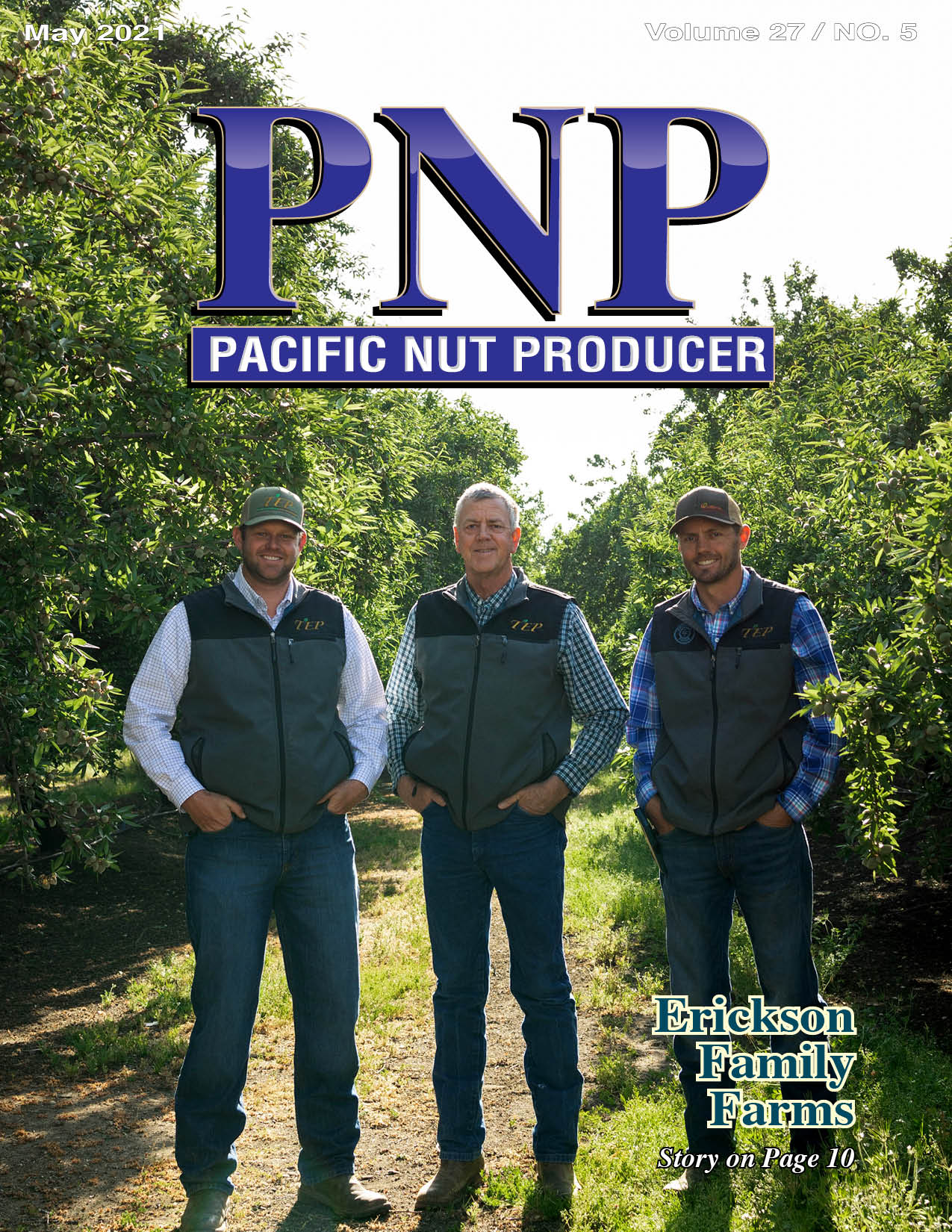
  • Pacific Nut Producer May Issue

    Pacific Nut Producer May Issue

    PNP521
    Pacific Nut Producer May issue

    [btn btnlink=”https://malcolmmedia.com/order-a-back-issue/back-issue-pacific-nut-producer-magazine/” btnsize=”full” txtcolor=”#ffffff” color=”#FFF” bgcolor=”#492500″ btnnewt=”1″ nofollow=”1″]Order A Back Issue[/btn]

    [btn btnlink=”http://malcolmmedia.com/pacific-nut-producer-magazine-subscriptions/” btnsize=”full” txtcolor=”#ffffff” bgcolor=”#492500″ btnnewt=”1″ nofollow=”1″]Subscribe Free[/btn]
    [three_fifth_last]

    Contents of the May Issue:

    Matthew Malcolm Appointed Editor
    New Duties to Benefit PNP and the Nut Industry

    Erickson Family Farms & Three Erickson Partners
    Diversified Farmers Sustain Soils, Trees & Employees

    New Farm Advisor Spotlight
    Doug Amaral & Giulia Marino to Support Tree Nut Growers

    May Orchard Tasks
    Almonds, Hazelnuts, Pecans, Pistachios, Walnuts

    [/three_fifth_last]

  • New Monitoring Tool for Navel Orangeworm in Mating Disrupted Orchards

    New Monitoring Tool for Navel Orangeworm in Mating Disrupted Orchards

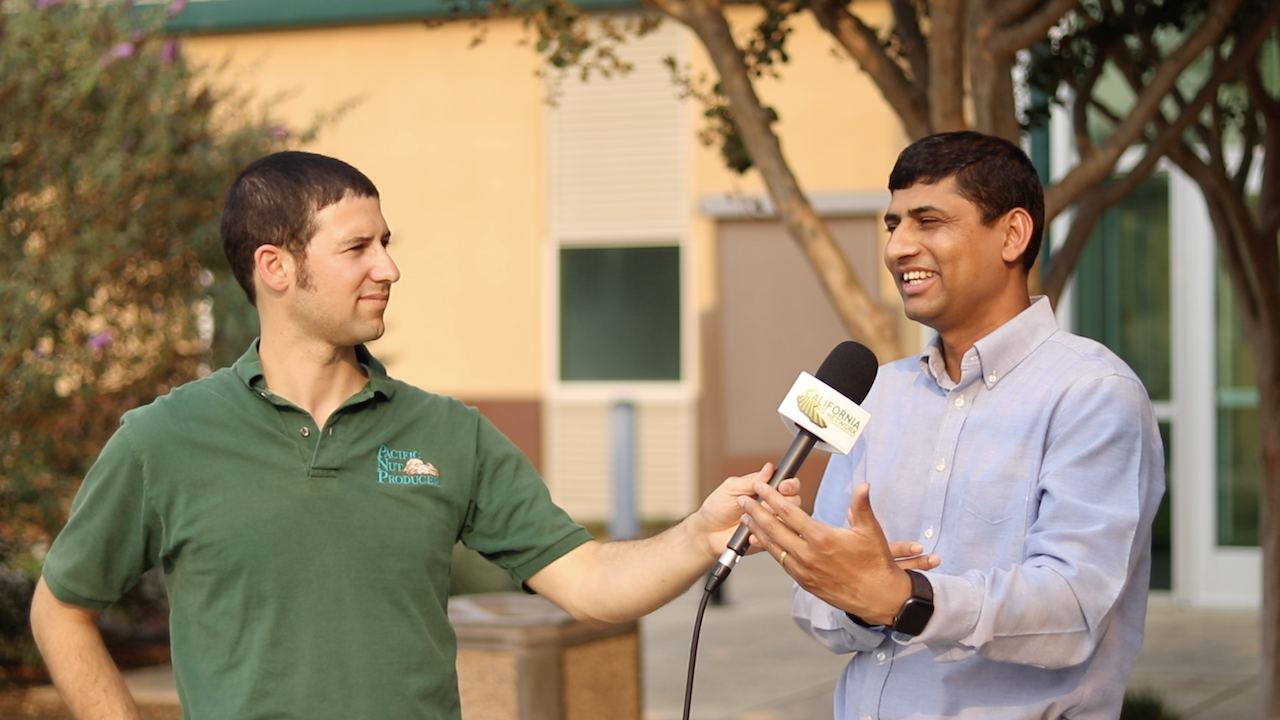
    Traditional navel orangeworm monitoring tools have proven less effective in the presence of mating disruption technology in the orchard. Watch this brief video with UC IPM Advisor Jhalendra Rijal as he addresses the issue and shares about some new technology that can help growers more effectively monitor this tree nut pest.  Read more about it in Pacific Nut Producer Magazine.
    Please thank this video’s sponsor Trece for their industry support.
  • Managing Walnut Husk Fly in the Orchard

    Managing Walnut Husk Fly in the Orchard

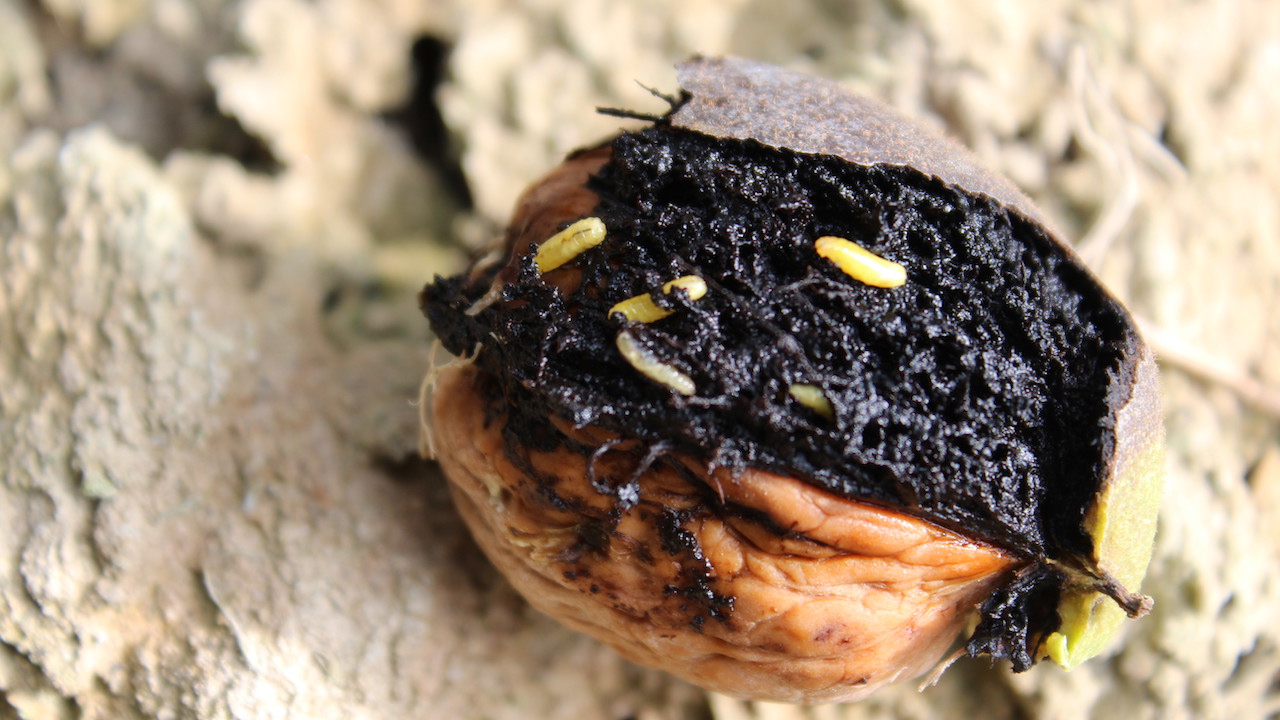
    Walnut growers should start monitoring for walnut husk fly in May.  Watch this video with emeritus UCCE IPM Specialist Bob Van Steenwyk as he provides timely step by step directions on how to monitor and manage this pest.  Read more about orchard pest management in Pacific Nut Producer Magazine.
    Please thank this video’s sponsor Trece for their industry support.
  • Four Steps for Planting Containerized Almond Trees

    Four Steps for Planting Containerized Almond Trees

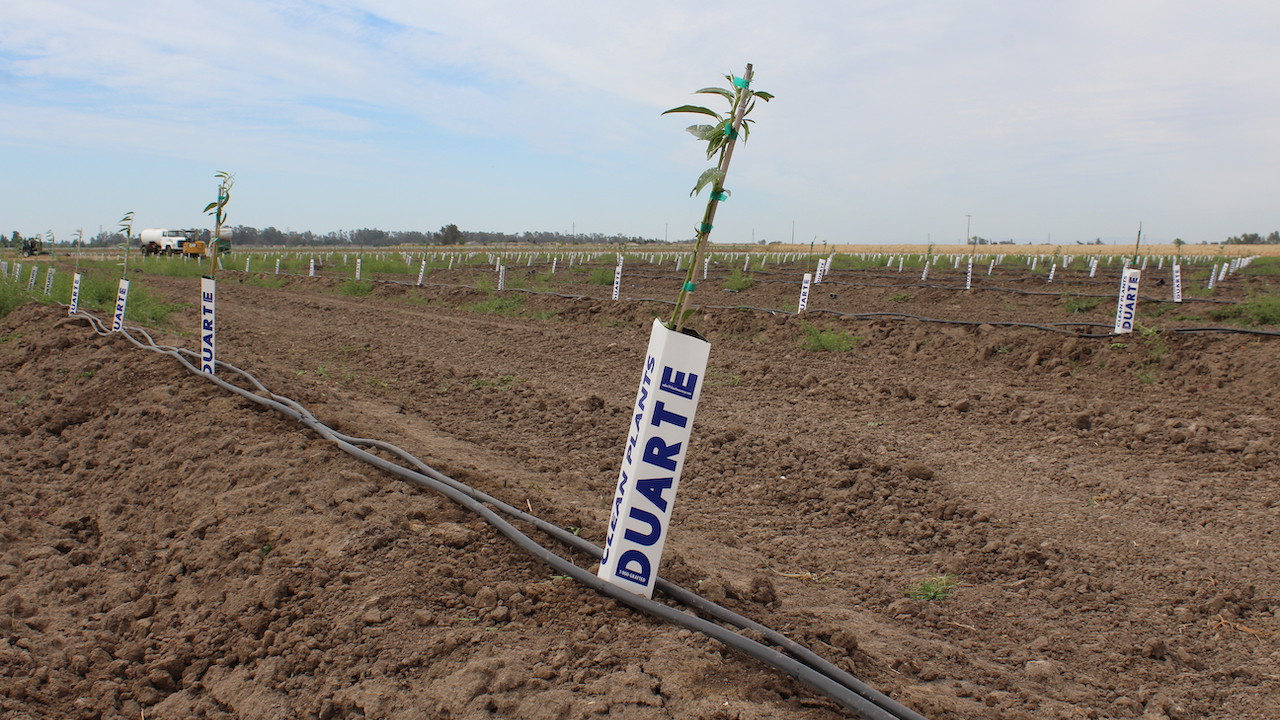
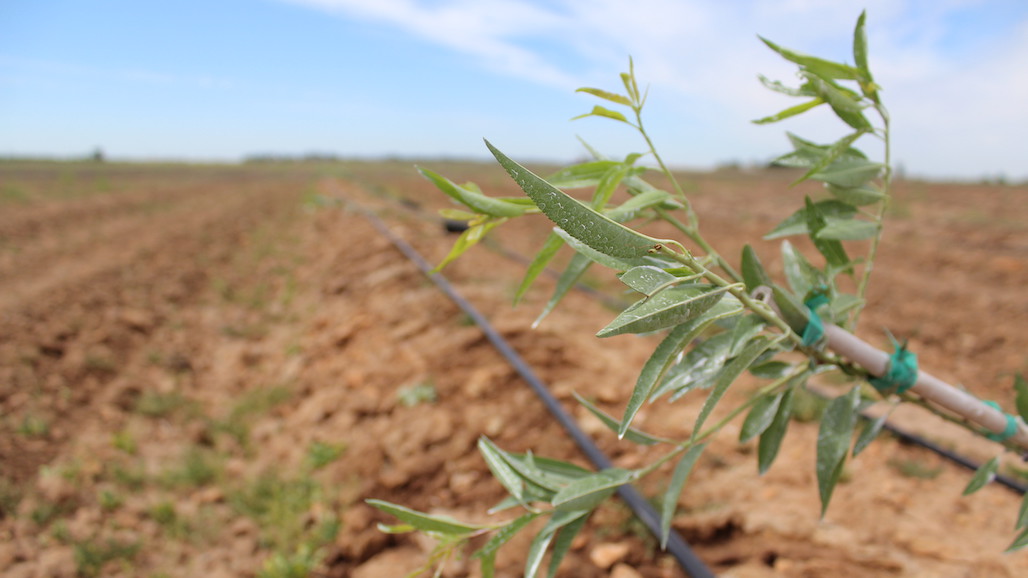
    The USDA National Agricultural Statistics Service recently reported a record 1.25 million acres of almonds across California’s landscape, up 5.9% from 2019. More almond orchard continue to be planted as we speak, due in part to the reduce labor needs associated with this crop and a healthy global market for this versatile product.  With increased almond acreage anticipated to be planted this year, we wanted to share this brief interview with Tia Russell from Duarte Nursery who shared and demonstrated for steps for planting containerized almond trees.  Watch this video and read more about growing almonds in Pacific Nut Producer Magazine. Don’t currently receive the publication? Subscribe for free today at PacificNutProducer.com.
    Please thank this video’s sponsor Trece for their industry support.
  • Blue Diamond Growers Announces New Director of Sustainability

    Blue Diamond Growers Announces New Director of Sustainability

    Blue Diamond Growers is pleased to announce Dr. Daniel Sonke as its new Director of Sustainability. In this role, Dr. Sonke will lead global sustainability efforts across all segments of the Blue Diamond Growers business. He will be responsible for integrating company performance with the 111-year-old almond cooperative’s sustainability pillars of economic viability, environmental stewardship, and community well-being.

    With deep roots in the California almond industry, Dr. Sonke grew up on his family’s almond farm near Ripon. He holds a cutting-edge, advanced professional degree – Doctorate of Plant Medicine – from the University of Florida. Dr. Sonke most recently led corporate sustainable agriculture programs for Campbell Soup Company as Director of Sustainable Agriculture. Additionally, throughout his career, he has led numerous efforts to advance science-based sustainability efforts and certification programs for multiple agricultural commodities, including almonds, hazelnuts, pears, mushrooms, peaches, plums, nectarines, citrus, potatoes, wine grapes, and tomatoes. Dr. Sonke currently serves as a member of the Almond Board of California’s Sustainability Working Group.

    “We are thrilled to have someone of Dr. Sonke’s caliber join the Blue Diamond Growers team to lead the cooperative’s sustainability efforts,” said Brian Barczak, Senior Vice President, Global Supply for Blue Diamond Growers. “With his world-class expertise, deep scientific background, and hands-on experience with a variety of industries, he will be pivotal in further advancing our critical sustainability mission.”

    Blue Diamond Growers has a long-time commitment to sustainability and was recently recognized as Green Business Certified by the Modesto Chamber of Commerce’s California Green Business Network, Stanislaus County Program. The Green Business Certified recognition goes to companies that achieve a verified set of standards, including reducing water use, conserving energy, preventing pollution, increasing recycling, avoiding waste, encouraging alternative transportation, and partnering with other local vendors.

    “Our latest sustainability recognition as Green Business Certified is an important milestone along Blue Diamond Growers sustainability journey,” said Barczak. “It is a path of continual progress that will no doubt be enhanced with Dr. Sonke’s leadership and skill.”

    About Blue Diamond

    Blue Diamond Growers, a grower-owned cooperative representing over 3,000 of California’s almond growers, is the world’s leading almond marketer and processor. Established in 1910, it created the California almond industry and opened world markets for almonds. Blue Diamond is dedicated to delivering the benefits of almonds around the world and does so by providing high-quality almonds, almond ingredients and branded products. Headquartered in Sacramento, the company employs more than 1,800 people throughout its processing plants, receiving stations and gift shops. To learn more about Blue Diamond Growers, visit www.bluediamond.com and follow the company on FacebookInstagramLinkedIn and Twitter.

  • Trials of New Almond Varieties Pay Dividends

    Trials of New Almond Varieties Pay Dividends

    In the 1970s, the Almond Board of California began supporting Regional Variety Trials (RVTs) to provide a mechanism to test the performance of new varieties across the diverse almond growing regions in the State of California and to extend that information to local growers. Previous and current RVTs have been designed to evaluate new varieties or selections in a semi-commercial (20 to 40 trees per variety) manner and compare them to standard varieties such as Nonpareil, Mission, and currently accepted pollinizer varieties.

    One of the main outputs of the first two generations of RVTs was to fully document the performance of the top 14 out of 15 varieties most currently adopted in California. These first two RVTs identified good pollinizers for Nonpareil, collected key horticulture and almond quality data, and discarded many undesirable pollinizers before they were widely adopted.

    The third, and current generation of RVTs started in 2014 and is already in the process of identifying top performers. For instance, the USDA breeder recently released selection Y116-161-99, as the new variety ‘Yorizane’ variety due to the consistent novelties of the variety, including self-fertility, high yields and good kernel quality recorded in the current RVT. The current RVT brings key novelties in comparison to the previous generations such as the fact that all the trees were planted in the same year (2014), in multiple locations (Butte, Stanislaus & Madera Counties) and with statistical repetitions.

    For nearly 50 years the Almond Board has partnered with the University of California (UC) to conduct Regional Variety Trails (RVTs) that provide a mechanism by which ABC, researchers and industry members can evaluate new varieties across the diverse almond-growing regions in the state.

    Due to the contribution of these RVTs, our industry has been able to adopt a wide range of varieties that offer a versatile supply of almond kernel and confer competitive advantage to growing almonds in California. Thanks to the outputs of these RVTs, our industry counts on multiple pollen compatible varieties (i.e. Fritz, Price, Aldrich, Wood Colony, Monterey, etc) that adequately cover Nonpareil bloom. The RVTs have identified varieties that are more resistant to pests and diseases such as NOW (i.e. Price and Butte) and Hull Rot (i.e. Monterey, Carmel, and Fritz), respectively. RVT outputs have expanded our harvesting and processing operations by identifying the Sonora group (harvested 7-13 days after Nonpareil), the Price group (harvested 15-21 days after Nonpareil), and the Carmel group (harvested 29-34 days after Nonpareil), among others. Also, the data collection in these RVTs have served to group varieties by their ease of nut removal (i.e. Butte, and Price fall in the easy category while Merced falls in the difficult category), hull split date, vigor, etc.

    This investment in varietal research has resulted in the commercialization of new UC varieties in the past 20 years such as: Kester, Sonora, Sweetheart and Winters. And thanks to the RVTs and the ongoing collaboration with the USDA breeder Craig Ledbetter, we can now add Yorizane – another self-compatible variety with many intriguing characteristics — to the mix. It is the latest example of ABC research and collaboration with the UC coming to fruition, with many other new varietals potentially still in the pipeline from the current RVT.


    Understanding the benefits, trade-offs

    At The Almond Conference (TAC) 2020 breakout session in December, ABC Associate Director of Agricultural Research Sebastian Saa told growers that evaluating more self-compatible varieties like Yorizane remains a priority. Self-compatible varieties potentially require fewer pollinators in the orchard because the pollen only has to move a short distance – from one blossom to another blossom of the same tree – rather than from one blossom to another blossom a tree row or more away.

    There are other advantages, Saa said: “Self-compatible trees can be grown in blocks of the same variety, allowing for more efficiency at harvest time. ‘One shake, one harvest,’” he said.

    Many of the most recent new varieties created in California and around the world are also are self-compatible. Saa said that CA new varieties typically bloom about the same time as Nonpareil but are harvested a couple of weeks later and therefore could be viable options for growers seeking to transition to off-ground harvesting.

    During the online discussion at the breakout session, a grower asked Saa if there is an increased risk of resiliency to diseases or pests with self-compatible varieties, especially if there is less genetic diversity within an orchard.

    “If we adopt one self-compatible variety, then there is a potential risk,” Saa acknowledged, “but if we adopt multiple self-compatible varieties from different genetic background, then the risk remains low, and our resilience is improved. Our goal is to enhance variety diversification for the California almond industry by adopting better almond varieties that respond to different market demands as well as provide enhanced traits such as self-compatibility.”

    In addition to learnings around self-compatible varieties, TAC attendees also had an opportunity to hear from Phoebe Gordon, a UC Cooperative Extension orchard crops farm advisor in Merced County. Gordon manages one of the RVT sites in Madera County (others are located in Butte and Stanislaus counties). Since 2017, she and her peers have tested various pollinator varieties paired with alternating rows of Nonpareil trees.

    “We test all varieties for bloom timing, bloom profusion, hullsplit timing, yields, defects and insect damage, and observe any disease issues,” Gordon explained.

    She said early results in the RVT indicate that some of the pollinator varieties may have higher yields than Nonpareil, but cautioned that “we need to look at entire lifespan of these varieties.”


    Research requires patience

    Developing a new variety can take many years, if not decades. Craig Ledbetter, a research geneticist with the Agricultural Research Service, based at the San Joaquin Valley Agricultural Sciences Center in Parlier, was directly involved with the development of Yorizane.

    He said the first seedling was planted in 1999. Its kernel attractiveness and ease of cracking – combined with self-fertilization — quickly separated it from other alternatives, Ledbetter said. Annual tests on roller crackers also showed its kernels damage less often than Nonpareil. Then, the RVT that began in 2014 revealed Yorizane’s heavy yield potential.

    “Yorizane provides a varietal option to growers to establish a more efficient single-variety orchard,” Ledbetter explained. “As a part of the RVT, it has been evaluated in blind tests by industry personnel for kernel attributes and has been found to have excellent kernel appearance and marketing potential.”

    Limited quantities of Yorizane already are available at many of California’s leading tree nurseries.


    Partners key to long-term success

    Yorizane is just one example of the ongoing value and importance of the Almond Board’s long-term investment in research, development and real-word, in-the-orchard testing of new varietals. It is a critical partnership between the industry and the U.S. Department of Agriculture’s Agricultural Research Service (USDA/ARS), the University of California system, and private breeders and nurseries in California.

    Chuck Fleck, director of horticulture research at Sierra Gold Nurseries near Yuba City, said there are many other exciting scientific advances on the horizon. Although Sierra Gold’s variety development program is relatively young, he said its team plans to eventually release almond varieties and rootstocks that provide growers with many advantageous genetic characteristics.

    Fleck pointed to the work of two researchers – Malli Aradhya of the USDA and Tom Gradziel of UC Davis – as being especially promising. Aradhya’s has focused on helping growers overcome abiotic (atmosphere, chemical elements, sunlight/temperature, wind and water) as well as biotic (soil, floom, leaves and wood) challenges in their orchards. Gradziel is working to bring new germplasm into almonds’ fairly narrow genetic base as well as exploring alternative rootstock options to more effectively deal with abiotic and biotic issues.

    “Perennial crop breeding takes years to see successes and breakthroughs,” Fleck explained. “Because it can take decades before such successes come to light, the resulting varieties — and therefore the breeding program’s true value — is not easily discerned until long after their inception.”


    Factsheets will inform growers

    It hasn’t always been easy to efficiently communicate breakthroughs in the genetic world or promising results from RVTs to growers. That’s why so many industry officials are excited about the rollout of varietal fact sheets co-created by the Almond Board, UC-ANR, and the Fruit and Nut Center (FNC) at UC Davis.. These factsheets  are housed on a new website that will launch later this year at the FNC center. The first fact sheet debuted is on Yorizane and can be viewed here.

    “The data that is being generated is important and frequently actionable, but to date there has not been a particularly convenient way to access the results from these research projects,” said Julia Stover-Blackburn, director of Fruit and Nut Center. “ABC and UC-ANR do a great job of communicating findings at The Almond Conference and other meetings throughout the year, but we anticipate that making these results findable in the same place will help extend the reach.”

    She said the website will have an overview of various almond-breeding resources but primarily will serve as a repository for the findings of the most recent Regional Variety Trial. A second site is under construction to serve as a repository for almond rootstock trial findings. The hope, Stover-Blackburn explained, is that the sites “will be a resource for both researchers and growers looking to see how various varieties and rootstocks compare in these extensive trials.”

    “These data are valuable for growers making decisions about new plantings and for researchers making decisions about what varieties to include in other projects,” she said.

    The importance of RVTs cannot be overstated. Saa said 14 of the 15 most popular almond varieties in California are the product of trials. Initiation is already under way for the next RVT, which Saa expects to plant on the ground late in 2022 or early in 2023 and continue for a decade or more. He said the next trial likely will include many novelties in comparison to the current regional trial and that ABC is already working to identify the ad hoc research team.

    “Having third-party data collection about how that variety performs in different regions of the state is very valuable to growers, nurseries and handlers,” Saa said. “We need to know the weaknesses and strengths of varieties. There is no perfect variety. Some growers are looking for different things, like harvest times or kernel characteristics. There is no doubt that we need a diverse supply of almonds varieties.”

    Gordon said RVTs allow horticultural characteristics like yield, bloom overlap and harvest timing to be compared in an unbiased setting.

    “If there are conditions that are conducive to disease development, they can also be a way to compare relative susceptibilities to diseases,” she said. “They also allow growers and PCAs to see new varieties in person before committing.”

    Industry members interested to learn more about ongoing research should stay tuned for a report that will be issued this spring summarizing the RVT data collected in the past four years.

    In addition, industry members are encouraged to check out this session from The Almond Conference 2020 during which Gordon and other experts provide information on the latest varieties and selections under evaluation, in addition to discussing ABC’s overall breeding strategy.

    Finally, in 2020, the Almond Board published a comprehensive breeding report that provides an evaluation of national and international varieties and selections currently under evaluation or available in the market. Those interested in sinking their teeth into this topic are welcome to review this report. — 
    Almond Board of California
  • California Walnut Commission Electing New Members

    California Walnut Commission Electing New Members

    This year the California Walnut Commission will be holding elections for members and alternates for the term beginning September 1, 2021 and ending August 31, 2023.

    “The diversity of our growing and evolving membership brings valuable perspective to the industry. The CWC in partnership with the United States Department of Agriculture (USDA) welcomes participation of women, minorities and people with disabilities,” said Michelle McNeil Connelly, CEO of the California Walnut Commission.

    Following are the specifications for the election:

    Every two years the Commission law provides for the nomination of 13 members and 13 alternates that will be appointed by the California Secretary of Food and Agriculture.

    The following is a list of the member and corresponding alternate positions for the Commission:

    Eight Producer Members (four from each district, see below)

    Four Handler Members

    One public member (nominated by 12 elected members)

    All producers and handlers participating in the election must complete a nomination form in order for their name to appear on the ballot. The nomination period is May 1-31. All producer candidates must return the form with at least 15 eligible grower signatures. All handler candidates must submit a petition with at least five other handler signatures.

    We anticipate that ballots will be mailed to growers and handlers in late June. The election results will most likely be announced in August.

    District 1 is comprised of counties in the state that lie north of a line drawn on the south boundaries of San Mateo, Alameda, San Joaquin, Calaveras and Alpine counties. District 2 consists of all other walnut producing counties in the state south of this boundary line.

    If you have any questions please feel free to call the CWC office at (916) 932-7070.

    About California Walnut Commission

    The California Walnut Commission, established in 1987, is funded by mandatory assessments of the growers. The CWC represents over 4,800 growers and over 90 handlers (processors) of California walnuts in export market development activities and conducts health research. The CWC is an agency of the State of California that works in concurrence with the Secretary of the California Department of Food and Agriculture (CDFA). For more industry information, health research and recipe ideas, visit www.walnuts.org.