Category: Industry News

  • Almond Board Election Underway

    Almond Board Election Underway

    Almond Board of California — Voting began April 21st to select two independent grower member and alternate positions and two independent handler member and alternate positions. These positions will serve as directors for the Almond Board of California (ABC) with the terms beginning on August 1, 2021.

    Candidates for the independent grower positions are:
    Position One, Member (One-year term): 

    Paul Ewing, Los Banos (incumbent)

    Ross Franson, Fresno (petitioner)

    Position One, Alternate:

    Michael Anderson, Vina (petitioner)

    Brandon Rebiero, Modesto (petitioner)

    Position Three, Member (Three-year term): 

    Dave DeFrank, Fresno (petitioner)

    Joe Gardiner, Earlimart (petitioner)

    Caleb Gervase, Escalon (petitioner)

    Kash Gill, Yuba City, (petitioner)

    Position One, Alternate:

    Dinesh Bajaj, Orland (petitioner)

    Chris Bettencourt, Westley (petitioner) Caleb Gervase, Escalon (petitioner)

    Candidates for the independent handler positions are:
    Position Two, Member (Three-year term): 

    Todd Meyer, Chico (incumbent)

    Bob Silveira, Williams (petitioner)

    Position Two, Alternate:

    Dexter Long, Ballico (incumbent)

    Position Three, Member (One-year term): 

    Darren Rigg, Le Grand (incumbent)

    Position Three, Alternate:

    Chad DeRose, McFarland (incumbent)

    Ballots and instructions have been mailed to all independent growers whose names are on file with ABC. The Almond Board must receive ballots by May 27, 2021 for them to be counted. If an independent grower or a handler does not receive a ballot, one may be obtained by contacting Bunnie Ibrahim at (209) 343-3228.

    As a governing body for the industry, the ABC Board of Directors is comprised of five handler and five grower representatives who set policy and recommend budgets in several major areas including: production research, public relations and advertising, nutrition research, statistical reporting, quality control and food safety.

  • CA Almond Acreage Continues on the Rise

    CA Almond Acreage Continues on the Rise

    The Almond Board of California (ABC) is releasing two California almond industry acreage reports: USDA’s National Agricultural Statistics Service (USDA-NASS) 2020 California Almond Acreage Report including the 2021 preliminary bearing acreage, and Land IQ’s 2021 Standing Acreage Initial Estimate (bearing acres, only). These reports are being issued side by side to improve industry reporting methods and provide a more robust picture of California’s almond acreage.

    USDA-NASS reports a continued increase in California’s almond acreage in 2020. Bearing acres, or orchards that have matured enough to produce a crop, are estimated at 1.25 million acres, up 5.9 percent from 2019. Total almond acreage, including non-bearing trees, is estimated at 1.6 million, up 5.3 percent from the previous year.  Nonpareil continued to be the leading variety, followed by Monterey, Butte, Carmel, and Padre.

    Land IQ’s initial estimate for total bearing acreage in 2021 – which reflects standing acreage that will be productive during the 2021/2022 harvest – is 1,323,722 acres.  This estimate takes into account both young orchards coming into production and orchards removed or estimated to be removed.

    “California almond bearing and non-bearing acreage continues to increase indicating almond production will also rise in coming years. Demand has consistently been very strong during this crop year with global shipments YTD (August 2020 – March 2021) up 17.7%, as production crossed the 3 billion pound threshold for the first time,” said Richard Waycott, president and CEO of the Almond Board.

    All export regions of the world have reported strong numbers, with shipments to China/Hong Kong up 59% year to date (YTD), South Korea up 45% YTD, India up 51% YTD, and Western Europe up 12% YTD, as compared to a year ago.

    USDA-NASS’s acreage report is the first of three annual reports, including the Subjective Estimate released in May and Objective Report in July. These reports are commissioned by the Almond Board to provide statistical transparency to industry stakeholders around the world.

    Each USDA-NASS California Almond Acreage Report includes estimates on bearing, non-bearing and total acreage, in addition to data organized by variety, year planted and county. A major source of data for this survey is almond growers’ voluntary responses to mailed questionnaires distributed by USDA-NASS, with consecutive telephone and field follow-up. To arrive at the estimated almond acreage, USDA-NASS compares its almond acreage database with the 2017 Census of Agriculture, pesticide application data maintained by County Agricultural Commissioners and the California Department of Pesticide Regulation, in addition to data collected on the 2020 Almond Nursery Sales Report, which this year USDA-NASS released in conjunction with the California Almond Acreage Report, and Land IQ assessment.

    In 2018, ABC first commissioned Land IQ, a Sacramento-based agricultural and environmental scientific research and consulting firm, to develop a comprehensive, living map of California almonds. The map is the result of nearly a decade of research, and because Land IQ’s approach does not rely on surveys or extrapolation, it has an accuracy of 98% or greater. Beginning in 2019, ABC began a mapping process with Land IQ in which two acreage estimates will be released annually: the initial estimate of bearing acreage in the spring and the final estimate, with both bearing and non-bearing acreage for the same production year, delivered in the fall. In addition to the acreage estimates, Land IQ will annually produce an estimate of removed acreage.

    This year, Land IQ’s spatial analysis shows that between September 1, 2020, and March 31, 2021, 44,303 acres were removed and estimates that an additional 3,500 acres will be removed from April 1 to August 31, 2021, for a total estimate of 47,803 acres removed.

    Starting in 2020, Land IQ annually provided its initial estimate to USDA-NASS to fine-tune the official California Almond Acreage Report and other forecasts. The USDA-NASS reports and estimates remain the official Almond Board statistics provided for the California almond industry.

    On Wednesday, May 12, 2021, USDA-NASS will release the 2021 Subjective Estimate, which provides an initial forecast of the upcoming crop. Data within the Subjective Estimate is based on opinions obtained from almond growers in a survey sent by USDA-NASS. Almond growers will soon receive the USDA-NASS survey and are encouraged to participate. On Monday, July 12, 2021, USDA-NASS will release the 2021 Objective Report. This report collects data later in the growing season, closer to harvest, and is based on an actual count of nuts on the trees. — Almond Board of California

  • Report Shows Significant Economic Impact of Pistachios

    Report Shows Significant Economic Impact of Pistachios

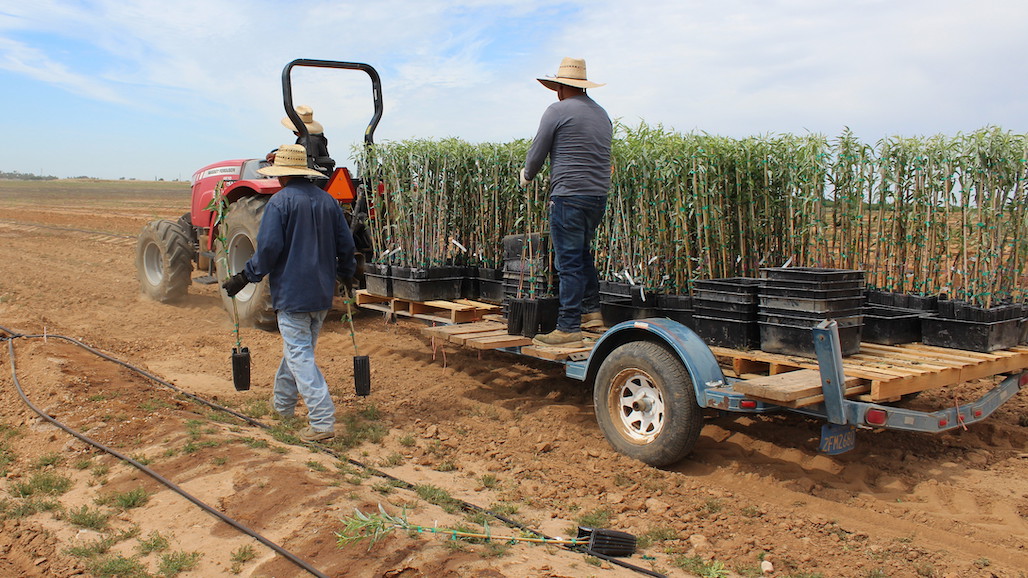
    The western pistachio industry has a much bigger impact on the nation and world than people may realize.  In addition to providing a healthy and nutritious snack to consumers across the world, the US Pistachio industry has a significant impact on the economy as well, as recently measured in a study by economist Dennis Tootelian.  Watch this brief interview as he shares the results of his study, and read more about it in Pacific Nut Producer Magazine.
    Please thank this video’s sponsor Trece for their industry support.
  • CA Almond Industry Roadshow Coming Soon

    CA Almond Industry Roadshow Coming Soon

    Next month, starting May 4, the Almond Board of California’s Field Outreach and Education team will be embarking on our previously postponed, long-awaited Industry Roadshow! The team is loading up Fritz, the almond van, with 3,000 informational packets featuring the latest ABC resources and traveling to 20 locations throughout the state with the purpose of:


    • Handing out new ABC resources, as well as resources that industry members would have picked up at the ABC booth during an in-person Almond Conference
    • Offering industry members an opportunity to meet ABC staff and leadership. We have missed spending time with industry members, and as things begin to normalize we look forward to connecting with the industry, answering their questions, hearing updates from the field, etc.Roadshow Details:

      The Almond Board of California’s Field Outreach and Education team, in addition to industry and ABC leadership, will kick off the first-ever Industry Roadshow on Tuesday, May 4. The Almond Board team will visit 20 locations (details attached). Industry members are invited to drive up to the location nearest them and look for Fritz,the almond van, as well as the Field Outreach team and ABC/industry leadership. Industry members will have the opportunity to meet the Field Outreach team members who are responsible for providing them with ABC resources, hands-on assistance in the orchard, California Almond Sustainability Program (CASP) support, and more. In addition, they will have the opportunity to pick up latest ABC resources, including:

      ·         2020 Research Update
      ·         NEW: Nitrogen Best Management Practices
      NEW: Application Quick Tips – in English and Spanish
      ·         NEW: Whole Orchard Recycling Grower Guide
      ·         NEW: Almond Production Resource Cards: Pests, Water and More!
  • Millions in India See California Walnuts on TV

    Millions in India See California Walnuts on TV

    Building on their mission to promote the benefits and many ways walnuts can play a role in the overall health of consumers in the U.S. and around the world, the California Walnut Commission (CWC) published results from their recent multimedia campaign in India. The campaign focused on educating consumers on how walnuts add valuable plant-based omega-3, protein and fiber to their diet. Here are the highlights:


    • The wide-reaching awareness campaign was live from November 2020 through February 2021 and was supported by print ads placed in leading consumer and trade publications, digital ads, as well as point-of-sale displays in major retailers across India.
    • The CWC engaged top influencers, including celebrity chefs, nutritionists and fitness experts, to provide inspiration and recipe ideas through their social channels.


    • The CWC utilized advertising on broadcast television from mid-December through mid-January, reaching 1.2 billion consumers weekly.


    This campaign highlights the value of the CWC and showcases its efforts to expand California walnuts use and consumption in India. “Despite high tariffs in this market, there is still an opportunity to build consumer demand for California Walnuts,” said Pamela Graviet, Senior Marketing Director, International, for the California Walnut Commission. “California Walnuts are a versatile ingredient, known for their high-quality, consistency and mild flavor, and the CWC is focused on building trade capacity to bring awareness to these attributes.”

  • U.S. Tree Nut Exports Reach Record Levels, Easing Oversupply Burden

    U.S. Tree Nut Exports Reach Record Levels, Easing Oversupply Burden

    California tree nut growers harvested record crops of almonds, walnuts and pistachios in 2020, following a year of ideal growing conditions on expanded bearing acreage. The abundance of supply led to lower tree nut prices which, combined with a weaker U.S. dollar, have pushed exports to record high volumes. The surge in exports comes despite ongoing retaliatory tariffs in importing countries like China and India and complicated shipping logistics.

    According to a new report from CoBank’s Knowledge Exchange, as bearing acreage continues to expand in the years ahead, the sector will need to continue growing its export base and add processing capacity to handle future record crops.

    “California’s tree nut crop has tripled in the last 20 years and continued expansion is expected as more bearing acres come into production in regions where water has not been limited,” said Tanner Ehmke, lead specialty crops economist with CoBank. “Expanding the export base will be key to finding a home for increases in production, and further investments in harvesting machinery, hulling and shelling capacity, and processing will be needed to market future tree nut crops in a timely manner.”

    After experiencing an exceptional growing season last year, California growers of almonds, walnuts and pistachios harvested near-record yields on record high acreage to produce a massive crop in 2020. Harvest levels rose substantially over 2019, with almonds, walnuts and pistachios increasing by 18%, 19% and 40%, respectively.

    Local markets were challenged by a lack of storage and processing capacity to handle the record crop, noting that acreage has grown too fast to harvest in a timely manner.

    The immense supply, coupled with some minor quality issues, contributed to the notable drop in prices for almonds and walnuts. Almond prices fell by roughly 30% from the prior year and walnut prices were down 40%. Pistachio prices have been steady to moderately lower year-over-year following a smaller off-year harvest in 2019.

    Water allocations for crop irrigation in California may impact yields of the 2021 crop. Handlers anticipate prices will be relatively stable for almonds, walnuts and pistachios heading into the next crop year and that the low-price environment will build a stronger demand base that will carry over into future marketing seasons.

    While tree nut growers and handlers are expected to struggle with low prices through 2021, the payoff is coming, noted Ehmke. “Consumers around the globe are adding nuts to their diets, which will boost demand and propel export momentum,” he said.

    Shipping issues with containers and the unknown impacts from COVID-19 cloud the long-term outlook on general consumption. Container shortages constrained exports from achieving a faster pace. Tree nut traders estimate that the scarcity of shipping containers has delayed 10%-20% of shipments.

    Watch a video synopsis and read the report, California Tree Nut Outlook: Record Exports Expand

    About CoBank

    CoBank is a $159 billion cooperative bank serving vital industries across rural America. The bank provides loans, leases, export financing and other financial services to agribusinesses and rural power, water and communications providers in all 50 states. The bank also provides wholesale loans and other financial services to affiliated Farm Credit associations serving more than 75,000 farmers, ranchers and other rural borrowers in 23 states around the country.

    CoBank is a member of the Farm Credit System, a nationwide network of banks and retail lending associations chartered to support the borrowing needs of U.S. agriculture, rural infrastructure and rural communities. Headquartered outside Denver, Colorado, CoBank serves customers from regional banking centers across the U.S. and maintains an international representative office in Singapore.

  • New CA Pollinator Coalition Pledges to Increase Pollinator Habitat on Working Lands

    New CA Pollinator Coalition Pledges to Increase Pollinator Habitat on Working Lands

    Spearheaded by the almond industry, a new coalition of agricultural and conservation groups was announced today to encourage more voluntary, grower-friendly efforts to protect the state’s native insect pollinators and managed honeybees.

    The California Pollinator Coalition includes a broad array of more than 20 of the state’s leading agricultural organizations and conservation groups (complete list below). The Coalition will focus on increasing grower participation in projects to provide habitat and forage for pollinators and other beneficial insects across the state’s agricultural landscape.

    “California’s almond industry has a long record of continuing improvement in the area of Integrated Pest Management and protection and stewardship of managed bees,” said Dr. Josette Lewis, Chief Scientific Officer for ABC. “This new coalition helps us expand on our work to benefit California’s many native pollinator species. We’ll also get more results by collaborating within the agriculture and conservation communities on voluntary efforts that benefit both growers and the environment. Improving the health or our ecosystems is not something we can do alone, so we are glad to have many strong allies in this.” 

    “It’s a simple fact that without honey bees, there would be no almonds. The Almond Alliance strongly supports this collaborative effort to increase habitat for pollinators on working lands,” said Alliance Chairman Mike Curry. 

    Convened by Pollinator Partnership, the California Department of Food and Agriculture and the Almond Board of California, the Coalition’s goal is to increase habitat for pollinators on working lands to benefit biodiversity and food production through on-farm and in-orchard projects, supported by technical guidance, research, and documenting progress toward increasing healthier pollinator habitats.

    “What we are doing in California is acknowledging the urgency to address the critical issue of protecting all pollinators, including native and managed species,” said President and CEO of Pollinator Partnership Laurie Davies Adams. “Agriculture and conservation must work together to achieve this goal.”

    “The outcome will not be a tidy report that sits on a shelf, but rather a metric of acres, projects, and species added to the landscape while agriculture continues to profitably feed the nation,” Adams said.

    Objectives of the Coalition
    Extending the California almond industry’s commitment to protect honeybees during almond pollination, the Coalition plans to address habitat issues on an unprecedented scale for the benefit of the state’s beneficial insects, which include 1,600 species of native bees, managed honeybees, butterflies, beetles, wasps, and more. Populations of many California pollinators are declining and often suffer from the same challenges as California’s agriculture. 

    The Coalition will work together on a variety of fronts to support pollinators: 

    • Preparing grower-friendly guidance to build and maintain pollinator habitat on farms and ranches
    • Conducting research and disseminating relevant science
    • Monitoring outcomes (adoption rates and effectiveness of practices)

    “Collaborative action can mitigate risks to California’s pollinators, and that’s exactly why this coalition has come together,” said Karen Ross, Secretary of California Department of Food and Agriculture. “We need urgent action, yet the first step in the process is building trust that encourages, enables, and enhances the result. The California Pollinator Coalition is a big step forward in a journey of grower and conservation groups voluntarily demonstrating leadership.” 

    “This will not be an easy or quick fix,” Lewis said. “It will require a robust and sustained effort, but we are determined to be part of the solution. Almond growers and many other farmers depend on pollinators to produce a crop and pollinators depend on us to provide safe habitat. Working lands can and should be part of the solution.”

    “Farm Bureau supports voluntary, farmer-friendly efforts to improve habitat for native pollinators, and we have long advocated improved research on pollinator health,” said President of the California Farm Bureau Jamie Johansson. “We will work with the coalition for the benefit of native pollinators and managed bees, and to assure stability for the domestic bee business.”

    Almond Alliance Sponsors AB 391

    In addition to the efforts of the new coalition, the Almond Alliance of California is sponsoring AB 391 California Pollinator Conservation Funding, authored by Assemblymember Carlos Villapudua (D-Stockton). This bill will provide critically needed funding for activities that accelerate the adoption of conservation practices designed to integrate pollinator habitat and forage on working lands.  “California almond farmers know that every almond exists because a honey bee visited an almond blossom,” explained Alliance Chairman Mike Curry. “Honey bees and other pollinators need a varied and nutritious diet. This bill will help growers implement those important conservation practices that benefit honey bees as they forage for pollen and nectar in the orchard. The Almond Alliance is proud to sponsor this bill and looks forward to working with its partners for the bill’s successful passage in the California legislature.”

    Assembly member Villapuda noted the importance of protecting pollinators. “Pollinators are responsible for bringing us one out of every three bites of food,” he explained. “They also sustain our ecosystems and produce our natural resources by helping plants reproduce. Working lands offer an opportunity to expand habitat and forage for pollinators which will help sequester carbon and contribute to climate risk reduction. To further engage growers in delivering solutions that benefit pollinators, state investment is critical for activities that accelerate the adoption of conservation practices that integrate pollinator habitat and forage on working lands.”

    AB 391 will appropriate $5 million dollars to provide funding to a variety of agencies to deliver technical assistance, outreach and grants to incentivize participation in state and federal conservation programs where pollinator habitat and forage is established.

    California Pollinator Coalition Partners

    While just beginning its work, the Coalition is continuing to recruit partners who understand the urgency and share the common goal of supporting both the health of pollinators and agriculture. Current California Pollinator Coalition membership includes: 

    • Agricultural Council of California
    • Almond Alliance of California
    • Almond Board of California
    • California Alfalfa and Forage Association
    • California Association of Pest Control Advisers
    • California Association of Resource Conservation Districts
    • California Cattlemen’s Association
    • California Citrus Mutual
    • California Department of Food and Agriculture
    • California Farm Bureau Federation
    • California State Beekeepers Association
    • California Sustainable Winegrowing Alliance
    • Environmental Defense Fund
    • Monarch Joint Venture
    • Monarch Watch
    • Pollinator Partnership
    • Project Apis m.
    • University of California Agriculture and Natural Resources
    • USDA Natural Resources Conservation Service of California
    • Western Growers
    • Dr. Neal Williams, University of California, Davis

    About the California Pollinator Coalition 
    The California Pollinator Coalition, convened by Pollinator Partnership, the California Department of Food and Agriculture and the Almond Board of California, is made up of a diverse group of agricultural and conservation organizations with the shared goal of providing enhanced habitat for pollinators. The Coalition and its members have pledged to increase habitat for pollinators on working lands. Additionally, the group plans to promote research and track its progress toward healthy and abundant habitats.

  • Blue Diamond Growers Earns Recognition as Green Business Certified

    Blue Diamond Growers Earns Recognition as Green Business Certified

    Following a comprehensive certification process, the Blue Diamond Growers facility in Salida, Calif., has earned distinction as being Green Business Certified. Blue Diamond is the first business in Stanislaus County to be recognized by the California Green Business Network, Stanislaus County, a program of the Modesto Chamber of Commerce, for demonstrating sustainability as a top business priority.
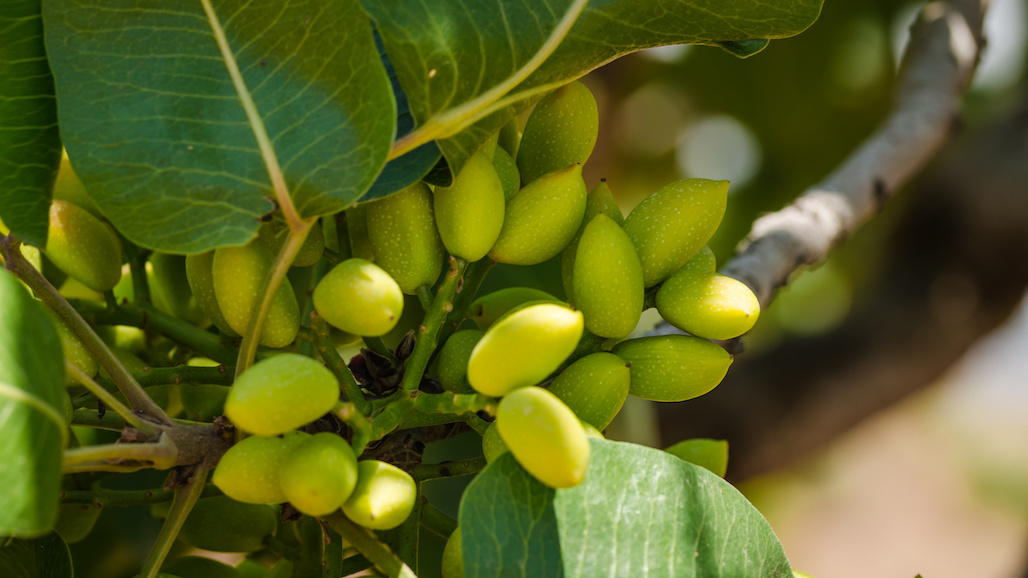
    The Green Business Certified recognition was awarded at a ceremony today organized by the Modesto Chamber of Commerce at the Blue Diamond facility in Salida, California. The ceremony was attended by
    Brian Barczak, Senior Vice President, Global Supply for Blue Diamond, as well as Congressman Josh Harder, and several other state and local dignitaries.

    “Blue Diamond has a long 110-year history as an almond cooperative, and within that history has been a commitment to sustainability across all our facilities – Sacramento, Salida and Turlock,” said Barczak. “As we look toward the future, our investment in sustainability strengthens our relationship with our customers and consumers, provides benefits to our local communities, and lays the groundwork for the continuation of our legacy as a cooperative.  This recognition means a great deal to us as it shows that we are doing our part to build a healthier and more sustainable future for our local communities.”

    The Green Business Certified recognition goes to companies that achieve a verified set of standards, including reducing water use, conserving energy, preventing pollution, increasing recycling, avoiding waste, encouraging alternative transportation, and partnering with other local vendors.

    This latest Blue Diamond Growers’ honor comes on the heels of growth and positive milestones at the Salida facility. In 2020, a multi-year construction plan was completed including the addition of a 50-million-pound-capacity Brown Almond Bulk Warehouse. The new warehouse is the second facility of similar capacity recently built at the site. Additionally, also in 2020, the Salida facility achieved its fifth consecutive year – representing five million work hours – of no lost-time accidents. In terms of sustainability, according to Salida Site Leader Dennis Bettencourt, the site has successfully diverted more than 18 tons of waste from the landfill for more optimal uses, among other achievements in reducing water and
    energy usage.

    “We are proud that Blue Diamond’s priority on sustainability is being recognized and wish to thank the Modesto Chamber of Commerce – California Green Business Network, Stanislaus County for their efforts to advance the importance of sustainability in our community,” said Bettencourt. “We are honored by this recognition, as well as motivated to continue providing Blue Diamond almonds to the world in a way that honors, respects and preserves the planet and the natural resources that mean so much to all of us.”


    About Blue Diamond

    Blue Diamond Growers, a grower-owned cooperative representing over 3,000 of California’s almond growers, is the world’s leading almond marketer and processor. Established in 1910, it created the California almond industry and opened world markets for almonds. Blue Diamond is dedicated to delivering the benefits of almonds around the world and does so by providing high-quality almonds, almond ingredients and branded products. Headquartered in Sacramento, the company employs more than 1,800 people throughout its processing plants, receiving stations and gift shops. To learn more about Blue Diamond Growers, visit www.bluediamond.com and follow the company on Facebook, Instagram, LinkedInand Twitter.

  • CA Pistachio Growers and Processors Create $5.2 Billion Impact on State’s Economy

    CA Pistachio Growers and Processors Create $5.2 Billion Impact on State’s Economy

    American Pistachio Growers  As California pistachio growers and processors shell out money to grow protein-packed nuts, they generate a whirlwind of economic activity throughout the Golden State. That’s the conclusion of economic impact studies commissioned by American Pistachio Growers (APG) and conducted by The Tootelian Company to quantify how spending by growers and processors sparks business activity, grows jobs and labor income, and contributes indirect business taxes.

    In California, the dominant force in U.S. pistachio production with 98 percent of the nation’s supply and more than 485,000 planted acres in 2020, the data show a significant and growing impact that ripples through the economy of the Golden State.

    47,200 jobs & $5.2 billion in economic output generated in 2020

    “When a grower spends money, that creates new business for other organizations, which means jobs and labor income, and it also creates business taxes,” said Dennis H. Tootelian, who conducted the study. California growers and processors spent more than $2.8 billion in 2020, averaging more than $7.7 million a day. In terms of total economic impact, the best measure of economic activity, the data show the state’s growers and processors created $5.2 billion in economic output, the equivalent of more than $10,000 every minute in 2020.

    California’s pistachio industry resulted in more than 47,200 jobs on a full-time equivalent basis in 2020. Grower spending generated more than 21,000 jobs and processor spending generated nearly 26,200 jobs, according to the data.

    Tootelian found that nearly $2.5 billion in labor income was generated by California growers and processors in 2020. “These dollars are diffused throughout the state’s economy as workers spend their income on an array of goods and services,” he added.

    56 percent growth in California acreage 2016-2020

    A significant factor driving economic impact in California since his last study in 2016 has been grower investment in new pistachio plantings. From 2016 to 2020, Tootelian noted that growers

    added 173,540 acres of pistachios, an increase of 56 percent. This surge in acreage, alone, resulted in nearly $1.9 billion in economic impact to California. 

    “The real wow factor in this whole thing is the huge jump in acreage in the last four years.

    Growers’ investment in new acreage equated to more than $5.1 million per day and $10,777 per acre,” Tootelian said. “This meant more than 16,800 jobs, nearly $883.7 million in additional labor income, and nearly $68.4 million in added indirect business taxes.”

    The data calculated the total indirect business taxes from California growers and processors at $191.9 million in 2020, or the equivalent of $525,000 per day.

    “The impact of the economic output of the pistachio industry in California is huge in the agriculture sector, but it also permeates nearly every other sector in the state — from real estate, construction, insurance, professional services and retailing,” said Tootelian.

    Pistachios contribute to Arizona and New Mexico economies

    For the first time, Tootelian gathered data and analyzed the economic impact of growers and processors in Arizona and New Mexico in 2020. While pistachio production in the two states is modest by comparison to California, Tootelian’s analysis revealed significant economic benefits from spending by growers and processors in Arizona and New Mexico.

    The data for Arizona’s pistachio growers and processors show total expenditures of $49.1 million in 2020, total economic impact of $91.8 million, the creation of 915 jobs and $39.6 million in labor income, and $3 million in indirect business taxes. Total pistachio acreage in Arizona is about 9,500 acres.

    For New Mexico, expenditures by growers and processors totaled nearly $2.7 million in 2020, total economic impact was $4.5 million, the industry created 38 jobs and generated $1.9 million in labor income, and the state’s growers and processors created nearly $148,000 in indirect business taxes. Pistachio acreage in New Mexico is about 600 acres.

    “Our members are rightly proud of the role they play in boosting economies across their respective states,” said APG President Richard Matoian. “While this study showed 485,000 acres of pistachios throughout California in 2020, new data shows the growth continues with 523,000 acres already in 2021.”

    “American-grown pistachios are valued in international markets for their exceptional quality and food safety,” said Judy Hirigoyen, APG VP, Global Marketing. “The new acreage will help supply consumers worldwide as dietary patterns shift to sustainable, plant-based proteins.”

    The 2020 study by Tootelian, Ph.D., Emeritus Professor of Marketing at CSU-Sacramento, is a follow-up to a similar study conducted for APG in 2016. His analyses were conducted for net total expenditures by growers and the net variable expenses of processors. He completed economic impact studies using 2020 data for California, Arizona and New Mexico, the three states that comprise U.S. commercial pistachio production.

    American Pistachio Growers is a non-profit trade association representing more than 800 growers and member processors in California, Arizona, and New Mexico.

    California Report

    California Fact Sheet

  • CIDETRAK® NOW MESO™ – A Testament to PERFORMANCE

    CIDETRAK® NOW MESO™ – A Testament to PERFORMANCE

    – SPONSORED CONTENT –

    24/7, Peace of Mind

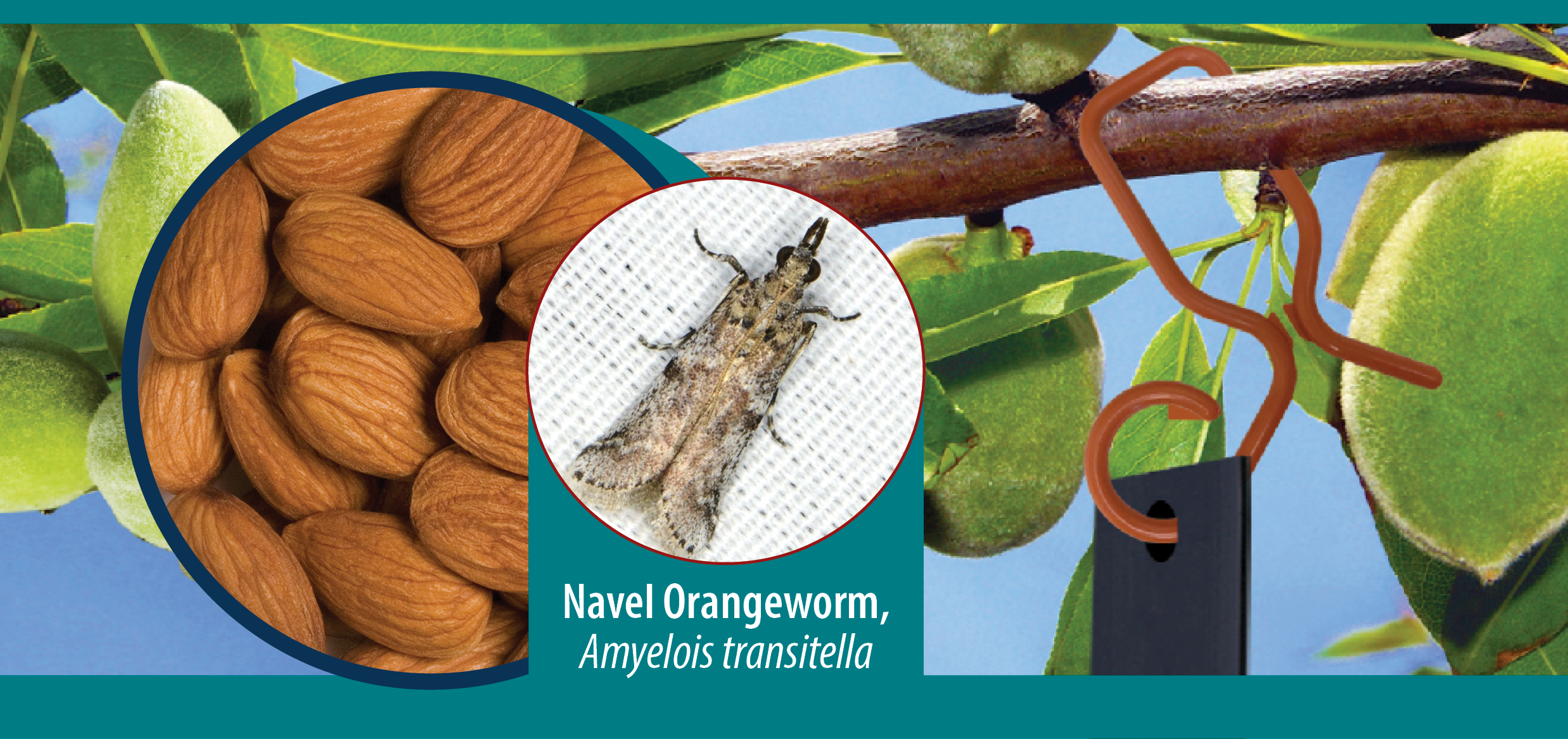
    “This is our second year using CIDETRAK® NOW MESO™ in our Almonds and Pistachios, and I’m very satisfied with the results. We applied CIDETRAK on roughly 800 acres of Almonds and 2,000 acres of Pistachios. It gives me peace of mind knowing that this product is on 24/7 and continually releases pheromone season long.

    Since adding CIDETRAK to our NOW management program, we’ve seen a consistent reduction in injury year over year. NOW injury has continually been suppressed below 1%. The product is quick and easy to apply. It’s also very convenient that each CIDETRAK box turns into a carrying case, making the application process much easier.

    Hands down, this is an extremely effective tool in managing NOW in our nut crops. I highly recommend CIDETRAK to anyone who would like to see a product that delivers consistent results and assurance that their orchard will be protected.”

    About Joe:

    Joe grew up in a family of farmers. Since the age of 8, he has worked in Agriculture and has learned an array of skills that he’s been able to apply throughout his career. Joe graduated from Cal Poly in 2006, and became the Research Director at DB Specialty Farms working in Strawberries. In 2013, he took a position with Maricopa Orchards and is currently their Director of Agronomy. Joe resides in Clovis, CA with his wife and four kids.

    Get Your Own Peace of Mind – CONTACT US