Category: Industry News
-

California Ag Coalition Requests Immediate State Action on Water Needs
Due to an economically crippling drought and the overwhelming regulatory demands of California, several agricultural groups formed a coalition and recently sent a letter to the governor and state legislature, both informing them of the challenges impacting farming families and requesting immediate action and funding to boost water storage and supplies. Watch this brief interview with Emily Rooney from the Ag Council of California as she explains.Please thank this video’s sponsor Suterra for their industry support. -

Pacific Nut Producer July Issue

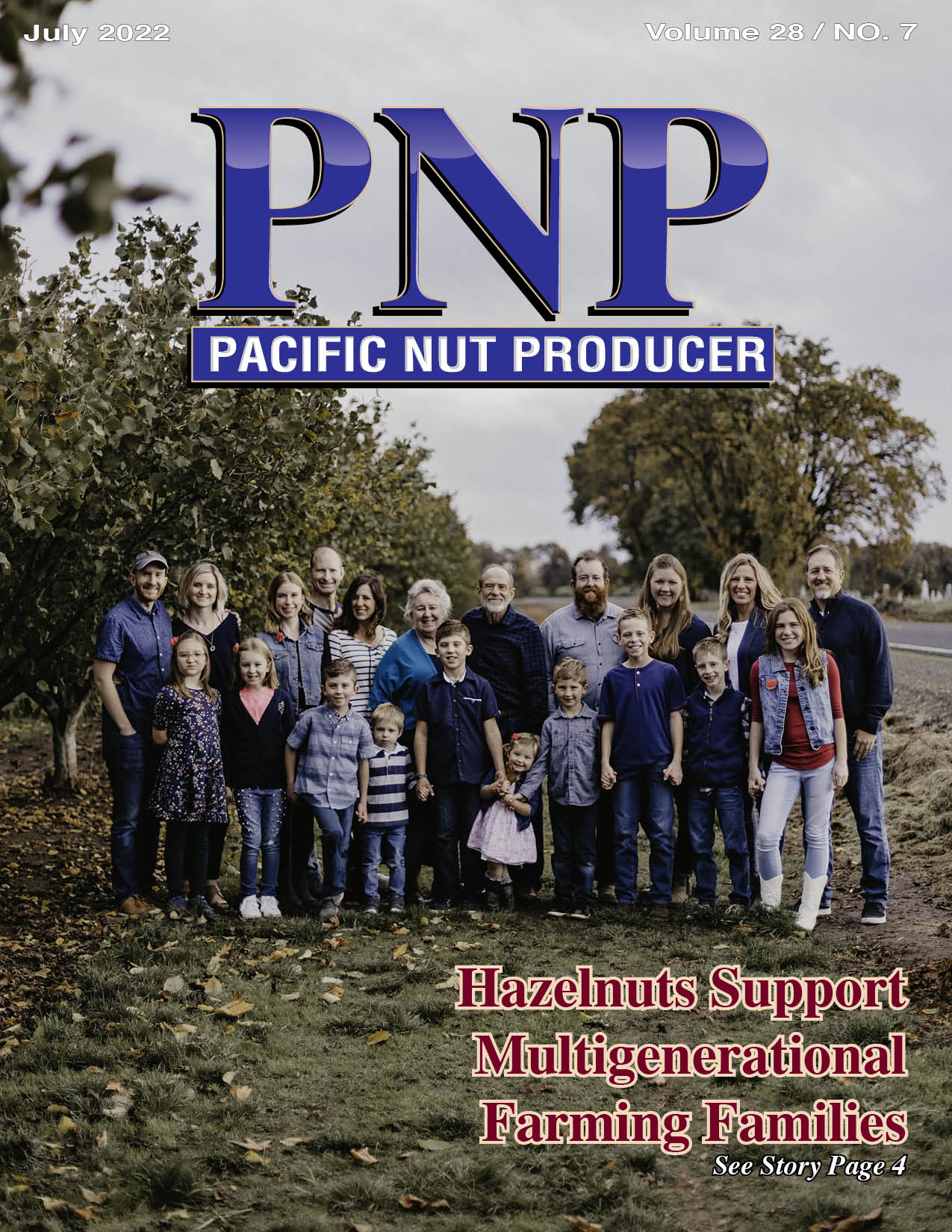
Pacific Nut Producer July Issue [btn btnlink=”https://malcolmmedia.com/order-a-back-issue/back-issue-pacific-nut-producer-magazine/” btnsize=”full” txtcolor=”#ffffff” color=”#FFF” bgcolor=”#492500″ btnnewt=”1″ nofollow=”1″]Order A Back Issue[/btn]
[btn btnlink=”http://malcolmmedia.com/pacific-nut-producer-magazine-subscriptions/” btnsize=”full” txtcolor=”#ffffff” bgcolor=”#492500″ btnnewt=”1″ nofollow=”1″]Subscribe Free[/btn]
[three_fifth_last]Contents of the July Issue:
Kropf Family Helps Pave Way to Bulk Handling of HazelnutsHazelnuts Support Multigenerational Farming Families
Mapping Out 2022 Water Supply Challenges & SolutionsExperts Look to On-Farm Recharge
Considerations for Navel Orangeworm Spray ApplicationsStay Ahead of the Most Formidable Pest of the Tree Nut Industry
July Orchard TasksAlmonds, Hazelnuts, Pecans, Pistachios[/three_fifth_last]
-

Japan to Require Allergy Labeling for Walnuts
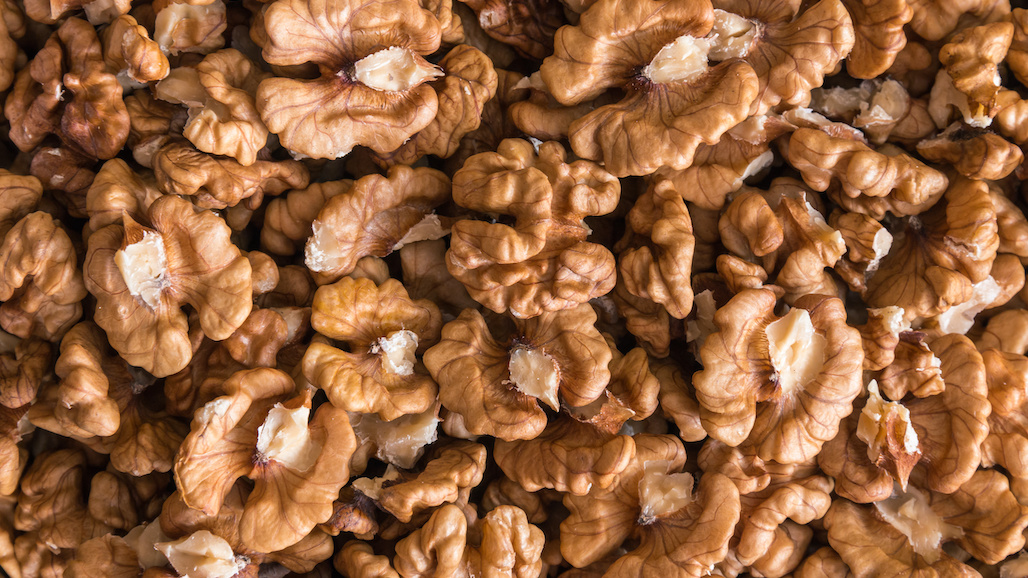
Japan’s Consumer Affairs Agency (CAA) will add walnuts to list of allergens that product manufacturers and importers must include on the label of packaged products containing walnuts. Currently, CAA strongly recommends including walnuts on the label, but does not require their inclusion. CAA will hold a public comment period prior to making this modification to the Food Labeling Standards, but have not yet announced dates for the comment period. Exports of U.S. walnuts to Japan have grown from 10,604 metric tons to 21,944 metric tons over the last decade.
General Information
Japan’s Consumer Affairs Agency (CAA) announced that it will add walnuts to the list of allergens that food manufacturers and importers must include on product packaging labels. CAA has not yet scheduled a date for the public comment period. Japan’s Food Labeling Standard currently includes walnuts on the list of allergens that it highly recommends food manufacturers and importers include on packaging. Since February 2021, CAA has held three Advisor Meetings on Food Allergy Labeling to determine if walnuts should be added to the list of allergens with mandated labeling requirements. The advisory panel found that walnuts should be added to the list of allergens required for labeling based on the results of a new longitudinal study on food allergies in Japan. On June 6, during the during the 67th Food Labeling Subcommittee meeting, the Cabinet Office’s Consumer Committee reviewed this issue.
Food Allergy Labeling
The Ministry of Health, Labour and Welfare (MHLW) established food allergen labeling standards in 2001 before oversight of the Food Labeling Standard shifted to CAA, a division of the Prime Minister’s Cabinet Office, in 2009. Cabinet Order No.10 currently requires allergy labeling for seven “required ingredients” and highly recommends allergy labeling for 21 “recommended ingredients,” see Table 1.

If CAA classifies an allergen as a required ingredient, and it is present in a food product, then the product manufacturer or importer must include the name of the individual allergen on the packaging. If a required ingredient is included as part of a processed ingredient within the final product, the label must also include the name of the allergen, for example, “cake mix (including wheat, egg, milk).” For recommended ingredients, CAA highly recommends the label include the name of the allergen within the ingredient list. The labeling standard allows for labels to list all existing individual recommended ingredients and recommended ingredients collectively. The Food Labeling Standard does not require labels indicate which ingredients are allergens, but product manufactures may choose to do so. See Table 2 for examples of approved labeling of allergens. Please see JA7078 for more details on the Food Labeling Standard.

CAA periodically revises the allergy labeling requirements. To do so, CAA relies on the “Reports on Food Labeling Related to Food Allergies Investigation Project,” which it publishes approximately every three years. This series of longitudinal surveys is a compilation of food allergy case reports.
Japanese importers and manufacturers bear sole responsibility for the development of labels compliant with Japanese food labeling regulations, including allergy labeling. There is no legal obligation for U.S. exporters to affix Japanese labels to their products prior to export. Please see Food and Agricultural Import Regulations and Standards for the current Japanese food labeling requirement.
Production and Trade
There is limited walnut production in Japan, hovering around 35-60 metric tons2 (MT) per year. As shown in Figure 1, Japan has roughly doubled walnut imports over the last decade, with most growth coming from U.S. walnuts. In 2021, Japan imported about 21,944 MT of shelled walnuts from the United States. For more details about the tree nuts market in Japan, see JA2022-0036. — By Daisuke Sasatani, USDA Foreign Agricultural Service

-

Robert Verloop Named CEO of California Walnut Board and California Walnut Commission
The California Walnut Board (CWB) and the California Walnut Commission (CWC) are pleased to announce that Robert Verloop has been named executive director and chief executive officer, effective July 11, 2022. The CWB and CWC represent over 4,500 California walnut growers and nearly 90 handlers, producing over 1.4 billion pounds of walnuts in 2021 that ship to more than 50 countries around the world.
“We are excited to bring onboard an experienced strategic leader such as Robert, his background will well serve the California walnut industry. He has the unique experience of leadership roles as a grower/shipper of highly perishable produce and in commodity organizations. Robert understands the challenge to ‘move the crop.’ In addition, he has extensive knowledge and creativity as a marketer working in complex domestic and international markets,” said Bill Tos, the California Walnut Board’s Executive Committee Chairperson.Mr. Verloop recently held the position of COO for Coastline Family Farms, a family-owned vegetable grower/shipper. Previously, he held executive/ leadership roles with Naturipe Farms/Naturipe Brands, Sunkist Growers Inc., and the California Avocado Commission. In those capacities, Robert worked in such areas as marketing and sales promotions in retail, foodservice and ingredient channels in domestic and global markets; issues management; strategic planning; and government relations, working with various state and federal agencies, including USDA, FAS/ATO, CDFA, and FDA.
“When he was a member of the then-Produce Marketing Association Board of Directors, Robert showed a true drive to help find and create solutions for the global produce and floral community. His focus on disciplined marketing and uncovering the implications in challenges and opportunities helped us immensely, and I expect the walnut industry will realize these same leadership benefits,” said International Fresh Produce Association CEO Cathy Burns.
“I am looking forward to working with the staff, the two Boards (CWB and CWC), and the growers and handlers that make up the California walnut industry. Walnuts are highly versatile and nutritious, ideal for plant-based eating. In collaboration with the growers and handlers we must respond to rapidly evolving market conditions with a sense of urgency and purpose and continue to build an ongoing dialogue with key customer segments in order to drive sales in all market segments,” added Verloop. “I am also keenly aware of the multi-generational nature of an industry dating back more than a century. The new generations are inheriting a dynamic industry that continues to evolve through innovation, starting with new advances in orchard management practices, post-harvest management, and developing exciting new consumer products that showcase the versatility and delicious taste of nutritious California walnuts.”
The CWB and the CWC play a vital role in expanding walnut usage occasions and understanding walnuts’ health benefits, solving for production and post-harvest challenges, protecting the industry against burdensome regulations, and building demand for California walnuts globally. Despite current supply-chain challenges, there is rising demand for walnuts given their versatility and wide range of studied health benefits. Interest in plant-based eating around the globe is an opportunity for walnuts, which contain protein and fiber, and are the only nut that is an excellent source of essential plant-based omega-3 ALA.[1]
“We look forward to Robert and the CWB and CWC staff working in collaboration with the industry to address the near-term challenges in supply chain logistics, port congestion and rising costs. At the same time, we will refresh and refocus our long-term strategies given the evolving marketplace and not waiver our focus on the mission of market development and increasing consumer demand globally for our future crops,” added Tos.
About the California Walnut Board
The California Walnut Board (CWB) was established in 1948 to represent the walnut growers and handlers of California. The CWB is funded by mandatory assessments of the handlers. The CWB is governed by a Federal Walnut Marketing Order. The CWB promotes usage of walnuts in the United States through publicity and educational programs. The CWB also provides funding for walnut production, food safety and post-harvest research.
About the California Walnut Commission
The California Walnut Commission, established in 1987, is funded by mandatory assessments of the growers. The Commission is an agency of the State of California that works in concurrence with the Secretary of the California Department of Food and Agriculture (CDFA). The CWC is mainly involved in health research and export market development activities. For more industry information, health research and recipe ideas, visit www.walnuts.org.
-

Almond Alliance Announces Historic Joint Venture to “Move Nuts”
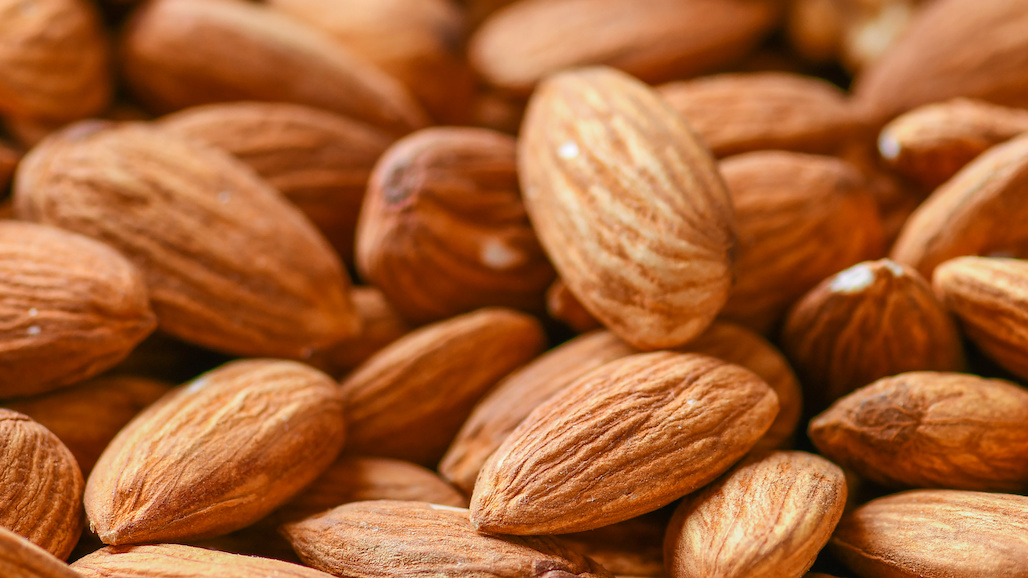
After a year and a half of supply chain problems, a massive trade imbalance, and challenges at ports, the Almond Alliance California has announced a collaborative private/public venture to ship nuts to foreign customers. From September 2021 to February 2022, California almonds lost $2 billion in revenue.“There is a stockpile of nuts sitting in warehouses and at docks that have been grown, sold, and awaiting delivery to customers. We have found a solution to the challenges of a supply chain breakdown by working together. Because of this historic effort, we are finally bringing these nuts to market, which makes a massive difference for our farmers, economy, and communities,” stated Aubrey Bettencourt, President/CEO of the Almond Alliance of California.
The joint partnership includes Blue Diamond Growers, Union Pacific Railroad, the ports of Los Angeles, Long Beach, and Oakland, ocean carrier CMA CGM, and other logistic leaders such as Van G Logistics. Working together, the California Almond Alliance has created port opportunities and new direct communications pathways and has begun booking with carriers.
“America’s great industries came together to find solutions and help protect American workers, businesses, and reputation,” said Bettencourt. “These important partnerships are a home-grown out-of-the-box first step to solving an enormous trade problem. This program will bring American Grown goods to market, preserve America’s reputation as a trade partner, and show that industry leaders can come together to meet challenges.”
The Central Valley Ramp to the Port of Long Beach, with the help of Blue Diamond Growers, Union Pacific Railroad, CMA CGM, and Van G Logistics, is the first to come online. The Almond Alliance has pilots underway at the Central Valley Ramp to get the nuts moving and on board ships.
In addition to the collaboration with Blue Diamond Growers, Union Pacific Railroad, and the ports and carriers, the Almond Alliance also took the opportunity to express sincere appreciation for the continued support of the California delegation, Sen. Feinstein, Sen. Padilla, Rep. Garamendi, Rep. Costa, Rep. Valadao, and Governor Newsom’s administration, Go-Biz Senior Advisor and Director Dee Dee Myers and the California Department of Food and Agriculture Secretary Karen Ross.
“We’ve taken an important first step, and we are committed to building on this success to work together to meet the challenges we face,” concluded Bettencourt.
About the Almond Alliance
The Almond Alliance of California (AAC) is a trusted non-profit organization dedicated to representing and advocating on behalf of the California almond community. California almonds generate more than $21 billion in economic revenue and directly contribute more than $11 billion to the state’s total economy. California’s top agricultural export, almonds create approximately 104,000 jobs statewide, over 97,000 in the Central Valley, which suffers from chronic unemployment. The AAC is dedicated to educating state legislators, policy makers and regulatory officials about the California almond community. As a membership-based organization, our members include almond processors, hullers/shellers, growers and allied businesses. AAC works to raise awareness, knowledge and provide a better understanding about the scope, size, value and sustainability of the California almond community. For more information on the Almond Alliance, visit almondalliance.org.

-

Reconsidering Our Use of Pesticides
– SPONSORED CONTENT –
Addressing the
ElephantPest in the RoomMaybe We’ve Been Using Pesticides Incorrectly… Wait — Before you reach for your torch and pitchfork, hear us out! The first thing we want to address is that we said reconsider, not to be confused with eliminate completely. We fully recognize that pesticides have become a necessary tool for most commercial-scale farmers and frankly, we’re grateful for the benefits pesticides provide like reducing food scarcity and mitigating the spread of pathogens. Sure, pesticides — in some circles — don’t have the best reputation, but it is important to acknowledge that many negative connotations surrounding modern pesticides are a byproduct of how they are being used, not necessarily how the work.
To elaborate on this, we simply mean that it is easy for farmers to fall into the trap of irresponsible or uninformed application of their pesticides. This piece is in no way intended to be an anti-pesticide propaganda article. Instead, our intent is to shed some light on how you, a commercial farmer, can make the most out of your pesticides, which is a win-win for everyone involved. So, if not eliminating them, what exactly do we mean by reconsidering pesticide use?
The Reputation Behind Pesticides
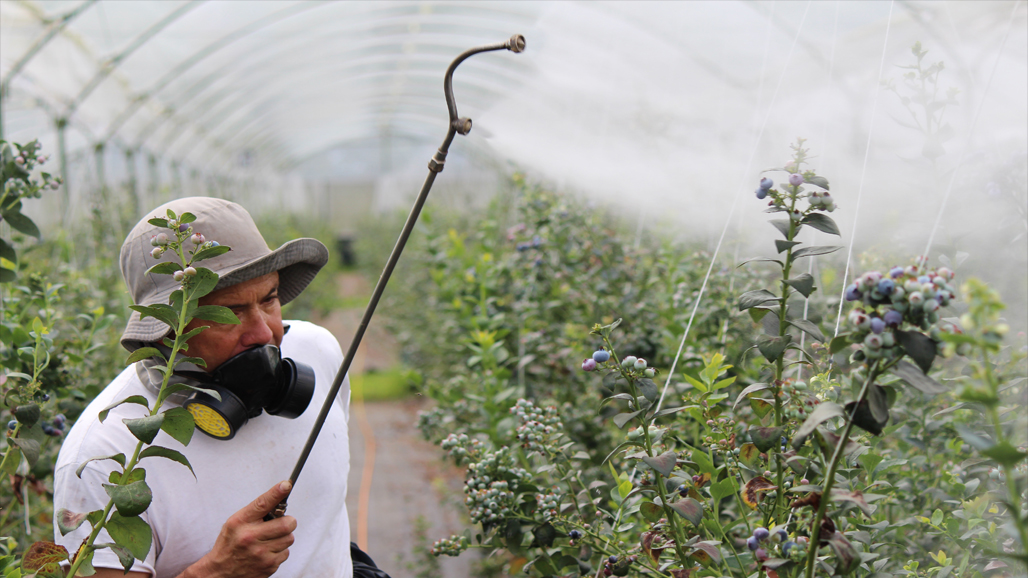
Most of us think of pesticides as a necessary evil when it comes to commercial agriculture. With millions of crops receiving pesticide applications annually, it is easy to understand how coverage on this scale can result in some collateral damage. This collateral damage can be a result of many factors, including overspray and/or over-application, which can ultimately leach into soil and water systems. Additionally, pesticides coming into contact with unintended — often beneficial — insects is yet another frequent — and valid — argument against the improper use of pesticides. Be sure to check out our pesticide deep-dive which explores the reasons we want to avoid simply developing new pesticides to battle pest resistance, as well as the other implications of improper pesticide application.
So, What’s the Solution to Our Pesticide Problems?
Wouldn’t it be nice to know exactly when and where to apply pesticides based on real-time pest pressure? Sure, farmers have been practicing methods of pest monitoring for thousands of years, but manual methods like sticky traps are labor and time-intensive tasks that are ripe for human error, a burden to scale up, and don’t deliver real-time data.
Here’s where modern technology has reinvented the wheel. Ag-tech startup, FarmSense has developed an award-winning device that allows farmers to monitor pest pressure of their crops in real-time. FarmSense’s pest monitoring devices (FlightSensor™) are strategically placed throughout a farmer’s fields. The sensor is capable of accurately detecting, counting, and identifying insects that pass through the device. Once this data is collected, it is shared on a personal online dashboard that the farmer has access to — in real-time.
If maintaining the long-term sustainability of your hard work is even a fleeting thought, we highly recommend checking out our multi-part series on regenerative agriculture. To discuss how FarmSense’s FlightSensor™ can impact your operation and to arrange a demo, follow this link.
References:
- https://www.usgs.gov/centers/oki-water/science/pesticides?qt-science_center_objects=0#qt-science_center_objects
-

Almond Board of California Announces 2022 Election Results
The Almond Board of California (ABC) recently announced the Board of Directors election results, and the names of the following nominees have been submitted to the U.S. Secretary of Agriculture for selection to terms of office beginning Aug. 1, 2022:
Grower Position One, Member (1-year term):
Paul Ewing, Los Banos
Grower Position One, Alternate:
Katie Staack-Dorsett, Waterford
Grower Position Two, Member (3-year term):
Brandon Rebiero, Modesto
Grower Position Two, Alternate:
To be determined
Handler Position Three, Member (1-year term):
Darren Rigg, Le Grand
Handler Position Three, Alternate:
Chad DeRose, McFarland
Cooperative Handler Position One, Member (3-year term):
Mel Machado, Modesto
Cooperative Handler Position One, Alternate:
Mark Jansen, Sacramento
The ABC board is made up of five handler and five grower representatives. It sets policy and recommends budgets in major areas, including marketing, production research, public relations and advertising, nutrition research, statistical reporting, quality control and food safety.
About California Almonds
California almonds make life better by what we grow and how we grow. The Almond Board of California promotes natural, wholesome and quality almonds through leadership in strategic market development, innovative research, and accelerated adoption of industry best practices on behalf of the more than 7,600 almond farmers and processors in California, most of whom are multi-generational family operations. Established in 1950 and based in Modesto, California, ABC is a non-profit organization that administers a grower-enacted Federal Marketing Order under the supervision of the U.S. Department of Agriculture. For more information on the Almond Board of California or almonds, visit Almonds.com.
-

What Chemicals Attract Filbertworm to Hazelnuts
Filbertworm is a notorious pest of filberts or hazelnuts; it certainly didn’t get its name from eating other nuts. But what exactly attracts filbertworm to Pacific Northwest hazelnut orchard? Experts are looking into this at Oregon State University to help growers to find new ways to manage the pest. Watch this brief Betsey Miller as she explains; and read more in Pacific Nut Producer Magazine. Don’t currently receive the monthly publication? Subscribe for free at: https://malcolmmedia.com/subscribe/Please thank this video’s sponsor George Packing Company for their industry support. -

Turlock Irrigation District Serves Growers, Conserves Water with New Technology
Amidst a threatening drought, groups and individuals are working to find more ways to conserve the precious resource of water, and Turlock Irrigation District has been leading the way for sustainable water management with new technologies and strategies. Watch this brief interview with Michelle Reimers from Turlock Irrigation District as she explains their recent improvements and plans.Please thank this video’s sponsor Trece for their industry support. -

New Measures to Improve Ag Exporter Conditions at the Port of Oakland
While California agriculture’s current export shipping crisis is going to take a combined effort at multiple levels of government and supply chain leadership to resolve, a panel discussion at the recent convention of the Almond Alliance of California illustrated some positives steps that are being taken to improve the situation. Watch this brief interview with Andrew Hwang from the Port of Oakland to learn about some of these efforts, and read more about it in the June issue of Pacific Nut Producer Magazine.Please thank this video’s sponsor Trece for their industry support.