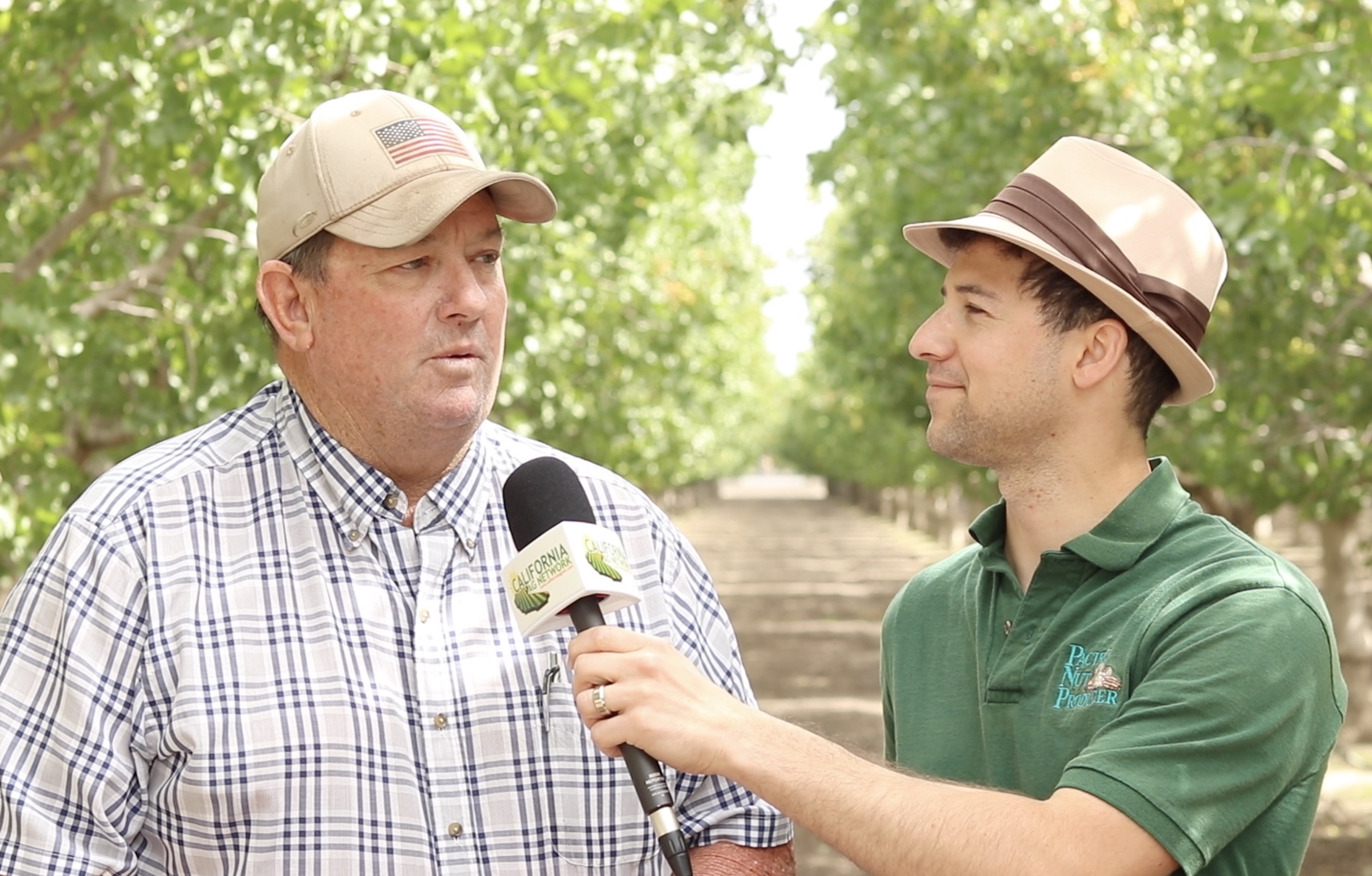
After so many years of drought, it’s difficult for growers to complain about all the recent rain events that have been occurring throughout California; however, the abnormally significant amount of precipitation this past month has posed its share of challenges to tree nut growers that have been anxiously awaiting entry into their orchards to make their much needed fungicide sprays and fertilizer applications. Some growers did suffer significant crop loss due to hail storms West of Tulare. Watch this brief interview with Tulare County Almond/Pistachio grower Brian Watte, also current Chairman of American Pistachio Growers, as he discusses the impact of the recent storms. Read more about it in the coming issue of Pacific Nut Producer Magazine.
Category: Industry News
-
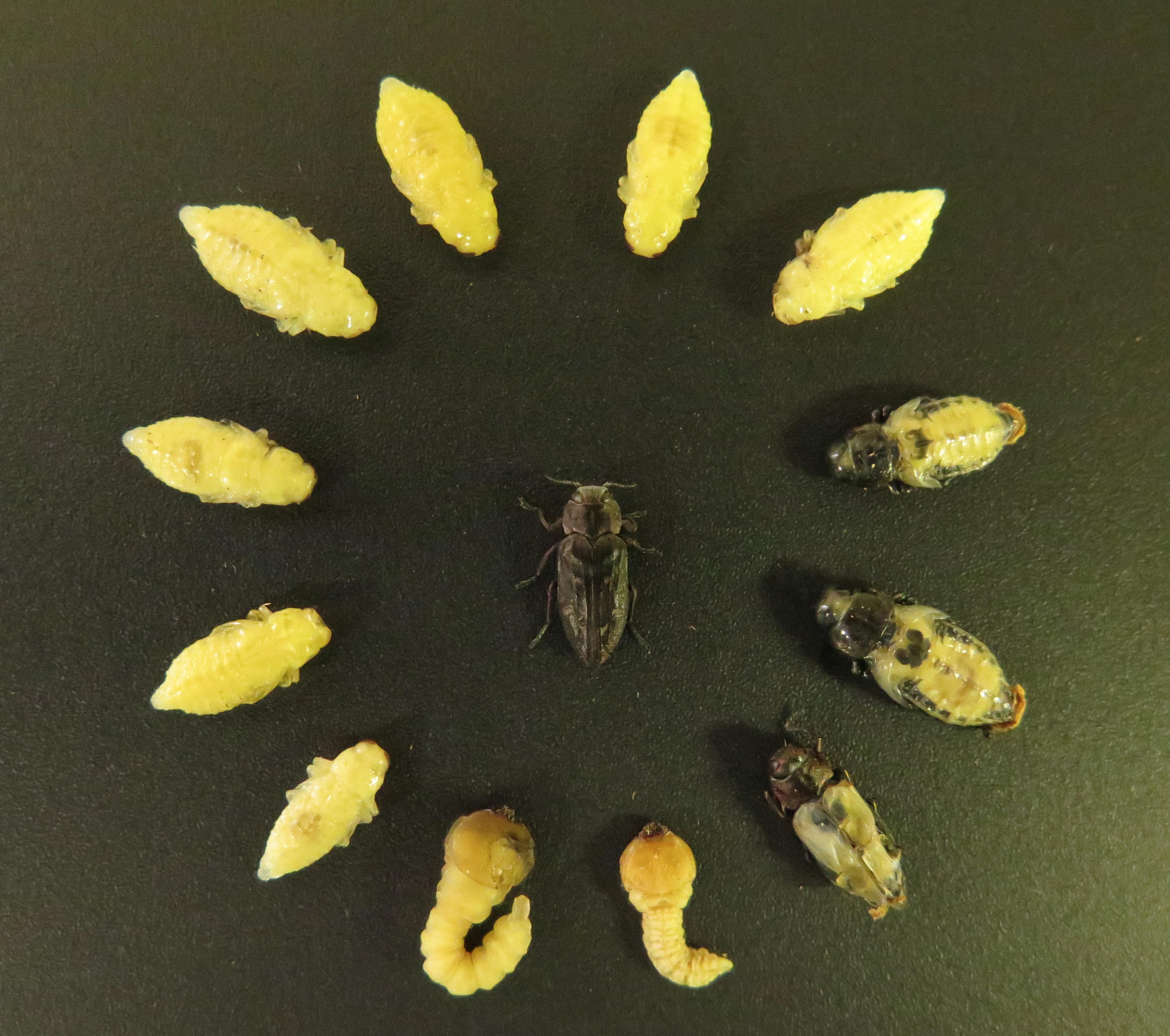
Hazelnut Pest Update with Nik Wiman
The Pacific Flatheaded Borer flight commenced today from our wood we have collected from grower orchards and our trial plots. Last week we found the first adult in dissections of infested trees, but this week they are chewing their way out.
The first filbertworm moths of the season were captured in multiple locations on Tuesday night this week (05/28). For our Aurora/Canby location, based on the Alinazee (1983) model and using the Aurora Agrimet Station (arao) we only have 407 degree-days, and the earliest moth is not predicted to occur until 580 DD.
Similarly in the McMinnville area, another place where moths were caught, I’m seeing less than 400 degree-days. I’m interested in your observations from the field. Read more from Oregon State University Extension Advisor Nik Wiman in the upcoming July issue of Pacific Nut Producer Magazine.
-
Uniting the Voice of California Agriculture with the Almond Alliance of CA
The world is at war with California agriculture, and there never has been a more important time for the industry to be united and have a strong voice in Sacramento and Washington than now. That’s why we have lobbying trade organizations like the Almond Alliance of California to unite and support the needs and priorities of growers, hullers and processors. Watch this brief interview with Almond Alliance President Elaine Trevino as she explains at their annual convention. Read more about it in Pacific Nut Producer Magazine.
-
Almond Board of CA Explores Options for Exporting Almond Biomass
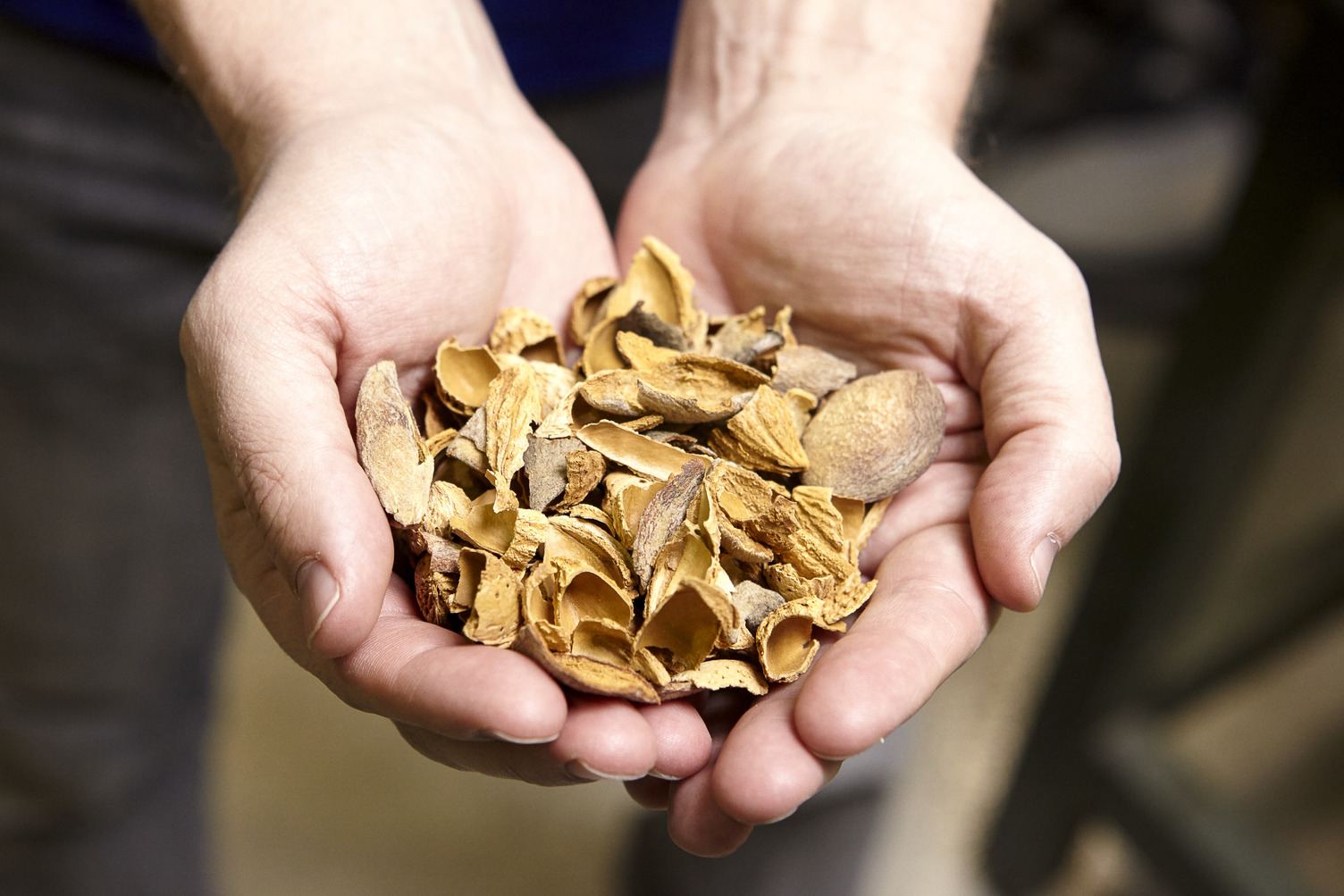
With all the new almond acreage coming into production, that means more almond hulls and shells to find a home for. So what are some economical options? Watch this brief interview with Julie Adams from the Almond Board of California to discuss options for exporting these coproducts overseas. Read more about it in Pacific Nut Producer Magazine.
-
Nomination Deadline Nears for 2019 California Leopold Conservation Award
Know a California farmer, rancher or forester who goes above and beyond in the care and management of natural resources? Nominate them for the 2019 California Leopold Conservation Award.
Applications must be postmarked by July 15, 2019. Mail applications to:
Leopold Conservation Award
c/o Sustainable Conservation
98 Battery Street, Suite 302
San Francisco, CA 94111Nominations may be submitted on behalf of a landowner, or landowners may nominate themselves. The application can be found at:https://sandcountyfoundation.org/uploads/CA-CFN-LR.pdf
Sand County Foundation, the nation’s leading voice for the conservation of private land, presents the Leopold Conservation Award to private landowners in 20 states for extraordinary achievement in voluntary conservation. In Californiathe $10,000 award is presented with Sustainable Conservationand California Farm Bureau Federation.
Given in honor of renowned conservationist Aldo Leopold, the award recognizes landowners who inspire others with their exemplary dedication to land, water and wildlife habitat management on private, working lands. In his influential 1949 book, “A Sand County Almanac,” Leopold called for an ethical relationship between people and the land they own and manage.
“Aldo Leopold inspires Lundberg Family Farms to continue our family’s commitment to conservation, nutrition and innovation,” said Bryce Lundberg, VP of Agricultural Operations for the farm, which received the award in 2018. “Lundberg Family Farms encourages other farmers, ranchers and foresters to connect with Leopold and submit an application.”
“From clean and abundant water, to breathable air, to healthy wildlife, keeping California the special place we all love requires everyone doing their part,” said Ashley Boren, Executive Director of Sustainable Conservation, which has co-sponsored the award since its launch in California more than a decade ago. “On the front lines of conservation are many deserving, but often overlooked, landowner heroes stepping up every day to steward our environment and Californians’ quality of life. The Leopold Conservation Award celebrates these inspiring individuals and families, and co-sponsors hope farmers, ranchers and other private landowners come forward this year to be recognized.”
“The Leopold Conservation Award provides outstanding recognition of farmers and ranchers who often take small steps to realize big gains in managing their farms in a sustainable and profitable manner,” said Jamie Johansson, California Farm Bureau Federation President. “The awarded families are great examples of the generational appreciation farmers and ranchers have for their land. The stewardship they employ at their farms and ranches serves as a great example of California farmers’ and ranchers’ commitment to the environment.”
“Leopold Conservation Award recipients are at the forefront of a movement by America’s farmers and ranchers to simultaneously achieve economic and environmental success,” said Kevin McAleese, Sand County Foundation President and Chief Executive Officer.
The Leopold Conservation Award in Californiais made possible thanks to the generous support of Sustainable Conservation, the California Farm Bureau Federation, Farm Credit West,American Ag Credit,The Harvey L. & Maud S. Sorensen Foundation,The Nature Conservancy in California, McDonald’s, andCalifornia LCA recipient alumni.
The Leopold Conservation Award will be presented at the California Farm Bureau Federation’s Annual Meeting in December.
The first California Leopold Conservation Award recipient was selected in 2006. Lundberg Family Farms of Richvale received the award in 2018.For more information on the award, visit www.leopoldconservationaward.org.
-
New Ways of Managing Plant-Parasitic Nematodes Under Study
Walnut production is most productive on deep-rooting uniform soils with good water-holding capacity. Such soils are also conducive to infestations of plant-parasitic nematodes. Currently, the key pest of concern in walnut plantings is root lesion nematode (Pratylenchus vulnus). In California, this nematode is wide-spread in walnut producing areas and is estimated to be present in almost 85% of walnut orchards.
Because of the longevity of a walnut planting, even barely detectable nematode numbers can cause damage to the traditional rootstocks in the life span of an orchard. English and Paradox rootstocks are susceptible to root lesion nematode. Other nematodes, root-knot nematodes (Meloidogyne spp.), can cause damage to English rootstocks. The third species frequently present in walnut soil is ring nematode (Mesocriconema xenoplax) but its damage potential has not been as well documented as for the lesion and root-knot nematode.
Plant-parasitic nematodes entirely depend on their host plants to sustain themselves. They can injure root tissues directly, and also consume photosynthetic nutrients that otherwise would be used for plant growth and nut production. Trees of all ages are susceptible, but newly planted and young trees are especially sensitive. In addition, the so-called replant problem, a biologically-incited disease that is poorly understood, can hinder the establishment and growth of new plantings.
Nematode problems become most challenging when an old orchard is removed and replanted. Under these conditions, the succumbing trees may have left behind huge numbers of the soil-dwelling parasites without symptoms the grower associated with nematode damage. When the young trees are exposed to these high populations, they can be severely damaged. Soil sampling for nematode evaluation when replacing an orchard should be standard practice.
For decades, methyl bromide was used to mitigate these challenges. This material has properties that allow its injection and gaseous redistribution in different soils, and thus was effective in various soil types and soil conditions. Since methyl bromide was banned in 2005, control options have relied heavily on 1,3-D products (Telone) and mixes of 1,3-D and chloropicrin. These are suitable soil fumigants under appropriate soil conditions, especially the soil moisture must be adjusted to the required range, and soil temperatures needs to be in the proper range. Soil preparation including deep-ripping (at least 5 ft) for alleviating obstructive soil layers and removal of old roots is even more important in a 1,3-D fumigation than it was when treating with methyl bromide. Achieving these conditions is more challenging on fine-textured soils. Many growers resort to cover cropping with, e.g., a winter annual grain crop to remove excess soil moisture during the spring and summer before fumigation is performed. Reaching highest levels of performance despite all these preparations may still be a challenge. Use of 1,3-D fumigation is restricted to a maximum annual amount that may be used under a so-called “township cap”.
Clearly, more sustainable methods of nematode management in walnut orchards are urgently needed. Three main avenues are currently being researched at the Kearney Agricultural Research and Extension Center: (a) development of walnut rootstocks with elevated resistance or tolerance to root lesion and other plant-parasitic nematodes, (b) implementation of chemical nematode suppression using novel nematicidal chemistries, and (c) biorational methods that rely on the use of organic amendments and cover crops for nematode suppression.
Development of nematode-tolerant walnut rootstocks is an ongoing program inherited from the long-term efforts at the Kearney Agricultural Research and Extension Center. With the knowledge leap of mastering the in vitro production of new inter-species Juglanscrosses,it has become possible to produce saplings originating from cross breeding. This process allows for a much improved and accelerated breeding because many plant copies can be easily made for testing of desirable tree genotypes. The nematode tolerant rootstock ‘VX211’, Phytophthora root rot resistant ‘RX1’ and the vigorously growing ‘Vlach’ are early examples of new rootstocks developed using this approach. A team from the University of California, USDA-ARS, California State University Fresno and UCANR has come together to work on rootstock improvement. Genetically diverse walnut material is produced by the breeder and given to plant pathologists, the nematologist, and physiologist for concomitant examination for desirable rootstock and scion-compatibility traits. In the nematology program, trees are planted to field plots, inoculated with root lesion and root-knot nematodes and monitored for at least two years. At that time, nematode numbers in the roots and multi-year plant growth data are used to identify elite selections that are then transplanted from the original selection orchard and further monitored for vigor and nematode dynamics. Two years after transplanting, trees are grafted to the scion ‘Chandler’ to examine graft compatibility in parallel to the root evaluations. This program has been successful in identifying advanced elites that outperform currently used clonal rootstocks under high nematode and replant problem pressure. In winter 2018, a collection of elite nematode-, Phytophthora-, and crown gall-resistant selections was planted at the Kearney Agricultural Center in Parlier, and more trees are scheduled to be planted this spring at the Nickels Soils Laboratory near Arbuckle.
The second approach that is pursued is evaluating novel nematicidal chemistriesfor their activity against nematodes that affect walnuts. After many years of having few new products available for testing, several new products have recently become available. In general, these materials are much safer for the user and the environment than the old compounds were.
The application of traditional preplant soil fumigants was relatively simple compared to newer non-fumigant products. A large tractor could apply traditional products using shanks to deliver the material to the proper soil depth. Gaseous redistribution of the material fostered good soil penetration and nematode suppression. The non-fumigant character of the new chemistries requires delivery to the site of action. This is most efficiently accomplished by a 6 acre-inch preplant water drench via a drip irrigation system. Some of the compounds need to be applied underneath a tarp for user and bystander protection. While this process is logistically challenging, it does offer promise because only a few pounds of active ingredient per acre are effective in killing nematodes compared to several hundred pounds of the old traditional materials.
In post-plant situations, the newer products are less cumbersome to apply than preplant situations partially because existing irrigation systems may be used. Typically, lower amounts of materials are applied that do not result in the high mortality required of preplant treatments but even modest population reductions (for example, around 50%) in established orchards can improve tree growth and productivity. After several years of field testing of the new chemistries at Kearney, CWB-supported work is now underway in commercial orchard field trials.
Lastly, novel organic amendments and cover crops for nematode suppressionare tested. Large amounts of organic waste material accrue from various sources in California and novel ways of using them – or products derived from them – are coming on line. In California, a recent focus of this research has been on exploiting novel characteristics of anaerobically digested food waste and animal manures. The fermentation process is implemented for biogas and ultimately bioenergy production. The finding that some of the by-products of this process, called digestates, can suppress plant-parasitic nematodes, while also serving as a nutrient source, is being explored in walnuts and other nut crops.
Strategies that rely on processes that occur within the field are also under study. In anaerobic soil disinfestation (ASD), large amounts of organic substrate (typical 9 tons/acre of rice bran or other organic material) are spread on the soil surface, incorporated, and the soil kept moist under tarp for about one month after an initial complete soil saturation. This method is logistically challenging but has shown high levels of efficacy when preparing nursery sites for planting. Another approach shown to effectively suppress nematode populations is “biofumigation”, in which Brassica crops such as various mustards or radishes are planted and subsequently incorporated into the soil. Using similar Brassica crops as “companion crops” within walnut orchards also takes advantage of the capacities of these crops. Planted after harvest close to fall rains, cover cropping with cool-season Brassica can be a straight-forward process with few logistical challenges. The hope is that the Brassica species reduces nematode infestation by trap cropping the nematode pests or by actively reducing the populations via root exudates.
In summary, with CWB support, a multi-pronged approach is investigated to alleviate the devastating impacts of plant-parasitic nematodes in walnuts. These studies are often highly collaborative with other experts of walnut production. The goal is to increase profitability and sustainability of walnut production while reducing its environmental impacts. This work is made possible by the gracious industry and government agency support coupled with the efforts of a highly dedicated nematology team, support from the University of California – Agricultural and Natural Resources, and the generous cooperation of grower and farm advisor collaborators.
By Andreas Westphal, Department of Nematology, University of California, Riverside, Parlier, CA

Walnut rootstocks growing in root lesion nematode-infested soil in a walnut replant site. Standard clonal rootstock on the left, new selection on the right. -
Almonds Included in Round 2 of Relief Funding Due to Tariff Retaliation
 Today USDA Secretary Sonny Perdue announced round two of support for farmers impacted by retaliatory tariffs and trade disruption in key export markets, specifically China. California almonds are included in the $16 billion trade mitigation package. The package will consist of $14.5 billion for the Market Facilitation Program (MFP), $1.4 billion for the Food Purchase and Distribution Program (FPDP) and $100 million for the Agricultural Trade Promotion (ATP) program. The damage assessment figure assigned to almonds is not known at this time. Payments for almonds will be based on a per acre basis, not Average Gross Income (AGI) like the first round of retaliatory tariff mitigation support.
Almond Alliance President Elaine Trevino noted almonds are one of California’s top three valued commodities and the leading agriculture export. The California almond industry exports 67% of what it produces. “The Almond Alliance has been working tirelessly to ensure that almonds are included in the discussion, both in the trade impacts experienced to date and the desired mitigation outcome. During the first round of trade assistance, approximately 50% of California almond growers applied for direct payment, but many were limited due to the AGI limitations,” said Trevino.
Almonds have been impacted by retaliatory tariffs in a significant way, and this announcement is confirmation of that reality by the Administration. The mitigation is based on the trade impacts in China, with almond exports down about 33%. Looking specifically at direct China shipments for the first quarter of 2019 (Jan-March), California almonds are at about 60% of what was shipped in the first quarter of 2018. Meanwhile, Australia has taken full advantage of the 0% tariff under their FTA with China, increasing their 11-month almond exports into China by almost 2,000 percent. These retaliatory tariffs have impacted California’s market share of almonds in China, a region that the California almond industry has invested in for over 30 years to develop.
“While direct payments are not the ideal solution, they will help assist those who have been negatively impacted by the pricing effects resulting from the retaliatory tariffs and allow them to continue to operate in these uncertain times,” said Trevino. “I would like to strongly state that the California almond industry is focused on trade and market growth. None of the mitigation programs will begin to offset the financial impacts, the disruptions to our relationships with commercial partners, or the longer term effect this could have on the considerable market development investments the almond industry has made over the past decades.”
The California almond industry generates about 104,000 jobs statewide, over 97,000 in the Central Valley, especially in areas that suffer from chronic unemployment. The industry also generates more than $21 billion in economic revenue and directly creates more than $11 billion to the size of the state’s total economy.
The announcement by USDA Secretary Sonny Perdue pertaining to almonds is a result of the industry coming together and advocating through the Almond Alliance. “The California almond community should be proud that through a unified organized effort they were able to have their voice heard and be acknowledged for what they provide to the national economy and what significance they have in the international market place,” said Trevino.
For USDA’s press release, Click Here.
-

Harder Leads Bipartisan Coalition to Protect Local Farmers from China Tariffs
WASHINGTON– Representative Josh Harder (CA-10) is leading a bipartisan group of lawmakers from across the country in an effort to ensure that Central Valley specialty crop growers aren’t again left out of a critical aid program provided to farmers harmed by Chinese tariffs. Although the ongoing trade war has cost the California walnut industry over $600 million, walnut farmers were not covered by the last Market Facilitation Program (MFP). Rep. Harder led a letter with Congressman Jimmy Panetta (CA-10) and 14 other members of Congress who represent districts that rely on specialty crops directly to Agriculture Secretary Sonny Perdue asking that these crops, including walnuts, be included in the next trade mitigation package.
“Our walnut growers can’t become collateral damage in this trade war – our local folks have already lost millions in revenue and were left out of the last round of funding,” said Rep. Harder. “Walnut producers don’t want to have to rely on bailouts, but if farmers of other crops are getting a hand, we want to make sure our farmers qualify as well. We need the USDA to work for Central Valley farmers – that means providing critical support to help blunt the impact of these tariffs.”
“Although my specialty crop producers on the central coast of California want long term business and not short term bailouts, all farmers affected by China’s retaliatory tariffs should be included in the forthcoming USDA trade mitigation package,” said Rep. Panetta.
“The Administration must bring this trade war to an end. California’s farmers and ranchers have been hit hard and USDA’s initial trade relief package did little to make them whole,” said Jim Costa, Chairman of the Livestock and Foreign Agriculture Subcommittee. “As Chairman of the Livestock and Foreign Agriculture Subcommittee, I urge Sec. Perdue to fully take the needs of California’s specialty crop growers, as well as dairy farmers, into account for this second attempt.”
“Family farmers deserve to be served equally when caught in the middle of a trade war,” said Jamie Johansson, president of the California Farm Bureau Federation.“It’s vital that USDA works closely to ensure that producers of all impacted commodities are fairly represented in a relief package. We applaud this bipartisan effort to bring attention to the needs of California agriculture.”
The last MFP program included many crops valuable to the Central Valley agriculture industry, but walnuts were not included. After the Chinese announced another round of retaliatory tariffs this week, the United States Department of Agriculture (USDA) elected to provide additional assistance to farmers who are hurt from the volatile trade market. The coalition of representatives has asked that the USDA include specialty crops, including walnuts specifically, in the expanded program.
The text of the letter is below and an original copy is available here.
Dear Secretary Perdue,
Thank you for your leadership supporting our nation’s farmers and overseeing the U.S. Department of Agriculture (USDA). We appreciate the opportunity to work together to help our agriculture communities thrive. We understand that the USDA is actively working on another trade aid package to assist our farmers. We ask that as your office creates this trade mitigation package, it ensures that all specialty crops are included.
Farmers are the bedrock of our rural economy, representing one of our nation’s top industries. They are navigating declining commodity prices and unstable trade markets all the while net farm income continues to fall. Our farmers deserve predictability in national trade policies, especially given the impact of trade deals on the agricultural economy. As these trade negotiations and tariff issues persist, it is important to ensure the needs of fruit, vegetable and tree nut producers are heard and reflected in these policies.
As you know, the Market Facilitation Program (MFP) was created to help those who were directly impacted by foreign retaliatory tariffs and the loss of traditional export markets. MFP helped address the financial sting of tariffs for some farmers, but the reality is that many were consciously left out of this program, such as walnut and table grape growers. While we were pleased to see sweet cherries and almonds added to the MFP, there are many other specialty crops that have suffered from the ongoing trade disputes that deserve to be included in the next trade assistance package. As a result we request that specialty crop farmers receive direct assistance payments in a similar fashion to their program crop brethren.
Additionally, we would like to express our support in expanding any export promotion program that may be a component in the trade package USDA is developing. Specialty crop growers throughout the country have spent decades developing these markets that are now at risk. As such they will need to rely heavily on export promotion and market retention efforts to stay competitive. Furthermore, with higher than average adjusted gross incomes, we anticipate not all our growers will be able to access a direct payment option, should one be made available to them. We therefore request all unused direct payment funds be reallocated towards the export promotion component of the trade assistance package (with that money maintained for the respective specialty crop).
Thank you, Secretary Perdue, for your attention to this important issue. We look forward to working with you.
-

Ceres Imaging, Malcolm Media Announce June Launch of Continuing Education Audio Series
Ceres Imaging, an aerial imagery and analytics company that improves decision making by providing farmers a comprehensive view of their farm, next month will present the first two webcasts of the Advances in Imagery audio series. The company is providing this free program in collaboration with Malcolm Media, publisher of American Vineyard Magazine, Pacific Nut Producer Magazine and more.
Advances in Imagery is a continuing education audio web series that brings together agricultural experts and top producers to discuss how imagery and other ag data tools are advancing the farming industry. Episode attendees qualify for continuing education credits.
“With so many new technologies out there, it’s sometimes difficult for growers to cut through the noise and see what is actually valuable at the farm level. Our hope is that Advances in Imagery will help growers learn from one another what does, and what doesn’t make sense given today’s technology,” said Matthew Malcolm, Managing Editor of California Ag Network and its parent company Malcolm Media.
Ash Madgavkar, founder and CEO at Ceres Imaging, added, “Ceres Imaging has always been a research-driven company. We’re excited to be working with the California Ag Network to offer relevant and easily accessible continuing education credit opportunities for growers.”
Episode One, called Advances in Fertility Management for Wine Grapes, will take place 4-5 p.m. PDT on June 4. Lowell Zelinski, president of the Independent Grape Growers of the Paso Robles Area, is the featured speaker. This episode will kick off with a discussion between Zelinski and Jerome Pier, Agronomist at Nutrien Ag Solutions. The second half of the episode will focus on how imagery analytics can empower farmers to lower their input costs and increase their yields.
Episode Two, Advances in Fertility Management for Tree Nuts, is scheduled for 2-3 p.m. PDT on June 6. David Doll of The Almond Doctor and former UC Cooperative Extension Farm Advisor will begin this series by talking to a local nut grower. This will be followed by a discussion on the cost and yield benefits of imagery analytics.
To register for one or both of these episodes, visit AdvancesInImagery.com.
About Ceres Imaging
Ceres Imaging is a California-based precision agriculture company that helps growers and farm advisors make proactive in-season decisions using aerial imagery and data analytics. Backed by university-validated science, Ceres Imaging uses proprietary sensors, analytics, machine learning models and plant science to help growers gain a more comprehensive picture of their farm. Ceres Imaging takes the guesswork out of in-season decision making and supports its customers with expert agronomists and local customer support. For more information, visit CeresImaging.net.About Malcolm Media
Since 1992, Malcolm Media Ag Publishing has been producing the finest, most informative agricultural publications in the West. Our editorial team is journalistically talented with backgrounds and extensive experience in agriculture. Our publications American Vineyard, California Fresh Fruit, California Dairy, Pacific Nut Producer and Vegetables West are read by more growers, producers, and pest control advisors (PCAs) than any other industry publications. They are best read in the field, and California Ag Network is the industry’s online news hub for agricultural information in the State. Visit MalcolmMedia.com to learn more. -
NASS Predicts Another Record-Breaking Almond Crop
For the second year in a row, the U.S. Department of Agriculture (USDA) National Agricultural Statistics Service (NASS) is predicting a record California almond crop for the upcoming production year. According to the NASS 2019 California Almond Subjective Forecast issued today, California almond orchards are expected to produce 2.50 billion pounds of nuts this year, up 8.69% from last year’s 2.30 billion-pound crop.1
This forecast comes about two weeks after NASS released the2018 California Almond Acreage Report, which estimated total almond acres for 2018 were up 2% from 2017 at 1.39 million acres. Bearing acres – orchards mature enough to produce a crop – were reported at 1.09 million acres, up 6% from the previous year. Looking ahead, NASS reported preliminary bearing acreage for 2019 at 1.17 million acres, up 7.3% from 2018.2
“I am excited by the future of the California almond industry. As our crop grows, our improvements in technology and innovative practices are growing with us, from advances in pest management that look beyond traditional applications to significant progress in water use efficiency. The Almond Orchard 2025 Goals highlight these successes and drive our industry to press onward towards the California almond farm of the future,” said Almond Board President and CEO Richard Waycott.
The first of two reports for the upcoming crop, the Subjective Forecast is based on opinions obtained from randomly selected almond growers located throughout the state via a phone survey conducted in April and May. NASS asked growers to indicate their total almond yield per acre from last year and expected yield for the current year based on field observations. The sample of growers interviewed is grouped by size of operation, and different individuals are interviewed each year, allowing all growers to be represented. NASS then combines the yield estimates obtained from each grower and extrapolates the information to arrive at the numbers reported in the Subjective Forecast.
While the Subjective Forecast provides early estimates of the upcoming crop after it is set, NASS’s 2019 California Almond Objective Report will provide a more precise estimate as it uses a more statistically rigorous methodology to determine yield. The report’s data is based on actual almond counts and measurements gathered from over 850 orchards throughout the state and includes the weight, size and grade of the average almond sample broken down by both growing district and variety.
The California Almond Objective Report will be released on July 3, 2019, at 11:50 a.m. PDT. NASS conducts the Objective Report, the Subjective Forecast and the Acreage Report in order to provide the California almond industry with the data needed to make informed business decisions.1

USDA-NASS. 2019 California Almond Subjective Forecast. May 2019.2
USDA-NASS. 2018 California Almond Acreage Report. April 2019.