Category: Industry News

  • Oregon State University Shares Characteristics of Different Hazelnut Varieties

    Oregon State University Shares Characteristics of Different Hazelnut Varieties

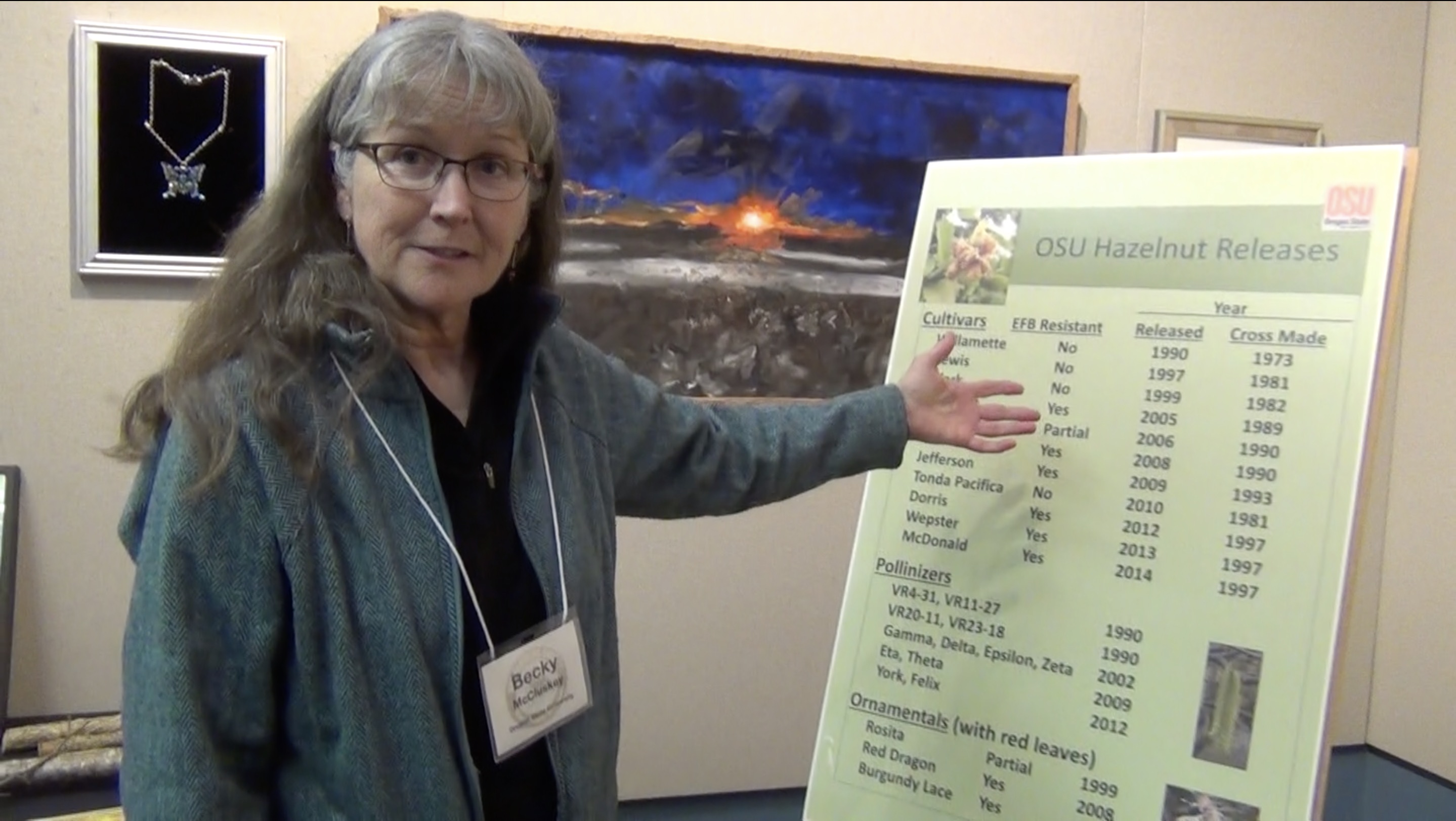
    The hazelnut breeding program at Oregon State University (OSU) has been doing a great job over the years developing new blight resistant hazelnut varieties better suited for todays growing industry in the Pacific Northwest.  Back at the Nut Growers Society’s Annual Meeting in Corvallis, Becky McCluskey from the OSU Department of Horticulture showcased some of these varieties. Watch this brief video as she talks about the strengths and characteristics of each variety and read more about it in Pacific Nut Producer Magazine.  Don’t currently receive this monthly publication?  Subscribe for FREE at https://malcolmmedia.com/pacific-nut-producer-magazine-subscriptions/.


  • Hazelnut Irrigation Considerations with Agricare

    Hazelnut Irrigation Considerations with Agricare

    Micro-irrigation is becoming more popular in the Pacific Northwest hazelnut industry.  Watch this brief interview with Agricare agronomist TJ Hafner, as he shares what’s worked best in his experience.  Read more about it in Pacific Nut Producer Magazine.  Don’t currently receive this monthly publication. Subscribe for FREE at https://malcolmmedia.com/pacific-nut-producer-magazine-subscriptions/.

  • Could CA Farmers Lose CalEPA & Science-Based Pesticide Regulation?

    Could CA Farmers Lose CalEPA & Science-Based Pesticide Regulation?

    Anti-pesticide sentiment has never been more prevalent, as California courts and anti-agricultural organizations frighten the public with non-science based claims of the harmful effects of crop protection materials such as glyphosate.  What farmers need to understand though now, is that much more than glyphosate is currently at stake.  The legislature is now being pressured to change the whole pesticide regulatory system as we know it.  Watch this brief interview with Michael Miiller, Director of Government Relations with the California Association of Winegrape Growers to learn more.

  • 2019 California Almond Forecast Down 3.5 Percent

    2019 California Almond Forecast Down 3.5 Percent

    The California Almond Objective Measurement Report, published today by the United States Department of Agriculture (USDA) National Agricultural Statistics Service – Pacific Regional Office (NASS/PRO), estimates that the 2019 crop will be 2.20 billion pounds, down 3.5% from the 2018 crop production of 2.28 billion pounds. The California Almond Objective Measurement Report is the official industry crop estimate.

    This year’s Objective Report projects an almond crop down 12% from the May 2019 California Almond Subjective Forecast of 2.5 billion pounds. The Objective Report collects data later in the growing season, closer to harvest, and is based on an actual count of nuts on the trees versus phone interviews with farmers, the method used for the Subjective Forecast.

    According to the Objective Report, the average nut set per tree is 4,667, down 17.8% from the 2018 almond crop. The Nonpareil average nut set per tree is 4,429, down 10.1% from last year’s set. The average kernel weight for all varieties sampled was 1.54 grams, unchanged from the 2018 average weight.

    “While the industry experienced less than ideal weather conditions this spring, California remains the best place in the world to grow almonds,” said Holly A. King, Kern County almond farmer and Chair of the Almond Board of California (ABC) Board of Directors. “As leaders in California agriculture and producers of 82 percent of the world’s almonds, we have made a public commitment to grow almonds in better, safer and healthier ways, protecting our communities and the environment. We feel a great sense of obligation to responsibly produce a healthy food accessible to people around the world.”

    Last year, the Almond Board of California’s Board of Directors announced the Almond Orchard 2025 Goals to focus on areas that define the California almond industry’s journey towards continuous improvement and commitment to sustainability.

    The amount of almond coproducts – hulls, shells and woody biomass – correlates with crop size, and the California almond industry is more committed than ever to finding new uses for these valuable products. In fact, achieving zero waste in California almond orchards by putting everything the industry grows to optimal use is one of the four goals established by the Board of Directors. The Almond Board is committed to finding high-value uses for almond coproducts that support California by creating a genuine bioeconomy where every coproduct is an input for another valuable product. ABC will continue to fund research to investigate how components of almond hulls and shells can be transformed to provide increased value for farmers as well as other industries such as food, pharmaceuticals and automotive.

    “California almond farmers produce the vast majority of the world’s almonds, and for every pound of kernels there are nearly three pounds of hulls and shells. With size comes great responsibility and the resources to continue to meet steadily growing demand for almonds and fund research into ways to grow almonds more sustainably,” said Richard Waycott, ABC president and CEO. “Our vision is to make life better by what we grow and how we grow.”

    Since 1973, almond farmers and processors have invested $80 million in research through the Almond Board. These funds have propelled the industry to make significant advancements in the areas of water, nutrient management, air quality, honey bee health and more, increasing farming efficiencies while minimizing environmental impacts.


    SAMPLING PROCEDURES

    To determine tree set, nuts are counted along a path within a randomly selected tree. Work begins at the trunk and progresses to the end of the terminal branch. Using a random number table, one branch is selected at each forking to continue the path. A branch’s probability of selection is directly proportional to its cross-sectional area. This methodology is used because of its statistical efficiency. The method also makes it possible to end up at any one of the tree’s numerous terminal branches.

    Since the selected path has a probability of selection associated with it, this probability is used to expand nut counts arriving at an estimated set for the entire tree.

    Along intermediate stages (i.e., the bearing surface between forkings), every fifth nut is picked. All nuts on the terminal branch are picked. These nuts are used to determine size and weight measurements.

    FIELD SAMPLING ACTIVITIES

    The survey began May 30 and sampling was completed by June 27. There were 1,634 trees sampled for the 2019 survey in 817 orchards. Additional orchards were not sampled for one of the following reasons:

    1) Orchard had been sprayed.

    2) Orchard had been recently irrigated and was wet.

    3) Orchard had been pulled.

    4) Grower would not grant permission or could not be contacted.

    The Objective Measurement Survey is funded by the Almond Board of California.

    DATA RELIABILITY

    The 80 percent confidence interval is from 2,050 million meat pounds to 2,350 million meat pounds. This means that the results of our sampling procedures will encompass the true mean 80 percent of the time.


  • India Imposed Retaliatory Tariffs to Include Walnuts

    India Imposed Retaliatory Tariffs to Include Walnuts

    California Walnut Board: We recently received final clarification that the Indian government announcement regarding implementation of the 20% retaliatory tariff that went into effect Sunday, June 16, does, in fact, include walnuts. Please let us know whether or not you have shipments currently in transit as the US Embassy in India wants to be aware of the magnitude of the tariff change on goods that left the United States under the belief of a lower tariff rate. Imposed Retaliatory Tariffs

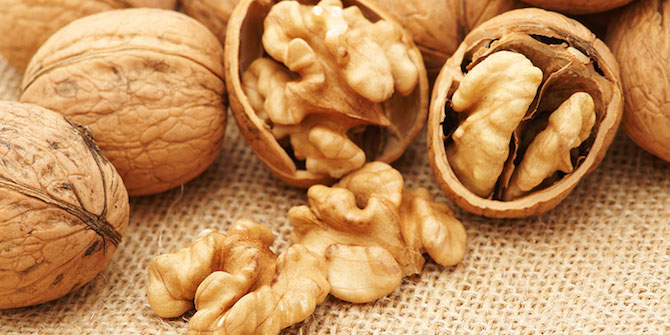
    Effective Sunday June 16, 2019, tariff rates increased to 120% for in shell and 30.9% for shelled walnuts from the U.S. only.

    We have been in direct contact with the Agricultural Affairs Office of the USDA in the US Embassy in India as well as the United States Trade Representative (USTR) on this matter. Tariff issues remain a top priority for the California Walnut Commission (CWC). The CWC remains engaged with United States Trade Representative (USTR), USDA (FAS and AMS), APHIS, Congressional Representatives and our consultants/agencies to ensure our concerns are heard by the Administration officials in advocating on the industry’s behalf regarding the many tariff issue as well as non-tariff barriers facing the industry.

  • Increase of Early Almond Varieties Demands Evolution in the Industry

    Increase of Early Almond Varieties Demands Evolution in the Industry

    One of the main concerns with recent almond acreage trends is in the exponential growth of earlier harvesting varieties and how the how that will impact early stockpiling at hulling and processing facilities.  Growers obviously want to harvest their crops as soon as possible, but Navel Orangeworm damage doesn’t stop as soon as the nuts leave the orchard.  Watch this brief video with Martin Pohl from Hughson Nut as he explains the situation and need for the almond industry to evolve with the trends.  Read more about it in Pacific Nut Producer Magazine.

  • Considerations for Determining Which Almond Varieties to Plant

    Considerations for Determining Which Almond Varieties to Plant

    As growers, both new and experienced, continued to add to the record almond acreage in California, many are constantly evaluating what varieties to plant.  With many new varieties on the market and consumer trends continuing to evolve, there is a lot to consider in variety selection.  Check out this brief interview with Martin Pohl from Hughson Nut Company as he shares his insights from a processor’s perspective.  Read more about it in Pacific Nut Producer Magazine.

  • Does FSMA No Longer Apply to Almond Growers?

    Does FSMA No Longer Apply to Almond Growers?

    With the recent announcement that almonds would be exempt from the Produce Safety Rule under FSMA, growers may think they got off the hook regarding extra trainings and documentation for food safety practices in the field, but watch this video with Tim Birmingham from the Almond Board of California who clarifies the recent change. Read more about it in Pacific Nut Producer Magazine.

  • 2018 USDA California Almond Nursery Sales Report

    2018 USDA California Almond Nursery Sales Report

    The primary objective of the California Almond Nursery Sales Survey is to estimate future almond acres based on the number of almond trees sold for new plantings. This report summarizes data supplied by California nurseries throughout the State who sold to almond growers for commercial plantings. Results from this survey will be used in conjunction with the Almond Acreage Survey to estimate the almond acres in California.

    Questionnaires were mailed to all known almond nurseries in California and responses were received from 7 out of 10 operations. The nurseries were asked to report the total number of almond trees sold for commercial plantings and the total number of Nonpareil variety sold. They were also asked to report the percent of trees sold for new almond orchards, for replanting an existing orchard, or to replace trees within an already existing almond orchard. The totals are only for those nurseries that reported. Acres planted were calculated using the reported number of trees sold, along with the trees per acre from the Almond Acreage Survey.

    Results

    There were at least 10.1 million almond trees sold by California nurseries since June 1, 2017. Based on the Almond Acreage Survey, plantings from 2014 to 2018 were used to calculate an average trees per acre of 130. This results in approximately 78,000 acres of almonds planted from June 2017 through May 2018. Roughly 36,000 of these acres were Nonpareils. Nearly 53 percent of the total trees sold (41,000 acres) are new almond orchard acres and 41 percent (32,000 acres) replaced existing almond orchards. The remaining trees sold replaced trees within existing almond orchards.

    Acknowledgments

    The USDA, NASS Pacific Regional Office sincerely appreciates the nurseries for providing the information. A special thanks is due to the Almond Board of California for providing funding and support for this special Almond Nursery Sales Survey.
    Almond Nursery Sales Survey
    Almond Nursery Sales Survey Chart
  • Managing Weeds is Key to Improving Yields & Orchard Health

    Managing Weeds is Key to Improving Yields & Orchard Health

    Almond Board of California — Weeds are a seemingly constant issue in the orchard. If not managed properly, they can create competition among young trees, clog micro-irrigation systems, use and generate uneven irrigation and contribute to a messy orchard floor during harvest. Good weed management, then, starts with identifying the weeds in your orchard, which requires constant, attentive monitoring.

    The University of California’s (UC) Integrated Pest Management (IPM) guidelines recommend the following actions for monitoring weeds:

    • Survey your orchard for weeds in late fall and again in late spring.
    • Monitor the orchard in a thorough fashion. Include the entire orchard as well as field margins, ditch banks and irrigation canals in your survey.
    • Examine all areas that are susceptible to weed infestation, like areas of high moisture. Collect important information such as weed species, location in the field, degree of control achieved with current program, and herbicides applied.
    • Record observations on a survey form that includes a map so the infested sites can be revisited for weed control. Pay particular attention to perennial weeds and other problem weeds and note their location on the map.
    • Record weeds found in rows and middles separately. Weeds in tree rows must be managed, but annual weeds in row middles — i.e. cover crops — may have some benefit as an orchard floor cover.

    Once you know what you’re dealing with, look to select herbicides or other control techniques based on what kinds of weeds are actually present in the orchard. The UC IPM website provides a comprehensive list of common and scientific names of weeds, along with photos and descriptions of each. You can find that list here.

    In the late spring, the most important invasive weeds to look out for are perennial weeds. These weeds can be a pervasive problem for almond growers, so weed management practices should be geared toward preventing their growth in the rows or row middles of the orchard. Common perennial weeds you’ll see are Bermudagrass, Johnsongrass, Dallisgrass, Nutsedges and White Clovers. Also, tufted perennial grasses such as threespike goosegrass are especially problematic during the beginning years of tree nut establishment due to their ability to reduce three growth by competing for water, nutrients and sunlight. Once the almond trees reach their fourth leaf, established plants can reduce harvest efficiency by making it more difficult to recover nuts from the orchard floor at harvest. The UC IPM website provides a late-spring weed survey form to help you identify these pests as June approaches.

    Once weeds are properly identified and the correct herbicides are applied, it’s vital to control herbicide resistance by using a variety of weed-control strategies. Failure to do so can result in the rapid loss of an herbicide’s effectiveness — and there are very few new herbicide technologies in the pipeline.

    Detecting resistance is the second step in preventing resistance. Patterns of herbicide resistance include patches of dense weeds with less dense populations radiating out from the central patch and weeds that have escaped control, scattered throughout the field.

    To combat resistance and reduce weed seed spreading, the UC IPM recommends the follow steps:

    • Rotate herbicides that have different modes of action and Weed Science Society of America (WSSA) group numbers.
      • Drew Wolter, UCCE Junior Specialist Horticulture Intern under Brad Hanson recently published an article on herbicide performance that helps demonstrate the importance of rotating applications.
    • Monitor for weed survival after an herbicide application.
    • Include non-chemical weed control methods such as cultivation or hand weeding.
    • Clean equipment after working in weed-contaminated orchards to prevent the spread of weed seeds.
    • Control weeds suspected of herbicide resistance before they can produce seed.
    • If weeds escape treatment, use shovels, hoes, and other hand tools to cut the plants below the soil surface to prevent flowering.
    • Use a pre-emergent herbicide before weeds appear. When the weeds emerge in fall and spring, consider splitting applications to meet the multiple emergence windows.

    Weed management is vital to a successful growing season and — with the right steps — can improve the yield and growth of established trees.

    For more resources regarding weed management, please visit the follow links on the UC IPM website: