Category: Economics

  • CA Walnut Board Votes To Modernize Federal Marketing Order And Suspend Enforcement Of Mandatory Inspections Of Walnuts

    CA Walnut Board Votes To Modernize Federal Marketing Order And Suspend Enforcement Of Mandatory Inspections Of Walnuts

    Cultivating industry prosperity for the long term is at the core of the California walnut industry’s strategic plan.  A year ago, the Grades & Standards Committee began working with US Department of Agriculture (USDA) looking into ways to update the outbound inspection process in order to remove redundancies and duplicative costs to bring more efficiency to the industry. As part of this process, the California Walnut Board (CWB) voted to suspend enforcement of mandatory USDA outbound inspections of California walnuts.

    This action resulted in USDA issuing a preliminary six-month moratorium on the enforcement of the mandatory inspection requirement, effective September 1, 2021.  The Board’s vote to suspend inspections stands to benefit the industry by mitigating market disruptions (i.e. labor shortages, shipping constraints) during the season. The Federal Marketing Order rules governing inspection, which date back to the Order’s inception in 1948, are obsolete as market and customer quality demands have since surpassed USDA grading standards.

    In addition to USDA programs, many handlers have already invested in state-of-the-art equipment to comply with food safety, quality, and traceability requirements set by the U.S. Food & Drug Administration (FDA), while also employing qualified staff to oversee rigorous programs to meet additional market-driven quality standards.

    “All handlers should know that despite non-enforcement of mandated outgoing inspections, the Dried Fruit Association (DFA) remains available for voluntary inspections and business needs,” said Eric Heidman, CWB Chair of the Grades & Standards Committee.

    The market already demands quality that well exceeds USDA grade standards and handlers will continue to inspect product to the specifications as contracted with their customers.

    “This moratorium will be extended when the CWB goes through the formal rulemaking process to modernize the Federal Marketing Order,” said Joshua Rahm, CWB Director of Regulatory & Technical Affairs. “As part of this process, CWB will establish a new method of assessing walnut handlers. We are hopeful the new authority will be available for the 2022-2023 crop year and expect assessments to be collected following the formal rulemaking process.”

    California walnut grower Donald Norene, stated, “I support the Board’s initiative to streamline and update the inspection process to keep up with current market demands and make it more efficient to save resources, ultimately working harder for the industry.”

    While the CWB works through the rulemaking process, it will continue essential operations by tapping budget reserves to offset the temporary non-collection of assessments.  The Board will be evaluating its spending to determine how to best operate until the formal rulemaking process is complete.

    About the California Walnut Board

    The California Walnut Board (CWB) was established in 1948 to represent the walnut growers and handlers of California. The CWB is funded by mandatory assessments of the handlers. The CWB is governed by a Federal Walnut Marketing Order. The CWB promotes usage of walnuts in the United States through publicity and educational programs. The CWB also provides funding for walnut production, food safety and post-harvest research.

  • Almond Alliance’s Elaine Trevino Nominated as US Chief Agricultural Negotiator

    Almond Alliance’s Elaine Trevino Nominated as US Chief Agricultural Negotiator

    On September 13th, President Biden announced his intent to nominate several individuals to serve as key economic and trade representatives, including the Elaine Trevino to serve as Chief Agricultural Negotiator at the United States Trade Representative.

    Elaine Trevino is the President of the Almond Alliance of California (AAC), a member-based trade association that advocates on regulatory and legislative issues in areas of international trade, food safety, water quality and availability, crop protection, air quality, worker safety, supply chain and feed quality. As the leader of an organization that advocates for California’s leading agricultural export, Elaine understands tariff and nontariff barriers to trade and the importance of maintaining America’s strong trade agreements and global positioning. Elaine has worked on advocating for funding for COVID-19 relief, addressing retaliatory tariffs, climate smart farming, public private partnerships for opening new markets and strengthening existing markets and addressing technical sanitary and phytosanitary barriers. Elaine works at the local and federal levels on addressing port congestion, supply chain disruptions and excessive costs.

    Elaine served as a Deputy Secretary at the California Department of Food and Agriculture for Governor Arnold Schwarzenegger and Governor Gray Davis. She was responsible for the oversight of the international export and trade programs, specialty crop block grant funding, division of marketing services, plant health and pest prevention and the statewide county fair network. Elaine serves on USDA’s Agricultural Policy Advisory Committee (APAC). Born and raised in the Central Valley of California, Elaine has a long history of community service and has a great respect for agriculture and the value of the industry to the overall economy. She received her undergraduate degree from the University of California Berkeley and attended the John F. Kennedy School of Government. Elaine and her family currently reside in Sacramento, California.

    Almond Alliance Chairman Mike Curry shared, “We are thrilled to see Elaine nominated for this position and know that her experience with us at the Almond Alliance will carry over into her new role – working first for farmers and ranchers, their families and the workers and businesses in the rural communities where we live. Her new position is responsible for conducting and overseeing international negotiations related to trade of the nation’s agricultural products – all of them including California almonds. Elaine’s nomination requires U.S. Senate confirmation (which will take time) and be assured that the Board of Directors of the Almond Alliance will lead a smooth transition in partnership with Elaine to identify and hire her successor. While we’re transitioning, the Board, Elaine and the Almond Alliance team will not skip a beat in our advocacy work on behalf of California almonds, both on the state and federal levels. Although we will miss Elaine’s leadership and energy, we are excited for the almond industry, the Central Valley (where she grew up) and California agriculture to have such a passionate and committed person serving in the Chief Agricultural Negotiator role.”

    Of Trevino, Matthew Malcolm, Editor of Pacific Nut Producer Magazine shared, “While faithfully serving the California almond industry in her role as President of the Almond Alliance of California, Elaine has also demonstrated time and time again her commitment to the greater agricultural community in her tireless efforts and involvement in addressing issues such as food supply chain disruptions, international trade disputes, securing funding for agricultural burn alternatives, and much more.  While she will be missed in her role at the Almond Alliance, we are thrilled with the opportunity she will have to represent the interests of farmers at such a critical time as this. We are confident that she will continue to do great things, as she has done for the almond industry.”

    Richard Waycott, President & CEO of the Almond Board of California concurred, “We are thrilled to see Elaine nominated for this critical position, in recognition of the importance of California agriculture and the role of specialty crops like almonds.  We’ve worked closely with Elaine and the Almond Alliance over the years in addressing global trade issues, and look forward to supporting her in her new role as chief ag negotiator.”

    Manuel Cunha President of the Nisei Farmers League added, “I believe Elaine will do a great job representing our agricultural industries. She knows the commodities and markets very well. She is bright and bold.  She understands the politics and knows how to communicate well with both farmers and legislators.”

    Of the nomination, United States Trade Representative Katherine Tai shared, “Elaine Trevino understands the importance of America’s farmers and farming communities to the vitality of our economy. Her experience will help the Biden Administration craft durable trade policy that creates broad-based prosperity. Throughout her impressive career serving in leadership positions at the state and federal level, Elaine has developed strong relationships with key stakeholders and demonstrated a keen understanding of trade and agriculture policy. If confirmed as Chief Agriculture Negotiator, Elaine would be the first woman of color and the first Latina in this critical position that will help USTR advance President Biden’s vision to increase American competitiveness. I hope the U.S. Senate can quickly confirm her to fill this important role so she can get to work on behalf of the American people.”

    Michael Dykes, D.V.M., president and CEO of the International Dairy Foods Association added, “Having had the pleasure of serving on the USDA Agricultural Policy Advisory Committee for Trade with Ms. Trevino in recent years, I’m confident she will position U.S. agriculture interests competitively, remain vigilant to protect U.S. businesses from myriad barriers to trade, and embrace diplomacy and relationship-building. As a resident Californian and former deputy secretary of the California Department of Food and Agriculture, Elaine Trevino is well aware of the importance of trade to California—the state exported $2 billion worth of dairy products in 2020— and to U.S. dairy. IDFA is eager to get to work with Ms. Trevino to continue the growth of our dairy exports and the global competitiveness of the dairy industry. We encourage the U.S. Senate to confirm her quickly.”

    “The role of Chief Agricultural Negotiator is essential in pursuing positive trade policy results for U.S. dairy farmers and in expanding overseas markets for dairy products,” said Jim Mulhern, president and CEO of National Milk Producers Federation (NMPF). “NMPF is pleased that in choosing Ms. Trevino to nominate for this position, President Biden has selected someone with the right background and clear understanding of trade’s importance to American agriculture, both of which are vital to success in this position. I’ve been fortunate to serve on the president’s Agricultural Policy Advisory Committee with Ms. Trevino and hope to see swift confirmation of her nomination by the Senate so she can commence the work that’s so key for farmers across the country.”

    “U.S. dairy farmers, exporters and manufacturers have been eagerly awaiting the nomination of a Chief Agricultural Negotiator given the sizable role that trade plays in providing a home for the equivalent of more than a day’s worth of U.S. milk production each week,” said Krysta Harden, president and CEO of US Dairy Export Council. “The world needs U.S. dairy and U.S. dairy needs the world. Our industry is eager for additional market opportunities to help us create more jobs here in America as we meet that demand with our high-quality, sustainably produced products. We urge the Senate to move swiftly to confirm Ms. Trevino and look forward to working closely with her to expand markets around the world.”

    Doug Palmer in the Politico Pro shared, “Biden has been under pressure from farm-state senators to fill the position, which Congress created 20 years ago to elevate the importance of agricultural issues in U.S. trade negotiations. Depending on the year, anywhere from 18 percent to 40 percent of the income U.S. farmers earn is derived from goods transported to other countries… By selecting Trevino, Biden helps fulfill his goal of bringing diversity into his administration, while also giving a key position to someone from the largest U.S. agricultural exporting state.”

    Palmer continued, “The Senate Finance Committee will schedule a hearing on Trevino’s nomination sometime after it has received her official paperwork from the White House. Her nomination is the last of six Senate-confirmed positions in the Office of the U.S. Trade Representative that Biden needs to fill. Of those, only U.S. Trade Representative Katherine Tai is already on the job.”

  • Losses in Over 20% of Sales due to Continued Port Congestion

    Losses in Over 20% of Sales due to Continued Port Congestion

    Almond Alliance of California — The transportation crisis continues for agriculture exporters and seems to be worsening as the holiday season nears. Increased costs, rescheduling, cancellations, detention and demurrage charges up 300% and lost markets are some of the realities the industry is facing. Based on numerous sources, over 20% of sales cannot be completed due to ocean carrier rates, declining to carry export cargo, unreasonable demurrage and detention charges, and other practices.  As an industry that is international holiday focused, this issue continues to be a top priority for almonds.

    The Almond Alliance continues to focus on this issue and work closely with AgTC, several stakeholder organizations, logistic companies and of course the Port of Oakland.  Here is a summary of recent efforts related to port congestion and related Almond Alliance action items.

    Federal Maritime Update (FMC):

    The FMC launched an expedited inquiry into the timing and legal sufficiency of ocean carrier practices with respect to certain surcharges. There are eight ocean carriers being asked to provide the Commission’s Bureau of Enforcement (BOE) with details about congestion or related surcharges they have implemented or announced. This action was taken in response to communications received by the Commission from multiple parties reporting that ocean carriers are improperly implementing surcharges. The companies contacted are CMA CGM, Hapag-Lloyd, HMM, Matson, MSC, OOCL, SM Line; and Zim. Each ocean carrier was identified as having recently implemented or announced congestion or related surcharges. Ocean carriers are subject to specific requirements related to tariff changes or rate increases, including providing a 30-day notice to shippers and ensuring that published tariffs are clear and definite.

    The FMC has indicated that they are committed to transparency and Chairman Maffei has said, “As Chairman, I want to know the carriers’ justifications for additional fees, and I strongly support close scrutiny by the FMC’s Bureau of Enforcement aimed at stopping any instance where these add-on fees may not fully comply with the law or regulation.”

    In summary, the FMC is working on the below items:

    • The Fact Finding 29, led by Commissioner Rebecca Dye, to identify operational solutions to cargo delivery system challenges.
    • FMC Ocean Carriers Audit Program which will analyze the top nine carriers by market share for compliance with the Commission rule interpreting 46 USC 41102(c) as it applies to detention and demurrage practices in the United States. Other focus areas of the audit process may include practices of companies related to billing, appeals procedures, penalties assessed by the lines, and any other restrictive practices. Lucille Marvin, the Commission’s Managing Director, is leading the audit.  
    • FMC is committed to transparency facilitating ongoing stakeholder discussions and roundtables.

    The Commission can initiate enforcement actions for improperly established tariffs based on their findings. We will let you know when the inquiry on Shipping Act violation findings are released. If you want to file a formal complaint, please contact the Almond Alliance and we will walk you through the process.

    The Federal Maritime Commission recently announced their National Shipper Advisory Committee. The Committee is comprised of 24 members, evenly divided between those who export cargo from and those who import cargo to the United States, that will advise the Commission on policies relating to the competitiveness, reliability, integrity, and fairness of the international ocean freight delivery system. Joshua Woods from Blue Diamond Growers will serve on the advisory committee.  The Almond Alliance will continue to communicate industry challenges to the Commission and newly formed advisory committee.

    Action Item:  The Almond Alliance continues to engage with the FMC staff and will be transmitting a letter to the commission regarding the impacts to the California almond industry and our requests for action. In addition, we alerted the FMC that due to the delays at the Port of Los Angeles and Port of Long Beach the number of vessels that have bypassed the Port of Oakland, we believe due to time constraints, has soared. The number of vessels that have bypassed the Port of Oakland in comparison to last year is approximately 40 (from July 2020 to July 2021) which furthers the challenges that almond exporters are facing.

    Recent Roundtables Facilitated by FMC:

    Port of Oakland on August 30, 2021: Oakland Port executives, with Federal Maritime Commissioner Carl W. Bentzel, California State Transportation Agency Secretary David S. Kim, importers, exporters and stakeholders discussed the port congestion challenges and how to strengthen Oakland’s place in the global supply chain and strengthen the state and federal economies. Attendees asked for support from maritime leaders to streamline seaport operations and communications and collaborate on making the supply chain transparent for customers and operators. FMC and CalSTA asked for recommendations on how to alleviate the port congestion and improve communication between importers, exporters, the Port of Oakland, logistics and carriers.  The Almond Alliance requested longer night gate hours, requirements on the percentage of empty containers returning on a vessel, improved notifications from carriers on early calls and blank sailings, explanation of increased fee methodology and compensation for third party fees on storage and chassis. While our requests are ambitious, our goal is to push for transparency on the issues important to our exporters.

    Port of Long Beach on September 1, 2021: The Long Beach roundtable focused on supply chain transparency and how equipment and operations move cargo in and out of the largest port complex in the United States. Commissioner Bentzel was joined by Congressman Alan Lowenthal, who has represented the LA/LB port complex at the local, tate and now federal level for decades. Long Beach and Los Angeles Port Directors Mario Cordero and Gene Seroka also joined as well as representatives of rail lines, trucking, chassis, container lines, and terminals.

    Action Item:  The Almond Alliance was asked to summarize and update the impacts that the port congestions have had on almonds.  We are in the process of drafting and will submit soon.  We need to hear from our handlers if expanding night gate hours for truckers at the Port of Oakland will be helpful and utilized. Please email us and express your support. This will help our effort to expand gate hours at the Port of Oakland.

    Port Update:

    Port of Oakland: A year-long cargo surge slowed and volume dipped at the Port of Oakland in July. The Port recently reported it expected containerized cargo volume growth to resume as peak shipping season arrives. Though business dipped in July, the Port said year-to-date import volume has increased 16 percent. Total volume in the same period is up 9 percent.

    According to the Port, cargo volume declined 3.5 percent in July compared to the same month a year ago. Here’s the breakdown:

    • July containerized imports down 1.7 percent year-over-year;
    • July containerized exports down 4.7 percent Y-O-Y; and
    • July total volume, which includes imports, exports and empty container repositioning, down 3.5 percent Y-O-Y.

    The Port attributed the declines to record cargo volume in the first half of the year. It explained that surging shipments stacked up on docks causing delivery delays. The Port said that as a result, shipping lines omitted several voyages to Oakland, leading to lower volumes.

    The Port said that cargo volume should increase again from August through October. Those are peak shipping months for retailers building holiday inventories. Oakland has introduced two new vessel services to Asia in the last month which should also boost volume. The Port said new services demonstrate continued reliance on Oakland as a key global trade gateway.

    Action Item:  The Almond Alliance is working with the Port of Oakland to encourage longer hours of service at the night gate, with an early opening time. If you have an opinion on this issue, please contact the Almond Alliance.

    Union Negotiations:

    All of our almond exporters are concerned with the upcoming labor negotiations which are set to begin in January 2022. Given the existing conditions at the Port of Oakland, an impasse would be devastating.  While labor negotiations impact the Port of Oakland, the two parties negotiating are the International Longshore and Warehouse Union (ILWU) and the Pacific Maritime Association (PMA). The Almond Alliance is meeting with ILWU and PMA and will continue to monitor contract negotiations and update on the progress.

    Legislation of Interest:

    Congressmen John Garamendi and Dusty Johnson are authors of the Ocean Shipping Reform Act of 2021 “OSRA21”. The Act’s provisions address the unreasonable detention and demurrage charges, export cargo bookings, and other carrier practices that are essential to allow US agriculture to remain competitive in global markets. The Almond Alliance strongly support provisions in the bill to gain reasonable and fair ocean carrier practices consistent with the Federal Maritime Commission’s Interpretive Rule on Demurrage and. It imposes upon carriers the obligation to self-police compliance with that Rule. In addition, the bill obligates ocean carriers to carry export cargo, to the extent they can do so safely. It addresses carrier practices limiting efficient use of containers, chassis and other equipment. The Almond Alliance will continue to work on advancing and strengthening this bill as it proceeds through the legislative process.

    To view the Ocean Shipping Reform Act of 2021, Click Here.

    To view the Ocean Shipping Reform Act of 2021 Factsheet, Click Here.

    Action Item:  Please check the list below. If your Congressional Representative (or one that you know) is not on the list of co-sponsors of OSRA21, please contact them directly to request they co-sponsor the bill.

    A current list of Co-sponsors of OSRA21:

    Rep. Johnson, Dusty [R-SD-At Large]* 08/10/2021
    Rep. Costa, Jim [D-CA-16] 08/13/2021
    Rep. Newhouse, Dan [R-WA-4] 08/13/2021
    Rep. Smith, Adrian [R-NE-3] 08/13/2021
    Rep. Valadao, David G. [R-CA-21] 08/13/2021
    Rep. Schrier, Kim [D-WA-8] 08/13/2021
    Rep. Thompson, Glenn [R-PA-15] 08/17/2021
    Rep. Gottheimer, Josh [D-NJ-5] 08/17/2021
    Rep. Fitzpatrick, Brian K. [R-PA-1] 08/20/2021
    Rep. Brownley, Julia [D-CA-26] 08/27/2021
    Rep. Keller, Fred [R-PA-12] 08/31/2021
    Rep. Panetta, Jimmy [D-CA-20] 08/31/2021
    Rep. Baird, James R. [R-IN-4] 08/31/2021
    Rep. Van Drew, Jefferson [R-NJ-2] 08/31/2021
    Rep. Meuser, Daniel [R-PA-9] 09/03/2021
    Rep. Womack, Steve [R-AR-3] 09/10/2021
    Rep. Jacobs, Chris [R-NY-27]    09/10/2021

  • Dairy and Almond Groups Partner on Healthy Soils Research

    Dairy and Almond Groups Partner on Healthy Soils Research

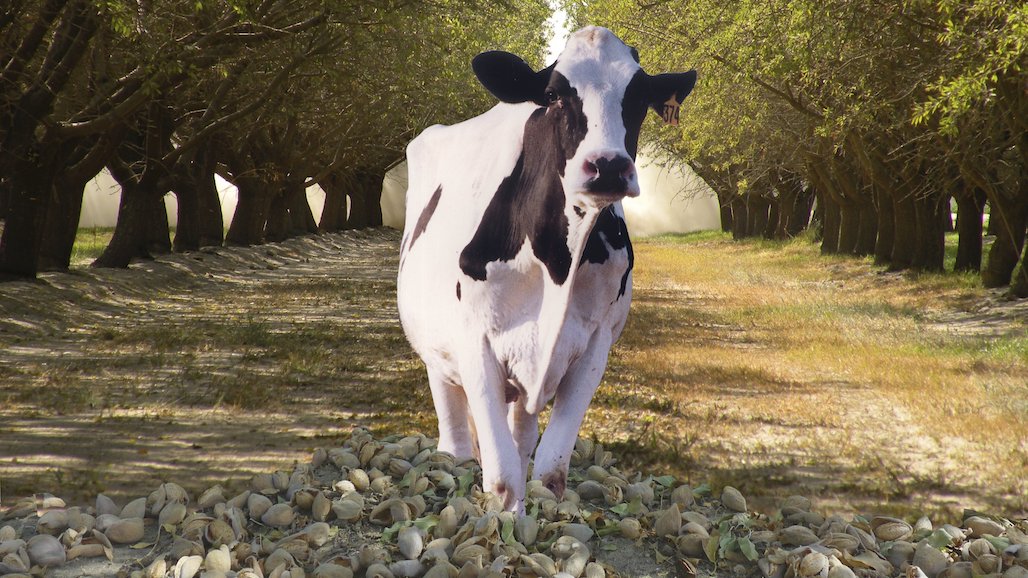
    UC Davis researchers are evaluating the use of pelletized compost made from dairy manure and almond tree twigs, to create safe, pathogen-free, value-added amendments to boost soil health.

    Building healthy soils has tremendous benefits. Increasing the amount of organic matter within the soil can improve water retention and protection, reduce erosion, sequester carbon, and improve crop yields. Increasing water scarcity and severe drought conditions make boosting soil resilience an even greater priority for California. Researchers are exploring how the environmental benefits of healthy soils initiatives can extend even further when readily available agricultural resources are used in regenerative ways.

    A team of UC Davis researchers, led by Dr. Ruihong Zhang, has recycled dairy manure and almond twig waste into a nutrient-rich, safe, organic soil amendment. The new product was created and applied, and its effects continue to be studied. The idea is that the woody material can capture nutrients in the manure and slowly release them, as needed, into the soil. Because the product is also pelletized, it can be applied to croplands and orchards with standard farm equipment. Ultimately, the researchers hope to create a new model for using recycled agricultural resources to sequester carbon and provide benefits to the soil, crops, and the environment.

    The partnership was a natural fit, as the Central Valley is home to many neighboring dairy farms and almond orchards, which have a long history of collaboration. Dairies are already major consumers of almond co-products, including hulls (used as a highly nutritious feed ingredient) and shells (used as a bedding material). With a goal of achieving zero waste by 2025, the California almond community has been actively investigating a wide variety of ways to utilize woody biomass, including twigs, pruned branches, and tree removals. Meanwhile, the dairy community has been exploring ways to expand use of manure nutrients across California’s diverse agricultural landscape.

    “Creating valuable manure-based soil amendments is an area that the dairy sector has been focusing on, but there are some challenges,” said Denise Mullinax, Executive Director of the California Dairy Research Foundation (CDRF). “We know that farmers want a soil amendment with a consistent and reliable nutrient profile. It also needs to be easy to transport and apply. That’s why we are thrilled to support this team of esteemed researchers and to partner with the almond industry on this project. Together, we’re piloting a new avenue to enhance the benefits of both manure and woody biomass.”

    The initial project was funded by the California Department of Food and Agriculture (CDFA)’s Healthy Soils Program. As the project scope grew, the researchers were awarded additional funding from the demonstration category of CDFA’s Alternative Manure Management Program. With supplemental support from the CDRF and the Almond Board of California, the research project developed to include a team of more than 20 individuals—including researchers, farmers, and industry collaborators—contributing throughout a three-year timeframe. The project includes two seasons of creating soil amendments and applying them to the orchard, and three years of studying effects on soil health, emissions, tree health, and crop yield, while ensuring food safety.

    Using composted manure from Wickstrom Dairies, the study will shine a light for future research on expanding and improving manure utilization. Like many California dairies, the farm uses a separator system to remove solids from liquid manure streams. The solids are then sun dried in rows that are turned over periodically, as a form of composting. Dried manure solids are traditionally used for bedding or are applied to dairy forage fields. For this study, a portion of the finer manure solids were co-composted with twigs from almond production and then ran through a pelletizer. Pelletizing the compost is intended to provide a more consistent blend, while creating an easy-to-use product. The pelletized compost product has now been applied to the pilot orchard for two consecutive seasons. Four treatments were used to examine differences in manure-only verses manure-twig and pelletized versus non-pelletized compost products.

    “We look forward to seeing the final results,” said Mullinax. “Dr. Zhang and her team are demonstrating that it’s possible to make a pelletized product that is safe and easy to use, while fully assessing the environmental benefits. It’s projects like this that will pave the way for implementing advanced nutrient management on a larger scale, greatly enhancing soil health and further improving water conservation and protection.”

    The research team highlighted the project by providing a virtual field day, and they plan to host another outreach event this fall. Research is scheduled to conclude in March 2022. However, longer-term effects on soil health will continue to be studied. And the final report will only be the beginning of more learnings to come.

    Potential research areas to be explored next include applications on different kinds of crops, comparing a pelletized versus granulated product, and using varying types of dairy manure solids (from different types of separators, settling basins, and lagoon solids). Additionally, the use of infrared technology versus composting will be explored prior to pelletization or granulation. All options will also need to be assessed for cost-effectiveness and potential scalability.

    The manure-twig project is part of a broader, collaborative effort to expand manure’s role in healthy soils. California dairy farmers will continue to work with researchers, state officials, and other agricultural professionals to find more ways to maximize manure’s role in building healthy soils and protecting our air, water, and climate. The possibilities for sustainable solutions are bright when farmers and scientists come together to make new use of existing resources and technologies.

    California dairy farmers will continue partnering to help make an underutilized resource an important part of a healthy-soil future.

    — By Dairy Cares
  • Subjective Yield Survey Results Project an Oregon Hazelnut Crop of 62,000 Tons

    Subjective Yield Survey Results Project an Oregon Hazelnut Crop of 62,000 Tons

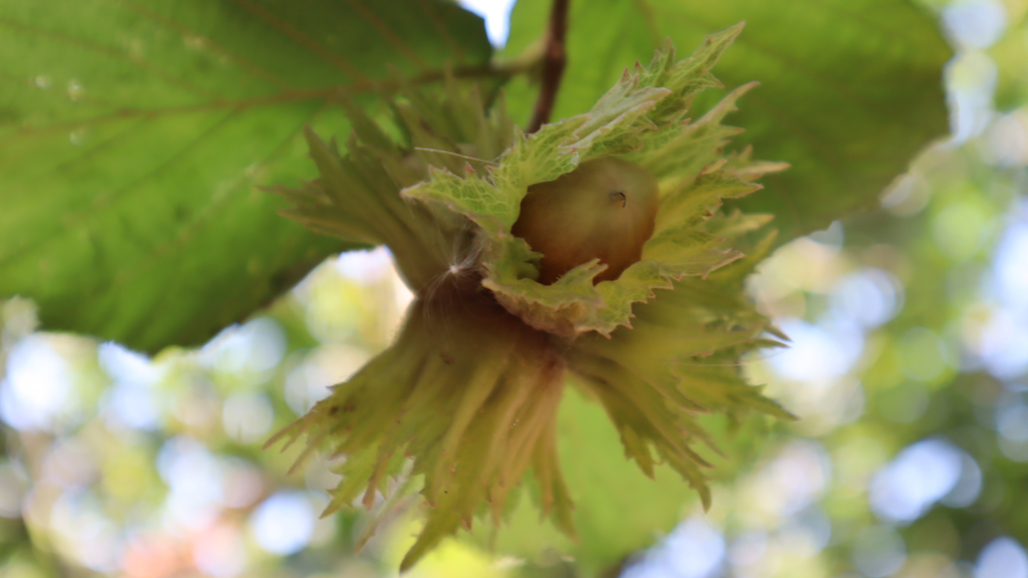
    The Hazelnut Marketing Board has concluded its annual Subjective Yield Survey, and according to projections, the harvest is anticipated to be approximately 62,600 tons.

    The Subjective Yield Survey is conducted by sending cards to hazelnut farmers and asking them to project what they think their yield will be based on how hazelnuts trees look in mid-July. A challenging weather year led to very divergent answers on many survey cards. While some growers projected incremental and exponential growth, others anticipate decreases in yield due to the ice storm in February and extreme heat and drought during the summer months.

    The Subjective Yield Survey is typically done in conjunction with the Objective Yield Survey conducted by USDA-NASS. However, due to a labor shortage, the Objective Yield Survey could not be completed this year, thus making the data in the Subjective Yield Survey even more critical to the industry.

    The viable survey cards were cross-referenced with field mapping statistics from Pacific Agricultural Survey, per its December 2020 report. When extrapolated out, the projected crop size is 125,233,017 pounds or 62,603.652 tons, which would be a new high for the industry.

    The following table details these calculations:

    Any questions regarding the Subjective Yield Survey may be directed to the Hazelnut Industry Office at 503-582-8420.

  • Diamond of California® Debuts Nut Coatings, A Keto-Friendly Breading Alternative in Three Flavors Now Available

    Diamond of California® Debuts Nut Coatings, A Keto-Friendly Breading Alternative in Three Flavors Now Available

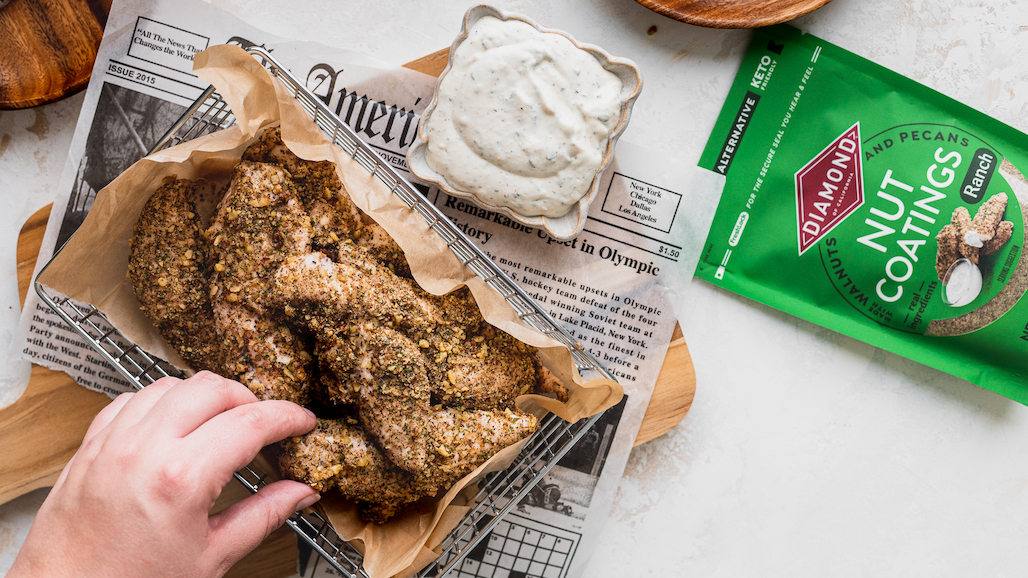
    Diamond of California®, the century-old producer of “Made for Homemade” specialty nuts and pioneer of nut-based products like Nut Pie Crusts and Snack Walnuts, announces today the launch of its newest innovation, Nut Coatings. Available now online and this Fall in-stores nationwide, Nut Coatings (SRP $3.99/5oz bag) are a keto-friendly and low-carb breading alternative crafted with a nut base of walnuts and pecans simply seasoned with herbs, spices, and other real ingredients. Nut Coatings are available in three flavors including Original, Italian, and Ranch, and serve as a true alternative for standard breading in recipes like meatballs, chicken, macaroni and cheese, eggplant parmesan, and more.

    In order to create a nut-based breading alternative that can crust, top, and coat, Diamond of California® partnered with its product development team and specialty spice experts to create the perfect texture and flavors that complement meats, fish, vegetables, pastas, and plant-based proteins. Nut Coatings were also tested thoroughly to ensure they could stand up to everyday cooking techniques. Plus, due to the natural oils present in nuts, Nut Coatings adhere without binders like eggs or flour and even perform best when baked or air-fried without the addition of extra fats, allowing for less fat overall and delivering an appealing texture.

    “At Diamond of California® we strive to create innovative products that are functional, delicious, and health-conscious,” said Craig Tokusato, CMO of Diamond of California®. “With the rise of keto and plant-based diets, we saw a need for a cleaner breading alternative using what we know best, nuts. Competitors in the space often make their breading products with ingredients like high fructose corn syrup, maltodextrin, and sugars–and bread, of course–so we opted to keep it simple. Our Nut Coatings are made with our own walnuts and pecans as well as real seasonings and ingredients that enhance at-home creations while adding nutritional value.” See HERE for Nut Coatings ingredients versus a leading breading product.

    Diamond of California® Nut Coatings are now available nationwide on shop.diamondnuts.com and over the next few months in select locations of major retailers including Albertsons and Publix.

    To learn more about Nut Coatings or for more information on Diamond of California® visit their website (https://www.diamondnuts.com) or follow along @DiamondNuts on Instagram, Facebook, and Pinterest.

    About Diamond of California®

    Diamond of California®, the century-old producer of specialty nuts, has worked with walnut growers since 1912, making the company one of the earliest pioneers of the farm-to-table movement. The company packages fresh walnuts, almonds, pecans, and other culinary nuts in whole, sliced, diced, and chopped forms. Their most recent innovations, Ready-to-Use Nut Pie Crusts and Ready-to-Eat Snack Walnuts, available in 8 flavors, can be found in the baking and snack aisles respectively. Headquartered in Stockton, California, Diamond of California® is located in the state’s heartland, where most of its orchards lie. Diamond of California® believes that nuts make good food even better. That’s why they’ve offered fresh, high quality and great tasting nuts that are truly made for homemade, for over 100 years.

  • California Walnut Crop Forecast Down 15%

    California Walnut Crop Forecast Down 15%

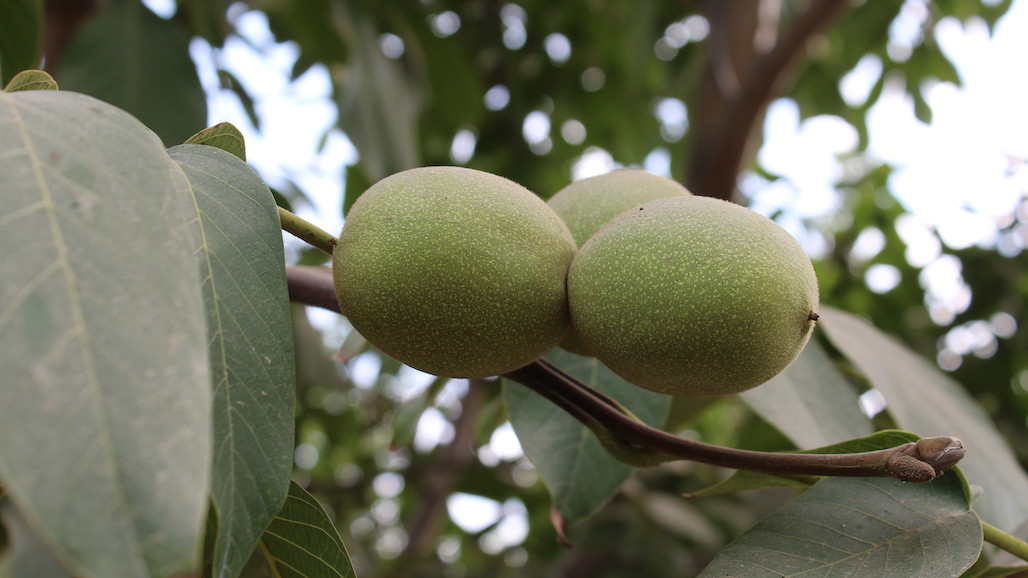
    USDA National Agricultural Statistics Service  The 2021 California walnut production is forecast at 670,000 tons, down 15% from 2020’s record production of 785,000 tons. The forecast is based on 385,000 bearing acres, up 1% from 2020’s estimated bearing acreage of 380,000.

    Widespread freezing temperatures in late fall of 2020 resulted in frost damage to walnut orchards across the state. Growers reported the frost damage delayed leaf out and reduced nut set in affected orchards. Additionally, because of the state’s drought conditions, orchards experienced a higher degree of freeze injury. Walnut growers throughout the state struggled with drought conditions and water availability, as most of the state is in a drought emergency. Chilling hours were up from last year.

    Survey data indicated an average nut set per tree of 992, down 17% from 2020s average of 1,197. Percent of sound kernels in- shell was 99.5% statewide. In-shell weight per nut was 22.2 grams, while the average in-shell suture measurement was 32.4 millimeters. The in-shell cross-width measurement was 33.4 and the average length in-shell was 37.9 millimeters.

    Estimated nut sets, sizing measurements, average number of trees per acre, and estimated bearing acreage were used in the statistical models.

    SURVEY HISTORY

    The Walnut O.M. Survey began in 1958 to fulfill industry needs for an accurate walnut production forecast prior to harvest. The original sample was chosen proportionally to county and variety of bearing acreage. With each succeeding year, additions and deletions have been made in the sample to adjust for acreage removed, new bearing acreage, and operations that choose not to participate in the survey.

    SAMPLING PROCEDURES

    The 2021 Walnut Objective Measurement (O.M.) Survey was officially conducted from July 25 through August 26, 2021. There were a few samples completed before July 25th for training and scheduling purposes. There were 1,402 trees sampled from 701 orchards.

    Once a block is randomly selected and permission is granted by the operation for enumerators to enter the block, two trees are randomly selected. An accessible branch is chosen which is 5- 15 percent of the total cross-sectional area of the primary limbs and reachable with a twelve-foot ladder. Measurements are made on the trunk, each primary, and each split leading to and including the accessible branch. The sample tree and accessible branch are marked by a single tag, so that the same trees are sampled the following year if that orchard is selected. On the accessible branch, every nut is counted and the first of every five nuts is picked for use in size and grade determinations. If available, at least ten nuts are harvested from the accessible branch for this purpose.

    The following measurements are made on nuts selected for sizing:

    1. Weight of nut including hull
    2. Width of shell at suture
    3. Width of shell 90 degrees to suture line (cross-suture) 4. Length of shell
    5. Kernel grade
    6. Weight of nut in-shell

    The Objective Measurement Survey is funded by the California Walnut Board.

    DATA RELIABILITY

    The 80 percent confidence interval is from 610,000 tons to 730,000 tons.

  • India’s FSSAI Issues Final Standards for Walnut Kernels

    India’s FSSAI Issues Final Standards for Walnut Kernels

    On July 30, 2021, the Food Safety and Standards Authority of India (FSSAI) published on its website the Food Safety and Standards (Food Product Standards and Food Additives) Third Amendment Regulations (2021). The Third Amendment Regulations (2021) relates to the final standards for walnut kernels, as well as to dairy and dairy products, oilseeds and products, margarine and fat spreads, cereal and cereal products among others. The implementation date for this amended regulation is February 1, 2022.

    DISCLAIMER: The information contained in this report was retrieved from the Food Safety and Standards Authority of India’s (FSSAI) website http://www.fssai.gov.in. The U.S. Embassy in New Delhi Foreign Agricultural Service (FAS) Office of Agricultural Affairs (OAA), USDA and/or the U.S. Government make no claim of accuracy or authenticity. The Government of India has not officially endorsed this report. Import approval for any product is subject to local rules and regulations as interpreted by Indian officials at the time of product entry. [Note: Use Google Chrome to access the links if they do not open in Internet Explorer].

    GENERAL INFORMATION:
    On July 30, 2021, the Food Safety and Standards Authority of India (FSSAI) published on its website the Food Safety and Standards (Food Product Standards and Food Additives) Third Amendment Regulations (2021).

    The Third Amendment Regulations (2021) relates to the final standards for walnut kernels, as well as to other food products. The implementation date for this amended regulation is February 1, 2022. The affected products include walnut kernels, buffalo milk, vegetable oils (including peanut, flaxseed, rapeseed, poppy seed, safflower seed, taramira, sesame, Niger seed (also often called Nyger Seed or Nyjer Seed), soybean, maize, watermelon seed, sunflower seed, avocado, grapeseed, interesterified and hydrogenated vegetables, margarine and fat spreads, soybean sauce, besan (ground de-husked Bengal gram flour), maize starch, oat products, soy dahi/yogurt, yellow pea powder, black, white and green peppers, dried sage, instant tea in solid form, caffeinated and non-alcoholic beverages, packaged drinking water, sweeteners, and chewing gum.

    Observations on the standards for walnut kernels from the current notification are further clarified immediately below. FAS New Delhi recommends a careful review of the full notification for a more precise understanding of the final standards for all other products covered.

    • The walnut kernel standards are for fresh product.

    • The Food Safety and Standards Authority of India in the final standards notification has added a permissible variation of 15 percent with respect to the uniformity of color in walnuts.

    • On the damaged units, percent-by-mass (maximum) parameter, the limit has been increased from 2.0 to 4.0.

      The full text of the Gazette of India (official gazette) notification is attached as PDF to this report, as well as is available on the FSSAI website located HERE.

      For earlier draft notification background information, see GAIN-INDIA-IN2020-0121 FSSAI Proposes Draft Standards for Walnut Kernels and other Various Food Product.  By Radha Mani, Agricultural Assistant, and Mariano J. Beillard, Senior Regional Agricultural Attaché, USDA-Foreign Agriculture Service

  • CA Farm Water Crisis – The Big Picture with Aubrey Bettencourt

    CA Farm Water Crisis – The Big Picture with Aubrey Bettencourt

    California farmers were already in a tight water supply situation before this dry year began. With water curtailments, SGMA implementation, settlement agreements and little progress in water infrastructure improvements, farmers have a lot of concerns regarding the future of their livelihoods. Watch this brief video with Aubrey Bettencourt as she provides the big picture of where agriculture currently stands in the California water crisis. Bettencourt has served California agriculture in various capacities over the years and is now Director of Sustainability with the California Cattle Council and Western United Dairies.
    Please thank this video’s sponsor Suterra for their industry support.
  • Upcoming Legislation on Product Packaging Concerns California Farmers

    Upcoming Legislation on Product Packaging Concerns California Farmers

    As if transportation issues and port congestion weren’t challenging enough for California agriculture and other industries, further legislation to regulate the type of packaging producers can use to ship their products is pending state approval. Watch this brief video with Almond Alliance of California’s lobbyist Dennis Albiani how this will impact agriculture, and read more about it in Pacific Nut Producer Magazine.
    Please thank this video’s sponsor Suterra for their industry support.