Category: Economics

  • A Word of Caution for Navel Orangeworm Winter Orchard Sanitation

    A Word of Caution for Navel Orangeworm Winter Orchard Sanitation

    As almond growers diligently begin their Navel Orangeworm winter sanitation and “Mummy Shakes” as the Almond Board of California puts it, Modesto grower Bill Brush shares concerns about caring for young almond trees amidst these sanitation efforts. Watch this brief interview with Bill and read more about almond orchard practices in Pacific Nut Producer Magazine.
    Please thank this video’s sponsor Suterra for their industry support.
  • New AI Institute Expands UC Merced’s Smart, Sustainable Ag Effort

    New AI Institute Expands UC Merced’s Smart, Sustainable Ag Effort

    With a new $20 million federal grant, UC Merced becomes part of a multi-institutional research collaborative to develop artificial intelligence — or AI — solutions to tackle some of agriculture’s biggest challenges related to water management, climate change and integration of new technology into farming.

    The new institute is one of 11 launched this year by the National Science Foundation (NSF) and among two funded by the U.S. Department of Agriculture-National Institute of Food and Agriculture. The newly announced AgAID Institute is shorthand for the collaborative USDA-NIFA Institute for Agricultural AI for Transforming Workforce and Decision Support.

    The AgAID Institute features four core institutions: UC Merced; Washington State University (WSU), the lead campus; Oregon State University; and the University of Virginia. The AgAID Institute bolsters UC Merced’s already strong focus on ag-tech solutions for sustainable food systems in California and beyond.

    “This is only the second round of AI centers the NSF has funded, so we’re really honored to be contributing to this important and cutting-edge research effort,” environmental engineering Professor Joshua Viers said. Viers is the lead principal investigator from UC Merced and the campus director of the Center for Information Technology Research in the Interest of Society (CITRIS) and the Banatao Institute, which has been advancing ag-tech solutions for the San Joaquin Valley broadly. “We’ll be working to leverage computational knowledge to arrive at actionable decisions for farmers and water managers, and we’ll be the application test beds for much of what is developed at the other core institutions.”

    Much of that testing will be done at UC Merced’s new experimental smart farm, a 40-acre site adjacent to campus that is in the planning stages.

    While traditional AI development involves scientists making tools and delivering them to end-users, the AgAID Institute will involve the people who will use the AI solutions — from farmers and workers to policy makers — in their development. This “adopt-adapt-amplify” approach ensures solutions are practical and more likely to be adopted. The researchers will also work to create solutions that can adapt to changing environments and that amplify productivity by combining human skills and machine capabilities to be more effective than either would be alone.

    “People are very much part of the agricultural ecosystem. It’s not just plants growing. Humans manipulate crops on a daily basis and make complex decisions, such as how to allocate water or mitigate the effects of an incoming storm,” said Ananth Kalyanaraman, a WSU computer science professor and AgAID Institute director. “We aim to partner human knowledge with AI tools in a way that amplifies the end outcomes where the whole is greater than the sum of its parts.”

    The AgAID Institute will be a multi-disciplinary, collaborative effort involving faculty and scientists with expertise in a diverse range of areas in computer science, agriculture and agricultural outreach. In addition to the four core institutions, the collaborative includes Carnegie Mellon University and Kansas State University, and in an effort to train the next generation of educators and farm managers, UC Merced will work closely with other minority-serving institutions such as Heritage University and Wenatchee Valley College. Private sector partners include IBM Research and the start-up innov8.ag.

    At UC Merced, School of Engineering professors Reza EhsaniJian-Qiao SunJohn Abatzoglou and Josué Medellín-Azuara will all be co-investigators and part of the Institute, as will social scientist Leigh Bernacchi, Ph.D., the CITRIS program director.

    With this grant, NSF has made a $220 million investment in AI-based collaborations, building on the first round of seven AI Institutes funded in 2020.

    The goal is to develop AI-based technologies that bring about a range of advances: helping older adults lead more independent lives and improving the quality of their care; transforming AI into a more accessible “plug-and-play” technology; creating solutions to improve agriculture and food supply chains; enhancing adult online learning; and supporting underrepresented students from elementary to post-doctoral STEM education to improve equity and representation in AI research.

    Led by NSF and in partnership with USDA-NIFA, the U.S. Department of Homeland Security (DHS), Google, Amazon, Intel and Accenture, the AI Institutes will act as connections in a nationwide network pursuing transformational advances in a range of economic sectors, and science and engineering fields — from food-system security to next-generation edge networks.

    “AI is an enabling technology that can help us develop the next generation of intelligent farm equipment and implements. These machines could potentially be more efficient, easier to operate and could reduce production costs,” Ehsani said.

    For instance, pruning trees is a highly skilled task, but a beginner-level worker could benefit from an AI tool that provides expert guidance to help decide which are the best branches to prune. The task is done better, and the worker starts to learn from the feedback. With a shortage of skilled labor, AI can benefit both the orchard and the worker, bridging a divide between high-skilled and low-skilled workers.

    Educating the workforce at all levels is central to the AgAID Institute not just to encourage AI adoption but as a matter of equity, Institute leaders said. The Institute plans multiple education programs from K-12 through higher education and worker training. The goal is to raise AI skill levels and open new career paths, which can improve pay and quality of life for agricultural workers. It can also attract more people to agriculture and computing professions.

    The AgAID Institute will undertake several challenging test cases involving specialty crops, many of which grow in the western United States, such as almonds, pistachios, apples, cherries and hops. These crops encompass several major challenges: They require intensive labor and irrigation. They are also vulnerable to weather events and climate change. Specialty crops account for 87% of the U.S. agricultural workforce, and about 40% of these crops are perennial, requiring long-term management and resource planning.

    A machine developed in Professor Reza Ehsani’s lab improves almond harvests by reducing the amount of dust stirred up as the nuts are gathered from the ground.

    “AgAID seeks to apply advances in computational technology to the long-standing wicked challenge of agricultural lands in the semi-arid West that are constrained by climate, land and people,” Abatzoglou said. “This support will help develop tech-based solutions for ameliorating the cascading impacts of water scarcity in agricultural systems we’ve experienced recently and will continue to face.”

    Chancellor Juan Sánchez Muñoz, Ph.D., who champions UC Merced’s leadership in sustainability and its strong integration into the future of the San Joaquin Valley and its communities, addressed the importance of the AgAID Institute for students and the Valley.

    “This artificial intelligence institute for transforming workforce and decision support in agriculture speaks to our increasing national and global recognition for cutting-edge research,” Muñoz said. “Sustaining the future of agriculture — the primary economic activity in our region — is paramount. Not only are we building the future in the heart of California, but we are doing it in a way that speaks to our commitment to innovation in research and education that uplifts our region and results in a new generation of leaders for the Valley.” — By Lorena Anderson, UC Merced

  • Scientists Bring in Arch Enemy to Deal With Brown Marmorated Stink Bug

    Scientists Bring in Arch Enemy to Deal With Brown Marmorated Stink Bug

    A tiny wasp may be the solution for managing an agricultural pest causing major economic damage to fruit, vegetable, and field crops in North America and Europe.

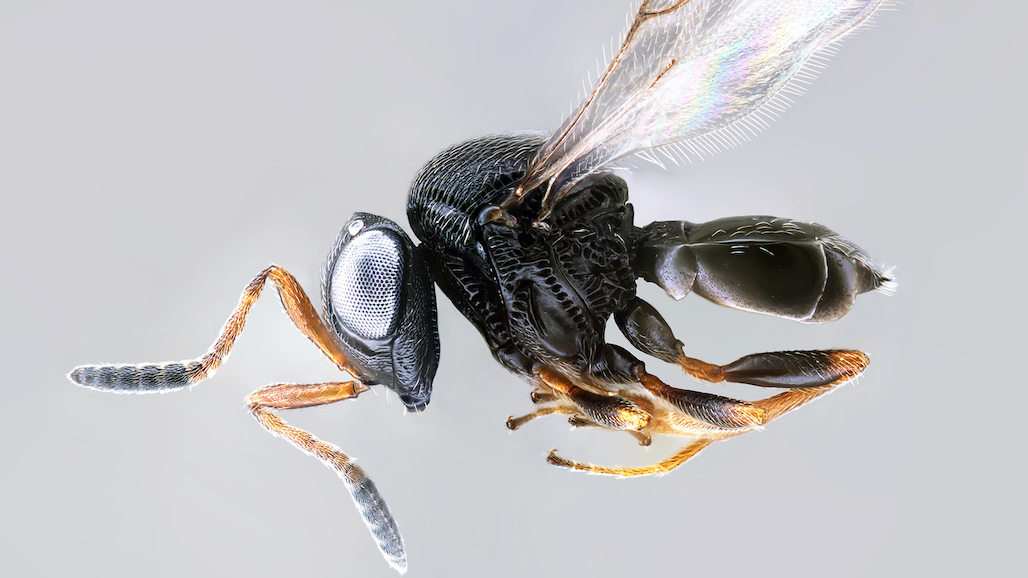
    A female samurai wasp (Trissolcus japonicus) emerges from a brown marmorated stink bug (Halyomorpha halys) egg. (Photo by Elijah Talamas)

    Agricultural Research Service (ARS) scientists are currently studying Trissolcus japonicus, commonly known as the samurai wasp, to see if this parasitoid wasp is the right biological control agent for reducing brown marmorated stink bug (Halyomorpha halys) (BMSB) populations outside of Asia.

    Biological control is the process of reducing or mitigating pests or pathogens by using the pest’s or pathogen’s natural enemies. The samurai wasp is a known natural enemy for the BMSB in Asia, and researchers are understanding how it behaves in non-native environments.

    At the ARS Beneficial Insects Introduction Research Unit in Newark, DE, researchers are observing the behaviors of both quarantined samurai wasps from Beijing and local wild populations. They found these wasps have a strong preference for parasitizing BMSB’s eggs.

    “Parasitic wasps have the amazing ability to detect kairomones [chemical substances emitted by one organism and detected by another organism] that are left on surfaces or in the air of their hosts,” said Dr. Kim Hoelmer, research entomologist and research leader at the Beneficial Insects Introduction Research Unit.

    “In the field, when a female samurai wasp looks for evidence of her host in the environment, she can detect her host’s kairomones left on a leaf’s surface. The wasp increases her search when she detects the kairomones and that increases her probability of finding the host.”

    The research shows promise in that samurai wasps prefer their natural hosts’ eggs over those of other species.

    This finding does not surprise researchers since it is common for parasitoid wasps to have close relationships with their hosts.

    “The more intimate the relationship is, the better parasitoid wasps are as biocontrol agents,” said Dr. Matt Buffington, research entomologist with the ARS Systematic Entomology Laboratory, located in the Smithsonian National Museum of Natural History in Washington, DC.

    The tiny size of the samurai wasp (Trissolcus japonicus) is apparent from this dime, which has several of the insects sitting on it. (Photo by Ashley Colavecchio)

    Buffington and postdoctoral ARS scientist Elijah Talamas were instrumental in correctly identifying the samurai wasp from other Trissolcus species.

    “Parasitoid wasps play major roles in population regulation [of pests]. With this one species, we can explain how biological control works in our environment,” said Buffington.

    But do samurai wasps exhibit the same behaviors in the wild?

    In addition to laboratory studies, researchers are observing samurai wasps in natural environments, such as orchards and crop fields, where the BMSB is present. These wasps are adventive in North America, meaning they arrived accidentally without any human aid.

    At the ARS Appalachian Fruit Research Station in Kearneysville, WV, researchers are studying how samurai wasps reduce BMSB populations across a landscape. The research aims to determine if samurai wasps can survive in areas with other agricultural factors such as pesticides.

    According to research entomologist Dr. Tracy Leskey, BMSB populations can disperse and develop in areas outside of orchards and crop fields. The stink bugs constantly reinvade new areas, called wild host habitats, for survival.

    “We hope that samurai wasps can reduce those populations in wild host habitats, so we have less pressure in our agricultural areas,” said Leskey.

    The wasp is tiny; approximately 1.5 mm or the size of a sesame seed.

    Even though the samurai wasp shows promise as a biological control agent, researchers must follow a rigorous process to ensure that the samurai wasp’s impact is limited to its host and is not a threat to animals, humans, and crops.

    ARS researchers are in the process of requesting a permit for quarantined samurai wasps from Beijing to be approved for field release. Currently, wild populations of the samurai wasp are in 14 states. The permit would allow states without wild populations to use the wasp as a biocontrol agent for managing their BMSB populations. In addition, the permit would allow states with existing wild populations to introduce new samurai wasps in their management efforts.

    BMSB has been detected in 47 states and four Canadian provinces. BMSB is responsible for crop damage costing millions of dollars each year. This pest is also causing agricultural damage abroad after its infestation in European countries.

    Researchers from other ARS laboratories are also studying the samurai wasp, including the Invasive Insect Biocontrol & Behavior Laboratory in Beltsville, MD, Southeast Watershed Research Laboratory in Tifton, GA, Horticultural Crop Research Laboratory in Corvallis, OR, Sino-American Biological Control Laboratory in Beijing, China, and USDA-ARS European Biological Control Laboratory in Montpellier, France. – By Jessica Ryan, USDA ARS Office of Communications

  • Blue Diamond Growers Foundation Announces Scholarship Awards on 10th Anniversary of Program

    Blue Diamond Growers Foundation Announces Scholarship Awards on 10th Anniversary of Program

    Blue Diamond Growers Foundation is pleased to announce its 2021-2022 scholarship recipients. This year, scholarship funding is being awarded to 24 college students who are either dependents of Blue Diamond employees or are members of local communities pursuing agriculture-related fields of study at colleges and universities in California and throughout the country.

    “For agriculture to succeed for years to come, it will require the dedication and hard work of the next generation,” said Dan Cummings, Chairman of the Board of Directors for Blue Diamond Growers. “We are so pleased that the Blue Diamond Growers Foundation regularly supports dependents of our own Blue Diamond employees as well as assists students whose goals are to be a positive influence on the future of agriculture and who want to make a difference in their communities.”

    Celebrating its 10th anniversary this year, the Blue Diamond Growers Foundation was established in 2011 for the purpose of providing scholarships to students who have demonstrated excellent academic performance and are pursuing a four-year college. Since 2011, the Blue Diamond Foundation has awarded nearly
    150 scholarships to help students in our local communities achieve their dreams of a college education.

    This year’s Blue Diamond Growers Foundation scholarship recipients include:

    NAME/HOMETOWN COLLEGE/UNIVERSITY MAJOR
    Ashleigh Sorensen
    Sanger, Calif.
    Fresno State University Agribusiness
    Ashlyn Wooldridge
    Arbuckle, Calif.
    Cal Poly – San Luis Obispo Plant and Environment Sciences
    Averie Konefat
    Patterson, Calif.
    Cal Poly – San Luis Obispo Ag Science
    Cal Muxlow
    Kingsburg, Calif.
    Fresno State University Agribusiness
    Gabriela Moreno
    Winton, Calif.
    Merced Community College then Fresno State University Ag Education and Communications
    Gunnar Kale
    Merced, Calif.
    Morningside University Ag and Food Sciences
    (Minor in Agronomy)

    NAME/HOMETOWN COLLEGE/UNIVERSITY MAJOR
    Jane Saenz
    Shafter, Calif.
    Cal Poly – San Luis Obispo Ag Systems Management,
    Wine and Viticulture
    Jenna Keller
    Porterville, Calif.
    Cal Poly or Cornell University Plant Science and International Ag
    Kalifornia Kindelt
    Woodland, Calif.
    Cal Poly – San Luis Obispo Ag Communications
    Kathryn Williams
    Arbuckle, Calif.
      Ag Communications
    Lauren McEwen
    Exeter, Calif.
    Cal Poly – San Luis Obispo Ag Communications
    Lauren Schaap
    Visalia, Calif.
    Cal Poly – San Luis Obispo Ag Communications
    Laynee Haywood
    Maxwell, Calif.
    Texas Tech University Agribusiness
    (Concentration in
    International Agribusiness)
    Madalyn Nissen
    Willows, Calif.


    Oklahoma State University Ag Education and
    Ag Communications
    Matthew Freitas
    Glenn, Calif.
    Cal Poly – San Luis Obispo Ag Systems Management
    Michaela Mederos
    Tulare, Calif.
    Fresno State University Agribusiness Management
    M’Lyssa Frago
    Atwater, Calif.
    Cal Poly – San Luis Obispo Ag Communications
    Natalie Machon
    El Dorado Hills, Calif.
    University of Colorado, Boulder Psychology
    Rachel Mancebo
    Chowchilla, Calif.
    Fresno State University Ag Education
    Sarah Williams
    Madera, Calif.
    Virginia Tech University Agribusiness


    Sydney Vieira
    Ripon, Calif.
    Oklahoma State University Agribusiness
    (Pre-Law Concentration)
    Tanner Cardoza
    Hanford, Calif.
    McPherson College Business


    Taylor Trigueiro
    Caruthers, Calif.
    Oklahoma State University Ag Education
    William Vannucci
    Woodland, Calif.
    American River College Horticulture


    Additional information about the Blue Diamond Growers Foundation scholarship program is available at
    https://bluediamondgrowers.com/scholarship-program/.

  • National Pollinator Protection Campaign Honors California Almond Industry

    National Pollinator Protection Campaign Honors California Almond Industry

    The North American Pollinator Protection Campaign (NAPPC) on Tuesday presented its Business for Bees Sustainability Award – an honor reserved for standout organizations that go above and beyond to support pollinators – to the Almond Board of California (ABC) and the state’s almond farmers.

    “This is about their long-term dedication to supporting all pollinators in their orchards and throughout our ecosystem,” said Kelly Rourke, executive director of Pollinator Partnership, which founded NAPPC 21 years ago. “We’ve worked with them for many years and this is well-deserved recognition of their steadfast commitment to engaging farmers in pollinator conservation on multiple levels. The Almond Board and the entire almond industry have really moved the needle to raise awareness and generate action to protect pollinators.”

    NAPPC has only given out its Business for Bees Sustainability Award once before. It is given in years when there is a business taking extra special steps to protect bees and all pollinators and to advance sustainability and innovation.

    “ABC’s name is on this award, but it really goes to the 7,600 almond farmers in California,” said Josette Lewis, ABC’s chief scientific officer. “Farmers understand how important pollinators are to growing almonds and to all of agriculture and the environment. They want to be part of the solution.

    The reasons for the award, Rourke said, include ABC’s leadership in founding the California Pollinator Coalition, its work promoting on-farm pollinator habitat and its support of years of research and education about the best practices for providing hospitable environments for pollinators in almond orchards and in other habitats.

    ABC worked with Pollinator Partnership and the California Department of Food and Agriculture last spring to create the California Pollinator Coalition (CPC) which brought together a broad array of grower organizations across the state’s ag and environmental landscape to help promote the health of wild and managed pollinators.

    “The formation of the California Pollinator Coalition was such a big step,” said Laurie Davies Adams, Pollinator Partnership’s Director of Programs, who helped found the CPC. “This is a unique statewide coalition that brings together every grower, farmer and rancher group. I don’t think that’s ever happened before. It’s going to make a real difference on the ground.”

    NAPPC is a collaboration of diverse partners from the U.S., Mexico and Canada. It includes respected scientists, researchers, business people, conservationists and government officials. NAPPC works to promote awareness and scientific understanding of pollinators, to find common ground for solutions and to create innovative initiatives that benefit pollinators. NAPPC is administered and supported by Pollinator Partnership, a non-profit headquartered in San Francisco with a mission to promote the health of pollinators through education, conservation and research.

    The award was announced during NAPPC’s 21st Annual International Conference, held virtually this year for the second time and hosted by the Pollinator Partnership and the Smithsonian National Museum of Natural History. The conference and award ceremony were planned for the Smithsonian before being forced to remain virtual because of COVID-19.

    Rourke and Adams said they would have liked to have given the honor in person to show how much they appreciate ABC’s work. “The strong effort that the Almond Board of California has mounted with the support of the almond industry to engage farmers and the entire agricultural community far beyond almond orchards is really impressive,” Adams said. “Bringing every grower group together to have an agriculturally-led coalition for pollinators is significant. It will provide building blocks for even more engagement and large results. It’s a pioneering effort that other states are seeking to emulate.”

    “This is an outstanding honor for our farmers,” Lewis said, “especially considering all the good work that NAPPC and the Pollinator Partnership do. As much as anyone, almond farmers are tuned in to the importance of pollinators to their crops and our ecosystem. That’s why they work so hard to make their orchards healthy places for pollinators.”

    Almond farmers across California’s Central Valley sit in what is essentially a flyway for pollinators. In recent years, almond farmers have applied to certify more than 110,000 acres of Bee Friendly Farming®, providing pollinator habitat and integrated pest management across the valley to keep that flyway healthy and create badly needed floral resources that compliment and expand beyond the annual almond bloom.

    “Almond farmers have doubled the number of acres of bee friendly habit in California and in that pollinator flyway,” Lewis said. “We’re proud to help lead a broad coalition of agriculture and conservation groups to work together to promote and preserve habitat for pollinators.”

    About the Almond Board of California
    ABC is a Federal Marketing Order dedicated to promoting California almonds to domestic and international audiences through marketing efforts and by funding and promoting research about almonds’ health benefits, efficient and sustainable farming, food safety and more. ABC works on behalf of the more than 7,600 almond farmers and processors in California, many of whom are multi-generational family operations.
     
    About The North American Pollinator Protection Campaign
    For over 20 years, NAPPC has brought together stakeholders from all sectors of the pollinator issue in a collaborative partnership to support pollinator health across the North American continent. More than any other single organization, the collective effort of these 180 plus organizations has made pollinator health a feature in conservation landscape management. From its many Task Forces, NAPPC affects change and moves solid science into real progress on the ground. Managed by the Pollinator Partnership, more can be found about NAPPC at NAPPC | Pollinator.org.
  • CDFA 2020 Walnut Crop Report & Average Prices

    CDFA 2020 Walnut Crop Report & Average Prices

    Information contained in this report was supplied by walnut handlers to fulfill reporting requirements of Sections 55601.7 and 55601.8 of the Food and Agricultural Code. The report includes all tonnages of walnuts that were either produced by the handler or purchased from producers. The final weighted average price, including bonuses and allowances, has been reported for all contracts which were finalized.

    All 2020 crop transactions completed through the close of business on August 31, 2021 are included in this report. A “good faith” estimate of final weighted average price was reported for those contracts which were not final on the same date. The data are shown by major varieties at the State level only.

    SUMMARY OF WALNUT HANDLERS REPORTS

    Walnuts produced by handlers in 2020 totaled 12,572 tons. This figure does NOT include walnuts purchased from other handlers or producers.

    The total 2020 walnut crop purchased from producers, for whom pricing had been finalized, reached 728,746 tons at an average price of 60.5 cents per pound. This price is rounded to the nearest tenth of a cent per pound and includes all bonuses and allowances.

    Purchases from producers, for whom pricing was NOT finalized, totaled 45,543 tons. The average “good faith” estimate of the final weighted average price for this tonnage was 56.3 cents per pound.

    The quantity of all walnuts purchased from producers was 774,289 tons for the 2020 crop. This figure does not include walnuts produced by the handler or purchased from other handlers. The tonnage produced by the handler plus tonnage purchased from producers for the 2020 walnut crop was 786,861 in-shell tons.

    DEFINITIONS

    Producer: A person or operator who is responsible for the walnuts in the unprocessed state.

    Handler: Firm that processes and markets walnuts.

    Finalized Purchases: Tonnage purchased from producers, for which a pricing contract has been completed.

    Non-Finalized Purchases: Contracted tonnage, for which a final price has not yet been determined.

    Free Tonnage: Tonnage received by a handler, for which the only Federal marketing order regulation is a minimum quality or size standard. Reserve tonnage is the tonnage set aside as authorized by a Federal marketing order.

    Weighted Average Price: Weighted average price reflects prices or “good faith” estimates of prices as reported by handlers and include any bonuses or allowances.

  • Wonderful® Pistachios Celebrates National Nut Day With Pistachios

    Wonderful® Pistachios Celebrates National Nut Day With Pistachios

    Happy National Nut Day! To celebrate, Wonderful® Pistachios is pleased to announce it has helped propel pistachios to become the biggest and fastest-growing snack nut category in terms of annual retail revenue followed by cashews, mixed nuts, peanuts, and almonds, according to recent Information Resources, Inc. (IRI) 52-week data. The IRI data indicates pistachios experienced a +14% change from the previous year with Wonderful Pistachios alone contributing 96% of that pistachio revenue growth.

    In addition to its significant contributions to the overall pistachios snack nut category, Wonderful Pistachios No Shells flavors generated 85% of total flavored snack nuts category growth (+9%) this past year. After their initial launch with Roasted & Salted and Lightly Salted, and then subsequent flavor unveilings of Honey Roasted and Chili Roasted in 2019 and Sea Salt & Vinegar and BBQ in March of this year, Wonderful Pistachios has seen record weekly growth, further solidifying consumer demand for healthy and high-quality snacks.

    “We’re so excited to see Wonderful Pistachios as the leading snack nut brand in America, and we’re doubling down to continue this momentum,” shared Adam Cooper, senior vice president, The Wonderful Company. “Consumers are investing more in premium, healthier snacks, so we’re investing more in the category with a multi-million-dollar integrated marketing campaign.”

    To celebrate this monumental moment for pistachios and National Nut Day, Wonderful Pistachios launched a giveaway on Instagram. On October 22 from 12:01 a.m. PST until 11:59 p.m. PST, any Instagram user who both follows @wonderfulpistachios and comments on its National Nut Day post with their favorite flavor of Wonderful Pistachios In-Shell or No Shells variety will be automatically entered to win. Twenty-two winners will be selected at random and receive a complimentary package of their favorite Wonderful Pistachios variety along with one bag of each of the four Wonderful Pistachios No Shells flavors of Sea Salt & Vinegar, BBQ, Honey Roasted and Chili Roasted.

    “As we look ahead, our priorities are to continue the plant protein conversation, focus on pistachios as a better-for-you snack, especially throughout football season as a key snacking occasion, highlight the diverse In-Shell and No Shells flavors, and ensure availability of our product to retailers and consumers,” said Cooper. “We are supporting all of this with a fully integrated marketing strategy that includes our popular No Shells campaign, featuring Sheldon the turtle, returning to TV in addition to our ‘Greener Source’ plant protein TV campaign, digital and social media, FSIs, PR and in-store POS.”

    Wonderful Pistachios Successes Tapped into Today’s Consumer Trends

    As consumers seek healthier snack options, pistachios are a smart snack option, known for plant protein power, fiber, and better-for-you unsaturated fats – a combination that may help keep people feeling fuller longer. With 47% of consumer snacking three or more times per day, consumers can choose which Wonderful Pistachios products work best for their snacking occasion.

    “After being stuck at home for so long people demanded more variety and availability from their favorite premium snacks, and so we’ve made decisive efforts to tackle just that,” adds Cooper.

    New Flavors Created New Interest: Not only is Wonderful Pistachios a nutritious snack choice, but it’s also a flavorful one with many In-Shell and No Shells flavor varieties to choose from. Wonderful Pistachios No Shells was named one of America’s fastest-growing snack brands according to IRI. Since launching its award-winning BBQ and Sea Salt & Vinegar flavored No Shells in March 2021, Wonderful Pistachios has seen record growth, confirming that consumer demand dictates the need for flavorful varieties. The No Shells flavors joined an existing In-Shell flavor lineup that includes Salt & Pepper and Sweet Chili.

    Caution Caused Pantry Loading: It’s no secret that consumers have pantry-loaded and stocked-up with larger sizes over the last year. As a result of this, Wonderful Pistachios’ larger sized bag sales are up 27%2. Ensuring product is available to consumers when they want it and in the pack-size they want is incredibly important.

    Plant Protein Conversation Growth: The plant protein trend also continues to grow as Mintel data confirms 75% of people are adding more protein to their diet and choosing to eat less meat. Pistachios are the only snack nut which provide a good source of protein, offering 12% of the recommended daily protein value per 28 gram serving (1 oz). To be considered a good source of protein, the percentage daily value must be over 10%. Plant protein continues to be a mainstay in Wonderful Pistachios marketing communication. Wonderful Pistachios’ plant protein campaign includes TV, social media, and in-store POS bins that increase consumer awareness that pistachios are a good source of plant protein.

    For more information about Wonderful Pistachios, please visit  GetCrackin.com, Facebook at /WonderfulPistachios, and Instagram at @WonderfulPistachios.

  • Assemblyman Villapudua Named 2021 Almond Champion of the Year for Support of Pollinator Habitat Legislation

    Assemblyman Villapudua Named 2021 Almond Champion of the Year for Support of Pollinator Habitat Legislation

    Assemblymember Carlos Villapudua (D-Stockton) is being honored as the Almond Alliance of California’s 2021 Almond Champion of the Year for his effective leadership in authoring legislation that supports California’s pollinator habitats, as well as leading efforts to educate his fellow legislators about the importance of a sustainable California almond industry to the state’s economic health.

    The legislature this year approved a budget containing funding that will help almond growers implement those important conservation practices that benefit honey bees as they forage for pollen and nectar in the orchard. Assemblymember Villapudua’s leadership on AB 391, which highlighted the need for funds to accelerate the adoption of conservation practices designed to integrate pollinator habitat and forage on working lands, was critical in getting these funds approved.

    Almond Alliance Chair Mike Curry praised Villapudua for his work on legislation of importance to the California almond industry. “Assemblymember Villapudua as a freshman legislator has really taken the time to get to know the many facets of our industry,” explained Curry. “As one of the few legislators representing agriculture, he has done a great job of educating his fellow legislators about how important farming is to this state. His most recent efforts in obtaining funding for pollinator habitat conservation practices will benefit honey bees as they forage for pollen and nectar in almond orchards.”

    The Almond Champion of the Year Award is presented annually to those who have demonstrated extraordinary leadership in education, coalition building, partnerships and promoting legislation and policies that encourage the advancement and protection of California agriculture and the California almond industry. The award recipient is decided on by our Government Relations committee members. Committee members include:

    • Micah Zeff, Montpelier Orchards
    • Mike Curry, Johnson Farms
    • Dick Cunningham, Cunningham Ranch Inc.
    • Jeannine Grech, Campos Brothers Farms
    • Alicia Rockwell, Blue Diamond Growers
    • Dave Phippen, Travaille & Phippen
    • Melissa Frank, The Wonderful Company
    • Steve Van Duyn, Van Duyn Family Farms
    • Todd Meyer, Bear Republic Nut
    • Bill Lyons, Mapes Ranch
    Past recipients of this award include:
    • Assemblymember Adam Gray
    • Assemblymember Heath Flora
    • Connie Conway, former Director of Farm Service Agency

    The award will be presented by the Almond Alliance at the California Almond Industry Political Action Committee’s Annual Modesto Fundraiser at Del Rio Country Club on October 27, 2021, at 5:30 pm. This event brings together members of the almond community as well as FFA students, elected officials and designated special guests. RSVPs can be made to Annie Romero at aromero@almondalliance.org or 209-300-7140.

    Assemblymember Carlos Villapudua visiting with Almond Alliance of California at their annual Convention this year in Las Vegas

    About the Almond Alliance 

    The Almond Alliance of California (AAC) is a trusted non-profit organization dedicated to advocating on behalf of the California almond community. California almonds generate more than $21 billion in economic revenue and directly contribute more than $11 billion to the state’s total economy. California’s top agricultural export, almonds create approximately 104,000 jobs statewide, over 97,000 in the Central Valley, which suffers from chronic unemployment. The AAC is dedicated to educating state legislators, policy makers and regulatory officials about the California almond community. As a membership-based organization, our members include almond processors, hullers/shellers, growers and allied businesses. Through workshops, newsletters, conferences, social media and personal meetings, AAC works to raise awareness, knowledge and provide a better understanding about the scope, size, value and sustainability of the California almond community.

  • Nut Products Market Outlook and Opportunities in the Post Covid Recovery (2021 – 2028)

    Nut Products Market Outlook and Opportunities in the Post Covid Recovery (2021 – 2028)

    The global Nut Products market is poised to register optimistic growth rates throughout 2021 and 2022 as positive momentum builds in the world economy, though some differences remain among geographies. The pace of change will accelerate in the Nut Products industry and companies quickly re-aligning their strategies will emerge stronger from the unprecedented changes. However, the COVID-19 pandemic remains a major threat for most Nut Products market outlook in addition to concerns of inflation, supply-chain disruptions, and weak consumer demand.

    The Nut Products market report analyzes companies, market size outlook across types, applications, countries along with competitive strategies, trends, drivers, opportunities and market developments. The base year for the study is 2020 and the forecast period is from 2021 to 2028.

    Global Nut Products Market- Post COVID-19 Recovery Scenarios and Impact Analysis

    The COVID-19 pandemic had a significant impact on the regional and country-level Nut Products markets worldwide. The report presents three outlook scenarios for the global Nut Products market size for 2021 and 2022.

    • Low Growth: Economic recovery will be slow, supply-chain disruptions continue to pose challenges, and consumer demand remains weak.
    • Medium Growth: Economic recovery will be fast, supply-chain disruptions continue, and consumer demand recovers moderately.
    • High Growth: Rapid economic recovery, supply-chain disruptions handled, and consumer demand will be strong

    The outlook for economic progress across most countries is optimistic for 2021. Assuming localized recurrences of the Coronavirus, economic growth accelerates in the second half of 2021, and consumption returning to pre-pandemic levels in 2021, Chinese real GDP growth is estimated at 7.9% and 8.4% in 2021 and 2022 respectively. Similarly, the US is likely to register 4% growth in 2021 and 3% in 2022 while the European real GDP growth is estimated at 2.7% for 2021 and 5.1% for 2022.

    Nut Products Market Driving Factors, Restraints, and Opportunities

    The global Nut Products market has significant market potential and offers diverse opportunities across countries. Strategic and financial investors are racing to capture the strong potential in the industry. In this report, we examine the main Nut Products trends that will likely influence the future of Nut Products markets. The Nut Products report also identifies promising investment opportunities and offers a view of how players might successfully pursue them. The pandemic led to a widening divide between rural and urban communities, and companies must overcome challenges in the Nut Products industry. Acting with determination and speed is one of the critical success factors in the near to medium future. Detailed analyses of challenges faced by Nut Products companies operating in the market are included in the report.

    Nut Products Market Segmentation Analysis and Outlook

    The report scope encompasses major Nut Products types and major Nut Products applications worldwide and presents a detailed analysis and outlook of each specific Nut Products type and application. Forecasts of individual types and applications are provided at the global level and also analyzed for North America, Europe, Asia Pacific, Latin America, Middle East, and Africa. In each region, the largest and fastest-growing market types and applications are analyzed. The base year is 2020 and the forecast period is from 2021 to 2028 for all segments.

    Geographic Analysis: Asia Pacific countries are among the fastest-growing markets globally

    We hold an optimistic outlook for both the consumption and market size outlook for Asia Pacific countries. With most countries in the Asia Pacific witnessing their currencies appreciate against the US dollar over 2021, the short-term outlook remains robust across markets. Further, over the long run, driven by attractive demographics profile in the Asia Pacific and an increasing number of middle-to-upper income households, countries in the Asia Pacific Nut Products market will register a strong growth outlook throughout the forecast period. Consumers are also quickly re-prioritizing their spending away from essentials, which will support the Nut Products market growth in the Asia Pacific.

    In addition to the Asia Pacific, the report also analyzes the short-term and long-term outlook of North America Nut Products market, Europe Nut Products market, Latin America Nut Products market, Middle East, and Africa Nut Products markets. Countries covered in the scope of the Nut Products study include United States, Canada, Mexico, Brazil, Argentina, Germany, United Kingdom, France, Spain, Italy, China, India, Japan, South Korea, Middle East, Africa, and others.

    Competitive Landscape: Nut Products Market Companies

    The global Nut Products market is facing intense competitive conditions as more companies continue to target specific customer bases. The recovery from the pandemic is not uniquely spread across geographies and accordingly, most companies are opting for focused strategies to localized market conditions since the start of the pandemic. For instance, the majority of European consumers continue to emphasize seeking brands with strong purpose and good values while there has been a fundamental shift from essential goods in some Asia Pacific markets. The report analyses five leading Nut Products companies including their business operations, SWOT Analysis, and financial profile.

    Scope of the Nut Products Study

    • Historic and Forecast period considered for the study is from 2018 to 2028
    • Base Year for the study is 2020, while the forecast period is from 2021 to 2028
    • The Nut Products market size is presented in value terms, in US Dollars
    • Strategic Analysis Review including Trends, Drivers, Restraints, Key competitive strategies, and porter’s five forces analysis
    • Segments covered include types, applications, and countries/regions
    • Nut Products Countries covered include US, Canada, Mexico, China, India, Japan, South Korea, Germany, United Kingdom, France, Spain, Italy, Brazil, Argentina, Other Asia/Oceania, Other Europe, Other Latin America, Middle East, Africa, and others
    • Nut Products Companies including five key players in the industry and their business overview, SWOT, and financial profiles are detailed.

    Key questions answered

    • What are the possible scenarios of Nut Products market growth outlook in the post-pandemic period?
    • Who are the major end-user industries of Nut Products?
    • The impact of buyer and supplier bargaining power, the threat of new players and substitutes, and competitive rivalry?
    • Which countries will gain market size in the medium to long term future?
    • What are the promising trends and drivers of Nut Products markets?
    • Who are the leading players and how is the competition?

    For more information please click on:
    Nut Products Market Outlook and Opportunities in the Post Covid Recovery (2021 – 2028)

  • China Tree Nut Production & Import Forecast

    China Tree Nut Production & Import Forecast

    Awareness over the health benefits of tree nuts has increased consumer demand over the past five years. Manufacturers are developing creative products to meet demand from millennial and other consumers. Almond imports in Marketing Year (MY) 2021/22 are expected to continue rebounding on firm demand in the post COVID-19 pandemic era. Despite a projected increase in pistachio imports from the United States, overall pistachio imports are likely to drop in MY 2021/22 due to a sharp decline in Iranian supplies. Walnut imports from the United States are projected to decline in MY 2021/22 due to price hikes amid a smaller crop. China’s commercial in-shell walnut production is forecast at 1.1 MMT in MY2021/22, unchanged from the previous year. Tree nut imports may be affected by new registration and labeling requirements.

    Production

    Walnuts

    China’s commercial walnut production (in-shell basis) is forecast at 1.1 million metric tons (MMT) in marketing year (MY) 2021/22 (September-August) and is unchanged from estimated MY 2020/21 walnut production. A spring frost may cut production in Xinjiang, the largest walnut producing province, by 20 percent from last year, but production gains in other major producing provinces, including Yunnan, the second largest walnut producer, are expected to offset the crop losses in Xinjiang. China is the world’s largest walnut producer, with nearly half of global production.

    China’s total walnut production will continue to increase in the next few years as more walnut trees mature, but the degree to which these nuts enter commercial channels is dependent on price. China’s total walnut production is unknown but is significantly higher than commercial production. Many walnut trees were planted on slopes, are of unpopular varieties, and are difficult to maintain or mechanically harvest. With low prices, walnut traders believe farmers will not be able to cover the labor cost to harvest these trees. In southern Xinjiang, however, walnuts are planted on plains and production is largely mechanized. Coupled with improved infrastructure, Xinjiang walnut production has increased rapidly over the past few years and the province will become the most important hub for the Chinese walnut industry.

    More than 50 walnut varieties are cultivated in China. Some varieties, like the thin-shelled ones from Xinjiang, are large-sized and have a high kernel to in-shell nut ratio. Nevertheless, very few varieties compete with those from the United States and Chile, such as Chandler and Hartley, that are popular among consumers for their features such as light color and mild (i.e., non-bitter) taste. Post has not heard of similar varieties being developed or planted in China.

    Almonds

    China’s shelled almond production is forecast at 42,000 MT in MY 2021/22 (August-July), down nearly 7 percent from the previous year, due to frost damage during almond flowering in the spring, according to contacts in Xinjiang. Shache county in southern Xinjiang produces more than 95 percent of the country’s almonds. The almond yield is low at 3.0-3.8 MT per hectare due to a lack of proper crop management and agricultural inputs as well as the use of unproductive varieties. As a result, Xinjiang almonds are sold mainly within the region. China relies heavily on imported almonds for domestic consumption.

    Almond acreage remains stable at around 63,000 hectares in Xinjiang. A private company in central Henan province has reportedly planted around 50 hectares of almonds for experimental purposes. It remains to be seen whether this trial production can be successful. 

    Pistachios

    China produces very few pistachios. The experimental production of pistachios in Xinjiang was unsuccessful due to weather and disease challenges. Farming technology is another issue associated with pistachio production in China.

    Other nuts-Macadamia, Hazelnut, and Pecan

    China’s in-shell macadamia nut production is forecast at 32,000 MT in MY 2021/22 (September- August), with an additional 9,600 MT of shelled macadamia nut production, according to data released by the International Nut and Dried Fruit Council (INC). The in-shell and shelled production amounts are increases of 5 and 9 percent, respectively, from the previous year. The production of macadamia nuts has increased rapidly over the past few years on expanded crop area, which is currently estimated at 31,000 hectares, according to industry sources. Macadamia nuts are mainly planted in mountainous areas of Yunnan province and plains of Guangxi province. Industry sources indicate that China will soon become self-sufficient in macadamia nuts and even a significant exporter in the foreseeable future. However, they also note that Chinese macadamia nut varieties – mainly introduced from other countries – suffer from low yields and mixed quality.

    China’s production of commercially cultivated hazelnuts (hybrid varieties with large size) has increased quickly, with production reaching 35,000 MT (in-shell basis) in MY 2021/22 (September-August) on a planted area of 112,000 hectares, according to an industry report. Hybrid hazelnuts are planted in Liaoning, Jilin, Heilongjiang, Shandong, Inner Mongolia, and Hebei provinces. China also produces wild hazelnuts (of smaller size), and the production and crop area is quite stable. In MY 2021/22, production of wild hazelnuts is forecast at 33,000 MT on 88,000 hectares, according to the report. Wild hazelnuts are produced mainly in Liaoning province.

    Pecan production (in-shell basis) is forecast at 4,000 MT in MY 2021/22 (September-August), doubled from the revised production of 2,000 MT in MY 2020/21, according to an academic report. Pecan production is expected to continue increasing as more trees begin to bear. The report estimates China’s pecan planted area, which is mainly in Anhui, Yunnan, and Jiangsu provinces, at 80,000 hectares in 2021, but pecan acreage is unlikely to increase following guidelines issued in November 2020 by the State Council to prevent expansion of non-grain crop areas on arable land.

    Price

    Walnut harvest has just begun. The farm gate price for in-shell walnuts is currently RMB 10.5 per kilo (U.S. $1.64) in Yunnan, down nearly 20 percent from the same period of last year, according to Yunnan traders. In Xinjiang, the best-selling variety (No.185) is currently sold at RMB 16.3 per kilo (U.S. $2.55), an increase of more than 9 percent from the same period of last year due to reduced supplies, according to local traders. In general, China’s walnut prices have been declining along with production increases. In-shelled almonds are sold at RMB 40 per kilo (U.S. $6.25) at Xinjiang farms, an increase of 5 percent on a yearly basis, according to media reports.

    Consumption

    Tree nuts are generally consumed as snacks in China. “Daily nuts”, a mixture of different nuts, dried fruit, and seeds in retail packages, have become the principal pattern of nut consumption in China. The per capita consumption of tree nuts, which used to be luxury foods, is still low compared with the level in western countries. In recent years, tree nuts have quickly become a necessary component of the diet for urban consumers, as awareness of the nutrition and health benefits of tree nuts increased. This is particularly true following the outbreak of COVID-19 – as people believe that tree nuts will help them build a stronger immune system. According to a market survey of consumers aged 18-49 in early 2021, about 67 percent of consumers will choose healthier food and 47 percent of consumers hope to eat foods that reduce the risk of having diseases such as diabetes and hypertension. Tree nuts are considered an ideal food product to satisfy the above-mentioned needs.

    The food processing sector also consumes a small portion of tree nuts. Bakery and confectionary sectors are typical consumers of tree nuts. In addition to traditional products such as walnut milk and moon cakes with nut and seed stuffing, newly developed nut-containing products such as nut bars and meal replacement bars (and balls) have emerged. As more products using tree nuts as ingredients are developed nut consumption will expand further.

    Policy

    The State Council Tariff Commission (SCTC) launched a tariff exclusion process on March 2, 2020, to allow importers to apply for tariff exclusions on certain agricultural products, including tree nuts, from the United States. If an exclusion application is approved, the Section 301 retaliatory tariffs will be exempted for a year from the date of approval (refer to GAIN report CH2020-0017). However, U.S. tree nuts, among other agricultural products, are still subject to Section 232 retaliatory tariffs that have been imposed since April 2018. The following table provides information on import tariffs and value- added tax (VAT) rates for various nuts.

    The Chinese government released an updated National Food Safety Standard on Pesticide MRLs in Food which takes effect on September 3, 2021. Please refer to GAIN report CH2021-0099 for specific pesticide limits on nuts.

    On April 12, 2021, the General Administration of Customs of China (GACC) announced the Regulations on the Registration and Administration of Overseas Producers of Imported Food, known as Decree 248. Effective on January 1, 2022, this regulation will replace the existing Administrative Measures for Registration of Overseas Producers of Imported Food (Decree 145). Decree 248 requires that all overseas food (including tree nuts) manufacturers, processors, and storage facilities be registered with the Chinese authorities in order to export products to China (see CH2021-0045). However, the registration process cannot begin until GACC publishes the implementation rules. There are also requirements in Decree 248 for inner and outer package labeling of tree nut imports.

    Trade

    Imports

    Except for walnuts, China relies heavily on imports for most tree nuts, especially pistachios, almonds, and pecans. Following trade tensions between China and the United States in 2018, and logistic disruptions caused by COVID-19 in early 2020, China’s tree nut imports finally began to rebound in MY 2020/21 as economic activities gradually resumed and China launched a tariff exclusion process in March 2020. The Chinese government has streamlined the import practices so, instead of being transshipped through a third country, most tree nuts now enter China directly from the country of origin.

    Despite industry information regarding reduced supplies in California because of a U.S. drought, China’s almond imports are expected to continue to rebound due to strong demand. The United States remains the largest almond supplier to China, followed by Australia, who has become another important supplier, taking advantage of a bilateral free trade agreement.

    Although China’s pistachio imports from the U.S. are expected to rebound, total imports will probably be lower in MY 2021/22 (September-August) then in the previous year due to reduced supplies and extremely low carry-in stocks in Iran, the largest pistachio supplier to China. Iran accounted for 65 percent of China’s pistachio imports in MY 2020/21, but its production is forecast to drop by more than 20 percent in MY 2021/22. According to industry contacts, Californian pistachio production will be affected by drought, but carry-in stocks reportedly strengthen the pistachio supply situation in the United States. It is estimated that China imports nearly 20 percent of global pistachio production.

    China’s pecan imports are forecast to increase in MY 2021/22 (September-August) due largely to a strong rebound from the United States, which has regained the role of the top supplier to China. American pecan exports to China declined significantly in MY 2018/19 following retaliatory tariffs imposed on U.S. products in April 2018. Consequently, Mexico and Africa overtook the United States as the top two suppliers.

    China’s walnut imports from the United States are expected to decline in MY 2021/22 (September- August) following a projected 15-percent decrease in production due to drought in California. Walnut imports from the United States rebounded in MY 2020/21, largely because of lower prices in the wake a bumper crop. Taking advantage of a bilateral FTA, Chile has become the second largest walnut supplier to China. China’s walnut imports keep declining because of increases in domestic production. Relative to overall production and distribution, China’s walnut import volume is small.

    China’s inshell hazelnut imports from the United States remains stable, as Chinese consumers like the large size of U.S. hazelnuts. China also imports shelled hazelnuts from Turkey for food processing purposes.

    Exports

    China’s walnut exports, both in-shell and shelled, are expected to increase moderately in MY 2021/22 (September-August). Reduced supplies in Xinjiang and increased transportation cost will likely slow Xinjiang walnut exports to Central and West Asia – including Kazakhstan, Kyrgyzstan, Turkey, and Pakistan. In MY 2020/21, China’s walnut exports (in-shell basis) to these countries increased by nearly 30 percent. Due to a color and taste disadvantage, Chinese walnut prices are 15 percent lower than those of major walnut exporting countries such as the United States. For the same reason, Chinese walnuts, especially shelled walnuts, are difficult to export to major markets such as the European Union.

    Although the total volume is relatively small, China’s macadamia nut exports are steadily increasing as a result of improved domestic production. Australia remains the single largest buyer of Chinese shelled macadamia nuts.

    Marketing

    Market Dynamics, Drivers and Opportunities

    Chinese consumer taste preferences and market trends are different from other markets, and exporters should take care to ensure their products target the Chinese consumer. In China, tree nuts are regarded as healthy foods due to their health benefits. While this interest has traditionally focused on dietary fiber and the high level of unsaturated fatty acids, consumers have recently become more interested in the attributes of “high-quality vegetable proteins, minerals, and nutrients. The health benefits of tree nuts have increased consumer demand over the past five years, however sales of tree nuts and other foods and beverages increased slowly during the 6-18 promotions on June 18, 2021. NOTE: 6-18 is a marketing holiday in China similar to “Black Friday” to promote consumer spending. There are several similar marketing holidays in China, like 11-11, or “China’s Singles Day” and a lesser-known marketing holiday for tree nuts on September 17, called 9-17.

    With the popularity of healthy diets and a preference for low fat and sugar, the high caloric content of single nut products has become a disadvantage. However, daily nut products that mix various nuts and dried fruits remain the fastest growing snack food category. Mixed packages provide a more balanced nutrient mix and allow producers to react to commodity price changes. At present, more than 100 manufacturers are marketing “daily nuts” products in China, and industry insiders forecast the market will exceed RMB 20 billion (U.S. $3.1 billion) in 2022.

    Tree nuts are also being more widely used in baked goods and other processed snack foods. They have also been processed into nut butter, nut drinks, and even nut oil cosmetics to cater to the growing demand for a natural, plant-based, and healthy lifestyle.

    Competitive Landscape in Market

    East China and Central China host most large tree nut processors. The top players in tree nut snacks are Three Squirrels from Anhui Province, Huatai Foods (with the brand Cha Cha) from Anhui Province, Lyfen Foods from Shanghai, Be & Cherry from Zhejiang Province, Bestore from Hubei Province, and Yan Jin Pu Zi from Hunan Province.

    Snack food brands such as Cha Cha, Yan Jin Pu Zi and Lyfen Foods own thousands of brick-and-motor stores nationwide in China, and its in-store sales account for most of their revenue. Three Squirrels is an internet-born brand that has grown into a tree nuts giant rapidly owing to the fast development and adoption of e-commerce platforms in China in the past ten years. However, according to industry sources, the company is now focusing on developing retail outlets. Also, per industry information, in- store sales accounted for 26 percent of the company’s total revenue in 2020. Bestore and Be & Cheery strive to balance online and offline businesses, aiming to avoid the challenges of rising cost of labor and rent from physical stores, and the delivery and logistics costs of online retail.

    Retailers like Freshippo and Bianlifeng Convenience Store are emerging as important players in the tree nuts industry by aggressively developing private label lines of tree nuts products. COFCO has been further developing its private label SunDry Foods and industry sources repot the company has been successful in the daily nuts business in recent years.

    Innovation and Trends

    Leading manufacturers of snacktree nuts and baked goods featuring tree nuts are developing new and creative products to meet the growing demand from millennial consumers. Their purchasing power is growing and has been helping the industry to innovate. The growing popularity of vegan foods among millennials is driving tree nut processors to produce more nut-based drinks, meal replacement bars and powders with tree nuts as ingredients, breakfast cereals, baking and confectionary, butter and spread and dairy products.

    One of the important tree nut market trends is the increased usage of tree nut oils in anti-ageing cosmetics to help retain moisture and fight ageing. Advertised as a skin and hair nourishing agent thanks to the presence of antioxidants, tree nuts are used to cure dark circles, soreness, reduce wrinkles, and protect the skin from harm.

    Freshness, flavors, easy of peeling, and healthy benefits remain key factors driving consumers to purchase tree nuts. Versatility and price are the main factors that influence tree nut processors when developing snack and healthy foods. — By the USDA Foreign Agricultural Service