Category: Economics

  • California Grower Concerns for Bees & Monarchs being Listed as Endangered Species

    California Grower Concerns for Bees & Monarchs being Listed as Endangered Species

    Native California bees and monarch butterflies may soon be listed as endangered species.  While California farmers, and almond growers in particular, want to take care of and protect these important pollinators, listing them as endangered could prove problematic for farming as we know it. Watch this interview with Josette Lewis from the Almond Board of California as she explains.

    Please thank this video’s sponsor Thunder Creek Equipment for their industry support.

  • Midseason Pistachio Crop Forecast and Shipment Update

    Midseason Pistachio Crop Forecast and Shipment Update

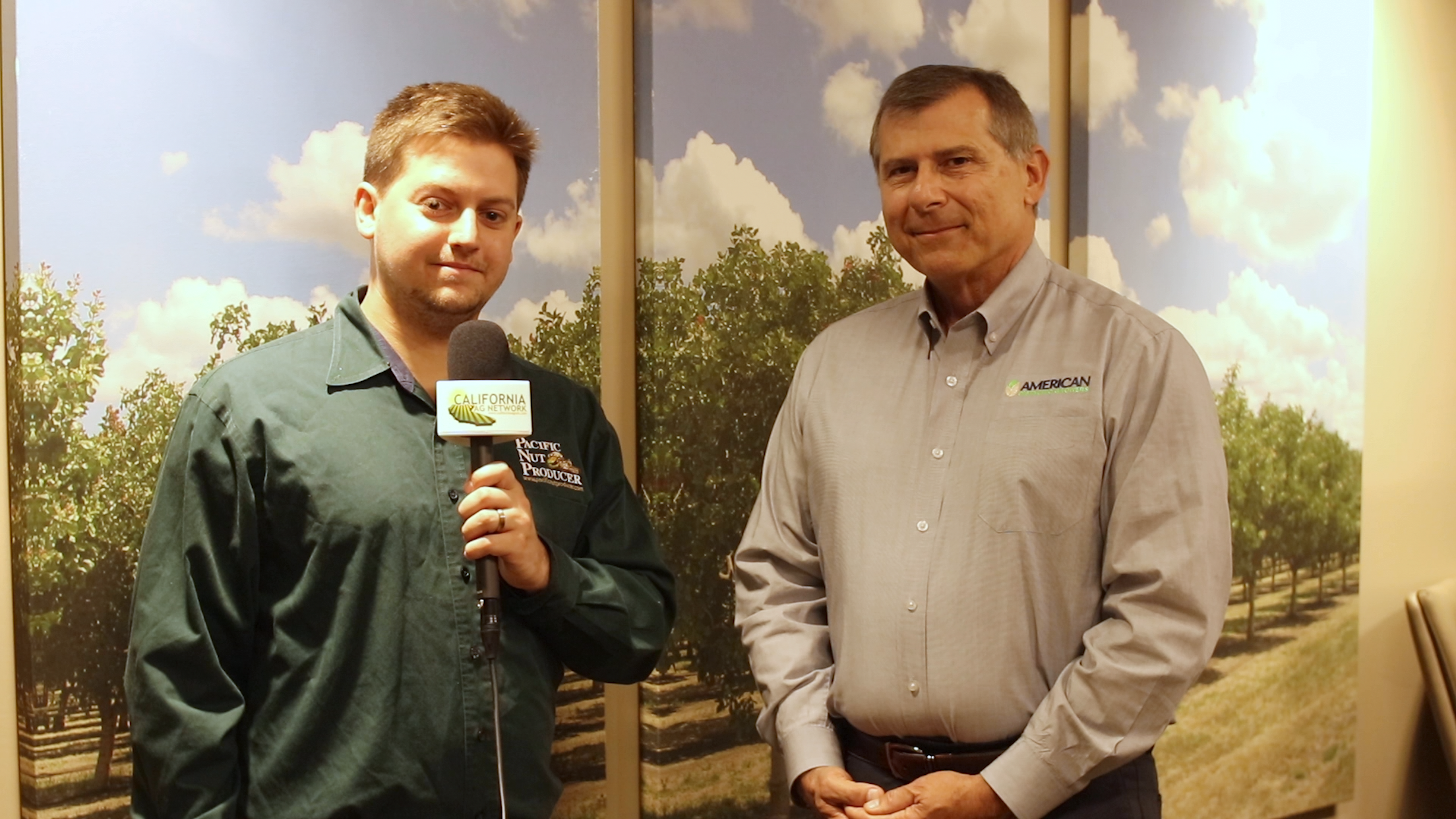
    As U.S. Pistachio growers anticipate a larger crop this season, watch this brief interview with Richard Matoian from American Pistachio Growers on just how large a crop may come to fruition this season, as well as some great news on the rise in pistachio export shipping trends.  Read more about it in Pacific Nut Producer Magazine. (Editor’s Note: We are pleased to announce an additional news anchor, Joseph Malcolm, debuted in this video report)

    Please thank this video’s sponsor Thunder Creek Equipment for their industry support.

  • Walnut Production & Consumption in Ukraine Falling

    Walnut Production & Consumption in Ukraine Falling

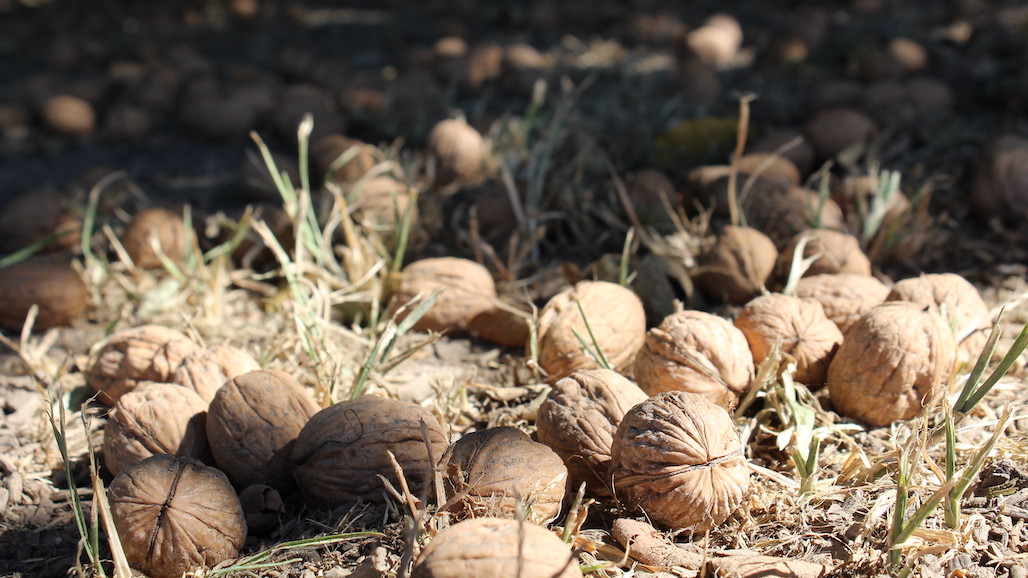
    The USDA Foreign Agricultural Service (Post) forecasts Ukraine’s walnut production at 106,500 metric tons for marketing year (MY) 2023/24, similar to MY2022/23. Production fell in 2022 because some production areas are currently in occupied territory at the time of the report writing. Exports are slow, plagued by quality issues, constrained logistics because of armed conflict, and growing competition in international markets. Domestic consumption of walnuts is a mixed bag. The number of refugees that left the country is pushing it down while lowering consumption of imported tree nuts due to decreased disposable incomes by the population keeping it up. Ending stocks increased for each consecutive MY while domestic prices are sliding down.

    The State Statistics Service of Ukraine (SSSU) published official walnut production numbers for CY2022. The total walnut reported area is 17,100 ha, a 5.5 percent decrease compared to the previous CY. The main reason behind the area drop was the loss of control by the Ukrainian government over certain regions of Donetsk, Zaporozhe, Luhansk, Mykolaiv, Kharkiv, and Kherson regions, which were occupied as the result of the armed invasion by Russia, which started in late February 2022. Total walnut production is reported at 107,660 MT, a 6.7 percent decrease compared to the previous year. Post accepts these as MY2022/23 estimates.

    The MY2023/24 production number forecast is based on the following production area assumptions by Post:

    -A slight decrease in production area in the household sector as some trees are retiring out of production, and usually, households are reluctant to replace these with new ones.

    -There will be no increase in production areas by enterprises. Establishing new tree plantations is a long-term investment that seems especially risky during the active phase of armed conflict.

    The resulting MY2023/24 production area forecast is 16,900 hectares, a one-percent decrease compared to the previous MY.

    Below is a graph that depicts the Normalized Difference Vegetation Index (NDVI), a standardized measure of healthy vegetation. High NDVI values indicate healthier vegetation. Low NDVI values indicate low or no vegetation. Based on the year-to-year comparison of NDVI for Ukraine, presented below, FAS Kyiv would like to note that MY2023/24 growing conditions since June 2023 went below the long-term average (black line on the graph below) and started to resemble those observed in MY2022/23.

    The available information about subsurface soil moisture (see the relevant picture below) does not suggest improving growth conditions in the short term.

    Based on NDVI’s similarities with MY2022/23, Post forecasts MY2023/24 walnut production at 106,470 MT, similar to MY2022/23, with the potential to revise it downwards should the situation with soil moisture continue to deteriorate.

    Most walnuts harvested in Ukraine are produced by individuals or small private family farms, harvesting trees on their land or near their farms. This category of producers is not typically concerned with applying fertilizers and agrochemicals and uses manual labor for harvesting and shelling walnuts. Harvested walnuts are typically sold to intermediaries, who assemble batches designated for export.

    The production area farmed in such an extensive manner has decreased in the last several years. For CY2015, over 95 percent of the Ukrainian total walnut production area was on small, private, family farms. These farms represented 73 percent of the total Ukrainian walnut production area for CY2022. Post predicts this downward trend in walnut production on family farms will continue in the medium to long term as aging trees are losing their productivity and being chopped down. However, it should be noted that family farms still enjoy a dominant position in production volumes as they hold an absolute majority of the bearing tree area compared to industrial growers – 81 percent for CY2022.

    Since 2009, Ukrainian farmers have begun developing walnut orchards for commercial purposes. The average size of these commercial orchards ranges from 20 to 50 ha. Some regions, especially Central and Southern Ukraine, require irrigation to secure expected yields. At the same time, orchards in the northern part of Ukraine may experience lower yields because of the cooler climate. That is why around 30 percent of all commercial walnut gardens are located in the Vinnytsia region (Central Ukraine), according to SSSU data for CY2022.

    The growth in commercial production farms in pre-war years could be attributed to continued state financial support for orchard and berry producers (please refer to the Policy Section for more details) and the opening of the agricultural land market in Ukraine (see Policy Section). Industry reports note that farmers invested in developing high-yield commercial orchards of multiple walnut varieties, installing irrigation systems, and applying fertilizers. In southern Ukraine, seedlings could be planted in autumn, but in northern Ukraine, it is still advisable to plant in spring to avoid winter frost damage for newly planted trees. Walnuts are generally harvested from the end of September through the end of October.

    According to SSSU’s data, commercial growers did not plant new walnut orchards for CY2022, which indicates that professional growers are reluctant to get involved in long-term investments during the active phase of armed conflict with Russia. It should be noted that the initial investment required to establish an orchard range from $1,200 to $1,800 per ha. According to Post’s estimates (see PSD table at the end of the report), stocks are peaking because of export issues (see Exports Section). The wide availability of the product (including low-cost and low-quality generated by the households) is the main factor pushing down domestic walnut prices (see Walnut Export Prices Graph in Trade section). Subsequently, low prices are triggering a drop in profit margins of commercial growers, thus discouraging them from getting on board with the new investments.

    Tighter competition (both from domestic households and foreign competitors) forces existing commercial producers to become more efficient. According to a recent media report (in Ukrainian), one of the industrial growers, farming 91 hectares of trees, has purchased a tree shaker and harvester to speed up harvesting and be less dependent on the hired workforce. Specialization is one of the signs that Ukrainian walnut farmers have started perceiving it as their primary business.

    According to industry experts, the main body of existing industrial walnut orchards was planted 8-12 years ago with seedlings that would reach their full potential after ten years since they were planted. New walnut orchards can be expected to reach their full potential from four to five years after initial planting. FAS Kyiv notes that improvements in plant genetics may make walnut production more appealing for new companies considering entry into this business.

    Producers prefer Ukrainian-origin seedlings. However, due to increased demand and the inability of local seedling producers to meet the higher demand, some new seed varieties are imported from neighboring countries, like Moldova and Belarus, which feature similar growing conditions. Some growers are experimenting with imported seedling varieties to gain a competitive advantage in yield and quality. The Ukrainian State Registry of Plant Varieties (in Ukrainian) lists approximately 39 different walnut varieties in CY2023, allowing commercial growers to pick and choose commercially sustainable varieties in their area.

    Most of Ukraine’s household walnut producers do not treat trees for diseases. However, with more commercial walnut production coming online and taking over poorly managed and aging orchards, these newly established commercial producers reportedly pay greater attention to production technologies (beyond irrigation) to increase growing efficiencies. For example, these growers are researching ideal growing areas, investing in nurseries to improve genetic stock, and applying fertilizers and pesticides to their orchards.

    Sorting is predominantly done manually to ensure the quality and consistency of the product batches. Walnut production in Ukraine is still mainly a labor-intensive business, with most walnuts harvested by hand or rudimentary nut-picking devices in family farms used by the previous generation of growers. According to industry sources, family farms are known for their product’s unstable quality, pushing them into the low-level segment among foreign buyers.

    According to industry reports, commercial walnut production yields have increased, as well as the quality of their product. The majority of farmers did not initially consider installing shelling equipment at the stage when they were establishing their orchards. It happened because they relied on the opinions of suppliers of walnut seedlings, who were promising unrealistically high prices for in-shell walnuts to benefit their sales. Commercial growers ended up directly competing with family farms, which naturally had lower production costs and thus could sustain lower asking prices in the in-shell walnut market.

    Recognizing the price spread between shelled and in-shell walnuts (see Walnut Export Prices Graph in Trade section), the most advanced walnut producers started purchasing a wide range of equipment, allowing them to shell and pack their product to avoid competition at the crowded, low-end in-shell market. According to industry experts, the average conversion rate between shelled to in-shell walnuts in Ukraine ranges between 33-38 percent. This ratio is expected to improve in the future with the development of commercial production. Conversion rates for the recently established walnut orchards average around 55 percent. However, the share of these plantations is still relatively small, so the impact on the national average is minimal.

    The latest trend is that farmers started applying for long-term banking credits to establish vertically integrated production clusters, including an orchard, a processing facility with a packaging unit, and a certified quality control lab. For example, a walnut producer received a $15 million credit payable within seven years issued by the state-owned UkrExim Bank (in Ukrainian) in CY2021. Post is not aware of any similar investments for CY2022.

    Another part of the business for commercial growers is walnut wood, used for local furniture manufacture. Additionally, some wood is exported. Commercial walnut growers plant other trees during orchard development to harvest wood after a few years.

    Other products related to value-added walnut production are treated leaves for medicinal use and walnut (green/young nut) preserves. In recent years, Ukrainian consumers’ demand for walnut oil has increased, primarily from EU importers. There is also some domestic demand for walnut oil as a critical ingredient in the premium segment of natural cosmetic products.

    Continue reading the full report from USDA-FAS HERE.

  • Meal Period Violations, Farm Employers Beware

    Meal Period Violations, Farm Employers Beware

    Meal break violations are an open door for Class Action & PAGA lawsuits that farmers have been getting impacted by, according to longtime ag labor and employment attorney Ron Barsamian.  Watch this video interview with Ron as he shares what farm employers can do to maintain better records and avoid the costly losses involved in such litigation.

    Please thank this video’s sponsor Ranch Systems for their industry support.

  • Varroa Mites and Deformed Wing Virus Make Honeybees More Susceptible to Insecticides

    Varroa Mites and Deformed Wing Virus Make Honeybees More Susceptible to Insecticides

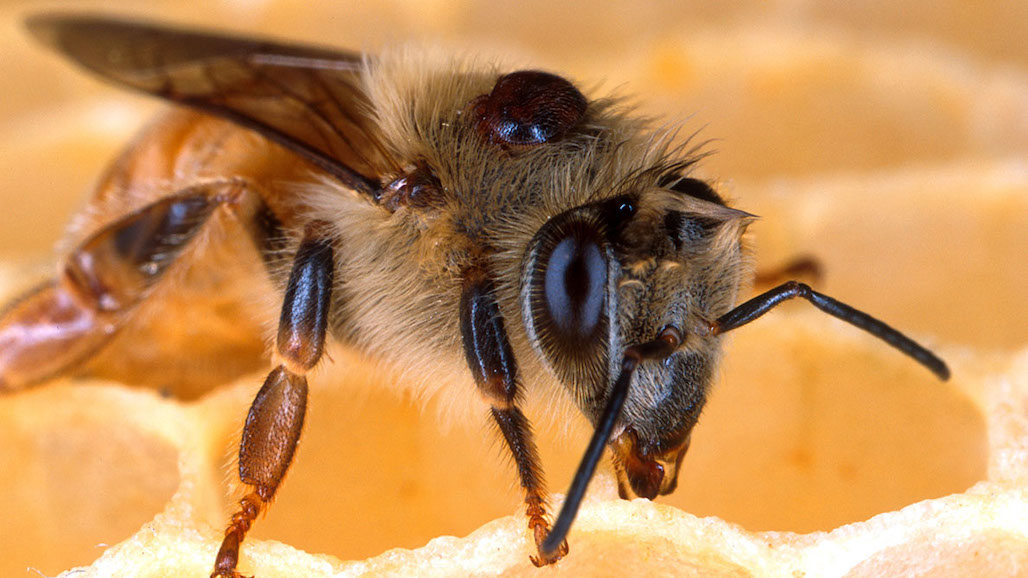
    The first of two apiaries, established in 2014 in Stoneville, Mississippi, provided honey bees for studying the impact of pesticides on honey bees. (Photo by Yu-Cheng Zhu, D5121-1)

    Controlling for Varroa mites, the parasitic mites that feed on honey bees and serve as vectors for viral diseases like deformed wing virus (DWV), can help with improving honeybee populations and make bees less susceptible to harmful insecticides, according to a recent study published in Environmental Pollution.

    Foraging honey bees may be directly exposed to toxic insecticide sprays in the field or exposure may come from honeybees collecting and bringing pesticide-contaminated pollen and nectar back to their hives to feed larvae and young bees. The presence of insecticides, along with other environmental stressors in agricultural areas, can be a factor leading to issues like colony loss — something beekeepers from around the world are trying to overcome.

    “Previous research has shown how chemicals like pesticides make bees more susceptible to mites,” said Yu-Cheng Zhu, a research entomologist at ARS’s Pollinator Health in Southern Crop Ecosystems Research Unit in Stoneville, Mississippi. “In our study, we wanted to see if mites and viral infestations make bees more susceptible to insecticides.”

    In a study, researchers with the U.S. Department of Agriculture (USDA)’s Agricultural Research Service (ARS) applied the miticide amitraz (Apivar), a product commonly used for treating Varroa mites, off-label to four bee hives and left the other four hives untreated. They monitored the mite population density monthly and DWV density in early, middle, and late season.

    Researchers collected bees from miticide-treated and untreated hives, and quantified gene expressions of four immune genes and two physiology-related genes. They also tested bees’ sensitivity to five representative insecticides. In addition, bees’ natural mortalities were recorded during three seasons.

    “Miticide treatment led to minor or undetectable mite and DWV infestations during the whole bee season, while untreated colonies had substantially higher mite and DWV infestations,” said Zhu.

    The data analyses showed that Varroa mite population irregularly fluctuated over the bee season and mite population density was not dynamically or closely correlated with the seasonal shift of honey bee natural mortality. Unlike mites, DWV density in untreated colonies progressively increased over the bee season. The density was highly correlated with the seasonal increase in honey bee natural mortality.

    “In the untreated hives, the increased DWV infestations resulted in decreased physiological and immunity-related functions in late-season honey bees, making the bees more susceptible to insecticides and increasing natural morality rates during the season,” said Zhu.

    According to Zhu, Varroa mites, also known as Varroa destructor, can reduce fat body and body fluids that contain important detoxification enzymes and immune proteins in honey bees. As a result, bees have impaired immune, detoxification/defense systems, and other essential processes. Coupling those impairments with exposure to insecticides can be detrimental to bee populations.

    “Having impaired immunity, especially later in the season with fewer food sources, can be challenging for honey bees,” said Zhu.

    Zhu, whose work focuses on the toxicological impact of pesticides on beneficial insects in the Mississippi Delta Area, said that the study’s results indicated the importance of studying the “bottom-up” effects of mite infestations on the overall health of honey bees in real-world contexts.

    “Chemical control is still a major method in preventing crop loss and controlling insect pest populations,” said Zhu. “It is important to study the effects of chemical control in honey bee populations so we can find best practices for protecting the health of bees.”

    The Agricultural Research Service is the U.S. Department of Agriculture’s chief scientific in-house research agency. Daily, ARS focuses on solutions to agricultural problems affecting America. Each dollar invested in U.S. agricultural research results in $20 of economic impact.

  • Almond Board Simplifies CASP Process for Growers

    Almond Board Simplifies CASP Process for Growers

    A valuable industry assessment program has been streamlined to make it easier for almond growers to enter and update data. Changes to the CASP program – which now stands for the California Almond Stewardship Platform – were announced in December at The Almond Conference 2022 and came after feedback from some growers about the length of time it often took to fill out the online self-assessment.

    The CASP program was developed by the Almond Board of California over a decade ago as a method for almond growers to share and compare data about their orchards and farming practices. That aggregated information in the self-assessment, in turn, is often used by handlers and others who market California’s multibillion-dollar annual almond crop to educate and reassure consumers that growers are implementing critical practices in areas such as water usage, air quality, soil health, pollinators and carbon recapture.

    The original CASP online self-assessment process included 620 questions, which now have been cut in half after the update.

    “It was really time to restructure it a little bit and put it on a diet,” said Tom Devol, Senior Manager of Field Outreach and Education at the Almond Board of California. “It had gotten a bit heavy. It was taking growers a lot of time to do and was a big commitment.”

    Growers often spent five or six hours responding to the questions and sometimes had to enter the same information more than once. That is no longer the case, Devol said.

    “I just worked with a grower who completed it in an hour and a half, from start to finish,” he said. “Now, we’ve grouped questions, so when you set up an orchard, you never look at those questions again. You put the information in for that orchard – how it was planted, when it was planted, those kinds of questions – and when you reassess in two or three years … you never have to look at that again. Those questions are pre-done.

    “And we did the same thing with the farming operations. So the common practices that you use across the whole farming operation, you really only need to address those questions one time and then in future assessments, they’re already completed for you.”

    Devol said rationale behind CASP has evolved since it was created.

    “When CASP was first envisioned, it was predominantly an education tool,” he explained. “But over time, there’s been a lot more pressure from the market. ‘How are you growing your crops? Are you exhibiting good stewardship? Are you using current practices?’

    “The handlers are the ones facing those questions. The growers aren’t selling the crop directly to the buyer; it’s the handler who’s doing it on their behalf. … By completing your grower self-assessment, you’re assisting your handler in marketing your product.”

    Devol recommends that growers update their information at least every three years.

    “It’s really a continuous improvement program if you think about it. We’re really trying to see where we’ve learned new practices that we’re starting to adopt into the orchard,” he said. “Not many people change their practices every year, but over time, you’re going to pick up a new thing – we’re going to try this, we’re going to change the way we do that.

    “Handlers like to see that data done every year because they’re using the aggregate data to help demonstrate to their buyers what their group of growers are doing. So they have a different motivator.”

    Devol reassured growers that no individual orchard information ever is shared.

    “It’s aggregate data. It’s secure. Nobody can see your data,” he said. “These handlers just get an aggregate group of data about what their growers are doing.”

    Growers who have participated in the past and want to update their data, as well as others who want to enroll in the CASP program, should go to www.almondstewardship.org. On the website, growers can set up an account or ask to have their password sent to them, if they’ve forgotten it.

    Devol said he and the Field Outreach and Education team are available to answer any questions or provide help. They can be reached at fieldoutreach@almondboard.com.

    “We really want you to succeed,” Devol said. “We want it to be simple to use. We don’t want it to be painful for you.” — Article & Image Courtesy of the Almond Board of California

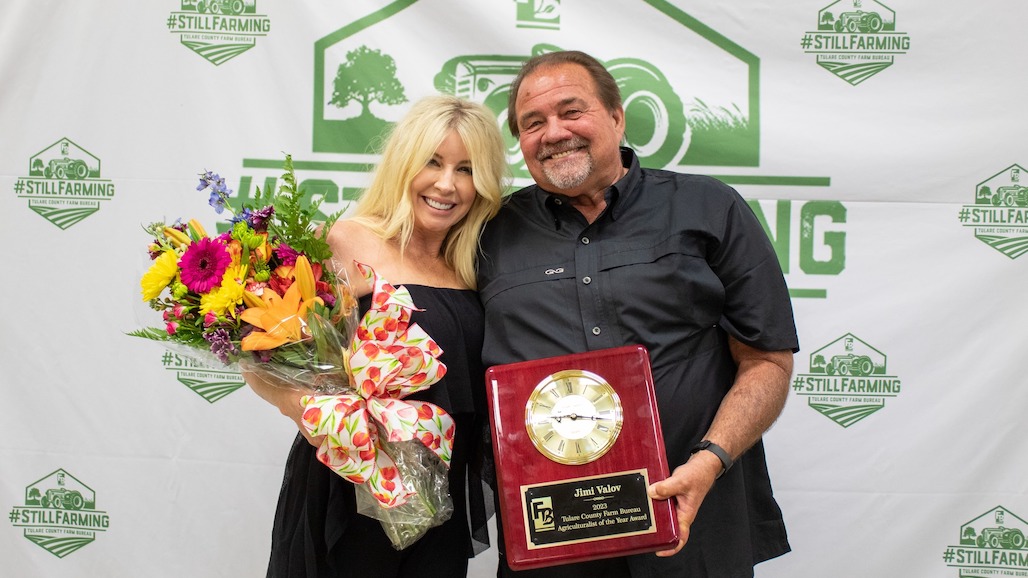
  • Jimi Valov Honored as Tulare County Agriculturalist of the Year

    Jimi Valov Honored as Tulare County Agriculturalist of the Year

    Jimi Valov, a man known as much for his generosity as his farming acumen, is Tulare County Farm Bureau’s Agriculturalist of the Year. Valov, of Tulare, is a grower of pistachios, almonds, alfalfa and grain on 1,800 acres spread throughout Tulare, Kings and Kern counties. Forty years ago, he was one of the first farmers to plant pistachio trees in the San Joaquin Valley and today he is a true ambassador of the crop. He regularly greets friends and acquaintances with a bag of salted pistachios in hand, fresh from the grower cooperative he helped to establish, Horizon Nuts. “I love giving away pistachios to people,” said Valov, who was sporting a vest emblazoned with the words ‘In Nuts We Trust.’ “I love handing them out because I grew them.”
    Farming runs in the Valov family, and today the operation reflects the family’s Russian lineage. The Valov family originally farmed near Tblisi, Georgia until leaving for the United States in the early 1900s, eventually settling in the Bakersfield area. Jimi’s father, John, found land prices more reasonable in Tulare County and began growing cotton. Jimi farmed with his father, eventually convincing him that cotton should not be their main source of income — it should be pistachios.
    Setting a goal of planting their initial 40 acres in 1983 is an achievement he looks back on fondly, and as an example of perseverance for young agriculturalists. “There will always be people to tell you ‘It can’t be done,” and I had a lot of that, especially when I planted pistachios. Everyone should have a goal in life, and strive for it,” he said.
    Today, pistachios grow on 800 acres of Valov Family Farms land. Valov has been married to his wife, Tammy, for 25 years. He explained that in the Russian culture, the father’s name is given as each child’s middle name; for example, he is Jimi John Valov. He speaks proudly of his children, all of whom have an interest in the family operation. They include daughter Journey Jimi Valov, and sons Jade Jimi Valov and Jimi J. Valov, a recent plant science graduate of Cal Poly, SLO who is working alongside his father. Daughter Shyannah Jameson came with his marriage to Tammy, and together, he and Tammy have also raised their niece, Harmony Donaldson, a student at California Baptist University. Valov shares coffee each morning with Tammy, a special time for the couple to get caught up on family activities. It was during this moment that his phone rang, and he learned he had been selected Agriculturalist of the Year.
    “I put it on speaker phone so my wife could hear,” he said. “I was blindsided!” This is not the first time he has been recognized for his role in the agriculture industry and the community. In 2015, he was named Farmer of the Year by the Tulare Kiwanis Club. Childhood friend Brian Watte (TCFB’s 2018 Agriculturalist of the Year), first met Valov in kindergarten class at Waukena School. He said the Valov family’s philanthropy seemingly knows no limits.
    “He’s one of those guys who gives and gives, along with his wife. They are a team,” Watte said. “They give freely of their time and Jimi is well known to do a real good job barbecuing lamb on a custom barbecue. In the last 20 years, when someone in the community he knows, or a family member, passes away, he is the first one to offer up to help with food at the service. He drops whatever he is doing and contacts the family to take that burden off of them.” Valov will do just this on May 12 at the funeral service of his dear friend and fellow pistachio industry friend, Ken Purrier. Purrier co-owned Pioneer Nursery with Corky Anderson, another industry giant, who helped put American pistachios on the map.
    Valov said it was the example of these two men that prompted him to become more involved in the industry. As a board member of American Pistachio Growers, a non-profit trade association representing over 800 grower members in California, Arizona, and New Mexico, he played a part in opening the nut’s export market to China. “I was standing at the Great Wall of China when I was asked if I could serve as chairman,” he said. “How about that!”
    Jimi and Tammy share a beautiful home in Tulare, and their backyard is often the site of various community and political fundraisers. They have hosted numerous Tulare County Farm Bureau events, as well. Valov said supporting youth in 4-H and FFA is especially important, and he is known to purchase 10-15 lambs each year at the Tulare County Fair Livestock Auction.
    “The main thing is that Jimi is such a giving person, in his private life, with local schools, or in agriculture,” Watte said. “If a neighbor who is getting into ag needs some mentoring, changing from row crops into trees, he’s right there to help you out. He’ll lend you equipment, and check on your trees as if they were his own.”
    Valov said he has seen other growers cash out and leave California, but that’s not on his agenda. He intends to keep their family farm operating, and eventually pass it down to his children and three grandchildren, Hazel, (who was born on his birthday) River, and Ledger. — Article By Lisa McEwen, Tulare County Farm Bureau
  • California Almonds Take Over Mexico City

    California Almonds Take Over Mexico City

    Mexico is one of ten markets in the Almond Board of California’s (ABC) diversified portfolio of countries focused on building global demand for California almonds. ABC marketing initiatives in Mexico began in 2018 and ABC is optimistic about the continued growth potential in the market with consumers looking for healthy food options. Position report numbers for the region strengthens that optimism as shipments to Mexico through May 2023 have increased 9% over the previous crop year.

    During the first two months of 2023 and around National Almond Day efforts, California almonds took to the streets of Mexico by driving two mobile billboard trucks, covered with almond advertising creative, to top locations in Mexico City. “For the first time ever, the board hosted a special event-based activity in this market through a variety of in-person gatherings and by driving interactive mobile billboard trucks around the city”, said Becky Jeffers, ABC manager, North America marketing. The billboard trucks visited nine shopping malls, 20 supermarkets and 15 gyms. At each stop, ABC hosted interactive events like snack workshops, giveaways, and yoga and meditation classes. “This type of activity reinforces the relevancy of almonds to consumers and is a great complement to our year-long advertising and public relations efforts in the Mexico marketplace”, Jeffers added.

    ABC partnered with popular influencers for the special events – which included podcast host Romina Sacre who has over 230K Instagram followers, Soulfood Luz Colsa who has over 630K Instagram followers, and fitness trainer Ceci Aguilera who has over 150K Instagram followers.

    Colsa held a snack workshop showing how to add almonds into tasty foods that Mexican consumers are accustomed to enjoying. Aquilera hosted a fitness bootcamp and Sacre hosted a meditation workshop. Sacre also invited a select few lucky consumers to her podcast recording studio where she recorded an episode about almonds. Each of these influencers also posted on social media about why they love almonds and these special events. Through the different activities and mobile advertising, the campaign reached over 360 million impressions in the Mexico market. — Article & Image Courtesy of the Almond Board of California

  • India Will Eliminate Twenty Percent Retaliatory Tariff on US Walnuts

    India Will Eliminate Twenty Percent Retaliatory Tariff on US Walnuts

    United States Trade Representative Katherine Tai’s announcement today that India agreed to remove retaliatory tariffs on walnuts, as well as additional US products, is welcome news.  Trade representatives from the United States and India have been working together on a package of trade deliverables announced today during this week’s visit of India’s Prime Minister Modi for meetings with President Biden and a joint session of Congress.

    “The California walnut industry has had a long-standing partnership with the India marketplace which is an integral part of the industry’s overall long term long-term strategic growth and market development plan.” said Pam Graviet, Senior Director of Global Programs for the California Walnut Commission.  “Indian consumers and trade partners continue to recognize the premium quality of California walnuts and the nutritional value and great taste they bring to the Indian diet. Elimination of India’s retaliatory tariffs will benefit Indian consumers and businesses, as well as the California walnut industry,” she added.

    The California walnut industry brought this ongoing issue to the attention of the Biden Administration early in the presidency and appreciate their tenacity and commitment which led to this agreement. We commend USTR Ambassador Katherine Tai and Ambassador Doug McKalip on negotiating this successful outcome for California’s walnut producers and processors. Ambassador McKalip recently visited California and had an occasion to tour walnut and almond orchards and learn firsthand the severe financial impact the 20% retaliatory tariff inflicted on the California walnut industry.

    We also appreciate USDA Secretary Tom Vilsack, Foreign Agricultural Service (FAS) Administrator Daniel Whitley and the FAS personnel who helped the industry through this challenging period.  The Market Access Program (MAP) continues to be a crucial element in enabling us to maintain our relationships in India and seek new market opportunities. We are grateful for efforts by federal, state, local elected officials, regulators, and their staff for diligently keeping this topic on the forefront of trade discussions.

    Robert Verloop, the Chief Executive Officer for the California Walnut Commission said, “the California walnut growers have been severely impacted by a host of unprecedented events over the last few years; including the various trade tariffs, COVID pandemic-induced supply chain and transportation disruptions, global economic downturn, inflationary pressures, high dollar values, the complications brought on by the war in Ukraine and the persistent drought and heat wave that severely impacted our 2023 crop.”

    “Tree nut growers, most of whom are multi-generational family farms, make a long-term investment in their crops.  Walnut orchards can be highly productive for over 30 years; accordingly, the growers make decisions to produce the revered California walnuts with the expectations that we have fair and equitable access to global markets which represent more than 65% of our sales. The removal of this tariff is welcomed by our industry and provides a pathway to strengthening our trade relations with this important market and trading partner” added Verloop.

    Ms. Graviet stated, “California walnuts are perfectly aligned to meet the global demands for more healthy, nutritious, and great tasting plant-based foods.  The removal of the retaliatory tariff in India will enable our growers to help meet these demands in India.  We thank our Indian trade partners and retailers for their ongoing support and commitment to California walnuts and look forward to building greater distribution and consumption of our walnuts.”

  • Governor Newsom Unveils Infrastructure Package to Secure California’s Global Leadership and Promote Economic Prosperity

    Governor Newsom Unveils Infrastructure Package to Secure California’s Global Leadership and Promote Economic Prosperity

    Urgent action is required to maintain California’s position as a global socio-economic leader. Governor Gavin Newsom has unveiled a comprehensive Infrastructure Package designed to address critical challenges, including meeting climate goals, improving the electric grid, enhancing water resilience, and modernizing transportation infrastructure.

    The Infrastructure Package is not merely about building infrastructure; it is about fostering progress and economic prosperity in our communities,” said Aubrey Bettencourt, President and CEO of the Almond Alliance. “By investing in sustainable water supply and efficient supply chains, the Infrastructure Package aims to ensure a thriving future for California.

    “California’s water infrastructure was constructed 55 years ago when the population was less than half of what it is today. Unfortunately, the repercussions of this outdated system are evident today, with one million Californians lacking access to clean drinking water, hundreds of thousands of agricultural acres lying fallow, and specific fish populations dwindling.”

    Bettencourt continued, “The Infrastructure Package presents an opportunity to establish a resilient water management system that benefits everyone, people, farmers, and the environment.

    “The transportation infrastructure plays a crucial role in facilitating the movement of agricultural products, such as almonds, for export. Improving highways, roads, rail transportation, intermodal facilities, and port infrastructure will enhance efficiency, reduce costs, and enhance California’s competitiveness in global markets.

    “Streamlining permitting processes and reducing red tape is a key aspects of the Infrastructure Package. These reforms will save time and money for taxpayers, businesses, and local governments, creating a more efficient project planning and approval system.”

    About the Almond Alliance
    Almond Alliance is the leading authority in state and national policy, championing American almond farmers, industry, and community for the continued global growth, innovation, and success of American almonds and agriculture. As the voice of almonds, the Alliance represents the fourth-largest commodity in the United States and the third-largest American export.

    Established in 1980, the Almond Alliance is a non-profit trade association with a local and international network of almond processors, hullers/shellers, growers, and allied businesses. The Alliance is dedicated to providing resources and solutions for our members, ensuring industry success and growth opportunities. Learn more at almondalliance.org