Category: Almonds

  • After a Hard-Working Harvest, Trees Need Water to Remain Healthy

    After a Hard-Working Harvest, Trees Need Water to Remain Healthy

    Almond Board of California — Growers have a lot to think about leading up to and during harvest – prepping the orchard floor, timing the first shake in relation to hull split and achieving optimum moisture content during drying are just a few of the many important factors growers will consider from July to October.

    Even as this season’s bounty is being harvested, the foundation for next year’s crop is already being developed through fruiting-bud differentiation. The period from July to October, in normal years, is when floral buds develop and the next year’s crop yield potential is set. The principle is simple: more buds = likely more flowers = likely more almonds. 

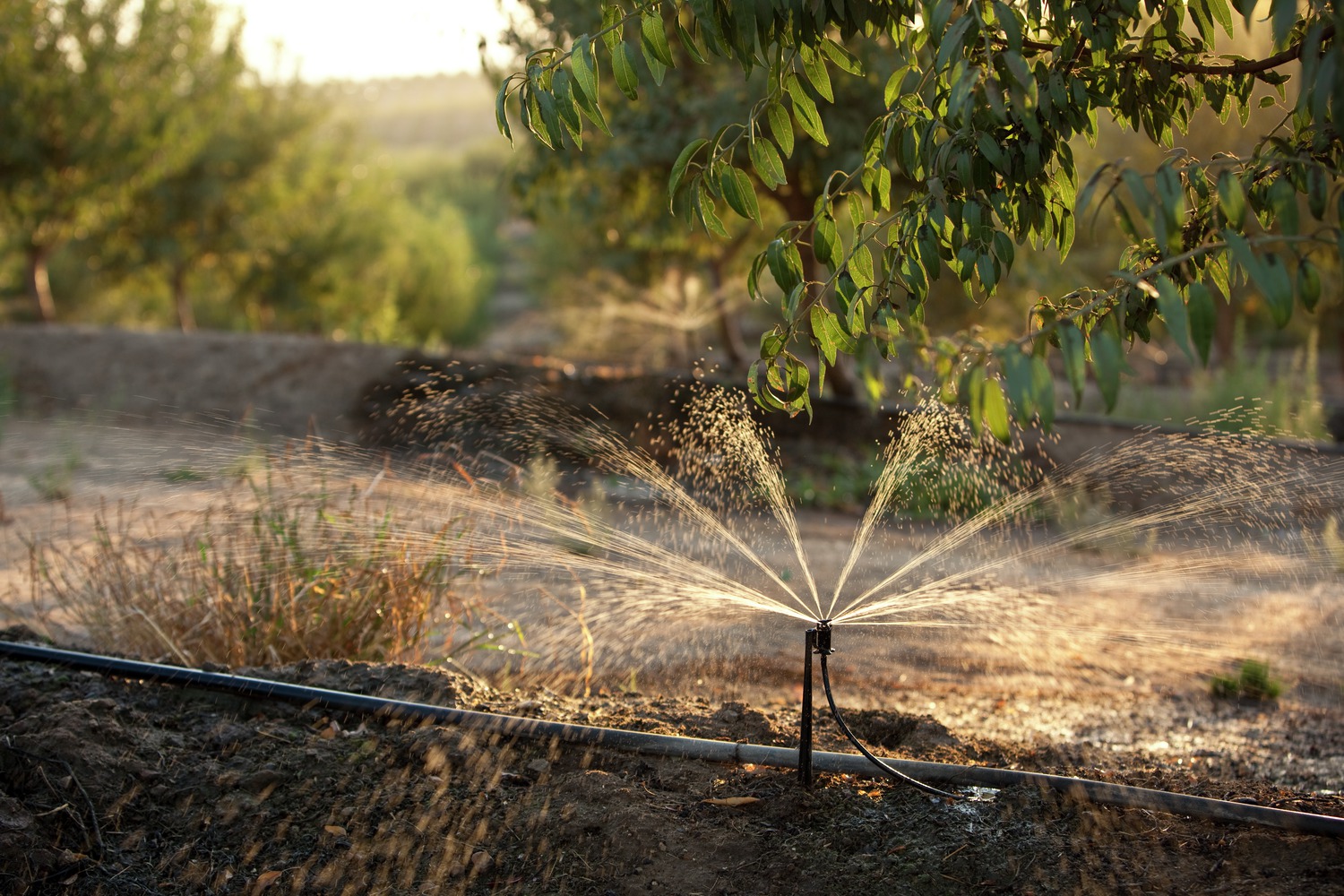
    Many factors can affect crop yield, such as pollination, weather, and nutrient management decisions. But this year, especially, with a record projected crop on the way, one key practice growers should implement to maximize yield potential is optimized post-harvest irrigation. Because growers typically stop irrigating in the weeks leading up to harvest, their trees can be rather dried out come late September and early October.

    “The sooner you can get water back on your trees, the more you’ll be able to support tree health,” said Sebastian Saa, Ph.D., associate director for Agricultural Research at the Almond Board of California (ABC). “We know next year’s buds already are on the tree – water reduces the stress on the tree and therefore allows those buds to further develop.”

    One way for growers to think of post-harvest and late-season irrigation is that they are “paying it forward” for next year’s crop. During this critical time, trees’ water needs are significant and severe water stress can drastically affect bloom, fruit set and yield.

    Saa said growers who have self-compatible varieties may have more flexibility when it comes to post-harvest irrigation. Because there will only be one harvest per block in self-compatible orchard configurations, growers will not necessarily need to wait for the harvest of the pollinizer to irrigate again. Similarly, Saa also said that off-ground harvest (catching the nuts and drying them outside of the orchard) or semi-off ground harvest (catching them and re-allocating them to the middle of the row) also may provide flexibility when it comes to post-harvest irrigation.

    One key resource available to help growers better understand irrigation management – both post-harvest and year-round – is ABC’s 
    Almond Irrigation Improvement Continuum. This resource, developed by the Almond Board in partnership with many trusted and respected technical experts, provides a wide-ranging look at a grower’s site-specific irrigation system with the goal of improved efficiency and effectiveness. In the Continuum, growers and irrigation experts will find a step-by-step explanation of irrigation management and scheduling practices related to the following concepts:

    • measuring irrigation system performance and efficiency,
    • estimating orchard water requirements based on evapotranspiration,
    • determining applied water,
    • evaluating soil moisture, and
    • evaluating plant water status.

    Tom Devol, ABC’s senior manager of Field Outreach and Education, is available to help almond growers reach their goals of increased water efficiency. Devol and his team can meet growers in-person for in-orchard consultations to discuss irrigation systems, address challenges, and share ABC’s print and online irrigation tools. To schedule your own irrigation consultation, email Devol at tdevol@almondboard.com or call (530) 570-5558.

    More post-harvest irrigation information
    More information about the impacts of water stress on fruit bud development in relation to growing regions and varieties is available in the University of California Agricultural and Natural Resources publication 8515, “Drought Tips: Drought Management for California Almonds,” found at Almonds.com.

  • Soil Compacted Post-Harvest? Look to Cover Crops

    Soil Compacted Post-Harvest? Look to Cover Crops

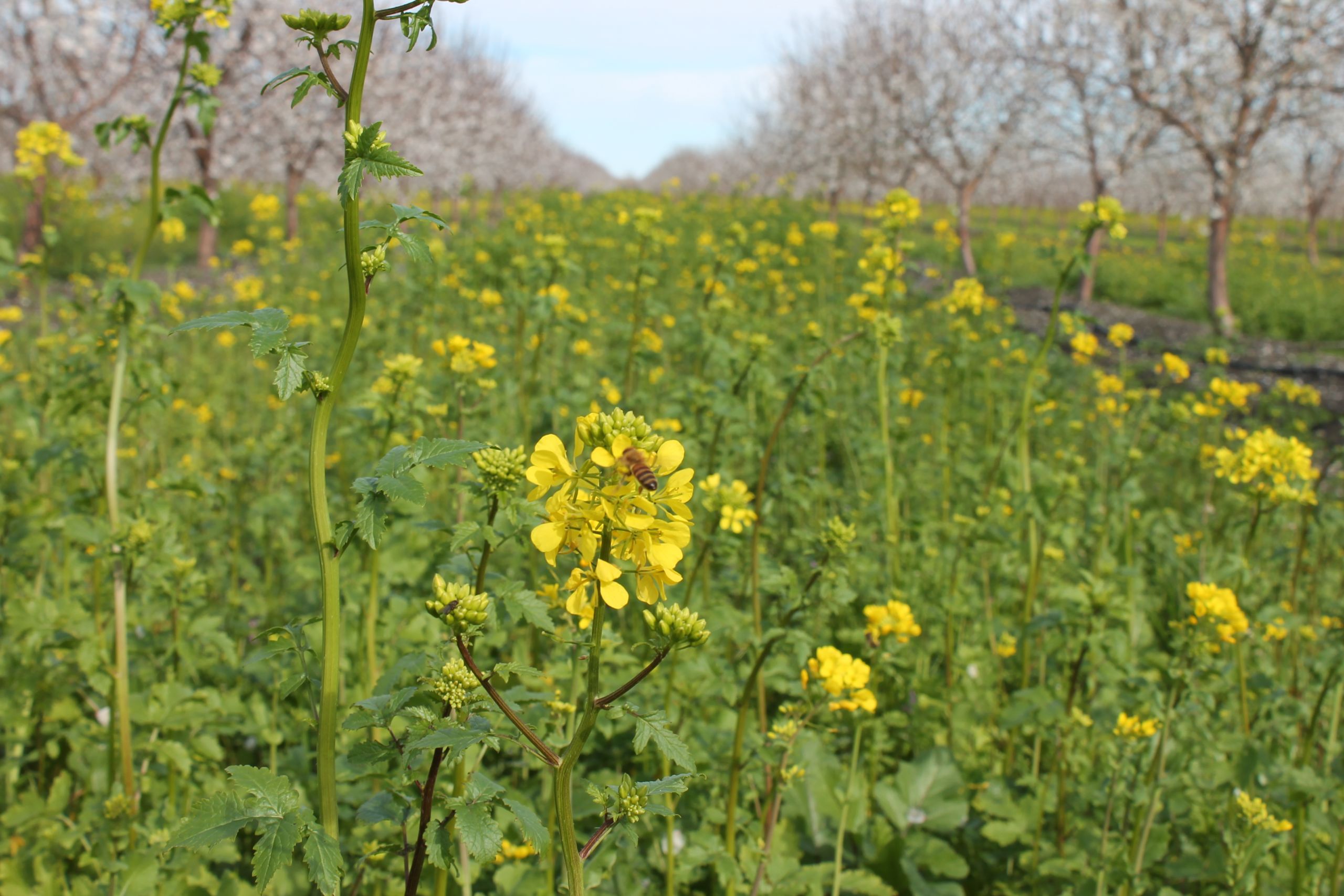
    Almond Board of California — For the third year in a row, Chris Rishwain is preparing to plant cover crops in the windrows of his 150-acre almond orchard near Manteca. Although his original intent was to provide forage for honey bees during pollination, Rishwain has discovered multiple additional benefits to cover crops, one of the most impactful being the positive effect they have on compacted soil.

    “Soil compaction has been a problem for us,” Rishwain explained. “My goal to reduce soil compaction is aimed at helping improve the orchard’s water retention, allowing the roots of our trees to penetrate deeper in the soil to obtain water and minerals, and also to allow for better soil aeration, which supports the microbes in the soil.”

    Like many other almond growers, Rishwain just completed harvest, a time when shakers, sweepers, tractors and other heavy equipment can contribute to pre-existing issues of soil compaction in orchards up and down the Central Valley. Compaction also can be a greater problem in soils that have more silt.

    Soil compaction – coupled with other contributing factors – can negatively affect tree development and subsequent tree productivity. While there is work that can be done to prevent or decrease the severity of soil compaction before trees are planted in an orchard, once an orchard is established those options become more limited. That’s where cover crops can help.

    The Almond Board of California (ABC) continues to fund research into the impacts of cover crops. Much of that scientific work has been conducted by a team led by Amélie Gaudin, Ph.D., an associate professor of agroecology in the UC Davis Department of Plant Sciences, as well as researchers from UC Riverside.

    Seed money available to growers

    One of the most enthusiastic promoters of cover crops in California is Project Apis m., which has managed the popular Seeds for Bees program for many years. Seeds for Bees encourages the use of cover crops to increase the density, diversity and duration of pollinator forage in California agriculture, while also improving soil health.

    “The seed mixes available through Seeds for Bees are designed to bloom at critical times of the year when natural forage is scarce but managed and native bees are active,” said Billy Synk, the organization’s director of pollination programs.

    Through the Almond Board’s Bee+ Scholarship Program, 100 almond growers can receive up to $2,000 each in FREE cover crop seed through the Seeds for Bees program. Funding provided by ABC’s Bee+ Scholarship will allow growers to plant an estimated 3,500 acres of quality pollinator forage statewide – that’s in addition to the cover crop seed Project Apis m. typically distributes directly to almond growers through their Seeds for Bees program each year. Applications are being accepted now, so growers are encouraged to visit Almonds.com/Pollinationto learn more.

    Rishwain started participating in the Seeds for Bees program two years ago. He planted Project Apis m.’s Soil Builder mix, which includes brassicas, legumes and grains. In addition to the cover crops’ positive impact on honey bees, he also likes this mix because of its combination of shallow hair-like roots that help prevent erosion in addition to strong tap roots that grow deep into the soil, breaking up compacted areas.

    “I will use this mix again this coming year. I liked how it has a diversity of species that can improve soil health in our orchard in many different ways,” said Rishwain, adding that the experts from Seeds for Bees make choosing the right seed mix easy for any orchard situation.

    Synk said the most popular Seeds for Bees seeds mix that growers typically use to deal with compacted soils is the Mustard mix, which includes canola, white mustard, two kinds of yellow mustard and Diakon radish.  He also said 75% of Seeds for Bees participants list breaking up compacted soils as one of their primary reasons to plant cover crops.

    Similarly, Gaudin’s research shows that a mixture higher in legumes (such as clover and vetch) can boost nitrogen levels in the soil; conversely, grasses can help reduce nitrogen losses, decrease compaction and improve water infiltration.

    Typically, cover crops are planted in the fall – after harvest – and sprout naturally following the first rain of the new crop year. Their flowers provide additional forage for honey bees when almond trees are in bloom and their roots add organic material to the soil. The cover crops are then typically mowed down in late spring so orchard floors can be readied for harvest later in the year. Rishwain also uses a conditioner before harvest to filter out organic debris.

    Josette Lewis, Ph.D. , the Chief Scientific Officer for the Almond Board, said the organization expects to publish a practical guide on best management practices for cover crops at the start of 2021. In the meantime, growers are encouraged to participate in the Almond Board’s Bee+ Scholarship and visit the Seeds for Bees website to learn more about the benefits of planting cover crops in or near their orchards.

  • Report Provides Data on New Almond Varieties

    Report Provides Data on New Almond Varieties

    Almond Board of California—Innovation always has been part of the almond industry. That includes exciting research about new almond varieties intended to meet the changing needs of consumers, end buyers and fast-growing export markets.

    There are about 70 different varieties of almonds grown around the world. California orchards produce about 30 varieties, though 13 of them – with Nonpareil dominating – account for 98% of what is regularly grown. While other countries may grow multiple other varieties, when it comes to total production California remains on top, producing more than 80% of the world’s almonds and supplying millions of pounds annually to more than 90 export markets.

    Still, California growers and handlers must continue to adapt to provide almonds that satisfy shifting consumer appetites, end-buyer demands and other market forces. What a confectionery business or chocolatier wants in an almond can vary greatly from what someone snacking in India or China wants, which can differ largely from what a company producing almond milk in the U.S. wants.

    The diverse uses for almonds and ever-changing preferences continue to influence demand for specific kernel characteristics such as flavor, appearance, shape, texture and color. Similarly, to continue improving not only what we grow but how we grow, the industry is looking into almond varieties that check horticultural boxes, including the ability to produce more pounds per light intercepted and self-compatibility.

    Recognizing the need to constantly innovate and maintain high demand for California almonds, the Almond Board of California (ABC) began funding almond variety development research in the early 1970s and expanded that effort in the late 1980s to include rootstock breeding. Over the past 20 years, this research has delivered five new University of California (UC) varieties – Padre, Sonora, Kester, Winters and Sweetheart – and supported testing of most commercial varieties and rootstocks for overall performance, resistance to pests, diseases and abiotic stresses. The research has kept California on the cutting edge of almond production globally.

    Now, for the first time, decades of data and results from ABC’s first-ever Crack Out Day (an event held last November at which industry members tasted and compared more than 60 almond varieties from around the globe) have been pulled together in a comprehensive breeding report. For growers looking to replant their orchards as well as nurseries and private breeders, the report offers critical information about the performance and potential promise of different almond varieties.

    “The California almond industry is always looking for better and more sustainable almond varieties,” said Sebastian Saa, ABC’s associate director of Agricultural Research. “We’re convinced that through research and innovation, we’ll find varieties that produce not only more pounds of almonds, but also higher quality with reduced management costs and horticultural inputs in terms of water use, pest management and more. As technology and experience advance, it will allow us to discover better, more efficient varieties.”

    Saa listed the following as some of the key takeaways and learnings provided by the report:

    • The growing number of self-compatible varieties being developed globally.
    • Spanish varieties are mostly hard shell, but some new selections are soft shell and should be evaluated in California.
    •  Spanish breeding programs have mastered late-bloom varieties and self-compatibility traits.
    • The Australian breeding program has some varieties that scored very high during Crack-Out Day and should be evaluated in California.
    • Several varieties created by the U.S. Department of Agriculture and UC breeding programs are performing quite well in ongoing trials in California.

    ‘Diversification is key’

    Breeding is an art of balancing improvements while accepting some trade-offs. To define this balance, experts must consider the various segments of the almond industry, starting with the growers, moving to the hullers and shellers, handlers, food companies and then, ultimately, the consumer. As Saa said, “Diversification is key.”

    “Different uses and different needs demand different varieties,” he explained. “When you think about an almond variety for snacking, for example, you think about crunch and strong flavor. But when you think about a variety for almond milk, you’re probably thinking about milder flavors. And if you’re looking for a variety to cover in chocolate, you’re looking for a short but round kernel shape.”

    Nonpareil and other soft-shell varieties dominate the snack segment because of their shape, smooth surface and light blonde color. Mission varieties like Marcona, Butte, Padre and Fritz typically are used for natural roasted and bulk purposes, as well as in candy and chocolate applications. And California varieties like Carmel, Monterey and Wood Colony often are roasted, salted and flavored. They also are good for slicing and slivering.

    Key varietal differences covered in the report include a summary of how many popular almonds grown in California are auto-incompatible, meaning they require cross-pollination between different varieties, and yet how some of the new varieties are self-compatible, requiring no cross-pollination. Another horticultural distinction covered in the report is crack-out percentage and double percentage. California varieties and some Australian varieties have a high crack-out percentage (kernel-to-shell ratio). In addition, the report discusses different varieties’ tendency to produce kernel “doubles,” and finally, maturity rate and its impact on harvest timing is also mentioned. Armed with this knowledge, said Saa, growers can be more flexible and have more operational diversification.

    “If you have only one variety that you need to harvest within a narrow window, you put a lot of demand on your resources at one critical point in time. However, when you have multiple varieties that you can harvest sequentially, you can leverage your equipment and maximize your resources,” Saa said. 


    Looking ahead to the future of breeding

    Creating new almond varieties is a slow and complex process. It can take as long as 15 years to develop a new breed and then another 10 to 15 years to truly test it.

    “Once you develop a variety, you need to see how it performs under differing weather and environmental conditions — and there’s only one harvest per year,” Saa said. “So in order to be confident in a new variety, we need to test during multiple harvests across the valley. Today, we’re trying to do that more efficiently than ever before.”

    To provide a mechanism to evaluate new varieties across the diverse almond-growing regions in the state, the Almond Board began funding long-term and multi-locational Regional Varietal Trials (RVTs) almost 50 years ago. The first trial ran from 1974-1981 and the second from 1993-2006.

    The current RVT – involving orchards in Butte, Stanislaus and Madera counties, all planted with 30 identical varieties – began in 2014. Saa expects the study to last until 2025. ABC coordinates with the UC’s research system on the RVT, and the UC provides important contributions from the leading plant nurseries and private breeders in the state.

    Saa said some important characteristics that researchers will evaluate in RVTs moving forward include:

    • a bloom period that begins no earlier than Nonpareil,
    • self-compatibility,
    • crack-out percentage equal to or more than 40%,
    • percentage of kernel “doubles” equal to or less than 10%, and 
    • increased yield potential.

    Growers interested in ABC’s RVT are encouraged to check out UC Davis’ Fruit & Nut Research & Information Center, as updated information from the ongoing RVT is expected to be published on the center’s website in early 2021.

  • Almond Alliance of California Strongly Opposes Proposition 15 – “Split Roll” Proposal

    Almond Alliance of California Strongly Opposes Proposition 15 – “Split Roll” Proposal

    The Almond Alliance of California strongly opposes the Proposition 15 “split roll” proposal on the November 3, 2020 ballot. California Proposition 15 is the Tax on Commercial and Industrial Properties for Education and Local Government Funding Initiative. We believe a split roll proposal will hurt the business community as well as employees and consumers, thereby having a negative impact on our entire economy.

    • A “yes” vote supports this constitutional amendment to require commercial and industrial properties to be taxed based on their market value, rather than their purchase price.
    • A “no” vote opposes this constitutional amendment, thus continuing to tax commercial and industrial properties based on a property’s purchase price, with annual increases equal to the rate of inflation or 2 percent, whichever is lower.

    “Split Roll” Will Hurt California’s Economy

    An almost $11 billion split roll tax increase will prevent businesses from hiring new employees and, potentially, from keeping existing ones. The stability and predictability brought by Proposition 13 has allowed California businesses to compete nationally despite the high cost of doing business in this state.

    What Is “Split Roll”?

    A tax roll is the official list of all the properties to be taxed. “Split roll” means applying a different tax formula, either tax rate, reassessment frequency, or vote requirement, to commercial and industrial properties than that applied to residential properties. Proponents of a split roll would remove some of the protections of Proposition 13 (from 1978) from nonresidential properties in order to raise taxes.

    How Will This Impact California Agriculture?

    Although the revised initiative includes a small business and agricultural land exemption, the “split roll” still would be crippling to a significant portion of businesses. The agricultural exemption language only applies to the “land.”  The current tax law defines “real property” as land, improvements, and fixtures, which for farmers means that real agricultural property is defined as not only the land, but also fixtures such as irrigation systems, and improvements — barns, processing facilities, nut and fruit trees and vineyards once they reach maturity.

    Under the California Constitution, vineyards are only exempt for the first three years after the season in which they are planted, and orchards are only exempt for the first four years after the season they are planted.  Other improvements would be subject to reassessment and would also require all food and agricultural processing facilities to be reassessed at their highest and best use.

    The initiative would not require row crops, such vegetables and cotton, to be reassessed, as those are exempt under the California Constitution, but they will face higher property taxes when the crops go to packing facilities and processing areas.

    Call To Action

    Proposition 15 would expose California’s farmers and ranchers to steep property tax hikes on “all fixtures and improvements.” You would face tax increases on a wide range of farm and ranch property.

    We ask you to:

    1. Vote No on Proposition 15;
    2. Please consider supporting our efforts financially with a donation to the fund to fight back against this initiative.

    For more information on how you can help, please contact the Almond Alliance at (209) 300-7140 or email staff@almondalliance.org.

  • CA Almonds: Global Shipments & Trends

    CA Almonds: Global Shipments & Trends

    Almond Board of the California — As California almond growers consistently produce yields at record or near-record levels year after year, it is important that those nuts find a home. Increasingly, that means expanding existing export markets and continuing to grow demand in those regions, while always keeping an eye on new opportunities globally.

    In the past year, the COVID-19 pandemic has presented a temporary challenge in moving nuts from California ports to export markets, a challenge coupled by situations like China’s continued tariffs. Still, the Almond Board of California (ABC) continues to strongly support the California almond industry through key marketing initiatives, education and negotiation with foreign trade officials, and frequent discussions with regulators in the U.S. and abroad.

    Take a deeper dive into how last year’s crop performed in terms of global shipments and hear from ABC program leads on market and trade trends, as well as ways that Almond Board staff are continuing to grow demand and support trade worldwide.

    Production: 2.55 Billion Pounds

    The U.S. Department of Agriculture (USDA) National Agricultural Statistics Service (NASS) has a challenging task in forecasting California almond production. Each July, USDA-NASS releases the Objective Measurement Report, which is based on samples of orchards gathered from throughout the state and measuring/weighing of kernels in order to estimate that year’s production. The production forecast reflects a range, which USDA-NASS has been within nine points of in the last 13 years. However, the 2018 report was narrowly outside the range and the 2019 report missed the mark by quite a bit.

    To address this issue, in the fall of 2019 ABC convened an Almond Forecasting Task Force made up of industry members, USDA-NASS officials and ABC staff to review almond forecasting procedures and identify potential changes to sampling methodologies to improve future crop estimates. To help USDA-NASS refine its production estimates, the task force recommended leveraging almond acreage information from Land IQ, a Sacramento-based agricultural and environmental scientific research and consulting firm that developed and maintains a comprehensive living map of California almonds. Implementing that and other changes, USDA-NASS has improved its data collection process, and hopes remain high that future Objective Reports will be closer to actual crop yields.

    Total Shipments: Domestic and Export

    This past year, the industry saw nearly parallel growth between domestic shipments (which grew 4.5%) and exports (which grew 5.0%). This growth comes despite the current challenging trade environment. The California almond industry’s investment in nutrition research and global market development has helped lay a strong foundation for demand around the world that has helped the almond community navigate through tougher times.

    And the work continues. In the past year, the Almond Board expanded its areas of nutrition research with its first study in the area of beauty. To ensure consumers are keeping almonds top of mind, the Almond Board is also continuing its efforts to build demand through consumer marketing programs in 11 countries, from India and Japan to the U.S. and Mexico. The past year’s programs included launching new advertising campaigns in multiple markets, including in the United Kingdom and India to continue building demand globally for California almonds.

    “One of the things that I first noticed when I joined the Almond Board four years ago was the passion and pride staff have in helping grow this industry,” said Vice President of Global Market Development Emily Fleischmann, “and that fire continues. It’s what has helped our teams launch innovative new campaigns like ‘Do You Almond’ in the UK this past year and what helps almonds remain the number one nut in new product introductions for 10 years running.”

    Fleischmann said ABC’s marketing staff will continue to create additional ways to spread the nutritional and health message associated with almonds.

    “Our teams keep pushing harder to make our programs stronger year over year,” she said. “In the year ahead, stay tuned for more on our U.S. partnership with Olympian Kerri Walsh Jennings as she works toward the Tokyo Olympics, as well as a brand new campaign in France and our first digital program in India.”

    Export Shipments: Top 10 Destinations

    Global trade tensions with China have changed the landscape of priority markets.

    “Five years ago, China was our second-largest export destination. It stayed as the third-largest market for several years, surpassed only by the strong growth of the Indian market,” said Julie Adams, vice president of Global Technical and Regulatory Affairs for the Almond Board.

    With an increasing middle class and economic growth, China was on track to expand, and ABC’s marketing investments helped spur that growth. But retaliatory tariffs implemented two years ago changed that momentum.

    “Starting in April 2018, we saw the impact of the trade war, which took almonds from a 10% tariff to the current 55% tariff,” Adams said. “Over the last two years, shipments to China/Hong Kong dropped 25% in crop year 2018-19 and another 23% in crop year 2019-20, with Australia benefiting.”

    The situation has resulted in China dropping to fourth in the line of U.S. export destinations. Taking a long-term view, however, China still is key to building demand for expanded crop production.

    “Many of the trade issues we face in our markets – from import controls to food safety standards or pesticide MRLs – take a long time to resolve,” Adams explained. “It is essential that we build good relationships with trade and regulatory authorities in these markets so we can engage quickly to find a solution that will allow almonds to continue to flow freely into consumer channels.”

    ABC is widely respected by authorities worldwide for being proactive in understanding market needs and its ability to provide technical, fact-based information across a wide range of issues. 

    Export Shipments: Regional Breakdown

    Global appeal among customers and consumers worldwide is clearly reflected in the almond industry’s regional shipments. Being well diversified helps counteract trade disruptions that can unexpectedly come up in one market or another.

    “There are so many growth opportunities around the globe,” Adams said. “For years, the Middle East and Africa were a small share of exports, but now they represent almost 20%.”

    While acknowledging the many challenges facing California almonds, Adams also believes “the opportunities are limitless.”

    Export Shipments: Product Type

    India remains the number one export market for U.S. almonds and the largest importer of in-shell almonds. Historically, India and China have been the primary destination for in-shell markets, but given the recent trade situation with China, India has absorbed much of those shipments.

    U.S. Agricultural Exports by Value

    Value Breakdown:

    • European Union (EU-27 + UK): Almonds are the number two export, at $1.8 billion, behind soybeans at $1.95 billion.
    • India: Almonds are the number one ag export at $732 million, accounting for 40% of all U.S. ag exports to India.
    • China and Hong Kong: Almonds are the second-largest tree nut export at $374 million and the seventh-largest ag product, overall. 
    • Japan: Almonds are the ninth-largest ag export.
    • United Arab Emirates: Almonds are the number one ag export and account for around 23% of total U.S. ag exports. 
    • South Korea: Almonds are the ninth-largest ag export. 
    • Mexico: Tree nuts are a small-sector category for exports to Mexico at $342 million total and $99 million for almonds. 

    Do you want to learn more about ABC’s global marketing and trade and regulatory work in countries across the world? Mark your calendar for Dec. 8-10 to attend The Almond Conference 2020. Held virtually for the first time this year, this ABC-hosted event will allow maximum global participation while offering the same quality information and engagement as past conferences. Learn more at almondconference.com.
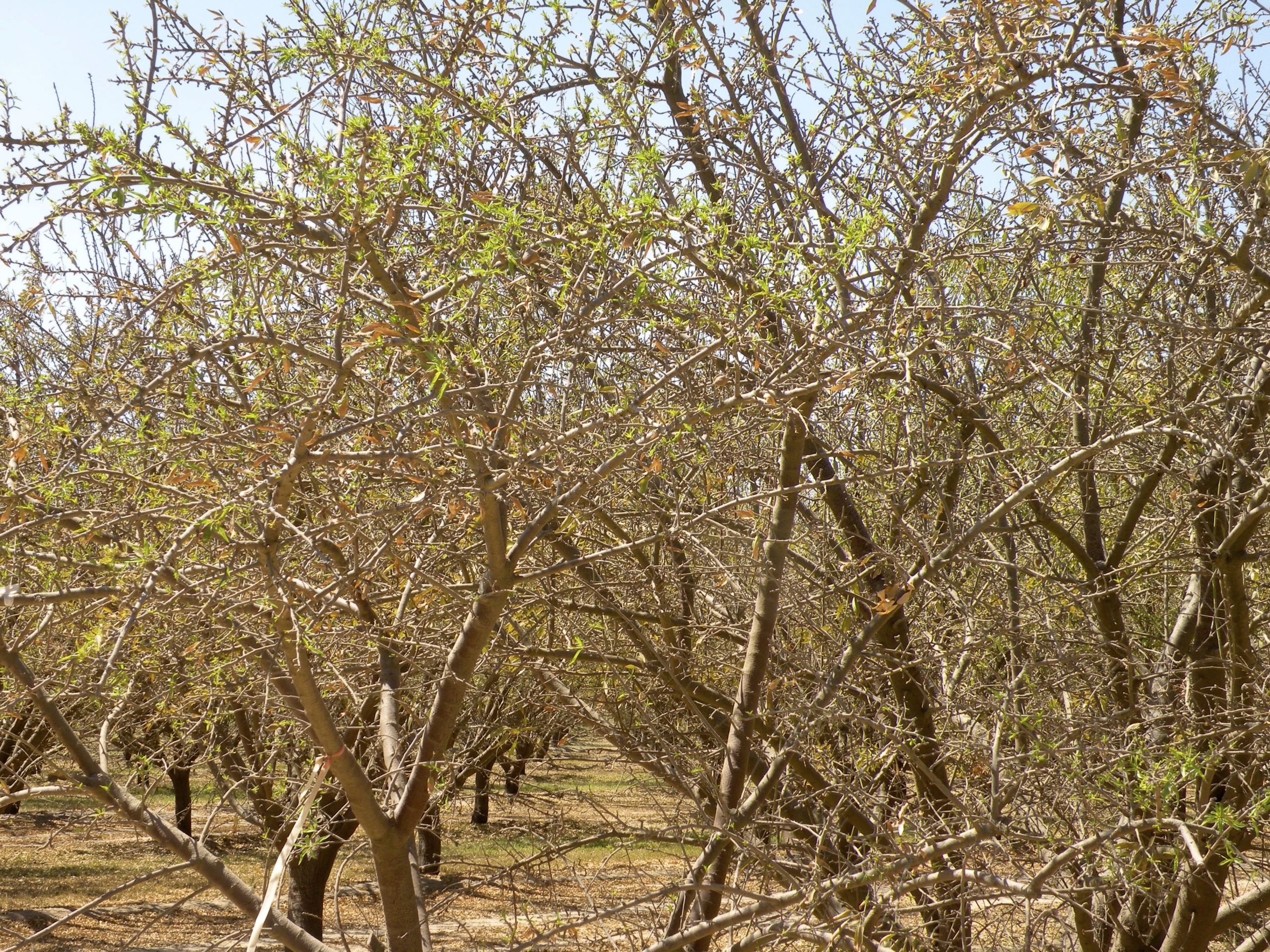
  • Tracking Almond Irrigation Improvement

    Tracking Almond Irrigation Improvement

    Almond Board of the California — For almond growers, better understanding your irrigation options and learning small ways to improve your practices has never been easier, thanks to the Almond Board of California’s (ABC’s) new Pathway to Irrigation Improvement guide.

    The guide – which can be downloaded or printed from ABC’s website – aims to help growers track their progress in implementing irrigation best practices, and is something growers can keep in their truck or office and to reference regularly. It is divided into four sections: Irrigation Systems, Water Use, Monitoring Soil and Plant Water Status, and Management. Each section has specific practices associated with it that are rated as Levels 1.0 (fundamental), 2.0 (intermediate) and 3.0 (advanced).

    For instance, under Irrigation Systems, a grower at level 1.0 would regularly record the pressure variation in his or her system and calculate an average application rate while irrigating. A 2.0 grower would employ more sophisticated practices – such as measuring distribution uniformity – to achieve “more crop per drop” of water, and then a 3.0 grower would be even more advanced as he or she would look to employ those efficient practices more regularly.

    Tom Devol, ABC’s senior manager of Field Outreach and Education, noted that all the information in the guide is culled from the 149-page Almond Irrigation Improvement Continuum, created by the Almond Board and the University of California’s Agriculture and Natural Resources team.

    “For this guide, we took the incredibly detailed Irrigation Continuum and restructured it with simplified visual cues,” Devol explained. “This way, when growers approach the Continuum and want to refer to specific sections that will help them reach the next level of efficiency, they can reference this guide to quickly understand where in the Continuum they should look. 

    How to achieve ‘more crop per drop’ 

    To be most efficient in optimizing your irrigation practices, Devol said the first step for any grower is to “know how your irrigation system uses water and evaluate how well your system performs.”

    Next, growers need to focus on understanding water use.

    “How much do your trees need?” Devol asked. “We walk you through three levels to determine that. Then you need to determine second part, which is to understand how much water you’re using.”

    From there, growers are encouraged to gain a stronger grasp of their soil moisture and then learn how to best manage it, which especially helps growers in times when the trees may be experiencing more stress.

    The final element of optimal practices is the execution of learnings and best practices so growers can best set themselves up for success.

    “When you know what you’re doing, you will know how to manage it,” Devol said. “You have to first know your need, how much water your system is putting out and how to measure it, and then you’ll determine how to manage it.”

    Devol and his team work closely with growers up and down the state on irrigation practices. They use the feedback they receive face-to-face as well as information provided by growers who participate in the California Almond Sustainability Program (CASP) to determine the focus of their outreach.

    “For instance, from information pulled in aggregate from the CASP database, I can see where California almond growers (as a whole) are excelling and where an increase in improved practices could be achieved – where I have more work to do,” Devol said.

    As an example, Devol said that about 75% of growers still use visual means to determine tree stress instead of using a pressure chamber, which can provide a more accurate analysis of stem water potential (how much water moves through a leaf).

    “That tells me I need to do more training,” he said, adding that grower understanding of soil physics and plant stress are two of the most challenging and complicated areas with which he deals.

    Recognizing that pressure chambers are expensive tools – costing as much as $4,000 each – Devol and his team have developed what he calls a “lending library.” Growers can “check out” a pressure chamber for a couple of weeks and use it in their orchard before making a commitment to buy one. Growers interested in “checking out” a pressure chamber should email fieldoutreach@almondboard.com for more information.

    Ultimately, the purpose behind this guide and the larger Irrigation Continuum is to give growers useful information they can act on and provide support along their growing journey, striving to help the industry as a whole achieve the Almond Orchard 2025 Goals, one of which is to reduce water use by an additional 20%.

    “We have a really diverse grower population,” Devol explained. “With some practices, it’s hard to get to Level 3.0, and some practices simply don’t work well for certain growers’ orchard systems. We’re therefore just trying meet everyone where they’re at and help them make improvements to ultimately help them ensure a more healthy, productive orchard.”

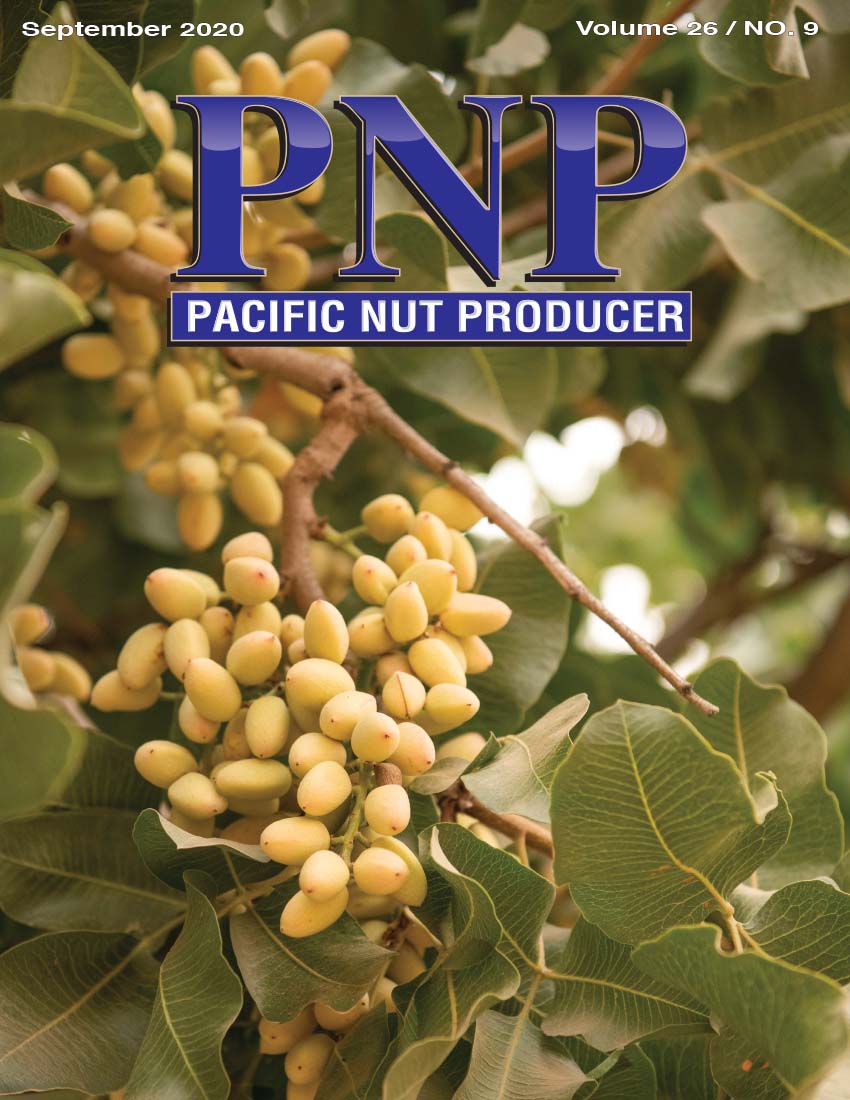
  • Pacific Nut Producer September Issue

    Pacific Nut Producer September Issue

    PNP920
    PNP920

    [btn btnlink=”https://malcolmmedia.com/order-a-back-issue/back-issue-pacific-nut-producer-magazine/” btnsize=”full” txtcolor=”#ffffff” color=”#FFF” bgcolor=”#492500″ btnnewt=”1″ nofollow=”1″]Order A Back Issue[/btn]

    [btn btnlink=”http://malcolmmedia.com/pacific-nut-producer-magazine-subscriptions/” btnsize=”full” txtcolor=”#ffffff” bgcolor=”#492500″ btnnewt=”1″ nofollow=”1″]Subscribe Free[/btn]
    [three_fifth_last]

    Contents of the September Issue:

    2020 Pistachios May Fall Short of 1 Billion Pounds
    Shipments Still Strong Compared to Last Year

    Protecting Young Trees from Herbicide Damage
    New Finding: White Latex Painting Doesn’t Help

    Retiring UCCE Tree Nut Farm Advisors
    Kurt Hembree, Allan Fulton, Rachel Elkins

    September Orchard Tasks
    Almonds, Hazelnuts, Pecans, Pistachios, Walnuts

    [/three_fifth_last]

  • Identifying Insect Pest Damage Through Harvest Sampling

    Identifying Insect Pest Damage Through Harvest Sampling

    With almond and walnut harvest underway, it is a good time to review harvest nut sampling strategy and protocols for the best estimation of field loss by common pests. It is a general understanding that the grade sheet from your processers only represents about half of what is  going on in the field. Also, the whole sum percent damage from the grade sheet does not identify which pest is causing the most economic loss. Insect population in orchards builds over time; therefore, knowing the history of damage helps to address potential risks and strategies to next  year’s pest management program.

    1. Harvest Sampling in Almonds

    Taking a minimum of 500-1000 sample nuts from an average-sized orchard, anytime between shaking and sweeping, is recommended. Infestation can vary among different sides of the tree, and between edges and interiors of the orchard. This is especially true for navel orangeworm damage. Use paper bags to collect samples from multiple spots (>10 sampling spots, if possible) within the orchard. Store the sample bags in a cold room or freezer until you  have time to do crack out. Look for damage signs associated with insect species described in the following paragraphs. Major insect pests for the damage evaluation are navel orangeworm (NOW), peach twig borer (PTB), oriental fruit moth (OFM), ants, leaffooted bugs (LFB), and brown marmorated stink bug (BMSB). BMSB is an invasive stink bug species, which is established and causing damage in almond orchards in the northern San Joaquin Valley.

    1.1. Worm Damage (NOW, PTB, OFM). NOW feed in the kernel (nutmeat) and create deep feeding tunnels. Feeding by NOW results in a significant amount of white frass, and webbings on the kernel (Fig. 1a). Since NOW and PTB often infest the same nut, NOW feeding damage often masks the PTB damage. Feeding damage signs by PTB and OFM on the nutmeat are similar (i.e., the presence of the shallow tunnels and surface grooves on the kernels, and no webbings) (Fig 1b & 1c), except OFM leaves a small amount of reddish frass on the hull, which is absent in PTB damaged nuts.

    Fig. 1. Almond kernels (nutmeat) damaged by: a) navel orangeworm, b) peach twig borer, c) Oriental fruit moth

    1.2. Ant Damage. The percentage of almond  damage by ants at harvest depends on the duration the nuts are on the ground after shaking. The longer almonds are left on the ground gives more time for ants to feed on them, results in more damage. Also, more damage is likely in orchards with drip or sprinkler irrigation compared to orchards with flood irrigation. Cover or vegetation in the orchards also favors ant activity. Nuts with tight shells or with narrower (<0.03-inch wide) hull split have less ant damage. Ants can completely hollow out the nutmeats and leave only thin skin (i.e., pellicle). Other signs of ant feeding damage include scraped or peeled pellicle and presence of “sawdust”, with the absence of webbings and frass (Fig 2a).

    1.3. Leaffooted Bug and Brown Marmorated  Stink Bug Damage. Most nuts infested by the leaffooted bug or BMSB, early in the season (mid- March to mid-May), abort and drop. A small percentage of those infested nuts do not drop but end up becoming shriveled and gummy kernels at harvest (Fig  2b).  Both  LFB  and  BMSB  feeding  after  the shell hardening can result in sunken dark spots on kernels (Fig. 2c), although the degree of damage tends to be higher with BMSB feeding than LFB. Late-season feeding (July-August) by BMSB, can cause dark stained kernels (Fig 2d). Varieties with soft shells such as Fritz, Sonora, Aldrich, Livingston, Monterey, and Peerless are more susceptible to bug damage and for a longer period during the season.

    Fig. 2. Almond kernels damaged by: a) ants, b-d) leaffooted bug and brown marmorated stink bug

    2. Harvest Sampling in Walnuts

    It is recommended to take a minimum of 1000 nuts at the harvest and evaluate for the damage caused by navel orangeworm , codling moth, ants, husk fly, and sunburn. It is important to have representative samples (>10 samples with a minimum of 100 nuts/sample) from the orchard for better estimation of the infestation. The damage signs associated with these specific insect pests and sunburn are described as follows:

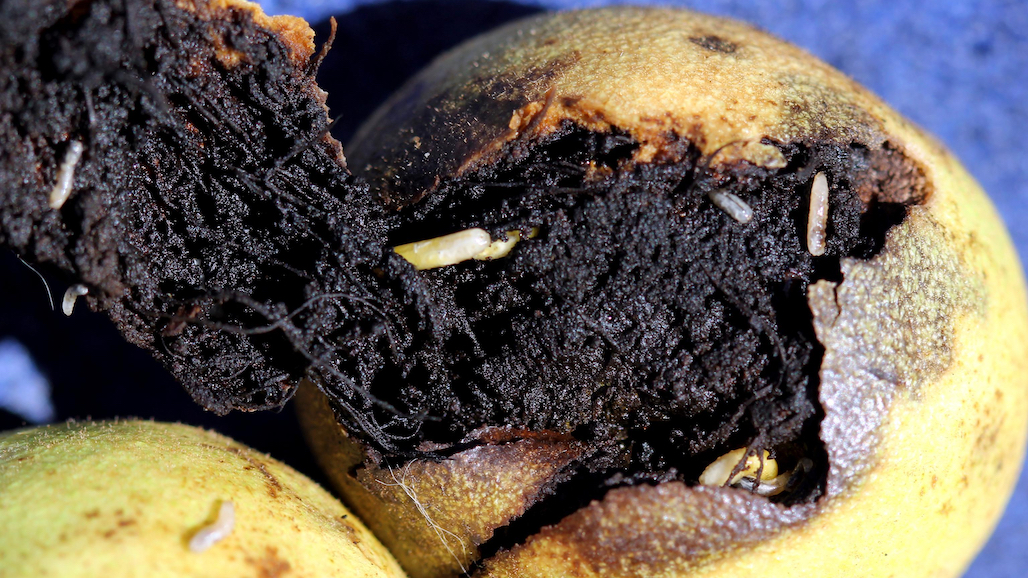
    2.1. Worm Damage (NOW, CM). Navel Orangeworm damage can be identified by the presence of a large amount of frass and webbings (Fig 3a). NOW larvae are present in groups and can bore deeply into the kernel. Heavy infestation may give a nutshell an oily appearance. In contrast to NOW, a single codling moth larva infest the nut, and has a lot cleaner damaged area inside the nut. Frass is evident, but only at the entry  point  on  the  husk;  very  little  webbing present (Fig. 3b). If larva is present, look for crescent-shaped marking just behind the head to confirm navel orangeworm.

    Fig. 3. Walnut damaged by: a) navel orangeworm, b) codling moth

    2.2. Ant Damage. Similar to almonds, nut damage by ants increase as the duration of the harvested nuts on the ground increase. Ants enter the nuts from the soft tissues (i.e., stem end) and/ or through a codling moth injury. Ant damage on nuts is identified by the presence of deep chewing channels with clean kernels (i.e., no frass, no webbings, no deep boring) (Fig 4a).

    Fig. 4. Walnut damaged by: a) ants; b) walnut husk fly; c) sunburn
    Fig. 5. (Left) Brown Apical Necrosis is shown on the left, not to be confused with Walnut Blight, shown on the right, and caused by the bacterial pathogen, Xanthomonas arboricola pv. juglandis (Figure provided by Themis Michailides).

    2.3. Husk Fly Damage. Walnut husk fly larvae (technical term: maggots) feed in groups by boring into the husk. Early season damage results in shriveling and darkening of the kernels, with  the increased potential for mold growth. Late- season infestation causes little kernel damage  (Fig. 4b), although it may stain the shell and make the husk removal process difficult.

    Fig. 6. (Right) Moldy, off color nuts which lead to economic loss due to downgrading (Figure provided by Themis Michailides).
    2.4. Sunburn Damage. Sunburn damage on nuts can be confused with husk fly damage. In the case of sunburn, nutmeat is shriveled and darkened on one side of the nut — no evidence of frass, webbings, or larval presence (Fig. 4c). Husks  from sunburn damaged nuts can be removed from the shell during processing, which is not the case for the nuts damaged by husk fly.
    — Article by Jhalendra Rijal, PhD, UCCE IPM Advisor, Stanislaus, Merced & San Joaquin Counties
  • Turning Almond Shells into Plastics & Tires

    Turning Almond Shells into Plastics & Tires


    Here is a throwback video from a previous annual convention of the Almond Alliance of California as many were disappointed by the cancellation of the annual convention this year due to COVID-19 restrictions; however, very interesting research performed by USDA exploring alternative uses for almond hulls and shells — including plastics and vehicle tires through a process of torrefaction. Watch this brief interview Bill Orts Bioproducts Research Leader at USDA and read more in Pacific Nut Producer Magazine.
    Please thank this video’s sponsor Suterra by taking this brief Survey.
  • USDA Section 32 Almond Purchase Announcement

    USDA Section 32 Almond Purchase Announcement

    The Almond Alliance of California, with support from congressional representatives, lead the advocacy efforts to have California almonds included in the United States Department of Agriculture (USDA) Section 32 food purchase program. The approval of up to $40 million of direct purchases to various domestic food nutrition assistance programs will provide much needed relief as the almond industry navigates through the impacts of COVID-19; while also providing a healthy food source to those in need.

    As grower prices continue to drop and there is an anticipated 3-billion-pound crop for 2020 it is clear that the assistance of a USDA commodity purchase came at a critical time.  As we recover from the damages of COVID-19 and market conditions the Almond Alliance will continue to advocate for and identify opportunities for the industry. We appreciate our relationship with USDA and know that the Section 32 purchase program will give more confidence to our buyers and sellers and supply those in need with a nutritious product we are extremely proud of.

    If you have any questions related to this industry alert, please contact the Almond Alliance staff at staff@almondalliance.org. The Section 32 purchase solicitation will be coming soon.

    How to Become a Certified USDA Vendor:

    The Almond Alliance facilitated a webinar in May 2020 for almond industry handler members interested in becoming an approved vendor with USDA, Agricultural Marketing Service, Commodity Procurement Program. Click here, to view the PowerPoint presentation.  Contact information for the AMS new vendor coordinator is below.  We are in the process of scheduling a How to Become a Certified USDA Vendor webinar in mid August and we will provide those details shortly.

    Selling Food to USDA: Click Here.

    Becoming a USDA Foods Vendor: Click Here.

    Contact:  Andrea Lang, New Vendor Coordinator
    AMS Commodity Procurement Program
    Communications and Stakeholder Branch
    Email: NewVendor@usda.gov      
    Phone: 202-720-4237

    Background:
    The Agricultural Marketing Service (AMS) purchases a variety of 100% domestically produced and processed commodity food products, including dairy products, fruit, vegetables, meat, poultry and seafood. AMS issues solicitations and makes purchases for over 200 different USDA Foods on an ongoing basis.

    These purchases support American agriculture by providing an outlet for surplus products and encouraging consumption of domestically-produced foods. The wholesome, high-quality products purchased by USDA—collectively called USDA Foods—are delivered to schools, food banks and households in communities across the country, and are a vital component of our nation’s food safety net.