Category: Non-Video

  • YOU KNOW WHAT HULLSPLIT MEANS: IT’S TIME TO SPRAY

    YOU KNOW WHAT HULLSPLIT MEANS: IT’S TIME TO SPRAY

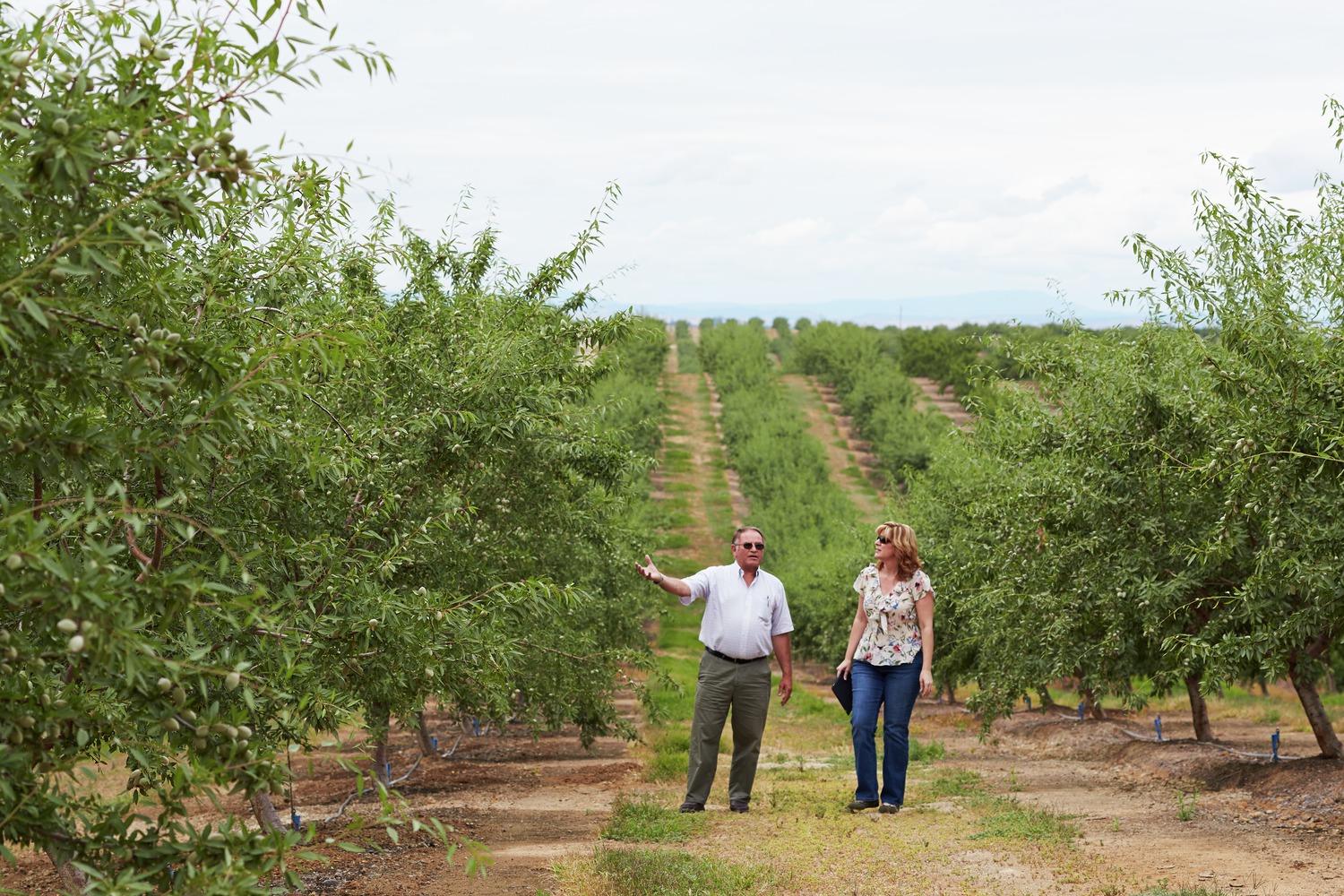
    Almond experts say there is only one proven way to know when hullsplit begins: inspect your trees from the top down, starting in the southwest corner of the canopy.
    The importance of knowing precisely when hullsplit occurs is critical because it signals the proper timing for treatments to control Navel Orangeworm (NOW). Whether growers use a ladder, climb into a pruning tower or lop off a few high branches with extension pruners, the goal is to understand what’s happening in the top of the tree, where nuts mature at a faster rate.

    Simply looking up into a tree’s canopy from the orchard floor is a sure way to miss the advent of hullsplit. When hulls split, a scent is released into the air, attracting female NOW moths to lay their eggs on the suture of the splitting hull. As the hull splits, fungal spores also can enter and spawn hull rot infections.

    Missing the beginning of hullsplit and allowing NOW or pathogens to gain a toehold in an orchard can wreck a grower’s entire season and reduce the value of the crop, costing growers in returns if nuts are rejected after harvest..

    Summer split invites unwanted guests 

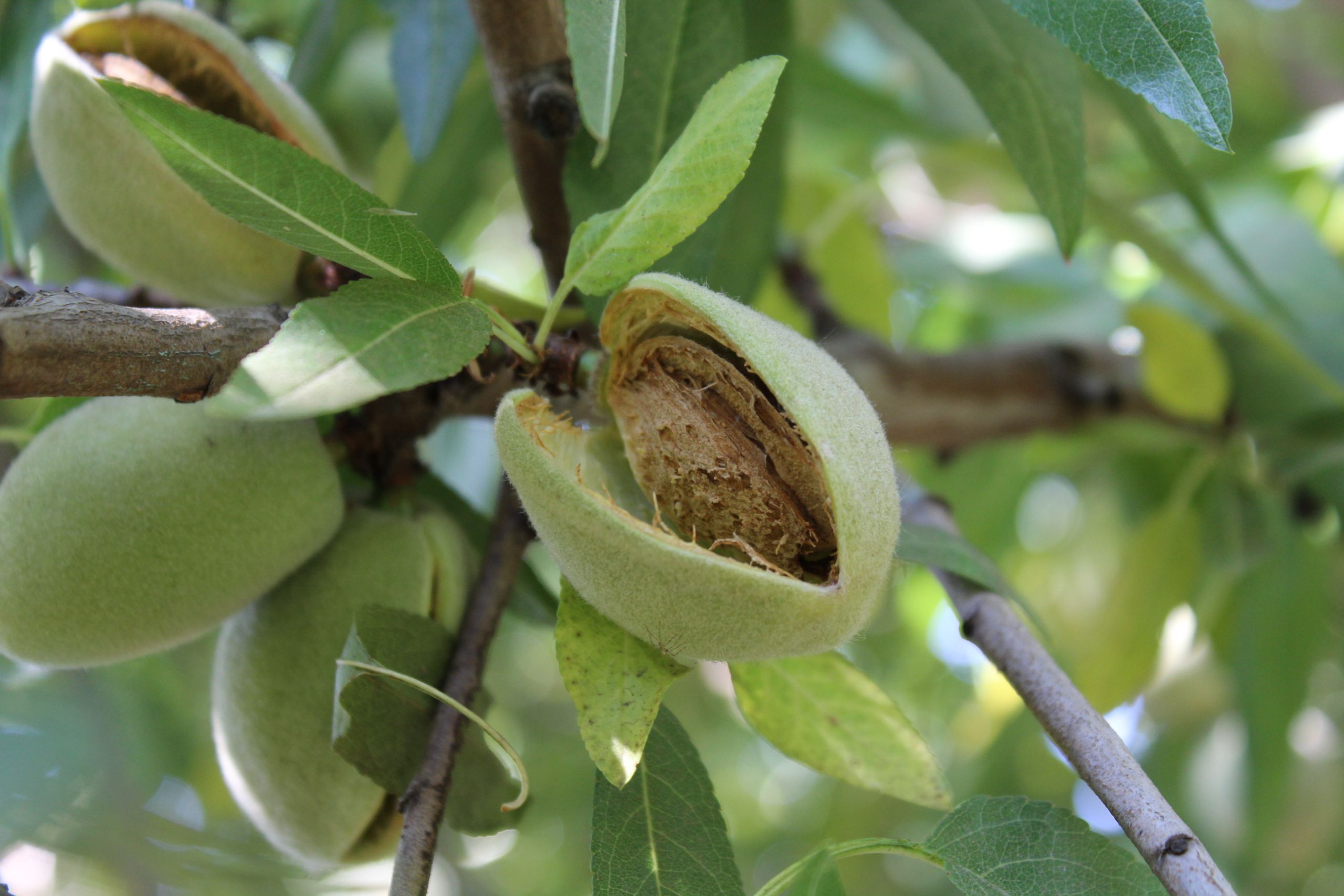
    Growers can determine if hullsplit has occurred – and if it’s time to spray – if, when they squeeze the end of the hull, the entire suture opens up, exposing the shell within.

    Almond hulls split as the fruit ripens, and timing varies based on weather conditions and variety. For instance, the variety Nonpariel typically splits in early- to- mid-July, earlier than some other varieties.

    In addition, Director of Member Services for Blue Diamond Growers Mel Machado advises growers to look for blank nuts – those without a kernel inside – as those hulls are the first to split, several days ahead of the “sound” nuts (those with a full kernel).

    “The blanks are like the warning shot, signaling the start of hullsplit,” he said. “When full hullsplit does occur, the nuts at the top of the canopy will open up first.”

    Experts say growers also should pay attention to trees on the edge of their orchards as they often ripen more quickly.

    ‘Better to be too early than late’ 

    Once growers identify hullsplit in their orchard, their next step should be to initiate timely treatment. Experts warn that waiting too long to begin spraying will cost growers, as will performing a poor spray job.

    Machado advised, “It’s better to be a bit on the early side than late” when spraying. Once hullsplit begins, he recommended the entire orchard be sprayed in five days or less. “If it takes 10 or 15 days, that’s too long,” he said.

    Planning ahead – especially for smaller growers who rely on custom applicators – is essential.

    “Watch your fields closely and be in contact with your operator early on,” Machado advised.

    In larger orchards, Machado advises growers consider starting with aerial sprays, recognizing that ground-based sprays don’t always provide complete coverage at the tops of the trees.

    “We’re seeing growers effectively incorporate aerial applications into their treatment programs for the first application in order to cover the acreage in a timely manner,” Machado said.

    The best time to spray is early in the morning or at dusk.

    “Do not spray in the heat of the day – your application will evaporate into thin air and you won’t get the material where it needs to go. That’s a waste of time and money, as you’re not only wasting spray material but you also won’t achieve the coverage necessary to combat crop damage,” Machado said.

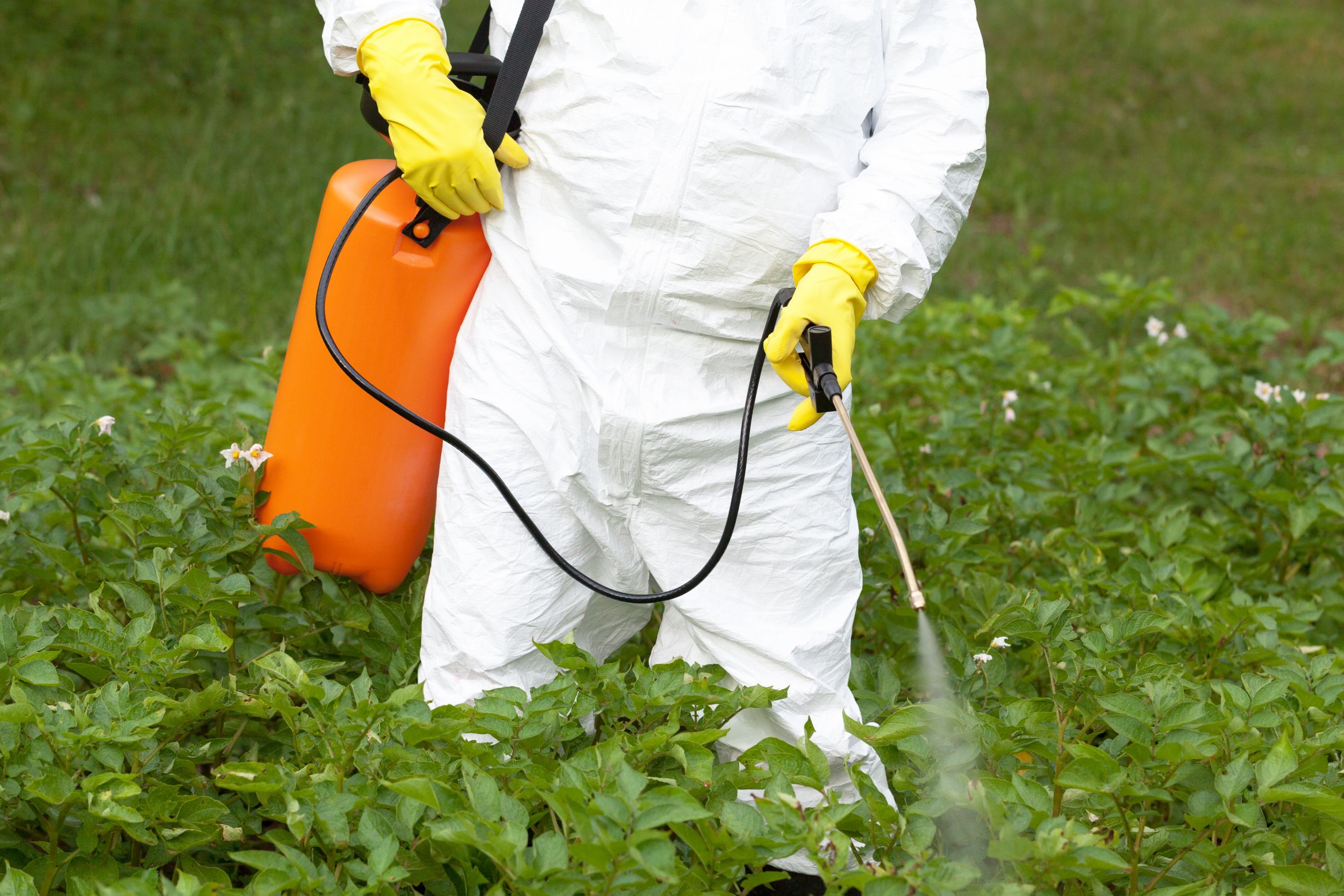
    Finally, growers should ensure their ground-based sprayers are properly calibrated, the nozzles are unplugged and that air flow isn’t restricted. Once it’s time to spray, growers should remind applicators to drive no more than two mph through orchards to ensure optimum coverage and to drive down each row to ensure the trees are equally covered.

    “There are some guys who spray every other row, and that’s not a good idea,” Machado said. “There are two sides to the tree; you need to spray both of them.”

    Machado reinforced that hullsplit sprays offer the final chance to manage NOW populations before harvest. Still, these applications are only part of a coordinated, year-round, integrated pest management plan to combat NOW that also must include winter sanitation and mating disruption, both of which are performed earlier in the crop year. — By the Almond Board of California
  • Supreme Court Ruling Expands Reach of Clean Water Act NPDES Permitting

    Supreme Court Ruling Expands Reach of Clean Water Act NPDES Permitting

    In April, the United States Supreme Court issued a landmark ruling clarifying the reach of the federal Clean Water Act.  The Court decided that a discharge of pollutants from a point source to groundwater is subject to regulation under the act, if the discharge is the “functional equivalent” of a discharge to waters of the United States (which include rivers, streams, creeks, lakes, and other surface waters). 

    This ruling has the potential to both (1) expand the range of discharges, including from agricultural operations, that are required to obtain a National Pollutant Discharge Elimination System (NPDES) permit, and (2) increase the risk of citizen suit litigation alleging that operations discharging to groundwater have failed to comply with the Clean Water Act.

    The County of Maui Decision: Background

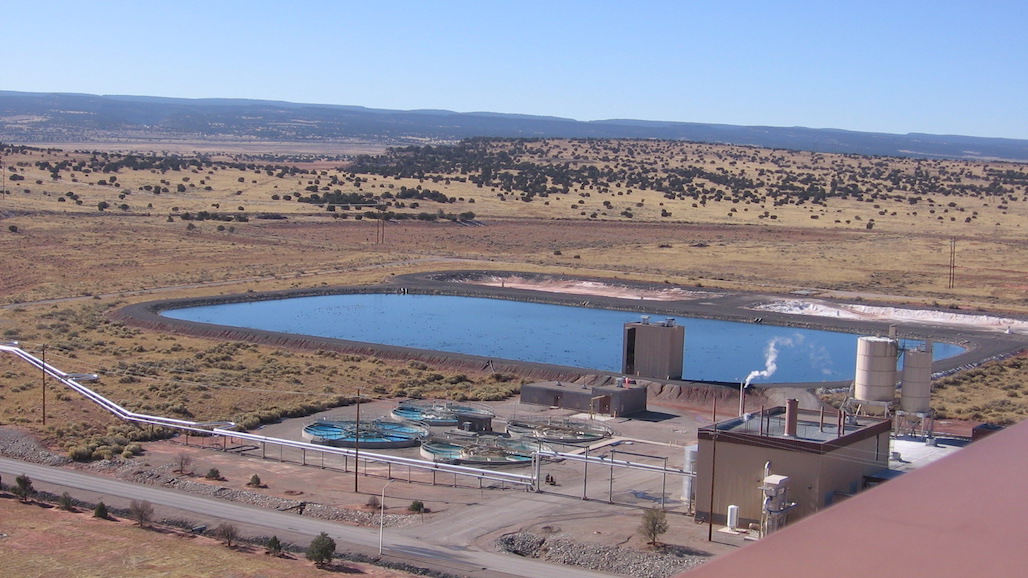
    The case decided by the Court, County of Maui, Hawaii v. Hawaii Wildlife Fund, concerned a wastewater reclamation facility operated by Maui County, which pumps approximately four million gallons of treated wastewater effluent per day into groundwater. The effluent travels through groundwater to the Pacific Ocean. 

    In 2012, environmental groups filed a citizen suit under the Clean Water Act, arguing that even though the wastewater was discharged to groundwater, the county was violating the act because it was discharging a pollutant from a point source (the wastewater facility) to waters of the United States (which include “territorial seas,” like the ocean waters around Hawaii) without an NPDES permit. The environmental groups prevailed in the Ninth Circuit Court of Appeals, and the case was then heard by the Supreme Court. 

    The Court’s New Rule: The “Functional Equivalent” of a Direct Discharge Requires an NPDES Permit

    The Supreme Court reversed the environmental group’s victory and sent the case back to the lower courts to evaluate the key issues under a new standard set by the Court: the Clean Water Act requires a permit when there is a direct discharge from a point source into waters of the United States or “when there is the functional equivalent of  a direct discharge.”

    The Court noted that the functional equivalence evaluation “depends upon how similar to (or different from) the particular discharge is to a direct discharge.” Beyond that, the Court declined to provide more specificity, asserting “there are too many potentially relevant factors applicable to factually different cases,” which could be addressed in future court decisions and EPA and state administrative guidance. However, it did list “some” of the factors that “may prove relevant”:

    1)    transit time;

    2)    distance traveled;

    3)    nature of the material through which the pollutant travels;

    4)    extent to which the pollutant is diluted or chemically changed as it travels;

    5)    amount of pollutant entering waters of the United States relative to the amount that leaves the point source;

    6)    manner by or area in which the pollutant enters the waters of the United States; and

    7)    degree to which the pollutant has maintained its specific identity at that point of entry.

    Importantly, the Court stated: “Time and distance will be the most important factors in most cases, but not necessarily every case.”

    Finally, it cautioned that implementation of its rule “should not create serious risks either of undermining state regulation of groundwater or of creating loopholes that undermine the statute’s basic federal regulatory objectives.”

    The Court’s Ruling Will Impact the Regulated Community, Including Some Agricultural Operations

    Although storm water runoff and return flows from irrigated agriculture may travel through groundwater to waters of the United States, the County of Maui holding did not alter the Clean Water Act’s exemption of these from the definition of a “point source.” An NPDES permit is still not required for such flows. 

    However, states have the authority to regulate nonpoint sources like agricultural runoff and may choose to modify the scope of their permitting requirements in light of County of Maui and subsequent developments in Clean Water Act regulation.  

    Moreover, to the extent that any agricultural operations involve mechanical processes that generate and discharge wastewater to the ground (and ultimately to groundwater), there is now an increased risk that such discharges could be regulated under the Clean Water Act and require an NPDES permit. The ruling may also impact operations dealing with accidental releases of contaminants to groundwater, as well as owners/operators of sites with legacy environmental contamination. 

    Right now, it is unclear to what extent the Supreme Court’s new rule is a “game-changer” in terms of how many dischargers to groundwater will be brought into the NPDES permitting regime. As with other aspects of Clean Water Act regulation—such as section 404 dredge-and-fill permitting—implementation by states and federal courts will vary broadly, until the Supreme Court revisits the issue at some future (likely, much later) date. Until then, dischargers will need to track the judicial decisions and administrative guidance in their jurisdiction to ensure they remain in compliance. 

    County of Maui may also spur an increase in citizen suit litigation by private parties and environmental groups challenging a discharger’s compliance with NPDES permitting requirements. Such litigation could claim that an operation’s discharges to groundwater trigger the requirement for NPDES permitting, even if regulators have not yet taken such a position. If successful, such suits could result in courts assessing penalties (payable to the federal government) and/or payment of the citizen enforcer’s attorney’s fees.

    In light of the evolving regulatory and legal framework and related risks, agricultural growers and producers should consider proactively assessing their exposure to a claim—by either a regulator or citizen enforcer—that their operations require an NPDES permit. If the exposure is significant, they may consider options to mitigate regulatory and liability risks such as preemptively submitting an NPDES permit application or requesting a permitting determination from the relevant implementing authority.

    — By Don Sobelman, Sarah Bell, and John Ugai

    Donald Sobelman and Sarah Bell are environmental law partners and John Ugai is an environmental law associate at Farella Braun + Martel, a law firm based in San Francisco.

  • USDA Announces Details of Direct Assistance to Farmers

    USDA Announces Details of Direct Assistance to Farmers

    U.S. Secretary of Agriculture Sonny Perdue today announced details of the Coronavirus Food Assistance Program (CFAP), which will provide up to $16 billion in direct payments to deliver relief to America’s farmers and ranchers impacted by the coronavirus pandemic. In addition to this direct support to farmers and ranchers, USDA’s Farmers to Families Food Box program is partnering with regional and local distributors, whose workforces have been significantly impacted by the closure of many restaurants, hotels, and other food service entities, to purchase $3 billion in fresh produce, dairy, and meat and deliver boxes to Americans in need.

    “America’s farming community is facing an unprecedented situation as our nation tackles the coronavirus. President Trump has authorized USDA to ensure our patriotic farmers, ranchers, and producers are supported and we are moving quickly to open applications to get payments out the door and into the pockets of farmers,” said Secretary Perdue. “These payments will help keep farmers afloat while market demand returns as our nation reopens and recovers. America’s farmers are resilient and will get through this challenge just like they always do with faith, hard work, and determination.”

    Beginning May 26, the U.S. Department of Agriculture (USDA), through the Farm Service Agency (FSA), will be accepting applications from agricultural producers who have suffered losses.

    Background:

    CFAP provides vital financial assistance to producers of agricultural commodities who have suffered a five-percent-or-greater price decline due to COVID-19 and face additional significant marketing costs as a result of lower demand, surplus production, and disruptions to shipping patterns and the orderly marketing of commodities.

    Farmers and ranchers will receive direct support, drawn from two possible funding sources. The first source of funding is $9.5 billion in appropriated funding provided in the Coronavirus Aid, Relief, and Economic Stability (CARES) Act to compensate farmers for losses due to price declines that occurred between mid-January 2020, and mid-April 2020 and provides support for specialty crops for product that had been shipped from the farm between the same time period but subsequently spoiled due to loss of marketing channels. The second funding source uses the Commodity Credit Corporation Charter Act to compensate producers for $6.5 billion in losses due to on-going market disruptions.

    Non-Specialty Crops and Wool

    Non-specialty crops eligible for CFAP payments include malting barley, canola, corn, upland cotton, millet, oats, soybeans, sorghum, sunflowers, durum wheat, and hard red spring wheat. Wool is also eligible. Producers will be paid based on inventory subject to price risk held as of January 15, 2020. A payment will be made based 50 percent of a producer’s 2019 total production or the 2019 inventory as of January 15, 2020, whichever is smaller, multiplied by the commodity’s applicable payment rates.

    Livestock

    Livestock eligible for CFAP include cattle, lambs, yearlings and hogs. The total payment will be calculated using the sum of the producer’s number of livestock sold between January 15 and April 15, 2020, multiplied by the payment rates per head, and the highest inventory number of livestock between April 16 and May 14, 2020, multiplied by the payment rate per head.

    Dairy

    For dairy, the total payment will be calculated based on a producer’s certification of milk production for the first quarter of calendar year 2020 multiplied by a national price decline during the same quarter. The second part of the payment is based a national adjustment to each producer’s production in the first quarter.

    Specialty Crops

    For eligible specialty crops, the total payment will be based on the volume of production sold between January 15 and April 15, 2020; the volume of production shipped, but unpaid; and the number of acres for which harvested production did not leave the farm or mature product destroyed or not harvested during that same time period, and which have not and will not be sold. Specialty crops include, but are not limited to, almonds, beans, broccoli, sweet corn, lemons, iceberg lettuce, spinach, squash, strawberries and tomatoes. A full list of eligible crops can be found on farmers.gov/cfap. Additional crops may be deemed eligible at a later date.

    Eligibility

    There is a payment limitation of $250,000 per person or entity for all commodities combined. Applicants who are corporations, limited liability companies or limited partnerships may qualify for additional payment limits where members actively provide personal labor or personal management for the farming operation. Producers will also have to certify they meet the Adjusted Gross Income limitation of $900,000 unless at least 75 percent or more of their income is derived from farming, ranching or forestry-related activities. Producers must also be in compliance with Highly Erodible Land and Wetland Conservation provisions.

    Applying for Assistance

    Producers can apply for assistance beginning on May 26, 2020. Additional information and application forms can be found at farmers.gov/cfap. Producers of all eligible commodities will apply through their local FSA office. Documentation to support the producer’s application and certification may be requested. FSA has streamlined the signup process to not require an acreage report at the time of application and a USDA farm number may not be immediately needed. Applications will be accepted through August 28, 2020.

    Payment Structure

    To ensure the availability of funding throughout the application period, producers will receive 80 percent of their maximum total payment upon approval of the application. The remaining portion of the payment, not to exceed the payment limit, will be paid at a later date as funds remain available.

    USDA Service Centers are open for business by phone appointment only, and field work will continue with appropriate social distancing. While program delivery staff will continue to come into the office, they will be working with producers by phone and using online tools whenever possible. All Service Center visitors wishing to conduct business with the FSA, Natural Resources Conservation Service, or any other Service Center agency are required to call their Service Center to schedule a phone appointment. More information can be found at farmers.gov/coronavirus.

  • PPE in Short Supply for Farm Work During the COVID-19 Crisis

    PPE in Short Supply for Farm Work During the COVID-19 Crisis

    While most Californians are staying home to slow the spread of the novel coronavirus, California farmers, farmworkers and other agricultural professionals are out in the fields and packing houses working to produce food. With increased demand for personal protective equipment, or PPE, to protect against COVID-19, these essential workers are facing shortages. Agricultural commissioners in 28 counties are hearing from farmers who are having trouble getting PPE for their employees and farmers in another 11 counties who are worried about running out of PPE in the next month or two, according to a California Department of Pesticide Regulation survey.

    Gloves, N95 respirators, coveralls and other gear that workers wear to protect themselves from COVID-19, pesticides, dust and other health hazards are in short supply as priority is given to health care workers during the pandemic.

    To reduce the spread of COVID-19, workers may wear homemade face coverings, but for applying pesticides, they must wear respirators specified on the pesticide product label, said Whitney Brim-DeForest, UC Cooperative Extension rice advisor.

    Pesticide applicators may use gear that is more protective than required by the product label and regulations. 

    “Although this could change in the days ahead, half-mask and full-mask respirators are more available than disposable N95 respirators for now,” said Lisa Blecker, coordinator for the UC Pesticide Safety Education Program.

    Before the pandemic, 10% of N95 respirators from 3M went to health care, but that number is now 90%, the company said in a letter to distributors. This has led to significant backorders of PPE supplies for distributors.

    Carl Atwell, president of Gempler’s, an online distributor of worker supplies, said that before the crisis, normal lead times for PPE was up to 10 days. He estimated disposable respirators will become available in the fall and other PPE supplies in August.

    In the meantime, there is alternative PPE that agricultural professionals can use during the shortage.

    Atwell suggests looking for lesser known brands of PPE as opposed to the first tier of choice: “It’s sort of like searching for Purell hand sanitizer. Purell brand might be out of stock, but can you find a different disinfectant?”

    On Gempler’s website, the more recognizable Tyvek coverall from Dupont is sold out, however disposable protective clothing is available from other brands. Reusable chemical-resistant clothing is also available as opposed to their disposable counterparts. Supplies in high demand are reusable and disposable nitrile gloves, protective clothing, disposable respirators and certain protective eyewear, such as goggles and face shields.

    For workers who will be applying pesticides, Blecker and Brim-DeForest offered some guidelines on how to meet PPE requirements as the shortage continues.
    General PPE requirements: “Remember, the label is the law,” said Brim-DeForest. “PPE requirements for agriculture are not being loosened.” The UCCE advisor recommends purchasing only what you need for the season and choosing reusable PPE whenever possible. Growers who have excess supplies of PPE can coordinate with their county agricultural commissioner or UCCE advisor to help other producers in their area.

    Respirators: If you can’t find the respirator required on the label, Blecker said, “Use an alternative, more-protective respirator. For example, if an N95 is required, you can use a half-mask with N95 particulate filters; these can be stand-alone filters or ones that attach to an organic vapor cartridge. You could also use a different pesticide that doesn’t require a respirator. Consult with your PCA (pest control adviser) for options.”

    Gloves: Chemical-resistant gloves, usually 14 mil or more in thickness are required for most California pesticide applications and should be worn by mixers, handlers and applicators. If nitrile gloves are not available, viton and laminate gloves are universal chemical-resistant materials for most pesticide labels. If the glove material is specified on the label, that instruction must be followed.

    “Disposable gloves less than 14 mil can be worn, but not for more than 15 minutes at a time,” Blecker said. “Farmers should also note that thinner gloves cannot be layered on top of one another.”

    Coveralls: Coveralls should be worn when required by the pesticide label or when the signal word is “WARNING” or “DANGER,” or when applying by backpack or airblast. “Coveralls can be made out of high-density polyethylene fibers (Tyvek and other brands), which are disposable, or cotton, which are reusable,” Brim-DeForest said. “If reusable coveralls are worn, the employer must ensure employees are provided clean coveralls.”

    Goggles/face shields: Face shields are required for mixing and loading pesticides only if it’s stated on the label. “If a face shield is unavailable, a full-face respirator can be used,” Blecker said. “Goggles or protective eyewear should always be worn in California when handling pesticides, regardless of what the label says. The face shield, goggles or safety glasses must provide front, side and brow protection and meet the American National Standards Institute Z87.1 standard for impact resistance.

    The UC Integrated Pest Management Program also covers these topics in their pesticide safety webinar series at http://ipm.ucanr.edu/IPMPROJECT/workshops.html.

    For more information about PPE, contact your county agricultural commissioner or see the California Department of Pesticide Regulation’s posters at https://www.cdpr.ca.gov/docs/whs/pdf/gloves_for_pesticide_handling.pdfand https://www.cdpr.ca.gov/docs/whs/pdf/n95_alternatives_for_pesticide_handling.pdf. — By Katrina Hunter, UC Integrated Pest Management Program pesticide safety writer

  • USDA-NASS Predicts Third Straight Record-Breaking Almond Crop

    USDA-NASS Predicts Third Straight Record-Breaking Almond Crop

    The U.S. Department of Agriculture (USDA) National Agricultural Statistics Service (NASS) is predicting a record California almond crop for the third straight year. The USDA-NASS 2020 California Almond Subjective Forecast estimates California almond orchards will produce 3.0 billion pounds of nuts this year, up 17.6 percent from last year’s 2.55 billion-pound crop. Forecasted yield is expected to reach 2,380 pounds per acre, 10.2 percent greater than the 2019 yield of 2,160 per acre.

    This forecast comes about three weeks after USDA-NASS released the 2019 California Almond Acreage Report, which estimated total almond acreage for 2019 up 10 percent from 2018 at 1.53 million acres. Bearing acres – orchards mature enough to produce a crop – were reported at 1.18 million acres, up 8 percent from the previous year. USDA-NASS also estimated preliminary bearing acreage for 2020 at 1.26 million acres.

    “Almond acreage and production continue to increase as California almond growers further invest in precision agriculture and responsible best practices,” said Almond Board of California (ABC) President and CEO Richard Waycott. “Through the industry’s advancements in water use efficiency to environmentally friendly pest management, zero waste efforts in the orchard and beyond, almond growers are committed to achieving our Almond Orchard 2025 Goals and the realization of the California almond orchard of the future.”

    The first of two production reports for the upcoming crop year, the Subjective Forecast is based on opinions obtained from randomly selected almond growers located throughout the state via a phone survey, this year conducted from April 20 to May 6. USDA-NASS asks individual growers to indicate their total almond yield per acre from last year and expected yield for the current year based on field observations. The sample of growers interviewed is grouped by size of operation, and different individuals are interviewed each year to ensure grower representation throughout the Central Valley. USDA-NASS then combines the yield estimates obtained from each grower and extrapolates the information to arrive at the numbers reported in the Subjective Forecast.

    This July, USDA-NASS will release its second production estimate, the 2020 California Almond Objective Report. While the Subjective Forecast provides an initial estimate of the 2020/2021 crop, the Objective Report will provide an estimate based on actual almond counts that uses a more statistically rigorous methodology to determine yield. In Dec. 2019, ABC’s Board of Directors approved a strategic approach to further improve the accuracy of USDA-NASS’s reporting. From 2020 on, the Objective Report will include measurements from 1,000 target orchards throughout the state (an increase of 150 samples from 2019) and provide nut counts on not one but two branches per tree. The Objective Report will also provide the weight, size and grade of the average almond sample broken down by growing region – no longer growing district – and variety.

    The 2020 California Almond Objective Report will be released on Tuesday, July 7, at 12:00 p.m. PT. USDA-NASS conducts the Objective Report, the Subjective Forecast and the Acreage Report to provide the California almond industry with the data needed to make informed business decisions, and thanks all farm operators, owners and management entities for their time in providing the information necessary to create these reports. — Article & Photo Courtesy of Almond Board of California

  • Minimum Hourly Ag Wage Rates are Highest in Washington & Oregon

    Minimum Hourly Ag Wage Rates are Highest in Washington & Oregon

    The H-2A Temporary Agricultural Program provides a legal means to bring in foreign-born workers into the United States on a short-term basis. Workers employed on an H-2A visa may remain in the U.S. for up to 10 months at a time. Employers must demonstrate and the U.S. Department of Labor must certify that efforts to recruit U.S. workers were not successful. Employers must also pay a State-specific minimum wage, known as the Adverse Effect Wage Rate (AEWR). The rate is set at the region’s average farm wage to prevent H-2A employment from negatively affecting domestic farmworkers by lowering their wages. For fiscal 2019, this minimum hourly wage was highest in Oregon and Washington at $15.03, followed by Hawaii at $14.73. The wage rate was also high in the Dakotas, Nebraska, and Kansas at $14.38. By comparison, Alabama, Georgia, and South Carolina had the lowest minimum wages at $11.13. This chart appears in the Economic Research Service topic page for Farm Labor, updated January 2020.

  • Blue Diamond Celebrates 110-Year Anniversary with Key Expansions

    Blue Diamond Celebrates 110-Year Anniversary with Key Expansions

    Blue Diamond Growers, a nonprofit grower-owned cooperative and the world’s leading processor and marketer of almonds, marked its 110-year anniversary today with announcements about the completion of two key infrastructure expansions.

    The company also was recently recognized by Boston Consulting Group & IRI as one of the Top 10 Fastest Growing Mid-Size CPGs for the fourth consecutive year.

    As part of Blue Diamond’s long-range strategic vision, two major expansions at the co-op’s facilities in the heart of California’s Central Valley almond growing region, have been completed or are nearing completion this month. Groundbreaking ceremonies for both projects were held last year. The first expansion is a 52,000 square foot addition to the existing 200,000 square foot Turlock manufacturing plant that first opened in 2013 and sits on 88 acres. In 2014, Food Engineering Magazine recognized the Turlock facility as Plant of the Year for innovation, manufacturing excellence and sustainable operations. Construction completed on the new building last week expands Blue Diamond’s value-added almond processing capabilities with an automated factory that features state-of-the art handling, processing and packaging equipment. This expansion also provides space for a future manufacturing line to support current business or new innovations.


    Newly expanded Turlock facility

    The second expansion is the new Bulk 8 Warehouse at the Salida facility that originally opened as an almond receiving station in 1969. Today the 675,000 square foot facility sits on 44 acres and includes a retail Nut & Gift Shop. The new 58,000 square foot bulk storage facility is on schedule to be completed by the end of May providing an additional 50 million pounds of in-house bulk almond storage capacity in time to receive the 2020 almond harvest. The 65-foot-tall building includes advanced design with an automated gravity fed spiral conveyance system that improves grower delivery efficiency and reduces damage to the almonds.


    New Bulk 8 warehouse in Salida

    “It is particularly meaningful for Blue Diamond to be able to commemorate our Founders Day today by not only recognizing our humble beginnings 110 years ago, but also celebrating two key growth milestones that help secure our future,” said Mark Jansen, President and CEO for Blue Diamond Growers. “I couldn’t be more proud that, despite the unprecedented challenges businesses around the world have faced over the past two months, our incredible team has been able to sustain operations as an essential food supplier, while completing these critical expansion projects ahead of schedule to meet customer needs.“

    “When we opened each of Blue Diamond’s three main facilities, we made a commitment to invest in our infrastructure, in our workforce, and in the individual communities where our employees and almond growers live and work. Throughout the year, we support local nonprofits through our community grants, sponsorships, employee volunteerism and product donations. During yesterday’s global Giving Tuesday Now effort I’m thrilled to report that Blue Diamond, along with partners Union Pacific and Sun-Maid Growers of California, committed to a donation match of $50,000 to help support three food banks in northern and central California that are struggling to meet significant demand from local families in need.” 

    Blue Diamond Growers was founded by a handful of California almond growers on May 6, 1910.  Originally known as the California Almond Growers Exchange, the grower-owned cooperative quickly grew into the world leader in growing, processing and marketing almonds and almond ingredients. In 1914, the Exchange opened a new receiving and packaging plant in Sacramento, California, that eventually became the largest almond processing plant in the world. Today, the Sacramento plant sits on 90 acres, covering 33 city blocks and serves at the cooperative’s headquarters. In 1915, the co-op adopted the symbol of a blue diamond – the finest grade of diamond in the world – to signify its commitment to quality and in 1980, the cooperative’s name was officially changed to Blue Diamond Growers.

    California produces 80% of the world’s almond supply and almonds are the state’s largest food export item. Blue Diamond Growers’ 3,000 members account for roughly half of the state’s almond producers.


  • COVID-19 Impacts on Food Supply Chain (May 12 Zoom Call)

    COVID-19 Impacts on Food Supply Chain (May 12 Zoom Call)

    Why is milk being dumped and produce left to rot in fields while grocery store shelves go empty during the COVID-19 pandemic? Why are grocery stores running out of meat, and eggs becoming so expensive?

    The head of California’s Department of Food and Agriculture, researchers from the University of California, Davis, and food purveyors will tackle these and other questions in an online panel discussion at 5 p.m. Tuesday, May 12.

    UC Davis invites the public to attend “Food Shortages in a Pandemic” over the web through Zoom conferencing. To do so, register online at least 48 hours in advance.

    The 90-minute event, which will include a question-and-answer period with the Zoom audience, will feature:

    • Karen Ross, secretary of the California Department of Food and Agriculture since 2011
    • Dan Sumner, director of the UC Agricultural Issues Center, professor of agricultural and resource economics at UC Davis, and former assistant secretary for economics at the U.S. Department of Agriculture
    • Bu Nygrens, co-owner and director of purchasing at Veritable Vegetable of San Francisco, which distributes organic produce from more than 200 small and mid-size growers to restaurants, markets and co-ops across five states
    • Chelsea Minor, corporate director of public affairs for Raley’s Supermarkets of West Sacramento, a regional grocery chain in Northern California and Nevada

    Moderating the event will be Catherine Brinkley, who, as an assistant professor in the Department of Human Ecology at UC Davis, studies the architecture of food supply networks. 

    The panel will discuss how the food supply chain works, why the COVID-19 pandemic has been so disruptive, how distributors and supply chains are adapting to serve restaurants and grocery stores, and whether changes can or should be made to make food systems more resilient.

    The lecture is the third in the Savor series, which explores some of the biggest food and beverage topics being studied today at UC Davis — a world leader in the study of agriculture. The series is presented by the Robert Mondavi Institute for Wine and Food Science and the UC Davis Library.

    – By Jessica Nusbaum and Julia Ann Easley, UC Davis

  • NMSU Determining Combination of Native Flowers to Attract Different Pollinators

    NMSU Determining Combination of Native Flowers to Attract Different Pollinators

    Pollinator insects play a critical role in the agricultural world. Without their natural transference of pollen from plant to plant while obtaining nutrients, many types of vegetables and fruit for human consumption would not exist.
     
    More than 80 percent of plants are pollinated by animals, mainly insects. In recent years, there has been a decline in pollinator insects for many reasons, one being the decline or loss of habitat.

    This is one area people can help support pollinator populations, by growing native flowering plants from which the pollinators obtain protein and lipids from the pollen, and carbohydrates and amino acids from the nectar.

    Researchers at New Mexico State University’s College of Agricultural, Consumer and Environmental Sciences are studying the activity of insects, both pollinator and beneficial, around native plants to determine what mix of flowering cultivars will attract the different insect types.

    “We have evaluated 22 different perennial native plants in seven different mixes, or combinations,” said Miranda Kersten, senior program specialist at NMSU’s Agricultural Science Center at Los Lunas, of the study that began in 2017. “For the last two summers, we have done visual observations where we record the number of different insect groups visiting the flower, and taken vacuum samples from each of the plots to see which species are attracted to the plants.”

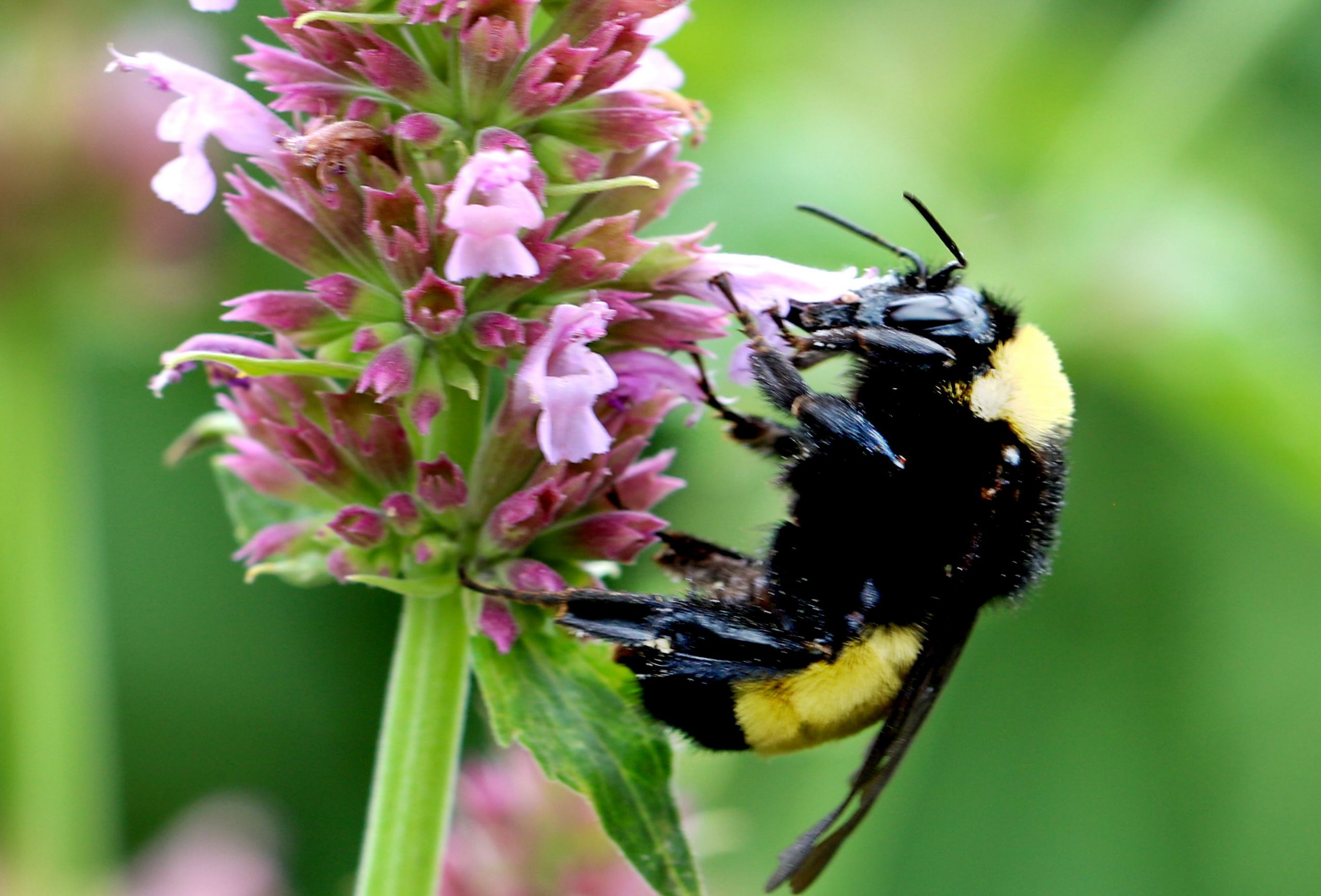
    From the current study, which is supported by a U.S. Department of Agriculture National Institute of Food and Agriculture Extension Implementation Program grant, the researchers can suggest plants to attract bumble bees, large and small native bees, and natural enemies of pests such as the ladybeetles, syrphid flies, and large and small wasps.

    “The flowers range in color from various shades of purple and pink, to orange, yellow and white,” Kersten said. “We did not use red flowers because insects don’t see that color well and are less attracted to the blossoms.”

    When planning a pollinator garden, it is important to include plants that flower at different times of the season. 

    “All during the season, bees are busy collecting nectar and pollen, depending if they are honey bees or native bees, to feed their babies during the winter,” said Amanda Skidmore, NMSU Cooperative Extension Service small farm integrated pest management specialist. 

    “Spring blooms help the early emerging pollinators,” she said. “Blooms throughout the summer that are different colors and shapes help attract the insects while they are building their nest. Fall blooms help them store up an energy source for their babies’ development.”

    Bees are considered to be the most efficient pollinator. They are the only pollinator that feeds on pollen/nectar as larvae and adults.

    “Some of our native bees are generalists, visiting many types of flowers, while others are specialists, visiting a specific species,” Skidmore said. “Bumblebees are generalists that are active from early spring to late fall, while different species of native bees are active in different times of the year.”

    A little-known fact is that New Mexico has more than 1,000 unique native bee species – the third-highest number in the nation behind California and Arizona.

    During the project, the researchers learned that Riddell’s ragwort was the latest-blooming flower of the plants included in the study and it was highly visited by bees and wasps in the fall. Plants with extra-floral nectaries, such as Rocky Mountain penstemon, can provide additional resources through the growing season and benefit a variety of insects.

    To learn more about identifying these beneficial insect groups, visit https://aces.nmsu.edu/pubs/_h/H172/welcome.html for the Extension publication “Backyard Beneficial Insects of New Mexico.” — By Jane Moorman, New Mexico State University
  • Tree & Vine Growers Eligible for Ongoing Disaster Assistance for Drought, Wildfire, Etc.

    Tree & Vine Growers Eligible for Ongoing Disaster Assistance for Drought, Wildfire, Etc.

    The U.S. Department of Agriculture (USDA) has started making payments through the Wildfire and Hurricane Indemnity Program – Plus (WHIP+) to agricultural producers who suffered eligible losses because of drought or excess moisture in 2018 and 2019. Signup for these causes of loss opened March 23, and producers who suffered losses from drought (in counties designated D3 or above), excess moisture, hurricanes, floods, tornadoes, typhoons, volcanic activity, snowstorms or wildfires can still apply for assistance through WHIP+. 

    “To date, FSA has received more than 33,000 WHIP+ applications,” said Richard Fordyce, Administrator of USDA’s Farm Service Agency (FSA). “We want to remind producers that we are still accepting applications for WHIP+, and we encourage producers to call our offices for next steps on how to apply.”

    To be eligible for WHIP+, producers must have suffered losses of certain crops, trees, bushes or vines in counties with a Presidential Emergency Disaster Declaration or a Secretarial Disaster Designation (primary counties only) for qualifying natural disaster events that occurred in calendar years 2018 or 2019. Also, losses located in a county not designated by the Secretary as a primary county may be eligible if a producer provides documentation showing that the loss was due to a qualifying natural disaster event.

    For losses due to drought, a producer is eligible if any area of the county in which the loss occurred was rated D3, or extreme drought, or higher on the U.S. Drought Monitor during calendar years 2018 or 2019. Producers who suffered losses should contact their FSA county office.

    In addition to the recently added eligible losses of drought and excess moisture, FSA will implement a WHIP+ provision for crop quality loss that resulted in price deductions or penalties when marketing crops damaged by eligible disaster events. To ensure an effective program for all impacted farmers, the Agency is currently gathering information on the extent of quality loss from producers and stakeholder organizations.

    USDA Service Centers, including FSA county offices, are open for business by phone only, and field work will continue with appropriate social distancing. While program delivery staff will continue to come into the office, they will be working with producers by phone and using online tools whenever possible. All Service Center visitors wishing to conduct business with the FSA, Natural Resources Conservation Service or any other Service Center agency are required to call their Service Center to schedule a phone appointment. More information on Service Centers can be found at farmers.gov/coronavirus, and more information on WHIP+ can be found at Remind.