Category: Non-Video

  • Japan’s Reopening Signals Export Opportunities, with Tree Nuts on the Rise

    Japan’s Reopening Signals Export Opportunities, with Tree Nuts on the Rise

    The sun is rising again for increased U.S. export trade opportunities in “Land of the Rising Sun”.  Japan has a well-developed food retail market that demands high-quality, high-value agricultural and food products. Despite reduced economic activity during the COVID-19 pandemic, trade data show that agricultural imports have remained resilient (with growth opportunities for California tree nuts in particular). As Japan’s top supplier of agricultural products, the United States is a stable and reliable partner with a long-standing relationship. Although competition in Japan has intensified in recent years, U.S. suppliers can find many opportunities to market consumer-oriented products that follow Japanese retail trends. The U.S. Department of Agriculture’s (USDA) Foreign Agricultural Service (FAS) maintains a website to help U.S. food and beverage exporters to navigate the Japanese market: USDAJapan.org.

    Macroeconomic Perspective

    Japan is a high-income country with a population of 125.7 million people. It is one of the most highly urbanized countries in the world with more than 90 percent of the population living in urban areas. With the third-largest economy in the world, behind only the United States and China, Japan has a highly diversified manufacturing and service economy. According to household data from IHS Markit, 95 percent of Japanese households, approximately 51.6 million households, have incomes higher than $20,000 at purchasing power parity. In 2021, Japan had a gross domestic product (GDP) per capita at purchasing power parity of $42,940. According to the latest International Monetary Fund forecast, real GDP growth is projected at 1.6 percent in 2023 and 1.3 percent in 2024.

    Since the initial response to the COVID-19 outbreak in 2020, the Government of Japan’s containment measures and consumers’ risk-averse behaviors limited economic activity. However, in the third quarter of 2022, Japan loosened border controls, boosting economic activity and seeking to reconnect with the world. Since October 2022, visa-free tourism resumed for U.S. citizens While Japan’s economic recovery continues, challenges remain. Japan’s lack of natural resources, including agricultural land, makes the country susceptible to external pressures such as food and energy prices. For example, price shocks from Russia’s war in Ukraine and supply chain disruptions have impacted domestic purchasing power. Increased prices have subdued household confidence and real income. Also, from a demographic perspective, Japan not only has an aging population but also a declining population. This trend continues to limit economic growth and presents fiscal policy challenges.

    Japan & Agricultural Trade

    Despite various challenges and an uncertain global economic environment, Japan’s agricultural trade, particularly agricultural imports, has been resilient because these imports play a crucial role in Japan’s domestic food supply. According to Japan’s Ministry of Agriculture, Forestry and Fisheries annual report, Japan’s food self-sufficiency ratio on a caloric basis was 37 percent in 2020, suggesting that many food items depend on imports to boost food availability. In particular, imported livestock products and animal feed supplement Japan’s limited domestic agricultural production.

    In 2022, Japan imported $70.2 billion of agricultural products, a 16.4-percent increase from pre-COVID 2019 and also surpassing record-level agricultural imports of 2011 and 2012. Although rising food prices contribute to higher unit prices, putting downward pressure on real income and purchasing power, Japan is an advanced economy where demand for high-quality food is relatively stable compared to emerging economies.

    The United States is a dependable agricultural trading partner of Japan. Despite supply chain disruptions and economic shocks from the COVID-19 pandemic, the United States has continued to supply safe, high-quality agricultural products. With the implementation of the 2020 U.S.-Japan Trade Agreement (USJTA), U.S. agricultural exporters remain competitive, from a tariff perspective, with Comprehensive and Progressive Agreement for Trans-Pacific Partnership (CPTPP) member countries. However, macroeconomic conditions, including Japan’s economic recovery and exchange rate dynamics, affect U.S. export competitiveness. As the U.S. dollar strengthened during 2021 and 2022, U.S. exports to Japan became more expensive. However, since October 2022, the Japanese yen has rebounded somewhat, increasing purchasing power for Japanese importers.

    As Japan’s top agricultural supplier, the United States exported $14.6 billion of agricultural products in 2022, with consumer-oriented products making up almost half ($6.8  billion) of the agricultural exports. Japan was the fourth-largest market for U.S. consumer-oriented products.

    Exports Opportunities for Consumer-Oriented Products

    Japan’s highly developed food retail market allows consumers to have several options to meet their food needs, whether it is dining at a restaurant, shopping at supermarkets and convenience stores, or retailing via e-commerce, where customers have quality groceries and food delivered to their doorsteps. Customers continue to seek out high-quality food, emphasizing convenience and accessibility, such as ready-to-eat meals and on-the-go packaged food. Also, Japan’s demographic shift has opened the door for increased demand for health food. Japan’s older population generally has more spending power and influence regarding household consumption patterns, and the health-conscious population are willing to pay more for high-quality, nutritious foods Food products that consumers believe support health and dietary and functional needs are promising for the foreseeable future.

    In October 2019, the United States and Japan signed the USJTA, which provides for limited tariff reductions and quota expansions to improve market access. Japan agreed to reduce or eliminate tariffs on about 600 agricultural tariff lines (e.g., beef, pork, and cheese), and expand preferential tariff-rate quotas for a limited number of U.S. products (e.g., wheat). Opening Japan’s highly protected agriculture market and reaching parity with exporters from Japan’s free trade agreement partners was a major priority for the U.S. agriculture sector.

    Consumer-oriented goods with strong prospects for growth include the following:

    Beef and Beef Products: Despite higher beef retail prices, beef shipments to Japan in value and shipment volumes have remained steady. Higher prices may shift consumer preferences from fresh or chilled beef to frozen beef, or from beef products to pork and poultry products. However, beef consumption is expected to increase in 2023 as Japan’s reopening to foreign visitors further supports the hotel, restaurant, and institutional (HRI) sector’s recovery. As a result of the recently revised agreement with Japan regarding the beef safeguard mechanism, U.S. beef exports are less likely to trigger safeguard tariffs in the coming years even with increased shipments. In 2022, the United States exported $2.3 billion of beef and beef products to Japan, nearly matching the previous year’s record of $2.4 billion.

    Cheese: The United States exported $231.8 million of cheese products to Japan in 2022, a 23.4-percent increase from a year ago. Prior to the COVID-19 pandemic, cheese products were generally marketed and consumed in dining options outside of the home. However, consumers taking advantage of expanded retail options in supermarkets during the pandemic have continued to consume cheese products beyond the stay-at-home period. According to cheese consumption data from the Agricultural Trade Office at the U.S. Embassy in Tokyo, Japan’s per capita cheese consumption is significantly lower than other advanced economies. From a marketing perspective, elevating the cheese consumption experience with cheese pairing guides will be important. Although the European Union (EU) suppliers enjoy a degree of marketing advantage (product differentiation) by promoting their geographical indications, import demand for most cheese products continues to rise.

    Tree Nuts: In 2022, Japan imported $826.5 million of tree nuts, of which 51.0 percent (approximately $421.1 million) were from the United States. Elevated unit prices in 2022 did not negatively impact shipment volumes, suggesting that demand for tree nuts is stable. The United States almost exclusively supplies almonds and walnuts, the top two imported tree nuts (not including mixed or prepared tree nuts). Another positive development is shelled pistachios, which had a higher import value than in-shell pistachios. Japan imported $28.3 million of shelled pistachios in 2022, a 35.9-percent increase from 2021’s record-breaking imports ($20.8 million). Combined with in-shell pistachios, Japan imported $50.9 million worth of pistachios, and the United States supplies almost 90 percent of shelled and in-shell pistachios. With an image of “guilt-free” snacking, tree nuts have great potential as a stand-alone product as well as ingredients for other prepared food.

    Processed Fruit: Processed (frozen, prepared, or preserved) fruits are essential ingredients in bakery products and snack foods. Although consumers have generally regarded fresh fruit as a premium product, consumers are shifting from fresh fruit to processed fruit. The link between processed fruit’s longer shelf life and perceived “freshness,” or the lack thereof, is less significant, especially among the younger generation. Also, processed fruit allows consumers to enjoy seasonal products year-round and to take advantage of many more fruit options that aren’t available from domestic production. While the United States has a strong presence in the dried fruit market (raisin and dried prune products), frozen fruit competition continues to intensify.

    Distilled Spirits: After record-high imports in 2019 ($817.1 million), the premium drink market experienced decreased sales with disruptions to the HRI food service industry in 2020 and 2021. During this slump, however, distilled spirits observed a consumption trend shift, where the COVID-19-induced trend of at-home drinking made distilled spirits more accessible. As consumers seek a premium experience, whether at home or from a bar, spirits-based, ready-to-drink beverages have growth potential. Imports from the United Kingdom, for example Scotch whiskey, make up more than 60 percent of the whiskey market share, but name recognition for American whiskeys, namely bourbon and Tennessee whiskey, is growing. In 2022, U.S. whiskey exports were up 7.2 percent in value during the past year.

    Looking Ahead

    Japan’s declining agricultural production and evolving consumption trends indicate that agricultural imports will continue to play an integral role in meeting Japan’s food demands. Japan has emphasized import diversification and stabilization to secure food supplies, including through trade liberalization. Accordingly, Japan signed significant trade agreements with major U.S. competitors in recent years, notably the CPTPP and the Japan-EU Economic Partnership Agreement. As more economies in Asia and South America continue to join the CPTPP, Japan will continue to diversify trade partners for its food supply. Nevertheless, given U.S agriculture’s reputation for safety and reliability, the United States is well-positioned to continue as the leading agricultural product supplier.

    As competition intensifies in the food retail market, crafting a marketing strategy to cater to Japan’s consumer preferences will be essential for U.S. suppliers to remain competitive in a Japanese market that seeks quality, value, and convenience. — By the USDA Foreign Ag Service
  • Blue Diamond Growers Gears up for National Almond Day

    Blue Diamond Growers Gears up for National Almond Day

    National Almond Day is February 16, and Blue Diamond Growers is paying tribute to the tasty, delicious, and healthful nut that is grown with care in the heart of California

    To celebrate, there will be a state proclamation declaring February 16 as California Almond Day. Blue Diamond Growers is also offering a one-day-only special of 20% off all products at the Blue Diamond Nut & Gift Shops in SacramentoModesto, and Chico, as well as through its online gift store at www.bluediamondstore.com. To add to the in-store festivities, there will also be photo booths with beautiful images of California almonds in bloom – the perfect backdrop for the perfect picture!

    “At Blue Diamond, every day is all about almonds – just as it has been for more than 100 years,” said Alicia Rockwell, Chief Government Affairs Officer, Blue Diamond Growers. “On this special day in mid-February, we are pleased to celebrate with other almond lovers this incredible product that is beloved in California and throughout the world.”

    As the world’s largest almond cooperative, Blue Diamond is an industry leader and a trusted brand enjoyed by people far and wideIn addition to a remarkable range of delicious almond snack nuts and crackers, Almond Breeze® is the number-one almondmilk in the plant-based milk category.

    Here are some fun facts to celebrate National Almond Day – did you know…?

    • California grows nearly 80% of the world’s almonds. California is home to 7,600 almond farms and 90% of those farms are family-owned (according to the Almond Board of California).
    • Blue Diamond’s co-op has more than 3,000 growers.
    • Blue Diamond offers more than 20 flavors of snack almonds – from classic, bold to extreme – in popular flavors like, Smokehouse, Elote, and Carolina Reaper!
    • Almonds are grown all throughout California’s Central Valley. California’s Mediterranean climate makes for perfect almond-growing conditions.

    Blue Diamond Nut & Gift Shops are located at:

    • 1701 C St. Sacramento, California 95811
    • 4800 Sisk Rd. Modesto, California 95356
    • 703 Miller Ave. Chico, California 95928

    To shop online and find Blue Diamond products near you, visit bluediamond.com.

  • How Late is Too Late for Winter NOW Orchard Sanitation?

    How Late is Too Late for Winter NOW Orchard Sanitation?

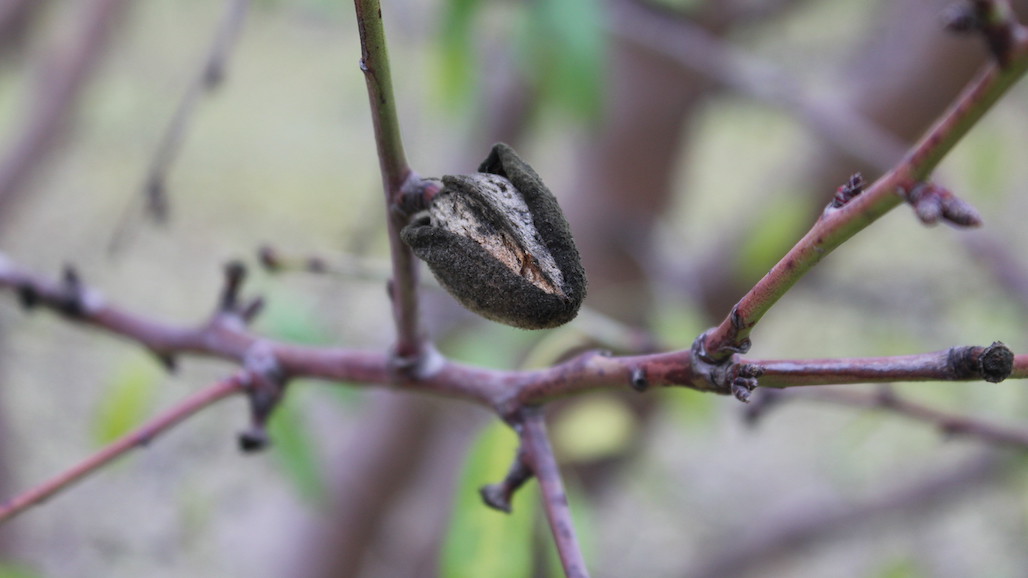
    The removal of nuts remaining on almond trees from the prior year’s crop is an important winter sanitation practice for the management of navel orangeworm (NOW), Amyelois transitella. Residual nuts are called ‘mummies’ and the process of removing the mummies is referred to as a ‘mummy shake’ because they are mechanically shaken from trees. This practice is conducted during the dormant and delayed dormant season, a time when orchard access may be thwarted by the winter rains.

    Most growers strive to have the mummy shake complete by mid-January when buds are dormant and less likely to abscise from the vibration caused by a mechanical shaker. As the flower buds progress toward bloom, they become more sensitive to the shaker vibration and more likely to abscise. Studies conducted in the 1980s (Sibbett et al.) established that the shaking of mummies by January 31 (approximately 8 days prior to bloom) at a Kern County site did not adversely affect yield; however, the authors cautioned growers of the risk of delaying mummy shakes further, particularly on early blooming varieties and in locations in the southern San Joaquin Valley. Because bud development and bloom date advance with increasing latitude, the potential risk of early and mid-February mummy shakes was investigated by W. Asai (Pomology Consulting, Turlock, CA) in the northern San Joaquin Valley. This work, conducted at a more northern latitude, suggested shakes conducted in early February may not compromise yield.

    The lack of yield detriment attributed to a mummy shake-mediated bud loss may seem counterintuitive; however, simple concepts of tree physiology may help explain this phenomenon. Consider that only approximately 30% of the flowers on a tree set a crop. A given tree does not have the carbohydrate stores needed to set every flower. As a result, the loss of a subset of flower buds may have little effect on overall yield. Naturally, the risk of crop loss increases the closer the shake approaches bloom, and both research groups suggested that mummy shakes be complete prior to the pink bud stage of development.

    Although rainy years make it difficult for growers to access orchards and complete orchard sanitation tasks, the heightened soil moisture adversely affects NOW survival in comparison to dry winters. Mummy nuts on the ground support enhanced NOW survival on a dry orchard floor than on moist soil with winter vegetation in the row middles. The next step in managing overwintering populations of NOW is destruction of mummies by flailing or mowing. Flailing and mowing should be completed by March 1, prior to the emergence of NOW. The emergence profile of NOW varies by location, but the first flight generally starts in late March.

    Growers who have not completed their winter sanitation practices by the end of January should walk their orchards to assess bud development in consideration of a delayed mummy shake. Winter sanitation can reduce now damage by up to 80%, so an early February shake may be worth the effort if orchard access is possible and bud development has not advanced into pink tip. For more information on NOW management, visit www.ipm.ucdavis.edu. — By Cameron Zuber & Elizabeth Fichtner, UCANR

  • Almond Board Announces 2023 Almond Leadership Class

    Almond Board Announces 2023 Almond Leadership Class

    The Almond Board of California (ABC) is proud to announce the Almond Leadership Program class of 2023, a group of 18 exceptional professionals expected to help lead the industry into the future.

    This next generation of leaders was chosen from nearly 50 highly qualified applicants. They come from diverse backgrounds across the full range of the industry, and include growers and processors, sales and real estate representatives, consultants, pest control advisors and more.

    The Almond Leadership Program (ALP) began in 2009 and has graduated more than 200 industry members. Dozens now serve on ABC workgroups, committees and even the Board of Directors.

    “The industry is seeing the enormous benefits from more than a decade of the leadership program, and while we seem to say this every year, this 2023 class is simply outstanding,” said Rebecca Bailey, the ABC specialist who oversees ALP. “This program helps great people become great leaders. It’s clear that these talented, passionate people will continue to be great assets and advocates for our industry for years.”

    Members of this 14th class – while still working at their jobs – will be immersed in every aspect of the industry, including ABC activities in global marketing, production, nutrition research, food safety and more. They’ll sharpen their communication skills and build lasting relationships with industry leaders, ABC staff and each other.

    “I’m honored to be joining a group of industry leaders who will be taking both the almond industry and the agriculture community into the future,” said 2023 participant Diane Power, a sixth generation California farmer and sales associate in Modesto with Pearson Realty. “I look forward to all the experiences and opportunities we will have to learn about the almond industry, and to the many relationships we will form through this year.”

    Class members will be guided by volunteer mentors – many of them ALP graduates – who will help them develop the skills, knowledge and perspective to improve their industry and their communities.

    “We all play unique roles in the almond industry,” said 2023 class member Megan Chicoine, the general manager ofU.S. operational support for Manulife Investment Management in Redding. “As young emerging leaders, we have the ability to make significant impacts by actively participating in our industry.”

    The leadership program will also offer class members thorough looks at the impacts on the industry of social, economic and environmental issues and the regulatory climate. In addition, participants will take on a yearlong, self-directed project focused on improving the California almond industry. Some past projects have led to important breakthroughs for the industry.

    Leadership class members kicked off their training with a two-day orientation a week ago at the ABC offices in Modesto, which included one-on-one talks with their mentors.

    “The one thing everyone has in common is they love agriculture,” said mentor Chandler Wilson, a technical sales rep for NutriAg USA. “We all want to be better. The mentors believe in the program and many have been through it. We’re eager to give back to the industry and these new leaders. We’ll share our experiences in and out of ALP, and together, we’ll all learn and grow as individuals and professionals through the whole process.”

    Once again, class members will raise money for California FFA, pledging to raise more than $25,000 in scholarships for high school students interested in pursuing agriculture in college. Through the years, ALP has raised more than $225,000 for FFA.

    The 2023 Almond Leadership class members are Alana Ambrosino, Ripon Manufacturing Company, Inc.; James Broaddus, BASF Agricultural Solutions; Destiny Camden, BeeHero Inc; Chris Chavez, ofi; Megan Chicoine, Manulife Investment Management; Lincoln Denlinger, Salida Ag; Lauren Dutra, Ceres Imaging; Brian Ganyo, Bayer Crop Science; Robert Gray, Burchell Nursery; Darryl Hadlich, WiseConn Engineering; Thomas Martin, TRÉCÉ Inc.; Erick Mendonca, Miller Chemical; Chris Miller, Blue Diamond Growers; Vance Millwee, Treehouse California Almonds, LLC; Mitchell Moreda, RPAC LLC; Diane Power, Pearson Realty; Matthew Reamer, South Valley Farms; and Tylor Wilbourn, BeeHero Inc. — By the Almond Board of California

  • Growers No Longer Need Compromises with Fumigation and Nematicides with GroPro’s Vigilance

    Growers No Longer Need Compromises with Fumigation and Nematicides with GroPro’s Vigilance

    – SPONSORED CONTENT –

    Worldwide growers face severe issues with the allocation of fumigants, reduced control from conventional nematicides, or bio and conventional-based nematicides that provide suppression or just don’t work. The damage done by nematodes to crops is devasting, leading to reduced uptake of nutrients, lower yields, or slower growth. The losses from nematodes exceed 10 billion USD annually. Unfortunately, there is no way of fixing a poor start when planting or getting back lost revenue regarding nematicide control.

    Vigilance Nematicide is GroPro’s patented bio-nematicide, providing fumigation and in-field application control, and it’s a proven nematicide that has gone head-to-head in multiple fields and demo trials worldwide with both conventional and bio-based nematicides. These third-party trials and demos were performed on a wide range of crops, such as grapes, almonds, tomatoes, peppers, strawberries, citrus, potatoes, plus others, all of which have shown superior efficacy against conventional and bio-based nematicides. The potato fumigation replacement trial showed an increase of over 11% in yield and an excellent nematode reduction compared to the grower standard fumigation program. This was accomplished with an increase in the number of ones and twos over the conventionally applied blocks while reducing damage to the tuber itself, allowing for a better marketable potato. The in-season applications to above-ground crops have increased root mass and decreased galling—root matter, especially when considering fertilizer absorption by the plants.

    Vigilance ensures a long safe approach to your nematode program. Vigilance uses a patented formulation that delivers superior environmental and worker safety. Vigilance Nematicide works on penetrating the roots to support new fleshy root growth and deals with parasitic nematodes inside the root itself. Vigilance performs in soil nematode control by causing paralysis, destruction of the nematode eggs, GABA, reduced female fecundity, and death. These modes of action continue for months* allowing for a long-term active control time. This long-term activity is due to Vigilance being produced using GroPro’s patented AMPx technology. Vigilance is both a control and suppression material for nematodes allowing peace of mind for growers while delivering a safe impact to workers and the environment. Vigilance has no MRL restrictions, zero setback issues, zero plant back restrictions, and zero pre-harvest restrictions.

    GroPro Corp., a leading agri-biotech company, combines unique natural ingredients and modern technologies to manufacture bioproducts (biological inputs) with enhanced efficacy. It is a commercial bio-pesticide, bio-stimulant, bio-fertilizer manufacturer and an R&D international organization. GoPro aims to close the gap in effective non-chemical inputs that enable farmers to reduce their reliance on chemicals without compromising agricultural yield, quality, or profitability.

    GroPro’s approach entails proprietary technologies, including pharmaceutical-grade biotech manufacturing processes. It works relentlessly to innovate and lead the way in the worldwide development, research, education, and adoption of the agro-biotech market.


    *When applied correctly

    More info: groproag.com

  • Blue Diamond Growers Announces Latest Sustainability Achievements

    Blue Diamond Growers Announces Latest Sustainability Achievements

    Blue Diamond Growers is kicking off 2023 by sharing sustainability accomplishments from the past year. Highlights are included in the cooperative’s first-ever sustainability report, “Growing a Better Tomorrow,” that is available on the Blue Diamond Growers website at www.bluediamond.com/sustainability.

    “We are proud of where we are on our sustainability journey,” said Dr. Dan Sonke, Director of Sustainability, Blue Diamond Growers. “Because we are a cooperative, for 112 years we have enabled family farms to compete in a volatile world. Our almond expertise extends from the orchard to processing facilities and the consumer. And through our stewardship program, we lead the world with more acres of almonds in a sustainability program than any other company.”

    Sonke explains that Blue Diamond Grower sustainability efforts focus on six key pillars, including: sustainable agriculture, water stewardship, biodiversity and pollinators, climate and energy, people, and resilient communities. Key achievements in 2022 alone include:

    • $45 million in funds awarded to Blue Diamond Growers by the U.S. Department of Agriculture(USDA) as part of a climate protection partnership activation that will be used to help growers expand existing implementation of cover crops, conservation plantings and hedgerows, and whole orchard recycling.
    • More than $1.74 million paid directly to growers through the Blue Diamond Growers Orchard Stewardship Incentive Program (OSIP). The OSIP now covers 40% of all Blue Diamond member acres representing more almond acres in a sustainability program than any other company in the world.
    • 95% of Blue Diamond member orchards in the stewardship program report using efficient micro-irrigation systems. That’s nearly two times the rate found in other California crops.
    • 29% of Blue Diamond orchards reported planting cover crops for soil quality and pollinator benefits.
    • 18% reduction of materials going to landfill at the Salida facility through increased recycling.
    • A new project to reduce greenhouse gas (GHG) emissions through the replacement and modernization of a steam boiler system at the Sacramento plant. The project is expected to reduce natural gas consumption by more than 30% and water use by 20%.
    • $140,000 in community grants committed to 14 organizations, along with $25,000 donated in matching funds to contribute to 807 Future Farmers of America (FFA) jackets for high school students.
    • 190,000 lbs. of almonds and almond products – valued at more than $700,000 – provided in product and in-kind donations to food banks and other nonprofit organizations.

    “We are certainly proud of the accomplishments so far, but we know that sustainability – in all its facets – is an ongoing journey,” said Sonke. “We look forward to continual progress in the days, years and generations ahead.”

    About Blue Diamond

    Blue Diamond Growers, a grower-owned cooperative representing approximately 3,000 of California’s almond growers, is the world’s leading almond marketer and processor. Established in 1910, it created the California almond industry and opened world markets for almonds. Blue Diamond is dedicated to delivering the benefits of almonds around the world and does so by providing high-quality almonds, almond ingredients, and branded products. Headquartered in Sacramento, the company employs more than 1,800 people throughout its processing plants, receiving stations and gift shops. To learn more about Blue Diamond Growers, visit www.bluediamond.com and follow the company on FacebookInstagramLinkedIn and Twitter.

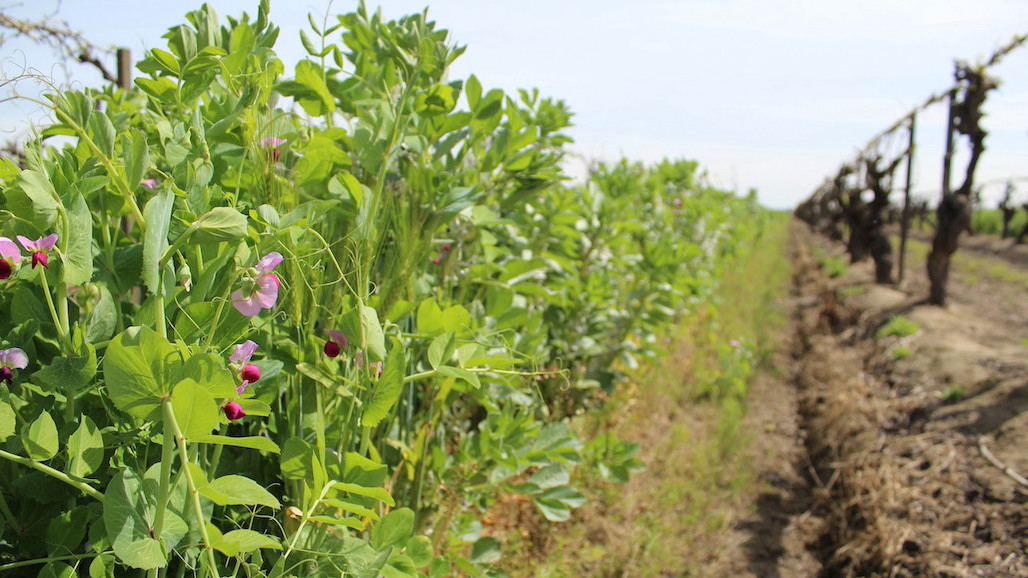
  • Growers Invited to See Benefits of Cover Crops in Orchards, Vineyards

    Growers Invited to See Benefits of Cover Crops in Orchards, Vineyards

    Growers are invited to tour orchards and vineyards and hear from other growers about their experiences with cover crops.

    UC Sustainable Agriculture Research and Education Program, UC Cooperative Extension, the Napa Resource Conservation District, and the Community Alliance with Family Farmers have created a searchable database of orchard and vineyard growers experienced in growing cover crops that will help other growers bring the benefits of the prctice to their operations.

    “The tours are part of a project for which we recently unveiled new tools for orchard and vineyard growers to learn about cover cropping from experienced growers,” said Sonja Brodt, associate director of the UC Sustainable Agriculture Research and Education Program.

    The database describes cover cropping strategies, details of field practices, benefits and challenges experienced by cover crop growers in orchards and vineyards in the southern Sacramento Valley (including the Capay Valley) and the North Coast viticulture region. The cover crop grower database is available at https://sarep.ucdavis.edu/covercropsdb.

    Feb. 8, 1-5 p.m., Capay Valley tour: 

    The tour will visit three organic farms in the Capay Valley that are integrating cover crops and grazing in their orchard and vineyard systems. Topics of discussion will include:

    • Strategies for integrating cover crops into orchards and vineyards
    • Impacts of cover cropping and grazing on soil health
    • Funding and information resources for growing cover crops

    Speakers will include:

    • Rory Crowley, Director of Habitat Programs, Project Apis m.
    • Amélie Gaudin, Associate Professor, Department of Plant Sciences, UC Davis, Endowed Chair in Agroecology
    • Hope Zabronsky, Climate-Smart Agriculture Program lead, UC Agriculture and Natural Resources

    To register for the Feb. 8 tour, visit https://sarep.ucdavis.edu/events/grazing-cover-crops-orchards-and-vineyards-capay-valley-tour.

    March 8, 1-4 p.m., Arbuckle area tour: 

    The tour will visit two conventional farms in the Arbuckle area that are integrating cover crops into their orchard and vineyard systems.

    Topics of discussion will include:

    • Strategies for integrating cover crops into orchards and vineyards
    • Impacts of cover cropping on soil and water balance
    • Frost risk protection and prevention
    • Funding resources for growing cover crops

    Speakers will include:

    • Rory Crowley, Director of Habitat Programs, Project Apis m.
    • Kosana Suvocarev, UC Cooperative Extension Specialist in Biometeorology, UC Davis Department of Land, Air, and Water Resources
    • Hope Zabronsky, Climate-Smart Agriculture Program lead, UC Agriculture and Natural Resources

    To register for the March 8 tour, visit https://sarep.ucdavis.edu/events/cover-cropping-conventional-orchards-and-vineyards-arbuckle-area-tour

    UC Agriculture and Natural Resources brings the power of UC to all 58 California counties. Through research and Cooperative Extension in agriculture, natural resources, nutrition, economic and youth development, our mission is to improve the lives of all Californians. Learn more at ucanr.edu and support our work at donate.ucanr.edu.

  • READ – January 2023 Issue

    READ – January 2023 Issue

    [3d-flip-book mode=”fullscreen” urlparam=”fb3d-page” id=”6143″ title=”false” classes=“flipbook-container”]

  • CA Almond Acreage Drops for the First Time in Decades

    CA Almond Acreage Drops for the First Time in Decades

    California’s almond acreage decreased for the first time in more than 25 years, according to a new report from Land IQ to the Almond Board of California (ABC). Total standing acreage as of Aug. 31 was estimated at 1.64 million acres, compared with 1.66 million acres at the same time in 2021. Bearing acres – orchards producing almonds and planted in 2019 or earlier – increased slightly to 1.34 million from 1.31 million last year. But non-bearing acres – new plantings going back to 2020 but not yet bearing almonds – dropped to 294,000 acres from 353,000 acres in 2021.

    In addition, the Land IQ 2022 Standing Acreage and Removed Acreage Final Estimate said approximately 30,000 acres are either classified as stressed or abandoned. They were included in the standing acreage total because the orchards “may have the ability to recover,” Land IQ said.

    Removed orchards contributed to the drop in total acreage and continued a trend from 2021. Total orchard acreage removed was about 60,400 acres as of Aug. 31 this year compared with 56,900 removed acres in 2021.

    “Land IQ’s report may indicate a possible trend towards lower California almond acreage in the year ahead,” said Richard Waycott, ABC president and CEO. “This acreage estimate was based on data collected through Aug. 31, so it does not reflect any additional removals that may have occurred as the harvest and post-harvest seasons progressed this fall. Those data will be incorporated in the next acreage estimate to be published in April 2023.”

    The estimate comes from multiple lines of evidence, including extensive examinations on the ground and advanced remote sensing analytics. Land IQ said the 2022 standing acreage estimate is 98.8 percent accurate.

    Land IQ’s Final Acreage Estimate in November, along with USDA-NASS’s April Acreage Report, May’s Subjective Estimate and the Objective Report in July are all commissioned by ABC to provide statistical transparency and a robust picture of California almonds to industry stakeholders around the world.

    In 2018, ABC first commissioned Land IQ, a Sacramento-based agricultural and environmental scientific research and consulting firm, to develop a comprehensive, living map of California almonds. The map is the result of more than a decade of research.  By the Almond Board of California

  • Blue Diamond Growers Board of Directors Selects Kai Bockmann as Next CEO

    Blue Diamond Growers Board of Directors Selects Kai Bockmann as Next CEO

    Blue Diamond Growers Chairman of the Board, Dan Cummings, announced that Kai Bockmann will join the agricultural cooperative and global consumer packaged goods (CPG) leader as President and Chief Executive Officer (CEO) on January 17, 2023. The Board selected Bockmann after working with executive search and leadership advisory firm, Egon Zehnder, to recruit and consider candidates from across the country. Bockmann will succeed Mark Jansen who announced his plans to step down after a very successful 12-year tenure as CEO.

    “The search process went well, and we couldn’t be more pleased with the outcome,” said Cummings. “Kai has more than a quarter of a century of global experience growing CPG companies, and we believe he is the leader we need to keep building our business and brand domestically and internationally, while continuing to deliver superior returns to our grower-owners.”

    Bockmann most recently served as President and Chief Operating Officer (COO) at Saputo Inc. – one of the world’s largest dairy companies – where he led operations that included 67 plants and 18,000 employees across the United States, Canada, Australia, Argentina, and the United Kingdom. From 2017 to 2021, he and his team grew revenue from $11 billion to $14 billion. From 2012 to 2021, the international business he led grew from less than $500 million to more than $4 billion. Prior to Saputo Inc., Bockmann was at McCain – the world’s largest producer of frozen potatoes – where he served as President of the International Division and accelerated international sales across 60 export markets, doubling revenues over four years.

    “I’m excited by this phenomenal opportunity to join one of the most consistent and fastest-growing food and beverage companies in the world,” said Bockmann. “I look forward to learning from growers and team members and keeping our immediate focus on maintaining business continuity and growth momentum.”

    Cummings said the Board, Bockmann, Jansen, and the entire experienced executive team at Blue Diamond will work closely together to ensure a smooth transition in leadership over the next few months.

    “We’re grateful for Mark’s support during the search and his commitment to helping set Kai and the cooperative up for continued success,” said Cummings. “We’re building from 112 years of success, and we know the future is bright for Blue Diamond because no one knows how to get almonds from growers’ farms to families worldwide better than us.”

    Cummings said Blue Diamond’s snack almond business has more than a 50% market share in the United States and that Blue Diamond’s Almond Breeze is the leading almondmilk brand in the United States, South Korea, Thailand, Brazil, and South Africa. In 2021, the company’s net sales totaled $1.6 billion.

    About Blue Diamond

    Blue Diamond Growers, a grower-owned cooperative representing approximately 3,000 of California’s almond growers, is the world’s leading almond marketer and processor. Established in 1910, it created the California almond industry and opened world markets for almonds. Blue Diamond is dedicated to delivering the benefits of almonds around the world and does so by providing high-quality almonds, almond ingredients, and branded products. Headquartered in Sacramento, the company employs more than 1,800 people throughout its processing plants, receiving stations and gift shops. To learn more about Blue Diamond Growers, visit www.bluediamond.com and follow the company on Facebook, Instagram, LinkedIn and Twitter