Category: Non-Video

  • Treatment Options for Management of Walnut Scale and Frosted Scale

    Treatment Options for Management of Walnut Scale and Frosted Scale

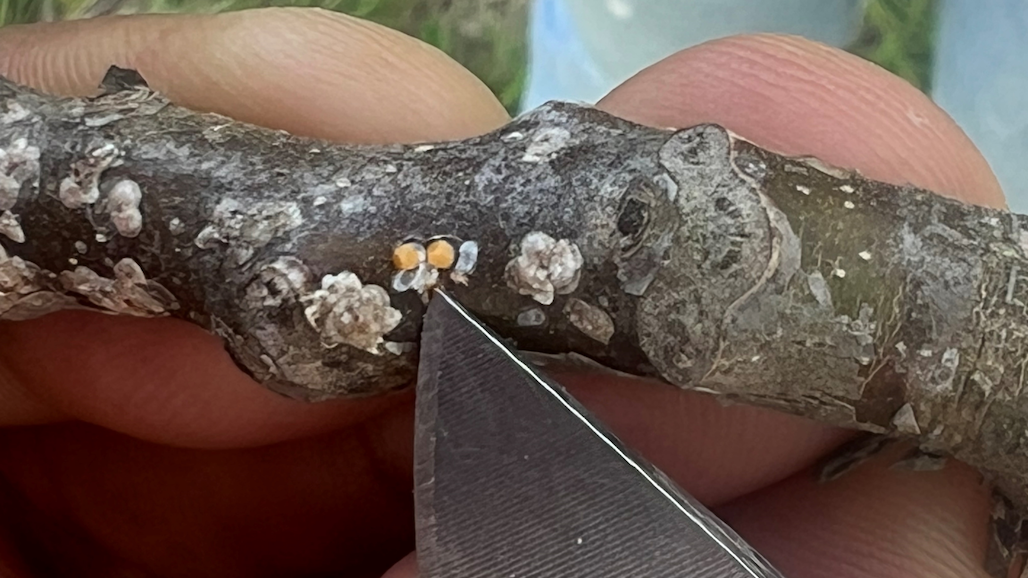
    Walnut scale (Figure 1) is an important economic pest of walnuts in California. High populations of walnut scale may affect tree vigor as well as predispose trees to diseases caused by several plant pathogenic fungi and possibly flatheaded borer damage. Historic UC Pest Management Guidelines emphasize the efficacy of insecticide applications at the crawler stage of insect development (late April to mid-May); however, with the introduction of new pest management tools such as insect growth regulators (IGRs), new studies have been conducted to evaluate the efficacy of these products at earlier times during the insect lifecycle. Both walnut scale and frosted scale overwinter as immature nymphs; therefore delayed-dormant application of IGRs has the potential to inhibit maturation and subsequent reproduction of these pests.

    In 2023, UC ANR and UC Berkeley researchers initiated a new collaborative study investigating the efficacy of four products applied at various rates and times (Table 1). Two insect growth regulator products, Esteem® (IRAC Group 7C) and Centaur® (IRAC Group 16), were included in the study, with both delayed-dormant (February 8, 2023) and crawler-stage (April 26, 2023) application timings. Centaur® was also investigated at two rates. Crawler-stage applications of Senstar® (a combination of spirotetramat and pyroxifin) and Assail 20SG® (a neonicitinoid) were also included in the study.

    Delayed dormant IGR applications inhibit maturation of walnut and frosted scale. Delayed-dormant application of Centaur WD® at either 34.5 oz/acre or 46 oz/acre reduced walnut scale survival by 81% of that of untreated control treatment by April. Both Esteem and Centaur reduced populations of mature frosted scale observed in late April by the over 85% of that on untreated trees (Figure 2).

    Crawler populations affected by IGRs and conventional insecticides. All treatments suppressed the rates of crawler emergence over time in comparison to the untreated control (Figure 3); however, delayed dormant applications of both IGR treatments (Centaur® and Esteem®) resulted in the highest suppression of the first-generation curve (Figure 3). Both rates of Centaur® applied during the delayed dormant period resulted in similar suppression of crawler emergence. Crawler stage application of Centaur® at the higher rate resulted in similar levels of crawler suppression as the delayed dormant IGR treatments (Figure 3). Moderate suppression of first-generation crawlers was observed with crawler stage treatments with the low Centaur® rate, Esteem®, and Assail® 30SG (Figure 3). Crawler stage application of Senstar® suppressed first-generation crawler emergence (Figure 3) and resulted in modest suppression (45%) of total crawler populations across the season as compared to the untreated control (Figure 4). All IGR treatments, regardless of the rate or timing, performed similarly with regard to total crawler populations across the season (Figure 4). The range in total crawler suppression across treatments of similar statistical significance was 88.2% (Centaur, 46 oz/acre, delayed dormant) to 54% (Assail, crawler stage), illustrating the variability in crawler counts in the orchard system (Figure 4).

    Summary. Delayed dormant applications of either of the insect growth regular products, Centaur® or Esteem®, offer excellent suppression of walnut scale and frosted scale populations. Delayed dormant applications may offer similar efficacy at lower product rates due to the opportunity to achieve better coverage prior to leaf-out.  Additionally, delayed dormant applications of these products may inhibit maturation of nymphs into adults, thus limiting sexual reproduction and subsequent laying of eggs.

    In prior studies, the efficacy of crawler stage Assail® application became apparent the year following application. Based on this background information, the populations of adult walnut scale will be evaluated across all treatments in April 2024 to fully capture the efficacy of these products over time.

    Additionally, future studies are planned to further determine the value of dormant versus delayed dormant applications of IGR treatments for management of walnut scale. The results of the current study, however, do demonstrate a need for updating the current UC IPM guidelines for management of walnut scale.  To date, the UC IPM guidelines only recommend crawler-stage applications of IGR products while the current study demonstrates the value of IGR applications earlier in the season. — By Elizabeth Fichtner, Mel Thayer, and Robert Van Steenwyk (UCANR)

  • Leadership Transition Planned for Administrative Committee for Pistachios

    Leadership Transition Planned for Administrative Committee for Pistachios

    The Administrative Committee for Pistachios (ACP) is pleased to announce the hiring of Stephen Vasquez as the Executive Director of the ACP starting January 2024. Vasquez will succeed Bob Klein who has served in the lead staff role since June 2007. Klein plans to retire in April 2024 to ensure a smooth transition. Management of the California Pistachio Research Board will also be part of Vasquez’s responsibilities, working closely with scientist focused on improving pistachio production. Vasquez most recently worked for Sun-Maid Growers as their technical viticulturist where he coordinated their research program and worked closely with growers and researchers to improve raisin production. His past experience also includes working for University of California Cooperative Extension as a viticulture farm advisor for 14 years, a research agronomist for an international fertilizer company and a director of agronomy for a large table grape farming company.

    “We are excited to have Stephen join ACP and know that his experience will benefit the organization and pistachio growers,” Said Klein. “His experience as a farm advisor and farmer will bring a unique perspective to the ACP, which will help identify gaps in research that growers rely on to be successful in California.”

    Vasquez will work with federal, state and local organizations to carry out the mission of the Administrative Committee for Pistachios. He is a lifelong resident of California and resides in Fresno CA with his wife.

    Of the retiring Bob Klein, Pacific Nut Producer Editor Matthew Malcolm shared, “It has been a real privilege working with Bob for so many years in his dedicated service to the California pistachio industry.  I will miss our great interviews together, but congratulate him on a job well done and wish him the best in retirement.”

    ABOUT THE APC: The Administrative Committee for Pistachios (ACP) was established in 2004 by pistachio growers to regulate quality aspects of domestically shipped pistachios, primarily testing for levels of aflatoxin which can occur in tree nuts, peanuts, corn and other commodities. It is authorized to require inspection of domestically shipped pistachios for aflatoxin levels, gather statistics from handlers and report this data, fund research projects that pertain to the processing and handling of pistachios, and to establish food safety regulations. The pistachio marketing order does not perform marketing activities (advertising and consumer education) and does not sell or arrange the purchase of pistachios. The Administrative Committee for Pistachios (ACP) locally administers the federal marketing order for pistachios produced in California, Arizona, and New Mexico. To learn more visit: https://acpistachios.org/.

  • $4.1 Million in Grants to Conserve the Monarch Butterfly and Other Insect Pollinators

    $4.1 Million in Grants to Conserve the Monarch Butterfly and Other Insect Pollinators

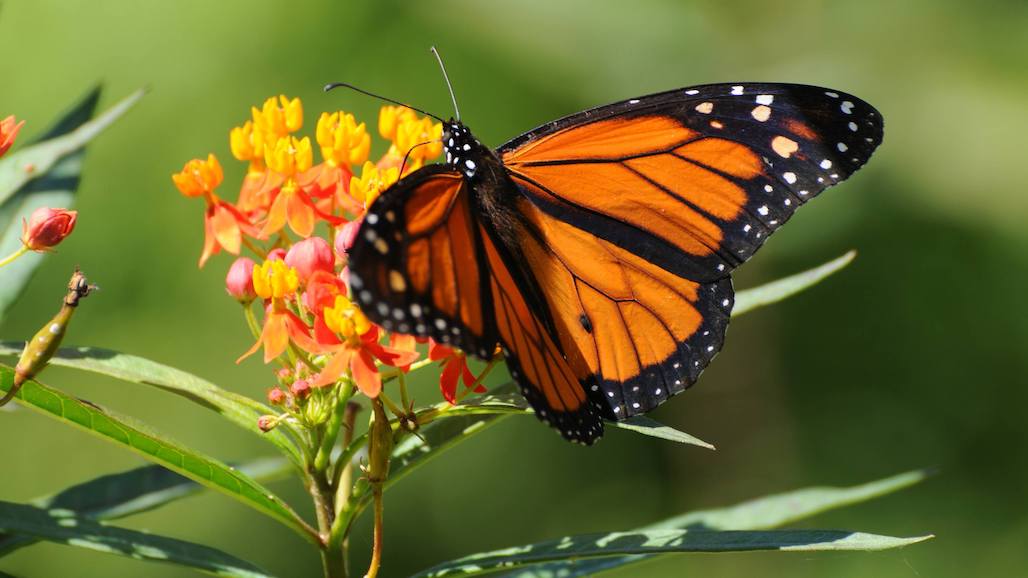
    The National Fish and Wildlife Foundation (NFWF) announced $4.1 million in grants to conserve monarch butterflies and other insect pollinators in 15 states. The grants will leverage $6.6 million in matching contributions for a total conservation impact of $10.7 million.

    The grants were awarded through the Monarch Butterfly and Pollinators Conservation Fund (Pollinator Fund), a partnership between NFWF and the U.S. Fish and Wildlife Service, the Bureau of Land Management, and the U.S. Department of Agriculture’s Natural Resources Conservation Service (NRCS) and Forest Service (USFS), Bayer Crop Science, Danone North America and The Scotts Miracle-Gro Foundation.

    The projects supported by the 18 grants announced will increase the quality and quantity of pollinator habitat for monarch butterflies, rusty patched bumble bees and other native pollinators. The projects will also enhance outreach and organizational coordination.

    “The nation’s ecosystems and economy are inextricably linked to pollinators,” said Jeff Trandahl, executive director and CEO of NFWF. “The grants announced today will support collaborative efforts to establish and manage habitat for pollinators living across the monarch butterfly’s eastern and western migratory routes.”

    Collectively, it is expected that the projects announced today will:

    • Restore and enhance more than 39,000 acres of pollinator habitat
    • Collect more than 140 pounds of milkweed seed
    • Propagate more than 46,000 milkweed seedlings
    • Host more than 130 workshops and meetings that advance pollinator conservation

    The monarch butterfly is one of the most iconic species in North America, and its annual migration cycle is one of the most remarkable natural phenomena in the world. However, over the past 20 years, the monarch butterfly population has declined by more than 80 percent throughout much of its range. Several other pollinators have experienced similarly dramatic declines in recent decades. Habitat loss is a primary threat to many of these species.

    “The NFWF Pollinator Fund showcases what is truly possible when diverse partners come together to drive restoration of biodiversity and ecosystem services with on-the-ground conservation projects. Bayer continues to be a proud supporter of this program as we believe that our commitments to biodiversity and productivity in the agricultural landscape are compatible goals,” said Tim Fredricks, Environmental Engagement Manager, Bayer Crop Science.

    “Danone North America is pleased to be advancing pollinator conservation on private working lands,” said Christopher Adamo, Vice President of Public Affairs and Regenerative Agriculture Policy, Danone North America. “Almonds and other specialty crops provide unique opportunities to support agricultural operations and pollinators across the United States. Biodiversity is a fundamental component of our holistic regenerative agriculture framework that considers local conservation needs.”

    “Maintaining, restoring, and improving habitat are crucial for species like the monarch butterfly, Dakota skipper, rusty patched bumble bee, and other native pollinators,” said U.S. Fish and Wildlife Service Director Martha Williams. “The Service is proud to participate in this science-based, outcome-focused partnership for the benefit of a diverse group of pollinators and the American people.”

    “Aligned with our Pollinator Promise to help establish and enhance pollinator gardens, we look forward to the continued efforts in conserving and recovering pollinators through the Monarch Butterly and Pollinators Conservation Fund,” said Brian Herrington, president of The Scotts Miracle-Gro Foundation. “Through our collective endeavor with the National Fish and Wildlife Foundation, we will make a more powerful impact.”

    In 2015, NFWF established the Monarch Butterfly and Pollinators Conservation Fund, a public–private partnership that funds projects to protect, conserve, and increase habitat for monarch butterflies and other pollinators. By leveraging the resources and expertise of its partners, the fund is helping to reverse recent population declines and ensure the survival of these valuable species. Since 2015, the fund has awarded $23.8 million to 140 projects that are helping conserve and recover the monarch butterfly while also benefiting other pollinator species. Grantees have matched this investment with an additional $38.9 million for a total on-the-ground impact of $62.7 million.

    A complete list of the 2023 grants made through the Monarch Butterfly and Pollinators Conservation Fund is available here. A short video about the Monarch Butterfly and Pollinators Conservation Fund is available here​​.

    About the National Fish and Wildlife Foundation
    Chartered by Congress in 1984, the National Fish and Wildlife Foundation (NFWF) protects and restores the nation’s fish, wildlife, plants and habitats. Working with federal, corporate, foundation and individual partners, NFWF has funded more than 6,000 organizations and generated a total conservation impact of $8.1 billion. Learn more at www.nfwf.org.

    About Bayer Crop Science

    Bayer is a global enterprise with core competencies in the life science fields of health care and agriculture. Its products and services are designed to help people and planet thrive by supporting efforts to master the major challenges presented by a growing and aging global population. Bayer is committed to drive sustainable development and generate a positive impact with its businesses. The Bayer brand stands for trust, reliability and quality throughout the world. In fiscal 2022, the Group employed around 101,000 people and had sales of 50.7 billion euros. R&D expenses before special items amounted to 6.2 billion euros. For more information, go to www.bayer.com.

    Danone North America

    Danone North America is a purpose-driven company and an industry leader in the food and beverage category. The company aims to inspire healthier and more sustainable eating and drinking practices with a strong portfolio of health-focused, fast-growing and on-trend brands including: Activia®, DanActive®, Danimals®, Dannon®, evian®, Follow Your Heart®, Happy Family® Organics, Horizon® Organic, International Delight®, Light + Fit®, Oikos®, Silk®, So Delicious® Dairy Free, STōK®, Two Good®, Wallaby® Organic, and YoCrunch®. With more than 6,000 employees and 16 production locations across the U.S. and Canada, Danone North America’s long-standing mission is to bring health through food to as many people as possible. As a Certified B Corporation®, Danone North America is committed to the creation of both economic and social value, while nurturing natural ecosystems through regenerative agriculture. For more information about Danone North America, visit https://www.danonenorthamerica.com

    About The Scotts Miracle-Gro Foundation

    The mission of The Scotts Miracle-Gro Foundation is to inspire, connect and cultivate a community of purpose. The Foundation is deeply rooted in helping create healthier communities, empower the next generation, and preserve our planet. The Foundation is a 501(c)(3) organization that funds non-profit entities that support its core initiatives in the form of grants, endowments and multi-year capital gifts. For more information, visit www.scottsmiraclegrofoundation.org.  

    About the U. S. Fish and Wildlife Service

    The U.S. Fish and Wildlife Service works with others to conserve, protect, and enhance fish, wildlife, plants, and their habitats for the continuing benefit of the American people. For more information about our work and the people who make it happen, visit www.fws.gov or connect with us via Facebook, Twitter, and Flickr.

  • Growers, Researchers & Leaders Exchange Ideas at Almond Board Conference

    Growers, Researchers & Leaders Exchange Ideas at Almond Board Conference

    Almond Board of California — The Almond Conference 2023 drew the largest turnout since 2019 as attendees met new Almond Board of California president and CEO Clarice Turner and heard about the array of programs – ranging from building global demand to increased trade efforts to research to maximize grower efficiency – aimed at helping the industry face difficult times.

    As always, the gathering at Sacramento’s SAFE Credit Union Convention Center was the largest of the year for the almond industry, drawing 3,819 attendees and providing an opportunity to further relationships, build new ones and exchange ideas and information.

    “This year, we were able to share what we learned about the challenges we’re facing as well as outline the efforts ABC is making to address each,” said Alexi Rodriguez, chair of ABC’s Board of Directors. “The best path for our industry is going to be together, and The Almond Conference offered a great opportunity to take into account all the ideas and experiences that were shared to help us move forward.”

    During the State of the Industry presentation, Turner talked about what she called a great strength of the almond industry – the supportive nature of everyone in it.

    “I’m so impressed with how you all work together, help each other, and care so deeply,” Turner said. “As the industry struggles to deal with challenges, many we don’t control, it’s critical to pull together and focus on what we can control or influence to find our way forward … We have some difficult times to endure, but I’m certain that strong leadership, focus and the industry DNA of ‘grit and innovation’ will get us to a better place.”

    The theme of The Almond Conference 2023 was “Connecting the Dots,” and sessions offered practical information for growers in many forms as well as a forum to exchange knowledge. One focus was providing information about the range of assistance available to the industry, and the conference again included an Incentive and Grower Support Zone, a popular offering that helped attendees get their questions answered by more than a dozen agencies and organizations that offer incentives or help getting them.

    Attendees also heard from Doug McKalip, Chief Agricultural Negotiator in the Office of the U.S. Trade Representative, who was part of the State of the Industry presentation, and from CDFA Secretary Karen Ross, who spent time with McKalip visiting the trade show floor.

    The annual awards given to long-time industry leaders during the Gala dinner were also highlights, as they are every year.

    Dick Cunningham was given the 2023 Almond Achievement Award for his remarkable commitment to the advancement of the almond industry over a 50-year career, and Wes Asai was awarded the 2023 Almond Technical Achievement Award, which recognizes an industry member who has contributed to significant technical advancement for the betterment of the California almond industry through research, innovation or facilitating the adoption of practices.

    And Richard Waycott, ABC’s outgoing president and CEO, was recognized for his 20-plus years of service to the industry with a Lifetime Achievement Award.

    Attendees at The Almond Conference 2023 visit the Incentive and Grower Support Zone to get information and questions answered by more than a dozen agencies and organizations that offer incentives or help getting them. Photo courtesy of the Almond Board of California.

    What’s next

    • PDF versions of the slide presentations covering a wide range of topics and featuring expert speakers are available at Conferences Presentations (almonds.com). Video recordings will be posted and available in the new year.
    • Save the date for 2024: Dec. 10-12 again at the SAFE Credit Union Convention Center in downtown Sacramento.
  • American Pistachio Growers Awarded $5 Million Healthy Soils Grant

    American Pistachio Growers Awarded $5 Million Healthy Soils Grant

    American Pistachio Growers (APG) has been awarded a $5 million grant from the California Department of Food and Agriculture (CDFA) to help growers adopt healthy soils practices in the Golden State.  The grant is a part of the California Healthy Soils Initiative, a collaboration of state agencies and departments that promotes the development of healthy soils on California’s farmlands and ranchlands.

    The grant to APG is among 14 grants funded through the CDFA Healthy Soils Block Grant Pilot Program, which awarded $62 million in soils block grants in 2023 to various organizations.  The program will fund projects for three years, with a limit of $200,000 per project over the lifetime of the grant. The objective is to better connect farmers and ranchers with programs that encourage and incentivize the implementation of management practices that sequester carbon, reduce atmospheric greenhouse gases, and improve overall soil health.

    “As the non-profit trade association for the pistachio industry, American Pistachio Growers is uniquely positioned to assist growers in implementing and managing various Healthy Soils Block Grant qualified projects,” said Wes Wilson, APG Director of Member Services and Communications. “We look forward to connecting growers with these valuable programs that will not only improve the overall health of our California soils, but have the potential to reduce greenhouse gas emissions and sequester carbon, all while increasing yields and reducing traditional inputs.”

    The agreement with the CDFA Office of Environ mental Farming and Innovation (OEFI) was executed on December 5, 2023, with grower applications opening January 1, 2024.  APG anticipates funding more than 30 projects, with special consideration given to growers who qualify as Socially Disadvantaged Farmers and Ranchers or have farms of 500 acres or less.

    APG will conduct outreach and accept applications from growers in Kern, Tulare, Kings, Fresno, Madera and Merced counties. Under the program, qualifying practices include compost application, cover crop planting and management, mulching, hedgerow planting, nutrient management that results in a 15% or greater reduction in fertilizer application, residue and tillage management, and prescribed grazing.

    “Our pistachio growers are true innovators and conservationists, and this grant will bring even greater awareness to the importance of healthy soils in our pistachio orchards,” added Wilson. “It’s a benefit not only for growers but also for all Californians.”

    Growers who have questions or need additional information can contact Wilson at (559) 289-9375, wwilson@americanpistachios.org, or Carlee Branco at (559) 410-7482, cbranco@americanpistachios.org.

    American Pistachio Growers is the non-profit trade association representing more than 865 growers and member processors in California, Arizona, New Mexico and Texas.

  • Blue Diamond Growers 113th “Growing Together” Annual Meeting Highlights a Year of Resilience

    Blue Diamond Growers 113th “Growing Together” Annual Meeting Highlights a Year of Resilience

    At the 113th Blue Diamond Growers “Growing Together” Annual Meeting on Nov. 15 in Modesto, Blue Diamond Growers’ CEO, Kai Bockmann, reflected on his first ten months in the leadership role by acknowledging significant challenges faced by growers and the world’s largest almond cooperative.

    In Bockmann’s remarks – along with those of Blue Diamond Growers’ Board Chairman, Dan Cummings – both pointed to remarkable headwinds for the almond industry, including higher input costs and inflationary pressures, depressed market prices, shifts in consumer shopping patterns, unfavorable weather conductions, and reduced crop sizes. To help counter these challenges, Blue Diamond Growers is advancing an aggressive strategic growth plan to navigate the marketplace conditions and drive substantial growth.

    “Volatility is our new normal, but our destination is set – and it is one of growth,” said Bockmann. “While this past year brought many challenges for our growers, no challenge is insurmountable. We have a rich history, an exceptional brand, and the right people and culture to deliver against our ambitious growth plan.”

    In laying out the plan, Bockmann shared with the annual meeting audience that what has helped bring the cooperative to where it is today, will not get it to where it is going in terms of growth and market expansion. The new growth plan prioritizes expansion into the massive foodservice channel and strategically selected international markets, while strengthening the value-added business, doubling down on product innovation, and driving for operational efficiencies.

    “Foodservice is a trillion dollar industry that represents a significant growth opportunity for Blue Diamond, and we will directly target that sector as a strategic priority,” said Bockmann. “Additionally, we will diversify and innovate our product portfolio beyond our flagship Blue Diamond Snack Almonds® and Almond Breeze® brands. We will build on the tremendous success of these products – which are both the #1 brands in America for almonds and almondmilk.”

    Bockmann shared that flavor-focused product innovation remains a top priority commenting that “no one does flavor like Blue Diamond” as evidenced by the widely popular Chilé N Lime flavored snack nuts. The flavor was launched as a limited time offer at Costco and won the “Best Nuts” award in PEOPLE Magazine’s 2023 Food Awards.

    The Blue Diamond Research & Development team will continue to innovate with new flavors, while advancing new and existing categories, including plant-based yogurt, chocolate, baking, beverages and plant-based cheese. On the foodservice front, the strategic growth plan focus is already delivering results. The Blue Diamond International Consumer and R&D teams worked closely with Maeil Dairies in the past year to develop Almond Breeze® Barista Blend, which was introduced in 6,500 Starbucks across China earlier this year.

    “I’m confident that Blue Diamond Growers is poised to thrive in the years to come because we are stronger together,” said Bockmann. “We are excited to grow together as we bring our strategic plan and collective vision to life.”

    Supporting Grower Success and Advancing Sustainability

    In addition to tackling the marketplace challenges with strategy, innovation, and expansion, Blue Diamond Growers also concepted and launched a new grower-focused buying coalition. To help connect growers with trusted, well-known suppliers and build local, long-term relationships, the Blue Diamond Growers Connect Marketplace aims to reduce production costs for farmers by negotiating better discounts with suppliers via Group Purchasing Organizations and the co-ops’ own internal platform. The goal of the marketplace is to reduce growers’ costs by 5-15%.

    Additionally, a notable highlight from the year is Blue Diamond Growers’ advancement in sustainability. To continue growing the cooperative’s commitment to stewardship, Blue Diamond’s Member Relations team held several online webinars, including hosting the Almond Board of California Almond Stewardship Platform and the Pollinator Partnership to discuss and educate growers on Bee-Friendly Farming.

    Along with the offered webinars, growers were encouraged to participate in Blue Diamond’s Orchard Stewardship Incentive Program (OSIP), a program where growers can earn financial incentives for implementing best practices related to orchard management, environmental issues, occupational health and safety, and community investment.

    In July of this year, the U.S. Department of Agriculture (USDA) awarded Blue Diamond a five-year, $45 million “Partnerships for Climate-Smart Commodities” grant, a program designed to help farmers implement “climate-smart” practices on their land. The program offers growers no-cost cover crop seed and a financial incentive to plant cover crops and/or conservation cover on their land. These practices notonly work toward taking carbon out of the atmosphere, but they also enhance orchard biodiversity and improve soil health. The USDA grant complements
    Blue Diamond’s OSIP by lowering the cost of initiating the pollinator-friendly practices required to receive Bee-Friendly Farming certification.

    “Without question it has been a challenging year, but the loyalty and leadership demonstrated by our board – combined with the resilence of our growers and dedication of Blue Diamond employees – will allow us to overcome the challenges together,” said Cummings. “I’m confident Blue Diamond will deliver great prosperity and a sustainable future for our growers, employees, their families, and the communities we call home.”

    Blue Diamond Annual Report Now Available

    In conjunction with the Annual Meeting, the Blue Diamond Growers 2023 “Growing Together” Annual Report is now available on the Blue Diamond website at www.bluediamond.com.

    About Blue Diamond

    Blue Diamond Growers, a grower-owned cooperative representing approximately 3,000 of California’s almond growers, is the world’s leading almond marketer and processor. Established in 1910, it created the California almond industry and opened world markets for almonds. Blue Diamond is dedicated to delivering the benefits of almonds around the world and does so by providing high-quality almonds, almond ingredients, and branded products. Headquartered in Sacramento, the company employs more than 1,800 people throughout its processing plants, receiving stations and gift shops. To learn more about Blue Diamond Growers, visit www.bluediamond.com.

  • Diamond of California® and Nature Nate’s Honey Co.® Debut Hot Honey Snack Walnuts

    Diamond of California® and Nature Nate’s Honey Co.® Debut Hot Honey Snack Walnuts

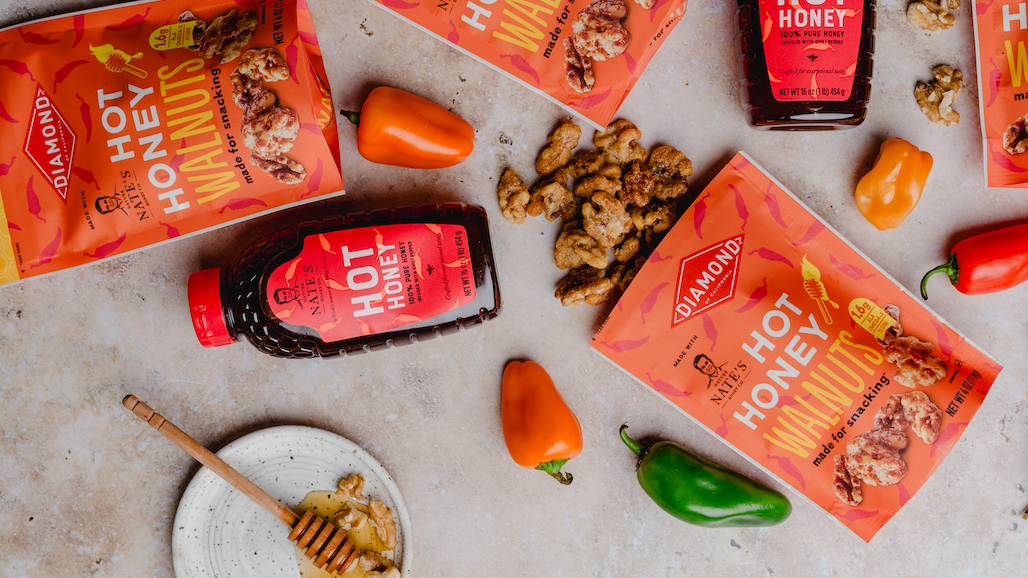
    Diamond of California®, the century-old producer of specialty nuts, and Nature Nate’s Honey Co.®, the number-one branded honey company in the U.S. and producer of 100% pure, raw & unfiltered honey, announce today the launch of Hot Honey Snack Walnuts. The two brands have fused their expertise in walnuts and honey to create the perfect sweet and spicy superfood snack. They are available now online and coming soon to stores nationwide over the next several weeks. (SRP: $3.99/4oz. bag)

    The new Hot Honey Snack Walnuts highlight Diamond’s California-grown walnuts, which contain protein, fiber, and ALA Omega-3, lightly glazed with Nature Nate’s Hot Honey, 100% pure honey infused with chili peppers. Hot Honey joins Diamond’s four additional Snack nut flavors including Salted Dark Chocolate, Himalayan Pink Salt, Sweet Maple and the recently launched, Pecan Pie Snack Pecans.

    “As we continue to expand our snack nut line, we are taking a thoughtful approach to new flavors and making conscious effort to use real ingredients,” said Craig Tokusato, Chief Marketing Officer of Diamond of California®. “Nature Nate’s was a natural fit as a collaborator on this new flavor because similar to Diamond, they are a category leader that sets the standard with the quality of their products. We are excited to fuse our two specialty products, walnuts and hot honey, into a superfood snack that is sure to add a kick to snack time.”

    “Nate’s Hot Honey is made with pure honey and infused with just the right amount of spice. Adding our award-winning product to Diamond’s premium walnuts was a fun and authentic collaboration,” said Nathan Sheets, President and CEO of Nate’s. “We are proud to team up with Diamond of California® to deliver this innovative and delicious snack that stays true to our mission to provide families with more ways to enjoy the benefits of pure honey everyday.”

    Hot Honey Snack Walnuts are now available online via shop.diamondnuts.com and coming soon to major retailers like Albertsons, ShopRite and Amazon replacing a previous Hot Honey recipe sold in yellow packaging. For more information on Diamond of California®, visit their website or follow @DiamondNuts on Instagram and Facebook.

    About Diamond of California®

    Diamond of California®, the century-old producer of specialty nuts, has worked with walnut growers since 1912, making the company one of the earliest pioneers of the farm-to-table movement. The company packages fresh walnuts, almonds, pecans and other culinary nuts in whole, sliced, diced, and chopped forms. Their most recent innovations, Ready-to-Use Nut Pie Crusts and Ready-to-Eat Snack Walnuts & Pecans, can be found in the baking and snack aisles respectively. Headquartered in Stockton, California, Diamond of California® is located in the state’s heartland, where most of its orchards lie. Diamond of California® believes that nuts make good food even better. That’s why they’ve offered fresh, high quality and great tasting nuts that are truly made for homemade, for over 100 years.

    About Nature Nate’s Honey Co.

    Since 1972, Nature Nate’s Honey Co. has been dedicated to offering honey as nature intended – 100% pure, raw & unfiltered. Arriving in its most natural form, this honey is closest to its original provision from the hive. Nate’s adheres to strict quality-control standards, sourcing honey from trusted beekeepers and minimally processing it to ensure the honey retains all its natural benefits. Nate’s promises an undivided commitment to providing the highest-quality product to you and your family’s dining table – a farmer’s market quality honey, available year-round. For more information about Nate’s visit their website.

  • California Almond Acreage Drops Again in 2023

    California Almond Acreage Drops Again in 2023

    California’s total almond acreage dropped again in 2023, this time by about 74,000 acres, making two years in a row that acreage has decreased, something that has not happened since at least 1995, according to a new report from Land IQ to the Almond Board of California (ABC).

    Total acreage dropped from just under 1.64 million acres last year to about 1.56 million in 2023, even though bearing acres – orchards producing almonds and planted in 2020 or earlier – increased slightly to 1.37 million acres compared with 1.34 million acres at this time last year. But the amount of non-bearing acreage – new orchards planted in 2021, 2022 or 2023 – sank about 105,000 acres from 294,000 acres in 2022 to 189,000 acres in 2023, according to the Land IQ 2023 Standing Acreage Final Estimate.

    “The latest Land IQ California almond acreage analysis continues to point to a reduction in total acreage driven by fewer new plantings and an increase in orchard removals,” said Richard Waycott, ABC president and CEO. “The 1.37 million bearing acreage in 2023 established a new record, reflecting plantings in 2020 or earlier, but going forward, the analysis points to a lowering of bearing acreage in 2024.”

    Orchard removals increased again in 2023 to about 83,000 acres as of Aug. 31, compared with 60,400 acres removed in 2022 and continuing a trend of an increasing pace of removals that started in 2021, according to the accompanying Land IQ 2023 Removal Update. That contributes to the analysis pointing to fewer acres next year and possibly beyond, Waycott said.

    In addition, nearly 41,000 acres are classified as either stressed or abandoned. They were included in the standing acreage total because the orchards “may have the ability to recover,” Land IQ said.

    The estimates come from multiple lines of evidence, including agronomic and remote sensing knowledge, robust on-the-ground verification, customized image analysis, artificial intelligence and more. Land IQ said the 2023 standing acreage estimate is 98.8 percent accurate.

    Land IQ’s acreage estimates are commissioned by ABC to provide statistical transparency and a robust picture of California almonds to industry stakeholders around the world. In 2018, ABC first commissioned Land IQ, a Sacramento-based agricultural and environmental scientific research and consulting firm, to develop a comprehensive, living map of California almonds. The map is the result of more than a decade of research.

  • Almond Board Directors and New CEO Listen and Talk with Industry

    Almond Board Directors and New CEO Listen and Talk with Industry

    The Almond Board of California Board of Directors and President and CEO Clarice Turner engaged almond industry members up and down the Central Valley in an eight-stop listening tour to answer questions and hear concerns and ideas.

    Board members and Turner hosted gatherings starting in Shafter in the south valley and ending in Orland in the north to hear what growers and handlers have on their minds and to give people a chance to ask questions in informal settings. Turner also participated with  outgoing Almond Board President Richard Waycott in delivering the State of the Almond Industry address at Malcolm Media’s recent Tree & Vine Expo in Turlock and Grape, Nut & Tree Fruit Expo in Fresno.

    Incoming Almond Board of California President and CEO Clarice Turner addressing growers at Malcolm Media’s Tree & Vine Expo in Turlock (Photo by Matthew Malcolm)

    “While the long-term outlook for the industry seems promising, the short-term economics have left many growers contemplating their next steps,” said Alexi Rodriguez, chair of ABC’s Board of Directors. “The listening sessions were a great opportunity to engage with industry members to share information, experiences and ideas. It was also great for Clarice to hear from stakeholders in each region, as their challenges and priorities vary. Unfortunately, the Almond Board can’t solve every problem and many will be left to make some tough decisions going forward. That said, the Board and the organization are working hard to tackle the areas where we can make a positive difference for the future of the industry.”

    The listening sessions were casual and designed to be small so the questions and conversations could go deep. They are one of the ways Turner, who started as ABC president and CEO in September, is introducing herself to the industry and learning more about the people in the industry she serves.

    “I enjoyed meeting so many interesting, caring and knowledgeable people across the valley,” Turner said. “I heard many stories and learned so much about the history of this great industry, people’s hopes and concerns, and about their commitment to their land, roots, communities and to almonds. Despite the current difficult macro environment, we had very constructive conversations about the future of the industry. It was an inspiring week.”

    Subjects ranged from broad policy to technical questions, and the conversations will help guide sessions at The Almond Conference 2023 in Sacramento Dec. 5-7 where topics and issues will be addressed by experts during in-depth panel discussions. Rodriguez, Turner and Board of Directors members will also be available at The Almond Conference for industry members who have questions of their own.

    About the Almond Board of California

    California almonds make life better by what we grow and how we grow. The Almond Board of California promotes natural, wholesome and quality almonds through leadership in strategic market development, innovative research and accelerated adoption of industry best practices on behalf of the more than 7,600 almond farmers and processors in California, most of whom are multi-generational family operations. For more on California almonds visit Almonds.com.

  • Scott Fryer Joins American Pistachio Growers as VP of Global Marketing

    Scott Fryer Joins American Pistachio Growers as VP of Global Marketing

    Scott Fryer, with more than a decade of experience in the food marketing sector, has joined American Pistachio Growers as Vice President of Global Marketing. Fryer will lead APG’s initiatives to expand consumption of American-grown pistachios in the U.S. and abroad.

    Before joining APG, Fryer served five years as Marketing Innovation Director for Sun-Maid  Growers in Fresno where he directed the innovation and base business marketing efforts. He brings to APG a strong track record of successfully marketing an array of products. For seven years in his prior career at WhiteWave Foods in Broomfield, CO, he expanded several businesses including International Delight Coffee Creamer, Stok Cold Brew Coffee, and So Delicious Dairy Free.

    “I am excited to join American Pistachio Growers and help drive demand for pistachios across the world,” Fryer said. “American pistachios are an incredibly heathy and nutritious snack, and if we can make consumers aware of the benefits, I have no doubt that they will love them as much as my family and I do.”

    Richard Matoian, APG President, said the addition of Fryer to the APG team is timely as the pistachio industry is coming off a successful 2023 harvest season and growers and processors are eyeing increased pistachio crops looming in the future.

    “We welcome Scott to the APG family and look forward to his contributions to the pistachio industry,” said Matoian. “Our industry has incredible opportunities to expand consumption of pistachios in the years ahead, especially in overseas markets. Scott will play a pivotal role in helping to fuel demand in our key markets.”

    Fryer earned a B.A. at Brigham Young University and an MBA from Purdue University’s Daniels School of Business. Scott and his wife, Elly, have four children. Among his off-duty pursuits are travel, sports and enjoying the outdoors with his family.

    American Pistachio Growers is the non-profit trade association representing more than 865 growers and member processors in California, Arizona, New Mexico and Texas.