Category: Non-Video

  • New Technology is Helping Nut Growers Spray More Effectively – Especially at Hull Split

    New Technology is Helping Nut Growers Spray More Effectively – Especially at Hull Split

    SPONSORED CONTENT

    In California’s Central Valley, timing and precision are everything—especially during Hull Split, the most critical spray window of the season for nut growers. With the pressure on and no room for error, visibility into spray performance can make the difference between a successful season and significant crop losses.

    That’s where Fieldin comes in.

    A Fresno-based company with over a decade of experience serving nut growers, Fieldin has established itself as the gold standard in smart farm operations. With more than 300,000 acres of nut orchards under management, Fieldin’s platform helps growers streamline everything from spraying to mowing and harvesting, delivering actionable insights that improve efficiency and reduce costly mistakes.

    Now, Fieldin is expanding its value with cutting-edge spray monitoring technology, just in time for Hull Split.

    Introducing Remote Flow Monitoring

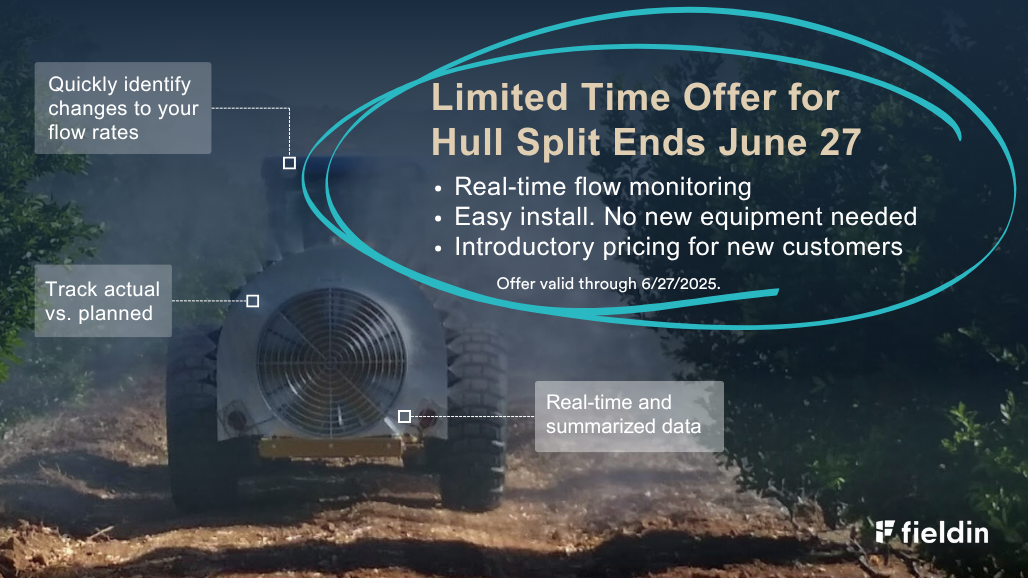
    Through a new partnership with ARAG and PAS, Fieldin now offers real-time flow monitoring that gives growers precise, in-the-moment visibility into their spray operations. This technology eliminates the guesswork around what was applied and how much, allowing farm managers to make data-driven adjustments on the fly.

    “The Hull Split spray is the most important of the season,” says Iftach Birger, Co-Founder and COO of Fieldin. “And when poor coverage means poor control, the risk of significant losses is real.”

    Research shows that three factors drive Hull Split spray performance: spray speed, GPA (gallons per acre), and canopy size. With Fieldin’s Remote Flow Monitoring, growers gain live visibility into both spray speed and GPA—the two most critical metrics for Hull Split accuracy—without needing to replace existing equipment or disrupt current workflows.

    Real-Time Visibility, Real-World Results

    Many growers rely on maps or assumptions to confirm their sprays. But these can be deceiving. In one case, Fieldin’s coverage maps indicated a block was fully treated—but flow data revealed the spray rate dropped near the end, leaving key sections under-treated. In another case, a 20% drop in application rate went undetected until Fieldin’s flow monitoring flagged it in real time.

    Without this technology, those issues would have gone unnoticed until it was too late, leading to reduced pest control, weakened nut quality, and potentially a second costly pass.

    Fieldin’s solution changes that. With Remote Flow Monitoring, managers can:

    • Verify coverage and GPA targets in real time

    • Streamline the calibration process

    • Identify underperforming machines or crews (e.g., RPM issues or clogged nozzles)

    • Avoid missed applications and unnecessary re-sprays

    • Protect yield, quality, and long-term resistance management

    Easy to Adopt, Built for the Field

    Best of all, the system integrates seamlessly with most sprayers and is quick to install. No major equipment changes are required, and Fieldin’s experienced team handles setup and onboarding to ensure success from day one.

    Though designed with Hull Split in mind, Remote Flow Monitoring delivers value across every spray event—from post-harvest cleanups to nutrient applications—making it a lasting investment in operational excellence.

    “We built this for real-world challenges,” Birger explains. “Growers need control and clarity, not complexity. That’s what we deliver.”

    Special Promotion for Hull Split Season

    To help new customers prepare for the Hull Split window, Fieldin is offering limited-time introductory pricing for its Remote Flow Monitoring solution.

    “This tool pays for itself quickly when you factor in the cost of a missed spray,” Birger says. “We’re here to make sure growers don’t have to take that risk.”

    To learn more or schedule a demo, visit fieldin.com.

    Follow Fieldin for more updates and in-season spray management tips:
    LinkedIn | Instagram | YouTube
  • Almond Alliance Honors Industry Leaders and Advocates

    Almond Alliance Honors Industry Leaders and Advocates

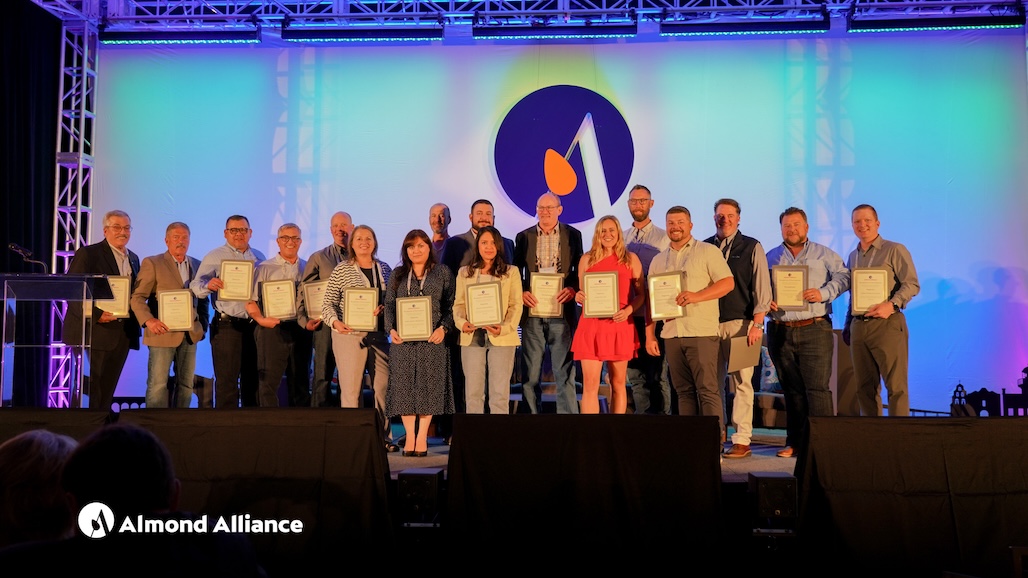
    The Almond Alliance proudly concluded its 43rd Annual Convention, held April 28 through May 1, 2025, at the iconic Town & Country Resort in San Diego. Under the theme “Making It Happen,” this year’s convention brought together almond industry leaders, innovators, and advocates nationwide to celebrate progress, share insights, and recognize excellence in every corner of the almond community.

    A highlight of the convention was the annual awards ceremony, which honored individuals and organizations that exemplify leadership, advocacy, and a commitment to quality across the almond industry.

    Junior Almond Advocate Award: Josiah Wenger
    The Junior Almond Advocate Award celebrates a young leader passionate about agriculture and the almond industry. This year’s honoree, Josiah Wenger, is a 10-year-old student at Hart Ransom Elementary and a proud member of Shilo 4-H. Josiah’s imaginative storytelling earned him the title of 4th-grade winner in the California Foundation for Agriculture in the Classroom’s “Imagine This” story writing contest for his creative submission, “Not Just Another Nut Story.”

    Inspired by his father’s work at an almond huller, Josiah’s story brought the almond industry to life for readers. He particularly enjoyed researching almond facts, crafting a catchy title, and touring his dad’s workplace to gain behind-the-scenes insight into almond processing. The Almond Alliance Board of Directors is honored to recognize Josiah’s talent, curiosity, and advocacy as this year’s Junior Almond Advocate.

    Junior Almond Advocate Award Josiah Wenger

    Good Manufacturing Practice Audit Awards
    The Almond Alliance’s Good Manufacturing Practice (GMP) program provides almond-specific food safety guidelines designed to assist hullers, shellers, and processors in meeting regulatory and customer expectations. Through our voluntary, unannounced audits, members showcase their commitment to excellence in food safety.

    The following companies successfully completed GMP audits this year and were recognized at the convention:

    Processors: Almond Ace Packing, Blue Diamond Growers, California Custom Processing, LLC, Capay Canyon Ranch, Fisher Nut Company, LLC, Golden State Almonds Inc., Grizzly Nut, LLC, Harris Woolf Almonds, Hilltop Ranch, Inc., JSS Almonds, Mariani Nut Company, Montpelier Nut Company, Purity Organics, Riverwest Processing Inc., RPAC, LLC, Stewart & Jasper, Sterilization & Fumigation Services, Treehouse California Almonds, Valley Pride, Vann Family Orchards

    Huller/Shellers: Braden Hulling, C.F. Koehnen & Sons, Central Valley Almond Association, Chico Nut Company, Cortez Growers Association, Golden Empire Shelling, Inc., Golden Valley Almond Hulling & Shelling, Inc., Hilltop Ranch, Inc., Kernpareil, Inc., Montpelier Nut Company, Parreira Almond Processing, Paiva Hulling & Shelling, Pohl & Holmes, Inc., Salida Hulling Association, Stewart & Jasper Orchards, Superior Almond Hulling, Treehouse California Almonds

    Associate Member of the Year: Chandler Automation
    The Associate Member of the Year Award recognizes an outstanding partner whose dedication strengthens both the Almond Alliance and the broader industry. This year’s award was presented to Chandler Automation for its exceptional support, technical innovation, and enduring commitment to the almond sector.

    Led by Sean Chandler, the company is renowned for exceeding expectations in serving its customers and advancing industry standards. Their contributions to the Almond Alliance and Almond PAC have played a vital role in shaping critical initiatives and propelling the industry forward.

    Associate Member of the Year, Sean Chandler of Chandler Automation

    Members of the Year: Blake Vann & Katie Staack
    In an unprecedented year, the Almond Alliance sought experienced leaders to provide stability and guidance. This year’s Member of the Year Award was jointly awarded to Blake Vann and Katie Staack in recognition of their extraordinary service.

    Together, they stepped into leadership roles, overseeing CEO responsibilities and navigating the transition to new executive leadership. Their steady hands and clear vision helped ensure continued momentum and unity within the Alliance during a pivotal period.

    Almond Alliance Members of the Year Blake Vann and Katie Staack

    About the Almond Alliance
    Almond Alliance is the leading authority in state and national policy, championing American almond farmers, industry, and community for the continued global growth, innovation, and success of American almonds and agriculture.

    Established in 1980, the Almond Alliance is a non-profit trade association with a local and international network of almond processors, hullers/shellers, growers, and allied businesses. The Alliance is dedicated to providing resources and solutions for our members, ensuring industry success and growth opportunities. Learn more at almondalliance.org.

  • American Pistachio Growers Introduces 2025-26 LeadOn Class

    American Pistachio Growers Introduces 2025-26 LeadOn Class

    American Pistachio Growers (APG) recently announced its 15th LeadOn pistachio industry leadership class.  Training motivated individuals with vested interest in the success and future of the U.S. pistachio industry, APG has developed this program to prepare the next generation of pistachio industry leaders.

    Jeff Anderson of Meridian Growers serves as the new Chair of the LeadOn Committee and shared his enthusiasm for the program. “I feel grateful for my new role as Chair,” he said.  “I believe that this course is going to play a more important role for APG moving forward.  Our purpose is to develop the next generation of APG leaders and introduce them to the inner workings of our brand.  Also, the support team is second to none, and I look forward to the future of the program.  I think we have an excellent class this year.”

    Interest in this leadership program has grown tremendously over the years, with the largest class ever having graduated in February 2025.  In order to refine the course and experience, the LeadOn committee determined to make some changes to the program effective this year. “We capped the class at 18 and will remain that size going forward,” Anderson explained.  “We like the smaller and more intimate class size.  Another change is a grading system for each application to make it a little more competitive.  I’m very excited for what’s to come!”

    This year’s LeadOn cohort includes:

    Cody Bennett, Mike Woolf Farming

    Samuel Dircks, Setton Farms

    Nolon Doss, Doss Agricultural Services

    Timarie Hansen, Hansen Ranches & McMarketing Company

    Carlson Herbert, ECO2MIX, Inc.

    Sean Hixson, Western Milling

    Seth Kirk, Seth Kirk Farms

    Cristian Lazcano, Meridian Growers

    Vikram Mann, Diversified Land Management, LLC

    Jonathan Martin, Paragon Personnel, Valley Ag Holdings LLC, Rooted Asset Management

    Esmeralda Miranda, Western Agricultural Processors Association

    Macie Movsesian, Valov Brothers Farms, LP

    Michael Pineda, B4M Land Management

    Aldo Ramirez, Manulife Investment Management

    Silas Rossow, California Ag Solutions

    Hannah Scott, Setton Farms

    Ricardo Soto, Meridian Growers Processing

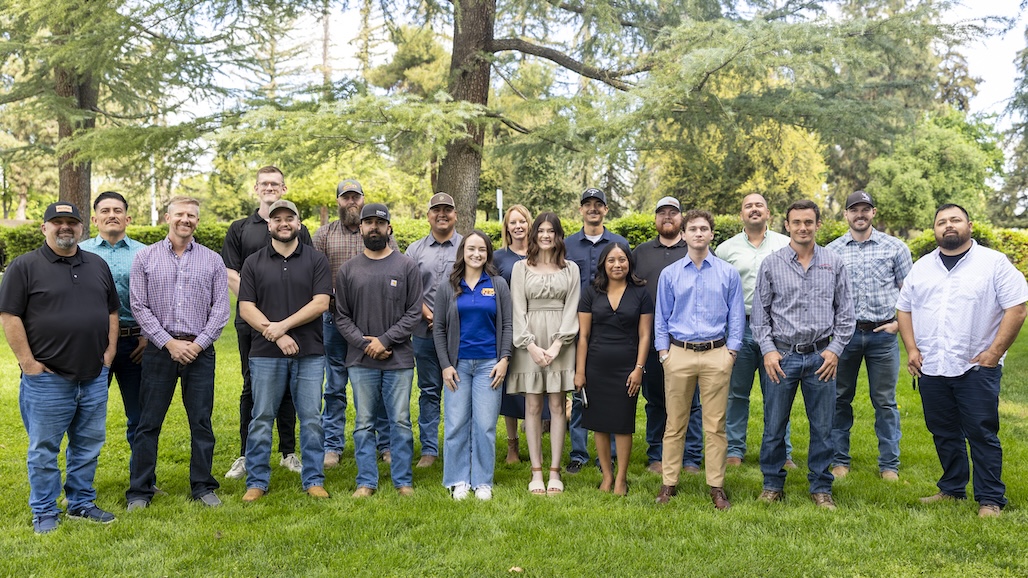
    Expected to graduate at APG’s 2026 annual Pistachio Industry Conference, this 2025-26 class will meet each month covering topics ranging from pistachio production and processing to marketing, food safety to government relations and advocacy, etc… Learn more about this year’s cohort in the coming issues of Pacific Nut Producer Magazine.  The monthly “LeadOn Spotlight” column will highlight each of the class members and their commitment to the future of the pistachio industry, as written by Pacific Nut Producer Editor Matthew Malcolm, an alumni of the program who serves on the LeadOn Committee. Subscribe to receive the monthly publication HERE.

  • Setton Pistachio Announces First Annual Drone Challenge Contest

    Setton Pistachio Announces First Annual Drone Challenge Contest

    Setton Pistachio of Terra Bella, Inc., the nation’s second-largest pistachio grower and processor, is excited to announce the recipients of their first annual Drone Challenge contest. This initiative was launched as part of Setton’s commitment to fostering advanced education for students and to encourage the development of future technology leaders and innovators. For more information, visit www.settonfarms.com.

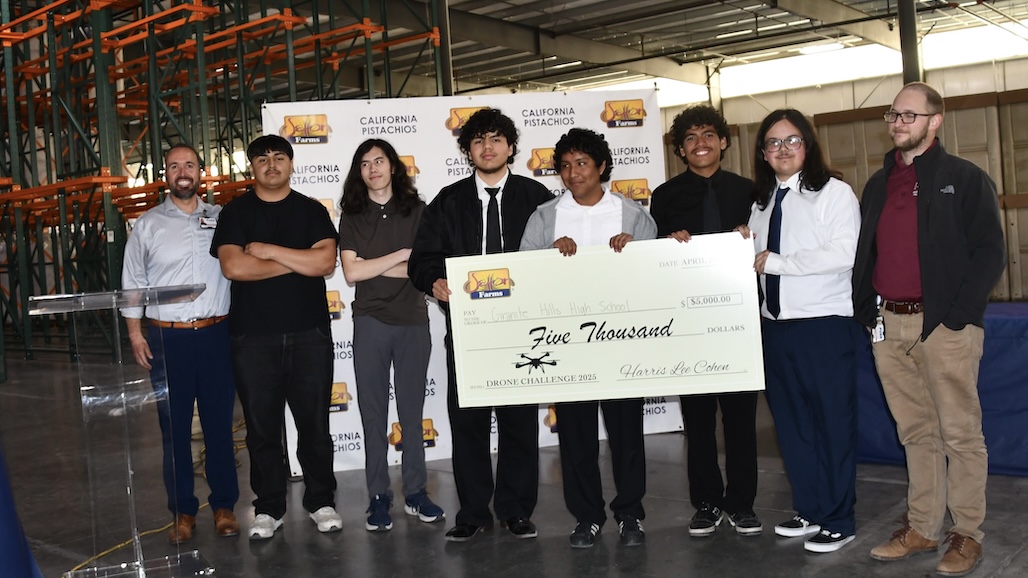
    Setton partnered with Harmony Magnet Academy (Academy of Aviation and Leadership), Porterville Military Academy (Academy of Engineering), Strathmore High School (Emerging Agriculture Technology Academy), and Granite Hills High School (Computer Operations Development in Education Academy), which created teams of students to participate in the challenge. Setton provided the drones, and each team was tasked with designing, developing, testing, and deploying Unmanned Aerial Vehicles for targeted operational missions. The school with the winning team received $5,000, and each student received $500. The second-place school received $2,500, and the third-place school received $1,000. Additionally, all the other students received a participation award of $250.

    The 2025 recipients are: first place, Granite Hills High School (students: Christian Gutierrez, Carlos Lara, Shane Thornton, Teddy Santoyo, Ezikel Jimenez, and Rodrigo Millan); second place, Porterville Military Academy (Team 1, students: Connor Lanning, Ariyiah Brazell, Iyari Saucedo, Sawyer Stephens, Abraham Valdovinos, and Aidsa Landeros); and third place, Porterville Military Academy (Team 3, students: Andrew Lemus, Luke Mathis, Jesus Nunez, Marcello Magana, Wendy Tapia, and Bryan Miranda).

    “Setton is proud to provide local high school students who excel in hands-on engineering a platform to innovate and collaborate,” said Setton Farms General Manager Lee Cohen. “This project supports our community outreach effort to foster the importance of integrating technology into local educational curriculum. It was excitingto launch this inaugural competition, and we were extremely impressed by the students’ exceptional projects.”

    “Our CODE pathway students have embodied the graduate outcome skills we expect of our students throughout this drone challenge, especially collaboration and problem-solving,” said Granite Hills High School Principal Jacob Bowker. I am extremely proud of their commitment to excellence and their persistence, as a team, throughout this inquiry process. It’s great to be a Grizzly!”

    Projects were judged on the effectiveness of mission accomplishment, flight plan efficiency, power management, cargo and payload planning, workflow design, mission complexity, and flight logs. The judging panel was comprised of Setton employees, school representatives, and local leaders. Winners were honored at an award luncheon at Setton Pistachio on Friday, April 25.

    Setton Farms launched its College Educational Scholarship Program in 2016 and has awarded 159 scholarships to employees, local community members, and students worth $199,750. For more information on available programs and Setton’s ongoing mission, please contact Patricia Murcia at (559) 535-6050.

    About Setton Farms:

    Setton Farms, the second largest pistachio grower-processor in the United States, is a family-owned and operated brand located in the heart of Central Valley, California since 1986. Highly regarded as “America’s Best Tasting Pistachios,” and widely recognized for its superior quality and tradition of excellence, Setton Farms grows, harvests, processes and manufactures pistachios using renewable energy, eco-friendly practices, and proprietary techniques. Setton Pistachio of Terra Bella, Inc. offers an established line of premium in-shell and kernel pistachio products that are non-GMO project verified, certified gluten-free, organic and kosher, while a select variety features the AHA heart-check mark. Setton provides pistachios to more than 60 foreign markets worldwide and distributes to wholesalers and retailers throughout the United States. For more information, visit settonfarms.com and follow on Instagram, Facebook, TikTok, X, and BlueSky.

  • USDA Forecasts Slightly Larger Almond Crop

    USDA Forecasts Slightly Larger Almond Crop

    Almond Board of California — The 2025 California Almond Subjective Forecast, published May 12 by the U.S. Department of Agriculture’s National Agricultural Statistics Service (USDA-NASS), estimates that the crop harvested in 2025 will come in at 2.8 billion pounds, 3 percent above last year’s 2.73 billion pounds.

    Forecasted yield is 2,010 pounds per acre, up 30 pounds from the 2024 harvest.

    “This larger crop estimate is what the industry expected after a solid water winter and generally good weather during bloom, but it’s also a testament to the hard work done by almond farmers throughout California,” said Clarice Turner, president and CEO of the Almond Board of California. “Demand for California almonds around the globe continues to grow and our almond farmers constantly deliver, producing high quality California almonds to meet that demand.”

    The report shared that the 2025 almond bloom began the first week of February in the Sacramento Valley and peaked during the middle of the month. The weather during bloom varied throughout the state, with storms bringing heavy rainfall, wind and hail. Crop development in the San Joaquin Valley was slower than normal due to cool temperatures and lower bee flight hours. However, conditions improved in early March with warm temperatures accelerating the crop’s progress through the end of bloom.

    There were also reports of significantly lower yields in the Nonpareil variety due to an overall lighter flower set than their pollinators. The impact on orchards from the intense summer heat in 2024 continues to be assessed. Growers are actively irrigating, fertilizing and treating their orchards for pests and diseases. Water is not expected to be an issue this year.

    This Subjective Forecast is the first of two production reports from USDA-NASS for the coming crop year. It is an estimate based on opinions from a survey conducted from April 21 to May 7 of 500 randomly selected California almond growers. The sample of growers, which changes every year, is spread across regions and different sized operations, and they had the option to report their data by mail, online or phone.

    On July 10, USDA-NASS will release its second production estimate, the 2025 California Almond Objective Report, which will be based on actual almond counts in approximately 1,000 orchards using a more statistically rigorous methodology to determine yield.

    This Subjective Forecast comes two weeks after Land IQ’s 2025 Standing Acreage Initial Estimate found that bearing almond acreage in California has slightly increased about 6,000 acres from the previous year to 1.389 million bearing acres.

    USDA-NASS conducts the annual Subjective Forecast and Objective Report to provide the California almond industry with the data needed to make informed business decisions. These reports are the official industry crop estimates.

  • Coach Prime Reveals the Nutrition Game Plan to Level Up Your Life — Almonds

    Coach Prime Reveals the Nutrition Game Plan to Level Up Your Life — Almonds

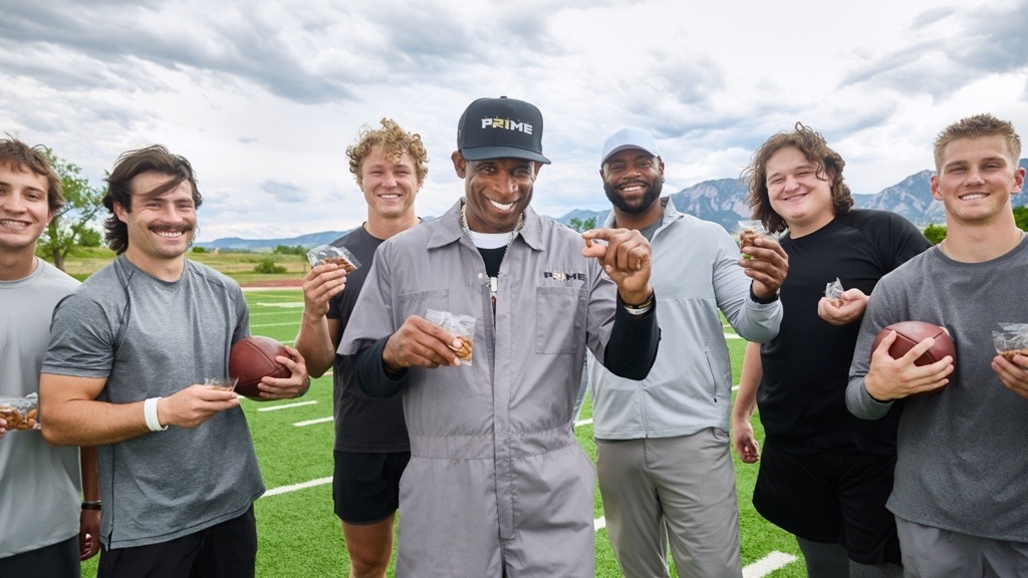
    Almond Board of California — Spring may be the offseason for football, but that doesn’t mean players stop putting in the work every day to stay on top of their game. Players aren’t in it alone though, which is why the ultimate motivator, Deion “Coach Prime” Sanders and California Almonds have teamed up to share how almonds and exercise recovery can help you own your prime, both on and off the field.

    “Almonds are not just a snack to me. They’re part of MY JOURNEY. They’re one of my pillars of consistency in preparing both physically and mentally for whatever’s next. And for me, that means at the HIGHEST LEVEL,” says Coach. “Your PRIME has no end destination… it’s A JOURNEY. And that journey should always be evolving and growing towards that place that you call ‘there’. In order to DOMINATE in that journey, you gotta put in the WORK – and it ain’t gonna be easy. Recovery is a key part of that journey, and you need to make sure you are recovering right.”

    Owning your prime is a mindset, not a moment. Coach Prime doesn’t just coach his players, he instills a consistent hunger for improvement and daily dedication – a lesson that can evolve your life too. Whether it’s taking daily walks, increasing lifting reps or training for a marathon, consistency is key. Hit a milestone? Celebrate and put in the work to reach your goal. To help you push to the next level, Coach Prime is dropping his wisdom to help you achieve your goals:

    Tip 1: Prime Time Health – Mind and Body in Sync
    If you ain’t takin’ care of YOU, how you gonna show up for anybody else? Your health? It’s non-negotiable. Gotta keep your mind sharp and your body ready for anything. That’s why I’m all about making the time to focus on my goals and taking care of myself. You want to stay prime? Then keep yourself right. Let’s ride!

    Tip 2: Fuel Up Like a Champion
    Listen, PRIME is ALL the time, and that means fueling up like a CHAMP. Right after my morning workout, I’m going for a handful of almonds for exercise recovery, then a power breakfast: oatmeal or grits, egg whites, and turkey bacon to keep me ready for whatever the day brings. Don’t get it twisted—you can hit a cheat meal every now and then, but when the foundation is solid, you will stay PRIME every single day.

    Tip 3: Every Day is PRIME
    It doesn’t matter if it’s game day, spending time with the fam, or reeling in the big catch, you always gotta be locked in, all day, every day. It don’t matter what day of the week it is—every day is game day when you’re living prime. IT DON’T STOP, BABY! You’re either in or you’re out, but PRIME don’t take days off!

    When you have your head in the game, an important part of reaching your goals is taking care of your body. Like Coach Prime emphasizes, exercise recovery helps you stay at your best and almonds can help you recover from exercise. Groundbreaking research shows that most study participants who ate two servings of almonds, (vs. a calorie matched cereal bar,) for four weeks prior to completing 90 minutes of exercise, reported reduced fatigue and tension, increased leg and lower back strength during recovery, and decreased muscle damage during the first day of recovery after completing the exercise.1 This research, funded by the Almond Board of California, was conducted over four weeks among 64 healthy, non-smoking U.S. adults ages 30 – 65 who are occasional exercisers (less than three sessions a week).

    For more tips on how to own your prime from Coach Prime himself, visit almonds.com/own-your-prime and follow Coach on Instagram to learn more about ways to own your prime in real time.

  • Strong California Walnut Crop Anticipated Following Ideal Spring Conditions

    Strong California Walnut Crop Anticipated Following Ideal Spring Conditions

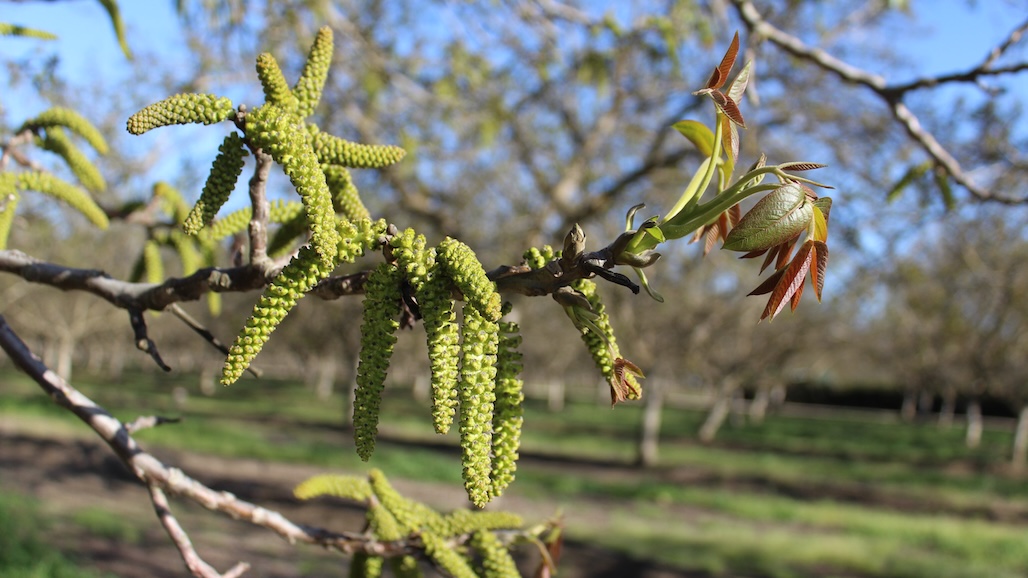
    In the midst of favorable growing conditions, California walnut growers are reporting outstanding early-season conditions that point to a positive outlook for the 2025 crop, according to industry experts monitoring the state’s orchards.

    Following three consecutive years of average to above-average rainfall and snowpack in the Sierra Nevada mountains, California walnut orchards are beginning the growing season with adequate surface water and replenished soil profiles. These favorable conditions, coupled with ideal spring temperatures, have created an environment for strong bloom and early shoot development.

    “Things are shaping up to be a tremendously good start to California’s walnut growing season,” said Davin Norene, owner of Big Time Farming and walnut growing specialist. “We are predicting good things ahead of this year’s crop.”

    Early walnut varieties began bud break in mid-April, with all varieties, including Chandler, now showing strong shoot growth throughout California’s prime growing regions. The orchards are currently in a critical growth phase, setting the stage for healthy nut development throughout the season.

    “The exceptional start to this growing season is a welcome and energizing reprieve after navigating a series of tough seasons that demonstrated the resilience and adaptability of California’s walnut industry,” said Robert Verloop, executive director and CEO of the California Walnut Board & Commission. “This spring, growers are well-positioned to capitalize on ideal soil moisture and perfect temperatures, setting the stage for strong yield and quality in the 2025 crop.”

    For more information on the California walnut industry, visit walnuts.org.

    About the California Walnut Board & Commission

    The California Walnut Board (CWB) and California Walnut Commission (CWC) represent more than 3,700 California walnut growers and approximately 70 handlers, grown in multi-generational farmers’ family orchards. California walnuts, known for their excellent nutritional value and quality, are shipped around the world all year long, with more than 99% of the walnuts grown in the United States being from California.

    The CWB, established in 1948, promotes usage of walnuts in the United States through publicity and educational programs. The CWB also provides funding for walnut production, food safety and post-harvest research. The CWC, established in 1987, is involved in health research with consuming walnuts as well as domestic and export market development activities.

    To explore recipes and learn more about California walnut growers, industry information and health research, visit walnuts.org.

  • Seeds for Bees Program Helps Growers Unlock the Benefits of Cover Crops

    Seeds for Bees Program Helps Growers Unlock the Benefits of Cover Crops

    Project Apis m.’s Seeds for Bees program is open and accepting application now through August. With support from several agricultural groups, including the Almond Board of California, the program is back again to help growers experience cover crop benefits in their orchard by providing them with free cover crop seed, nurturing a landscape that fosters both agricultural productivity and environmental stewardship.

    The Seeds for Bees program offers free seed support through Project Apis m. First-year participants are eligible for up to $2,500 worth of free seeds, while second-year participants can receive up to $1,500. Returning applicants can continue to benefit from discounted seed purchases through the program, ensuring ongoing support for seasoned growers.

    One of the program’s key strengths lies in its diverse seed offerings, tailored to meet the unique needs of various crops and farming practices. From popular mixes like the Pollinator Brassica, which blooms early to support almond cultivation, to specialized blends such as the Nitro Builder, designed to enhance nitrogen fixation, the program caters to a wide range of agricultural requirements.

    The benefits of cover crops extend far beyond their role in supporting pollinators. Improved water infiltration, often likened to a sponge, is one of the immediate advantages noted by growers. “Your soil is a lot like a sponge,” said Stetcyn Maldonado, manager of the Seeds for Bees program. “If you have a sponge that’s really open, you got all your pores in there and you can hold a lot more water and air than a sponge that’s squished. A cover crop really helps with getting your rainfall into your soil as quick as possible.”

    Addressing concerns about competition, Stetcyn reassures growers that cover crops, especially those offered through the Seeds for Bees program that are winter cover crops, are allies in weed suppression rather than adversaries to perennial crops. By occupying space and utilizing resources, cover crops naturally outcompete weeds, offering a sustainable solution to weed management and then are terminated before almond trees start growing again.

    With the application period open from April 1 to August 31, growers are encouraged to seize the opportunity and secure their spot in the program. “We’ve had a ton of applications already and the program is always increasing popularity,” Maldonado noted. “Seed is limited, so you want to make sure that your spot is secured,” The goal is to ensure timely delivery of seeds to growers’ doors, well before the optimal planting window from early to mid-October.

    Visit the Seeds for Bees website to learn more about the program and to apply for seeds. Additionally, upcoming videos featuring grower testimonies will offer insights into real-life experiences with cover crops and the Seeds for Bees program, providing a firsthand glimpse into its impact on agricultural practices. 

  • Almond Board Helps Growers with NRCS Funding Applications

    Almond Board Helps Growers with NRCS Funding Applications

    The Almond Board of California (ABC) has introduced a new feature in its California Almond Stewardship Platform (CASP) that streamlines the process for growers applying for Conservation Stewardship Program (CSP) funding from the Natural Resources Conservation Service (NRCS).

    The new CSP report in CASP is designed to facilitate the initial visit to NRCS offices. While it doesn’t change the paperwork required by NRCS, it helps start the conversation with NRCS conservationists by translating the practices implemented on the farm into NRCS practice codes. “This translation makes it easier for NRCS staff to understand the grower’s operation(s) and assess their eligibility for the CSP program,” said Michael Roots, ABC’s manager of field outreach and education.

    The new feature is designed to add value to the CASP system, which already helps growers self-assess their orchards. ABC worked closely with NRCS and CASP-partners SureHarvest to ensure the report’s usefulness for both growers and NRCS offices. By having this new report, growers will be well-equipped when beginning conversations with their local NRCS office about funding for conservation practices.

    Roots noted that the summary report creates an easy snapshot of a grower’s operation, possibly identifying other potential funding opportunities. “By simplifying the initial visit and providing a comprehensive overview of farm practices, the report opens doors to various incentive programs that can benefit growers and enhance their operations.”

    The Conservation Stewardship Program (CSP) provides assistance for growers who are looking to implement soil health practices. Roots said that a lot of growers are already doing some of these practices and could find funding to help expand those efforts. “The CSP program offers per-acre payments to growers for implementing practices that enhance soil health and overall farm sustainability,” he said. “These practices can include cover cropping, planting hedgerows and dust reduction on farm roads, as well as others. While the specifics of eligible practices are best understood by consulting local NRCS offices, the CSP program aims to reward growers for their efforts in maintaining and improving their stewardship practices.”

    Roots emphasized the importance of contacting local NRCS offices to understand the current status of funding and application acceptance. “Given the fluctuations in funding availability, reaching out to local offices can provide clarity on whether new applications are being accepted and what steps growers can take to prepare their applications”.

    Beyond the new CSP report, the California Almond Stewardship Platform offers numerous benefits to growers. After taking the initial self-assessment, the Platform provides tools like irrigation and nitrogen calculators, comparison reports, and a data share option that allows growers to share their data with handlers to help their conversations with buyers. These features help growers optimize their practices and contribute valuable data to the almond industry’s story.

    For growers interested in learning more about CASP and the new CSP report, visit AlmondStewardship.org. To check the availability of NRCS programs and start the application process, contact your local NRCS office.

  • Beehive Sensors Offer Hope in Saving Honeybee Colonies

    Beehive Sensors Offer Hope in Saving Honeybee Colonies

    A UC Riverside computer science team has developed a sensor-based technology that could revolutionize commercial beekeeping by reducing colony losses and lowering labor costs.

    Shamima Hossain and Boris Baer

    Called the Electronic Bee-Veterinarian, or EBV, the technology uses low-cost heat sensors and forecasting models to predict when hive temperatures may reach dangerous levels. The system provides remote beekeepers with early warnings, allowing them to take preventive action before their colonies collapse during extreme hot or cold weather or when the bees cannot regulate their hive temperature because of disease, pesticide exposure, food shortages, or other stressors.

    “We convert the temperature to a factor that we are calling the health factor, which gives an estimate of how strong the bees are on a scale from zero to one,” said Shamima Hossain, a Ph.D. student in computer science at UCR and lead author of a paper explaining the technology.

    This simplified metric — with a score of ‘one’ meaning the bees are at full strength — allows beekeepers unfamiliar with the underlying model to assess hive health quickly.

    A low-cost heat sensor on a beehive frame (UCR photo)

    Boris Baer, a UCR professor of entomology, believes the technology could revolutionize beekeeping, which is essential to vast sectors of global agriculture. Honeybees pollinate more than 80 crops and contribute an estimated $29 billion annually to U.S. agriculture. Yet bee populations have declined due to various factors, including habitat loss, pesticide exposure, parasites, and climate change.

    “Over the last year, the U.S. lost over 55% of its honeybee colonies,” Baer said, citing data from Project Apis m., which monitors beehive losses throughout the U.S. “We are experiencing a major collapse of bee populations, and that is extremely worrying because about one-third of what we eat depends on bees.”

    Beekeepers now rely on their own judgment and manual inspections to detect problems, often leading to delayed interventions. With EBV, they can get real-time insights and predict conditions days in advance, significantly reducing labor costs, said Baer, who collaborated with Hossain and other scientists at UCR’s Bourns College of Engineering.

    “People have dreamed of these sensors for a very long time,” Baer said. “What I like here is that this system is fully integrated into the hive setup that beekeepers already use.”

    Temperature fluctuations are among the first responses to any kind of threats to a hive’s health. Honeybees maintain a precise internal hive temperature between 33 and 36 degrees Celsius (91.4–96.8°F), a requirement for proper brood development and colony survival, Baer said.

    The EBV method is based on thermal diffusion equations and control theory, making its predictions interpretable to both scientists and beekeepers, Hossain said. The model uses temperature data collected from low-cost sensors installed inside the hive, feeding that information into an algorithm that predicts hive conditions several days in advance.

    In tests conducted at UCR’s apiary, the EBV method analyzed data from 10 hives during initial development and later expanded to 25 hives. The technology has already proven its effectiveness, detecting conditions that required beekeeper intervention.

    “When I looked at the dashboard and saw the health factor dropped below an empirical threshold, I contacted our apiary manager,” Hossain recalled. “When we went to check the hive, we found that there was actually something wrong, and they were able to take action to manage the situation.”

    Hyoseung Kim, an associate professor of electrical and computer engineering at UCR, explained that keeping costs low — under $50 per hive — is a high priority.

    “There are commercial sensors available, but they are too expensive,” Kim said. “We decided to create a very cheap device using off-the-shelf components so that beekeepers can afford it.”

    The research team is already working on the next phase, which is to develop automated hive climate controls that can be installed on hives and respond to EBV’s predictions, adjusting hive temperatures automatically.

    “Right now, we can only issue warnings,” Hossain said. “But in the next phase, we are working on designing a system that can automatically heat or cool the hive when needed.”

    The title of Hossain’s paper is “Principled Mining, Forecasting and Monitoring of Honeybee Time Series with EBV+” In addition to Hossain, Baer and Kim, the co-authors are Christos Faloutsos, professor of computer science at Carnegie Mellon University, and Vassilis Tsotras, professor of computer science and engineering at UCR.

    All the authors are with UCR’s Center for Integrative Bee Research, one of the largest pollinator health research hubs in the nation.

    The interdisciplinary collaboration was made possible through the UCR Data Science Center and the RAISE@UCR AI Institute. The research also has been supported by the U.S. Department of Agriculture’s National Institute of Food and Agriculture grants No. 2024-67022-43695 and No. 2024-67021-43696; UC Multicampus Research Programs and Initiatives award # M21PR2306; a UCR’s SoCal OASIS™  funding award; and the UCR Delfino Agriculture Innovation Seed Fund. — By David Danelski, UC Riverside