Category: Pistachios

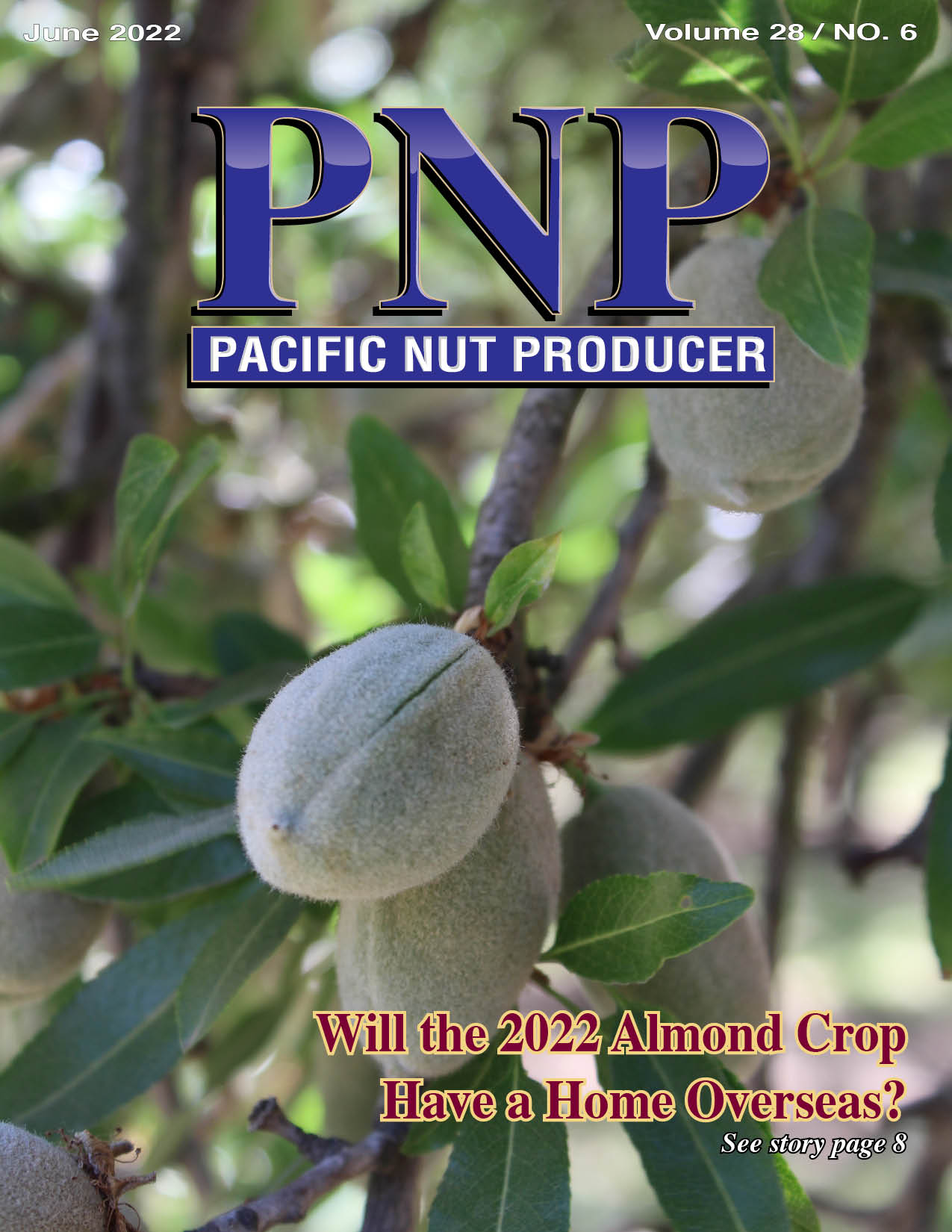
  • Pacific Nut Producer June Issue

    Pacific Nut Producer June Issue

    PNP622
    Pacific Nut Producer June Issue

    [btn btnlink=”https://malcolmmedia.com/order-a-back-issue/back-issue-pacific-nut-producer-magazine/” btnsize=”full” txtcolor=”#ffffff” color=”#FFF” bgcolor=”#492500″ btnnewt=”1″ nofollow=”1″]Order A Back Issue[/btn]

    [btn btnlink=”http://malcolmmedia.com/pacific-nut-producer-magazine-subscriptions/” btnsize=”full” txtcolor=”#ffffff” bgcolor=”#492500″ btnnewt=”1″ nofollow=”1″]Subscribe Free[/btn]
    [three_fifth_last]

    Contents of the June Issue:

    Shakin’ it Up at the Almond Alliance Convention
    Industry Issues & Solutions Discussed

    Almonds May Lose Their Place in the Global Market
    Foreign Shipping Vessels Fail to Honor Contracts

    Whole Orchard Recycling & Cover Crops
    Researchers Present Findings at UCCE Walnut Meeting

    June Orchard Tasks
    Almonds, Hazelnuts, Pecans, Pistachios

    [/three_fifth_last]

  • Japanese Consumers Crave California Almonds, Walnuts & Pistachios

    Japanese Consumers Crave California Almonds, Walnuts & Pistachios

    According to the USDA Foreign Agricultural Service, a strong demand for U.S. Tree Nut products continues in Japan, driven by the growing health-oriented trends among Japanese consumers. In 2021, fresh and dried nut imports to Japan totaled $491 million, of which 78.2 percent or approximately $384 million was from the United States. The key market sectors for U.S. Tree Nuts are in bakery and retail, valued at $215.1 million. Almonds and walnuts are almost exclusively supplied by the United States.

    General Information:

    Historically, walnuts and chestnuts were grown wild or cultivated on a very small scale for local consumption. Since Japan started importing nuts in the 1950’s, nuts such as almonds and mixed nuts have been used as a snack to eat with alcoholic drinks or as ingredients for cookies and chocolates. Except for certain walnut production areas, only in recent years have nuts been used for cooking. The Japan Nuts Association was established in 1993, with seventy-three importers and distributors.

    Market Trends:

    Japan has almost no production of nuts, except for very limited production of walnuts (approximately one hundred eighty tons per year). As a result, consumers of nut products rely heavily on imports. The market had been very limited, but stable, because nuts were mostly used as ingredients for the bakery and confectionary industry and the retail price for nuts was relatively higher. Over the past decade, consumption of almonds and walnuts has gradually increased, with imports reaching 42,489 metric tons (MT) (a record high) and 22,527 MT, respectively. Meanwhile, chestnuts have seen dramatic declines in import volumes over the past twenty years. Pistachio imports have been stable but has gradually increased in small amounts over the past couple of years.

    The key market sectors for tree nuts are bakery (55 percent) and retail (33 percent). For confectionary and baking industry, the following processed nut items have been most widely used:

    Walnuts: 1) Raw shelled light-color medium pieces, 2) Raw or roasted shelled light-color small pieces

    Almonds: 1) Blanched powder, 2) whole, 3) Roasted cuts, 4) Sliced

    Pistachios: 1) In-shell, 2) Raw shelled, 3) Praline rolled into paste, 4) Cuts (for topping)

    In the baking sector, walnuts are the most frequently utilized tree nuts, in a variety of bread items and Japanese sweets. In the retail sector, nuts in a 40-55g package or 100g package are popular at convenience stores and supermarkets, and 200g or 500g package are popular at specialty stores, and internet shops. At the retail stores, nuts are placed on the shelf for the baking ingredients and/or the shelf for the snacks. Salted mixed nuts for snacking or accompanied with alcoholic drinks are traditional methods of consumption and still popular in the retail sector. However, unsalted straight nuts are gaining in popularity due to the proliferation of information on the health benefits and versatility in usage for each type of nut. Snack nuts mixed with dry fruits, such as trail mix, are still not common but cereal snack bars, some sold with the Nutritional Supplement Foods label, with nuts and dry fruits have been popular in the Japanese market.

    In the retail sector, mixed nuts are sold best among nuts categories (including peanuts), followed by peanuts and chestnuts. In recent years, Japanese consumers have become more health-conscious and have become more educated on the nutritional benefits both almonds and walnuts provide. Strategic marketing and promotion of the health and beauty benefits have continued to be effective by major television stations as well as on internet and social media sites. Health-related messaging includes key words like omega-3, anti-oxydant, vitamin E, vitamin B, minerals, oleic acid, anti-aging, reducing cholesterol, zero cholesterol, healthy blood vessels, healthy brain, healthy skin, etc. This type of messaging has been key to promoting nuts and nut products to Japanese consumers.

    During the peak of the COVID-19 pandemic in 2020-2021, sales of nuts and dry fruits increased in the retail sector due to consumer dining changes, from dining-out to dining in the household. Some stores reported between 120-130 percent increased sales and the expansion of shelf space by 10 percent. Overall, snacking became one of the growing trends during the stay-at-home/teleworking environment. “New Snacking” included nuts, dry fruits, and vegetable chips. In addition to this, consumers made shifts to “unsalted” nuts, as a healthier alternative.

    Pistachio’s use as an ingredient is another in-demand product. Major snack/confectionary manufacturers created new snacks using more nuts including pistachios. Major manufacturers including Morinaga and Tirol have new ice cream and chocolate products utilizing pistachios. Major convenience stores such as 7-Eleven and Family Mart created desserts with pistachios, which have also been sold in cafes and at other specialty stores. In addition to this, one of the major specialty store chains KALDI started selling pistachio spread. A pistachio specialty store “Pista and Tokyo” recently opened at one of the premium locations near Tokyo Station, demonstrating the strong popularity pistachios have gained among Japanese consumers. Imports for U.S. pistachios have been flat but have been gradually increasing over time. Import data from December 2020 to November 2021, shows an increase of 146.3 percent compared to the previous year. Approximately 93 percent of total pistachio imports in 2020 were from the U.S., with the rest mostly originating from Iran and Italy.

    Imports of Tree Nuts:

    Each type of nut is imported mainly from a sole exporter because of specific production conditions such as climate, soil, and ability for mass production and quality control. That dependence can cause unstable supplies and prices; and Japanese importers are seeking a wider variety of potential suppliers to fulfill market demand. The United States dominates as supplier of almonds, walnuts, and pistachios, and ships in lesser quantities. Australia supplies the majority of macadamia nuts; chestnuts are imported primarily from China and Korea, while Turkey is the largest supplier of hazelnuts. Cashews and coconuts are sourced mostly from other countries.

    The U.S.-Japan Trade Agreement (USJTA) entered into force on January 1, 2020 and is in year three of enforcement. Following implementation of USJTA, nearly 90 percent of U.S. food and agricultural products imported into Japan are now duty free or receive preferential tariff access. In 2021, Japan imported $491 million in fresh or dried nuts from the world, of which 78.2 percent (approximately $384 million) was from the United States.

    Major Tree Nuts Importers, Processors and Distributors in Japan

    Japan is a very competitive market, and buyers in the food and beverage industry are inundated with meeting requests. Therefore, they often do not respond to “cold calls” or requests for meetings with individual companies. Instead, they prefer to find new products at large trade shows, or specially targeted trade showcases, where they can look at many products at once. Therefore, the best way to find buyers is to participate in one of the food related trade shows or showcases in Japan. The ATO organizes U.S. pavilions at the Supermarket Trade Show in February and FOODEX Japan in March, and many Japanese buyers are invited to stop by the U.S. pavilion to meet with exhibitors. The ATO also supports exhibitors at the shows by providing a market briefing, business meeting lounge, etc. Please contact the ATOs for more information about trade shows. The recommended trade shows featuring USA Pavilions in Japan are as follows:

    -FOODEX Japan in Kansai 2022, July 27-29, 2022, Intex Osaka, Osaka

    -FABEX Kansai 2022, September 7-9 2022, Intex Osaka, Osaka

    -Supermarket Trade Show 2023, February 15-17, 2023, Makuhari Messe, Chiba

    -FOODEX Japan 2023, March 7-10, 2023, Tokyo Big Sight, Tokyo

    Contact Information:

    The Japan Nuts Association represents the interests of wholesalers, processors, and trading firms. For their member list, please visit: http://www.jna-nut.org/?page_id=16

    FAS/USDA Offices in Japan

    URL: http://www.usdajapan.org/ Agricultural Trade Office, Tokyo ATOTokyo@ usda.gov

    Tel: + 81-3-3224-5118 Agricultural Trade Office, Osaka ATOOsaka@ usda.gov

    Tel: + 81-6-6315-5904 

    — By Juri Noguchi, USDA Foreign Agricultural Service

  • EU Proposes New MRL Regulation on Imported Pistachios

    EU Proposes New MRL Regulation on Imported Pistachios

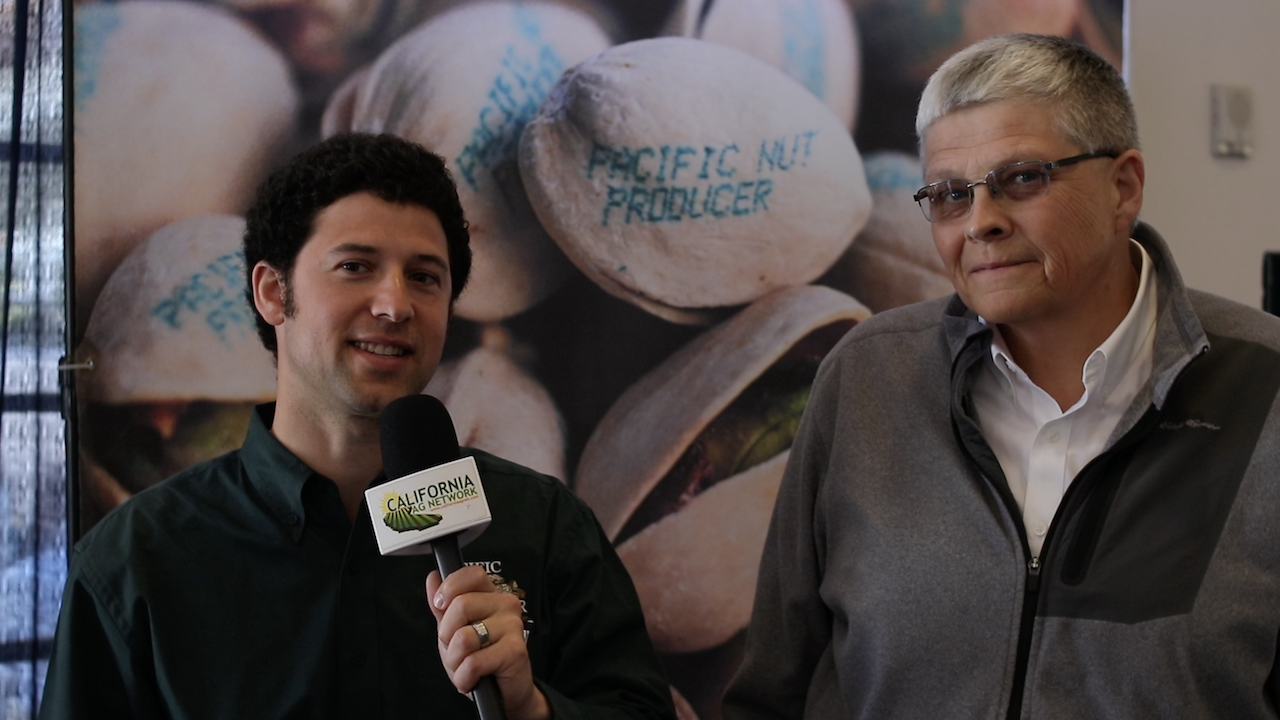
    It appears that aflatoxin will not be the only naturally occurring mold sabotaging pistachio shipments destined for the European Union.  The EU is proposing a new MRL regulation on Ochratoxin A in pistachio imports to go into effect January 1, 2023. But what is Ochratoxin A and what should the pistachio industry know about this? Watch this brief interview with Thomas Jones from the Safe Food Alliance as he explains.  Read more about it in Pacific Nut Producer Magazine.
    Please thank this video’s sponsor Trece for their industry support.
  • Navel Orangeworm Sterile Insect Technique Moving Forward

    Navel Orangeworm Sterile Insect Technique Moving Forward

    Many tree nut growers are aware of the pistachio industry’s investment and government support of sterile insect technique as another tool to suppress navel orangeworm populations in the orchard, but recognize that the research takes time and money. So how far have we come and does the technique still have promise for combatting the tree nut industry’s number one insect pest? Watch this brief video to find out, featuring Ted Sheely, a cotton and pistachio grower who has been following this program long before it was used for navel orangeworm. Read more in Pacific Nut Producer Magazine.
    Please thank this video’s sponsor Trece for their industry support.
  • Pacific Nut Producer May Issue

    Pacific Nut Producer May Issue

    PNP522
    Pacific Nut Producer May Issue

    [btn btnlink=”https://malcolmmedia.com/order-a-back-issue/back-issue-pacific-nut-producer-magazine/” btnsize=”full” txtcolor=”#ffffff” color=”#FFF” bgcolor=”#492500″ btnnewt=”1″ nofollow=”1″]Order A Back Issue[/btn]

    [btn btnlink=”http://malcolmmedia.com/pacific-nut-producer-magazine-subscriptions/” btnsize=”full” txtcolor=”#ffffff” bgcolor=”#492500″ btnnewt=”1″ nofollow=”1″]Subscribe Free[/btn]
    [three_fifth_last]

    Contents of the May Issue:

    Preparing Your Almond Crop for Stockpiling
    Managing Moisture Content is Key & Begins in the Orchard

    Sky’s Not the Limit for the American Pistachio Industry
    Growers Unite at Industry Conference

    Pistachio Crop Predictions & Drought Mitigation
    Pistachio Day Presents Industry Updates

    May Orchard Tasks
    Almonds, Hazelnuts, Pecans, Pistachios, Walnuts

    [/three_fifth_last]

  • American Pistachio Growers Ramps Up Marketing Efforts Ahead of Industry Growth

    American Pistachio Growers Ramps Up Marketing Efforts Ahead of Industry Growth

    As the US Pistachio industry continues to ramp up in production, global marketing efforts have never been more critical to keep demand ahead of supply. Watch this brief interview with Judy Hirigoyen from American Pistachio Growers as she shares how American Pistachio Growers is leading the charge.
    Please thank this video’s sponsor Trece for their industry support.
  • Pistachio Conference Attendance Shatters Record, as is Likely for the 2022 Crop

    Pistachio Conference Attendance Shatters Record, as is Likely for the 2022 Crop

    American Pistachio Growers gathered in record numbers recently for their annual conference in Carlsbad, CA.
    Watch this brief interview with Richard Matoian, President of American Pistachio Growers as he shares highlights, and how the record attendance is also a reflection of the growth of the industry and new heights in pistachio acreage and production being reached.
    Please thank this video’s sponsor Trece for their industry support.
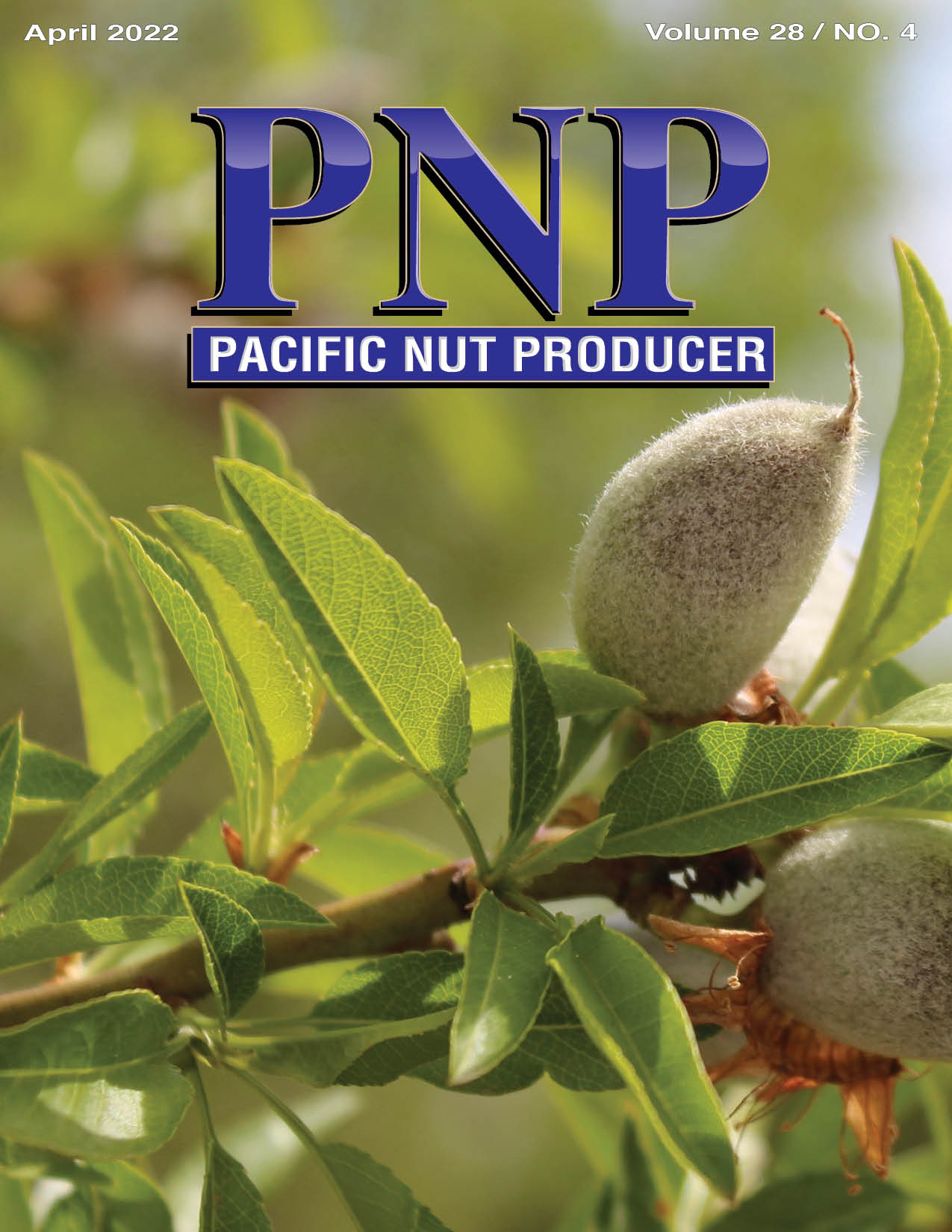
  • Pacific Nut Producer April Issue

    Pacific Nut Producer April Issue

    [btn btnlink=”https://malcolmmedia.com/order-a-back-issue/back-issue-pacific-nut-producer-magazine/” btnsize=”full” txtcolor=”#ffffff” color=”#FFF” bgcolor=”#492500″ btnnewt=”1″ nofollow=”1″]Order A Back Issue[/btn]

    [btn btnlink=”http://malcolmmedia.com/pacific-nut-producer-magazine-subscriptions/” btnsize=”full” txtcolor=”#ffffff” bgcolor=”#492500″ btnnewt=”1″ nofollow=”1″]Subscribe Free[/btn]
    [three_fifth_last]

    Contents of the April Issue:

    Nut Growers Hear Latest
    Challenges, Opportunities Considered at Grape, Nut & Tree Fruit Expo

    Mummy Sprays to Augment Sanitation in Almonds
    Timing, Considerations & Clarifications for NOW

    40th Anniversary Almond Alliance Convention
    Almond Industry to Gather in Huntington Beach, May 2-5th

    April Orchard Tasks
    Almonds, Hazelnuts, Pecans, Pistachios, Walnuts

    [/three_fifth_last]

  • Dennis Woods to Lead New American Pistachio Growers Board as Chairman

    Dennis Woods to Lead New American Pistachio Growers Board as Chairman

    The election results for six Board seats, for the 2022 American Pistachio Growers (APG) Board of Directors, were recently announced during the Annual Membership Meeting. The newly elected board members are Adam Kusmak of Tularosa Pistachio Groves, New Mexico, and from California, William Bourdeau of Harris Farms, Paul Huckabay of Keenan Farming Company, Raj Kahlon of RHM Farms, Jim Zion of LJL Farming, and Ali Amin of Primex Farms, who has been re-elected to the board for a second term. Rudy Placencia of Touchstone Pistachio Company was appointed to the Board in November to fill a vacant seat.

    The 2022 APG officers were also unanimously confirmed for the year: Dennis Woods, Chair; Vice Chair Justin Wylie; and Rich Kreps Secretary/Treasurer. As for the six who have completed their terms of service, APG offers their heartfelt gratitude to them. The invaluable leadership and the many hours of volunteering that Dominic Pitigliano, Gary Smith, Steve Moore, Steve Burcham, and Danielle Kusmak gave, on behalf of APG, is deeply appreciated.

    American Pistachio Growers’ Board of Directors consists of 18-member growers who bring a diverse range of knowledge, perspective and experience to the association. Board members, elected by APG growers, serve a 3-year term, and may serve up to 2 consecutive terms.

  • Pistachio Growers Ronnie and Tom Clark Announced Kiwanis Farmers of the Year

    Pistachio Growers Ronnie and Tom Clark Announced Kiwanis Farmers of the Year

    The “Noon” Kiwanis Club of Tulare recently presented its 61st “Farmer of the Year” award to Ronnie and Tom Clark, pistachio and almond growers from Tulare at the club’s annual luncheon in Tulare.

    Ronald (known as Ronnie) has lived in Tulare County his entire life, is married to Robyn with sons Christopher and Michael (deceased) and stepsons Derek & Brandon Walker.  Brandon works with Ronnie in the family business. Ronnie graduated from Tulare Western High School in 1970, attended COS and Cal Poly, and started farming in 1975 north of Tulare growing cotton, wheat, and corn. A partnership with his father Bob, uncle Don, and cousin Tom known as Clarklind Farms was formed in 1983 and today farms pistachios and almonds. Clarklind Farms has also received numerous awards over the years for their high yields in grain corn Ronnie serves on a variety of boards including Kaweah Delta Water Conservation District board, Kaweah and St. Johns Rivers Association, Mid Valley Growers, Pistachio Growers, Inc., and the board of the International Agri Center. In the past he has also served on the San Joaquin Valley Cotton Board, California Pistachio Commission, Tulare High School Ag Advisory, and is a member of the . Ronnie and Tom both support many local efforts for youth sports, youth 4-H and FFA, youth exhibitors at the fair, and so many more charities too many to mention.

    Thomas (known as Tom) has been married to Denise for 42 years and has three grown children:  Ami, Chad, and Drew and five grandchildren; Drew becoming the fourth generation farmer in the Clark family.  Tom attended Tulare Western High and Fresno State University and played varsity golf all four years in high school. He is a partner in the Clarklind Farms operation with Ron which was formed in 1983. He began working at the age of 13, shoveling furrow ends during the summer and at age 16 was promoted to combine driver during his summers. He worked in laser scraping when he was 20 years old, in the early years of this emerging technology. He has been farming for 49 years in all and has served on the Tulare Irrigation District Board. He coached high school junior varsity golf for three years, and in his free time enjoys golfing, snow and water skiing and wake surfing.

    This annual awards luncheon recognizes the lifetime achievements of outstanding agriculturalists in our community and provides an opportunity for the Tulare Kiwanis to highlight the value of agriculture in our region and recognize an outstanding person or family.  In the past they have recognized fathers, sons, brothers, cousins, and many more.

    The luncheon included a video montage about the honorees and a look back at the past 60 years of honorees – an emotional and touching tribute to our farm community and the many wonderful farmers in our great community of Tulare.