Category: Industry News

  • Subjective Yield Survey Results Project an Oregon Hazelnut Crop of 62,000 Tons

    Subjective Yield Survey Results Project an Oregon Hazelnut Crop of 62,000 Tons

    The Hazelnut Marketing Board has concluded its annual Subjective Yield Survey, and according to projections, the harvest is anticipated to be approximately 62,600 tons.

    The Subjective Yield Survey is conducted by sending cards to hazelnut farmers and asking them to project what they think their yield will be based on how hazelnuts trees look in mid-July. A challenging weather year led to very divergent answers on many survey cards. While some growers projected incremental and exponential growth, others anticipate decreases in yield due to the ice storm in February and extreme heat and drought during the summer months.

    The Subjective Yield Survey is typically done in conjunction with the Objective Yield Survey conducted by USDA-NASS. However, due to a labor shortage, the Objective Yield Survey could not be completed this year, thus making the data in the Subjective Yield Survey even more critical to the industry.

    The viable survey cards were cross-referenced with field mapping statistics from Pacific Agricultural Survey, per its December 2020 report. When extrapolated out, the projected crop size is 125,233,017 pounds or 62,603.652 tons, which would be a new high for the industry.

    The following table details these calculations:

    Any questions regarding the Subjective Yield Survey may be directed to the Hazelnut Industry Office at 503-582-8420.

  • Diamond of California® Debuts Nut Coatings, A Keto-Friendly Breading Alternative in Three Flavors Now Available

    Diamond of California® Debuts Nut Coatings, A Keto-Friendly Breading Alternative in Three Flavors Now Available

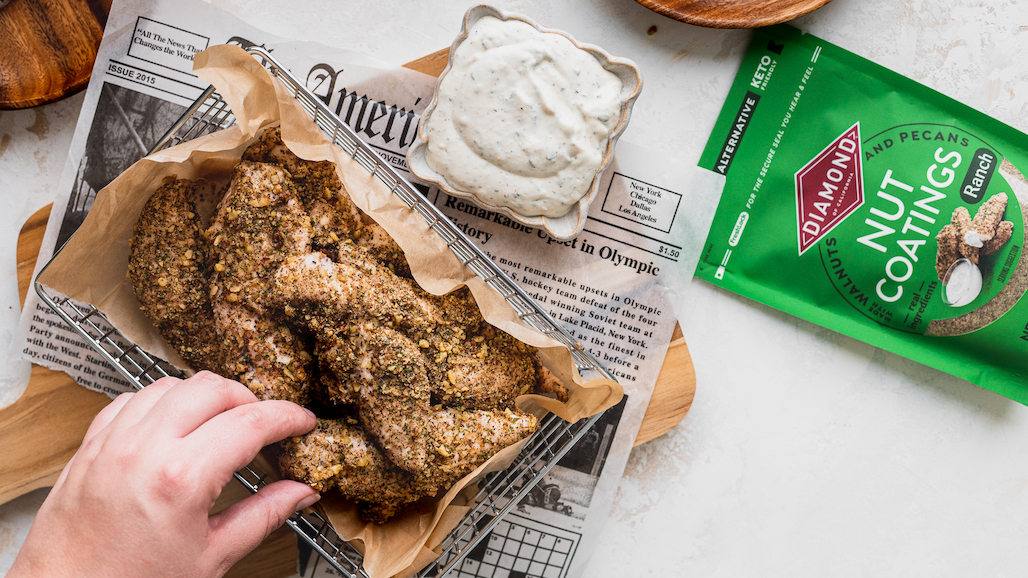
    Diamond of California®, the century-old producer of “Made for Homemade” specialty nuts and pioneer of nut-based products like Nut Pie Crusts and Snack Walnuts, announces today the launch of its newest innovation, Nut Coatings. Available now online and this Fall in-stores nationwide, Nut Coatings (SRP $3.99/5oz bag) are a keto-friendly and low-carb breading alternative crafted with a nut base of walnuts and pecans simply seasoned with herbs, spices, and other real ingredients. Nut Coatings are available in three flavors including Original, Italian, and Ranch, and serve as a true alternative for standard breading in recipes like meatballs, chicken, macaroni and cheese, eggplant parmesan, and more.

    In order to create a nut-based breading alternative that can crust, top, and coat, Diamond of California® partnered with its product development team and specialty spice experts to create the perfect texture and flavors that complement meats, fish, vegetables, pastas, and plant-based proteins. Nut Coatings were also tested thoroughly to ensure they could stand up to everyday cooking techniques. Plus, due to the natural oils present in nuts, Nut Coatings adhere without binders like eggs or flour and even perform best when baked or air-fried without the addition of extra fats, allowing for less fat overall and delivering an appealing texture.

    “At Diamond of California® we strive to create innovative products that are functional, delicious, and health-conscious,” said Craig Tokusato, CMO of Diamond of California®. “With the rise of keto and plant-based diets, we saw a need for a cleaner breading alternative using what we know best, nuts. Competitors in the space often make their breading products with ingredients like high fructose corn syrup, maltodextrin, and sugars–and bread, of course–so we opted to keep it simple. Our Nut Coatings are made with our own walnuts and pecans as well as real seasonings and ingredients that enhance at-home creations while adding nutritional value.” See HERE for Nut Coatings ingredients versus a leading breading product.

    Diamond of California® Nut Coatings are now available nationwide on shop.diamondnuts.com and over the next few months in select locations of major retailers including Albertsons and Publix.

    To learn more about Nut Coatings or for more information on Diamond of California® visit their website (https://www.diamondnuts.com) or follow along @DiamondNuts on Instagram, Facebook, and Pinterest.

    About Diamond of California®

    Diamond of California®, the century-old producer of specialty nuts, has worked with walnut growers since 1912, making the company one of the earliest pioneers of the farm-to-table movement. The company packages fresh walnuts, almonds, pecans, and other culinary nuts in whole, sliced, diced, and chopped forms. Their most recent innovations, Ready-to-Use Nut Pie Crusts and Ready-to-Eat Snack Walnuts, available in 8 flavors, can be found in the baking and snack aisles respectively. Headquartered in Stockton, California, Diamond of California® is located in the state’s heartland, where most of its orchards lie. Diamond of California® believes that nuts make good food even better. That’s why they’ve offered fresh, high quality and great tasting nuts that are truly made for homemade, for over 100 years.
  • California Walnut Crop Forecast Down 15%

    California Walnut Crop Forecast Down 15%

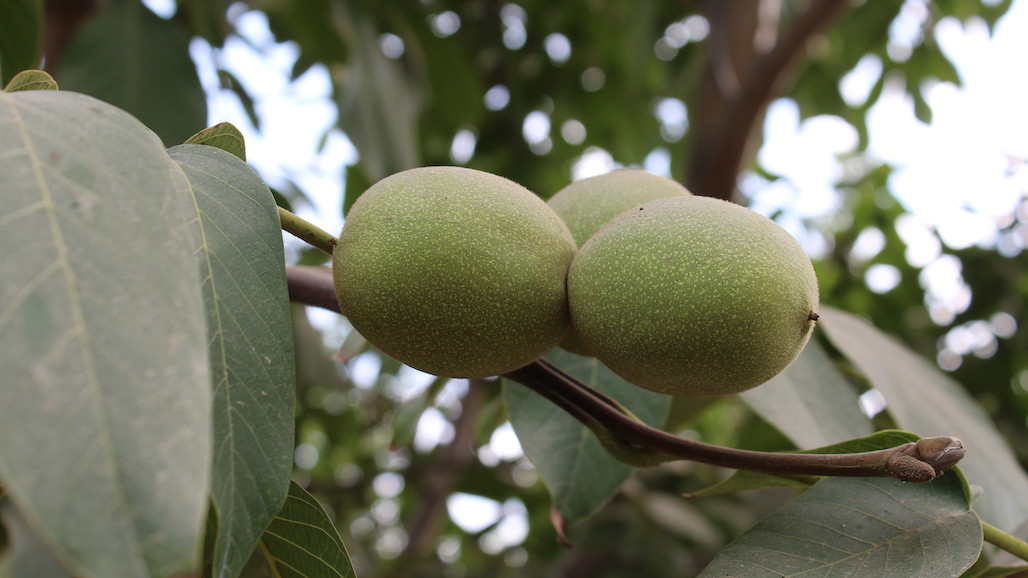
    USDA National Agricultural Statistics Service  The 2021 California walnut production is forecast at 670,000 tons, down 15% from 2020’s record production of 785,000 tons. The forecast is based on 385,000 bearing acres, up 1% from 2020’s estimated bearing acreage of 380,000.

    Widespread freezing temperatures in late fall of 2020 resulted in frost damage to walnut orchards across the state. Growers reported the frost damage delayed leaf out and reduced nut set in affected orchards. Additionally, because of the state’s drought conditions, orchards experienced a higher degree of freeze injury. Walnut growers throughout the state struggled with drought conditions and water availability, as most of the state is in a drought emergency. Chilling hours were up from last year.

    Survey data indicated an average nut set per tree of 992, down 17% from 2020s average of 1,197. Percent of sound kernels in- shell was 99.5% statewide. In-shell weight per nut was 22.2 grams, while the average in-shell suture measurement was 32.4 millimeters. The in-shell cross-width measurement was 33.4 and the average length in-shell was 37.9 millimeters.

    Estimated nut sets, sizing measurements, average number of trees per acre, and estimated bearing acreage were used in the statistical models.

    SURVEY HISTORY

    The Walnut O.M. Survey began in 1958 to fulfill industry needs for an accurate walnut production forecast prior to harvest. The original sample was chosen proportionally to county and variety of bearing acreage. With each succeeding year, additions and deletions have been made in the sample to adjust for acreage removed, new bearing acreage, and operations that choose not to participate in the survey.

    SAMPLING PROCEDURES

    The 2021 Walnut Objective Measurement (O.M.) Survey was officially conducted from July 25 through August 26, 2021. There were a few samples completed before July 25th for training and scheduling purposes. There were 1,402 trees sampled from 701 orchards.

    Once a block is randomly selected and permission is granted by the operation for enumerators to enter the block, two trees are randomly selected. An accessible branch is chosen which is 5- 15 percent of the total cross-sectional area of the primary limbs and reachable with a twelve-foot ladder. Measurements are made on the trunk, each primary, and each split leading to and including the accessible branch. The sample tree and accessible branch are marked by a single tag, so that the same trees are sampled the following year if that orchard is selected. On the accessible branch, every nut is counted and the first of every five nuts is picked for use in size and grade determinations. If available, at least ten nuts are harvested from the accessible branch for this purpose.

    The following measurements are made on nuts selected for sizing:

    1. Weight of nut including hull
    2. Width of shell at suture
    3. Width of shell 90 degrees to suture line (cross-suture) 4. Length of shell
    5. Kernel grade
    6. Weight of nut in-shell

    The Objective Measurement Survey is funded by the California Walnut Board.

    DATA RELIABILITY

    The 80 percent confidence interval is from 610,000 tons to 730,000 tons.

  • Pacific Nut Producer September Issue

    Pacific Nut Producer September Issue

    PNP921

    [btn btnlink=”https://malcolmmedia.com/order-a-back-issue/back-issue-pacific-nut-producer-magazine/” btnsize=”full” txtcolor=”#ffffff” color=”#FFF” bgcolor=”#492500″ btnnewt=”1″ nofollow=”1″]Order A Back Issue[/btn]

    [btn btnlink=”http://malcolmmedia.com/pacific-nut-producer-magazine-subscriptions/” btnsize=”full” txtcolor=”#ffffff” bgcolor=”#492500″ btnnewt=”1″ nofollow=”1″]Subscribe Free[/btn]
    [three_fifth_last]

    Contents of the September Issue:

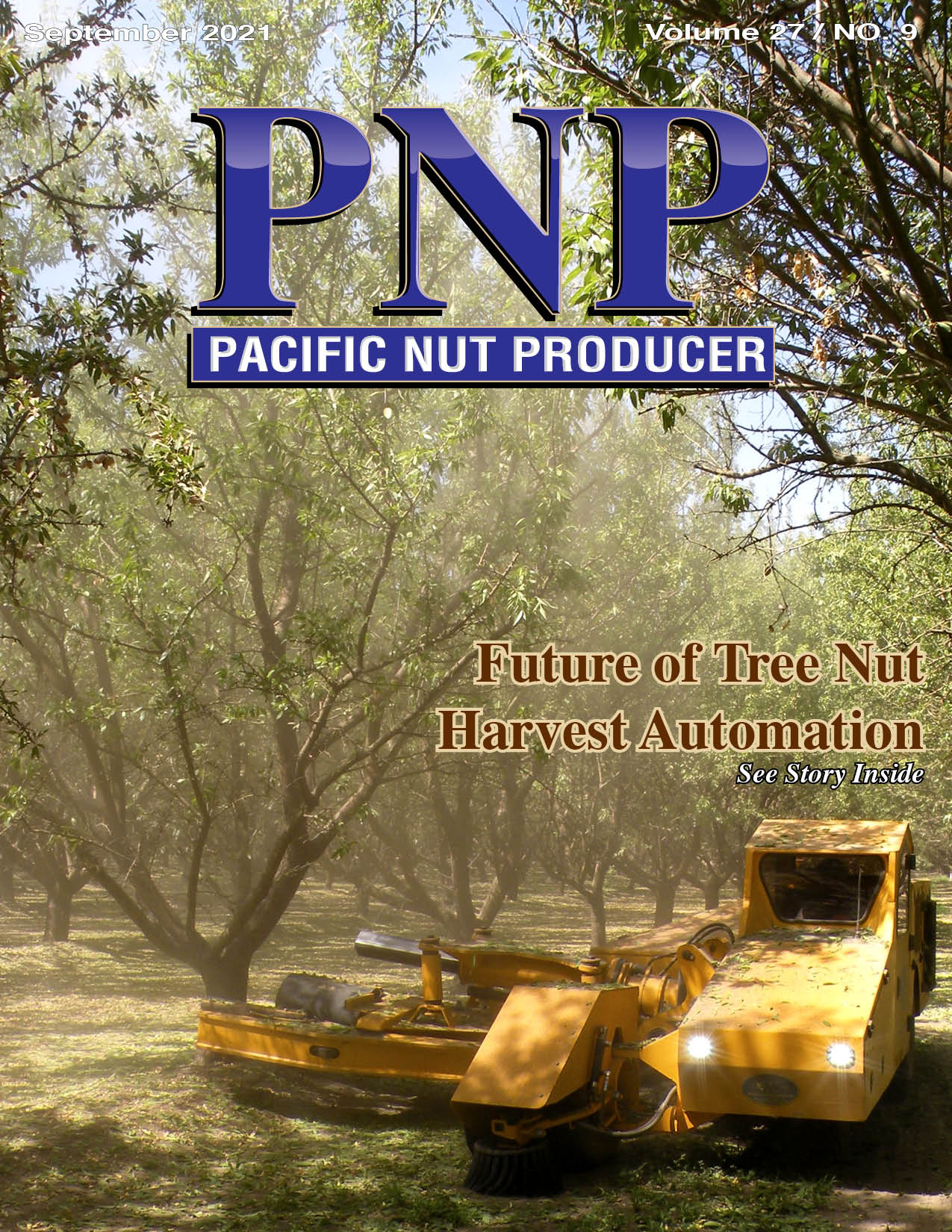
    The Future of Harvest Automation Begins Now
    Mechanical Harvesters to Meet the Natural Frequency of Each Tree

    Oregon Hazelnut Industry Triples in Size
    Acreage Trends Support Steady Growth

    New USDA Researcher Spotlight
    Angel Acebes-Doria to Support Macadamia Nut Growers

    September Orchard Tasks
    Almonds, Hazelnuts, Pecans, Pistachios, Walnuts

    [/three_fifth_last]

  • India’s FSSAI Issues Final Standards for Walnut Kernels

    India’s FSSAI Issues Final Standards for Walnut Kernels

    On July 30, 2021, the Food Safety and Standards Authority of India (FSSAI) published on its website the Food Safety and Standards (Food Product Standards and Food Additives) Third Amendment Regulations (2021). The Third Amendment Regulations (2021) relates to the final standards for walnut kernels, as well as to dairy and dairy products, oilseeds and products, margarine and fat spreads, cereal and cereal products among others. The implementation date for this amended regulation is February 1, 2022.

    DISCLAIMER: The information contained in this report was retrieved from the Food Safety and Standards Authority of India’s (FSSAI) website http://www.fssai.gov.in. The U.S. Embassy in New Delhi Foreign Agricultural Service (FAS) Office of Agricultural Affairs (OAA), USDA and/or the U.S. Government make no claim of accuracy or authenticity. The Government of India has not officially endorsed this report. Import approval for any product is subject to local rules and regulations as interpreted by Indian officials at the time of product entry. [Note: Use Google Chrome to access the links if they do not open in Internet Explorer].

    GENERAL INFORMATION:
    On July 30, 2021, the Food Safety and Standards Authority of India (FSSAI) published on its website the Food Safety and Standards (Food Product Standards and Food Additives) Third Amendment Regulations (2021).

    The Third Amendment Regulations (2021) relates to the final standards for walnut kernels, as well as to other food products. The implementation date for this amended regulation is February 1, 2022. The affected products include walnut kernels, buffalo milk, vegetable oils (including peanut, flaxseed, rapeseed, poppy seed, safflower seed, taramira, sesame, Niger seed (also often called Nyger Seed or Nyjer Seed), soybean, maize, watermelon seed, sunflower seed, avocado, grapeseed, interesterified and hydrogenated vegetables, margarine and fat spreads, soybean sauce, besan (ground de-husked Bengal gram flour), maize starch, oat products, soy dahi/yogurt, yellow pea powder, black, white and green peppers, dried sage, instant tea in solid form, caffeinated and non-alcoholic beverages, packaged drinking water, sweeteners, and chewing gum.

    Observations on the standards for walnut kernels from the current notification are further clarified immediately below. FAS New Delhi recommends a careful review of the full notification for a more precise understanding of the final standards for all other products covered.

    • The walnut kernel standards are for fresh product.

    • The Food Safety and Standards Authority of India in the final standards notification has added a permissible variation of 15 percent with respect to the uniformity of color in walnuts.

    • On the damaged units, percent-by-mass (maximum) parameter, the limit has been increased from 2.0 to 4.0.

      The full text of the Gazette of India (official gazette) notification is attached as PDF to this report, as well as is available on the FSSAI website located HERE.

      For earlier draft notification background information, see GAIN-INDIA-IN2020-0121 FSSAI Proposes Draft Standards for Walnut Kernels and other Various Food Product.  By Radha Mani, Agricultural Assistant, and Mariano J. Beillard, Senior Regional Agricultural Attaché, USDA-Foreign Agriculture Service

  • CA Farm Water Crisis – The Big Picture with Aubrey Bettencourt

    CA Farm Water Crisis – The Big Picture with Aubrey Bettencourt

    California farmers were already in a tight water supply situation before this dry year began. With water curtailments, SGMA implementation, settlement agreements and little progress in water infrastructure improvements, farmers have a lot of concerns regarding the future of their livelihoods. Watch this brief video with Aubrey Bettencourt as she provides the big picture of where agriculture currently stands in the California water crisis. Bettencourt has served California agriculture in various capacities over the years and is now Director of Sustainability with the California Cattle Council and Western United Dairies.
    Please thank this video’s sponsor Suterra for their industry support.
  • Upcoming Legislation on Product Packaging Concerns California Farmers

    Upcoming Legislation on Product Packaging Concerns California Farmers

    As if transportation issues and port congestion weren’t challenging enough for California agriculture and other industries, further legislation to regulate the type of packaging producers can use to ship their products is pending state approval. Watch this brief video with Almond Alliance of California’s lobbyist Dennis Albiani how this will impact agriculture, and read more about it in Pacific Nut Producer Magazine.
    Please thank this video’s sponsor Suterra for their industry support.
  • Recent Successes & Challenges on the Legislative Front with APG’s Cadee Condit

    Recent Successes & Challenges on the Legislative Front with APG’s Cadee Condit

    Growers finally got to meet American Pistachio Growers’ (APG) new Director of Government Relations, Cadee Condit in-person at the recent APG Summer Luncheon in Visalia, CA. Watch this brief interview with Cadee as she introduces herself and talks about APG’s current priorities on the legislative front. Read more about it in Pacific Nut Producer Magazine.
    Please thank this video’s sponsor Suterra for their industry support.
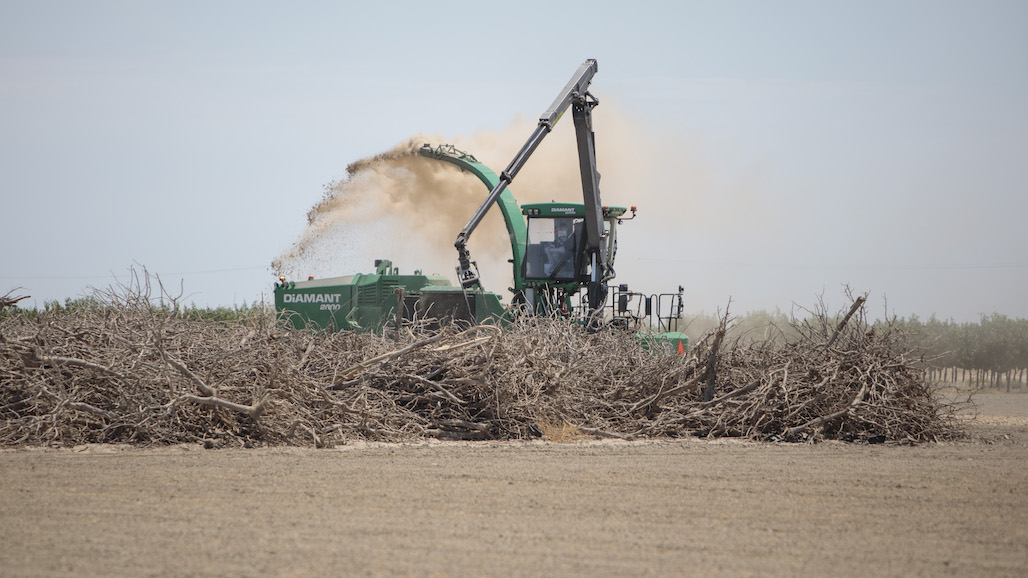
  • New Incentives & Funding for Alternatives to Ag Burning

    New Incentives & Funding for Alternatives to Ag Burning

    Almond Alliance of California — Today, the San Joaquin Valley Air Pollution Control District made several decisions which impact the California almond industry.

    The District accepted and appropriated $178,200,000 in state funding and approved enhancements to alternatives to the open burning incentive program. These funds were divided into two categories of incentives.

    • First, increase funding and expand incentives to the District Alternatives to Agricultural Open Burning Program.
    • Second, to ensure adequate capacity to accommodate increase in chipping, the District is proposing to expand the program to include new options for purchasing of chipping and grinding equipment. The criteria will require that any funded equipment is used specifically for expanding Central Valley chipping capacity as open burning is phased out. 
    New Incentive Program Enhancements:
    • Eliminate current $60,000 per year funding cap per entity.
    • Dedicate 30% of funding for smaller ag operations.
    • Additional incentives for small ag operations.  Provide an additional $100/acre for each incentive category to operations (<100 total acres).
    • Expand options for disposition of chipped material through beneficial re-use.
    • Revised per acre incentive amounts by crop type.
    • Increase incentive amount for cane and cordon-pruned vineyard material.
    • Maintain current incentive amount for orchard removal material.
    To View the Full Narrative, Click Here.
    New Incentive Option for Expansion of Chipping Capacity (New Equipment Purchase):
    • Anticipated launch date is September 1, 2021, pending receiving funding from the state.
    • Funding amount is initially allocated up to $30,000,000 for new equipment purchases.
    • Eligible participants are chipping and shredding contractors with demonstrated experience operating services for the chipping of ag material.
    • Eligible equipment are new tier 4 chippers and grinders for the purpose of processing woody ag waste.
    • Incentive amounts are up to 65% of the cost of eligible  equipment with a cap of $2,000,000 per participant.
    • First come, first serve, based on submittal of a complete application.
    • Participant requirements are required to sign a legally binding agreement with the District.  For more details feel free to contact the Almond Alliance. 
    Funding to Replace Agricultural Tractors and Heavy Duty Diesel Trucks:
    The District accepted $5,579,036 from US EPA for the following uses:
    • $2,789,518 to replace heavy-duty diesel trucks that have 2016 or older model year engines with low-NOx natural gas trucks;
    • $2,789,518 to replace agricultural tractors that have uncontrolled, Tier 1 or Tier engines with new agricultural tractors that have Tier 4 engines.
    • To learn more about these opportunities, please visit:
      • Mobile Agricultural Equipment Replacement, Click Here.
      • Heavy Duty Diesel Truck Replacement, Click Here
    To View All of the District’s Incentive Program Guidelines, Click Here.

    For more specific details, please contact the Almond Alliance.

  • Lessons Learned from Devastating Ice Storm Damage in Hazelnut

    Lessons Learned from Devastating Ice Storm Damage in Hazelnut

    Just within the last twelve months, oregon hazelnut growers have weathered wildfires, ice storms and heat waves. While some have been more impacted than others, there are some important lessons to be learned to prepare for future disasters which inevitably will occur. Watch this brief interview with OSU Hazelnut Extension Specialist Nik Wiman as he explains, and read more about it in Pacific Nut Producer Magazine. Don’t currently receive the magazine? Subscribe for free at: https://malcolmmedia.com/subscribe/
    Please thank this video’s sponsor George Packing Company for their industry support.