Category: Industry News

  • Nut Products Market Outlook and Opportunities in the Post Covid Recovery (2021 – 2028)

    Nut Products Market Outlook and Opportunities in the Post Covid Recovery (2021 – 2028)

    The global Nut Products market is poised to register optimistic growth rates throughout 2021 and 2022 as positive momentum builds in the world economy, though some differences remain among geographies. The pace of change will accelerate in the Nut Products industry and companies quickly re-aligning their strategies will emerge stronger from the unprecedented changes. However, the COVID-19 pandemic remains a major threat for most Nut Products market outlook in addition to concerns of inflation, supply-chain disruptions, and weak consumer demand.

    The Nut Products market report analyzes companies, market size outlook across types, applications, countries along with competitive strategies, trends, drivers, opportunities and market developments. The base year for the study is 2020 and the forecast period is from 2021 to 2028.

    Global Nut Products Market- Post COVID-19 Recovery Scenarios and Impact Analysis

    The COVID-19 pandemic had a significant impact on the regional and country-level Nut Products markets worldwide. The report presents three outlook scenarios for the global Nut Products market size for 2021 and 2022.

    • Low Growth: Economic recovery will be slow, supply-chain disruptions continue to pose challenges, and consumer demand remains weak.
    • Medium Growth: Economic recovery will be fast, supply-chain disruptions continue, and consumer demand recovers moderately.
    • High Growth: Rapid economic recovery, supply-chain disruptions handled, and consumer demand will be strong

    The outlook for economic progress across most countries is optimistic for 2021. Assuming localized recurrences of the Coronavirus, economic growth accelerates in the second half of 2021, and consumption returning to pre-pandemic levels in 2021, Chinese real GDP growth is estimated at 7.9% and 8.4% in 2021 and 2022 respectively. Similarly, the US is likely to register 4% growth in 2021 and 3% in 2022 while the European real GDP growth is estimated at 2.7% for 2021 and 5.1% for 2022.

    Nut Products Market Driving Factors, Restraints, and Opportunities

    The global Nut Products market has significant market potential and offers diverse opportunities across countries. Strategic and financial investors are racing to capture the strong potential in the industry. In this report, we examine the main Nut Products trends that will likely influence the future of Nut Products markets. The Nut Products report also identifies promising investment opportunities and offers a view of how players might successfully pursue them. The pandemic led to a widening divide between rural and urban communities, and companies must overcome challenges in the Nut Products industry. Acting with determination and speed is one of the critical success factors in the near to medium future. Detailed analyses of challenges faced by Nut Products companies operating in the market are included in the report.

    Nut Products Market Segmentation Analysis and Outlook

    The report scope encompasses major Nut Products types and major Nut Products applications worldwide and presents a detailed analysis and outlook of each specific Nut Products type and application. Forecasts of individual types and applications are provided at the global level and also analyzed for North America, Europe, Asia Pacific, Latin America, Middle East, and Africa. In each region, the largest and fastest-growing market types and applications are analyzed. The base year is 2020 and the forecast period is from 2021 to 2028 for all segments.

    Geographic Analysis: Asia Pacific countries are among the fastest-growing markets globally

    We hold an optimistic outlook for both the consumption and market size outlook for Asia Pacific countries. With most countries in the Asia Pacific witnessing their currencies appreciate against the US dollar over 2021, the short-term outlook remains robust across markets. Further, over the long run, driven by attractive demographics profile in the Asia Pacific and an increasing number of middle-to-upper income households, countries in the Asia Pacific Nut Products market will register a strong growth outlook throughout the forecast period. Consumers are also quickly re-prioritizing their spending away from essentials, which will support the Nut Products market growth in the Asia Pacific.

    In addition to the Asia Pacific, the report also analyzes the short-term and long-term outlook of North America Nut Products market, Europe Nut Products market, Latin America Nut Products market, Middle East, and Africa Nut Products markets. Countries covered in the scope of the Nut Products study include United States, Canada, Mexico, Brazil, Argentina, Germany, United Kingdom, France, Spain, Italy, China, India, Japan, South Korea, Middle East, Africa, and others.

    Competitive Landscape: Nut Products Market Companies

    The global Nut Products market is facing intense competitive conditions as more companies continue to target specific customer bases. The recovery from the pandemic is not uniquely spread across geographies and accordingly, most companies are opting for focused strategies to localized market conditions since the start of the pandemic. For instance, the majority of European consumers continue to emphasize seeking brands with strong purpose and good values while there has been a fundamental shift from essential goods in some Asia Pacific markets. The report analyses five leading Nut Products companies including their business operations, SWOT Analysis, and financial profile.

    Scope of the Nut Products Study

    • Historic and Forecast period considered for the study is from 2018 to 2028
    • Base Year for the study is 2020, while the forecast period is from 2021 to 2028
    • The Nut Products market size is presented in value terms, in US Dollars
    • Strategic Analysis Review including Trends, Drivers, Restraints, Key competitive strategies, and porter’s five forces analysis
    • Segments covered include types, applications, and countries/regions
    • Nut Products Countries covered include US, Canada, Mexico, China, India, Japan, South Korea, Germany, United Kingdom, France, Spain, Italy, Brazil, Argentina, Other Asia/Oceania, Other Europe, Other Latin America, Middle East, Africa, and others
    • Nut Products Companies including five key players in the industry and their business overview, SWOT, and financial profiles are detailed.

    Key questions answered

    • What are the possible scenarios of Nut Products market growth outlook in the post-pandemic period?
    • Who are the major end-user industries of Nut Products?
    • The impact of buyer and supplier bargaining power, the threat of new players and substitutes, and competitive rivalry?
    • Which countries will gain market size in the medium to long term future?
    • What are the promising trends and drivers of Nut Products markets?
    • Who are the leading players and how is the competition?

    For more information please click on:
    Nut Products Market Outlook and Opportunities in the Post Covid Recovery (2021 – 2028)

  • China Tree Nut Production & Import Forecast

    China Tree Nut Production & Import Forecast

    Awareness over the health benefits of tree nuts has increased consumer demand over the past five years. Manufacturers are developing creative products to meet demand from millennial and other consumers. Almond imports in Marketing Year (MY) 2021/22 are expected to continue rebounding on firm demand in the post COVID-19 pandemic era. Despite a projected increase in pistachio imports from the United States, overall pistachio imports are likely to drop in MY 2021/22 due to a sharp decline in Iranian supplies. Walnut imports from the United States are projected to decline in MY 2021/22 due to price hikes amid a smaller crop. China’s commercial in-shell walnut production is forecast at 1.1 MMT in MY2021/22, unchanged from the previous year. Tree nut imports may be affected by new registration and labeling requirements.

    Production

    Walnuts

    China’s commercial walnut production (in-shell basis) is forecast at 1.1 million metric tons (MMT) in marketing year (MY) 2021/22 (September-August) and is unchanged from estimated MY 2020/21 walnut production. A spring frost may cut production in Xinjiang, the largest walnut producing province, by 20 percent from last year, but production gains in other major producing provinces, including Yunnan, the second largest walnut producer, are expected to offset the crop losses in Xinjiang. China is the world’s largest walnut producer, with nearly half of global production.

    China’s total walnut production will continue to increase in the next few years as more walnut trees mature, but the degree to which these nuts enter commercial channels is dependent on price. China’s total walnut production is unknown but is significantly higher than commercial production. Many walnut trees were planted on slopes, are of unpopular varieties, and are difficult to maintain or mechanically harvest. With low prices, walnut traders believe farmers will not be able to cover the labor cost to harvest these trees. In southern Xinjiang, however, walnuts are planted on plains and production is largely mechanized. Coupled with improved infrastructure, Xinjiang walnut production has increased rapidly over the past few years and the province will become the most important hub for the Chinese walnut industry.

    More than 50 walnut varieties are cultivated in China. Some varieties, like the thin-shelled ones from Xinjiang, are large-sized and have a high kernel to in-shell nut ratio. Nevertheless, very few varieties compete with those from the United States and Chile, such as Chandler and Hartley, that are popular among consumers for their features such as light color and mild (i.e., non-bitter) taste. Post has not heard of similar varieties being developed or planted in China.

    Almonds

    China’s shelled almond production is forecast at 42,000 MT in MY 2021/22 (August-July), down nearly 7 percent from the previous year, due to frost damage during almond flowering in the spring, according to contacts in Xinjiang. Shache county in southern Xinjiang produces more than 95 percent of the country’s almonds. The almond yield is low at 3.0-3.8 MT per hectare due to a lack of proper crop management and agricultural inputs as well as the use of unproductive varieties. As a result, Xinjiang almonds are sold mainly within the region. China relies heavily on imported almonds for domestic consumption.

    Almond acreage remains stable at around 63,000 hectares in Xinjiang. A private company in central Henan province has reportedly planted around 50 hectares of almonds for experimental purposes. It remains to be seen whether this trial production can be successful. 

    Pistachios

    China produces very few pistachios. The experimental production of pistachios in Xinjiang was unsuccessful due to weather and disease challenges. Farming technology is another issue associated with pistachio production in China.

    Other nuts-Macadamia, Hazelnut, and Pecan

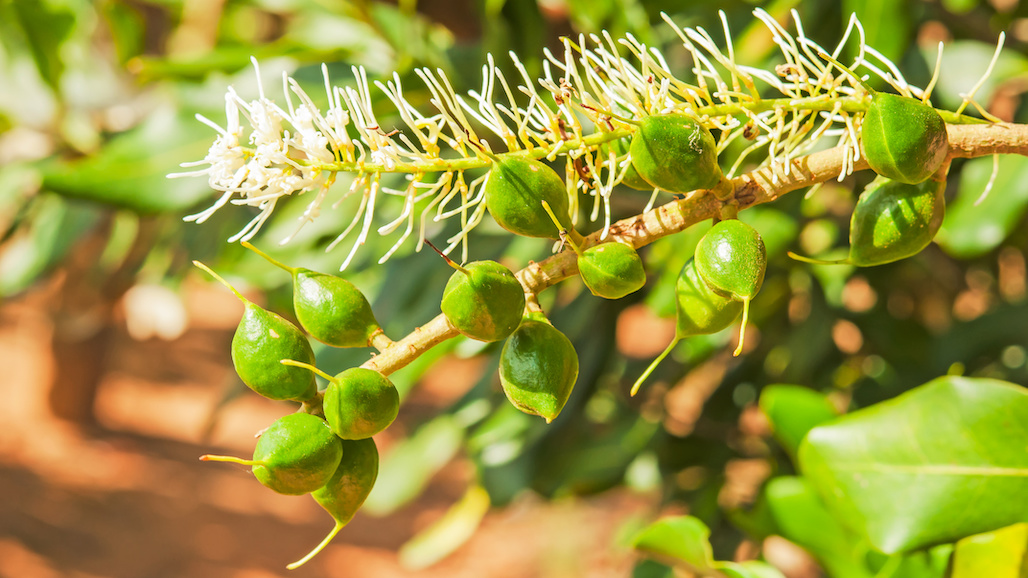
    China’s in-shell macadamia nut production is forecast at 32,000 MT in MY 2021/22 (September- August), with an additional 9,600 MT of shelled macadamia nut production, according to data released by the International Nut and Dried Fruit Council (INC). The in-shell and shelled production amounts are increases of 5 and 9 percent, respectively, from the previous year. The production of macadamia nuts has increased rapidly over the past few years on expanded crop area, which is currently estimated at 31,000 hectares, according to industry sources. Macadamia nuts are mainly planted in mountainous areas of Yunnan province and plains of Guangxi province. Industry sources indicate that China will soon become self-sufficient in macadamia nuts and even a significant exporter in the foreseeable future. However, they also note that Chinese macadamia nut varieties – mainly introduced from other countries – suffer from low yields and mixed quality.

    China’s production of commercially cultivated hazelnuts (hybrid varieties with large size) has increased quickly, with production reaching 35,000 MT (in-shell basis) in MY 2021/22 (September-August) on a planted area of 112,000 hectares, according to an industry report. Hybrid hazelnuts are planted in Liaoning, Jilin, Heilongjiang, Shandong, Inner Mongolia, and Hebei provinces. China also produces wild hazelnuts (of smaller size), and the production and crop area is quite stable. In MY 2021/22, production of wild hazelnuts is forecast at 33,000 MT on 88,000 hectares, according to the report. Wild hazelnuts are produced mainly in Liaoning province.

    Pecan production (in-shell basis) is forecast at 4,000 MT in MY 2021/22 (September-August), doubled from the revised production of 2,000 MT in MY 2020/21, according to an academic report. Pecan production is expected to continue increasing as more trees begin to bear. The report estimates China’s pecan planted area, which is mainly in Anhui, Yunnan, and Jiangsu provinces, at 80,000 hectares in 2021, but pecan acreage is unlikely to increase following guidelines issued in November 2020 by the State Council to prevent expansion of non-grain crop areas on arable land.

    Price

    Walnut harvest has just begun. The farm gate price for in-shell walnuts is currently RMB 10.5 per kilo (U.S. $1.64) in Yunnan, down nearly 20 percent from the same period of last year, according to Yunnan traders. In Xinjiang, the best-selling variety (No.185) is currently sold at RMB 16.3 per kilo (U.S. $2.55), an increase of more than 9 percent from the same period of last year due to reduced supplies, according to local traders. In general, China’s walnut prices have been declining along with production increases. In-shelled almonds are sold at RMB 40 per kilo (U.S. $6.25) at Xinjiang farms, an increase of 5 percent on a yearly basis, according to media reports.

    Consumption

    Tree nuts are generally consumed as snacks in China. “Daily nuts”, a mixture of different nuts, dried fruit, and seeds in retail packages, have become the principal pattern of nut consumption in China. The per capita consumption of tree nuts, which used to be luxury foods, is still low compared with the level in western countries. In recent years, tree nuts have quickly become a necessary component of the diet for urban consumers, as awareness of the nutrition and health benefits of tree nuts increased. This is particularly true following the outbreak of COVID-19 – as people believe that tree nuts will help them build a stronger immune system. According to a market survey of consumers aged 18-49 in early 2021, about 67 percent of consumers will choose healthier food and 47 percent of consumers hope to eat foods that reduce the risk of having diseases such as diabetes and hypertension. Tree nuts are considered an ideal food product to satisfy the above-mentioned needs.

    The food processing sector also consumes a small portion of tree nuts. Bakery and confectionary sectors are typical consumers of tree nuts. In addition to traditional products such as walnut milk and moon cakes with nut and seed stuffing, newly developed nut-containing products such as nut bars and meal replacement bars (and balls) have emerged. As more products using tree nuts as ingredients are developed nut consumption will expand further.

    Policy

    The State Council Tariff Commission (SCTC) launched a tariff exclusion process on March 2, 2020, to allow importers to apply for tariff exclusions on certain agricultural products, including tree nuts, from the United States. If an exclusion application is approved, the Section 301 retaliatory tariffs will be exempted for a year from the date of approval (refer to GAIN report CH2020-0017). However, U.S. tree nuts, among other agricultural products, are still subject to Section 232 retaliatory tariffs that have been imposed since April 2018. The following table provides information on import tariffs and value- added tax (VAT) rates for various nuts.

    The Chinese government released an updated National Food Safety Standard on Pesticide MRLs in Food which takes effect on September 3, 2021. Please refer to GAIN report CH2021-0099 for specific pesticide limits on nuts.

    On April 12, 2021, the General Administration of Customs of China (GACC) announced the Regulations on the Registration and Administration of Overseas Producers of Imported Food, known as Decree 248. Effective on January 1, 2022, this regulation will replace the existing Administrative Measures for Registration of Overseas Producers of Imported Food (Decree 145). Decree 248 requires that all overseas food (including tree nuts) manufacturers, processors, and storage facilities be registered with the Chinese authorities in order to export products to China (see CH2021-0045). However, the registration process cannot begin until GACC publishes the implementation rules. There are also requirements in Decree 248 for inner and outer package labeling of tree nut imports.

    Trade

    Imports

    Except for walnuts, China relies heavily on imports for most tree nuts, especially pistachios, almonds, and pecans. Following trade tensions between China and the United States in 2018, and logistic disruptions caused by COVID-19 in early 2020, China’s tree nut imports finally began to rebound in MY 2020/21 as economic activities gradually resumed and China launched a tariff exclusion process in March 2020. The Chinese government has streamlined the import practices so, instead of being transshipped through a third country, most tree nuts now enter China directly from the country of origin.

    Despite industry information regarding reduced supplies in California because of a U.S. drought, China’s almond imports are expected to continue to rebound due to strong demand. The United States remains the largest almond supplier to China, followed by Australia, who has become another important supplier, taking advantage of a bilateral free trade agreement.

    Although China’s pistachio imports from the U.S. are expected to rebound, total imports will probably be lower in MY 2021/22 (September-August) then in the previous year due to reduced supplies and extremely low carry-in stocks in Iran, the largest pistachio supplier to China. Iran accounted for 65 percent of China’s pistachio imports in MY 2020/21, but its production is forecast to drop by more than 20 percent in MY 2021/22. According to industry contacts, Californian pistachio production will be affected by drought, but carry-in stocks reportedly strengthen the pistachio supply situation in the United States. It is estimated that China imports nearly 20 percent of global pistachio production.

    China’s pecan imports are forecast to increase in MY 2021/22 (September-August) due largely to a strong rebound from the United States, which has regained the role of the top supplier to China. American pecan exports to China declined significantly in MY 2018/19 following retaliatory tariffs imposed on U.S. products in April 2018. Consequently, Mexico and Africa overtook the United States as the top two suppliers.

    China’s walnut imports from the United States are expected to decline in MY 2021/22 (September- August) following a projected 15-percent decrease in production due to drought in California. Walnut imports from the United States rebounded in MY 2020/21, largely because of lower prices in the wake a bumper crop. Taking advantage of a bilateral FTA, Chile has become the second largest walnut supplier to China. China’s walnut imports keep declining because of increases in domestic production. Relative to overall production and distribution, China’s walnut import volume is small.

    China’s inshell hazelnut imports from the United States remains stable, as Chinese consumers like the large size of U.S. hazelnuts. China also imports shelled hazelnuts from Turkey for food processing purposes.

    Exports

    China’s walnut exports, both in-shell and shelled, are expected to increase moderately in MY 2021/22 (September-August). Reduced supplies in Xinjiang and increased transportation cost will likely slow Xinjiang walnut exports to Central and West Asia – including Kazakhstan, Kyrgyzstan, Turkey, and Pakistan. In MY 2020/21, China’s walnut exports (in-shell basis) to these countries increased by nearly 30 percent. Due to a color and taste disadvantage, Chinese walnut prices are 15 percent lower than those of major walnut exporting countries such as the United States. For the same reason, Chinese walnuts, especially shelled walnuts, are difficult to export to major markets such as the European Union.

    Although the total volume is relatively small, China’s macadamia nut exports are steadily increasing as a result of improved domestic production. Australia remains the single largest buyer of Chinese shelled macadamia nuts.

    Marketing

    Market Dynamics, Drivers and Opportunities

    Chinese consumer taste preferences and market trends are different from other markets, and exporters should take care to ensure their products target the Chinese consumer. In China, tree nuts are regarded as healthy foods due to their health benefits. While this interest has traditionally focused on dietary fiber and the high level of unsaturated fatty acids, consumers have recently become more interested in the attributes of “high-quality vegetable proteins, minerals, and nutrients. The health benefits of tree nuts have increased consumer demand over the past five years, however sales of tree nuts and other foods and beverages increased slowly during the 6-18 promotions on June 18, 2021. NOTE: 6-18 is a marketing holiday in China similar to “Black Friday” to promote consumer spending. There are several similar marketing holidays in China, like 11-11, or “China’s Singles Day” and a lesser-known marketing holiday for tree nuts on September 17, called 9-17.

    With the popularity of healthy diets and a preference for low fat and sugar, the high caloric content of single nut products has become a disadvantage. However, daily nut products that mix various nuts and dried fruits remain the fastest growing snack food category. Mixed packages provide a more balanced nutrient mix and allow producers to react to commodity price changes. At present, more than 100 manufacturers are marketing “daily nuts” products in China, and industry insiders forecast the market will exceed RMB 20 billion (U.S. $3.1 billion) in 2022.

    Tree nuts are also being more widely used in baked goods and other processed snack foods. They have also been processed into nut butter, nut drinks, and even nut oil cosmetics to cater to the growing demand for a natural, plant-based, and healthy lifestyle.

    Competitive Landscape in Market

    East China and Central China host most large tree nut processors. The top players in tree nut snacks are Three Squirrels from Anhui Province, Huatai Foods (with the brand Cha Cha) from Anhui Province, Lyfen Foods from Shanghai, Be & Cherry from Zhejiang Province, Bestore from Hubei Province, and Yan Jin Pu Zi from Hunan Province.

    Snack food brands such as Cha Cha, Yan Jin Pu Zi and Lyfen Foods own thousands of brick-and-motor stores nationwide in China, and its in-store sales account for most of their revenue. Three Squirrels is an internet-born brand that has grown into a tree nuts giant rapidly owing to the fast development and adoption of e-commerce platforms in China in the past ten years. However, according to industry sources, the company is now focusing on developing retail outlets. Also, per industry information, in- store sales accounted for 26 percent of the company’s total revenue in 2020. Bestore and Be & Cheery strive to balance online and offline businesses, aiming to avoid the challenges of rising cost of labor and rent from physical stores, and the delivery and logistics costs of online retail.

    Retailers like Freshippo and Bianlifeng Convenience Store are emerging as important players in the tree nuts industry by aggressively developing private label lines of tree nuts products. COFCO has been further developing its private label SunDry Foods and industry sources repot the company has been successful in the daily nuts business in recent years.

    Innovation and Trends

    Leading manufacturers of snacktree nuts and baked goods featuring tree nuts are developing new and creative products to meet the growing demand from millennial consumers. Their purchasing power is growing and has been helping the industry to innovate. The growing popularity of vegan foods among millennials is driving tree nut processors to produce more nut-based drinks, meal replacement bars and powders with tree nuts as ingredients, breakfast cereals, baking and confectionary, butter and spread and dairy products.

    One of the important tree nut market trends is the increased usage of tree nut oils in anti-ageing cosmetics to help retain moisture and fight ageing. Advertised as a skin and hair nourishing agent thanks to the presence of antioxidants, tree nuts are used to cure dark circles, soreness, reduce wrinkles, and protect the skin from harm.

    Freshness, flavors, easy of peeling, and healthy benefits remain key factors driving consumers to purchase tree nuts. Versatility and price are the main factors that influence tree nut processors when developing snack and healthy foods. — By the USDA Foreign Agricultural Service

  • Agriculturists Jeani and John Ferrari Recognized with CA Farmland Trust’s Vance Kennedy Award

    Agriculturists Jeani and John Ferrari Recognized with CA Farmland Trust’s Vance Kennedy Award

    Local philanthropists and long-time supporters of farmland protection, Jeani and John Ferrari, were honored by California Farmland Trust (CFT) as the 2021 Vance Kennedy Award recipients.

    The Vance Kennedy Award was established in 2014 in honor of Dr. Vance Kennedy, a founding member of CFT, because of his extraordinary contributions and efforts to the organization. Recipients of this prestigious award demonstrate significant commitment and dedication to furthering the protection of farmland in our most valuable regions. The Ferraris are the third recipients to receive the Vance Kennedy Award.

    “Being recognized by California Farmland Trust, an organization we hold in the highest regard, is a meaningful recognition,” John said. “CFT does the work that our region desperately needs, protecting our most important farmland for the long-term. It’s an esteemed award, and Jeani and I are honored.”

    As second-generation growers of sweet potatoes, almonds, walnuts, and peaches, Jeani and John’s passion and dedication to agriculture and farmland protection runs deep through Stanislaus and Merced counties. In addition, the Ferraris almond orchard is home to the first agricultural conservation easement enacted by Central Valley Farmland Trust (CVFT), now CFT, and Jeani served as a founding CVFT board member.

    Jeani and John exemplify community engagement, spanning from the Farmland Working Group that Jeani spearheads to inform the public about land use policies, to the “new” Turlock and CSU Stanislaus libraries, and the arts including the Carnegie Arts Center. John served on the Emanuel Medical Center’s foundation board and fundraising committees in support of the Cancer Center and Cardiovascular Operating Suites, where his dedication throughout the planning and fundraising process was invaluable.

    “The contributions Jeani and John have made since CFT’s inception and within our communities are extremely worthy of recognition, and the Vance Kennedy Award is especially fitting,” said Charlotte Mitchell, executive director at California Farmland Trust. “We are honored and thankful to work with such amazing community supporters and farmland protection advocates.”

    The California Farmland Trust is a California nonprofit 501(c)(3). Our mission is to help farmers protect the best farmland in the world. To date, we have protected 16,934 acres of farmland on 78 farms. To learn more visit us: www.cafarmtrust.org

  • EU Demand for US Tree Nuts Expected to Remain Strong

    EU Demand for US Tree Nuts Expected to Remain Strong

    The United States continues to be the largest supplier of tree nuts to Europe. While EU investment and production of tree nuts continue to increase, production is still far from meeting domestic demand. In 2020, EU-27 tree nuts imports from the United States reached $2.8 billion USD. The COVID-19 health crisis and the logistical issues and delays experienced globally moderately decreased U.S. exports of tree nuts to the EU, but exports began recovering in the first half of 2021. The demand for tree nuts is expected to remain strong, as consumers continue to demand healthy snacks and the hospitality, HRI, and impulse purchase channels are steadily recovering. 

    Executive Summary

    The EU Market: A Key Trading Partner for US Tree Nuts

    In 2020, the European Union (EU)-27 imported $7.2 billion in tree nuts from the world. The United States, with $2.8 billion, is the largest EU-27 tree nuts supplier, accounting for 39 percent of total imports. Turkey is the second largest supplier with 22 percent of imports, followed by Vietnam, Chile, and Iran.

    U.S. almonds (both in-shell and shelled) totaled $1.5 billion , followed by pistachios with $699 million and walnuts with almost $393 million. Within the EU, the most significant importers of U.S. tree nuts (in order of importance) are Germany, Spain, and The Netherlands.
    These numbers prove the importance of the United States as an agricultural trading partner to the EU.

    The Food Processing and the Snack Industry Remain the Most Significant Buyers

    The growing popularity of healthier snacking and eating habits among European consumers continues to encourage consumption of nuts, both tree nuts and ground nuts. Tree nuts are covered in the media and food blogs for their health benefits. Many consumers perceive them as beneficial and increasingly include them in their diets. The desire for general health and wellbeing, the increasing interest in plant-based diets (vegan and vegetarian) along with the publication of scientific studies highlighting the benefits of nut consumption continue fueling demand for these products.

    In addition, the European food processing and snack industries are the largest users of tree nuts, both as an ingredient (for traditional sweets and pastries) and for re-processing and re-export to third countries. Almonds are mainly used as an ingredient for the manufacturing of marzipan, nougat, turron (a Spanish traditional Christmas confection), and many other pastries and sweets. European food manufacturers also use walnuts and pistachio nuts as an ingredient for manufacturing ice cream and confectionary products.

    The snacking industry is channeling its efforts to offer consumers new products and new ways to consume nuts. Thus, due to the mature nature of the European market, EU manufacturers are focusing their strategies on launching new value-added innovative products rather than focusing on volume sales. They continue to emphasize the health benefits of tree nuts, both through advertising campaigns and in packaging.

    During the COVID-19 restrictions in 2020, retail was the big winner, particularly in the first half of 2020, with the closure of the HRI channel in most countries. With nuts becoming an increasingly important part of European consumers’ diet, the challenge for retailers will be to find the right balance between price, quality and formats that best suit consumer demand. In addition, consumers are paying more attention to sustainability and responsible consumption. Eco-friendly production, packaging, and distribution is becoming more popular amongst European consumers, especially in northern countries.

    Expanding Business in the EU Market

    The COVID-19 impact on trade shows has been significant since trade shows came to a halt with the pandemic. With the gradual removal of restrictions, the trade show industry is slowly but surely reopening. Trade shows are an excellent opportunity to get to know the market and to meet potential importers. New-to-market exporters interested in getting a better understanding of EU food regulations and market opportunities are encouraged to reference the Food and Agricultural Import Regulations and Standards (FAIRS) reports and Exporter Guides produced by various EU FAS Offices.

    U.S. Cooperators Active in the EU Market

    Trade associations like the Almond Board of California, American Pistachio Growers and the California Walnut Commission continue to develop strategies for the EU market. These trade associations, in cooperation with FAS offices, work actively to further develop the market for U.S. tree nuts. Read the full report from the USDA Foreign Agricultural Service, including specifics on almonds, walnuts and pistachios HERE.

  • Breeding Honey Bees for Adaptation to Regionalized Plants and Artificial Diets

    Breeding Honey Bees for Adaptation to Regionalized Plants and Artificial Diets

    Honey bees could be intentionally bred to thrive on plants that are already locally present or even solely on artificial diets, according to a recent U.S. Department of Agriculture Agricultural Research Service (ARS) study.

    ARS researchers found individual bees respond differently to the same diet and that there is a strong genetic component involved in how they respond to nutrition. This points directly to the concept that managed bees can be intentionally bred to do better on different diets, whether you are talking about an artificial diet or a diet based on specific plants already growing in an area, explained lead researcher Vincent A. Ricigliano. He is with the ARS Honey Bee Breeding, Genetics, and Physiology Research Laboratory in Baton Rouge, Louisiana.

    “Urban development, modern agricultural systems and environmental alterations due to climate change, invasive plants, and even local landscaping preferences have all had a hand in regionalizing plants that dominate available pollen. It could potentially be more beneficial to tailor honey bees to do better on what is already available instead of working hard to fit the environment to the bees,” Ricigliano said.

    The overall aim would be breeding to improve nutrient use by managed honey bees, like we have done for poultry and cattle breeding programs, Ricigliano explained.

    “Now that we know there is room for genetic adaptation to diet, we could also look at breeding honey bees with improved nutrient efficiency or identifying genotype biomarkers that respond to various supplements to promote honey bee health,” he added.

    In most commercial apiaries, honey bees do not have the opportunity to naturally breed to adapt to local conditions because commercial beekeepers typically replace the queen in each colony every year. The queen in a colony is the only bee that lays eggs to produce the next generation.

    Beekeepers usually purchase new queens already inseminated from a handful of queen breeders in the United States. As a result, honey bees across the country generally have the same range of genes for nutritional responses without any specialized adaptation.

    Honey bees have already been successfully bred for a very few selected traits, among them Varroa mite resistance. Varroa mites are among the single largest problem afflicting honey bees in the United States today.

    “It was a little surprising to find when we started this study that, despite a sizable body of research pertaining to honey bee nutrition, relatively little is known about the effects of genetic variation on nutritional response,” Ricigliano said.

    His next step is to refine knowledge about what genes control which nutrient and metabolic pathways and where the greatest amount of genetic variation exists so that breeding plans can be specific and scientifically guided.

    The Agricultural Research Service is the U.S. Department of Agriculture’s chief scientific in-house research agency. Daily, ARS focuses on solutions to agricultural problems affecting America. Each dollar invested in agricultural research results in $17 of economic impact.

  • Pacific Nut Producer October Issue

    Pacific Nut Producer October Issue

    PNP1021

    [btn btnlink=”https://malcolmmedia.com/order-a-back-issue/back-issue-pacific-nut-producer-magazine/” btnsize=”full” txtcolor=”#ffffff” color=”#FFF” bgcolor=”#492500″ btnnewt=”1″ nofollow=”1″]Order A Back Issue[/btn]

    [btn btnlink=”http://malcolmmedia.com/pacific-nut-producer-magazine-subscriptions/” btnsize=”full” txtcolor=”#ffffff” bgcolor=”#492500″ btnnewt=”1″ nofollow=”1″]Subscribe Free[/btn]
    [three_fifth_last]

    Contents of the October Issue:

    Golden Valley Almond Hulling and Shelling Inc
    A Family Affair

    Elaine Trevino Nominated as US Chief Agricultural Negotiator
    Almond Alliance of California CEO to Move to Washington DC

    San Joaquin Valley Grower Survey
    UCCE to Better Meet the Needs of the Tree Nut Industry

    October Orchard Tasks
    Almonds, Hazelnuts, Pecans, Pistachios, Walnuts

    [/three_fifth_last]

  • Hawaiʻi Delegation Introduces Legislation To Protect U.S. Macadamia Nut Industry

    Hawaiʻi Delegation Introduces Legislation To Protect U.S. Macadamia Nut Industry

    Today, the Hawaiʻi Delegation: Sen. Mazie Hirono (D-HI), Sen. Brian Schatz (D-HI), Rep. Ed Case (D-HI-01) and Rep. Kaialiʻi Kahele (D-HI-02), introduced bicameral legislation to enable research funding to address all current and emerging threats to the United States coffee and macadamia nut industries. The Coffee Plant Health Initiative Amendments Act (CPHIAA) and Macadamia Tree Health Initiative Amendments Act (MTHIAA) would remove existing restrictions on the limited scope of research and grant funding for the coffee plant and macadamia tree.

    Under current law, research for both crops only address two invasive and harmful species: the macadamia felted coccid (MFC) and coffee berry borer (CBB). The CPHIAA and MTHIAA expands research to address all macadamia tree and coffee plant pests and weeds.

    The annual combined farmgate value (market value minus selling cost) of macadamia nut and coffee is over $100 million. The CPHIAA and MTHIAA are widely supported by macadamia nut and coffee farmers across Hawaiʻi and the United States.

    “As our agricultural community continuously fights new invasive pests, resources provided by these two bills would be instrumental in protecting two of Hawaiʻi’s signature crops: coffee and macadamia nuts,” said Senator Hirono. “I look forward to working with my delegation colleagues on these bills so that our producers are equipped to face current and future threats to these crops.”

    “Coffee and Macadamia nuts are uniquely Hawai‘i crops which support local jobs and are the mainstays of Hawai‘i agriculture,” said Senator Schatz. “We must keep them competitive, and that begins with science-based management.”

    “As a member of the House Appropriations Committee, I have partnered with Congressman Kahele and others to secure millions of dollars in federal research funding for Hawaii’s tropical specialty crops like coffee and macadamia nut,” said Congressman Ed Case (HI-01).  “While our funding has helped mitigate the effects of the macadamia felted coccid, coffee berry border and coffee leaf rust, current law limits the scope of federal research dollars. These two measures will greatly enhance our ability to fund much more comprehensive coffee and macadamia nut research to preserve and grow these invaluable industries.”

    “Healthy and vibrant macadamia and coffee industries are pivotal to strengthening Hawaiʻi’s agricultural community. These amendments help our farmers protect their crops and livelihoods against any emerging threats,” said Congressman Kaialiʻi Kahele (HI-02). “I’m proud to have the support of the entire Hawaiʻi Delegation to help these industries rebound, grow, and better compete in a global market.”

    “The Hawaiʻi macadamia nut industry is thrilled with Congressman Kahele’s introduction of the Macadamia Tree Health Initiative Amendments Act (MTHIAA). The MTHIAA will strengthen the future of Hawaiʻi agriculture as the macadamia industry faces new and emerging threats to macadamia nut farms,” said Nathan Trump, president of the Hawaiʻi Macadamia Nut Association. “This act will ensure our farmers have science-based tools to combat these threats and improve the resiliency and productivity of their farms. With expanded funding for research, the macadamia nut industry can increase the number of macadamia farmers and farms that contribute positively to the local economy and the beautiful environment that makes Hawaiʻi so special.”

  • Hazelnut Orchard Irrigation Trends & Considerations

    Hazelnut Orchard Irrigation Trends & Considerations

    As Oregon hazelnut growers experience hotter, dryer summers, the industry is trending away from traditional dryland farming and installing irrigation systems as they plant new orchards. Watch this brief interview with OSU Hazelnut Extension Specialist Nik Wiman as he discusses the variety of irrigation options growers are adopting around the Willamette Valley and why.  Read more about it in Pacific Nut Producer Magazine. If you’re not currently receiving the print publication, subscribe for free at: https://malcolmmedia.com/subscribe/
    Please thank this video’s sponsor George Packing Company for their industry support.
  • Filbertworm Mating Disruption in Hazelnut Becomes More Economical

    Filbertworm Mating Disruption in Hazelnut Becomes More Economical

    When it comes to hazelnut insect pests, filbertworm is number one.  Managing the pest with insecticides and novel mating disruption technology can also be quite costly; however, Oregon State University has been seeing some positive results through field trials and recent studies that not only prove the efficacy of mating disruption, but also make the technology more affordable for the grower in managing this pest.  Watch this brief interview with OSU IPM Research Assistant in the Vaughn Walton Lab, Betsey Miller, as she explains; and read more in Pacific Nut Producer Magazine. Don’t currently receive the monthly publication? Subscribe for free at: https://malcolmmedia.com/subscribe/
    Please thank this video’s sponsor George Packing Company for their industry support.
  • Assemblyman Adam Gray Addresses Dire Need for Action on Improving, Increasing CA Water Infrastructure

    Assemblyman Adam Gray Addresses Dire Need for Action on Improving, Increasing CA Water Infrastructure

    As drought conditions worsen in California and water curtailments cause prime farmland to run dry, many wonder how long agriculture will have to suffer the consequences of decades of government neglect to water storage/infrastructure needs.  Watch this brief interview with California State Assembly member Adam Gray as he shares his perspective and priorities in regards to the situation.
    Please thank this video’s sponsor Suterra for their industry support.