Category: Industry News

  • $700 Million to Connect People in Remote and Rural Areas to High-Speed Internet

    $700 Million to Connect People in Remote and Rural Areas to High-Speed Internet

    U.S. Department of Agriculture (USDA) Secretary Tom Vilsack today announced nearly $700 million in grants and loans to connect thousands of rural residents, farmers and business owners in 22 states and the Marshall Islands to reliable, affordable high-speed internet through the ReConnect Program,funded by President Biden’s Bipartisan Infrastructure Law. This program is uniquely designed to fund the most difficult high-speed internet projects in the nation, which are the most rural, remote and unserved communities.

    Connecting all communities across the United States to high-speed internet is a central part of President Biden’s Investing in America agenda to rebuild the economy from the bottom up and middle out by rebuilding our nation’s infrastructure. This agenda is driving more than $500 billion in private-sector manufacturing investments, rebuilding America’s infrastructure, lowering costs, and creating good-paying jobs. And it’s transforming our country for the better – reaching communities in every corner of the United States, including those that have too often been left behind.

    “Keeping the people of rural America connected with reliable, high-speed internet brings new and innovative ideas to the rest of our country and creates good-paying jobs along the way,” Secretary Vilsack said. “Thanks to President Biden’s Bipartisan Infrastructure Law, we are connecting rural communities to a global marketplace. These investments will support economic growth and prosperity for generations to come.”

    Today’s high-speed internet investments are part of the fourth funding round of the ReConnect Program. Many residents and businesses in rural areas would not have high-speed internet service without the ReConnect Program, as the program is a key part of the Administration’s Internet for Allinitiative to connect everyone in America to high-speed internet by 2030. Today’s announcement includes $667 million in USDA investments in Alaska, Arkansas, Arizona, California, Illinois, Iowa, Kansas, Michigan, Minnesota, Mississippi, Missouri, Nevada, New Mexico, North Carolina, Ohio, Oklahoma, Oregon, South Carolina, Texas, Virginia, Washington, Wisconsin and the Marshall Islands.

    Today’s announcement includes several investments that will benefit people living in Rural Partners Network (RPN) communities. RPN works with hundreds of federal, state and local partners to address specific needs in rural communities that have long struggled to access government programs and funding. RPN helps these communities carry out locally driven plans to create jobs, build infrastructure and support economic growth and stability.

    Examples of projects in this announcement include:

    • In North Carolina, Star Telephone Membership Corporation is receiving a $24.9 million grant to benefit 2,674 people, 84 businesses, 117 farms and four educational facilities in Bladen, Columbus and Sampson counties. Bladen and Columbus are part of an RPN community.
    • In Oregon, Pioneer Telephone Cooperative is receiving a $24.9 million grant to benefit 2,239 people, 50 businesses, 205 farms and one educational facility in Lincoln, Lane and Benton counties.
    • In New Mexico, SWC Telesolutions Inc. is receiving a $9.2 million grant to benefit 4,962 people, 106 businesses, 11 farms and 17 educational facilities in Doña Ana and Sierra counties. Doña Ana County is part of an RPN community.

    Also, as part of USDA’s commitment to expand high-speed internet access, the Hood Canal Telephone Co. Inc. is receiving a $3.8 million loan through the Telecommunications Infrastructure Loan & Loan Guarantee Program. This investment will help construct 16 miles of fiber to provide high-speed internet access to 800 households and 10 businesses in Union, Washington.

    full list of projects from today’s announcement is available online.

    Background: ReConnect Program

    Applicants to ReConnect Program funding must serve a rural area that lacks access to service at speeds of 100 megabits per second (Mbps) download and 20 Mbps upload. Applicants must also commit to building facilities capable of providing high-speed internet service with speeds of 100 Mbps (download and upload) to every location in the proposed service area. Additionally, to ensure that rural households that need internet service can afford it, all awardees will be required to apply to participate in the Bipartisan Infrastructure Law’s Affordable Connectivity Program (ACP). The ACP offers a discount of up to $30 per month toward internet service to qualifying low-income households and up to $75 per month for households on qualifying Tribal Lands.

    Background: Bipartisan Infrastructure Law

    President Biden forged consensus and compromise between Democrats, Republicans and Independents to demonstrate our democracy can deliver big wins for the American people. After decades of talk on rebuilding America’s crumbling infrastructure, President Biden delivered the Bipartisan Infrastructure Law – a historic investment in America that will change people’s lives for the better and get America moving again.

    The Bipartisan Infrastructure Law provides $65 billion to ensure every American has access to affordable, reliable high-speed internet through a historic investment in broadband infrastructure deployment. The legislation also lowers costs for internet service and helps close the digital divide, so that more Americans can take full advantage of the opportunities provided by internet access.

    To learn more about investment resources for rural areas, visit www.rd.usda.gov or contact the nearest USDA Rural Development state office.

    USDA Rural Development provides loans and grants to help expand economic opportunities, create jobs and improve the quality of life for millions of Americans in rural areas. This assistance supports infrastructure improvements; business development; housing; community facilities such as schools, public safety and health care; and high-speed internet access in rural, tribal and high-poverty areas. For more information, visit www.rd.usda.gov.

  • Opportunities for Almond Cover Crop Funding Through the Pollinator Alliance

    Opportunities for Almond Cover Crop Funding Through the Pollinator Alliance

    Interested in planting cover crops down your orchard rows, but tight on funding?  Watch this brief interview with Doug Iten from Great Valley Seeds as he explains their recent collaboration with the Almond Alliance of California to provide grant funding for growers through the new Pollinator Alliance.  Read more about it in Pacific Nut Producer Magazine.

    Please thank this video’s sponsor G3 Enterprises for their industry support.

  • Boxing Champion Jose Ramirez Joins and Supports Pistachio Industry

    Boxing Champion Jose Ramirez Joins and Supports Pistachio Industry

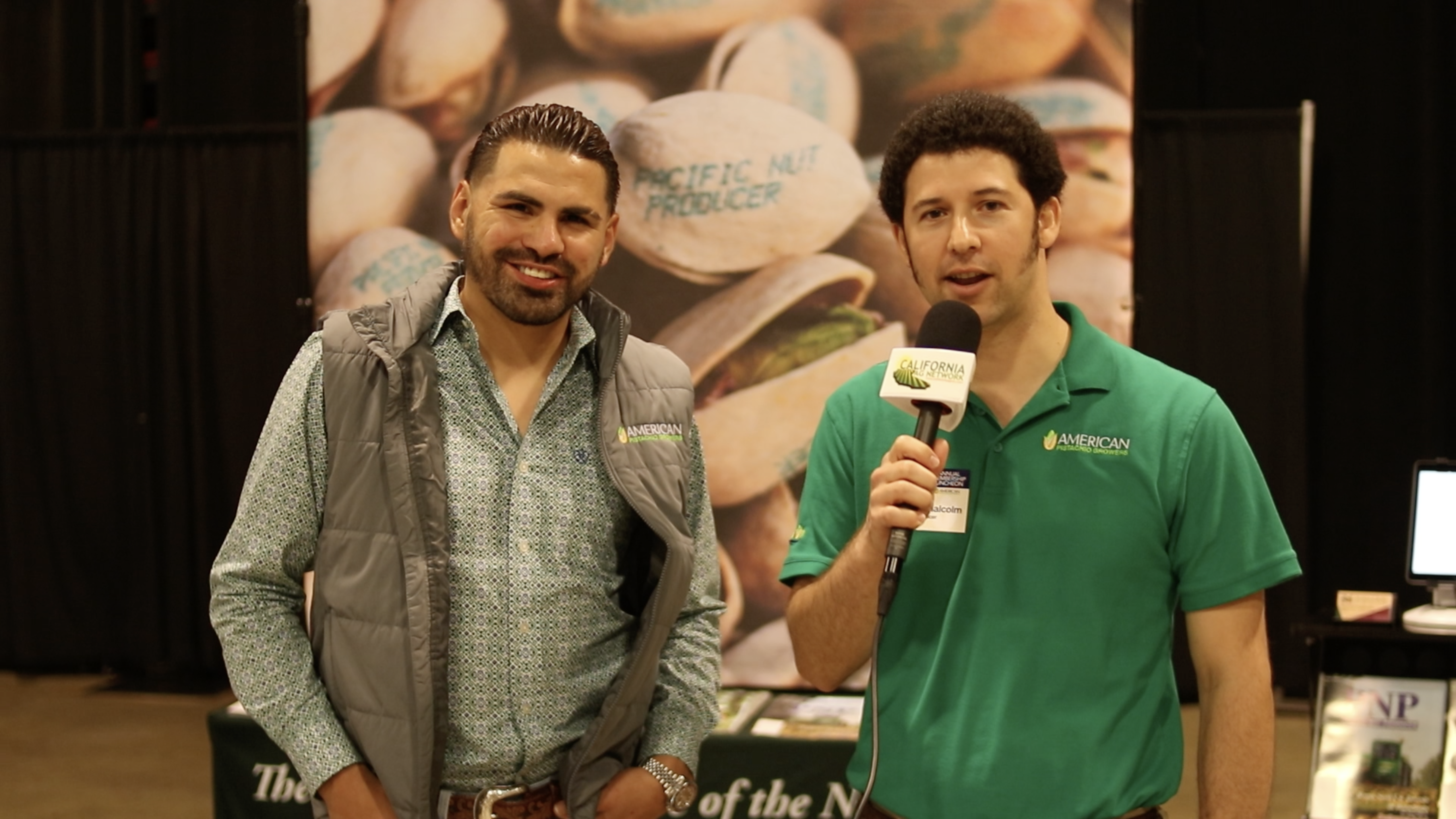
    World Champion Boxer and Olympian Jose Ramirez grew up in the Central Valley and spent some of his youth working in the fields.  Both inside and outside the ring, he has been an advocate for farm water rights, immigration reform, farmers, and farm workers.  Watch this brief interview at the American Pistachio Growers annual luncheon featuring Jose taking his involvement with agriculture to the next level.  Read more about it in Pacific Nut Producer Magazine.

    Please thank this video’s sponsor G3 Enterprises for their industry support.

  • Growers Optimistic about Pre-Season 2023 California Walnut Outlook

    Growers Optimistic about Pre-Season 2023 California Walnut Outlook

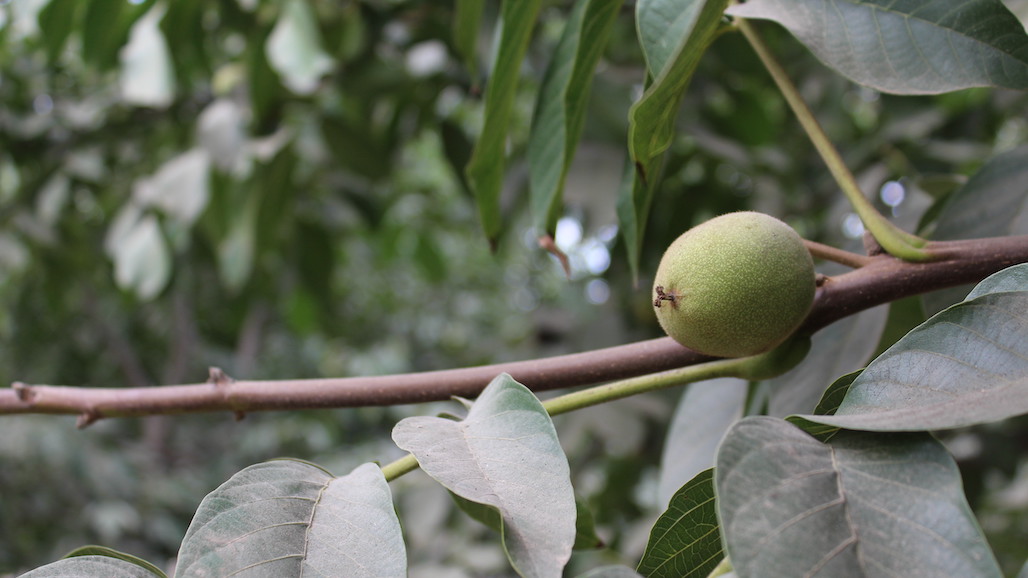
    What a difference a year makes! The California walnut industry is gearing up for a stellar 2023 harvest and shipping season after several years of drought, record low grower returns, COVID disrupted markets with supply chain challenges and a devastating heat wave in September 2022 that negatively impacted the entire crop. Here’s why this season is lining up to be a different story.

    Quality is expected to be excellent due to favorable growing conditions.

    Last winter’s prolonged heavy rains in the California walnut growing regions helped restore deep soil moisture and provided for healthy root zones, enabling trees to better tolerate late season high temperatures. The state also benefitted from an extensive snowpack which has provided all growing regions with sufficient water to support the trees and the crops through this season.

    The much-needed chilling hours were at normal levels, placing the trees into a much-needed deep winter dormancy and a prolonged “rest and recuperation” period. Mild spring temperatures were ideal and produced full, vibrant, vigorous tree canopies which supported strong pollination, resulting in robust nut sets throughout the orchards.

    “This year, our trees are more capable of handling higher temperatures than the previous years when the trees were under stress due to long-term deficit irrigation,” commented fourth-generation grower and handler Bill Carriere of Glenn, California. “Long-time growers have commented that the trees have not looked this strong and healthy in at least six to seven years. The full leaf canopy provided excellent temperature control and sun protection during the spring and summer months, allowing the walnuts to grow evenly with minimal sunburn. I am very optimistic that this year will mark a return to the premium quality walnuts we are known for in California.”

    Acreage adjustments

    Record low prices, brought on by an oversupply of darker than normal walnut kernels and weak demand in international markets, have taken a toll on growers, some opting to remove orchards from production. “Our family decided to pull out a productive orchard planted by my father in the early 2000s, it was a difficult decision, but the numbers told the story,” said Don Barton, a fourth-generation family farmer in Escalon, California. “We pulled a few acres with legacy varieties that are no longer desired by the broader buying community. Further south, walnut growers had removed trees due to new water restrictions that resulted in a lack of long-term availability to groundwater. Overall, the last few years have been devastating for growers and we are making some difficult decisions.”

    The extent of the acreage shift became more evident in an acreage survey conducted by the California Walnut Board between October 1, 2022, and June 30, 2023. For the first time ever, the acreage of California walnuts declined with 23,000 acres removed during the nine-month period. The industry will likely see additional reductions between July and December 2023, as more growers decide to shift to other crops and the needed tree removal equipment becomes available.

    Favorable New Crop Volumes and Inventory levels

    However, even with the removal of these orchards, the industry has a strong production base with approximately 380,000 producing acres and 37,000 younger non-bearing acres. USDA/National Agricultural Statistics Service Information (NASS) is currently conducting the annual walnut crop objective evaluation which counts and measures walnuts in a representative cross-industry sampling protocol. Incorporating the recently updated acreage report with the sampling results. USDA will release the official California walnut industry crop estimate on September 1, 2023.

    “This week, the California Walnut Board released the monthly and year-to-date shipment report which highlighted an additional reason why I am bullish about the upcoming season,” remarked Martin Mariani, a grower/processor from Winters, California, “The data shows that we have shipped the equivalent of 730,488 tons this season from an available inventory of 880,000 tons.” He went on to explain that when taking into consideration the high sales commitments going into the fall, “we are virtually sold out of available inventory, which bodes well for the industry. I can’t wait to bring the new crop to market.”

    Global and Domestic Market Outlook

    With a focus on inshell markets, Chile is anticipated to be sold out by the time the new California crop starts shipping this fall. With minimal inventories of export-quality walnuts on hand, coupled with the current limited supply of walnut halves in global markets, the fresh California crop of premium quality walnuts, inshell and kernels, will be in high demand.

    “Domestically, sales have increased 28% which helped our industry work through the high inventory numbers we saw at the start of the season” said Mike Poindexter of Poindexter Nut Company in Selma, California. “Major US retailers significantly increased their promotional efforts, which stimulated consumer sales.  This is continuing through the fall and will provide nice momentum going into the U.S. holiday season for new crop kernels and inshell sales.”

    Market Development and Sales Expansion

    Acknowledging the difficulty California walnut industry growers have faced in recent years, Robert Verloop, CEO and Executive Director for the California Walnut Commission (CWC) and Board, said the organization has taken several steps to aid growers.

    Robert Verloop, CEO and Executive Director, California Walnut Commission (CWC) and Board

    “There have been successful efforts during the season to respond to the heat wave impacted crop, yet with low prices and high input costs, the squeeze on family farms has been relentless. Through the Commission, we continue to work with our representatives in Washington, D.C. and Sacramento for emergency relief for growers,” he said.

    “Also, working with the CWC Board of Directors, industry handlers/processors, many volunteer leaders and elected officials and regulators, we have successfully secured a record USDA Section 32 purchase this season for up to $90 million; this funding is being used to help move the current crop out of our storage and into 1,400 food banks across the U.S., providing additional nutrition to thousands of families. In addition, the 20% reduction in tariffs recently announced by India will help us regain our footing in the Indian market.”

    About the California Walnut Board

    The California Walnut Board (CWB) was established in 1948 to represent the walnut growers and handlers of California. The CWB is funded by mandatory assessments of the handlers. The CWB is governed by a Federal Walnut Marketing Order. The CWB promotes usage of walnuts in the United States through publicity and educational programs. The CWB also provides funding for walnut production, food safety and post-harvest research.

    About the California Walnut Commission 

    The California Walnut Commission, established in 1987, is funded by mandatory assessments of the growers. The Commission is an agency of the State of California that works in concurrence with the Secretary of the California Department of Food and Agriculture (CDFA). The CWC is mainly involved in health research and export market development activities. For more industry information, health research and recipe ideas, visit www.walnuts.org.

  • Turlock Irrigation District Comments on Serving Farmers in a Wet Year

    Turlock Irrigation District Comments on Serving Farmers in a Wet Year

    With the bountiful supply of much needed rain and snowpack over the winter and spring, watch this brief interview with Michelle Reimers from Turlock Irrigation District as she shares how they are utilizing it, serving and protecting their farming customers this summer with full water allocations.

    Please thank this video’s sponsor G3 Enterprises for their industry support.

  • New Directors of Almond Board of CA Begin Terms

    New Directors of Almond Board of CA Begin Terms

    The new Board of Directors of the Almond Board of California (ABC) took their seats on Thursday with five voting members elected in 2023 – four of them incumbents – beginning new terms to help guide ABC’s support of one of California’s largest crops.

    Board members, whose terms officially began Aug. 1, also re-elected Alexi Rodriguez as chair and elected Alicia Rockwell as the new vice chair.

    “Our industry continues to endure hard times,” said Rodriguez. “This board understands that intimately, and we have a strong group of individuals who are incredibly committed to doing our part to get beyond our current challenges successfully.”

    The 10-member ABC board has five grower members – three representing independent growers and two representing cooperative growers – and five handler members, also with three independent and two co-op representatives. Some members sit in three-year seats, others in one-year positions.

    The grower representatives elected or re-elected in the 2023 elections are:

    • Paul Ewing, an independent from RPAC, LLC in Los Banos. He was re-elected to a one-year term.
    • Kelli Evans, a co-op grower from Evans Farming in Live Oak, who previously served as an alternate. She was elected to a three-year term.

    The handler representatives were re-elected in all three positions this year. They are:

    • Alexi Rodriguez, an independent handler with Campos Brothers in Caruthers, who was re-elected to a three-year term.
    • Darren Rigg, an independent handler from Minturn Nut Co. Inc. in Le Grand. He was re-elected to a one-year term.
    • Alicia Rockwell, a co-op handler with Blue Diamond Growers from Sacramento, who was re-elected to a three-year term.

    Also, three grower and three handler alternates were elected or re-elected:

    • Katie Staack, an independent grower with Grizzly Nut, LLC from Hughson, was re-elected.
    • Brad Klump, an independent grower with BKI Exports, Inc. in Escalon, was elected for the remaining two years of a previously unfilled three-year term.
    • George Goshgarian Jr., a co-op grower with Goshgarian Farming Co. in Fowler, was elected to an alternate grower position after serving as a voting member and previous vice-chair.
    • Chad DeRose, an independent handler with Famoso Nut Co., LLC in McFarland, was re-elected.


    • Ron Fisher, and independent handler with Fisher Nut Co. in Modesto, was re-elected.
      • Dean LaVallee, a co-op handler with Blue Diamond Growers in Sacramento, was also re-elected.

    In addition, Laura Gerhard, a co-op handler with Blue Diamond Growers in Sacramento, was selected by Blue Diamond to serve the final two years in the alternate seat formerly held by the retired Mark Jansen.

    This is the full board:

    VOTING MEMBERS                                                                                      TERM

    Grower #1:            Paul Ewing, RPAC, LLC                                                 1 year

    Grower #2:            Brandon Rebiero, Gold Leaf Farming                            3 years

    Grower #3:            Joe Gardiner, Treehouse California Almonds, LLC       3 years

    Handler #1:           Alexi Rodriguez, Campos Brothers                                3 years

    Handler #2:           Bob Silveira, Vann Family Orchards                              3 years

    Handler #3:           Darren Rigg, Minturn Nut Co. Inc.                                  1 year

    Co-op Grower #1: Kelli Evans, Evans Farming                                            3 years

    Co-op Grower #2: Christine Gemperle, Gemperle Orchards                      3 years

    Co-op Handler #1: Mel Machado, Blue Diamond Growers                          3 years

    Co-op Handler #2: Alicia Rockwell, Blue Diamond Growers                       3 years

    ALTERNATES

    Grower #1:             Katie Staack, Grizzly Nut, LLC

    Grower #2:             Brad Klump, BKI Exports, Inc.

    Grower #3:             Chris Bettencourt, Suvik Farms

    Handler #1:            Ron Fisher, Fisher Nut Company

    Handler #2:            Dexter Long, Hilltop Ranch, Inc.

    Handler #3:            Chad DeRose, Famoso Nut Company, LLC

    Co-op Grower #1:  George Goshgarian Jr., Goshgarian Farming Co.

    Co-op Grower #2:  Kent Stenderup, Stenderup Ag Partners

    Co-op Handler #1: Laura Gerhard, Blue Diamond Growers

    Co-op Handler #2: Dean LaVallee, Blue Diamond Growers

    The ABC board sets policy and approves budgets in major areas, including global market development, production research, public relations and advertising, nutrition research, statistical reporting, quality control and food safety.

    ABC is a Federal Marketing Order dedicated to promoting California almonds to domestic and international audiences through marketing efforts and by funding and promoting studies about almonds’ health benefits, as well as ensuring sustainable agricultural practices and food safety.

    About California Almonds

    California almonds make life better by what we grow and how we grow. The Almond Board of California promotes natural, wholesome and quality almonds through leadership in strategic market development, innovative research, and accelerated adoption of industry best practices on behalf of the more than 7,600 almond farmers and processors in California, most of whom are multi-generational family operations. Established in 1950 and based in Modesto, California, ABC is a non-profit organization that administers a grower-enacted Federal Marketing Order under the supervision of the U.S. Department of Agriculture. For more information on the Almond Board of California or almonds, visit Almonds.com or check out California Almonds on Facebook, Twitter, Pinterest, Instagram and the California Almonds blog.

  • Honey Bee Colonies Down 7 Percent for Operations with Five or More Colonies

    Honey Bee Colonies Down 7 Percent for Operations with Five or More Colonies

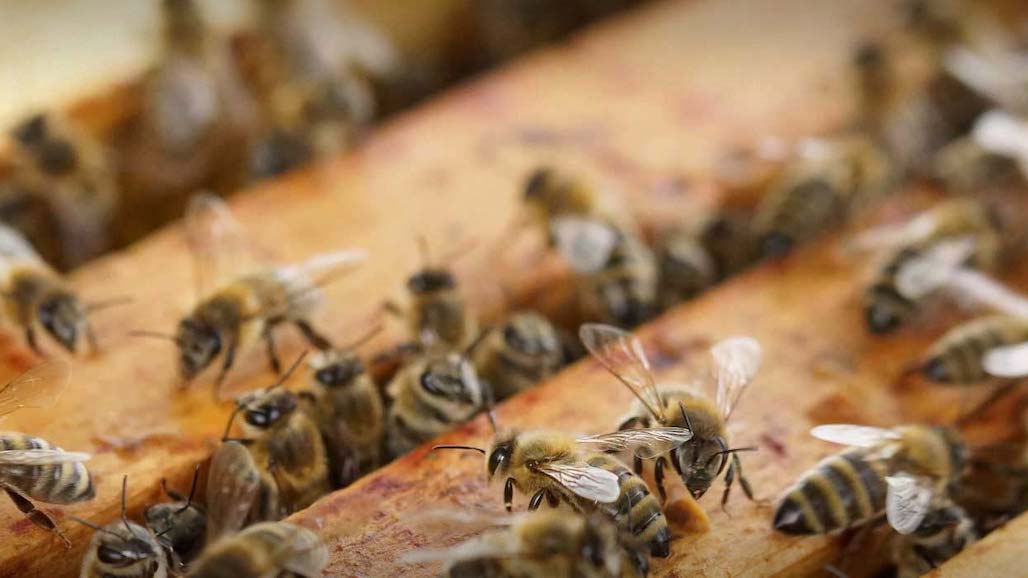
    Honey bee colonies for operations with five or more colonies in the United States on January 1, 2023 totaled 2.68 million colonies, down 7 percent from January 1, 2022, according to a recent USDA survey. The number of colonies in the United States on April 1, 2023, was 2.71 million colonies. During 2022, honey bee colonies on January 1, April 1, July 1, and October 1 were 2.88 million, 2.91 million, 3.11 million, and 2.89 million colonies, respectively.

    Honey bee colonies lost for operations with five or more colonies from January through March 2023, was 373,880 colonies, or 14 percent. The number of colonies lost during the quarter of April through June 2023, was 237,350 colonies, or 9 percent. During the quarter of April through June 2022, colonies lost totaled 363,570 colonies, or 13 percent, the highest number lost of any quarter surveyed in 2022. The quarter surveyed in 2022 with the lowest number of colonies lost was January through March, with 331,480 colonies lost, or 12 percent.

    Honey bee colonies added for operations with five or more colonies from January through March 2023 was 384,790 colonies. The number of colonies added during the quarter of April through June 2023 was 596,360. During the quarter of April through June 2022, the number of colonies added were 573,160 colonies, the highest number of honey bee colonies added for any quarter surveyed in 2022. The quarter of July through September 2022 added 152,640 colonies, the least number of honey bee colonies added for any quarter surveyed in 2022.

    Honey bee colonies renovated for operations with five or more colonies from January through March 2023 was 113,440 colonies, or 4 percent. During the quarter of April through June 2023, the number of colonies renovated were 478,440 colonies, or 18 percent. The quarter surveyed in 2022 with the highest number of colonies renovated was April through June 2022 with 494,890 colonies renovated, or 17 percent. The quarter surveyed in 2022 with the lowest number of colonies renovated was October through December 2022, with 147,950, or 5 percent. Renovated colonies are those that were requeened or received new honey bees through a nucleus (nuc) colony or package.

    Varroa Mites Top Colony Stressor for Operations with Five or More colonies:

    Varroa mites were the number one stressor for operations with five or more colonies during all quarters surveyed in 2022. The period with the highest percentage of colonies reported to be affected by varroa mites was April through June 2022 at 47.5 percent. The percent of colonies reported to be affected by varroa mites during January through March 2023 and April through June 2023 are 39.7 percent and 50.9 percent, respectively. — By the USDA National Ag Statistics Service

  • Best Food Safety Practices Shared at Peanut and Tree Nut Processors Association 2023 Summit

    Best Food Safety Practices Shared at Peanut and Tree Nut Processors Association 2023 Summit

    National and international nut industry leaders recently convened for the Peanut and Tree Nut Processors Association’s (PTNPA) annual Operations and Technical Food Safety Summit.

    Now in its eighth year, the summit brings together business owners and operators and food safety, quality assurance and regulatory experts in the nut industry from across the globe to hold critical discussions that drive food safety advancement in businesses of all sizes. Facilitated, interactive sessions focused on current regulations and practices for compliance, company success stories and challenges, food safety investment impacts, and more.  As the nut industry’s only food safety educational forum, this event is a unique and valuable opportunity to tackle ongoing challenges to directly contribute to safe and stable food systems.

    “The landscape for food safety is ever-growing and expanding—it’s more valuable than ever for industry thought-leaders to ideate on the topics presented at the summit,” shares Dr. Darlene Cowart, vice president of food safety and quality for Birdsong Peanuts. “Hearing directly from experts on key food safety topics as well as business leaders in every aspect of the organization is so important in the current food safety environment. What a great opportunity to learn and network with some of the world’s most talented food safety professionals.”

    PTNPA conducted anonymous, real-time polling during the summit and attendee participation identified important themes:

      • An Integrated Business Unit Approach: A majority of organizations proactively educate financial, maintenance and inventory teams on what it means to operate in a culture of food safety.
      • Training Is a Priority: Nearly 89% of companies conduct food safety trainings at least once a year across departments.
      • Emotionally Intelligent Leaders Stand Out: Strong communication and collaboration skills were rated the most critical leadership factors needed when working to prevent food safety risks or deficiencies in the market.
      • The Bottom Line — Value of Food Safety Cultures Reigns: Creating a culture of food safety emerged as a key topic of importance, with 94% of attendees indicating it as a priority for operations now and in the future.

    Presentations were led, moderated and hosted by industry experts from PTNPA member companies: Michael Campagna (vice president of quality, food safety and regulatory), Dr. Yvonne Masters (director of food safety and quality policy), and Jasper Sanfilippo, Jr. (COO) from John B. Sanfilippo & Son, Inc.; Dulce Guzman (director of food safety and QA) and Craig Leva (CEO and Owner) of Arway Confections; Suzanne Chamberland (food safety manager), Totally Nuts & More Inc.; Gaby Chavarria (quality and food safety manager), Harris Woolf Almonds; Erin Clem (director of food safety and quality), Diamond Foods, LLC; Dr. Darlene Cowart (vice president of food safety and quality), Birdsong Peanuts; Martin Hahn (general counsel), Hogan Lovells; John Larsen (president), Marathon Ventures, Inc.; Angelo Losurdo (vice president of quality and quality systems), Golden Peanut; Dr. Wendy Maduff (vice president of corporate food safety and quality), The Wonderful Company; Stephen O’Mara (president), J.F. Braun & Sons, Inc.; Eric Paskerian (principle and owner), WEP Engineering and Consulting Co.; Joel Perkins (CEO), Horizon Nut Co.; and Randy Porter (vice president of technical services), IEH Laboratories & Consulting Group. View speaker biographies and session topics to learn more.

    “We’re so proud of our industry and its commitment to innovation in a very rugged regulatory environment,” shares Jeannie Shaughnessy, executive director and CEO of PTNPA. “Our members are experts who are eager to collaborate for the advancement of the industry with a focus on measurable food safety investments in their businesses.”

    During the summit, PTNPA continued to expand the forward-thinking Industry Handbook for Safe Processing of Nuts with the launch of a new section focused on food safety best practices for importers and brokers. The handbook provides companies with guidance on day-to-day safety operations, company training protocols, employee onboarding, and regulatory guidance.

    About the Peanut and Tree Nut Processors Association

    The Peanut and Tree Nut Processors Association, established in 1939, is composed of leading nut industry companies, representatives and solution providers, ranging from international household brands to fourth-generation family-owned businesses. The organization exists to advance the nut industry through professional networks, advocacy and education for and on behalf of its members. For more information about PTNPA, the nut industry or to become a member, visit www.ptnpa.org.

  • Bob Schramm Retires, APG Selects New Federal Advocacy Firm

    Bob Schramm Retires, APG Selects New Federal Advocacy Firm

    Back at the annual American Pistachio Growers (APG) Conference, longtime federal advocate for the association — Bob Schramm was paid special tribute for his dedicated service to the U.S. pistachio industry.  Schramm is now transitioning into retirement, and he has worked with APG in selecting a new firm to take his place in representing and protecting the interests of the pistachio industry at the federal level. Watch this video to learn more, and be sure to keep up with the activities of APG in Pacific Nut Producer Magazine.

    Please thank this video’s sponsor Thunder Creek Equipment for their industry support.

  • Opportunities for U.S. Tree Nut Exports to Malaysia

    Opportunities for U.S. Tree Nut Exports to Malaysia

    Malaysia was the 26th-largest export destination for U.S. agricultural products in 2022, totaling nearly $1.1 billion in value, and is a top prospect for exports of food and beverage ingredients because of its large and growing food processing industry. Food and beverages manufactured in Malaysia not only serve domestic consumers but are also exported to many neighboring countries. U.S. exports of dairy products, fresh and processed potatoes, food-grade soy, processed fruit and juices, tree nuts, and more have many opportunities to supply the Malaysian food processing sector, which depends on imports for key ingredients and inputs, and in doing so reach consumers across Malaysia and throughout Southeast Asia.

    Macroeconomic Perspective

    Malaysia has a diverse and open economy with a gross domestic product (GDP) per capita that is among the highest in Southeast Asia at $12,360 in 2022. Malaysia is currently considered an upper-middle income country by the World Bank (countries with gross national income per capita between $4,466 and $13,845) but is expected to become a high-income country within the next few years. According to the International Monetary Fund, Malaysia’s real GDP growth has been mostly between 4 and 5 percent in recent years, apart from major shifts between 2020 and 2022 due to the COVID-19 pandemic. With an estimated population of 34 million in 2022, Malaysia is the 43rd-most-populous country in the world and the 6th-most-populous member state of the Association of Southeast Asian Nations (ASEAN).

    Agricultural Trade and the Food Processing Industry

    Malaysia is the 26th-largest export destination for U.S. agricultural products, with exports valued at nearly $1.1 billion in 2022. The United States was Malaysia’s eighth-largest supplier, accounting for 5.6 percent of total agricultural imports. The mix of U.S. products is diverse, ranging from bulk products such as soybeans, wheat, and cotton to consumer-oriented products such as dairy, tree nuts, fruits, and vegetables.

    U.S. Agricultural Exports to Malaysia
    Value in Millions, U.S. Dollars

    The Malaysian food processing sector accounts for around 10 percent of total domestic manufacturing output and supplies in both the internal and export markets. To serve its consumers domestically and abroad, the Malaysian food processing industry depends on imported ingredients. The manufacturing of dairy products, wheat flour-based products, processed fruit and vegetables, and various specialty foods and beverages rely heavily on imports. The United States is an important supplier of many of these ingredients, and prospects are strong because of the size and growth of Malaysian food processing. Because Malaysia is a regional supplier of processed foods, U.S. food and beverage processing ingredients can reach consumers in Malaysia, throughout Southeast Asia, and beyond.

    The U.S. agricultural products that have high potential to expand in the Malaysian market for use in food processing include: dairy products; fresh and processed potatoes; food-grade soy products; processed fruit and juices; and tree nuts.

    Tree Nuts

    Malaysia imported $196 million of tree nuts from all suppliers in 2022, down from $204 million in 2021. The United States exported $32.4 million to Malaysia in 2022 and was the second-largest supplier behind Indonesia, holding 19 percent market share. Shelled almonds made up 68 percent of U.S. tree nut exports to Malaysia, with $22.2 million exported there in 2022. Other top products include in-shell pistachios ($3.5 million), shelled walnuts ($3.4 million), and in-shell almonds ($1.6 million). The United States holds a very high market share in Malaysia for imported shelled almonds, at nearly 85 percent, and a high market share for shelled walnuts (64 percent) and in-shell pistachios (48 percent). According to Euromonitor International, sales of nuts, seeds, and trail mixes in Malaysia have increased 4.5 percent annually, on average, since 2018, and this growth rate is forecast to increase during the next 5 years. Almonds, pistachios, and walnuts are common ingredients in nut mixes, and U.S. exports have good prospects because of the current market share for these tree nuts.

    Trade Policy

    Malaysia is a member of ASEAN and is thus part of the ASEAN Free Trade Area along with its neighbors Brunei, Cambodia, Indonesia, Laos, Burma, Singapore, Thailand, and Vietnam. As part of ASEAN, it has free trade agreements (FTAs) with Australia, the People’s Republic of China (PRC), India, Japan, New Zealand, and the Republic of Korea (South Korea). Malaysia is a party to the Comprehensive and Progressive Agreement for Trans-Pacific Partnership and the Regional Comprehensive Economic Partnership. Malaysia also has seven bilateral FTAs with countries including Australia, the PRC, India, Japan, New Zealand, Pakistan, and Türkiye. For information on trade policy and regulations relevant to the export of food processing ingredients to Malaysia, see FAS’s most recent Malaysia: Food Processing Ingredients GAIN report.

    Conclusion

    Due to its expanding food processing industry, Malaysia is a major prospect for the export of food and beverage ingredients and is a significant export destination for U.S. agricultural products. The Malaysian food processing sector, which depends on imports for essential ingredients and inputs, has many opportunities to benefit from U.S. exports of dairy products, fresh and processed potatoes, food-grade soy, processed fruit and juices, tree nuts, processed food and beverages, snacks, and more. Food and beverages manufactured in Malaysia not only serve domestic consumers but are also exported to many neighboring countries. Given that Malaysia is a key regional supplier of processed foods, U.S. food and beverage ingredients can effectively reach consumers not only within Malaysia but also throughout Southeast Asia and beyond.