
It seems we are always on the verge of some type of apocalypse, and with the new carpophilus beetle invading California tree nut orchards, there is cause for concern. Watch this brief California Ag Network interview with UC Riverside CE Entomology Specialist Houston Wilson to learn more about this pest and how to stop it from damaging your crops.
Category: Industry News
-

5-Year Pistachio Crop Forecast Reveals Tremendous Growth
At American Pistachio Growers annual Pistachio Industry Conference this year, Bob Klein, Manager of the California Pistachio Research Board, gave his final presentation before retiring with a five-year California pistachio crop-yield forecast. The numbers were stunning with the tremendous growth of the industry and pistachio acreage expected to begin bearing. Pacific Nut Producer Editor Matthew Malcolm met with Bob to better understand the analytics and what the industry can expect for 2024 and beyond. Watch this brief interview and read more about it in the May issue of Pacific Nut Producer Magazine.
-
New Research Reveals Hazelnut Growers are Missing the Mark on Filbertworm Control

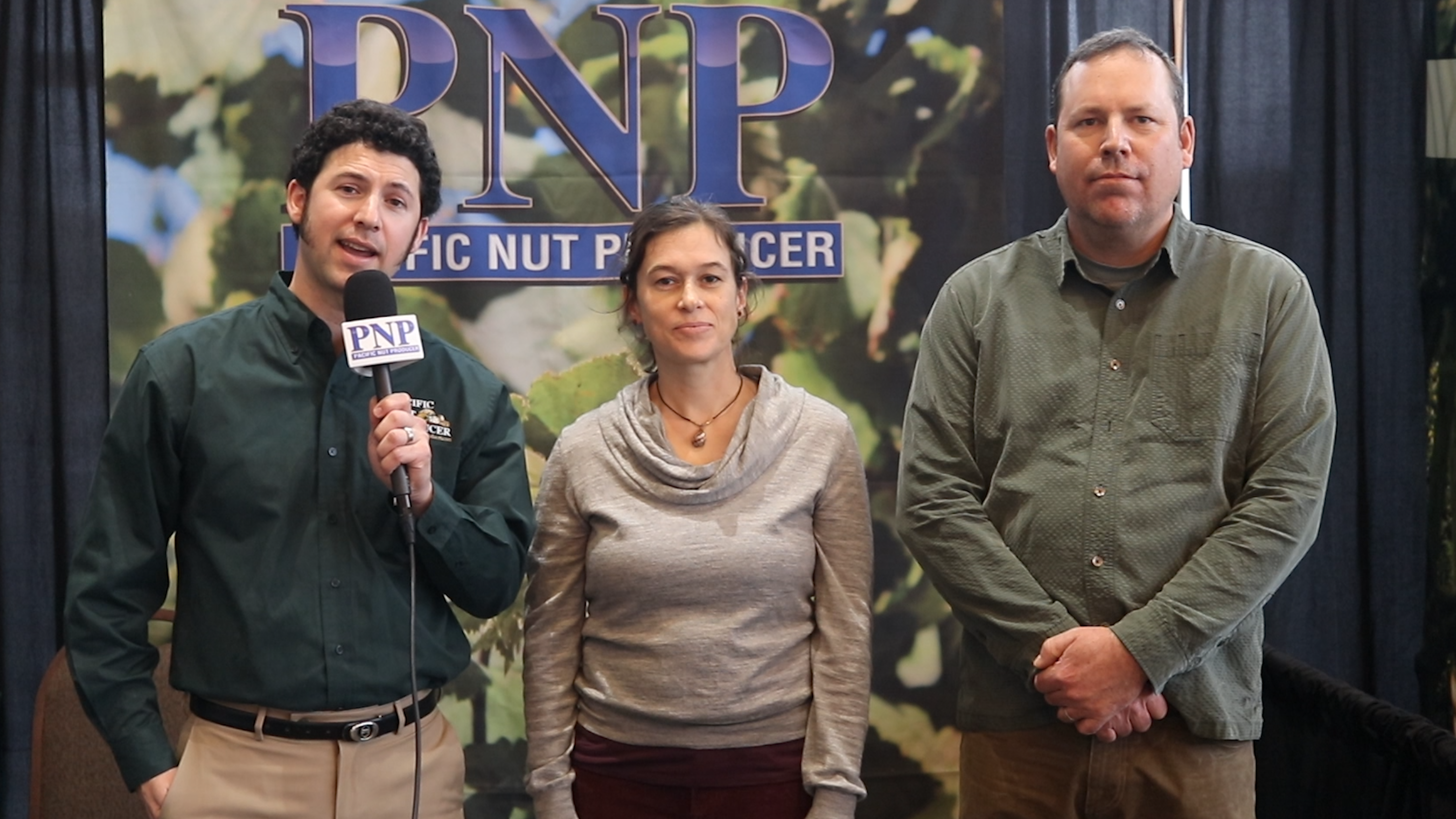
New research at Oregon State University (OSU) suggests that filbertworm, the #1 insect pest of the hazelnut industry, is causing a lot more early season damage than growers have detected or attributed in the past. At a recent Nut Growers Society meeting, Pacific Nut Producer Editor Matthew Malcolm met with OSU hazelnut extension experts Nik Wiman and Betsey Miller to discuss amending filbertworm monitoring and management recommendations to improve control of the pest and resulting crop yields. Watch this brief interview and read more in Pacific Nut Producer Magazine.
Please thank this video’s sponsor George Packing Company for their industry support.
-
CA Walnut Commission Celebrates USDA’s Regional Agricultural Promotion Program (RAPP) Awards
The California Walnut Commission (CWC), representing more than 4,600 California walnut growers, mostly multi-generational family farms, and nearly 70 handlers, is pleased to announce it has been awarded $7 million in funding as part of the Regional Agricultural Promotion Program (RAPP) to expand distribution and sales of California Walnuts in international markets.
The CWC thanks Agriculture Secretary Tom Vilsack, the U.S. Department of Agriculture, and the Foreign Agricultural Service for enactingthe Regional Agricultural Promotion Program and recent award announcements to help support the expansion of California Walnuts and other US commodity exports into emerging markets. This additional funding will allow the industry to expand programs into new markets as well as boost activities in existing strategic export markets, with the goal of increasing distribution and driving sales of high-quality California walnuts globally.
RAPP funding will enhance the Commission’s work by expanding market access in new opportunity markets, in conjunction with driving sales of California walnuts in international markets currently funded through the Market Access Program (MAP). The CWC plans to attain success by leveraging the combined funding to conduct similar programs and activities as it was able to achieve in the United Kingdom (UK) utilizing the one-time Agricultural Trade Promotion Program (ATP) funds. In the UK, the industry was able to build programs that drove additional displays and distribution, resulting in increased retail sales and growing California walnut shipments +65% since 2018. The UK is now a top ten export market.
“Funding from the Market Access Program has been essential to our success over the years, and the introduction of RAPP funds will provide additional opportunities to drive new distribution and grow sales for California walnuts in even more new and exciting ways” said Robert Verloop, CEO for California Walnut Commission. “We’re eager for the opportunity of RAPP to expand sales of and expand market access for California walnuts.”
About the California Walnut Commission
The California Walnut Commission (CWC) represents more than 4,600 California walnut growers and nearly 70 handlers, grown in multi-generational farmers’ family orchards. California walnuts, known for their excellent nutritional value and quality, are shipped around the world all year long, with more than 99% of the walnuts grown in the United States being from California. The CWC, established in 1987, promotes usage of walnuts through domestic and export market development activities as well as supports health research with consuming walnuts.
To explore recipes and learn more about California walnut growers, industry information and health research, visit walnuts.org
-
Almond Leadership Program Raises Over $21,000 for FFA Scholarships
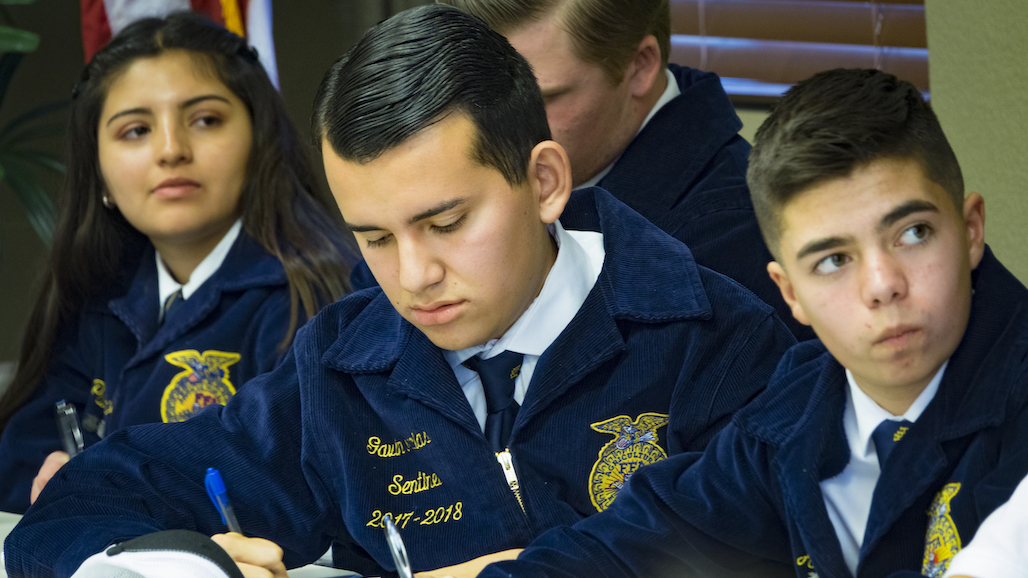
The Almond Board of California’s Almond Leadership Program (ALP) swung into action once again, hosting its annual golf tournament on Thursday, May 2, at the Dragonfly Golf Club in Madera. With 32 teams comprising a total of 128 enthusiastic golfers, the event teed off at 8 in the morning and concluded with triumph and camaraderie at 2 in the afternoon.
The day wasn’t just about perfecting that swing or sinking that elusive putt; it was about rallying together for a common cause — supporting the future of agriculture. This year’s tournament proved to be a hole-in-one for fundraising efforts, as it soared past the $21,000 mark. Every penny raised will be funneled into FFA scholarships, ensuring that budding agriculturalists have the financial support they need to nurture their dreams and ambitions.
The winning quartet, comprising of Ian Hudson, Mark Mallin, Danny Miller, and Max Sparrer, showcased not only their golfing prowess but also their commitment to the cause. Meanwhile, the event’s success owes much to the dedication of ALP program participants Zac Days and Ryan McCoon, who served as co-chairs, steering the tournament towards success.
The tournament provided a platform for industry members and FFA students alike to converge, forging bonds and making memories — all while championing a cause close to their hearts. The significance of these scholarships, as highlighted by ABC’s Rebecca Bailey, cannot be overstated. “College is expensive, so being able to support students as they pursue higher education will help to ease financial and stress-related burdens,” she emphasized.
In the grand tapestry of California agriculture, events like the ALP’s golf tournament serve as threads that bind communities together, weaving a future with promise and possibility.
For those interested in joining the ranks of future agricultural leaders, applications for the 2025 Almond Leadership Program will begin to be accepted in October. For more information, reach out to Rebecca Bailey at rbailey@almondboard.com.
In the end, it’s not just about sinking putts; it’s about raising hopes, one swing at a time. — By the Almond Board of California
-
Israel May Seek U.S. Pistachio & Vegetable Imports Due to Turkish Trade Ban
USDA Foreign Ag Service — Turkey, Israel’s third largest foreign supplier of imported agricultural and related products, recently announced a ban on all trade with Israel due to the regional conflict. Accordingly, Israeli importers may look to source certain agricultural imports from elsewhere. Israel’s leading agricultural and related imports from Turkey include fresh and processed agricultural produce—specifically tomatoes, olive oil, cucumbers, onions, and eggplant. For the United States, pistachios may be in greater demand as Turkey is the only other foreign supplier to the Israeli market.
Turkey Bans all Trade with Israel
On May 2, 2024, Turkey announced a ban on all trade with Israel due to the “worsening humanitarian tragedy” in Gaza. According to the Turkish Minister of Trade, the ban will be lifted when a sufficient flow of humanitarian aid flows into Gaza. As a result of the ban, the Israeli government is looking to increase domestic production, Israeli importers are looking for new or expanded sourcing for certain agricultural imports, and regional media reports some Israeli importers are looking for alternative routes to circumvent the ban from Turkey.
Depending on its length, the trade ban could significantly impact the Israeli market as Turkey is a strong trading partner due to its geographical proximity, a bilateral free trade agreement established in 1996, and competitive prices. Moreover, in the past six months, many Israeli importers looked to increase imports from Turkey as trade via the Red Sea has been disrupted by Houthi attacks on vessels passing through the Bab al-Mandab Strait.
Turkish Exports to Israel
In calendar year 2023, total Israeli imports from Turkey were valued at roughly $5.3 billion (5.7 percent of total Israeli imports). For agricultural and related products, Turkey was the third largest foreign supplier to Israel, after Russia and the United States. Israel imported $543 million in agricultural and related products from Turkey (5 percent of the total value of its agricultural and related imports) in 2023.
As seen in the chart below, Turkish tomato exports represent the largest agricultural export to Israel. However, sourcing for other agricultural products, such as olive oil, sunflower seeds, and certain types of fish, may also be impacted. Furthermore, a quick increase in Israeli production for some agricultural products would be difficult to realize as it could take many months or years to sufficiently supply gaps.
For the United States, pistachios may see increased opportunities as Israel only imports pistachios from Turkey and the United States (Note: Total value of Israeli imports of pistachios totaled $40.5 million in 2023).


-

USDA Funding to Address Specialty Crop Export Challenges
U.S. Department of Agriculture Under Secretary for Trade and Foreign Agricultural Affairs Alexis M. Taylor today announced the availability of funding for the first five projects under the new Assisting Specialty Crop Exports (ASCE) initiative.
The ASCE initiative is part of USDA’s commitment to create more, new and better markets at home and abroad for U.S. producers and agribusinesses. The innovative partnership between USDA and the specialty crops sector will focus on projects to address the non-tariff trade barriers that hinder U.S. exports of fruits and vegetables, tree nuts, horticultural crops and related products.
“Today, USDA is committing more than $20 million to support U.S. specialty crop exporters in their efforts to overcome trade barriers and open overseas markets,” Under Secretary Taylor said. “We’re excited to be accepting proposals from partners interested in implementing projects that will target cross-cutting issues that were identified in our discussions with a diverse set of stakeholders. U.S. specialty crop exports totaled $25.8 billion last year, increasing the bottom line for our producers and driving economic development in their local communities and beyond. With the ASCE initiative, we look forward to expanding specialty crop exports and generating even greater benefits.”
The project opportunities for which USDA is accepting applications are:
Sustainable Packaging Innovation Lab – to support research and implementation projects that advance U.S. specialty crop exports through innovative solutions to emerging overseas regulatory requirements for packaging and labeling;
Maximum Residue Limit (MRL) Regional Harmonization – to address existing and potential trade needs in Asia, Latin America, and Africa related to MRLs for U.S. specialty crops entering these regions, while supporting development of risk-based and trade-facilitative policies that are consistent with international standards such as Codex;
Import MRL Guideline Implementation in Asia-Pacific Economic Cooperation (APEC) Economies – to support establishment of import MRLs in key U.S. export markets through the adoption and implementation of official APEC MRL guidelines that facilitate trade and are consistent with international standards such as Codex;
Data Generation for Codex and Harmonized MRL Setting – to reduce the number of missing and misaligned MRLs by supporting collaborative research and data generation capacity for the establishment of Codex MRLs; and
MRL Quick Reference Sheets for Specialty Crops – to develop a set of quick reference sheets for specialty crop exporters that include MRLs for the top foreign markets.
After touring the packaging materials lab at the University of Wisconsin-Stout today, Under Secretary Taylor said, “The work being accomplished by these students and researchers will help create innovative, sustainable packaging materials that will help specialty crop exporters meet the requirements of our trading partners and extend the shelf-life of their products to ensure cost-competitive, highly nutritious American products move safely from our farm to consumers’ plates globally.”
For more information about the ASCE initiative and the current funding opportunity, visit: https://fas.usda.gov/programs/assisting-specialty-crop-exports-asce-initiative
USDA is an equal opportunity provider, employer, and lender.
-
Compost Tax Credit Bill for California Farmers Progresses Through Legislature
California growers investing in compost to boost soil fertility on the farm may soon reap additional benefits in the form of a tax credit. Michael Miiller from the California Association of Winegrape Growers (CAWG) joined Matthew Malcolm on California Ag Network to share how this promising CAWG-sponsored bill is currently making its way through legislature. Watch this brief video to learn more.
-
Silverleaf Nightshade in Young Pistachio Orchards
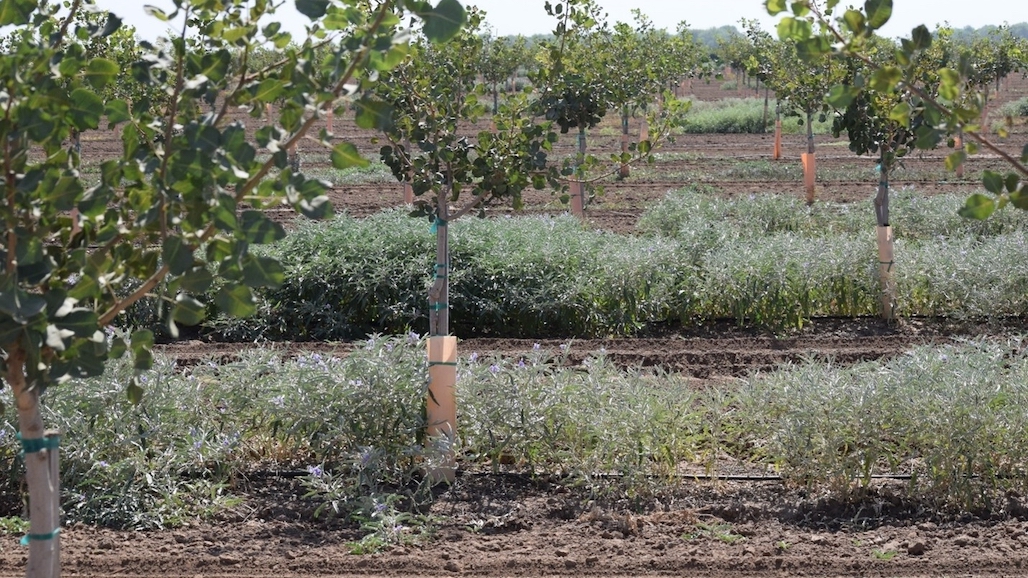
Silverleaf nightshade, Solanum Elaeagnifolium, is perennial weed that is native to South America, Mexico, American Southwest and Southern States. This herbaceous and woody summer weed belongs to Solanaceae just like other weeds such as black nightshade (Solanum nigrum), hairy nightshade (Solanum physalifolium) and horsenettle (Solanum carolinense). It can be found throughout California and in grows in desert and semi-arid areas. Silverleaf nightshade is often found growing in different cropping systems, rangeland, pastures, roadsides, and disturbed areas. Silverleaf nightshade is highly adaptable and can tolerate a wide range of soil and climatic conditions such as high temperatures, low rainfall, saline and drought conditions. The leaves and berries produced by silverleaf nightshade plants have glycoalkaloid compounds that can be toxic to livestock and humans if consumed (UC IPM) (Boyd 1982).
Life Cycle

Figure 4. Silverleaf nightshade (Solanum elaeagnifolium) Life Cycle. NSW Department of Primary Industries. One of the main reasons why silverleaf nightshade is difficult to control in orchard crops is due to its perennial life cycle. From early spring to late summer, silverleaf nightshade will germinate and emerge from seeds and rhizomes from previous year (Figure 4). In the summer and early fall, silverleaf nightshade will grow between 1-3 feet and produce deep violet flowers with yellow centers (UC IPM). During its flowering stage, Silverleaf nightshade produces widespread root systems that potentially can germinate new plants with wet soil moisture conditions. One silverleaf nightshade plant has the potential to produce about two hundred yellow to brown berries and each berry contains between 24 to 150 seeds (Roberts and Florentine 2022). In the winter, silverleaf nightshade plants will die with the first frost but the root systems will survive and produce new vegetative shoots in the spring. Seeds can be spread by birds consuming the berries and tillage operations. In addition, tillage operations during the spring can contribute to the spread rhizomes of silverleaf nightshade across fields. Precautions need to be taken into account when doing soil disturbance operations in the spring and summer.
Impacts

Figure 3. Silverleaf nightshade (Solanum elaeagnifolium) CA Distribution Map. The blue dots show the distribution of Silverleaf nightshade in California. CALFLORA 2024 Silverleaf nightshade is becoming a problematic weed in some young pistachio orchards in Tulare, Kings and West Fresno. This perennial weed is mostly found in young orchards that are planted on west Fresno and Kings County by interstate 5 highway (Figure 3). In Tulare County, silverleaf nightshade is found pistachio orchards that were planted in unmanaged fallow land or in fields near roadsides where it’s commonly found. One of the major impacts of silverleaf nightshade is that it competes with young pistachio orchard for resources such as water, light and nutrients. If left unmanaged, silverleaf nightshade can also interfere with irrigation operations and potentially reduce crop vigor in young pistachio trees (Figure 2). Since silverleaf nightshade can adapt to alkaline and saline soils, it will also outcompete many of the summer annual weeds and become the dominant weed in the population.

Figure 1. From left to right: Silverleaf nightshade (Solanum elaegnifolium), Black nightshade (Solanum nigrum), Hairy nightshade (Solanum physalifolium). Weeds in the nightshade family can be found in orchards and in annual crops. Silverleaf nightshade produces silver green leaves, violet flowers, and yellow berries. Black and hairy nightshades produce white flowers and black berries. UC IPM. Management
Silverleaf nightshade can be a weed that is difficult to control with the available management methods in orchards. Tillage is not recommended as that is one of the ways that rhizomes can be spread across the orchard (Ensby 2011). Mechanical control methods such mowing can be an effective control method to prevent weeds from setting seed. Flail mowers are often used in orchards and vineyards to mow weeds in between tree rows. It is important to note that, new silverleaf nightshade shoots will potentially sprout from the root system after the tops are mowed (Stanton 2011). Even though mowing can be an effective weed control method during the growing season, most commercial mowers will miss the weeds that grow in between trees that directly compete with young trees. Hand weeding can be used to remove some of the weeds around the trees, but extra precaution needs to be taken. Mature silverleaf nightshade plants are covered in reddish prickles that can be harmful if weeds are handled with bare hands. Weeding tools such as shovels and hula hoes can damage surface drip hoses if the user is not careful.
Herbicides can be an effective weed management method to control silverleaf nightshade in different tree crops. There are a twelve pre-emergent and thirteen post-emergent herbicides with different sites of action that are registered for use in pistachios (Table 1). Pre-emergent herbicides are normally applied during the dormant season and most only control weeds before they germinate. Pendimethalin, rimsulfuron, mesotrione, flumioxazin, isoxaben, and flazasulfuron are herbicides that have great control over black and hairy nightshade. Isoxaben can suppress silverleaf nightshade, but cannot be used in pistachios that have not been established for at least three years. Pre-emergent herbicides will not control silverleaf nightshade that emerges from rhizomes in the summer. Post-emergent herbicides can be used to control silverleaf nightshade that emerges in the summer and early fall before harvest. Glyphosate, glufosinate, pyraflufen, and carfentrazone are post-emergent herbicides with different sites of action that can be used to control different weeds and can be used up to two weeks before harvest. 2, 4-D is another post-emergent herbicide that is registered for use in pistachios, but needs to be applied to trees that have been established for at least one year and has a pre-harvest interval of 60 days. Research work from other researchers has shown that glyphosate and 2, 4-D have excellent control of silverleaf nightshade (DiTomaso 2013) (Gitsopoulos 2017). Glyphosate is a systemic herbicide that can potentially kill the root system of silverleaf nightshade, when applied at the correct timing and rate. Since Silverleaf nightshade has extensive rhizome root systems, the root systems need to be killed to fully control this weed. In the summer months, a combination of mowing and the use of post-emergent herbicides can kill the aboveground tissues of silverleaf nightshade weeds and deplete the root bank in the soil (Heap 2018). Post-emergent herbicides need adjuvants such as nonionic surfactants, crop and seed oils, to increase their efficacy. Furthermore, always consult the herbicide labels on information regarding information on the required adjuvants, pre-harvest intervals, application rates and maximum applications per seasons.
The weed management tools to control silverleaf nightshade in pistachio orchards are limited. Developing and maintaining field records before planting is a great way to determine the history of a field before planting. Conducting weed surveys in the winter and spring can help determine what weed species are present in a field. Silverleaf nightshade populations can be reduced by mowing in between tree rows and applying herbicides to weeds present in between trees. These management practices need to be done before the weeds set seeds to contribute to reduce the seedbank. To avoid introducing silverleaf nightshade to other fields, it is important to sanitize tractor equipment and manage the weeds that grow on the field edges or near irrigation canals. To have an effective silverleaf nightshade management program, a combination of herbicides with different modes of action are needed decrease the possibility of it developing herbicides resistance. Silverleaf nightshade is difficult to control because of its tolerance to many herbicides (Gitsopoulos 2017). During the summer months, it is best to use a combination of systemic and contact post-emergent herbicides to get higher levels of control for silverleaf nightshade. To enhance the efficacy and herbicide absorption, post-emergent herbicides require adjuvants such asmethylated seed oils, non-ionic surfactants, crop-oil concentrates, and nitrogen-based fertilizers. — By Jorge Antonio Angeles, UC Cooperative Extension Weed Management Advisor

Table 1. Herbicides registered for use in CA tree and vine crops. https://wric.ucdavis.edu/. Mention of a trade name is not an endorsement or recommendation. Always check the label before applying. Cited Literature
Boyd, J.W. and Murray, D.S. 1982. Growth and development of silverleaf nightshade (Solanum elaeagnifolium). Weed Science 30, 238-43.
DiTomaso, J.M., G.B. Kyser et al. 2013. Weed Control in Natural Areas in the Western United States. Weed Research and Information Center, University of California. 544pp.
Ensbey R. 2011. Noxious and environmental weed control handbook – A guide to weed control in non-crop, aquatic and bushland situations. 6th ed. New South Wales: Department of Trade and Investment, Regional Infrastructure and Services.
Gitsopoulos, Thomas & Damalas, Christos & Georgoulas, Ioannis. 2017. Chemical options for the control of silverleaf nightshade (Solanum elaeagnifolium). Planta Daninha. 35. 10.1590/s0100-83582017350100064.
Heap, J. & Wu, H. 2018. Silverleaf Nightshade: Australian best practice management manual. Primary Industries and Regions SA & NSW Department of Primary Industries: Adelaide.
Roberts J., Florentine. 2022. Biology, distribution and management of the globally invasive weed Solanum elaeagnifolium Cav. (silverleaf nightshade): A global review of current and future management challenges. Weed Res. 2022;62:393–403. doi: 10.1111/wre.12556.
Stanton, R. & Wu, Hanwen & Lemerle, D. 2011. Root regenerative ability of silverleaf nightshade (Solanum elaeagnifolium Cav.) in the glasshouse. Plant Protection Quarterly. 26. 54-56.
-
Bud Break and Bloom of Walnut and Pecan: Similar Crops with Differing Habits
Walnuts and pecans represent two of the four major nut crops grown in California. The California walnut industry dwarfs the state’s pecan industry in acreage, with over 300,000 acres dedicated to commercial walnut production and approximately 3,000 acres to pecan. The relatedness of the two crops has facilitated an overlap of specialization in the grower community, with many long-time walnut growers also managing the state’s pecan acreage.

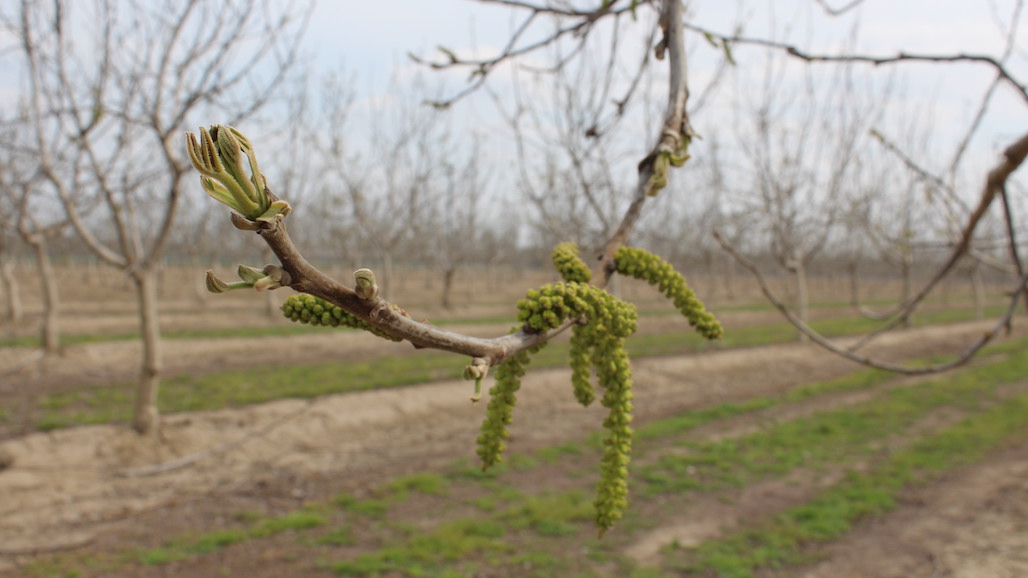
Walnuts and pecans are both in the same plant family (Juglandaceae); consequently, they have similar reproductive habits. They are both monoecious, meaning that male and female flowers are borne on the same tree. Also, both pecan and walnut produce male flowers called ‘catkins’ (Figure 1), and the non-showy female flowers are produced at the terminus of a preformed shoot (Figure 2) that emerges from a compound bud. On walnuts, the catkin buds are visible at nodes, sometimes with two catkins occupying a single node as a primary and secondary bud (Figure 1A). Conversely, the catkin buds on pecan are not readily visible before bud break (Figure 1B). During the delayed dormant phase on pecan, the catkins are hidden behind a scale sheath that covers the catkins and compound shoot bud (Figure 1 B and C). As a result, the catkins only emerge as the entire bud assemblage pushes, generally in late March-early April in California. The compound bud, containing the current season’s shoot and female flowers, is assembled with catkins that emerge in groups of three (Figure 1C and 2B). As a result, groups of catkins mature at the base of the current season’s shoot (Figure 2B).

The compound buds of walnut and pecan are similar in that the bud contains the preformed shoot and preformed leaves as well as the female (pistillate) flowers. The female flowers are located at the apex of the preformed shoot (Figure 3 A and B). Walnuts and pecans both have variable numbers of pistillate flowers in each compound bud. Walnut flowers are readily visible with the naked eye, whereas pecan flowers are smaller, and observation of the stigmatic surface may be enhanced with the aid of a hand lens. The final nut set of each compound bud varies based on the number of initial pistillate flowers and the success of pollination and fertilization processes.

Both walnut and pecan tend to exhibit apical dominance as evidenced by the stronger, and often earlier, growth of the apical bud. In walnut, two buds (primary and secondary) may be present at each node. Usually, one bud will dominate and grow, while the weaker bud will remain static or die off. Occasionally, both primary and secondary buds grow, resulting in branching at acute angles, often referred to as “forking”. In walnut, nut set can be evaluated by early June and buds for the next year’s crop may already be visible in May (Figure 4A). In vigorous orchards, in-season growth may be produced beyond the position of the nuts (Figure 4B). In-season (neoform) growth is less common in pecan. Researchers speculate that the neoform growth observed in walnut may be related to the use of vigorous hybrid rootstocks.

Although pecan and walnut are related species hailing from the same plant family, their growth and reproductive habits do have notable differences. Growers with a lifetime of experience with walnuts may be baffled by the lack of visible catkins on pecan during the dormant season. A bit of patience in the spring, however, reveals the reproductive structures upon bud break. The need for patience in pecan cultivation is also notable at harvest time. In California, the pecan harvest generally commences after the walnut harvest is complete and often continues into the successive year as fall rain events may impede orchard access. — By Elizabeth Fichtner (UCANR), Santosh Bhandari, Jennifer Randall and Richard Heerema (NMSU)