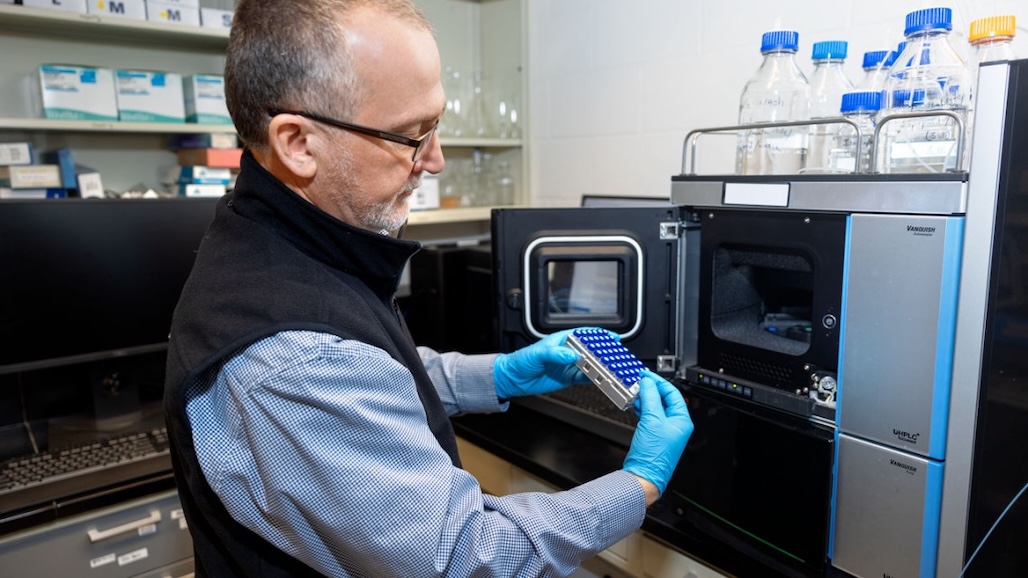
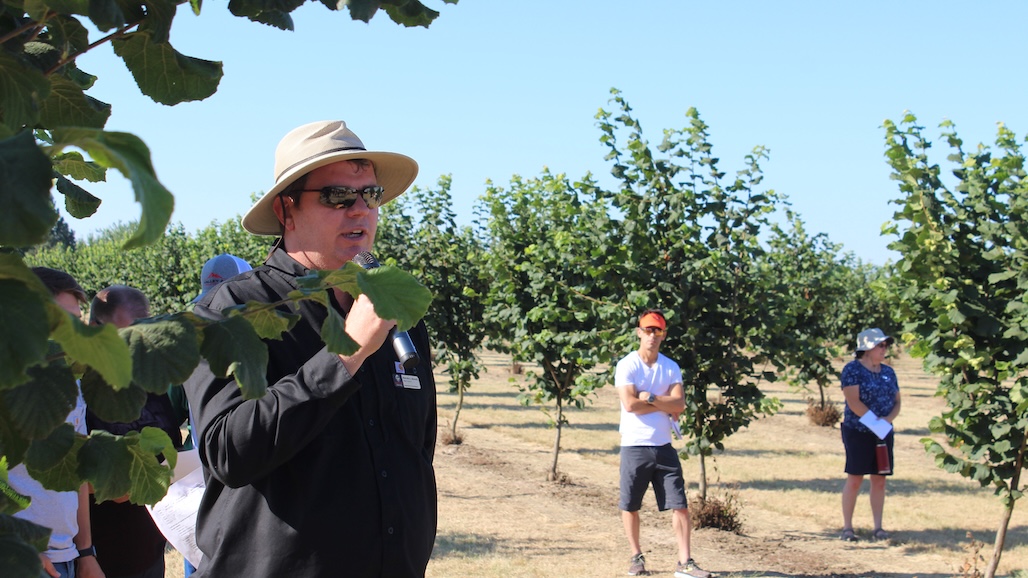
Conditions were ideal for Oregon hazelnut growers to deliver a high-quality, high tonnage crop in 2024. Growers were also pleased with more favorable prices as well. Pacific Nut Producer Editor Matthew Malcolm met with Terry Ross from the Hazelnut Growers Bargaining Association to discuss factors influencing the higher returns and renewed confidence of the industry in planting more acreage. Watch this brief interview and stay current on hazelnut industry news by reading your monthly issue of Pacific Nut Producer Magazine.
In the midst of favorable growing conditions, California walnut growers are reporting outstanding early-season conditions that point to a positive outlook for the 2025 crop, according to industry experts monitoring the state’s orchards.
Following three consecutive years of average to above-average rainfall and snowpack in the Sierra Nevada mountains, California walnut orchards are beginning the growing season with adequate surface water and replenished soil profiles. These favorable conditions, coupled with ideal spring temperatures, have created an environment for strong bloom and early shoot development.
“Things are shaping up to be a tremendously good start to California’s walnut growing season,” said Davin Norene, owner of Big Time Farming and walnut growing specialist. “We are predicting good things ahead of this year’s crop.”
Early walnut varieties began bud break in mid-April, with all varieties, including Chandler, now showing strong shoot growth throughout California’s prime growing regions. The orchards are currently in a critical growth phase, setting the stage for healthy nut development throughout the season.
“The exceptional start to this growing season is a welcome and energizing reprieve after navigating a series of tough seasons that demonstrated the resilience and adaptability of California’s walnut industry,” said Robert Verloop, executive director and CEO of the California Walnut Board & Commission. “This spring, growers are well-positioned to capitalize on ideal soil moisture and perfect temperatures, setting the stage for strong yield and quality in the 2025 crop.”
For more information on the California walnut industry, visit walnuts.org.
About the California Walnut Board & Commission
The California Walnut Board (CWB) and California Walnut Commission (CWC) represent more than 3,700 California walnut growers and approximately 70 handlers, grown in multi-generational farmers’ family orchards. California walnuts, known for their excellent nutritional value and quality, are shipped around the world all year long, with more than 99% of the walnuts grown in the United States being from California.
The CWB, established in 1948, promotes usage of walnuts in the United States through publicity and educational programs. The CWB also provides funding for walnut production, food safety and post-harvest research. The CWC, established in 1987, is involved in health research with consuming walnuts as well as domestic and export market development activities.
To explore recipes and learn more about California walnut growers, industry information and health research, visit walnuts.org.
Project Apis m.’s Seeds for Bees program is open and accepting application now through August. With support from several agricultural groups, including the Almond Board of California, the program is back again to help growers experience cover crop benefits in their orchard by providing them with free cover crop seed, nurturing a landscape that fosters both agricultural productivity and environmental stewardship.
The Seeds for Bees program offers free seed support through Project Apis m. First-year participants are eligible for up to $2,500 worth of free seeds, while second-year participants can receive up to $1,500. Returning applicants can continue to benefit from discounted seed purchases through the program, ensuring ongoing support for seasoned growers.
One of the program’s key strengths lies in its diverse seed offerings, tailored to meet the unique needs of various crops and farming practices. From popular mixes like the Pollinator Brassica, which blooms early to support almond cultivation, to specialized blends such as the Nitro Builder, designed to enhance nitrogen fixation, the program caters to a wide range of agricultural requirements.
The benefits of cover crops extend far beyond their role in supporting pollinators. Improved water infiltration, often likened to a sponge, is one of the immediate advantages noted by growers. “Your soil is a lot like a sponge,” said Stetcyn Maldonado, manager of the Seeds for Bees program. “If you have a sponge that’s really open, you got all your pores in there and you can hold a lot more water and air than a sponge that’s squished. A cover crop really helps with getting your rainfall into your soil as quick as possible.”
Addressing concerns about competition, Stetcyn reassures growers that cover crops, especially those offered through the Seeds for Bees program that are winter cover crops, are allies in weed suppression rather than adversaries to perennial crops. By occupying space and utilizing resources, cover crops naturally outcompete weeds, offering a sustainable solution to weed management and then are terminated before almond trees start growing again.
With the application period open from April 1 to August 31, growers are encouraged to seize the opportunity and secure their spot in the program. “We’ve had a ton of applications already and the program is always increasing popularity,” Maldonado noted. “Seed is limited, so you want to make sure that your spot is secured,” The goal is to ensure timely delivery of seeds to growers’ doors, well before the optimal planting window from early to mid-October.
Visit the Seeds for Bees website to learn more about the program and to apply for seeds. Additionally, upcoming videos featuring grower testimonies will offer insights into real-life experiences with cover crops and the Seeds for Bees program, providing a firsthand glimpse into its impact on agricultural practices.
The Almond Board of California (ABC) has introduced a new feature in its California Almond Stewardship Platform (CASP) that streamlines the process for growers applying for Conservation Stewardship Program (CSP) funding from the Natural Resources Conservation Service (NRCS).
The new CSP report in CASP is designed to facilitate the initial visit to NRCS offices. While it doesn’t change the paperwork required by NRCS, it helps start the conversation with NRCS conservationists by translating the practices implemented on the farm into NRCS practice codes. “This translation makes it easier for NRCS staff to understand the grower’s operation(s) and assess their eligibility for the CSP program,” said Michael Roots, ABC’s manager of field outreach and education.
The new feature is designed to add value to the CASP system, which already helps growers self-assess their orchards. ABC worked closely with NRCS and CASP-partners SureHarvest to ensure the report’s usefulness for both growers and NRCS offices. By having this new report, growers will be well-equipped when beginning conversations with their local NRCS office about funding for conservation practices.
Roots noted that the summary report creates an easy snapshot of a grower’s operation, possibly identifying other potential funding opportunities. “By simplifying the initial visit and providing a comprehensive overview of farm practices, the report opens doors to various incentive programs that can benefit growers and enhance their operations.”
The Conservation Stewardship Program (CSP) provides assistance for growers who are looking to implement soil health practices. Roots said that a lot of growers are already doing some of these practices and could find funding to help expand those efforts. “The CSP program offers per-acre payments to growers for implementing practices that enhance soil health and overall farm sustainability,” he said. “These practices can include cover cropping, planting hedgerows and dust reduction on farm roads, as well as others. While the specifics of eligible practices are best understood by consulting local NRCS offices, the CSP program aims to reward growers for their efforts in maintaining and improving their stewardship practices.”
Roots emphasized the importance of contacting local NRCS offices to understand the current status of funding and application acceptance. “Given the fluctuations in funding availability, reaching out to local offices can provide clarity on whether new applications are being accepted and what steps growers can take to prepare their applications”.
Beyond the new CSP report, the California Almond Stewardship Platform offers numerous benefits to growers. After taking the initial self-assessment, the Platform provides tools like irrigation and nitrogen calculators, comparison reports, and a data share option that allows growers to share their data with handlers to help their conversations with buyers. These features help growers optimize their practices and contribute valuable data to the almond industry’s story.
For growers interested in learning more about CASP and the new CSP report, visit AlmondStewardship.org. To check the availability of NRCS programs and start the application process, contact your local NRCS office.
A UC Riverside computer science team has developed a sensor-based technology that could revolutionize commercial beekeeping by reducing colony losses and lowering labor costs.
Shamima Hossain and Boris Baer
Called the Electronic Bee-Veterinarian, or EBV, the technology uses low-cost heat sensors and forecasting models to predict when hive temperatures may reach dangerous levels. The system provides remote beekeepers with early warnings, allowing them to take preventive action before their colonies collapse during extreme hot or cold weather or when the bees cannot regulate their hive temperature because of disease, pesticide exposure, food shortages, or other stressors.
“We convert the temperature to a factor that we are calling the health factor, which gives an estimate of how strong the bees are on a scale from zero to one,” said Shamima Hossain, a Ph.D. student in computer science at UCR and lead author of a paper explaining the technology.
This simplified metric — with a score of ‘one’ meaning the bees are at full strength — allows beekeepers unfamiliar with the underlying model to assess hive health quickly.
A low-cost heat sensor on a beehive frame (UCR photo)
Boris Baer, a UCR professor of entomology, believes the technology could revolutionize beekeeping, which is essential to vast sectors of global agriculture. Honeybees pollinate more than 80 crops and contribute an estimated $29 billion annually to U.S. agriculture. Yet bee populations have declined due to various factors, including habitat loss, pesticide exposure, parasites, and climate change.
“Over the last year, the U.S. lost over 55% of its honeybee colonies,” Baer said, citing data from Project Apis m., which monitors beehive losses throughout the U.S. “We are experiencing a major collapse of bee populations, and that is extremely worrying because about one-third of what we eat depends on bees.”
Beekeepers now rely on their own judgment and manual inspections to detect problems, often leading to delayed interventions. With EBV, they can get real-time insights and predict conditions days in advance, significantly reducing labor costs, said Baer, who collaborated with Hossain and other scientists at UCR’s Bourns College of Engineering.
“People have dreamed of these sensors for a very long time,” Baer said. “What I like here is that this system is fully integrated into the hive setup that beekeepers already use.”
Temperature fluctuations are among the first responses to any kind of threats to a hive’s health. Honeybees maintain a precise internal hive temperature between 33 and 36 degrees Celsius (91.4–96.8°F), a requirement for proper brood development and colony survival, Baer said.
The EBV method is based on thermal diffusion equations and control theory, making its predictions interpretable to both scientists and beekeepers, Hossain said. The model uses temperature data collected from low-cost sensors installed inside the hive, feeding that information into an algorithm that predicts hive conditions several days in advance.
In tests conducted at UCR’s apiary, the EBV method analyzed data from 10 hives during initial development and later expanded to 25 hives. The technology has already proven its effectiveness, detecting conditions that required beekeeper intervention.
“When I looked at the dashboard and saw the health factor dropped below an empirical threshold, I contacted our apiary manager,” Hossain recalled. “When we went to check the hive, we found that there was actually something wrong, and they were able to take action to manage the situation.”
Hyoseung Kim, an associate professor of electrical and computer engineering at UCR, explained that keeping costs low — under $50 per hive — is a high priority.
“There are commercial sensors available, but they are too expensive,” Kim said. “We decided to create a very cheap device using off-the-shelf components so that beekeepers can afford it.”
The research team is already working on the next phase, which is to develop automated hive climate controls that can be installed on hives and respond to EBV’s predictions, adjusting hive temperatures automatically.
“Right now, we can only issue warnings,” Hossain said. “But in the next phase, we are working on designing a system that can automatically heat or cool the hive when needed.”
The title of Hossain’s paper is “Principled Mining, Forecasting and Monitoring of Honeybee Time Series with EBV+” In addition to Hossain, Baer and Kim, the co-authors are Christos Faloutsos, professor of computer science at Carnegie Mellon University, and Vassilis Tsotras, professor of computer science and engineering at UCR.
The interdisciplinary collaboration was made possible through the UCR Data Science Center and the RAISE@UCR AI Institute. The research also has been supported by the U.S. Department of Agriculture’s National Institute of Food and Agriculture grants No. 2024-67022-43695 and No. 2024-67021-43696; UC Multicampus Research Programs and Initiatives award # M21PR2306; a UCR’s SoCal OASIS™ funding award; and the UCR Delfino Agriculture Innovation Seed Fund. — By David Danelski, UC Riverside
The California Walnut Commission will begin accepting nominations for its 2025 election, inviting dedicated growers and handlers across the state to help shape the future of the California walnut industry.
Members and alternates will be elected for the next two-year term beginning on September 1, 2025, and ending on August 31, 2027. Walnut producers (growers) or handlers interested in appearing on the 2025 California Walnut Commission election ballot must submit a completed nomination form. Producers must return the form with signatures from at least 15 eligible producers, and handlers must return the form with at least 5 handler signatures.
The nomination window opens May 1 and closes June 2, 2025. In late June, election ballots will be mailed out, and producers will vote to elect four members and four alternates to represent their district. The nominees receiving the most votes in each district will be recommended for appointment by the California Secretary of Food and Agriculture.
“We are looking for individuals who are committed to the success of the walnut industry,” said Robert Verloop, CEO of the California Walnut Commission. “Serving on the commission isn’t just a title—it’s an opportunity to challenge norms, collaborate with peers and push forward on issues that matter to growers and handlers.”
Elected members will help advance the strategic goals outlined in the industry’s strategic plan. These include strengthening global demand for California walnuts, investing in health and nutrition research, promoting sustainable practices and driving product and packaging innovation.
The Commission encourages younger, next-generation growers to participate. Their perspectives are essential in helping the industry evolve to meet changing consumer preferences and market demands. Growers unable to serve on the Commission can still get involved by joining committees and working groups focused on marketing, research and other key areas.
For more information, contact Suzanne Wuehler at the California Walnut Commission office at (916) 932-7070 or swuehler@walnuts.org.
About the California Walnut Commission
The California Walnut Commission (CWC) represents more than 3,600 California walnut growers and approximately 70 handlers, grown in multi-generational farmers’ family orchards. California walnuts, known for their excellent nutritional value and quality, are shipped around the world all year long, with more than 99% of the walnuts grown in the United States being from California. The CWC, established in 1987, promotes usage of walnuts through domestic and export market development activities as well as supports health research with consuming walnuts.
To explore recipes and learn more about California walnut growers, industry information and health research, visit walnuts.org.
Just as the market for California almonds was beginning to look brighter, concerns for the impact of retaliatory tariffs under President Trump 2.0 have brought a lot of uncertainty to growers that rely so heavily on a healthy export market. Roland Fumasi, the North American Head of RaboResearch Food & Agribusiness met with Matthew Malcolm on California Ag Network to share Rabobank’s almond market forecast and an additional concern just as threatening to the near-term success of the industry as the looming retaliatory tariffs. Watch this brief interview and learn more in Pacific Nut Producer Magazine.
Oregon State University has a world renowned hazelnut breeding program, guided and funded by the Pacific Northwest hazelnut industry. Following the retirement of longtime extension hazelnut breeder Shawn Mehlenbacher, Oregon State University has recently hired a new head of their hazelnut breeding program. Watch this brief video interview as Pacific Nut Producer Editor Matthew Malcolm introduces the new OSU Extension Hazelnut Breeder, Gaurab Bhattarai. Read more in Pacific Nut Producer Magazine. Don’t currently receive the magazine? Subscribe for free at: https://malcolmmedia.com/subscribe/
Cornell University bee experts are analyzing samples of bees and related material to help identify the cause of unprecedented managed honeybee losses this winter. The colony die-offs became apparent as U.S. commercial beekeepers geared up to transport colonies to California, where approximately 70% of the nation’s managed honeybees are trucked to pollinate almonds each year.
Average recent losses have been upward of 60% of honeybee colonies, leading to combined financial losses of at least $139 million, according to an ongoing survey of 234 beekeepers from across the country. The survey is being conducted by Project Apis m., the American Beekeeping Federation, the American Honey Producers Association and extension programs and beekeepers.
“Based on early numbers that are coming in, it’s suggestive that this will be the biggest loss of honeybee colonies in U.S. history,” said Scott McArt, Ph.D. ’12, associate professor of entomology and program director for the Dyce Lab for Honey Bee Studies, in the College of Agriculture and Life Sciences.
These devastating numbers only add to loss rates of 70% to 100% for many beekeepers over the last 12 months.
Pollen samples ready for analysis in the McArt Lab in Comstock Hall. Photo by Jason Koski/Cornell University.
The Bee Research Laboratory at the U.S. Department of Agriculture’s Agricultural Research Service in Beltsville, Maryland, has collected samples of honeybees, wax, pollen and honey from dead and living hives. The government facility is now testing samples for parasites (such as varroa mites) and viruses. But due to government staffing cuts and the high expense involved with testing samples for pesticides, USDA staff and commercial beekeepers approached McArt to see if the Cornell Chemical Ecology Core Facility (of which McArt is director) could handle pesticide analyses.
“The USDA lab has had cuts, so they simply can’t do a quick turnaround for these pesticide results. And at the same time, it’s very expensive for them,” McArt said.
McArt and colleagues are using mass spectrometry techniques to analyze 500 samples and identify chemical residues. The Cornell lab can process up to 50 samples a week. Each sample costs about $120 to test; an anonymous private donor came forward to fund the project. The lab currently has samples in queue to be processed for other clients, but McArt put those on hold and requested that clients wait a few extra months for their results.
Findings from the USDA samples won’t be available for at least another month, McArt said.
Two years ago, Florida beekeepers experienced similar losses of up to 90% of their colonies, and $4.28 million in revenue, though the damage was limited to a few very large commercial honeybee operations in Florida. At the time, the USDA bee lab had the capacity to run the samples, and their results will soon be published. Early indications are that neonicotinoid pesticides, possibly used to control Asian citrus psyllid pests on oranges, were to blame. — By Krishna Ramanujan, Cornell University
Oregon is renowned for producing some of the highest quality hazelnuts in the world, thanks to its ideal climate and rich volcanic soils. The state ranks No. 1 in the United States in hazelnuts, producing 99% of the hazelnuts grown in the United States. About 1,000 Oregon farm families grow hazelnuts on almost 97,000 acres. The farmgate value of Oregon’s hazelnut harvest has averaged over $120 million annually in recent years.
Oregon State University (OSU), through its Agricultural Experiment Station and Extension Service, plays a crucial role in supporting Oregon hazelnut growers. Investments in OSU research and development help improve hazelnut production practices, leading to higher yields and better-quality nuts. This, in turn, enhances the economic viability of hazelnut farming.
New strains of Eastern Filbert Blight (EFB) are infecting hazelnut trees with the Gasaway resistance gene in Oregon and Washington. Genetic analysis shows these strains differ from those in the eastern United States and are evolving regionally. Affected cultivars include Jefferson, McDonald and Yamhill, with infections reported in several areas.
OSU fungicide research and breeding programs for quantitative resistance are ongoing. Despite the challenge, new promising hazelnut varieties are in development, and OSU Extension provides resources and guidance to hazelnut growers on how to manage the disease. This includes scouting for cankers, pruning infected wood, implementing fungicide spray programs and submitting samples for testing.
In addition to breeding new varieties, OSU conducts hazelnut research that focuses on improving tree health, pest and disease management and enhancing yield and quality. OSU collaborates with industry partners, such as Ferrero, to fund research projects aimed at addressing key challenges faced by hazelnut growers. These partnerships help ensure the sustainability and profitability of the hazelnut industry.
Here are some key initiatives:
Researchers like Nik Wiman, an associate professor and Extension orchard crops specialist and Marcelo Moretti, an associate professor, both of whom are in the Department of Horticulture, are leading efforts in areas such as biological control of pests and integrated weed management.
María Isabel Zamora Re, and assistant professor and statewide irrigation specialist in the Department of Biological and Ecological Engineering, is studying hazelnut water use and development of irrigation crop coefficients for irrigation.
OSU Extension research focuses on developing effective IPM strategies for both new and existing hazelnut pests, including the brown marmorated stink bug.
Studies are being conducted to optimize nutrient management practices, ensuring trees receive the right balance of nutrients for optimal growth and yield.
OSU is exploring the use of precision agriculture technologies to enhance hazelnut production, including soil health monitoring and targeted pest control.
OSU partners with the U.S. Department of Agriculture’s IR-4 Program to help hazelnut growers access new crop protection tools like herbicides, insecticides and plant growth regulators. Through research at the OSU North Willamette Research and Extension Center, the university supports pesticide registration, ensuring safe effective pest management and sustainable hazelnut production.
OSU is studying hazelnut organoleptics, which is the science of how we experience food through our senses: taste, smell, sight, touch and sometimes sound. The Department of Food Science and Technology and OSU Food Innovation Center in Portland are collaborating on consumer sensory panels, providing data to improve product quality and development. This research ensures hazelnut products meet consumer expectations and maintain high standards.
OSU’s hazelnut research and Extension programs provide invaluable support to the state’s hazelnut industry. By developing disease-resistant cultivars and implementing advanced agricultural practices, OSU ensures higher yields, improved kernel quality and sustainable farming methods.
These initiatives not only bolster Oregon’s position as the leading hazelnut producer in the United States but also contribute to the economic vitality and environmental sustainability of the region. — By Nik Wiman, Jay Pscheidt and Marcelo Moretti, Oregon State University Extension

 Conditions were ideal for Oregon hazelnut growers to deliver a high-quality, high tonnage crop in 2024. Growers were also pleased with more favorable prices as well. Pacific Nut Producer Editor Matthew Malcolm met with Terry Ross from the Hazelnut Growers Bargaining Association to discuss factors influencing the higher returns and renewed confidence of the industry in planting more acreage. Watch this brief interview and stay current on hazelnut industry news by reading your monthly issue of Pacific Nut Producer Magazine.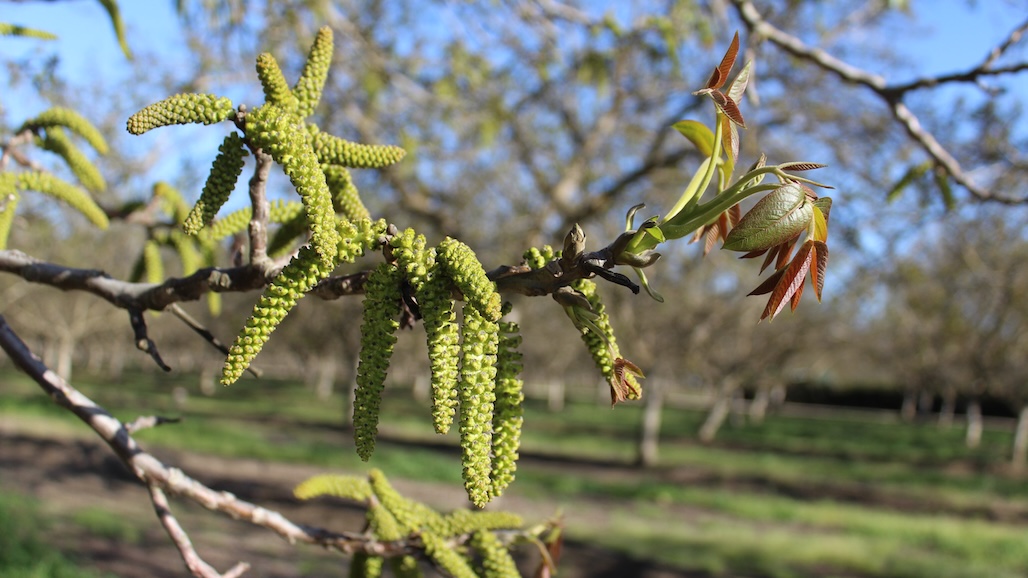




 The California Walnut Commission will begin accepting nominations for its 2025 election, inviting dedicated growers and handlers across the state to help shape the future of the California walnut industry.