Category: Featured Post

  • CAPCA on the Rise & Role of Biologicals in Crop Protection

    CAPCA on the Rise & Role of Biologicals in Crop Protection

    Crop protection tools are becoming more and more regulated and limited in California. Biostimulants, biopesticides and biofertilizers offer more options for growers. How they fit into conventional and organic farming systems is still being investigated and how the California Department of Pesticide Regulation should treat and classify them is still in debate. The California Association of Pest Control Advisers (CAPCA) has been actively involved in the conversation though, advocating for tools for sustainable pest management. At their annual Conference, Malcolm Media Editor-in-Chief Matthew Malcolm sat down with CAPCA State Board Vice President Adam Tavares from AMVAC Chemical as he shared his perspective on where their at and priorities for the future.

    Please thank this video’s sponsor Simplot Grower Solutions for their industry support.

  • What is California Grown? New Board Chair Shares Perspective

    What is California Grown? New Board Chair Shares Perspective

    What is California Grown, its Mission, and what it means to the hundreds of agricultural commodities it represents? Malcolm Media Editor-in-Chief Matthew Malcolm met with the new Chair of the organization, Kiaran Locy from the California Prune Board to find out. Watch this video if you love agriculture and want to learn more.

    Please thank this video’s sponsor Simplot Grower Solutions for their industry support.

  • 2025 Results of Pre-Emergent Herbicide Demonstration Trial for Walnut

    2025 Results of Pre-Emergent Herbicide Demonstration Trial for Walnut

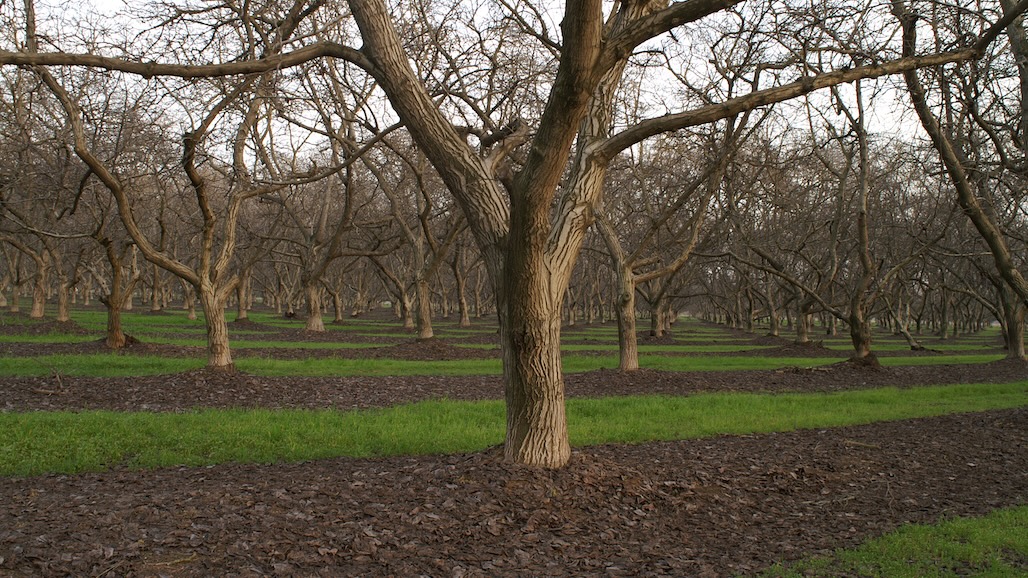
    The 2025 UCCE walnut pre-emergent herbicide demonstration trial is completed, and the results show strengths and weaknesses of 19 different herbicide treatments, applied either in February or March.

    Takeaways:

    1. All treatments were applied with a strong post-emergent mix, but hairy fleabane and white clover were not adequately controlled with post-emergent treatments alone. Control was dependent on the addition of an ALS inhibitor herbicide (products like Craze, Matrix, or Mission).

    2. Summer annual weeds were best controlled by products with long residuals (products like Alion, Chateau, Brake On! (not registered in CA), and Prowl.

    3. Yellow nutsedge was controlled by treatments with Zeus or Craze.

    4. Conclusion: Pre-emergent treatments in late winter must account for winter annual weeds that have already emerged and perennial weeds while also maintaining good residual control further into the summer.

    Introduction

    Winter pre-emergent herbicide applications are critical to get right if yearly weed management operations are going to be successful in walnut orchards. Poor selection of herbicides or missed timing could make the difference between good control and battling an overwhelming infestation of weeds. In walnut orchards I have regularly heard two comments concerning pre-emergent herbicide applications in walnut orchards:

    1. Those who apply pre-emergent herbicides in the fall, just after harvest, tend to have the cleanest orchards.

    2. February or March are the most common times to apply pre-emergent herbicides in walnut orchards.

    Maybe my perception is incorrect, but these weed control strategies seem to be at odds. When it comes to winter annual weeds, it is likely safest to apply pre-emergent herbicides before germination due to several common weed species with herbicide resistance issues (hairy fleabane, Italian ryegrass, annual bluegrass). Applications later in the winter will have to deal with emerged weeds, potentially resulting in more escapes and misses.

    However, herbicide treatments in February or March are common, and many growers have been successful with these treatments. Why is this, and what is the key to achieving good control later in the winter? Success at later timings depends on how much post-emergent activity you are getting out of your tank mix. Some pre-emergent herbicides can contribute to your post-emergent activity. Common pre-emergent herbicides like Goal, Chateau, Matrix, Pindar, and others add some extra post-emergent activity to tank mixes when used in winter months. Dr. Brad Hanson (UCCE Weed Specialist at UC Davis) discussed this topic when he addressed tank mixes of Alion and Matrix in his UC Weed Science Blog article (linked here). My recent work with rimsulfuron on established johnsongrass also explored this subject (linked here). These prior discussions focused on rimsulfuron products as tank mix partners for pre-emergent applications, but I wanted test a broader range of products applied in February and March. This year’s walnut preemergent herbicide demonstration made some progress toward that goal.

    I will discuss my findings next, and at the end of this article I have included results tables. All products except one are currently labeled for use in walnut orchards, though with some restrictions on orchard age. The one unlabeled product in this study was Brake On!, manufactured by SePRO, currently pending registration in CA. This is not an exhaustive list, and the data provided here does not constitute a recommendation of any product.

    Trial design

    In 2025, I arranged my pre-emergent demonstration trial to evaluate individual products and tank mixes for weed control efficacy when applied in February and March. This trial was installed in the Loybas Hill region of Tehama County, in a 4-year-old walnut orchard with Tehama silt loam soil. A post-emergent mix of 2 qt/A Roundup Powermax 3 and 2 qt/A Rely 280 was added to every plot in February, and pre-emergent herbicides were applied either in the mix, or one month later in March. The tables at the end of this article show the full list of treatments and when they were applied. The first table represents weeds that were present at application, hairy fleabane and white clover. The second represents weeds that grew to be prominent in May and June, so their control depended on residual activity from my herbicide treatments lasting long into the summer.

    Results overview

    White Clover and Hairy Fleabane (Table 1): Both weeds were controlled by all three group 2 herbicides tested: Craze, Revolt, and Mission. Revolt was weaker on fleabane while Craze was weaker on clover and these differences also showed up in the tank mix treatments with both products applied with Prowl. February and March treatments with these three herbicides produced very similar results. The 12 fl oz/A rate of Chateau also effectively suppressed both species.

    Summer annual weeds (Table 2): The primary weeds in the categories recorded here were grass weeds (jungle rice and large crabgrass) and broadleaf weeds (prostrate knotweed, spurge, and pigweed). Many herbicides provided good control until June (3-4 months after treatment) but only Alion, Brake on! (not currently labeled for CA), and March-applied Mission maintained “good” control of broadleaves through July. Only Alion and Prowl maintained “good” control of grasses through July.

    Yellow Nutsedge (YNS; Table 2): Zeus was the best tested product for nutsedge control, but Craze also showed some effects in July by keeping nutsedge coverage low. Rimsulfuron products like Matrix and Revolt are also labeled for YNS control, but labels suggest sequential applications, and the application timings used in this trial may not have been ideal to target YNS with this product.

    Summary and cautions:

    This is a single trial only representing one weed population and one soil type, so results may vary by location. However, hopefully this demonstrates the importance of tank mixing to control emerged weeds as well as future emergence. Group 2 herbicides like Revolt, Mission, and Craze can provide good post-emergent control in addition to their pre-emergent activity. But be cautious, this herbicide group is notorious for herbicide resistance. Do not overuse this class of herbicides or you will likely start seeing weeds escaping your treatments.

    Look through the following tables if you are interested in seeing more information on efficacy in these trials. To see weed coverage data, view the report on the UCCE Tehama website here. Thanks to the California Walnut Commission for supporting this work. For any questions or additional information, contact Ryan Hill at 530-527-3101 or rjahill@ucanr.edu. — By Ryan Hill, UCCE Agronomy and Weed Science Advisor, Tehama County

    Weed control tables:

    Control was determined by calculating % reduction in weed coverage, relative to the plot with the worst infestation. Control is summarized by four categories. These categories may not represent each grower’s threshold of tolerance for weed control, but they can still provide relative comparisons between the products tested.

    Poor control is indicated by a “p”, representing control between 0 and 50%.

    Moderate control is indicted by an “m”, representing control between 50 and 70%.

    Good control is indicated by a “g” and highlighted light green, representing control between 70 and 90%.

    Excellent control is indicated by an “e” and highlighted dark green, representing control between 90 and 100%.

    Table 1: The effect of different pre-emergent herbicides on two weeds that were present at application, hairy fleabane and white clover.

    Table 2: The effect of different pre-emergent herbicides on weeds that germinated or sprouted in summer. Summer annual broadleaves included prostrate spurge, knotweed, and pigweed and summer annual grasses were primarily crabgrass and jungle rice.


  • AI Tool to Help Farmers Measure Real-Time Crop Health from the Field

    AI Tool to Help Farmers Measure Real-Time Crop Health from the Field

    Leaf Monitor, a new mobile tool backed by artificial intelligence and predictive modeling, could revolutionize how farmers monitor crops and make decisions by providing real-time nutrition and leaf trait information in the field.

    “Having this information is very valuable for the farmers,” said Alireza Pourreza, associate professor of Cooperative Extension and director of the Digital Agriculture Laboratory in the Department of Biological and Agricultural Engineering at the University of California, Davis. “In five seconds, they can have a sense of how much nutrition they have in a leaf.”

    Development of the AI model was funded by the U.S. Department of Agriculture’s National Institute of Food and Agriculture’s HiRes Vineyard Nutrition multistate project and its Animal and Plant Health Inspection Service, as well as the California Table Grape Commission.

    Maha Afifi, director of viticulture research at the California Table Grape Commission, said the tool could be a game changer for the table grape industry if it leads to faster decision-making about fertilizer use. The right amount typically leads to healthier vines that produce more grapes with optimal size, weight and color.

    “The evaluation of vine nutrient status is one of our top priorities,” Afifi said. “At the same time, exploring new technology tools like this project is a high priority for us because they will be important to the future of the table grape industry.”

    Field testing

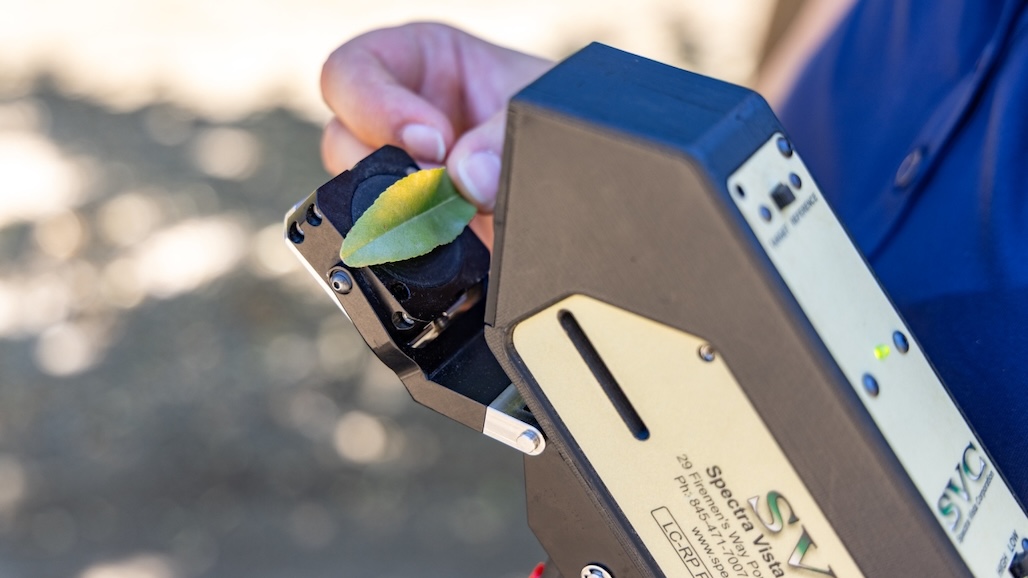
    The Leaf Monitor tool uses a handheld spectrometer to measure leaf reflectance beyond the range of light visible to the human eye.

    Once a leaf is scanned, its spectral data is uploaded to a cloud-based machine learning system designed to predict leaf traits and nutrient content. This algorithm was developed and trained by the Digital Agriculture Laboratory over five years using a dataset of thousands of leaf samples collected from California’s specialty crops, primarily grapevines and almonds. The samples were chemically analyzed to determine nutrient levels and structural leaf traits, providing the data needed to build an accurate prediction model.

    “Nutrient deficiencies in plants often go unnoticed until late in the season, by which point the damage is already irreversible,” said graduate student Parastoo Farajpoor, who is running the project. “This is why early detection is essential. Spectrometry provides a rapid and reliable way to identify these deficiencies before visible symptoms appear.”

    After a recent demonstration, Bulleseye Farms Irrigation Manager Geoff Klein said the tool could help save money and improve yields. Bullseye grows walnuts, pistachios, tomatoes, corn, wheat, rice and sunflowers in Yolo and Solano counties.

    Tailored crop management

    Currently, farmers typically take leaf samples, dry them, grind them up and send the samples off to a lab for testing, which can take up to two weeks to return results. Bullseye samples leaf tissues about three times a year.

    “Right now, it doesn’t really make sense to go out and take tissues in every single corner just because it’s expensive,” Klein said. “It’d be really cool if I could just walk out there and test a couple of different places.”

    The Leaf Monitor tool helps farmers tailor management decisions to specific areas rather than an entire field. Calibrating fertilizer use to real-time data can prevent overuse and nitrogen runoff, a financial and environmental challenge that many growers face.

    “I feel like there’s a lot of times we do need to put less [fertilizer] on, where we end up putting more, because that’s what the nitrogen removal formula says,” Klein said. “But with this app we can use less because we know the actual conditions at the time. I think it opens a lot of doors in terms of getting data back in real time and also utilizing the level of control we have with the data.”

    The app can also aggregate the scans and map out spatial patterns over a large area.

    “What we know is every field has variability that is not necessarily visible to the farmer’s eye,” Pourreza said.

    The prototype Leaf Monitor tool is free and included in a set of tools that can be downloaded on the Digital Agriculture Laboratory website. A web-based version of the tool will follow while the team continues to feed new data into the algorithm to refine the predictions. On average, it achieves about 65% accuracy across all traits, with predictions for certain nutrients, such as nitrogen and phosphorus, performing better than the overall average. Users will need to pair it with a spectrometer.

    “We need to produce more food while using less resources so we need to have some kind of monitoring system to give us precise and accurate feedback on our management practice,” Pourreza said. “This technology is growing very fast.” — By Emily Dooley, UC Davis

  • Turning Food Scraps into Opportunities

    Turning Food Scraps into Opportunities

    For every juicy tomato or crunchy almond California grows, there’s a pile of pulp, hulls or scraps that often goes to waste. A new online tool, created by University of California, Davis researchers, tracks those agricultural byproducts aiming to find innovative ways to put them to use.

    The Byproduct Database, maintained by the AI Institute for Next Generation Food Systems, is an ongoing research project that includes a catalog of byproducts like fruit skins and nut shells, and potential ways to reuse them across different industries.

    Edward “Ned” Spang, principal investigator and associate professor with the Department of Food Science and Technology, said about one third of the food produced worldwide, doesn’t get eaten. The database consolidates information about food waste in one place, detailing what the various leftovers are made of and where they’re available in the state. Spang believes it could help guide decisions on reducing waste by potentially turning these materials into new products for food, cosmetics or pharmaceutical industries.

    “In the food production space, there’s a lot of edible material, or potentially valuable material, that’s been overlooked for a long time as waste,” Spang said. “So, the questions we are trying to understand include: ‘How much of this material is out there? What is it composed of? Where is it? When is it available?’”

    Tomatoes, almonds, pistachios and pomegranates

    The pilot phase of the database currently features four major crops: tomatoes, almonds, pistachios and pomegranates. As the research team continues to gather data, they will update the site to include other crops and byproducts, including wine grapes, stone fruits and citrus. In collaboration with Ilias Tagkopoulos with the Department of Computer Science, Spang is looking into developing and applying AI tools to expand the site faster and with less manual work.

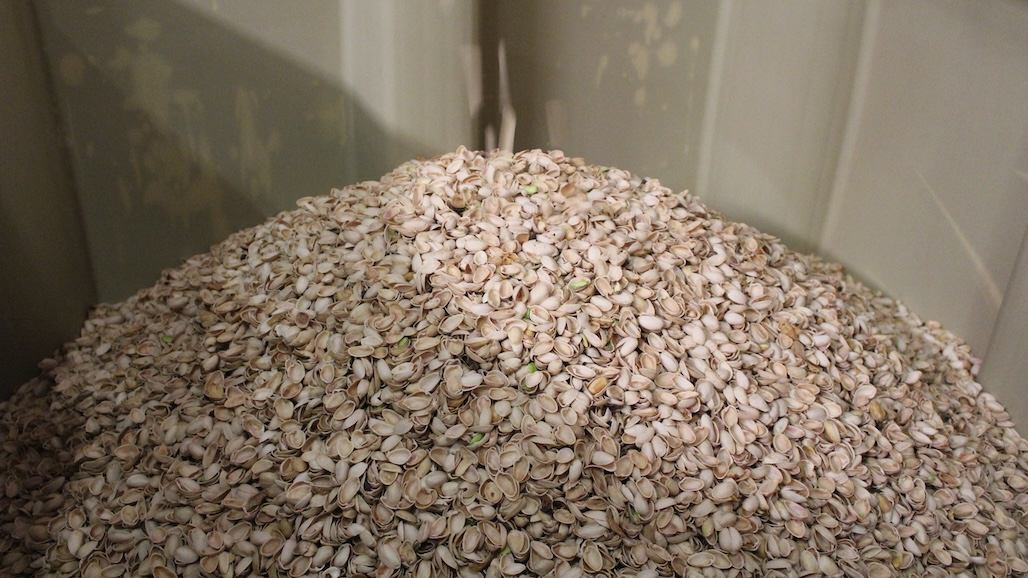
    For pistachios, the website illustrates that the largest byproduct is the hull, which is often discarded, and that undersized pistachios could be a valuable resource if there was a market for it. The website helps outline the various byproducts for potential upcycling, where leftovers are transformed into new ingredients. Local companies are already developing new products using materials such as brewers’ spent grain (a byproduct of beer production), okara (a fibrous byproduct from soymilk production) and grape pomace (leftovers from winemaking).

    Researchers are looking at where food gets lost in the field and at the processing plant. With tomatoes, some get damaged on the vine, others get tossed out for not meeting quality standards. Spang said those leftovers, or side streams, are opportunities for upcycling.

    “It’s a material that’s already been cultivated, harvested and processed, so anything you do that’s economically productive means that all the resources embedded in that material, like fertilizer, water and energy, were not wasted in vain,” said Spang, who also directs the Robert Mondavi Institute of Wine and Food Science. “It is a real win-win opportunity.”

    Finding new uses

    The skin and pulp of a tomato contain lycopene, an antioxidant known for its health benefits. Users of the website can visualize where these leftover tomato parts, and its valuable lycopene, are found, helping to imagine new ways to make use of this healthy compound.

    “We expect our primary user to be entrepreneurs who are looking for new business models in upcycling, or who might have an advanced extraction technology to derive value from some of these overlooked materials,” Spang explained. “But producers and growers would also benefit as new revenue streams deliver value up and down the food supply chain.”

    The database will soon include cost estimates and economic variables to help users make more informed decisions. This will allow them to assess factors like how much lycopene is in a byproduct, its value per milligram and the costs associated with extracting it.

    New space for agricultural innovation on campus

    The research project is funded by a grant from the Resnick Agricultural Innovation Research Fund, created by a $50 million gift by Lynda and Stewart Resnick, co-owners of The Wonderful Company. Part of that donation also establishes the Resnick Center for Agricultural Innovation, currently under construction on campus, that will include a large space for biomass staging and extraction, a process to pull valuable compounds from fruits, vegetables and grain residues.

    Food waste happens, but this work is helping build a food system that wastes less and supports sustainability, which Spang hopes will excite everyone.

    “We have to be a little more creative with our food system,” he said. “We can make our current food system more productive by investigating novel upcycling ideas and processing systems that create more revenue for producers and hopefully deliver more value to consumers as well.” — By Tiffany Dobbyn, College of Agricultural and Environmental Sciences, UC Davis, tadobbyn@ucdavis.edu

  • Assemblywoman Alexandra Macedo Awarded Almond Champion of the Year

    Assemblywoman Alexandra Macedo Awarded Almond Champion of the Year

    The Almond Alliance is pleased to announce Assemblywoman Alexandra Macedo as the recipient of the 2025 Almond Champion of the Year Award. Assemblywoman Macedo is being recognized for her leadership on key issues affecting California agriculture and the almond industry. She has advanced efforts to address abandoned agricultural properties and invasive species, supported improvements to water infrastructure and wildfire prevention, and worked to reduce fuel costs for Californians. Her practical approach and engagement on agricultural policy reflect a strong commitment to the state’s farming communities.

    “Assemblywoman Macedo has taken a thoughtful, solutions-oriented approach to some of the biggest challenges facing California agriculture,” said Alexi Rodriguez, CEO of the Almond Alliance. “Her focus on abandoned land, water infrastructure, and wildfire prevention demonstrates an understanding of the pressures facing the almond industry today.”

    The Almond Champion of the Year Award is presented annually to individuals who demonstrate leadership in education, coalition building, partnerships, and the advancement of policies that support California agriculture, including the almond industry. Assemblywoman Macedo’s efforts reflect the purpose and spirit of this recognition.

    Past recipients of this prestigious award include Assemblymember Juan Alanis, Department of Water Resources, Assemblymember Adam Gray, Assemblymember Heath Flora, former USDA State Executive Director of Farm Service Agency Connie Conway, Assemblymember Carlos Villapudua, and CDFA Undersecretary Christie Birdsong.

    The award will be formally presented to Assemblywoman Macedo at the California Almond Political Action Committee’s Annual Modesto Fundraiser, taking place at Del Rio Country Club on November 5, 2025, at 5:30 p.m. This event brings together members of the almond community, FFA students, elected officials, and special guests.

    For RSVPs or more information, please contact Annie Romero at 209-300-7140 or aromero@almondalliance.org.

    About the Almond Alliance

    Almond Alliance is the leading authority in state and national policy, championing American almond farmers, industry, and community for the continued global growth, innovation, and success of American almonds and agriculture.

    Established in 1980, the Almond Alliance is a non-profit trade association with a local and international network of almond processors, hullers/shellers, growers, and allied businesses. The Alliance is dedicated to providing resources and solutions for our members, ensuring industry success and growth opportunities. Learn more at almondalliance.org.

  • Inaugural $100,000 Grant Program to Advance Honey Bee Health and Beekeeping Innovation

    Inaugural $100,000 Grant Program to Advance Honey Bee Health and Beekeeping Innovation

    Sweet Harvest Foods, the largest producer of raw, unfiltered honey and parent company of Nate’s Honey and Nate’s Hives, today announced the launch of Nate’s Hives Research Grant Program, reinforcing its commitment to advance the long-term success and sustainability of honey bees and the honey industry through science, innovation and collaboration.

    The program will provide up to $100,000 in annual funding for research projects that strengthen honey bee health, improve sustainable beekeeping practices, and drive innovation in pollination practices and across the honey supply chain. Proposals may be submitted by academic institutions, nonprofit organizations and industry researchers, with funding available for projects up to three years in duration.

    “As the industry leader in honey and a top apiary, we believe scale brings both responsibility and opportunity, and the honey industry’s future depends on science and collaboration,” said Michael Carle, Chief Executive Officer of Sweet Harvest Foods. “Through the Nate’s Hives Research Grant Program, we’re investing in the kind of research that will strengthen honey bee health, advance sustainable beekeeping practices and support pollination, a more resilient food ecosystem and the honey industry. Innovation has always been central to how we operate and it’s more important now than ever to fuel continued progress.”

    Proposals may address one or more of the following areas of focus: honey bee health, sustainable beekeeping practices, environmental impacts, supply chain innovation, consumer demand and nutritional impacts, or trade policy and production economics. Each submission will be evaluated by a volunteer review board composed of Sweet Harvest Foods employees and external experts from academia and the beekeeping industry.

    “At Nate’s Hives, we believe science can and should shape the future of beekeeping,” said Matt Halbgewachs, president of Nate’s Hives. “This grant program puts that belief into action and empowers researchers to uncover solutions that help honey bees and beekeepers everywhere. By linking researched insights with on-the-ground experience, we accelerate progress for honey bees, beekeepers, farmers and consumers alike.”

    Applications are due March 1, 2026, with awards announced on April 15, 2026. For full eligibility details, proposal requirements and submission instructions, visit nateshives.com/research-grant-program.

    About Sweet Harvest Foods

    We believe in making life a little sweeter. As the leading procurer of honey in the U.S., Sweet Harvest Foods provides the highest-quality ingredients for some of the most iconic brands and beloved products. That’s a serious responsibility, which is why we keep innovating and setting higher standards in quality, taste and reliability. Sweet Harvest Foods is bolstered by its ownership of Nate’s Honey, the number-one branded honey, and Nate’s Hives, a top U.S. apiary. Join us on our mission to lead the honey industry by innovating from the hive to beyond the kitchen. For more information, visit www.sweetharvestfoods.com.

  • How to Effectively Control Rats on California Farms in a State of Emergency

    How to Effectively Control Rats on California Farms in a State of Emergency

    Rats have taken an unusual interest in the specialty crop capital of the nation. Many attribute the cause to the pest multiplying unchecked in orchards and vineyards in the Central Valley that have been abandoned due to water restrictions and economic challenges. This becomes a real problem when the rats move into neighboring farms in active production, tearing up driplines, feeding on crops and damaging trees. Growers are in a state of emergency and have limited tools for managing this pest.  Malcolm Media Editor-in-Chief Matthew Malcolm met with UCCE Wildlife Specialist Roger Baldwin at the California Association of Pest Control Adviser’s annual conference to gain answers on how to knock down populations effectively and keep the pest at bay.  Watch this brief interview and learn more by attending Baldwin’s presentation on rat control at the Grape, Nut & Tree Fruit Expo at the Fresno Fairgrounds on Nov. 14 (register to attend at agexpo.biz).

    Please thank this video’s sponsor Simplot Grower Solutions for their industry support.

  • How to Manage Voles on the Farm & New Research Underway at Oregon State University

    How to Manage Voles on the Farm & New Research Underway at Oregon State University

    Got voles on the farm and don’t know how to get rid of them? Oregon State University researchers are coming to the rescue. Watch this brief interview as Malcolm Media Editor-in-Chief Matthew Malcolm meets with Oregon State University representatives Dana Sanchez and Joshua Twining share advice on how to manage them, as well as new research developments on how to better understand their behavior and how they respond to modern mitigation techniques.

    Please thank this video’s sponsor George Packing Company for their industry support.

  • Oregon Organic Hazelnut Collective Ramps Up Marketing Efforts with Grant Funding Boost

    Oregon Organic Hazelnut Collective Ramps Up Marketing Efforts with Grant Funding Boost

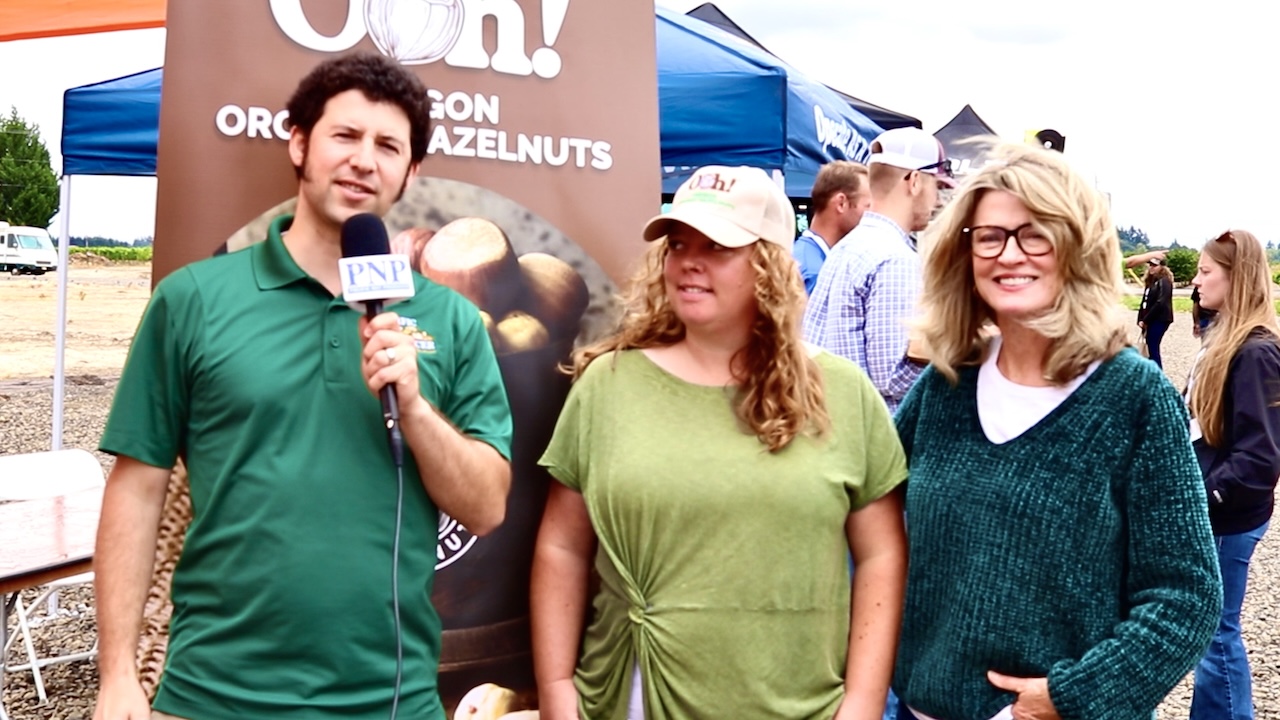
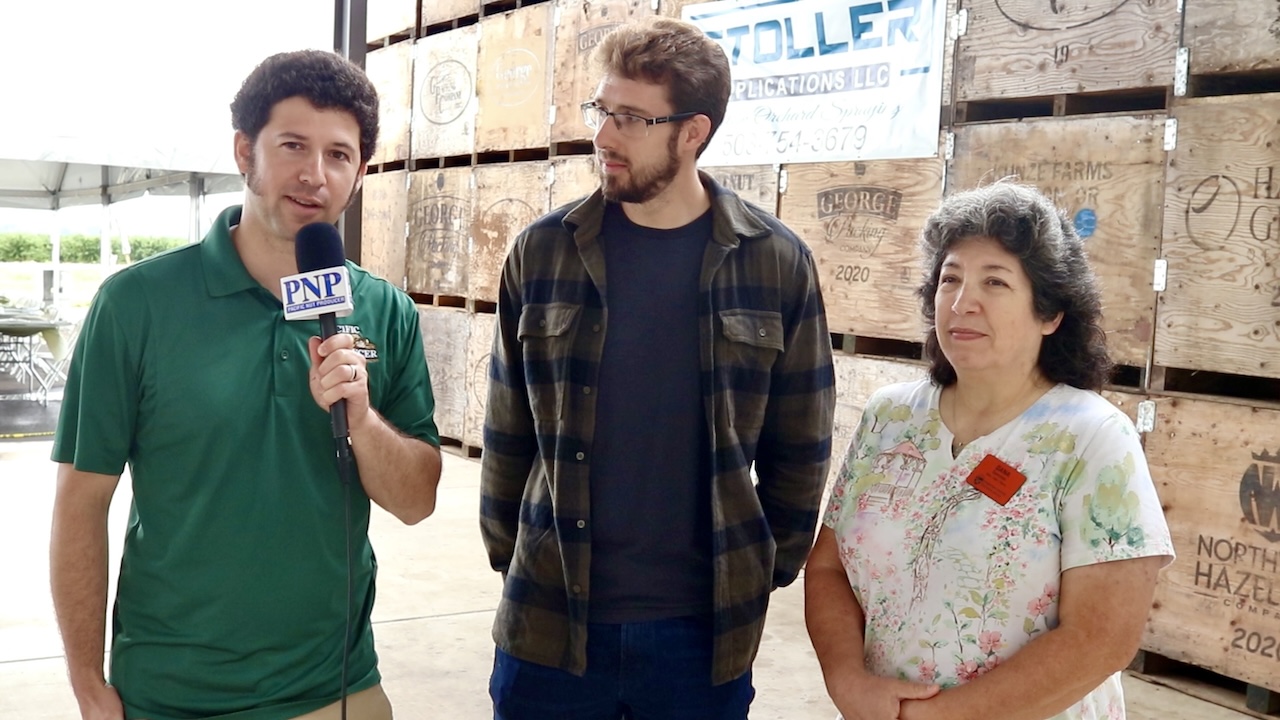
    Thinking about transitioning to organic hazelnut farming? The Oregon Organic Hazelnut Collective is community of organic growers ready to assist others in the process. The Collective is growing as consumers are taking more interest in how their food is grown, and thanks to some recent grant funding, the organization is ramping up their marketing efforts to reach even more consumers. Watch this brief interview as Pacific Nut Producer Editor Matthew Malcolm meets with Cassedea Ashley and Judy Hirigoyen representing the Collective to learn more.

    Please thank this video’s sponsor George Packing Company for their industry support.