Category: Almonds

  • Almond Board of California Announces 2023 Elections

    Almond Board of California Announces 2023 Elections

    Elections for the Almond Board of California (ABC) Board of Directors have launched for the 2023-2024 crop year with the call to all candidates to file their petitions or declarations of candidacy by April 1, 2023.

    The industry will choose for one independent grower position and two independent handler positions on the ABC Board of Directors in voting that starts April 21 and ends May 25. Alternate seats for those spots are also open, plus a second grower alternate seat, currently empty, is also up for election.

    To be considered for an independent grower or alternate seat, candidates must be a grower and must submit a petition signed by at least 15 independent almond growers (as verified by ABC). Independent handler and alternate candidates must declare their intention in writing to ABC.

    All details, documents, open positions, the election timeline and deadlines, and frequently asked questions can be found at Almonds.com/Elections. All petitions and declarations must state the position for which the candidate is running and be sent to abcbodelections@almondboard.com or printed and mailed to ABC, 1150 9th St., Suite 1500, Modesto, CA 95354. The deadline for all filings is April 1. Potential candidates who’d like more information can contact ABC at abcbodelections@almondboard.com.

    “The ABC Board of Directors is tremendously important to the success of our industry,” said ABC President and CEO Richard Waycott. “More than 7,600 growers and 100 handlers count on them to guide the work of the Almond Board and to help the industry navigate these complicated times.”

    The ABC board sets policy and recommends budgets in major areas, including marketing, production research, public relations and advertising, nutrition research, statistical reporting, quality control and food safety.

    Getting involved provides an opportunity to help shape the future of the almond industry and to help guide ABC in its mission to promote California almonds to domestic and international audiences through marketing efforts, funding and promoting studies about almonds’ health benefits, and ensuring best-of-class agricultural practices and food safety.

    ABC encourages eligible women, minorities and people with disabilities to consider running for a position on the Board of Directors to reflect the diversity of the industry it serves.
  • Blue Diamond Growers Gears up for National Almond Day

    Blue Diamond Growers Gears up for National Almond Day

    National Almond Day is February 16, and Blue Diamond Growers is paying tribute to the tasty, delicious, and healthful nut that is grown with care in the heart of California

    To celebrate, there will be a state proclamation declaring February 16 as California Almond Day. Blue Diamond Growers is also offering a one-day-only special of 20% off all products at the Blue Diamond Nut & Gift Shops in SacramentoModesto, and Chico, as well as through its online gift store at www.bluediamondstore.com. To add to the in-store festivities, there will also be photo booths with beautiful images of California almonds in bloom – the perfect backdrop for the perfect picture!

    “At Blue Diamond, every day is all about almonds – just as it has been for more than 100 years,” said Alicia Rockwell, Chief Government Affairs Officer, Blue Diamond Growers. “On this special day in mid-February, we are pleased to celebrate with other almond lovers this incredible product that is beloved in California and throughout the world.”

    As the world’s largest almond cooperative, Blue Diamond is an industry leader and a trusted brand enjoyed by people far and wideIn addition to a remarkable range of delicious almond snack nuts and crackers, Almond Breeze® is the number-one almondmilk in the plant-based milk category.

    Here are some fun facts to celebrate National Almond Day – did you know…?

    • California grows nearly 80% of the world’s almonds. California is home to 7,600 almond farms and 90% of those farms are family-owned (according to the Almond Board of California).
    • Blue Diamond’s co-op has more than 3,000 growers.
    • Blue Diamond offers more than 20 flavors of snack almonds – from classic, bold to extreme – in popular flavors like, Smokehouse, Elote, and Carolina Reaper!
    • Almonds are grown all throughout California’s Central Valley. California’s Mediterranean climate makes for perfect almond-growing conditions.

    Blue Diamond Nut & Gift Shops are located at:

    • 1701 C St. Sacramento, California 95811
    • 4800 Sisk Rd. Modesto, California 95356
    • 703 Miller Ave. Chico, California 95928

    To shop online and find Blue Diamond products near you, visit bluediamond.com.

  • How Late is Too Late for Winter NOW Orchard Sanitation?

    How Late is Too Late for Winter NOW Orchard Sanitation?

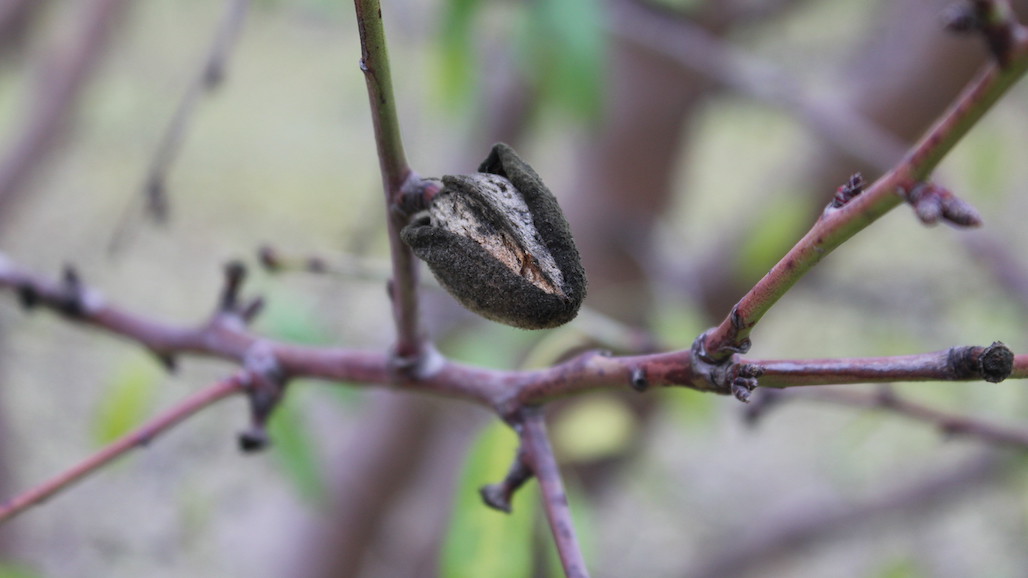
    The removal of nuts remaining on almond trees from the prior year’s crop is an important winter sanitation practice for the management of navel orangeworm (NOW), Amyelois transitella. Residual nuts are called ‘mummies’ and the process of removing the mummies is referred to as a ‘mummy shake’ because they are mechanically shaken from trees. This practice is conducted during the dormant and delayed dormant season, a time when orchard access may be thwarted by the winter rains.

    Most growers strive to have the mummy shake complete by mid-January when buds are dormant and less likely to abscise from the vibration caused by a mechanical shaker. As the flower buds progress toward bloom, they become more sensitive to the shaker vibration and more likely to abscise. Studies conducted in the 1980s (Sibbett et al.) established that the shaking of mummies by January 31 (approximately 8 days prior to bloom) at a Kern County site did not adversely affect yield; however, the authors cautioned growers of the risk of delaying mummy shakes further, particularly on early blooming varieties and in locations in the southern San Joaquin Valley. Because bud development and bloom date advance with increasing latitude, the potential risk of early and mid-February mummy shakes was investigated by W. Asai (Pomology Consulting, Turlock, CA) in the northern San Joaquin Valley. This work, conducted at a more northern latitude, suggested shakes conducted in early February may not compromise yield.

    The lack of yield detriment attributed to a mummy shake-mediated bud loss may seem counterintuitive; however, simple concepts of tree physiology may help explain this phenomenon. Consider that only approximately 30% of the flowers on a tree set a crop. A given tree does not have the carbohydrate stores needed to set every flower. As a result, the loss of a subset of flower buds may have little effect on overall yield. Naturally, the risk of crop loss increases the closer the shake approaches bloom, and both research groups suggested that mummy shakes be complete prior to the pink bud stage of development.

    Although rainy years make it difficult for growers to access orchards and complete orchard sanitation tasks, the heightened soil moisture adversely affects NOW survival in comparison to dry winters. Mummy nuts on the ground support enhanced NOW survival on a dry orchard floor than on moist soil with winter vegetation in the row middles. The next step in managing overwintering populations of NOW is destruction of mummies by flailing or mowing. Flailing and mowing should be completed by March 1, prior to the emergence of NOW. The emergence profile of NOW varies by location, but the first flight generally starts in late March.

    Growers who have not completed their winter sanitation practices by the end of January should walk their orchards to assess bud development in consideration of a delayed mummy shake. Winter sanitation can reduce now damage by up to 80%, so an early February shake may be worth the effort if orchard access is possible and bud development has not advanced into pink tip. For more information on NOW management, visit www.ipm.ucdavis.edu. — By Cameron Zuber & Elizabeth Fichtner, UCANR

  • Almond Board Announces 2023 Almond Leadership Class

    Almond Board Announces 2023 Almond Leadership Class

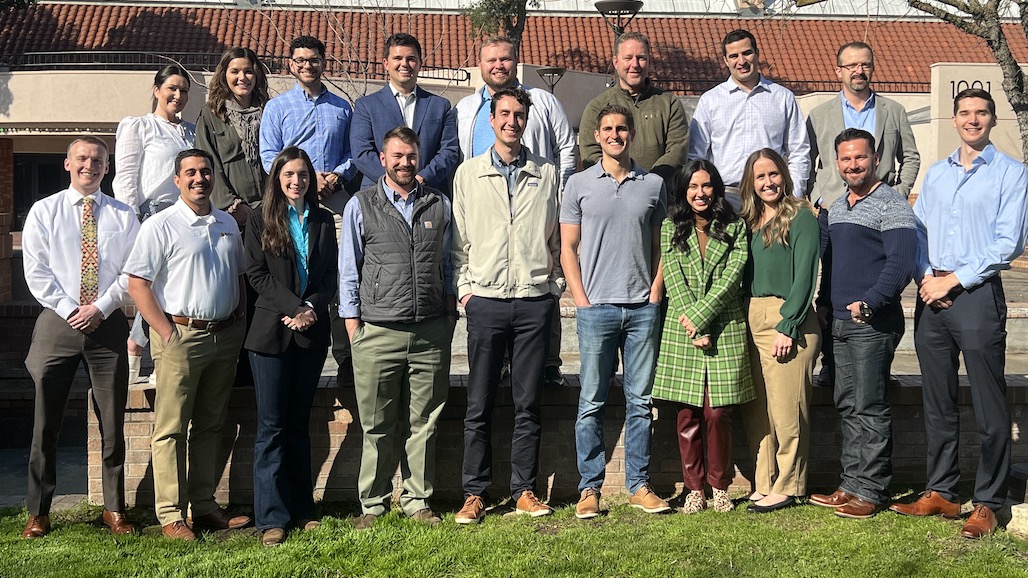
    The Almond Board of California (ABC) is proud to announce the Almond Leadership Program class of 2023, a group of 18 exceptional professionals expected to help lead the industry into the future.

    This next generation of leaders was chosen from nearly 50 highly qualified applicants. They come from diverse backgrounds across the full range of the industry, and include growers and processors, sales and real estate representatives, consultants, pest control advisors and more.

    The Almond Leadership Program (ALP) began in 2009 and has graduated more than 200 industry members. Dozens now serve on ABC workgroups, committees and even the Board of Directors.

    “The industry is seeing the enormous benefits from more than a decade of the leadership program, and while we seem to say this every year, this 2023 class is simply outstanding,” said Rebecca Bailey, the ABC specialist who oversees ALP. “This program helps great people become great leaders. It’s clear that these talented, passionate people will continue to be great assets and advocates for our industry for years.”

    Members of this 14th class – while still working at their jobs – will be immersed in every aspect of the industry, including ABC activities in global marketing, production, nutrition research, food safety and more. They’ll sharpen their communication skills and build lasting relationships with industry leaders, ABC staff and each other.

    “I’m honored to be joining a group of industry leaders who will be taking both the almond industry and the agriculture community into the future,” said 2023 participant Diane Power, a sixth generation California farmer and sales associate in Modesto with Pearson Realty. “I look forward to all the experiences and opportunities we will have to learn about the almond industry, and to the many relationships we will form through this year.”

    Class members will be guided by volunteer mentors – many of them ALP graduates – who will help them develop the skills, knowledge and perspective to improve their industry and their communities.

    “We all play unique roles in the almond industry,” said 2023 class member Megan Chicoine, the general manager ofU.S. operational support for Manulife Investment Management in Redding. “As young emerging leaders, we have the ability to make significant impacts by actively participating in our industry.”

    The leadership program will also offer class members thorough looks at the impacts on the industry of social, economic and environmental issues and the regulatory climate. In addition, participants will take on a yearlong, self-directed project focused on improving the California almond industry. Some past projects have led to important breakthroughs for the industry.

    Leadership class members kicked off their training with a two-day orientation a week ago at the ABC offices in Modesto, which included one-on-one talks with their mentors.

    “The one thing everyone has in common is they love agriculture,” said mentor Chandler Wilson, a technical sales rep for NutriAg USA. “We all want to be better. The mentors believe in the program and many have been through it. We’re eager to give back to the industry and these new leaders. We’ll share our experiences in and out of ALP, and together, we’ll all learn and grow as individuals and professionals through the whole process.”

    Once again, class members will raise money for California FFA, pledging to raise more than $25,000 in scholarships for high school students interested in pursuing agriculture in college. Through the years, ALP has raised more than $225,000 for FFA.

    The 2023 Almond Leadership class members are Alana Ambrosino, Ripon Manufacturing Company, Inc.; James Broaddus, BASF Agricultural Solutions; Destiny Camden, BeeHero Inc; Chris Chavez, ofi; Megan Chicoine, Manulife Investment Management; Lincoln Denlinger, Salida Ag; Lauren Dutra, Ceres Imaging; Brian Ganyo, Bayer Crop Science; Robert Gray, Burchell Nursery; Darryl Hadlich, WiseConn Engineering; Thomas Martin, TRÉCÉ Inc.; Erick Mendonca, Miller Chemical; Chris Miller, Blue Diamond Growers; Vance Millwee, Treehouse California Almonds, LLC; Mitchell Moreda, RPAC LLC; Diane Power, Pearson Realty; Matthew Reamer, South Valley Farms; and Tylor Wilbourn, BeeHero Inc. — By the Almond Board of California

  • Blue Diamond Growers Announces Latest Sustainability Achievements

    Blue Diamond Growers Announces Latest Sustainability Achievements

    Blue Diamond Growers is kicking off 2023 by sharing sustainability accomplishments from the past year. Highlights are included in the cooperative’s first-ever sustainability report, “Growing a Better Tomorrow,” that is available on the Blue Diamond Growers website at www.bluediamond.com/sustainability.

    “We are proud of where we are on our sustainability journey,” said Dr. Dan Sonke, Director of Sustainability, Blue Diamond Growers. “Because we are a cooperative, for 112 years we have enabled family farms to compete in a volatile world. Our almond expertise extends from the orchard to processing facilities and the consumer. And through our stewardship program, we lead the world with more acres of almonds in a sustainability program than any other company.”

    Sonke explains that Blue Diamond Grower sustainability efforts focus on six key pillars, including: sustainable agriculture, water stewardship, biodiversity and pollinators, climate and energy, people, and resilient communities. Key achievements in 2022 alone include:

    • $45 million in funds awarded to Blue Diamond Growers by the U.S. Department of Agriculture(USDA) as part of a climate protection partnership activation that will be used to help growers expand existing implementation of cover crops, conservation plantings and hedgerows, and whole orchard recycling.
    • More than $1.74 million paid directly to growers through the Blue Diamond Growers Orchard Stewardship Incentive Program (OSIP). The OSIP now covers 40% of all Blue Diamond member acres representing more almond acres in a sustainability program than any other company in the world.
    • 95% of Blue Diamond member orchards in the stewardship program report using efficient micro-irrigation systems. That’s nearly two times the rate found in other California crops.
    • 29% of Blue Diamond orchards reported planting cover crops for soil quality and pollinator benefits.
    • 18% reduction of materials going to landfill at the Salida facility through increased recycling.
    • A new project to reduce greenhouse gas (GHG) emissions through the replacement and modernization of a steam boiler system at the Sacramento plant. The project is expected to reduce natural gas consumption by more than 30% and water use by 20%.
    • $140,000 in community grants committed to 14 organizations, along with $25,000 donated in matching funds to contribute to 807 Future Farmers of America (FFA) jackets for high school students.
    • 190,000 lbs. of almonds and almond products – valued at more than $700,000 – provided in product and in-kind donations to food banks and other nonprofit organizations.

    “We are certainly proud of the accomplishments so far, but we know that sustainability – in all its facets – is an ongoing journey,” said Sonke. “We look forward to continual progress in the days, years and generations ahead.”

    About Blue Diamond

    Blue Diamond Growers, a grower-owned cooperative representing approximately 3,000 of California’s almond growers, is the world’s leading almond marketer and processor. Established in 1910, it created the California almond industry and opened world markets for almonds. Blue Diamond is dedicated to delivering the benefits of almonds around the world and does so by providing high-quality almonds, almond ingredients, and branded products. Headquartered in Sacramento, the company employs more than 1,800 people throughout its processing plants, receiving stations and gift shops. To learn more about Blue Diamond Growers, visit www.bluediamond.com and follow the company on FacebookInstagramLinkedIn and Twitter.

  • Tightening CA Soil Fumigation Regulations Require Grower Attention

    Tightening CA Soil Fumigation Regulations Require Grower Attention

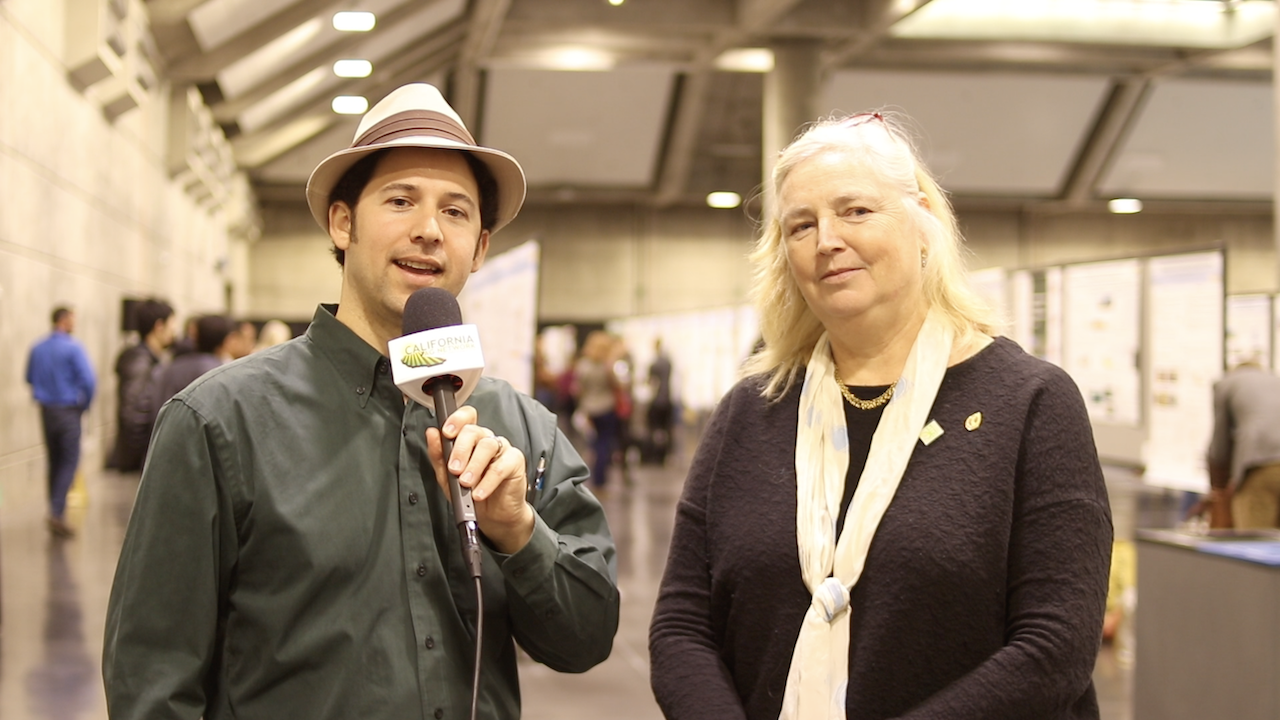
    Are you considering fumigating your soil soon? California regulations are changing and there are some things growers should know about, and consider getting involved in the conversation. Watch this brief interview with Gabriele Ludwig from the Almond Board of California for more information.

    Please thank this video’s sponsor Suterra for their industry support.

  • Year-Round Effort Required to Defeat Navel Orangeworm in Tree Nuts

    Year-Round Effort Required to Defeat Navel Orangeworm in Tree Nuts

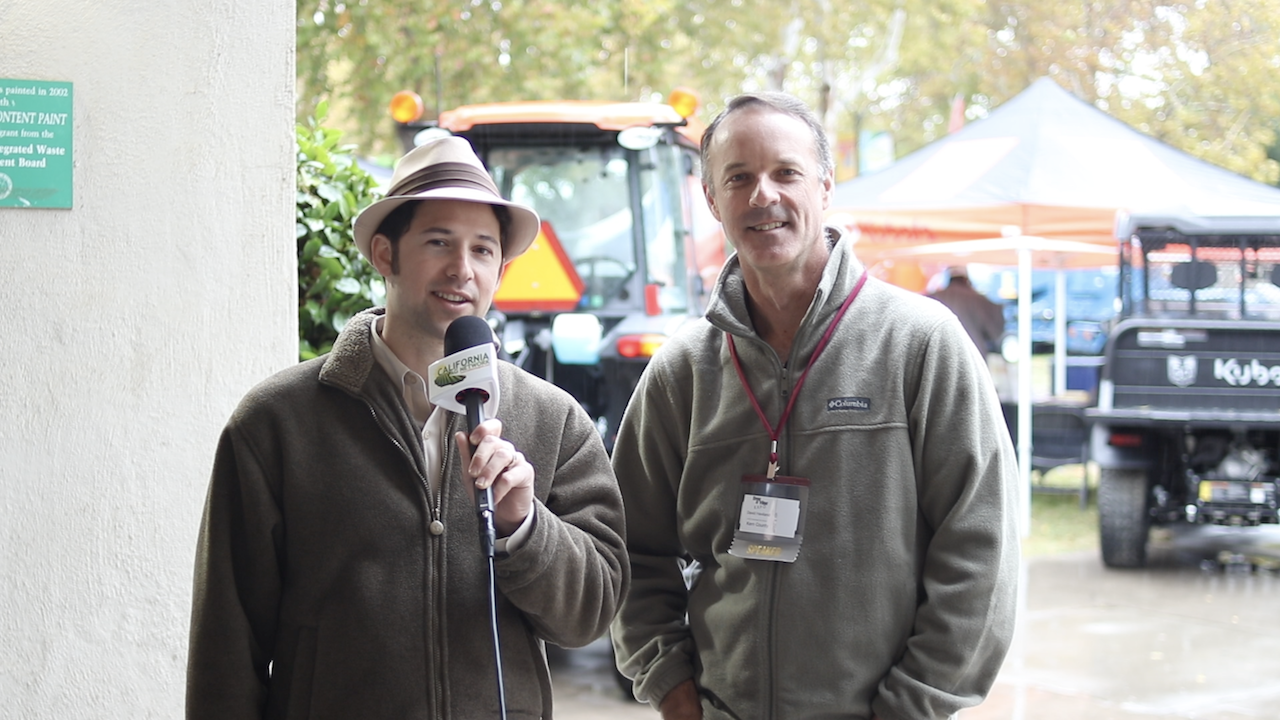
    Although almond trees are at rest and dormant for the winter, growers were reminded at the recent Tree & Vine Expo that their work isn’t finished regarding the fight against Navel Orangeworm.  Watch this brief interview with David Haviland from the UC Cooperative Extension, as he shares year-round tools and practices to stay on top of managing the number one insect pest in the tree nut industry. Read more about it in Pacific Nut Producer Magazine.

    Please thank this video’s sponsor Suterra for their industry support.

  • Almond Board Drives Global Demand for CA Almonds with New Focus

    Almond Board Drives Global Demand for CA Almonds with New Focus

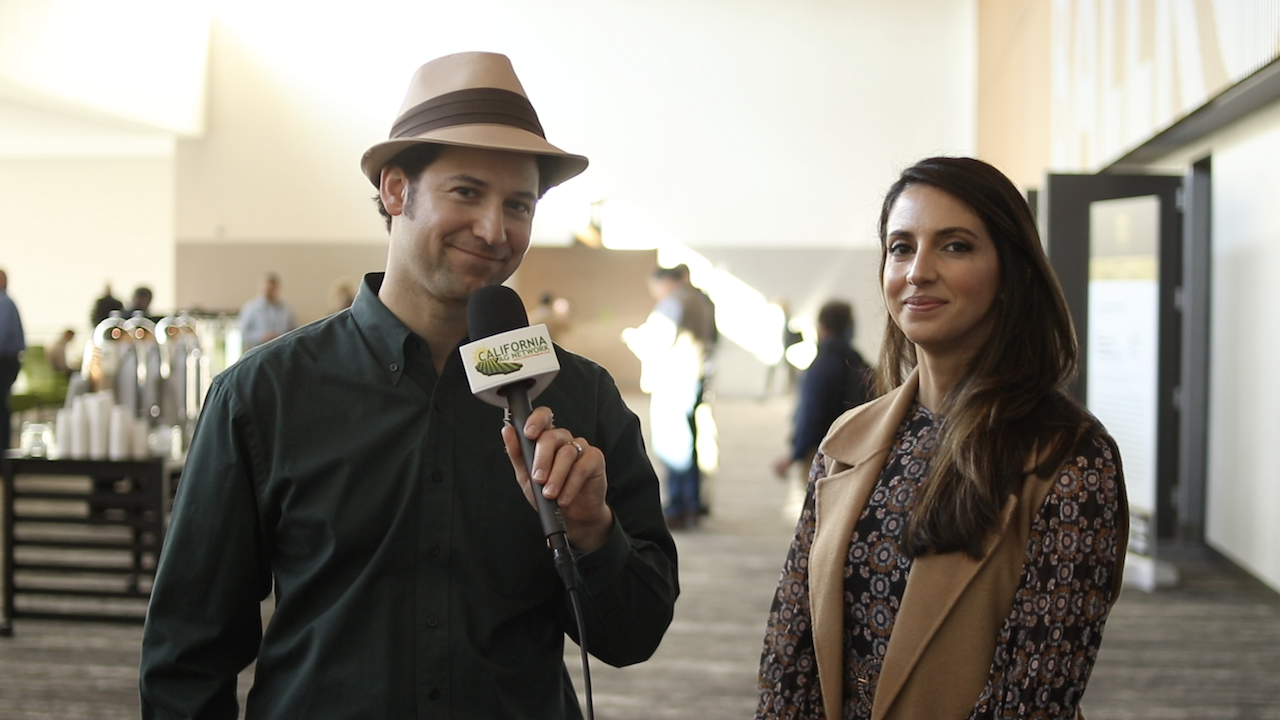
    Meeting with the Chair of the Almond Board of California, watch this brief interview with Alexi Rodriguez as she shares what they are doing to grow the worldwide demand for California almonds. Read more about it in the December issue of Pacific Nut Producer Magazine.

    Please thank this video’s sponsor Suterra for their industry support.

  • Almond Board Progress in Overcoming Global Trade Barriers

    Almond Board Progress in Overcoming Global Trade Barriers

    The California almond industry relies heavily on the export market, and navigating logistical challenges and trade barriers has become quite complicated in recent years.  Watch this brief interview with Julie Adams from the Almond Board of California as she shares their role and progress in keeping the exports flowing. Read more about it in Pacific Nut Producer Magazine.

    Please thank this video’s sponsor Suterra for their industry support.

  • CA Almond Acreage Drops for the First Time in Decades

    CA Almond Acreage Drops for the First Time in Decades

    California’s almond acreage decreased for the first time in more than 25 years, according to a new report from Land IQ to the Almond Board of California (ABC). Total standing acreage as of Aug. 31 was estimated at 1.64 million acres, compared with 1.66 million acres at the same time in 2021. Bearing acres – orchards producing almonds and planted in 2019 or earlier – increased slightly to 1.34 million from 1.31 million last year. But non-bearing acres – new plantings going back to 2020 but not yet bearing almonds – dropped to 294,000 acres from 353,000 acres in 2021.

    In addition, the Land IQ 2022 Standing Acreage and Removed Acreage Final Estimate said approximately 30,000 acres are either classified as stressed or abandoned. They were included in the standing acreage total because the orchards “may have the ability to recover,” Land IQ said.

    Removed orchards contributed to the drop in total acreage and continued a trend from 2021. Total orchard acreage removed was about 60,400 acres as of Aug. 31 this year compared with 56,900 removed acres in 2021.

    “Land IQ’s report may indicate a possible trend towards lower California almond acreage in the year ahead,” said Richard Waycott, ABC president and CEO. “This acreage estimate was based on data collected through Aug. 31, so it does not reflect any additional removals that may have occurred as the harvest and post-harvest seasons progressed this fall. Those data will be incorporated in the next acreage estimate to be published in April 2023.”

    The estimate comes from multiple lines of evidence, including extensive examinations on the ground and advanced remote sensing analytics. Land IQ said the 2022 standing acreage estimate is 98.8 percent accurate.

    Land IQ’s Final Acreage Estimate in November, along with USDA-NASS’s April Acreage Report, May’s Subjective Estimate and the Objective Report in July are all commissioned by ABC to provide statistical transparency and a robust picture of California almonds to industry stakeholders around the world.

    In 2018, ABC first commissioned Land IQ, a Sacramento-based agricultural and environmental scientific research and consulting firm, to develop a comprehensive, living map of California almonds. The map is the result of more than a decade of research.  By the Almond Board of California