Category: Almonds

  • Almond Alliance Welcomes Sara Arsenault, New Vice President

    Almond Alliance Welcomes Sara Arsenault, New Vice President

    The Almond Alliance is pleased to announce and welcome Sara Arsenault as its new Vice President. In her new position, Arsenault will oversee state and federal advocacy, including the upcoming Farm Bill, promoting the Almond industry and community’s policy priorities to keep our farmers farming, promote food and consumer safety and international trade, as well as assist in political action, membership services, and association development.

    “We’re excited to welcome Sara aboard,” said Aubrey Bettencourt, President and CEO of the Almond Alliance. “Her California roots and nationwide experience are a perfect fit for the Almond community, and her focused, enthusiastic, and committed approach is a perfect fit for the Alliance. Sara will be an excellent addition to the team as the Alliance continues to expand and lead as the voice for almonds in Sacramento, Washington D.C., and beyond.”

    Before joining the Almond Alliance, Arsenault led the federal policy division for the California Farm Bureau (CAFB), where she managed the federal policy team and developed the organization’s federal legislative and regulatory strategies.

    Before her time at CAFB, Sara spent nearly five years in Washington, D.C., most recently working for the National Association of State Departments of Agriculture (NASDA), where she represented the Commissioners, Directors, and Secretaries of Agriculture from all 50 states and four U.S. territories at the federal level. Previously, she spent time working on Capitol Hill and in the private sector, where she led client implementations for a property management software company, Yardi, Inc., on their e-commerce platform.

    Sara is a native of Northern California and began her academic career at Modesto Junior College. She went on to obtain her Bachelor of Science degree in animal science and meat science and technology at Texas A&M University.

    About the Almond Alliance

    Almond Alliance is the leading authority in state and national policy, championing American almond farmers, industry, and community for the continued global growth, innovation, and success of American almonds and agriculture. As the voice of almonds, the Alliance represents the fourth-largest commodity in the United States and the third-largest American export.

    Established in 1980, the Almond Alliance is a non-profit trade association with a local and international network of almond processors, hullers/shellers, growers, and allied businesses. The Alliance is dedicated to providing resources and solutions for our members, ensuring industry success and growth opportunities.  Learn more at almondalliance.org.

  • Almond Alliance Names New Director Of Membership And Events

    The Almond Alliance has named Annie Romero the Director of Membership and Events. She will be responsible for developing strategy and overseeing the implementation of all member programming and services. Romero will also oversee the planning and production of the Almond Alliance’s Annual Convention, as well as various membership events throughout the year.

    “Annie Romero’s combination of knowledge, experience, and sincere appreciation and respect for the Almond industry and community is absolutely remarkable and essential for this new role,” said Aubrey Bettencourt, Almond Alliance President and CEO. “Most recently, Annie coordinated the successful 2022 Shakin’ It Up Almond Alliance Convention and redesigned and rebranded the Alliance’s multifaceted membership program to better represent and allow access to the almond community and allies. We are very excited to have Annie take on this new role and opportunity for the organization as she works to ensure the Alliance keeps its promises to its members every day.”

    Romero joined the Almond Alliance in 2016 and previously oversaw marketing and communications. She has a baccalaureate degree in social science from California State University, Stanislaus.

    Romero was raised in Turlock, CA, where she resides today with her husband and daughter.

    About the Almond Alliance

    Almond Alliance is the leading authority in state and national policy, championing American almond farmers, industry, and community for the continued global growth, innovation, and success of American almonds and agriculture. As the voice of almonds, the Alliance represents the fourth-largest commodity in the United States and the third-largest American export. Established in 1980, the Almond Alliance is a non-profit trade association with a local and international network of almond processors, hullers/shellers, growers, and allied businesses. The Alliance is dedicated to providing resources and solutions for our members, ensuring industry success and growth opportunities. Learn more at almondalliance.org

  • Blue Diamond Growers President and CEO Announces Plans to Step Down

    Blue Diamond Growers President and CEO Announces Plans to Step Down

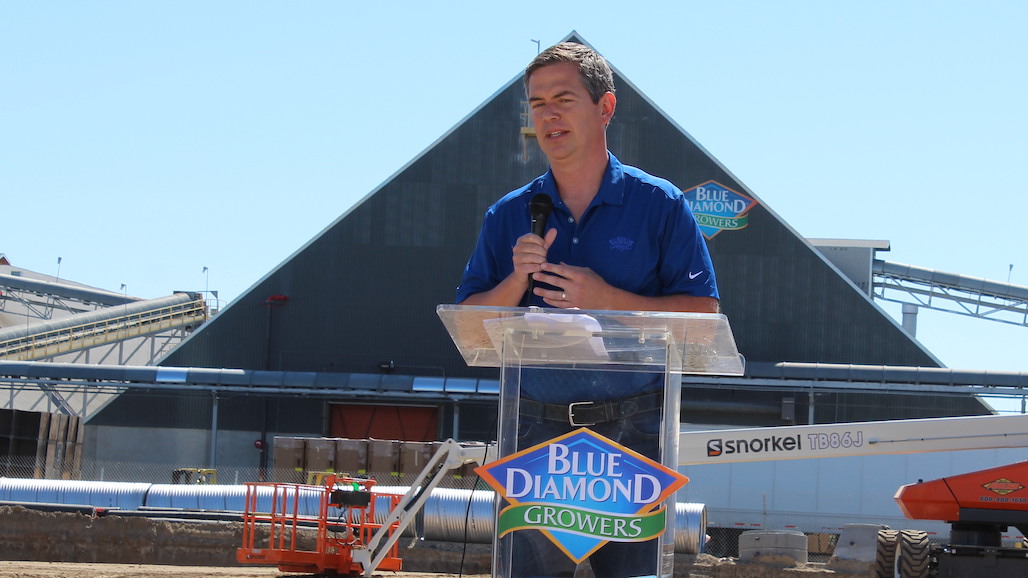
    Blue Diamond Growers President and CEO, Mark Jansen, today announced that he intends to step down from the role he has held with the agricultural cooperative and global consumer packaged goods leader since September 2010. Jansen has decided to step away after a successful 12-year tenure as CEO because he believes the organization is well-positioned for future growth and the timing is right for him to make the change.

    “Together, we have been fortunate to accomplish what we committed to do – and more,” said Jansen. “Helping the great people of Blue Diamond thrive has been an honor and privilege.”

    Specific Blue Diamond Grower achievements under Jansen’s leadership include:

    • Opening a new 200-million-pound manufacturing facility in Turlock, Calif.
    • Expanding into five innovative new almond product categories
    • Creating a global network of licensee partners for Almond Breeze® that enabled it to grow into the largest almond milk brand in the world
    • Driving dynamic growth of the flavored snack nuts category that has earned 50% market share in the United States and global distribution in more than 60 countries
    • Achieving double-digit compounded annual growth of Blue Diamond’s branded business

    “Mark promised us 10 years and gave us 12, and we greatly appreciate his significant contributions to all the stakeholders of Blue Diamond,” said Dan Cummings, Chairman of the Board, Blue Diamond Growers. “Under Mark’s leadership, Blue Diamond has transformed into a leading $1.6 billion global branded business and one of the most consistent and fastest-growing food and beverage companies in the world. He has built an incredibly strong and experienced executive team that has delivered healthy year-over-year revenue growth resulting in increasingly superior returns to our grower-owners.”

    According to Cummings, the co-op’s Board of Directors has established a CEO Succession Committee and is working with executive search and leadership advisory firm, Egon Zehnder, on a nationwide search, open to both internal and external candidates.

    “Blue Diamond is a growth company by choice, driven in large part by a complete dedication to a single ‘good for you’ product, vertical integration, extensive partnerships, and a continual investment in marketing and innovation,” Cummings said. “This is a phenomenal leadership opportunity for the right executive who shares our strong values and commitment to our loyal growers, employees, and customers.”

    Jansen affirmed he is committed to supporting the search for a successor and plans to stay on until a new CEO has been selected and begins working to help ensure business continuity and a smooth leadership transition.

    “The Blue Diamond Growers co-op knows how to get almonds from growers’ farms to families worldwide better than anyone,” said Jansen. “We’re growing with an accelerated focus on sustainability and a continued commitment to giving back to the stakeholders we serve.  As it was for me, this will be a great opportunity for the next CEO, and I look forward to supporting our Board, growers, and work family throughout this transition.”

    About Blue Diamond

    Blue Diamond Growers, a grower-owned cooperative representing approximately 3,000 of California’s almond growers, is the world’s leading almond marketer and processor. Established in 1910, it created the California almond industry and opened world markets for almonds. Blue Diamond is dedicated to delivering the benefits of almonds around the world and does so by providing high-quality almonds, almond ingredients, and branded products. Headquartered in Sacramento, the company employs more than 1,800 people throughout its processing plants, receiving stations and gift shops. To learn more about Blue Diamond Growers, visit www.bluediamond.com and follow the company on Facebook, Instagram, LinkedIn and Twitter.

  • Pacific Nut Producer October Issue

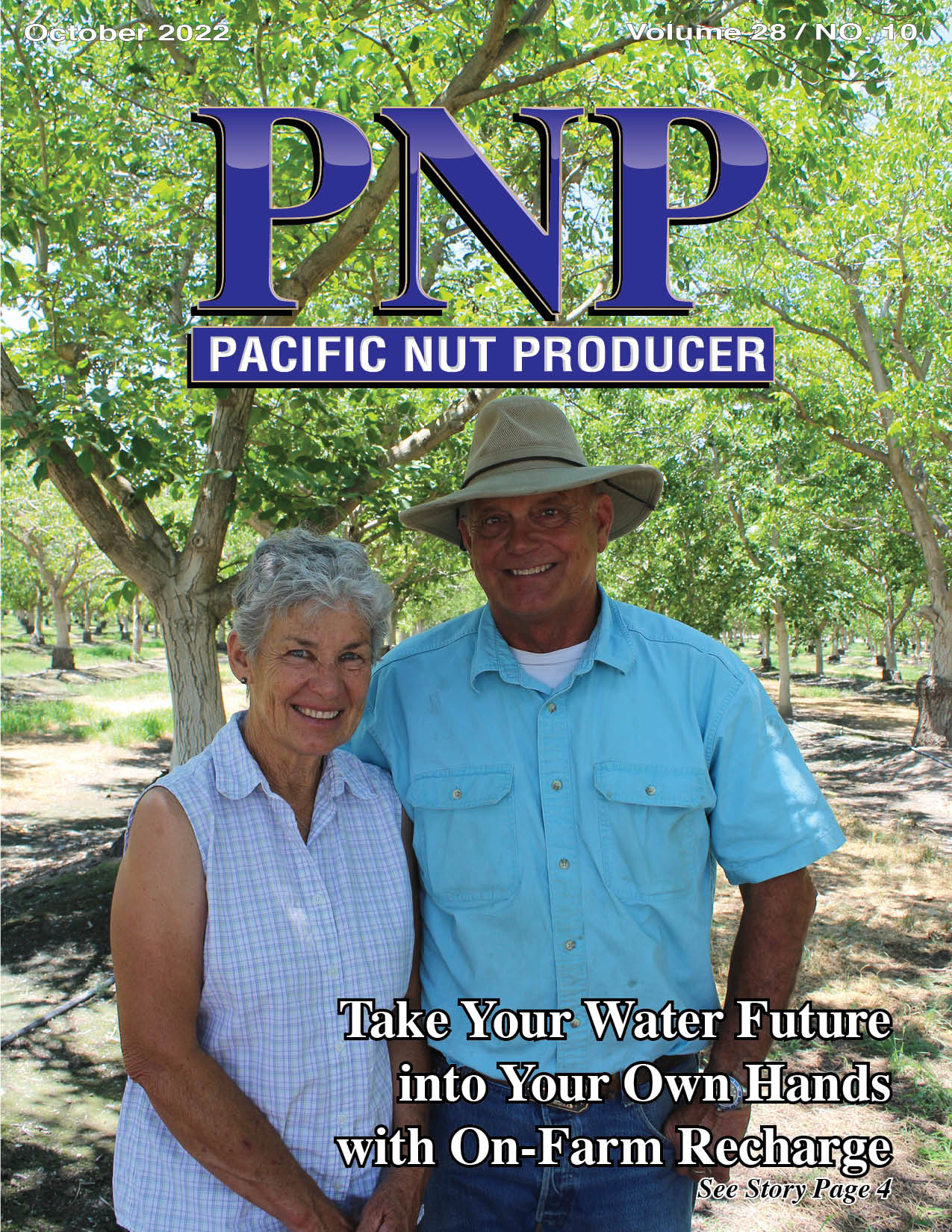
    Pacific Nut Producer October Issue

    PNP1022
    Pacific Nut Producer October Issue

    [btn btnlink=”https://malcolmmedia.com/order-a-back-issue/back-issue-pacific-nut-producer-magazine/” btnsize=”full” txtcolor=”#ffffff” color=”#FFF” bgcolor=”#492500″ btnnewt=”1″ nofollow=”1″]Order A Back Issue[/btn]

    [btn btnlink=”http://malcolmmedia.com/pacific-nut-producer-magazine-subscriptions/” btnsize=”full” txtcolor=”#ffffff” bgcolor=”#492500″ btnnewt=”1″ nofollow=”1″]Subscribe Free[/btn]
    [three_fifth_last]

    Contents of the October Issue:

    Mark Hutson Farms a Canvas of Possibilities
    Takes Water Future into his Own Hands with On-Farm Recharge

    The Irrigation Corner
    Salt Removal from Drip/Micro Irrigated Orchard Soils

    A New Era of UCCE Farm Advisors
    UC Ramping Up California Tree Nut Extension Efforts

    October Orchard Tasks
    Almonds, Hazelnuts, Pecans, Pistachios, Walnuts

    [/three_fifth_last]

  • New Tool to Fight Phytophthora Crown & Root Rot in Almond

    New Tool to Fight Phytophthora Crown & Root Rot in Almond

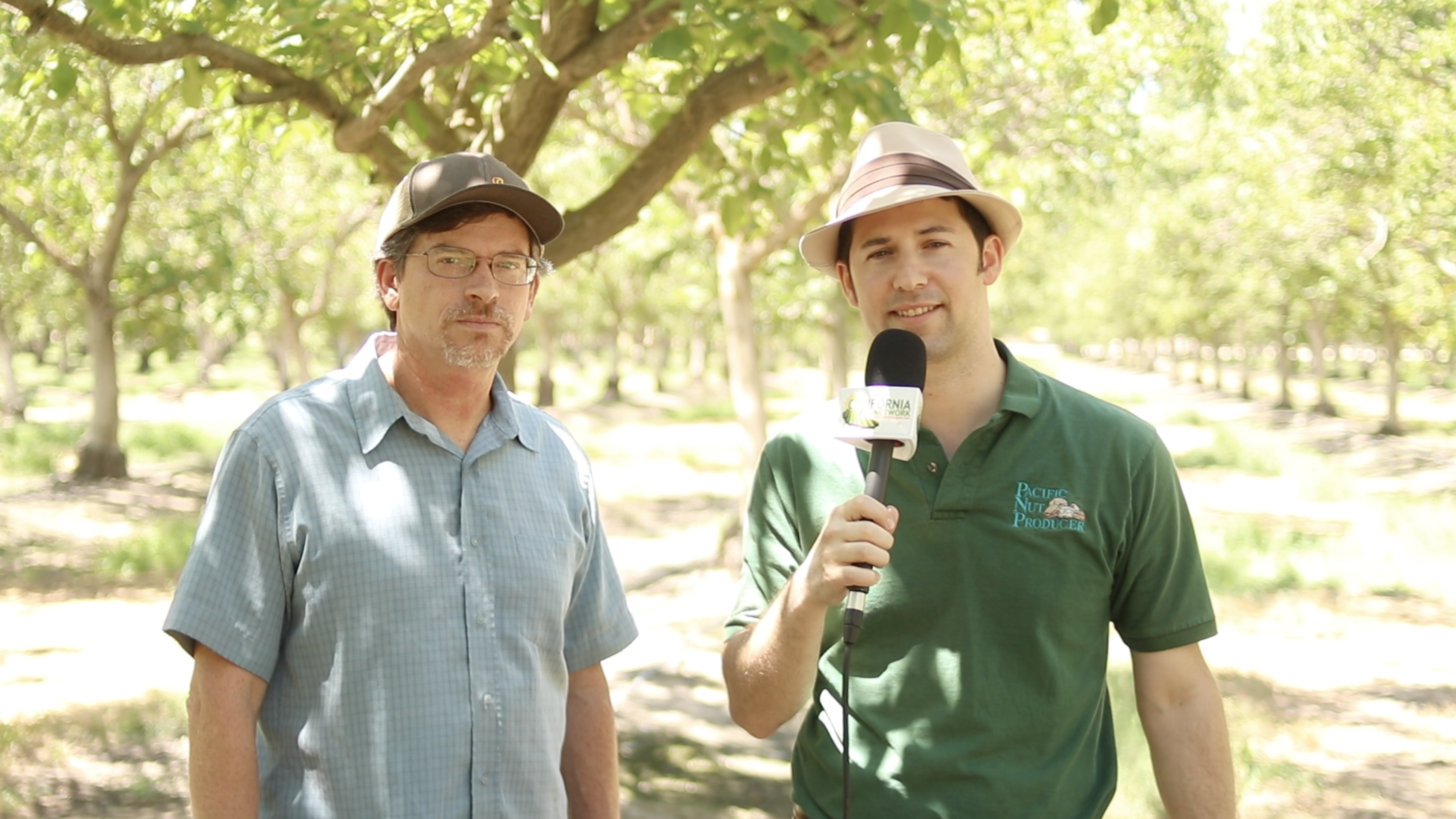
    Watch this brief interview with UCCE Farm Advisor Brent Holtz as he talks about a new tool to fight the tree-killing phytophthora crown and root rot in almond, and be sure to read his monthly Almond Tasks column in Pacific Nut Producer Magazine.

    Please thank this video’s sponsor Suterra for their industry support.

  • Almond Case Study Tests New ROI Calculator

    Almond Case Study Tests New ROI Calculator

    Many almond growers have heard their peers, as well as others with interest in improving pollinator habitat and soil health, endorse the planting of cover crops to accomplish those goals.

    Those same growers may have wondered if money spent on seeds and labor as well as the cost of time to manage cover crops truly pay off. Can the economic benefit of cover crops accurately be measured and, if so, what is the return on that investment (ROI)?

    The Almond Board of California (ABC) – in an effort to directly address questions about the ROI of cover crops – recently completed a case study of one orchard in Stanislaus County where cover crops have been planted for a decade. The case study relied on a calculator system developed by the American Farmland Trust.

    Michael Roots, ABC’s specialist for field outreach and education, worked with grower Christine Gemperle to evaluate the ROI of cover crops on 20 acres of her 40-acre orchard near Ceres. The result was an easy-to-read two-page document now available for other growers to review.

    A combination of published machinery and material cost estimates and data supplied by Gemperle was used to estimate the cost of operations, on average, before and after cover crops were planted. The analysis was limited to only those income and cost variables affected by cover crop adoption.

    The bottom line? Gemperle’s net income per acre grew by $499 annually, for a total of $9,976 for the 20 acres. That works out to an ROI of 459% based on the $1,516 average cost of seeds plus the value of her time ($655) each year to fine tune the process.

    Gemperle’s trees were 9 years old when she first planted cover crops in 2012. Thanks to meticulously kept records, she credits cover crops for increasing yield by about 8% while, at the same time, reducing her pesticide and herbicide costs.

    Her strategy – which has evolved through the years – is relatively simple. She plants cover crops in every other row, usually by early October. She waters those seeds during her last post-harvest irrigation of the fall. She uses the “clean” rows – those without cover crop seeds – to remove mummy nuts and prune. Once those tasks are finished, she plants her other cover crop seeds down those rows as well, usually by early December.

    In addition to creating an inviting habitat for honeybees and other natural pollinators, Roots said Gemperle has reduced weed populations, improved soil moisture retention and reduced pesticide applications. She’s also saved money on labor.

    “The diversity of weeds she’s seen has decreased so a lot of the hard-to-kill weeds have disappeared as the cover crop has taken over. She doesn’t have to spray as often and she doesn’t have to use as much material,” Roots explained. “She also doesn’t spray in May for mites because of all the beneficial insects that her cover crops host.”

    Gemperle also has observed that her trees are more resilient, less prone to leaf drop and less prone to wilting during harvest.

    “She’s found a good way to be cost-effective and get the job done in an economic manner. Especially since she’s doing all the work herself,” Roots said.

    Roots added reaching out to the Almond Board or American Farmland Trust to participate in a case study can be a good way for a grower interested in determining the ROI of their existing, or potential future, cover crops. It can be used to determine the ROI of their own orchards as each situation is likely to be unique.

    “Everybody implements cover crops a little differently,” he said.

    Growers interested in the American Farmland Trust’s soil health calculator can learn more at the organization’s website. — By the Almond Board of California

  • Effort Secures Federal Procurement Program for Almonds

    Effort Secures Federal Procurement Program for Almonds

    More school children and others benefitting from food nutrition programs all across the country will enjoy California almonds this year, thanks to their inclusion in federal ag marketing efforts.

    A USDA program known as Section 32 allows the U.S. Department of Agriculture to buy surplus ag commodities to distribute through various federally subsidized food programs.

    The almond industry doesn’t always have surplus inventory, but a couple of big crop years combined with pandemic-related shipping issues that delayed nuts being sent to overseas markets created the perfect conditions this year for almonds to participate in the federal program.

    “In recent history, it happened once (in 2020) because of some pandemic pressures, but other than that, it’s been quite a while since there was an almond purchase,” explained Brock Densel, who works as part of the Almond Board of California’s Global Technical and Regulatory Affairs team.

    As many as 26.2 million pounds of almonds could find their way into this year’s federal food programs. That means millions of American K-12 students who benefit from free or subsidized meals at their schools, as well as people of all ages who depend upon food banks or assistance programs, will be able to get a taste of California almonds.

    The federal program is run through the USDA’s Agricultural Marketing Service, which administers a number of feeding programs. Qualifying for the Section 32 purchase program can be complex, but once approved, commodities brokers – or in the case of almonds, handlers – are able to bid on specific orders. Handlers can establish their own appropriate price point and low bid wins.

    The deadline for handlers to submit bids was Aug. 31.

    “Section 32 often relies on lower priced commodities,” Densel explained. “Typically, almonds haven’t had the market conditions to justify a USDA purchase.”

    The Almond Board worked with its partners at the Almond Alliance to convince the USDA to include almonds in this year’s Section 32 program, and to revisit the specifications to allow broader participation. The Almond Alliance is allowed to lobby government agencies and elected officials on behalf of the industry, something the ABC cannot do as part of the marketing order.

    Once almonds received the go-ahead, the Almond Board held a virtual training in June for interested almond handlers to explain the Section 32 rules and how the process works.

    “Because this is such an infrequent opportunity for almonds – as opposed to other commodities or other tree nuts like walnuts – there’s not really the institutional knowledge of how to go through this whole process,” Densel said. “Here at the Almond Board, that’s certainly one of the things that we felt we could do, to help our industry members understand the requirements.”

    Though inclusion in the Section 32 program is not something handlers can expect in most years, it can be a sensible alternative when almond inventories are up and USDA puts out a bid.

    “At a time we’re seeing the challenges the almond industry is facing to market larger crops, Section 32 certainly provides an alternative destination and one that is logistically easier under shipping current conditions,” Densel said. — By the Almond Board of California

  • Is Overwinter Orchard Flooding a Good Option for Groundwater Recharge?

    Is Overwinter Orchard Flooding a Good Option for Groundwater Recharge?

    While California farmers are taking more interest in opportunities for on-farm groundwater recharge to mitigate the effects of the drought, some tree nut growers may be hesitant to the idea of flooding their orchards over the winter months, concerned it may have a negative impact on the health of their trees and practices, such as cover cropping. The Almond Board recently released a groundwater recharge guide to address some of these concerns. Watch this brief interview with Jesse Roseman from the Almond Board as he shares some insights from the guide and positive results from recent studies on the topic. Read more about it in Pacific Nut Producer Magazine.

    Please thank this video’s sponsor Suterra for their industry support.

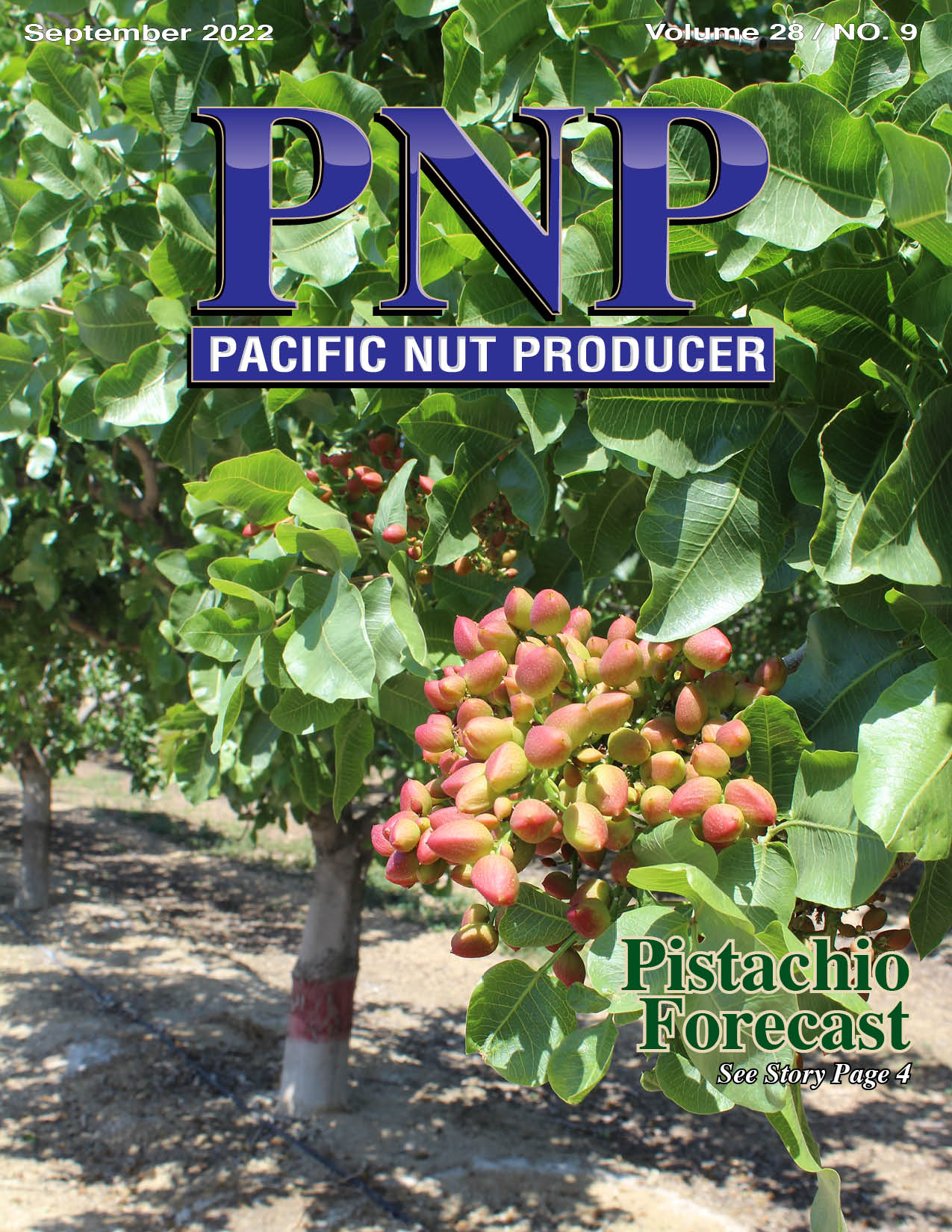
  • Pacific Nut Producer September Issue

    Pacific Nut Producer September Issue

    PNP922
    Pacific Nut Producer September Issue

    [btn btnlink=”https://malcolmmedia.com/order-a-back-issue/back-issue-pacific-nut-producer-magazine/” btnsize=”full” txtcolor=”#ffffff” color=”#FFF” bgcolor=”#492500″ btnnewt=”1″ nofollow=”1″]Order A Back Issue[/btn]

    [btn btnlink=”http://malcolmmedia.com/pacific-nut-producer-magazine-subscriptions/” btnsize=”full” txtcolor=”#ffffff” bgcolor=”#492500″ btnnewt=”1″ nofollow=”1″]Subscribe Free[/btn]
    [three_fifth_last]

    Contents of the September Issue:

    Pistachio Luncheon Offers Great Insights
    APG Plans & Markets Ahead of Increasing Pistachio Production

    The Irrigation Corner
    Understanding Soil Salinity Accumulation in the Orchard

    The Curious Case of Macadamia Quick Decline
    Uncovering the Culprit Decimating Hawaii’s Nut Trees

    September Orchard Tasks
    Almonds, Hazelnuts, Pecans, Pistachios, Walnuts

    [/three_fifth_last]

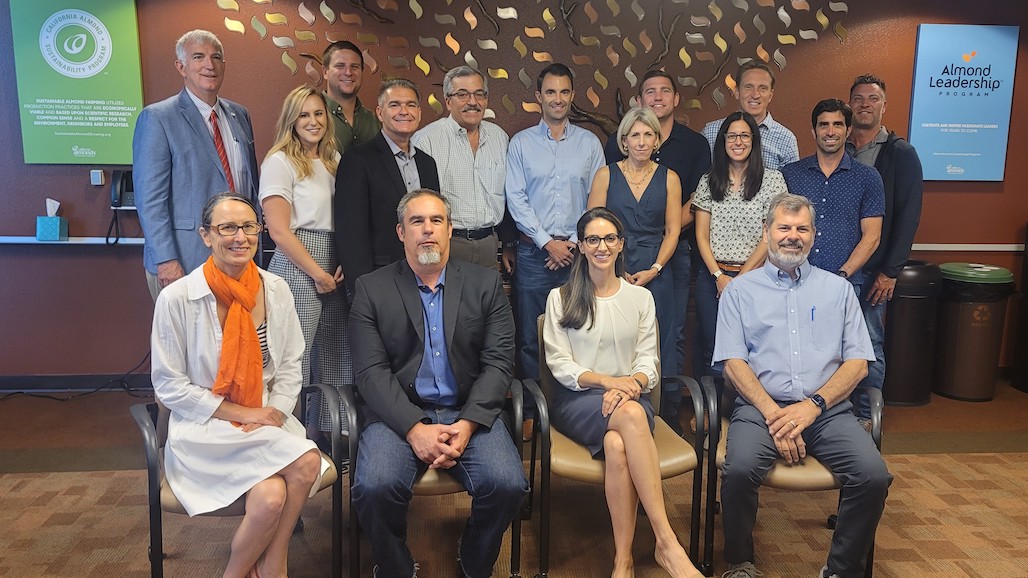
  • New Directors at Almond Board of California Begin Terms

    New Directors at Almond Board of California Begin Terms

    The new Board of Directors of the Almond Board of California (ABC) took their seats this week with four voting members beginning new terms to help guide ABC’s support of one of California’s most important crops.

    Board members, whose terms officially began Aug. 1, also elected Alexi Rodriguez as chair and re-elected George Goshgarian Jr. as vice chair.

    “Our industry is facing many challenges right now,” said Rodriguez. “I’m looking forward to working with this talented and dedicated board and organization. I believe we have the resources and experience to navigate these complicated times.”

    The 10-member ABC board has five grower members – three representing independent growers and two representing cooperative growers – and five handler members, also with three independent and two co-op representatives. Some members sit in three-year seats, others in one-year positions.

    The grower representatives elected or re-elected in this year’s elections are:

    • Paul Ewing, an independent from RPAC, LLC in Los Banos. He was re-elected to a one-year term.
    • Brandon Rebiero, an independent grower from Gold Leaf Farming in Modesto who previously served as an alternate and was elected to a three-year term.

    The handler representatives were re-elected in both positions this year. They are:

    • Darren Rigg, an independent handler from Minturn Nut Co. in Le Grand. He was re-elected to a one-year term.
    • Mel Machado, a co-op handler with Blue Diamond Growers from Modesto re-elected to a three-year term.

    In addition, the board has three alternates elected or re-elected this year:

    • Katie Staack-Dorsett, an independent grower with Grizzly Nut, LLC from Waterford This is her first term as an alternate.
    • Chad DeRose, an independent handler with Famoso Nut Co., LLC in McFarland, who was re-elected.
    • Mark Jansen, a co-op handler with Blue Diamond Growers from Sacramento who was also re-elected.

    This is the full board:

    VOTING MEMBERS                                                                                      TERM

    Grower #1:            Paul Ewing, RPAC, LLC                                                 1 year

    Grower #2:            Brandon Rebiero, Gold Leaf Farming                            3 years

    Grower #3:            Joe Gardiner, Treehouse California Almonds, LLC       3 years

    Handler #1:           Alexi Rodriguez, Campos Brothers                                3 years

    Handler #2:           Bob Silveira, Vann Family Orchards                              3 years

    Handler #3:           Darren Rigg, Minturn Nut Co. Inc.                                  1 year

    Co-op Grower #1: George Goshgarian Jr., Goshgarian Farming Co.        3 years

    Co-op Grower #2: Christine Gemperle, Gemperle Orchards                      3 years

    Co-op Handler #1: Mel Machado, Blue Diamond Growers                          3 years

    Co-op Handler #2: Alicia Rockwell, Blue Diamond Growers                       3 years

    ALTERNATES

    Grower #1:             Katie Staack-Dorsett, Grizzly Nut, LLC

    Grower #2:             Vacant

    Grower #3:             Chris Bettencourt, Suvik Farms

    Handler #1:            Ron Fisher, Fisher Nut Company

    Handler #2:            Dexter Long, Hilltop Ranch, Inc.

    Handler #3:            Chad DeRose, Famoso Nut Company, LLC

    Co-op Grower #1:  Kelli Evans, Evans Farming

    Co-op Grower #2:  Kent Stenderup, Stenderup Ag Partners

    Co-op Handler #1: Mark Jansen, Blue Diamond Growers

    Co-op Handler #2: Dean LaVallee, Blue Diamond Growers

    The ABC board sets policy and approves budgets in major areas, including production research, public relations and advertising, nutrition research, statistical reporting, quality control and food safety.

    ABC is a Federal Marketing Order dedicated to promoting California almonds to domestic and international audiences through marketing efforts and by funding and promoting studies about almonds’ health benefits, as well as ensuring sustainable agricultural practices and food safety.

    About California Almonds

    California almonds make life better by what we grow and how we grow. The Almond Board of California promotes natural, wholesome and quality almonds through leadership in strategic market development, innovative research, and accelerated adoption of industry best practices on behalf of the more than 7,600 almond farmers and processors in California, most of whom are multi-generational family operations. Established in 1950 and based in Modesto, California, ABC is a non-profit organization that administers a grower-enacted Federal Marketing Order under the supervision of the U.S. Department of Agriculture. For more information on the Almond Board of California or almonds, visit Almonds.com or check out California Almonds on Facebook, Twitter, Pinterest, Instagram and the California Almonds blog.