Category: Almonds

  • Growers, Researchers & Leaders Exchange Ideas at Almond Board Conference

    Growers, Researchers & Leaders Exchange Ideas at Almond Board Conference

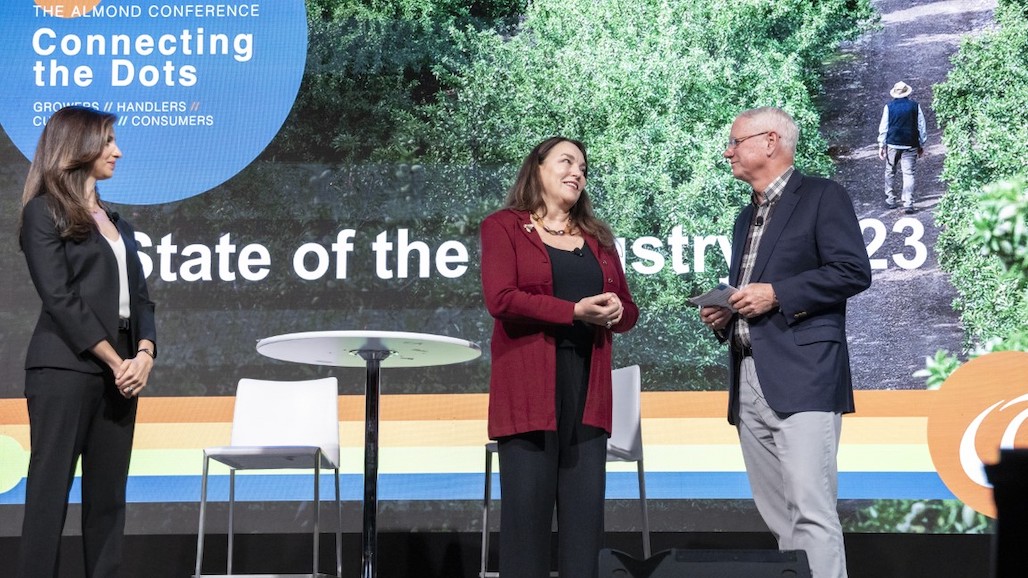
    Almond Board of California — The Almond Conference 2023 drew the largest turnout since 2019 as attendees met new Almond Board of California president and CEO Clarice Turner and heard about the array of programs – ranging from building global demand to increased trade efforts to research to maximize grower efficiency – aimed at helping the industry face difficult times.

    As always, the gathering at Sacramento’s SAFE Credit Union Convention Center was the largest of the year for the almond industry, drawing 3,819 attendees and providing an opportunity to further relationships, build new ones and exchange ideas and information.

    “This year, we were able to share what we learned about the challenges we’re facing as well as outline the efforts ABC is making to address each,” said Alexi Rodriguez, chair of ABC’s Board of Directors. “The best path for our industry is going to be together, and The Almond Conference offered a great opportunity to take into account all the ideas and experiences that were shared to help us move forward.”

    During the State of the Industry presentation, Turner talked about what she called a great strength of the almond industry – the supportive nature of everyone in it.

    “I’m so impressed with how you all work together, help each other, and care so deeply,” Turner said. “As the industry struggles to deal with challenges, many we don’t control, it’s critical to pull together and focus on what we can control or influence to find our way forward … We have some difficult times to endure, but I’m certain that strong leadership, focus and the industry DNA of ‘grit and innovation’ will get us to a better place.”

    The theme of The Almond Conference 2023 was “Connecting the Dots,” and sessions offered practical information for growers in many forms as well as a forum to exchange knowledge. One focus was providing information about the range of assistance available to the industry, and the conference again included an Incentive and Grower Support Zone, a popular offering that helped attendees get their questions answered by more than a dozen agencies and organizations that offer incentives or help getting them.

    Attendees also heard from Doug McKalip, Chief Agricultural Negotiator in the Office of the U.S. Trade Representative, who was part of the State of the Industry presentation, and from CDFA Secretary Karen Ross, who spent time with McKalip visiting the trade show floor.

    The annual awards given to long-time industry leaders during the Gala dinner were also highlights, as they are every year.

    Dick Cunningham was given the 2023 Almond Achievement Award for his remarkable commitment to the advancement of the almond industry over a 50-year career, and Wes Asai was awarded the 2023 Almond Technical Achievement Award, which recognizes an industry member who has contributed to significant technical advancement for the betterment of the California almond industry through research, innovation or facilitating the adoption of practices.

    And Richard Waycott, ABC’s outgoing president and CEO, was recognized for his 20-plus years of service to the industry with a Lifetime Achievement Award.

    Attendees at The Almond Conference 2023 visit the Incentive and Grower Support Zone to get information and questions answered by more than a dozen agencies and organizations that offer incentives or help getting them. Photo courtesy of the Almond Board of California.

    What’s next

    • PDF versions of the slide presentations covering a wide range of topics and featuring expert speakers are available at Conferences Presentations (almonds.com). Video recordings will be posted and available in the new year.
    • Save the date for 2024: Dec. 10-12 again at the SAFE Credit Union Convention Center in downtown Sacramento.
  • Blue Diamond Growers 113th “Growing Together” Annual Meeting Highlights a Year of Resilience

    Blue Diamond Growers 113th “Growing Together” Annual Meeting Highlights a Year of Resilience

    At the 113th Blue Diamond Growers “Growing Together” Annual Meeting on Nov. 15 in Modesto, Blue Diamond Growers’ CEO, Kai Bockmann, reflected on his first ten months in the leadership role by acknowledging significant challenges faced by growers and the world’s largest almond cooperative.

    In Bockmann’s remarks – along with those of Blue Diamond Growers’ Board Chairman, Dan Cummings – both pointed to remarkable headwinds for the almond industry, including higher input costs and inflationary pressures, depressed market prices, shifts in consumer shopping patterns, unfavorable weather conductions, and reduced crop sizes. To help counter these challenges, Blue Diamond Growers is advancing an aggressive strategic growth plan to navigate the marketplace conditions and drive substantial growth.

    “Volatility is our new normal, but our destination is set – and it is one of growth,” said Bockmann. “While this past year brought many challenges for our growers, no challenge is insurmountable. We have a rich history, an exceptional brand, and the right people and culture to deliver against our ambitious growth plan.”

    In laying out the plan, Bockmann shared with the annual meeting audience that what has helped bring the cooperative to where it is today, will not get it to where it is going in terms of growth and market expansion. The new growth plan prioritizes expansion into the massive foodservice channel and strategically selected international markets, while strengthening the value-added business, doubling down on product innovation, and driving for operational efficiencies.

    “Foodservice is a trillion dollar industry that represents a significant growth opportunity for Blue Diamond, and we will directly target that sector as a strategic priority,” said Bockmann. “Additionally, we will diversify and innovate our product portfolio beyond our flagship Blue Diamond Snack Almonds® and Almond Breeze® brands. We will build on the tremendous success of these products – which are both the #1 brands in America for almonds and almondmilk.”

    Bockmann shared that flavor-focused product innovation remains a top priority commenting that “no one does flavor like Blue Diamond” as evidenced by the widely popular Chilé N Lime flavored snack nuts. The flavor was launched as a limited time offer at Costco and won the “Best Nuts” award in PEOPLE Magazine’s 2023 Food Awards.

    The Blue Diamond Research & Development team will continue to innovate with new flavors, while advancing new and existing categories, including plant-based yogurt, chocolate, baking, beverages and plant-based cheese. On the foodservice front, the strategic growth plan focus is already delivering results. The Blue Diamond International Consumer and R&D teams worked closely with Maeil Dairies in the past year to develop Almond Breeze® Barista Blend, which was introduced in 6,500 Starbucks across China earlier this year.

    “I’m confident that Blue Diamond Growers is poised to thrive in the years to come because we are stronger together,” said Bockmann. “We are excited to grow together as we bring our strategic plan and collective vision to life.”

    Supporting Grower Success and Advancing Sustainability

    In addition to tackling the marketplace challenges with strategy, innovation, and expansion, Blue Diamond Growers also concepted and launched a new grower-focused buying coalition. To help connect growers with trusted, well-known suppliers and build local, long-term relationships, the Blue Diamond Growers Connect Marketplace aims to reduce production costs for farmers by negotiating better discounts with suppliers via Group Purchasing Organizations and the co-ops’ own internal platform. The goal of the marketplace is to reduce growers’ costs by 5-15%.

    Additionally, a notable highlight from the year is Blue Diamond Growers’ advancement in sustainability. To continue growing the cooperative’s commitment to stewardship, Blue Diamond’s Member Relations team held several online webinars, including hosting the Almond Board of California Almond Stewardship Platform and the Pollinator Partnership to discuss and educate growers on Bee-Friendly Farming.

    Along with the offered webinars, growers were encouraged to participate in Blue Diamond’s Orchard Stewardship Incentive Program (OSIP), a program where growers can earn financial incentives for implementing best practices related to orchard management, environmental issues, occupational health and safety, and community investment.

    In July of this year, the U.S. Department of Agriculture (USDA) awarded Blue Diamond a five-year, $45 million “Partnerships for Climate-Smart Commodities” grant, a program designed to help farmers implement “climate-smart” practices on their land. The program offers growers no-cost cover crop seed and a financial incentive to plant cover crops and/or conservation cover on their land. These practices notonly work toward taking carbon out of the atmosphere, but they also enhance orchard biodiversity and improve soil health. The USDA grant complements
    Blue Diamond’s OSIP by lowering the cost of initiating the pollinator-friendly practices required to receive Bee-Friendly Farming certification.

    “Without question it has been a challenging year, but the loyalty and leadership demonstrated by our board – combined with the resilence of our growers and dedication of Blue Diamond employees – will allow us to overcome the challenges together,” said Cummings. “I’m confident Blue Diamond will deliver great prosperity and a sustainable future for our growers, employees, their families, and the communities we call home.”

    Blue Diamond Annual Report Now Available

    In conjunction with the Annual Meeting, the Blue Diamond Growers 2023 “Growing Together” Annual Report is now available on the Blue Diamond website at www.bluediamond.com.

    About Blue Diamond

    Blue Diamond Growers, a grower-owned cooperative representing approximately 3,000 of California’s almond growers, is the world’s leading almond marketer and processor. Established in 1910, it created the California almond industry and opened world markets for almonds. Blue Diamond is dedicated to delivering the benefits of almonds around the world and does so by providing high-quality almonds, almond ingredients, and branded products. Headquartered in Sacramento, the company employs more than 1,800 people throughout its processing plants, receiving stations and gift shops. To learn more about Blue Diamond Growers, visit www.bluediamond.com.

  • California Almond Acreage Drops Again in 2023

    California Almond Acreage Drops Again in 2023

    California’s total almond acreage dropped again in 2023, this time by about 74,000 acres, making two years in a row that acreage has decreased, something that has not happened since at least 1995, according to a new report from Land IQ to the Almond Board of California (ABC).

    Total acreage dropped from just under 1.64 million acres last year to about 1.56 million in 2023, even though bearing acres – orchards producing almonds and planted in 2020 or earlier – increased slightly to 1.37 million acres compared with 1.34 million acres at this time last year. But the amount of non-bearing acreage – new orchards planted in 2021, 2022 or 2023 – sank about 105,000 acres from 294,000 acres in 2022 to 189,000 acres in 2023, according to the Land IQ 2023 Standing Acreage Final Estimate.

    “The latest Land IQ California almond acreage analysis continues to point to a reduction in total acreage driven by fewer new plantings and an increase in orchard removals,” said Richard Waycott, ABC president and CEO. “The 1.37 million bearing acreage in 2023 established a new record, reflecting plantings in 2020 or earlier, but going forward, the analysis points to a lowering of bearing acreage in 2024.”

    Orchard removals increased again in 2023 to about 83,000 acres as of Aug. 31, compared with 60,400 acres removed in 2022 and continuing a trend of an increasing pace of removals that started in 2021, according to the accompanying Land IQ 2023 Removal Update. That contributes to the analysis pointing to fewer acres next year and possibly beyond, Waycott said.

    In addition, nearly 41,000 acres are classified as either stressed or abandoned. They were included in the standing acreage total because the orchards “may have the ability to recover,” Land IQ said.

    The estimates come from multiple lines of evidence, including agronomic and remote sensing knowledge, robust on-the-ground verification, customized image analysis, artificial intelligence and more. Land IQ said the 2023 standing acreage estimate is 98.8 percent accurate.

    Land IQ’s acreage estimates are commissioned by ABC to provide statistical transparency and a robust picture of California almonds to industry stakeholders around the world. In 2018, ABC first commissioned Land IQ, a Sacramento-based agricultural and environmental scientific research and consulting firm, to develop a comprehensive, living map of California almonds. The map is the result of more than a decade of research.

  • Almond Board Outlook on Shipments & Exports

    Almond Board Outlook on Shipments & Exports

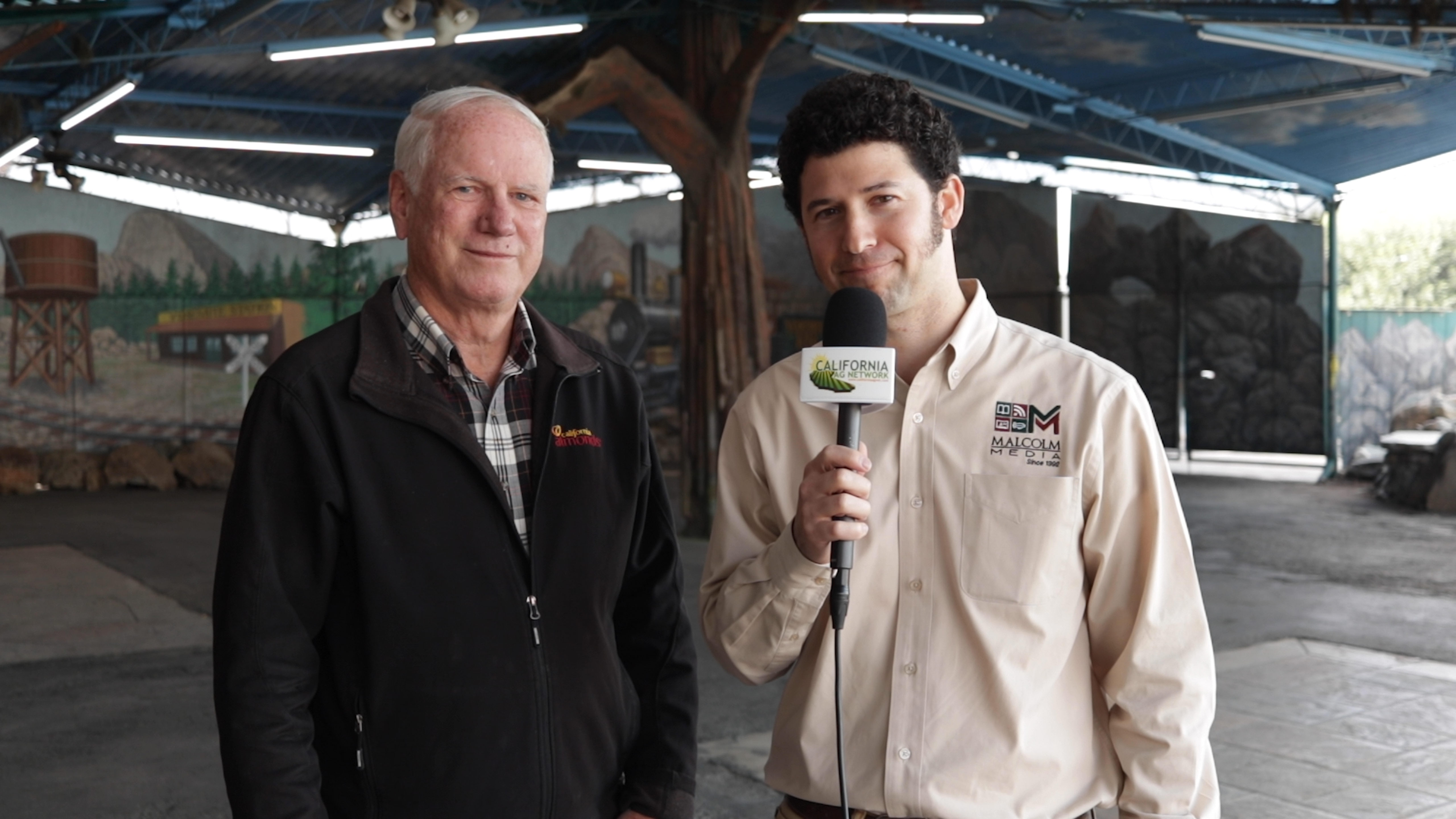
    Following his State of the Almond Industry presentations at the Tree & Vine Expo and the Grape, Nut & Tree Fruit Expo, Richard Waycott, President of the Almond Board of California, shared some insights on successes and challenges with almond shipments over the past 12 months. Watch his interview with Matthew Malcolm and read the full State of the Industry report in the upcoming issue of Pacific Nut Producer Magazine.

    Please thank this video’s sponsor Thunder Creek Equipment for their industry support.

  • Almond Board Directors and New CEO Listen and Talk with Industry

    Almond Board Directors and New CEO Listen and Talk with Industry

    The Almond Board of California Board of Directors and President and CEO Clarice Turner engaged almond industry members up and down the Central Valley in an eight-stop listening tour to answer questions and hear concerns and ideas.

    Board members and Turner hosted gatherings starting in Shafter in the south valley and ending in Orland in the north to hear what growers and handlers have on their minds and to give people a chance to ask questions in informal settings. Turner also participated with  outgoing Almond Board President Richard Waycott in delivering the State of the Almond Industry address at Malcolm Media’s recent Tree & Vine Expo in Turlock and Grape, Nut & Tree Fruit Expo in Fresno.

    Incoming Almond Board of California President and CEO Clarice Turner addressing growers at Malcolm Media’s Tree & Vine Expo in Turlock (Photo by Matthew Malcolm)

    “While the long-term outlook for the industry seems promising, the short-term economics have left many growers contemplating their next steps,” said Alexi Rodriguez, chair of ABC’s Board of Directors. “The listening sessions were a great opportunity to engage with industry members to share information, experiences and ideas. It was also great for Clarice to hear from stakeholders in each region, as their challenges and priorities vary. Unfortunately, the Almond Board can’t solve every problem and many will be left to make some tough decisions going forward. That said, the Board and the organization are working hard to tackle the areas where we can make a positive difference for the future of the industry.”

    The listening sessions were casual and designed to be small so the questions and conversations could go deep. They are one of the ways Turner, who started as ABC president and CEO in September, is introducing herself to the industry and learning more about the people in the industry she serves.

    “I enjoyed meeting so many interesting, caring and knowledgeable people across the valley,” Turner said. “I heard many stories and learned so much about the history of this great industry, people’s hopes and concerns, and about their commitment to their land, roots, communities and to almonds. Despite the current difficult macro environment, we had very constructive conversations about the future of the industry. It was an inspiring week.”

    Subjects ranged from broad policy to technical questions, and the conversations will help guide sessions at The Almond Conference 2023 in Sacramento Dec. 5-7 where topics and issues will be addressed by experts during in-depth panel discussions. Rodriguez, Turner and Board of Directors members will also be available at The Almond Conference for industry members who have questions of their own.

    About the Almond Board of California

    California almonds make life better by what we grow and how we grow. The Almond Board of California promotes natural, wholesome and quality almonds through leadership in strategic market development, innovative research and accelerated adoption of industry best practices on behalf of the more than 7,600 almond farmers and processors in California, most of whom are multi-generational family operations. For more on California almonds visit Almonds.com.

  • Bacterial blast/canker: What do we know?

    Bacterial blast/canker: What do we know?

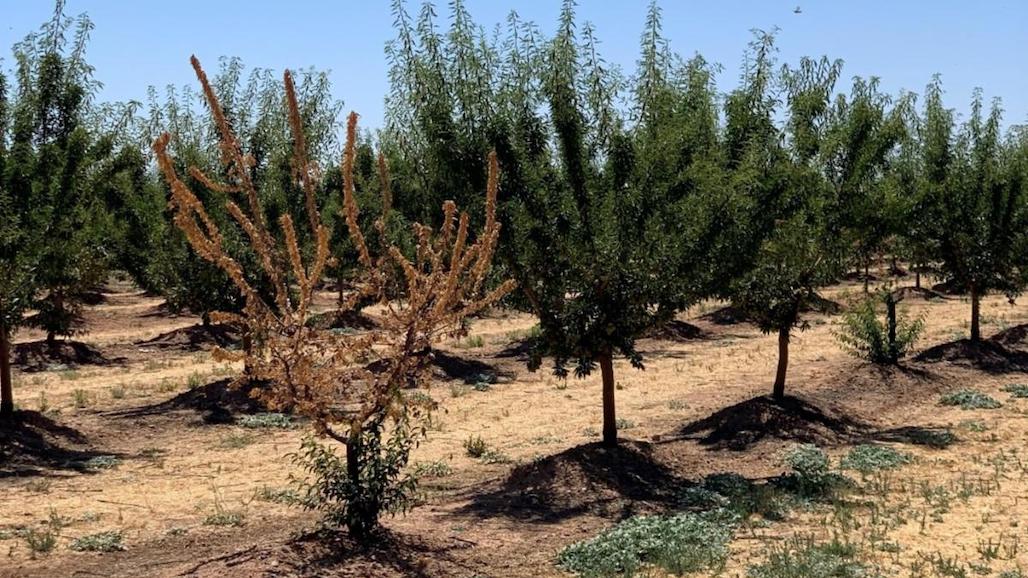
    Diseases caused by Pseudomonas syringae can affect tissue throughout the entire tree, including bacterial blast of flowers, leaves, and shoots as well as bacterial cankers that develop under the bark in cambial and wood tissues of trunks, scaffolds, and branches. The pathogen commonly exists on plant surfaces in an orchard without causing disease, but cold, wet weather can trigger damaging infections. Bacterial canker/blast infections are most damaging, and potentially lethal, in stressed trees. Stress from ring nematodes or root-restricting hardpan predisposes almonds to blast and canker damage.

    The wet, cold spring of 2023 promoted widespread Pseudomonas bacterial infections in almond. This pathogen is becoming a consistent problem in cold, wet springs as almond plantings increase across the state.

    Currently, there are limited control options for bacterial canker/blast in almonds. The following list outlines factors influencing management practices and decisions.

    • Pseudomonas syringae is a damaging pathogen in cold, wet weather.
    • The pathogen is ubiquitous and occurs naturally on plant surfaces.
    • Infection risk varies with orchard site, rootstock, and variety selection.
    • Low spots (sites) are colder and thus, more prone to freeze damage.
    • Peach x almond hybrid rootstocks (Hansen, Nickels, Bright’s) are more vulnerable to ring nematode and subsequently to bacterial canker damage than Viking, Lovell, or Guardian rootstocks.
    • All almond varieties are susceptible to bacterial canker/blast infection, but some are more so than others. New self-fertile varieties are very susceptible to bacterial blast/canker.
    • Antibiotics can significantly reduce bacterial blast at bloom in almond, but none are currently labeled for almond. An effective, research-proven antibiotic (kasugamycin; Kasumin®) was available under Section 18 exception but is not currently labeled for almond.
    • Copper resistance is widespread in Pseudomonas syringae bacteria, making copper sprays ineffective.
    • Frost protection can help reduce damage.
    What can growers do to manage bacterial canker/blast?
    • If approved for use, treat with labeled antibiotic (for example kasugamycin; Kasumin®) 1-6
    • days ahead of forecast freeze. Expect only a week of protection. Note that very cold weather will damage buds even if an antibiotic is applied. Greatest economic benefit should come from bloom treatment.
    • If antibiotics are not labeled before bloom 2024, growers have limited options. Spraying copper to control bacterial canker/blast is generally ineffective. Adding mancozeb to copper may overcome resistance. Unfortunately, copper is phytotoxic and may cause leaf damage. Biologicals (Actinovate, Botector, etc) are not registered for blast control in almonds, but if applied for other bloom pathogens may reduce blast damage if applied multiple times (4, 3, 2, and 1 week before bloom).
    • Run frost protection irrigation if water is available. This will help reduce both frost damage and blast risk.
    • High rates (100 lbs urea/acre) of foliar lo-biuret urea in October reduced bacterial canker growth by more than 90% in UC studies in peach orchards. Lower rates of urea were not tested.

    In the long run, recognize bacterial blast and canker risk when selecting rootstocks and varieties for a colder site (valley floor, etc.). Almond variety and rootstock selections in the Sacramento Valley have changed, trending from more tolerant to more sensitive combinations. The traditional almond planting in the Sacramento Valley was Nonpareil and pollinators on Lovell peach rootstock – combinations generally tolerant to bacterial canker/blast. Trees on Marianna 2624 plum rootstock were much more susceptible to bacterial blast than those on Lovell peach. Newer rootstocks with a plum genetic background and newer varieties may also be more vulnerable to damage. Solid plantings of self-fertile varieties on certain newer rootstocks increase the risk of economic loss under cold, wet conditions.

    University of California researchers, funded by The Almond Board of California, continue to study Pseudomonas syringae bacterial infections of almond. Updates will be available at The Almond Conference (almonds.com/about-us/programs-and-events/almond-conference) this December. — By Franz Niederholzer, UCCE Farm advisor, Colusa, Sutter, and Yuba Counties

  • Post-Harvest Almond Orchard Considerations

    Post-Harvest Almond Orchard Considerations

    Postharvest nutrition: Use information from your leaf and hull tissue analyses along with 2023 yield and anticipated 2024 yields to plan your fall Boron, Potassium and Zinc applications. 1,000 lbs of almond kernels harvested removes 80 lbs of potassium from the field, so it’s important to wait until after harvest to develop your fall nutrition plan. These fall applications have an outsized impact on the following year’s yield. Nitrogen applied in the fall, however, does not benefit yield if an orchard is otherwise healthy. Read the Postharvest Nutrition Review for details on fall fertilizer applications.

    Cover crops: Cover crops or resident vegetation have numerous benefits including improving water infiltration and holding capacity, providing additional forage for bees in the spring, and providing easier access to the field when the soil is wet. It’s important to monitor soil moisture and irrigate after planting a cover crop if we have a dry fall. This ensures good germination of your cover crop. Check out the

    UC-Almond Board Cover Crop Best Management Practices Guide for information on timing, cover crop species selection, equipment and more.

    Weed survey: After the first rain, scout for weeds and develop your weed management strategy for the next year. Correct weed identification is critical for effective management plans, so utilize the Weed Research and Information Center Weed ID Tool if necessary.

    Winter sanitation: With reports of higher-than-average navel orangeworm damage in the 2023 harvest, winter sanitation will be necessary in most orchards. Count the mummies in 20 trees throughout each orchard. If more than 1 mummy nut per 5 trees is found, sanitize by shaking or poling nuts to the ground by Feb. 1 to reduce navel orangeworm pressure next year. Also note if mummy nuts are caused by hull rot, which may indicate a need to reevaluate your irrigation and nitrogen management practices next season. See the article on sanitation standards in this newsletter.

    Pruning: Prune out dead or damaged branches, taking care to avoid pruning if rain is in the forecast within 14 days to minimize the risk of infection of fresh cuts by rain-spread pathogens. Applying Topsin-M after pruning also provides protection against canker pathogens like Cytospora and Botryosphaeriaceae.

    Apply foliar zinc if deficient: Recent research in stone fruit showed that lower rates of zinc sulfate (5 lbs./acre) applied earlier in October were as effective in getting Zn into the trees as later sprays at higher rates without damaging leaves. Zn applied at a high rate (for example, 20+ lbs. zinc sulfate/acre) has the added benefit of defoliating trees, which may provide the advantage of reducing inoculum for the 2024 season in orchards where shot hole or rust were a problem. However, in a dry fall, heavy Zn applications will not defoliate trees.

    Dormant spur sampling: Sample dormant spurs for scale and mite eggs and examine green shoots for scab lesions. Use this data to decide whether to apply a dormant spray to manage scale and mites and then watch for scab lesion sporulation in spring.

    Honeybee planning: Get your order in for 2-3 honeybee hives per acre for self-sterile varieties for the spring pollination season. Self-fertile varieties should have 0.5-1 hive per acre. See our article on Honeybees, Colony Strength, and Beekeeper Challenges for best practices for using honeybees in the orchard.

    Process harvest samples: November is a great time to pull those harvest samples out of the freezer and evaluate them to identify specific pest damage.  — By Becky Wheeler-Dykes, Orchard Systems and Weed Ecology Farm Advisor, Glenn, Tehama, and Colusa Counties

  • Be Careful with Almond Variety-Rootstock Selection

    Be Careful with Almond Variety-Rootstock Selection

    Almond variety and rootstock selection is a quarter century investment. After choosing which crop type to plant, this is likely the most important decision you will make when planting a new orchard. The difference in results is massive. A poor selection could lead to the orchard failing to establish and needing to be removed or providing sub-standard yield for the life of the orchard. A successful selection could mean your trees are regularly yielding twice as much as a different variety-rootstock combination.

    Variety and rootstock selections are typically thought of separately. Each rootstock is bred or selected to have different strengths and adaptations for different soil types, irrigation volumes, levels of anchorage, and ability to withstand adverse field conditions like nematodes, soil-borne pathogens, and toxic elements. Varieties are selected with self-fertility, pollen-compatibility and timing, marketing classification and price, quality and consistency, disease susceptibility, yield, and other factors in mind. However, evaluating the compatibility of different varieties and rootstocks together is critical to deciding whether a combination will be successful. A well-known nurseryman once said, “It takes 20 years to prove a rootstock”. We would add that it takes even longer to prove a variety, and a variety-rootstock combination. Why is the process as much as 30-40 years to provide growers with a winning variety-rootstock? Regional variety trials take the first 15-20 years but are only testing in three locations across the Central Valley and on only one rootstock per location. Once early adopters then plant the new variety-rootstock combination they become the researcher for another 20 plus years. If the grower decides to plant the same variety-rootstock combination for a second-generation orchard, we know we truly have a winner!

    In the Sacramento Valley, Krymsk®86, a hybrid of peach and Myrobalan plum parentage, is enormously popular due to rock-solid anchorage and a relatively higher tolerance of “wet feet” (flooding or soil saturation) compared to peach seedling rootstocks such as Lovell and Nemaguard. Krymsk® 86 rootstock has only been widely planted for about 15 years: while it consistently lives up to its promise of strong anchorage and strong production potential with many varieties, especially Nonpareil, we are still learning about how it performs with other varieties in different field conditions. In wet springs, Monterey and Butte on Krymsk® 86 rootstocks have demonstrated a higher tendency to have slow, yellow growth, a disorder termed ‘Yellow Curling Leaf’ (YCL). YCL symptoms have also been observed in Monterey on Rootpac®-R (almond x plum) rootstock. Trees with YCL express foliar symptoms similar to the Union Mild Etch (UME) disorder affecting those same varieties and others on the Marianna 2624 plum rootstock with typical symptoms including poor tree growth and yellowing leaves that roll and produce necrotic margins. YCL like UME, occurs mostly in second leaf orchards, although both disorders have been observed on older trees. UME was clearly linked to excess soil moisture in the root zone in wet springs or with over-irrigation resulting in excess soil moisture in late spring/early summer. Under those conditions weak pathogens attacked the small feeder roots, affecting growth, but rarely killing the trees. Affected Krymsk® 86 rooted trees, like those on Marianna 2624 usually recover over time when excessive soil moisture is corrected.

    More recently, some new self-fertile varieties have performed very poorly in the Sacramento Valley when grafted to Krymsk® 86. YCL symptoms for example have shown up in multiple seasons in some orchards – leading to a stunted orchard and the decision by the grower to remove the orchard entirely. Other orchards were removed early in the 2023 season after suffering massive tree losses due to suspected bacterial canker. Our current thinking is that like the UME issues on Marianna rootstock – the problems we are now seeing with certain varieties on Krymsk® 86 may have to do with the plum parentage of Krymsk® 86. Without testing each new variety that breeders produce on Krymsk® 86 over many years, we won’t know which varieties are more likely to have severe problems.

    Low vigor and yellow curled leaf (YCL) symptoms on 2nd leaf Independence® on Krymsk® 86 rootstock. Photos taken July 2, 2021. Photo Credit: Franz Niederholzer.

    Do you have a new variety struggling on Krymsk® 86?

    • Use the pressure chamber and soil moisture monitoring to avoid over-irrigation, which can exacerbate YCL symptoms.
    • Some growers have had success bypassing the rootstock and providing nutrition with foliar applications. However, this is very expensive, unsustainable, and doesn’t correct the fundamental problem for providing long-term nutrition.
    • Have ongoing discussions with your nurseryman, PCA, and farm advisor.
    For future orchards using a new variety:
    • If you have historic almond orchard performance, start your variety selection process with what has performed best previously. Your local farm advisor is a great resource for these variety and rootstock selection conversations.
    • Talk with your processor about what varieties the market wants now and what future trends could look like.
    • Consider rootstocks other than Krymsk® 86 (article and comparison tool / podcast). Self-fertile trees planted on other standard rootstocks without significant plum parentage (e.g. Viking and Atlas) or the more vigorous peach-almond hybrid rootstocks (e.g. Hansen 536, Brights, Nickels, and Titan) have not exhibited the same symptoms as those seen on Krymsk® 86 in the Sacramento Valley.
    • Stay tuned for developments at the UC Butte County almond variety trials (all varieties on Krymsk® 86 rootstock, planted at the CSU Chico University Farm) to help inform your decisions about new almond varieties. — By Luke Milliron, UCCE Orchard Advisor Butte, Glenn, and Tehama Counties; Franz Niederholzer, UCCE Farm Advisor Colusa, Sutter, and Yuba Counties; Katherine Jarvis-Shean, UCCE Orchard Advisor; Sacramento, Solano, and Yolo Counties; Clarissa Reyes, UCCE Orchard Advisor Sutter-Yuba, Butte, and Placer Counties; & Evie Smith, Former UCCE Staff Research Associate, Southern Sacramento Valley
  • DWR LandFlex Team Awarded Almond Champion of the Year Award

    DWR LandFlex Team Awarded Almond Champion of the Year Award

    Almond Alliance has announced the LandFlex team at the Department of Water Resources as their 2023 Champions of the Year. They are being honored for their leadership and partnership in developing the LandFlex program, which has emerged as a proactive and versatile solution safeguarding rural drinking water systems, increasing groundwater sustainability, and bolstering climate resilience.

    “The Almond Alliance is proud to give the Champion of the Year Award for the bold and creative leadership of this agency and team, who joined us in finding innovative solutions to a drought and flood crisis that was hurting our communities and our businesses,” said Mike Curry, chairman of the Almond Alliance. “Through voluntary collaboration and innovative on-the-ground strategies, LandFlex exemplifies the potential of community-driven initiatives to achieve meaningful and impactful results. We thank DWR, Director Nemeth, and the LandFlex team for their dedication to helping keep farmers farming and protecting our rural communities in California.”

    The Almond Champion of the Year Award is presented annually to those who have demonstrated extraordinary leadership in education, coalition building, partnerships, and promoting legislation and policies encouraging the advancement and protection of California agriculture and the California almond industry. The award recipient is decided on by our Government Relations committee members. Committee members include:

    • Mike Curry, Johnson Farms
    • Dick Cunningham, Cunningham Ranch Inc.
    • Blake Vann, Vann Brothers
    • Jeannine Grech, Campos Brothers Farms
    • Alicia Rockwell, Blue Diamond Growers
    • Dave Phippen, Travaille & Phippen
    • Melissa Frank, The Wonderful Company
    • Steve Van Duyn, Van Duyn Family Farms
    • Todd Meyer, Bear Republic Nut
    • Bill Lyons, Mapes Ranch
    • Sebastian Silvera, Gladstone Farms
    • Taj Samran, Hilltop Ranch

    Past recipients of this award include Assemblymember Adam Gray, Assemblymember Heath Flora, Connie Conway, former USDA State Executive Director of Farm Service Agency, Assemblymember Carlos Villapudua, and CDFA Undersecretary Christie Birdsong.

    The award will be presented by the Almond Alliance at the California Almond Industry Political Action Committee’s Annual Modesto Fundraiser at Del Rio Country Club on Thursday, November 2, 2023, at 5:30 pm. This event brings together members of the almond community as well as FFA students, elected officials, and designated special guests.

    RSVPs can be made to Annie Romero at aromero@almondalliance.org or 209-300-7140.

    About the Almond Alliance
    Almond Alliance is the leading authority in state and national policy, championing American almond farmers, industry, and community for the continued global growth, innovation, and success of American almonds and agriculture. As the voice of almonds, the Alliance represents the fourth-largest commodity in the United States and the third-largest American export.

  • Managing Salty Soils and Water

    Managing Salty Soils and Water

    Almond Board of California — Salinity poses a significant challenge to almond growers in certain areas and can greatly impact the performance of an orchard over time, costing producers in lost income. According to Mae Culumber, nut crop advisor from the University of California Cooperative Extension, almond trees are salt-sensitive and understanding soil salt levels and water sources become crucial even before planting an orchard.

    Mae Culumber, UCCE Fresno County Nut Crops Advisor

    There are two types of salt stress that impact almond trees — osmotic stress and specific iron toxicity. “It’s important to know the type of problem that you’re dealing with, particularly when you have a change in water source, to know what the composition of salts is,” Culumber said.

    Osmotic stress arises from salt accumulation, hampering water and nutrient uptake, leading to reduced vigor and early yield loss. If salt accumulates over time, specific iron toxicity becomes evident, causing the tree to absorb salts and accumulate in the roots, resulting in necrotic leaves. This damages the tree’s ability to photosynthesize and nourish developing kernels.

    Culumber said maintaining a balance between salinity and amendments is essential and regular soil sampling helps decide between water or soil applied amendments. “Annual sampling is recommended for the soil, and we want to sample at both depth and the top zero to three inches,” Culumber said. “That will help us decide whether or not we’re going to use water applied or soil applied amendments.”

    A newly introduced management guide provides insight into different salt types, their impacts on almonds and sources of stress. The Salinity Management Guide for Almonds, written by Culumber and co-produced by the Almond Board of California and UC ANR, simplifies complex calculations, and helps growers develop customized strategies based on their soil and water analyses.

    “The guide tries to break it down into individual steps and tell you exactly what measurements that you need from those soil and water analysis to make those calculations. We tried to make a complicated subject of calculating these amendments into something that everyone can do based on looking at that information.”

    This comprehensive guide offers a solution-driven approach to tackling salinity issues, empowering almond growers to make informed decisions and implement effective strategies for successful yields. The resource is available in a physical copy that can be ordered through ABC’s Grower Resources order form, and as a downloadable PDF on Almonds.com.