Category: Almonds

  • UK Suspends Tariffs on All Raw Almonds Beginning April 11

    UK Suspends Tariffs on All Raw Almonds Beginning April 11

    Almond Board of California — The United Kingdom’s government announced it would suspend tariffs for at least two years on raw kernel and inshell almonds from all origins – including the U.S. – beginning April 11, 2024.

    The Almond Board of California has been working for many years with the UK’s Nut and Dried Fruit Trade Association (NDFTA), the group that represents the UK processors buying California almonds. This past year, ABC provided factual information and trade data to NDFTA, which they used to officially apply to have tariffs suspended on imported almonds.

    “We are grateful for our long-time partnership with the UK’s Nut and Dried Fruit Trade Association and appreciate the UK government’s approval of the application to suspend tariffs on almonds,” said Julie Adams, ABC’s vice president for global technical and regulatory affairs. “This will certainly benefit UK consumers with increased availability of healthy almond products.”

    The tariffs – 4% on inshell almonds and 2% on raw kernels – have been in place since the UK left the European Union in 2021.

    UK trade officials on March 18 issued a list of commodities, including almonds, that will have tariffs suspended until June 30, 2026. UK officials said there is a possibility they will reassess before that date, possibly to extend the suspension or make a permanent change.

    Estimates put the costs of the soon-to-be-suspended tariffs to UK importers at about $4 million a year. The suspension will allow UK importers to offer a more competitive price on raw California almonds to UK processors, and ultimately to consumers.

    UK duties of 8-10% still remain on roasted almonds (which includes flavored almonds), 8% on marzipan and almond flour, and 20% on almond paste.

    “We plan to work with NDFTA to assess further tariff suspensions in the UK, and with other partners overseas to identify opportunities for additional tariff suspension requests to lower costs for importers and processors and boost demand for California almonds,” said Keith Schneller, ABC’s senior advisor on trade policy.

    About the Almond Board of California

    California almonds make life better by what we grow and how we grow. The Almond Board of California promotes natural, wholesome and quality almonds through leadership in strategic market development, innovative research and accelerated adoption of industry best practices on behalf of the more than 7,600 almond farmers and processors in California, most of whom are multi-generational family operations. ABC is a non-profit organization that administers a grower-enacted Federal Marketing Order under the supervision of the USDA. It was established in 1950 and is based in Modesto, CA. For more information on the Almond Board or California almonds, visit Almonds.com.

  • North San Joaquin Valley Issued ‘AA’ BDO Zone Rating For Tree Nut Biomass

    North San Joaquin Valley Issued ‘AA’ BDO Zone Rating For Tree Nut Biomass

    BEAM Circular, the Almond Board of CaliforniaStanislaus County and Ecostrat are pleased to announce the issue of a rare ‘AA’ rating to the North San Joaquin Valley Bioeconomy Development Opportunity Zone centered in Modesto, CA, North America’s first BDO Zone rating for Orchard Biomass, Nut Tree Shells and Almond Hulls.

    The North San Joaquin Valley BDO Zone investment grade rating denotes ‘very high quality’ feedstock supply chains and infrastructure. The region exhibits a longstanding industry supported by 6,300 nut tree growers and suppliers along with a robust network of processors and separators of nuts from shells and hulls in concentrated locations. Decreasing local demand for local biomass along with significant quantities of feedstock currently available for the cost of transportation create ideal conditions for large-scale bio-project development. Significant infrastructure advantages include flexible zoning, access to natural gas, rail connectivity, and proximity to an extensive highway system.

    “The ‘AA’ rating for the North San Joaquin Valley’s BDO Zone is a testament to our region’s unique positioning for global leadership in the bioeconomy,” stated Karen Warner, CEO of BEAM Circular. “Local communities here are proactively investing in the infrastructure, partnerships, and innovation that will allow us to grow world-class bioindustrial manufacturing facilities in the heart of the most productive agricultural state in America. This region is ready to support and scale the future of sustainable bioproduction.”

    “Almond biomass is uniquely concentrated with well established transport systems. With this rating and the research investments made by the almond industry, we stand ready to partner with companies in bio-based industries,” said Josette Lewis, Vice President and Chief Scientific Officer of the Almond Board of California.

    “Rated for over a million tons of underutilized project-available feedstock, this first ‘AA’ BDO Zone rating for tree nut biomass underscores the high level of regional readiness for biomanufacturing within the North San Joaquin Valley,” said Jordan Solomon, Chairman of the BDO Zone Initiative. “The zone offers very low-risk supply chains and is positioned as a prime target for top-tier and innovative bio-based projects. The collaborative efforts of organizations dedicated to realizing this BDO Zone highlight the region’s visionary approach and the bold stance it takes in the global bioeconomy.”

    “Stanislaus County is proud to be investing in the growth of our region’s bioproduction leadership,” said Mani Grewal, Chairman of the Stanislaus County Board of Supervisors. “We are building upon our historic strengths in agriculture and manufacturing to grow the bio-based industries of the future. We welcome collaboration with new projects that create quality jobs and advance the economic vitality of our community.”

    To see the full BDO Zone Rating for North San Joaquin Valley please click here, or visit www.bdozone.org.

    About the North San Joaquin Valley

    The North San Joaquin Valley (NSJV) is the ideal location for scaling globally competitive biomanufacturing. The NSJV is a tri-county region of 1.6 million people consisting of Merced, San Joaquin, and Stanislaus Counties, located in the heart of the most productive agricultural land in the United States. A global leader in large-scale agricultural production and food processing, the region’s combination of existing manufacturing infrastructure and abundant biomass feedstocks are unparalleled. The NSJV’s proximity to the San Francisco Bay Area and regional centers of technology innovation gives it access to world-class biotechnology and advanced manufacturing innovation.

    BEAM Circular is building a vibrant regional ecosystem for the circular bioeconomy in California’s agricultural heartland. Anchored in the North San Joaquin Valley, the non-profit organization facilitates public-private collaboration through the BioEconomy, Agriculture, & Manufacturing (BEAM) Initiative to scale the most promising innovations in bioindustrial manufacturing and to advance solutions that support economic and environmental outcomes for local communities. For more information about BEAM Circular, visit www.beamcircular.org.

    About the Almond Board of California

    California almonds make life better by what we grow and how we grow. The Almond Board of California promotes natural, wholesome and quality almonds through leadership in strategic market development, innovative research, and accelerated adoption of industry best practices on behalf of the more than 7,600 almond farmers and processors in California, most of whom are multi-generational family operations. Established in 1950 and based in Modesto, California, the Almond Board of California is a non-profit organization that administers a grower-enacted Federal Marketing Order under the supervision of the United States Department of Agriculture. For more information about the Almond Board of California, visit www.almonds.com.

    About Stanislaus County

    Stanislaus County is located in the heart of the San Joaquin Valley, the geographical center of California. The county, with an economy and heritage deeply rooted in the agricultural sector, is quickly becoming one of the fastest growing regions of the state and a center of bioindustrial innovation. The bioindustrial manufacturing sector was identified as a strategic priority industry in the Stanislaus 2030 Investment Blueprint, and Stanislaus County provided seed funding to launch the BioEconomy, Agriculture, & Manufacturing (BEAM) Initiative in January 2023.

    About The BDO Zone Initiative

    The BDO Zone Initiative certifies regional readiness for bio-based manufacturing, creates global connections with project developers, and ignites an influx of clean energy opportunities.

    A BDO Zone rating is an internationally recognized standards-based technical risk assessment of biomass feedstock, supply chain, and infrastructure risk with respect to the development potential of new biofuel, renewable chemical, biogas, and bioproduct plants. Investment grade ratings attract new bio-based manufacturing plants to the areas where they are most likely to succeed – and create jobs.  To view all current and upcoming BDO Zone designations, visit www.bdozone.org.

    About Ecostrat

    Ecostrat is the North American Leader in supplying biomass due diligence for biofuels, renewable chemicals, biogas, and bio-product project development and finance. Ecostrat led the USDOE/BETO funded project to develop the new investment Standards and Ratings for Biomass Supply Chain Risk which were subsequently used in the development of the CSA W209:21 Biomass supply chain risk National Standard of Canada.

    Ecostrat’s Advisory Group combines the BSCR Standards with powerful predictive analytics to understand and minimize supply chain risk. Its Biomass Supply Group has 25 years of experience in sourcing and supplying more than 5 million tons of biomass feedstock for bioenergy, biofuel, and biochemical projects across North America. For more information about Ecostrat, visit the company’s website at www.ecostrat.com.

  • Efficacy of a Hull Split Spray vs. Sanitation for NOW Control

    Efficacy of a Hull Split Spray vs. Sanitation for NOW Control

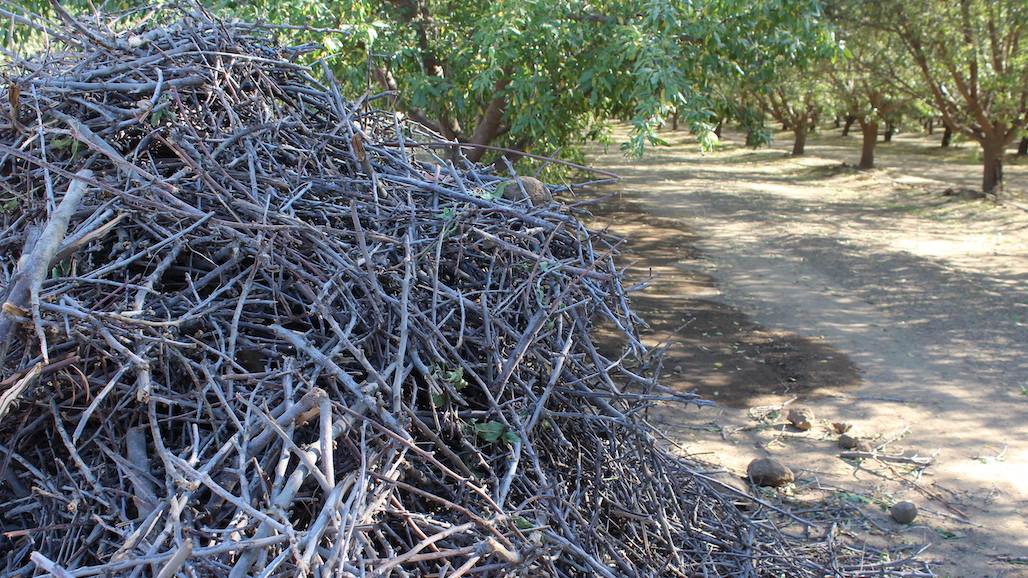
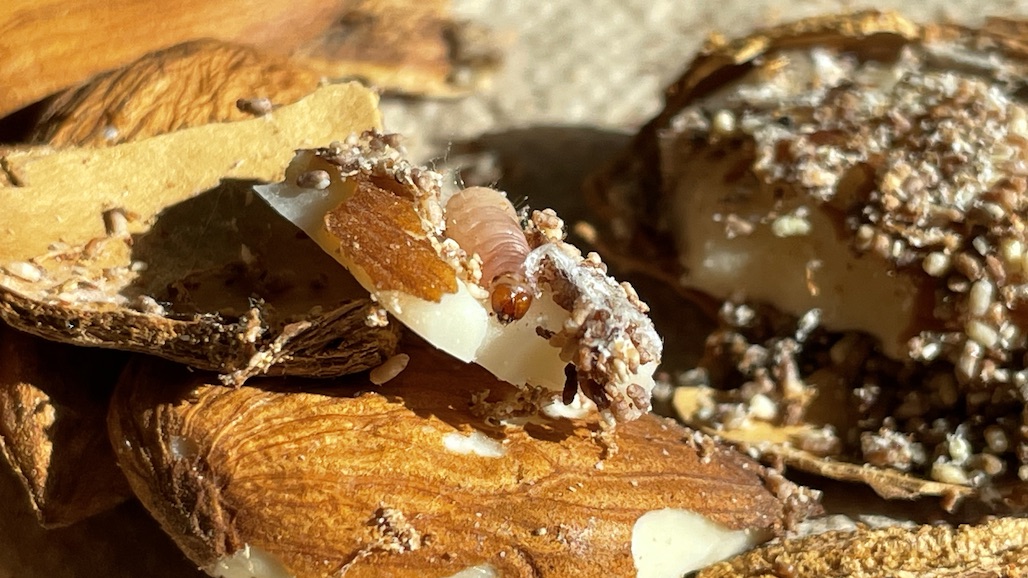
    Navel orangeworm (NOW) is most effectively controlled with the cultural practice of winter sanitation. Winter shaking almond trees to remove mummy nuts has proven to decrease next year’s NOW damage better than any other approach. The reason for this is clear. NOW overwinters as larvae in mummy nuts left in the tree after harvest and it is in these nuts the population carries over into the next season. Adult moths emerge in spring, mate, and lay eggs on mummies that are still in the trees as the females can’t find the new crop nuts until hull split. The second generation will then put direct pressure on the new crop nuts at hull split and the third generation will chew the nuts up during the harvest period.

    The way almond prices have been going recently, there’s no doubt that everyone is going to have to spend dollars as wisely as possible for the foreseeable future. Although cleaning the trees of mummies during the winter isn’t cheap, it is the method of NOW control where you clearly get the most bang for the buck spent. We’re really playing a numbers game here, and this is one practice that is stacked in our favor by the biology of this pest.

    For example, let’s assume a potential of 50 mummies per tree and 30 of them each have 1 NOW larvae. Half of those are female, and each female lays approximately 85 eggs. At harvest in late July we’re into the third generation, and for arguments sake let’s assume there’s no natural mortality.

    Look at what could theoretically happen to the worm population in one Nonpareil tree with 30 infested over-wintering mummies and no control:

    • 1st generation: 15 females x 85 eggs/female = 1,275 larvae
    • 2nd generation: 1,275/2 (half female) x 85 eggs = 54,188 larvae
    • 3rd generation: 54,188/2 x 85 = 2,302,990 larvae per tree at harvest!!!
                        (Thankfully, there IS natural mortality or else we’d be knee deep in worms!)
    Now, look at the impact of a hull split spray aimed at the second NOW generation. We know that sprays give at best about 60 percent control. This reduces the population but is not nearly as good as sanitation as you will see.
    • 2nd generation: 54,188 larvae x 40% survival after the spray = 21,675 larvae
    • 3rd generation: 21,675/2 x 85 = 921,196 larvae per tree to attack the crop at harvest.
    Now, look at what sanitation does in comparison. Start with the same 30 infested mummies per tree, then winter clean down to 2 mummies per tree. One is female, one is male.
    • 1st generation: 1 female x 85 eggs/female = 85 larvae
    • 2nd generation: 85/2 (half female) x 85 eggs = 3,613 larvae
    • 3rd generation: 3,613 larvae/2 x 85 = 153,531 larvae per tree at harvest.

    (If you can beat the 3rd generation by an early harvest you’re even further ahead.)

    So, a hull split spray reduced the worm population by 60 percent, but sanitation by itself, without spraying, reduced the population by 94 percent! When more NOW larvae make it through the winter, more egg laying will occur next season regardless of what else you do. In relation to the number of mummies left in the tree, expensive chemical treatments next season will only slow the rate of worm damage increase.

    If you have scarce dollars to spend on NOW control, spend them this winter when they will do the most good in a sanitation program. If the entire neighborhood works at this, the positive effect will be multiplied many times over for everyone. If you’ve got neighbors that don’t seem to get it, cleaning your orchard will still be a tremendous help to you. If you have no mummies, the first generation in the spring won’t be able to build up and establish a population in your orchard. You’ll benefit since they’ll have to fly in from the neighbors after hull split before they can begin to hurt your crop.

    Be sure to finish the job by destroying the infested nuts once they’re on the ground. Mow and shred the mummies before March 1st so NOW moths don’t have a chance to emerge. When you’re enjoying mowing during bloom in the spring, take personal satisfaction in seeing the chips and pieces of almond fragments and mangled worm parts fly out from under your mower! — By Joseph Connell, UCCE Farm Advisor Emeritus, Butte County

  • Tulare County Sheriff and Congressional Candidate Addresses Tree Nut and Beehive Theft

    Tulare County Sheriff and Congressional Candidate Addresses Tree Nut and Beehive Theft

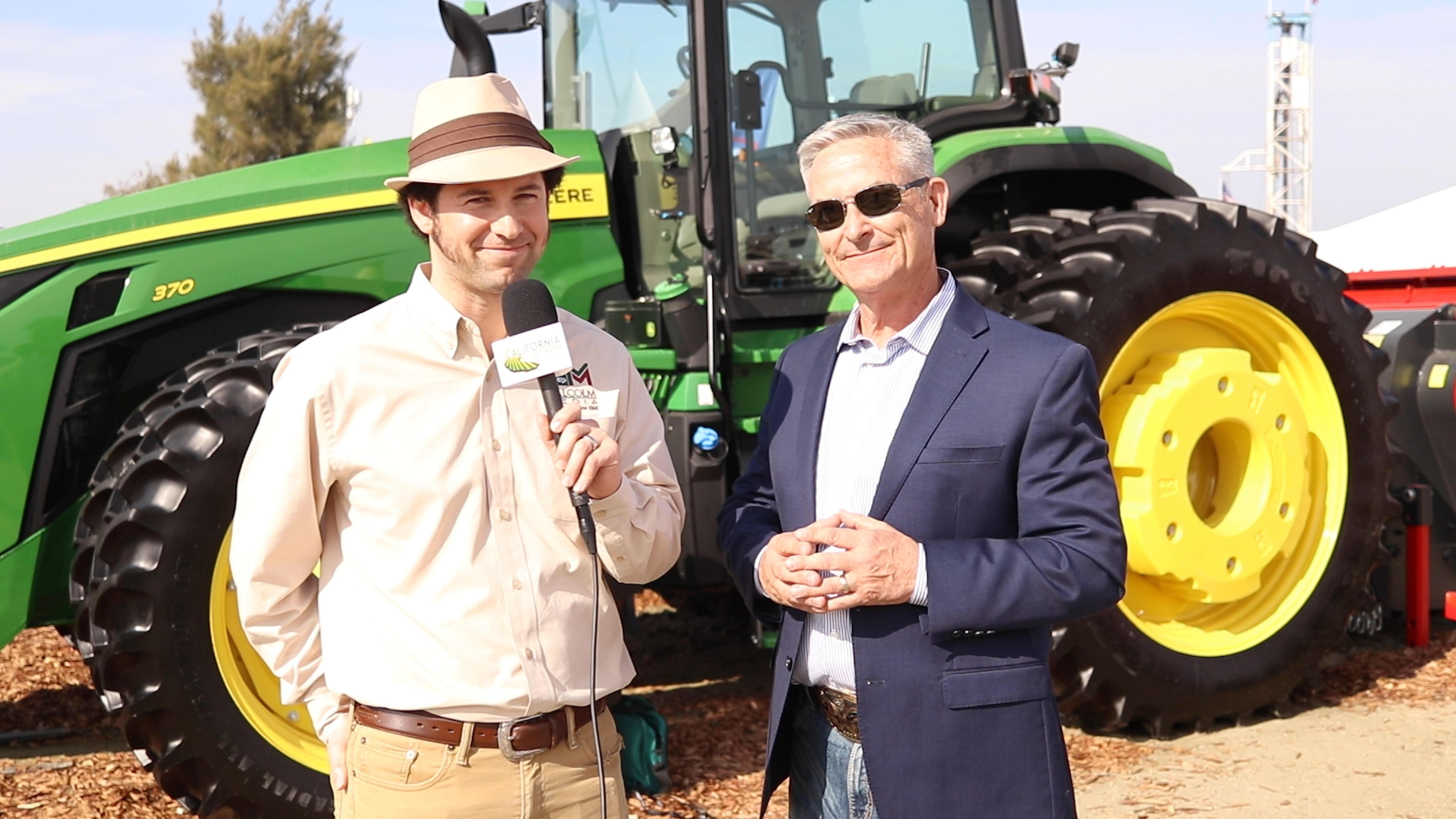
    As California almond orchards are coming to life again in beautiful bloom, most of the nation’s beehives have been strategically placed around orchards all over the state in hopes of a solid 2024 crop set.  Should growers be concerned about these hives disappearing overnight? Watch this brief interview Tulare County Sheriff Mike Boudreaux who addresses this, along with the historical issues of tree nut theft, and measures that have been taken to mitigate these problems. Boudreaux is also running for Congress, and he shared how he plans to represent California farmers if elected to the 20th Congressional District seat vacated by Kevin McCarthy.

  • New Almond Board CEO Shares Optimism for Future of Industry

    New Almond Board CEO Shares Optimism for Future of Industry

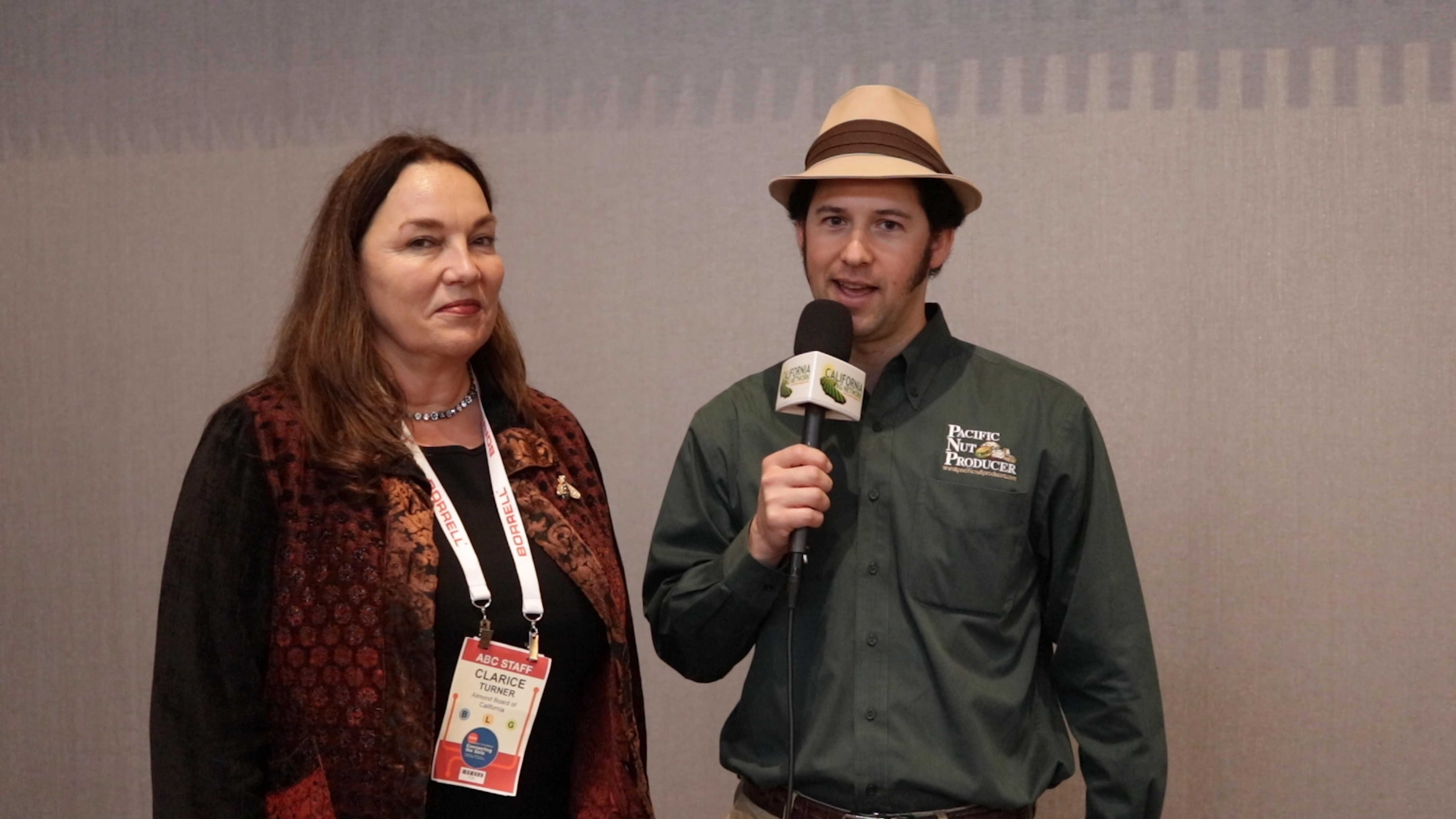
    At the recent Almond Board of California annual conference in Sacramento, growers, hullers and processors witnessed the passing the reigns from the former President Richard Waycott, to the new President and CEO Clarice Turner.  Watch this interview to learn more about Clarice Turner, as well as the experience and optimism for the future of the industry that she brings to the table. Read more in Pacific Nut Producer Magazine.

  • Almond Board of California Announces 2024 Elections

    Almond Board of California Announces 2024 Elections

    Elections for the Almond Board of California (ABC) Board of Directors will launch for the 2024-2025 crop year on Friday, Feb. 9 with the call to all candidates to file their petitions or declarations of candidacy by April 1, 2024.

    The industry will choose people to hold two independent grower positions and two independent handler positions on the ABC Board of Directors in voting that starts April 22 and ends May 23. Alternate seats for those spots are also open.

    To be considered for an independent grower or alternate seat, candidates must be a current grower and must submit a petition signed by at least 15 independent almond growers (as verified by ABC). Independent handler and alternate candidates must declare their intention in writing to ABC.

    All details, documents, open positions, the election timeline and deadlines, and frequently asked questions can be found at Almonds.com/Elections. All petitions and declarations must state the position for which the candidate is running and be sent to abcbodelections@almondboard.com or printed and mailed to ABC, 1150 Ninth St., Suite 1500, Modesto, CA 95354. The deadline for all filings is April 1. Potential candidates who’d like more information can contact ABC at abcbodelections@almondboard.com.

    “The ABC Board of Directors is tremendously important to the success of our industry,” said ABC President and CEO Clarice Turner. “More than 7,600 growers and 100 handlers count on them to guide the work of the Almond Board and to help the industry navigate these complicated times and work toward a positive future.”

    The ABC board sets policy and recommends budgets in major areas, including marketing, production research, public relations and advertising, nutrition research, statistical reporting, quality control and food safety.

    Getting involved provides an opportunity to help shape the future of the almond industry and to help guide ABC in its mission to promote California almonds to domestic and international audiences through marketing efforts, funding and promoting studies about almonds’ health benefits, and ensuring best-of-class agricultural practices and food safety.

    ABC encourages eligible women, minorities and people with disabilities to consider running for a position on the Board of Directors to reflect the diversity of the industry it serves.

    About the Almond Board of California
    California almonds make life better by what we grow and how we grow. The Almond Board of California promotes natural, wholesome and quality almonds through leadership in strategic market development, innovative research, and accelerated adoption of industry best practices on behalf of the more than 7,600 almond farmers and processors in California, most of whom are multi-generational family operations. ABC is a non-profit organization that administers a grower-enacted Federal Marketing Order under the supervision of the USDA. It was established in 1950 and is based in Modesto, CA. For more information on the Almond Board or California almonds, visit Almonds.com.

  • EPA Approves Section 18 Emergency Registration for Kasugamycin on Almonds

    EPA Approves Section 18 Emergency Registration for Kasugamycin on Almonds

    The Environmental Protection Agency (EPA) and California Department of Pesticide Regulation recently accepted a Section 18 petition to allow the use of Kasumin 2L (kasugamycin) to control bacterial blast (Pseudomonas sp) in almonds. The registration allows up to two applications under anticipated cold or freezing conditions on almonds at a use rate of 64 fl. oz. per acre from February 2, 2024, through petal fall. Application after petal fall is prohibited. Kasugamycin may only be used during bloom.

    The approval applies to the counties of Butte, Calaveras, Colusa, Contra Costa, Fresno, Glenn, Madera, Merced, Placer, San Joaquin, Stanislaus, Sutter, Tehama, Yolo, and Yuba.

    Growers interested in this application are heavily encouraged to reference the Almond Board of California’s Honey Bee Best Management Practices as well as the Quick Guide for Applicators (in English & Spanish) to ensure pollinator health is maintained. As stated in these practices, growers should only use applications when absolutely necessary and should only make applications in the late afternoon or evening, when bees and pollen are not present.

    Please contact your local County Ag Commissioner’s office for further details if interested in using this product. Visit the California Department of Food and Agriculture website for a full list of County Ag Commissioners’ offices as well as contact information for each.

  • Almond Board Announces Exceptional 2024 Almond Leadership Class

    Almond Board Announces Exceptional 2024 Almond Leadership Class

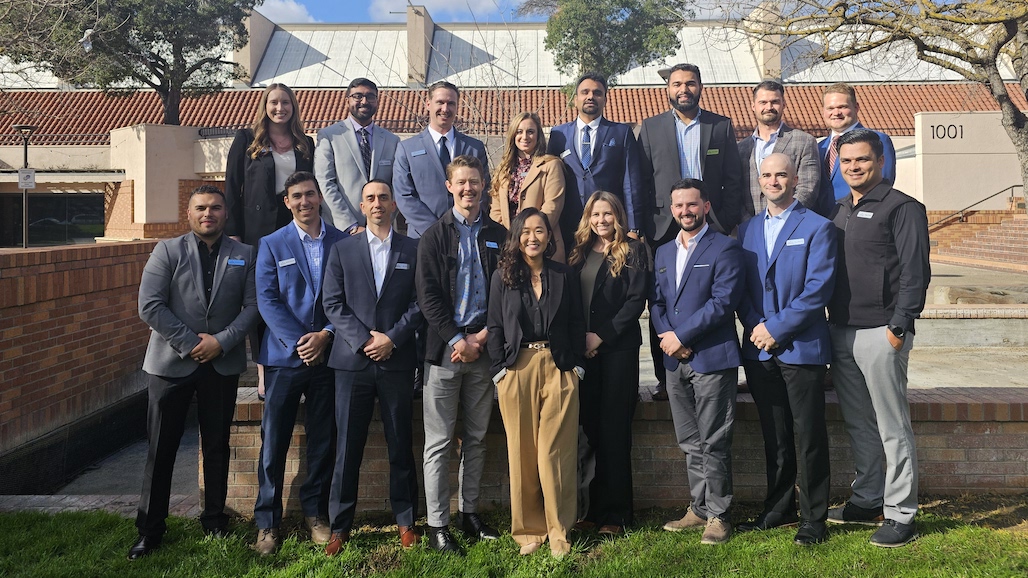
    The Almond Board of California is proud to announce the Almond Leadership Program class of 2024, a group of 18 exceptional professionals expected to help lead the industry into the future.

    Bayer Crop Science has sponsored the Almond Leadership Program (ALP) for a number of years and is again the sponsor of this 2024 class of next-generation leaders who were chosen from more than 50 highly qualified applicants. They come from diverse backgrounds across the full range of the industry and include growers and processors, sales representatives, sustainability specialists, company executives, pest control advisors and more.

    ALP began in 2009 and has graduated 226 industry members. Dozens now serve on ABC workgroups, committees and even the Board of Directors.

    “We have had so many great participants through the years, and this 2024 class is simply outstanding,” said Rebecca Bailey, the ABC senior specialist who oversees ALP. “This program helps great people become great leaders and our industry continues to see the enormous benefits from 15 years of ALP. We have no doubt these 18 people will continue to be great assets and advocates for the almond industry.”

    Members of this 15th class – while still working at their jobs – will be immersed in every aspect of the industry, including ABC activities in global marketing, production, nutrition research, food safety and more. They’ll sharpen their communication skills and build lasting relationships with industry leaders, ABC staff and each other.

    “It’s crucial to be connected to people in all areas of the almond supply chain,” said Erik Stanek, a class member and sustainability specialist with Blue Diamond Growers. “Industry challenges are not solved in a silo. For me, ALP offers an opportunity to build meaningful relationships that can lead to actionable solutions. The program helps lift the entire industry.”

    Class members are guided by volunteer mentors – many of them ALP graduates – who will help them develop the skills, knowledge and perspective to improve their industry and their communities.

    “As a mentor, I have an opportunity to share what I’ve learned in the last 25 years as a farmer and a conservation biologist,” said mentor Christine Gemperle, a grower and member of ABC’s Board of Directors. “It’s my hope that the next generation of industry leaders can take that knowledge and grow an even better future for California almonds.”

    The leadership program will also offer class members thorough looks at the impacts on the industry of social, economic, environmental and regulatory issues. In addition, participants will take on a yearlong, self-directed project focused on improving the California almond industry. Some past projects have led to important breakthroughs for the industry.

    Leadership class members kicked off their training with a two-day orientation at the ABC offices in Modesto, which included one-on-one talks with their mentors and hearing from Board of Directors Chair Alexi Rodriguez and ABC CEO Clarice Turner.

    “The leadership program has been incredibly enriching so far. I’ve been introduced to so many fascinating topics beyond my usual scope of work,” said Ziv Attia, part of the 2024 class and head of agronomy at Phytech. “Besides that, the staff and program members are amazing, and I look forward to getting to know them better, gaining further insights and building lasting connections that will contribute to the almond industry’s growth.”

    Once again, class members will raise money for California FFA, pledging to raise more than $25,000 in scholarships for high school students interested in pursuing agriculture in college. Through the years, ALP has raised more than $320,000 for FFA.

    The 2024 Almond Leadership class members are Ziv Attia of Bakersfield and Phytech; Andy Barahate of Kerman andCentral California Almond Growers Association; Gurajan Brar of Madera and Brar & Son Farms; Matthew Brocato of Fresno and Phytech; Mark Cavallero of Madera and Sierra Valley Almonds; Zachary Days of Patterson and Cal Coast Almond Processing Inc.; Mallory Dodds of Fresno and Gowan USA; Ryan Hackett of Modesto and Gold Leaf Farming; Brandon Heinrich of Modesto and B&M Orchards; Amanda Hernandez of Hollister and TriCal Inc.; Victoria Lee of Sacramento and Blue Diamond Growers; Sutter Long of Corning and Bayer Crop Science; Antonio Lopez of Woodland and Yocha Dehe Wintun Nation; Ryan McCoon of Escalon and Cultiva; Edgar Perez of Modesto andAmerican AgCredit; Jeevan Sandhu of Yuba City and Wilbur Ellis; Erik Stanek of Sacramento and Blue Diamond Growers; and Delaney Woolwine of Fresno and Harris Woolf California Almonds.

    About California Almonds

    Almonds from California are a healthy, natural, wholesome and quality food. The Almond Board of California promotes almonds with a research-based approach to responsible farming, production and marketing on behalf of the more than 7,600 almond growers and processors in California, many of whom have third- and fourth-generation family operations. Established in 1950 and based in Modesto, California, ABC is a non-profit organization administering a grower-enacted Federal Marketing Order under the supervision of the USDA. For more information on ABC or California almonds, visit Almonds.com.

  • Cracking Open New Markets for California Almonds

    Cracking Open New Markets for California Almonds

    USDA Foreign Ag Service — If you committed to eating healthier this new year, chances are you are not alone. New year resolutions focused on living a healthy lifestyle are some of the most common resolutions made throughout the world. Thankfully sticking to that new year resolution in 2024 just got easier for international consumers, thanks to increased exporting opportunities for U.S. almonds to Europe and Asia.

    U.S. almonds are a nutrient-rich food, packed with protein, fiber, vitamin E, calcium, copper, magnesium and riboflavin. All commercially produced almonds in the United States are grown in California, which is home to more than 7,000 almond growers and processors.

    The popular tree nut, considered a specialty crop in the agricultural industry, is the State’s leading agricultural export. In 2022, U.S. almond exports to the world totaled $4.5 billion. This tree nut is also heavily rooted in many family trees, as almond farming is a “family-driven” agricultural industry in California.

    “About 90 percent of almonds are grown by family operations, many of which are multigenerational,” explained Julie Adams, Vice President of Global Technical and Regulatory Affairs for the Almond Board of California, in a recent conversation. “Communities throughout the Central Valley depend on ag in general, and almonds in particular to contribute to their overall economic wellbeing.”

    For these family operations in California, overseas markets have become a critical component to their success and bottom line. An astounding two-thirds of California’s almonds are exported. So no matter how you crack it, almond exports are a crucial portion of revenue for California producers, “and keeping strong and diverse market opportunities is essential to long-term profitability,” said Adams. Especially, “in the Central Valley, where many communities have been suffering the economic effects of increasing crop input costs and lower returns.”

    This is where USDA’s Foreign Agricultural Service (FAS) comes into play for almond exporters and the Almond Board of California. FAS – with its network of offices and attachés around the world – helps open and expand markets for U.S. agricultural exports. For example, just recently FAS identified fresh market opportunities in Italy and Bulgaria. Through its close partnerships with U.S. cooperators, including the Almond Board of California, and foreign buyers, California almond exports to Italy and Bulgaria in 2024 are expected to grow by millions of dollars.

    India is another almond market with exciting growth opportunities. Last year, India removed retaliatory tariffs on U.S. almonds and other products. The impact of removing that trade barrier is already being seen in the export market, and the value of U.S. almond exports to India is expected to reach $1 billion in 2024.

    “India is our number one export market,” noted Adams. “It has grown significantly because of our long-term commitment, promotions, and ongoing relationships with customers and consumers. Almonds are unique, in that they are an integral part of India’s history and culture – we’ve leveraged that tradition in our marketing efforts and supported it through investing in nutrition research in India.”

    These opportunities for market growth are some of the bright spots that FAS has identified for 2024 as the agency works to advance USDA’s goals for diversifying and enhancing international markets for American farmers, ranchers, agribusinesses, and exporters.

    USDA also recognizes that for agribusinesses, especially small businesses, entering the export market can be a tough nut to crack. That is why FAS works closely with state and regional agricultural trade groups to help U.S. agribusiness owners grow their company’s revenue through exporting. One way of doing this is through USDA’s market development programs, like the Foreign Market Development (FMD) program and Market Access Program (MAP). FAS just announced MAP and FMD funding allocations for FY24, which will have an immediate impact on helping expand U.S. exports to markets across the globe.

  • Almond Board CEO Clarice Turner Among Top 50 Diverse Candidates to Lead Boards

    Almond Board CEO Clarice Turner Among Top 50 Diverse Candidates to Lead Boards

    The Almond Board of California congratulates President and CEO Clarice Turner for being named one of the Top 50 Diverse Board Candidates in America by Equilar and the Nasdaq Center for Board Excellence.

    The award was created to provide a definitive roster of “exemplary individuals among the pool of highly qualified diverse candidates who will propel companies and boards into the next era of board leadership,” said David Chun, founder and CEO of Equilar, a national executive intelligence firm.

    “I want to give a heartfelt thank you to Equilar and Nasdaq not just for the honor but also for their collaborative dedication to advancing opportunities for underrepresented groups within today’s corporate boardrooms,” said Turner. “The Almond Board of California has long understood that different experiences and viewpoints make our industry and our communities stronger, more inclusive and more vibrant.”

    Nominations for the designation came from a number of organizations across the country, a range of Equilar Diversity Network partners and the selection committee, composed of directors on S&P 500 boards, leaders in the board search industry and distinguished figures from the corporate governance sector, Equilar said.

    “The Board of Directors is delighted to congratulate Clarice on this outstanding leadership distinction,” said Alexi Rodriguez, chair of ABC’s Board of Directors. “It’s an honor for her to be recognized by major business leaders around the country and it’s a testament to her leadership abilities, which are a great asset to our industry.”

    Turner has a long history of serving on corporate and non-profit boards, including the Culinary Institute of America, Delicato Family Wines, the National Restaurant Association, Washington State University School of Business and San Francisco State University Lam School of Business.

    About the Almond Board of  California

    California almonds make life better by what we grow and how we grow. The Almond Board of California promotes natural, wholesome and quality almonds through leadership in strategic market development, innovative research and accelerated adoption of industry best practices on behalf of the more than 7,600 almond farmers and processors in California, most of whom are multi-generational family operations. ABC is a non-profit organization that administers a grower-enacted Federal Marketing Order under the supervision of the U.S. Department of Agriculture. It was established in 1950 and is based in Modesto, CA. For more on California almonds visit Almonds.com.