Category: Industry News

  • Pistachio Growers Ronnie and Tom Clark Announced Kiwanis Farmers of the Year

    Pistachio Growers Ronnie and Tom Clark Announced Kiwanis Farmers of the Year

    The “Noon” Kiwanis Club of Tulare recently presented its 61st “Farmer of the Year” award to Ronnie and Tom Clark, pistachio and almond growers from Tulare at the club’s annual luncheon in Tulare.

    Ronald (known as Ronnie) has lived in Tulare County his entire life, is married to Robyn with sons Christopher and Michael (deceased) and stepsons Derek & Brandon Walker.  Brandon works with Ronnie in the family business. Ronnie graduated from Tulare Western High School in 1970, attended COS and Cal Poly, and started farming in 1975 north of Tulare growing cotton, wheat, and corn. A partnership with his father Bob, uncle Don, and cousin Tom known as Clarklind Farms was formed in 1983 and today farms pistachios and almonds. Clarklind Farms has also received numerous awards over the years for their high yields in grain corn Ronnie serves on a variety of boards including Kaweah Delta Water Conservation District board, Kaweah and St. Johns Rivers Association, Mid Valley Growers, Pistachio Growers, Inc., and the board of the International Agri Center. In the past he has also served on the San Joaquin Valley Cotton Board, California Pistachio Commission, Tulare High School Ag Advisory, and is a member of the . Ronnie and Tom both support many local efforts for youth sports, youth 4-H and FFA, youth exhibitors at the fair, and so many more charities too many to mention.

    Thomas (known as Tom) has been married to Denise for 42 years and has three grown children:  Ami, Chad, and Drew and five grandchildren; Drew becoming the fourth generation farmer in the Clark family.  Tom attended Tulare Western High and Fresno State University and played varsity golf all four years in high school. He is a partner in the Clarklind Farms operation with Ron which was formed in 1983. He began working at the age of 13, shoveling furrow ends during the summer and at age 16 was promoted to combine driver during his summers. He worked in laser scraping when he was 20 years old, in the early years of this emerging technology. He has been farming for 49 years in all and has served on the Tulare Irrigation District Board. He coached high school junior varsity golf for three years, and in his free time enjoys golfing, snow and water skiing and wake surfing.

    This annual awards luncheon recognizes the lifetime achievements of outstanding agriculturalists in our community and provides an opportunity for the Tulare Kiwanis to highlight the value of agriculture in our region and recognize an outstanding person or family.  In the past they have recognized fathers, sons, brothers, cousins, and many more.

    The luncheon included a video montage about the honorees and a look back at the past 60 years of honorees – an emotional and touching tribute to our farm community and the many wonderful farmers in our great community of Tulare.

  • Westlands Water District Board of Directors Appoints Tree Nut Grower Jeff Fortune to Fill Board Vacancy

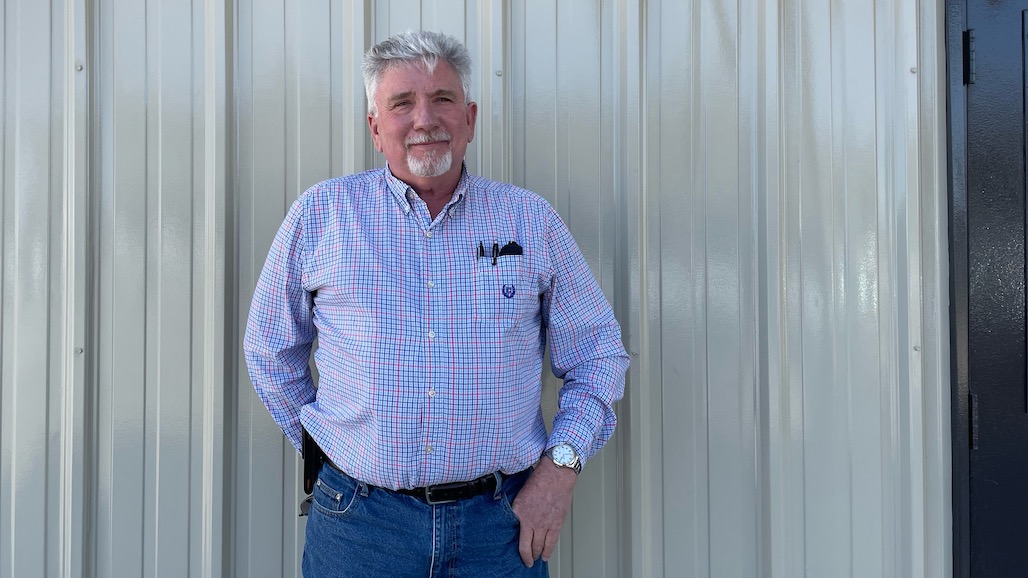
    Westlands Water District Board of Directors Appoints Tree Nut Grower Jeff Fortune to Fill Board Vacancy

    On Tuesday, March 15, the Westlands Water District Board of Directors appointed Jeff Fortune to fill the vacancy created when Director Todd Neves resigned last month. Mr. Fortune will serve through December 2022, when he will stand for election to fill the remainder of Director Neves’ term.

    “Jeff Fortune has farmed in Westlands for more than four decades. The Board will benefit from his experience and perspective as the District navigates unprecedented drought, implementation of the sustainable groundwater management act, and many other challenges in the months and years ahead,” said Westlands’ Board President Ryan Ferguson.

    Mr. Fortune, a third generation California farmer and the second generation Westlands farmer, is a “boots on the ground” farmer. Since his graduation from the University of California at Davis, he has worked alongside his father, and more recently, his two brothers, at their family farm, Fortune Farming Company. Mr. Fortune currently grows tomatoes, almonds, and pistachios on his family farm.

    “I’m grateful for this opportunity to serve,” Mr. Fortune said after being appointed, “Instead of sitting back and watching our farms, farmers, and communities struggle, I am taking this opportunity to offer my experience and ideas to help this District remain a place where family farms like mine can not only continue to operate, but can once again thrive.”

    About Westlands Water District

    Westlands Water District is recognized as a world leader in agricultural water conservation and has served the farmers and rural communities on the west side of Fresno and Kings counties for more than five decades. As stewards of one of California’s most precious natural resources, Westlands continually invests in conservation, and champions farmers deploying innovative irrigation methods based on the best available technology.

  • New Asian Giant Hornet Guide to Help Beekeepers

    Beekeepers have a new resource if they suspect the invasive Asian giant hornet is attacking their honey bee colonies.

    Two Washington State University scientists wrote Distinguishing Asian Giant Hornet Damage to Honey Bee Colonies, a free-to-download publication from WSU Extension.

    “We want to dispel some of the fear that beekeepers have been feeling around Asian giant hornets,” said Kelly Kulhanek, a postdoctoral researcher in WSU’s Department of Entomology and lead author of the publication. “Our goal is to help them identify specific symptoms of giant hornet attacks and distinguish between that and something with similar damage.”

    It’s important to note that, to date, there have been no confirmed honey bee colony losses in North American because of giant hornets, sometimes referred to as “Murder Hornets,” according to Kulhanek and her co-author, WSU associate professor Brandon Hopkins.

    “We assumed from all the media reports about the hornets that we would be getting frequent reports of attacks,” said Hopkins, a scientist on WSU’s honey bee and pollinator program. “And we have, but they’ve all been colonies killed by other things.”

    The most noted symptom of an Asian giant hornet attack on honey bees is headless bees. But other hornets, such as yellow jackets, cause similar damage to colonies. Other animals do as well.

    Hopkins saw that first-hand in a colony at the WSU Honey Bee & Pollinator Research, Extension, and Education Facility in Othello.

    “When we started keeping bees near the new facility, we noticed dead bees with their heads torn off and thorax chewed out,” he said. “But we found it was caused by mice.”

    Hopkins believes the mice were feeding on bees that died naturally and were already on the bottom boards of the colony boxes, or on the ground outside the hive entrances.

    The new publication talks about more specific signs that bee deaths are caused by Asian giant hornets. There are two phases to their attacks. Phase one is picking off individual bees and carrying them back to the hive to feed on. During this phase, no dead bees are left around the colony because they are carried away to another location. The second is called the “slaughter phase,” when a bunch of hornets show up at the hive to feed on and decimate the colony.

    “We’ve learned from Asian giant hornet experts that if there are dead bees around a hive, but there are no signs of the hornets, then it’s probably not Asian hornets,” Kulhanek said. “By the time the slaughter phase happens, it’s super obvious and too late to do anything.”

    Another note involves geography. Asian giant hornets have not been spotted in North America outside of a few locations in Northwest Washington and Southern British Columbia.

    “I’ve gotten texts from beekeepers from as far away as North Dakota concerned their colony had been attacked by Asian giant hornets,” Hopkins said. “I tell them that’s not really possible for several reasons.”

    Beekeepers in areas where the invasive hornets have been found can take precautions, detailed in the publication, such as restrictive netting or screens around the entrance to a colony.

    “The hornets are very large compared to bees,” Hopkins said. “There is promising research on defensive netting that bees can get through but the hornets can’t.”

    That wouldn’t stop the first phase, when invaders pick off individual bees coming and going to the colony. But it would dramatically slow or stop the slaughter phase, when hornets enter a colony.

    WSU entomologists has heard from experts in the hornets’ native range. In Thailand, for example, beekeepers sometimes hire school-age children to swat hornets flying around their colonies with badminton racquets.

    “Beekeepers should be extremely cautious when approaching a colony if they think Asian giant hornets are present,” Kulhanek said. “After the slaughter phase begins, the hornets will become very defensive of the hive and will attack anyone who approaches.”

    The best hope for the broader beekeeping community is eradication of the invasive goliaths. To that end, the WSU researchers urge beekeepers to report any suspected sightings to the Washington State Department of Agriculture.

    “Asian giant hornets are new and scary and have gotten a lot of attention,” Hopkins said. “But they create similar problems and damage as yellow jackets and other predators. Take preventative measures and keep an eye out. That’s the best thing you can do.” — By 

  • Pistachio Growers Unite at Industry Annual Conference

    Pistachio Growers Unite at Industry Annual Conference

    The next five years for American pistachio growers presents challenges and great opportunity, prompting a call for unity at the industry’s Annual Pistachio Conference, which kicked off today in Carlsbad, CA. More than 1200 attendeesan industry recordfrom three states participated in the conference, which kicked off with a panel of growers who discussed the next five years, as production ramps up.

    A grower panel underscored three topics on growers’ minds: accelerating production of pistachios between 2022 and 2026; keeping doors open to American pistachios in key export markets like India; and ongoing pest battles. They emphasized that, while the three topics present challenges, the industry’s trade association, American Pistachio Growers (APG), has proven efficacy in addressing each issue and there could be tremendous opportunity over the next five years with a united industry.

    According to data analyzed by Sacramento economist Dennis H. Tootelian, Ph.D., California growers will produce 6.9 billion pounds of pistachios over the next five years, 2.4 billion more than they produced in the previous five-year period from 2017-2021. APG, as the trade association representing the U.S. industry, has kept pace with building consumer demand for the increased volume in recent years in targeted export markets, which he says has helped to support grower pricing in the face of rapid production. Tootelian showed that in countries where APG focused their marketing efforts, exports have grown 36% a year compared to 17% in countries with no APG marketing emphasis.

    Tulare County pistachio grower Dominic Pitigliano

    Tulare County grower Dominic Pitigliano, past Chair of APG and a grower panelist, said, “Ten years ago, APG identified the export markets with the greatest growth potential and our intense focus on those markets has paid off in building consumer demand.”

    The grower panel discussed India as a prime growth market for U.S. pistachios where continued marketing could boost opportunities in the years ahead. India possesses the market conditions necessary for a growth market  rising population, growing per capita income, and increasing consumption of pistachios.

    Tootelian projects that in 2022 consumers in India will consume 272,000 pounds of pistachios per day, and by 2026, they will be buying 410,000 pounds per day.

    APG, which is funded by assessments from growers and government grants, has leveraged those dollars to boost exports and address impediments to trade in the form of tariffs and non- tariff barriers. The grower panel underscored the importance of having APG continue to play a strong role to keep the door open in India.

    “APG packs a onetwo punch in export markets,” said APG Chair, Dennis Woods. “Getting tariffs reduced or eliminated is the first step, followed by marketing programs that enlighten consumers about the health benefits of American pistachios. The strategy works as long as we all work together,” noting the organization has 64 dedicated growers from three states who volunteer on the APG Board and committees.

    American Pistachio Growers Chair, Dennis Woods

    While marketing ever larger crops will command the industry’s attention in coming years, so too will challenges that come from the surge in pistachio orchards in California. The Navel Orangeworm (NOW), the major pest threat to pistachios, has been fought with a plethora of tools  costly inputs, winter sanitation programs, and mating disruption techniques.

    Tootelian estimated that growers will spend $1.8 billion in total NOW management costs in the next five years.

    APG has led the industry effort to use a novel tool in the fight against NOW  a U.S. Department of Agriculture facility in Phoenix that rears sterile Navel Orangeworm moths for aerial distribution over a few thousand acres of pistachios and almonds in Kern County. APG helped to secure $8 million in federal funds for the pilot project, but the USDA has recommended an additional $21 million per year to expand the project. The Phoenix facility was instrumental in rearing sterile pink bollworm moths that led to the successful eradication of the cotton pink bollworm in California in 2018.

    “I know at the very least we can suppress Navel Orangeworm because we had similar success in the cotton industry,” said Ted Sheely, a pistachio and cotton grower who chairs the NOW Action Committee, the industry advisory committee that government requires in such situations. “We need to continue to push hard for the $21 million per year that will be required to keep the Arizona facility going and expand the program to the extent that we need it. Navel Orangeworm is an industry-wide concern, and we need APG to secure the funding to support this program.”

    “APG’s leadership has envisioned the future and how we should position the industry for success,” said APG President Richard Matoian. “As the industry’s trade association, we need every grower to participate in APG in order to fund our ability to make our future plans reality. We’ve done a good job so far, and we’re optimistic about the next five years.”

    About American Pistachio Growers
    American Pistachio Growers is a non-profit trade association representing more than 865 
    growers, member processors, and industry stakeholders in California, Arizona & New Mexico.

  • Almond Board Increases Market Investment in India by 80%

    Almond Board Increases Market Investment in India by 80%

    India has quickly become the number one export market for the California almond industry, and the Almond Board has increased its marketing investment there by 80%.  Watch this brief interview with Emily Fleischmann from the Almond Board of California, as she shares details about their strategic partnerships there and how these funds are being used to drive demand. Read more about it in Pacific Nut Producer Magazine.
    Please thank this video’s sponsor Trece for their industry support.
  • Getting California Almond Hulls into China’s Animal Feed Market

    Getting California Almond Hulls into China’s Animal Feed Market

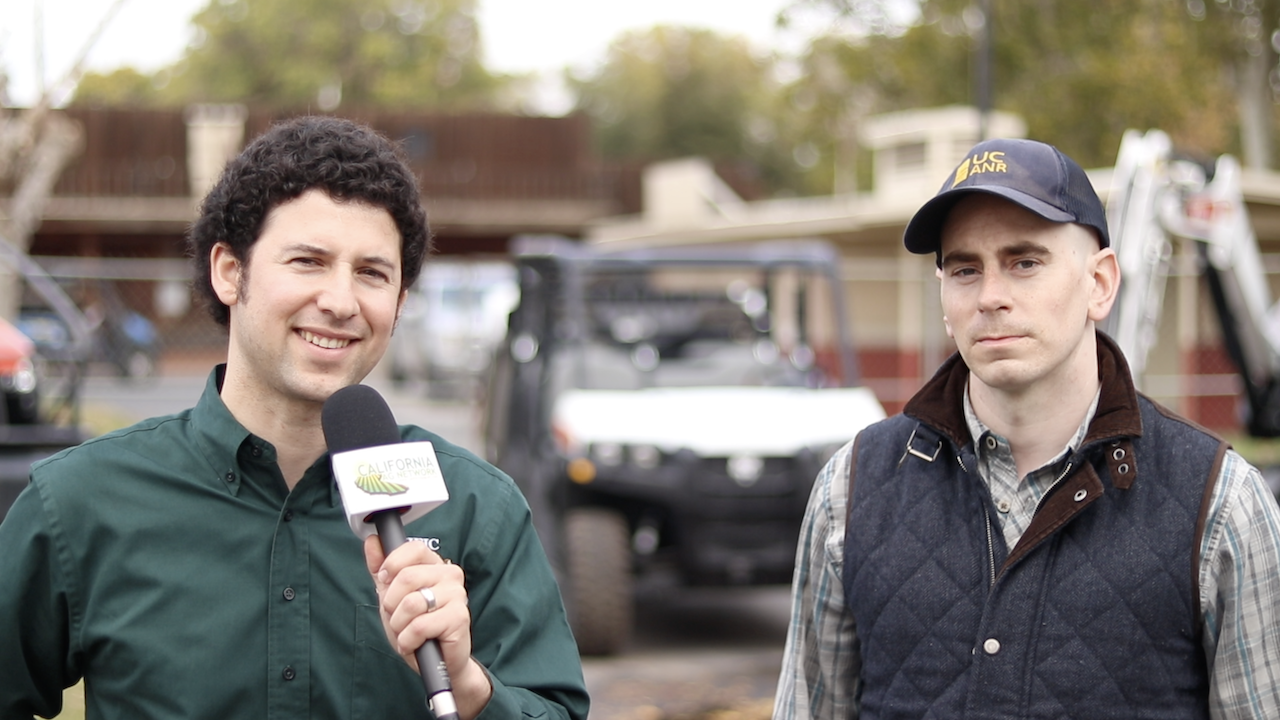
    The trade dispute with China has proved challenging for tree nut exports into China, but the California almond industry has even more to provide the Chinese market — almond hulls.  Almond hulls have long been used on California dairies, but the potential to reach China’s animal feed market brings promising opportunity and value for this byproduct. Watch this brief interview with Keith Schneller, Trade Policy Specialist for the Almond Board of California, as he shares the progress on getting approval to start shipping hulls. Read more about it in Pacific Nut Producer Magazine.
    Please thank this video’s sponsor Trece for their industry support.
  • Pacific Northwest Hazelnut Market Update with Terry Ross

    Pacific Northwest Hazelnut Market Update with Terry Ross

    Watch this brief interview with Terry Ross from the Hazelnut Bargaining Association as he shares some of the dynamics impacting Pacific Northwest hazelnut prices as the industry seeks to grow its share of the world market with their premium crop.  Read more in Pacific Nut Producer Magazine. If you’re not currently receiving the print publication, subscribe for free at: https://malcolmmedia.com/subscribe/
    Please thank this video’s sponsor George Packing Company for their industry support.
  • Characteristics of New Walnut Rootstocks Growers Should Consider

    Characteristics of New Walnut Rootstocks Growers Should Consider

    While walnut growers tend to pay more attention to walnut prices and varieties, rootstock selection can make a big difference in the establishment and longevity of their orchards. Watch this brief interview with UCCE Orchard Systems Advisor Luke Milliron as he shares characteristics and availability of new rootstocks for the walnut industry. Read more about in Pacific Nut Producer Magazine.
    Please thank this video’s sponsor Trece for their industry support.
  • Are Autonomous Self-Driving Tractors Legal in California?

    Are Autonomous Self-Driving Tractors Legal in California?

    As California’s agricultural industries progress towards a more sustainable future with new technologies and innovations, current Cal OSHA regulations (unless changed) may hinder their progress, particularly with regard to autonomous or self-driving tractors.  Watch this brief video with Michael Miiller from the California Association of Winegrape Growers as he explains.
     
    Please thank this video’s sponsor Suterra for their industry support.
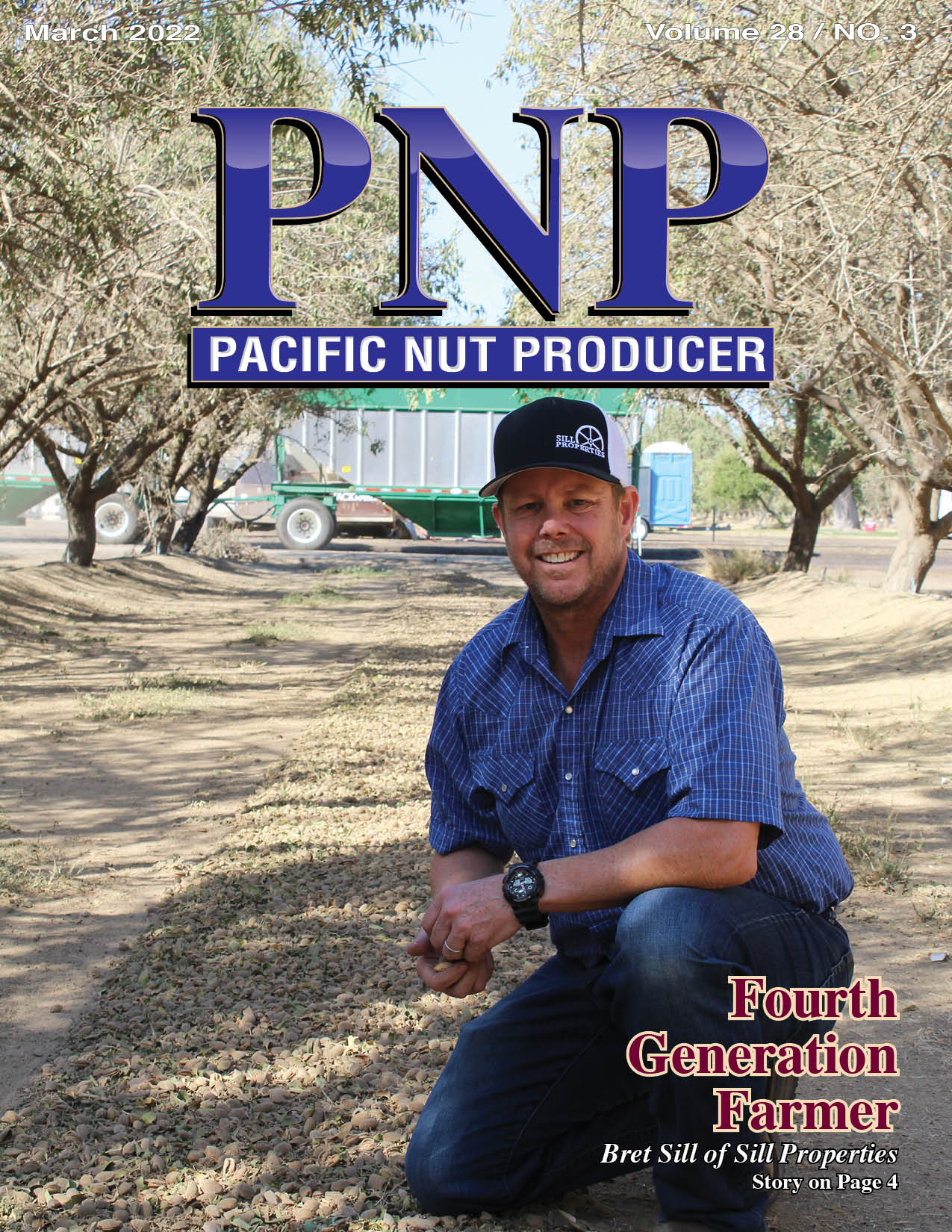
  • Pacific Nut Producer March Issue

    Pacific Nut Producer March Issue

    PNP322
    Pacific Nut Producer March Issue

    [btn btnlink=”https://malcolmmedia.com/order-a-back-issue/back-issue-pacific-nut-producer-magazine/” btnsize=”full” txtcolor=”#ffffff” color=”#FFF” bgcolor=”#492500″ btnnewt=”1″ nofollow=”1″]Order A Back Issue[/btn]

    [btn btnlink=”http://malcolmmedia.com/pacific-nut-producer-magazine-subscriptions/” btnsize=”full” txtcolor=”#ffffff” bgcolor=”#492500″ btnnewt=”1″ nofollow=”1″]Subscribe Free[/btn]
    [three_fifth_last]

    Contents of the March Issue:

    Fourth Generation Farmer Addresses Water Issues
    Innovation is Key to Advancing Almonds

    Tom Rogers Honored as Hazelnut Grower of the Year
    Cathy Bisset to Lead as New President of the Nut Growers Society

    March Orchard Tasks
    Almonds, Hazelnuts, Pecans, Pistachios, Walnuts

    [/three_fifth_last]