Category: Industry News

  • Growing Chinese Market Demand for Nuts and Dried Fruit

    Growing Chinese Market Demand for Nuts and Dried Fruit

    USDA Foreign Ag Service — Thanks to consumers’ growing preference for healthy food and earlier successful marketing of nuts and dried fruit products across the country, China’s consumption and demand for nuts and dried fruit has exploded over the past few years. To continue this growth, new product innovations, packaging, and flavor concepts for nuts and dried fruit are needed.

    In China, popular nuts and dried fruit include, but are not limited to, almonds, pistachios, pecans, walnuts, macadamia nuts, hazelnuts, dried cranberries, raisins, and dried blueberries. Recently, consumers have sought dried fruit and nuts because of their perceived health benefits, their versatile applications in food manufacturing, and their rich texture and appearance. In China, the “nuts market” segment includes tree nuts and dried fruit.

    Statistics from different sources indicate that the nuts industry has grown robustly over the past decade. Along with strong consumption and sales between 2012 and 2022, imports of nuts expanded substantially from $0.5 billion in 2012 to $3.3 billion in 2022, with record imports in 2021 of $3.5 billion.

    TREE NUTS & DRIED FRUITS MARKET SNAPSHOT

    •   The nuts market reached $40 billion in 2022, accounting for about 20 percent of the total snack food market, competing with candy/chocolate and biscuits/pastry for the number one sector.
    •   The compound annual growth rate for the nuts market was above 10 percent between 2011- 2022, making it a leading manufacturing industry in China.
    •   The tree nut market size reached $8 billion in 2022, remaining far behind seed nuts at $32 billion.
    •   Imports of tree nuts reached $3.28 billion in 2022.

    Imports of dried fruit also increased substantially over the past ten years, increasing from an initial $215 million in 2012 to $946 million in 2022, a 340 percent increase.

    The Popularization of Daily Nuts

    The concept of Daily Nuts originated from a product that was initially launched in 2016 by Wolong, a snack food manufacturer based in Qingdao. Although it is called Daily Nuts, it is a mixture of nuts and dried fruit, such as almonds, pistachios, dried blueberries, and dried cranberries. It is usually in small packs of 15-20 grams, perfect for nutrition supplements and at-work snacks.

    Unlike traditional roasted nuts, Daily Nuts target younger and higher-end consumers. Almost all the nuts and dried fruit used in daily nuts are imported to meet consumers’ high-quality expectations. While the raw ingredients are imported, the roasting, processing, and packaging occur domestically.

    Due to the strong marketing behind Daily Nuts, focusing on the nutritional benefits and portability of the product, the market exploded. Due to the quick expansion of Daily Nuts across China, Alibaba’s Tmall Research Institute created a new sub-sector called mixed nuts (which includes nuts and dried fruit) in 2017, and daily nuts were regarded as a representative of the sub-sector.

    Following the launch of Daily Nuts in 2016, the market size of mixed nuts and dried fruit grew from $1.4 billion in 2016 to $15.8 billion in 2021, a 1,029 percent growth.

    Consolidation of the Mixed Nuts Sub-Sector

    The booming sub-sector has led to market consolidation. Initially, more than 300 brands began selling daily nuts products in China. Big retailers such as Fresh Hippo, an affiliate of Alibaba, and Bian Li Feng, a nationwide franchised convenience store, even created their own daily nuts style private label products. However, recently smaller processors have begun manufacturing for bigger ones. In 2022, the combined market share of the top five brands, Three Squirrels, Haomusi, Wolong, Chacha, and Bestore, amounted to 38 percent; it is estimated that by 2028, the top five brands will expand their combined market share to 54 percent.

    Growing Online Sales

    The main category of consumers of mixed nuts and dried fruit are those aged 20 to 45, which directly corresponds to those consumers who most often utilize e-commerce channels. As a result, most of the sales for mixed nuts occur online. In 2022, 47 percent of all snack food sales occurred online. According to CFNA, in the first half of 2023, online sales of food products increased by 8.9 percent year-on-year. Additionally, new online livestreaming retailers, such as Douyin (Tiktok) and Kuaishou, are taking increasing market share from traditional offline retailers.

    Applications of Mixed Nuts in Food Manufacturing

    Tree nuts and dried fruits are typically used for three purposes: snack food, baking ingredients, and food/beverage ingredients. Although the applications of baking ingredients and food/beverage ingredients have been developing in recent years, the snack food sector has achieved impressive growth.

    The snack food sector includes three sub-sectors, namely single nuts, mixed nuts, and flavored nuts. The single nut sub-sector hosts traditional sunflower seeds, peanuts, hazelnuts, and imported tree nuts, which have become increasingly popular over the last two decades. Mixed nuts, as described in the daily nuts section above, are comprised of products with both nuts and dried fruit. Flavored nuts refer to nut products that are typically roasted, shelled, and then flavored to meet consumers’ personal flavor preferences. Typical flavors include but are not limited to salty, spicy, coconut, mustard and others.

    Sluggish Economic Recovery

    In 2022, strict COVID-19 zero-tolerance regulations impacted China’s economy. According to Tmall statistics, online sales of mixed nuts and dried fruit were nearly zero due to reduced logistics capacity. Offline, traditional sales fared even worse due to the same reduction in logistics capacity and frequent store closures. The economy was expected to rebound after lifting all COVID restrictions, but growth has remained sluggish.

    The overall reduction in spending means consumers are reducing purchases of non-essentials such as snack foods. In recent conversations with retail contacts, we learned that local consumers spending on snack food is only around 60 percent of pre-COVID levels. Although online food purchases increased by 8.9 percent in the first half of 2023, this is thought to be due to the increased sales of lower-cost products. The purchases of nuts and dried fruits, which consist of primarily imported raw ingredients and are more expensive, will continue to be impacted by China’s sluggish economic recovery.

    Declining Growth of Daily Nuts

    In the past few years, tree nuts and dried fruit sales were largely equal to sales of daily nuts products. While Daily Nuts initially led to an explosion in the market, the market is largely saturated. Thus, the market is calling for innovations in the nuts and dried fruit sector to spur growth.

    Booming international and domestic supplies

    China relies on imports of a range of nuts to meet its strong domestic demand. International supplies impact import volumes considerably. For example, with the production of U.S. almonds reaching a historic high in 2020/2021, the price fell substantially, which in turn led to increased exports to China. Increased international production may continue to lower global tree nut prices, making exports competitive.

    However, due to growing domestic supplies, imports of certain nuts and dried fruit are expected to decline. China is the largest producer of walnuts and peanuts globally and has a growing production of macadamia nuts, raisins, and blueberries.

    Over the past ten years, growing demand for nuts and dried fruit has pushed domestic production to record highs. According to CFNA, China’s total nut production in 2023 is 44 percent higher than five years ago.

    Growing domestic production has also decreased prices for dried fruit. For example, in August 2023, the domestic price for raisins was roughly half that of Chile and a quarter of that of the United States.

    Other Promising Products

    Aside from products used for mixed or daily nuts, other dried fruit products are seeing market growth. For instance, local consumers perceive dried prunes as a good source of dietary fiber, translating into increased sales.

    Additionally, growing consumer health consciousness and the still-to-be-explored versatility of nuts and dried fruit in the food manufacturing sector will likely spur market growth. While the previous high growth rates were not sustainable, mild but steady growth is expected.

    New Product Development

    With the saturation of the market for daily nuts, food researchers and developers are making every effort to develop a product with the market power of daily nuts. Potential new uses of nuts and dried fruit could include:

    •   In a beverage
      o Example: Six Walnuts bottled drink, a walnut milk beverage, saw high sales upon its launch due to improved taste and brand image.
    •   In the food manufacturing sector

    o New processed and value-added products such as sliced, diced, minced nuts, or sugared, pureed, marinated fruit, could be used to meet different food manufacturing requirements or demands.

    o China’s expanding food manufacturing industry is calling for more varieties of processed ingredients, offering new market opportunities.

    Identifying and capitalizing on these market opportunities will require more collaboration between suppliers and R&D departments of Chinese food manufacturers in testing and educating the market.

     In chain coffee and milk tea shops
    o Recently, nuts, and dried fruit consumption have increasingly been used for beverages at chain coffee and milk tea shops across China.

    o This demand comes from two usages: one is a small pack of nuts and dried fruit consumed alongside coffee or milk tea, and the other is used as ingredients for baking and pastries in coffee or milk tea shops.

    o Neither of these uses is new, but the demand and consumption have grown substantially in line with the rapid expansion of coffee and milk tea shops.

    For more information, please contact ATO Beijing:

    USDA Agricultural Trade Office in Beijing U.S. Embassy, Beijing, No. 55 An Jia Lou Road Chaoyang District, Beijing
    China, 100600
    Tel.: 86-10-8531-3950
    Fax: 86-10-8531-3974
    Email: atobeijing@usda.gov

  • Mitchell Keenan Promoted to Vice President of Keenan Farms

    Mitchell Keenan Promoted to Vice President of Keenan Farms

    Keenan Farms, Inc. is pleased to announce the promotion of Mitchell Keenan to Vice President of Keenan Farms. In his new capacity, Mitchells role will be expanded to overseeing all operations of the company, with particular emphasis on export sales.

    Since graduating from Fresno State with a degree in Agricultural Business, Mitchell has worked diligently at Keenan Farms, gaining experience in domestic and export sales, farming operations, processing, and project management including Keenan Farmslatest plant expansion project.

    “I am thrilled to have Mitchell in this leadership role at Keenan Farms,” said Robert Keenan, President of Keenan Farms. Mitchell has proven himself to be a detailed, thoughtful, and talented manager. His work ethic and contributions to our team have been beneficial to the company, and I look forward to working with Mitchell to expand and position Keenan Farms for growth in our domestic and export markets.”

    The company has invested heavily in advanced processing and sorting technology in addition to expanding capacity over the last few years.

    “Im excited to continue my familys legacy of producing pistachios here in the valley,” said Mitchell. With our increased capacity and enhanced plant technology, were able to serve our customers the best quality pistachios on the market. Im grateful for my team at Keenan Farms and for this opportunity to take on more responsibility at the company.”

    Keenan Farms is a family-owned pistachio processing and farming company based in Kettleman City, California. Since 1972, three generations of Keenans have been producing the highest quality pistachios in the industry. They offer a wide range of pistachio products, including inshell, no-shell, flavored, and bulk pistachios.

    More information on the story of Keenan Farms is available at www.keenanfarms.com.

  • Almond Board CEO Clarice Turner Among Top 50 Diverse Candidates to Lead Boards

    Almond Board CEO Clarice Turner Among Top 50 Diverse Candidates to Lead Boards

    The Almond Board of California congratulates President and CEO Clarice Turner for being named one of the Top 50 Diverse Board Candidates in America by Equilar and the Nasdaq Center for Board Excellence.

    The award was created to provide a definitive roster of “exemplary individuals among the pool of highly qualified diverse candidates who will propel companies and boards into the next era of board leadership,” said David Chun, founder and CEO of Equilar, a national executive intelligence firm.

    “I want to give a heartfelt thank you to Equilar and Nasdaq not just for the honor but also for their collaborative dedication to advancing opportunities for underrepresented groups within today’s corporate boardrooms,” said Turner. “The Almond Board of California has long understood that different experiences and viewpoints make our industry and our communities stronger, more inclusive and more vibrant.”

    Nominations for the designation came from a number of organizations across the country, a range of Equilar Diversity Network partners and the selection committee, composed of directors on S&P 500 boards, leaders in the board search industry and distinguished figures from the corporate governance sector, Equilar said.

    “The Board of Directors is delighted to congratulate Clarice on this outstanding leadership distinction,” said Alexi Rodriguez, chair of ABC’s Board of Directors. “It’s an honor for her to be recognized by major business leaders around the country and it’s a testament to her leadership abilities, which are a great asset to our industry.”

    Turner has a long history of serving on corporate and non-profit boards, including the Culinary Institute of America, Delicato Family Wines, the National Restaurant Association, Washington State University School of Business and San Francisco State University Lam School of Business.

    About the Almond Board of  California

    California almonds make life better by what we grow and how we grow. The Almond Board of California promotes natural, wholesome and quality almonds through leadership in strategic market development, innovative research and accelerated adoption of industry best practices on behalf of the more than 7,600 almond farmers and processors in California, most of whom are multi-generational family operations. ABC is a non-profit organization that administers a grower-enacted Federal Marketing Order under the supervision of the U.S. Department of Agriculture. It was established in 1950 and is based in Modesto, CA. For more on California almonds visit Almonds.com.

  • Introducing American Pistachio Growers New VP of Global Marketing

    Introducing American Pistachio Growers New VP of Global Marketing

    American Pistachio Growers (APG) has a new Vice President of Global Marketing. Watch this brief interview introducing Scott Fryer to the pistachio industry, and come hear from him at their Pistachio Industry Conference, Feb. 26-28th to see what APG is doing to build demand for American grown pistachios.

  • Treatment Options for Management of Walnut Scale and Frosted Scale

    Treatment Options for Management of Walnut Scale and Frosted Scale

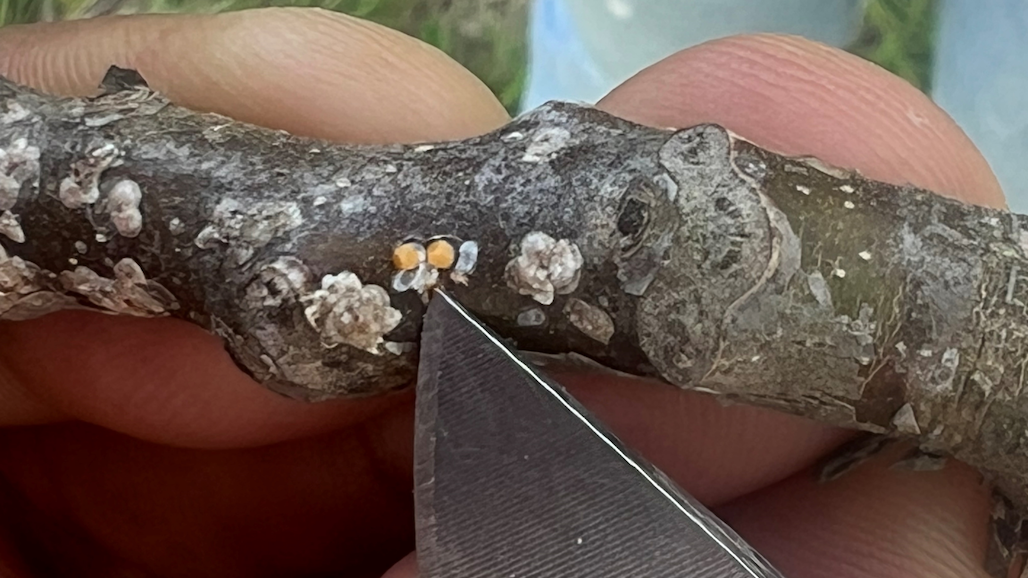
    Walnut scale (Figure 1) is an important economic pest of walnuts in California. High populations of walnut scale may affect tree vigor as well as predispose trees to diseases caused by several plant pathogenic fungi and possibly flatheaded borer damage. Historic UC Pest Management Guidelines emphasize the efficacy of insecticide applications at the crawler stage of insect development (late April to mid-May); however, with the introduction of new pest management tools such as insect growth regulators (IGRs), new studies have been conducted to evaluate the efficacy of these products at earlier times during the insect lifecycle. Both walnut scale and frosted scale overwinter as immature nymphs; therefore delayed-dormant application of IGRs has the potential to inhibit maturation and subsequent reproduction of these pests.

    In 2023, UC ANR and UC Berkeley researchers initiated a new collaborative study investigating the efficacy of four products applied at various rates and times (Table 1). Two insect growth regulator products, Esteem® (IRAC Group 7C) and Centaur® (IRAC Group 16), were included in the study, with both delayed-dormant (February 8, 2023) and crawler-stage (April 26, 2023) application timings. Centaur® was also investigated at two rates. Crawler-stage applications of Senstar® (a combination of spirotetramat and pyroxifin) and Assail 20SG® (a neonicitinoid) were also included in the study.

    Delayed dormant IGR applications inhibit maturation of walnut and frosted scale. Delayed-dormant application of Centaur WD® at either 34.5 oz/acre or 46 oz/acre reduced walnut scale survival by 81% of that of untreated control treatment by April. Both Esteem and Centaur reduced populations of mature frosted scale observed in late April by the over 85% of that on untreated trees (Figure 2).

    Crawler populations affected by IGRs and conventional insecticides. All treatments suppressed the rates of crawler emergence over time in comparison to the untreated control (Figure 3); however, delayed dormant applications of both IGR treatments (Centaur® and Esteem®) resulted in the highest suppression of the first-generation curve (Figure 3). Both rates of Centaur® applied during the delayed dormant period resulted in similar suppression of crawler emergence. Crawler stage application of Centaur® at the higher rate resulted in similar levels of crawler suppression as the delayed dormant IGR treatments (Figure 3). Moderate suppression of first-generation crawlers was observed with crawler stage treatments with the low Centaur® rate, Esteem®, and Assail® 30SG (Figure 3). Crawler stage application of Senstar® suppressed first-generation crawler emergence (Figure 3) and resulted in modest suppression (45%) of total crawler populations across the season as compared to the untreated control (Figure 4). All IGR treatments, regardless of the rate or timing, performed similarly with regard to total crawler populations across the season (Figure 4). The range in total crawler suppression across treatments of similar statistical significance was 88.2% (Centaur, 46 oz/acre, delayed dormant) to 54% (Assail, crawler stage), illustrating the variability in crawler counts in the orchard system (Figure 4).

    Summary. Delayed dormant applications of either of the insect growth regular products, Centaur® or Esteem®, offer excellent suppression of walnut scale and frosted scale populations. Delayed dormant applications may offer similar efficacy at lower product rates due to the opportunity to achieve better coverage prior to leaf-out.  Additionally, delayed dormant applications of these products may inhibit maturation of nymphs into adults, thus limiting sexual reproduction and subsequent laying of eggs.

    In prior studies, the efficacy of crawler stage Assail® application became apparent the year following application. Based on this background information, the populations of adult walnut scale will be evaluated across all treatments in April 2024 to fully capture the efficacy of these products over time.

    Additionally, future studies are planned to further determine the value of dormant versus delayed dormant applications of IGR treatments for management of walnut scale. The results of the current study, however, do demonstrate a need for updating the current UC IPM guidelines for management of walnut scale.  To date, the UC IPM guidelines only recommend crawler-stage applications of IGR products while the current study demonstrates the value of IGR applications earlier in the season. — By Elizabeth Fichtner, Mel Thayer, and Robert Van Steenwyk (UCANR)

  • Oregon State University Releases Exciting New Hazelnut Variety, Thompson

    Oregon State University Releases Exciting New Hazelnut Variety, Thompson

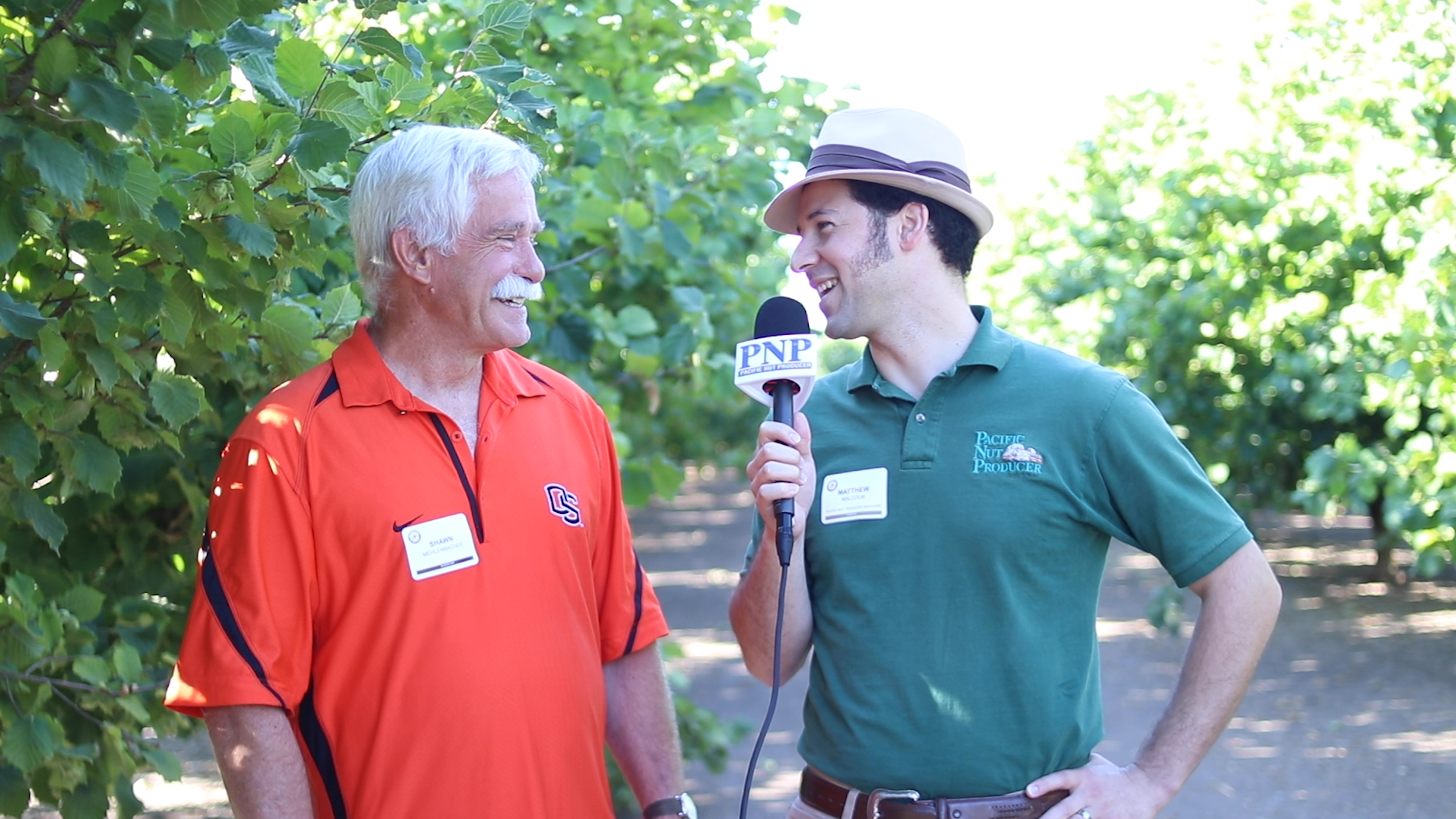
    Oregon State University has a world renowned hazelnut breeding program, and the newest variety, Thompson, has recently been released. Thompson has some impressing features pacific northwest growers will be interested in.  Watch this brief video interview with Shawn Mehlenbacher, head of the OSU hazelnut breeding program to gain the details, and learn more about this new variety at the Nut Growers Society Winter Meeting on Jan. 11 at the Salem Convention Center.

    Please thank this video’s sponsor George Packing Company for their industry support.

  • Leadership Transition Planned for Administrative Committee for Pistachios

    Leadership Transition Planned for Administrative Committee for Pistachios

    The Administrative Committee for Pistachios (ACP) is pleased to announce the hiring of Stephen Vasquez as the Executive Director of the ACP starting January 2024. Vasquez will succeed Bob Klein who has served in the lead staff role since June 2007. Klein plans to retire in April 2024 to ensure a smooth transition. Management of the California Pistachio Research Board will also be part of Vasquez’s responsibilities, working closely with scientist focused on improving pistachio production. Vasquez most recently worked for Sun-Maid Growers as their technical viticulturist where he coordinated their research program and worked closely with growers and researchers to improve raisin production. His past experience also includes working for University of California Cooperative Extension as a viticulture farm advisor for 14 years, a research agronomist for an international fertilizer company and a director of agronomy for a large table grape farming company.

    “We are excited to have Stephen join ACP and know that his experience will benefit the organization and pistachio growers,” Said Klein. “His experience as a farm advisor and farmer will bring a unique perspective to the ACP, which will help identify gaps in research that growers rely on to be successful in California.”

    Vasquez will work with federal, state and local organizations to carry out the mission of the Administrative Committee for Pistachios. He is a lifelong resident of California and resides in Fresno CA with his wife.

    Of the retiring Bob Klein, Pacific Nut Producer Editor Matthew Malcolm shared, “It has been a real privilege working with Bob for so many years in his dedicated service to the California pistachio industry.  I will miss our great interviews together, but congratulate him on a job well done and wish him the best in retirement.”

    ABOUT THE APC: The Administrative Committee for Pistachios (ACP) was established in 2004 by pistachio growers to regulate quality aspects of domestically shipped pistachios, primarily testing for levels of aflatoxin which can occur in tree nuts, peanuts, corn and other commodities. It is authorized to require inspection of domestically shipped pistachios for aflatoxin levels, gather statistics from handlers and report this data, fund research projects that pertain to the processing and handling of pistachios, and to establish food safety regulations. The pistachio marketing order does not perform marketing activities (advertising and consumer education) and does not sell or arrange the purchase of pistachios. The Administrative Committee for Pistachios (ACP) locally administers the federal marketing order for pistachios produced in California, Arizona, and New Mexico. To learn more visit: https://acpistachios.org/.

  • Optimism for California’s 2023 Pecan Crop and State of the Industry

    Optimism for California’s 2023 Pecan Crop and State of the Industry

    At the Tree & Vine Expo in Turlock held mid-November, Karlene Hanf, President of the California Pecan Growers Association, joined other tree nut commodity leaders in sharing State of the Industry reports.  California pecan production and acreage is on the rise.  Watch this brief interview with Karlene as she shares her insights on the current State of the California Pecan Industry.

    Please thank this video’s sponsor Thunder Creek Equipment for their industry support.

  • New Stanislaus County Ag Commissioner Serves as Liaison Between Farmers and California DPR

    New Stanislaus County Ag Commissioner Serves as Liaison Between Farmers and California DPR

    At Malcolm Media’s recent Tree & Vine Expo, event host Matthew Malcolm was pleased to introduce, Linda Pinfold, the new Stanislaus County Ag Commissioner to attendees.  Watch this brief video to get to know Linda and her emphasis on serving and assisting local farmers in navigating the ever-changing pesticide regulatory environment of California.

    Please thank this video’s sponsor Thunder Creek Equipment for their industry support.

  • State of the California Walnut Industry with Robert Verloop

    State of the California Walnut Industry with Robert Verloop

    The California walnut industry has suffered tremendously in recent years due to many factors outside of the grower’s control.  But the future is not all doom and gloom.  In fact, the quality of this year’s crop was outstanding.  Watch this brief interview with Robert Verloop, CEO of the California Walnut Board & Commission, as he shares some highlights from his State of the Walnut Industry address at the Malcolm Media’s recent Tree & Vine Expo in Turlock.

    Please thank this video’s sponsor Thunder Creek Equipment for their industry support.