Category: Industry News

  • Consider “Spoon-Feeding” Almond Trees

    Consider “Spoon-Feeding” Almond Trees

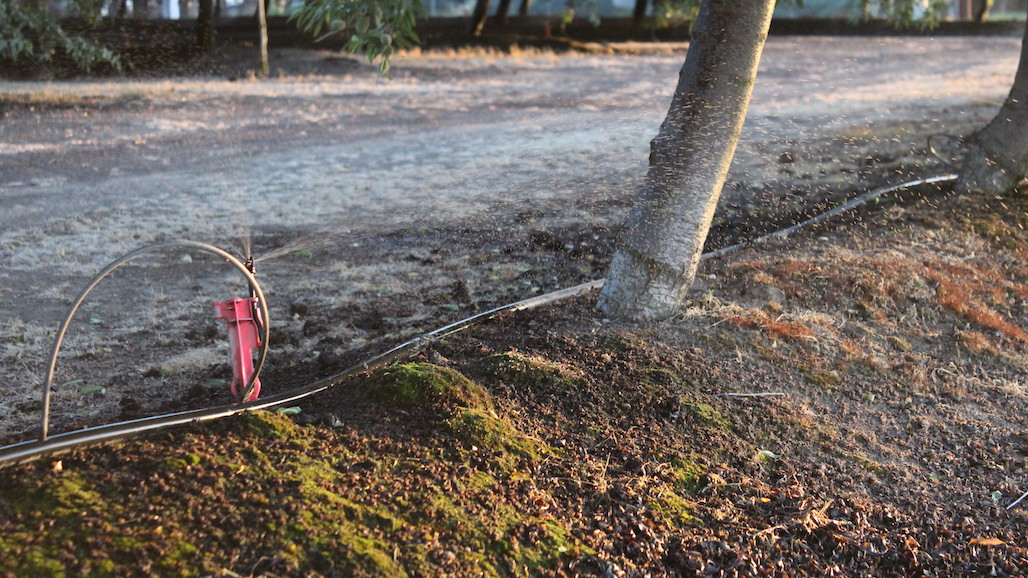
    Almond Board of California — Nutrient application, such as nitrogen application, is undoubtedly one of the most important “make or break” economic and environmental decisions almond growers make. Not only can nitrogen affect yields and productivity, but growers can see a huge difference in their profit margins if applied efficiently.

    “When we think about managing nutrients such as nitrogen, our goal is the balance between supply, all of the inputs of nitrogen into the system, and the demand of the tree with the goal of maximizing your efficiency,” said Patrick Brown, professor at UC Davis during a 2023 Almond Conference session.

    Because nitrogen application can differ from one crop to the next, Brown encouraged growers to fully understand the conditions of their individual orchard before applying fertilizer. This includes when it is needed, how much should be applied, the placement, and source.

    Minimizing losses

    The goal when using these considerations is to minimize losses, with environmental concerns being top of mind. “Any loss is a lack of efficiency, but any loss is also a source of greenhouse gases for pollution or a source of nitrates for pollution into the groundwater,” Brown said.

    Research has shown that nitrates move through the soil very rapidly, and as you increase application, uptake of nutrients from the soil is not uniform. For example, if fertigation is infrequent and application exceeds a certain rate, saturation can occur causing waste or leaching.

    “A large proportion of that nitrogen will sit in the root zone waiting for the plant to catch up,” he said. “This is an important principle because it underlies where and how inefficiencies occur.”

    Growers can avoid these scenarios if they follow the 4 Rs of nutrient management: right rate, at the right time and in the right place, using the right source of nutrients. An in-depth explanation of the 4 Rs can be found in Almond Board of California’s (ABC) Nitrogen Best Management Practices.

    Right Time

    Firstly, it’s important to understand the ideal time to apply nitrogen to an almond orchard. Studies show there is no nitrogen uptake from the soil at 70% leaf out because the tree is still utilizing reserves established in the previous year. Until those reserves are consumed, new uptake doesn’t occur, and that’s where loss transpires, Brown explained.

    “Those early excesses are particularly prone to losses from rainfall, irrigation, and other events, so you have an increasing number of periods where there’s excess availability of nutrients and hence, the potential for loss,” he said.

    Instead, optimal fertilization will occur with multiple applications in a season, timed accordingly with the demand of the tree.

    Active Root Zone Placement

    Another key aspect of nitrogen application is placement. This is where growers must be educated in understanding the relationship between irrigation and nitrogen movement. Nitrogen that sits on the surface of the soil and remains in the top five inches will be lost if water moves through the profile.

    In order to be utilized properly, nitrogen must be kept within the active root zone, which through research, has proven to typically be within the top 18 inches of soil. This is especially true for the young roots that are highly active in feeding, Brown explained.

    So, how can growers ensure fertilizer applications remain within the active root zone? Brown said this depends on the integration of how and when an orchard is fertilized and how and when it is irrigated.

    “Your goal optimum irrigation is a fertilizer application towards the end of the irrigation event so that you don’t push it through the profile,” Brown said. “This is another example of where having small, spoon-feeding applications minimizes the potential of pushing the nitrogen through the profile.”

    Less is More

    This “spoon-feeding” method is known as continuous fertigation (fertilizing with every irrigation) as apposed to episodic fertigation (fertilizing once every month or two).

    If there is too much excess caused by episodic fertigation, that is where inefficiencies occur causing leaching or gaseous nitrogen losses, which can come with a number of implications for the air resources board and grower.

    Another factor that needs to be considered is how irrigation distribution uniformity determines nitrogen distribution uniformity.

    “If you have a very uniform irrigation system, you inject 250 pounds of nitrogen in a year, and you will be able to deliver that 250 pounds uniformly across the orchard,” Brown said. “If you have a distribution uniformity that’s poor, not only are you not distributing water uniformly, but every time you do an injection of a fertilizer, you’re also not distributing the fertilizer uniformly.”

    Grower Resources

    Because of the increasing complexities involved in the relationship between irrigation and fertilization, the ABC built the California Almond Stewardship Platform (CASP). This platform offers growers tools as it relates to their operation and can run iterations based on customizable inputs. Using the solutions computed by CASP, growers can determine the best path for an individual orchard.

    It’s well recognized that continuous fertigation requires dedicated equipment and constant vigilance from the grower. However, the investment will be worthwhile when efficiency savings and productivity boosts are taken into consideration, Brown assured.

    “It’s very clear that for profitability, efficiency, lack of nitrogen loss, and environmental considerations, that continuous fertilization strategies are the secret to success,” he concluded.

  • Almond Board’s Clever Campaign Captures French Audience

    Almond Board’s Clever Campaign Captures French Audience

    The Almond Board of California (ABC) conducted an innovative marketing campaign in France, designed to captivate the French audience with humor and creativity. Dariela Roffe-Rackind, ABC’s European marketing director, said the campaign leveraged the high energy and excitement surrounding the Paris 2024 Olympics without the hefty price tag of official sponsorship.

    Long-Lasting Energy: The Foundation

    ABC’s current messaging in France revolves around the theme of “long-lasting energy.” This concept is cleverly encapsulated in ABC’s ongoing campaign, “Mettez la fatigue à l’amande” that highlights the energy-boosting benefits of almonds through humorous scenarios. For instance, a family is on a road trip and the parents, energized by almonds, outlast their exhausted kids in the backseat, or a woman, reinvigorated by almonds, keeps up with her lively dog after a long day at work. These relatable and funny scenes have successfully resonated with the French audience, laying a strong foundation for the new campaign.

    Capitalizing on the French Buzz

    Recognizing the buzz surrounding the Paris 2024 Olympics, ABC aimed to harness this excitement. However, the cost of becoming an official Olympic sponsor — starting at $50 million — was prohibitive. Additionally, strict rules govern non-sponsors’ usage of Olympic-related imagery and terminology. To navigate these challenges, ABC devised a clever strategy: position themselves as the “unofficial sponsor of unofficial sports.”

    The Unofficial Sports Campaign

    With the help of their marketing agency, ABC crafted a campaign – “the unofficial sponsor of unofficial sports” – that references unconventional sports and nutrition in a humorous and memorable way. “We wanted to use the existing tone of our current campaign in France but be even bolder and funnier, and even more absurd to really help us stand out and have a message that would be relatable,” Roffe-Rackind said.

    The sports, which are both very real and energy-demanding, include underwater hockey (snorkeling and hockey on the bottom of a pool), artistic cycling (think acrobatics while riding a bike) and others like unicycle hockey and the internet sensation, Hobby Horse (an imaginative form of equestrianism). “We did a lot of research to find these sports which we think are probably invisible to a lot of people, but they’re just as interesting and probably even more demanding energy-wise than some of the regular sports that are in the Olympics in some cases because they require these athletes to be doing two sports at the same time,” Roffe-Rackind added.

    Leveraging Influencers for Greater Impact

    To echo the current humorous tone of French marketing efforts, ABC collaborated with popular French comedian and influencer, Léa Camilleri (pictured right). In a series of entertaining videos, Camilleri pretends to be a former athlete of these unconventional sports and their number one fan. “She went in with a lot of enthusiasm, interviewed them, talked about how her career ended in these sports in a very humorous, entertaining way,” Roffe-Rackind said. “And in all those scenes, you see her carrying her bowl of almonds, offering them to the athletes as the solution to that long-lasting energy that you need to perform these two sports at the same time.”  Article & Image by the Almond Board of California 

  • Rabobank Reports Slowdown in International Walnut Trade and Production Expansion

    Rabobank Reports Slowdown in International Walnut Trade and Production Expansion

    The walnut industry is navigating a period of significant adversity, with several key regions grappling with a host of challenges that have impacted production and trade. These include persistent drought conditions, stringent water regulations, rising costs, logistical hurdles, intensifying competition, and subdued demand, all of which have exerted downward pressure on walnut prices. According to a recent RaboResearch report, as a result of these challenges, acreage reduction is expected in key regions. As for international trade, exports from Chile and China will decelerate, while the US will sustain its share.

    Producers focus on balancing the supply-demand equation

    In order to counter the many challenges they are experiencing, producers are expected to reduce acreage, particularly in areas with less competitive walnut varieties and more severe water constraints. “The industry’s focus is now on enhancing efficiency and producing higher-quality walnuts to achieve a more balanced supply-demand equation,” explains David Magaña, Senior Analyst – Fresh produce and tree nuts for RaboResearch. “Although prices are showing signs of recovery, they continue to linger below the break-even point in certain regions. But we remain optimistic about the potential for profitable operations in the near future.”

    Deceleration in production expansion after two decades of growth

    The global walnut production landscape has seen a steady compound annual growth rate (CAGR) of approximately 5% over the past decade. Four major regions – China (48%), the US (27%), Chile (7%), and the EU (6%) – dominate production and have collectively contributed to 89% of the world’s walnut output. While China and Chile have experienced CAGRs of 5% and 13% respectively, the US and the EU have seen a more modest growth rate of 4% CAGR over the past ten seasons.

    However, the trend of increasing production is set to plateau, with some of the largest producing areas expected to witness a gradual decline in acreage due to economic and environmental pressures. The phasing out of older, less productive orchards and traditional varieties is anticipated to be a key factor in this reduction.

    China remains the world’s top walnut producer and consumer

    On the consumption front, China, the EU, the US, and Turkey collectively represent 75% of global walnut consumption. Notably, the UAE and India have emerged as significant growth markets, with CAGRs of 23% and 12% respectively, signaling a growing demand in these regions.

    For China, the world’s top walnut producer and consumer, the upcoming 2023/24 season marks the fifth consecutive year in which domestic production will surpass consumption by over 100,000 metric tons, reinforcing China’s position as a significant net exporter. The industry consensus indicates a stabilization in China’s walnut production and export levels in the coming years.

    The international trade outlook shows a slowdown

    “The trajectory of global walnut exports has been remarkable, soaring from around 300,000 metric tons in the mid-2000s to approximately 1 million metric tons in recent seasons,” says Magaña. The past decade has seen a 7% CAGR in exports, with notable increases from China, Chile, and Turkey. Despite a reduction in its export share from 64% in the 2014/15 season to about 45%, the US remains the leading exporter of walnuts.

    The future, however, points to a deceleration in exports from Chile and China, while the US is expected to sustain its share of 45% to 50% in the international walnut market.

    The top five importing countries – the EU, Turkey, the UAE, Kyrgyzstan, and India – account for 62% of global walnut imports. Their respective shares stand at 31%, 11%, 9%, 6%, and 5%. Notably, imports by India, the UAE, and Kyrgyzstan have surged, with CAGRs of 25%, 18%, and 15% respectively over the last five marketing seasons.

    For more details on the report, reach out to David Magaña at david.magana@rabobank.com or (559)970-1100.

  • Low, Late Water Allocations Undercut California Ag, Pistachio Grower Aims to Make a Difference

    Low, Late Water Allocations Undercut California Ag, Pistachio Grower Aims to Make a Difference

    After years of drought conditions, California has finally had a couple years of great rainfall and snowpack — yet that has not translated to much better water availability for California growers responsible for feeding the world with some of the safest most nutrient-dense crops. With the Sustainable Groundwater Management Act (SGMA) taking effect in the state as well, growers are very concerned for the future of their family operations. Crippled by gov’t regulations and delayed water allocations, watch this brief interview with pistachio grower Rebecca Kaser, who farms in Westlands Water District and aims to make a difference.

    Special thanks to American Pistachio Growers for sponsoring this video.

  • Big DPR Licensing Changes for Pest Control Advisers and Invitation to Gather for 50th Anniversary CAPCA Conference

    Big DPR Licensing Changes for Pest Control Advisers and Invitation to Gather for 50th Anniversary CAPCA Conference

    To help California Pest Control Advisers and qualified/aerial pesticide applicators prepare for several changes to their license renewals with DPR, Ruthann Anderson, President/CEO of the California Association of Pest Control Advisers (CAPCA), met with Matthew Malcolm on California Ag Network on August 5th to explain the changes. Among them is a significant renewal fee increase. While increasing costs are never welcome news, Anderson calls upon DPR for transparency and accountability in the use of the increased funds to better serve licensees. She also points out that 2024 is a milestone year for CAPCA, as they will be holding their 50th annual Conference this fall. Watch this brief interview to learn more specifics on California DPR license renewal changes, and some exciting things to expect in attending CAPCA’s 50th Conference this October.

    Please thank this video’s sponsor Southern California Gas Company for their industry support.

  • Opportunities for California Tree Nuts, Dairy & Beef in Upcoming Trade Mission to Morocco

    Opportunities for California Tree Nuts, Dairy & Beef in Upcoming Trade Mission to Morocco

    U.S. Department of Agriculture Under Secretary for Trade and Foreign Agricultural Affairs Alexis M. Taylor will lead an agribusiness trade mission to Casablanca, Morocco, Dec. 2-5, 2024. Current and potential U.S. exporters interested in participating should apply for consideration by Aug. 28.

    “This mission presents a pivotal opportunity for U.S. agribusinesses to tap into Morocco’s dynamic market and leverage its strategic position for wider African access,” Taylor said. “We are committed to facilitating these vital connections and expanding U.S. agricultural exports.”

    Morocco is the second-largest export market for U.S. agriculture in Africa. U.S. sales of farm and food products to the country topped $619 million last year, representing 16 percent of the continent’s market share. American agricultural exports to Morocco have doubled since the U.S.-Morocco Free Trade Agreement entered into force in 2006.

    Morocco offers a stable market and growing economy and serves as a key distribution hub for the African continent. The country is already a major importer of bulk and intermediate commodities from the United States and its expanding food processing sector and rising consumer demand are creating new potential for sales of consumer-oriented products.

    U.S. exporters have opportunities in numerous sectors, including beef and beef products, dairy products, feed grains, live animals and genetics, rice, seafood, seed potatoes, soybeans and tree nuts.

    During the trade mission, representatives from U.S. companies will participate in business-to-business meetings with potential importers from Morocco, Senegal, Côte d’Ivoire and other West African nations. Participants will also receive in-depth market briefings USDA Foreign Agricultural Service staff and other regional trade experts.

    To learn more about the trade mission and to apply to participate, please visit: https://fas.usda.gov/topics/trade-missions/morocco-december-2024.

  • Smaller Pistachio Crop This Year – Can Growers Expect Higher Prices?

    Smaller Pistachio Crop This Year – Can Growers Expect Higher Prices?

    American Pistachio Growers held their first ever Pistachio Industry Insights Day, expanding upon their annual Summer Luncheon from years past. During this well-attended event in Visalia, CA, Jim Zion from Meridian Growers met with Matthew Malcolm on California Ag Network to discuss the current state of the pistachio market. As pistachios are in their “off-year” and with weaker chill hours over the winter, growers are expecting a much smaller crop than last season. The big question that’s on everyone’s mind is whether this will translate to a higher pistachio price and where the market is heading. Watch this brief interview with Jim and read more about it in Pacific Nut Producer Magazine.

    Special Thanks to American Pistachio Growers for sponsoring this video.

  • A Few Things to Know Before Planting Hazelnuts in the Northwest

    A Few Things to Know Before Planting Hazelnuts in the Northwest

    Hazelnuts have become a pretty hot commodity in the Pacific Northwest.  If you ask most farmers in the area, though, that have converted from growing other crops like grass seed to growing hazelnut trees in recent years, there was quite a learning curve to adjust to.  Many hear that growing hazelnuts is less labor-intensive and more profitable than other crops in the region.  “Just plant your trees and watch them grow!” some may assume.  They soon find though that there is much more to growing hazelnuts than meets the eye. Watch this brief interview with Erica Chernoh from the Lane County Horticulture Extension at Oregon State University (OSU) as she shares a few things growers should know before planting the crop. Read monthly tips from OSU on growing hazelnuts in Pacific Nut Producer Magazine. Subscribe for free at: https://malcolmmedia.com/subscribe/

    Please thank this video’s sponsor George Packing Company for their industry support.

  • The Next Nut? Chestnuts Poised for Rapid Expansion

    The Next Nut? Chestnuts Poised for Rapid Expansion

    SPONSORED CONTENT

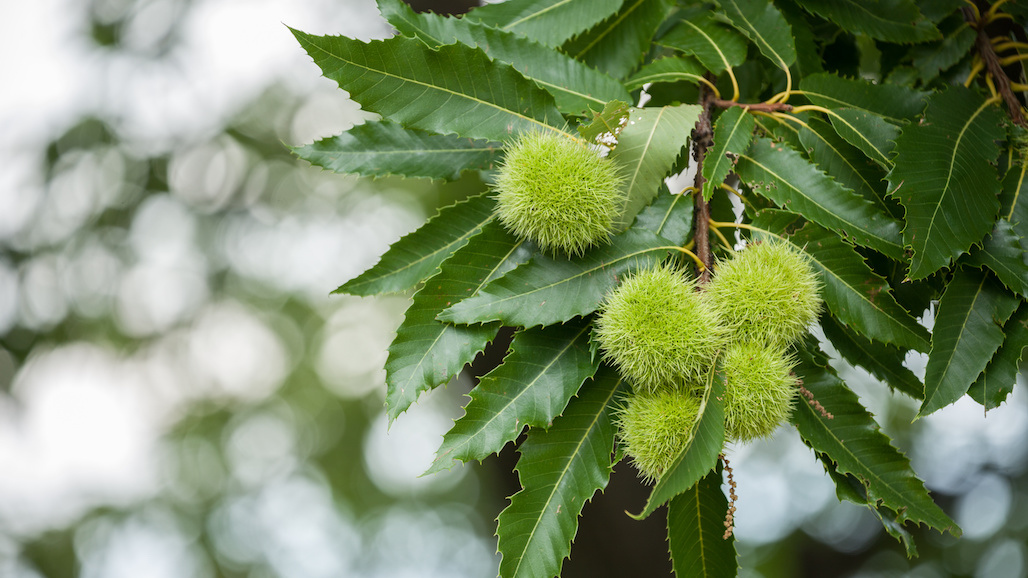
    120 years ago, a blight decimated American Chestnut trees. By the mid-20th century, an estimated 4 billion trees had died from the blight. Not only was this one of the worst forest ecological disasters in history, but it also had major economic impacts as many rural communities relied on the chestnut trees for both large quantities of nutrient-rich nuts and timber.

    Fast forward a couple generations and most Americans have never eaten a chestnut. Nor could they find a store that sells them. When the trees died, so did chestnuts as a part of the American diet.

    Decades of breeding by both individuals and universities have resulted in blight-resistant trees, but those trees have yet to be propagated at a scale large enough for commercial production. Consumer demand for chestnuts has also grown, slowly and organically. The combination of immigrants to the U.S. seeking a taste of home (chestnuts remain popular in Europe and several parts of Asia) and consumers wanting to know where their food is grown has led to chestnut U-pick and mail order farms selling out within a couple weeks of harvest.

    Today, the chestnut is poised for rapid expansion thanks to three main reasons:

    Non-profit & for-profit organizations making major investments in chestnut farming.

    Two such organizations are the Savanna Institute and Agroforestry Partners, both of whom are planting 1,000’s of acres of chestnuts in the Midwest and Appalachia. Groups like these, plus the hundreds of smaller family-owned farms planting chestnuts, will dramatically increase the volume of American-grown chestnuts in the coming years.

    Improved plant propagation and nursery stock availability.

    Unlike most other tree crops, chestnuts have historically not been propagated via tissue culture. Tissue culture propagation is the main way that most other tree crops’ root stocks, or self-rooted plants have been produced for decades. However, since there wasn’t large demand from farmers for tissue cultured chestnuts, none of the major tree nurseries had incentive to make the years of investment required to begin a tissue culture program for the trees.

    Then, a couple of years ago, West Coast Chestnut successfully propagated the ‘Colossal’ cultivar and began selling them to nurseries and growers across the U.S. The family-owned nursery now has a couple cultivars in production. They are also working on a dozen additional cultivars, including several that have proven to be blight resistant. As more cultivars become available, more growers will be able to plant chestnuts in more parts of the U.S., further increasing supply.

    Unmet domestic demand is being met by low-quality imports.

    Even though chestnuts are not a part of a typical American diet, U.S. consumers purchase more nuts each year than U.S. growers produce. The U.S. imports millions of pounds of chestnuts each year, mostly from China and Italy, to fill the gap in what consumers want but we don’t produce. The imported nuts are highly packaged and frequently frozen or otherwise preserved resulting in an underwhelming culinary experience. It would take 5-10 years and thousands of acres of new plantings for American growers to produce enough chestnuts just to remove the need for these imports.

    The stage is set for American growers to scale up chestnut production to meet the demand currently met through imports. And to do so with fresh, known-cultivar chestnuts that delight consumers’ as we re-introduce them to the historic American nut.


  • Center for Land-Based Learning Fosters Rising Generation of CA Farmers & Ag Leaders

    Center for Land-Based Learning Fosters Rising Generation of CA Farmers & Ag Leaders

    Have you heard of the Center for Land-Based Learning? For over 30 years, this nonprofit organization has served California’s agricultural industries by inspiring and educating youth with an interest in food and ag — connecting them with resources and opportunities to pursue a career in farming.  Nicole Curiel, Apprenticeship Program Assistant Manager from the Center met with Matthew Malcolm on California Ag Network to share more about the program and how farmers can get involved. Watch this brief interview to learn more.

    Please thank this video’s sponsor Southern California Gas Company for their industry support.