Category: Industry News

  • New Tool to Help Growers with Nutrient Plans

    New Tool to Help Growers with Nutrient Plans

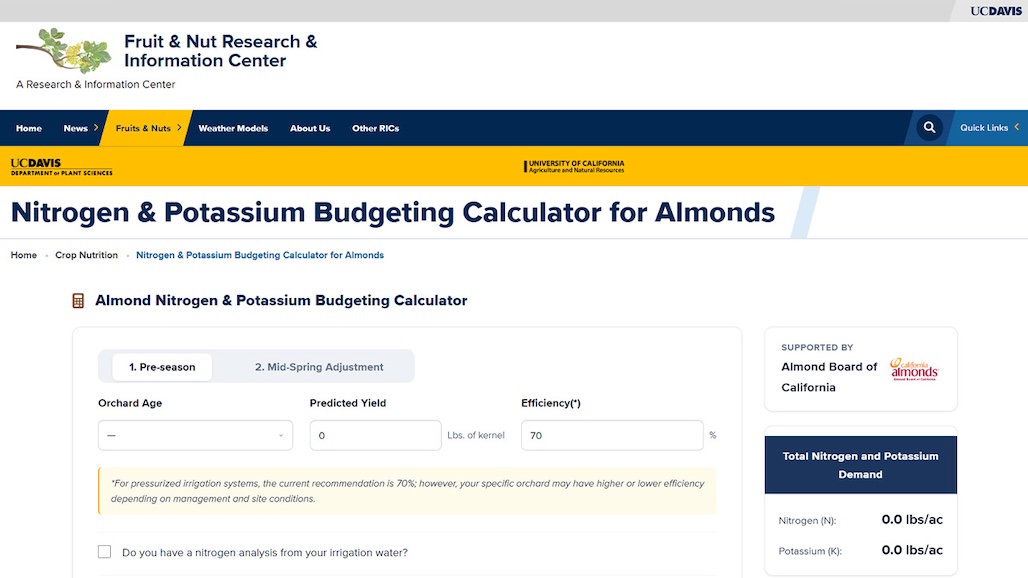
    As input costs continue to rise and regulatory pressure around nutrient management intensifies, almond growers are looking for tools that help them apply fertilizers more precisely — without sacrificing yield or tree health. A new Nitrogen and Potassium Calculator, developed through a partnership between the Almond Board of California and UC Davis’ Fruit and Nut Center, is designed to do exactly that.

    Hosted by the Fruit and Nut Center and available through Almonds.org, the calculator helps growers estimate how much nitrogen and potassium to apply, and when to apply it, based on orchard-specific information and expected yield. The goal is straightforward: improve nutrient use efficiency, reduce unnecessary applications, and limit money spent on product the crop doesn’t need.

    Built on Efficiency and Economics

    Nitrogen and potassium are among the largest input costs in almond production, accounting for a significant share of annual expenses. They are also essential to kernel development and protein formation, making precise management critical.

    “Kernels are full of protein,” said Sebastian Saa, Associate Director of Agricultural Research at the Almond Board of California. “That also means that they demand a significant amount of nitrogen.”

    But applying more fertilizer than necessary doesn’t improve outcomes. Instead, it can reduce efficiency, increase costs, and create additional challenges. “If you have too much nitrogen, it could leach into groundwater aquifers” Saa said, “but you are also making your trees more susceptible to diseases like hull rot.”

    The new calculator is designed to help growers avoid both sides of the problem, deficiency and excess, by matching nutrient applications more closely to actual crop demand.

    From Research to a Practical Tool

    The calculator reflects more than a decade of almond production research and builds on guidance already familiar to many growers, including the Almond Board’s Nitrogen Management Guide. “We have been working on this topic for about 20 years,” Saa explained. “This calculator reflects the latest of our thinking and includes potassium calculations, which we had not done before.”

    Rather than requiring users to answer every possible question up front, the calculator uses a stepwise process. Growers can enter basic information, such as orchard age and expected yield, to generate a preseason nutrient plan. As the season progresses and more data becomes available, the same plan can be revisited and refined.

    Yield plays a central role in the calculation, but the tool also accounts for nutrient contributions from other sources, such as irrigation water or organic amendments, helping growers avoid double-counting nutrients they already have. “How much to apply doesn’t only depend on yield,” Saa noted. “If you use soil amendments, some of those amendments contain nitrogen and thus reduce the need for fertilizer. All this is included in the calculator.”

    Adjust as the Season Unfolds

    As previously mentioned, one of the key advantages of the new calculator is its ability to adapt as the season progresses. Growers can save a unique link to their initial plan, return mid-season (end of April/beginning of May), and update inputs as yield estimates improve or new information, such as leaf tissue analysis, becomes available. “This allows the user to fine tune their former fertilization budget even further,” Saa noted.

    The calculator is hosted by UC Davis’ Fruit and Nut Center, which already supports a range of decision-support tools used by California growers. Growers can access the calculator directly through the Fruit and Nut Center website or by visiting the Grower Tools page on Almonds.org, where tools can be filtered by focus area, resource type, or host organization.

    Getting Nutrient Management Right

    Ultimately, the calculator is about helping growers make confident, informed decisions — balancing productivity, environmental stewardship, and cost control.

    “Getting it right is fundamental,” Saa said. “From an economic point of view, from an environmental point of view, and from an efficiency and productivity point of view.”

    With the new Nitrogen and Potassium Calculator, growers now have a practical, research-based tool to help do just that. “The sooner you make your fertilization plan, like at the beginning of the season, the higher the ROI is going to be,” Saa said.

    By the Almond Board of California

  • Land Tax Dispute

    Land Tax Dispute


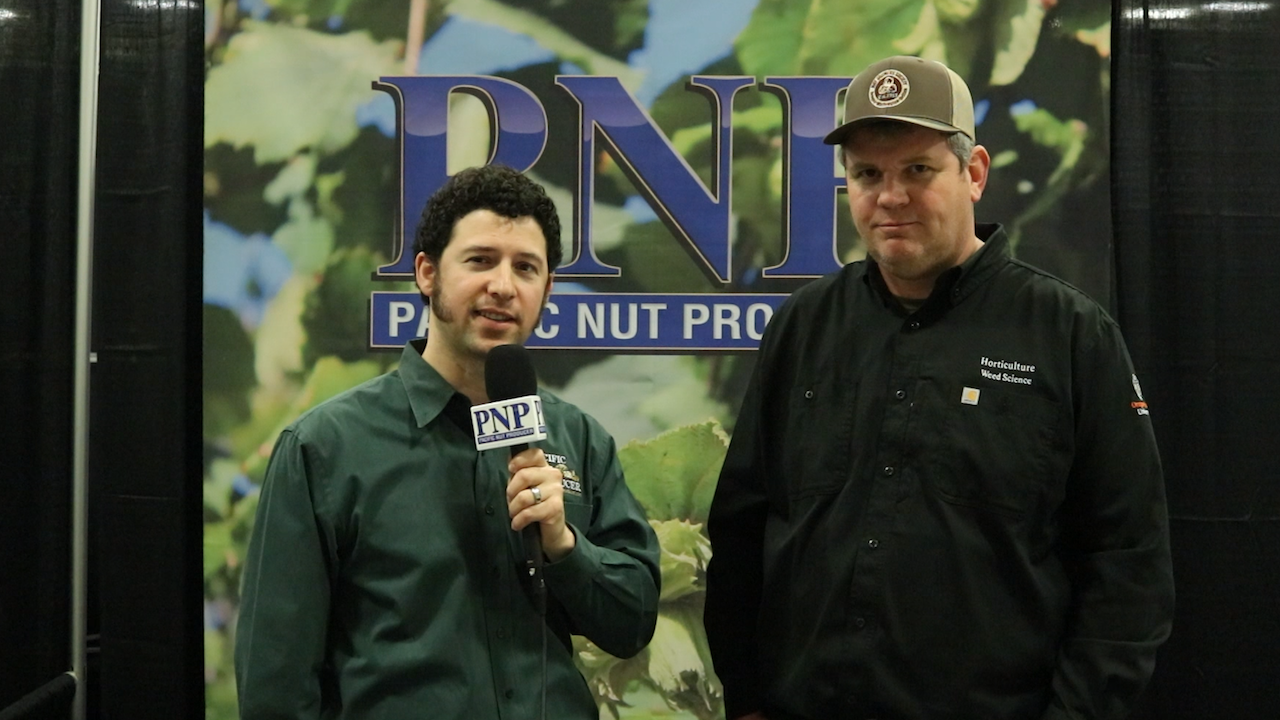
    Growers in Cochise County, Arizona are fighting back against a proposed tax increase on land used for permanent crops like pistachios, pecans and wine grapes. Growers like John Heuler have fought back and won in tax and appeals courts, but the county is taking the dispute to the State Supreme Court. At the American Pistachio Growers’ Annual Conference, Heuler spoke with Matthew Malcolm from Malcolm Media Ag Publishing to go over the latest details. Watch this quick video and learn more in Pacific Nut Producer Magazine.

    Please thank this video’s sponsor Kingman Ag for their industry support.

  • Bloom Winding Down in Almond Orchards

    Bloom Winding Down in Almond Orchards

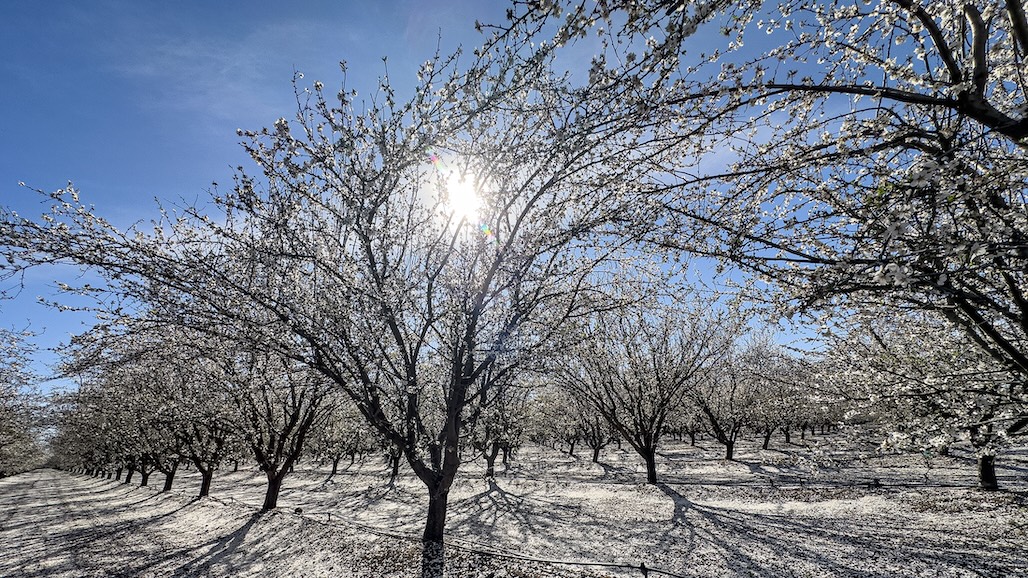
    The 2026 almond bloom is winding down almost as quickly as it started this season. The weather for this period was significantly drier and warmer than that of the previous week. Temperatures reached as high as 80 degrees in the San Joaquin Valley, and the Sacramento Valley saw temperatures swing from lows in the 20’s last week to highs in the 70’s this week. Despite warmer and drier conditions, wind and clouds suppressed bee activity for much of the week in the Sacramento Valley. Bee activity in the San Joaquin Valley was fair to good for most of the period.

    Bloom in the Sacramento Valley has consistently stayed slightly ahead of the rest of the growing regions this season and continued its progress through petal fall and into jacket and early nutlet stages. Only Butte Padre plantings there have any significant bloom remaining at this point.

    Bloom continued its decline for Nonpareil, Monterey, Independence, and California varieties for this period in the San Joaquin Valley as well. Most of the remaining bloom is in Butte Padre plantings, though even these have passed their peak by the end of this period. Bees were more active in the milder weather there and worked whatever viable bloom they could still find.

    Ranvir Tung, a grower in Fresno County, summed up the week by saying, “The remaining bloom progressed rapidly after the storms, and with leaf-out now underway, the next round of fungicide applications are being applied.”

    Bee hives began to be removed from the most advanced orchards at the end of this period. As orchards continue to dry out, growers will conduct maintenance activities such as mowing and removing trees that were downed in last week’s storms. They will also look to begin nutrient applications and pest management discussions. — By Anthony Scudder, Regional Manager, Blue Diamond Growers

  • Bulgarian Tree Nut Market Sees Rapid Expansion

    Bulgarian Tree Nut Market Sees Rapid Expansion

    The Bulgarian tree nut market expanded rapidly in marketing year (MY) 2024/25, and the MY 2025/26 forecast is optimistic. There was a significant boost in consumption and trade, driven by both retail sales and the confectionary industry. Decreasing food inflation, improving incomes, and strong development in tourism/travel supported consumption growth. Domestic production increased to meet dynamic demand but still had a small market share. Expectations for MY 2025/26 are for lower local supply and higher imports while consumption is projected to maintain its gradual increase. In MY 2024/25, the United States maintained its leading role as a key supplier, with double digit growth in Bulgarian imports of U.S. tree nuts to about $20 million, or a 43-percent growth over MY 2023/24 ($14 million).

    However, U.S. exporters are facing increasing competition from price-competitive imports of walnuts (Ukraine and the People’s Republic of China) and of peanuts (Argentina and Nicaragua).

    Overview

    Bulgarian tree nut production (almonds and walnuts) is inconsistent – with regular major fluctuations in production depending on weather conditions. Harvested area is usually less than planted area as lowcyield often makes harvesting cost ineffective.

    Consumer demand increased considerably in MY 2024/25, driven by lower inflation, improved income, and stronger tourism. Retail sales, especially at specialized snacks-and-nuts retail outlets, proved to be highly popular and profitable. Official statistics data (National Statistics Institute) indicates that nut consumption per capita in calendar year (CY) 2024 grew by 12.5 percent to 1.8 kilograms (kg), from 1.6 kg in CY 2023. This follows double digit growth in the previous year (GAIN BU 2025-0002). On average, Bulgarian households purchased 3.5 kg in 2024 compared to 2.7 kg in 2023 or 30 percent more at an average price of 9.46 Euro/kg in 2024 compared to 8.45 Euro/kg in 2023 – a12 percent higher price. As this data is only for retail sales and does not include consumption in the food service industry or processing, actual market consumption is higher. The trend has reportedly continued into the current marketing year.

    Tree Nut Supply and Demand for MY 2024/25 and Estimates for MY 2025/26

    Production

    Bulgaria has good climate conditions for tree nut production (almonds, walnuts, peanuts, and hazelnuts). The country produces a small quantity of almonds for the domestic market only. In the past, Bulgaria produced enough walnuts to meet its consumption and export small quantities in the region.

    In MY 2024/25, almond production saw significant growth – reaching 1,140 metric tons, (MT) its highest level since 2019, and 83 percent more than in the previous MY (Table 1). This growth was due mainly to a much higher harvested area – 71 percent more than in MY 2023/24, as well as 7.4 percent higher average yields. The share of harvested area of planted almonds increased from 41 percent in MY 2023/24 to 72 percent in MY 2024/25. This was a notable change after years of decline (Table 1, Graph 1). However, production was still below the record achieved in 2018 (1,286 MT). Reportedly, higher almond prices motivated producers to invest in better harvesting practices.

    Walnut production also increased to 4,240 MT, 23 percent more than MY 2023/24. However, this growth was due mainly to better average yields of 22 percent, while the harvested area expanded by less than 1 percent. The share of harvested area to planted area saw small growth, from 57 percent to 59 percent (Table 1, Graph 2). See GAIN BU 2025-0002 regarding production regions and age structure of orchards of almonds and walnuts. Due to an ongoing decline in subsidies for new orchards, the size and share of young orchards for both almonds and walnuts continued to shrink (Table 1).

    In MY 2024/25, average tree nut yields increased due to more favorable weather in different production regions. Almond yields increased by 7.4 percent and walnut yields by 22 percent, compared to MY 2023/24. Product quality also improved compared to the previous year.

    Organic tree nut production is not significant. Certified organic areas declined by 2 percent from 8,396 HA in 2023 to 8,235 HA in 2024. Organic tree nut production in 2024 grew by 41 percent to 1,614 MT compared to 1,144 MT in 2023. Total tree nut supply increased significantly to 5,380 MT by 32 percent over MY 2023/24 (4,072 MT) (Table 1). This had an impact on trade by reducing import needs despite booming demand.

    In MY 2025/26, based on the available area harvested and yield data (Ministry of Agriculture/MinAg and industry information), almond and walnut production are expected to decrease significantly, following sharp growth in MY 2024/25. The MinAg does not track almond production on a weekly basis and FAS Sofia estimates for production, supply, and demand for MY 2025/26 are based only on industry information (Table 2). Bulgaria’s severe 2025 summer drought is the main cause of this projected decline in production.

    Almond production is estimated to decrease to about 650 MT, a level seen two years ago, mainly due to reduced yields. For walnuts, the latest MinAg weekly bulletin (MinAg Bulletin #1, January 15, 2026, tentative data) reports walnut harvested area to be 52 percent lower, with average yields decreasing by 30 percent, leading to a 67 percent reduction in production compared to MY 2024/25. Based on this data and industry information, FAS Sofia forecasts walnut production to slide downward to 3,500 MT in MY 2025/26. These production estimates are subject to revision upon availability of final tree nut harvest data. The estimated decline in domestic supply will likely motivate higher imports.

    Consumption and Consumer Preferences

    Bulgarian consumer demand for tree nuts has strengthened in recent years. The Bulgarian retail market for nuts (tree nuts, peanuts, seeds, and trail mixes) in CY 2024 was valued at 134 million Bulgarian leva/BGN ($74 million) and at 138 million BGN in CY 2025 ($80 million). According to industry estimates (Euromonitor), the retail market is expected to grow to 161 million BGN ($92 million) by 2030. The average annual growth rate between 2025 and 2030 is projected at around three percent. In volume, retail market sales are estimated at 5,800 MT-6,000 MT. Food service sales are much smaller, (under 1,000 MT). The rest of consumption goes for industry use/processing and production of confectionary products (Tables 2 and 3).

    Tree nut retail sales have been boosted by a stronger consumer focus and improved awareness of a healthier lifestyle and diet. Consumers are increasingly interested in product innovations, new flavors, and nut blends. The local retail market is dominated by a few market players who are expanding the assortment of nuts: emphasizing consistently high quality, adding value by new flavors and processed nuts products. Most specialized nuts retail outlets add quality and/or organic condiments, dried fruits, beverages (tea/coffee and soft drinks), and snacks as side products which sell well with nuts. Please, see GAIN BU 2025-0002.

    A recently retail market survey on the tree nut market for 2024 shows that the product category of roasted tree nuts generated annual growth of 10.4 percent in sales (value) as a result of 8.4 percent higher prices and 1.9 percent higher sales volume. The main factor driving the roasted nut market is less expensive prices compared to raw nuts. In addition, there was increased demand in the larger size packages offered in this segment – 250 grams (g), 500 g and 1 kilogram. Raw nuts, on the other hand, had 11.6 percent sales growth in value, driven by an 8.7 percent price growth. The preferred size packages were 70 g and 80 g, which sold the fastest due to the lowest price increase for this size. Private label sales for both types of nuts grew in double digits, driven by lower prices and consumer demand.

    Roasted nuts had a market share of 16 percent in volume and raw nuts had a market share of 40 percent. Peanuts were the most popular choice among processed nuts. Peanuts had 35 percent market share in sales in volume, nut mixes 9 percent, cashews 5 percent, almonds 3 percent, pistachios 3 percent, and other types of nuts were at 8 percent.

    In 2024, 212 new products were launched on the market in the “Processed (roasted) nuts” category. Thisvincluded 25 new products under peanuts segment, 13 percent in nut mixes, 7 percent in cashews, and 6vpercent in almonds and pistachios.

    Nut mixes or nut and fruit mixes remained the most important for raw nuts category. Data shows a 9 percent drop in the price of nut mixes and an 8.7 percent increase in the average price of raw nuts, driven by the change in the price of hazelnuts. For the raw nuts market (volume), the shares of different categories were the following: nut and fruit mix 29 percent, cashew 15 percent, almonds 14 percent, walnuts 12 percent, nut mix 9 percent, and other 13 percent. Raw nuts contributed to the development of the category with 44 new products, with the largest share of innovations being represented in almonds and walnuts (18 percent), pumpkin seeds, nut and fruit mixes (14 percent), sunflower seeds (7 percent), and peanut and nut mixes (7 percent). The focus was on larger size/weights.

    Successful marketing strategies included promotional activities around holidays. Snacks with healthy and functional ingredients, such as those high in protein and fiber, and low in calories and sugar, were leading. Innovative flavors brought new sensory experiences to consumers. Good positioning of these products on social networks was key to positive sales development. Promotional activities remained key for the nuts category, as the right strategies and positioning contributed to a significant increase in sales.

    The market share of the three top companies (Detelina, Victoria Nuts, and Elit) increased from 43.6 percent in 2024 to 43.8 percent CY 2025. The next five companies, Kronos, Dani, Kerpi, Milena-Hristo Hristov ET, and Ivtoni Shopov Ltd. accounted for 29.7 percent of the national market. Small companies (1 to 3 percent share each) jointly accounted for 26.8 percent in 2024 compared to 26.5 percent in 2025 (source: Euromonitor). Some players such as Yadki Nachev, Mr. Almond, Nuts Bg and Top Foods, combined specialized retail outlets for high-end, quality nuts with online sales and make efforts to expand their portfolio with plant based products such as almond milk, protein snacks and other.

    In MY 2024/25, there was more demand for tree nuts from both direct consumption and for processing in the confectionary industry. Improved local supply and quality of tree nuts led to slightly lower imports in volume. Despite higher market prices and local consumers being price sensitive, consumption is estimated to increase. Consumption estimates are based on FAS Sofia interviews with trade sources and statistical data on consumption patterns.

    Almonds: Domestic consumption has steadily grown in recent years due to the excellent image of almonds as nutritious, healthy, and quality snacks. FAS Sofia estimates almond consumption has increased by about 2 percent in MY 2024/25 and reached 3,230 MT, marking a new record. This increase also continued growth over the last 5 years. Imports accounted for about 80 percent of total supply (Table 2) despite 22 percent higher import prices negatively affecting consumption. Industry sources note growth in consumption could have been stronger if almond prices were not sharply higher.

    Travel, tourism, and hospitality outlets continued to support growth in consumption. Traders report local demand by the confectionary industry has improved (Table 2, Graph 3). FAS Sofia forecasts slightly higher almond consumption in MY 2025/26 with growth up to 2 percent (in volume) due to continuing price increases (see the Trade Section).

    Walnuts: Walnut consumption in MY 2024/25 saw greater growth than almonds and is estimated to have reached a new record of 10,864 MT, or 44 percent more than in the previous MY. This was due to better local production and a very significant 71 percent increase in imports. Imports accounted for 66 percent of total supply. The price increase for imported walnuts was less significant than almonds at 6 percent vs the previous MY which stimulated improved processing/industrial use and growing retail sales. FAS Sofia forecasts walnut consumption in MY 2025/26 to continue to grow to over 11,000 MT, especially in the light of more stable prices (Tables 3 and 4, Trade Section).

    Bulgarian processors are increasingly using nuts in sweet and confectionary products such as waffles, cookies, cakes, desserts, and chocolate. In 2024 and 2025, production of protein snacks increased significantly as most of these products contain nuts. In addition, plant protein-based milk, usually from nuts, became very popular, especially in urban areas. Some of this processing is for products that are exported. Exports of confectionary products (HS#1905) increased by 7 percent to $424 million in CY 2024 compared to $397 million in CY 2023. In January-October 2025, exports increased by about 23 percent compared to the corresponding period in CY 2024 (source: Trade Data Monitor/TDM). The major confectionary producers continued to expand production and to invest in new equipment and larger storage facilities.

    Industry sources expect the tree nut market in MY 2025/26 to be more stable with slower growth rates. This is due to the estimated decrease in local supply, creating opportunities for higher imports. Therefore, import prices will be critical for consumer demand. In September and October 2025 (MY 2025/26), almond imports prices were 37 percent higher than a year ago with imports in volume growing by 19 percent. This signals more modest growth in market/consumption volumes while sales in value will likely continue to expand. In October 2025 (MY 2025/26), walnut import prices dropped by 33 percent while imports in volume skyrocketed more than 5-fold, due to aggressive imports from People’s Republic of China (PRC). If this trend continues, walnut consumption has positive prospects for further growth in volume.

    Trade

    Imports of almonds and walnuts in MY 2024/25 grew to a new record of 10,970 MT over MY 2023/24 (Table 4, Graph 4). This represented a considerable 41 percent increase compared to 7,797 MT imported in MY 2023/24. In terms of value, almond imports reached $16.9 million, and walnut imports $15.0 million, or again a new record ($31.9 million) in tree nuts trade, 36 percent more than the value of tree nuts imports a year before ($23.4 million).

    Almonds: In MY 2024/25, almond imports (Shelled weight [SH]), declined by about 9 percent. In addition to better local supply, another reason for this reduction was the considerable growth in average import price of 22 percent to $6,326/MT compared to $5,165/MT in MY 2023/24 (Trade Data Monitor/TDM) (Table 2 and 4). These prices resulted in expanding imports in value, generating almost 12 percent over MY 2023/24 growth to about $17 million in trade. The bulk of imports were shelled almonds (HS#080212). The main suppliers of almonds to Bulgaria are the United States, Spain, and Greece.

    Imports from the United States (shelled almonds) in MY 2024/25 declined by about 9 percent in tonnage but grew by about 14 percent in value (Table 4) due to 24 percent higher import prices ($6,243/MT vs. $5,023/MT). The United States accounted for 64 percent and 63 percent of imports, in volume and value terms, respectively. Thus, U.S. almonds strengthened their market position as a leading origin. Spain accounted for 11 percent of imports and Greece for 13 percent (volume).

    In the first two months of MY 2025/26 (September and October 2025), almond import prices kept their upward trend at 37 percent higher than a year ago ($7,636/MT vs $5,562/MT). Nevertheless, imports demonstrated resilience and grew by 19 percent (in volume) and by 64 percent (in value) compared to a year ago.

    Walnuts: In MY 2024/25, walnut imports skyrocketed to a new record of about 8,300 MT (In-Shell weight [ISH]), increasing by 70 percent compared to the previous MY (Tables 3 and 4). In terms of value, imports grew to $15.04 million, a 81-percent increase over MY 2023/24 with 6 percent higher import prices for walnuts ($1,813/ MT in MY 2024/25 vs $1,711/MT in MY 2023/24) (Table 4). Shelled walnuts (HS#080232) are generally in higher demand and imports increased to 7,499 MT (ISH) compared to 4,347 MT (ISH) over the previous MY or 73 percent more. Shelled walnuts accounted for 90 percent of total imports versus 10 percent for walnuts in-shell. The PRC and Ukraine are the main suppliers of shelled walnuts with 70 percent and 15 percent share each, respectively, of total imports. Ukraine is also the major supplier of walnuts in shell with 65 percent of imports while the PRC accounts for 27 percent.

    The United States exports both shelled and in-shell walnuts to Bulgaria. However, in MY 2024/25 U.S. walnut imports decreased to only 20 MT in-shell product (ISH) at $43,000, mainly due to strong price-competitive imports from the PRC and Ukraine (Table 4). In the first month of MY 2025/26 (October 2025), walnut import prices reverted their trend and dropped by 33 percent from a year ago ($1,328 MT vs $1,991/MT). As a result, imports grew substantially both in volume (by 513 percent) and in value (by 310 percent) compared to a year ago.

    Major walnut export markets for Bulgaria are Greece, Albania, and Kosovo. In MY 2024/25 walnut exports increased by 110 percent (to 1,673 MT vs 797 MT) compared with the previous MY (Table 4), due to a better total supply. Reportedly, some of these quantities were transshipped and/or further processed imported product.

    Other Tree Nuts: Favorable demand for tree nuts has gradually diversified and expanded to less familiar, high-end tree nuts such as pistachios. In MY 2024/25, pistachio imports (ISH) grew to a new record of 1,423 MT vs 1,308 MT in the previous MY which marked a 9 percent increase despite sharply higher average import price of 45 percent ($10,079/MT vs $6,963/MT). In terms of value, imports were 57 percent higher at $14.34 million (Table 4). Trade in U.S. pistachios (in-shell pistachios) declined by 41 percent in volume and by 26 percent in value, mainly due to expensive prices.

    The United States kept its position of a leading supplier with 30 percent share in total imports. However, some of the product imported from Germany, the second leading supplier, was also of U.S. origin. (Table 4). In October 2025 (MY 2025/26), imports continued to expand with 103 percent growth in imported tonnage and 154 percent increase in value. Import prices were 25 percent higher than a year before but more stable at the average level seen in MY 2024/25 ($10,323/MT).

    By Mila Boshnikova-Petrova, USDA Foreign Ag Service, Bulgaria
  • Hazelnut Sucker Removal

    Hazelnut Sucker Removal

    Hazelnut suckers can be a hassle for growers, as they compete with trees for key nutrients. Removing them regularly is crucial to maintaining a healthy orchard. At the Nut Growers Society’s Winter Meeting, Marcelo Moretti from Oregon State University spoke with Matthew Malcolm of Malcolm Media Ag Publishing about the latest findings on sucker removal practices. Watch this quick video and learn more in Pacific Nut Producer Magazine.

    Please thank this video’s sponsor George Packing Company for their industry support.

  • Turlock Chamber Ag Scholarship Luncheon Approaching

    Turlock Chamber Ag Scholarship Luncheon Approaching

    The Turlock Chamber of Commerce Ag Committee’s 36th annual Ag Scholarship Luncheon is set for March 17 to raise money for aspiring scholars and future growers.

    The Turlock Chamber Ag Committee is a group of local leaders who believe a strong agricultural industry depends on a diverse workforce. Whether a student is pursuing a specialized skill set at a trade school, starting their journey at community college or attending a four-year university, the Committee aims to support their endeavors.

    “We believe that by investing in all forms of higher education, we ensure our community welcomes back a wide range of talent — from technical specialists to researchers and managers — needed to keep our industry competitive,” the Committee stated in a media release.

    Since 2000, the committee has awarded $488,160 to 455 high school seniors from Denair, Delhi, Hilmar, Hughson, Livingston, Pitman, Turlock Christian, Turlock and Waterford.

    “By providing monetary support for trade schools, community colleges and universities alike, we are ensuring that the next generation of agriculture is equipped with the innovation and diverse skills required for the future,” the Committee added.

    The luncheon will be held at the Stanislaus County Fairgrounds, Building E-2 to celebrate scholarship winners and the local businesses that supported it.

  • Almond Board of California Announces 2026 Almond Leadership Program Class

    Almond Board of California Announces 2026 Almond Leadership Program Class

    The Almond Board of California (ABC) announced the 2026 class of its Almond Leadership Program (ALP), welcoming 18 new professionals in the cohort. These industry professionals are committed to strengthening California almond farming and advancing the future of the industry through collaboration, leadership development and innovation.

    The ALP program brings together emerging leaders from across the almond value chain. From growers and agronomists to marketers, processors, field representatives and allied partners, this immersive experience is focused on building leadership skills, industry insight and solving real-world challenges facing California agriculture. Participants will be provided with in-depth exposure to the social, economic, environmental and regulatory forces shaping the future of the California almond industry. Each class member will complete a yearlong, self-directed capstone project focused on addressing a real-world challenge or opportunity for the industry.

    “This program is about preparing the next generation of leaders to navigate complexity, lead with integrity and represent the almond community with confidence,” said Rebecca Bailey, senior specialist overseeing ALP for ABC. “The 2026 class reflects the diversity of perspectives and expertise that will be essential for the long-term success of our industry, and we’re proud to invest in their growth and leadership.”

    Members of the 17th class will not only be working at their full-time jobs but will be involved in every aspect of the industry, including ABC activities in global marketing, production, nutrition research, food safety and more. The program is intended to sharpen their communications skills and build relationships with industry leaders, ABC staff and each other.

    “I joined the Almond Leadership Program because the future of California agriculture depends on thoughtful, engaged leaders who understand both on‑the‑ground realities and the policy landscape,” said Daniel Frea, class member and farmer/attorney at Wanger Jones Helsley PC. “ALP offers a unique opportunity to deepen my industry knowledge, build meaningful relationships and better serve the almond community.”

    Class members also have mentors, many who are ALP graduates, helping them to strengthen their industry knowledge, perspective and skill development.

    “I came into the almond industry without much of an agricultural background. In my first role, I was fortunate enough to work alongside some seasoned almond professionals. I enjoy being a resource to those that are new to or growing in the almond industry,” said Jereme Fromm, mentor and vice president of business development at California Nut Co. “The Almond Leadership Program gives participants an in-depth look into the many facets of the almond industry. Participants are exposed to everything from nutrition research, regulation and trade to market development and on-farm innovation. They also build some great relationships along the way.”

    Continuing a long-standing tradition of service, class members will also raise funds to support California Future Farmers of America (FFA), with a collective goal of raising more than $25,000 in scholarships for high school students pursuing agricultural studies in college. Since the program’s inception, ALP participants have raised more than $320,000 for FFA to help support the next generation of agricultural leaders.

    2026 Almond Leadership Program Participants

    • Rebekah Burrows, Customer Care Specialist | Grower – Owner/Operator, Advancing Eco Agriculture | GGI Farms
    • Grace Fales, Sales Manager, Baugher Ranch Organics
    • Daniel Frea, Attorney / Farmer, Wanger Jones Helsley PC / Frea Farms
    • Austin Jackson, Regional Manager – Member Relations, Blue Diamond Growers
    • Andrew Jensen, CEO / Agronomist, Crop Syndicate
    • Julian Jimenez, Production / Ranch Manager, Pomona Farming LLC
    • Natalie Kidd, Grower, Kidd Farms
    • Catherine Machado, Operational Support Manager, Manulife Farmland Management Services
    • Madison Martella, Grower Relations, Monte Vista
    • Prabh Monder, General Manager, Monder Farms
    • Connor Pate, Manager of Precision Agriculture, Belkorp Ag, LLC
    • Alexus Powell-Crow, Marketing & Communications Manager, Grow West
    • Noah Riley, Western Territory Sales Representative, Kula Bio
    • Hyeong Shin, Broker, HS Ventures
    • Orlando Tapia, Agronomy Specialist, Corteva Agriscience
    • John Unzueta, Procurement Manager, Cache Creek Foods LLC
    • Alyssa Valdez, Grower Relations, RPAC LLC
    • James Williamson, Investment Associate, PGIM Real Estate

    For more information about the Almond Leadership Program and the Almond Board of California, visit almonds.org.

    About California Almonds   
    California Almonds make life better by what we grow and how we grow. The Almond Board of California promotes natural, wholesome and quality almonds through leadership in strategic market development, innovative research, and accelerated adoption of industry best practices on behalf of the more than 7,600 almond farmers and processors in California, most of whom are multi-generational family operations. Established in 1950 and based in Modesto, California, the Almond Board of California administers a grower-enacted Federal Marketing Order under the supervision of the United States Department of Agriculture.

  • Specialty Crops Acreage Reporting Deadline Approaching

    Specialty Crops Acreage Reporting Deadline Approaching

    U.S. Secretary of Agriculture Brooke L. Rollins announced that the U.S. Department of Agriculture (USDA) is providing $1 billion in Assistance for Specialty Crop Farmers (ASCF) Program assistance for specialty crops and sugar, commodities not covered through the previously announced Farmer Bridge Assistance (FBA) program. These one-time bridge payments will help address market disruptions, elevated input costs, persistent inflation, and market losses from foreign competitors engaging in unfair trade practices that impede exports. Specialty crop producers have until March 13, 2026, to report 2025 acres to USDA’s Farm Service Agency (FSA).

    “President Trump has the backs of our farmers, and today we are building on our Farmer Bridge Assistance program with the Assistance for Specialty Crop Farmers (ASCF) Program. Our specialty crop producers continue to feel the negative effects of four years under the Biden Administration, suffering from record inflation, a depleted farm safety net, and delayed disaster assistance,” said Secretary Rollins. “President Trump and the entire cabinet are working every day to fight bidenflation and lower prices for consumers. If our specialty crop producers are not economically able to continue their operations, American families will see a decrease in the food they rely on, wholesome and nutritious fruits and vegetables. Putting Farmers First is essential to the Make America Healthy Again movement and we are doing both at USDA by expanding market opportunities and improving the farm economy for all producers. Today’s specialty crop announcement builds on our efforts to improve markets for real food into American schools, institutions, and family dinner tables.”

    The Assistance for Specialty Crop Farmers Program is authorized under the Commodity Credit Corporation Charter Act and will be administered by FSA.

    Eligible Specialty Crops

    ASCF-eligible specialty crops include: (A) Almond, Apple, Apricot, Aronia berry, Artichoke, Asparagus, Avocado (B) Banana, Bean (Snap or green; Lima; Dry edible), Beet (Table), Blackberry, Blueberry, Breadfruit, Broccoli (including Broccoli Raab), Brussels Sprouts (C) Cabbage (including Chinese), Cacao, Carrot, Cashew, Cauliflower, Celeriac, Celery, Cherimoya, Cherry, Chestnut (for Nuts), Chive, Citrus, Coconut, Coffee, Collards (including Kale), Cranberry, Cucumber, Currant (D) Date, Dry Edible Beans and Peas* (E) Edamame, Eggplant, Endive (F) Feijou, Fig, Filbert (Hazelnut) (G) Garlic, Gooseberry, Grape (including Raisin), Guava (H) Horseradish (K) Kiwi, Kohlrabi (L) Leek, Lettuce, Litchi (M) Macadamia, Mango, Melon (All Types), Mushroom (Cultivated), Mustard and Other Greens (N) Nectarine (O) Okra, Olive, Onion, Opuntia (P) Papaya, Parsley, Parsnip, Passion Fruit, Pea (Garden; English or Edible Pod; Dry edible), Peach, Pear, Pecan, Pepper, Persimmon, Pineapple, Pistachio, Plum (including Prune), Pomegranate, Potato, Pumpkin (Q) Quince (R) Radish (All Types), Raspberry, Rhubarb, Rutabaga (S) Salsify, Spinach, Squash (Summer and Winter), Strawberry, Suriname Cherry, Sweet Corn, Sweet Potato, Swiss Chard (T) Taro, Tomato (including Tomatillo), Turnip (W) Walnut, Watermelon

    *Dry edible beans and peas covered by FBA will not be eligible for ASCF.

    ASCF payments are based on reported 2025 planted acres.

    Eligible farmers should ensure their 2025 acreage reporting is factual and accurate by 5 p.m. ET on March 13, 2026. Commodity-specific payment rates will be released by the end of March. Crop insurance linkage will not be required for the ASCF Program. However, USDA strongly urges producers to take advantage of the new One Big Beautiful Bill Act (OBBBA) risk management tools to best protect against price risk and volatility in the future.

    More information on ASCF is available online at www.fsa.usda.gov/fba or producers can contact their local FSA county office. — By USDA Farm Service Agency

  • USDA Announces $25M for Tree Nuts in Purchase

    USDA Announces $25M for Tree Nuts in Purchase

    U.S. Secretary of Agriculture Brooke L. Rollins announced the U.S. Department of Agriculture’s (USDA) intent to purchase up to $263 million in agricultural products from American farmers and producers to distribute to food banks and nutrition assistance programs across the country. These purchases are being made through USDA’s authority under Section 32 of the Agriculture Act of 1935 and will assist producers and communities in need.

    “From milk and dairy to fruits, legumes, and tree nuts, these staples are essential for feeding families and sustaining America’s agricultural economy,” said Secretary Brooke Rollins. “Through these Section 32 purchases, USDA is delivering wholesome, real food to Americans while injecting critical dollars into local economies. By turning harvests into meals, we are not only stabilizing farm income and protecting rural jobs—we are nourishing our nation and supporting the farmers who feed America. Under President Trump’s leadership, these investments strengthen the food supply, sustain rural communities, and reinforce agriculture as a cornerstone of economic resilience.”

    Agricultural Marketing Service Section 32 Purchases

    AMS continuously purchases a variety of domestically produced and processed agricultural products. These “USDA Foods” are provided to USDA’s Food and Nutrition Service (FNS) nutrition assistance programs, including food banks that operate The Emergency Food Assistance Program (TEFAP), and are a vital component of the nation’s food safety net. USDA AMS will purchase up to $263 million of the following commodities:

    • Butter: $75 million
    • Cheddar Cheese and Cheese Products: $32.5 million
    • Swiss Cheese: $10 million
    • Fresh Fluid Milk: $20.5 million
    • Ultra-High Temperature Milk: $10 million
    • Chickpeas: $12 million
    • Dried Beans (Black and Pinto): $25 million
    • Fresh Pears: $15 million
    • Lentils: $14 million
    • Pecans: $10 million
    • Split Peas: $24 million
    • Walnuts: $15 million

    By USDA

  • Fungicide Drenching to Combat Hazelnut Blight

    Fungicide Drenching to Combat Hazelnut Blight

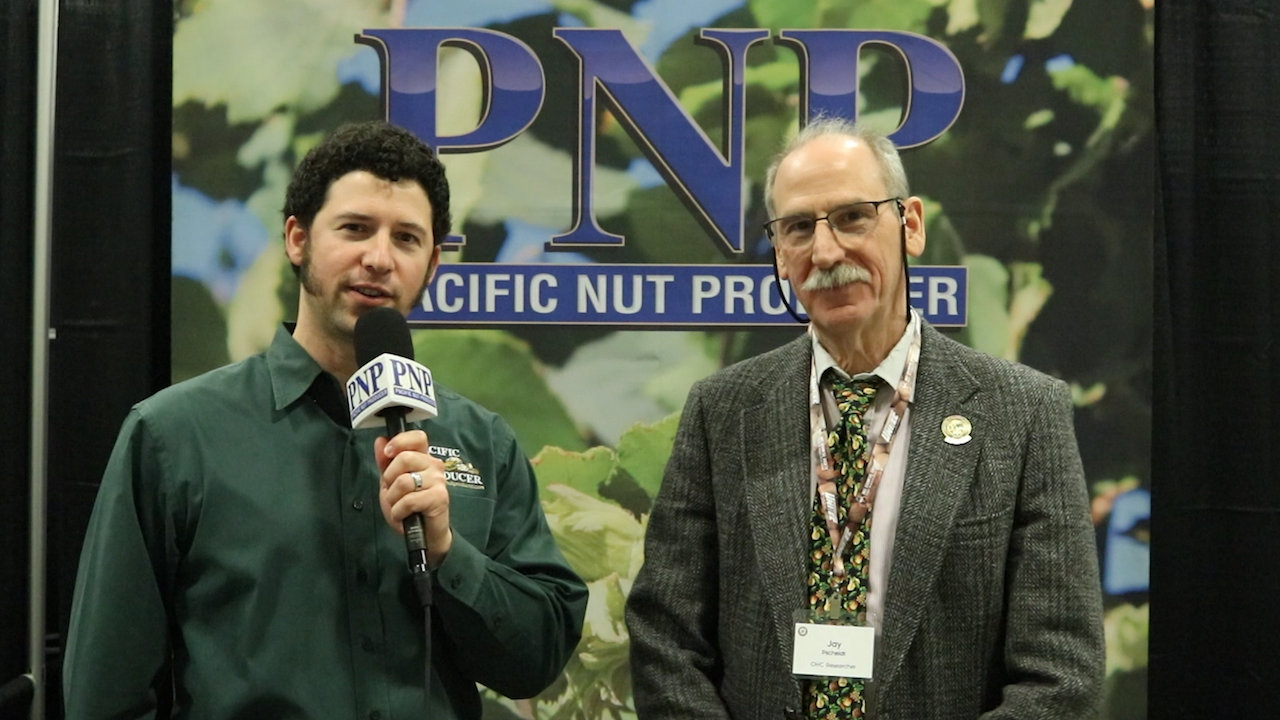
    Eastern filbert blight is an ongoing and costly problem for hazelnut growers, but researchers at the Oregon State Extension are researching newer and more efficient ways to combat it. At the Nut Growers Society’s Winter Meeting, Jay Pscheidt spoke with Matthew Malcolm at Malcolm Media Ag Publishing and shared their findings on drenching. Watch this quick video and read more in Pacific Nut Producer Magazine.

    Please thank this video’s sponsor George Packing Company for their industry support.