Tag: California Almonds

  • Almond Board of California Releases Market Update

    The Almond Board of California released its March position report on April 10, showing that industry shipments totaled 258 million pounds. Blue Diamond Growers notes that this is an increase of 16.5% year over year, surpassing expectations. March exports were up 21% compared to last year at 2025.2 million pounds. Export shipments are surpassing last yers pace, leading by 3% at 1.38 billion pounds and domestic shipments for March came in at 1.9% ahead from last year.

    “While domestic year-to-date shipments remain behind at 391 million pounds, down 15.9%, the increase this month is worth celebrating after months of softer results. Total industry shipments through March stand at 1.78 billion pounds, down 1.9% versus last year,” Blue Diamond Growers wrote in its March Almond Market Update. “The California almond industry has shown resilience and strong performance despite logistical delays associated with the ongoing conflict in the Middle East. With concern around Australian crop quality due to late season rainfall, we may see additional opportunities for California almonds ahead.”

    The March shipment performance confirmed an effectively functioning market, with global demand continuing to absorb supply. Export markets remain the primary driver, supported by consistent movement into Europe, Southeast Asia and the Middle East, despite recent disruptions. This includes 39.2 million pounds shipped to India. China/Hong Kong, also saw a 123% increase to 4.1 million pounds following last year’s tariffs. Shipments to Vietnam were at 5.6 million pounds, an 8.5% increase.

    The Middle East remains difficult, with reduced activity in the United Arab Emirates, but Turkey has seen an increase of 30% and Pakistan has seen an increase of 170%, indicating that demand is being redistributed rather than eroded.

    “The conflict in Iran has been a concerning factor for the industry for over a month. The March report serves as proof that demand across the Middle East remains intact as the region took 21.9 million pounds for the month. The current geopolitical conditions have introduced disruptions and logistical challenges to traditional trade flows in the Persian Gulf,” the Blue Diamond update read. “Saudi Arabia is also expected to act as an alternative routing option to supply regional buyers. The region remains a key demand center with creative execution strategies, and the normalization of logistics is expected to support future activity.”

    The market in Europe remains steady, with year-to-date shipments tracking ahead of 2025 by 7%.

  • ‘Demo 57 Orchard’ Near Los Banos Showcases 57 Almond Variety and Rootstock Combinations

    A new almond demonstration orchard featuring 57 combinations of varieties and rootstocks has been planted near Los Banos to help growers evaluate planting decisions for the next generation of orchards.

    Known as “Demo 57,” the RPAC Variety & Rootstock Demo Orchard was planted this year adjacent to the RPAC and PAPC facilities, allowing visiting growers to easily walk through the orchard and observe how different combinations perform over time.

    The project was designed so growers can evaluate today’s commercial varieties from prominent tree nurseries alongside newer selections and rootstocks that may shape future almond plantings.

    The orchard was planted in the same year PAPC founder and longtime grower Louie Parreira will celebrate his 100th birthday, a milestone that highlights how much almond production has evolved over the past several generations.  Louie’s son, David Parreira, reflected on how orchards were planted when earlier generations of the family first entered the almond business.

    “When my father and grandfather planted their first almonds, they were on a 24-foot square spacing, about 75 trees per acre. They planted four rows of Nonpareil, then two rows of Mission, then four rows of Nonpareil and two rows of Davey and so on. I don’t think they put much fertilizer on and irrigated only when the trees looked stressed. They were happy to make 500 pounds per acre. Harvest was all by hand and the beekeepers paid the grower to bring bees in so they could make honey. Obviously, almond production has changed a lot!”

    Almond grower and RPAC partner Dennis Soares, who entered the almond industry after two decades in the cotton business, said the industry has changed dramatically since he planted his first orchards.

    “Almond prices were around 75 cents a pound when I planted my first almonds in 1999. Coming from the cotton business, we learned some lessons the hard way about planting the wrong varieties, rootstocks and spacings, like planting Wood Colony at 18-foot spacing.

    “Today plentiful information is available to growers, and making the right decisions is critical when planting a new orchard.  This demo orchard gives growers a chance to see many different combinations and evaluate what might work best for their operation.”

    Soares noted the project also benefits from agronomic support from David Doll, widely known in the industry as the Almond Doctor.

    “Working with David Doll on agronomic support has been invaluable. He provides a tremendous amount of information and stays closely connected with the almond growing community around the world.”

    The project was developed in collaboration with leading nursery partners supplying genetics and planting material.

    John Duarte, President of Duarte Nursery, expressed that “we appreciate RPAC providing nurseries this opportunity to put forward our newest ideas and genetics. For our planting, we included Yorizane high-topped containerized trees on Bright’s Hybrid 5. We believe that this new orchard system will be the highest production and most efficient almond orchard to date. Time will tell. Growers will see it firsthand.”

    “Rootstock selection plays a major role in long-term orchard performance,” said Seana Day, CEO of Dave Wilson Nursery. “Having a demonstration site like this allows growers to compare combinations and better understand how they may perform in commercial plantings. We appreciate RPAC bringing together multiple nursery partners to make this possible.”

    “New almond varieties and rootstocks are coming to market faster than ever, and growers need reliable ways to evaluate them,” said Tom Burchell, owner of Burchell Nursery. “This orchard gives the industry a place to see how different combinations perform side by side in the same environment. We are proud to partner with RPAC on a project that will provide valuable insight for growers across California.”

    In addition to the variety and rootstock trials, the orchard includes a hedgerow planted with ten species of California native plants designed to demonstrate how habitat plantings may support beneficial insects in almond orchards.

    The Demo 57 Orchard is expected to serve as a site for future grower visits and field discussions as the different combinations develop. — Story by RPAC LLC

  • Jumpstart your Growing Season with Redox during Bloom and Post-Bloom

    —Sponsored Content—

    Bloom is upon us and it is time to pick a quality product to increase crop set. Nutrition decisions made now will have a major impact on your yield and quality during harvest.

    Redox Bio-Nutrients technology has been specially formulated with Redox Active Molecules (RAM), to keep plants in balance, allowing them to increase yield. When plants are balanced, they focus on reproductive and vegetative processes.

    Here are specific ways Redox can help:

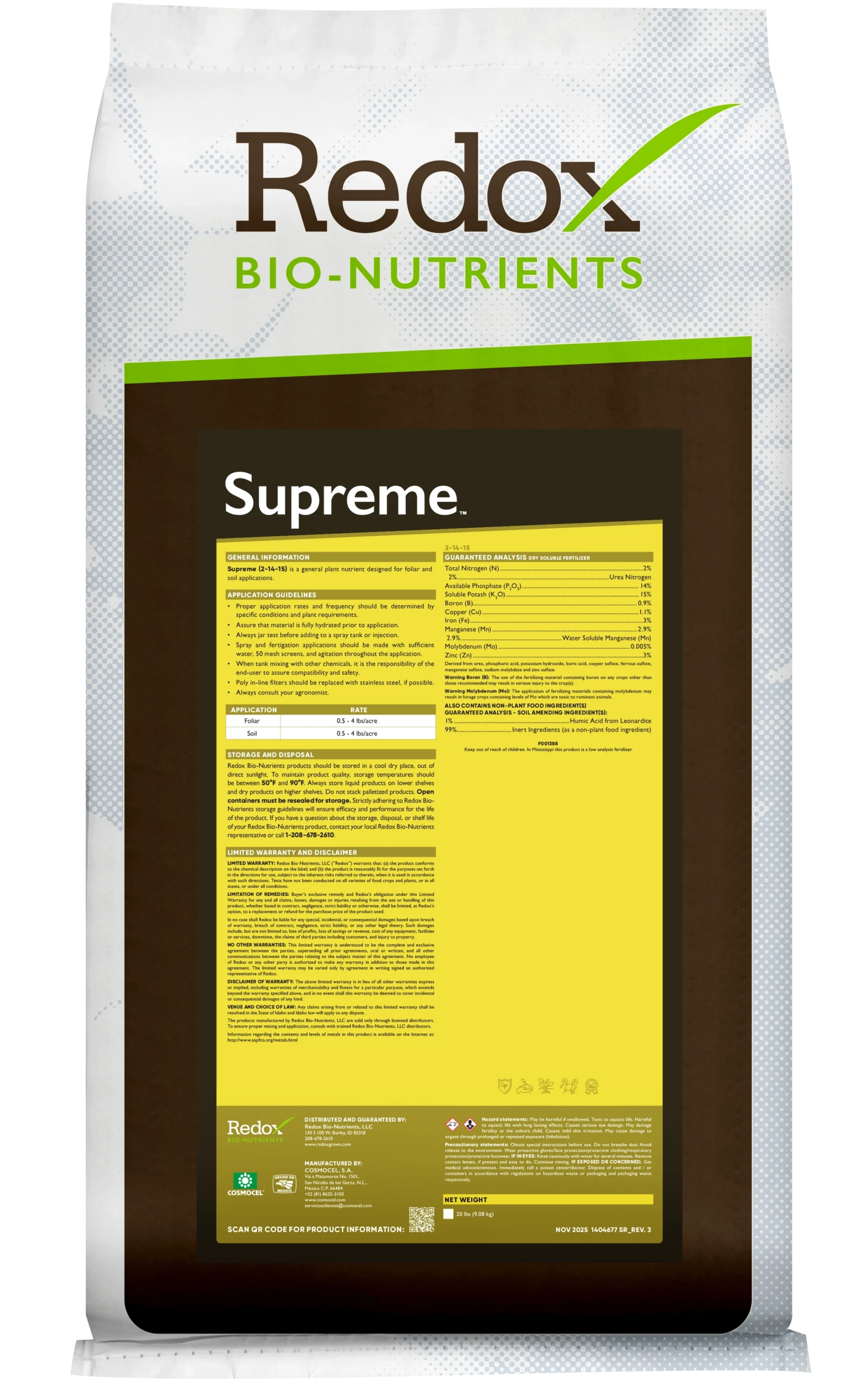
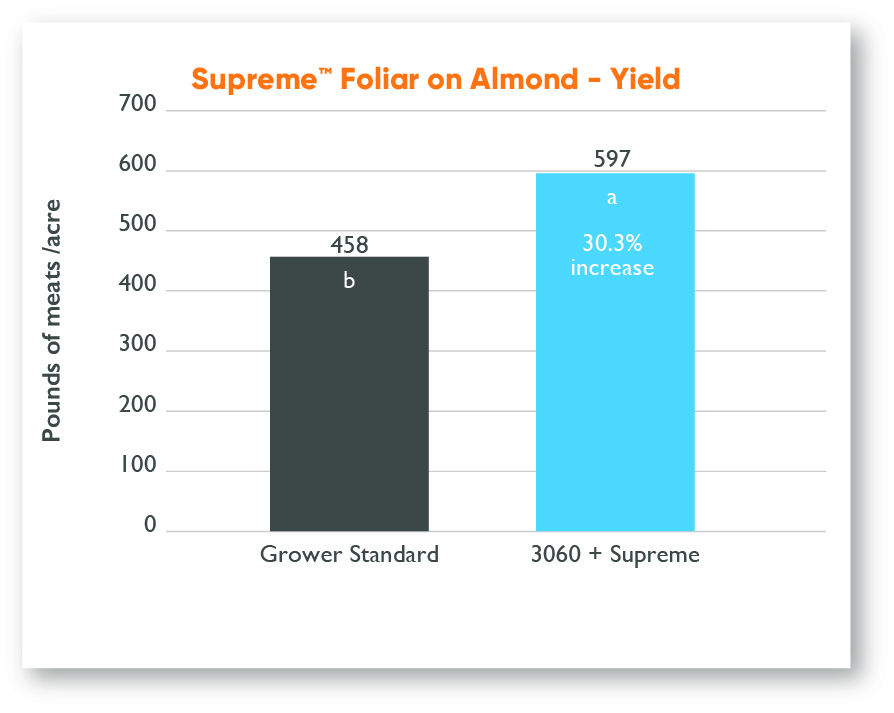
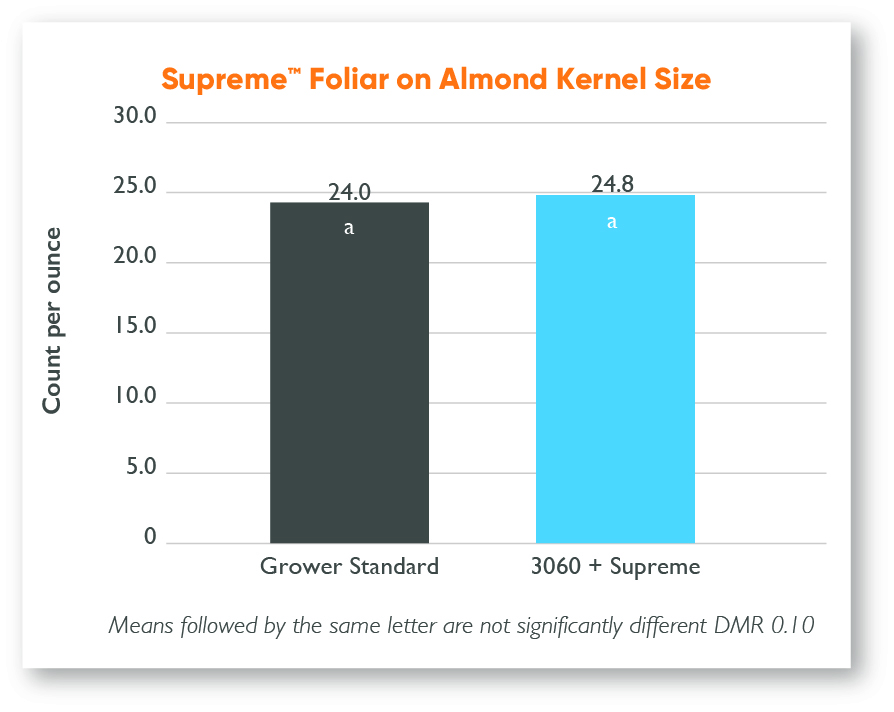
    Supreme™ delivers RAM derived complexed mineral and bio stimulant properties. These specifically drive early season movement of sugars and nitrogen metabolism in our crops. Applying Supreme™ during bloom and shortly after bloom improves crop set and size, depending on application timing. Here is some data to back that up.


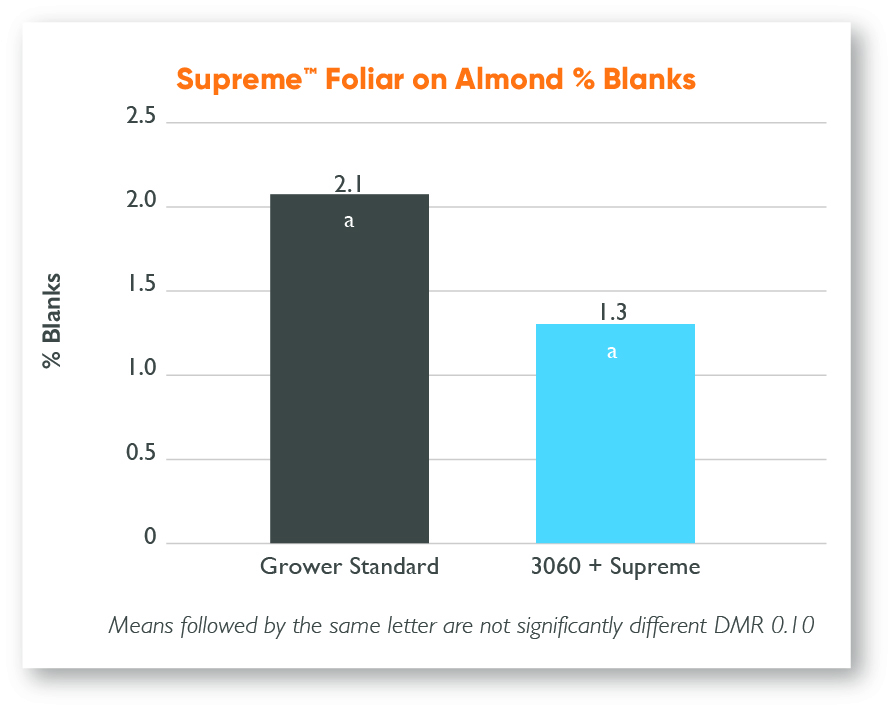
    Material was applied with an air blast sprayer at a spray volume of 100 gallons per acre. Nuts from each tree were isolated and field weights were taken. Each sub-sample was hand cracked for quality evaluations. Supreme™ was applied three times and 2 lbs./acre, with applications at pre-bloom, petal fall and at five weeks. Nut weight, kernel size and percent of blank kernels were evaluated. The results were impressive. Supreme™ increased yield by 30.3% and decreased blanks by 38.1%.

    Supreme Product

    Improve Nitrogen Metabolism with Velox™ (formerly V-55).

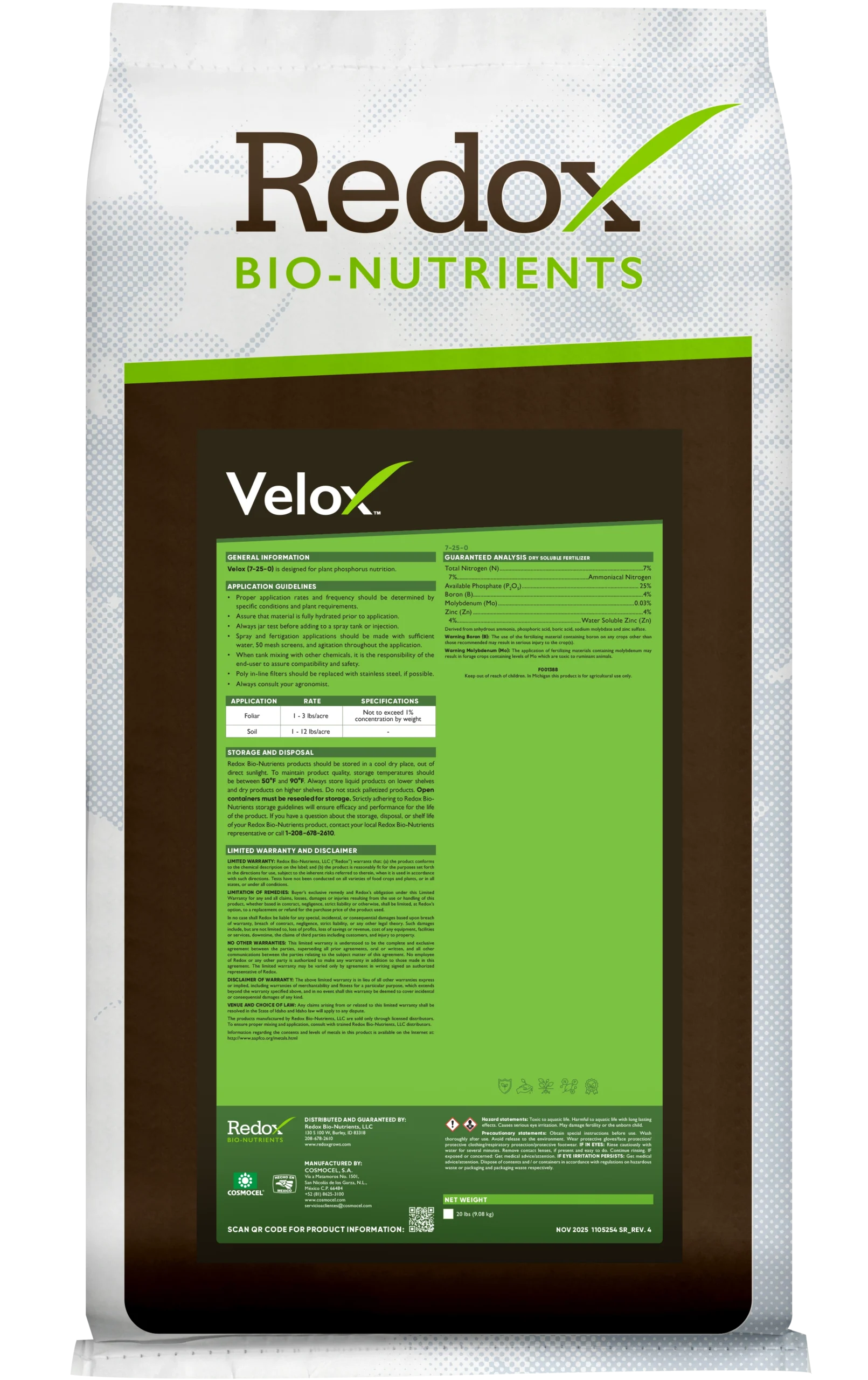
    Velox™ is specially formulated to improve general reproductive energy in plants. This product uses complexing technology to improve mobility of phosphorus, zinc and boron in the plant.

    As with the Redox product line, a little goes a long way. Suggested application is 1-2 lbs. per acre. This product has been proven to increase the set of fruit, nuts, and other crops!!! Check the data for yourself.

    Supreme Product


    Don’t forget Calcium and Silicon at Bloom – Redox sets the standard with These Nutrients

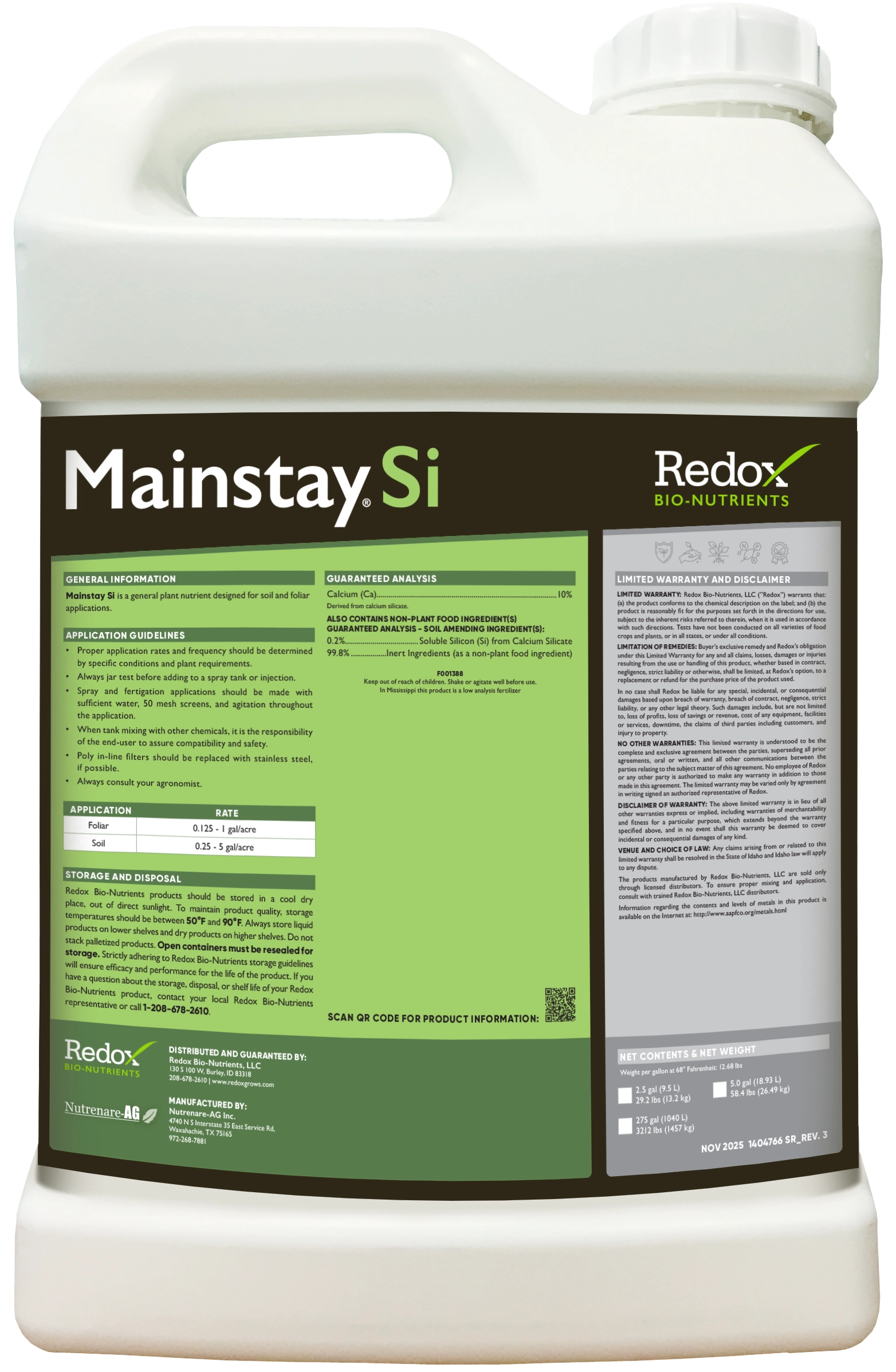
    Calcium plays a pivotal role in cell division and defines quality of cell structure. Silicon has symbiotic relationship with Calcium since it helps organize the strong cells that have adequate calcium. This “STACKING” that Redox is known for is a way to increase your crops integrity. Reducing space taken up by oxygen and replacing it with carbon sources. Less air, more fruit, more weight, and more money in your pocket per unit of crop!!! Check data below to see how we will prove it to you!

    Apply 16-32 ounces of Mainstay® Si starting at pink bud, along with Supreme™ applications.

    Supreme Product

    By AJ Borges, Redox Bio-Nutrients agronomist for California. Email: aj.borges@redoxgrows.com

    Learn more Here

  • Almond Board Guides Industry Recovery with 3rd Largest Shipping Year

    The California almond industry experienced its 3rd highest shipping year ever in conjunction with the Almond Board of California’s 75th anniversary as a Federal Marketing Order. At the Almond Conference in Sacramento, President/CEO Clarice Turner spoke with Matthew Malcolm on California Ag Network to discuss current almond supply and demand dynamics and the Board’s role in creating a healthier future in the California almond industry. Watch this brief video and read more in Pacific Nut Producer Magazine.

  • Five-Year Almond Forecast Bright with Stronger Prices

    The future looks bright for the California almond industry with the release of a special five-year almond economic forecast. In an interview with Matthew Malcolm on California Ag Network during the Almond Conference in Sacramento, Roland Fumasi from RaboResearch at Rabobank discussed their five-year almond outlook and what growers can expect in the coming seasons. Watch this brief interview and read more about it in Pacific Nut Producer Magazine.

  • Commercializing Almond Hulls as Food Ingredients

    Almond Board of California — Historically used for dairy cattle feed, almond hulls have had a consistent place in the animal nutrition space. However, a declining dairy herd, in combination with hulls being traded below their production cost, has propelled the industry and the Almond Board of California (ABC) to think about alternative revenue-generating opportunities.

    Helping lead this charge is ABC’s Biomass Working Group, formed in 2017 to explore new applications for almond co-products.

    “This biomass working group is where business meets science,” said Michael Kelley, chairman of the committee and president of Central California Almond Growers Association (CCAGA). “We have become exceedingly appreciative of the ideas and the potential for the commercialization of products using almond hulls.”

    Nutrition Potential

    One area almond hulls have shown strong potential for is human food products. Because of their high fiber content, natural sugars, phytochemicals, minerals, and processing versatility, they offer multiple benefits in the value-added ingredients food space.

    Being that they make up 50% of the almond fruit, they are also abundant in California, creating a reliable and readily available supply for large-scale product development.

    While some may question their safety for human consumption, there are positive indicators that prove almond hulls can meet food-grade quality standards. ABC Associate Director of Food Research and Technology, Guangwei Huang, noted that almond hulls have long been used safely in livestock feed, with no negative effects on animal health or performance. Studies have also shown that pesticide residue and toxicity exposure are not a concern.

    To explore these possibilities further, ABC partnered with Mattson, a product innovation firm, to develop samples of what could be done with hulls.

    These included a high-fiber bar made with 15% almond hulls, delivering five grams of fiber per serving, and a coffee beverage crafted from coarse-ground, roasted hulls. When added to coffee, almond hull powder helped reduce bitterness and enhanced sweetness. In baked goods like bread, it boosted both fiber and phytochemical content.

    Opportunity in “Upcycled” Markets

    Another advantage almond hulls offer is that by adding just 10% or more of almond hull powder to a product, it can qualify for a new third-party “upcycled” certification. While “upcycling” is a relatively new term, it’s become increasingly important to consumers concerned about food waste, noted Daniel Kurzrock, founder and CEO of Upcycled Foods.

    After working with upcycled ingredients across various commodities, Kurzrock said he’s seen firsthand the wide-ranging benefits. These include improved sustainability and circularity, the creation of new revenue streams, reduced disposal costs and stronger alignment with shifting consumer values.

    “The almond industry is not alone in seeing this potential,” he said. “There’s profit potential for every aspect of the stakeholder chain if we’re able to create uses that are solving problems for companies that buy ingredients.”

    Because the end-market for almond hulls is still being widely explored, he also suggested that at this stage in development, it’s important to initiate customer conversations before deciding what to invest in.

    “An approach that we find to be working with other materials is doing a pilot to produce some quantity of viable hulls that can go to a miller or a secondary processor to start those customer conversations,” he said.

    Steps for Commercialization

    While it’s not realistic to expect the hulls to be process-ready when leaving the huller/sheller, Huang said efforts to clean and improve their quality can still make a significant impact.

    “When the time comes, the industry needs to set minimal specifications or quality requirements for almond hulls for food uses,” Huang said. “We are trying to minimize foreign material, and most importantly, we need the involvement and attention of stakeholders. We’re not expecting the huller/seller to get hulls to the ready-to-process stage, but they can minimize those foreign materials down to less than 5%.”

    The industry must also complete a GRAS (Generally Recognized As Safe) assessment for human consumption, a requirement mandated by the Food and Drug Administration since hulls haven’t previously been used as a food ingredient. This assessment  is expected to be completed by late 2025, Huang said.

    Innovations in Processing

    Several companies in the almond industry are already investing in hull-cleaning systems to ensure they are ready for when almond hulls receive food-safe approval. One of those pioneer companies is Cortez Growers Association.

    Recognizing almond hulls as a potential revenue stream, Cortez implemented a cleaning system to remove unwanted materials – sticks, shells, and almond meats – that typically end up in the hull pile. By separating these components, they could sell the almond meats as hash, a “refreshing benefit” to add value to what was once considered waste, said general manager, Dave Thiel.

    Other processors are also refining their methods. Corbin Sturdivan of Wilkey Industries explained that current hull cleaning systems include an aspirator to remove the shell from the hull and a detwigger deck to remove sticks from the hulls.

    “While this has worked for many years to reduce the fiber content for dairy feed, there is more refinement that we can do with this system by introducing additional screening and additional aspiration,” Sturdivan said.

    Through their trials with ABC, Sturdivan and his team discovered that by adding a screen to sift through the hulls, they could be better classified and ranked.

    “We would de-twig the product; it would be screened, and the screen would sift out all of the fines from the hulls,” he said. “What is left over is what we would call scalped hulls, and this is your larger, good material created from the early stages of hulling.”

    From their observation, Wilkey Industries also found that 1 to 1.3% of total hull weight can actually be recoverable kernel.

    “That translates to roughly 3% of your kernel production that is actually sitting in the hull pile,” he said. “So, by integrating a screen and some additional aspiration, not only can we clean the hulls, but we can also reclaim those kernels and hash that have much higher value to be sold instead of letting them go to dairy feed uses.”

    Additional Sorting Techniques

    As cleaning technologies continue to advance, innovations in color sorting are emerging as a key tool for preparing almond hulls for food-grade applications. The team at Chandler Automation has spent time working on this, and the initial models have been successful at “creating pure hull piles in one pass,” said CEO, Sean Chandler.

    More research is needed to determine where this best fits in the manufacturing process – be it at the huller, processor, or a separate site and how it will be financially feasible.

    “We have to do more research on our side to see the best way to mechanically clean hulls, mechanically feed it, and mechanically pass it through our systems because the technology is there to create that pure, premium hull,” he said.

    Looking Ahead

    As ABC continues to refine its strategy for marketing almond hulls as a food ingredient, the industry is taking proactive measures to position itself for success, and that starts with collaboration among all players involved.

    “We are about to begin a new journey to generate more revenue from almond hulls,” Huang concluded. “It will take a while and more effort to develop the market and demand, but if you are interested in creating more value out of almond hulls, many of us can work together to shorten the process.”
  • California Orchards Blossom with NRCS Help Managing Pests

    California’s Central Valley is a land of agricultural abundance, known for its incredible diversity of crops including fruits, vegetables and nuts. It produces approximately 25% of the nation’s food.

    But with plenty can come pests – in as many varieties and types as the crops grown in the region. Area farmers have worked with USDA’s Natural Resources Conservation Service (NRCS) to implement integrated pest management into their orchard operations with marked results.

    Sandra and Mike Smith of Smith Family Farm in Fresno, California, showed NRCS Chief Aubrey Bettencourt the benefits of the practices that they have incorporated with NRCS assistance as they toured their 36-acre almond orchard.

    Established in 1903, the farm is on the cusp of welcoming its fifth generation of farmers. By adapting their operations to increase conservation and sustainability practices, the Smiths hope to pass on a rich legacy to their young granddaughters.

    The Smiths highlighted the impact that integrated pest management practices – notably hormone disruptors – have had in their fight to combat navel orangeworms in their almond orchards.

    “We were at 17.1% loss of our almond crop two years ago because of the infestation of navel orangeworms,” Mike Smith told Chief Bettencourt. “Once we implemented the mating disrupters, we were able to bring our almond reject numbers down to 1.1%.”

    Navel orangeworms burrow into almond nuts to feed on the kernel, damaging the nut and impacting producers’ overall yield and harvest quality. Deploying pheromone-based mating disruption tools can reduce navel orangeworm populations by hindering male moths’ ability to locate females.

    The Smiths have also leaned on NRCS technical assistance to implement other conservation techniques to increase the health of their orchard. The family now prioritizes composting and increasing organic matter, guided by the knowledge gained through NRCS collaboration.

    Further north, Chinchiolo Farming Co., Inc., a family-run business located in Lodi, California, is managing orchards of a different kind while embracing similar production practices.

    Producer James Patrick Chinchiolo has worked to uphold a century-old farming legacy, started by great grandfather Italian immigrant James Joseph Chinchiolo. Chinchiolo has worked with NRCS to incorporate a number of conservation practices including cover crops, tractor replacements, orchard removal and soil incorporation.

    Like the Smiths, Chinchiolo has dealt with pest issues, incorporating a Biologically Integrated Orchard Systems (BIOS) approach in managing his orchards. The BIOS system aligns with NRCS principles, embracing the implementation of conservation practices like cover cropping, beneficial insect habitat, and compost application to keep pests at bay.

    “We aim to foster a more ecologically balanced environment within our orchards,” Chinchiolo said during his discussion with Chief Bettencourt. “We are focusing on minimizing our inputs and creating more habitat for beneficial insects to flourish to help control unwanted pests.”

    Conservation practices like cover cropping and compost application not only help pollinators flourish – a crucial part of growing beautiful cherries – they also protect the trees’ overall health, improving soil structure and water retention.

    After last summer’s heat impacted this year’s cherry crop, Chinchiolo is working to take additional measures to make his trees more heat resistant in preparation for next season.

    “Growing cherries is never predictable. But it’s always beautiful.” Chinchiolo said.

    Helping People Help the Land

    During her visit, Chief Bettencourt emphasized that the agency’s primary focus is to give producers the tools that they need to be the best producers that they can be – increasing their yield while stewarding the nation’s natural resources.

    “Producers are the solution, and we want to empower them by getting our highly skilled staff out in the field to provide technical support. We want to streamline our programs to work better and faster for producers,” she said.

    NRCS helps farmers, ranchers and forest landowners make critical investments in their operations and local communities by helping them implement proven practices to ensure all of America’s farms, ranches and private lands are economically viable and thriving.

    If you are interested learning how these programs can help you achieve your operational and land management goals, find your local USDA Service Center and get started today.

    Follow the Chief through our blog series as she meets with producers across the country to learn how NRCS has helped their operations. — By Debra Denhart, Public Affairs Specialist, USDA

  • Fresh Vintage Farms Launches Refined Almond Oil for Clean, High-Heat Cooking

    Fresh Vintage Farms, the California-based family brand known for its clean-label, cold-pressed nut oils, has just introduced its newest product: Refined Almond Oil & Garlic Almond Oil. Made exclusively from California-grown almonds, this small-batch oil is designed for home cooks and chefs who want a healthier, neutral-flavored option that performs well in the kitchen. With its ultra-light texture and high smoke point, the new refined almond oil is perfect for sautéing, roasting, and baking, all without overpowering other ingredients.

    Unlike most industrial seed oils or mass-produced refined oils, Fresh Vintage Farms’ refined almond oil is crafted through a minimal-ingredient heat and filtration process, preserving heart-healthy monounsaturated fats and naturally occurring vitamin E. The result is an oil that’s clean in both taste and label, offering a plant-based, non-GMO alternative that holds up to high temperatures while supporting a healthier cooking routine. Free from chemical solvents and artificial additives, it gives consumers a refined oil option they can feel good about.

    This launch marks another milestone for founder Tommy Tickenoff, a third-generation almond farmer from California’s Central Valley who continues to prioritize transparency, local sourcing, and sustainability. As one of the only small-batch producers of refined almond oil in the U.S., Tickenoff brings a rare level of traceability and care to every bottle. From the orchard to the kitchen, Fresh Vintage Farms is committed to delivering oils that meet both culinary and nutritional standards.

    The clarified refined almond oil joins the brand’s existing lineup, which includes their popular Pure Cold‑Pressed Almond Oil, Pure Cold‑Pressed Walnut Oil, and Garlic‑Infused Almond Oil. All products are non-GMO, chemical-free, and packaged sustainably in recyclable glass bottles with cork caps.

    Fresh Vintage Farms’ clarified almond oil is now available online at freshvintagefarms.com, with special wholesale pricing available for retailers and chefs.

    About Fresh Vintage Farms

    Fresh Vintage Farms is a family-owned brand based in California’s Central Valley, offering premium, cold-pressed Almond and Walnut Oils made from California-grown nuts, many from their own farm. Founded by Tommy and Tara Tickenoff, Fresh Vintage Farms produces oils that are not only pure and nutrient-rich but also eco-friendly, using imperfect nuts to reduce waste. Their commitment to quality and sustainability shines through in every bottle, providing a healthier, cleaner alternative to traditional oils. Focusing on family values and community, Fresh Vintage Farms aims to make healthy oils accessible to everyone without compromising taste or quality.

  • Almonds Are Key to Achieving Coach PRIME’s Renewed Health Goals

    Deion “Coach PRIME” Sanders is back for another college football season, persevering after challenges with his health. As he gears up for the hustle and grind, his commitment to personal health is stronger than ever, with a mission to motivate others to live a healthy life, part of which includes eating better-for-you snacks like almonds. Packed with nutrients, almonds are more than just a snack; they are a cornerstone of the healthy lifestyle Coach PRIME is championing.

    Whether Coach PRIME is leading his team and family toward success or motivating others to make the right decisions, he is deeply committed to living with purpose, and that includes how he takes care of his body. Backed by research, daily almond snacking supports his intentional approach to health. Almonds are his go-to snack in the locker room, his office and even on the sidelines, making them a meaningful partner in his everyday routine.

    “I take my health seriously—now more than ever—and others gotta do the same to be their best and stay prime,” said Sanders. “Almonds aren’t just a snack, they’re part of the process, and I’m committed to the process. Take your health seriously, be consistent, and eat your dern almonds every day. Don’t wait another second to focus on what your body needs.”

    Snacking can be a healthy habit when done right, and Coach PRIME is calling on everyone to start today by making smarter snack choices that fuel the body and promote overall health. Almonds are a powerhouse snack, delivering steady energy and satiety through a natural blend of 6g of protein, 4g of fiber, 50% DV of vitamin E, 20% DV of magnesium, 13g of “good” unsaturated fats and only 1g of saturated fat in one serving (23 almonds). From aiding heart and metabolic health to gut support and beyond, almonds play a valuable role in healthy living. Plus, almonds’ versatility makes them a smart choice for anyone looking for simple, consistent nutrition.

    Tune in for more from Coach PRIME and California Almonds with ads airing on national and cable TV networks like CBS Sports and ESPN. Visit almonds.com and follow California Almonds on Facebook, Instagram and Twitter to see how almonds are a key part in Coach’s renewed health journey.

    About California Almonds 

    California Almonds make life better by what we grow and how we grow. The Almond Board of California promotes natural, wholesome and quality almonds through leadership in strategic market development, innovative research, and accelerated adoption of industry best practices on behalf of the more than 7,600 almond farmers and processors in California, most of whom are multi-generational family operations. Established in 1950 and based in Modesto, California, the Almond Board of California is a non-profit organization that administers a grower-enacted Federal Marketing Order under the supervision of the United States Department of Agriculture.

  • Confronting the Rodent Crisis: Challenges and Interventions for Almond Growers

    California almond growers are facing an unprecedented challenge this season as a severe roof rat infestation sweeps through orchards across the Southern and Western San Joaquin Valley. An early survey indicates the outbreak has impacted well over 100,000 acres, a number that has likely grown, causing widespread damage and significant economic losses.

    What the Almond Board of California Has Learned

    Almond growers across Merced, Fresno, Kings, and Kern counties have reported an alarming spike in rodent populations. Over the last several months, ABC has participated in tours and meetings about the severity of this rat infestation, and field observations indicate that these rodents are using irrigation canals and other waterways as corridors, enabling them to rapidly spread between orchards and diverse agricultural fields. This mobility is exacerbating the extent of damage and complicating containment efforts.

    Roof rats are arboreal, meaning they spend a considerable amount of their life above ground, often building nests in trees. However, for several years, researchers have noted that in almonds and other tree nuts, they use burrows extensively.  Although it’s undetermined as to why, some believe it’s the lack of cover in the winter months that drives this behavior.

    According to preliminary findings from a CDFA-led surveyconducted in the fall of 2024, monitoring efforts revealed particularly high densities of rats in the reported areas, with up to 32 rats captured per night at some locations. Direct damage to the trees occurs through consumption of nuts, girdling of small and large limbs, and burrowing in the root zone. Additionally, damage to irrigation systems, equipment and other infrastructure within orchards is often greater than direct crop loss.

    Economic analyses from the CDFA report estimated total on-farm losses ranging from $109 million to $311 million. Major expenses contributing to these figures included drip line replacements, which alone accounted for losses between $56 million and $168 million, and yield losses resulting from disrupted post-harvest irrigation, estimated at $43 million to $129 million. Additional significant costs stemmed from direct tree damage, farm equipment repairs, machinery cleaning due to rodent contamination and replacement of damaged trees.

    The lower-end estimates assumed less extensive damage, such as 25% of affected acreage needing drip line replacement and 10% tree damage. Conversely, the higher-end scenario accounted for more severe conditions, including drip line replacements on 75% of impacted acreage, 15% tree damage, and substantial farm equipment repairs and maintenance.

    Photo Caption: Irrigation line damage from rats

    Drip line damage and yield reductions alone represented nearly 90% of the anticipated financial impact. Furthermore, CDFA cautions that these numbers may underestimate the true financial burden, as broader impacts, including newly planted orchards and extensive post-harvest cleanup beyond farm machinery, were not fully quantified in the preliminary analysis.

    During ABC’s learnings, one grower noted the replacement of an entire drip irrigation system was estimated at $20,000, and the rodents also chewed through irrigation wiring causing fires. A second almond grower detailed extreme damage that was estimated at a 50% crop loss, even while he was exterminating between 50-100 rats a day.

    Photo Caption: Aside from equipment and tree damage, rats are eating the nuts themselves on the tree.

    UC ANR’s IPM Recommendations

    Farm managers, PCAs, and growers are expressing growing frustration and concern over their ability to sustain operations. Management strategies currently in use include bait stations and aluminum phosphide treatments of burrows in the winter, and less conventional methods such as snap traps, owl boxes and applying carbon monoxide or carbon dioxide into burrows as another fumigation option. However, many growers report these tactics are labor-intensive, costly, and insufficient for the scale of this infestation. Additionally, growers noted that rotating bait flavors has become necessary as rodents quickly grow wary and “bait shy.”

    Based on research led by UC ANR scientists Niamh Quinn and Roger Baldwin, growers are advised to implement a comprehensive Integrated Pest Management (IPM) strategy tailored specifically to roof rat behavior in tree nut orchard environments. The cornerstone of effective IPM is rigorous monitoring with the use of tracking tunnels and ink cards. Strategically placed game cameras can pinpoint rat activity hotspots, while also providing information on how rat numbers are changing over time.

    Using that information, growers can then implement targeted baiting programs. Elevated bait stations containing diphacinone-treated oats, positioned every 165 feet, align with roof rats’ natural climbing behavior while minimizing risks to non-target species. For tree nuts, bait stations strategically placed on the ground could also help, although this application is limited to dormant seasons. To have a significant impact, growers must keep stations full of fresh bait over a period of about four weeks. In situations where rat densities are very high, a longer period may be needed.

    Again, monitoring is important during the bait program period and growers should stop the program when bait consumption becomes minimal. As a reminder, rodenticide regulations are ever-changing, and applicators should always read the label carefully to ensure compliance.

    Strategically placed snap traps in protective trapping tunnels, spaced approximately 245 feet apart, form a crucial component of long-term rat control post-baiting. Regular maintenance and monitoring of these traps are necessary to sustain effectiveness. Collaboration among neighboring orchards can further enhance the efficacy of these integrated pest management measures.

    During the dormant season, broadcasting zinc phosphide bait or applying zinc phosphide within burrows is also an option, although the efficacy of this bait for rats in California orchards is unknown. Burrow fumigation with aluminum phosphide, gas cartridges or carbon monoxide and carbon dioxide injection devices are also options. UC ANR advises growers to be aware that if using aluminum phosphide, in addition to normal requirements that apply to all restricted-use fumigants, you also now need to have a Burrowing Vertebrate Pest Fumigation Certificate (PCA license) to use this product.  Also note that any diphacinone-treated bait for use in bait stations must be bought from a County Ag Commissioner’s office.

    Based on the level of infestation learned from using the tracking tools, multiple overlapping strategies may be necessary to reduce the populations.  And if possible, rotating to a non-diphacinone option is a good decision to avoid diphacinone-resistance.

    Additional Support and Resources on the Horizon

    Industry groups are mobilizing to provide tangible support for growers facing ongoing rodent pressures. CAPCA, in collaboration with the Almond Board of California and other agricultural partners, is pooling funds to purchase and distribute abatement stations or owl boxes to affected regions, depending on CDFA recommendations.

    Additionally, CDFA is actively working to facilitate updates to pesticide labels for rodent control materials. Specifically, updates and approvals for the use of zinc phosphide and diphacinone are in progress, which could expand application options for growers if finalized. These advancements would provide growers with additional chemical tools to integrate into their rodent management programs.

    Furthermore, the latest information and assistance opportunities are being planned for informative sessions at the 51st Annual CAPCA Conference in October and The Almond Conference in December. UC Cooperative Extension’s Roger Baldwin will be presenting Monday, October 20, at the annual CAPCA conference in Reno, Nevada. ABC’s Gabriele Ludwig will be leading a discussion about rodent control in the face of changing regulations at The Almond Conference December 10-12 in Sacramento, CA. — By the Almond Board of California